

Dockyard Hybrid Office Building: Sustainable Hybrid Timber Architecture in Berlin
Dockyard Hybrid Office Building in Berlin showcases sustainable hybrid timber architecture, combining ecological design, flexible offices, and net-zero energy systems.


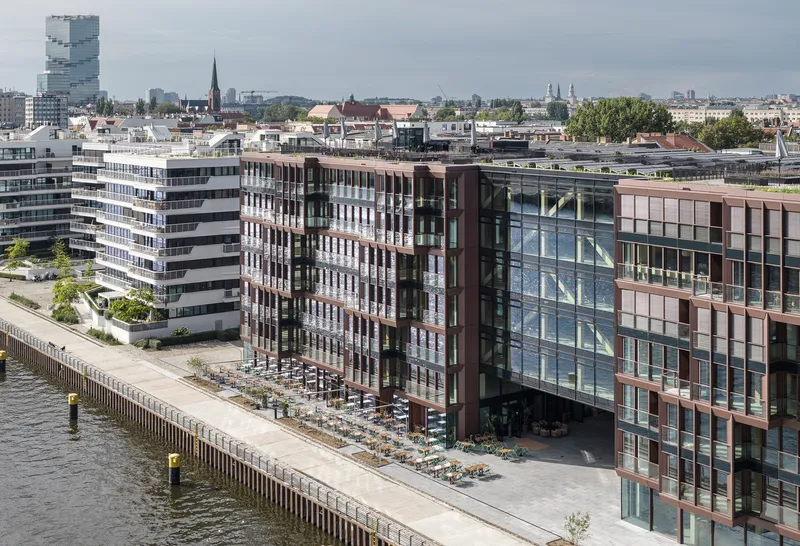
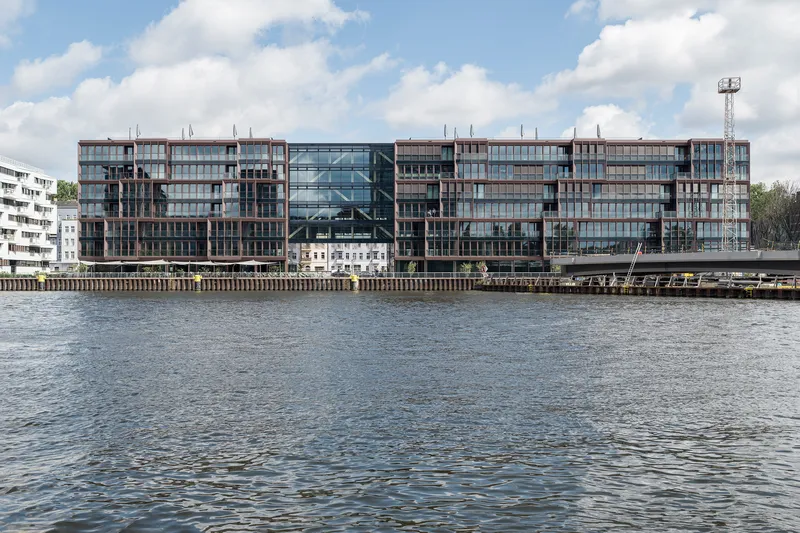
The Dockyard Hybrid Office Building by Tchoban Voss Architekten in Berlin’s Osthafen district represents a pioneering model of sustainable hybrid timber architecture. Completed in 2025, the 32,141 m² complex combines innovative design, climate-conscious construction, and flexible office spaces, redefining waterfront development along the Spree. With a focus on hybrid timber-concrete structures and net-zero energy operation, Dockyard sets a benchmark for future-ready office buildings.
Urban Context and Master Plan
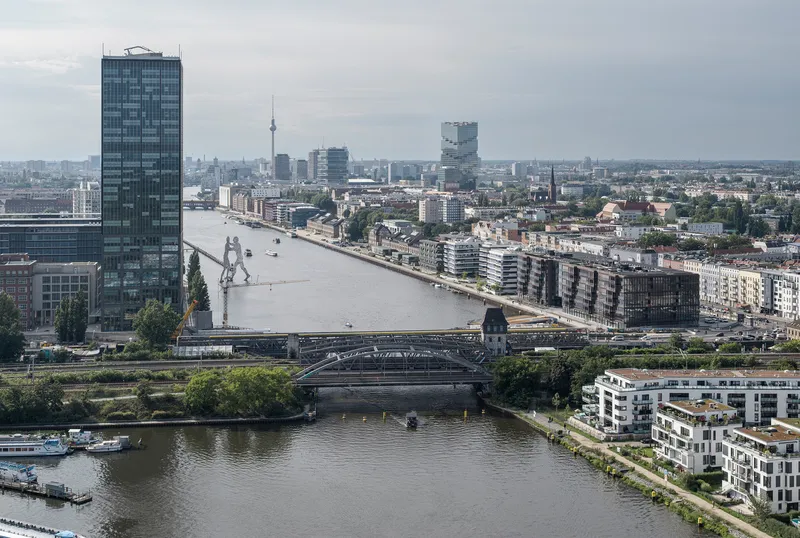
At the beginning of the 20th century, Berlin’s Osthafen (East Harbour) was one of the city’s largest industrial hubs, lined with warehouses, canteens, and administration blocks. Today, the area has transformed into the MediaSpree district, an urban quarter defined by creative, media, and fashion industries.
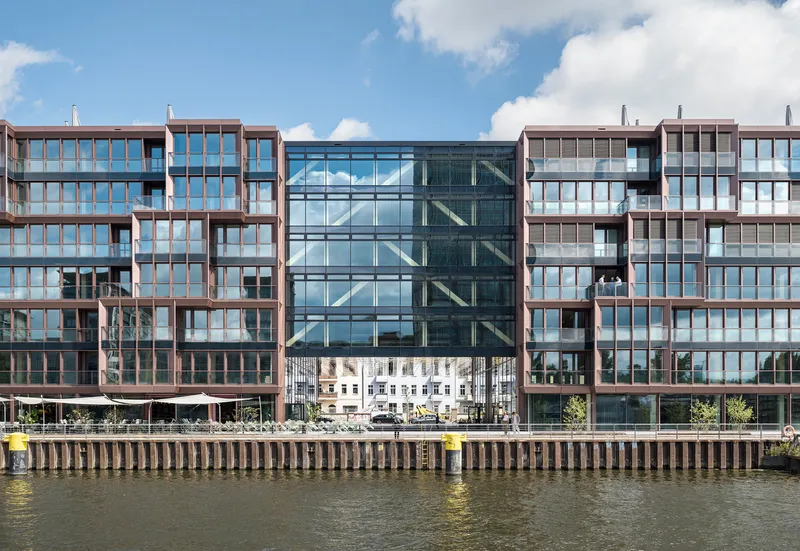
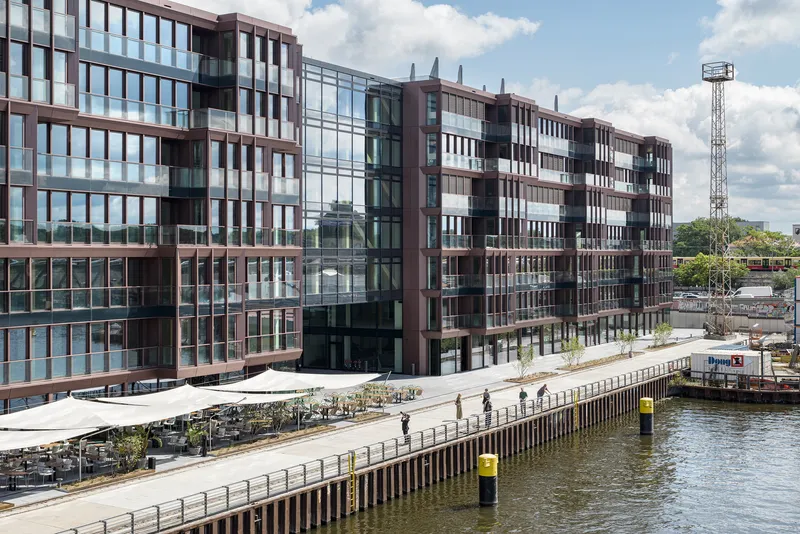
Tchoban Voss Architekten has played a key role in shaping this transformation, designing the nhow Berlin Hotel, the Coca-Cola headquarters, and The White residential complex. The Dockyard project occupies the last available plot along Stralauer Allee, bridging history and modernity with sustainable waterfront design.
Architectural Design and Structure
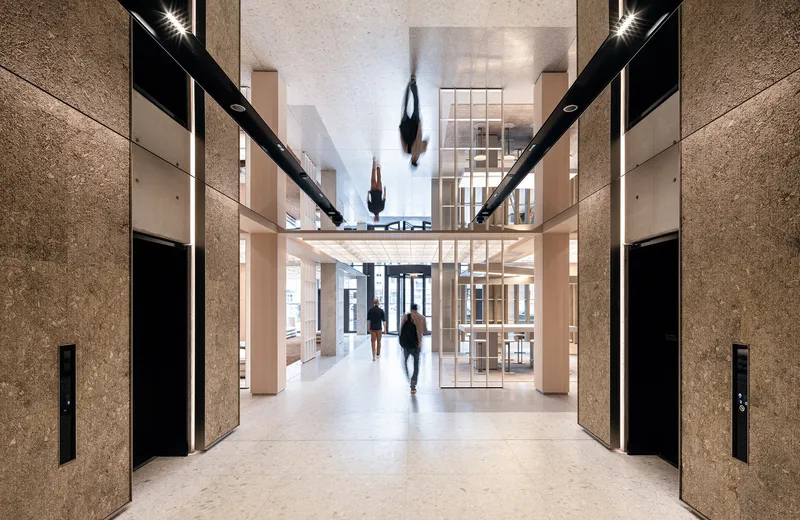
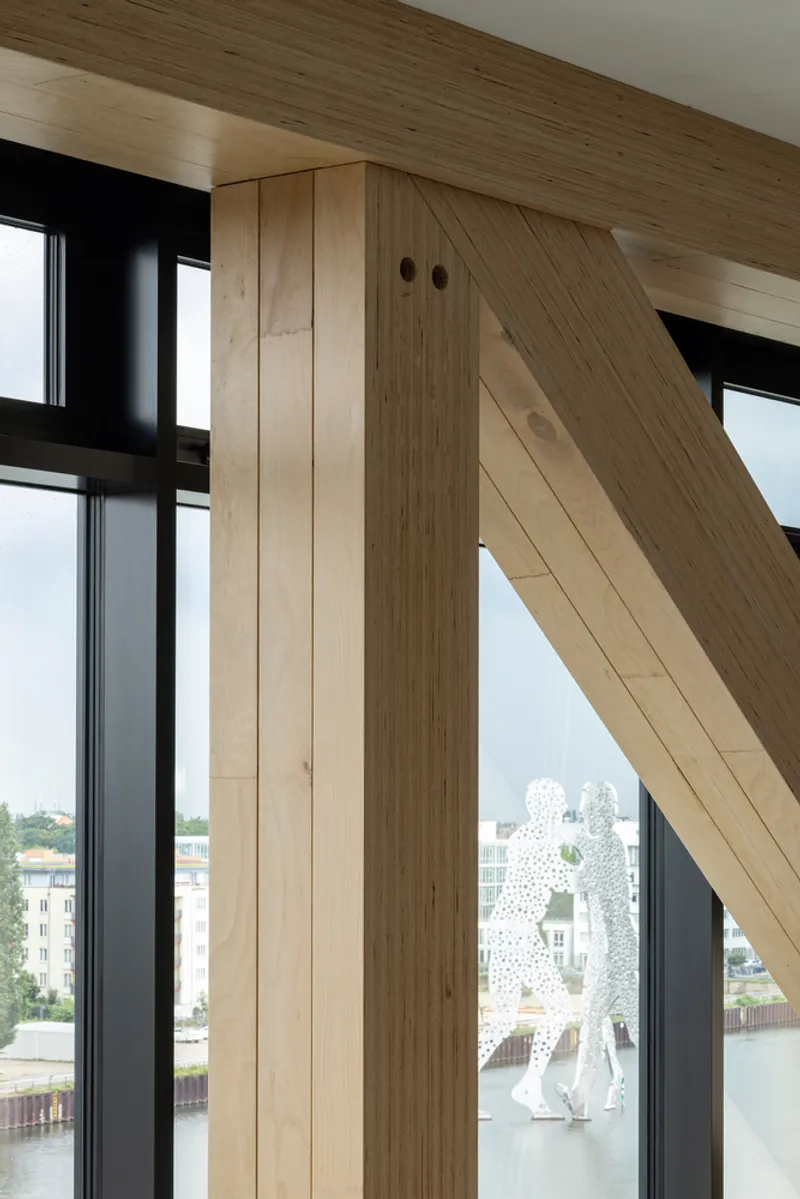
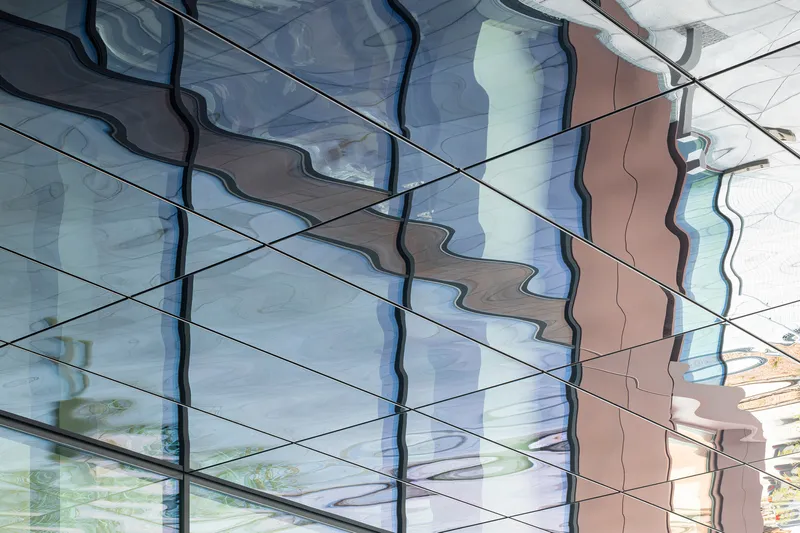
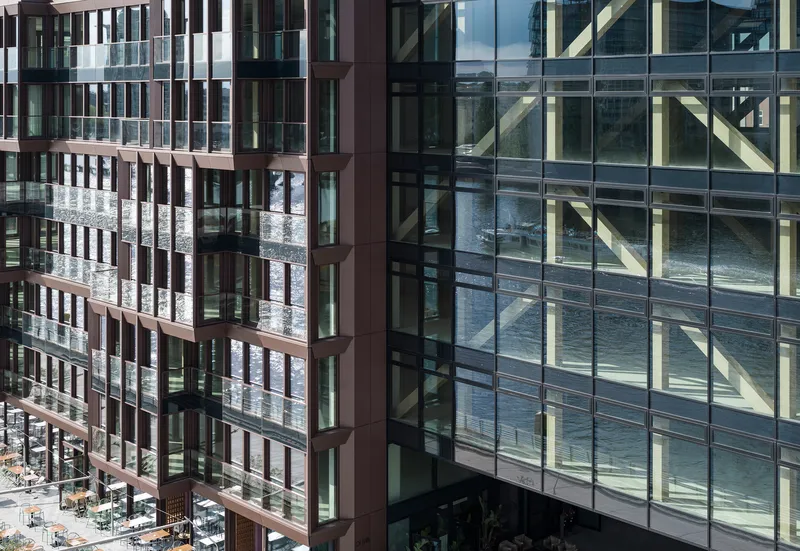
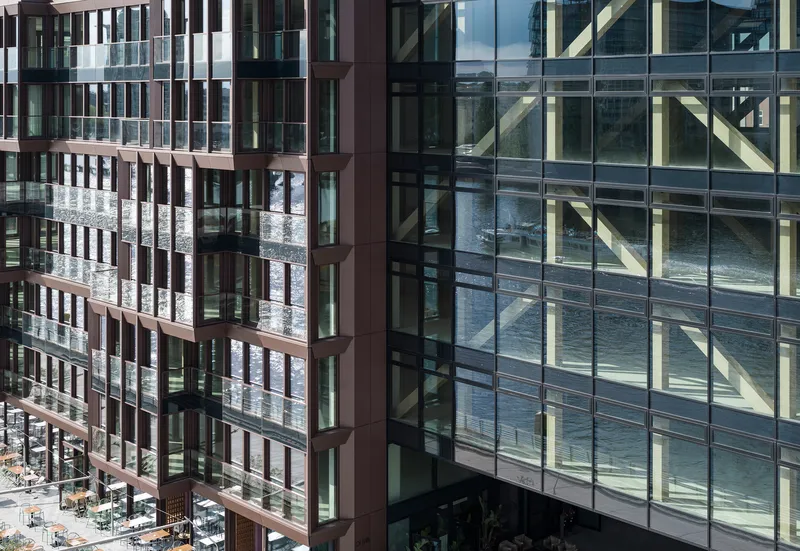
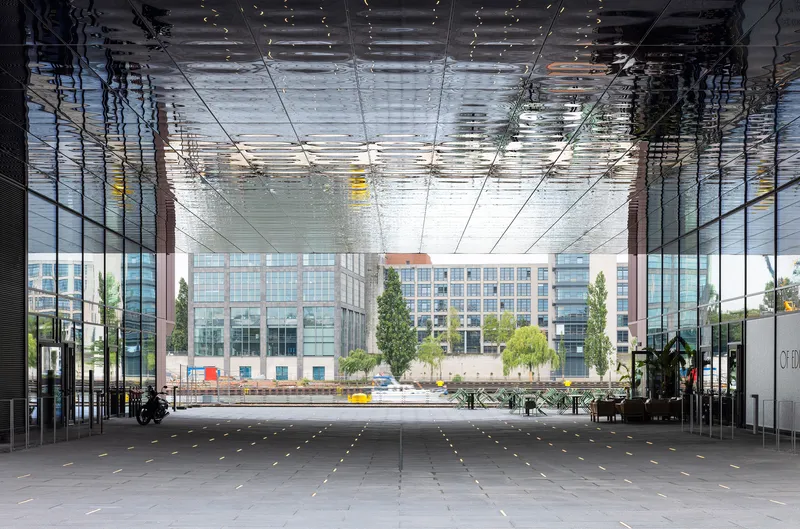
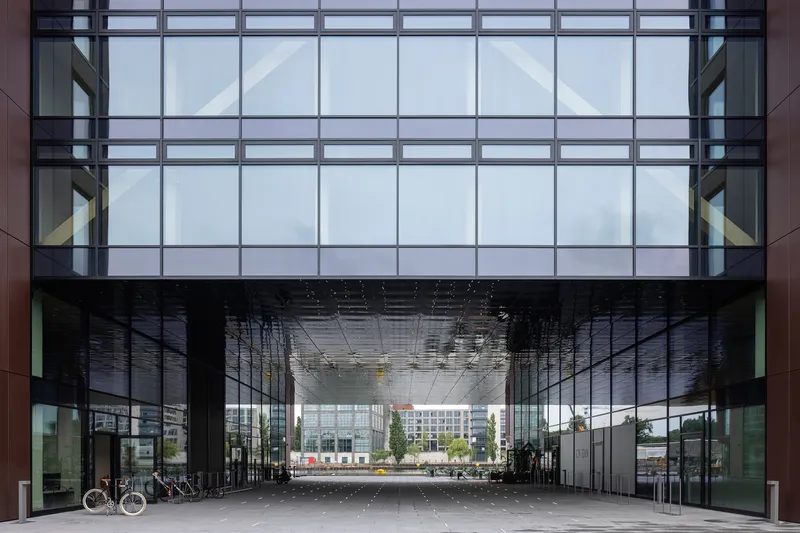
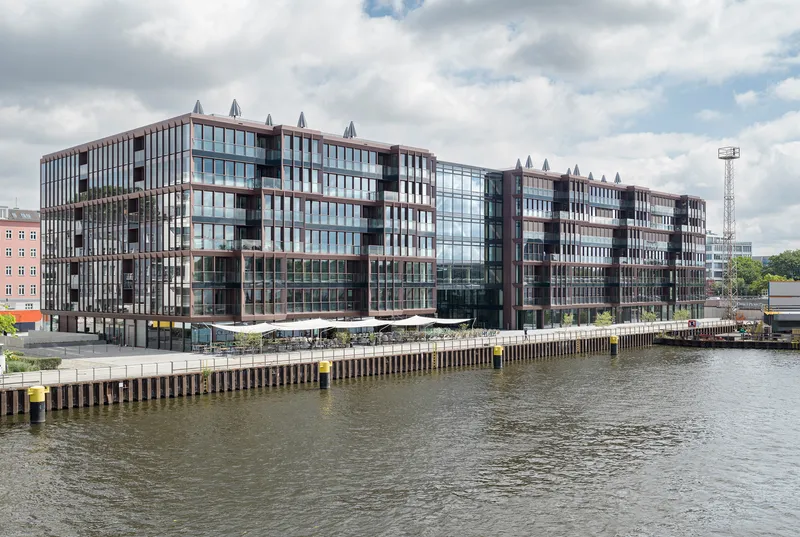
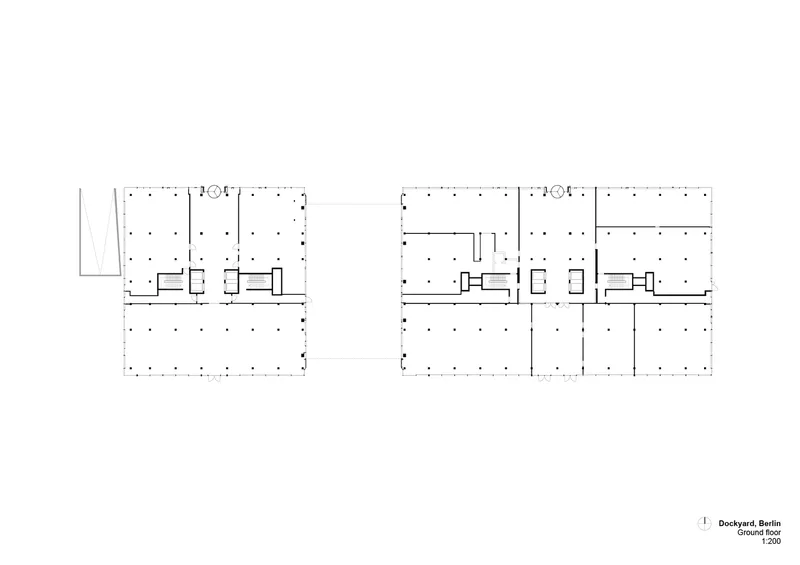
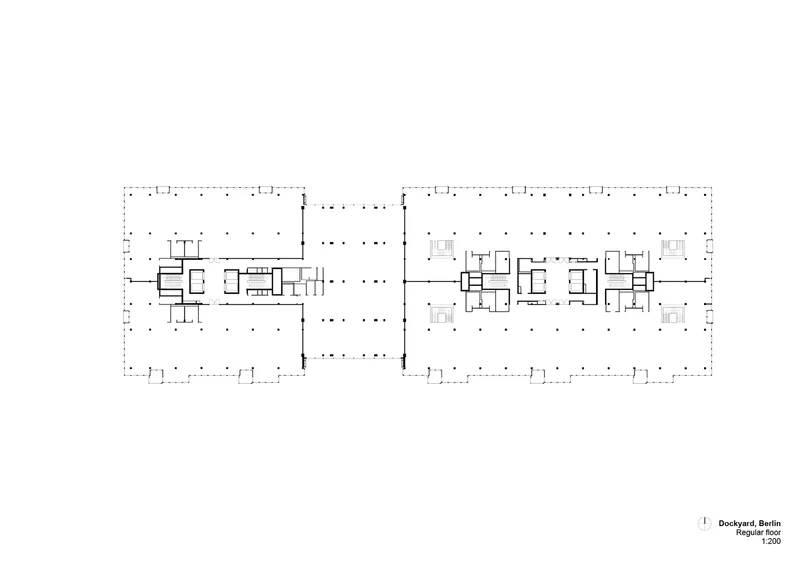
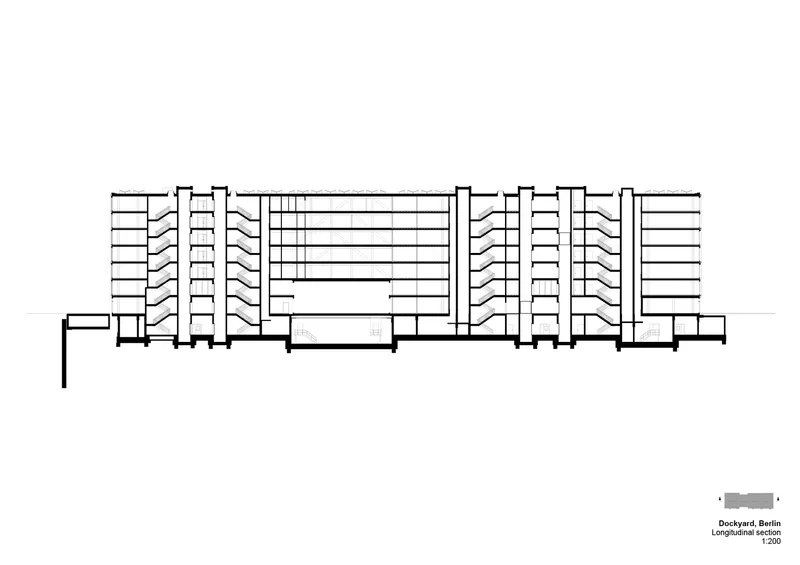
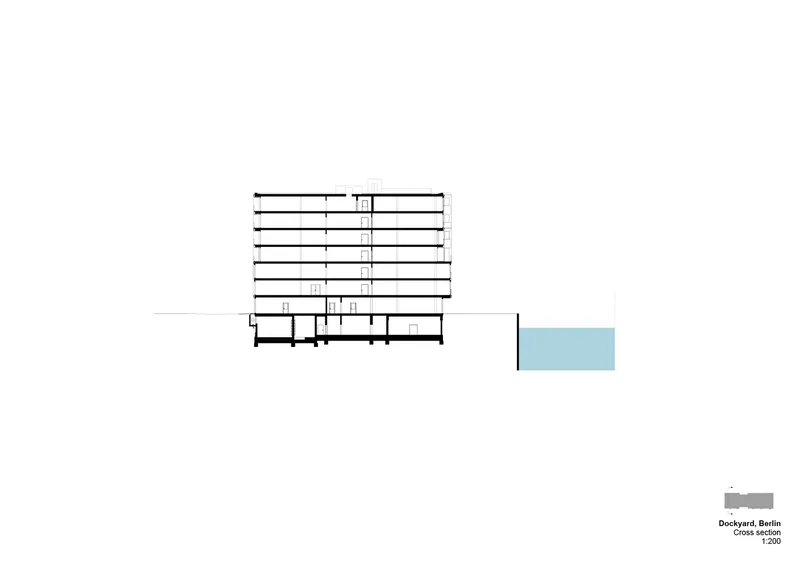
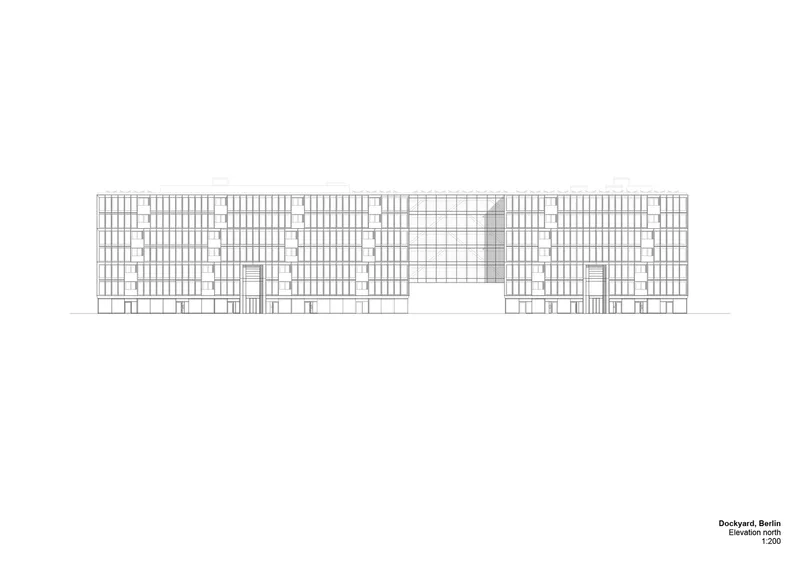
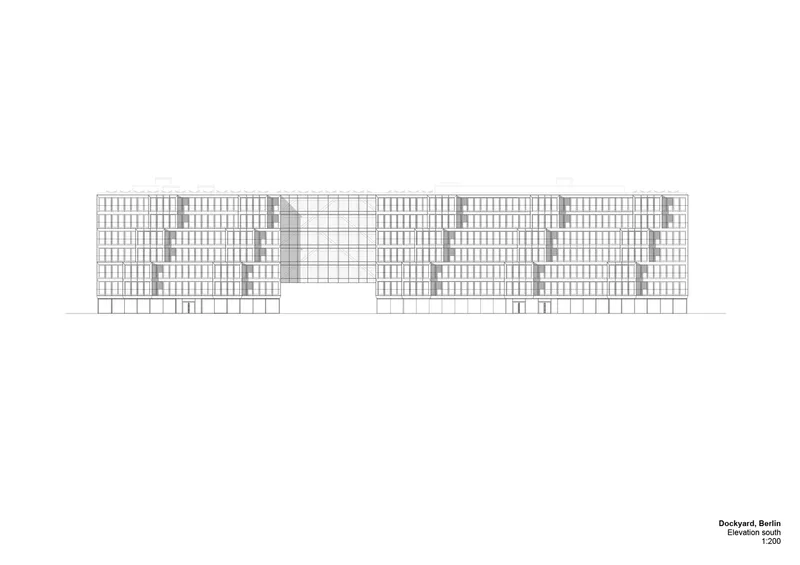
Dockyard consists of two main volumes—one square and one rectangular—linked by a five-storey glazed atrium supported by diagonal timber trusses. The open ground-level passageway frames views of the Spree and Kreuzberg, with a ceiling clad in mirrored stainless steel that reflects the water’s movement.
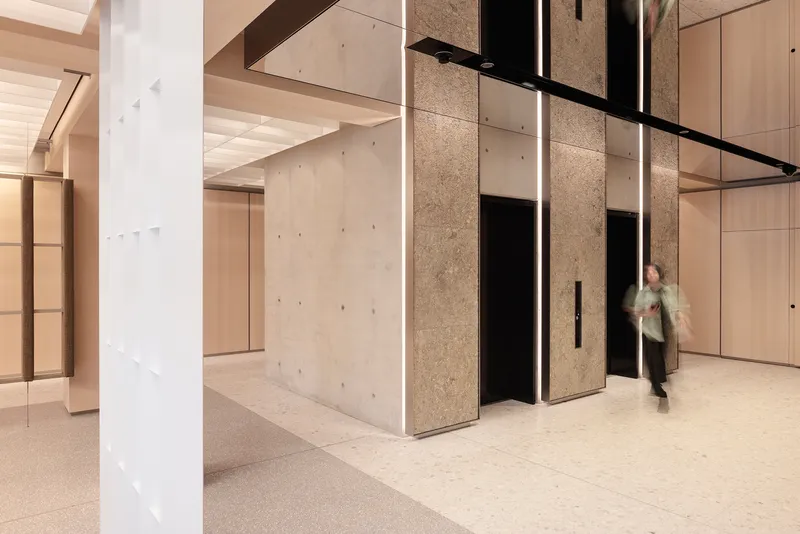
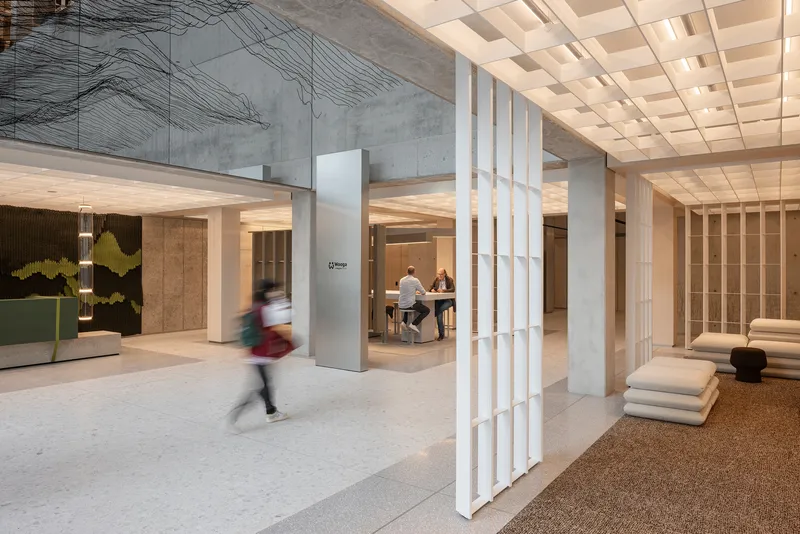
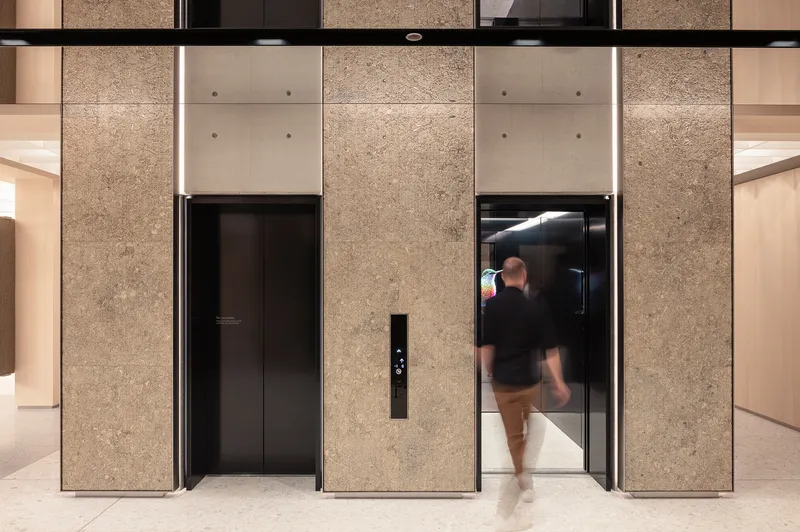
The structural system combines timber and concrete, achieving both flexibility and sustainability. The ceilings are designed as timber-concrete composites supported by DELTABEAM® Green beams made from 95% recycled steel. Prefabricated timber components allow efficient assembly while reducing carbon emissions.
Façade and Exterior Expression
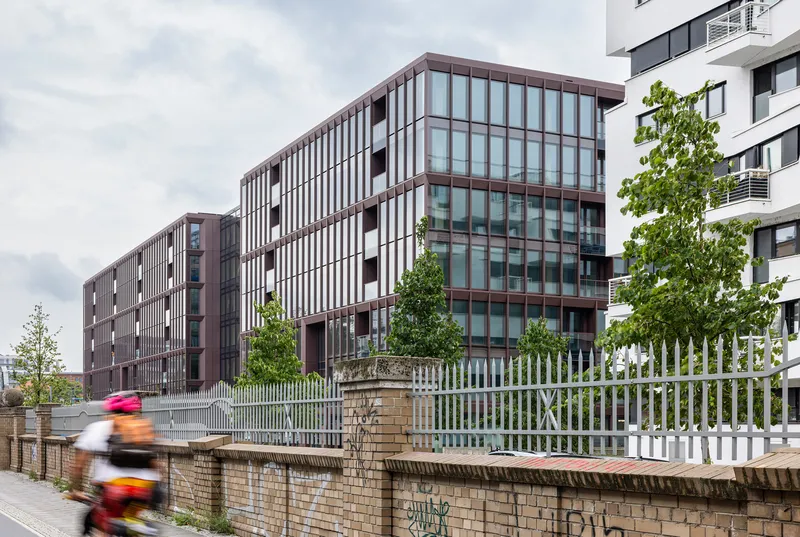
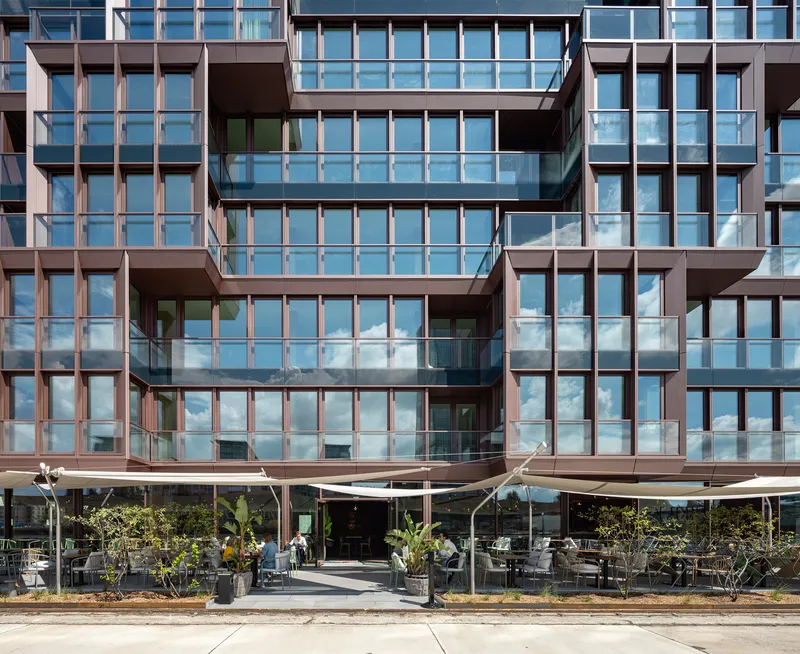
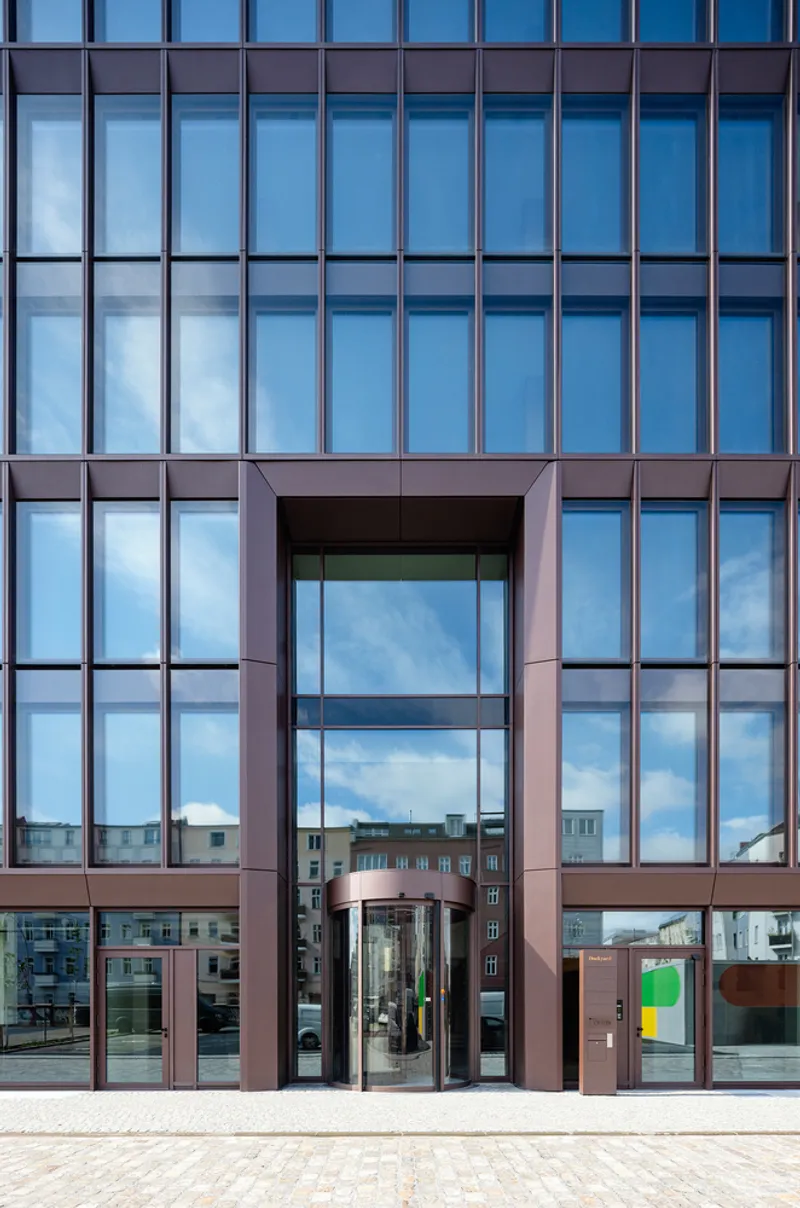
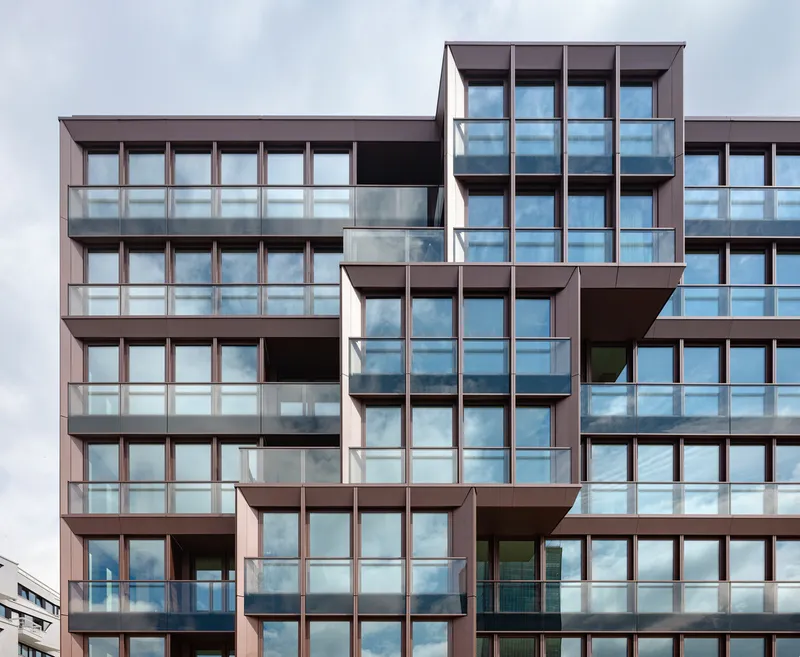
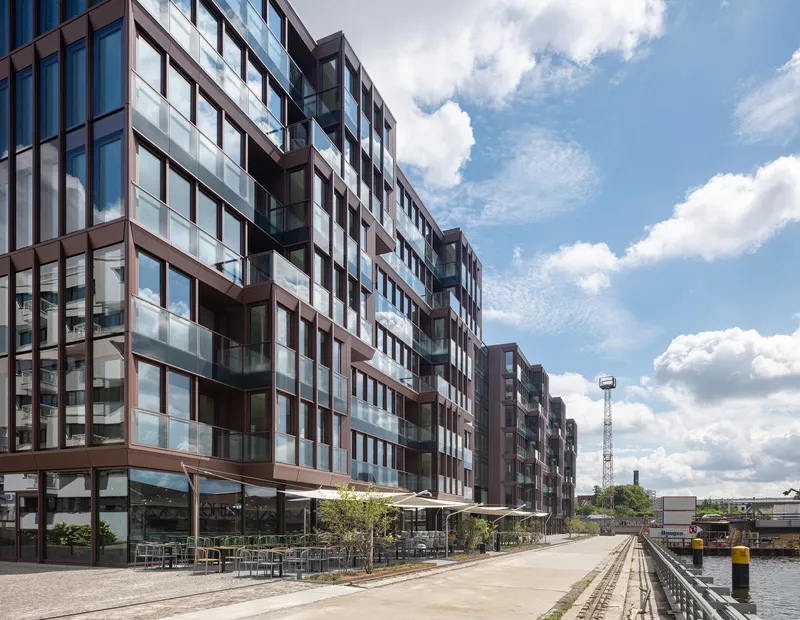
The building’s façades are composed of unitized glass panels with a rhythmic grid of cornices and pilaster strips. The south-facing Spree side features projecting bay windows and balconies, while recessed loggias articulate the north, west, and east façades. Folded aluminium panels highlight the opaque sections, balancing transparency with shading.
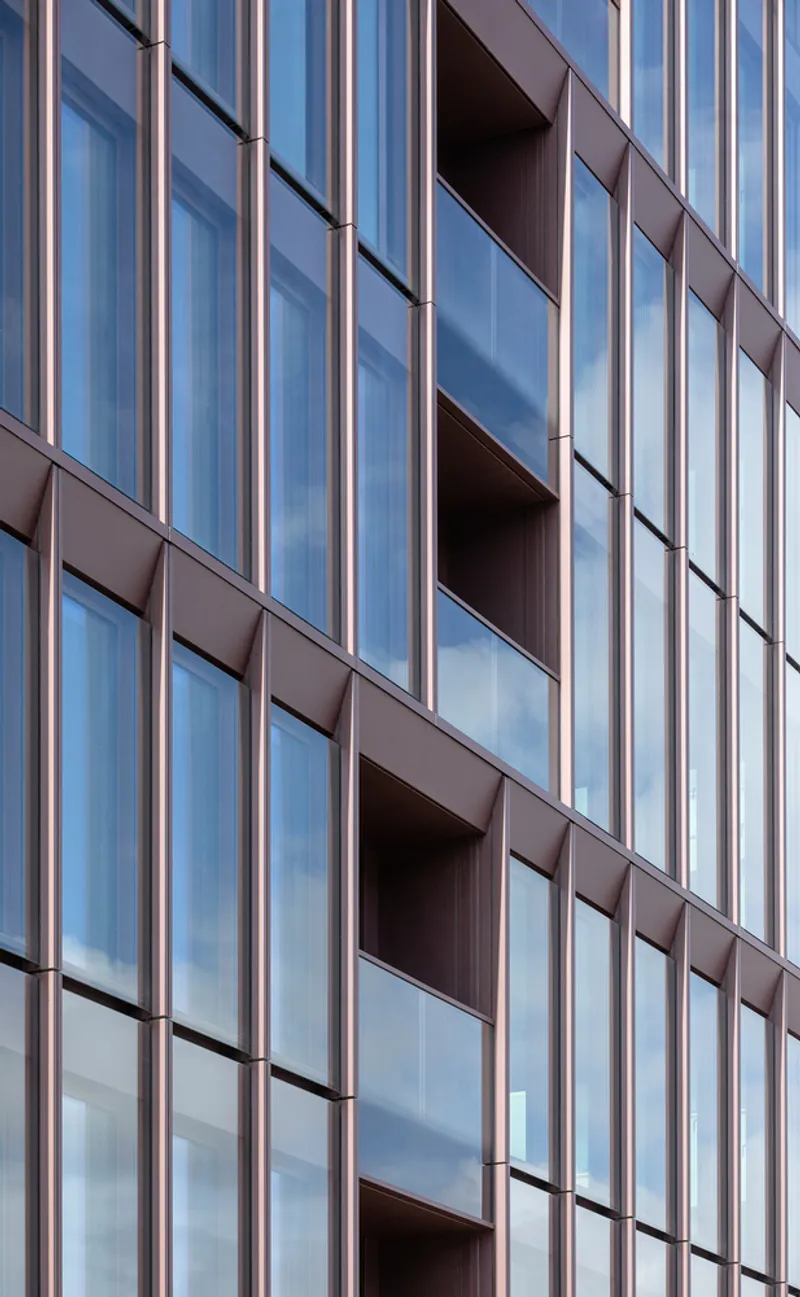
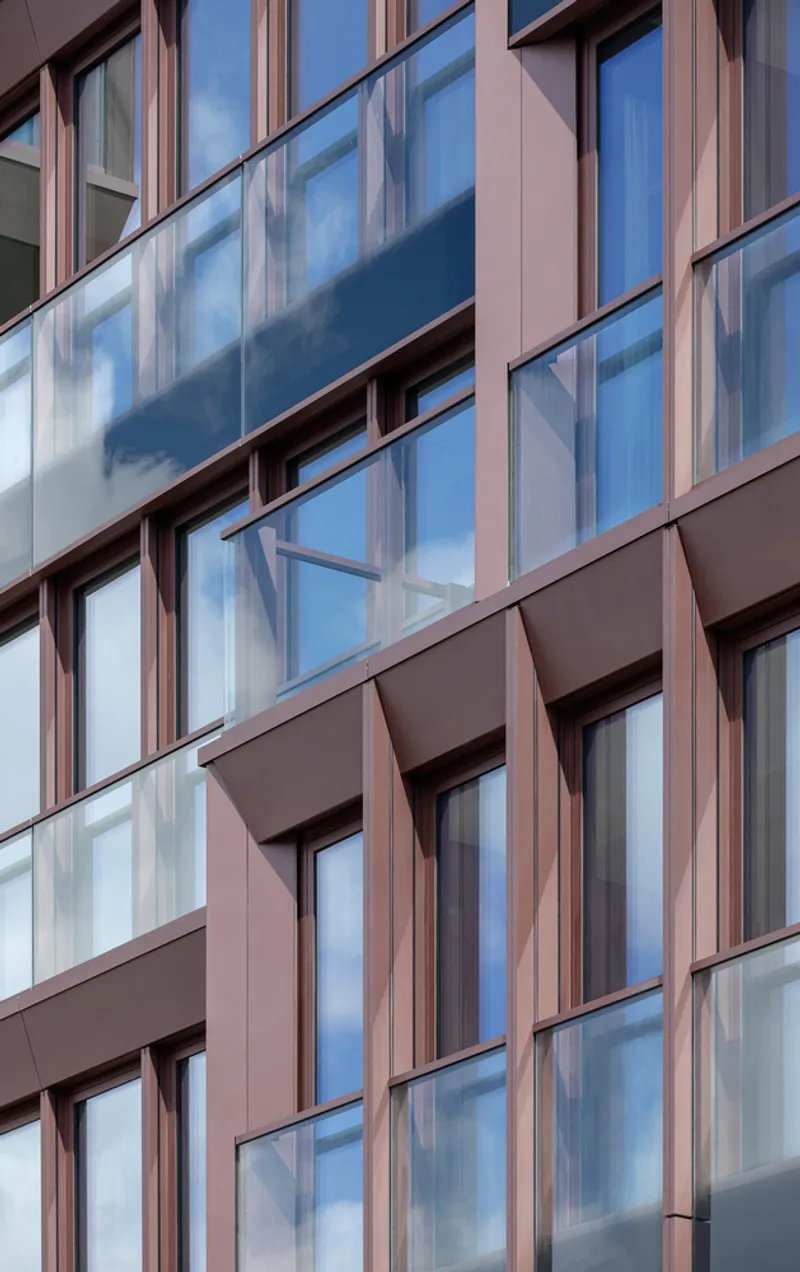
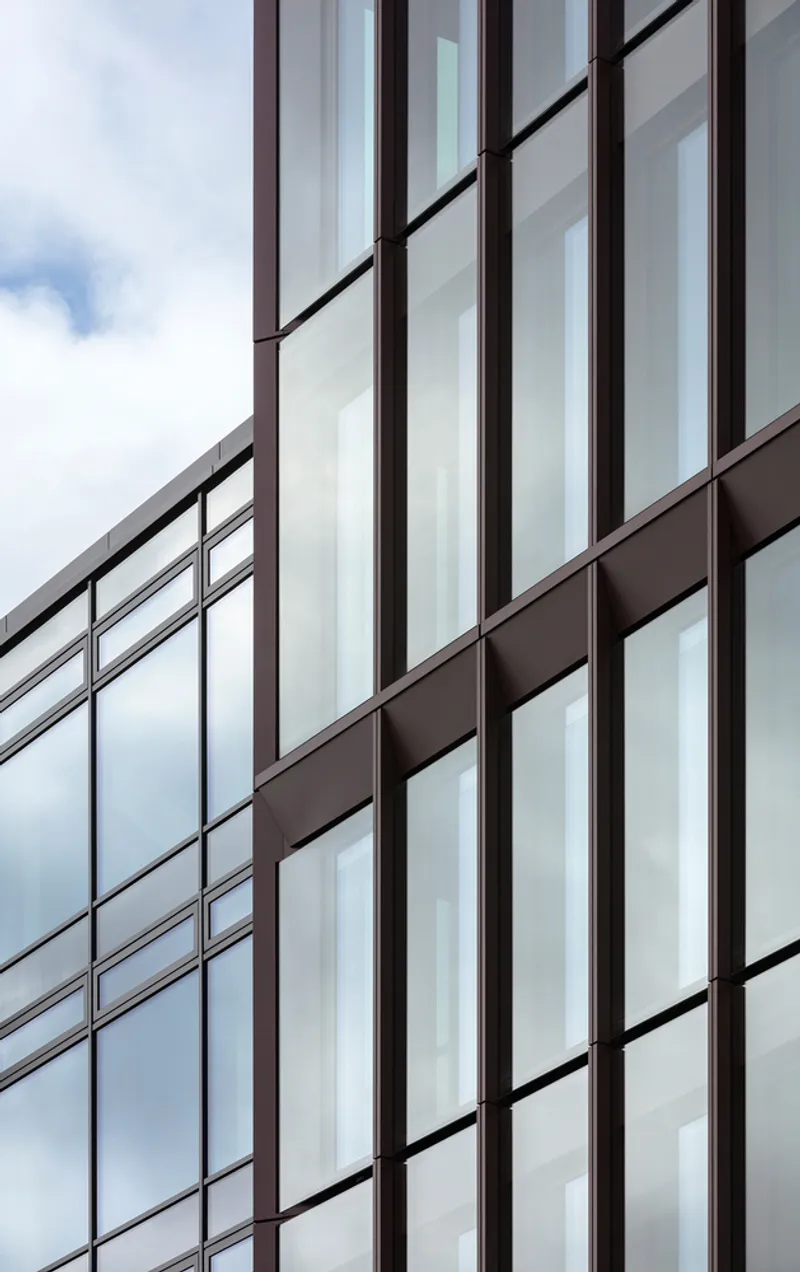
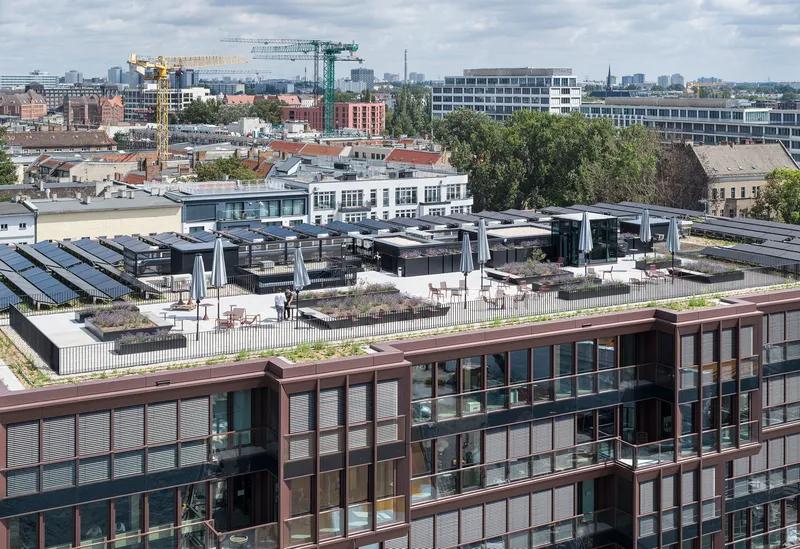
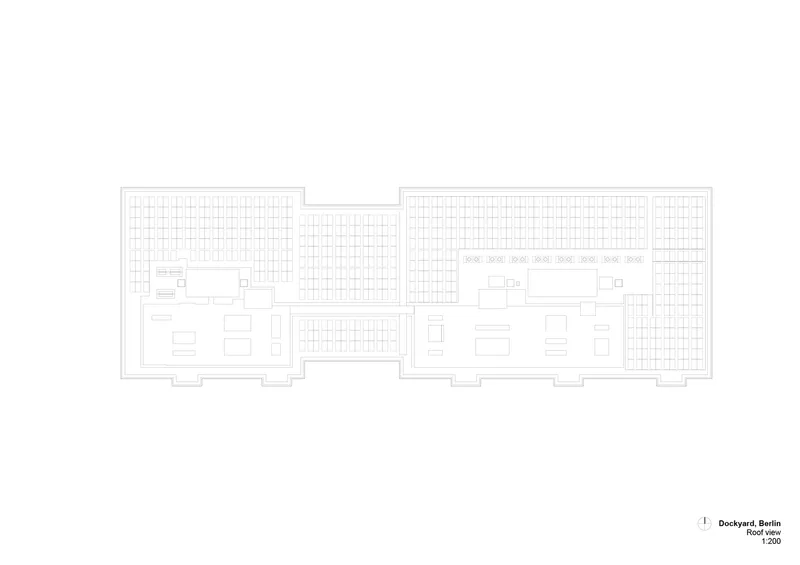
Extensive greenery defines the roof terraces, linked by a footbridge, offering panoramic views of Kreuzberg and the Spree waterfront.
Interior and Artistic Interventions
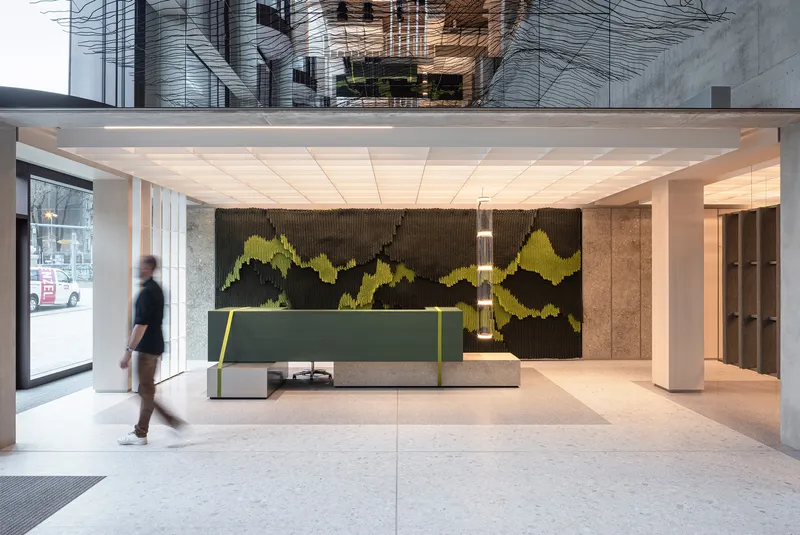
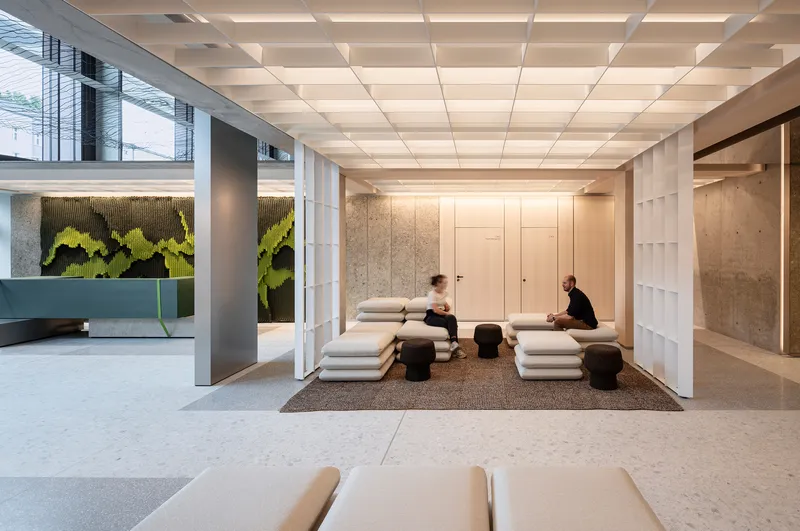
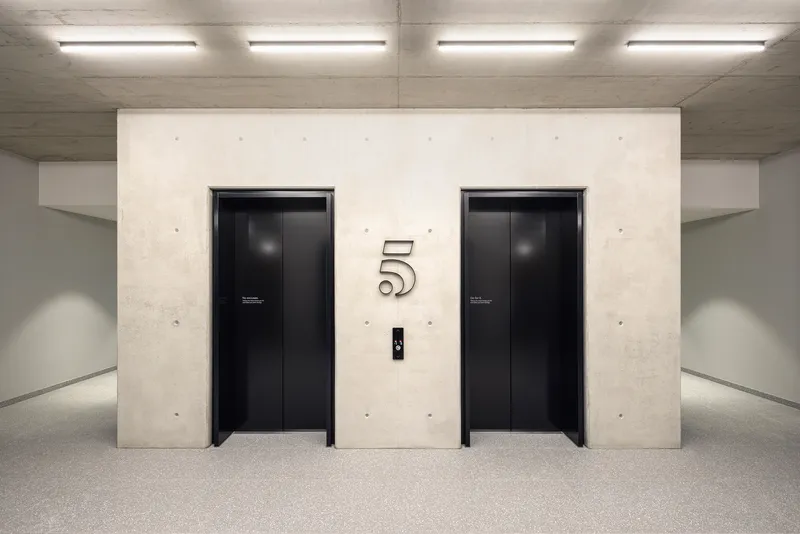
The interiors, designed by Ippolito Fleitz Group, create a welcoming atmosphere with double-height lobbies reaching 6.9 meters. Art plays a central role: Julius von Bismarck’s installation Die Luft muss man sich wegdenken hangs in the lobby, while works by Kwangho Lee and Katrin Bremermann further enrich the environment.
The office floors are designed for maximum flexibility, adaptable to open-plan layouts or smaller office configurations. Ground levels house conference and catering facilities, enhancing Dockyard’s functionality as a workplace hub.
Sustainability and Energy Concept
Dockyard demonstrates how hybrid timber construction contributes to carbon reduction while meeting contemporary performance standards. The building utilizes construction beech and PEFC-certified cross-laminated timber, both sourced from sustainable forestry. Timber’s natural CO₂ storage, combined with recycled concrete and steel, ensures a minimized ecological footprint.
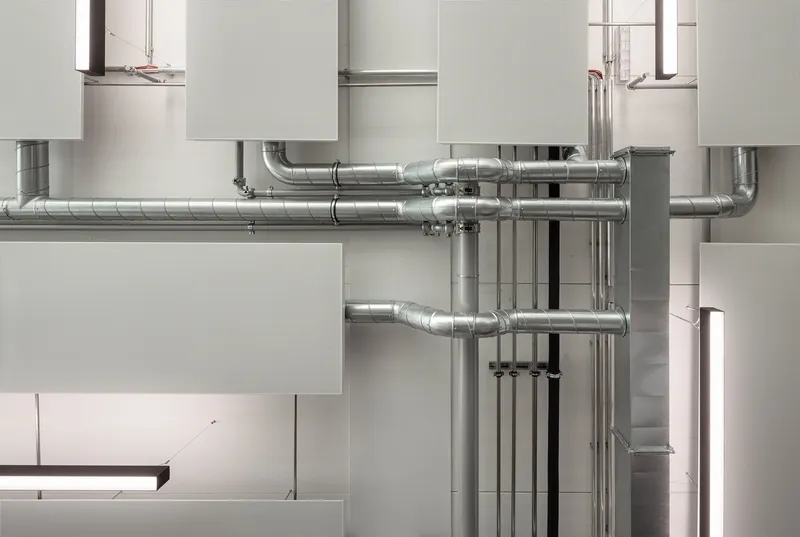
Energy supply is entirely regenerative, relying on solar hybrid collectors, photovoltaic panels, geothermal sources, and ambient air systems. One of Germany’s largest ice storage systems, integrated into a converted freight tunnel, regulates heating and cooling while preserving grey energy. This system enables year-round energy storage and supports net-zero operation.
Certifications and Global Relevance
Dockyard is already WiredScore Platinum certified and is targeting LEED Platinum, LEED Zero Carbon, BEG 55 EE, and WELL Platinum certifications. By integrating advanced building technology with sustainable construction, the project serves as a model for climate-neutral office architecture worldwide.
The Dockyard Hybrid Office Building is more than just a workspace—it is a landmark of sustainable hybrid timber architecture in Berlin. Balancing historical context, innovative design, and climate responsibility, Dockyard redefines the future of office buildings for a post-carbon era.
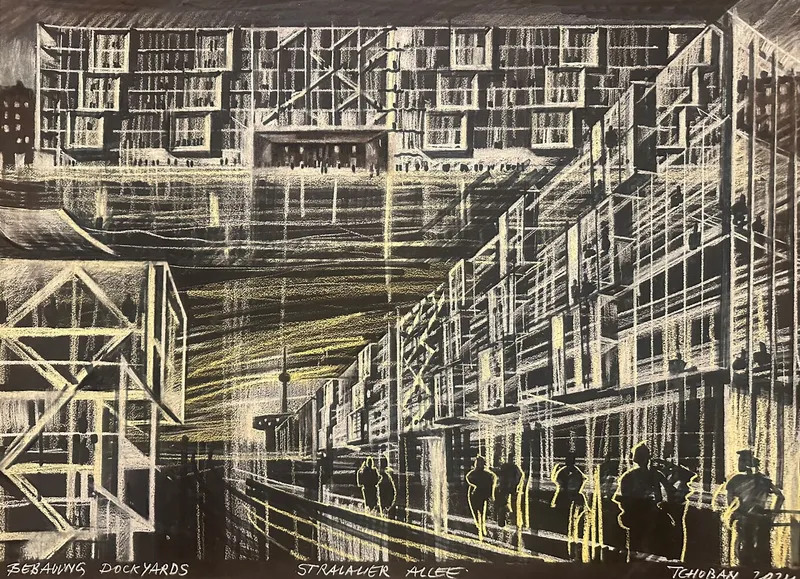
All Photographs are works of HG Esch, Sergei Tchoban


Popular Articles
Popular articles from the community

Tsunami Convergenics: Turning Catastrophic Ocean Forces into Underwater Housing Infrastructure
A speculative underwater settlement off the coast of Onagawa, Japan, treats tsunamis and typhoons as energy sources rather than threats.

The Amber Palace Opera: A Geological Fiction Surfaces on Tallinn's Baltic Waterfront
Pierre Brillard reimagines a Baltic legend as a public landscape, opera house, and waterfront promenade rooted in Tallinn's coastal identity.

Singing Woman: An Opera House That Performs Before the Curtain Rises
Ovidiu Cristian Pavel's conceptual opera house translates Estonia's choral identity into a sculpted waterfront landmark facing the Baltic Sea.

Opera on the Sea: Driftwood Logic Shapes a Timber Opera House on Estonia's Coast
Trevor Orgill's opera house translates the entangled drift of floating timber into a civic building where wood, water, and music converge.

Similar Reads
You might also enjoy these articles

Bamboo Housing Challenge 2026: Design Affordable, Sustainable Homes Using Bamboo
An international design competition by Bamboo U and IBUKU inviting architects and designers to reimagine affordable housing using bamboo — with the winning design built full-scale in Bali.

Computational Design & Education: Beegraphy Design Awards Introduces 7th Category (Featuring Jiyun's Innovative Approach)
Dive into Beegraphy’s 7th Design Awards category, where computational design meets education to create immersive, interactive learning tools, inspired by Jiyun’s work.

From Parametric Lighting to Urban Furniture: Join the 2nd Workshop in Beegraphy’s Computational Design Series
Dive into Cutting-Edge Design Techniques and Practical Applications with Industry Experts

Last Call: Unleash Your Architectural Genius in SHAK's Kindergarten Design Competition
Urgent call for architects to join SHAK's kindergarten design competition before the looming deadline

Explore Hybrid Architecture Competitions
Discover active competitions in this discipline

Challenge to reimagine the Iron Throne

Photograph architecture without architects

Illustrate the lost glory of Angkor Wat - Render Challenge

Design challenge to reuse E-waste
Comments (0)
Please login or sign up to add comments
No comments yet. Be the first to comment!