

Double Header House by D’Arcy Jones Architects: Innovative Multi-Generational Living in Victoria, Canada
The Double Header House features mirrored volumes, steel cladding, and courtyards, enabling multi-generational urban living with privacy, sunlight, and flexible design.


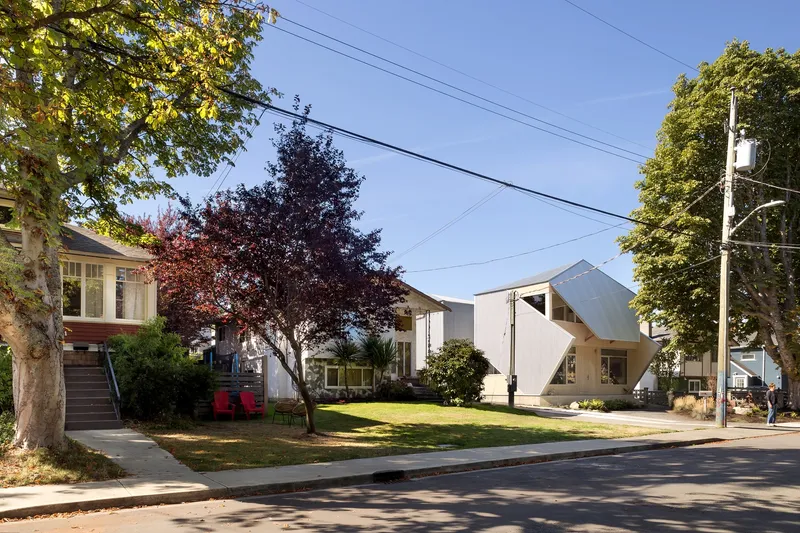
The Double Header House by D’Arcy Jones Architects redefines urban residential design for multi-generational living in Canadian cities. Breaking away from the typical basement suite arrangement, this innovative home introduces two mirrored volumes connected by a central functional spine, creating a versatile, compact living solution that accommodates three generations or six to eight people on a standard urban lot.
Design Concept: Mirrored Volumes & Functional Spine
Instead of the conventional duplex, the Double Header House is composed of two distinct volumes: the larger suite houses adult children and grandchildren, while the smaller apartment-like suite provides a comfortable home for grandparents. These volumes are linked by a shared stair landing and soundproof airlock, allowing flexible use as either a combined household or separate residences. This thoughtful design anticipates future needs, including the possibility of unrelated occupants sharing the duplex.
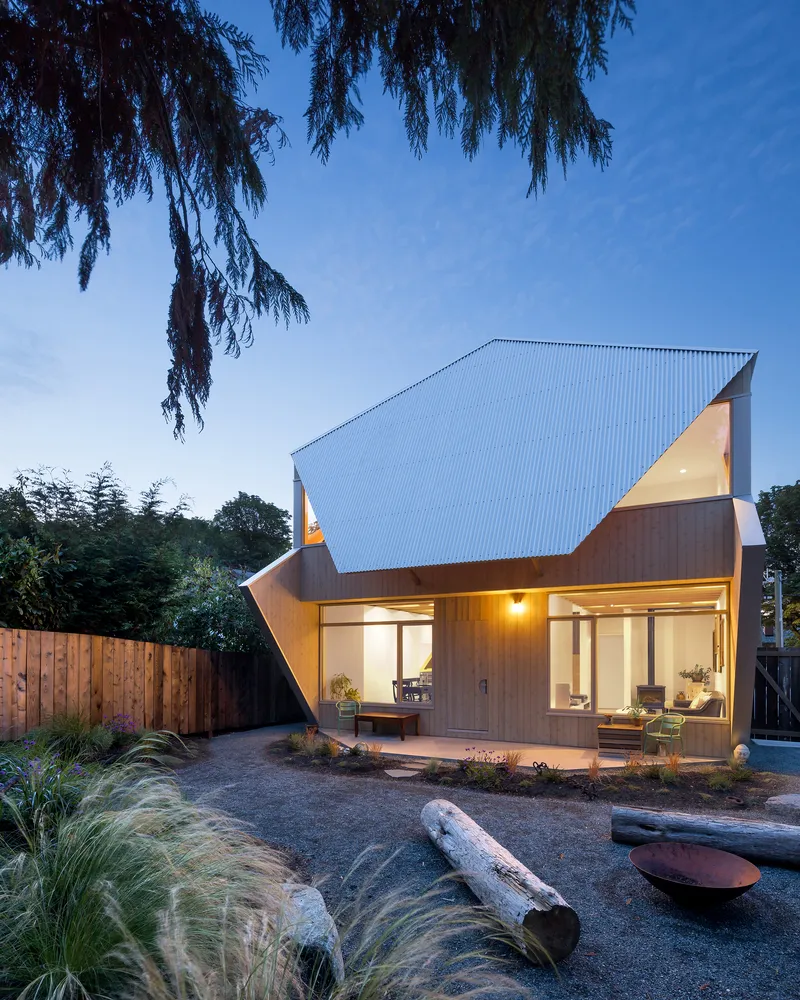
Clad in galvanized steel shells, the home opens towards both the front and rear yards like metallic flowers, creating indoor-outdoor connectivity that enhances natural light, airflow, and visual connection to landscaped spaces. The sculptural pyramidal roofs further unify the volumes while concealing differences in floor plan sizes, ensuring construction efficiency with repeated detailing.
Multi-Generational Lifestyle & Courtyard Design
The house’s hourglass-shaped plan is driven by lifestyle requirements for each generation. The grandparents enjoy an east-facing courtyard that captures the morning sun, while their children and teenagers benefit from a west-facing courtyard perfect for after-school relaxation and sunset views. Both courtyards provide space for barbecuing, herb gardening, and safe play for pets, while large porches extend living spaces into the landscape without compromising privacy.
Materials & Sustainability
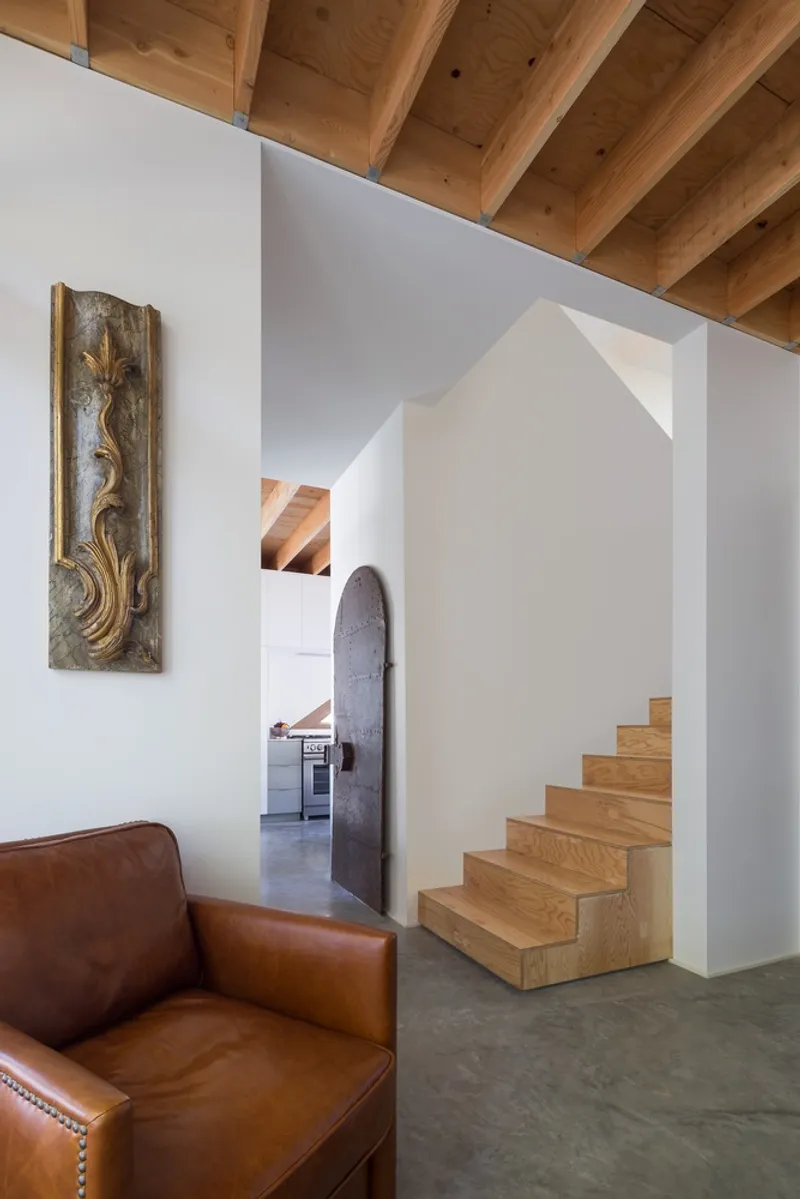
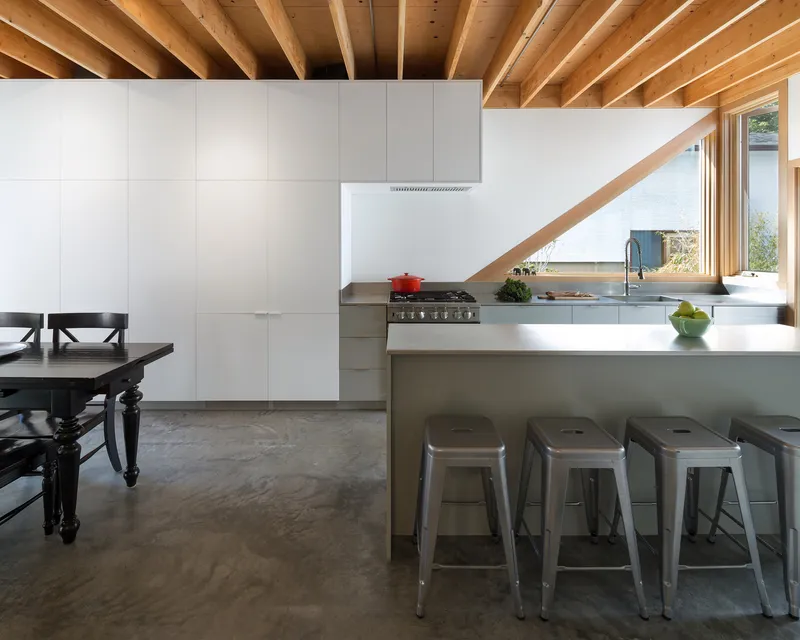
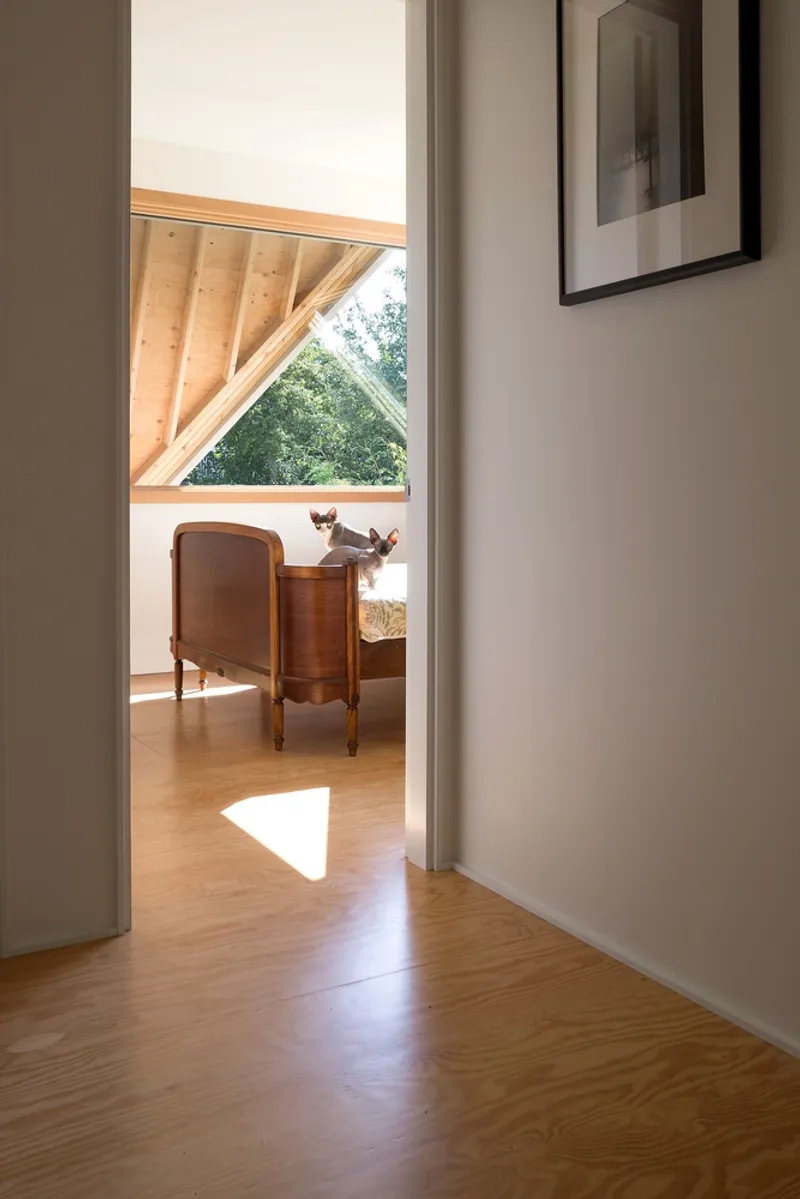
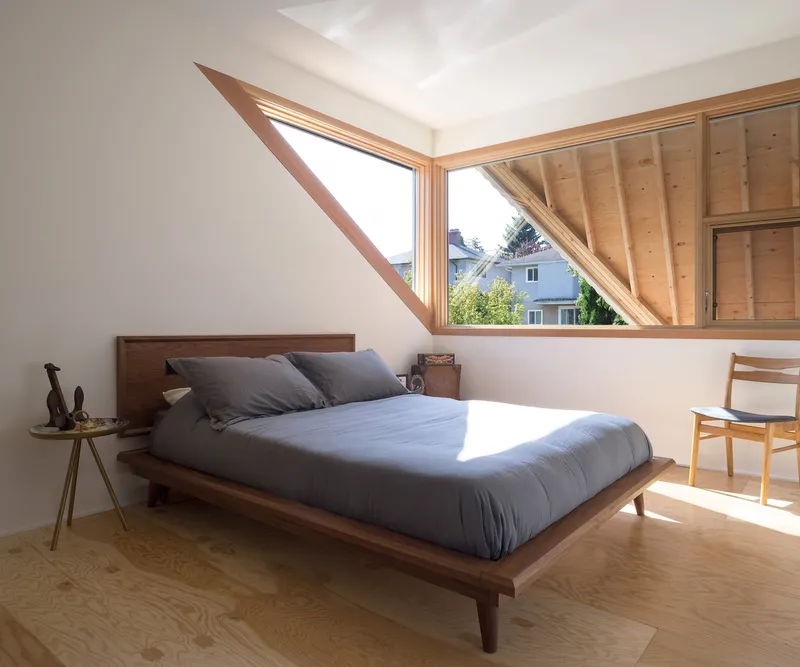
The Double Header House combines raw cedar siding, wood-framed windows, galvanized corrugated metal cladding, and concrete slabs, all selected for durability and minimal maintenance. Over time, these materials develop a natural patina reminiscent of a rustic barn, enhancing the home’s character while supporting low-maintenance living. Inside, exposed 2x10 joists and plywood floors contribute to a casual, unfinished aesthetic, reflecting the client’s desire for unpretentious, lively spaces that celebrate everyday life.
Architectural Innovation & Neighborhood Context
Angular windows and adjustable wall fins frame views selectively, shielding the interiors from less desirable surroundings while maximizing visual connection to landscaped yards. The house blends functionality with sculptural interest, demonstrating how creative design can respond to zoning regulations while offering a flexible, livable solution for urban multi-generational households.
All photographs are works of
Sama Jim Canzian


Popular Articles
Popular articles from the community

Opera by the Sea Estonia: Three Shells Dissolving Architecture into Tallinn's Coastline
A winning opera house proposal replaces monumental form with interconnected shells that blur the boundary between building, park and Baltic Sea.
Extended Shell: Retrofitting Kolkata's Balconies as Living Urban Thresholds
A modular retrofit system recovers the social and environmental intelligence of Kolkata's historic verandas for contemporary Park Street residents.
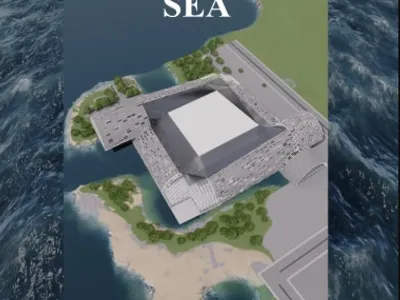
Opera on the Sea: Driftwood Logic Shapes a Timber Opera House on Estonia's Coast
Trevor Orgill's opera house translates the entangled drift of floating timber into a civic building where wood, water, and music converge.
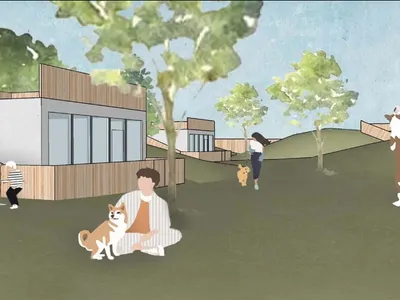
Temporary Home for Dogs: A Reversed Zoo Rethinks Animal Shelter Architecture
In Bucharest, a sinuous corridor and freed landscape flip the logic of containment, designing a shelter that works to make itself unnecessary.

Similar Reads
You might also enjoy these articles


Hodi-Mandai Geram
Project Function: Preservation and revitalization of the Intangible heritage and socio-spatial identity of the Hodi by Housing, Cultural Memory Center, Sacred Grove, landscape, local tourism economy

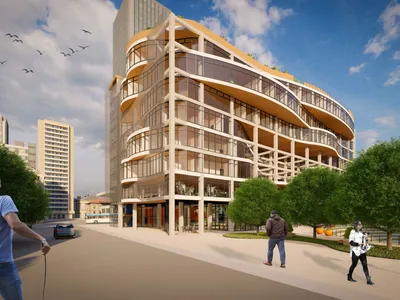
Olio Towers: A Mid-Rise for Performers That Fuses Housing, Rehearsal, and Stage
Located blocks from Houston's Theater District, this modular tower stacks living units around a central performance atrium.
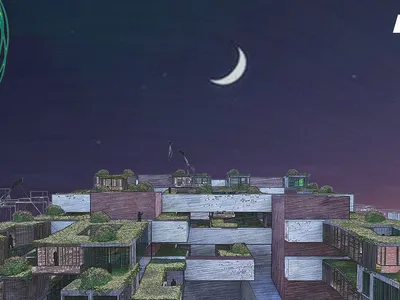
Oasis: Modular Green Housing Carved into Dhaka's Urban Fabric
A shortlisted Plugin Housing entry reclaims unauthorized settlements in Dhaka with stepped concrete volumes, green roofs, and ventilation-driven design.

Black Hole: A Floating Megastructure for the Post-Physical Era
Emiliano Mazzarotto envisions a spherical, self-scaling arena where e-sports, digital hotels, and holographic stadiums replace traditional public space.

Explore 2X1 Architects Competitions
Discover active competitions in this discipline

Challenge to reimagine the Iron Throne

Photograph architecture without architects

Illustrate the lost glory of Angkor Wat - Render Challenge

Design challenge to reuse E-waste
Comments (0)
Please login or sign up to add comments
No comments yet. Be the first to comment!