
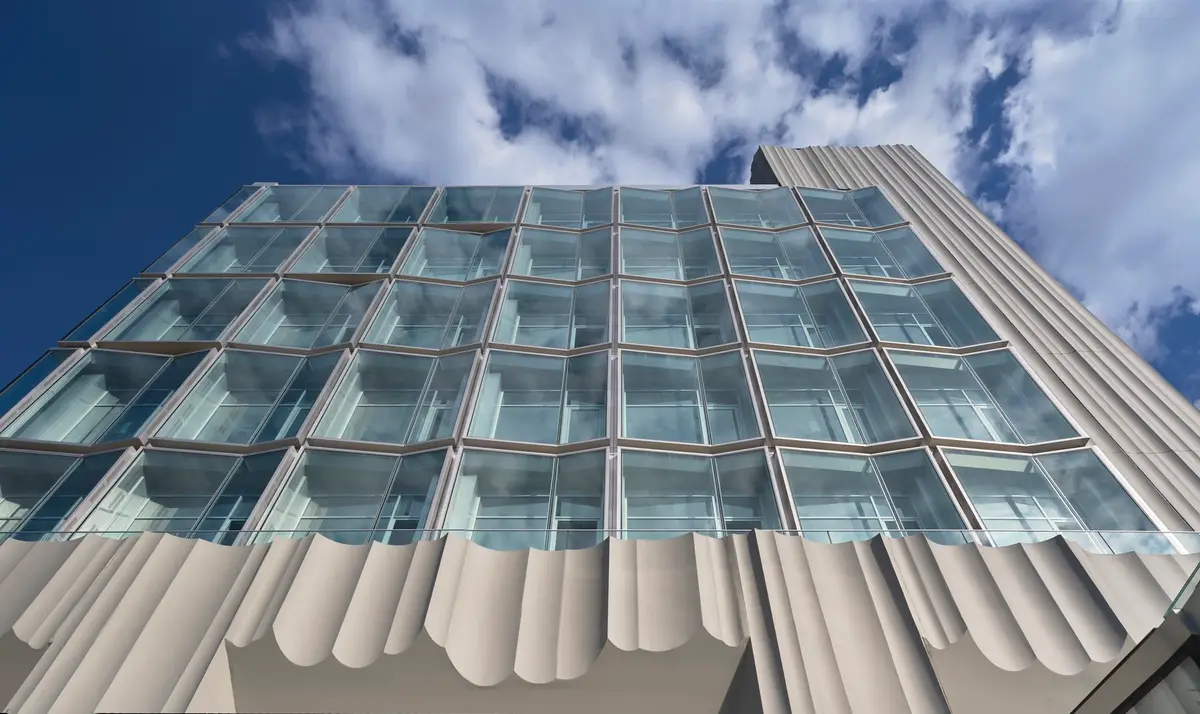
Double Skin Facade Architecture in Quartz Plaza by Salon Alper Derinbogaz
Quartz Plaza explores double skin facade architecture rooted in geological inspiration, merging sustainability, material expression, and adaptive office design.


A Geological and Architectural Convergence in Istanbul
Quartz Plaza by Salon Alper Derinbogaz is a modern office building in Istanbul that embodies the principles of double skin facade architecture. Designed with deep geological sensitivity, this project anchors itself to the ancient geological strata of the city, presenting an architectural narrative rooted in the land’s tectonic history. Inspired by the Miocene Epoch formations that define the site’s geology, Quartz Plaza reimagines the office typology by intertwining architecture with geomorphological understanding.


A Design Inspired by Earth’s Lithology
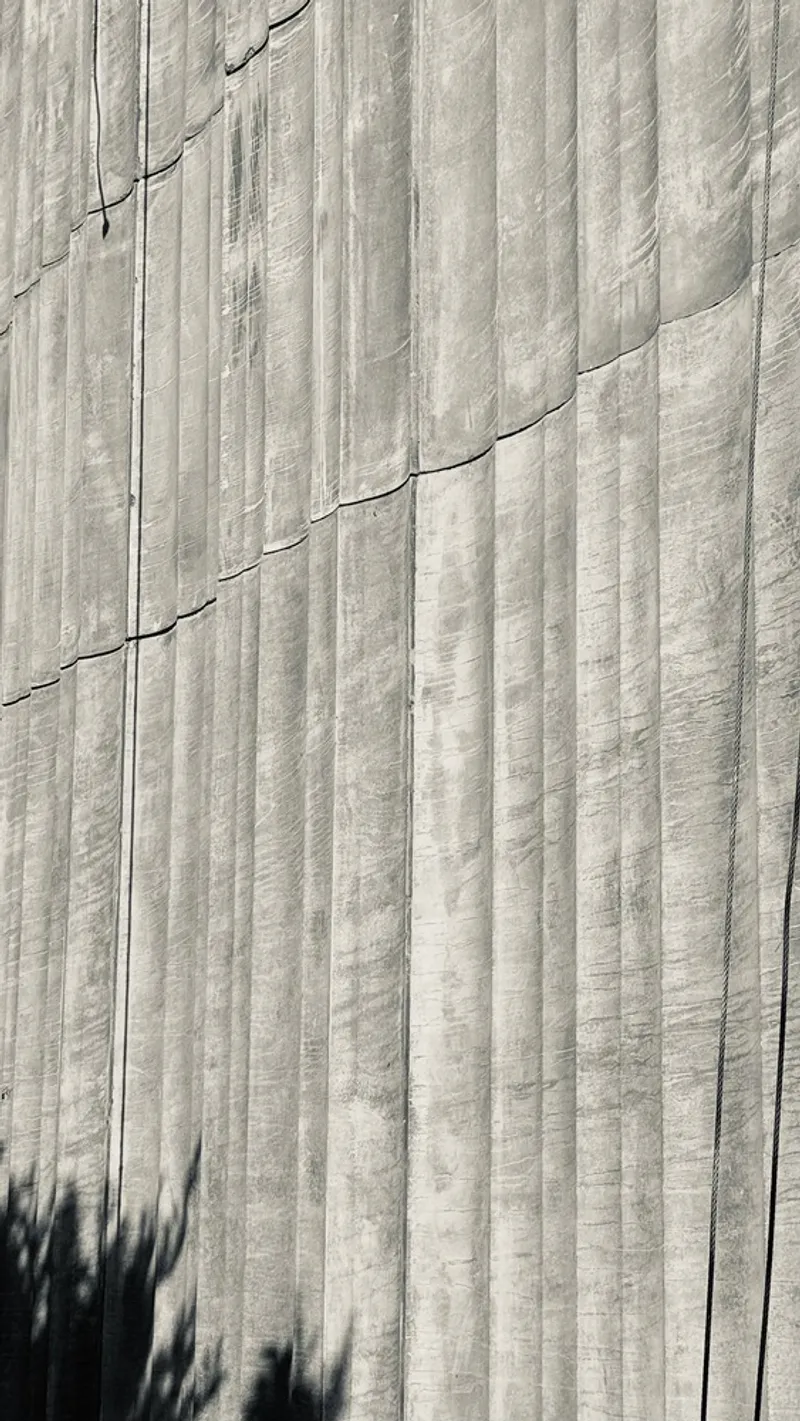
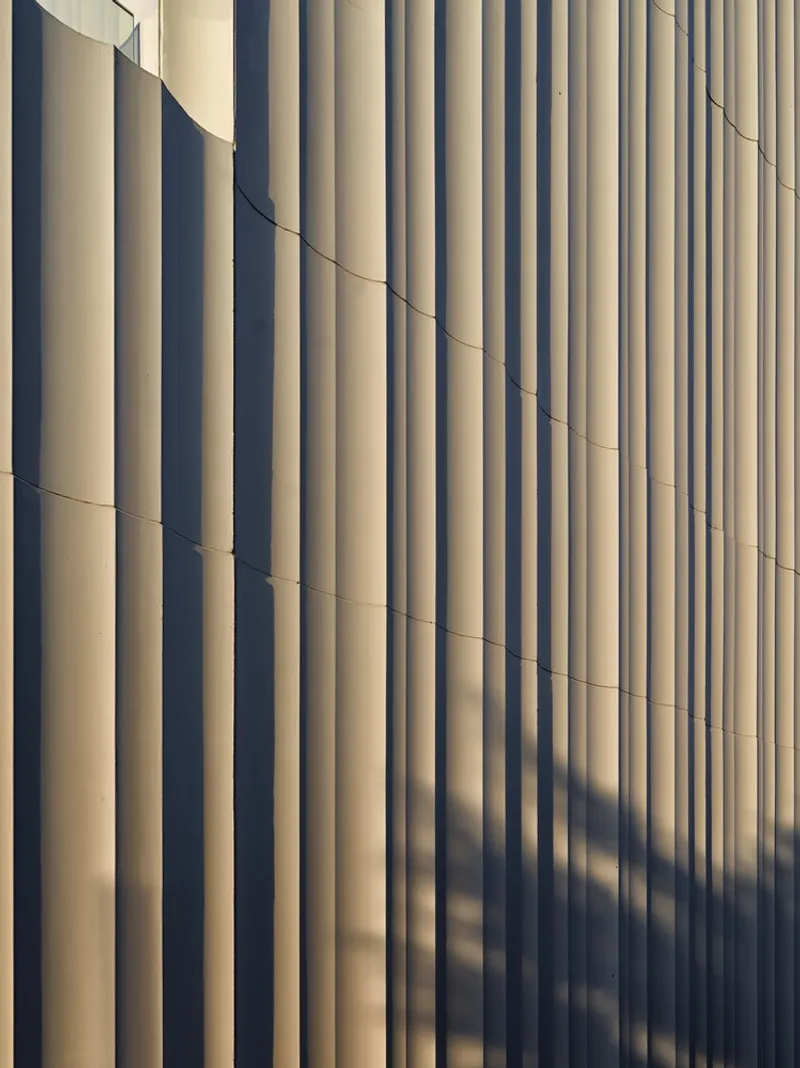
The project responds to the specific geological composition of the site, primarily formed by schist—a metamorphic rock known for its parallel mineral alignments. The vertical textures on the building's exterior mimic these formations, with particular influence from mica and quartz, two minerals found within schist. This influence informs both the materiality and architectural language of the façade.
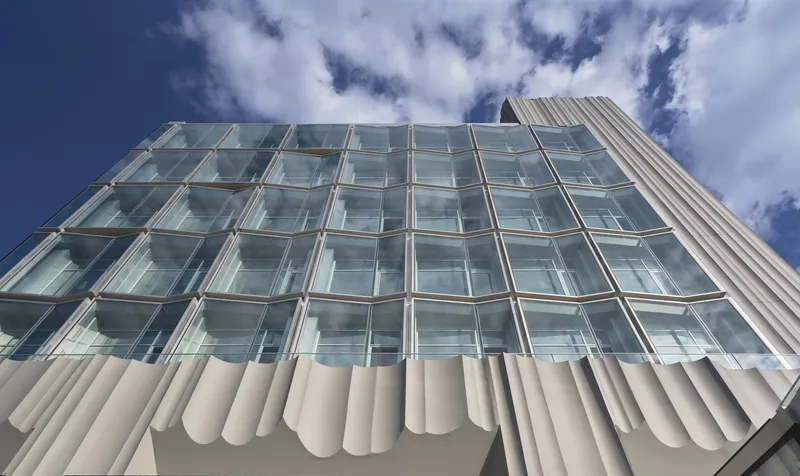
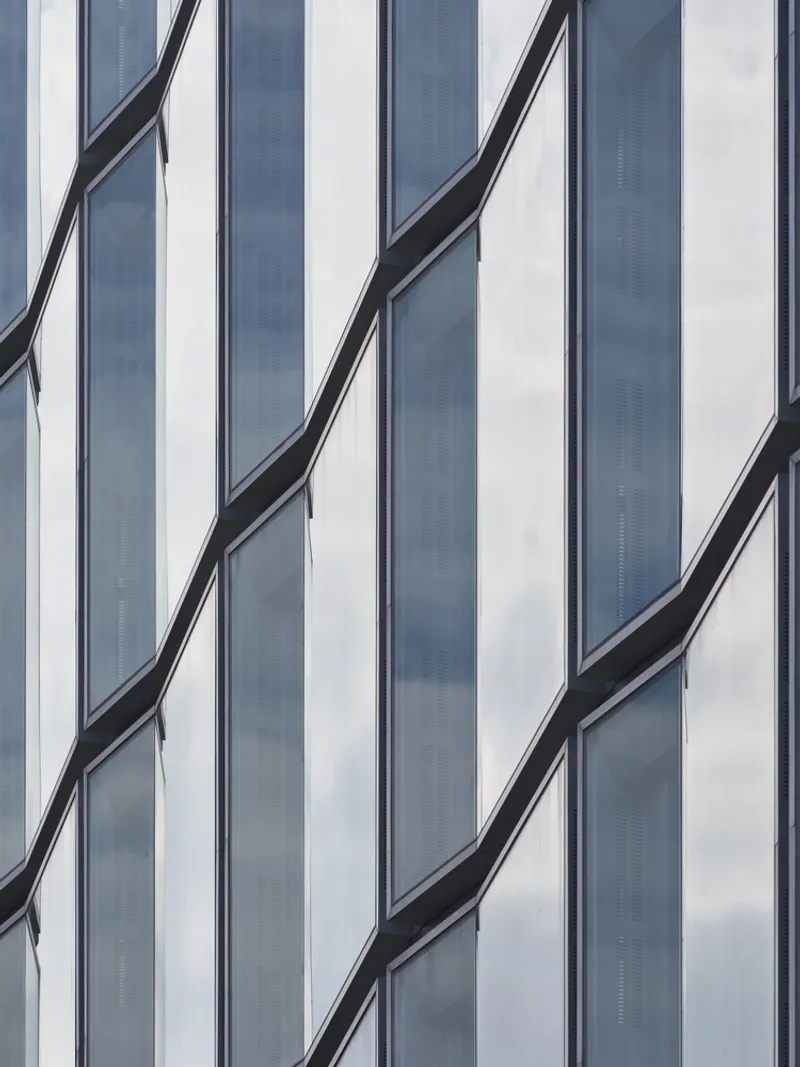
The name “Quartz Plaza” isn’t symbolic alone; it reflects a deliberate material choice. Glass, designed to evoke the crystalline refraction of quartz, plays a central role in shaping the building’s image and light behavior. The angled glass panels on the façade establish a crystal-like effect, refracting light and mirroring surroundings to form a visually dynamic envelope.

Reframing Glass: From Transparency to Tactility
In Quartz Plaza, glass transcends its conventional role as a transparent boundary. Instead, it is considered a semi-solid, refractive medium that contributes to both aesthetic and environmental performance. Each module of the glass façade consists of two angled panels that reflect and refract light, simulating the optical play found in crystal prisms.
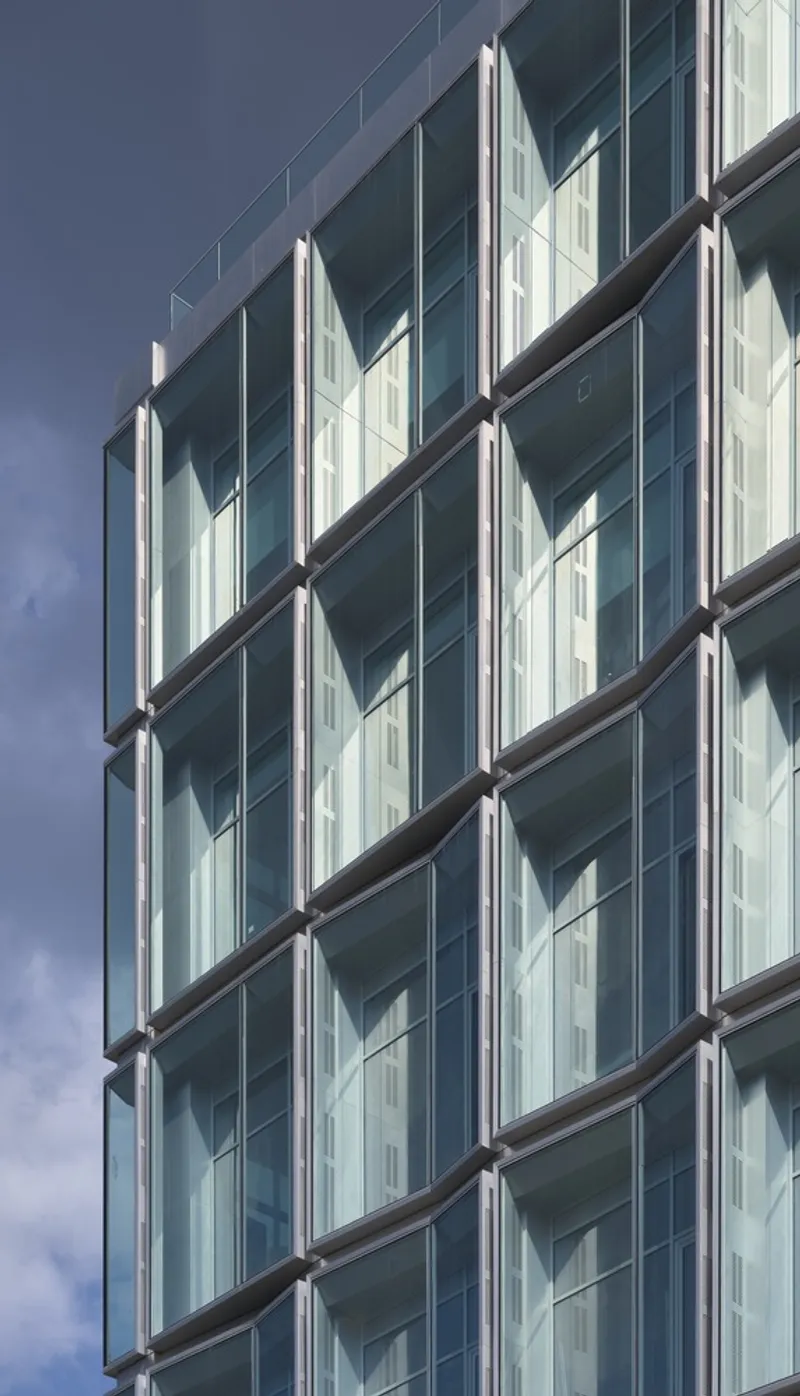
These visual effects are not merely decorative; they inform the interior experience. As sunlight shifts throughout the day, the refracted light changes the tone and atmosphere within the building. This strategy reduces reliance on artificial lighting and color treatments, allowing the natural quality of light to define the space.

Double Skin Facade for Sustainability and Comfort
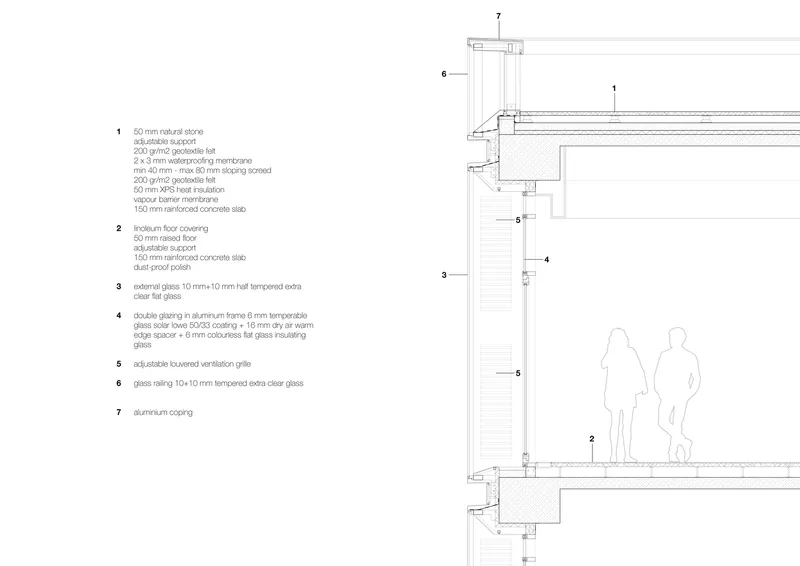
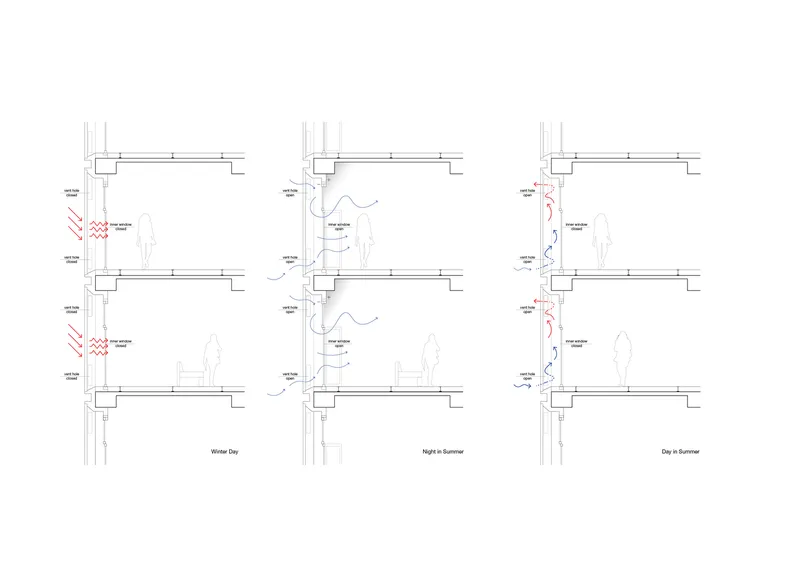
A cornerstone of the design is the double skin facade—a passive environmental system that significantly improves energy efficiency and occupant comfort. The northwest and northeast facades incorporate this dual-layered system with operable vents that respond to seasonal climate needs.

In winter, the vents remain closed to trap warm air within the cavity, reducing heat loss and maintaining internal comfort. In summer, the vents open, enabling air circulation to release trapped heat and prevent overheating. This system acts as an insulating buffer and contributes to reduced HVAC loads year-round. Additionally, it serves as a sound barrier, mitigating noise from traffic and wind—a vital feature in an urban setting like Istanbul.
Interior Fluidity and Material Resonance
Inside Quartz Plaza, the design continues to reflect the themes of transparency and refraction. Textured and ribbed glass partitions provide privacy without disrupting the visual continuity of the open-plan offices. Modular layout systems allow flexibility and adaptability for various functional needs, making the building suitable for evolving office uses and different user groups.
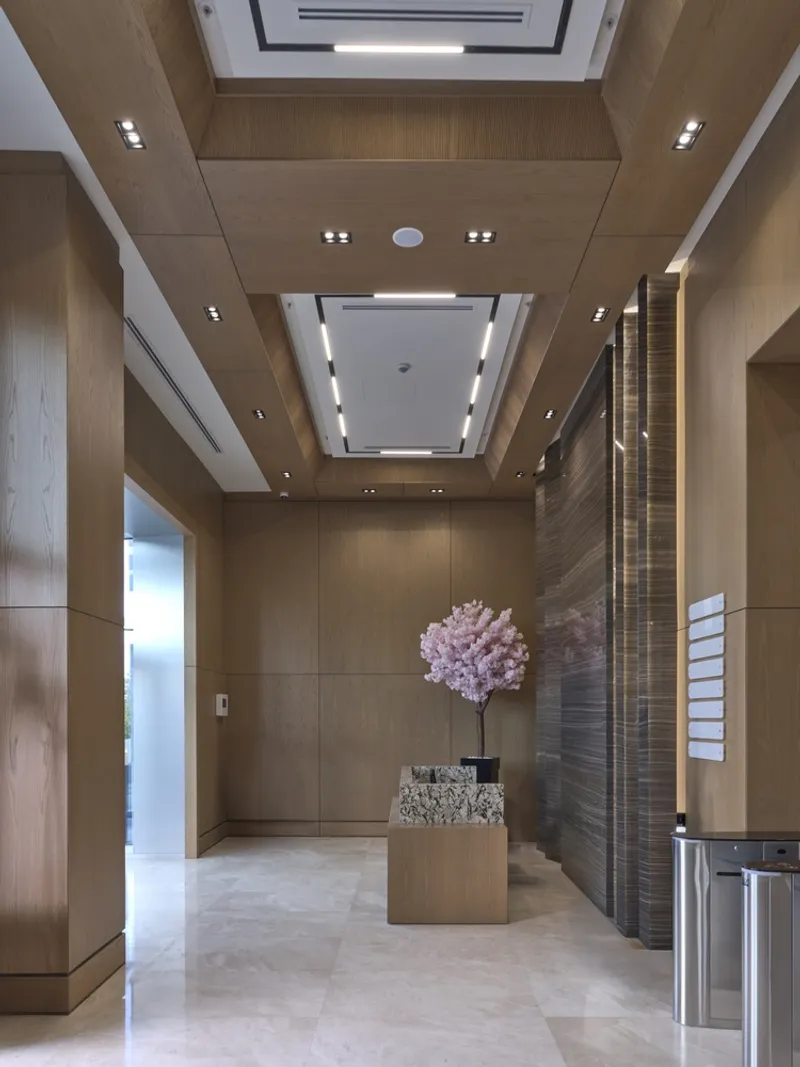
A minimal color and material palette was chosen for the interiors to highlight the effects of natural light. Coffee tables and partitions crafted from ribbed glass echo the refractive logic of the exterior, while the spatial organization promotes a cohesive connection between public and private functions.
Core Configuration and Thermal Mass Optimization
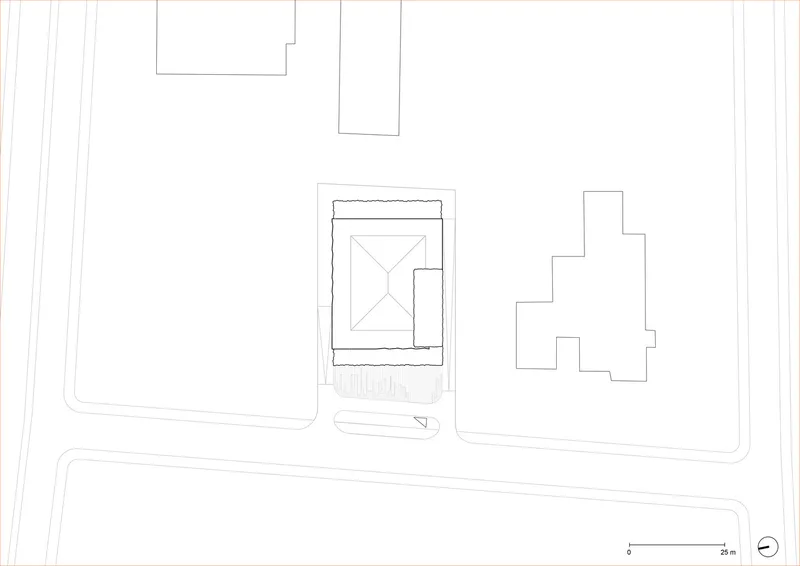
The building’s core is strategically placed in the shaded part of the structure, optimizing thermal mass and further stabilizing internal temperatures. This passive design approach aligns with the broader environmental strategy of the building, ensuring energy-efficient performance without heavy mechanical reliance.


From the ground floor to the upper levels, the open plan emphasizes adaptability, with defined zones for reception, private offices, and shared areas shaped by the building’s structural grid. This design flexibility enhances the functionality and user experience within the office environment.


Quartz Plaza as a Model for Future Urban Office Design
Quartz Plaza sets a precedent for double skin facade architecture by demonstrating how geological inspiration can shape both aesthetics and performance. It presents a compelling model for sustainable urban office design that marries technical innovation with poetic material expression. The building doesn’t just occupy a site—it interprets, reflects, and responds to it.

In an era where architecture must balance performance, beauty, and context, Quartz Plaza proves that thoughtful facade design—grounded in the earth’s history and future needs—can elevate the built environment into a more responsive, adaptive, and luminous form.
All Photographs are works of Cemal Emden


Popular Articles
Popular articles from the community


LT2A and OPEN Architectes Thread a Brick and Glass High School Through a Wooded Belgian Campus
In Braine-l'Alleud, a 3,000 m² wing for Collège Cardinal Mercier pairs pale brick with a glazed colonnade, deferring to a small chapel and a dense wood.

Jaramillo Van Sluys Arquitectura and Urbanismo Turn a Demolished Registry Lot in Quito into an Orchard Plaza
In Quito's Centro Histórico, a 2,800 m² plaza exposes the San Agustín convent wall and redraws its lost Augustinian orchard in volcanic stone.

longwave studio Reorganizes a 112 m² Tainan Apartment Around the Daily Routines of a Family and Two Cats
In Tainan, Taiwan, birch plywood, rust-red furniture and a freestanding plaster wall link arrival, storage, work and family life in one apartment.

Architekt Andreas Gruber Scatters 23 Dark Timber Chalets Across a South Tyrolean Forest Edge
In Molini di Tures, Amonti Chalets breaks a resort into a hamlet of gabled timber houses, with parking, storage and services pushed into the slope.

Similar Reads
You might also enjoy these articles

Bamboo Housing Challenge 2026: Design Affordable, Sustainable Homes Using Bamboo
An international design competition by Bamboo U and IBUKU inviting architects and designers to reimagine affordable housing using bamboo — with the winning design built full-scale in Bali.

Computational Design & Education: Beegraphy Design Awards Introduces 7th Category (Featuring Jiyun's Innovative Approach)
Dive into Beegraphy’s 7th Design Awards category, where computational design meets education to create immersive, interactive learning tools, inspired by Jiyun’s work.

From Parametric Lighting to Urban Furniture: Join the 2nd Workshop in Beegraphy’s Computational Design Series
Dive into Cutting-Edge Design Techniques and Practical Applications with Industry Experts

Last Call: Unleash Your Architectural Genius in SHAK's Kindergarten Design Competition
Urgent call for architects to join SHAK's kindergarten design competition before the looming deadline

Explore Double Skin Facade Competitions
Discover active competitions in this discipline

Challenge to reimagine the Iron Throne

Photograph architecture without architects

Illustrate the lost glory of Angkor Wat - Render Challenge

Design challenge to reuse E-waste
Comments (0)
Please login or sign up to add comments
No comments yet. Be the first to comment!