
DRIM House in Pleiku by ADAP Architects: A Contemporary Longhouse Rooted in Vietnamese Tradition
Contemporary multigenerational home in Pleiku reinterpreting Vietnamese longhouse traditions through courtyards verandas local materials climate-responsive sustainable design and modern living


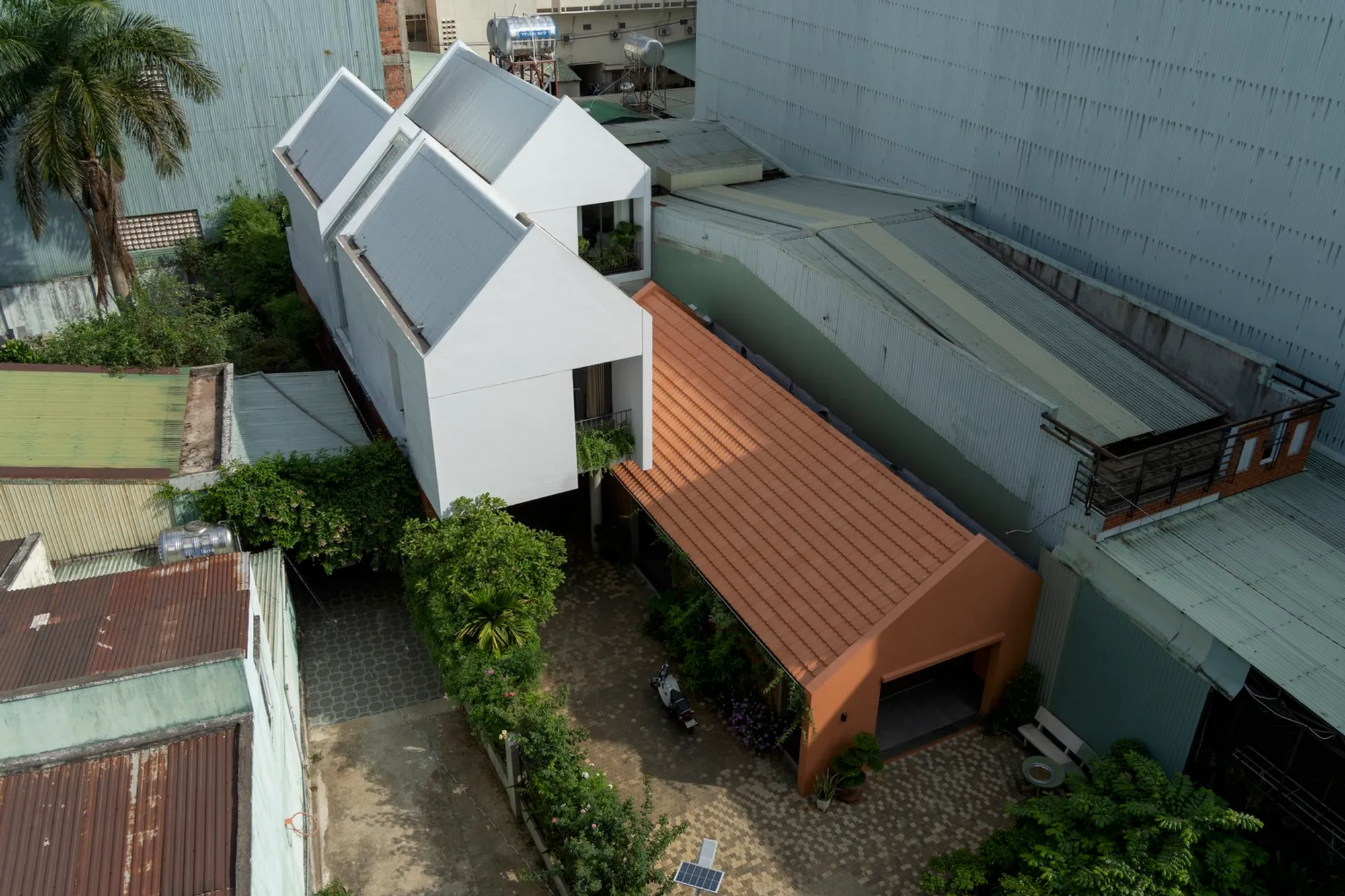
Located in the heart of Pleiku, DRIM House is a 300-square-meter multigenerational residence designed in 2022 by ADAP Architects. Conceived as a modern reinterpretation of Vietnam’s vernacular longhouse typology, the project delicately balances contemporary living standards with deeply rooted cultural identity.
Set within a rapidly urbanizing city, where traditional architecture is increasingly disappearing, DRIM House stands as a thoughtful response to the erosion of local character. Pleiku, known for its diverse ethnic communities in Vietnam’s Central Highlands, once featured elevated longhouses with steep roofs designed for climatic adaptability and communal living. While many of these structures have faded, their spatial logic and environmental intelligence remain relevant. DRIM House reactivates these principles within a contemporary residential framework.
A Multigenerational House Inspired by the Longhouse Typology
Designed for three generations, the residence reflects both regional influences and the homeowner’s Northern Vietnamese heritage. The client, born and raised in Northern Vietnam, sought a home that preserved traditional values, from ancestral worship spaces to the organization of domestic life, while embracing modern architectural comfort.
Rather than demolish the existing 80-square-meter structure on site, the architects chose an adaptive reuse strategy. The original house was preserved and renovated, forming the spiritual and historical core of the residence. A new volume was introduced to accommodate expanded living requirements, and both structures are seamlessly connected by a transitional veranda.
This configuration subtly echoes the elongated spatial sequence of traditional longhouses, where private and communal zones unfold along a linear axis. The old section accommodates the ancestral worship room, a traditional reception space, and the parents’ bedroom. The newly constructed wing houses shared living areas and bedrooms for children and grandchildren, ensuring privacy while maintaining intergenerational connectivity.
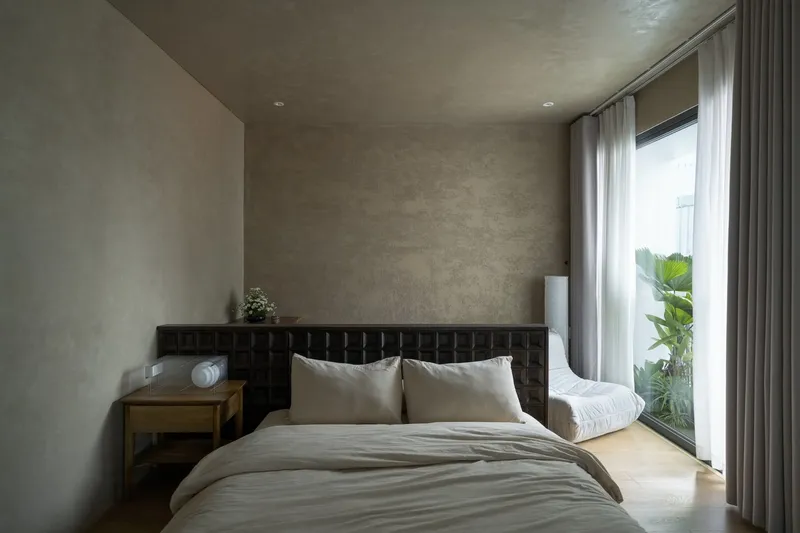
Climate-Responsive Design and Spatial Fluidity
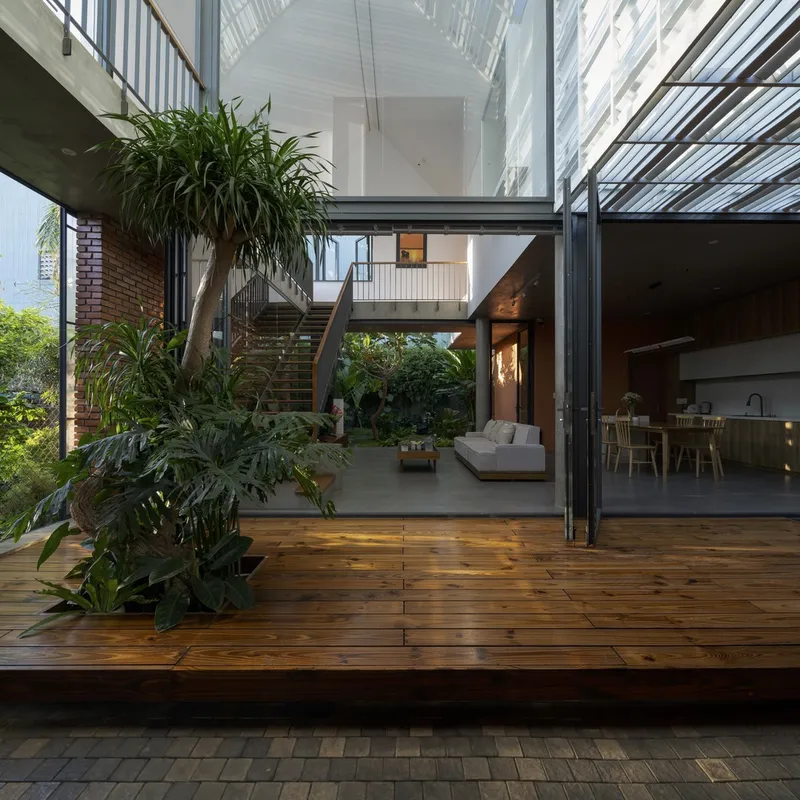
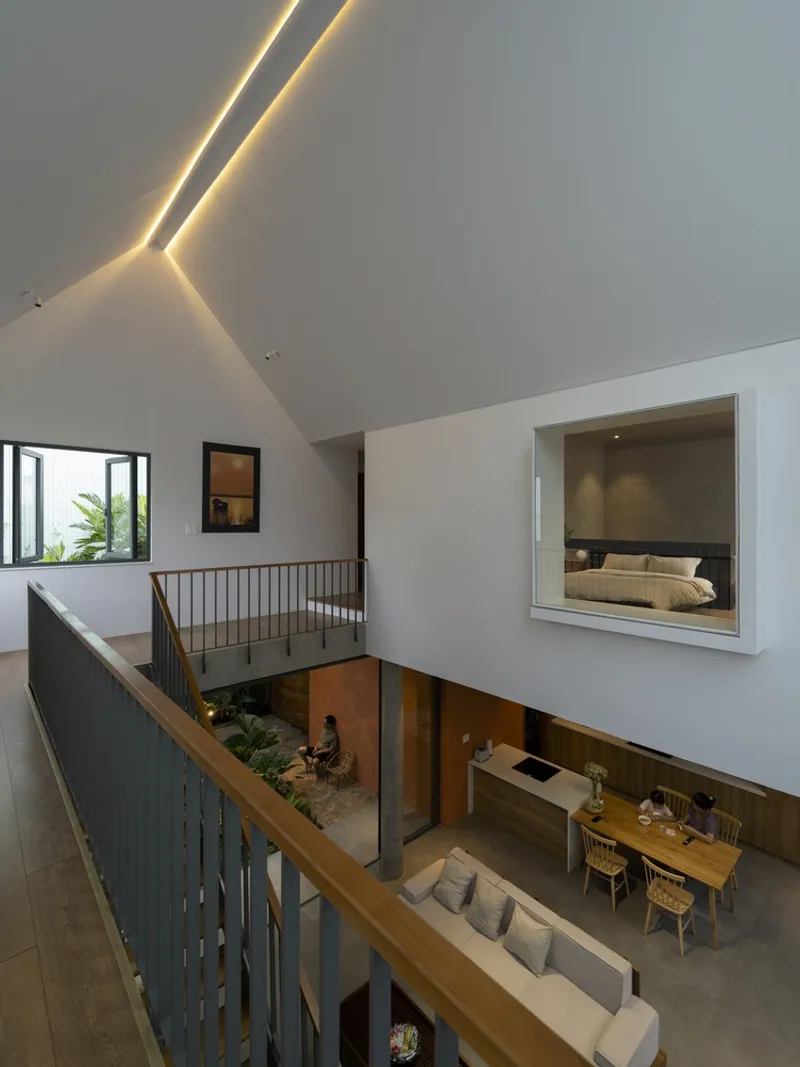
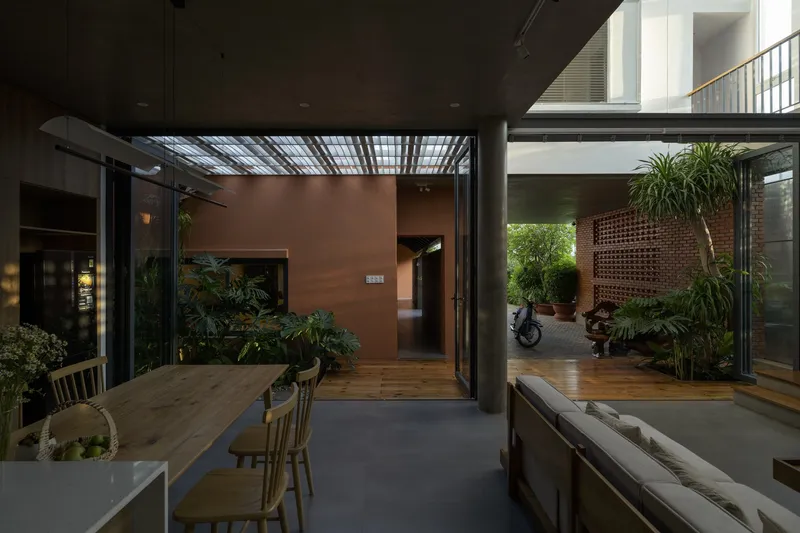
One of the defining features of DRIM House is its strong response to the tropical highland climate. The design integrates gardens, courtyards, and skylights throughout the plan, allowing natural ventilation and daylight to penetrate deep into the interior. This strategy reduces reliance on artificial lighting and mechanical cooling, supporting sustainable residential architecture in Vietnam.
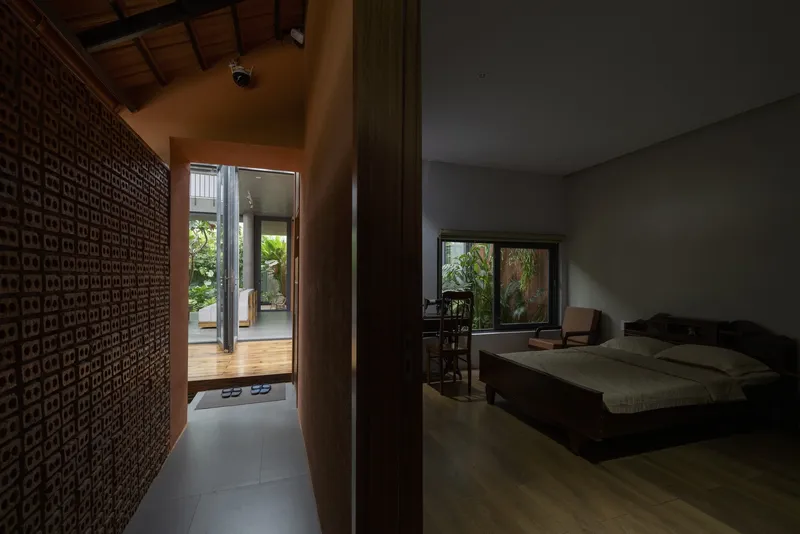
The ground floor is dedicated to communal activities, including the living room and kitchen, fostering interaction between family members. Sleeping quarters are elevated to the second floor, enhancing privacy while benefiting from improved airflow and views.
A generous front veranda acts as a climatic buffer, shielding the interior from direct solar heat and heavy rainfall. Beyond environmental performance, the veranda functions as a flexible threshold space: accommodating parking, family gatherings, and traditional ancestor worship ceremonies. In doing so, it reinforces the house’s role not merely as shelter, but as a cultural stage for rituals and collective memory.
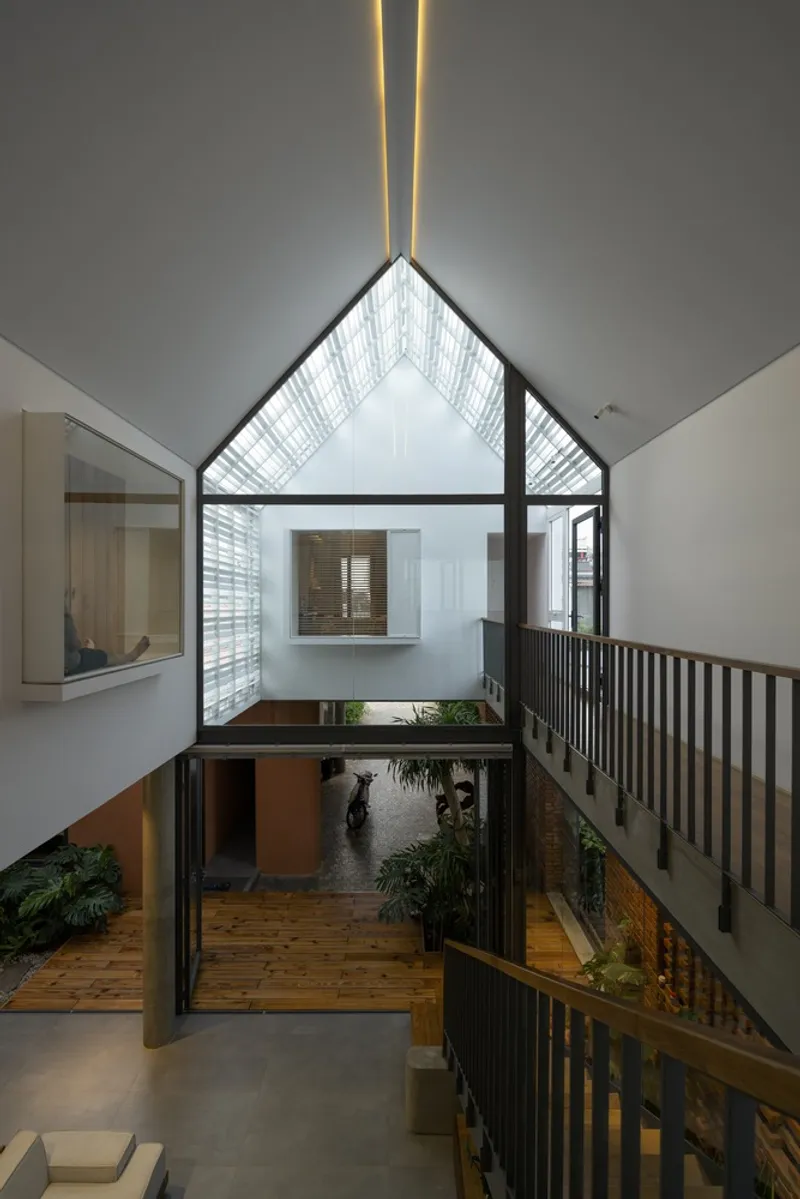
Merging Modern Architecture with Vernacular Identity
Material selection plays a crucial role in expressing authenticity. The architects prioritized locally sourced materials to reduce construction costs and environmental impact. This approach enhances sustainability while maintaining tactile familiarity within the domestic environment.
Modern construction techniques coexist with vernacular spatial references, creating a harmonious dialogue between past and present. The steep rooflines subtly recall Central Highlands longhouses, while clean detailing and contemporary finishes signal the house’s modern identity.
The result is a residence that feels both timeless and forward-looking, a sustainable house in Vietnam that respects its climatic context and cultural lineage.
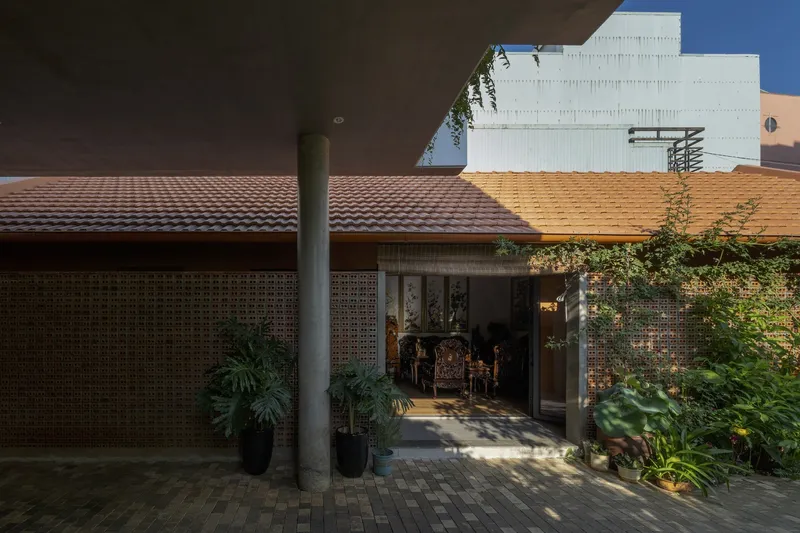
Architecture as Memory and Continuity
More than a physical structure, DRIM House embodies the continuity of family heritage. Its spatial organization reflects generational hierarchy while promoting openness and daily interaction. The interplay of house, garden, light, and people forms a cinematic narrative, one where everyday life becomes part of a living memory.
In a city undergoing rapid transformation, DRIM House demonstrates how contemporary Vietnamese residential architecture can evolve without losing its roots. By integrating adaptive reuse, passive design strategies, vernacular inspiration, and multigenerational functionality, ADAP Architects delivers a project that is environmentally conscious, culturally grounded, and architecturally refined.
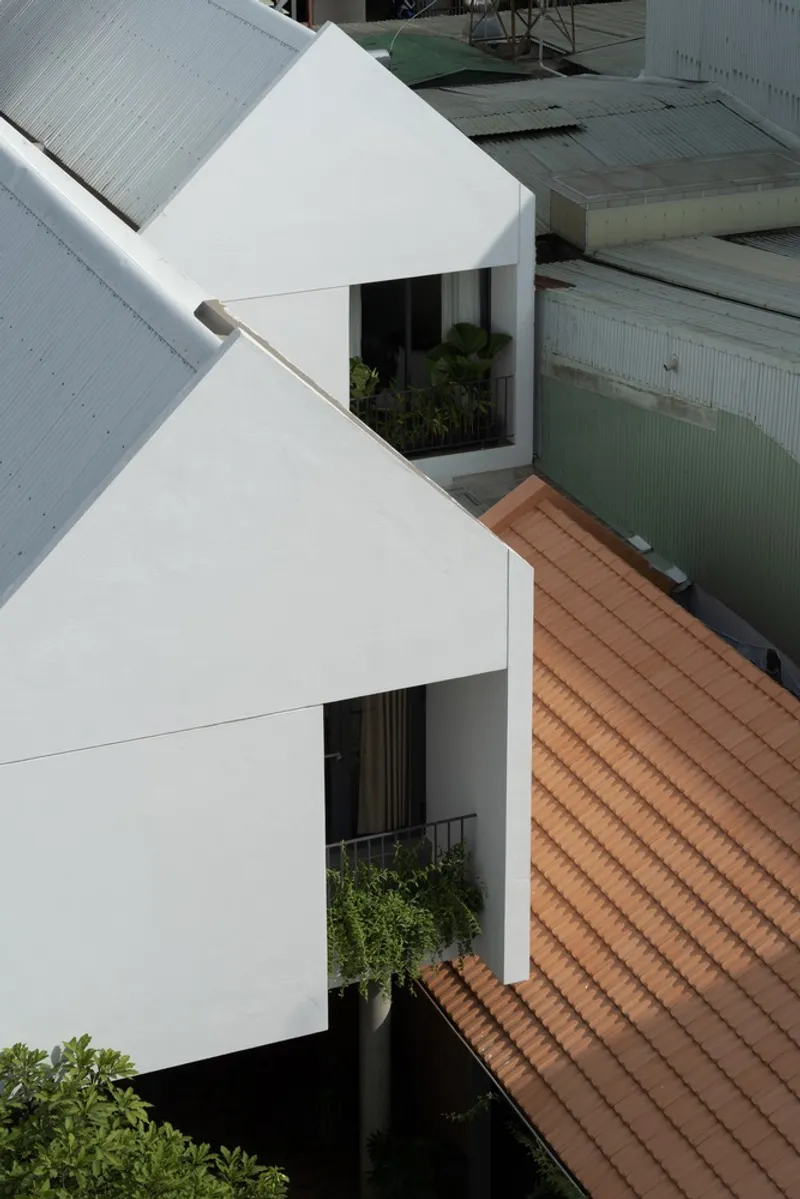
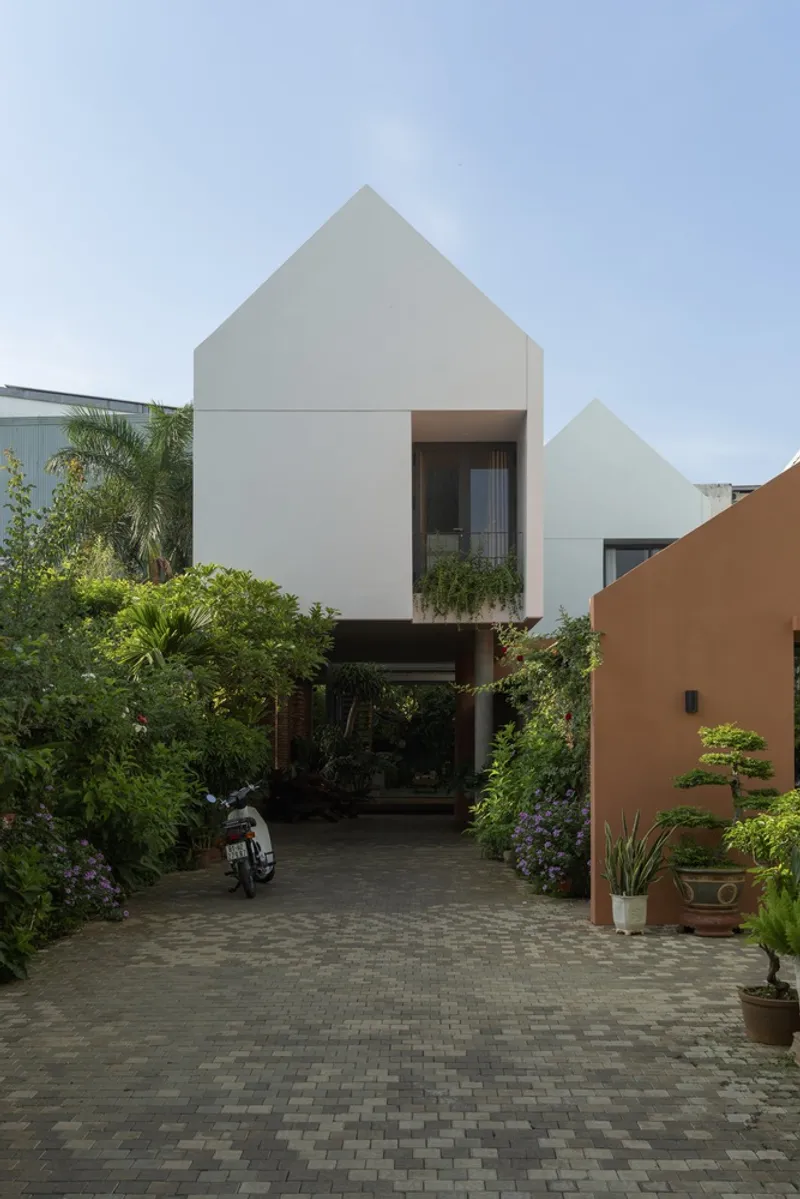
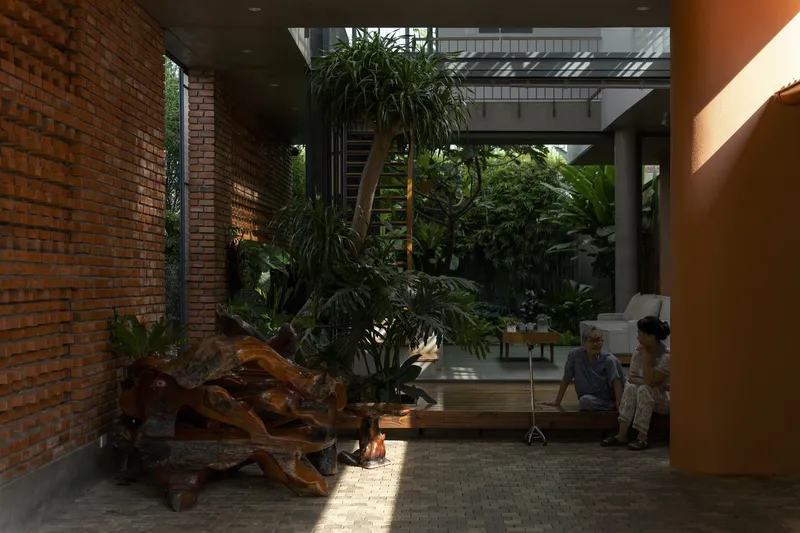
All photographs are works of
Quang Trần




Popular Articles
Popular articles from the community


The Ocean Hive: Sustainable Architecture for a Self-Sufficient Civilization at Sea
The Ocean Hive imagines sustainable architecture at sea, where modular habitats, algae, wave power and ocean waste sustain a growing colony.

Riyadh For All: Intergenerational Urban Design for Active Aging in Rabat
Riyadh For All reimagines urban design in Rabat with intergenerational co-living, adaptive courtyards, and Moroccan cultural exchange today.

Co-life: Sustainable Architecture for Age-Friendly Community Living
Co-life reimagines sustainable architecture for seniors through courtyards, rammed earth, shared gardens, and spaces designed for belonging.

The Earth Pod: 3D Printed Homes for Resilient Refugee Communities
The Earth Pod reimagines refugee housing through 3D printed homes made from clay, combining resilience, self-sufficiency, and rapid shelter.


Similar Reads
You might also enjoy these articles

Bamboo Housing Challenge 2026: Design Affordable, Sustainable Homes Using Bamboo
An international design competition by Bamboo U and IBUKU inviting architects and designers to reimagine affordable housing using bamboo — with the winning design built full-scale in Bali.

Computational Design & Education: Beegraphy Design Awards Introduces 7th Category (Featuring Jiyun's Innovative Approach)
Dive into Beegraphy’s 7th Design Awards category, where computational design meets education to create immersive, interactive learning tools, inspired by Jiyun’s work.
From Parametric Lighting to Urban Furniture: Join the 2nd Workshop in Beegraphy’s Computational Design Series
Dive into Cutting-Edge Design Techniques and Practical Applications with Industry Experts

Last Call: Unleash Your Architectural Genius in SHAK's Kindergarten Design Competition
Urgent call for architects to join SHAK's kindergarten design competition before the looming deadline


Explore Architecture Competitions
Discover active competitions in this discipline



Challenge to reimagine the Iron Throne


Photograph architecture without architects


Illustrate the lost glory of Angkor Wat - Render Challenge


Design challenge to reuse E-waste
Comments (0)
Please login or sign up to add comments
No comments yet. Be the first to comment!