

DSP Apartments by Studio Cáceres Lazo – Redefining Urban Housing in Santiago, Chile
DSP Apartments in Santiago by Studio Cáceres Lazo showcase prefabricated concrete design, diverse housing typologies, and sustainable micro-scale urban density.


Located in the heart of Santiago, Chile, the DSP Apartments by Studio Cáceres Lazo represent a new vision for sustainable urban living. Completed in 2022, the 385 m² residential project responds to the city’s rapid transformation and the growing demand for high-quality housing in revitalized downtown neighborhoods.
Over the past two decades, Santiago has witnessed dramatic urban growth, with neglected areas evolving into vibrant hubs of culture, commerce, and residential life. Yet, this development has also brought rising real estate prices, rental challenges, and the risk of erasing local character. The DSP Apartments propose an alternative model — one rooted in micro-scale density, architectural innovation, and respect for community identity.


Design Concept and Structure
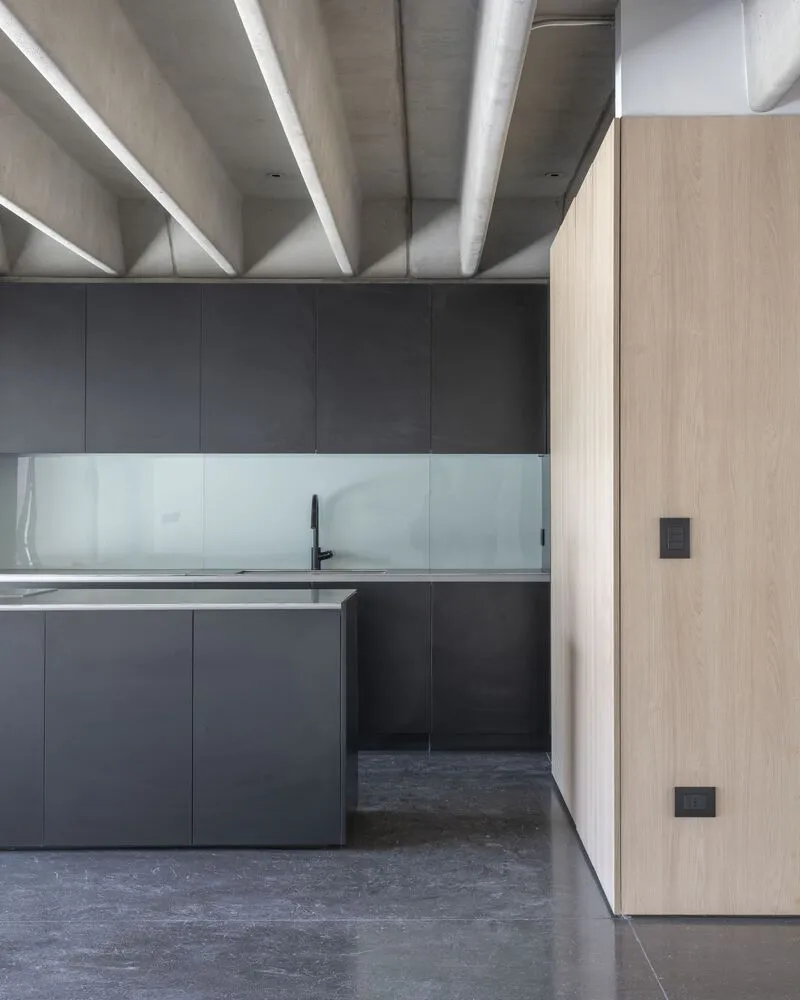
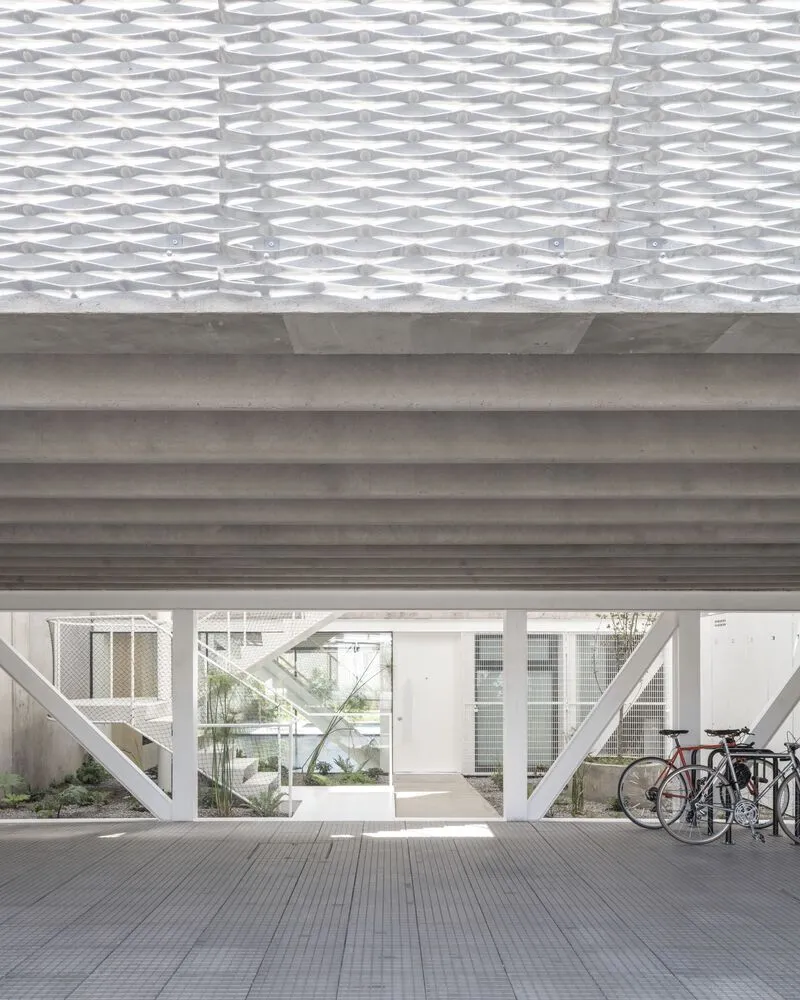
Built on a site once occupied by a single residence, the project demonstrates how small urban plots can accommodate diverse housing needs. The structure consists of prefabricated concrete walls and a double-tee slab system, a technique commonly used in multi-level parking structures due to its ability to span large distances without central supports. This flexibility allows each apartment typology to remain structurally and spatially independent, offering a variety of living experiences within one compact building.
Three distinct apartments are organized vertically:
- A 1,730 sq. ft. duplex with a spacious backyard on the ground floor.
- A 700 sq. ft. studio apartment on the second floor.
- A 1,400 sq. ft. penthouse with exclusive access to the rooftop terrace.
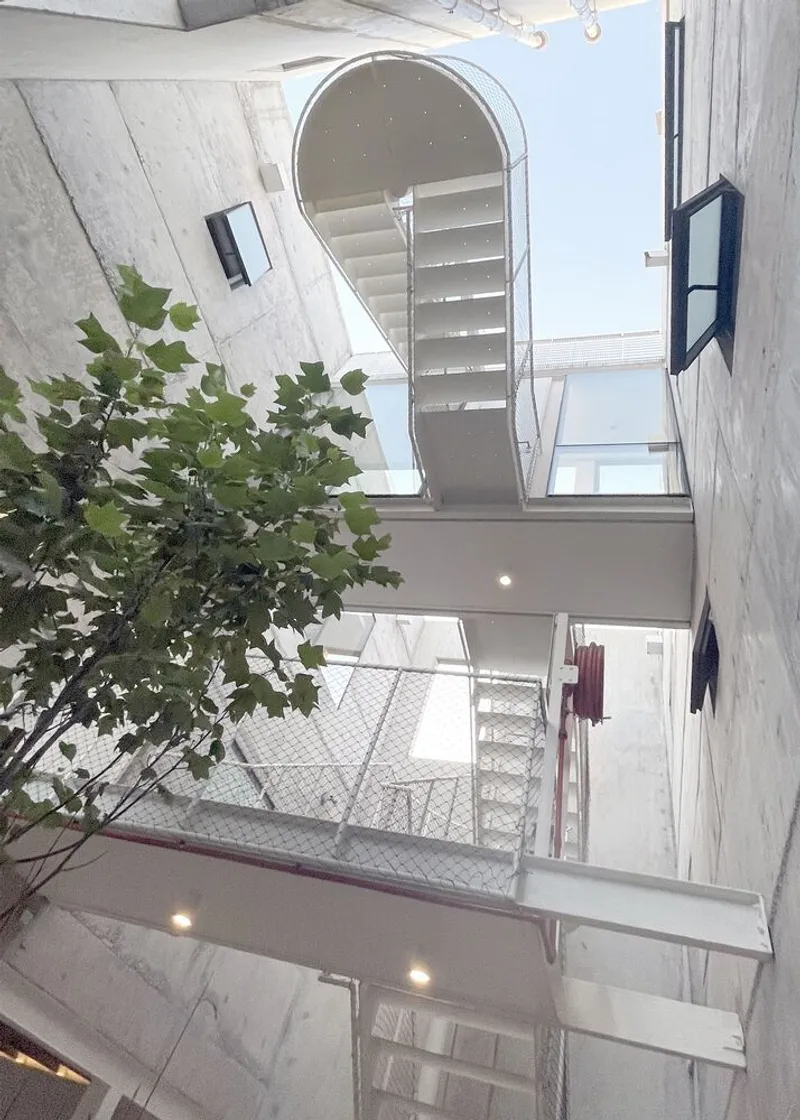
At the core, a sculptural staircase made of white-painted steel sheets serves as a light and airy circulation element, enhancing the building’s sense of openness.
Façade and Materiality
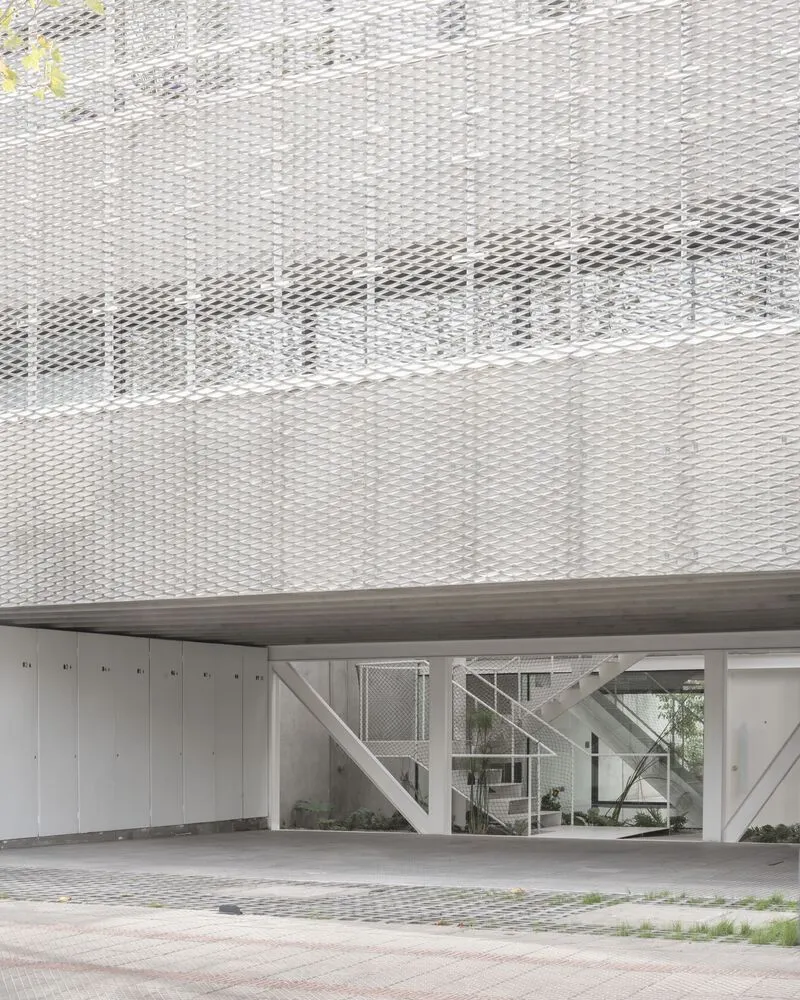
Both the front and rear façades are cloaked in an expanded aluminum veil, providing privacy from the street while ensuring natural light and ventilation. This semi-transparent skin softens the concrete mass, creating a balance between solidity and delicacy. The system also improves energy efficiency by offering shade and reducing solar gain.
Prefabrication played a crucial role in construction efficiency. The entire structural framework was completed in under five weeks, showcasing how industrialized building methods can meet the speed, precision, and sustainability demands of contemporary urban housing.

Urban Relevance and Program
Developed under the Ochoalcubo program, known for commissioning experimental residential projects by internationally recognized architects, the DSP Apartments mark the initiative’s first entry into multi-family urban housing. This step reflects a growing interest in architectural innovation not only for second homes but also for dense metropolitan contexts where social, cultural, and environmental considerations intersect.
The DSP Apartments exemplify a forward-thinking approach to urban regeneration, sustainable housing, and architectural adaptability. By merging prefabricated technology, diverse typologies, and sensitive urban integration, Studio Cáceres Lazo has created a building that redefines how compact urban plots can respond to Santiago’s evolving residential needs.
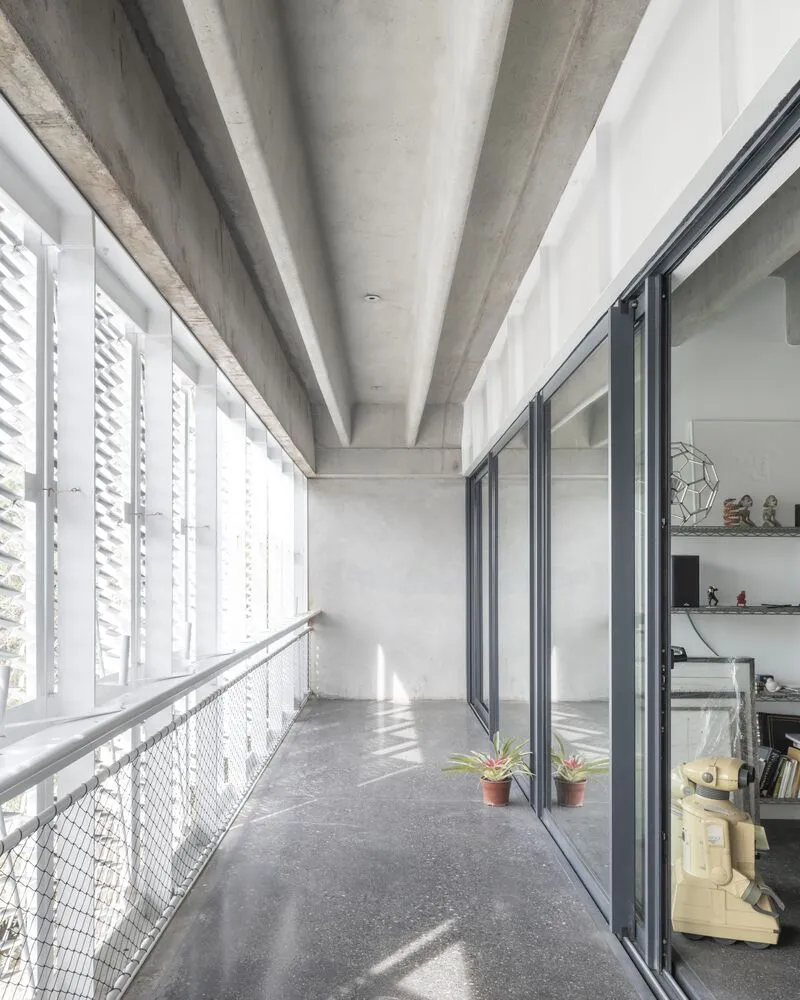
All Photographs are works of Bruno Giliberto,


Popular Articles
Popular articles from the community


Jaramillo Van Sluys Arquitectura and Urbanismo Turn a Demolished Registry Lot in Quito into an Orchard Plaza
In Quito's Centro Histórico, a 2,800 m² plaza exposes the San Agustín convent wall and redraws its lost Augustinian orchard in volcanic stone.

longwave studio Reorganizes a 112 m² Tainan Apartment Around the Daily Routines of a Family and Two Cats
In Tainan, Taiwan, birch plywood, rust-red furniture and a freestanding plaster wall link arrival, storage, work and family life in one apartment.

LT2A and OPEN Architectes Thread a Brick and Glass High School Through a Wooded Belgian Campus
In Braine-l'Alleud, a 3,000 m² wing for Collège Cardinal Mercier pairs pale brick with a glazed colonnade, deferring to a small chapel and a dense wood.

Architekt Andreas Gruber Scatters 23 Dark Timber Chalets Across a South Tyrolean Forest Edge
In Molini di Tures, Amonti Chalets breaks a resort into a hamlet of gabled timber houses, with parking, storage and services pushed into the slope.

Similar Reads
You might also enjoy these articles


Hodi-Mandai Geram
Project Function: Preservation and revitalization of the Intangible heritage and socio-spatial identity of the Hodi by Housing, Cultural Memory Center, Sacred Grove, landscape, local tourism economy


Olio Towers: A Mid-Rise for Performers That Fuses Housing, Rehearsal, and Stage
Located blocks from Houston's Theater District, this modular tower stacks living units around a central performance atrium.

Oasis: Modular Green Housing Carved into Dhaka's Urban Fabric
A shortlisted Plugin Housing entry reclaims unauthorized settlements in Dhaka with stepped concrete volumes, green roofs, and ventilation-driven design.

Black Hole: A Floating Megastructure for the Post-Physical Era
Emiliano Mazzarotto envisions a spherical, self-scaling arena where e-sports, digital hotels, and holographic stadiums replace traditional public space.

Explore Housing Competitions
Discover active competitions in this discipline

Challenge to reimagine the Iron Throne

Photograph architecture without architects

Illustrate the lost glory of Angkor Wat - Render Challenge

Design challenge to reuse E-waste
Comments (0)
Please login or sign up to add comments
No comments yet. Be the first to comment!