
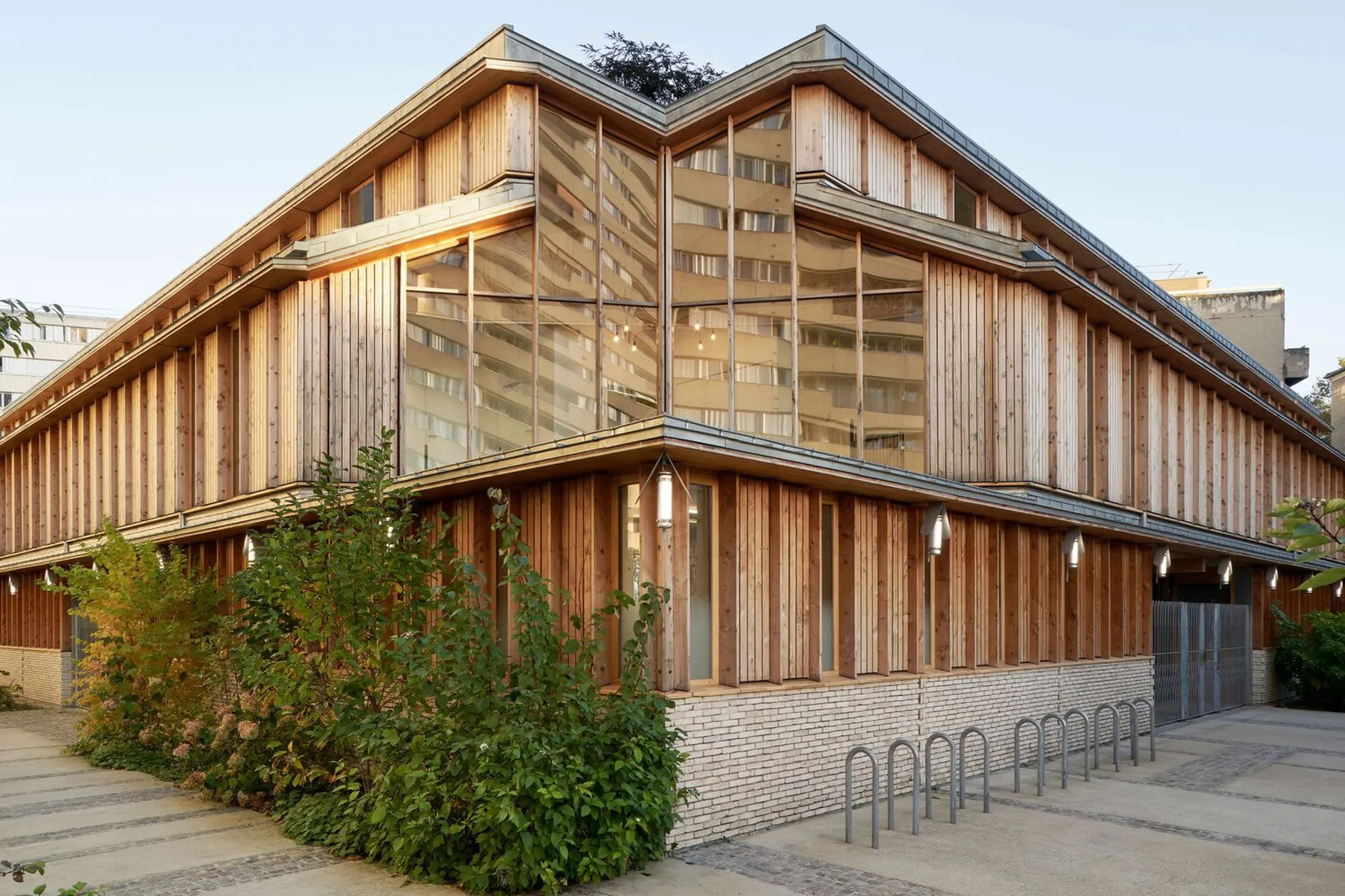
Early Childhood Center by Guillaume Ramillien Architecture: A Nature-Integrated Haven for Children
The Early Childhood Center by Guillaume Ramillien Architecture blends nature, sustainability, and education, creating a nurturing environment for children.


Located in the heart of an urban residential complex in France, the Early Childhood Center by Guillaume Ramillien Architecture is a masterful blend of educational architecture and environmental consciousness. Designed to provide a nurturing space for young children, the center integrates seamlessly with its surrounding public gardens, offering a protected oasis amid the dense high-rise buildings of the Lefebvre-Périchaux-Brancion neighborhood.
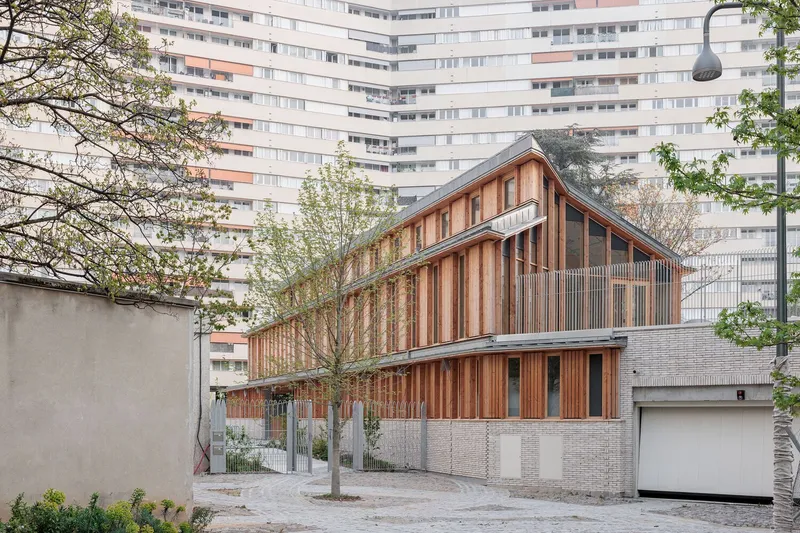
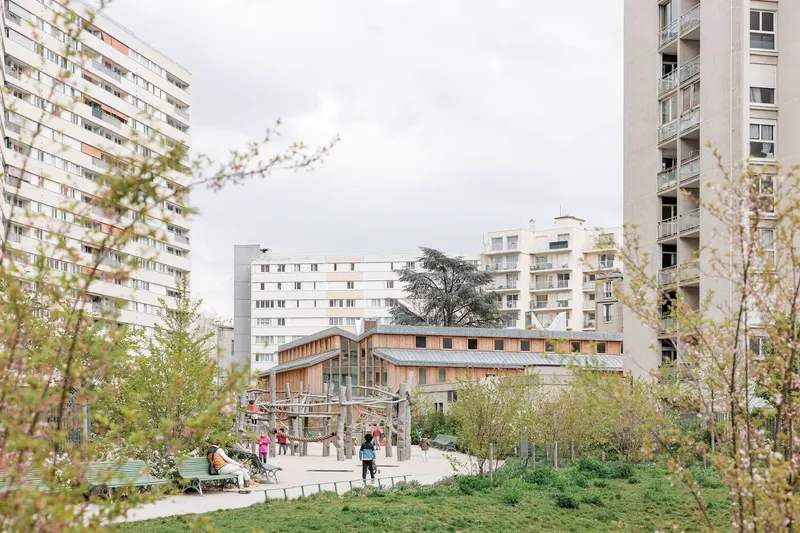
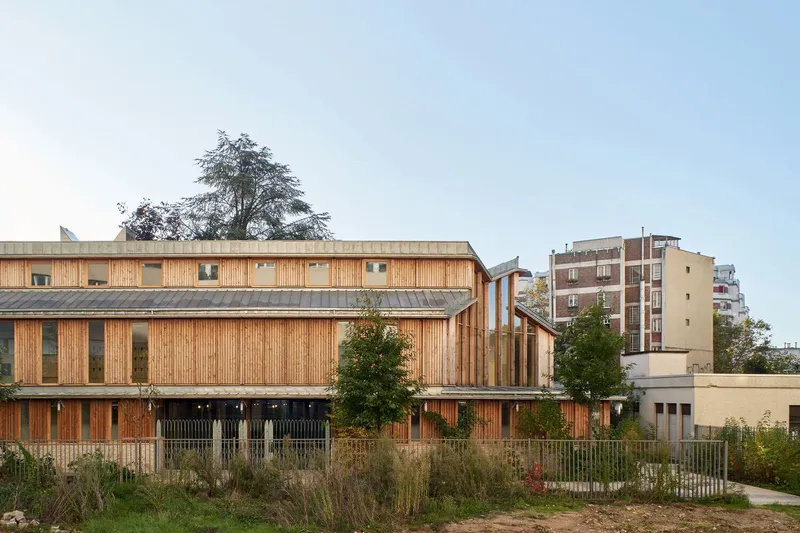
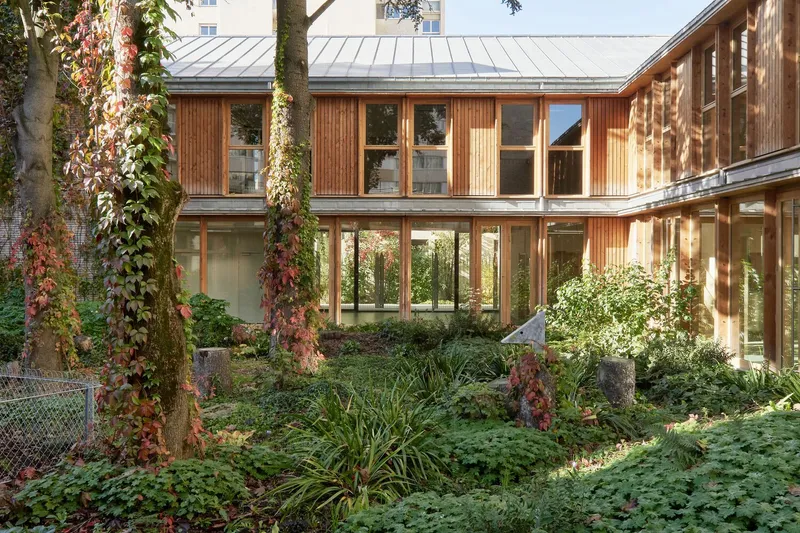
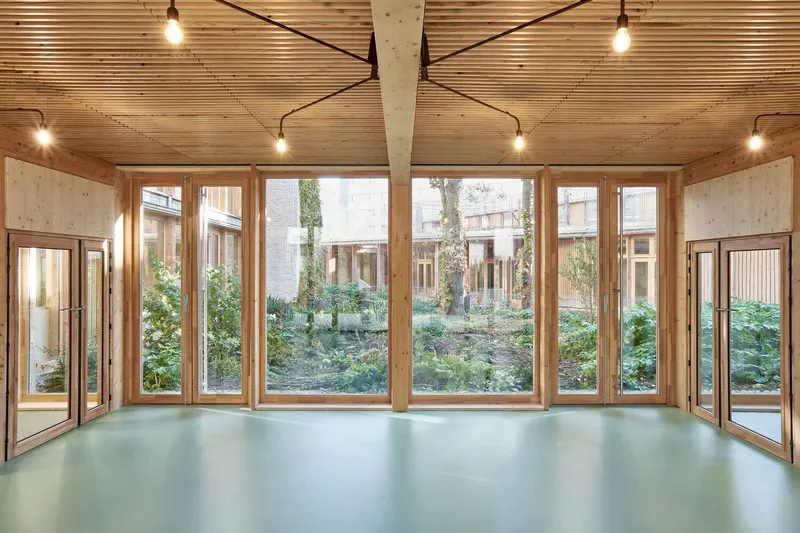
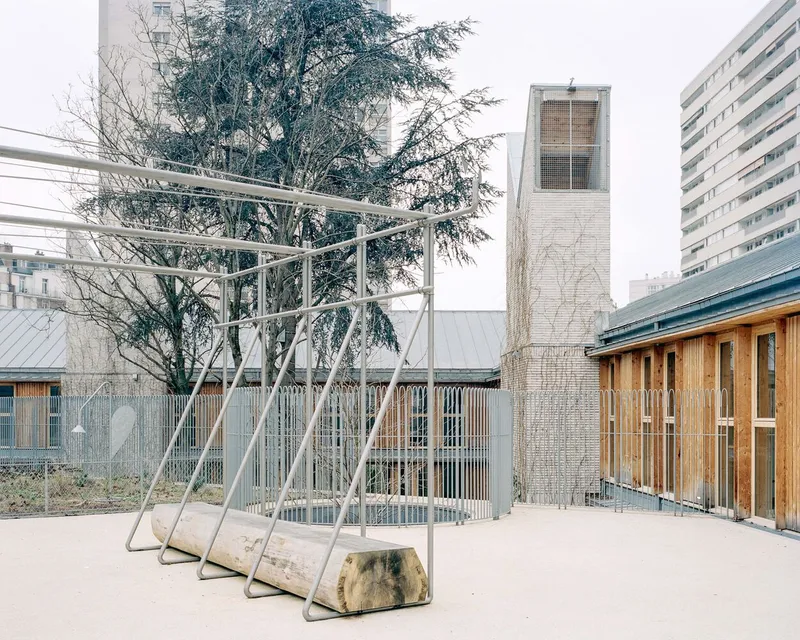
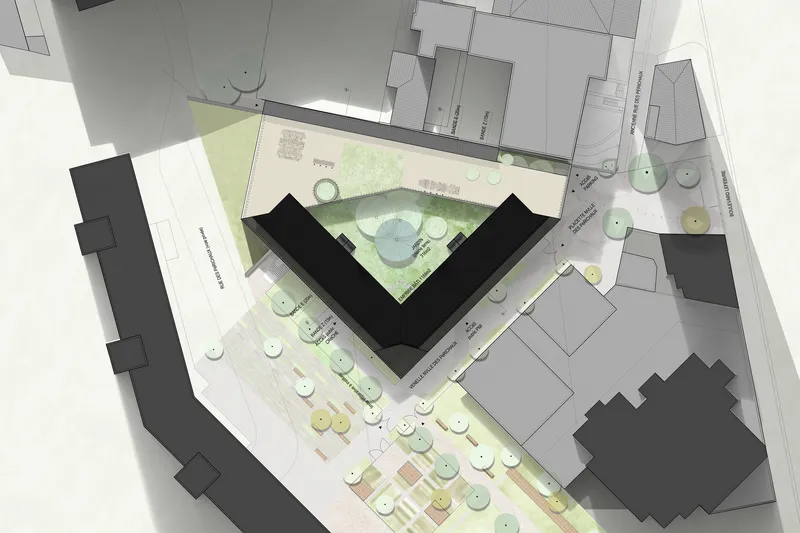
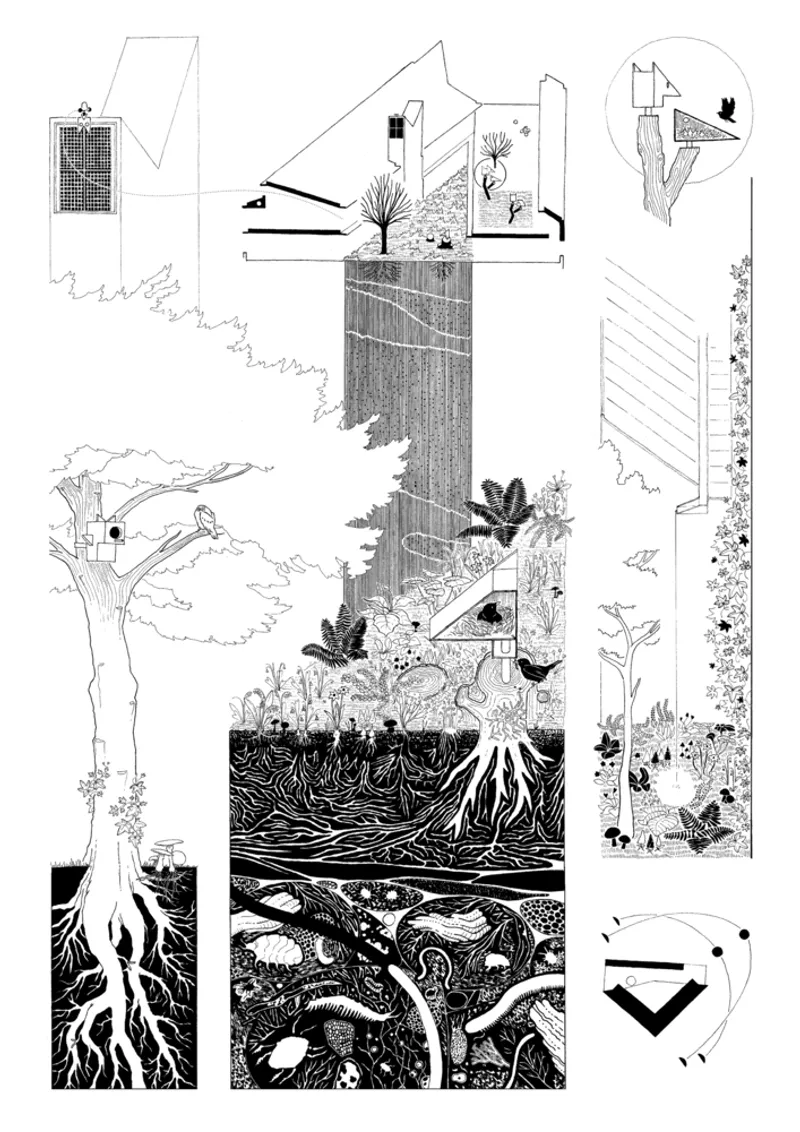
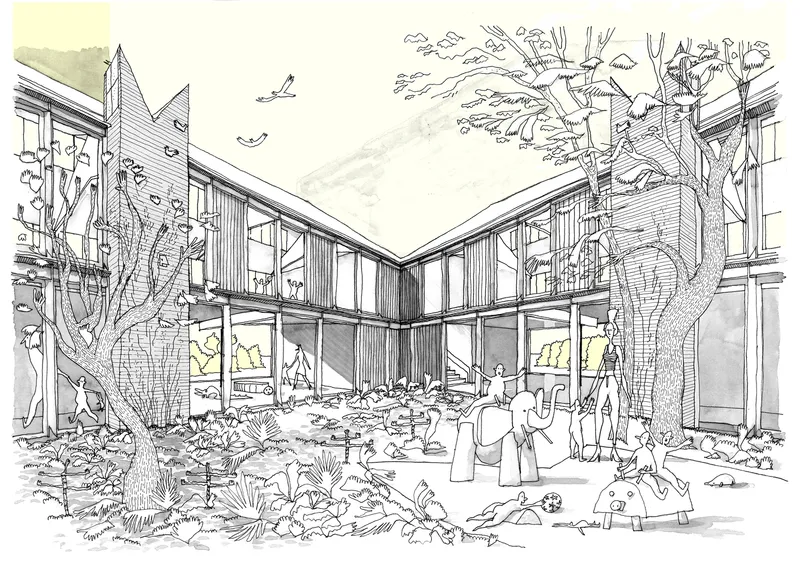
The design redefines how architecture can foster early childhood development by creating an environment that is both functional and sensory-enriching. A diamond-shaped interior garden serves as the focal point of the structure, forming a hortus conclusus—a walled garden that preserves the site's existing trees and biodiversity. This green sanctuary enhances the daycare’s atmosphere, providing children with a natural retreat that stimulates curiosity and engagement with the outdoors.
A Harmonious Integration with Nature
At the core of the Early Childhood Center by Guillaume Ramillien Architecture is its profound connection to nature. By preserving three major trees and maintaining open-ground quality, the architecture supports urban biodiversity, offering a safe habitat for small birds, insects, and flora. This sustainable approach transforms the space into more than just a daycare—it becomes an ecological refuge, an urban lung, and a learning landscape for children and their families.
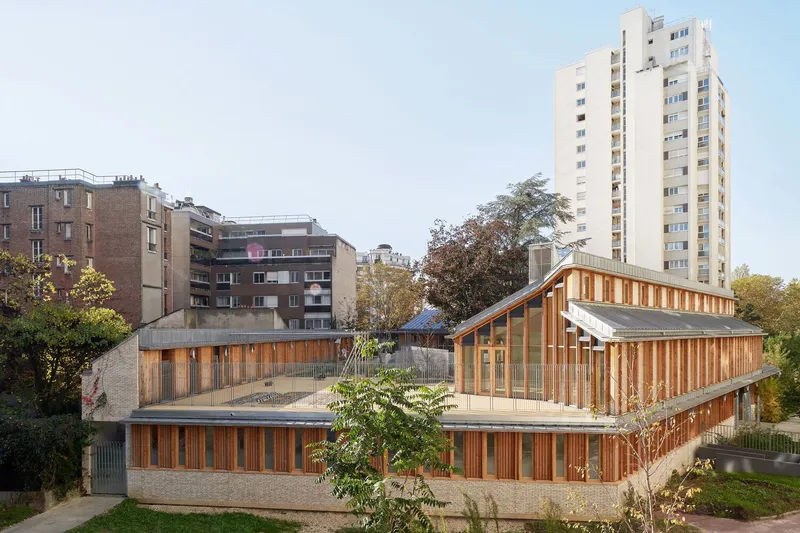
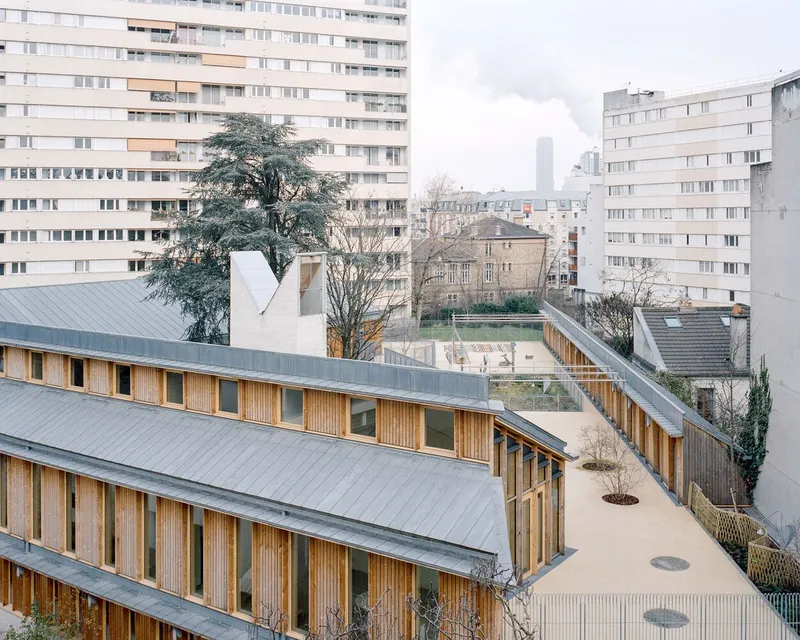
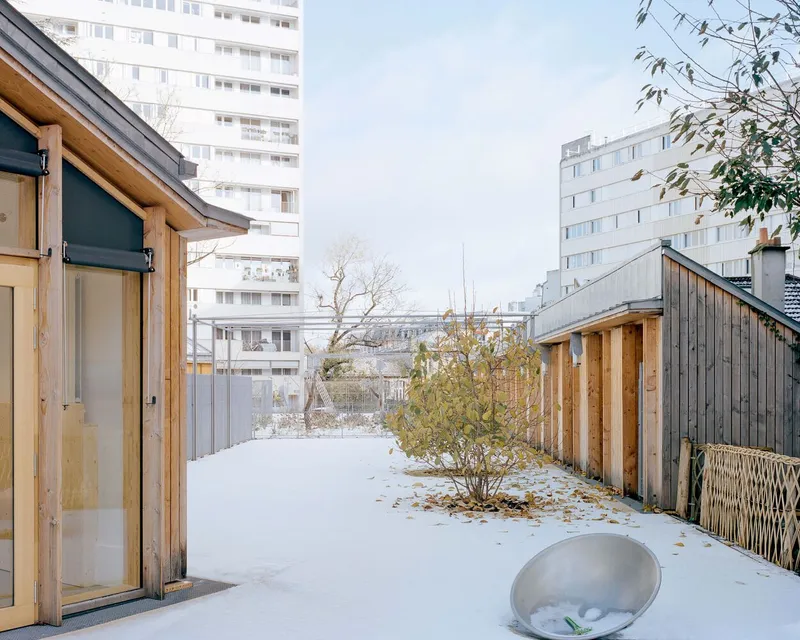
The enclosed garden is designed to be both a play space and an educational tool, allowing children to interact with nature in a secure and inviting environment. This layout is not only beneficial for the children attending the center but also enhances the visual experience of nearby residents, integrating public and private realms in a way that is both aesthetic and functional.
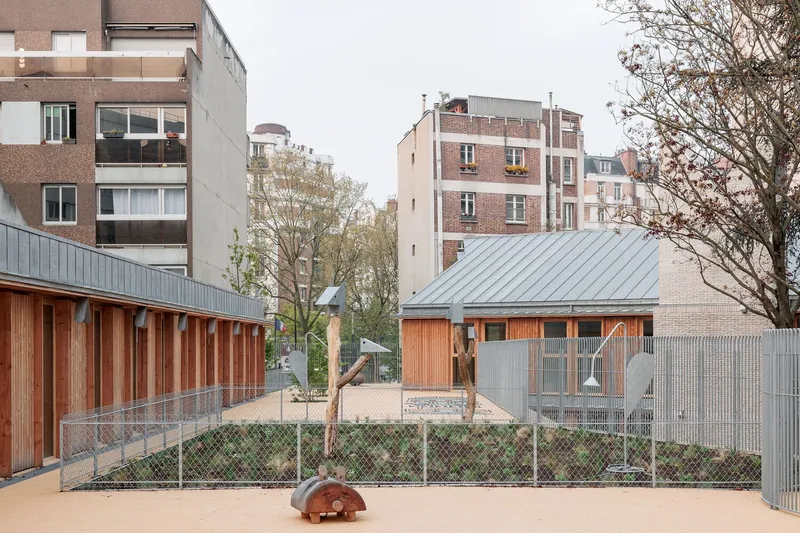
Spatial Organization and Functional Design
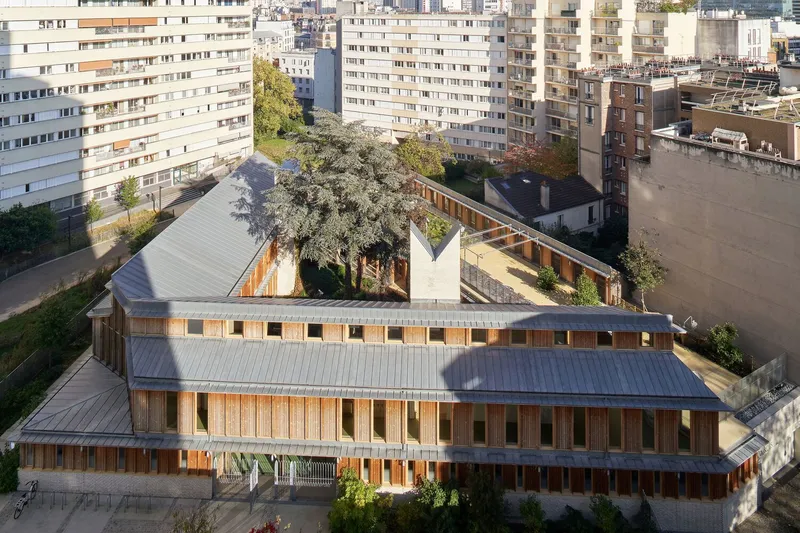
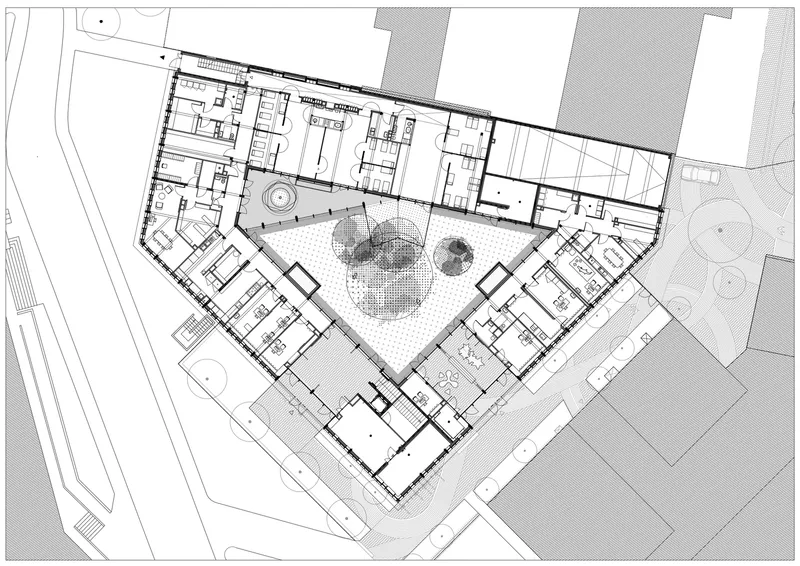
The architectural composition of the Early Childhood Center is defined by a cloister-like arrangement that surrounds the central garden. The structure consists of two primary wings—one housing a daycare facility and the other a maternal and child protection center. These two programs are symmetrically positioned, creating a balanced relationship between public and residential spaces.
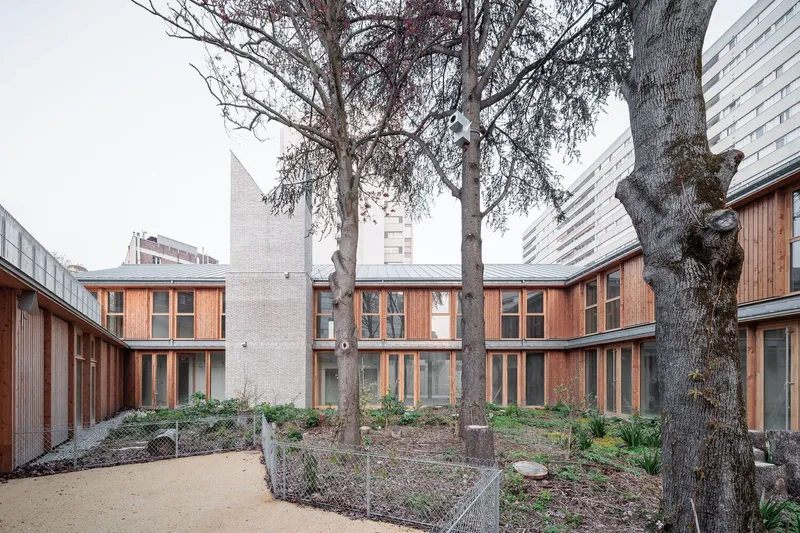
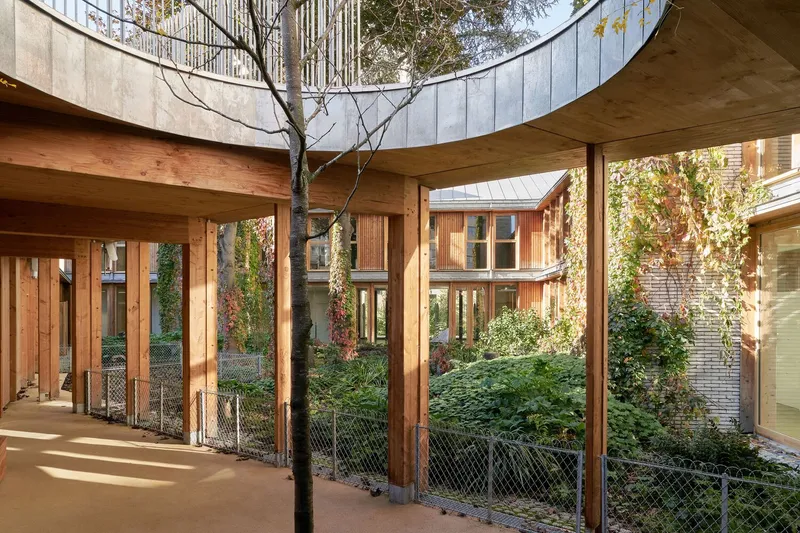
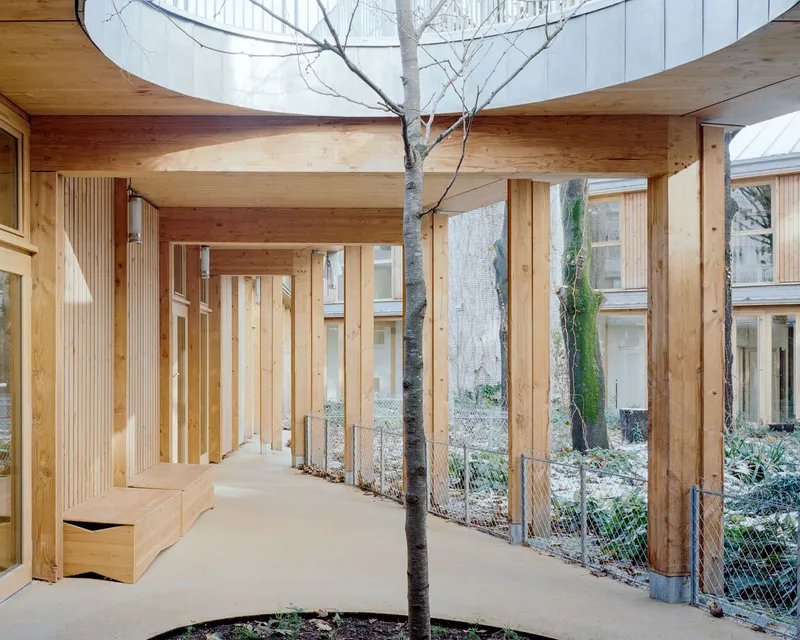
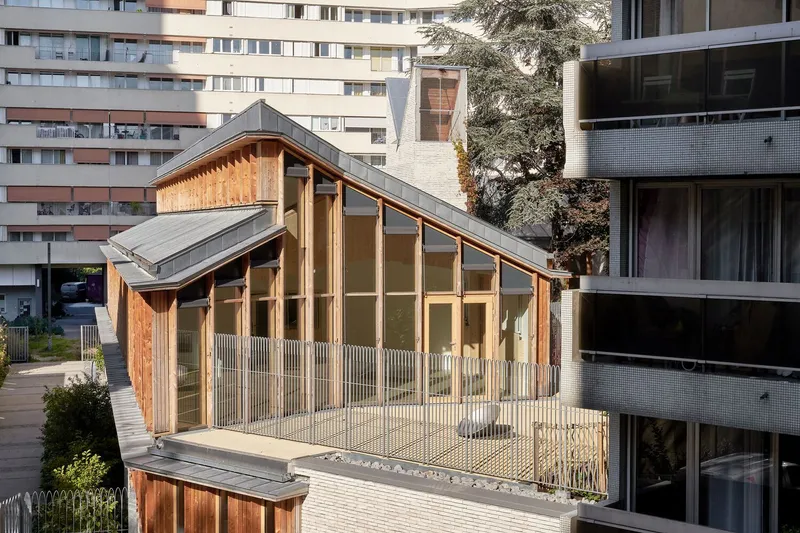
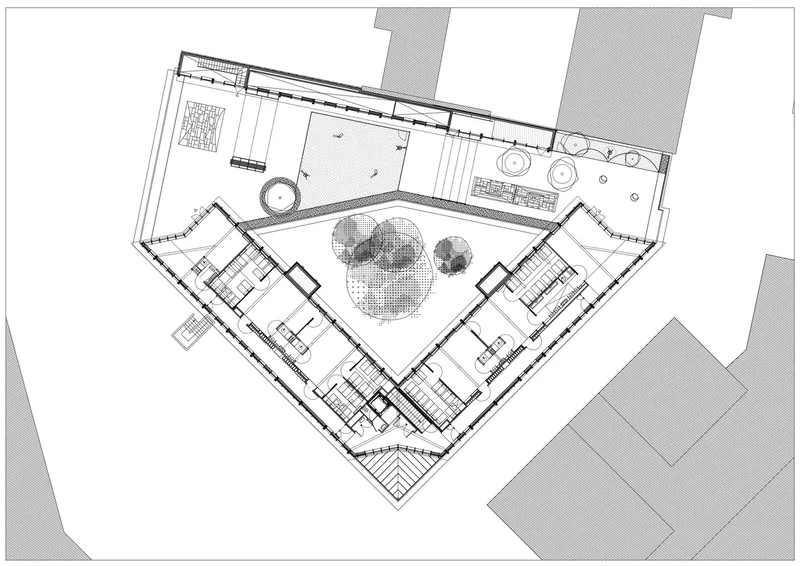
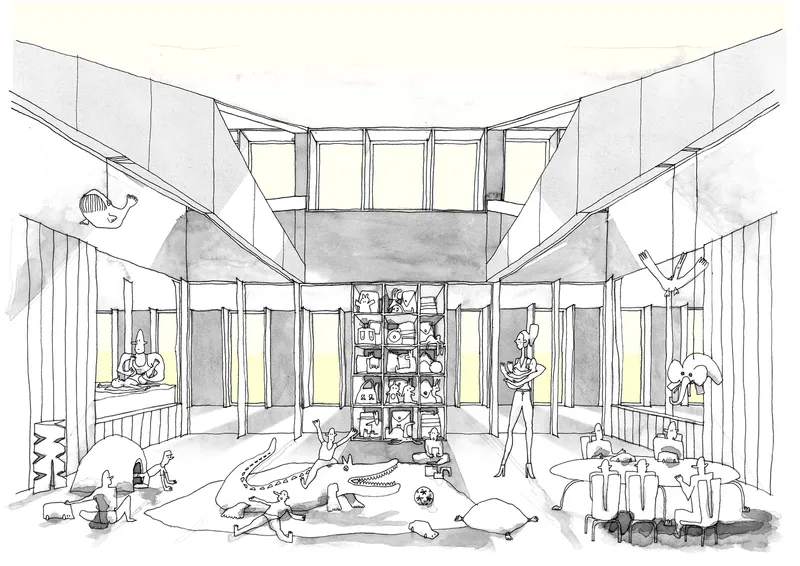
The daycare center spans two levels, with the ground floor dedicated to non-walking infants and the upper level designed for older toddlers. A roof terrace extends the natural landscape upwards, offering a hanging garden where children can explore, play, and interact with nature. This multi-layered approach to design ensures that the center is not only spatially efficient but also developmentally stimulating for young minds.
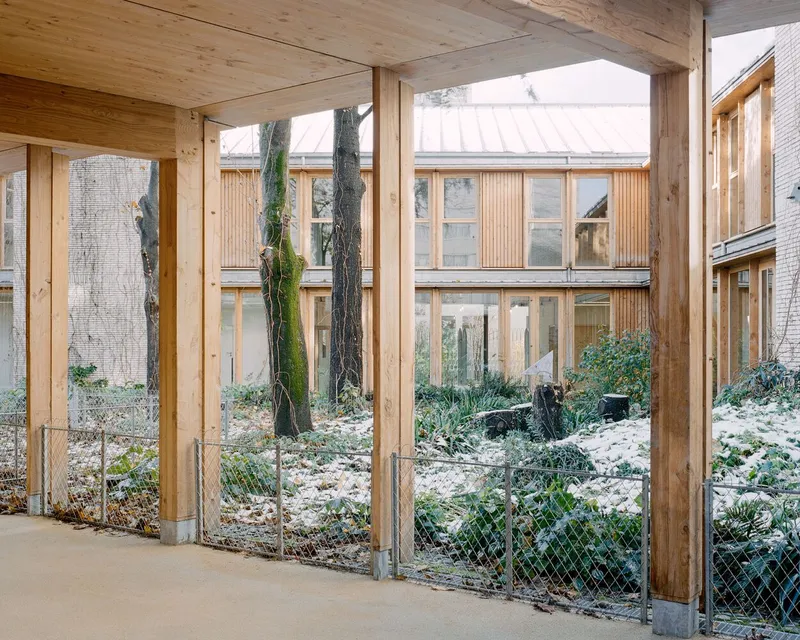
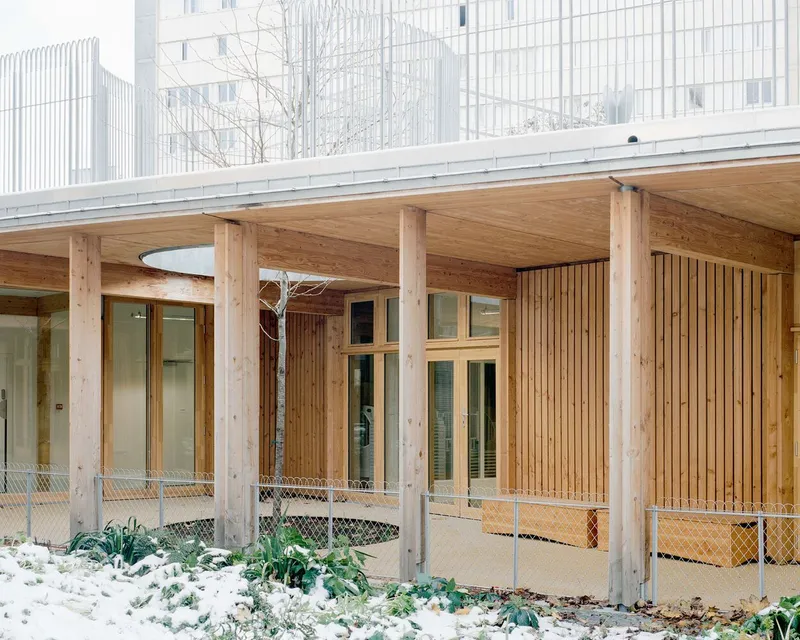
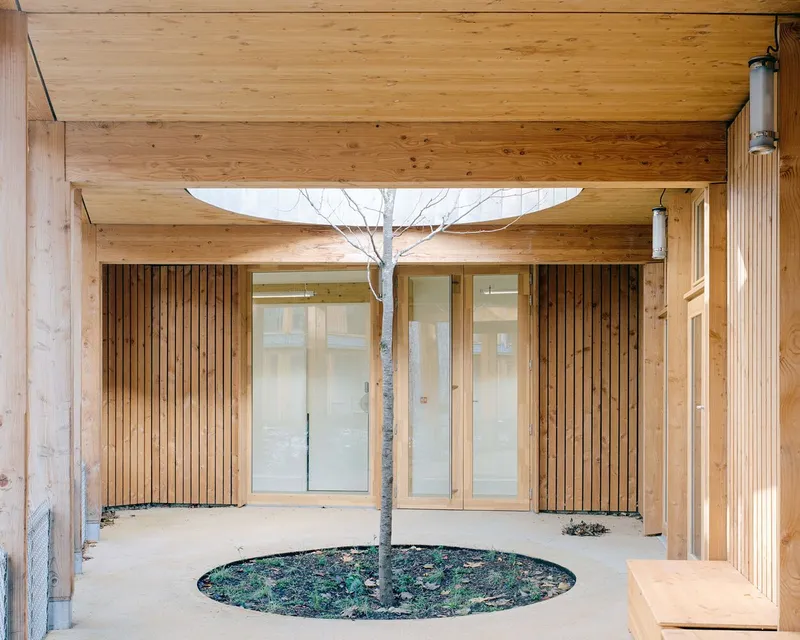
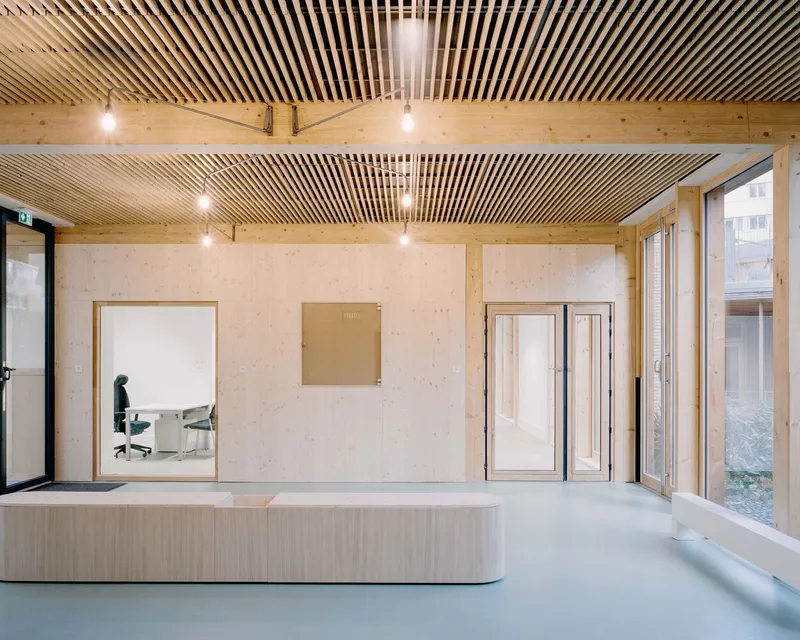
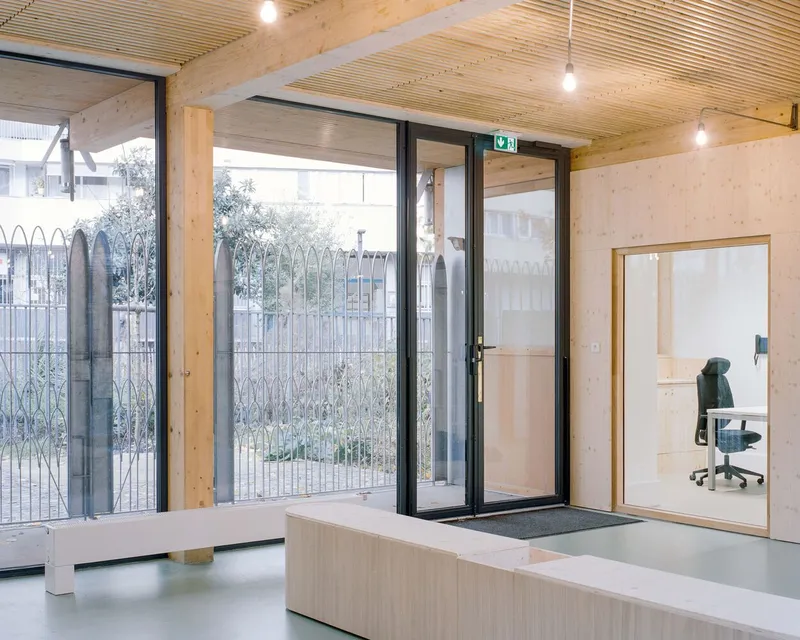
The maternal and child protection center, situated in the south-west wing, is contained within a single-story structure. This allows for easy accessibility while maintaining a direct connection with the surrounding landscape. By incorporating transparent walk-through lobbies, the design fosters depth and visual continuity, reinforcing the link between public spaces and the enclosed garden.
Sustainable Materials and Passive Design Strategies
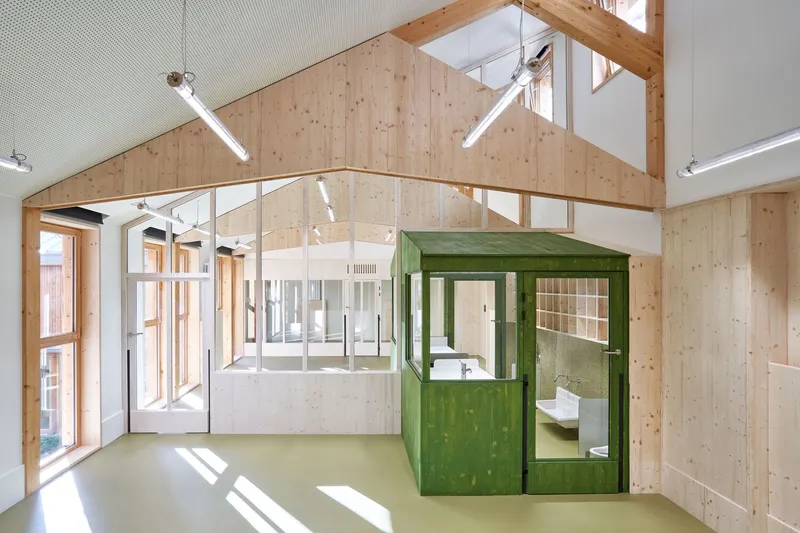
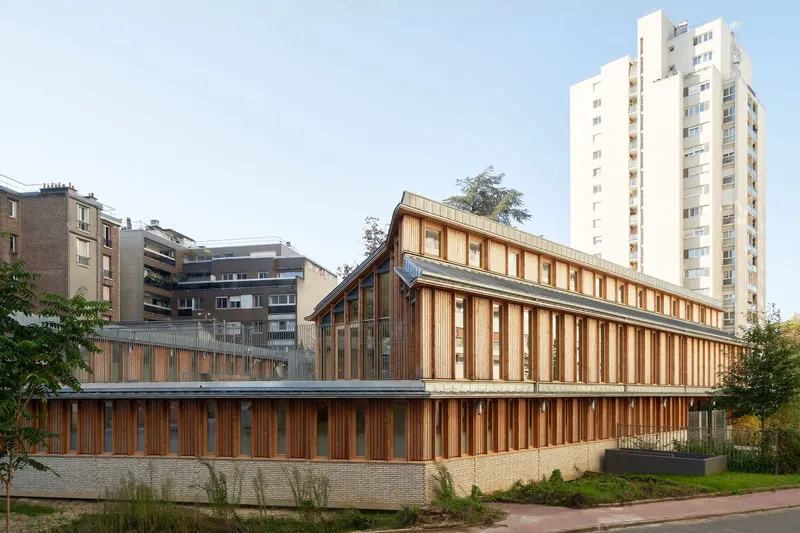
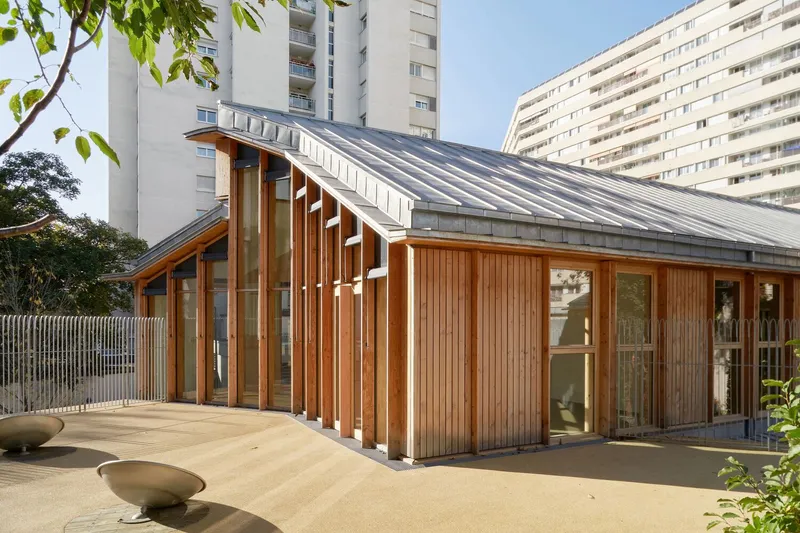
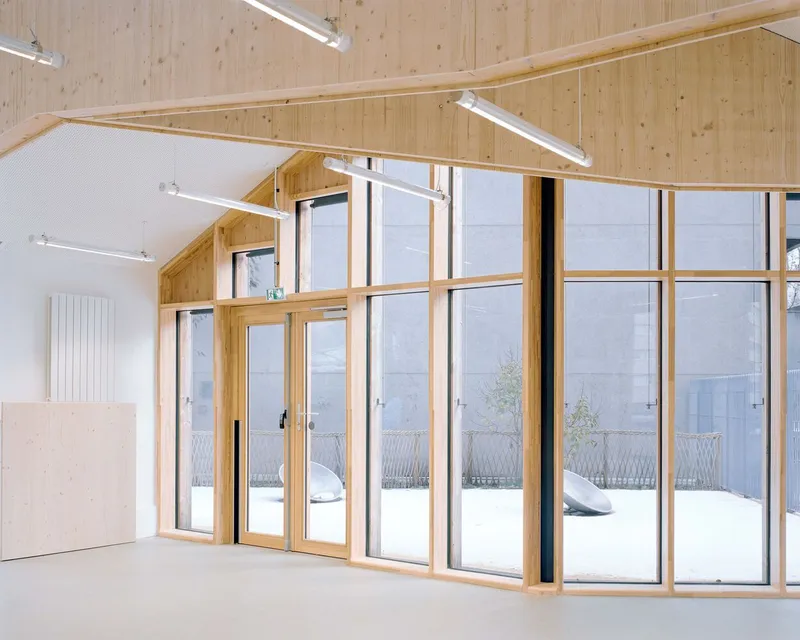
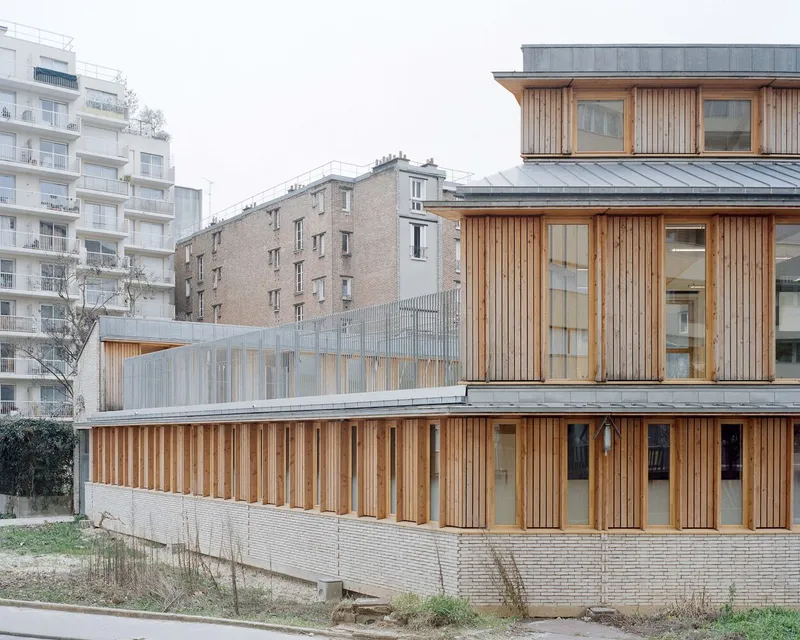
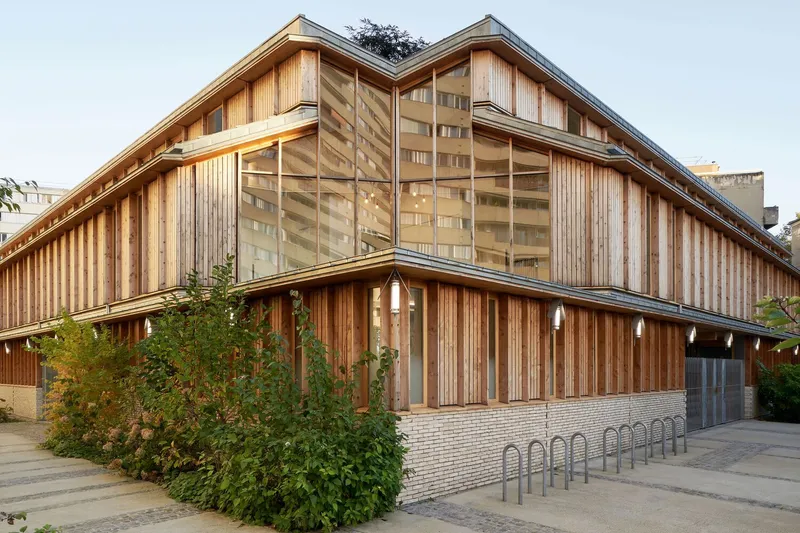
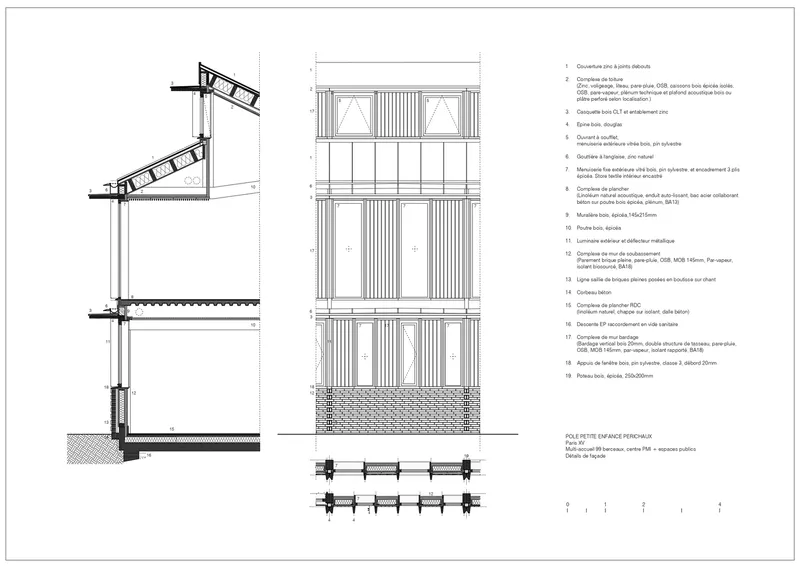
A defining feature of the Early Childhood Center by Guillaume Ramillien Architecture is its commitment to sustainability and energy efficiency. The building's white brick base provides durability and stability, while the upper structure is entirely made of wood, emphasizing natural materials and ecological responsibility.
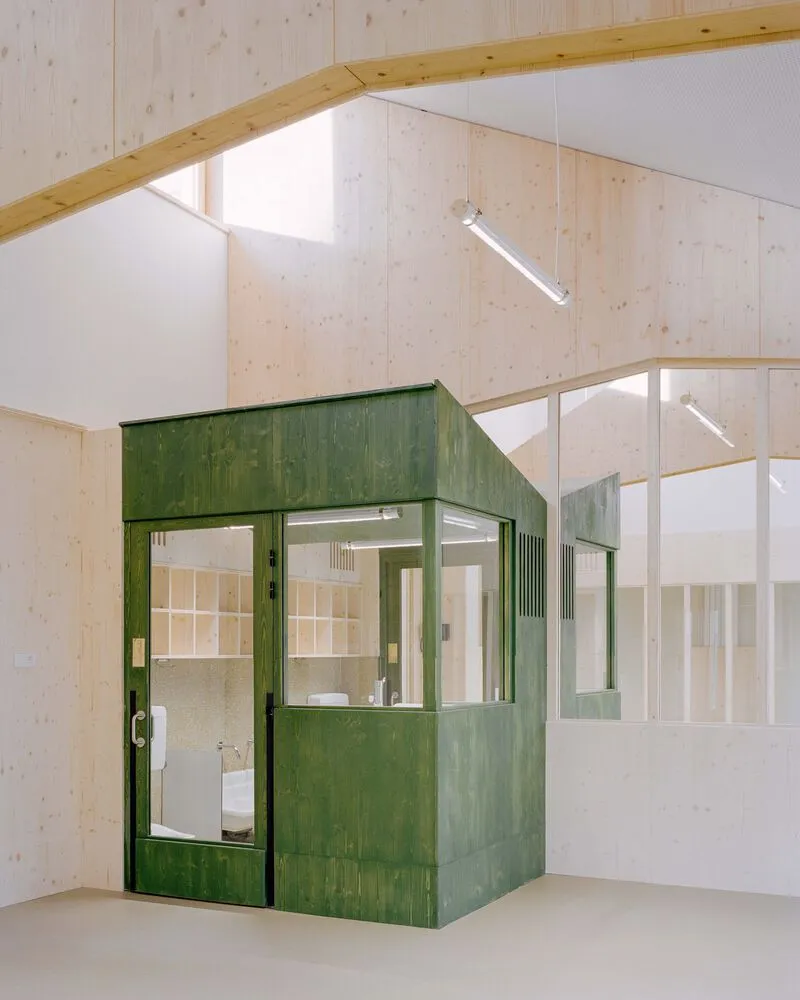
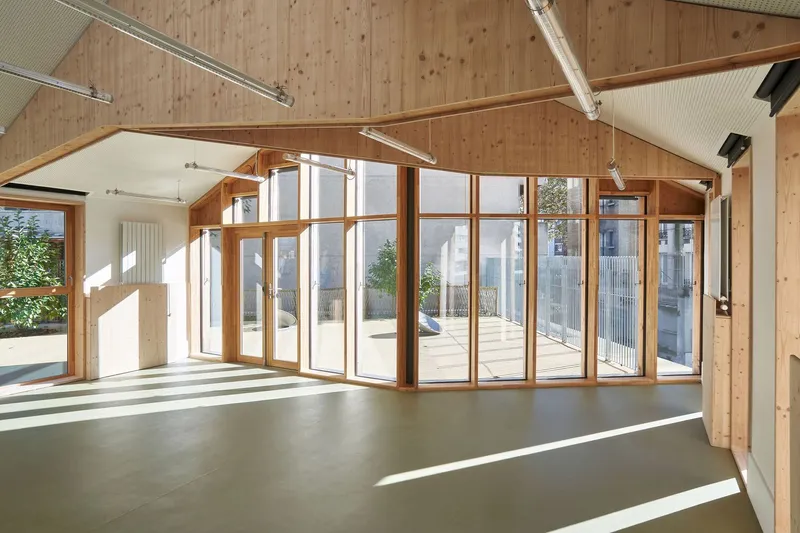
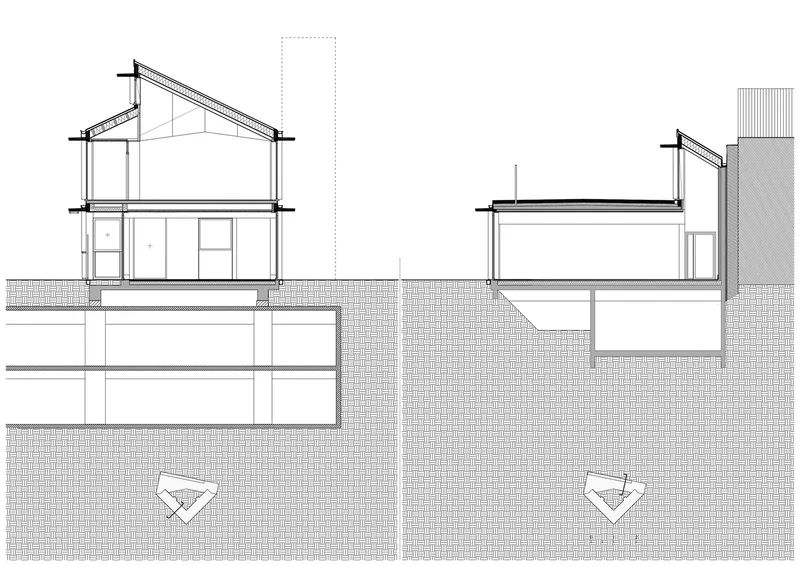
The shed-shaped zinc roofs serve multiple purposes, including rainwater collection and natural ventilation. These passive design strategies help regulate indoor temperatures, ensuring thermal comfort throughout the year. Overnight ventilation is integrated into the structure to maintain a healthy indoor environment, while large glazed facades maximize natural daylight and provide visual access to the green surroundings.
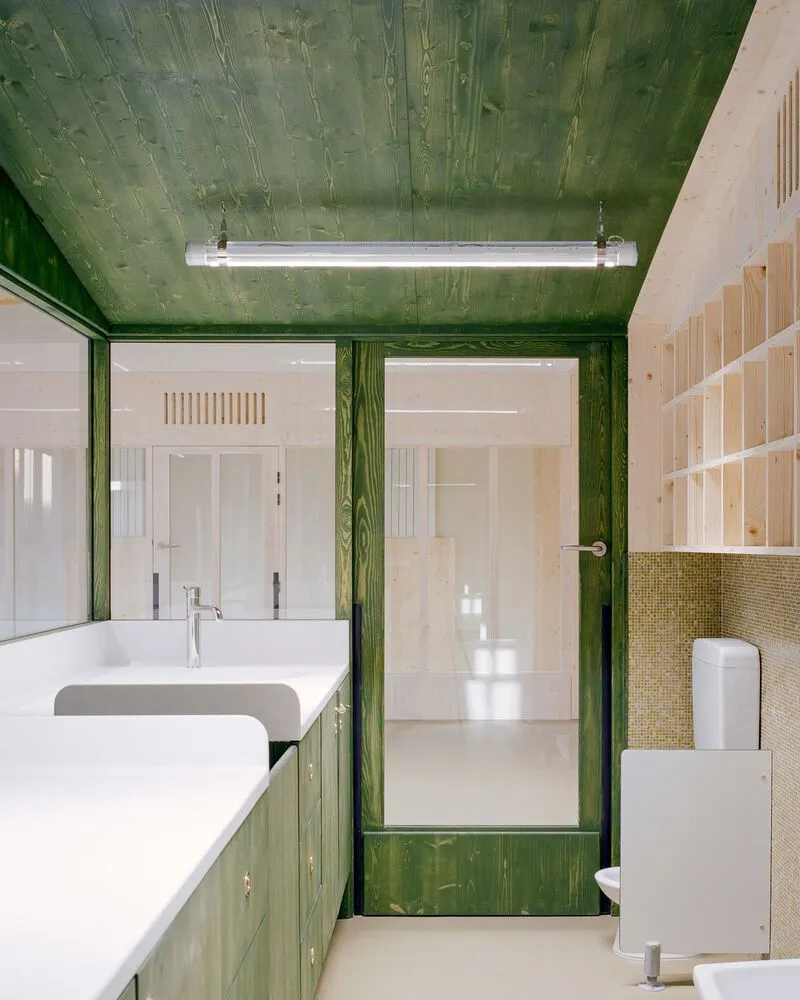
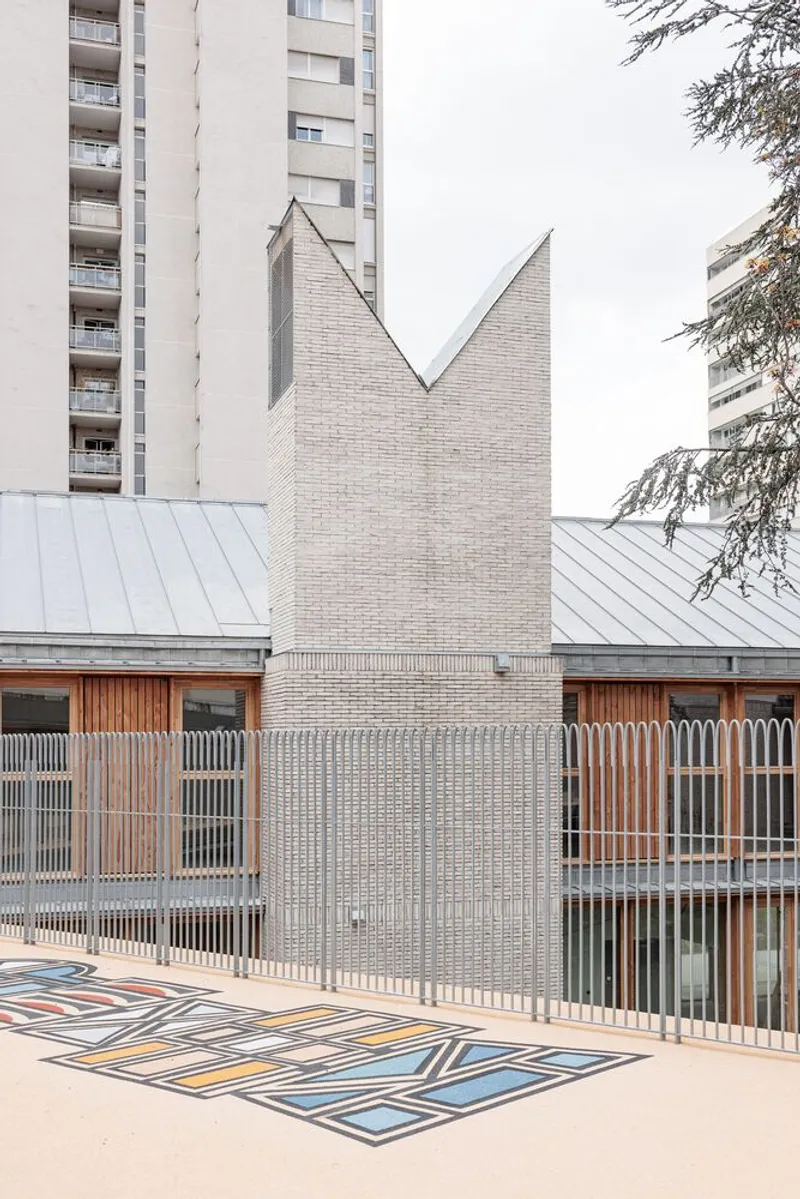
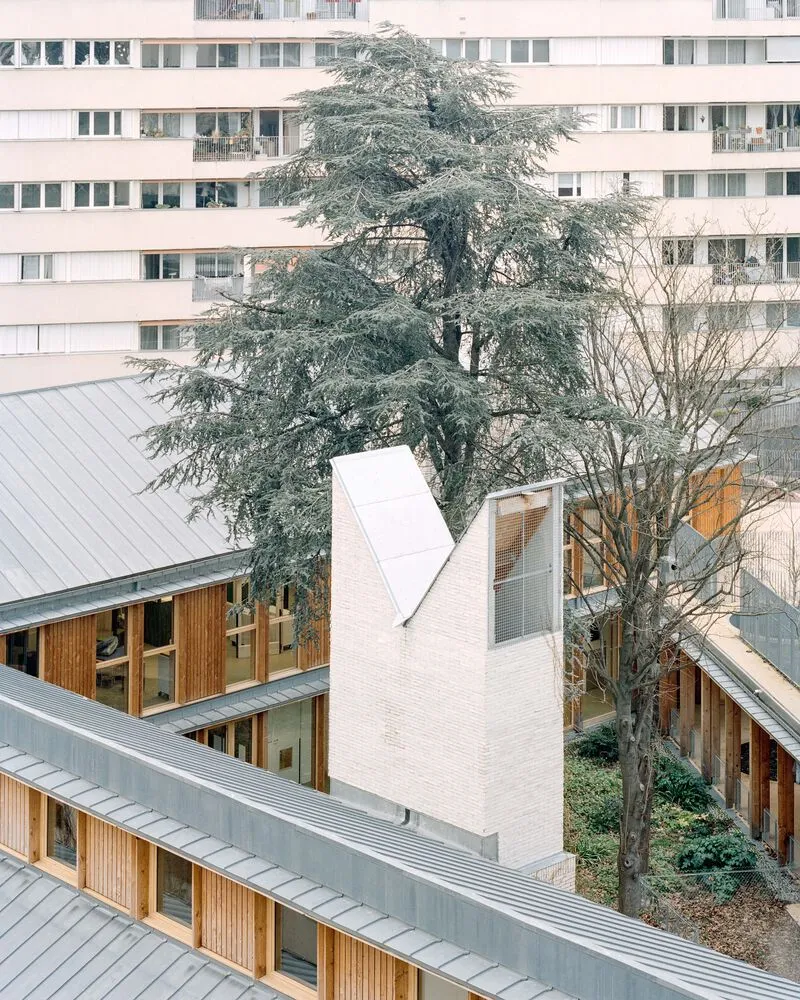
The wood-clad exterior, combined with generous glass openings, showcases the building’s structural framework, reinforcing its transparency and openness. Two white brick chimneys, extending from the underground parking area, highlight the integration of public facilities with the existing urban infrastructure.
A Vision for Child-Centered Architectural Design
The Early Childhood Center is more than just a functional space—it embodies a holistic vision for early childhood education. By seamlessly blending nature, architecture, and urban life, the design fosters a sense of community and well-being for both children and their caregivers. The emphasis on natural light, ventilation, and ecological sustainability makes this project a benchmark for future daycare and educational architecture.
Through its thoughtful spatial organization, commitment to biodiversity, and use of sustainable materials, the Early Childhood Center by Guillaume Ramillien Architecture stands as an exemplary model of how architecture can nurture both human and environmental well-being. This project reaffirms that early childhood spaces should be more than just functional buildings—they should be immersive environments that inspire learning, growth, and connection with nature.
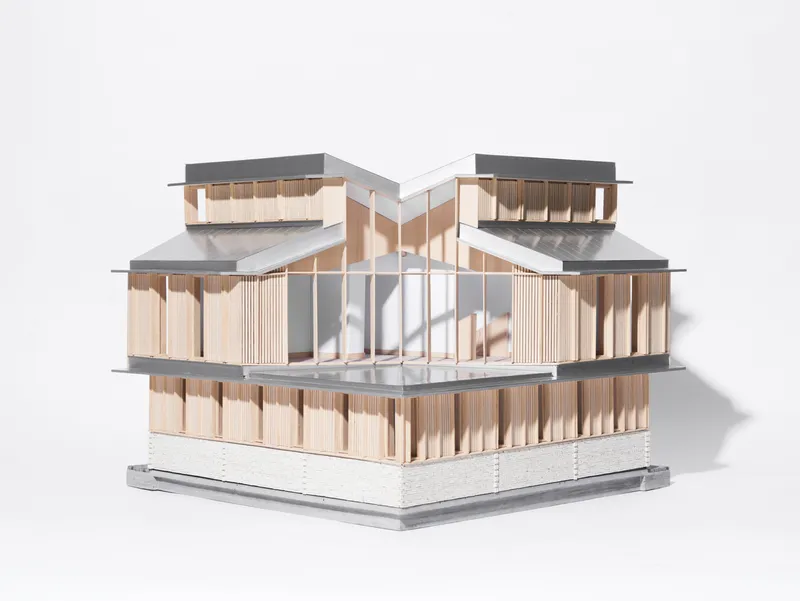
All Photographs are works of Salem Mostefaoui, Pascal Amoyel, Severin Malaud



Popular Articles
Popular articles from the community


The Musturak Paradise: Senior Living Architecture for a Connected Future in Temara, Morocco
The Musturak Paradise reimagines senior living architecture in Temara via private homes, social spaces, culture, community, and shared care.

Play: Fragments of Their World
Familiar architecture becomes modular playground design, creating safe spaces where displaced children can learn, connect, imagine and play.

Riyadh For All: Intergenerational Urban Design for Active Aging in Rabat
Riyadh For All reimagines urban design in Rabat with intergenerational co-living, adaptive courtyards, and Moroccan cultural exchange today.

The Ocean Hive: Sustainable Architecture for a Self-Sufficient Civilization at Sea
The Ocean Hive imagines sustainable architecture at sea, where modular habitats, algae, wave power and ocean waste sustain a growing colony.


Similar Reads
You might also enjoy these articles

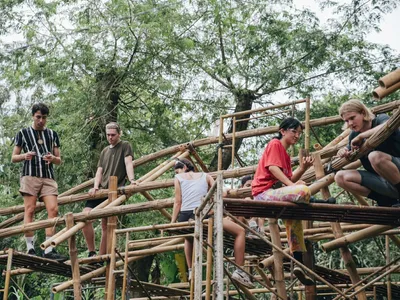
Bamboo Housing Challenge 2026: Design Affordable, Sustainable Homes Using Bamboo
An international design competition by Bamboo U and IBUKU inviting architects and designers to reimagine affordable housing using bamboo — with the winning design built full-scale in Bali.

Computational Design & Education: Beegraphy Design Awards Introduces 7th Category (Featuring Jiyun's Innovative Approach)
Dive into Beegraphy’s 7th Design Awards category, where computational design meets education to create immersive, interactive learning tools, inspired by Jiyun’s work.
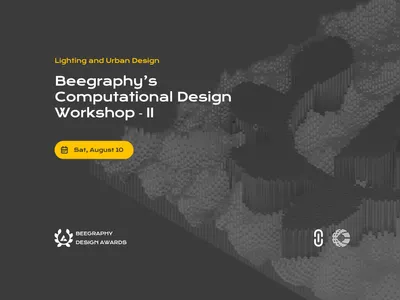
From Parametric Lighting to Urban Furniture: Join the 2nd Workshop in Beegraphy’s Computational Design Series
Dive into Cutting-Edge Design Techniques and Practical Applications with Industry Experts

Last Call: Unleash Your Architectural Genius in SHAK's Kindergarten Design Competition
Urgent call for architects to join SHAK's kindergarten design competition before the looming deadline
Explore Childcare Center Competitions
Discover active competitions in this discipline



Challenge to reimagine the Iron Throne


Photograph architecture without architects


Illustrate the lost glory of Angkor Wat - Render Challenge


Design challenge to reuse E-waste
Comments (0)
Please login or sign up to add comments
No comments yet. Be the first to comment!