
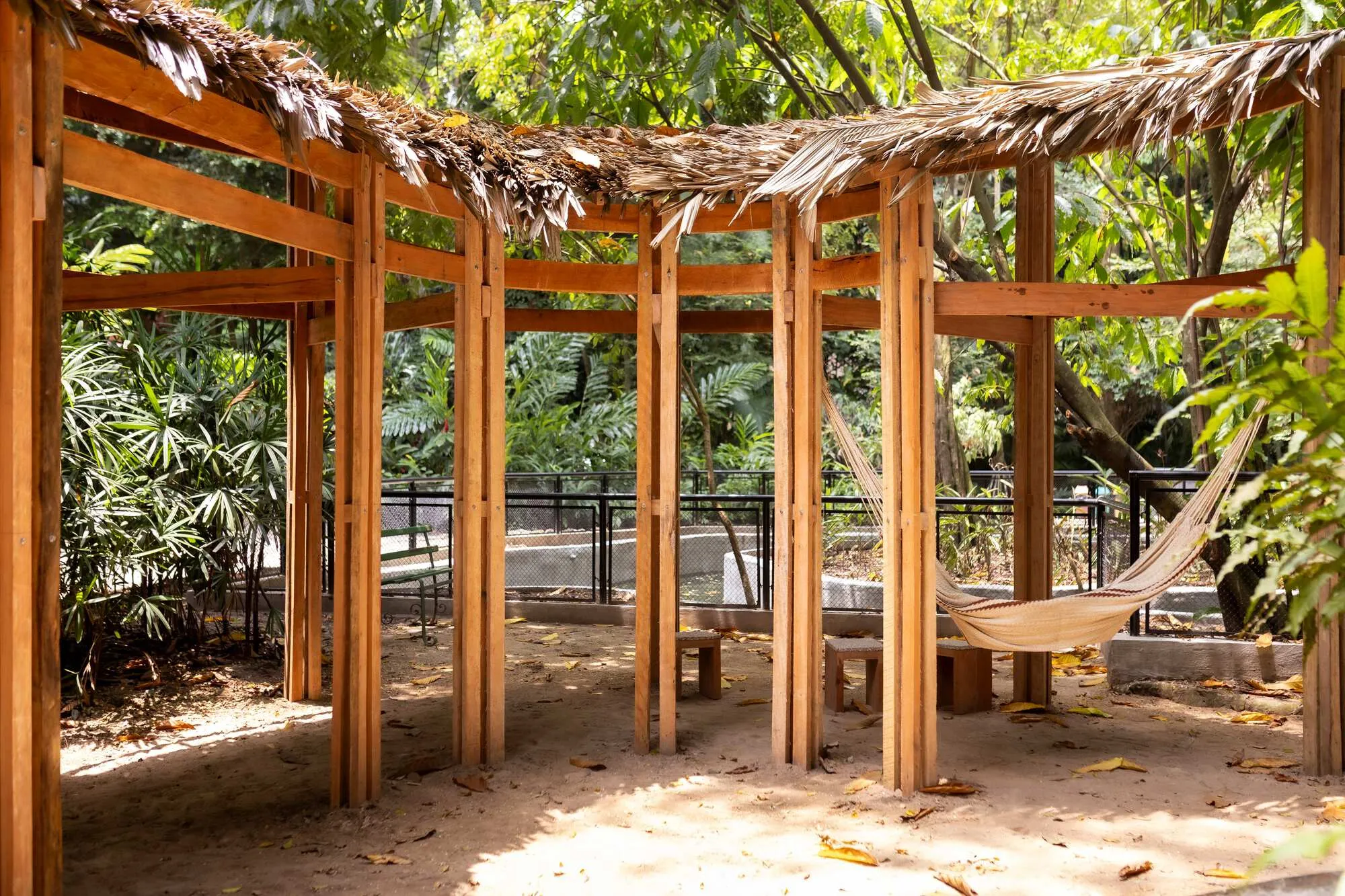
Educational Area of the Exhibition “A River Does Not Exist Alone” by Estudio Flume: Architecture as Environmental Dialogue
Modular timber pavilion in Belém integrating local materials and climate-responsive design to foster environmental education and community engagement.


Located in Belém, Brazil, the Educational Area of the Exhibition “A River Does Not Exist Alone” by Estudio Flume transforms architecture into a tool for ecological awareness and social engagement. Built in 2025 within the Zoobotanical Park, this 70-square-meter pavilion forms part of an educational initiative tied to the 30th UN Climate Change Conference (COP 30), curated by the Tomie Ohtake Institute under Sabrina Fontenele and Vânia Leal.
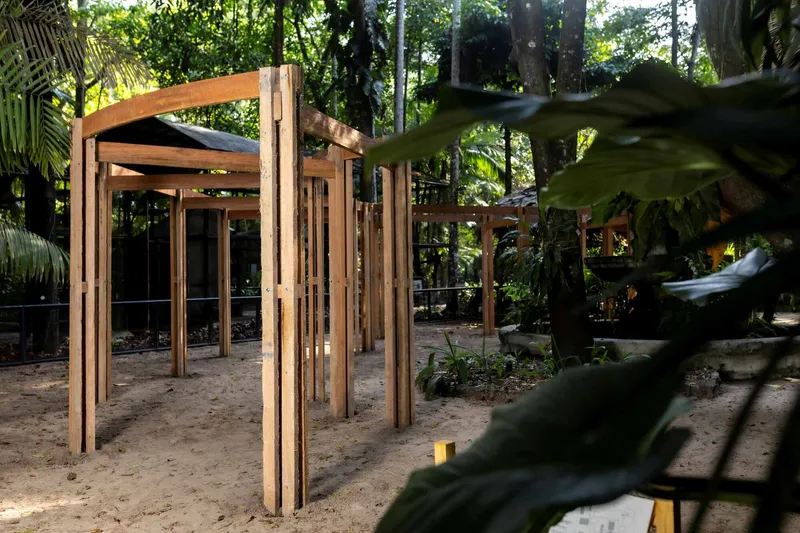

Far more than a temporary structure, the pavilion represents a prototype for sustainable and culturally grounded architecture in Amazonian contexts—a modest yet profound gesture of integration between material, community, and landscape.
Context and Purpose: Building for Environmental Awareness
The pavilion serves as the educational nucleus of the larger exhibition, offering a platform for conversation, workshops, and collective learning. Its design embodies Estudio Flume’s belief in architecture as a driver of social and environmental transformation, where construction acts as a process of ecological listening rather than imposition.
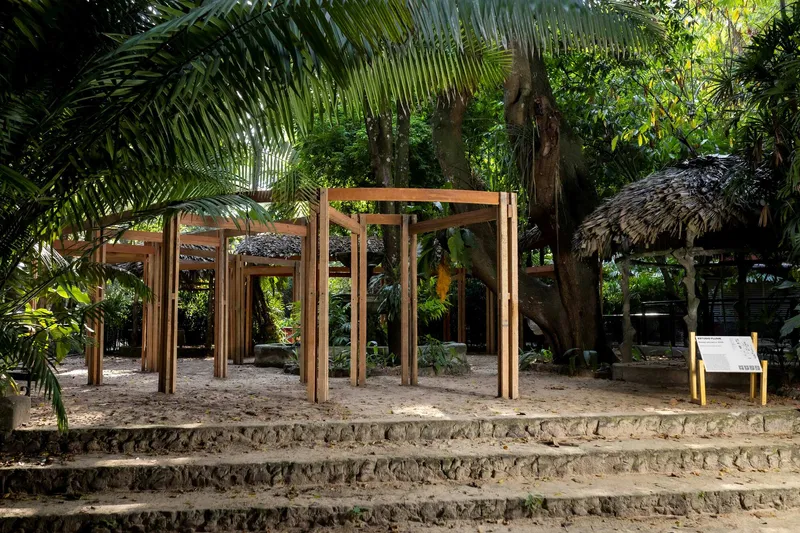
Nestled among the dense trees of the Zoobotanical Park, the pavilion’s lightness and modularity express sensitivity to place. Rather than imposing a permanent footprint, it weaves into the existing landscape, echoing the natural system of the rivers that inspired it.
Here, the relationship between architecture and ecology is didactic: the project teaches not only through words or exhibits, but through the way it’s built and how it breathes.
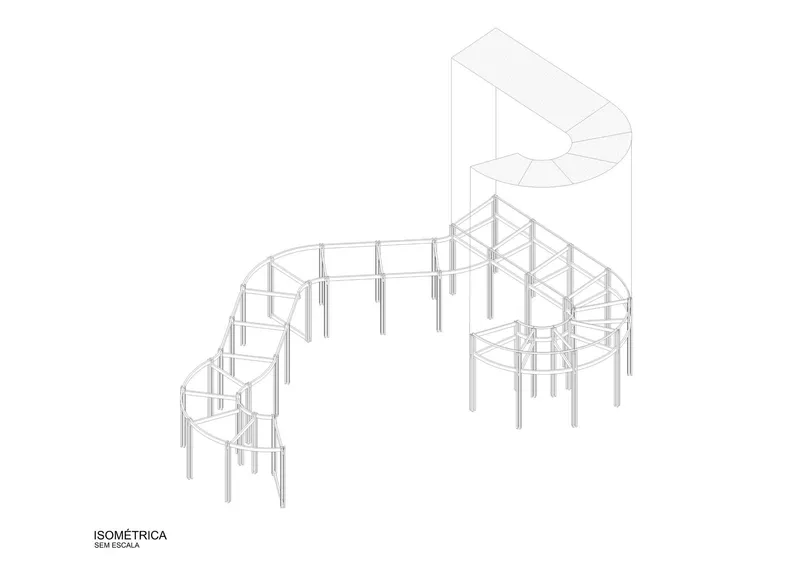
Modularity and Flexibility: A System of Transformation
Occupying roughly 70 square meters, the structure is composed of interconnected modular units capable of varied configurations. These modules generate both covered and open spaces, offering flexibility for workshops, performances, and community gatherings.
The modular design promotes adaptability and replicability—a critical approach for the region, where construction conditions are variable and access to resources can be challenging. Fast assembly, low environmental impact, and future expandability make the pavilion an intelligent prototype for riverine and rural settlements.

Every part of the structure was designed for minimal intervention. Raised lightly above the ground, the pavilion protects existing vegetation and facilitates natural drainage, reinforcing the ecological harmony between architecture and terrain.
Material Expression: Learning from the Forest
Estudio Flume employed a material palette that celebrates local tradition and bioregional craftsmanship. The structure uses certified Amazonian wood for its beams and columns, and ubuçu straw for the roof—materials chosen for their availability, thermal quality, and tactile beauty.
These components, produced and assembled locally, reduce transportation emissions and foster community-based production chains. The use of glued laminated wood, fabricated directly on-site, represents a fusion of local ingenuity and lightweight engineering.

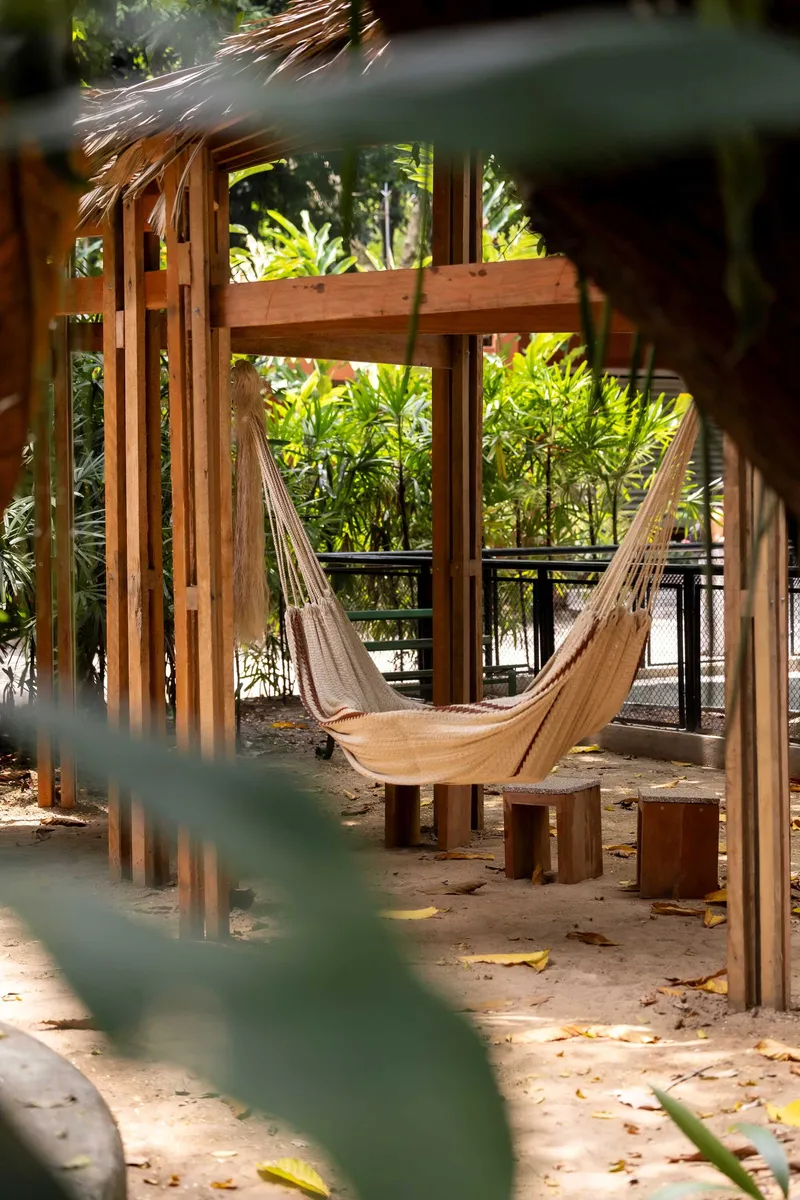
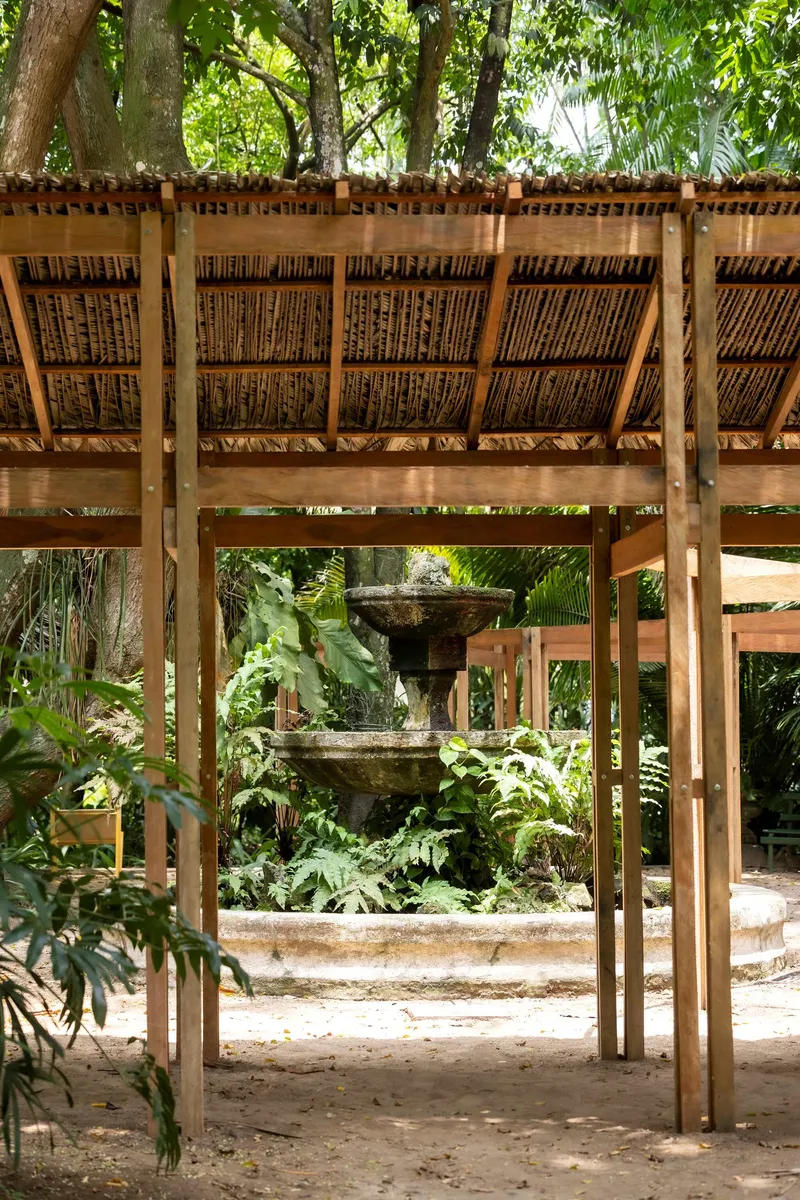
The design was also inspired by river canoes from Belém and Marajó, whose subtle curvature guided the pavilion’s softly bent roof structure. This form mirrors both craft technique and hydrological logic, allowing rainwater to flow naturally while creating a visual dialogue with the surrounding landscape.
As a result, the pavilion acts as a living environmental tool—a space that performs sustainably while demonstrating what building “with the territory” truly means.
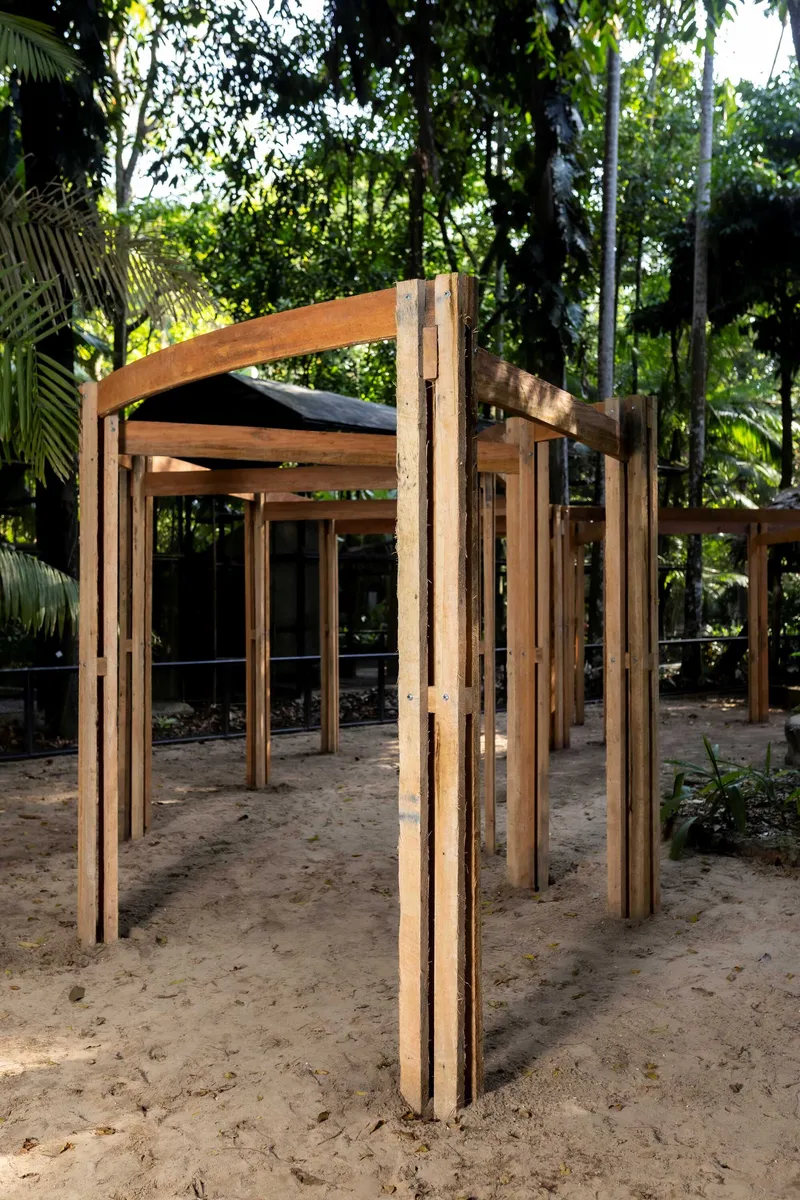
Light, Air, and Belonging
An essential component of the pavilion is its permeable envelope, which filters light and enables natural ventilation. The translucent and breathable roof harnesses crosswinds to stabilize internal temperature and enhance comfort without mechanical systems.
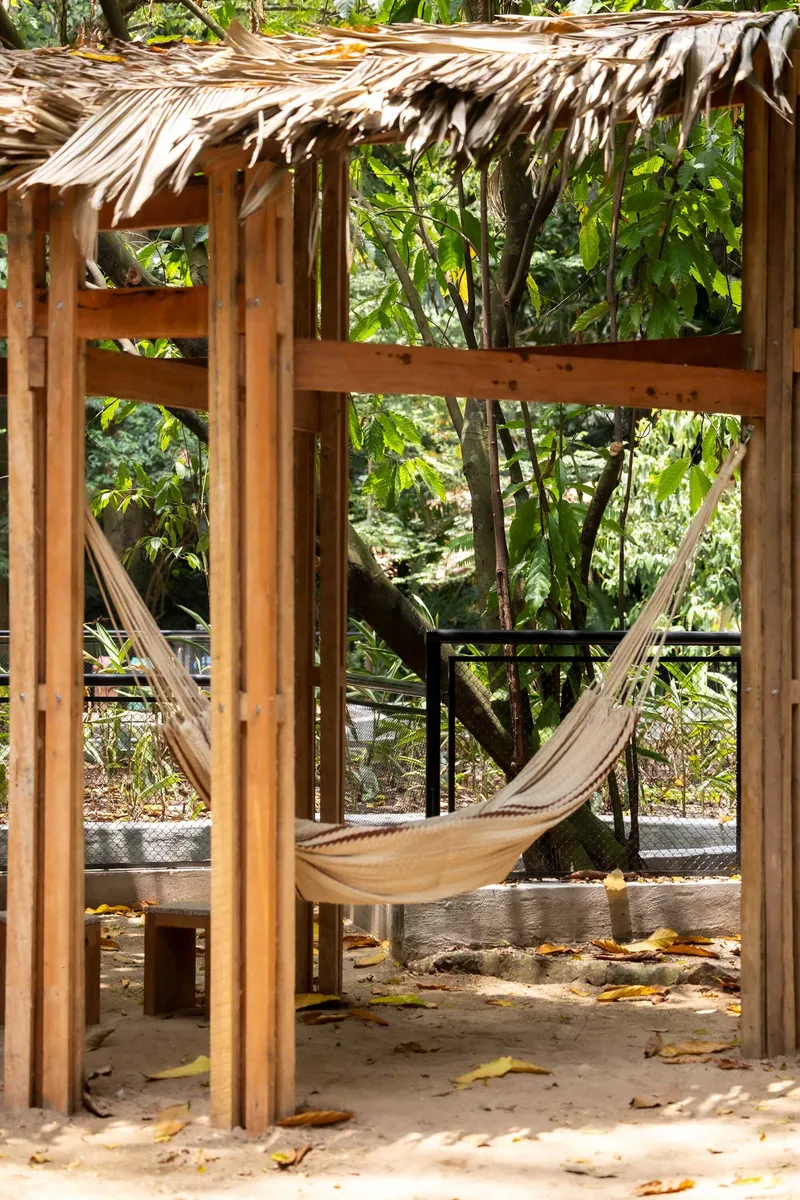
This climatic responsiveness transforms the space into an organic classroom, always in dialogue with the weather, daylight, and human activity. Inside, nuanced shadows cast by the timber grid and straw roof evoke the textures of the rainforest canopy.

Transitional zones blur boundaries between interior and exterior, inviting visitors, educators, and local communities to occupy the pavilion freely. The sense of belonging it generates is both spatial and symbolic: a shared environment where education occurs as a collective, open-air experience.
Architecture as Prototype
More than a one-off installation, the pavilion serves as a prototype for sustainable construction across the Amazon. Its simplicity, lightweight frame, and modular logic make it replicable and contextually adaptable—ideal for remote regions where logistical and environmental constraints demand thoughtful optimization.

Through this design, Estudio Flume positions architecture as a platform for regeneration, capable of empowering local communities, strengthening environmental resilience, and supporting cultural memory. The project reaffirms that design, when rooted in place, can act as a pedagogical tool for rethinking humanity’s relationship with natural systems.
The pavilion’s message is embedded not only in what it shelters but also in the humility of how it stands—as part of the forest, not apart from it.

All the Photographs are works of Ana Dias




Popular Articles
Popular articles from the community


Co-Life: Senior Housing Design That Reconnects Older Adults With the City
Co-Life reimagines senior housing design through healing gardens, shared streets, workshops, and a sustainable community across generations.

Play: Fragments of Their World
Familiar architecture becomes modular playground design, creating safe spaces where displaced children can learn, connect, imagine and play.

Riyadh For All: Intergenerational Urban Design for Active Aging in Rabat
Riyadh For All reimagines urban design in Rabat with intergenerational co-living, adaptive courtyards, and Moroccan cultural exchange today.

Lunar Spiral: Space Architecture Shaped by the Mathematics of the Universe
Lunar Spiral reimagines space architecture through Fibonacci geometry, lunar regolith, levitating habitats, and self-sustaining Moon living.


Similar Reads
You might also enjoy these articles


Hodi-Mandai Geram
Project Function: Preservation and revitalization of the Intangible heritage and socio-spatial identity of the Hodi by Housing, Cultural Memory Center, Sacred Grove, landscape, local tourism economy


Olio Towers: A Mid-Rise for Performers That Fuses Housing, Rehearsal, and Stage
Located blocks from Houston's Theater District, this modular tower stacks living units around a central performance atrium.

Oasis: Modular Green Housing Carved into Dhaka's Urban Fabric
A shortlisted Plugin Housing entry reclaims unauthorized settlements in Dhaka with stepped concrete volumes, green roofs, and ventilation-driven design.

Black Hole: A Floating Megastructure for the Post-Physical Era
Emiliano Mazzarotto envisions a spherical, self-scaling arena where e-sports, digital hotels, and holographic stadiums replace traditional public space.

Explore Educational Building Competitions
Discover active competitions in this discipline



Challenge to design public laboratory


Challenge to reimagine the Iron Throne


Photograph architecture without architects


Illustrate the lost glory of Angkor Wat - Render Challenge
Comments (0)
Please login or sign up to add comments
No comments yet. Be the first to comment!