

EGM Architects Complete a 30-Year Campus Transformation with a Biophilic Hospital in Nijmegen
An 11-storey university medical centre draws on salutogenic design and the Bossche School tradition to redefine Dutch healthcare architecture.


Hospitals rarely announce themselves as places of calm. The Main Building at Radboudumc, completed in 2022 by EGM architects, is an 11-storey, 45,000 m² structure that does exactly that: it closes a three-decade redevelopment of the Nijmegen university medical campus and replaces the conventional department model with eleven integrated centres organized around a seven-storey atrium, courtyard gardens, and a fossil-fuel-free energy system. It is the first university medical centre in the Netherlands to receive a BREEAM Excellent certificate, and it earned the highest score of any Dutch hospital.
What makes this building worth attention is not the sustainability credential itself but the specificity of the design argument behind it. EGM rooted every decision in salutogenesis, the idea that a building should actively promote health rather than merely contain illness. That principle cascades from the proportional system (derived from the golden ratio) to the facade detailing, the biophilic interiors, and a deep respect for the Bossche School tradition that already characterizes the campus's monumental buildings. The result is a hospital that feels deliberate in every dimension, without ever becoming austere.
A Facade Built on Rhythm and Restraint
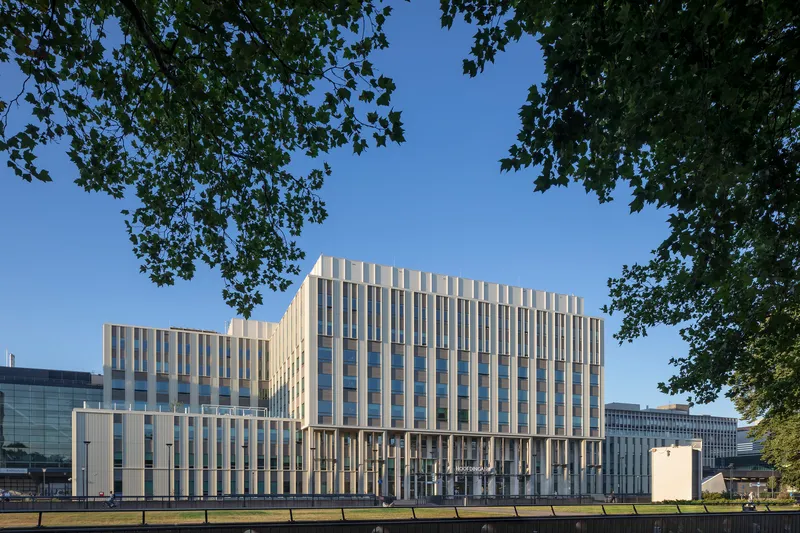
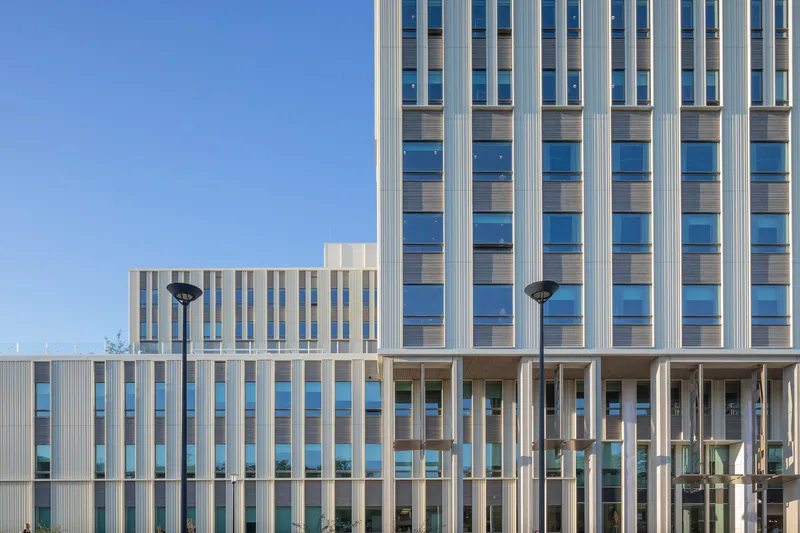
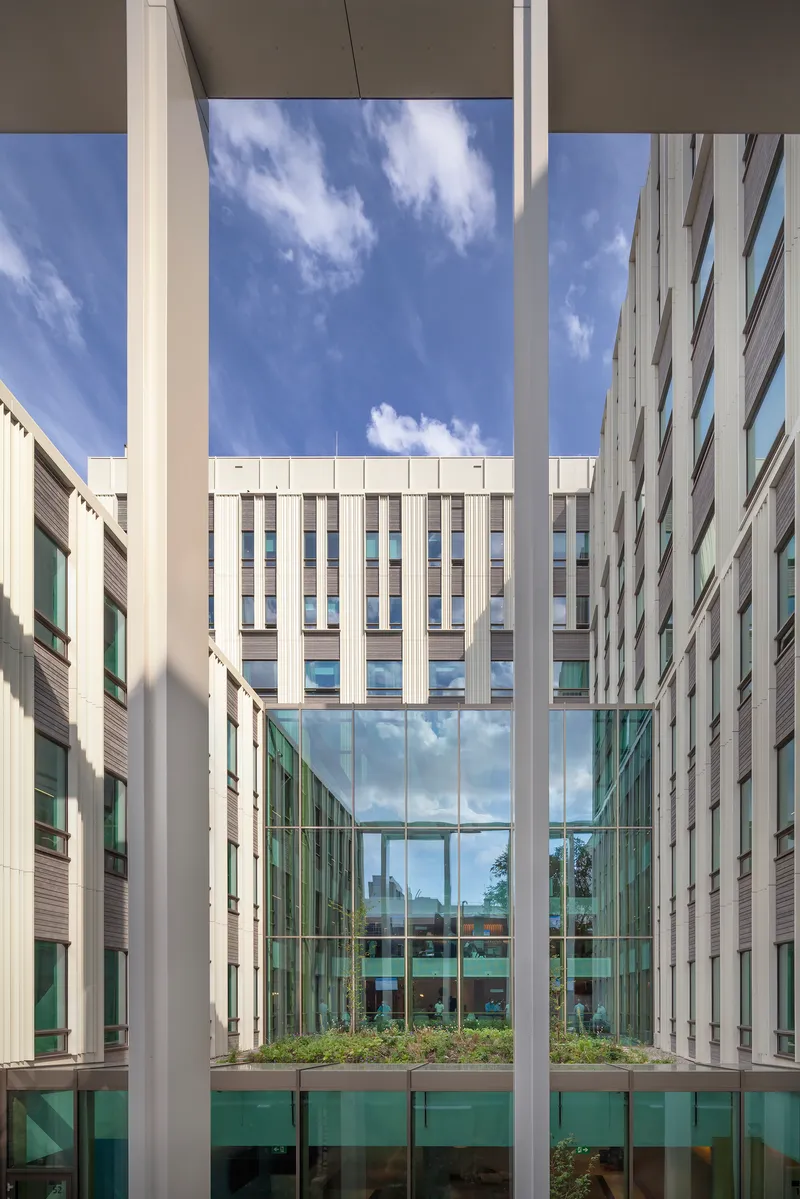
The building's vertical white fins give the facade a measured cadence that reads differently at every distance. From afar, the fins dissolve into a luminous screen; up close, they reveal the alternating glazed and timber-clad window bands behind them. That layering is not decorative. The triple-glass windows and wooden slat sunscreens behind the fins manage solar gain and glare while preserving the views of greenery that the design treats as therapeutic infrastructure.
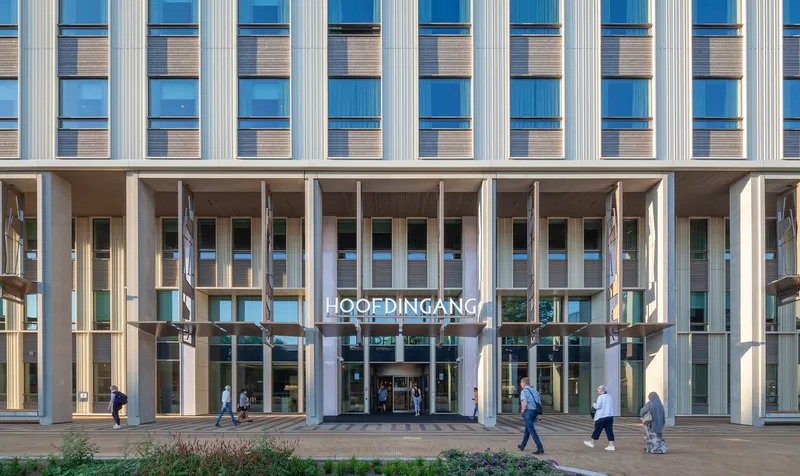
The ground-level colonnade invites pedestrians directly under the building's mass without the usual institutional threshold. There are no heavy lobbies or revolving doors framing a power entrance. The columns continue the vertical rhythm of the fins, pulling the facade logic down to human scale and tying the building to the campus plaza. It is a quiet move that pays off every time someone walks in without noticing a boundary.
The Atrium as Vertical Garden
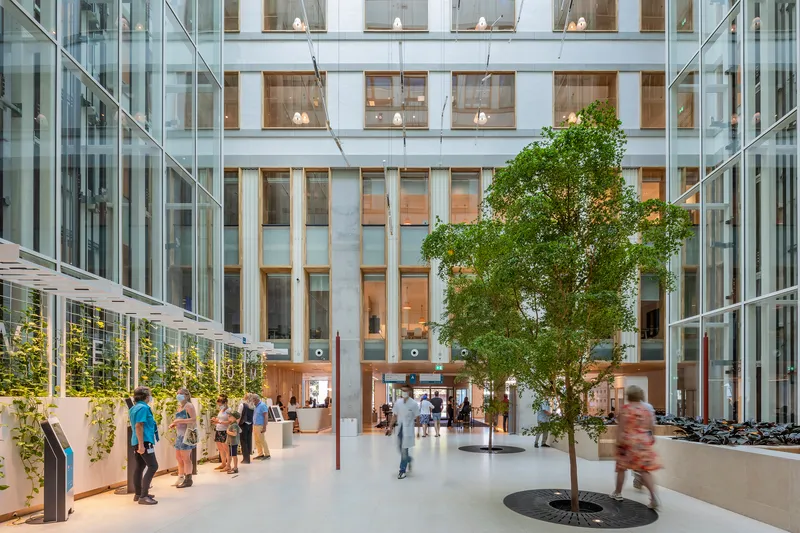
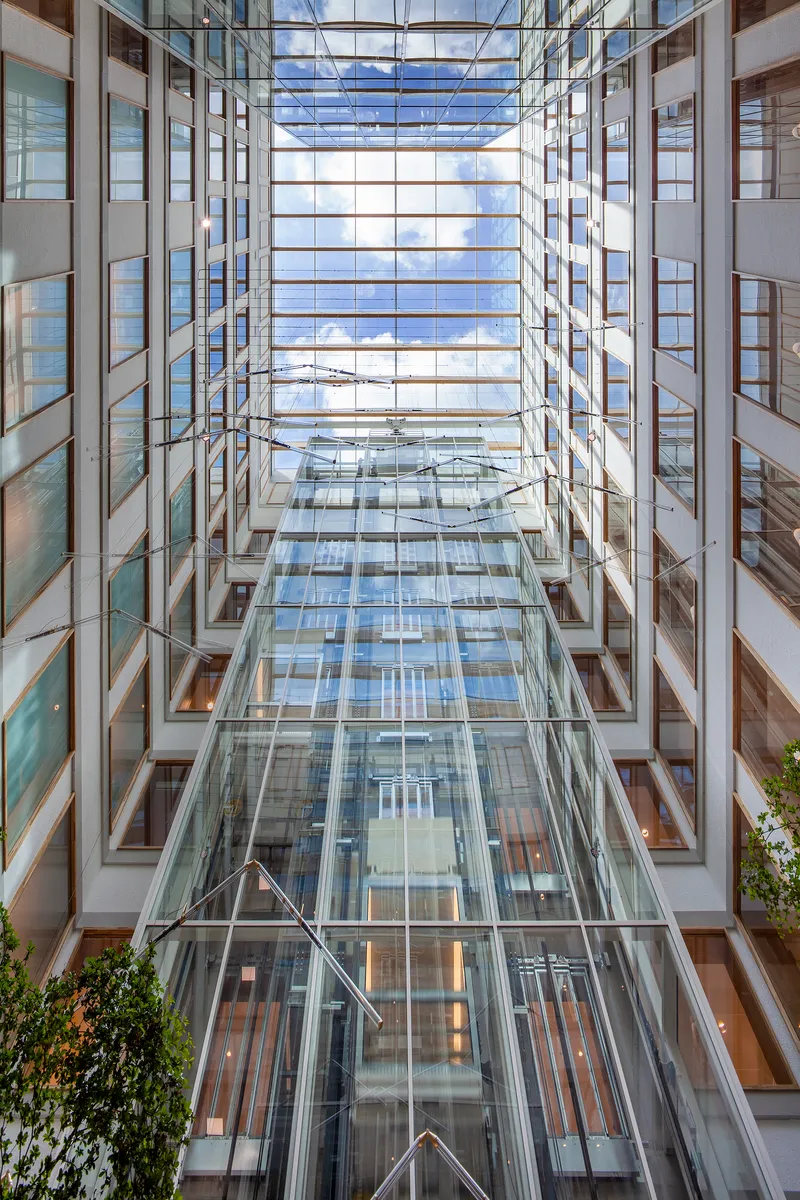
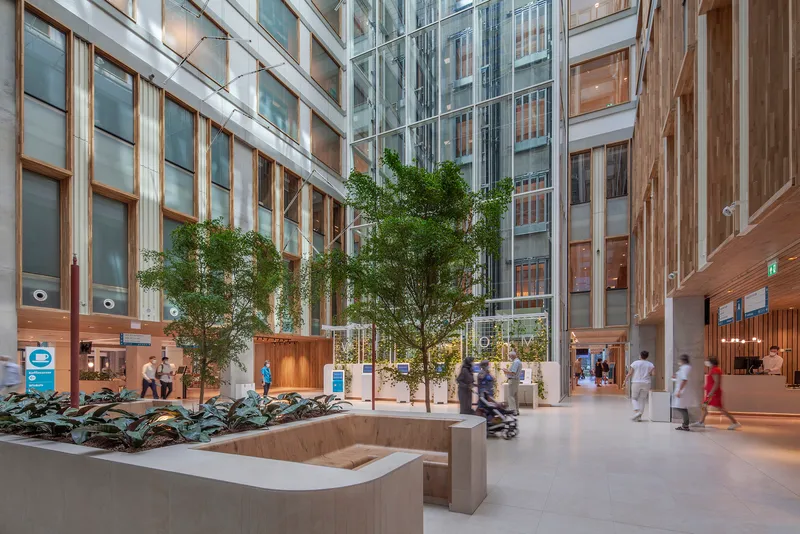
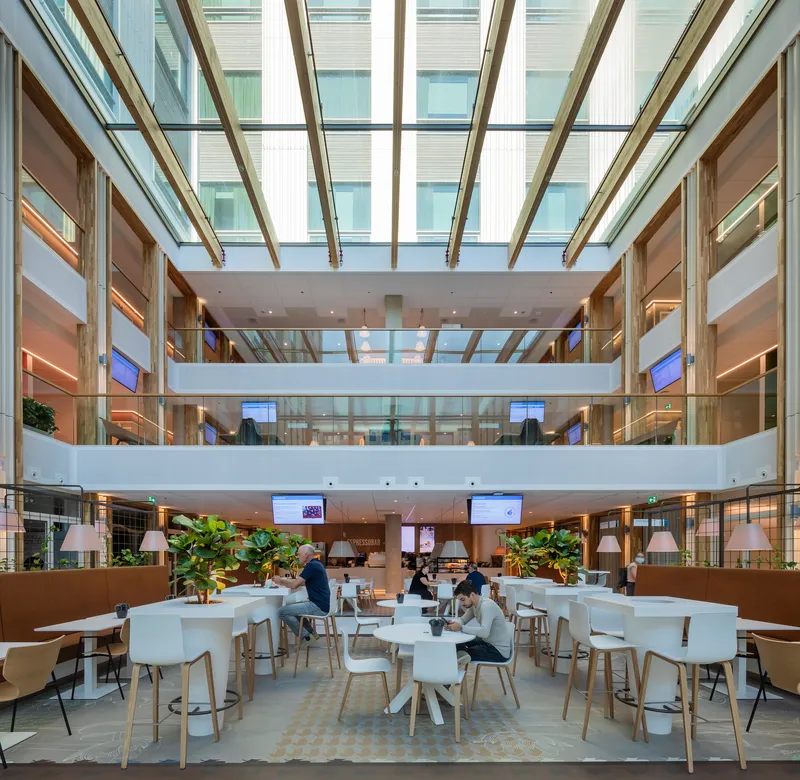
The seven-floor central atrium is the building's most assertive spatial gesture. Two 7-metre-high Bucida buceras trees anchor the ground level, surrounded by planted beds and polished floors that make the space feel closer to a botanical garden than a hospital concourse. Daylight pours through the glazed roof and bounces between the white fin structure and the glass elevator shafts, changing quality through the day and supporting the circadian lighting strategy that EGM embedded throughout the building.
From the upper floors, the atrium reads as a void carved through stacked programme, visible through glass balustrades and cantilevered balconies. It is never merely a light well. Seating zones, café tables, and informal waiting areas occupy its edges on every level, turning the vertical section into a social gradient. The effect is that orientation becomes intuitive: you always know where you are relative to the trees.
Courtyards, Terraces, and the Green Campus
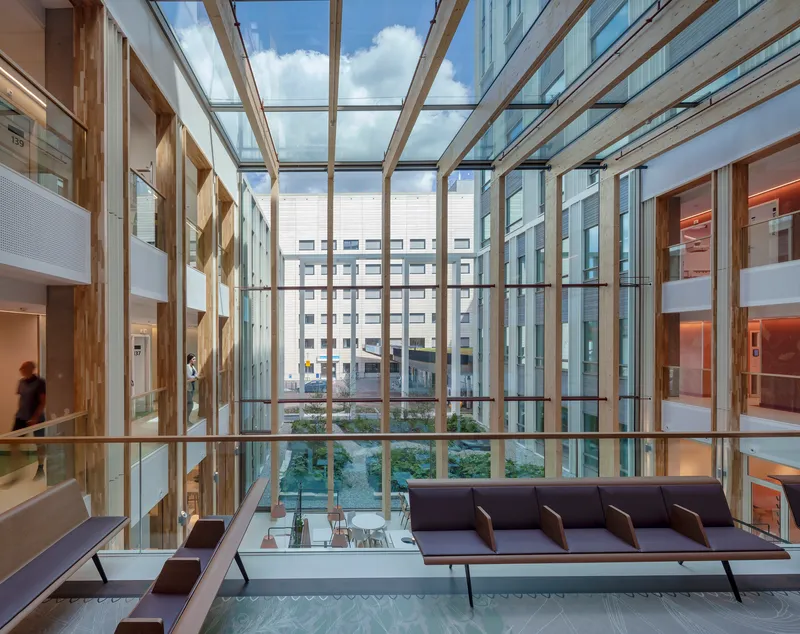
Four integrated courtyard gardens punctuate the floor plates, accessible to patients and visible from corridors, consultation rooms, and lounges alike. Their timber-clad facades and raised concrete planters create a material shift from the cooler palette of the main circulation spaces, signalling rest. These are not leftover voids in the plan; they are deliberate instruments of the biophilic strategy, ensuring that no point in the building is far from a view of green.
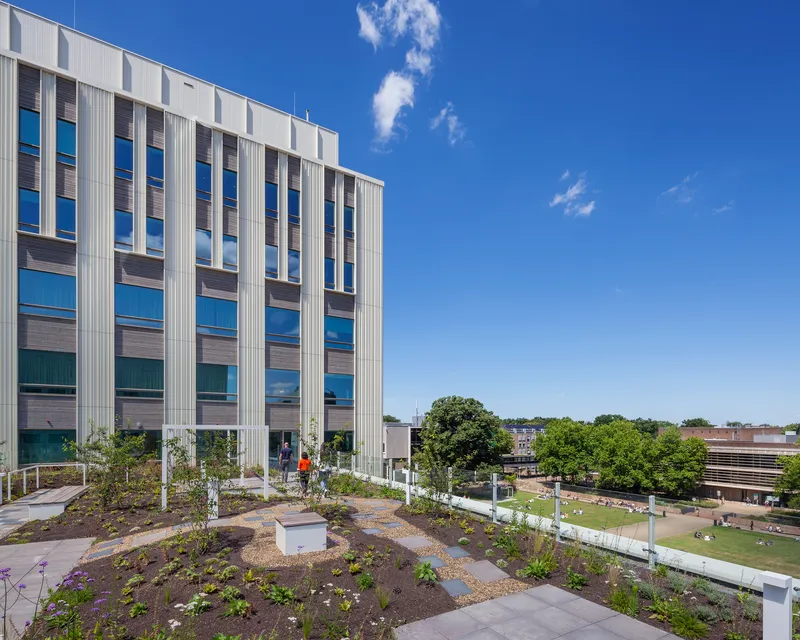
The rooftop terrace extends that logic upward. Planted beds overlook the leafy campus quad, turning a typically mechanical floor into a usable garden. The campus itself was conceived as one large park, and the new Main Building participates in that by reducing built square metres compared to what it replaced, freeing ground for landscape. Ninety-six percent of demolition materials from the former buildings were reused, a number that gives the sustainability narrative real weight.
Interiors Calibrated for Recovery
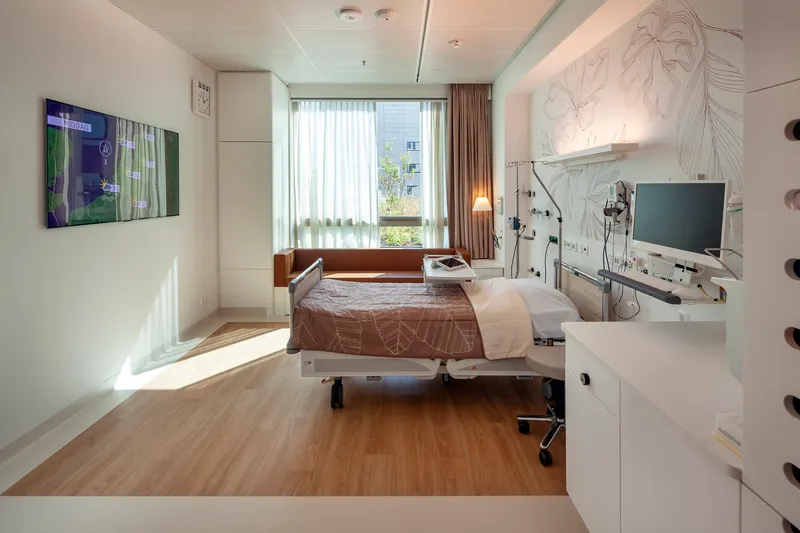
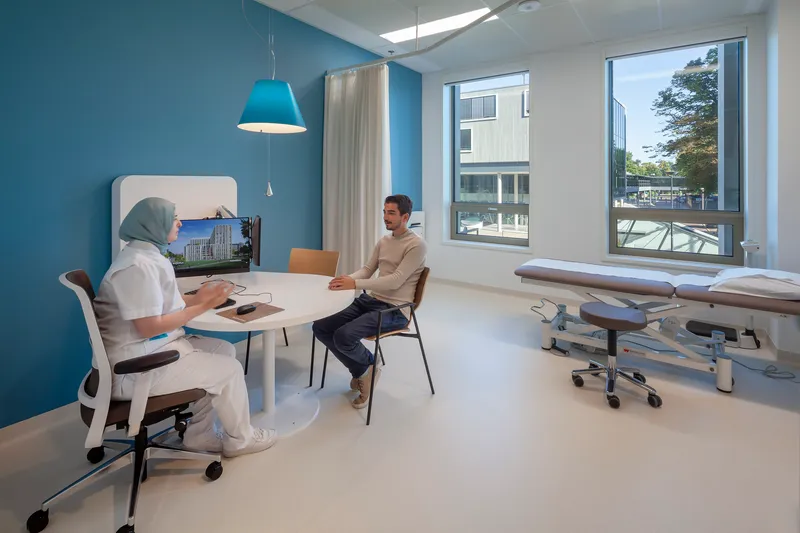
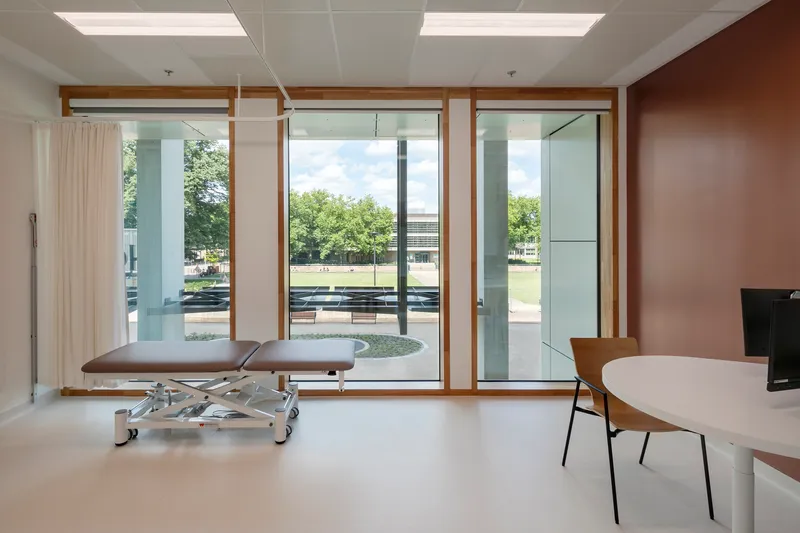
Patient rooms use wood flooring and large windows framing greenery to create conditions more residential than clinical. The consultation rooms follow the same logic: pale blue walls, tall windows, and enough depth to allow the eye to travel out to the tree canopy. These are rooms sized and proportioned with the golden ratio as a generative tool, and while that may sound abstract, the practical outcome is spaces that feel neither cramped nor institutional.
Dynamic lighting adjusts through the day to reinforce natural circadian rhythms, supporting the salutogenic thesis that environment directly affects physical and mental recovery. Water-saving fixtures and the building's thermal-storage installation, which eliminates fossil fuels entirely, operate invisibly behind these calm surfaces. The design never asks patients to be aware of its performance; it simply performs.
Common Spaces and the Chapel
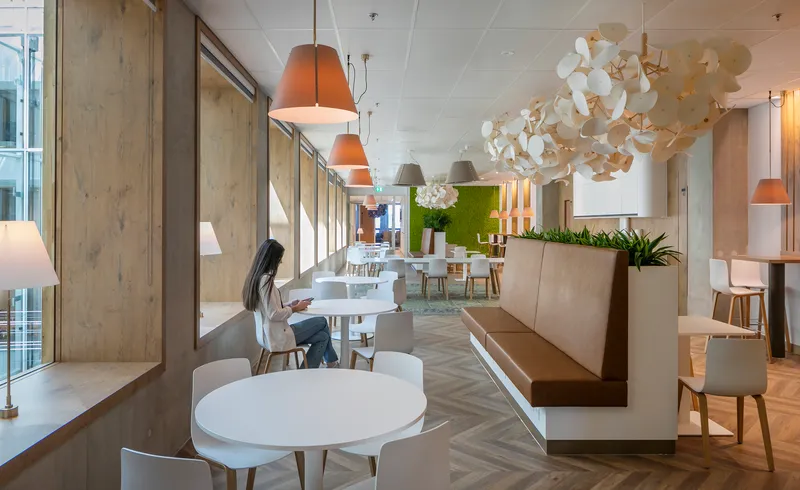
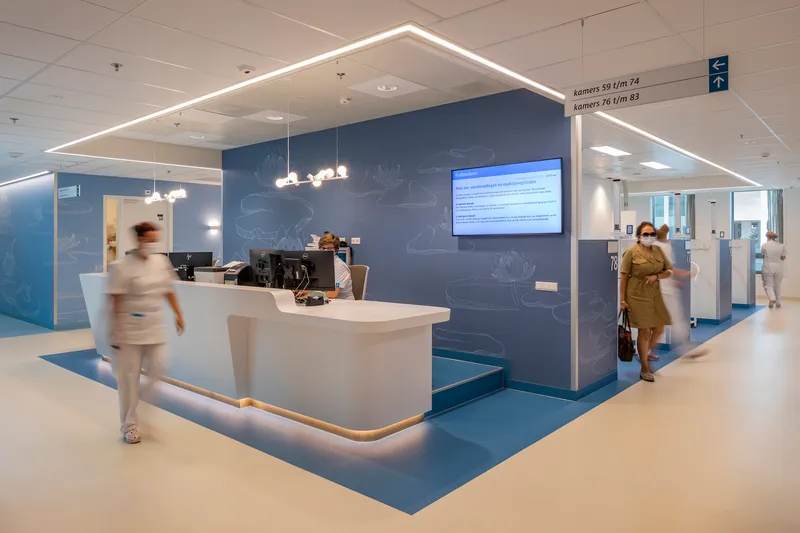
The dining and reception areas share a material warmth: timber-paneled walls, pendant lighting, and white surfaces that reflect daylight without harshness. The reception desks sit under house-shaped lighting canopies, a domestic reference that softens the scale of the public floor. These spaces serve staff, patients, and visitors simultaneously, reinforcing the campus model of a shared community rather than a segmented institution.
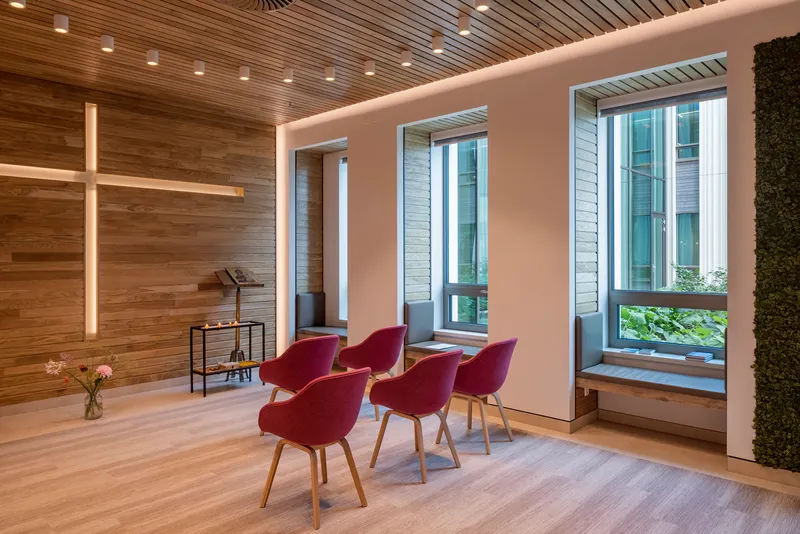
The chapel is perhaps the most refined room in the building. Timber slat ceilings, a simple wooden cross, and red upholstered chairs compose a space of remarkable stillness. There is no stained glass, no monumental gesture. The quality comes from proportion and material restraint, and it connects directly to the Bossche School tradition of humanism and human scale that the campus has cultivated since 1957.
Circulation and Spatial Logic
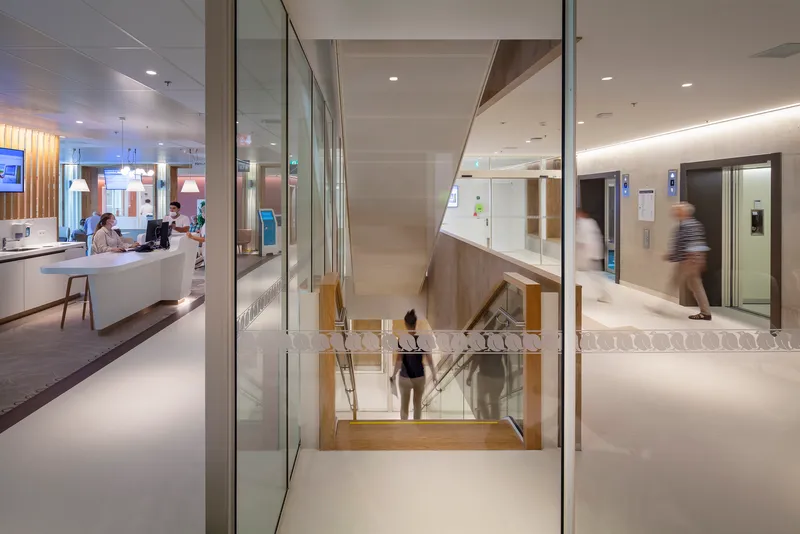
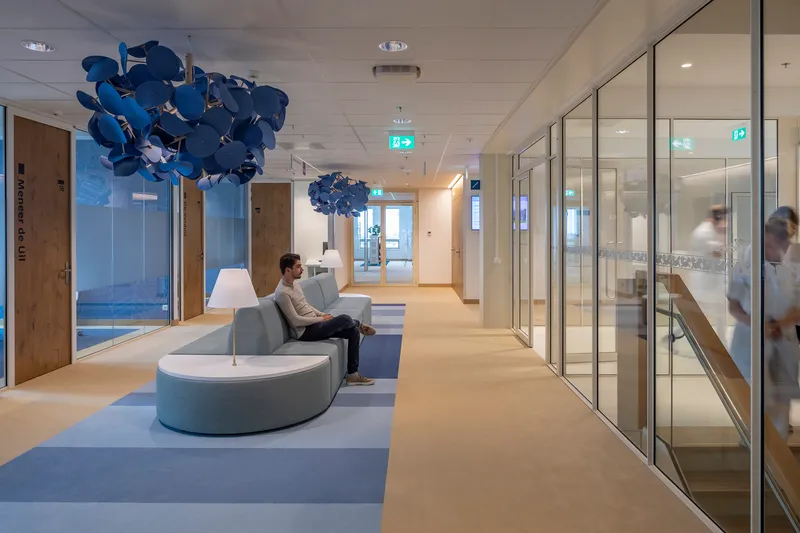
Corridors use curved seating alcoves, sculptural pendant lights, and glass-walled offices to break the hospital corridor cliché. The timber staircases descending between glass partitions encourage vertical movement and reduce dependence on elevators, a simple health-promoting move that aligns with the broader salutogenic agenda. Circulation is not just functional infrastructure here; it is a social space.
The multi-level café beneath the angled glass roof occupies one of the atrium's most generous moments. It stacks seating across levels and floods the dining area with overhead light, making it simultaneously a wayfinding landmark and a destination. The stepped outpatient clinics, reception areas, and restaurant all sit behind the glass facade, readable from the outside and oriented toward the campus landscape.
Plans and Drawings
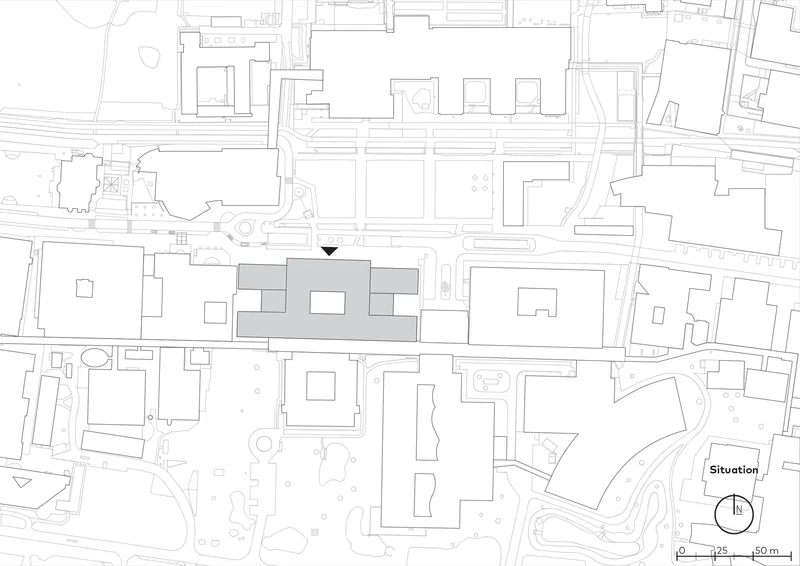
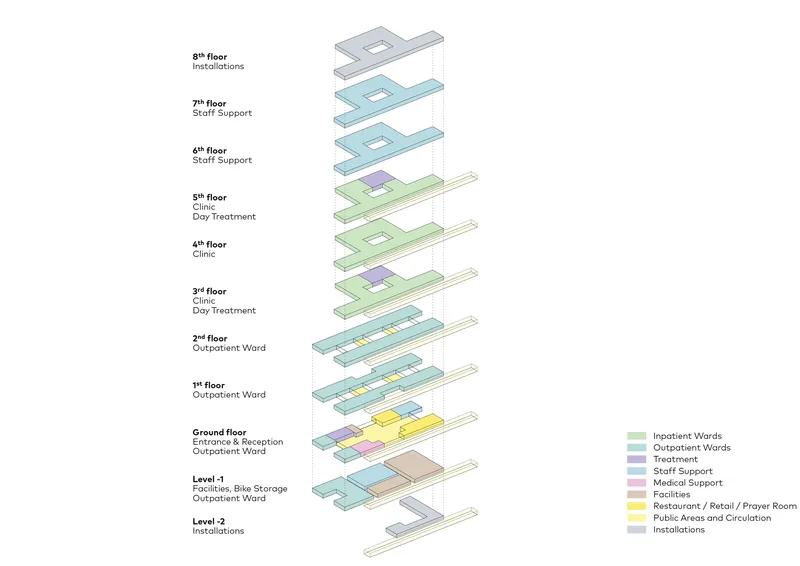
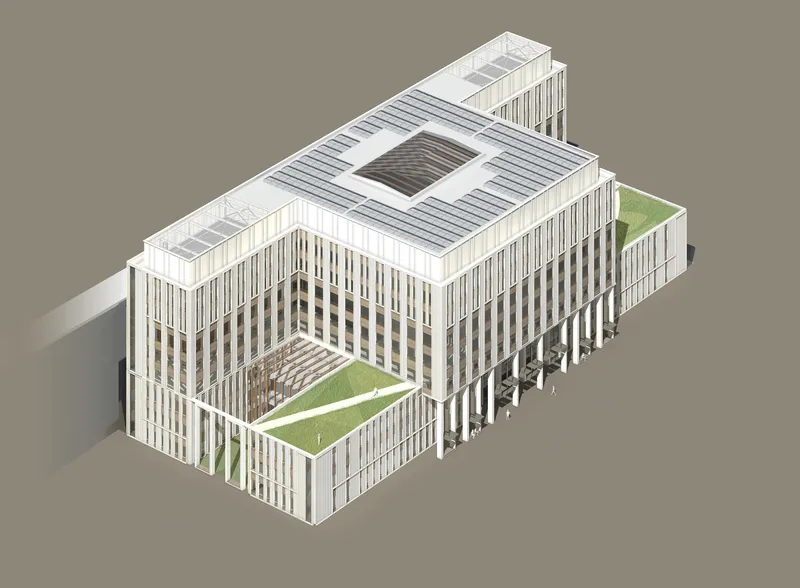
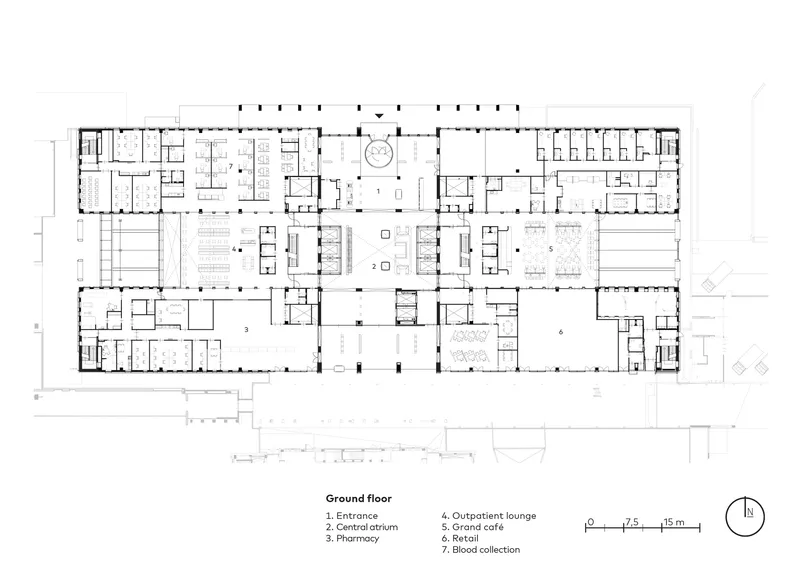
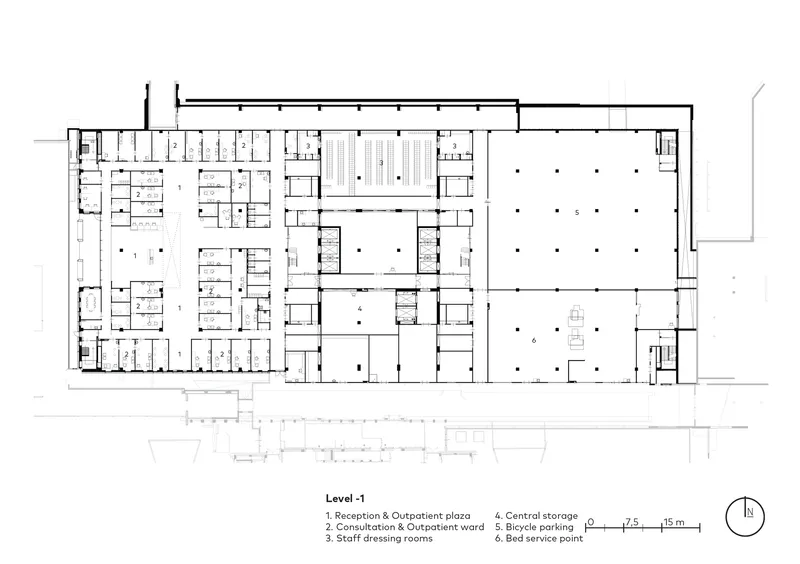
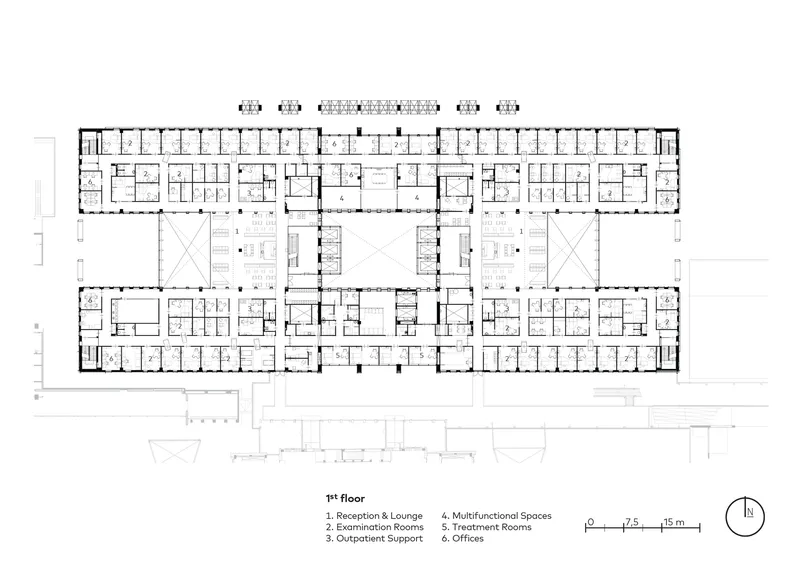
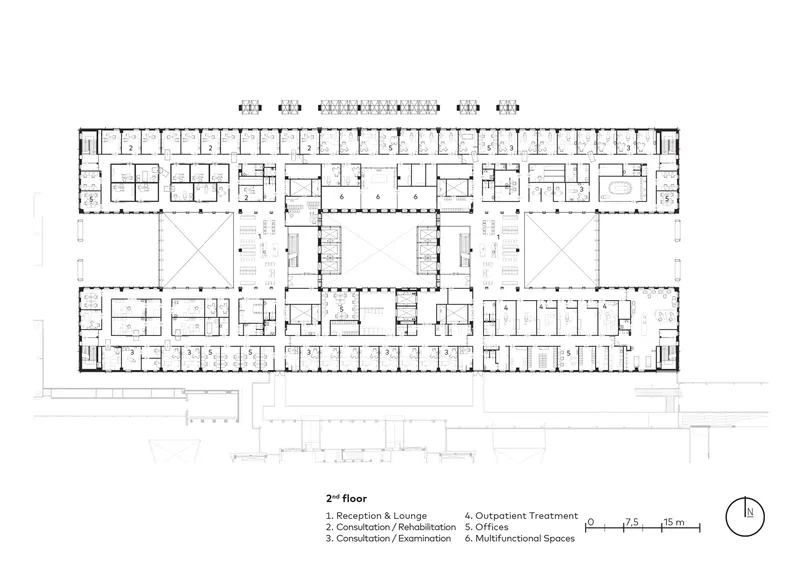
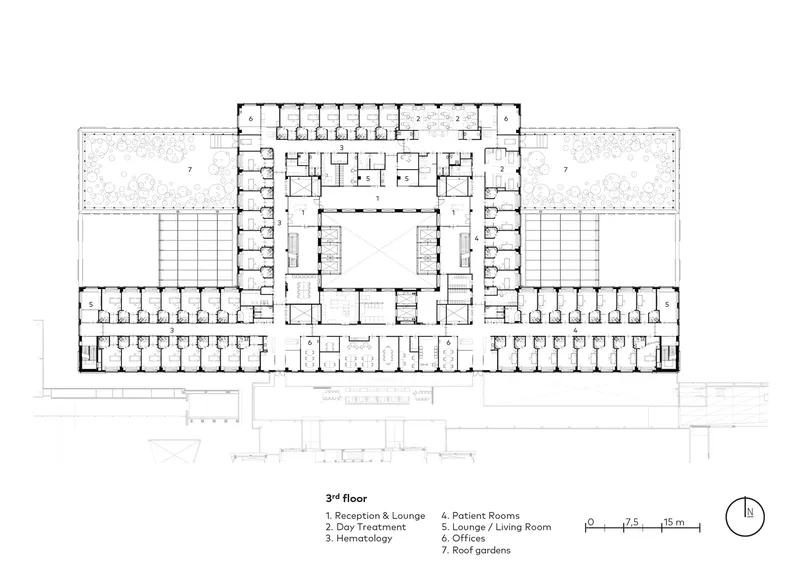
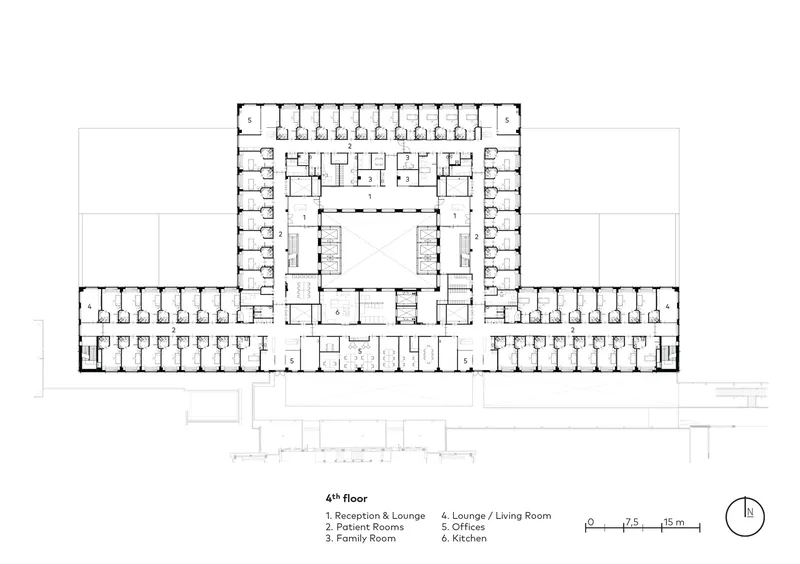
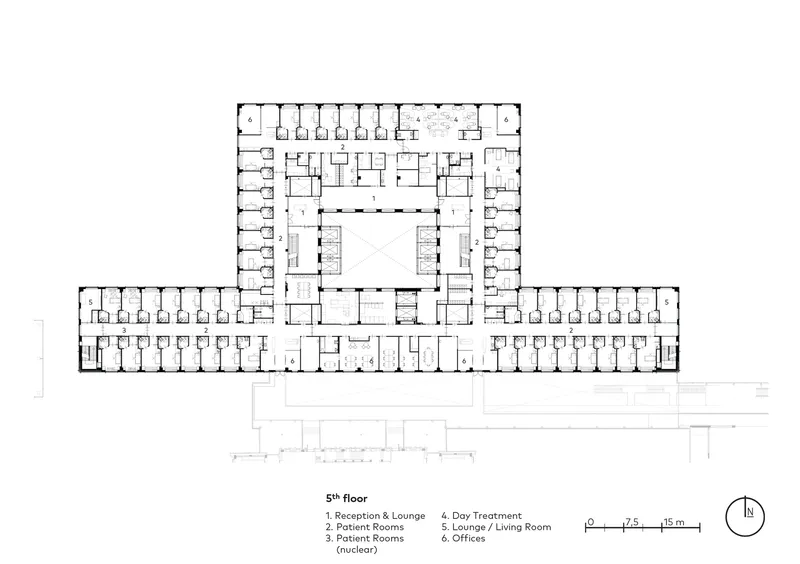
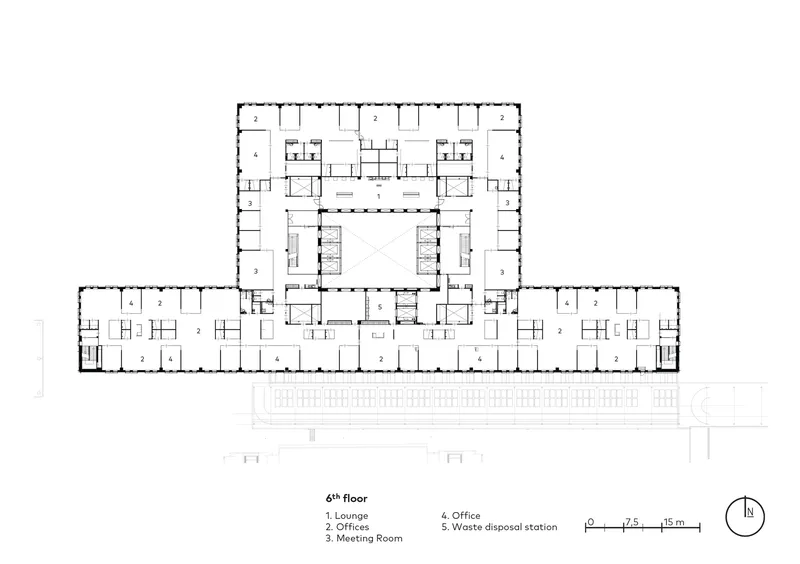
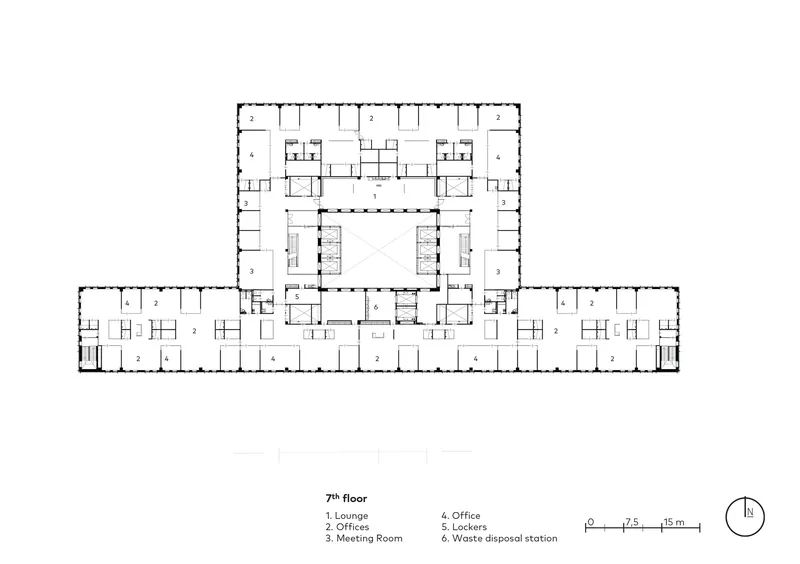
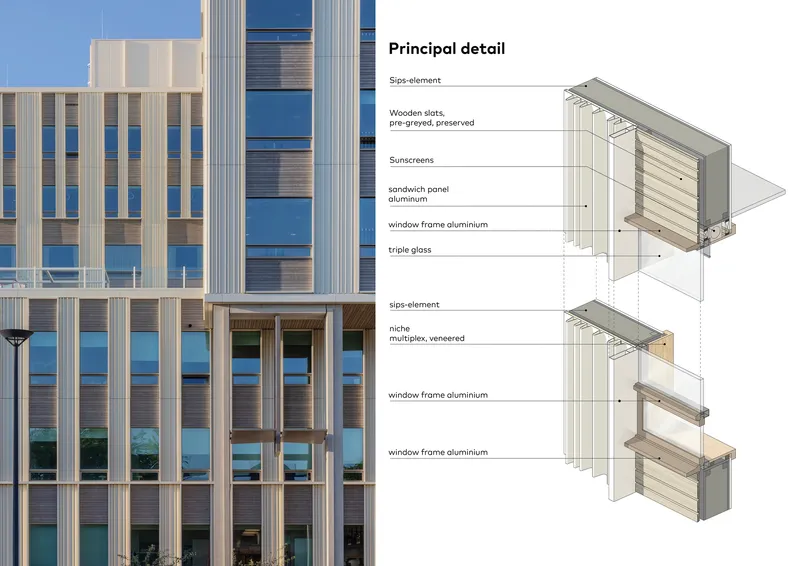
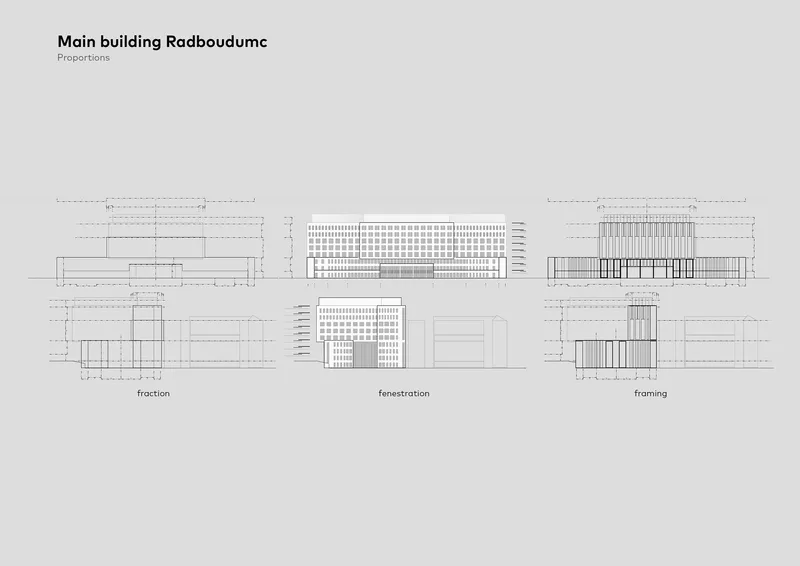
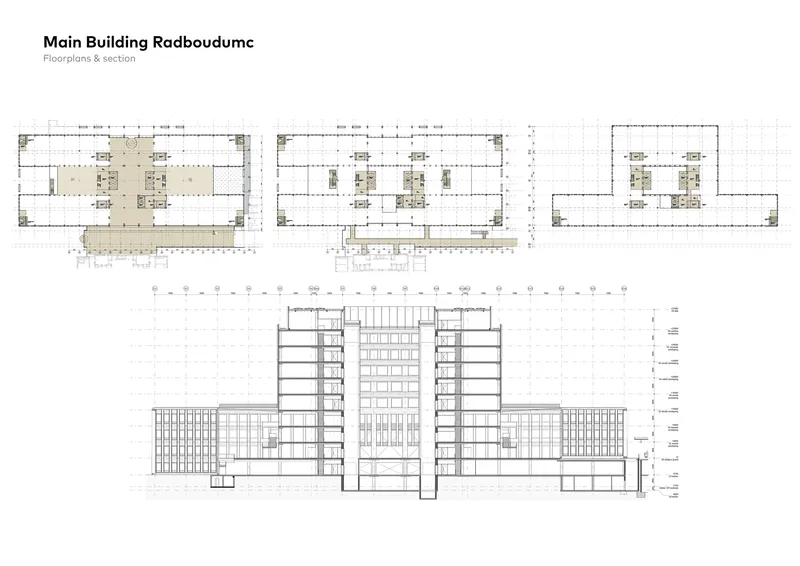
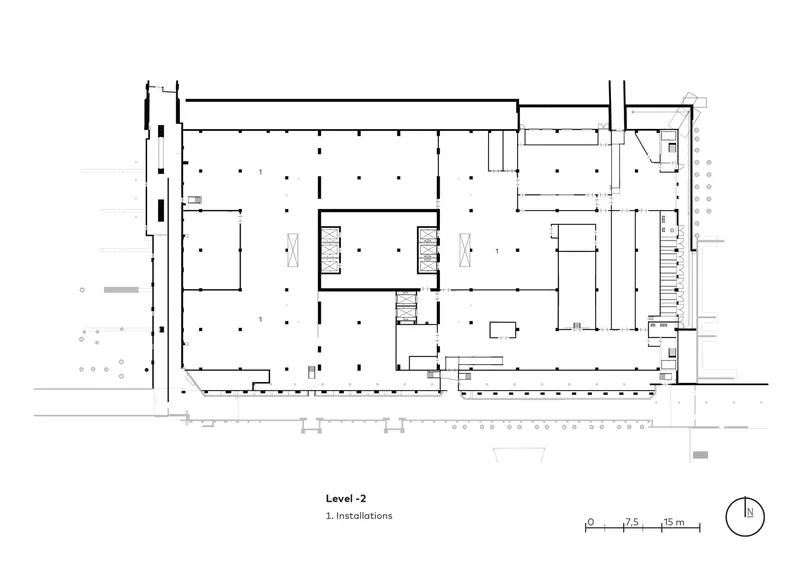
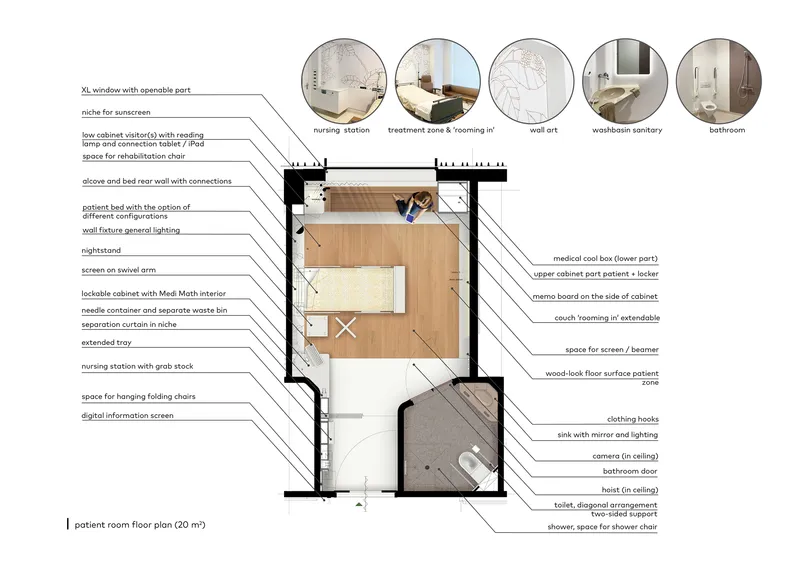
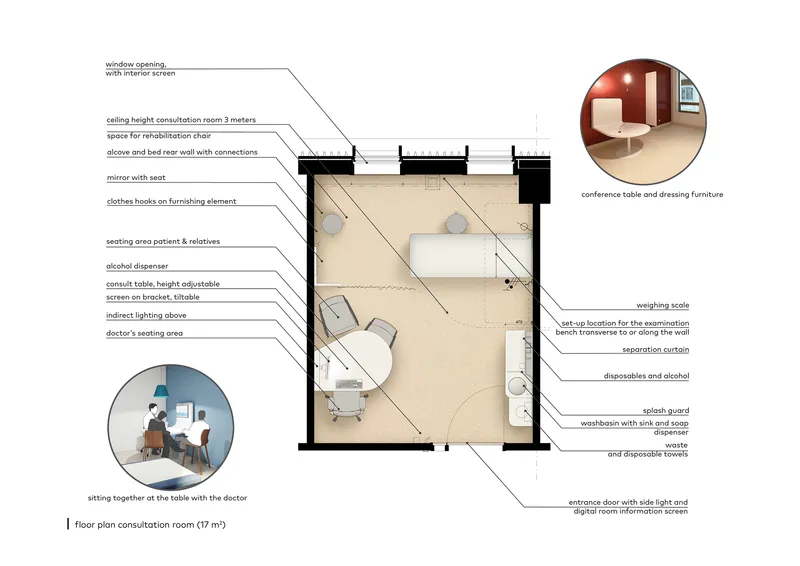
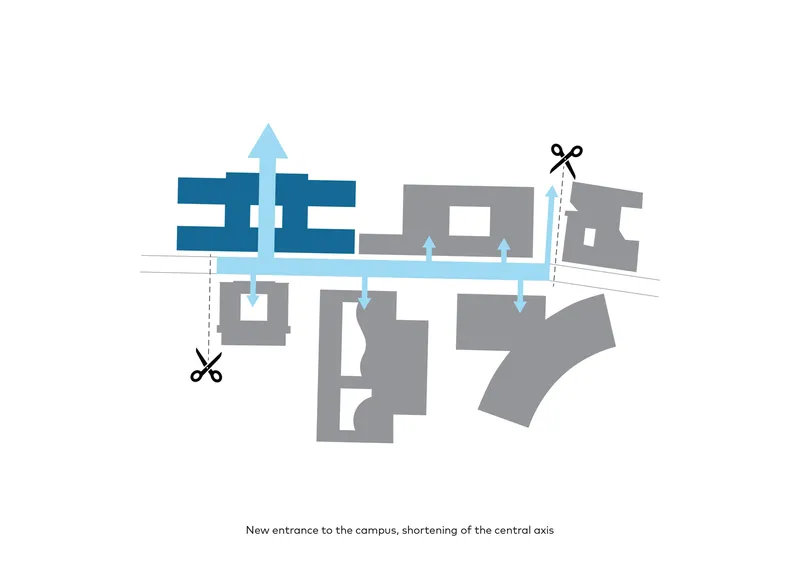
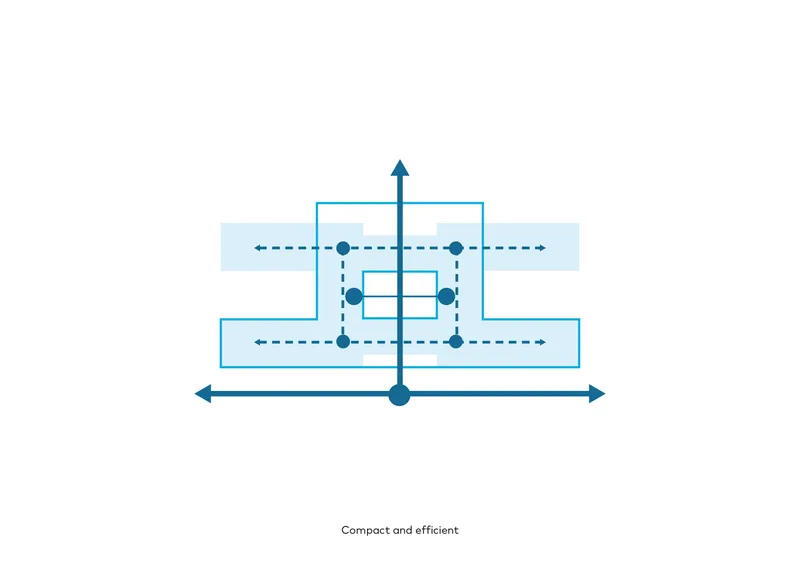
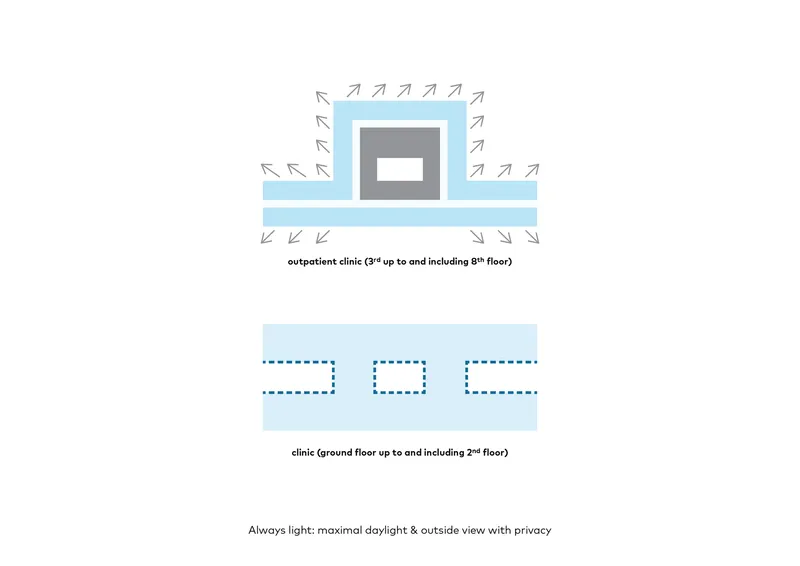
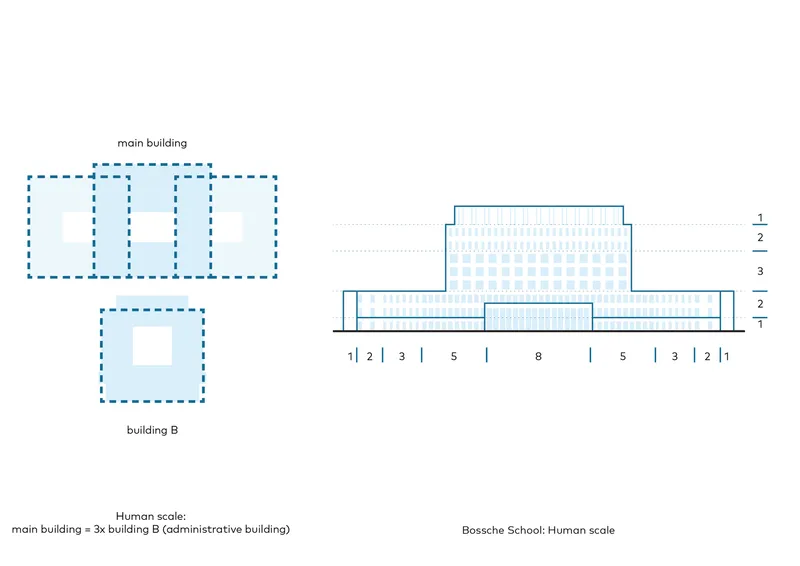
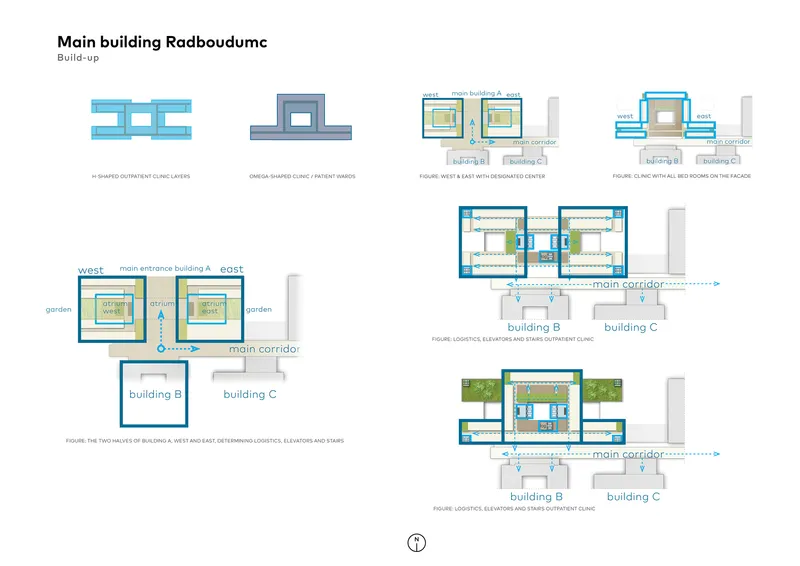
The floor plans reveal a building organized around a clear central axis that connects the entrance to the atrium and extends through the courtyard gardens. Patient room wings flank this spine symmetrically, with service cores positioned to keep logistics invisible from public and clinical spaces. The exploded axonometric and isometric cutaway make the vertical stacking strategy legible: programme intensifies upward from public ground floors to clinical middle floors to office and support at the top. The facade detail drawings show precisely how the wooden slat sunscreens, triple-glazed aluminum frames, and vertical fins layer to create the building's environmental skin.
The campus diagrams illustrate how the new building shortens circulation axes across the site, pulling disparate functions closer together and reducing the distances that staff and patients must travel. The annotated room plans for consultation and patient spaces show that the golden-ratio proportions are not rhetorical: they generate specific furniture layouts and circulation paths tuned to clinical workflow. These are drawings of a building that was designed from the room out and from the campus in, simultaneously.
Why This Project Matters
Hospital design often splits into two camps: the high-tech machine that prioritizes logistics, and the wellness resort that prioritizes atmosphere. The Radboudumc Main Building refuses the split. Its thermal-storage system, 700+ m² of solar panels, and 96% demolition-material reuse rate deliver measurable performance. Its atrium trees, courtyard gardens, dynamic lighting, and golden-ratio room proportions deliver experiential quality. Neither dimension subordinates the other, and neither is an afterthought bolted onto a generic floor plate.
The deeper achievement is contextual. By grounding a 21st-century energy strategy and a biophilic interior language in the Bossche School tradition of humanism and human scale, EGM architects produced a building that belongs to its campus rather than disrupting it. Thirty years of transformation end not with a landmark that announces its own arrival but with a building that completes a park. That restraint, backed by the highest BREEAM score of any Dutch hospital, is a model worth studying.
Main Building Radboudumc by EGM architects. Nijmegen, The Netherlands. 45,000 m². Completed 2022. Photography by Scagliola Brakkee fotography.
About the Studio
Share Your Own Work on uni.xyz
If projects like this are the kind of work you want to make, uni.xyz is a place to publish your own, find collaborators, and enter design competitions.


Popular Articles
Popular articles from the community


Manzana Morphosis: Stretching Barcelona's Grid into a Living Landscape for 2050
A radical reworking of the Eixample manzana turns density into a tool for generous public space, vertical ecology, and environmental performance.

Singing Woman: An Opera House That Performs Before the Curtain Rises
Ovidiu Cristian Pavel's conceptual opera house translates Estonia's choral identity into a sculpted waterfront landmark facing the Baltic Sea.
Temporary Home for Dogs: A Reversed Zoo Rethinks Animal Shelter Architecture
In Bucharest, a sinuous corridor and freed landscape flip the logic of containment, designing a shelter that works to make itself unnecessary.

The Amber Palace Opera: A Geological Fiction Surfaces on Tallinn's Baltic Waterfront
Pierre Brillard reimagines a Baltic legend as a public landscape, opera house, and waterfront promenade rooted in Tallinn's coastal identity.

Similar Reads
You might also enjoy these articles

Pixel Gardens: One Repeated Module Stacked Into a Terraced Social Housing Tower for Famagusta
Salem Bader's shortlisted housing tower builds a vertical neighbourhood from one repeated module, offsetting units to carve terraces, light and air.

Bao Huynh Watercolor Atelier: A Serene Art Retreat in Hội An
Bao Huynh Watercolor Atelier in Hội An blends multifunctional art spaces, sustainable design, local materials, and family-friendly living in a serene environment.

Atelier Macri Concept Store Interior Design by CASE-REAL
Atelier Macri store features a "ko" counter, walnut wood details, cork displays, blending retail, gallery, and seamless customer experiences.

Manuel Vargas Izquierdo Stadium and High-Performance Sports Center: Architectural Excellence in Jalpa de Méndez
The Manuel Vargas Izquierdo Stadium blends sustainable design, inclusive sports facilities, and cultural-inspired architecture, revitalizing Jalpa de Méndez’s public spaces.

Explore Academic Building Competitions
Discover active competitions in this discipline

Challenge to reimagine the Iron Throne

Photograph architecture without architects

Illustrate the lost glory of Angkor Wat - Render Challenge

Design challenge to reuse E-waste
Comments (0)
Please login or sign up to add comments
No comments yet. Be the first to comment!