
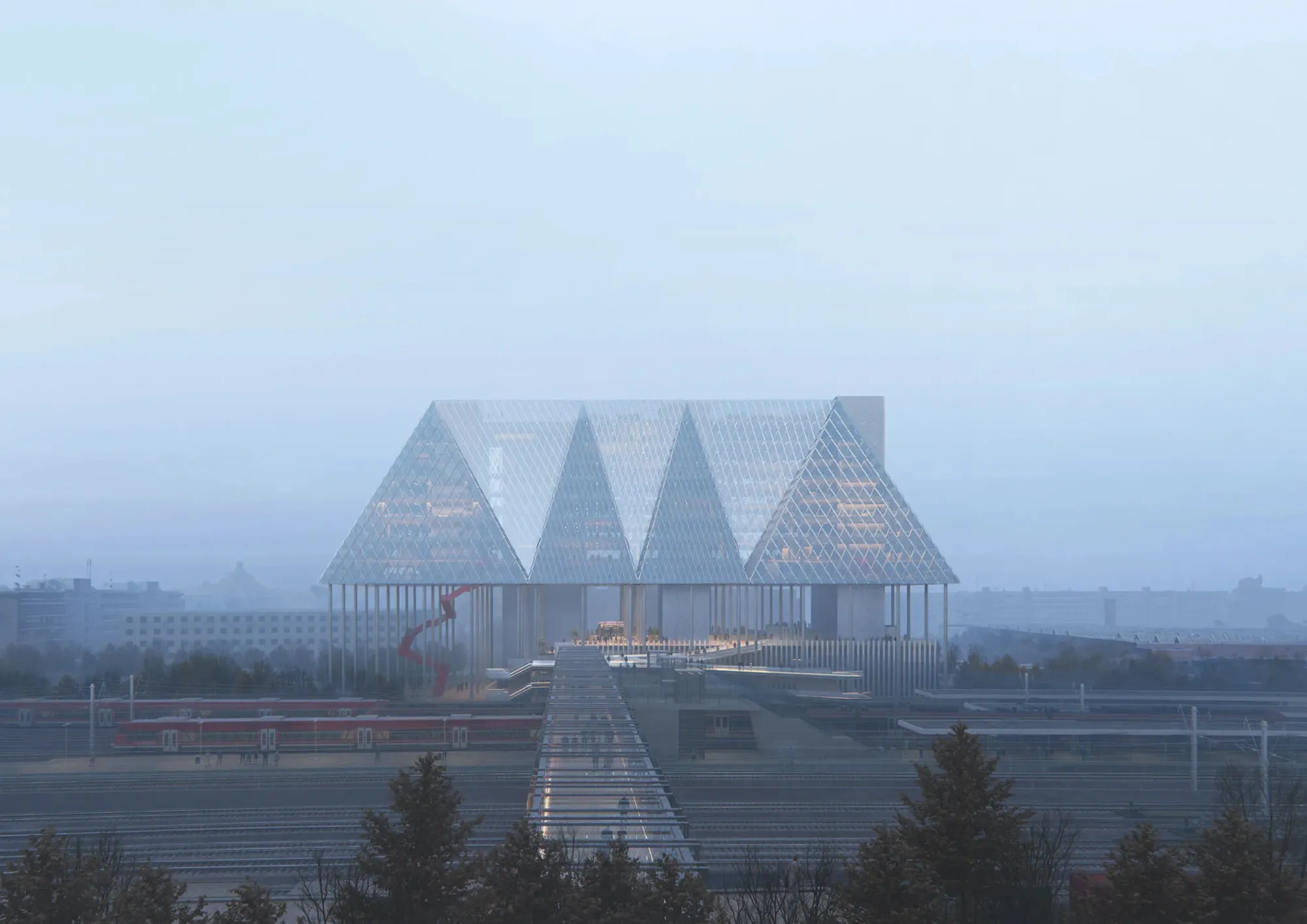
Elevated Plaza Concept for UniCredit Headquarters in Munich by OMA and Reinier de Graaf
OMA’s UniCredit headquarters concept in Munich features an elevated plaza, trapezoidal offices, improved urban connectivity, public gardens, and sustainable photovoltaic façade design.


The international architecture firm OMA, led by architect Reinier de Graaf, has unveiled an innovative competition proposal for the new headquarters of UniCredit in Munich. The design introduces a striking architectural concept featuring an elevated plaza and trapezoidal office volumes that aim to transform an underutilized urban zone into a vibrant public destination.
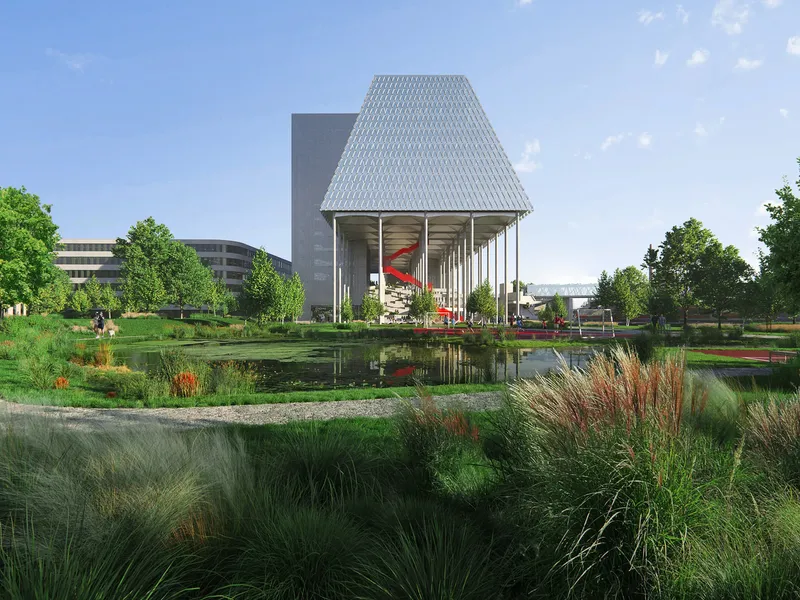
Reimagining an Overlooked Urban Site
Located near one of the city’s primary transportation corridors, the Munich S-Bahn, the project site currently functions as a largely utilitarian area with limited public amenities and minimal urban character. OMA’s design seeks to redefine this neglected space by introducing an elevated urban platform that expands public accessibility while maintaining the site’s natural features.
The architects propose lifting the headquarters building above ground level, significantly reducing its footprint. This strategy opens the ground plane to the public and creates new opportunities for landscape integration, pedestrian circulation, and urban interaction. By doing so, the design retroactively gives identity and character to an area that previously lacked a defined civic presence.
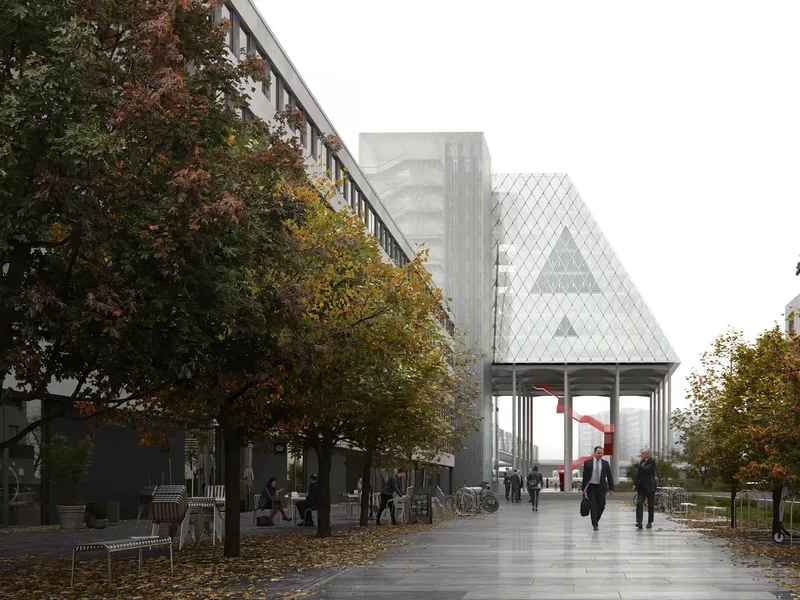
Elevated Plaza as an Urban Living Room
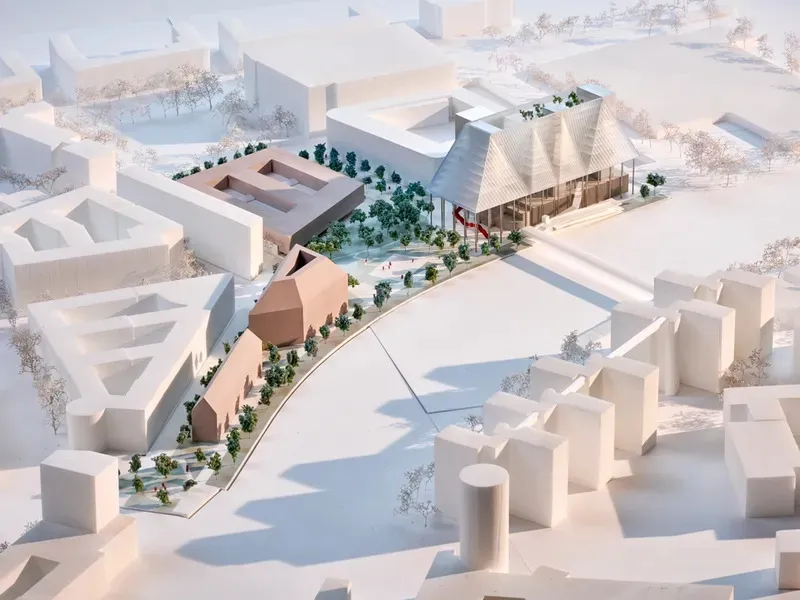
A defining feature of the project is the elevated central plaza positioned above ground level. Supported by slender structural columns, the building hovers above the site, allowing pedestrians to move freely beneath it. The plaza itself is envisioned as a dynamic urban “living room” that encourages public engagement.
This elevated space will include landscaped gardens, open gathering areas, restaurants, and gastronomy venues designed to attract both office users and city residents. By combining greenery with social amenities, the plaza becomes a lively urban hub that bridges corporate architecture with public life.
The project also strengthens urban connectivity by aligning with a future pedestrian crossing connected to the nearby Leuchtenbergring S-Bahn station. As a result, the development functions as a key urban pivot linking transportation infrastructure with surrounding neighborhoods.
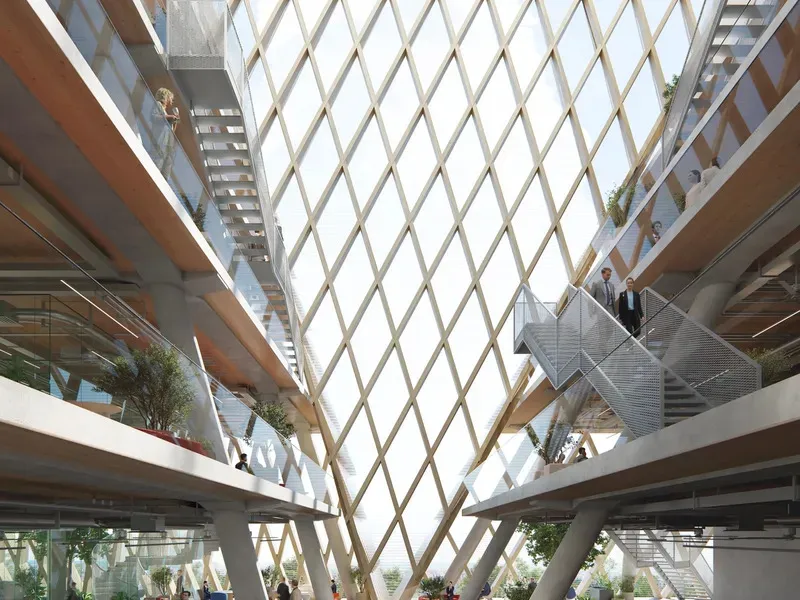
Functional Organization and Urban Integration
The building’s program is strategically distributed across different levels to optimize accessibility and operational efficiency. Below the elevated plaza, essential functions such as the bank’s meeting center, logistics operations, and service areas are located. Positioning these facilities at ground level allows for efficient circulation, deliveries, and staff access without interfering with the public realm above.
Above the plaza, the main office spaces rise approximately 22 meters above ground in distinctive trapezoidal volumes. This configuration allows employees to enjoy expansive views while maintaining a strong architectural identity that stands out within the urban landscape.
Sustainable Design and Environmental Performance
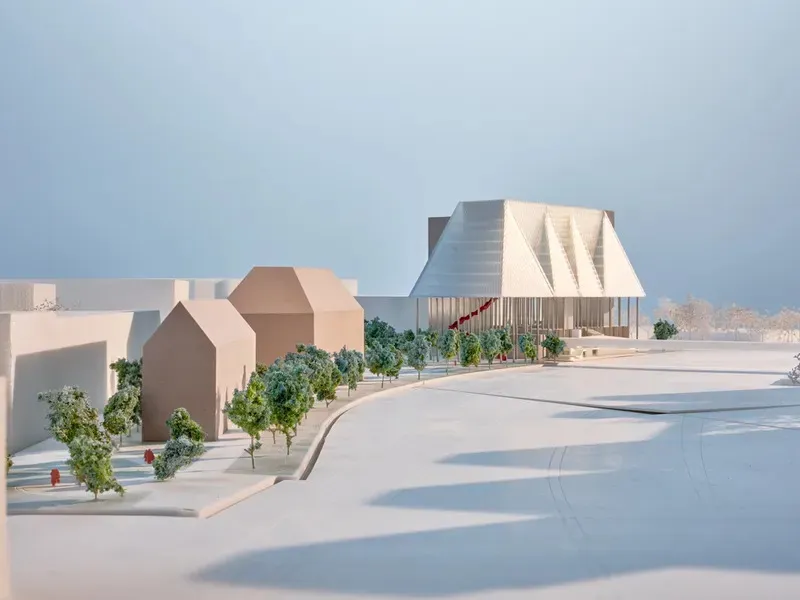
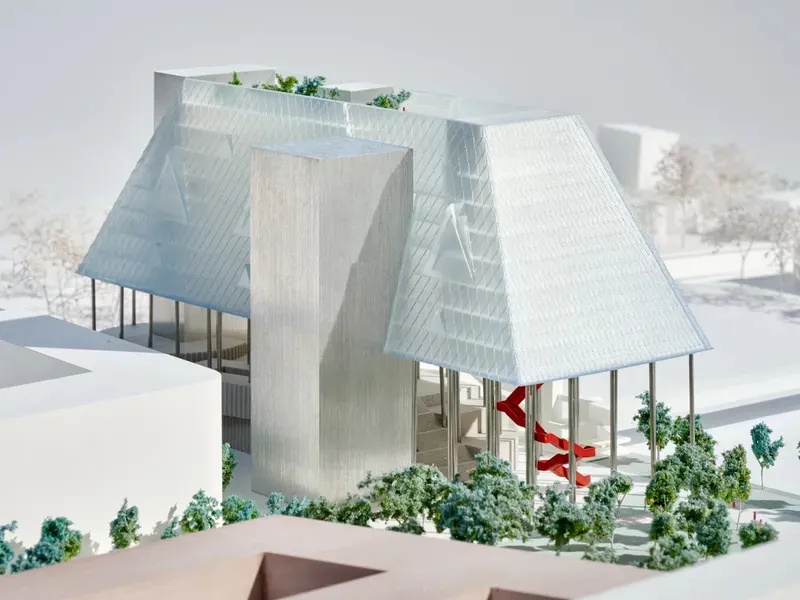
Sustainability plays a significant role in shaping the building’s geometry. The sloped roof and inclined facades are inspired by the traditional Munich roof form while also responding to environmental considerations. These angled surfaces improve air circulation around the structure and maximize solar exposure for integrated photovoltaic panels embedded in the façade.
The building mass also incorporates triangular cutouts that allow natural daylight to penetrate deep into interior workspaces. This design strategy enhances indoor environmental quality, reducing reliance on artificial lighting while improving comfort and productivity for building occupants.
Architecture as Urban Catalyst
OMA’s proposal demonstrates how contemporary architecture can act as a catalyst for urban transformation. By elevating the structure and prioritizing public space, the design challenges conventional corporate headquarters typologies. Instead of occupying the ground entirely, the building gives space back to the city, encouraging social interaction and enhancing connectivity.
The result is a project that balances corporate functionality with civic generosity. Through thoughtful urban planning, sustainable design strategies, and bold architectural form, the proposed UniCredit Headquarters has the potential to reshape this overlooked area of Munich into an active and engaging public environment.
Key Project Highlights
- Elevated plaza creating new public space in Munich
- Trapezoidal office volumes positioned above ground level
- Integration with S-Bahn pedestrian infrastructure
- Photovoltaic façade and climate-responsive design
- Landscaped urban living room with restaurants and gardens




Popular Articles
Popular articles from the community


Co-Life: Senior Housing Design That Reconnects Older Adults With the City
Co-Life reimagines senior housing design through healing gardens, shared streets, workshops, and a sustainable community across generations.

Riyadh For All: Intergenerational Urban Design for Active Aging in Rabat
Riyadh For All reimagines urban design in Rabat with intergenerational co-living, adaptive courtyards, and Moroccan cultural exchange today.

The Earth Pod: 3D Printed Homes for Resilient Refugee Communities
The Earth Pod reimagines refugee housing through 3D printed homes made from clay, combining resilience, self-sufficiency, and rapid shelter.

The Ocean Hive: Sustainable Architecture for a Self-Sufficient Civilization at Sea
The Ocean Hive imagines sustainable architecture at sea, where modular habitats, algae, wave power and ocean waste sustain a growing colony.

Similar Reads
You might also enjoy these articles

Bamboo Housing Challenge 2026: Design Affordable, Sustainable Homes Using Bamboo
An international design competition by Bamboo U and IBUKU inviting architects and designers to reimagine affordable housing using bamboo — with the winning design built full-scale in Bali.

Computational Design & Education: Beegraphy Design Awards Introduces 7th Category (Featuring Jiyun's Innovative Approach)
Dive into Beegraphy’s 7th Design Awards category, where computational design meets education to create immersive, interactive learning tools, inspired by Jiyun’s work.
From Parametric Lighting to Urban Furniture: Join the 2nd Workshop in Beegraphy’s Computational Design Series
Dive into Cutting-Edge Design Techniques and Practical Applications with Industry Experts

Last Call: Unleash Your Architectural Genius in SHAK's Kindergarten Design Competition
Urgent call for architects to join SHAK's kindergarten design competition before the looming deadline

Explore Architecture Competitions
Discover active competitions in this discipline



Challenge to reimagine the Iron Throne


Photograph architecture without architects


Illustrate the lost glory of Angkor Wat - Render Challenge


Design challenge to reuse E-waste
Comments (0)
Please login or sign up to add comments
No comments yet. Be the first to comment!