
Épernay Police Station: A Landmark of Modern Police Station Architecture
An in-depth look at the Épernay Police Station’s innovative design, redefining modern police station architecture with transparency and security.


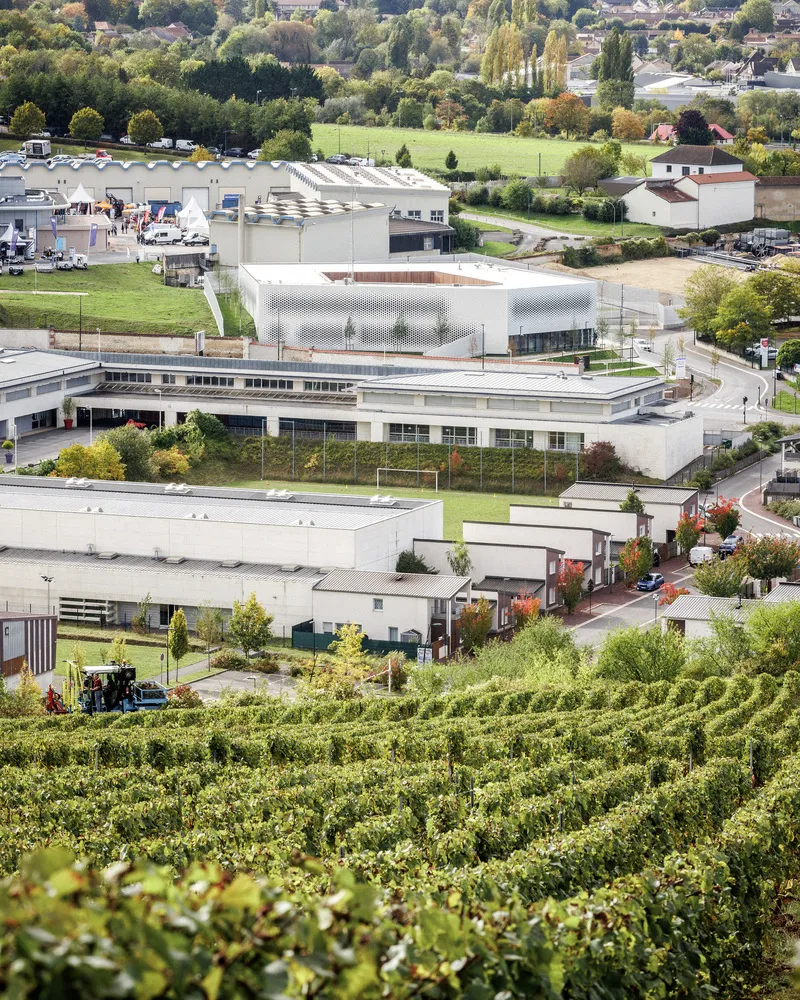
The Épernay Police Station by Explorations Architecture stands as a compelling example of modern police station architecture, blending urban presence, security, and environmental integration. Located in Épernay, France—the heart of the Champagne region—this project masterfully balances openness and protection while responding to a complex site with historical and topographical challenges.
Urban Integration and Historical Context
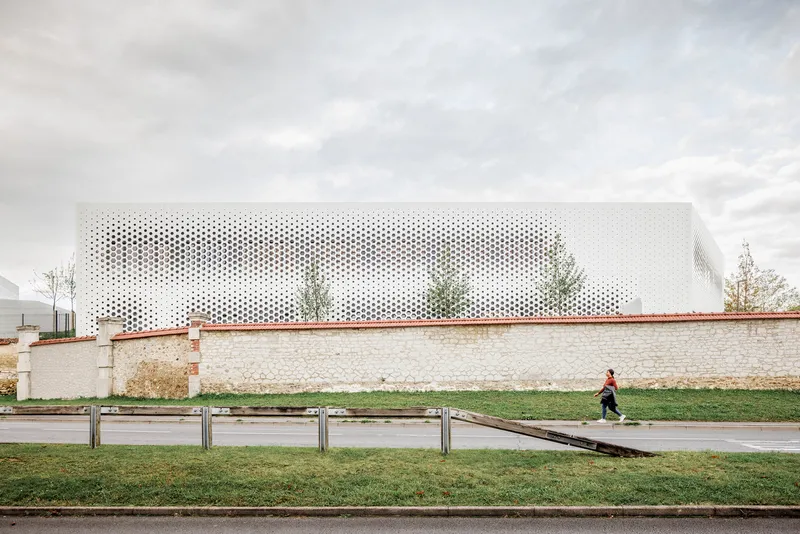
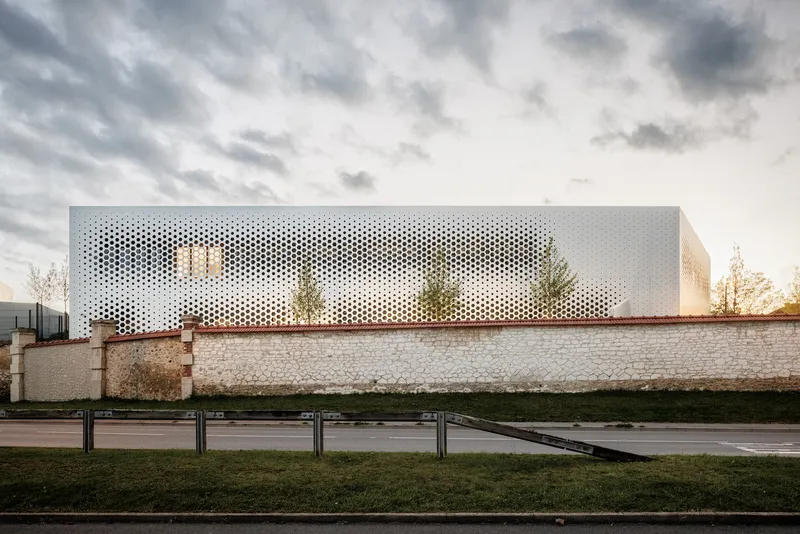
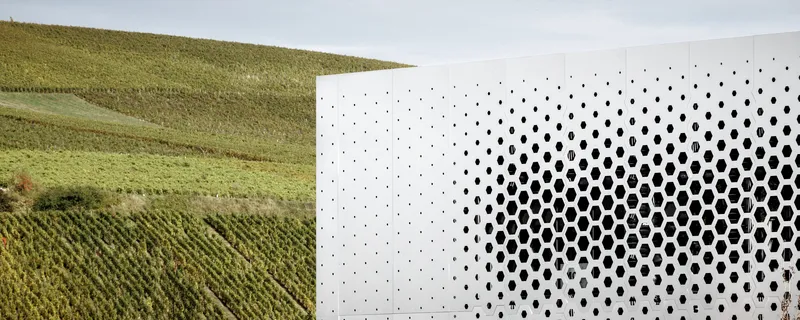
The police station occupies a unique site on the outskirts of Épernay, surrounded by vineyards and set within a former military barracks complex. This context shaped the architectural response, where the building’s pentagonal form emerged as an intelligent solution to navigate the sloped terrain, irregular boundaries, and contaminated soil. The design not only preserves the memory of the site but also elevates it into a functional civic space.
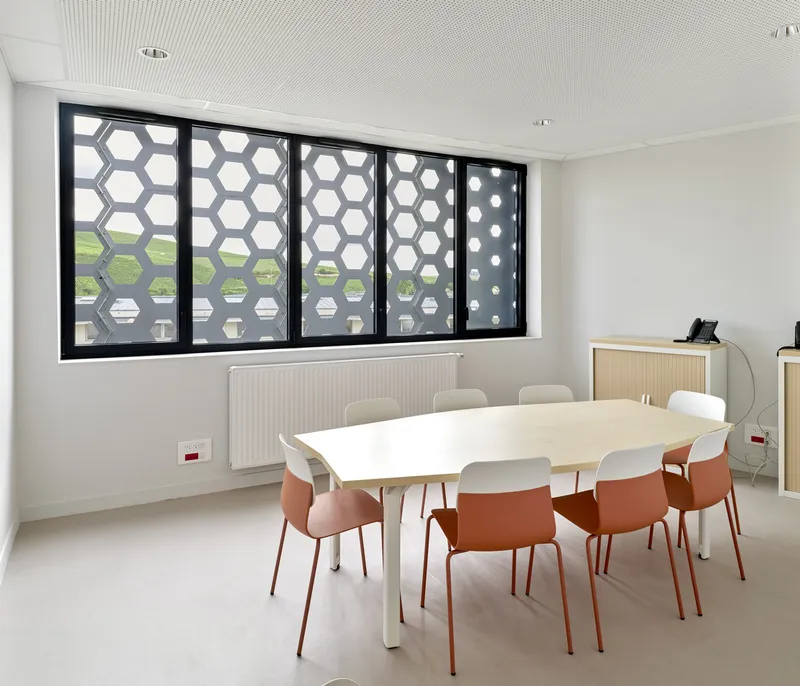
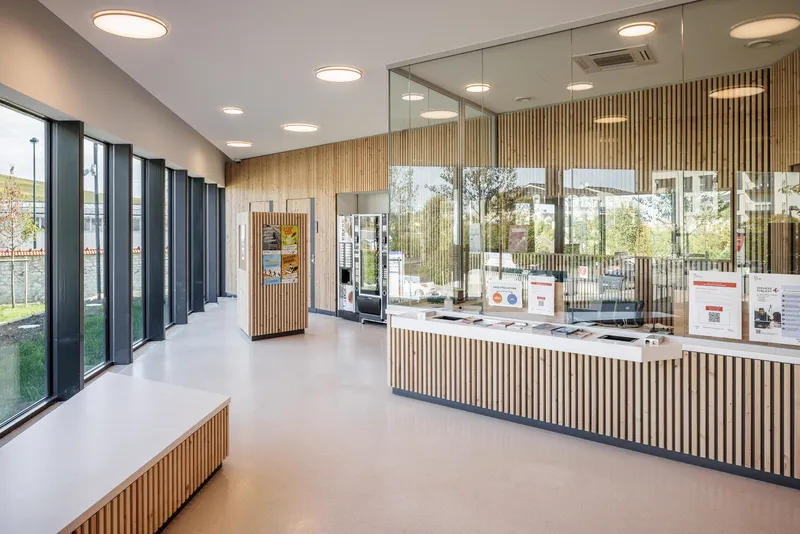
Architectural Design: Openness Meets Protection
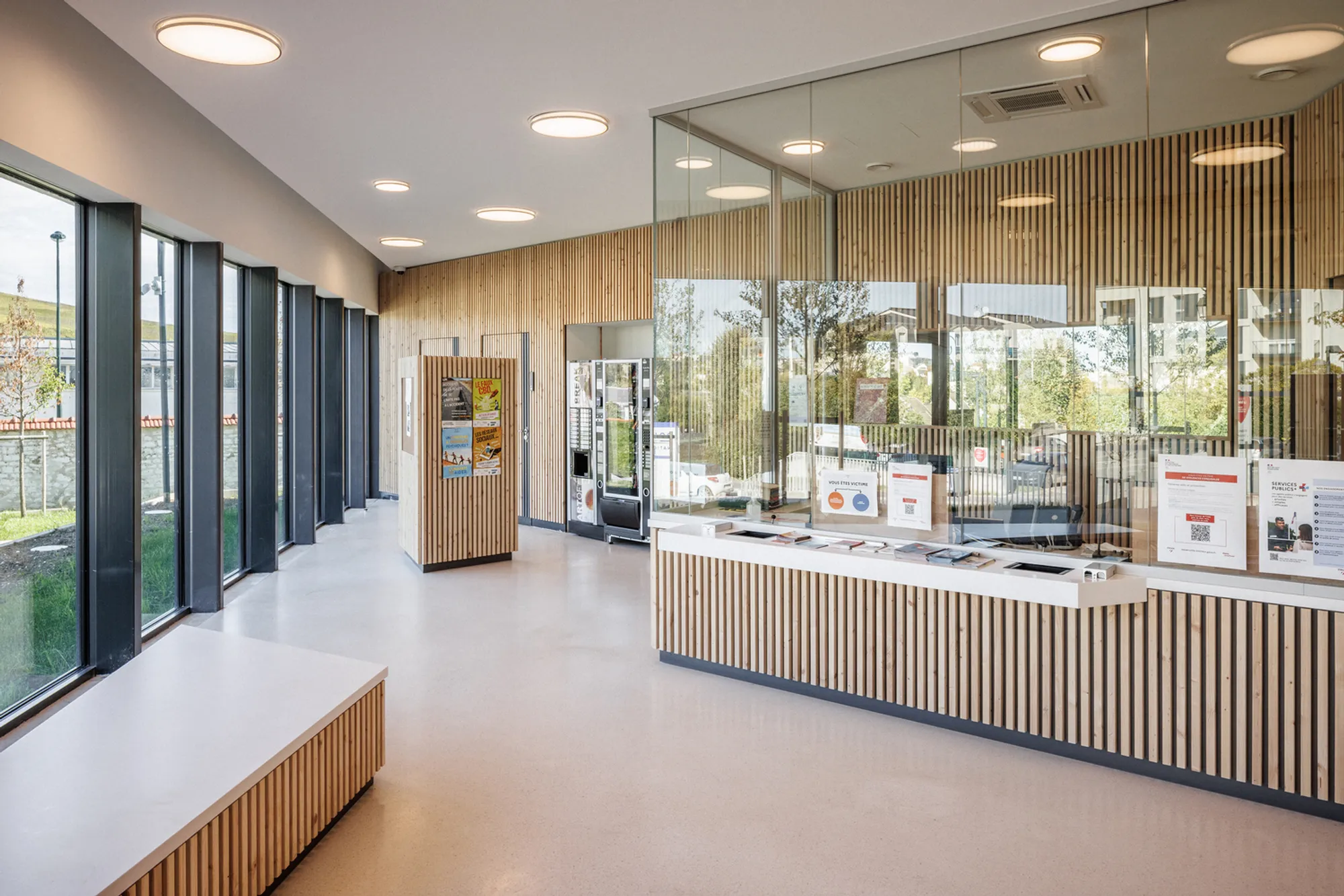
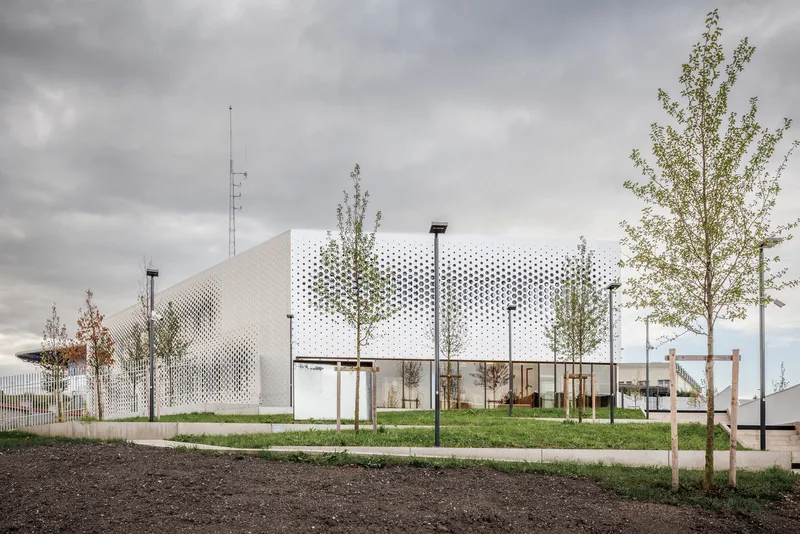
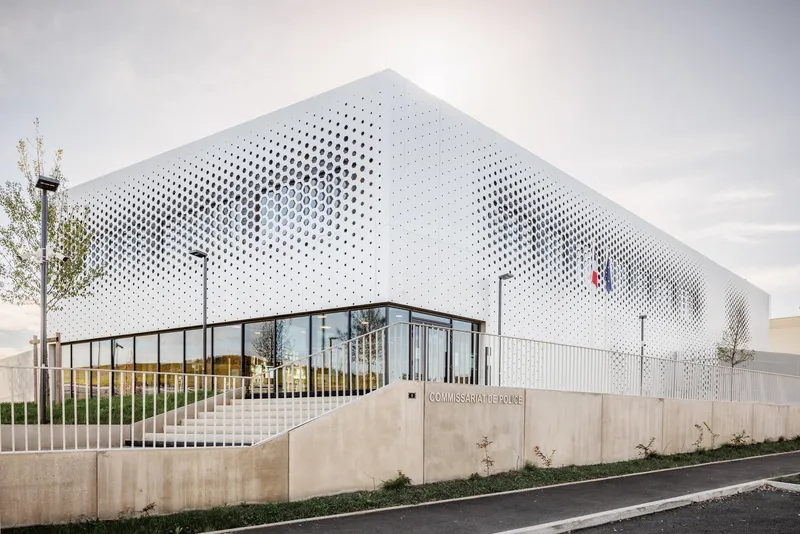
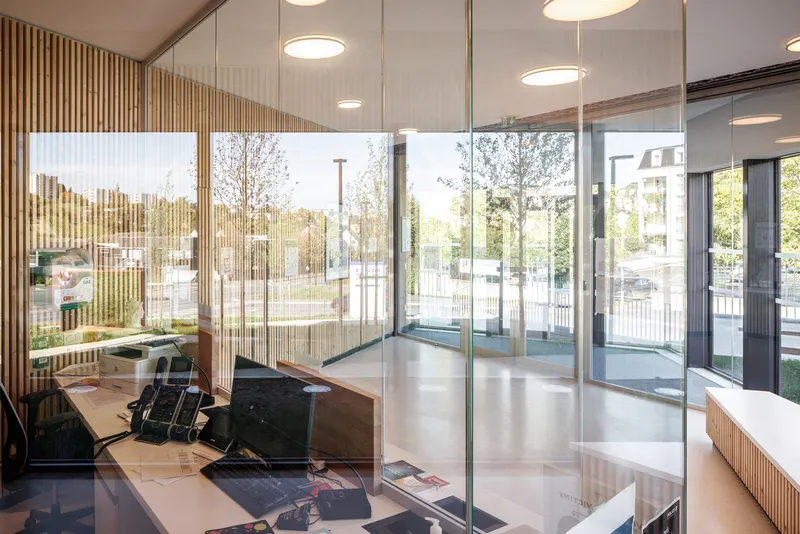
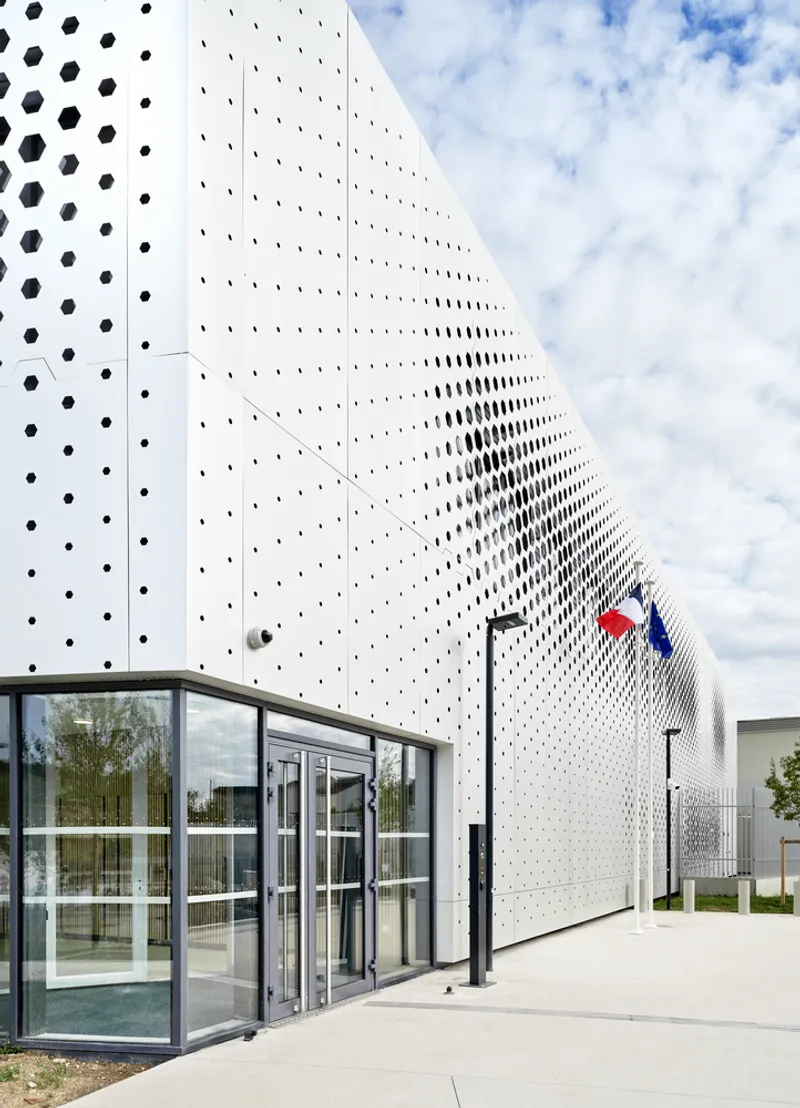
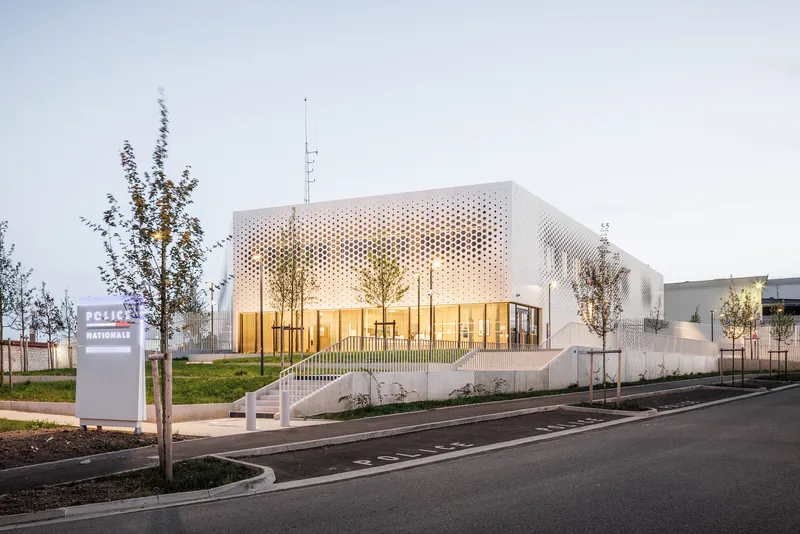
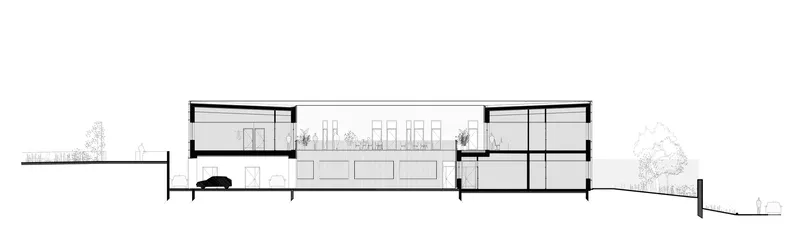
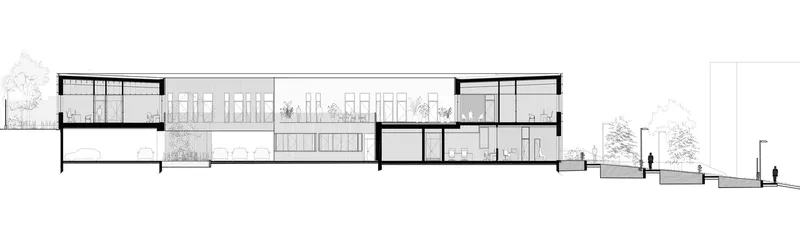
One of the defining features of this modern police station architecture is the duality between transparency and security. The station is perched at an elevated position, making it a visible landmark from afar. The public-facing entrance is marked by a fully glazed reception hall, creating a warm and accessible interface with the community. This openness extends into the internal layout, where circulation flows are carefully orchestrated around a spacious central courtyard, promoting natural security and organizational efficiency.
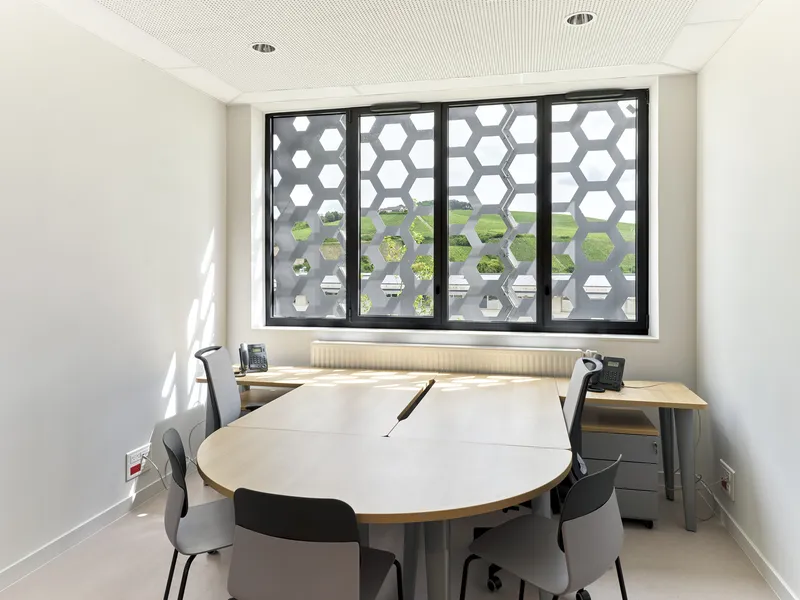
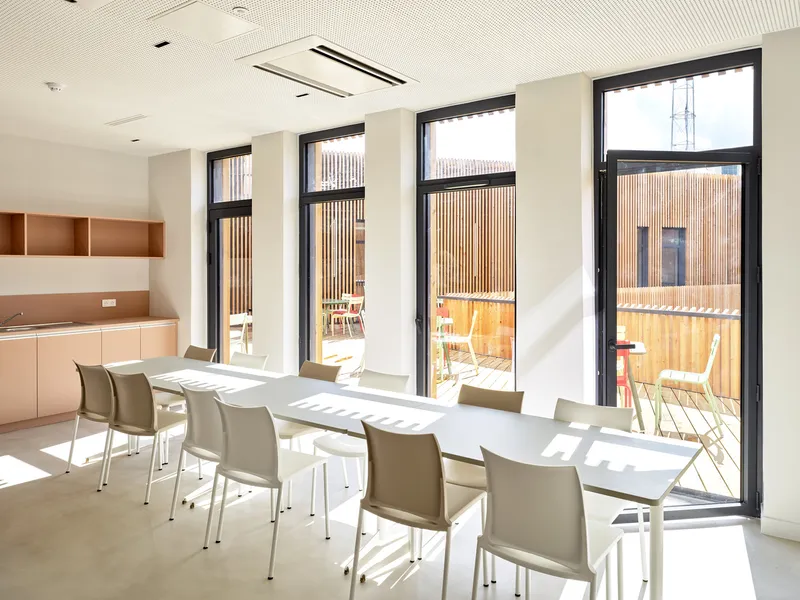
Materiality and Facade Strategy
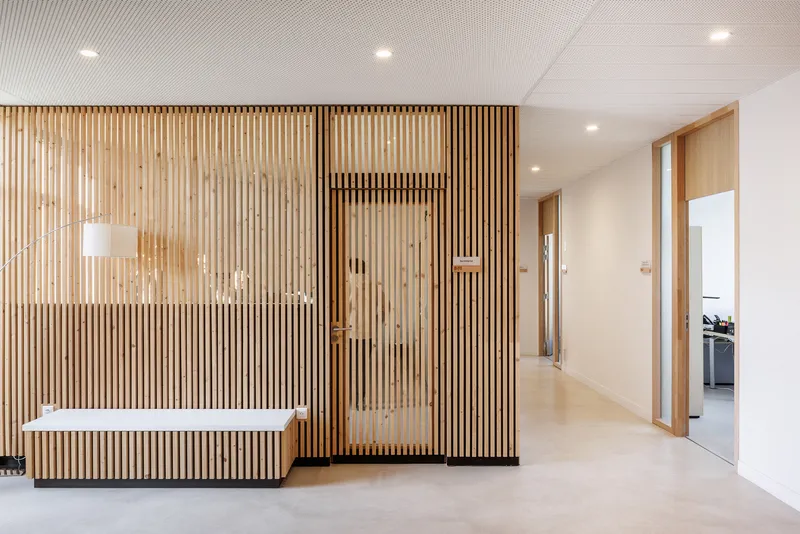
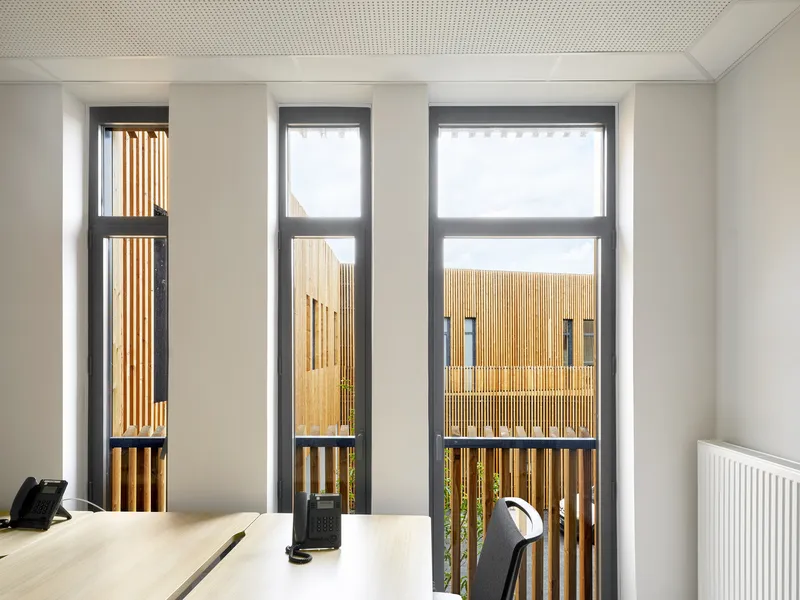
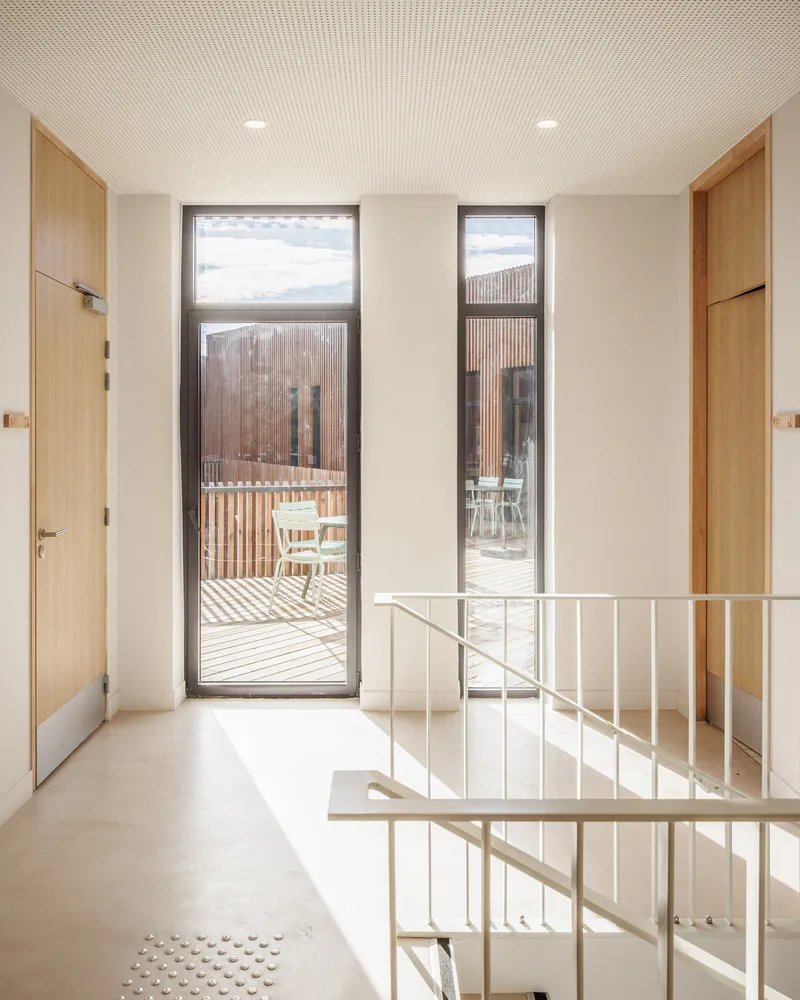
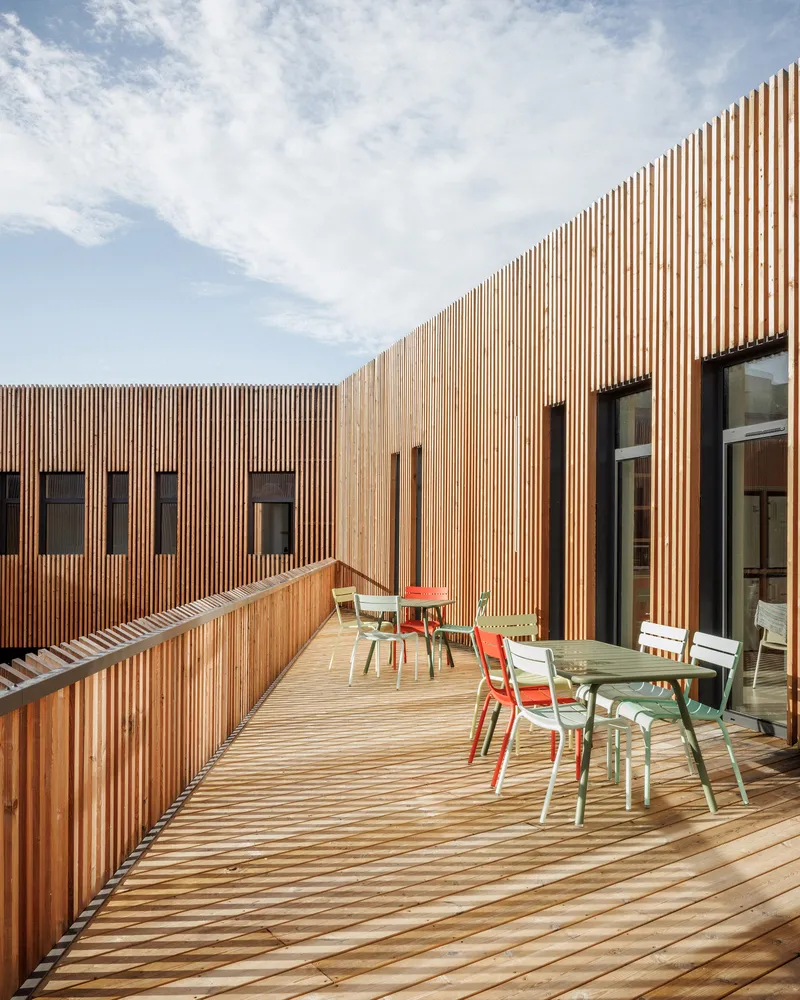
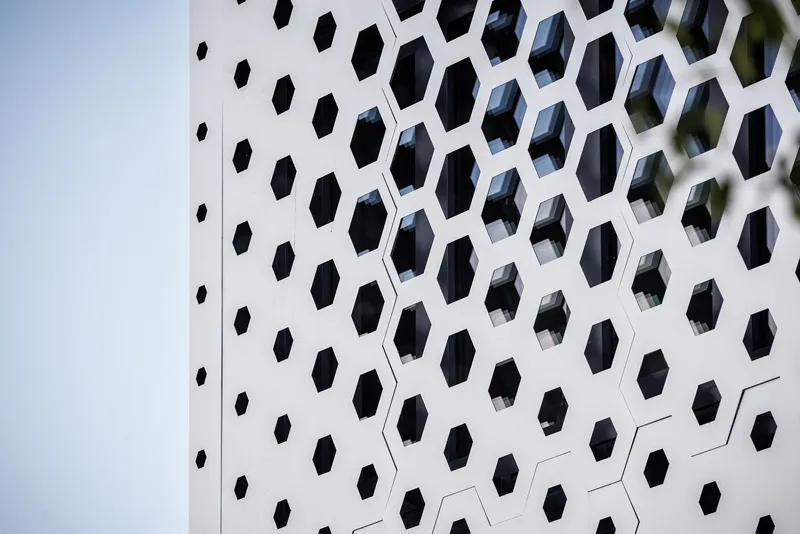
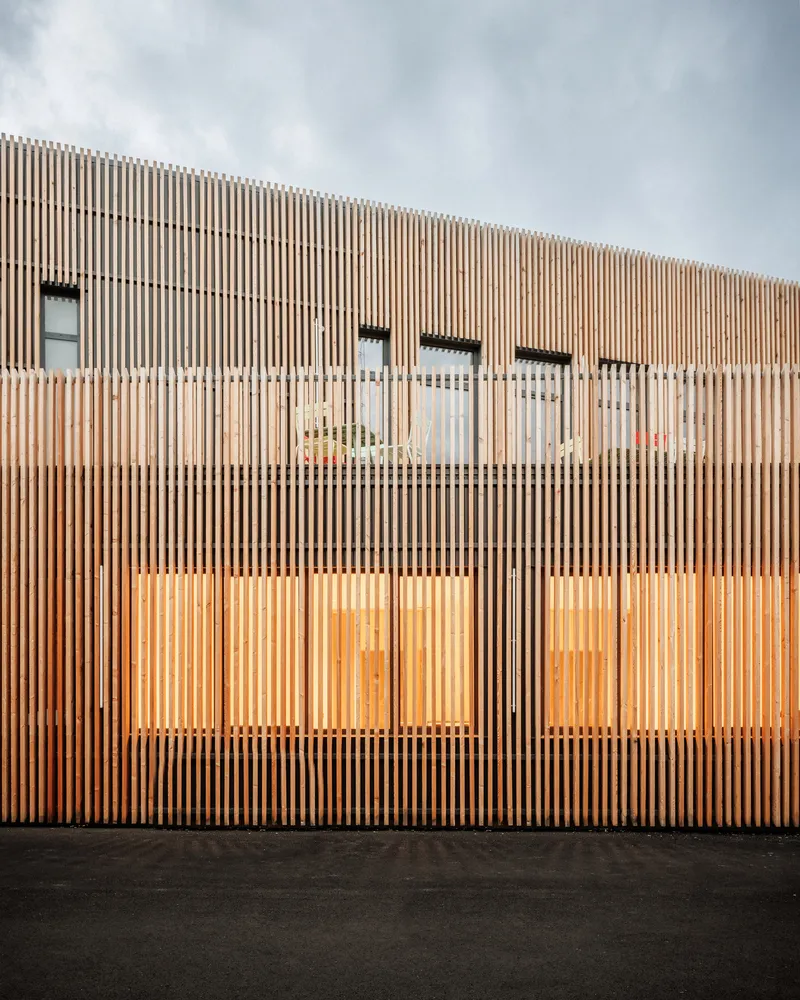
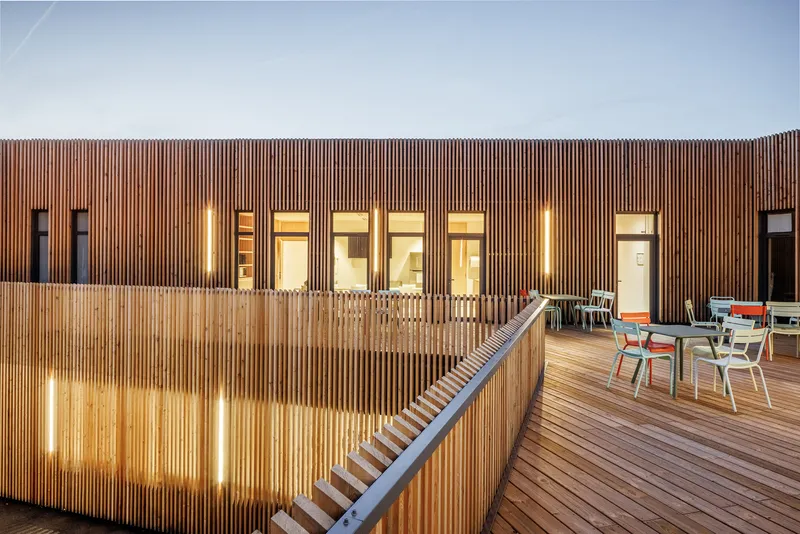
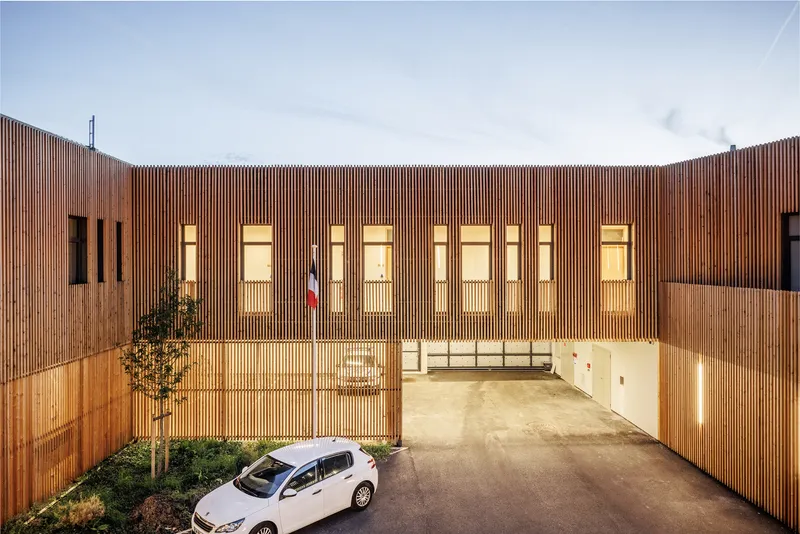
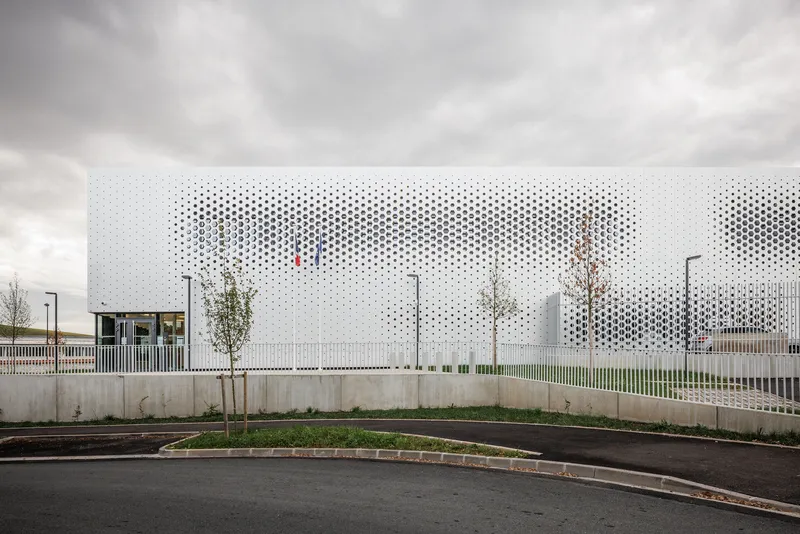
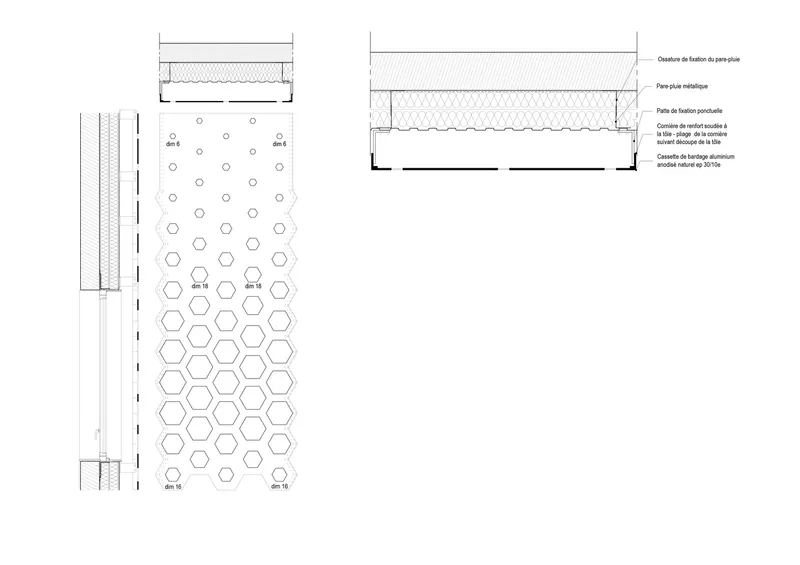
Material choices play a crucial role in reinforcing the architectural narrative. The exterior envelope is wrapped in a perforated metallic skin, producing a monolithic yet subtly reflective façade. This treatment controls light penetration while offering visual privacy—allowing occupants to see out without being seen. The shimmering exterior harmonizes with the landscape, softening the building’s bold silhouette. In contrast, the interior courtyard is lined with timber, introducing a tactile warmth that fosters a calm and comfortable environment for staff.
Passive Security and Functional Layout
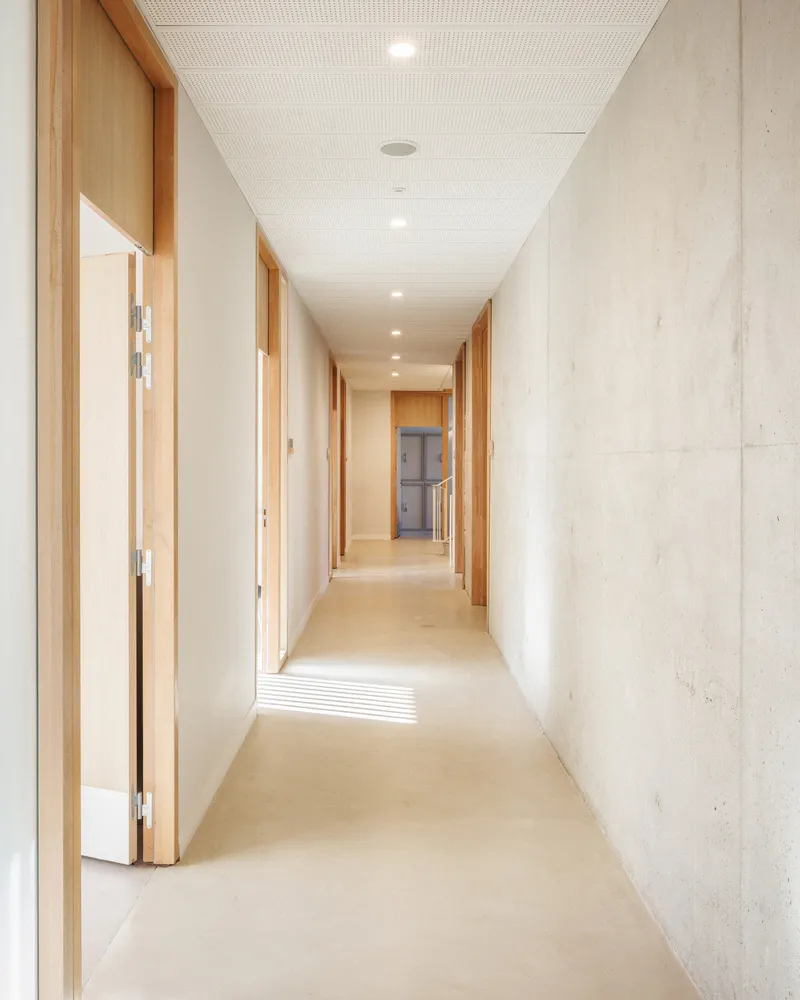
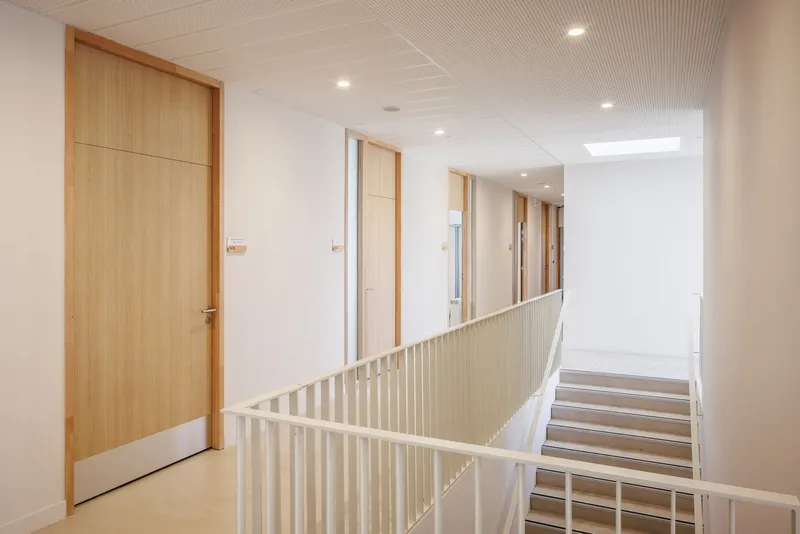
The Épernay Police Station employs an integrated passive security strategy that blends seamlessly with its architectural form. By situating the building at a height and carefully landscaping the surroundings, the project achieves natural protection without imposing barriers. The ground-floor service courtyard manages secured entrances and vehicle flows, while the first-floor courtyard offers a serene outdoor space for police personnel. The rigorously controlled circulation pathways ensure the smooth separation of public, staff, and service areas, optimizing both functionality and safety.
Environmental Performance and Urban Impact
More than just a utilitarian facility, the Épernay Police Station contributes to its urban context as a civic landmark. The uniform metallic façade reduces glare, improves thermal performance, and provides resilience against weathering. Its minimalist, contemporary form speaks to the evolution of civic architecture, where efficiency, sustainability, and aesthetics are intertwined. The design exemplifies how modern police station architecture can project both authority and approachability within a community.
Explorations Architecture has delivered a police station that redefines the typology through thoughtful integration of site, program, and materiality. The Épernay Police Station is not just a place of law enforcement—it is a sophisticated architectural response to the needs of a contemporary city. As police stations continue to evolve, this project sets a benchmark for creating civic buildings that embody transparency, security, and respect for their surroundings.
All the photographs are works of Florent Michel, Michel Denancé




Popular Articles
Popular articles from the community


The Musturak Paradise: Senior Living Architecture for a Connected Future in Temara, Morocco
The Musturak Paradise reimagines senior living architecture in Temara via private homes, social spaces, culture, community, and shared care.

Co-Life: Senior Housing Design That Reconnects Older Adults With the City
Co-Life reimagines senior housing design through healing gardens, shared streets, workshops, and a sustainable community across generations.

Riyadh For All: Intergenerational Urban Design for Active Aging in Rabat
Riyadh For All reimagines urban design in Rabat with intergenerational co-living, adaptive courtyards, and Moroccan cultural exchange today.

Hill & Cross Opera: Sculptural Opera House Architecture Shaped by Tallinn’s Landscape and Identity
Hill & Cross Opera reimagines opera house architecture in Tallinn through its sculptural hill, civic plaza, glass wave and a luminous cross.
Similar Reads
You might also enjoy these articles

FAMM Arquitectura Organizes Ten Villas Around Courtyards and Jungle in Nosara, Costa Rica
El Molino pairs two elongated volumes with deep overhangs and timber louvers to build a compact coastal community five minutes from the beach.
Oscar Niemeyer's Ibirapuera Park Pavilions Define São Paulo's Cultural Identity in Concrete and Curve
A constellation of modernist volumes set within São Paulo's most important urban park, conceived for the city's 400th anniversary in 1954.
How Henri Picq's 1889 Paris Pavilion Traveled 11,000 Kilometers to Become Santiago's Artequín Museum
A prefabricated iron and glass pavilion built for the Paris Universal Exposition found a second life as a children's art museum in Chile.
Sanjay Puri Architects Wraps a Jaipur Office Tower in Capsule-Shaped Green Buffers
A nine-level climate-responsive workplace near Jaipur Airport uses stacked planter terraces and aluminium screens to fight 40°C heat.

Explore Architecture Competitions
Discover active competitions in this discipline



Challenge to reimagine the Iron Throne


Photograph architecture without architects


Illustrate the lost glory of Angkor Wat - Render Challenge


Design challenge to reuse E-waste
Comments (0)
Please login or sign up to add comments
No comments yet. Be the first to comment!