

Ewert Leaf Turns a Former Bank into a Shanghai-Inspired Restaurant in Melbourne
Moonhouse Restaurant reanimates a heritage Art Deco building in Balaclava with duck-skin orange tones and layered materiality.


A former Commonwealth Bank branch from the early 1900s, then a Red Rooster, then an Italian restaurant that shuttered during the pandemic. The corner building at Carlisle and Nelson Streets in Balaclava, Melbourne, has lived several lives. Its latest incarnation, Moonhouse Restaurant, might be the most considered yet. Ewert Leaf gutted the interior of the heritage-listed Art Deco shell and rebuilt 365 square meters of restaurant, bar, and private dining around a single conviction: that a dining room is not backdrop but participant.
What makes Moonhouse worth studying is the specificity of its material story. The studio researched the Art Deco movement as it flowered in 1920s Shanghai, then filtered those references through a contemporary lens to produce something neither pastiche nor generic. A custom warm orange, matched to the skin of roast duck and christened accordingly, runs through velvet banquettes, onyx surfaces, vinyl, and powder-coat trims. Tiles migrate to ceilings. Curved metalwork and louvres invoke both Deco geometry and the visual language of Hong Kong streets. The result is a 96-seat ground floor plus a 30-seat private dining room and cocktail bar upstairs, all held together by a coherent palette rather than a single hero gesture.
The Art Deco Shell

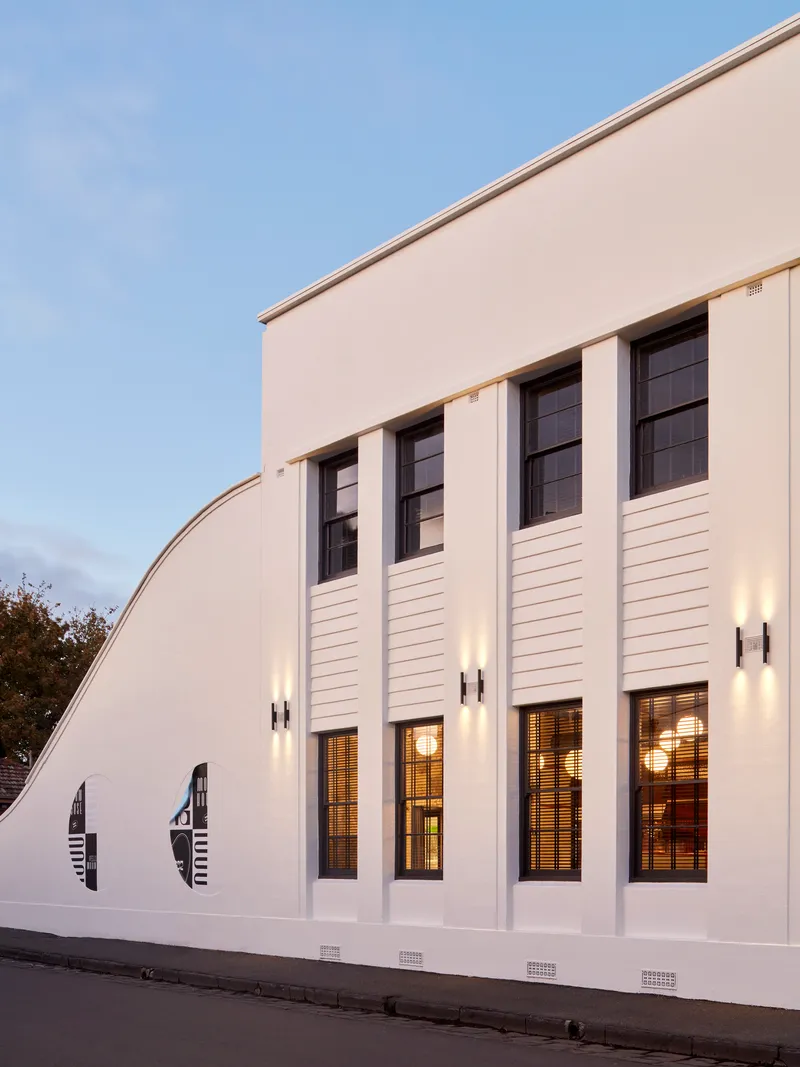

Ewert Leaf kept the building's public face almost reverential. The white rendered facade retains its vertical pilasters, clerestory windows, and the proportions of an early-twentieth-century corner bank. At twilight the clerestories glow, turning the street elevation into a lantern. The entrance itself is more assertive: a curved metal grille surround with the restaurant's name in arching lettering above a terrazzo threshold. It reads as a portal, deliberately cinematic, setting up the shift from a suburban Melbourne footpath to a room that references another continent and another era.
Arrival and Threshold


Step through the arched steel entry doors and you land on herringbone flooring that anchors the entire ground level. A reception desk, flanked by globe pendants, mediates between the street and the dining room. Ewert Leaf made the transition deliberate rather than abrupt: the foyer is compressed, the ceilings lower, so that the subsequent volume of the main room registers as expansion.
Small details reward close attention. A brass desk lamp sits on a counter finished in the custom duck-skin orange, backed by ribbed glass panels and weathered plaster. These are not accidental textures. The studio layered hard against soft, rough against polished, throughout the project to produce contrast without clash.
The Duck-Skin Palette


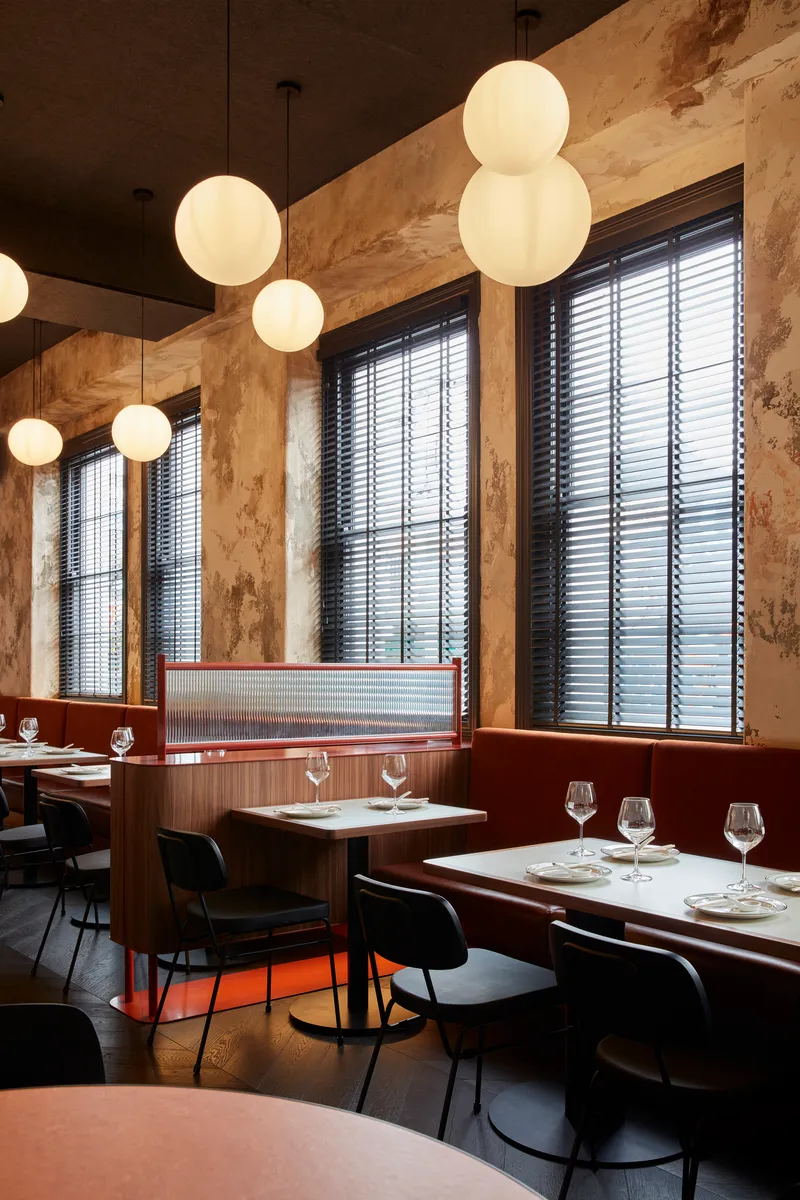
The custom orange that Ewert Leaf developed for Moonhouse is the project's defining chromatic move. Named for roast duck skin, the tone was matched across multiple materials: velvet upholstery on the curved banquettes, onyx bar surfaces, powder-coated trims, and vinyl panels. In a market saturated with moody charcoal interiors, the warmth here is disarming. It reads as generous rather than precious.
The curved booth captures the palette at its most concentrated. A coral velvet banquette wraps beneath a crystal chandelier and tall windows dressed with venetian blinds. At dusk, natural light filters through the blinds and mixes with the warm interior tones, collapsing the boundary between amber daylight and artificial glow. The sphere pendants scattered across the dining room reinforce a soft, diffuse luminosity rather than dramatic pools of light.
Material Layering and Texture

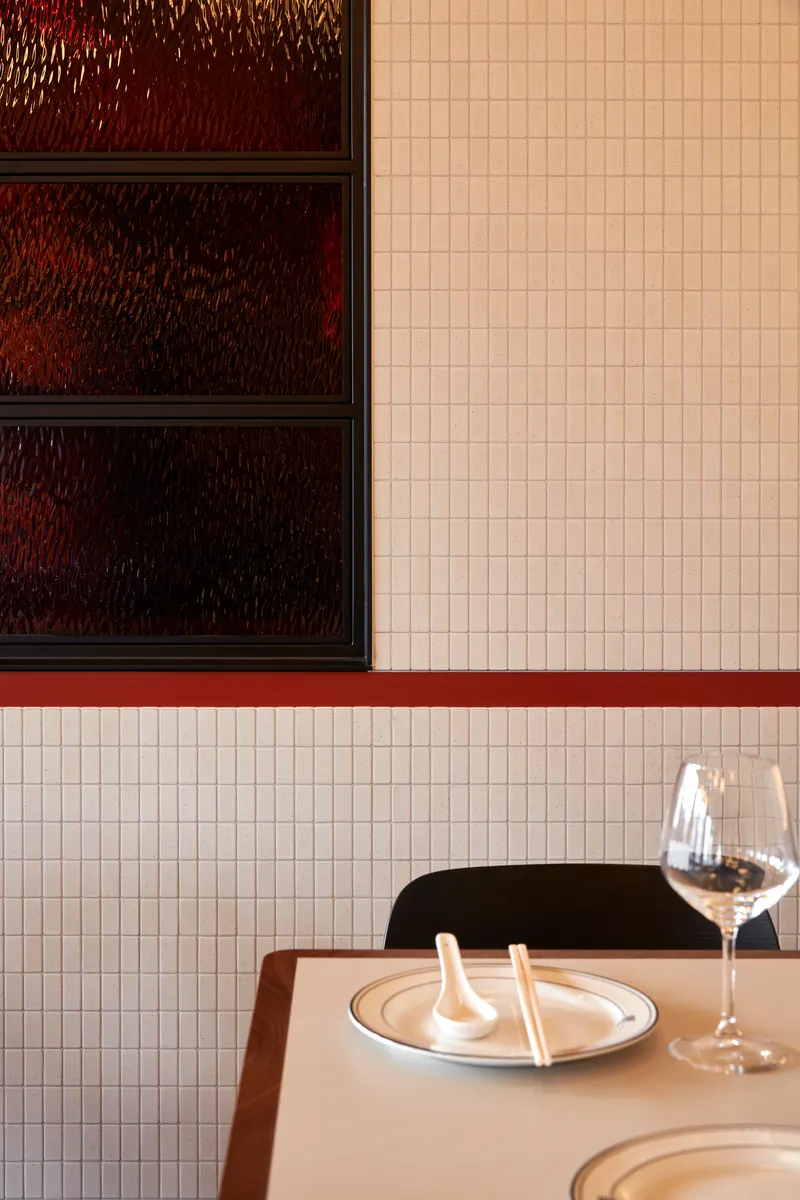

Moonhouse treats surfaces as narrative. White mosaic tile wainscoting runs along dining walls, capped with red trim that meets dark textured glass display shelves. Above the tile, plaster is left deliberately weathered, creating a patina that suggests age without faking it. Dark wood shelving recedes into the wall plane, giving bottles and objects a gallery-like stillness.
The textured glass deserves particular mention. Hammered and colored panels appear in multiple configurations: as kitchen enclosures, as display partitions, as translucent screens between zones. They offer varying degrees of visual permeability, controlling sightlines without erecting solid walls. The effect is cinematic. Diners glimpse movement and flame through glass that fractures the image just enough to heighten curiosity.
The Bar as Object
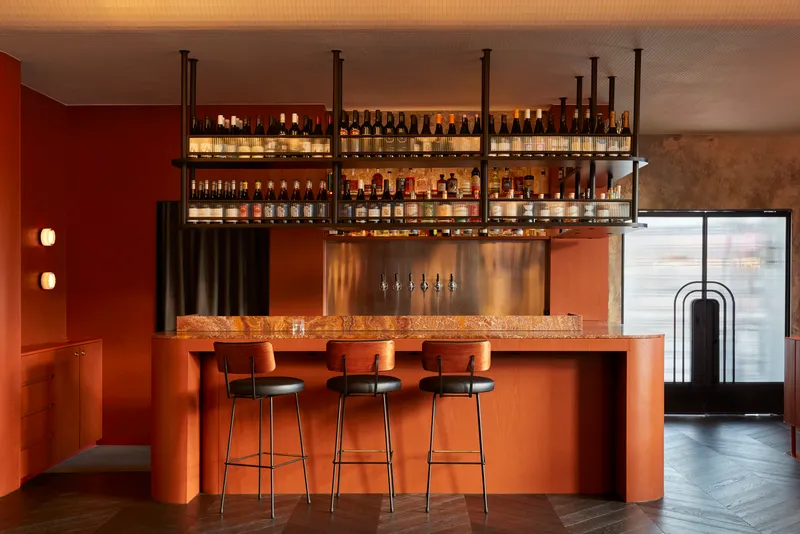
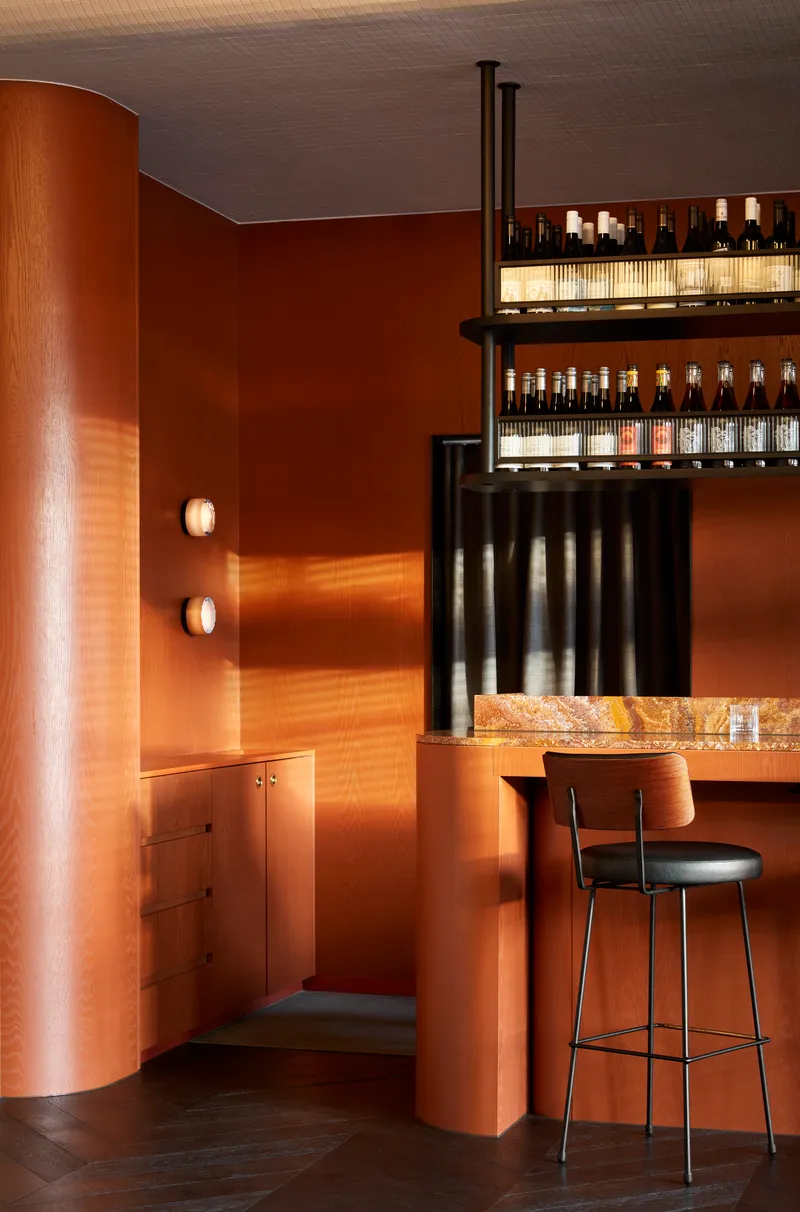

Two bar conditions exist in the building. At ground level, a terrazzo-topped counter sits beneath suspended shelving and a bottle rack, lit by wall sconces that push warm light upward. Three bar stools line the face, scaled for solo diners or couples who want proximity to the bartender. The backlit bottle display behind is restrained: no neon, no excess, just amber light passing through glass.
A curved copper-clad column beside the bar counter introduces a material that appears nowhere else in the room. It works precisely because it is singular: a punctuation mark rather than a motif. The dark stovepipe vent behind it suggests industrial ancestry, a nod to the building's long history as a utilitarian structure. Upstairs, a separate cocktail bar with a fireplace serves the 30-seat private dining room, extending the material vocabulary into walnut veneer and original pieces by 1940s Australian furniture makers.
Kitchen Transparency
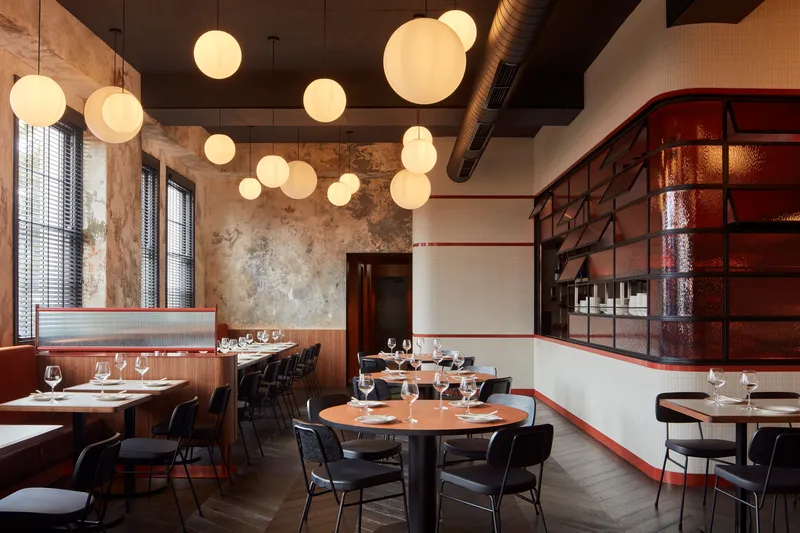
Ewert Leaf pushed the existing kitchen walls into the dining room to double equipment capacity and increase patron count. Rather than hiding the expansion, they celebrated it. The kitchen pass is treated as a portal, framed by curved steel and enclosed with custom burgundy glass in Crittall-style frames with strategic cut-outs. The chef is visible but mediated, the theatre of cooking offered as spectacle through colored, textured glass that softens the utilitarian reality of a commercial kitchen.
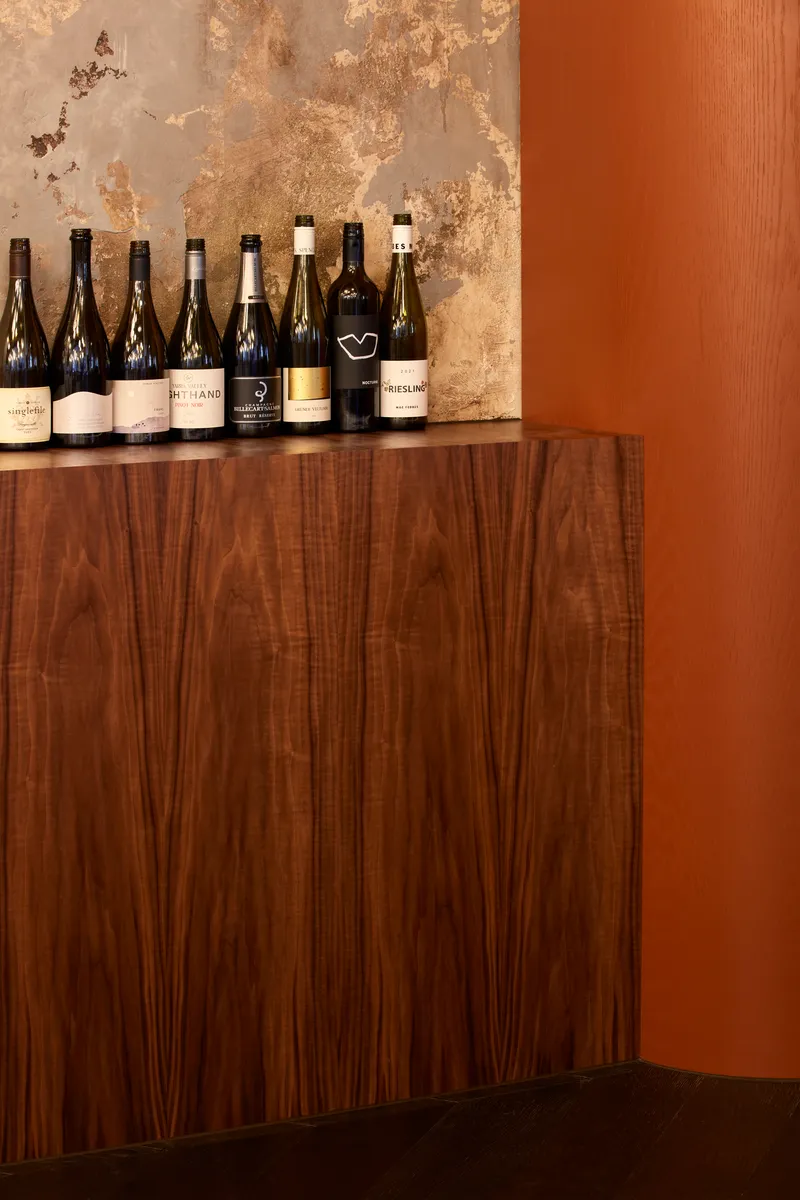
The main dining room flanks this kitchen presence. A maroon tiled wine display niche and walnut veneer cabinetry line the walls, while sphere pendant lights hang at varying heights beneath a tiled ceiling. That last detail, tiles on the ceiling, is an inversion that quietly disrupts expectation. It compresses the room and adds acoustic texture, turning a conventional finish into something slightly uncanny.
Why This Project Matters
Hospitality design too often falls into two traps: either it chases a single Instagram-ready moment, or it defers entirely to operational efficiency and lets the atmosphere sort itself out. Moonhouse avoids both. Ewert Leaf's research into Shanghai Deco and Hong Kong streetscapes gives the project a specific cultural lineage that extends beyond surface styling. The duck-skin orange, the hammered glass, the curved metalwork: each material was selected for what it does in combination, not in isolation. The synergy the brief demanded between menu, drink, atmosphere, ambiance, and sound is legible in the built result.
The adaptive reuse story is equally instructive. A heritage Art Deco bank in suburban Melbourne could have been preserved as a museum piece or demolished for apartments. Instead it was gutted, restructured, and given a program that activates it nightly. The exterior remains civic and composed; the interior is warm, textured, and confidently contemporary. It is a reminder that heritage buildings survive best when they are allowed to change, and that the best restaurant interiors are the ones that treat dining as architecture rather than decoration.
Moonhouse Restaurant, designed by Ewert Leaf, Balaclava, Melbourne, Australia. 365 m². Completed 2022. Photography by Jack Lovel.
About the Studio
Share Your Own Work on uni.xyz
If projects like this are the kind of work you want to make, uni.xyz is a place to publish your own, find collaborators, and enter design competitions.


Popular Articles
Popular articles from the community


Cloaked Colonization: A Mobile Underwater Habitat That Moves Like a Fish
Micah Abaya's shortlisted EHC Pacific entry reimagines ocean settlement as a dispersed network of self-sustaining architectural organisms.
Opera by the Sea Estonia: Three Shells Dissolving Architecture into Tallinn's Coastline
A winning opera house proposal replaces monumental form with interconnected shells that blur the boundary between building, park and Baltic Sea.
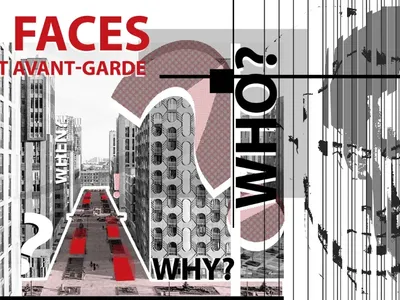
Faces of the Soviet Avant-Garde: Turning Moscow's Street Names into an Open-Air Museum
A network of sculptural installations across a Moscow residential district transforms forgotten architect names into spatial encounters with cultural memor

Singing Woman: Contemporary Architecture Inspired by Estonia’s Voice and the Sea
Singing Woman turns Estonia’s song culture into flowing opera house architecture, blending public life, landscape, sea, and national memory.

Similar Reads
You might also enjoy these articles

Bao Huynh Watercolor Atelier: A Serene Art Retreat in Hội An
Bao Huynh Watercolor Atelier in Hội An blends multifunctional art spaces, sustainable design, local materials, and family-friendly living in a serene environment.

Atelier Macri Concept Store Interior Design by CASE-REAL
Atelier Macri store features a "ko" counter, walnut wood details, cork displays, blending retail, gallery, and seamless customer experiences.

Manuel Vargas Izquierdo Stadium and High-Performance Sports Center: Architectural Excellence in Jalpa de Méndez
The Manuel Vargas Izquierdo Stadium blends sustainable design, inclusive sports facilities, and cultural-inspired architecture, revitalizing Jalpa de Méndez’s public spaces.
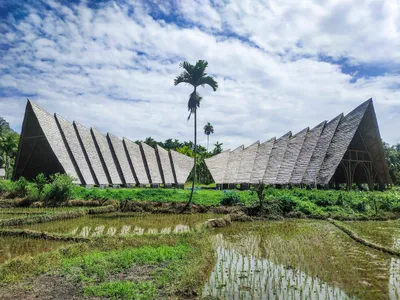
KAKR Buluh Awar Hall: Revitalizing Community and Ecology Through Bamboo Architecture
Community built bamboo hall revitalizes Buluh Awar village, empowering youth, restoring ecology, celebrating vernacular craftsmanship through sustainable architecture and culture.

Explore Urban Meal Mine Competitions
Discover active competitions in this discipline

Challenge to design luxury tourism on rails

VR headsets Storefront design competition

Designing a staircase for a client
Comments (0)
Please login or sign up to add comments
No comments yet. Be the first to comment!