

Experience Wanderlust at Its Finest: RCAA's Nomad Hostel - A Haven for Travelers Seeking Adventure
Is RCAA's Nomad Hostel the Ultimate Destination for Modern-Day Adventurers?


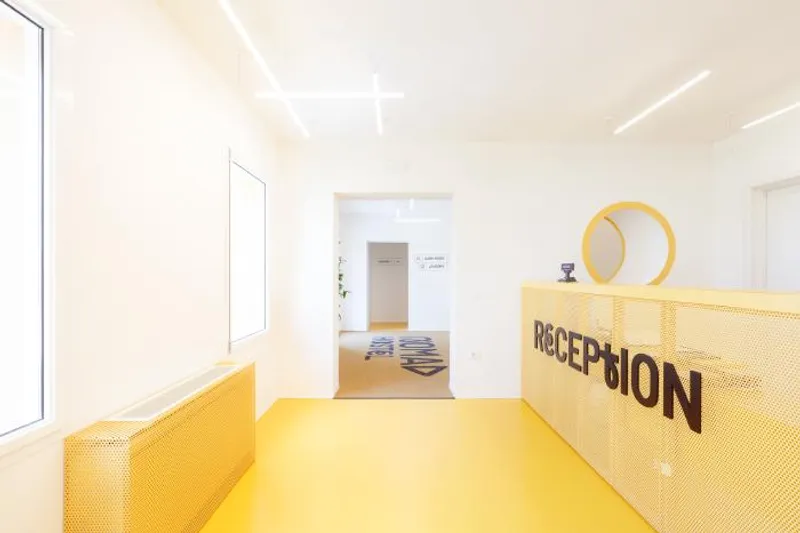
Unveiling the Remarkable Transformation: RCAA's Nomad Hostel - A Fusion of Adaptability and Innovation
In the midst of the pandemic, an abandoned barn emerges as a beacon of creativity, reborn as a dynamic hostel, bar, and club. RCAA architects have masterfully converted the space into an inviting oasis, boasting open and airy environments, mezzanine levels, and double-height spaces. Designed with adaptability in mind, every piece of furniture is modular, dismountable, and poised to accommodate future transformations.
This visionary project embraces the concept of adaptive reuse, repurposing a once-forgotten farm building that had undergone incomplete office renovations before being left in neglect. Now, it emerges as a vibrant hostel, club, and co-working space, tucked away on the outskirts of Treviso. Despite its seemingly unappealing location, its proximity to the local airport makes it a convenient haven for modern travellers.
Facing the challenges of a less-than-ideal setting, the architects seized the opportunity to create captivating spaces within the building. Maximizing the number of beds while ensuring ample technical and ancillary spaces was a delicate balance. With the building's empty shell and unfinished mezzanine level, the pandemic's uncertainty served as a catalyst for the design process.
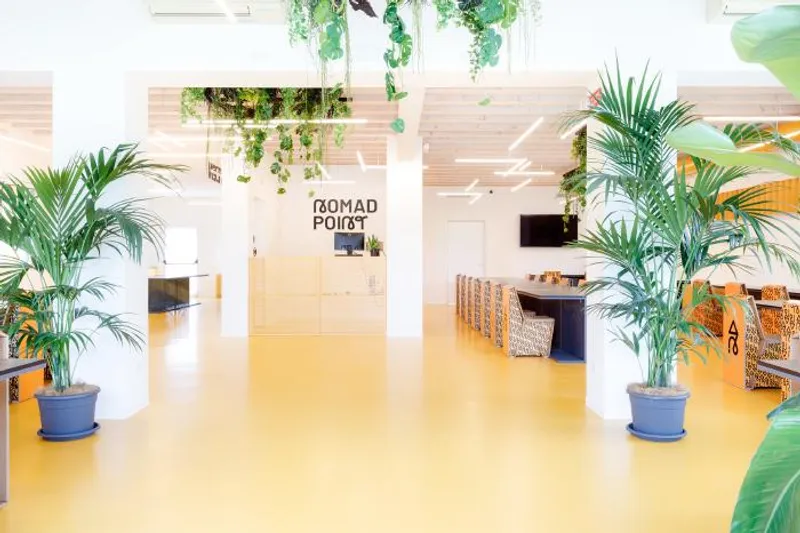
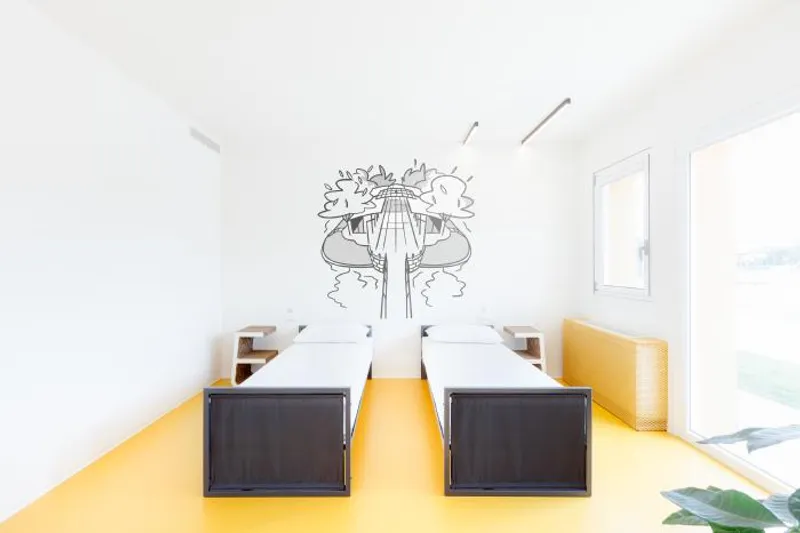
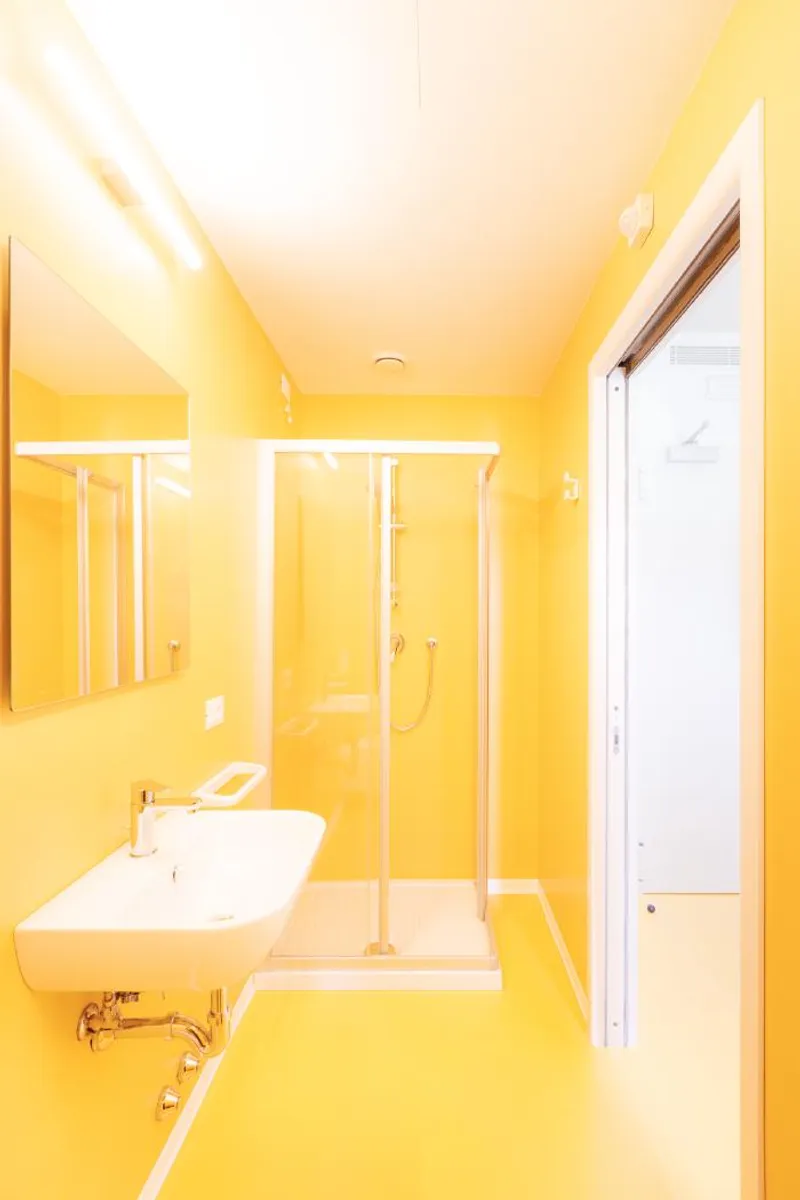
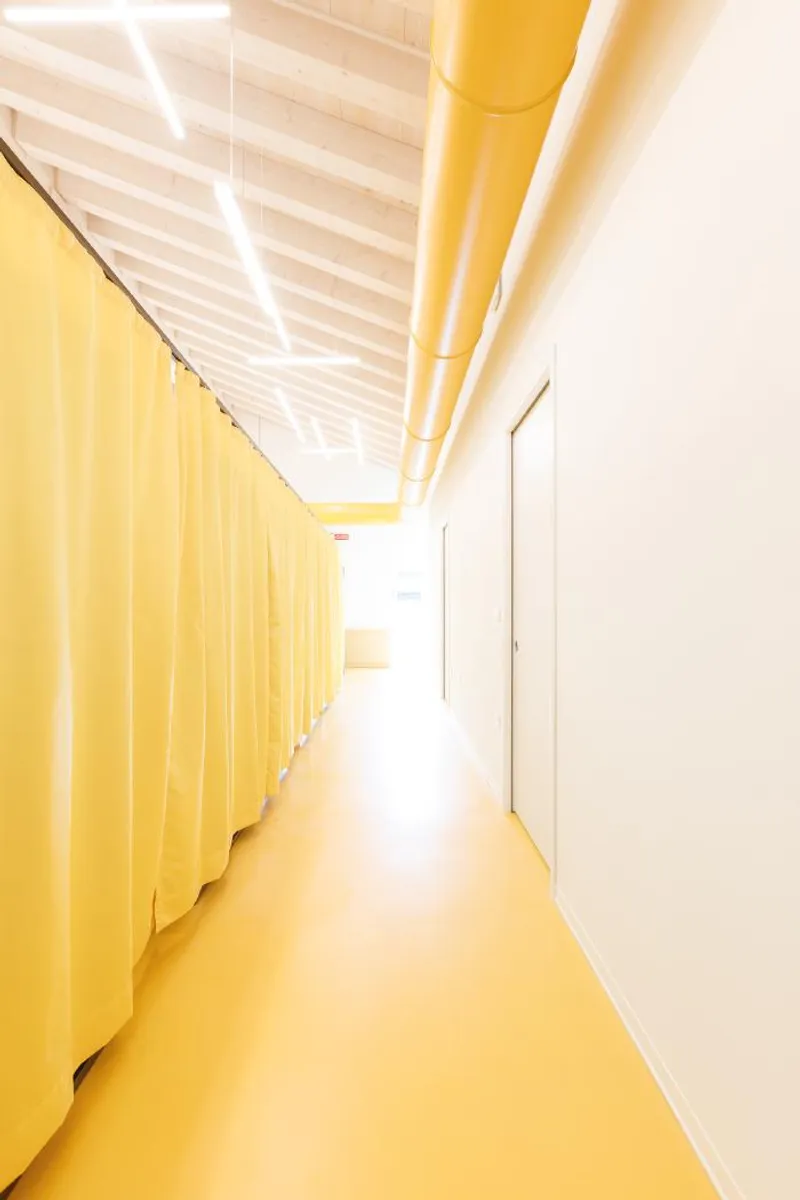
Embracing resilience and adaptability, partitions were kept to a minimum, and wet functions such as bathrooms and kitchens remained in their existing positions. Peripheral and exposed M&E (Mechanical & Electrical) elements were strategically utilized, not only to control the budget but also to allow for future flexibility in rearranging the internal layout. A single-floor finish was selected, featuring a vibrant yellow tint that unifies and illuminates the entire space—a metaphorical magic carpet within the interiors.
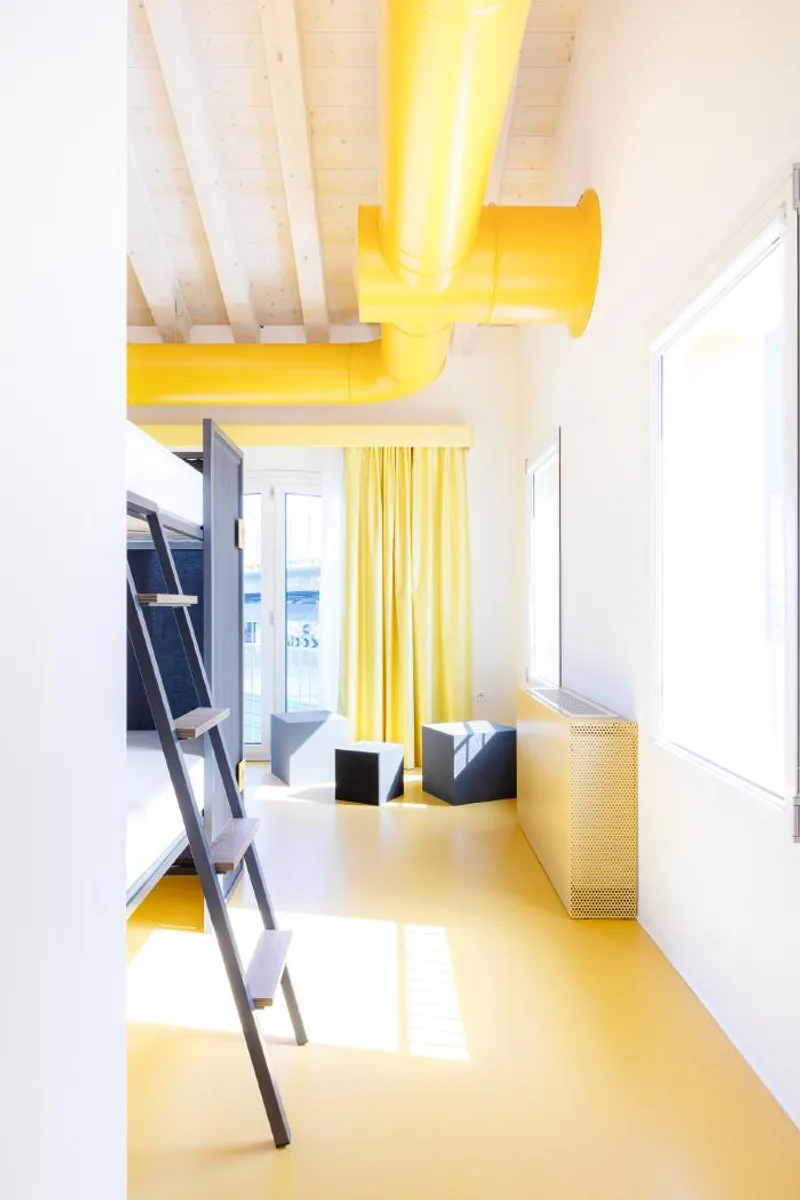
To achieve this transformative versatility, industrial-grade resin became the flooring material of choice. Its mechanical resilience, waterproof nature, and ease of cleaning made it the ideal foundation for a space that can be rearranged and subdivided without requiring extensive renovations. The golden-yellow tint was purposefully chosen for its warm character, ability to enhance the quality of light, and connection to the emblematic gold of the Republic of Venice's flag—a nod to the region's rich history.
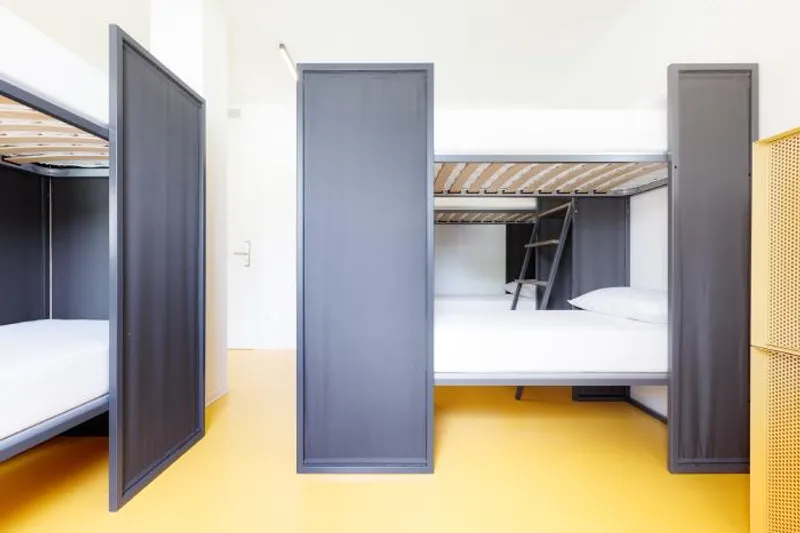
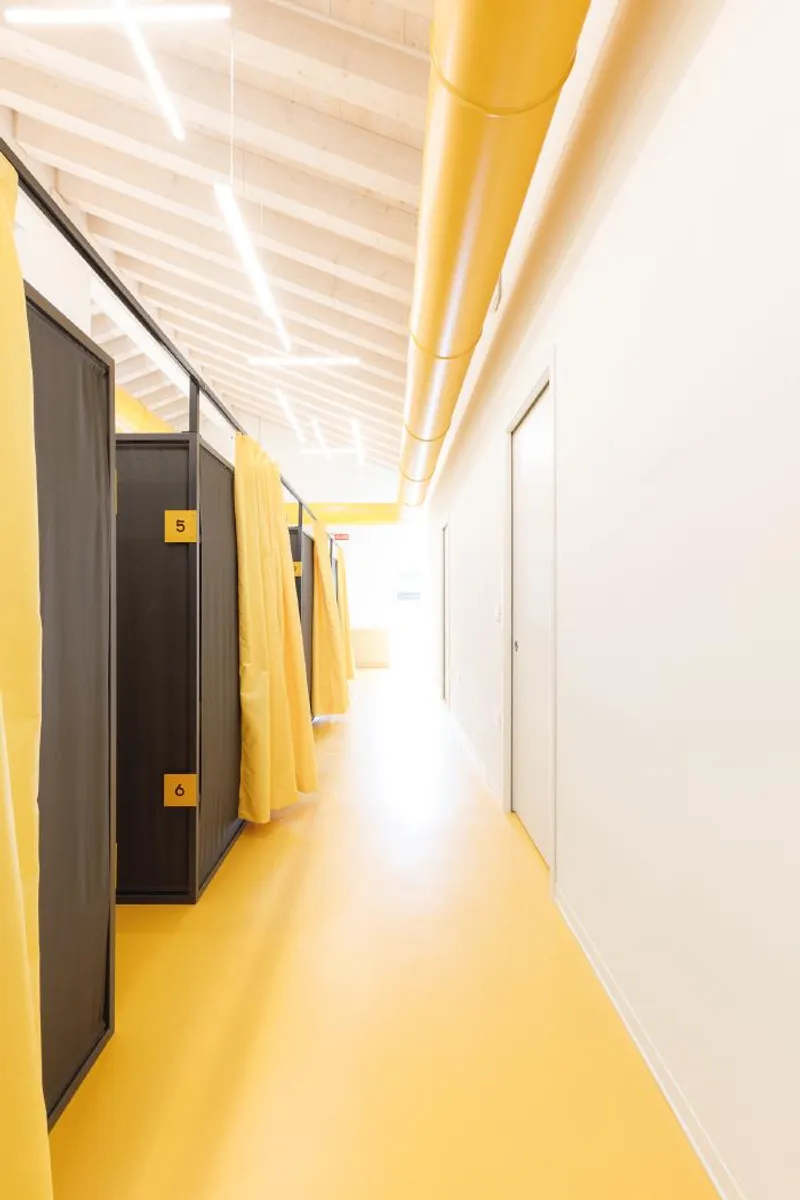
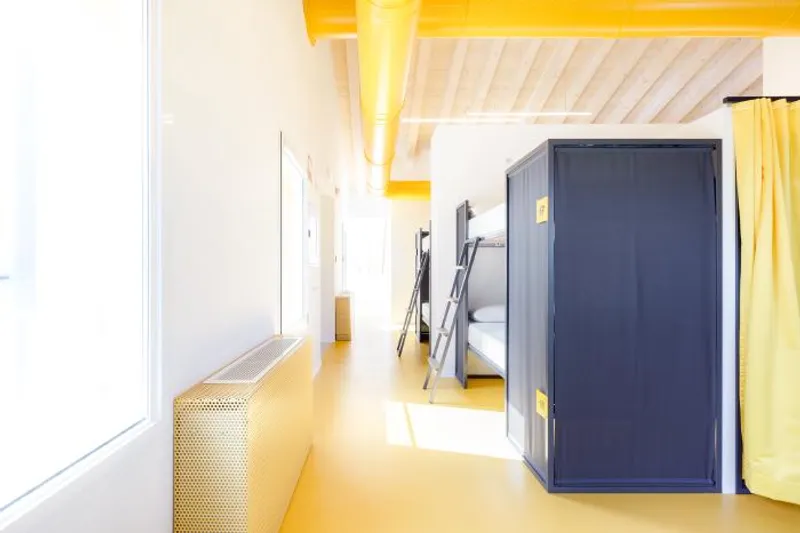
Custom-designed furniture further enhances the hostel's adaptability. Lockers can be easily rearranged, bolted together to create partitions, or arranged in various configurations, much like building blocks. Shelving units offer flexibility, allowing for wall-hanging or stacking to form bookshelves. Bed structures can transform into single, double, or bunk beds, with each component detachable for cleaning or replacement.
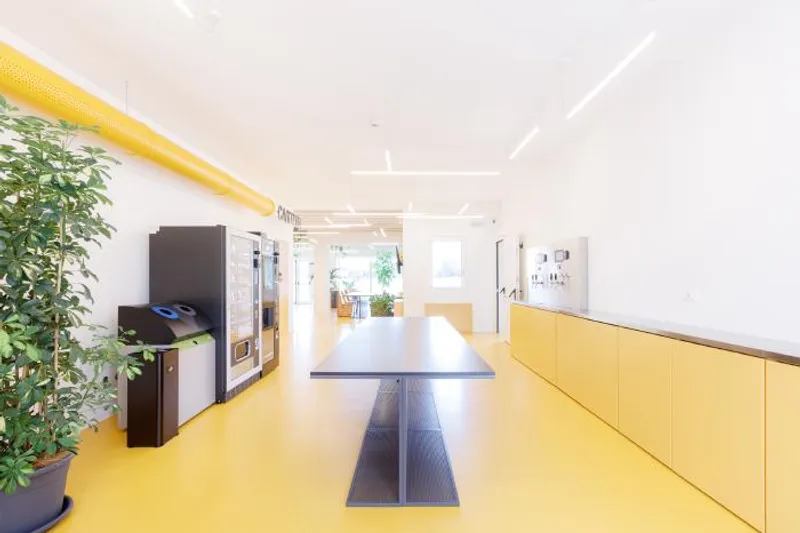
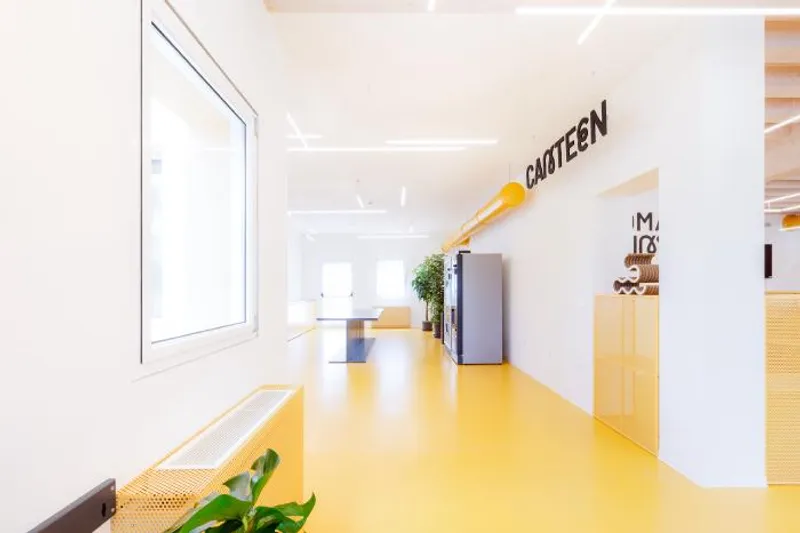
The ingenious design extends to the versatile tables, which can be split into desks or joined together to accommodate different group sizes. In the main bar area, they can be fixed to the perimeter walls, creating a spacious central area. Even the reception desk, info point, and canteen furniture can be disassembled, divided into smaller pieces, and repurposed as needed.
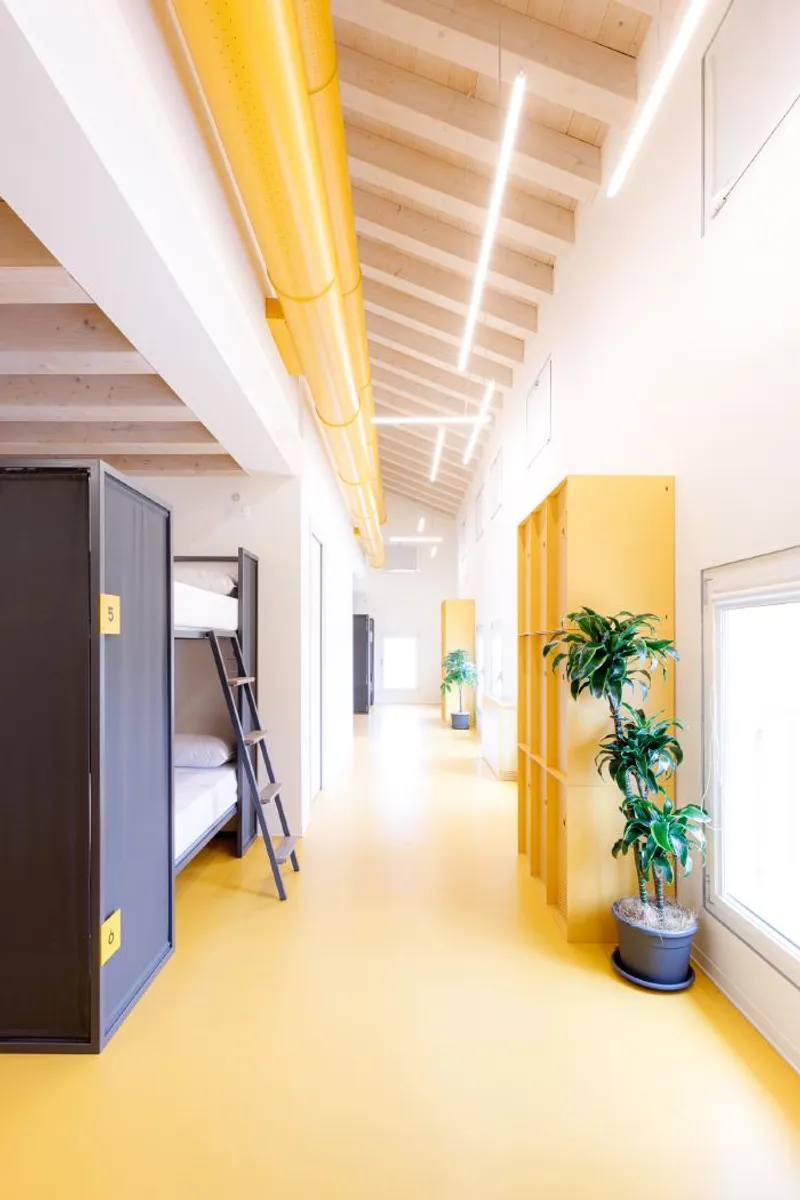
Collaborating with studio Finemateria, the hostel features custom-designed, lightweight seating crafted from special foam. These simple shapes can be stacked or arranged to create personalized lounging spaces, empowering guests to shape their own relaxation experiences. All furniture elements were locally produced within a 25 km radius, using steel and industrial-grade powder-coating for easy cleaning—a crucial consideration during the pandemic. The lighting system incorporates off-the-shelf components, with externally routed cables, ensuring adaptability without the need for extensive renovations.
RCAA's Nomad Hostel stands as a testament to its unwavering commitment to adaptive architecture. A harmonious blend of innovation, sustainability, and functionality, this converted barn celebrates the revival of forgotten spaces, welcoming modern-day adventurers to experience the transformative power of design.
In the realm of hostels and guesthouses, RCAA's Nomad Hostel stands out as a beacon of innovative design and thoughtful spatial planning. Situated amidst picturesque surroundings, this unique establishment combines the principles of sustainable architecture with an emphasis on creating a welcoming and communal atmosphere for its guests.
One of the notable features of Nomad Hostel is its external ventilation system, ingeniously designed for flexibility and easy rerouting. This approach not only ensures optimal air quality but also allows for adaptable and efficient airflow management throughout the building. By harnessing the potential of this essential aspect, the architects at RCAA have leveraged the existing space's qualities, capitalizing on its generous proportions and scenic vistas of the surrounding countryside.
Within the hostel, the designers have strategically utilized double-height spaces in the larger rooms, which are elegantly traversed by the interplay of lighting and ventilation elements. By orienting the internal spaces towards the North, the architects have skillfully maximized the intake of diffuse natural light while deliberately shifting the focus away from the nearby highway flyover, directing guests' attention towards the hostel's serene park.
The interior layout of Nomad Hostel is a testament to the architects' meticulous attention to detail, ensuring varying levels of privacy for guests. The design fosters a harmonious coexistence of spaces, encompassing the expansive park, a welcoming bar/restaurant hall, and dormitory rooms that feature communal areas distinct from the sleeping quarters. Within each dormitory, communal spaces are thoughtfully separated from the beds, allowing guests to socialize or find solace as desired. To provide an additional layer of privacy, the beds themselves are partially screened, striking a balance between personal space and shared experiences.
Moreover, the visual connectivity between different areas of the hostel is thoughtfully established through strategically placed circular holes that punctuate the internal walls. These openings create glimpses and sightlines, enabling guests to forge connections and feel a sense of continuity throughout the spaces, enhancing the overall ambience of community and exploration.
RCAA's Nomad Hostel exemplifies the convergence of innovative architectural design, sustainable practices, and an inviting atmosphere that caters to the needs of modern-day travellers. With its emphasis on comfort, connectivity, and harmonious coexistence with nature, this hostel sets a new benchmark for the world of hostels and guesthouses, inviting guests to embark on unforgettable journeys while experiencing the very best in contemporary design and hospitality.















Popular Articles
Popular articles from the community


longwave studio Reorganizes a 112 m² Tainan Apartment Around the Daily Routines of a Family and Two Cats
In Tainan, Taiwan, birch plywood, rust-red furniture and a freestanding plaster wall link arrival, storage, work and family life in one apartment.

GROUP A Strips a 1969 Rotterdam Harbor Headquarters to Its Frame and Wraps It in Timber Louvers
In Rotterdam's M4H harbor district, Ferro Offices reuses a 1969 frame, adds one timber storey and reaches BREEAM-NL Outstanding.

David Macias Steps a Doorless Stone and Plaster House Down a Tropical Colombian Hillside
In the humid hills of Colombia, Threshold House replaces the front door with an open void and terraces its 850 m² down the slope instead of fighting it.

U.GA Architects Wraps an Oval Rooftop Pool in Curved Board-Formed Concrete on Busan's Jeollidan-gil
In Busan's Jeonpo-dong, a 454 m² mixed-use block stacks a neighborhood facility, guest rooms and an oval rooftop pool inside spiraling concrete walls.

Similar Reads
You might also enjoy these articles


Rede Arquitetos Turns Circulation into Civic Space at the Educar II SESC School in Fortaleza
In Fortaleza, Brazil, Educar II SESC-CE trades a signature form for mesh screens, yellow thresholds and courtyard walkways built for equatorial heat.
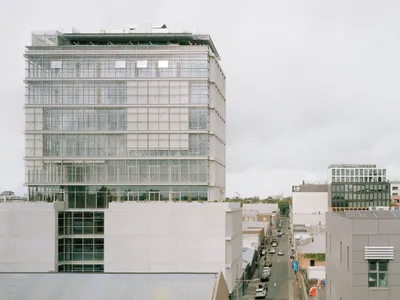
116 Rokeby Building, Collingwood
Sustainable Collingwood office building featuring double-skin façade, natural ventilation, rooftop amenities, and carbon-neutral design focused on wellbeing and longevity.
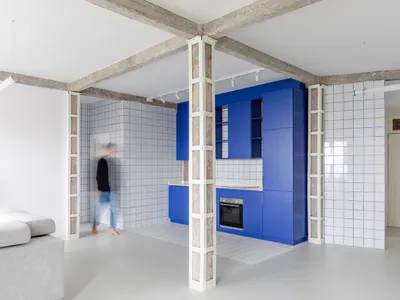
Contemporary Apartment Renovation in Spain: RV House by BIAN Opens Up to the Sea
A minimalist 1930s apartment in Santander is transformed into a flexible, sea-facing home through contemporary Spanish renovation.
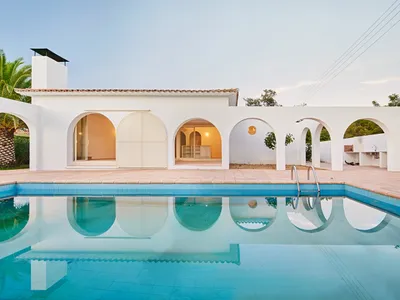
3 Marías House: A Contemporary Mediterranean Courtyard Retreat by Bajet Giramé + Burckhardt
Mediterranean courtyard home blending traditional architecture with modern design, terracotta flooring, flexible interiors, sustainable climate strategies, and garden integration.
Explore Hospitality Building Competitions
Discover active competitions in this discipline

Challenge to reimagine the Iron Throne

Photograph architecture without architects

Illustrate the lost glory of Angkor Wat - Render Challenge

Design challenge to reuse E-waste
Comments (0)
Please login or sign up to add comments
No comments yet. Be the first to comment!