
Faculty of Psychology of the University of Warsaw by Projekt Praga
An eco-brutalist university building in Warsaw featuring a monumental concrete canopy, layered public spaces, integrated landscapes, and sustainable systems.


Completed in 2025, the Faculty of Psychology of the University of Warsaw by Projekt Praga is a 26,600-square-metre academic building conceived as an open, social, and environmentally responsive learning landscape. Located on the Ochota campus in Warsaw, the project redefines the traditional university building by positioning architecture as a catalyst for interaction between students, staff, and the surrounding city.

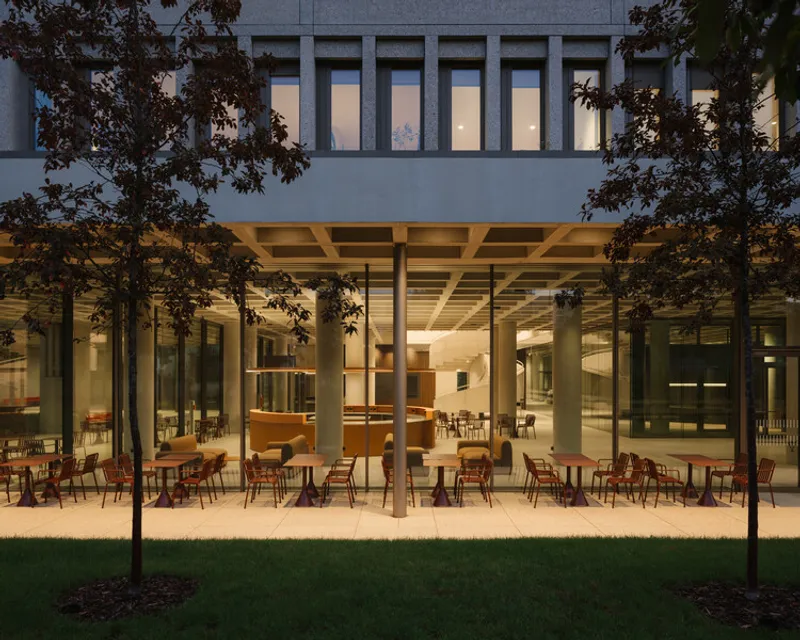
Rather than functioning as a closed institutional object, the faculty operates as an urban platform: blurring boundaries between public space, academic life, and everyday social activity.
Reconnecting Campus and City
The project emerged from a 2017 architectural competition with a clear ambition: to reintegrate academic spaces into the urban fabric. In response, Projekt Praga designed a building that extends campus life outward and welcomes non-university users inside.
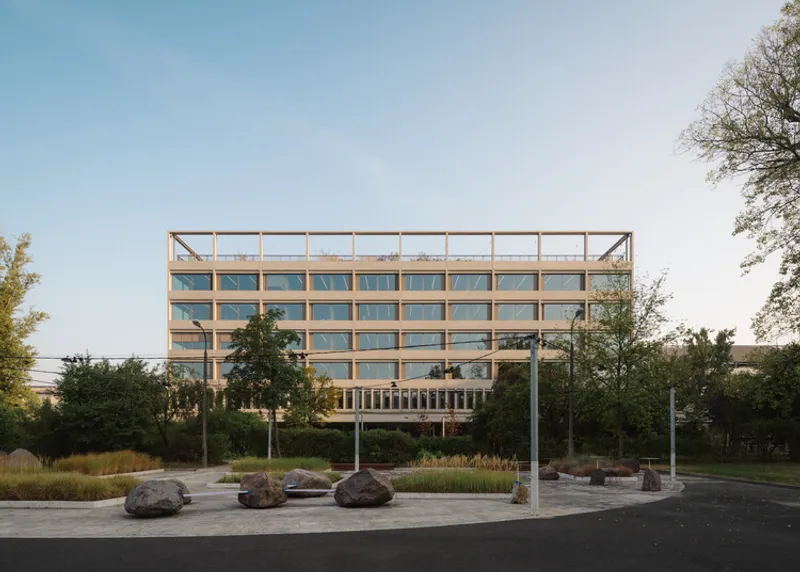
This ambition is most clearly expressed at ground level, where the building opens itself to pedestrians, cyclists, and local residents. Instead of a fenced perimeter or formal entrance plaza, the project offers a generous sheltered landscape that functions as a civic space.
The Concrete Canopy as Urban Threshold
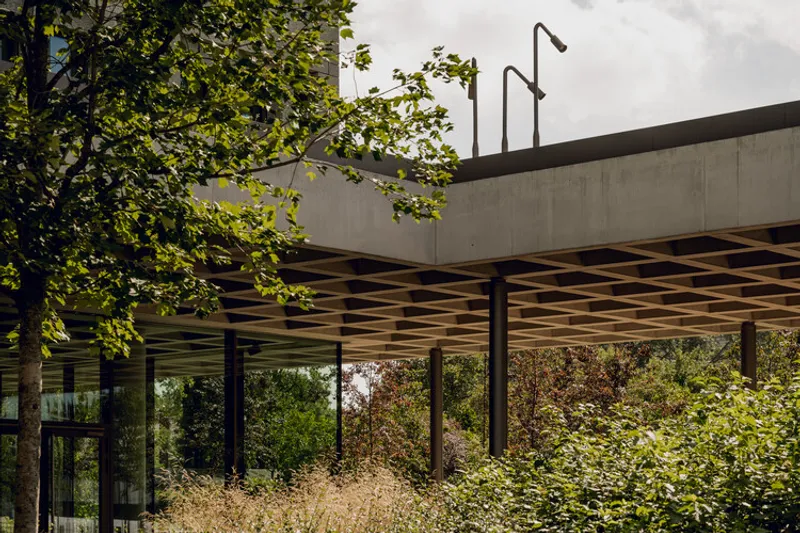
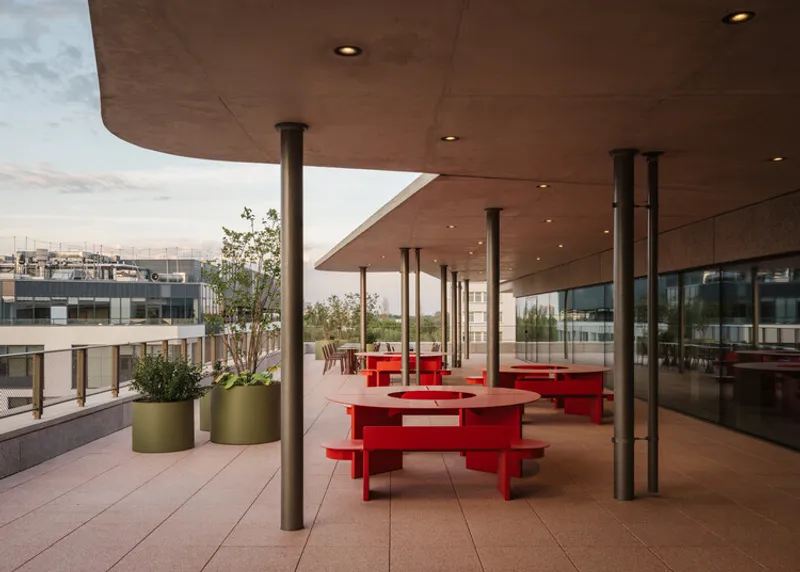
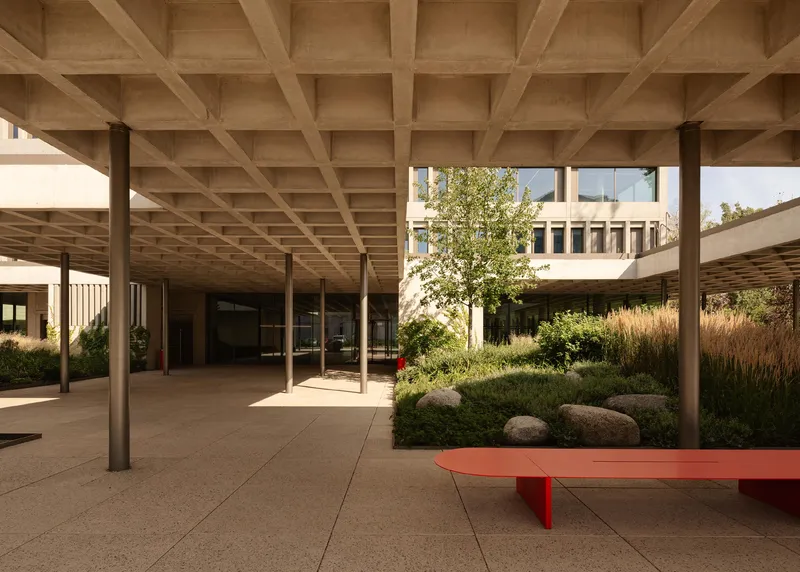
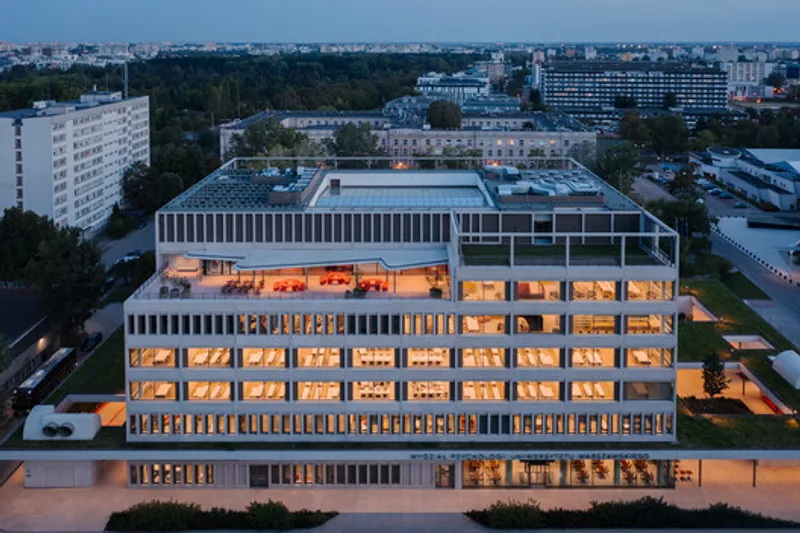
A defining architectural gesture is the expansive concrete coffered canopy that spans the entire ground floor. Visible from both inside and outside, this structure creates a continuous sheltered zone that mediates between city and campus.
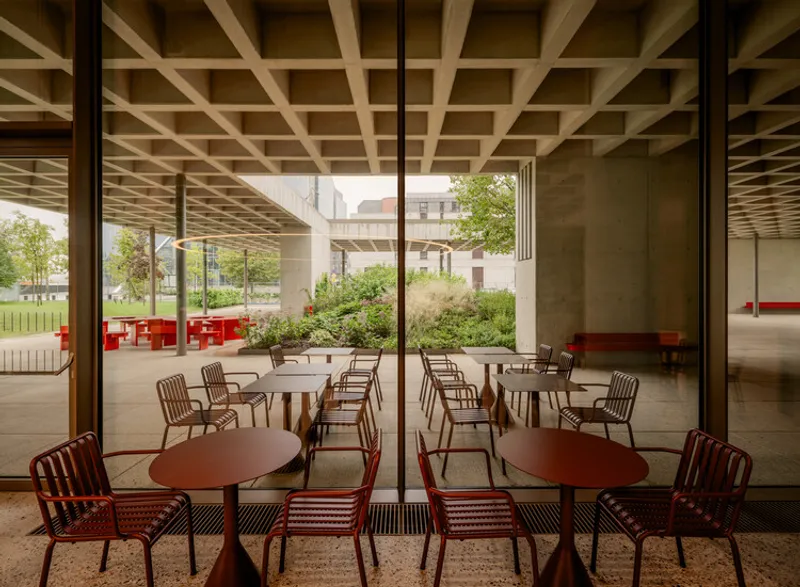
Under the canopy, a vibrant public plaza unfolds, incorporating:
- Seating and informal meeting areas
- Bicycle parking
- Landscaped planting zones
- Circulation routes
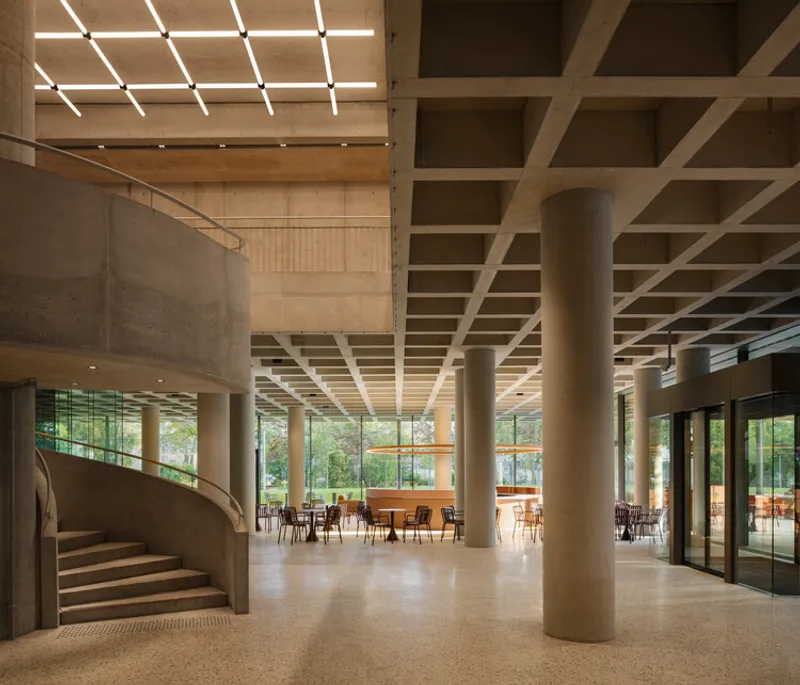
This protected environment enables year-round outdoor use, encouraging social interaction regardless of weather conditions. The canopy functions simultaneously as roof, public room, and symbolic gateway to the faculty.
Two Ground Floors: A Layered Public Interface
Inside, the building is organized around the innovative concept of “two ground floors,” which expands accessibility and activity across multiple levels.
Lower Ground Level
The lower ground floor is fully open to the public and remains active beyond academic hours. It contains:
- Café and canteen
- Glazed auditorium
- Large entrance halls
- Event and exhibition spaces
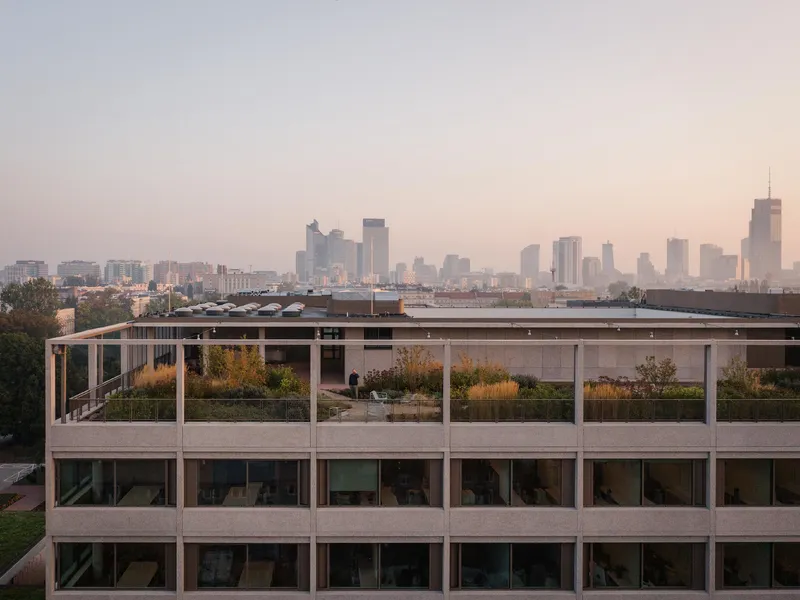
These functions ensure that the building operates as a cultural and social venue, not only as a teaching facility.
Upper Ground Level
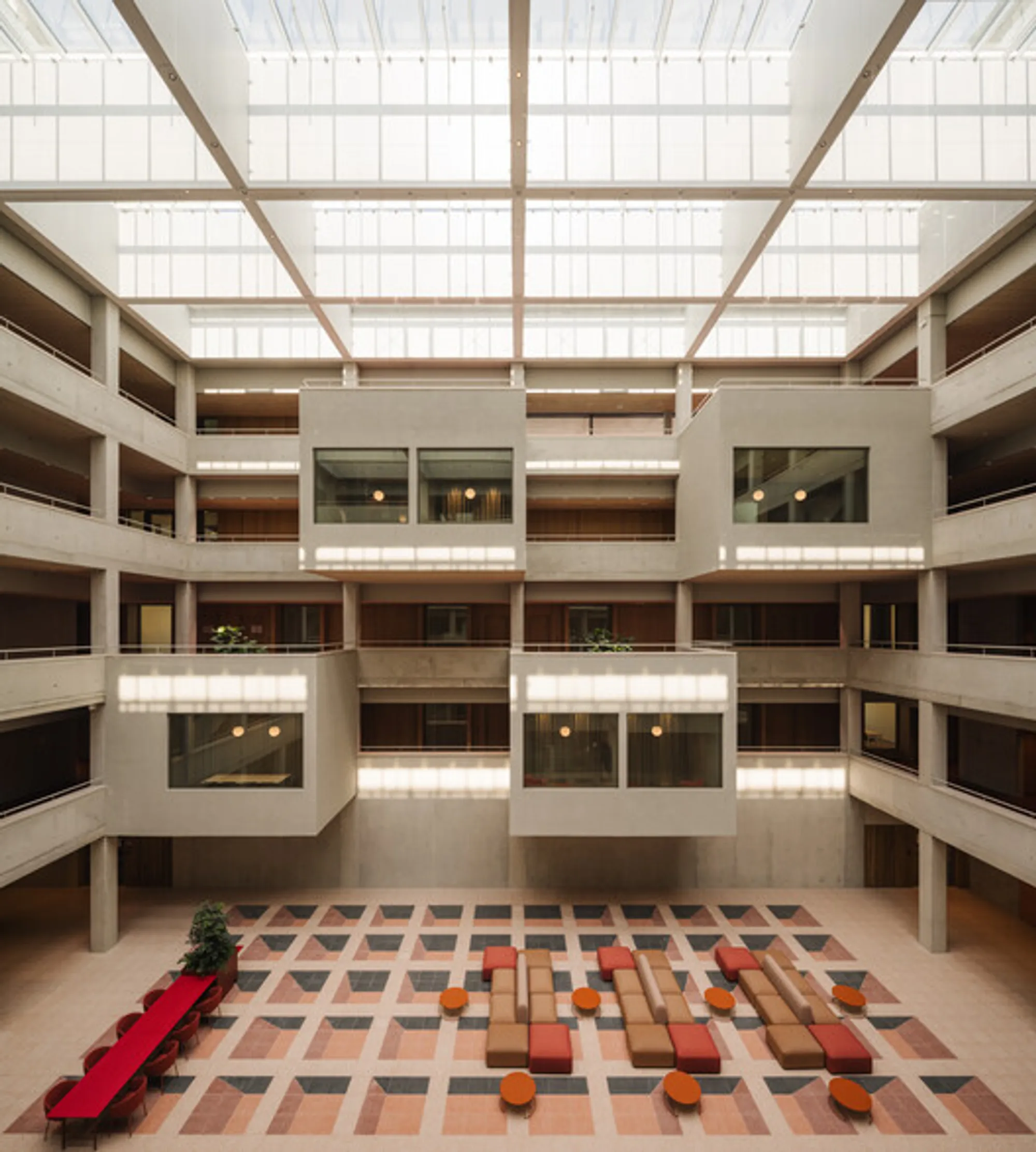
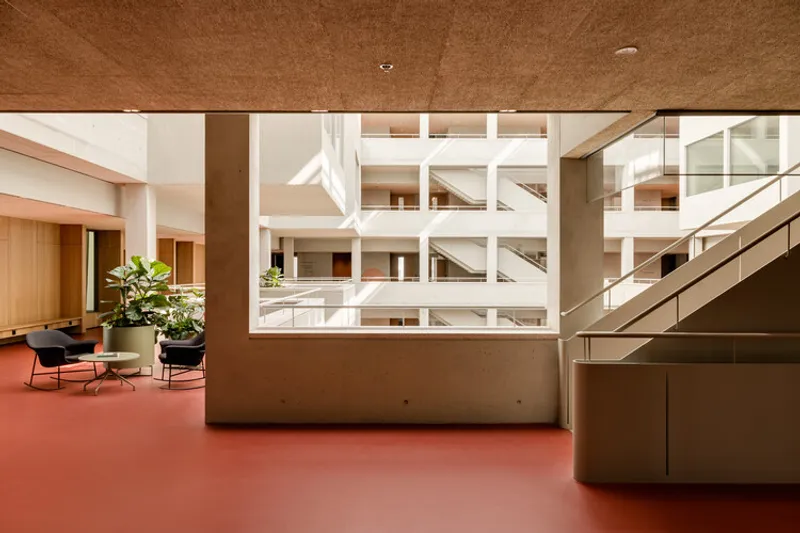
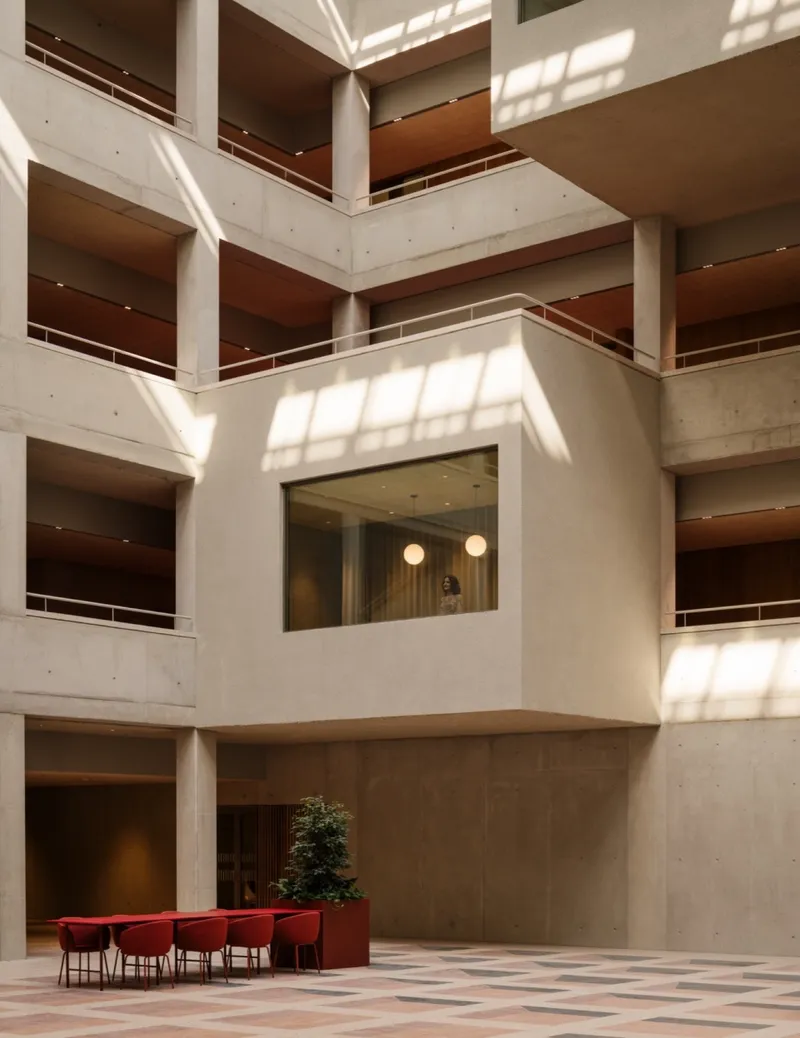
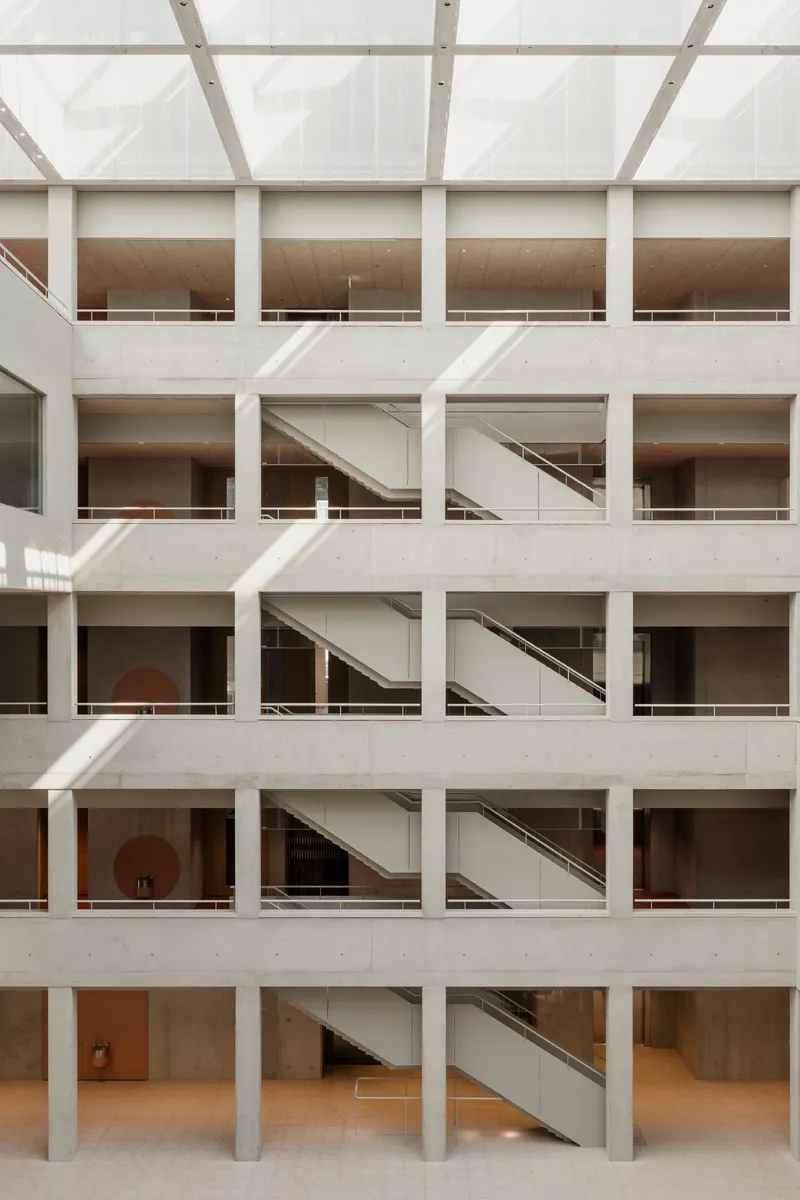
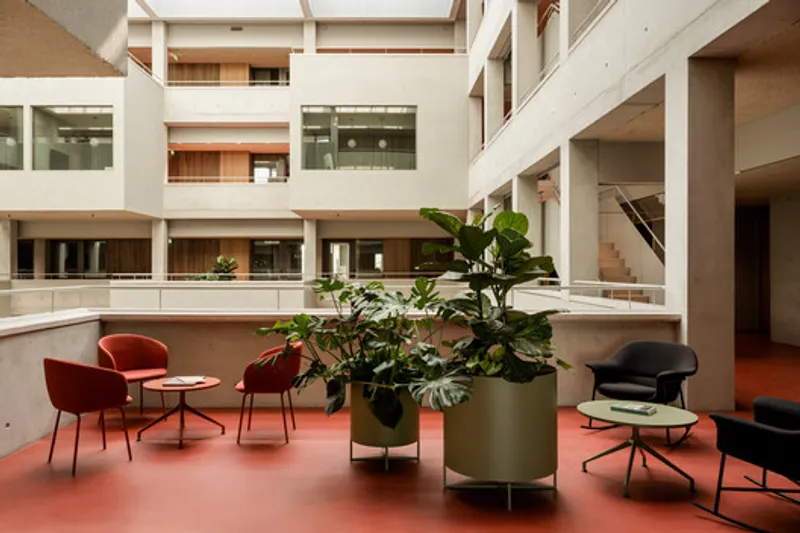
Above, a second ground floor is arranged around a bright central atrium. This level acts as the heart of academic life and connects to:
- Classrooms and laboratories
- Faculty offices
- A two-story library
- Terrace access
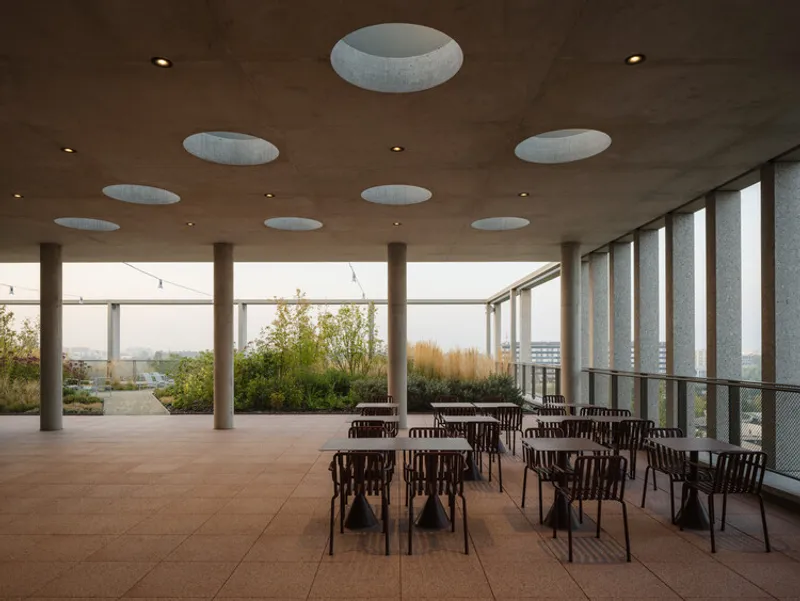
By stacking public layers vertically, the building maximizes social permeability within a dense urban context.
Open Galleries Instead of Corridors
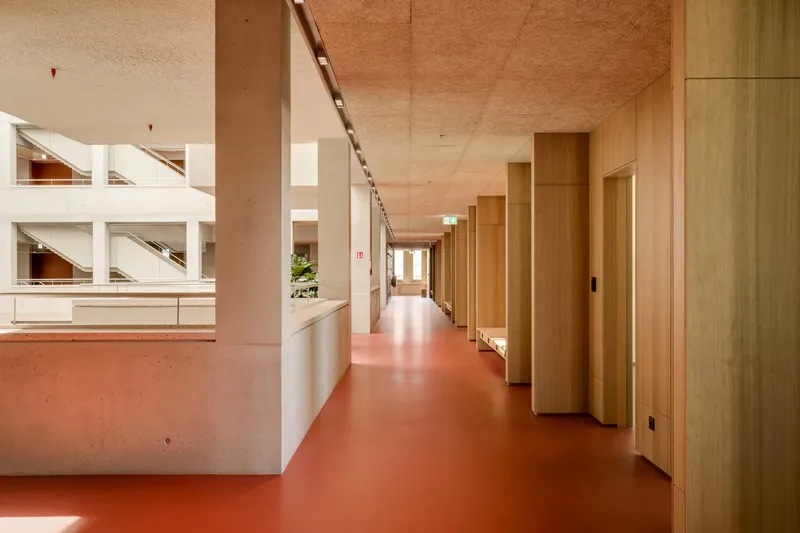
Rejecting conventional corridor-based layouts, Projekt Praga introduced open galleries that overlook the central atrium. These galleries connect teaching spaces while creating visual continuity and spatial openness.

Along these circulation routes, the architects integrated:
- Study niches
- Seating alcoves
- Informal meeting points
- Resting zones
This spatial strategy transforms circulation into a social experience, encouraging spontaneous encounters and collaborative learning.
The building thus supports both focused individual study and collective exchange.


Eco-Brutalism: Material and Atmosphere
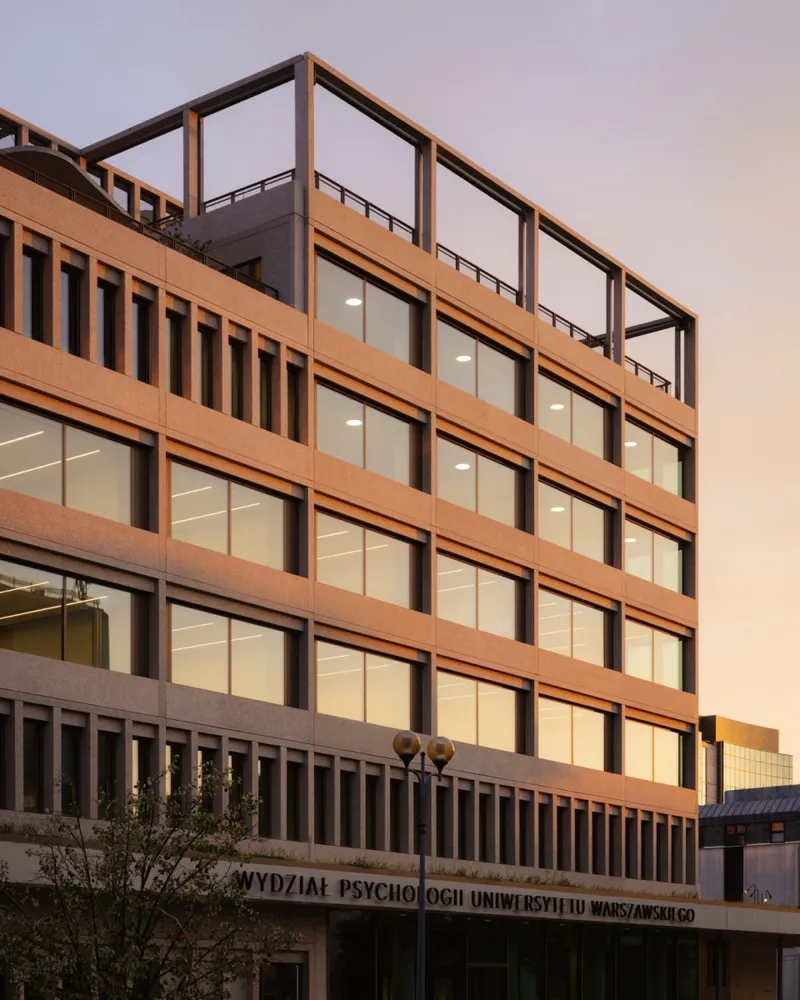
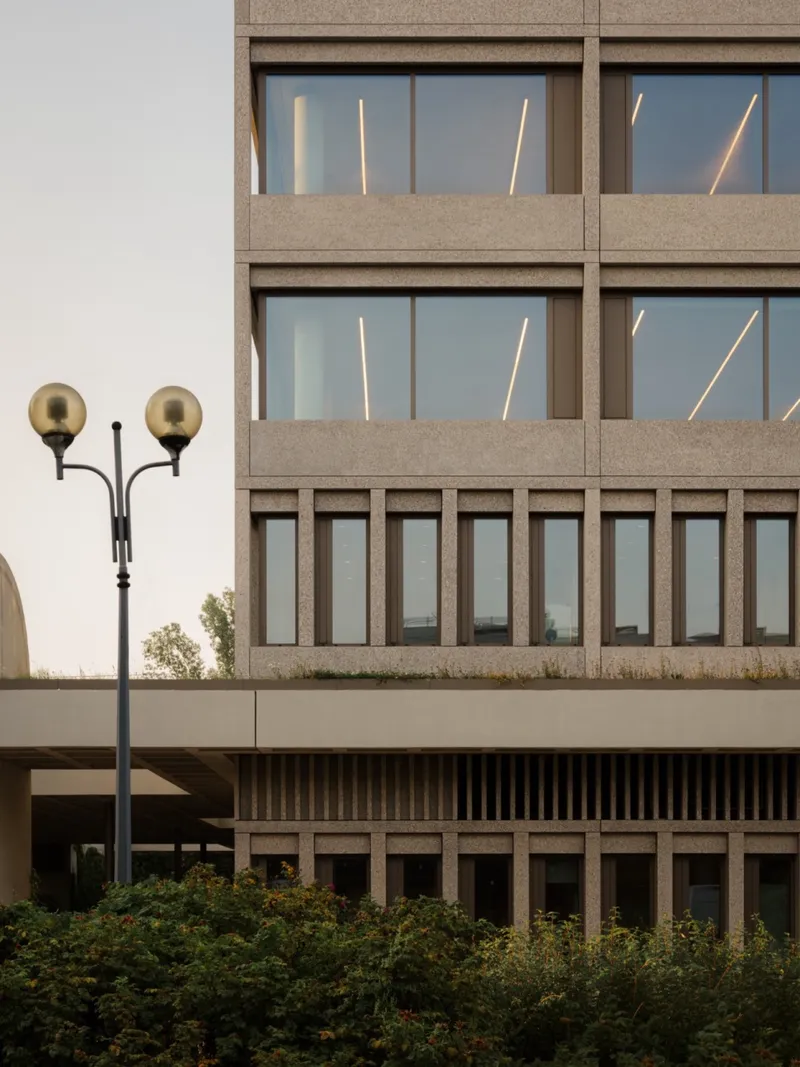
The architectural character of the faculty can be described as eco-brutalist, a synthesis of raw material expression and environmental sensitivity.
Exposed concrete dominates the structure, providing:
- Structural clarity
- Thermal mass
- Visual unity
- Long-term durability

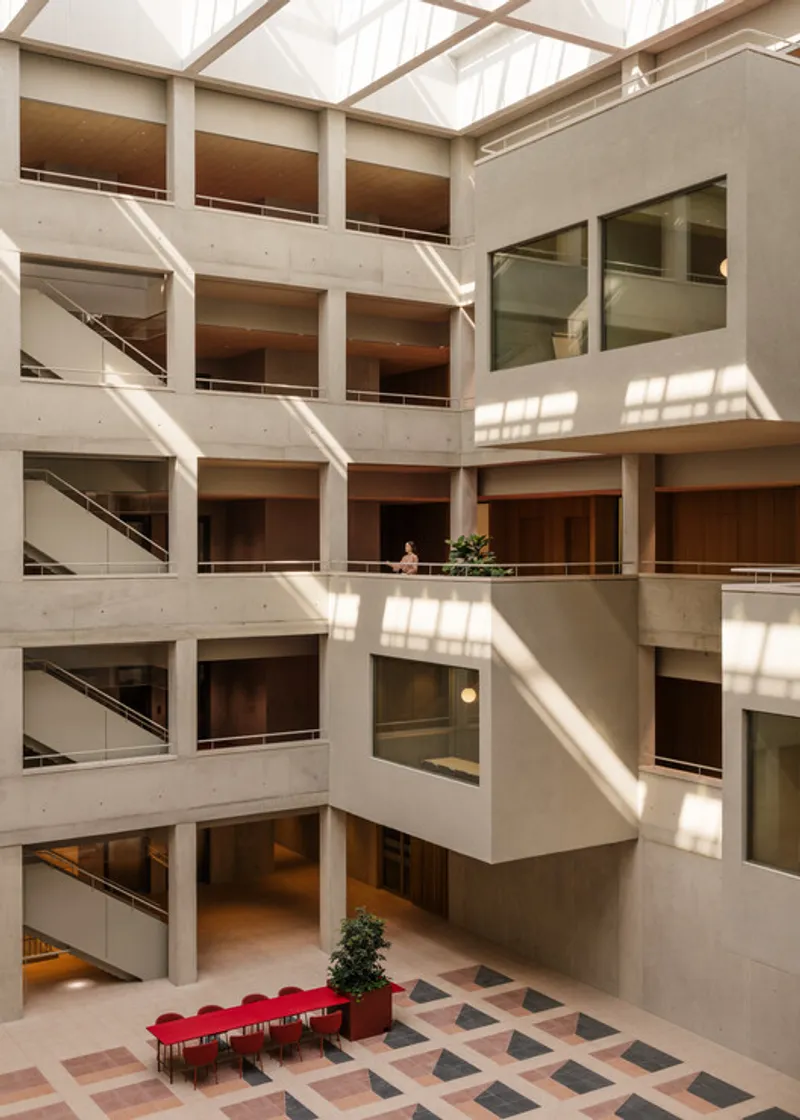
Rather than feeling cold or oppressive, the concrete is softened through:
- Abundant daylight
- Warm wood accents
- Extensive planting
- Carefully designed lighting
This balanced palette creates a calm, contemplative atmosphere suited to psychological research and education.
Landscape as Architectural Infrastructure
Greenery is deeply embedded into the building’s spatial system rather than treated as decoration. Landscape architecture by Zielone Studio plays a fundamental role in shaping experience and performance.
Key green elements include:
- Trees surrounding the building
- Indoor planting zones
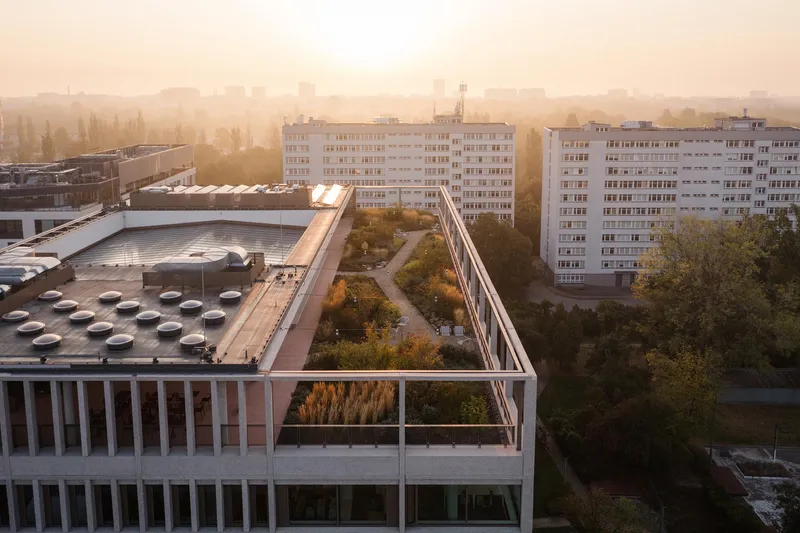
- A flowering meadow atop the canopy
- Rooftop gardens with walking paths
- Outdoor classrooms
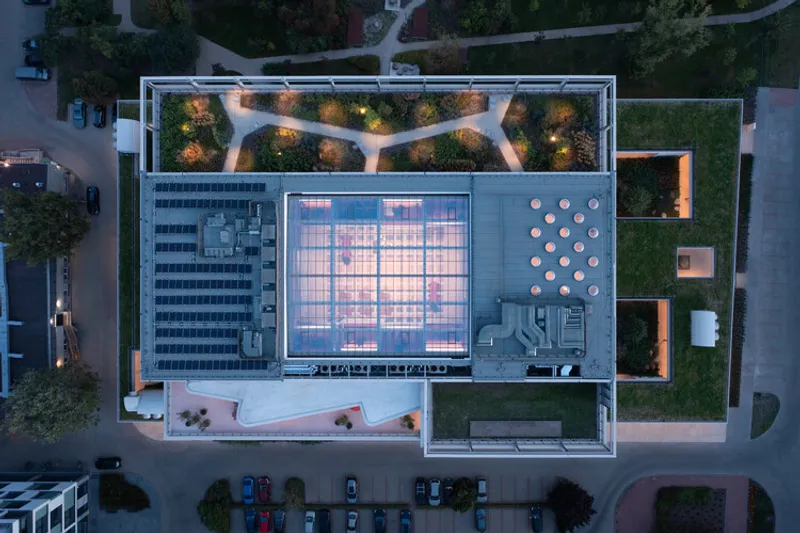
These landscapes regulate microclimate, filter air, reduce urban heat, and provide restorative environments for users.
Rainwater is retained and reused, while vegetation enhances biodiversity within the campus.
Sustainable Systems and Environmental Performance
The Faculty of Psychology integrates advanced sustainability strategies to minimize operational energy and environmental impact.
These include:
- Geothermal heat pumps
- Photovoltaic panels
- Rainwater harvesting and reuse
- External solar blinds
- Green roofs with insulation capacity
Together, these systems reduce energy consumption while improving indoor comfort.
The building’s thermal mass, natural shading, and passive cooling strategies complement active technologies, creating a resilient hybrid system.
Accessibility and Inclusive Design
Accessibility was a central design priority. The building is fully inclusive, ensuring equal participation for all users.
Features include:
- Step-free circulation throughout
- Induction loops for hearing support
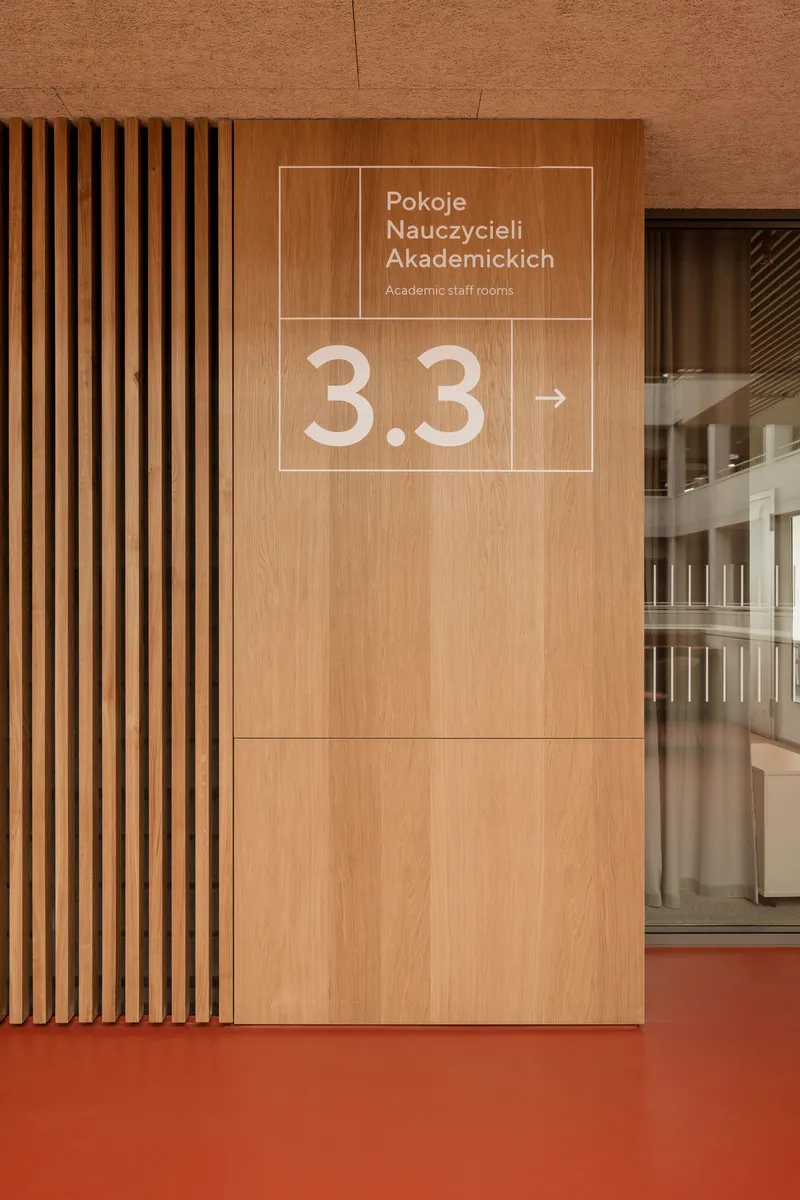
- Clear wayfinding and signage
- Accessible sanitary facilities on each level
- Well-lit and intuitive routes
These measures support neurodiversity, physical accessibility, and cognitive comfort, particularly important in a psychology faculty.
A Building for Nearly 2,000 Users
With over 21,000 square metres of usable space serving nearly 2,000 students and staff, the building accommodates a wide range of academic functions:
- Teaching and seminar rooms
- Research laboratories
- Faculty offices
- Library and archives
- Event and conference spaces
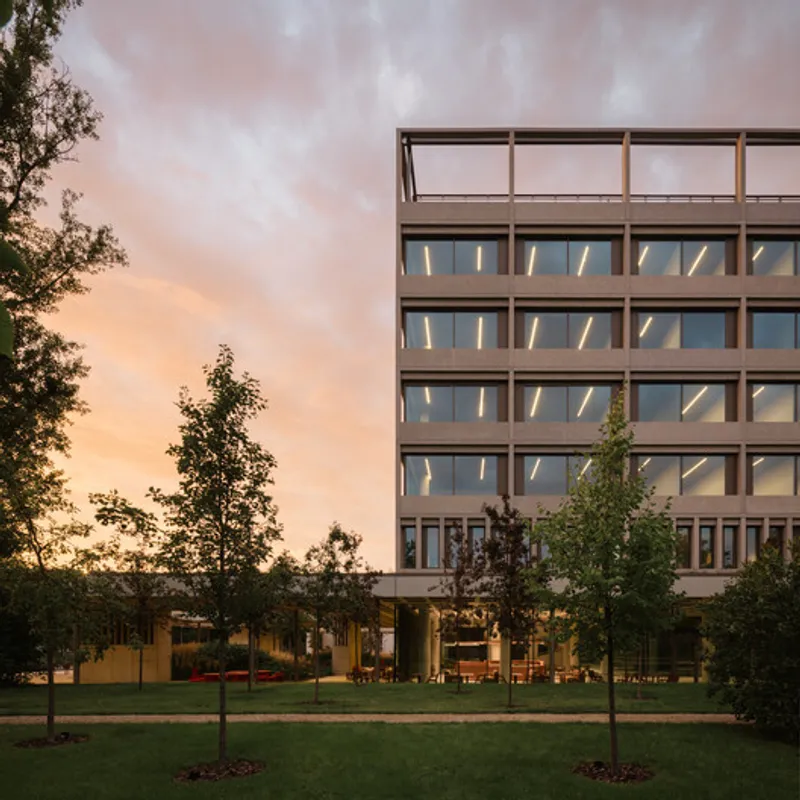
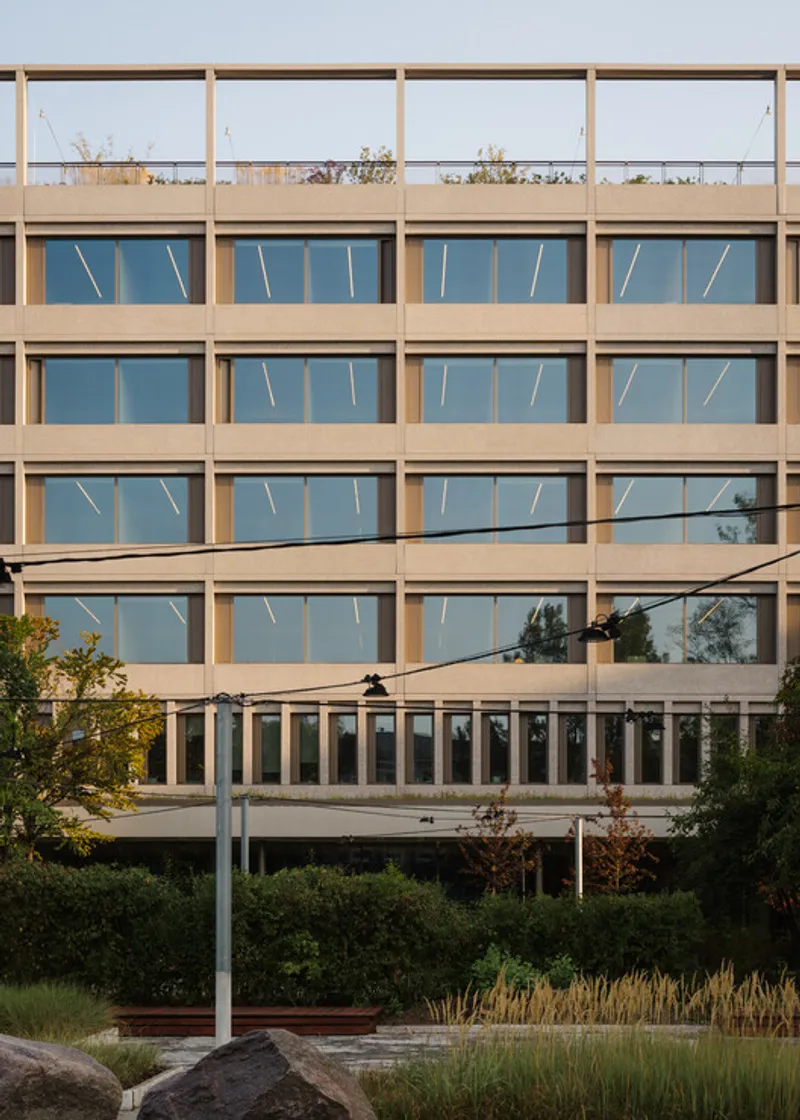
Despite its scale, the project maintains human proportions through layered spaces, landscape integration, and varied spatial sequences.
An Academic Landscape for Contemporary Education
Rather than presenting itself as a monument to institutional authority, the Faculty of Psychology operates as a landscape of learning. It supports:
- Informal knowledge exchange
- Interdisciplinary encounters
- Community engagement
- Mental well-being
- Environmental awareness

By dissolving rigid boundaries between inside and outside, public and private, study and leisure, the building reflects contemporary educational values.
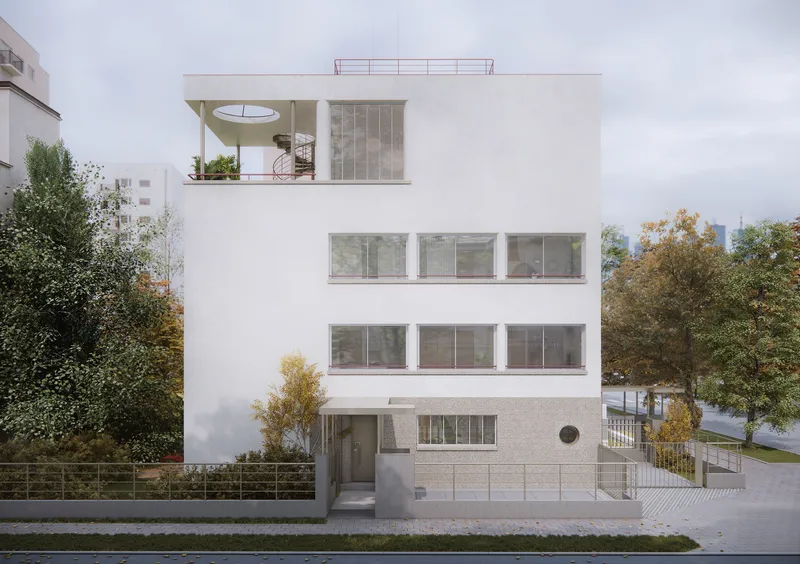
All the Photographs are works of Nate Cook Photography, ONI studio



Popular Articles
Popular articles from the community


Co-life: Sustainable Architecture for Age-Friendly Community Living
Co-life reimagines sustainable architecture for seniors through courtyards, rammed earth, shared gardens, and spaces designed for belonging.

The Musturak Paradise: Senior Living Architecture for a Connected Future in Temara, Morocco
The Musturak Paradise reimagines senior living architecture in Temara via private homes, social spaces, culture, community, and shared care.

The Earth Pod: 3D Printed Homes for Resilient Refugee Communities
The Earth Pod reimagines refugee housing through 3D printed homes made from clay, combining resilience, self-sufficiency, and rapid shelter.

AL-JANNAH: Sustainable Architecture and Permaculture for Afghan Widows
AL-JANNAH uses sustainable architecture and permaculture to create resilient oasis of housing, learning, work and renewal for Afghan widows.


Similar Reads
You might also enjoy these articles


Hodi-Mandai Geram
Project Function: Preservation and revitalization of the Intangible heritage and socio-spatial identity of the Hodi by Housing, Cultural Memory Center, Sacred Grove, landscape, local tourism economy


Olio Towers: A Mid-Rise for Performers That Fuses Housing, Rehearsal, and Stage
Located blocks from Houston's Theater District, this modular tower stacks living units around a central performance atrium.

Oasis: Modular Green Housing Carved into Dhaka's Urban Fabric
A shortlisted Plugin Housing entry reclaims unauthorized settlements in Dhaka with stepped concrete volumes, green roofs, and ventilation-driven design.

Black Hole: A Floating Megastructure for the Post-Physical Era
Emiliano Mazzarotto envisions a spherical, self-scaling arena where e-sports, digital hotels, and holographic stadiums replace traditional public space.


Explore College Of Art In Opole Competitions
Discover active competitions in this discipline



Challenge to design public laboratory


Challenge to reimagine the Iron Throne


Photograph architecture without architects


Illustrate the lost glory of Angkor Wat - Render Challenge
Comments (0)
Please login or sign up to add comments
No comments yet. Be the first to comment!