
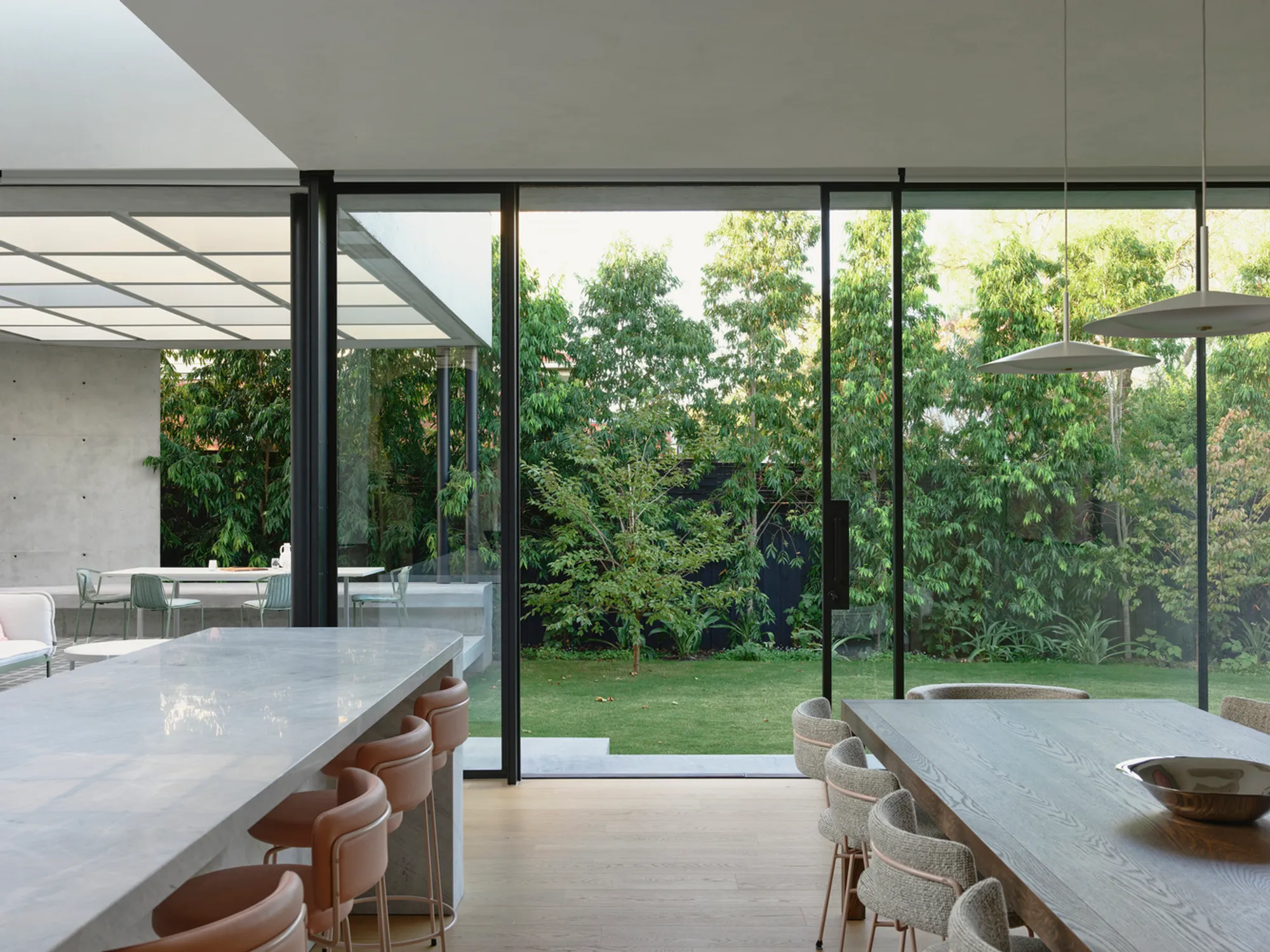
Fairfield Courtyard House by Taylor Knights: A Refined Model of Courtyard House Design in Australia
Fairfield Courtyard House merges heritage charm and contemporary design to redefine courtyard house living in suburban Australia.


A Heritage Home Reimagined Through Contemporary Courtyard Living
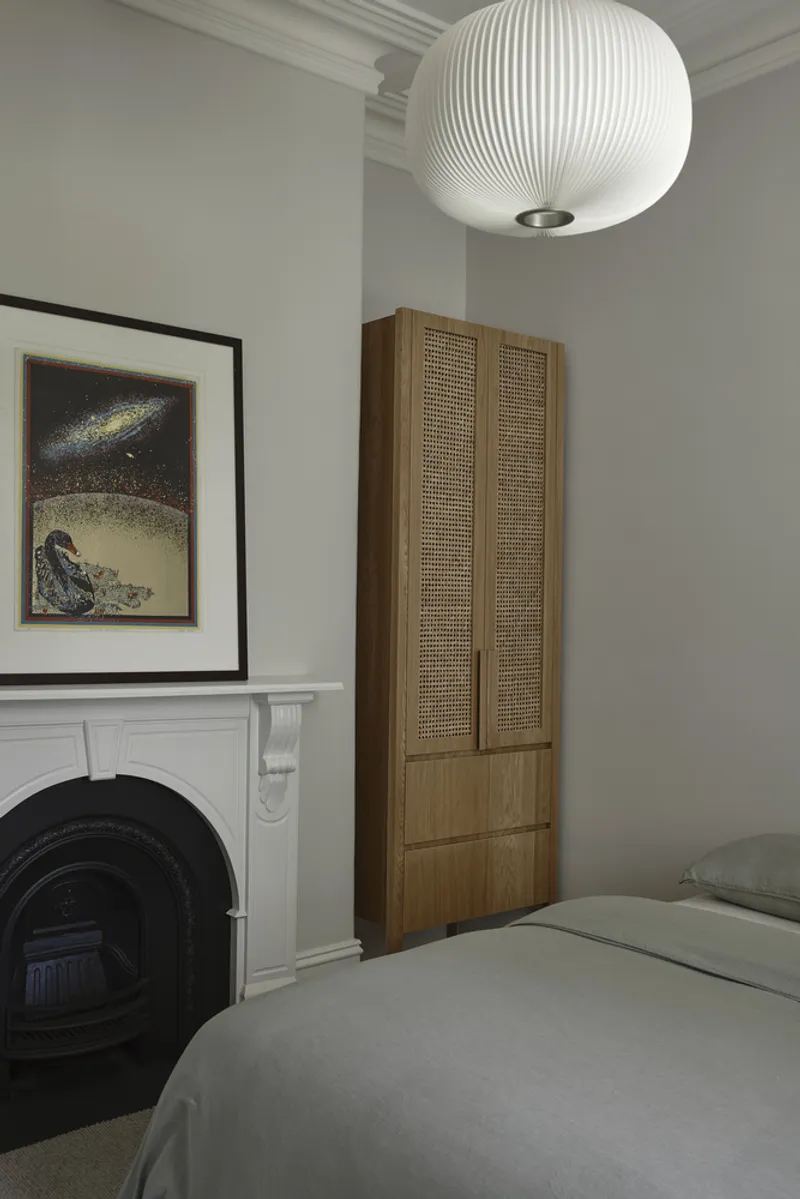
Set in the quiet Melbourne suburb of Fairfield, Fairfield Courtyard House by Taylor Knights is a sensitive and skillful transformation of a late 19th-century Victorian brick residence. Designed for a retiring couple seeking serenity, connection to nature, and long-term livability, the project redefines courtyard house design in Australia with a grounded, poetic response to context, climate, and aging in place.
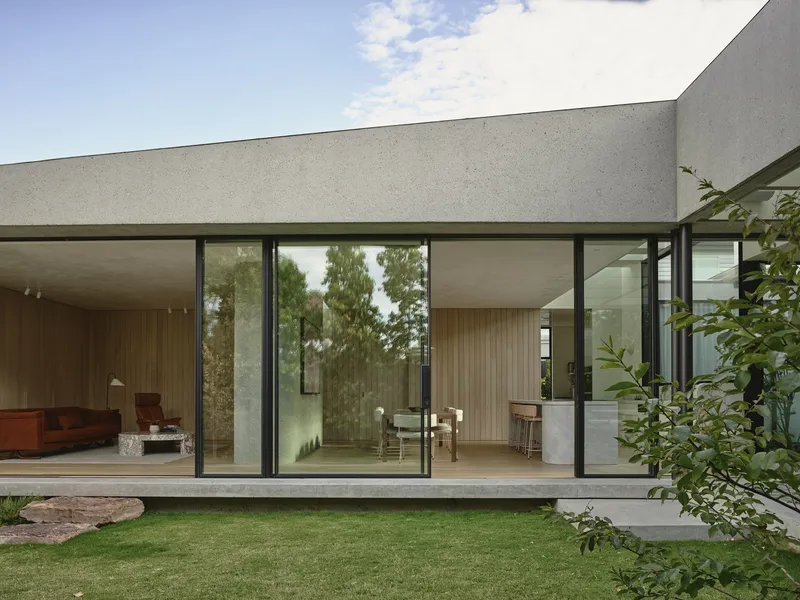
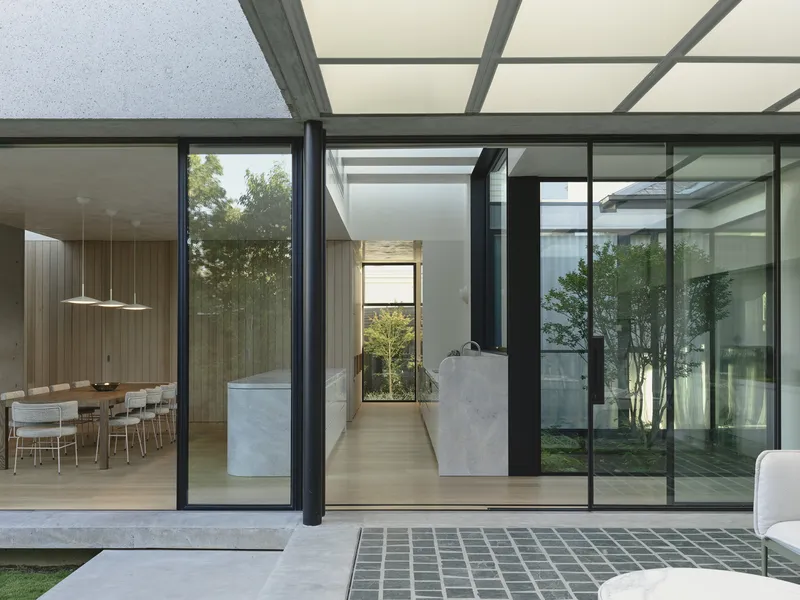
The original structure had suffered from years of disuse and rental occupation, resulting in poor natural light, fragmented spaces, and limited engagement with the outdoors. Taylor Knights addressed these challenges with a single-level scheme that minimizes level changes, enhances accessibility, and introduces spatial flow centered around two sculptural courtyards.
A Spatial Strategy Rooted in Connection and Clarity
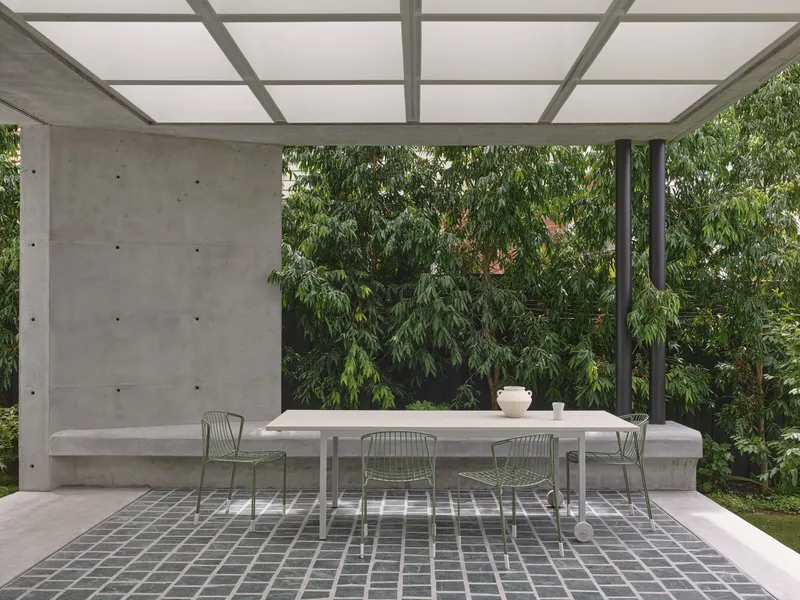
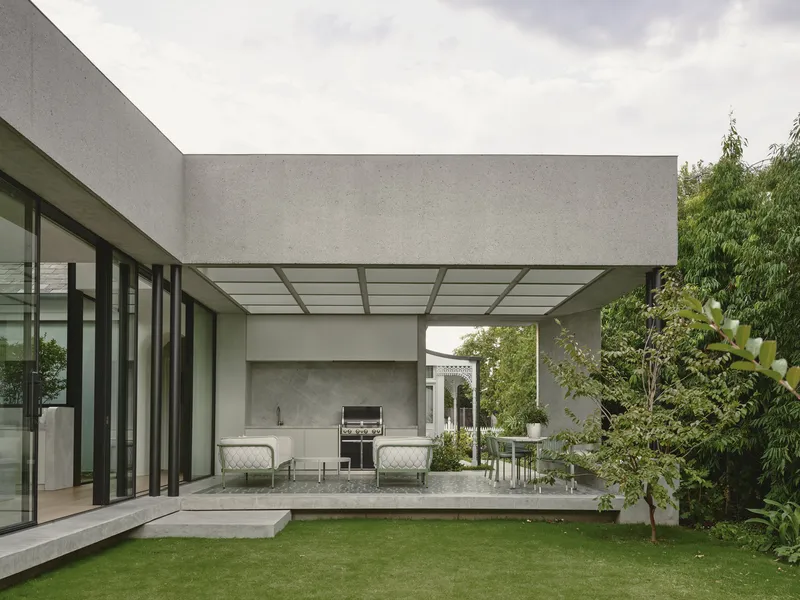
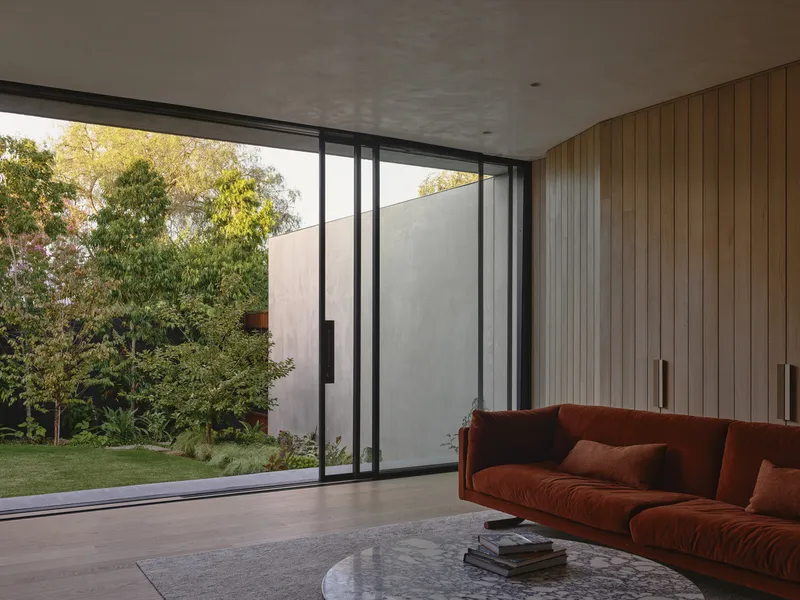
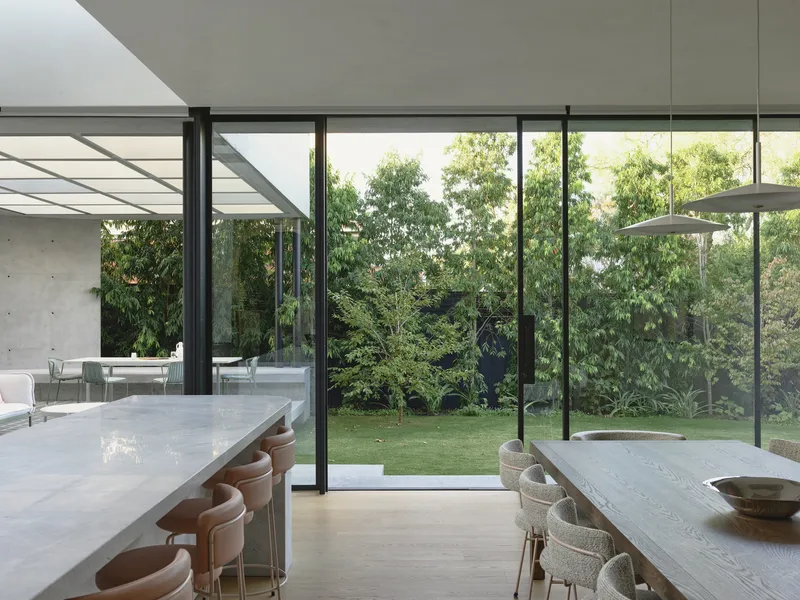
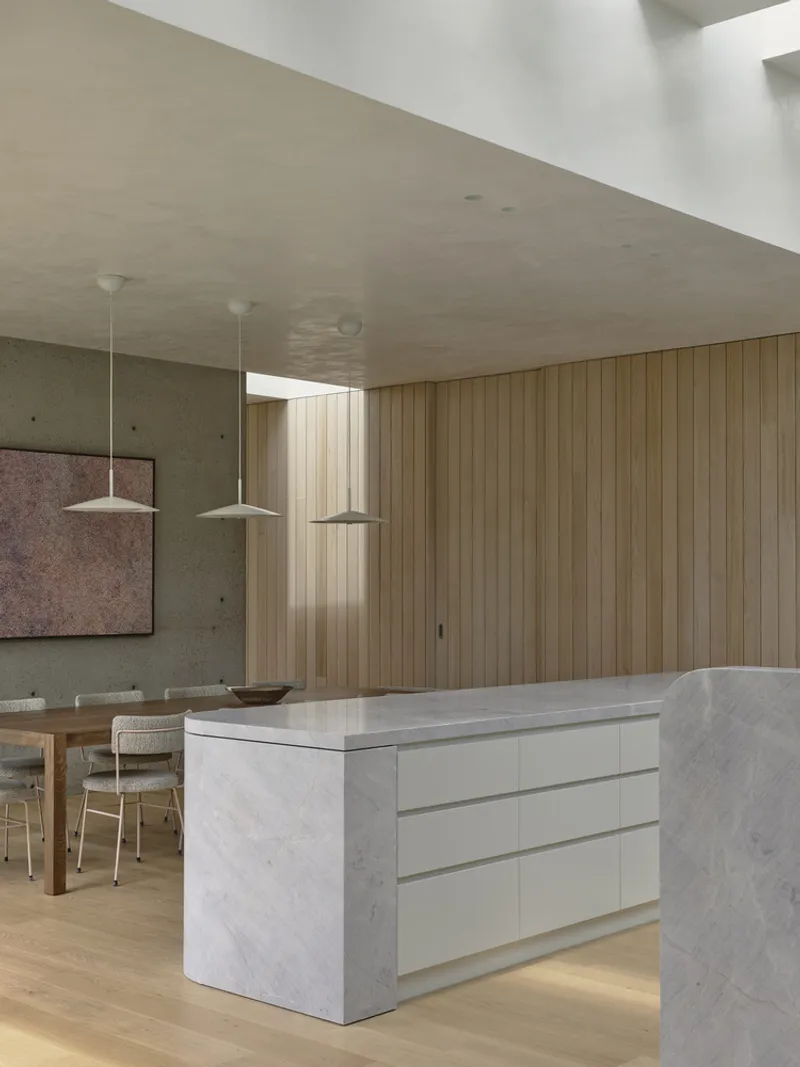
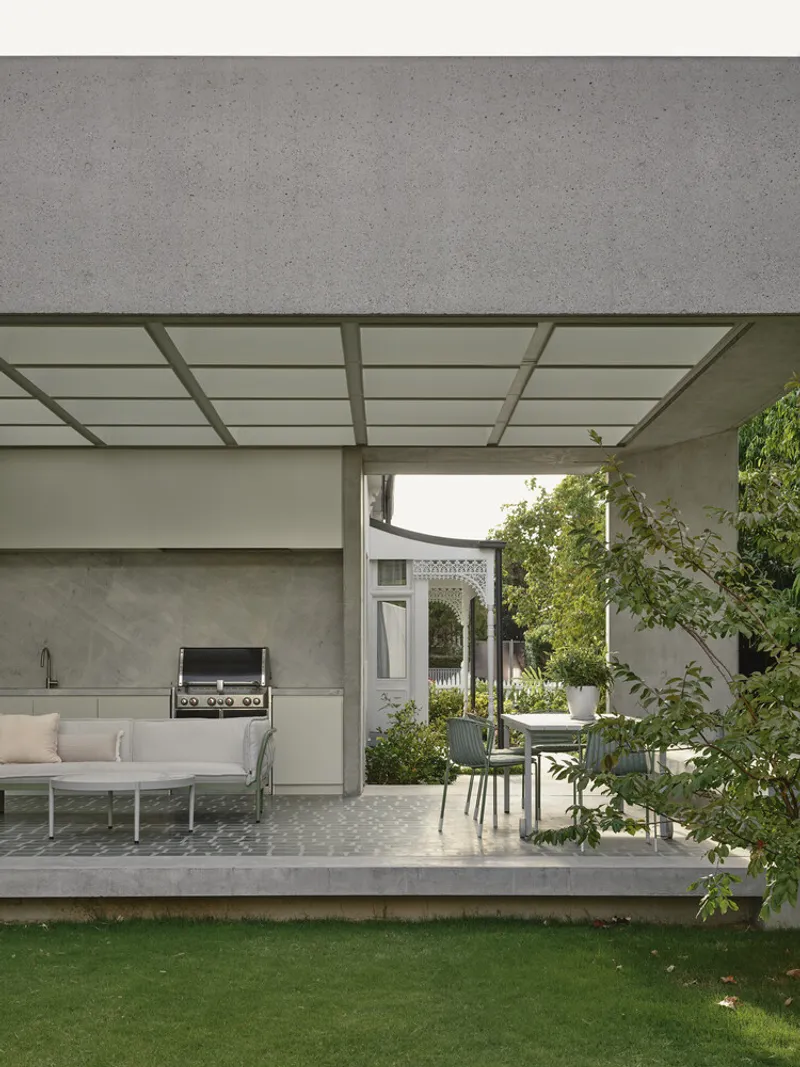
At the heart of the redesign lies the courtyard strategy—an approach that not only resolves the home’s disconnection from light and air but also organizes its internal and external rhythms. The primary courtyard is north-facing and opens from the open-plan kitchen, dining, and living zones. It becomes an outdoor room for daily use—sheltered, private, and alive with sun and breeze.
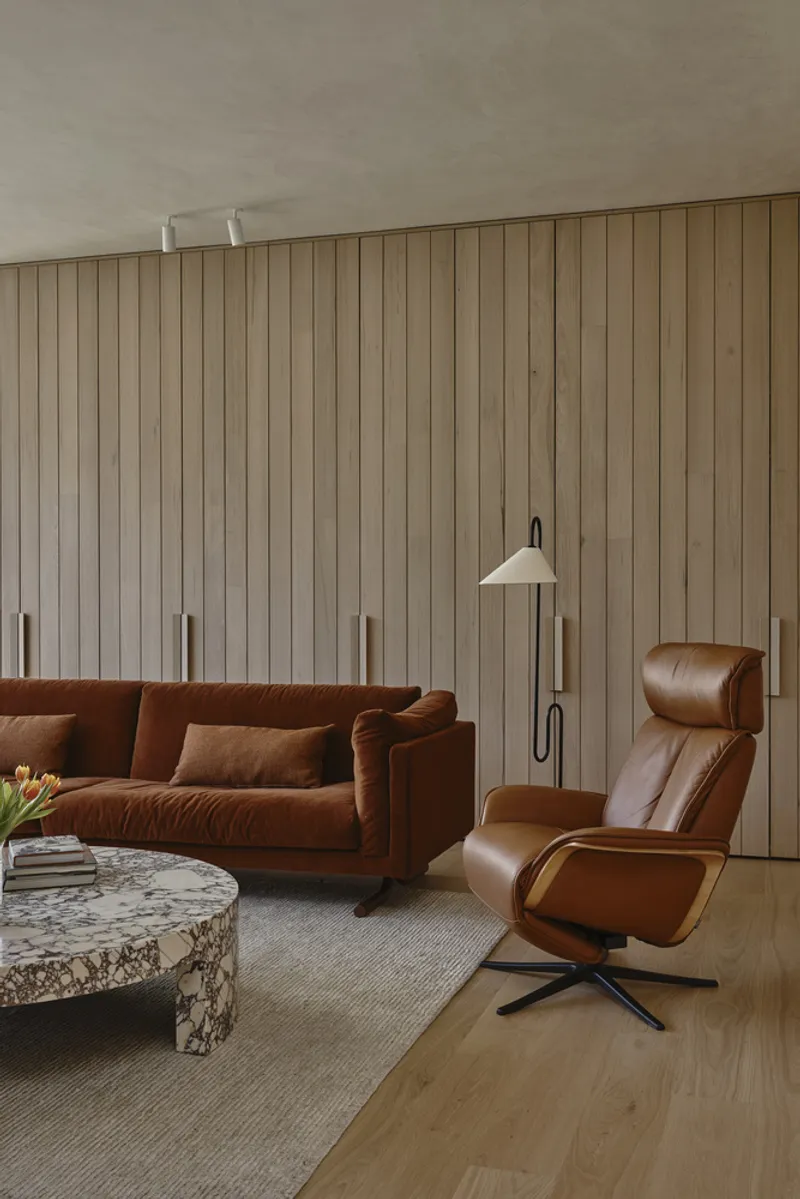
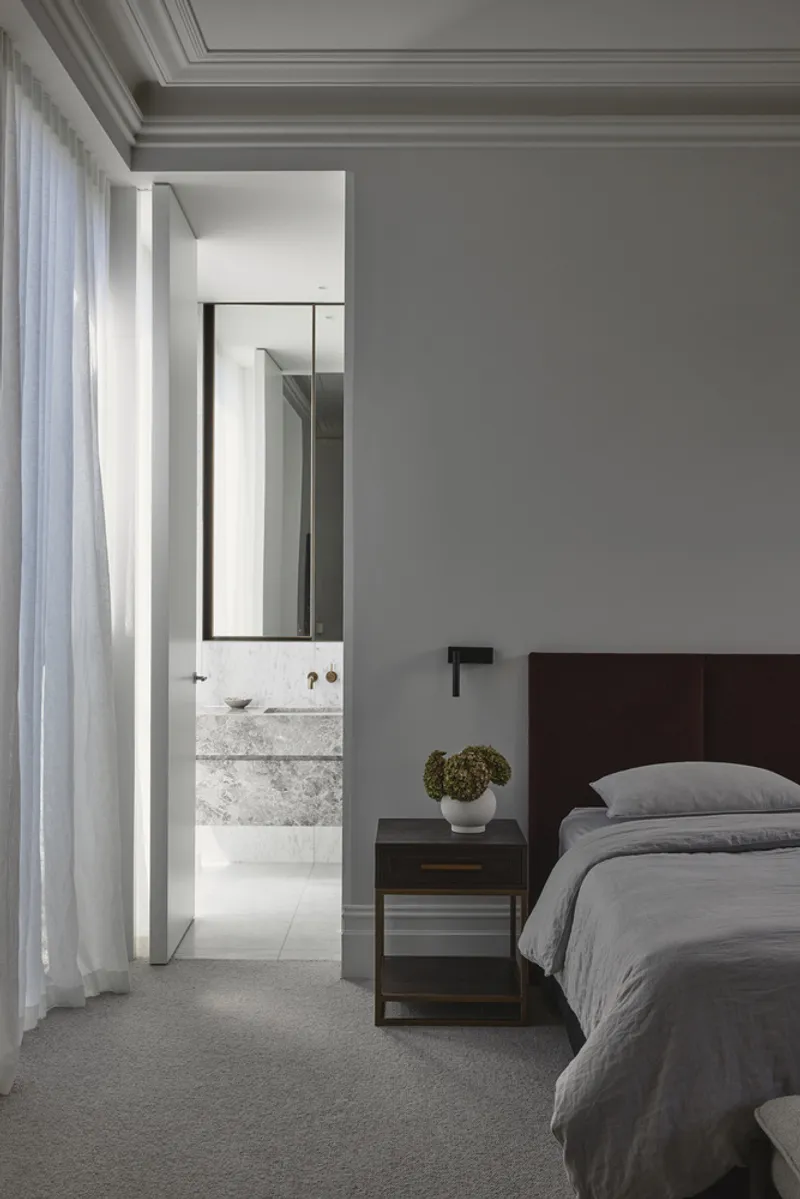
A secondary courtyard, smaller and more introspective, adjoins the master suite. This secluded garden draws landscape and daylight into the most personal spaces of the home, enhancing the tactile and emotional qualities of retreat. Both courtyards act as soft thresholds between zones, eroding the boundary between inside and outside and grounding the architecture in nature.
Material Expression and Refined Craftsmanship
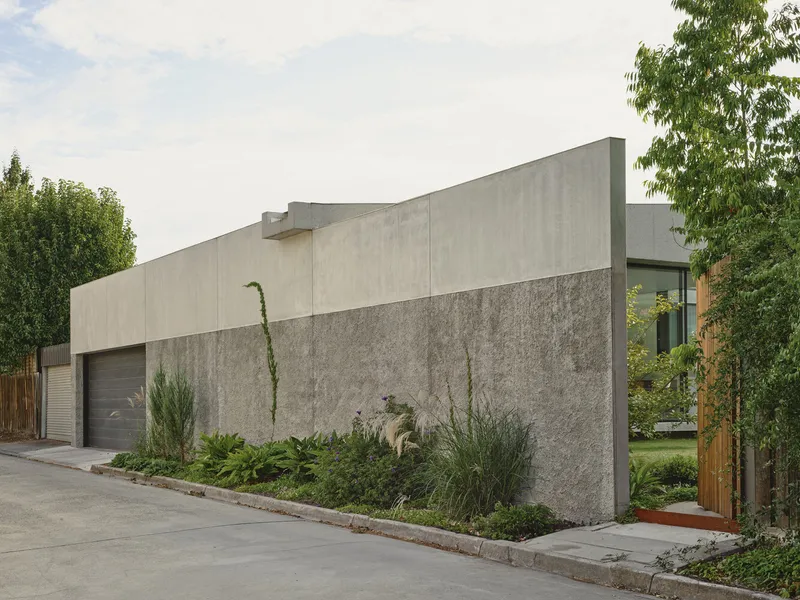
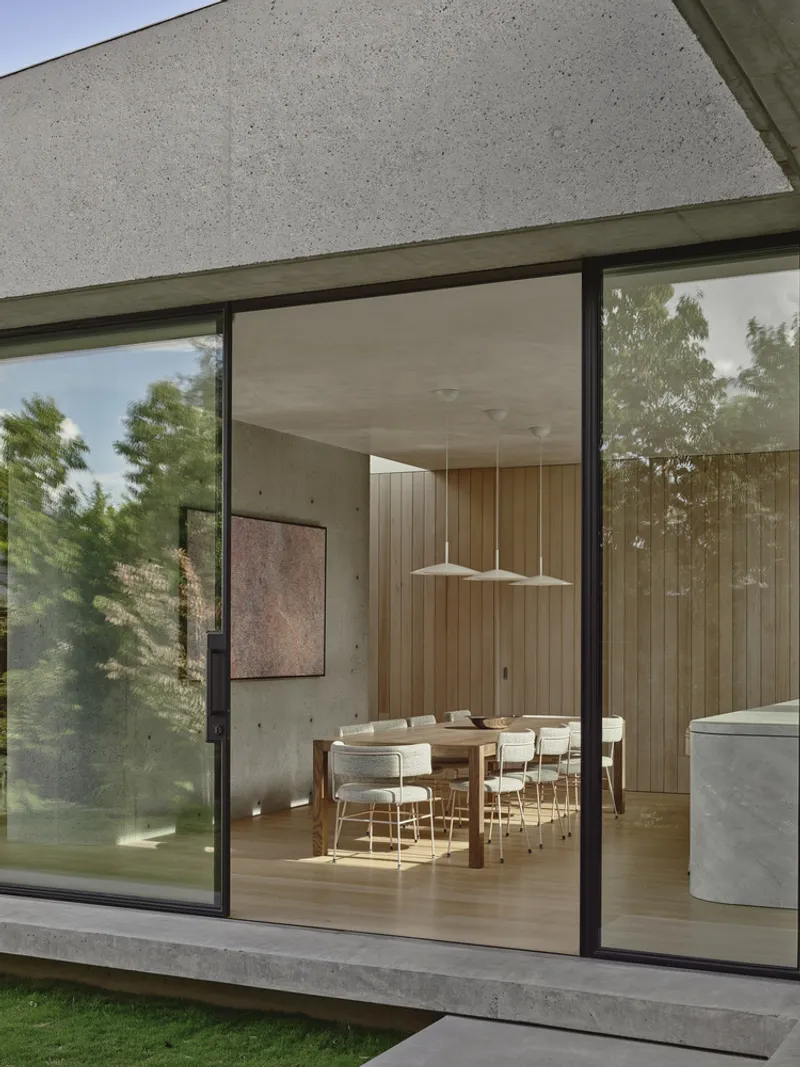
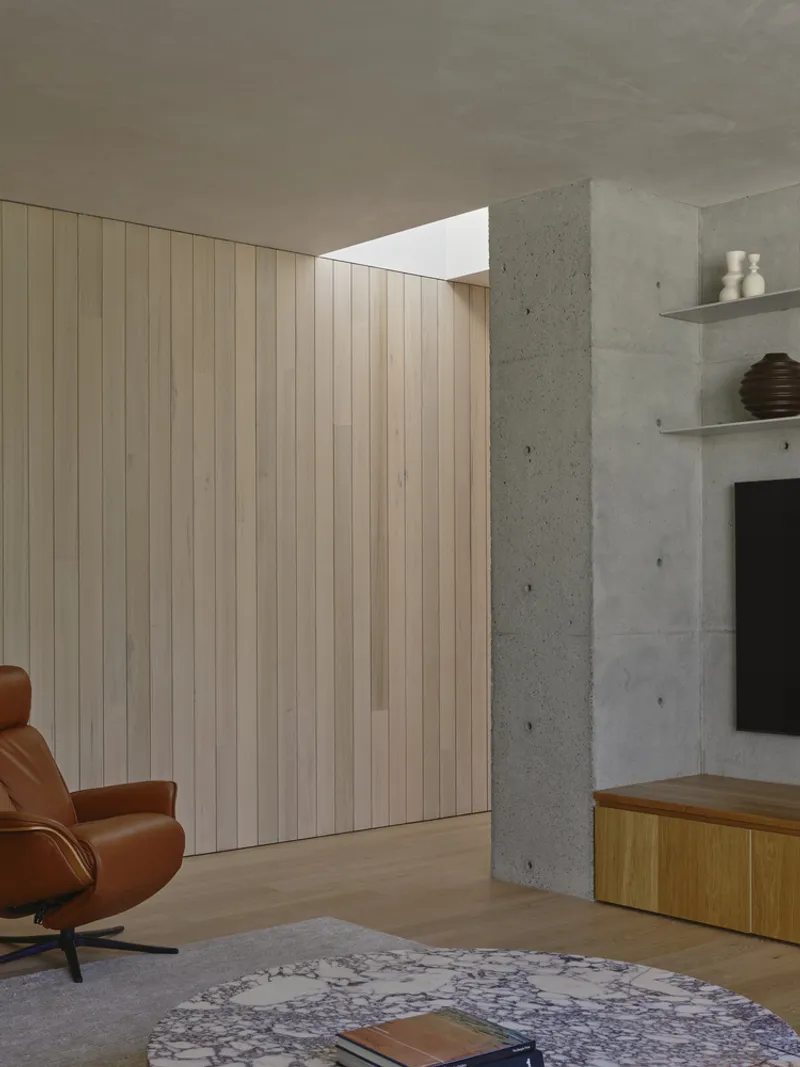
Taylor Knights approached materials with a dual aim: robustness and restraint. Externally, bush-hammered and off-form concrete forms a monolithic yet calm presence. Steel-framed doors and windows define clean openings into garden areas, allowing for uninterrupted visual and spatial connection.
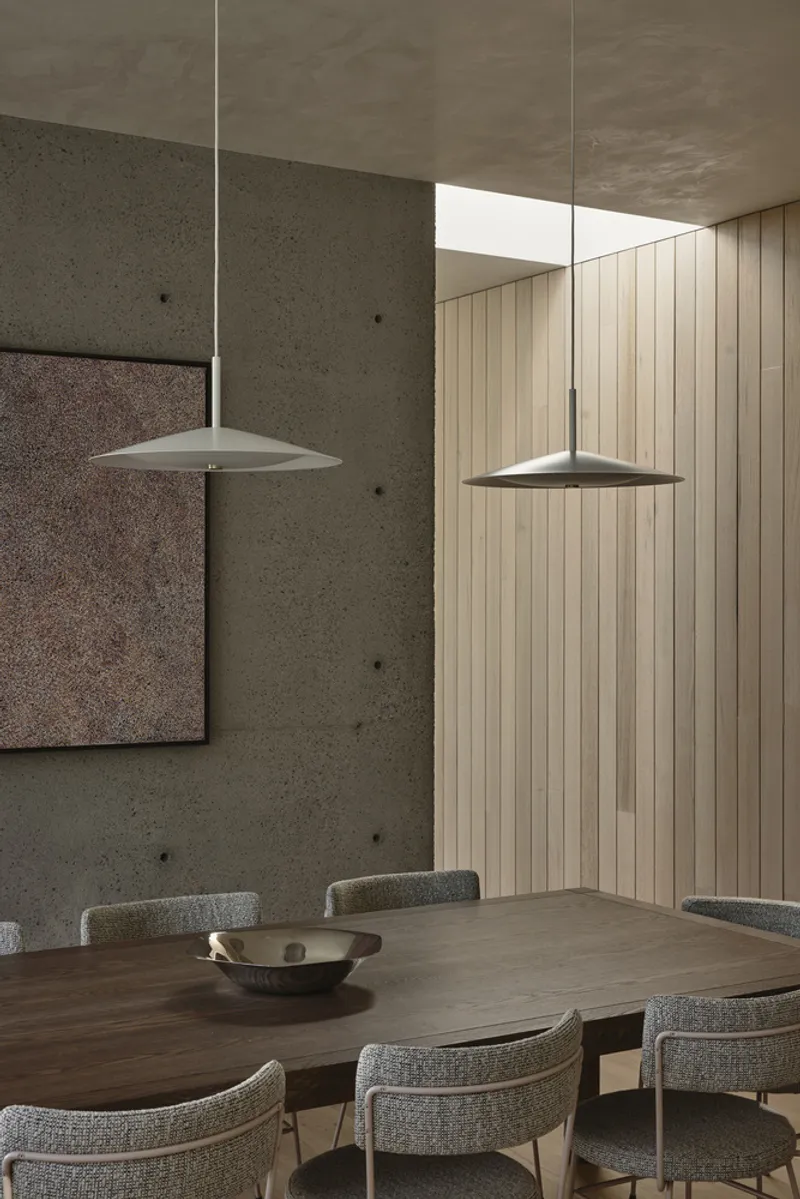
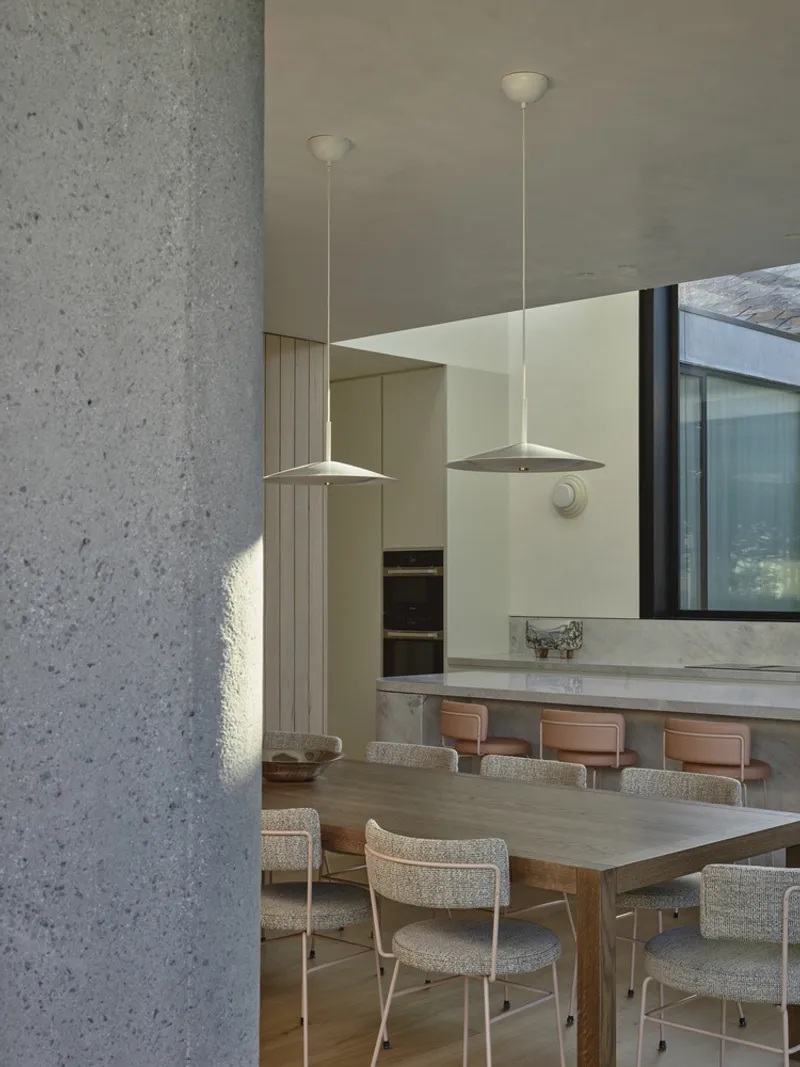
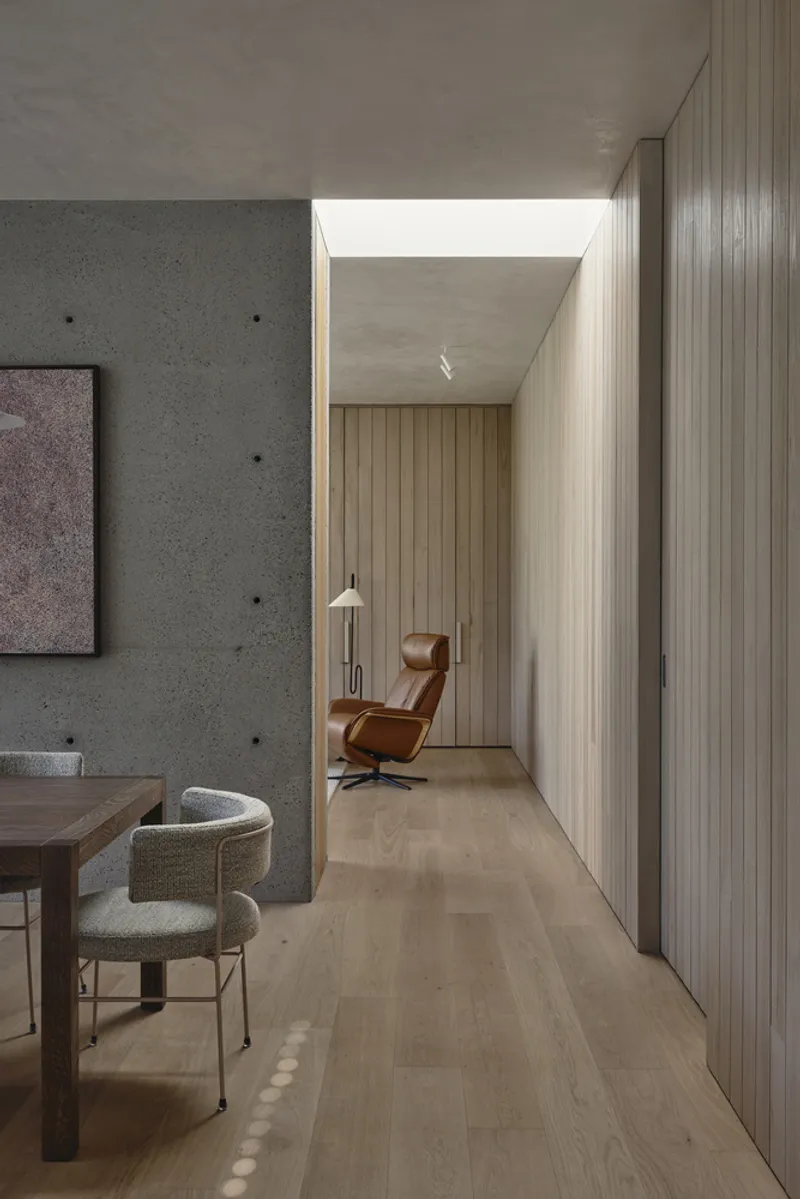
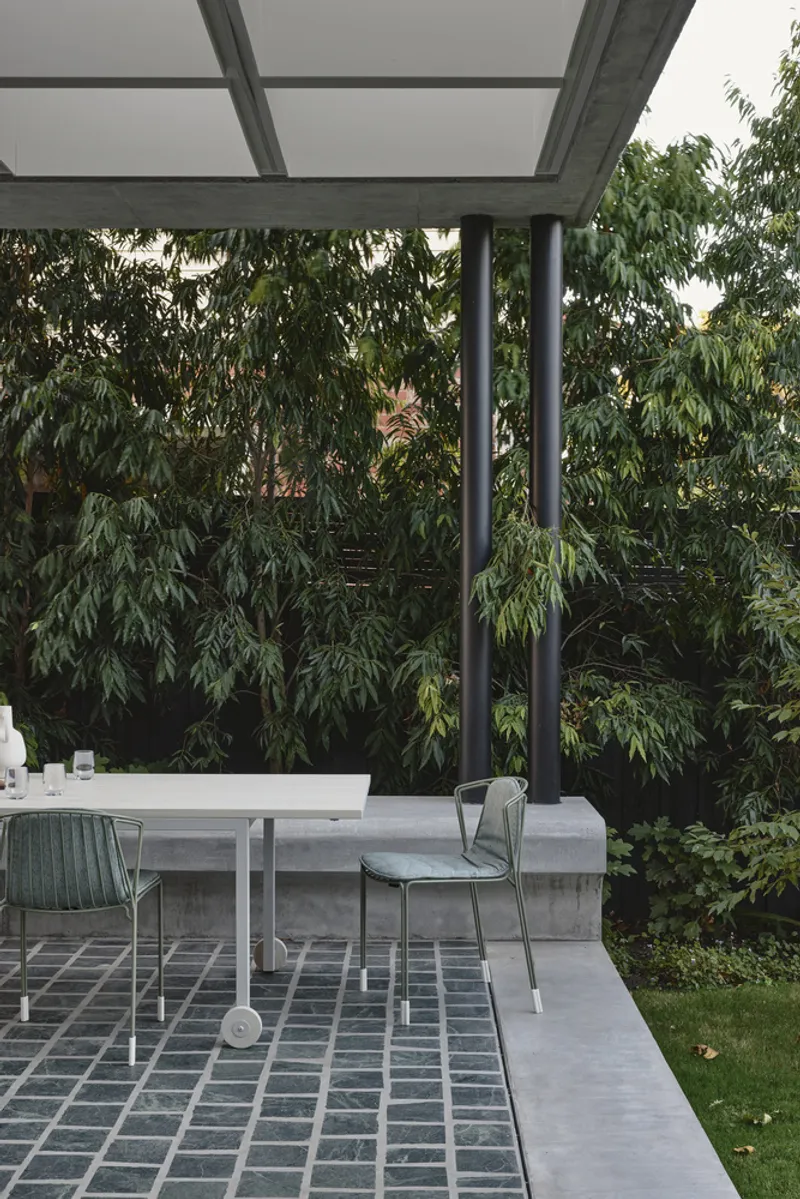
Internally, the design shifts toward softness and warmth. Polished plaster ceilings, sustainably sourced hardwood floors, and custom timber joinery create an atmosphere of subtle richness. In the outdoor entertaining area, burnished concrete merges with Palladiana mosaic inlays—a detail that bridges the crafted interiors with the lushly planted garden beyond.
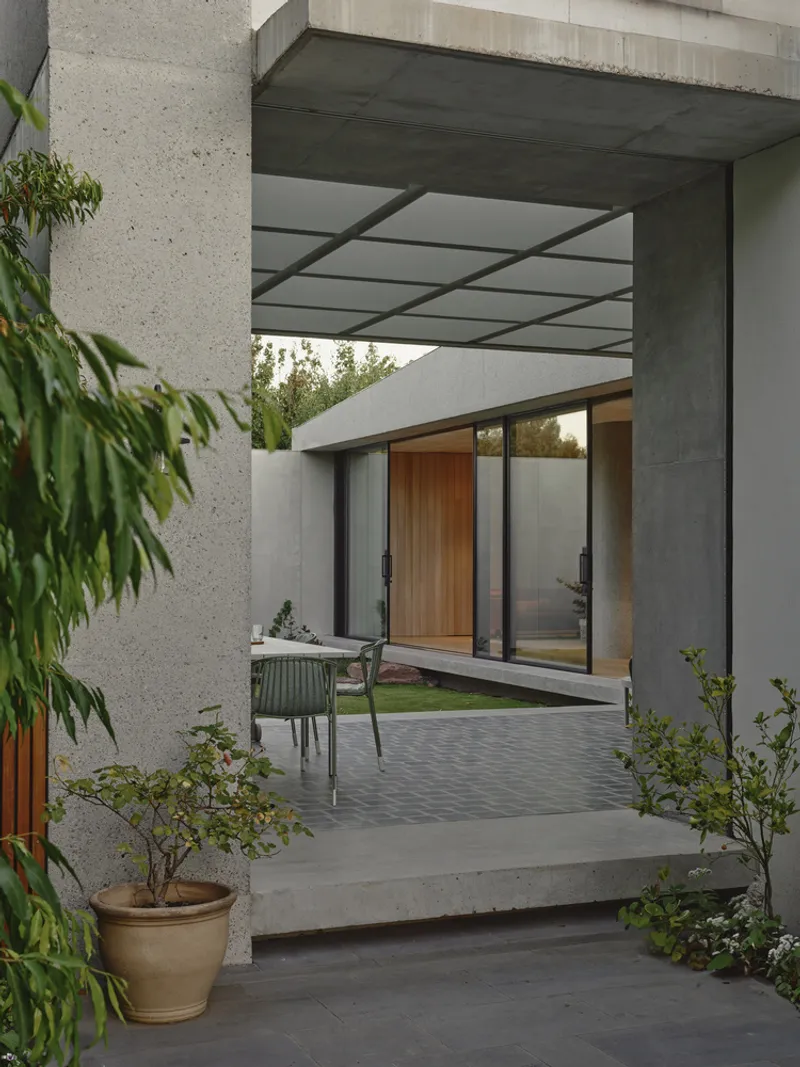
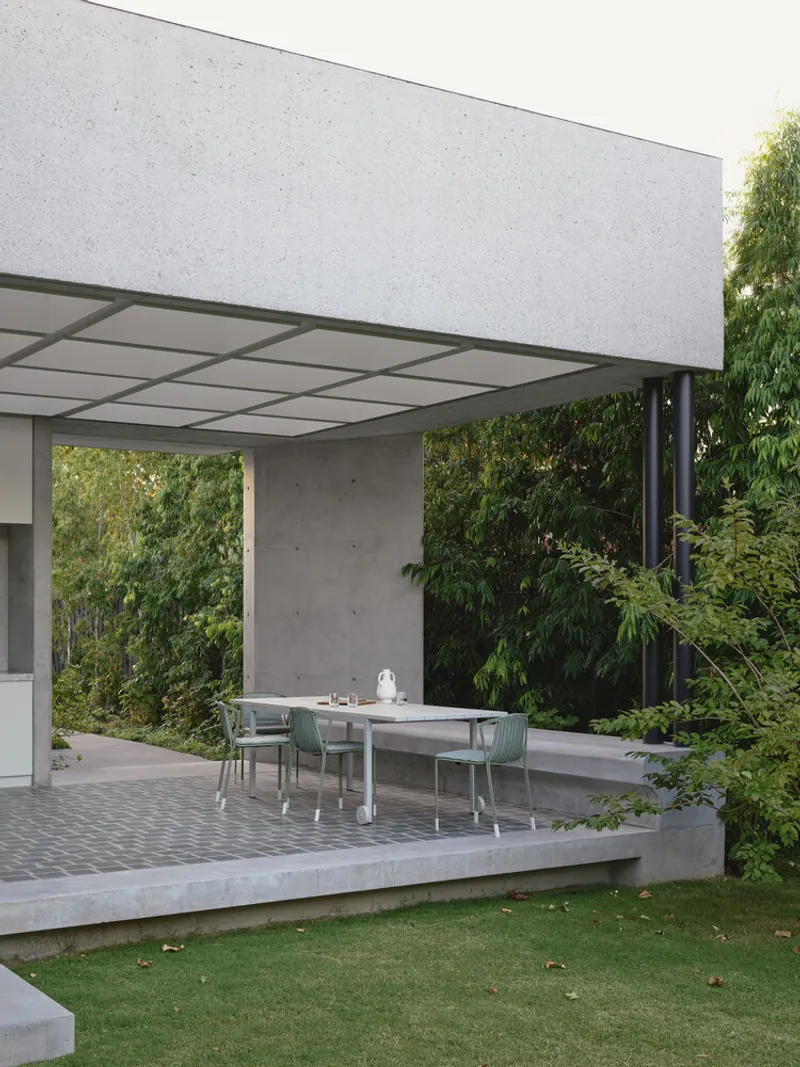
This material continuity between internal and external zones is key to the success of the courtyard house design—it establishes rhythm and unity across the living experience, while also offering variation in texture, light, and mood.
Landscape as Architecture
The landscaping, designed by Peachy Green, plays an essential role in shaping the retreat-like character of the home. Layered planting within the courtyards creates visual depth and softens the architectural edges. Enclosure is carefully calibrated—neither too open nor too fortified—offering protection and intimacy without isolating the home from its suburban context.
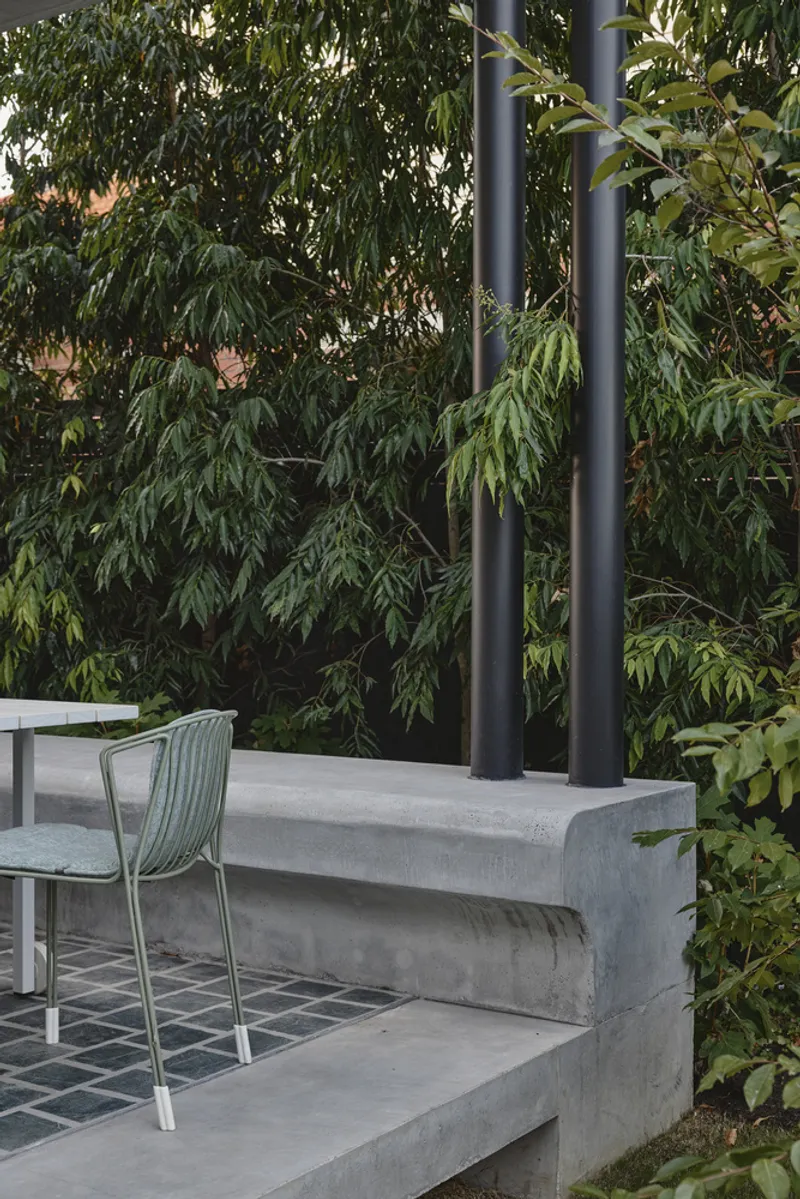
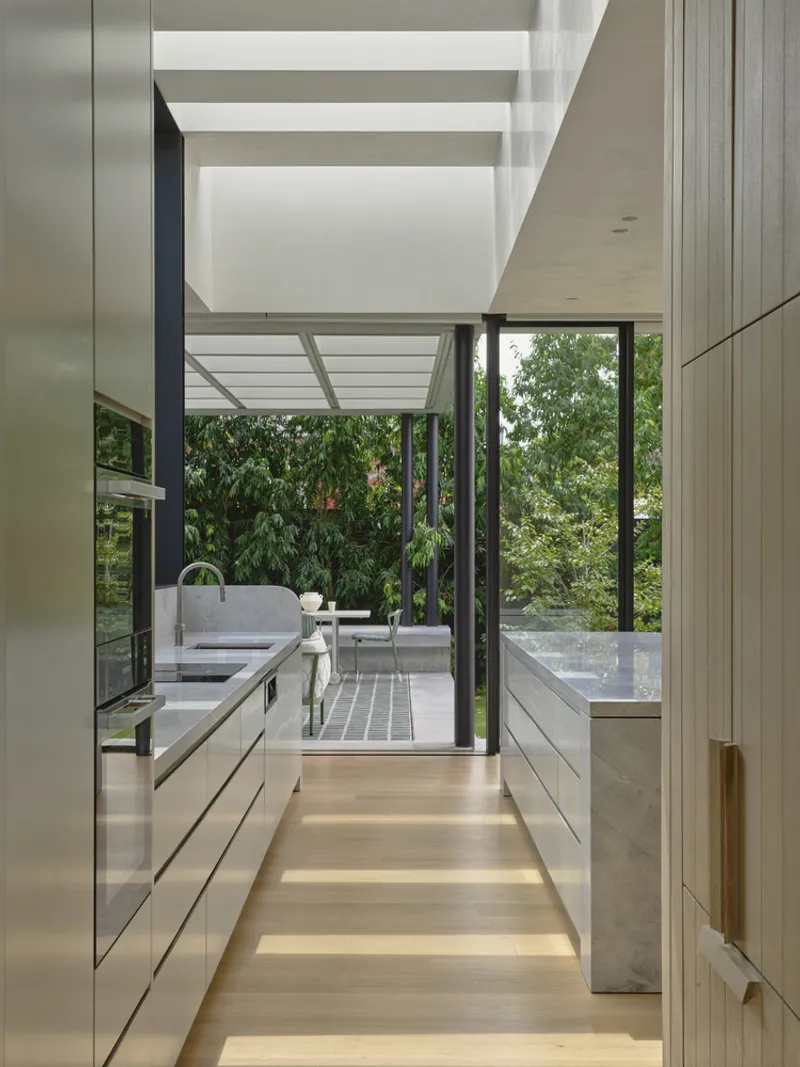
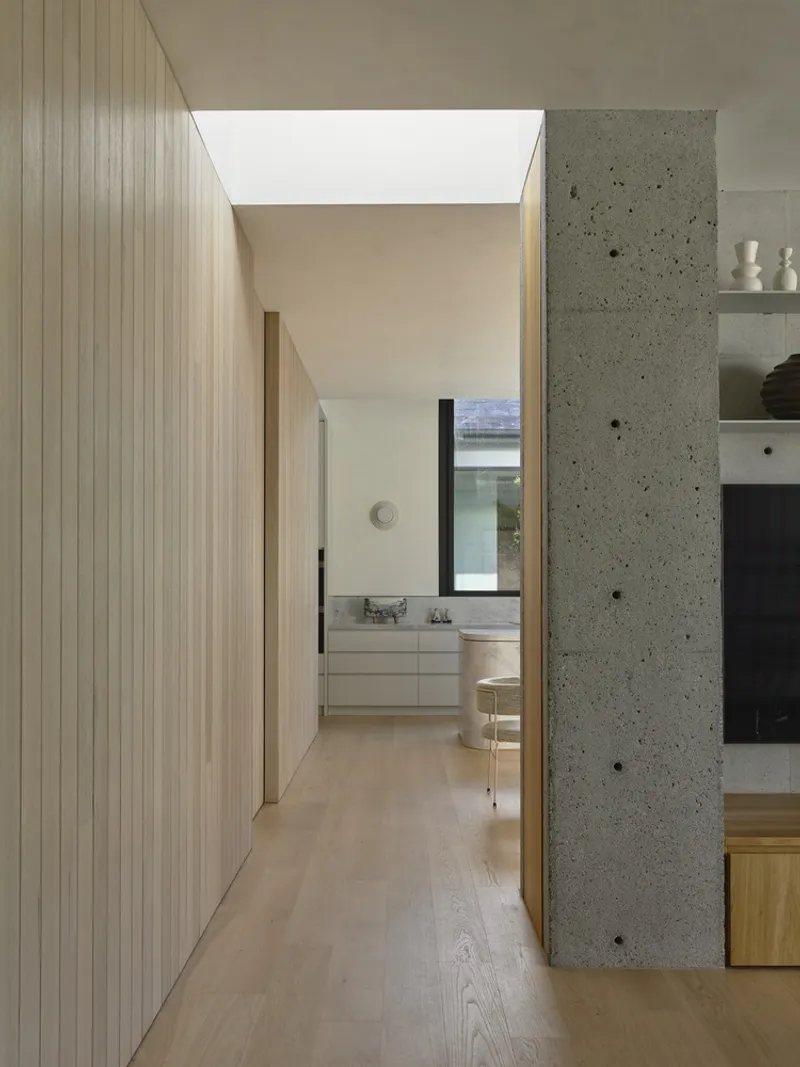
The gardens enhance the sense of quietude and introspection that defines the project. Movement through the house becomes a meditative sequence of framed views, filtered light, and subtle sensory cues. In this way, the architecture does not impose on its residents, but instead responds quietly to their rhythms and needs.
A Model for Contemporary Courtyard House Design in Australia
Fairfield Courtyard House is a masterclass in contextual adaptation and material intelligence. Through its thoughtful blend of heritage and modernity, it presents a dignified response to suburban living and aging in place. More importantly, it contributes meaningfully to the evolution of courtyard house design in Australia, where outdoor living and passive environmental performance are not afterthoughts, but essential spatial qualities.
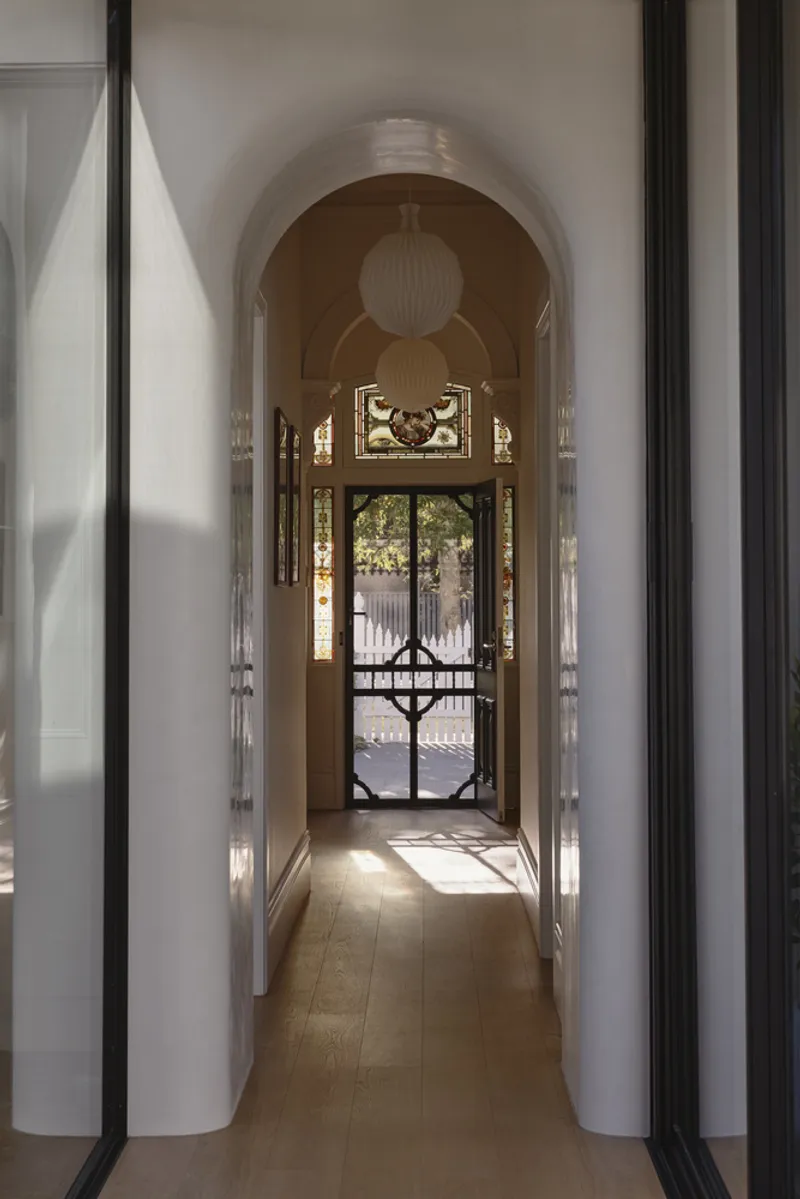
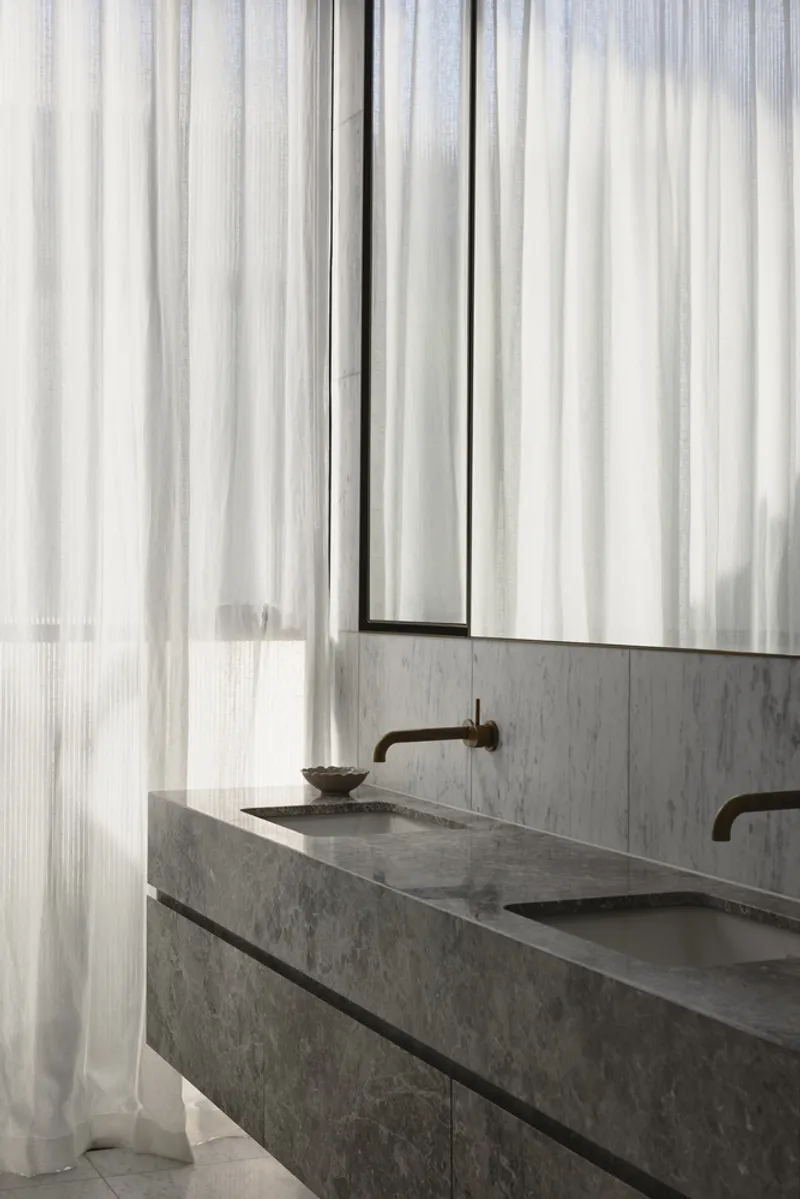
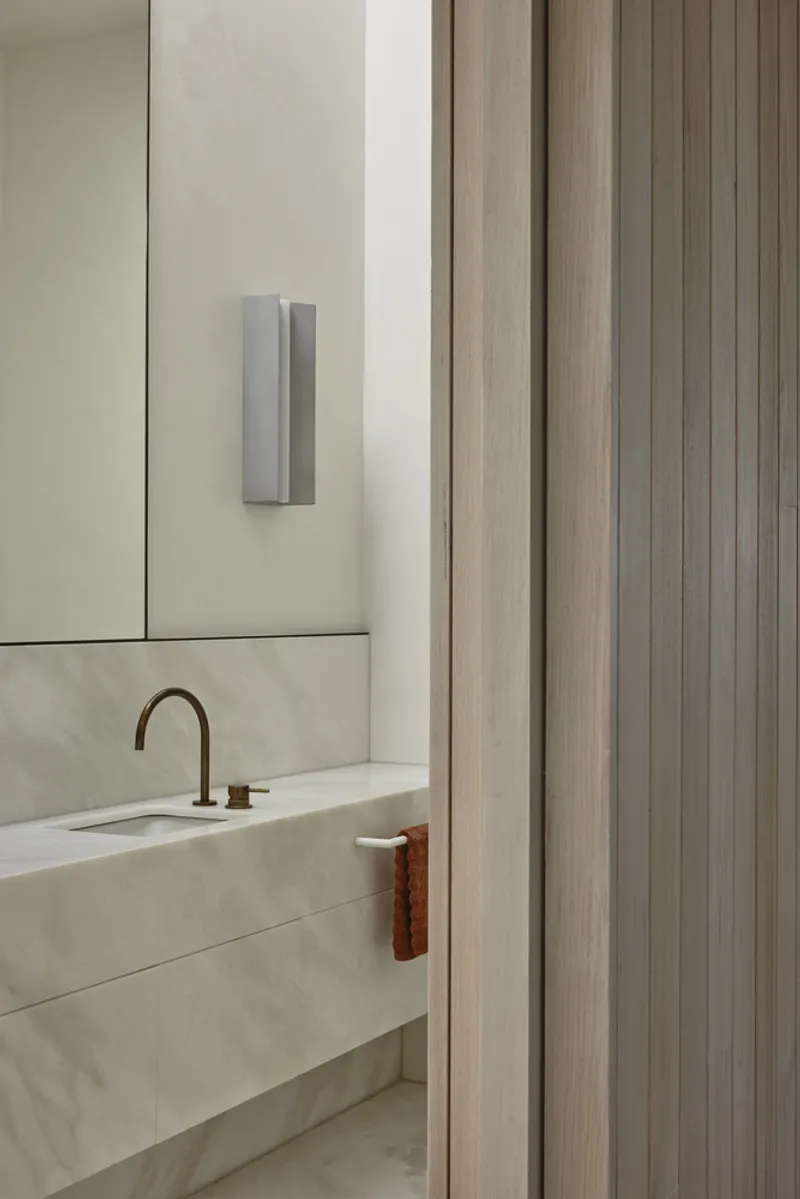
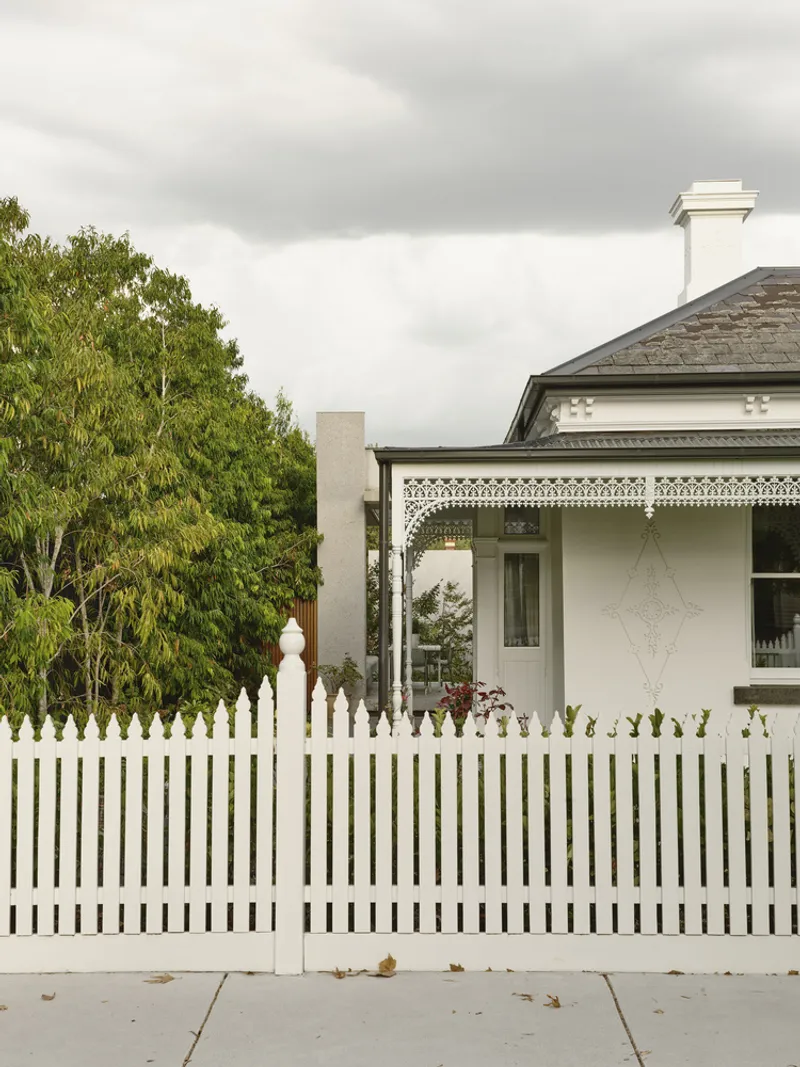
This project speaks to the future of housing that is both deeply personal and universally relevant—where wellness, climate responsiveness, and aesthetic clarity form the core of architectural decision-making.
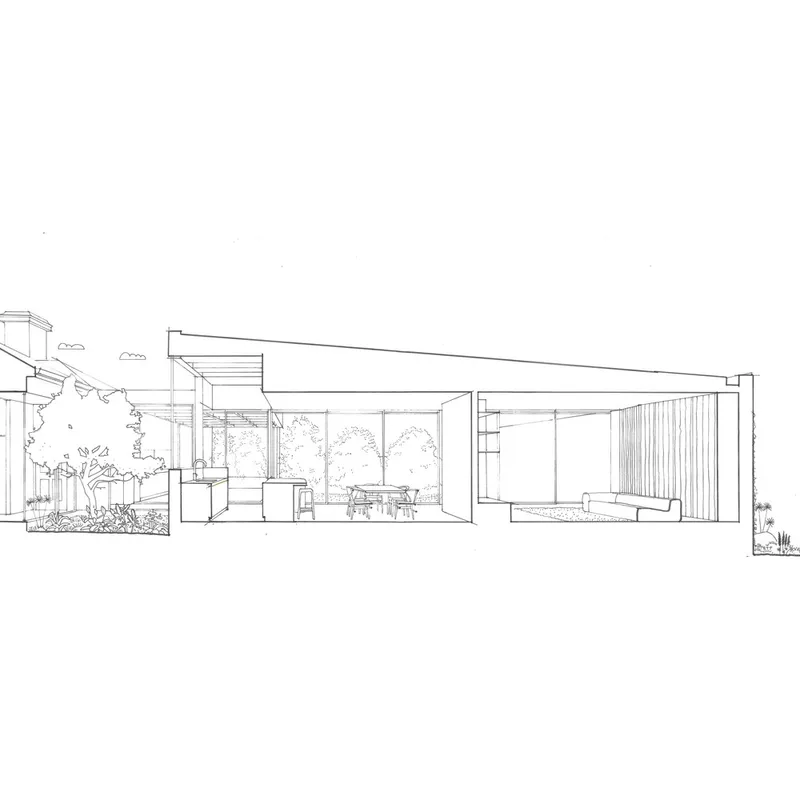
All photographs are works of Derek Swalwell



Popular Articles
Popular articles from the community


The Ocean Hive: Sustainable Architecture for a Self-Sufficient Civilization at Sea
The Ocean Hive imagines sustainable architecture at sea, where modular habitats, algae, wave power and ocean waste sustain a growing colony.

The Musturak Paradise: Senior Living Architecture for a Connected Future in Temara, Morocco
The Musturak Paradise reimagines senior living architecture in Temara via private homes, social spaces, culture, community, and shared care.

Hill & Cross Opera: Sculptural Opera House Architecture Shaped by Tallinn’s Landscape and Identity
Hill & Cross Opera reimagines opera house architecture in Tallinn through its sculptural hill, civic plaza, glass wave and a luminous cross.

Lunar Spiral: Space Architecture Shaped by the Mathematics of the Universe
Lunar Spiral reimagines space architecture through Fibonacci geometry, lunar regolith, levitating habitats, and self-sustaining Moon living.


Similar Reads
You might also enjoy these articles

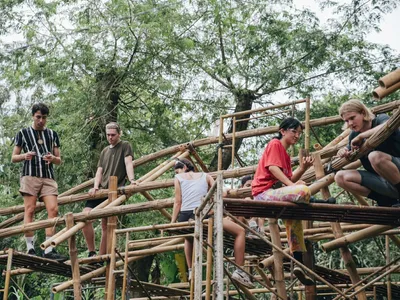
Bamboo Housing Challenge 2026: Design Affordable, Sustainable Homes Using Bamboo
An international design competition by Bamboo U and IBUKU inviting architects and designers to reimagine affordable housing using bamboo — with the winning design built full-scale in Bali.

Computational Design & Education: Beegraphy Design Awards Introduces 7th Category (Featuring Jiyun's Innovative Approach)
Dive into Beegraphy’s 7th Design Awards category, where computational design meets education to create immersive, interactive learning tools, inspired by Jiyun’s work.

From Parametric Lighting to Urban Furniture: Join the 2nd Workshop in Beegraphy’s Computational Design Series
Dive into Cutting-Edge Design Techniques and Practical Applications with Industry Experts

Last Call: Unleash Your Architectural Genius in SHAK's Kindergarten Design Competition
Urgent call for architects to join SHAK's kindergarten design competition before the looming deadline


Explore Courtyard Competitions
Discover active competitions in this discipline



Challenge to reimagine the Iron Throne


Photograph architecture without architects


Illustrate the lost glory of Angkor Wat - Render Challenge


Design challenge to reuse E-waste
Comments (0)
Please login or sign up to add comments
No comments yet. Be the first to comment!