
Floating Bamboo House by H&P Architects: A Climate-Resilient Model for Riverine Communities in Vietnam
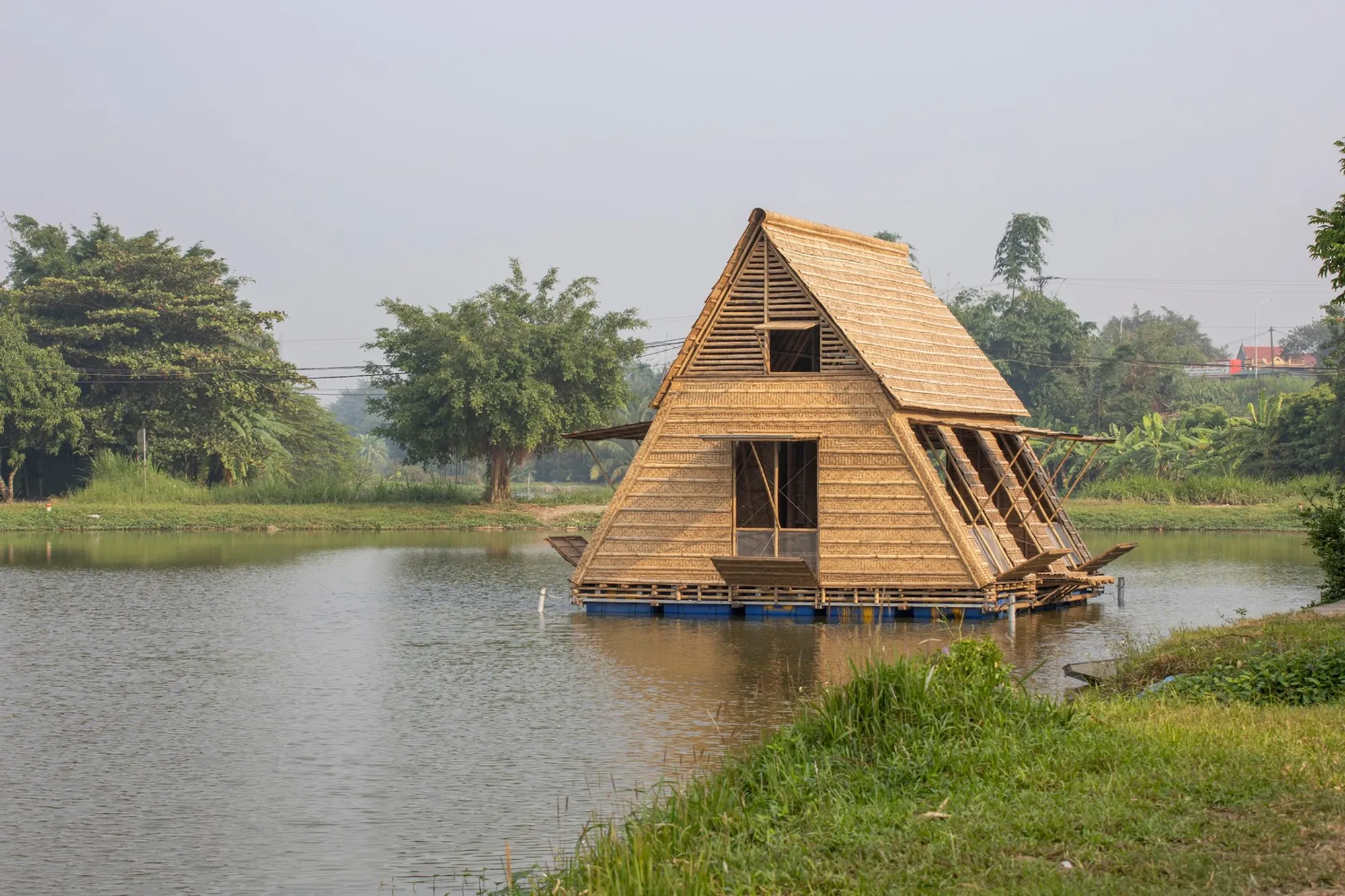
Floating Bamboo House is a climate-resilient, modular bamboo dwelling designed for Vietnam’s flood-prone river communities by H&P Architects.


A Vision for Sustainable, Floating Living
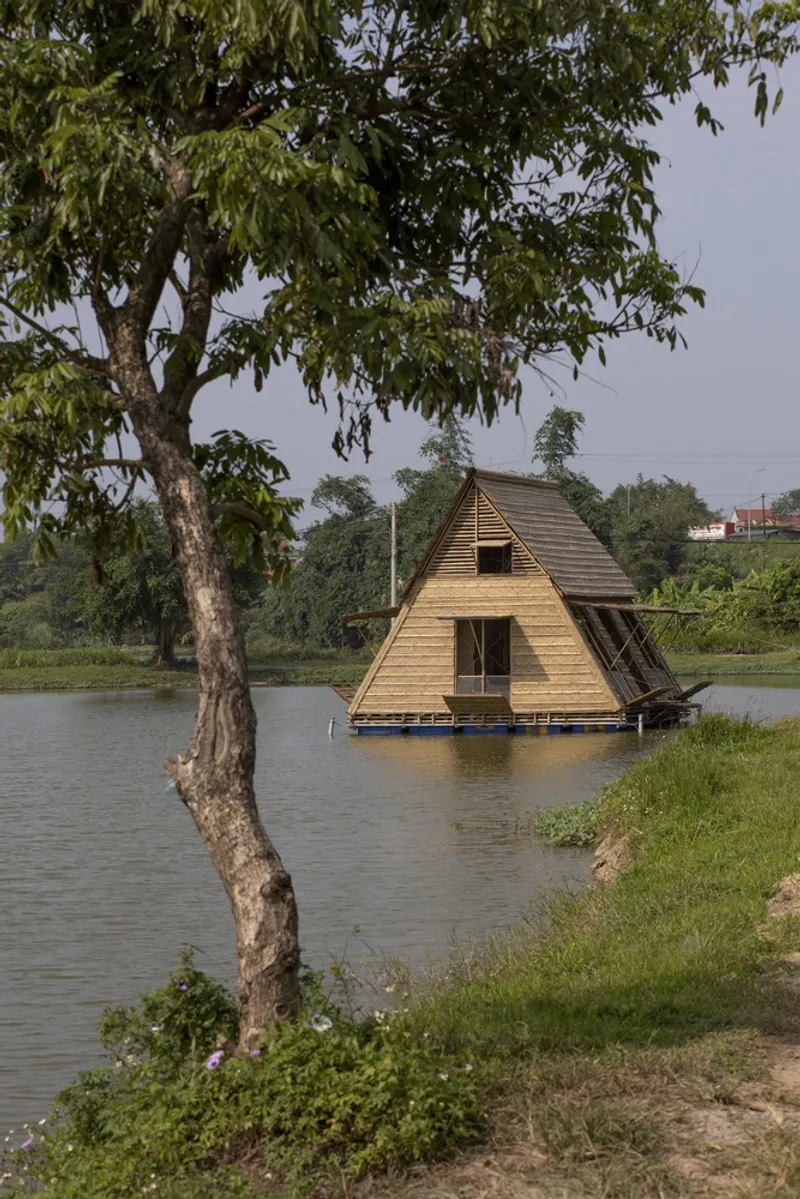
Located in Hồng Thái, Vietnam, the Floating Bamboo House by H&P Architects is a pioneering prototype designed to empower river-dependent communities, particularly in the flood-prone Mekong Delta region. With only 36 square meters of floor area, this compact structure is not just a house—it’s a symbol of climate resilience, cultural continuity, and vernacular innovation.
Constructed from Local, Renewable Materials
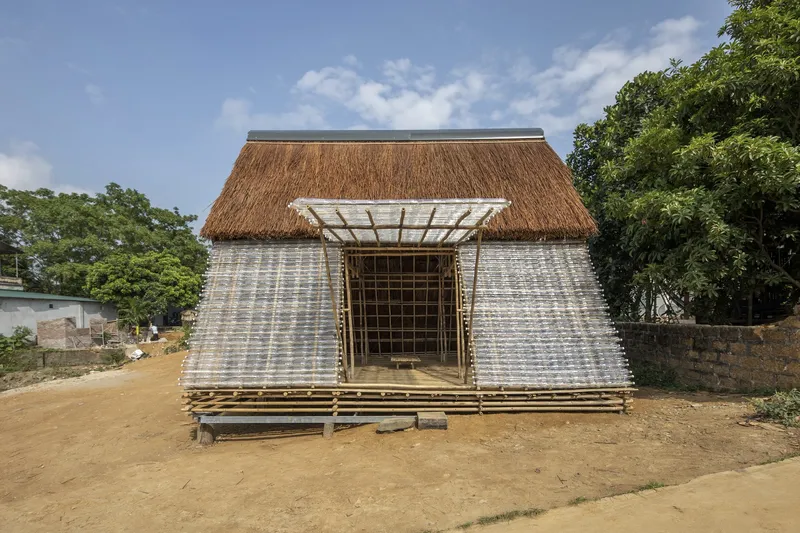
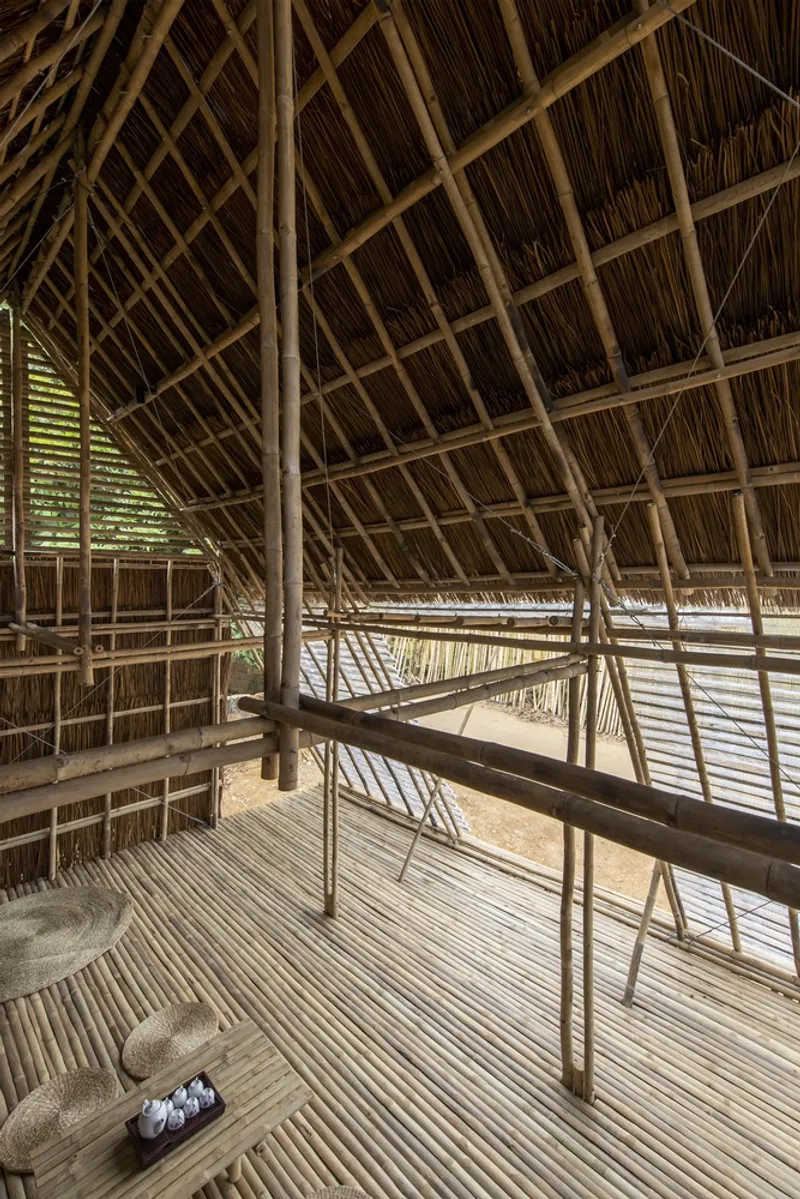
The architecture draws from traditional Vietnamese housing typologies, yet transforms them into a floating solution suitable for modern challenges. The house is built using solid cored bamboo poles (diameter 3–4.5cm, lengths of 3m and 6m) which are fastened using simple, low-tech methods like latches and ties. This approach enables low-cost, DIY construction and encourages local participation and self-sufficiency.

Light, Adaptable Envelope with Smart Resource Integration
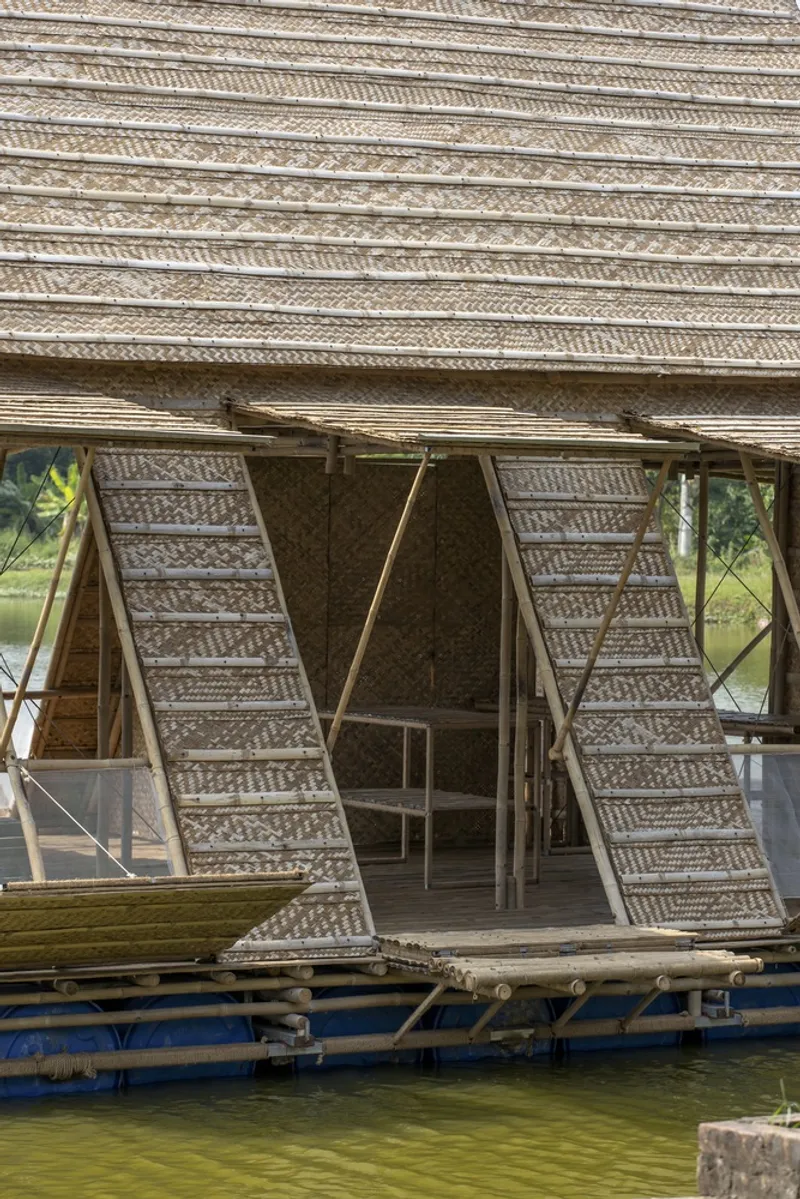
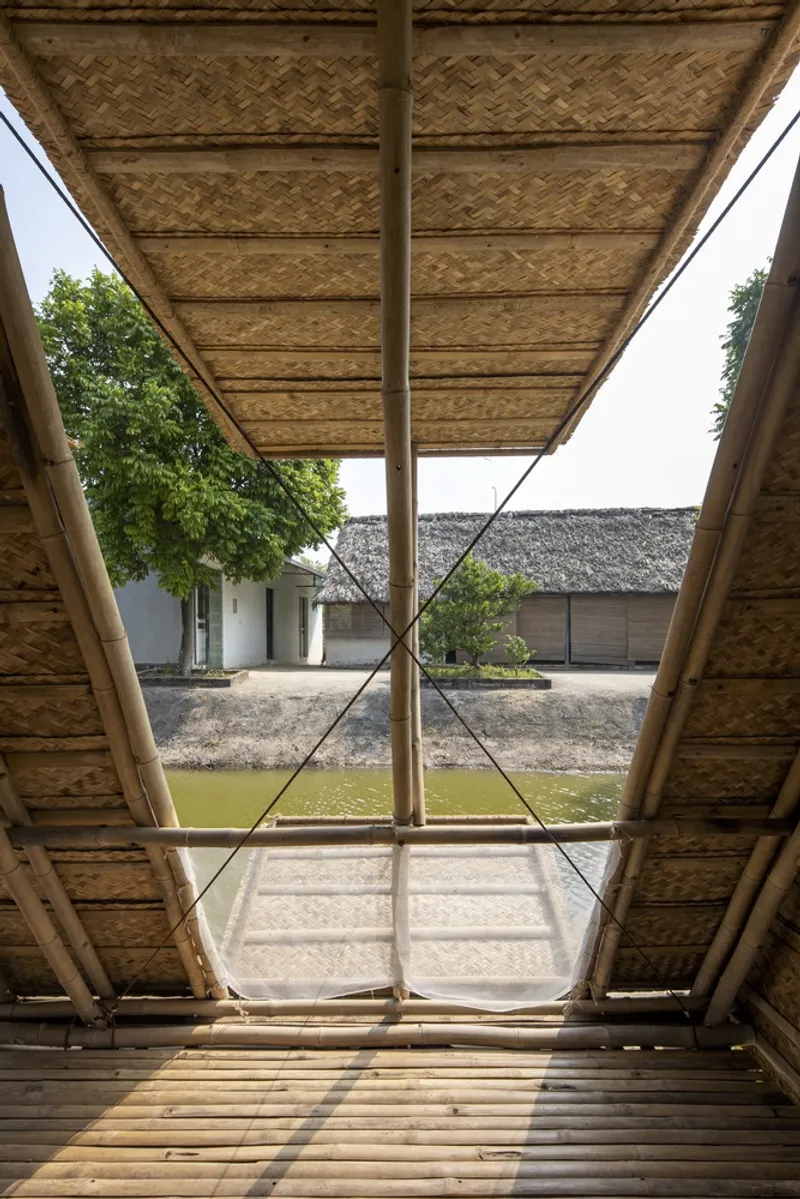
The exterior and interior walls are crafted from woven bamboo sheets, corrugated iron, bamboo screens, and leaves, creating a breathable yet weather-resistant envelope. The oversized roof not only shelters the interior but also collects rainwater and supports solar panels, ensuring off-grid functionality.
Flexible doors and shutters are designed to respond to changing weather conditions. These elements provide both security and a poetic, floral-like presence on the water—“flowers amidst floating waters,” as described by the architects.
Floating Foundation & Multi-functional Design
The house is buoyed by plastic drums tied beneath the floor, allowing it to float securely during floods. At its center, the FB House includes integrated freshwater tanks and septic systems to ensure hygiene and environmental stewardship.
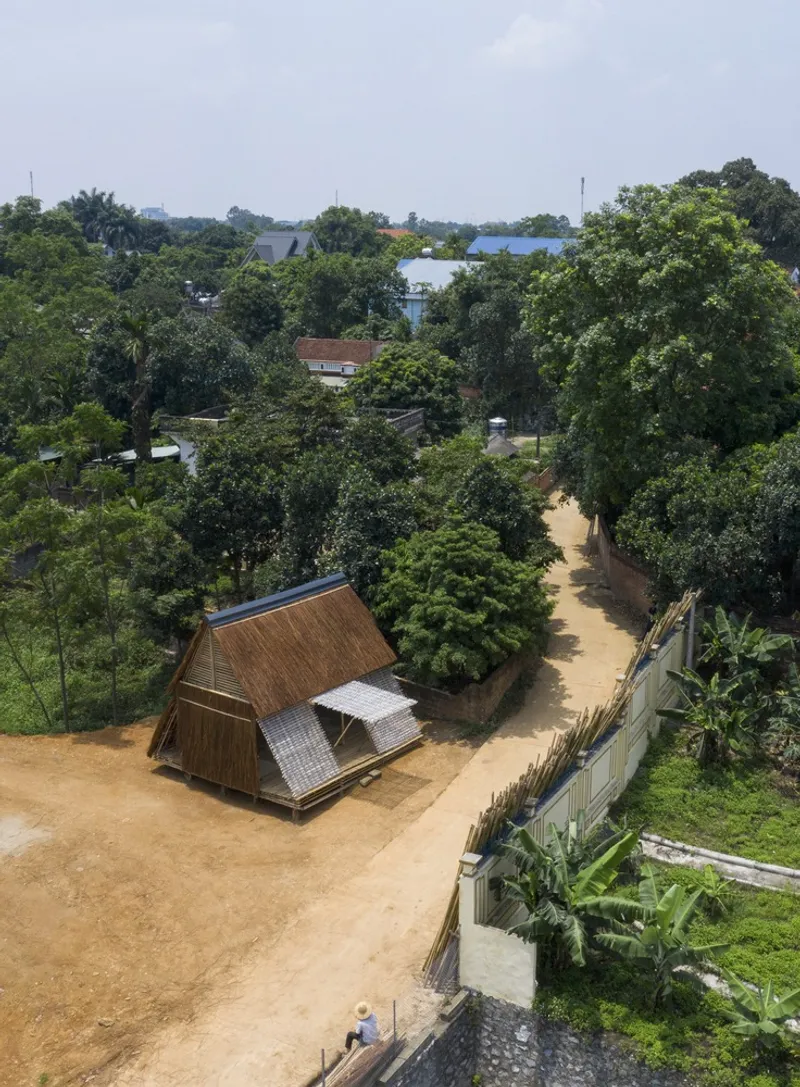
With a 6m x 6m square floor plan, the house comprises two levels. The upper level can be partially removed to transform the space into a multi-use pavilion, reminiscent of Vietnam’s traditional communal Rông houses and Đình pavilions. This flexibility allows the house to function as a home, classroom, library, or community space—adapting to the evolving needs of its users.


Building Resilient Floating Communities
Looking ahead, H&P Architects envision entire floating neighborhoods, where multiple FB Houses are linked by shared platforms, vegetable rafts, and fish farms. These floating agglomerations could provide holistic and self-sustaining environments for families displaced by rising sea levels.
Responding to the Realities of Climate Change
Vietnam is one of the world’s most climate-vulnerable nations. With projections estimating that 47% of the Mekong Delta and 13% of the Red River Delta could be submerged due to a 1-meter sea level rise, an estimated 20 to 30 million people are at risk of displacement. The Floating Bamboo House offers a scalable, sustainable, and locally-appropriate solution to this impending crisis, giving impoverished communities the means to build safe and dignified homes in the face of environmental uncertainty.




Popular Articles
Popular articles from the community


The Musturak Paradise: Senior Living Architecture for a Connected Future in Temara, Morocco
The Musturak Paradise reimagines senior living architecture in Temara via private homes, social spaces, culture, community, and shared care.

Lunar Spiral: Space Architecture Shaped by the Mathematics of the Universe
Lunar Spiral reimagines space architecture through Fibonacci geometry, lunar regolith, levitating habitats, and self-sustaining Moon living.

The Earth Pod: 3D Printed Homes for Resilient Refugee Communities
The Earth Pod reimagines refugee housing through 3D printed homes made from clay, combining resilience, self-sufficiency, and rapid shelter.

Hill & Cross Opera: Sculptural Opera House Architecture Shaped by Tallinn’s Landscape and Identity
Hill & Cross Opera reimagines opera house architecture in Tallinn through its sculptural hill, civic plaza, glass wave and a luminous cross.

Similar Reads
You might also enjoy these articles


Hodi-Mandai Geram
Project Function: Preservation and revitalization of the Intangible heritage and socio-spatial identity of the Hodi by Housing, Cultural Memory Center, Sacred Grove, landscape, local tourism economy


Olio Towers: A Mid-Rise for Performers That Fuses Housing, Rehearsal, and Stage
Located blocks from Houston's Theater District, this modular tower stacks living units around a central performance atrium.

Oasis: Modular Green Housing Carved into Dhaka's Urban Fabric
A shortlisted Plugin Housing entry reclaims unauthorized settlements in Dhaka with stepped concrete volumes, green roofs, and ventilation-driven design.

Black Hole: A Floating Megastructure for the Post-Physical Era
Emiliano Mazzarotto envisions a spherical, self-scaling arena where e-sports, digital hotels, and holographic stadiums replace traditional public space.


Explore Bamboo Construction Competitions
Discover active competitions in this discipline



Challenge to reimagine the Iron Throne


Photograph architecture without architects


Illustrate the lost glory of Angkor Wat - Render Challenge


Design challenge to reuse E-waste
Comments (0)
Please login or sign up to add comments
No comments yet. Be the first to comment!