

Floral Wander Loop by DL Atelier: An Immersive Riverside Pavilion in Huizhou
Floral Wander Loop by DL Atelier is a bamboo riverside pavilion in Huizhou, blending immersive spatial design, weathering steel, and Su Shi-inspired poetry.


Nestled along the serene banks of the Tiegang River in Longtan Town, Huizhou, the Floral Wander Loop by DL Atelier is an evocative pavilion that bridges centuries of cultural inspiration with contemporary architectural expression. Drawing from the rich history of Huizhou, where the Northern Song literary figure Su Shi once wandered and penned his celebrated "Sixteen Joys of Life in Huizhou," this pavilion transforms poetic reflection into a tangible spatial journey.

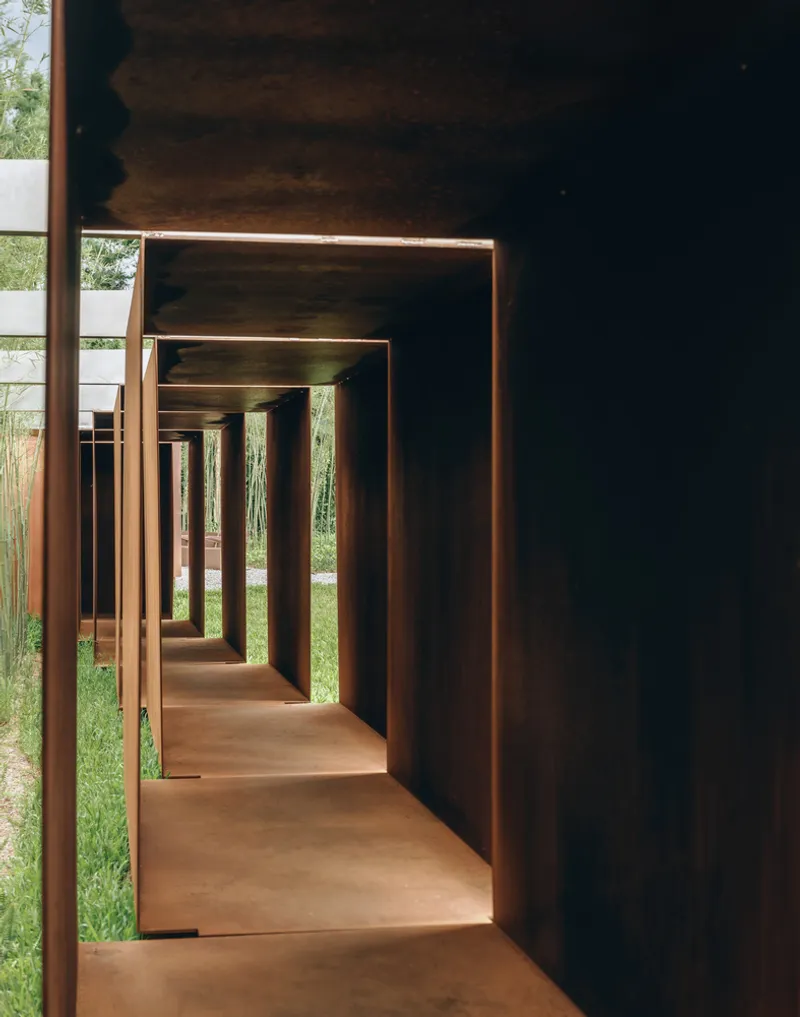
Connecting Past and Present Through Spatial Narrative
The Floral Wander Loop is part of the Nankunshan-Luofushan Rim Pioneer Zone Architectural Art Project, which features sixteen pavilions inspired by Su Shi’s historic joys. This pavilion interprets the metaphor “Humbly sought to make flowers bloom”, reimagining traditional rest areas into a dynamic experience that engages visitors’ senses and movement.
Mirroring the arc of Su Shi’s life—from initial confusion and powerlessness to ultimate serenity—the pavilion’s design unfolds as a metaphorical journey through space, guiding visitors from introspection to liberation.

Site Context: Harmonizing with Nature and Time
Set within a dense bamboo grove between a road and the river, the pavilion negotiates the tension between modern infrastructure and natural continuity. The road and river evoke the passage of time, while the pavilion serves as a spatial interface, guiding visitors along a looping path that mirrors the ebb and flow of life. The elongated loop sequence stretches visitors’ perception, with narrowing and widening corridors that symbolically connect the past with the present.
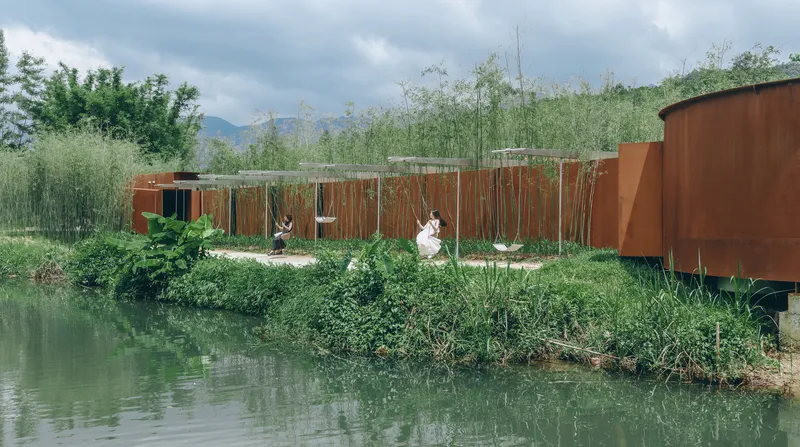
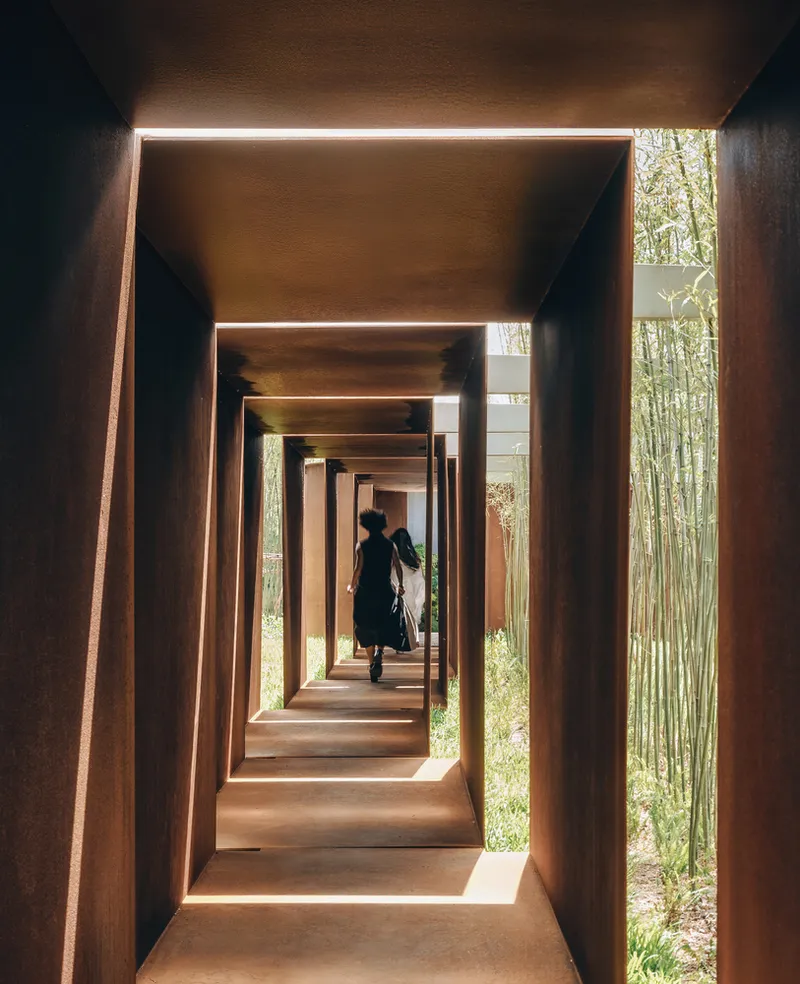
Architectural Experience: Sequential Contrast and Sensory Engagement
Pleasant Beginnings: Visitors enter through an elevated plaza, aligned with the site’s natural topography. The entrance, paved with gravel and framed by bamboo groves, offers serene access to amenities such as a water bar and restrooms. This open, tranquil space reflects Su Shi’s youthful optimism, evoking the smooth beginnings of a life journey.
Powerlessness: Descending into a metallic corridor, the pavilion introduces weathering steel panels arranged in staggered narrow boxes. Each unit subtly oscillates, creating a dynamic sensory environment reminiscent of Su Shi’s exile in Huangzhou—confined, disoriented, yet intensely alive. Sunlight, wind, and rain permeate the passage, while echoes amplify sound and touch, making visitors acutely aware of their physical presence.
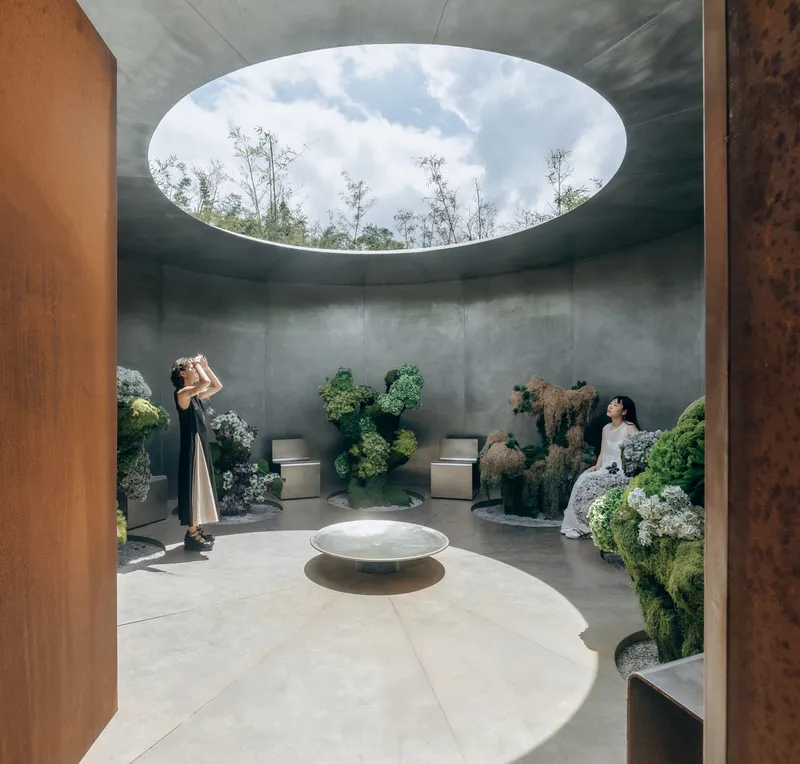

Serendipitous Discovery: At the corridor’s end, a circular pavilion reveals a floral installation by artist Chen Zhuo, where vibrant colors shimmer across brushed stainless steel surfaces. A central circular opening aligns with the sky framed by bamboo, creating a vertical visual focus. Here, visitors experience a turning point—light replaces gloom, and serenity dissolves tension.
Expansive Liberation: The path opens onto the riverbank, where swings invite playful engagement with nature. The rhythm of swinging mirrors the oscillation of the metallic corridor, symbolically resolving tension and culminating in Su Shi’s transcendent detachment. Visitors emerge into a space where water, wind, and human presence converge, embodying freedom and reflection.
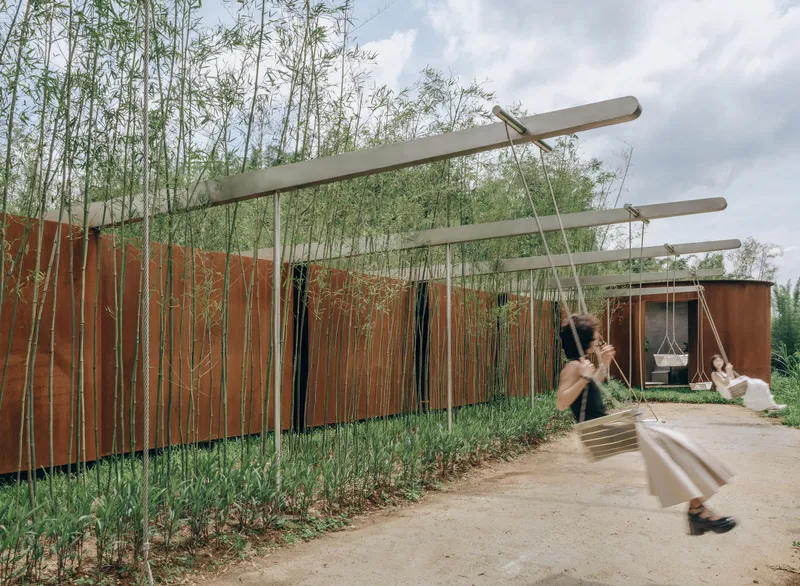

Materiality and Design Details
The pavilion’s weathering steel panels and staggered narrow boxes maintain a minimal footprint, allowing rainwater and vegetation to flow naturally beneath the structure. This approach preserves the ecological continuity of the bamboo grove and riverbank, while creating a visually striking, tactile, and immersive spatial experience.
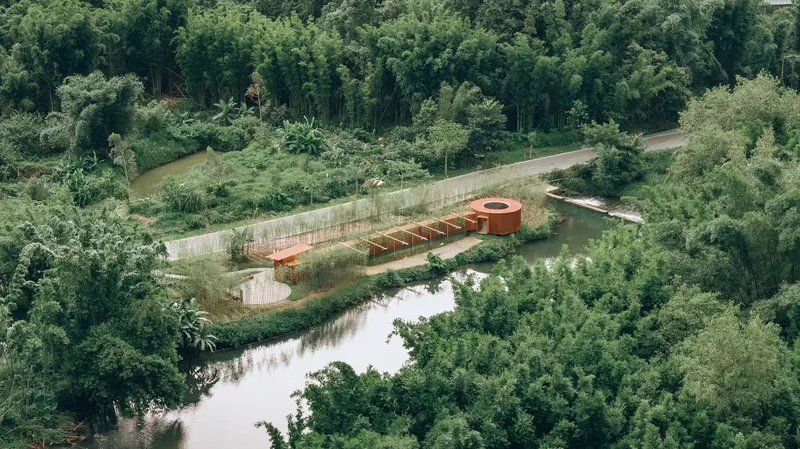
Cultural Resonance: Timeless Inspiration
The Floral Wander Loop celebrates Su Shi’s enduring influence, where the riverside breeze, flowing water, and swaying bamboo connect past and present. Visitors traverse the pavilion, witnessing the subtle dialogue between nature, architecture, and history. In this space, the question of “when do the flowers bloom?” finds its answer—they have always been in bloom.
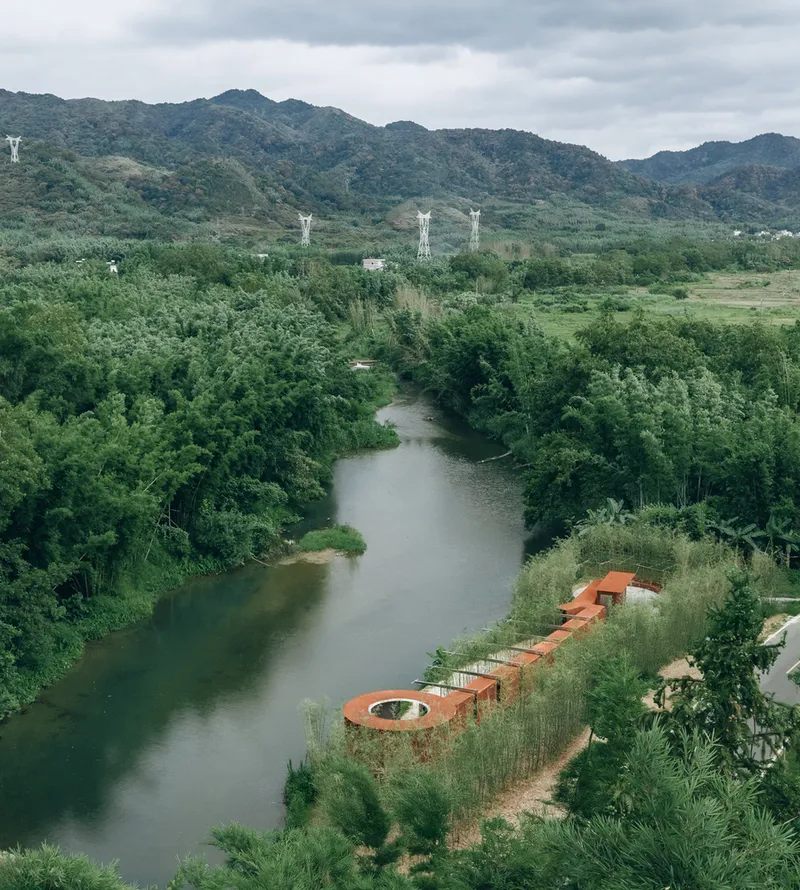
All Photographs are works of Yumeng Zhu


Popular Articles
Popular articles from the community


Jaramillo Van Sluys Arquitectura and Urbanismo Turn a Demolished Registry Lot in Quito into an Orchard Plaza
In Quito's Centro Histórico, a 2,800 m² plaza exposes the San Agustín convent wall and redraws its lost Augustinian orchard in volcanic stone.

Juan García Correa, John González and Claudia Rueda Sink a Circular Amphitheater into a Manizales Engineering Building
On the La Nubia campus in Manizales, Colombia, the S1 Building folds labs and offices into a hillside of ramped lawns that double as a campus route.

GROUP A Strips a 1969 Rotterdam Harbor Headquarters to Its Frame and Wraps It in Timber Louvers
In Rotterdam's M4H harbor district, Ferro Offices reuses a 1969 frame, adds one timber storey and reaches BREEAM-NL Outstanding.

LT2A and OPEN Architectes Thread a Brick and Glass High School Through a Wooded Belgian Campus
In Braine-l'Alleud, a 3,000 m² wing for Collège Cardinal Mercier pairs pale brick with a glazed colonnade, deferring to a small chapel and a dense wood.

Similar Reads
You might also enjoy these articles


Hodi-Mandai Geram
Project Function: Preservation and revitalization of the Intangible heritage and socio-spatial identity of the Hodi by Housing, Cultural Memory Center, Sacred Grove, landscape, local tourism economy


Olio Towers: A Mid-Rise for Performers That Fuses Housing, Rehearsal, and Stage
Located blocks from Houston's Theater District, this modular tower stacks living units around a central performance atrium.

Oasis: Modular Green Housing Carved into Dhaka's Urban Fabric
A shortlisted Plugin Housing entry reclaims unauthorized settlements in Dhaka with stepped concrete volumes, green roofs, and ventilation-driven design.

Black Hole: A Floating Megastructure for the Post-Physical Era
Emiliano Mazzarotto envisions a spherical, self-scaling arena where e-sports, digital hotels, and holographic stadiums replace traditional public space.

Explore Architecture Competitions
Discover active competitions in this discipline

Challenge to design a portable theatre

Challenge to design a portable music platform

Challenge to design an open learning module for the elderly

Challenge to reimagine the Iron Throne
Comments (0)
Please login or sign up to add comments
No comments yet. Be the first to comment!