
Forest Apartment: Living Inside Medellín's Canopy
Trópico Arquitectura strips an 80 m² Medellín apartment back to its raw bones, letting the surrounding forest become the interior's primary material.


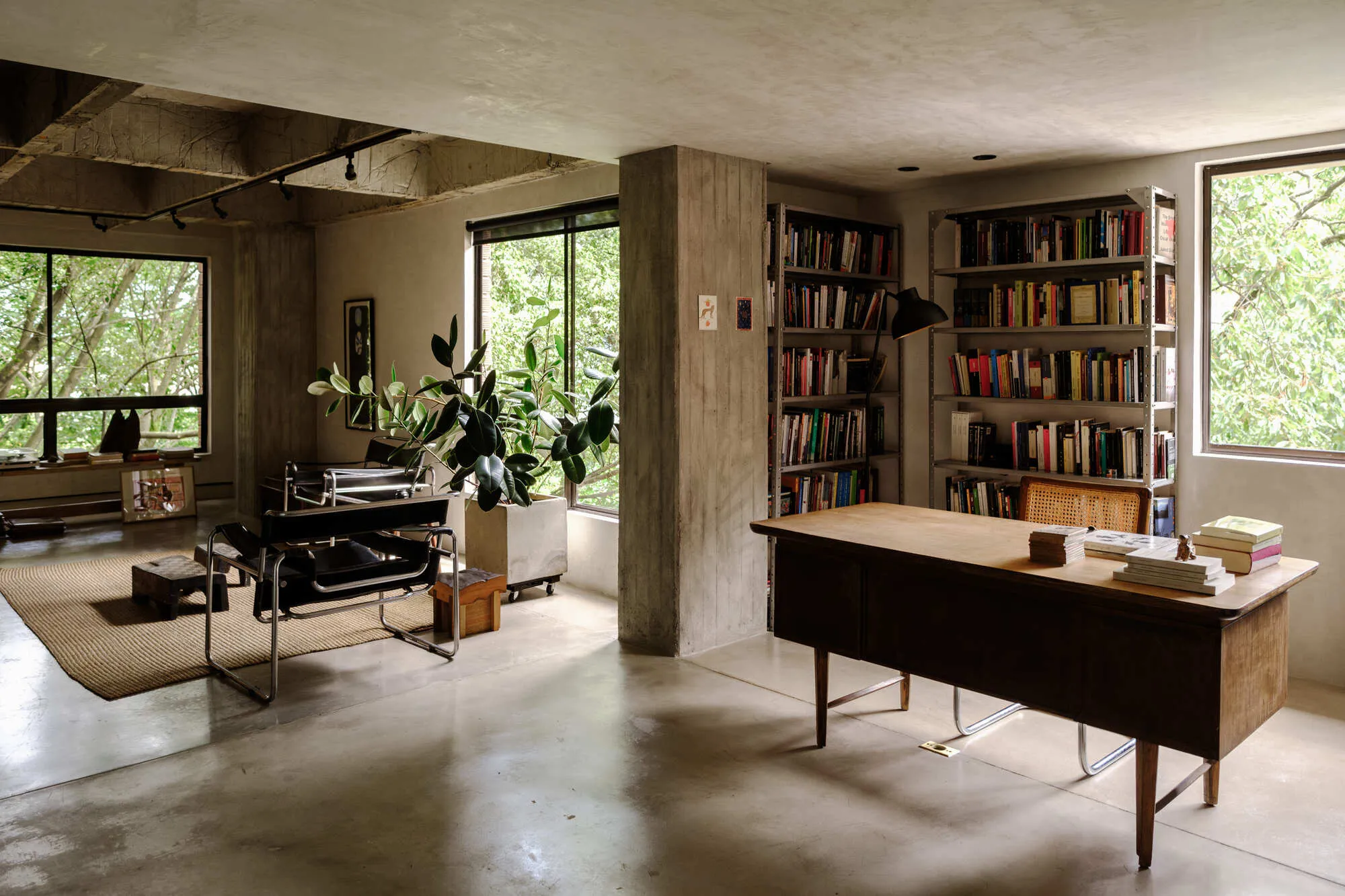
An anthropologist walks into an aging apartment in Medellín and asks for a home that feels as alive as the research he conducts. What Trópico Arquitectura delivered is an 80 m² renovation that reads less like a designed interior and more like a clearing in the forest: raw concrete overhead, polished concrete underfoot, timber and stone in between, and on every side, the leafy canopy of one of Colombia's greenest cities pressing against floor-to-ceiling glass.
What makes this project genuinely interesting is its refusal to decorate. The architects did not add layers to distract from the apartment's original structure. They subtracted. Partition walls came down, plaster ceilings were stripped, and the exposed concrete beams became the dominant visual rhythm of every room. The result is a single, flowing domestic landscape where the furniture does the spatial work that walls once did, and where the boundary between interior and exterior is deliberately thin.
Concrete Bones Exposed
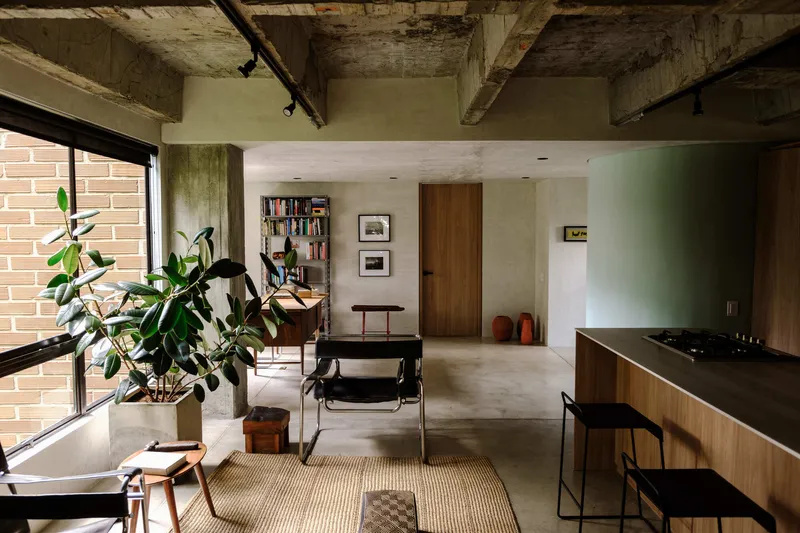
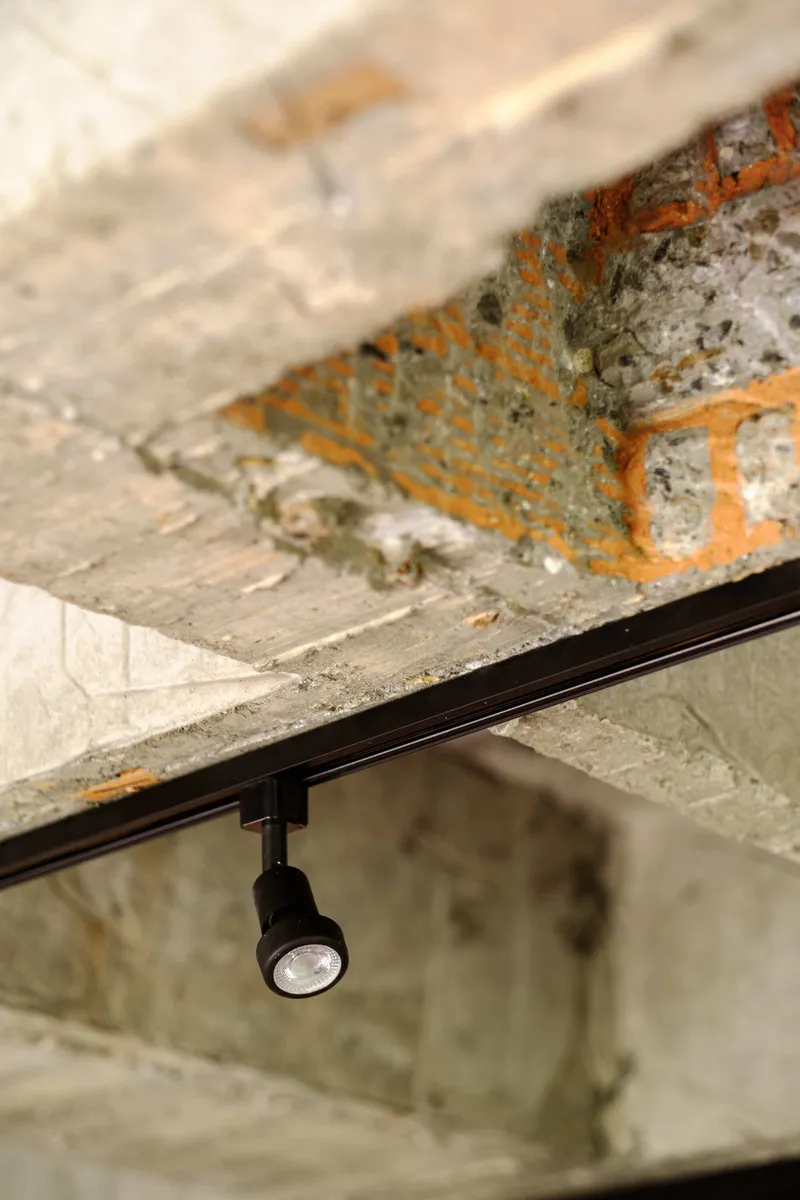
The ceiling tells the story of this renovation more honestly than anything else. Stripping it back revealed heavy concrete beams, patches of discoloration, and in places, the orange of exposed rebar. Trópico Arquitectura left all of it visible. There is no attempt to prettify: the distressed surfaces carry the building's age like honest scars. Black track lighting, mounted directly to the concrete, serves as the only new element overhead, its industrial profile reinforcing rather than contradicting the rawness above.
Beneath all of this, the polished concrete floor acts as a reflective plane that bounces daylight deep into the apartment. The material palette is deliberately narrow: concrete, timber, stone, plaster. By keeping it tight, the architects ensure that every decision registers. A pink brick wall becomes an event. A circular column becomes a landmark.
The Forest as Co-Designer
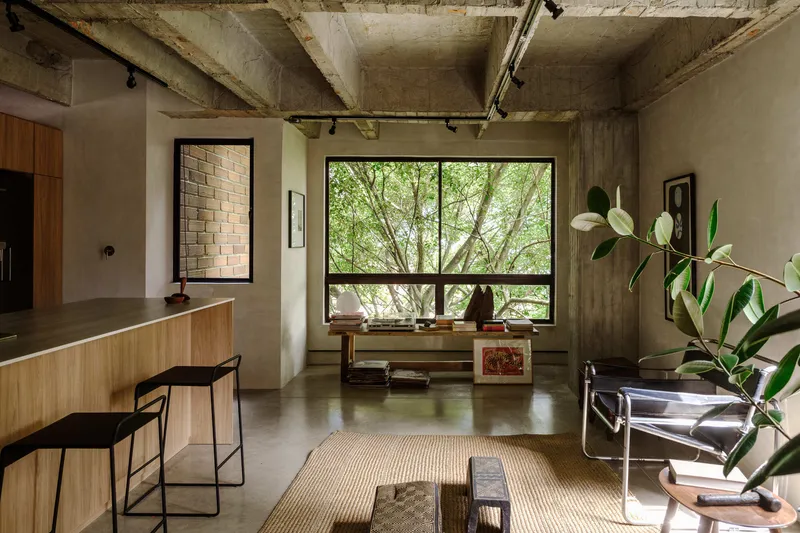
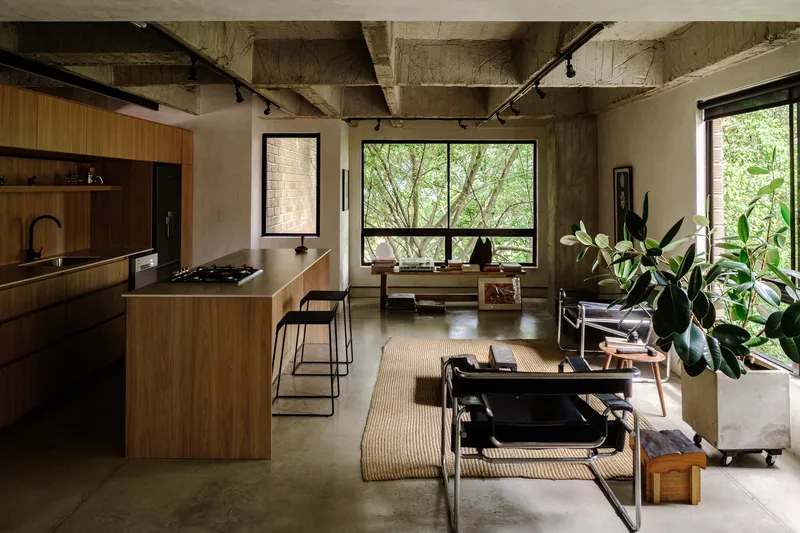
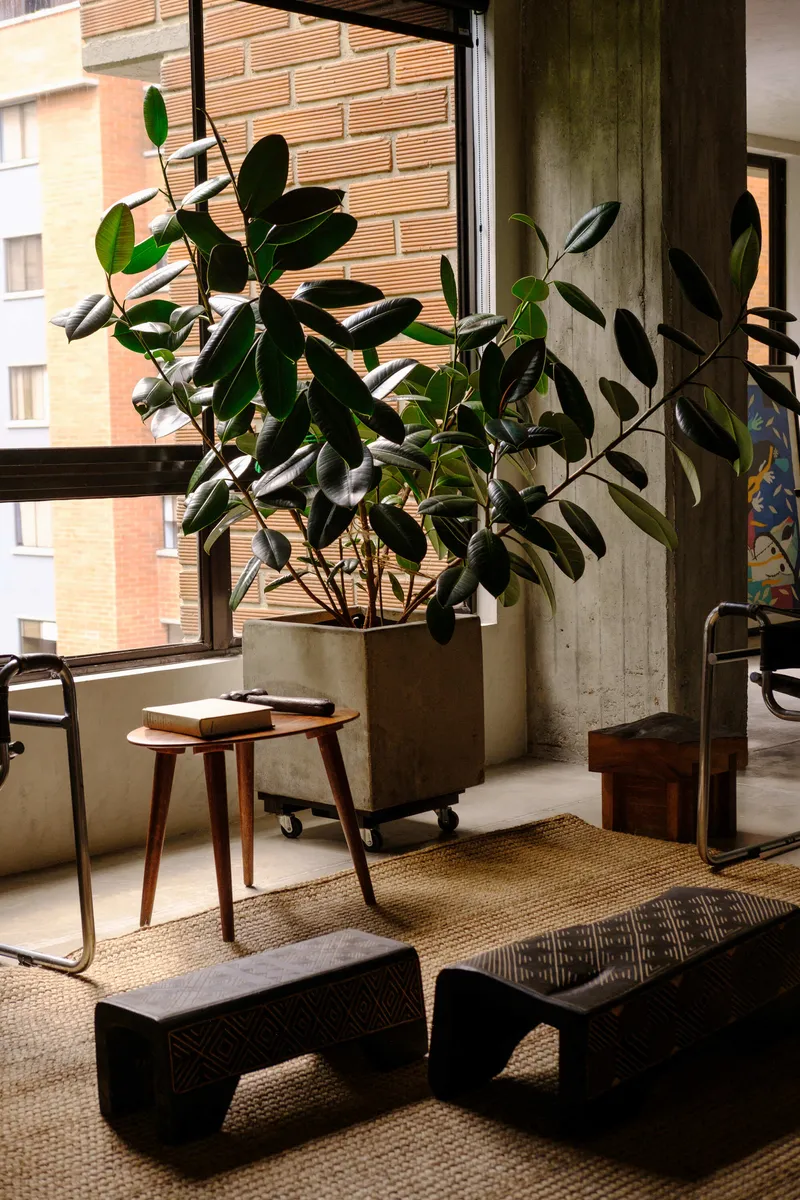
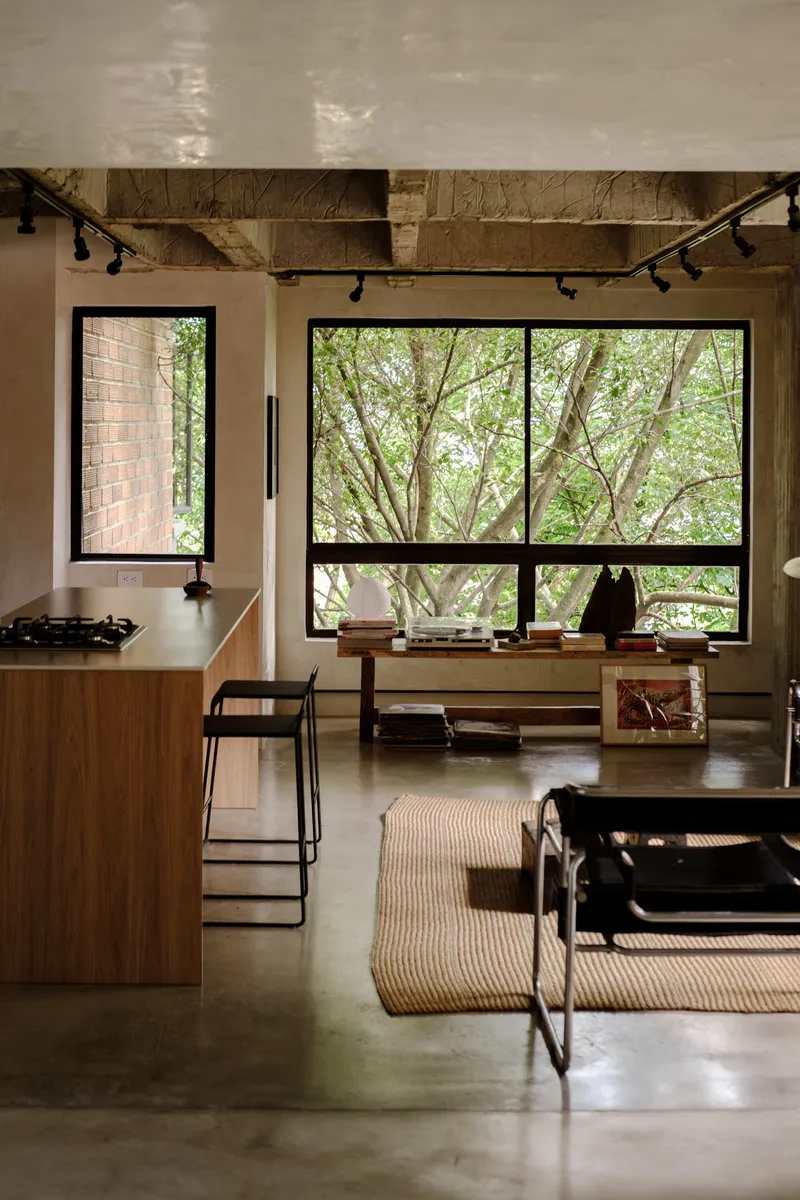
Medellín's subtropical vegetation does not politely wait outside. Here, it pushes against the glass, fills window frames with chlorophyll, and dapples every interior surface with shifting green light. The architects clearly understood that these trees are the most powerful decorative force available, and they organized the plan to maximize contact with them. The living area faces the canopy head-on. The kitchen island sits where it can borrow the view. Even the balcony, with its concrete column and single potted rubber plant, stages a conversation between the cultivated and the wild.
A low wooden console beneath the main window operates as a threshold device. It keeps you from pressing your nose to the glass while simultaneously serving as a plinth for smaller plants, blurring the line between the forest outside and the domestic garden within.
A Kitchen That Anchors the Plan
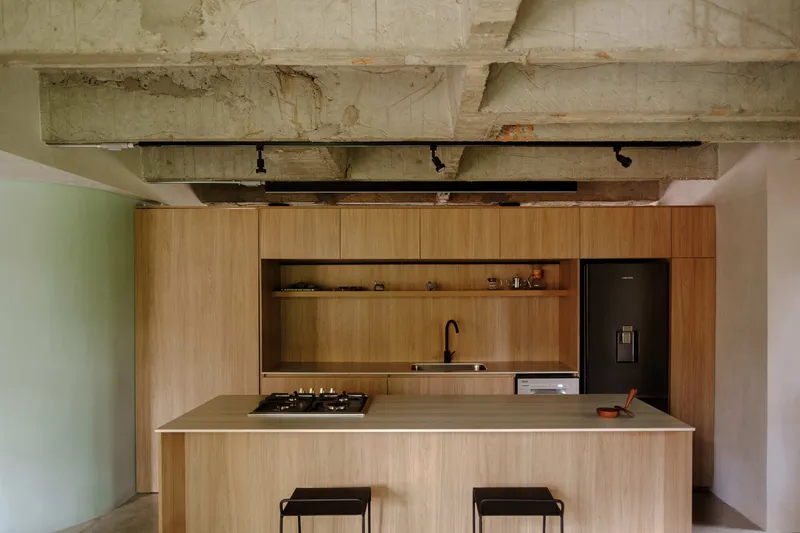
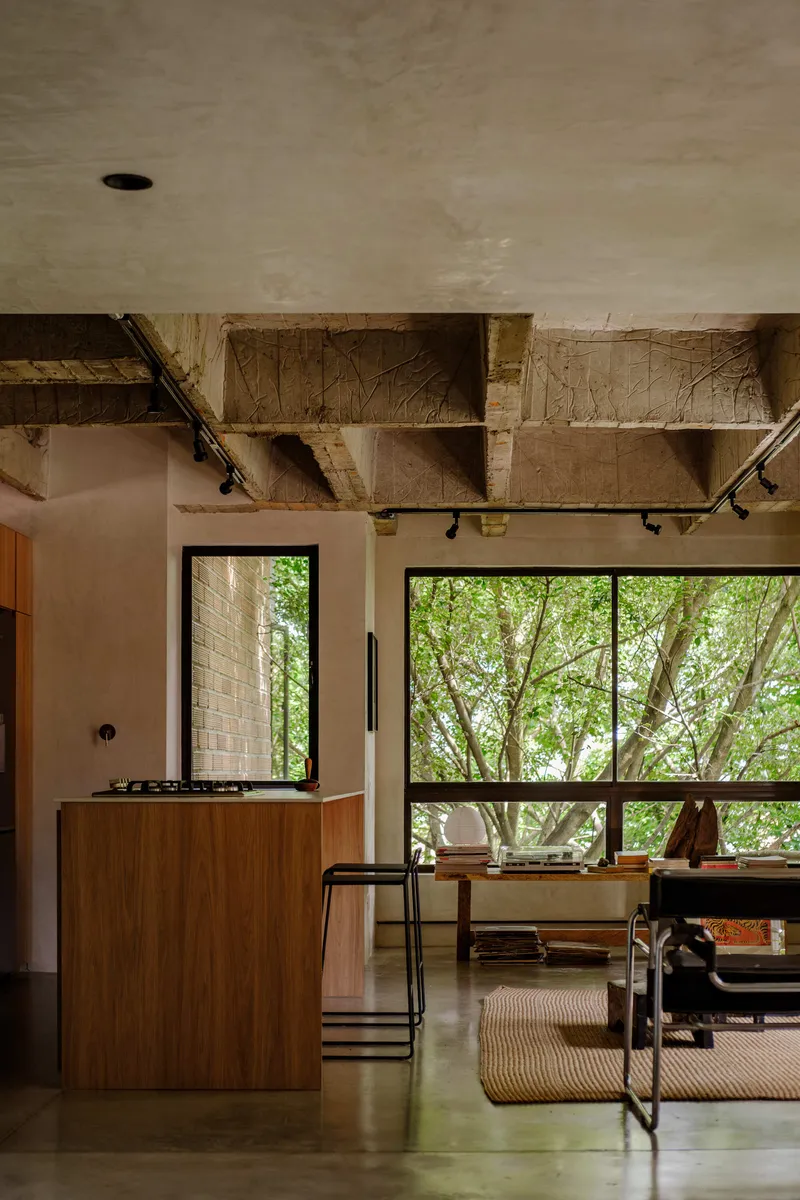
The timber island is the spatial hinge of the entire apartment. Positioned roughly at the center of the open plan, it defines the kitchen zone without enclosing it, its stone countertop offering a work surface that doubles as a casual dining bar. The cabinetry below is warm, vertically grained timber that contrasts deliberately with the coolness of the concrete shell.
Above the island, the exposed timber ceiling structure in one view suggests that the architects selectively retained or introduced wood framing where the original concrete grid allowed it. The effect is a localized warmth, a softening of the overhead plane that signals a shift from circulation to habitation. Combined with the tree-filled windows flanking both sides, the kitchen feels less like a service zone and more like an outdoor pavilion that happens to have a sink.
The Study as a Room Within a Room
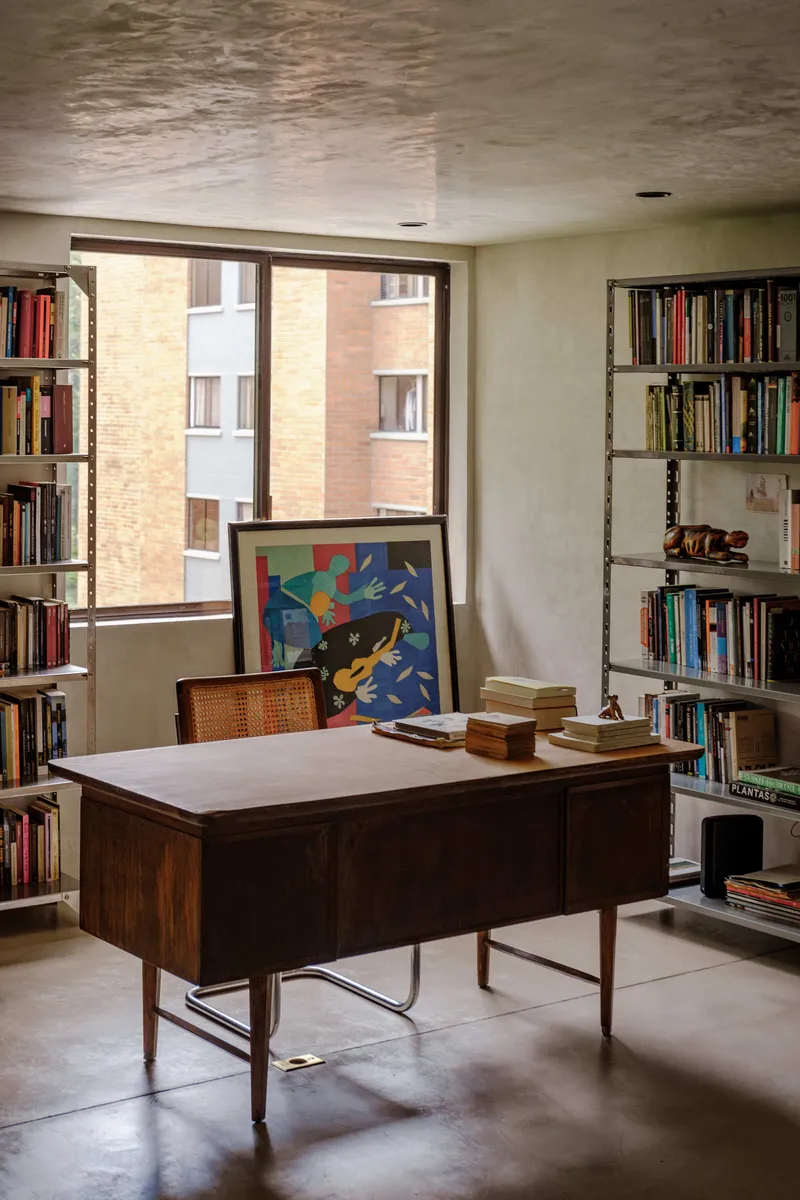
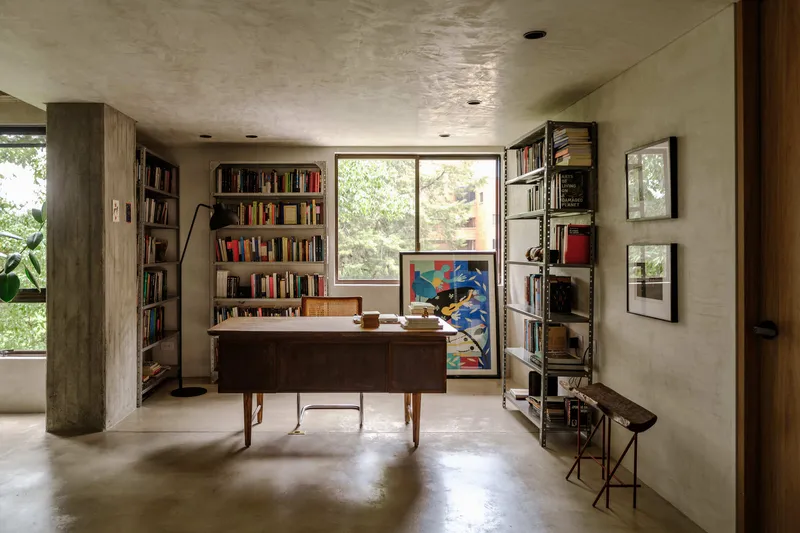
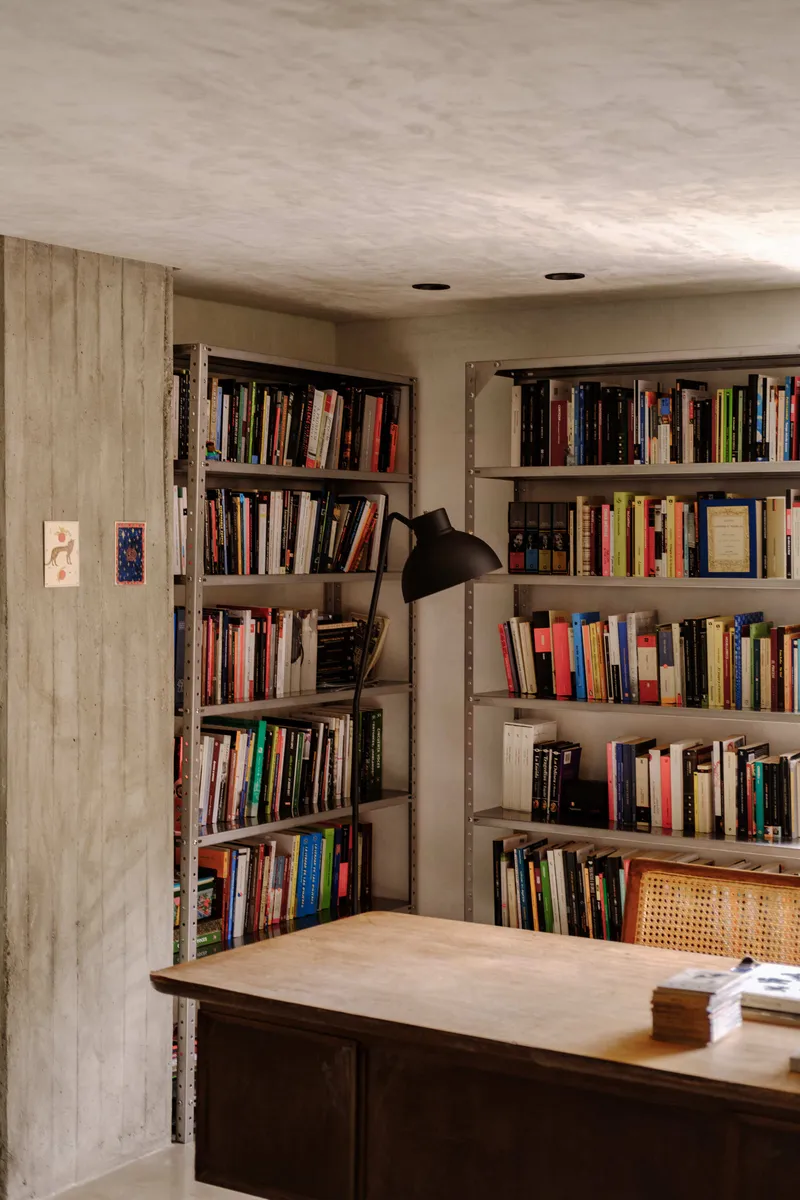
For an anthropologist, the study is not a secondary space. It is the engine room. Trópico Arquitectura gave it a generous timber desk positioned beneath a window that faces a neighboring brick building, grounding the intellectual work in the reality of the city rather than the romance of the canopy. Flanking bookshelves create a niche that provides just enough enclosure to support concentration without cutting the study off from the larger room.
The freestanding metal shelving unit is a smart move. It acts as a semi-transparent partition, its open framework letting light and sightlines pass through while still marking territorial boundaries. Framed photographs, a task lamp, and a few stacked books give the corner a lived-in quality that feels genuinely personal rather than staged.
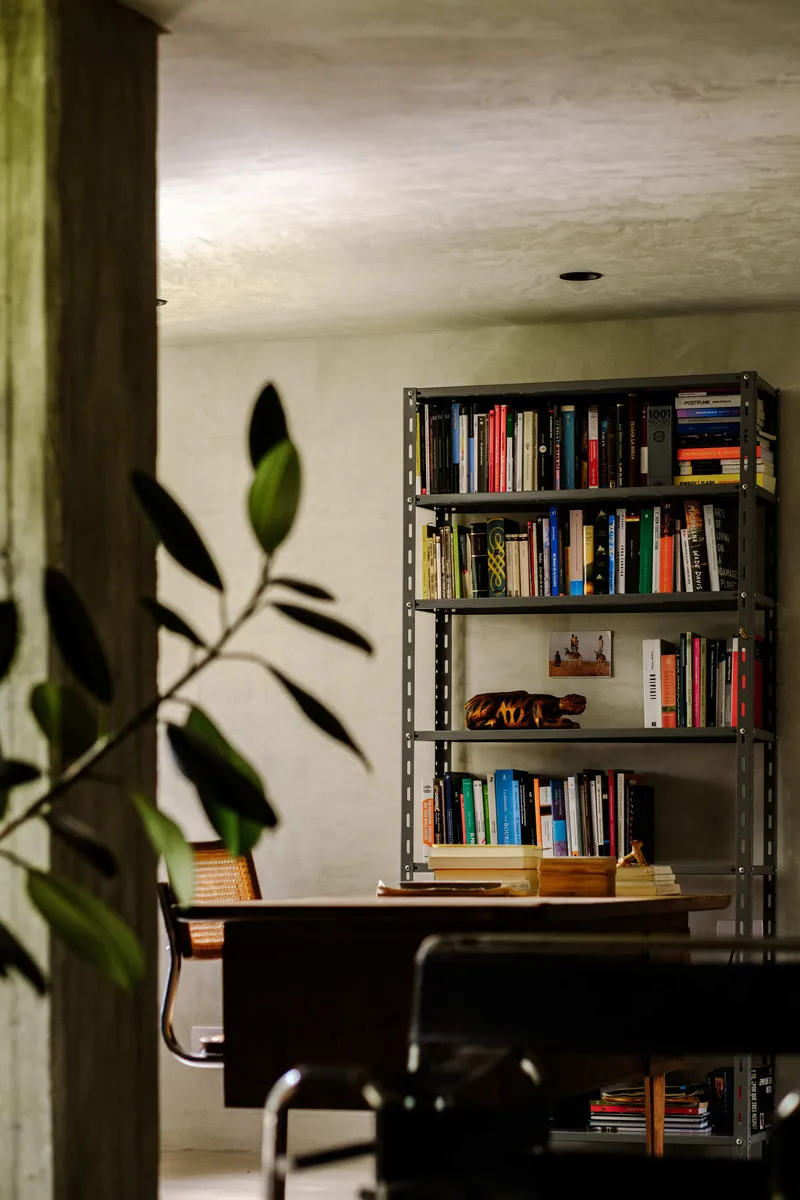
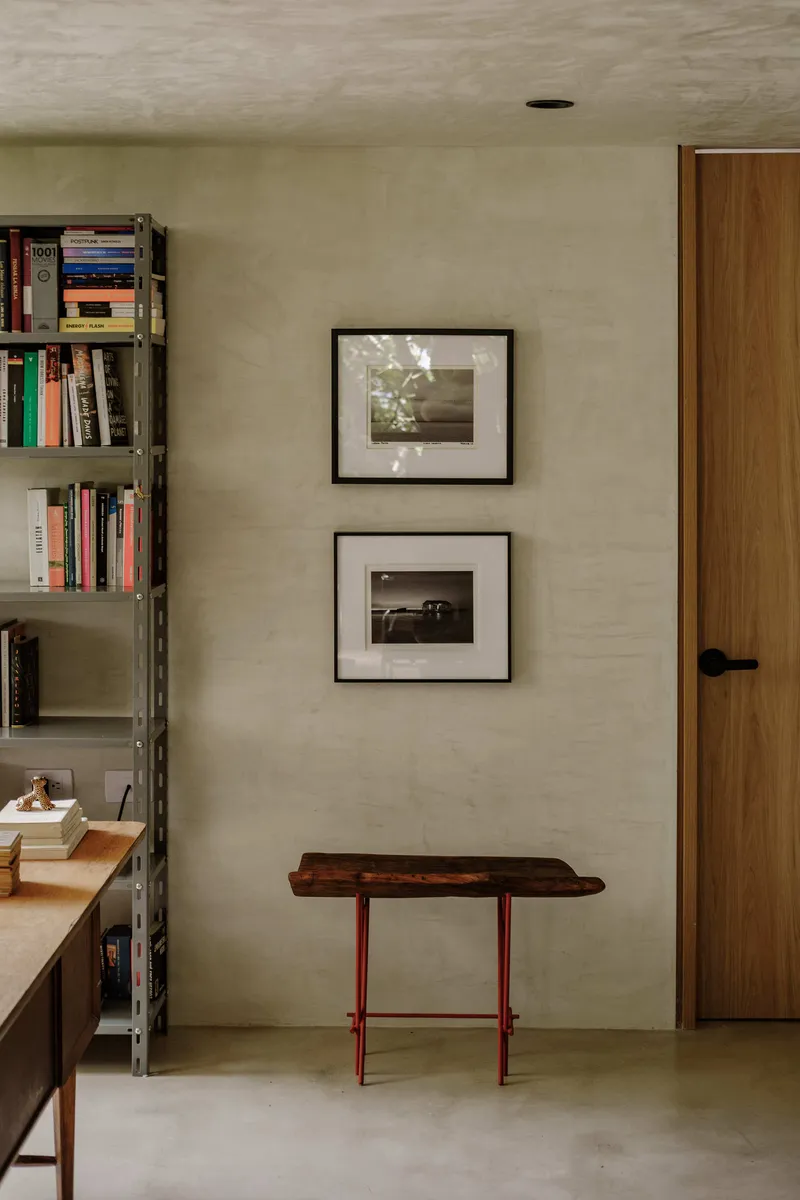
Details matter here. The silhouette of a desk chair framed by a concrete column and a trailing plant creates an almost cinematic composition. The industrial shelving, the timber door, the pale plaster walls: each element has been selected for its ability to recede, to let the person and the work be the focal point.
Bedroom and Bathroom: Quiet Retreat
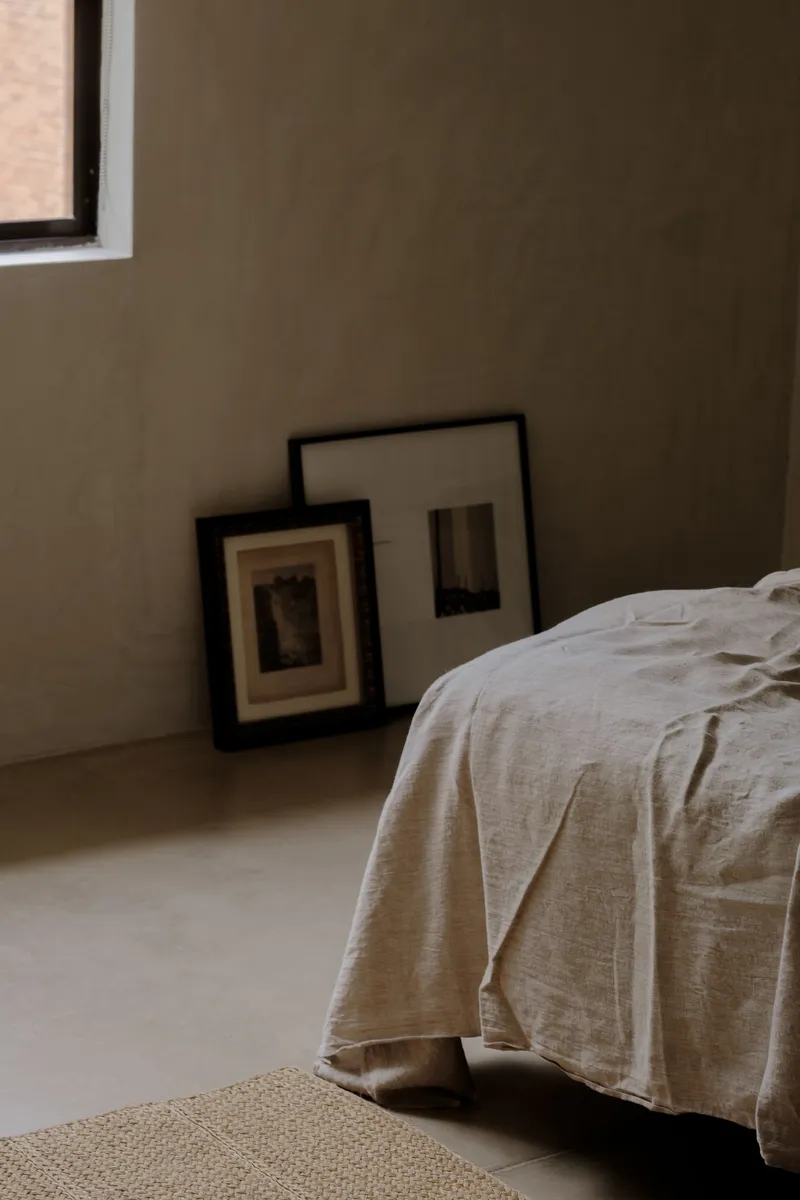
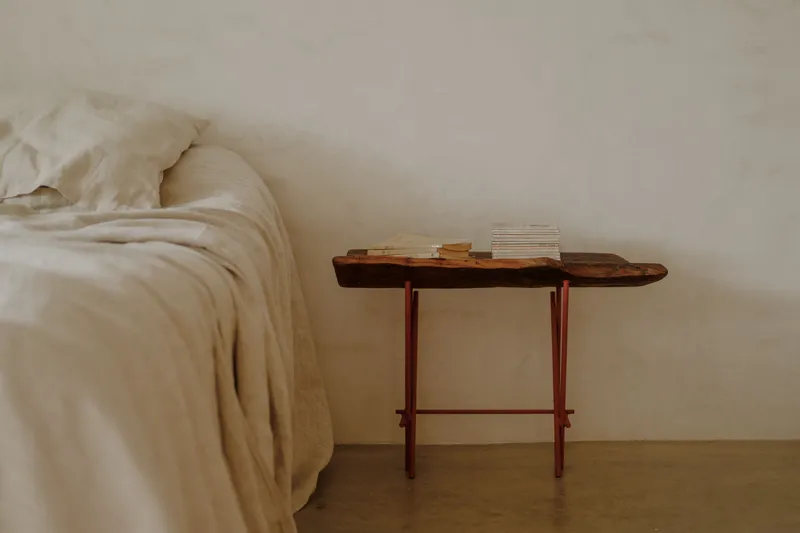
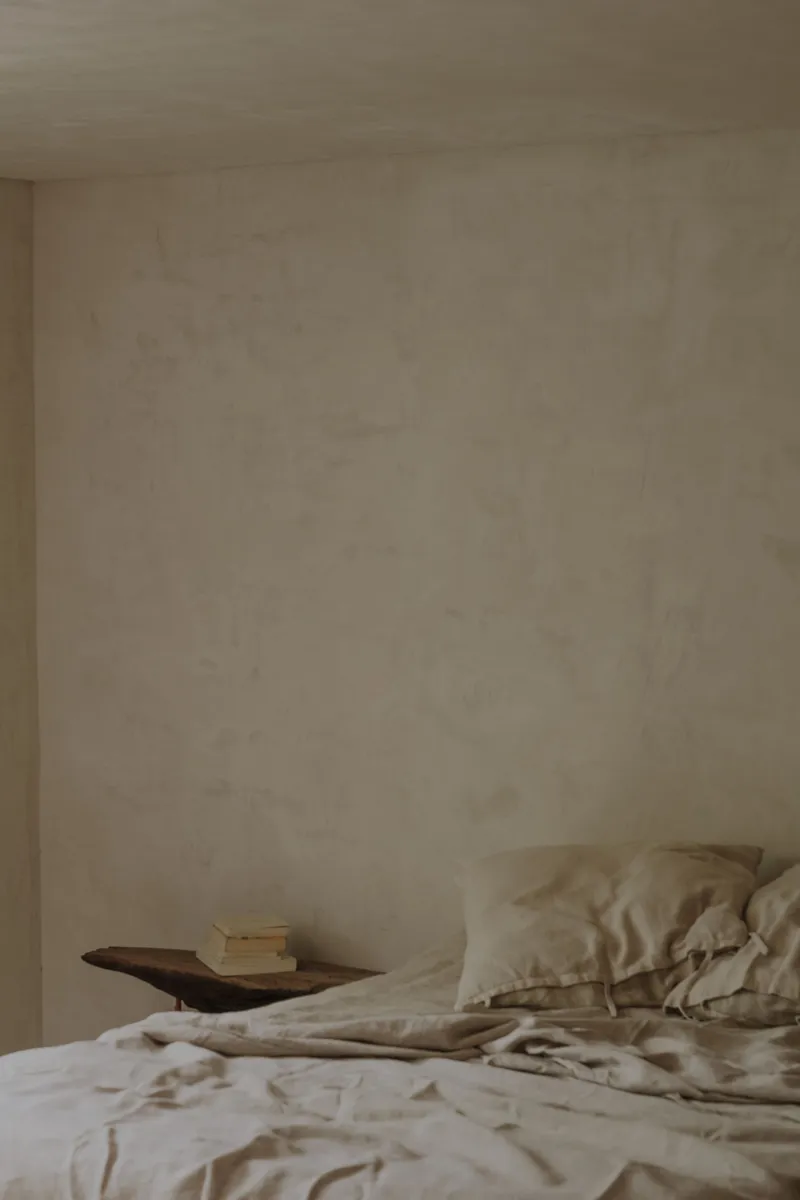
The bedroom strips things down even further. Two artworks lean casually against a plaster wall, unframed ambition replaced by simple placement. Neutral linen covers the bed. A live-edge timber side table with red metal legs injects a controlled jolt of color and craft. The textured plaster wall at the corner catches light in a way that makes you notice the surface itself, the way it was applied by hand, the slight irregularity that no machine would produce.
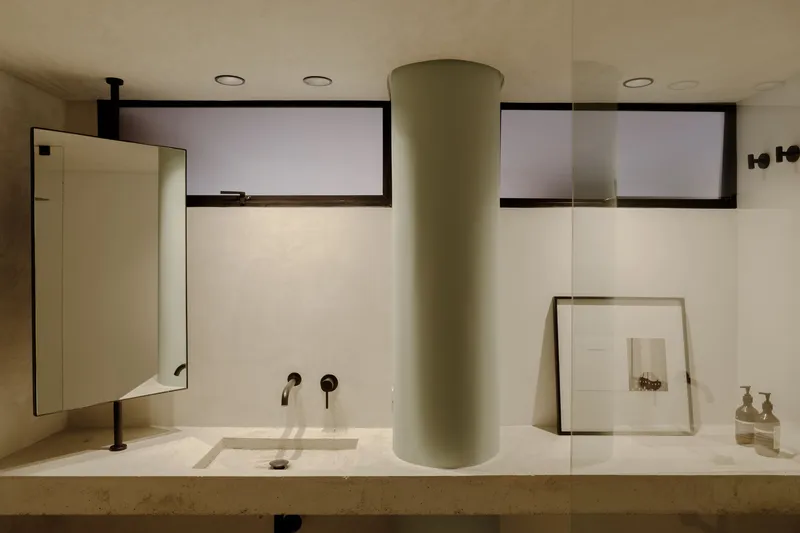
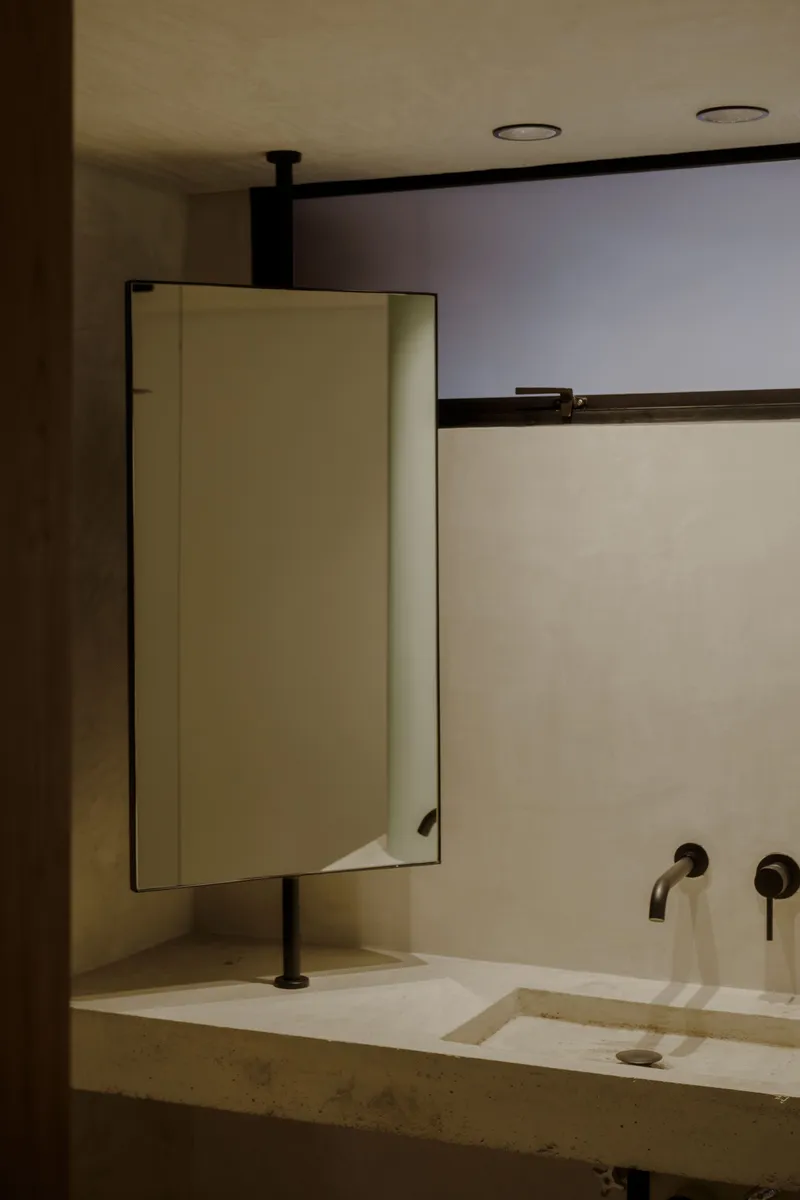
The bathroom continues the material logic without deviation. A stone countertop wraps around a circular column, an elegant collision of the building's structural grid and the renovation's new surfaces. Horizontal clerestory windows keep the room private while letting in a blade of daylight. The pivoting mirror cabinet and matte black fixtures are restrained, almost monastic. There is no tile feature wall, no accent color. Just material honesty and carefully considered hardware.
Furniture as Character
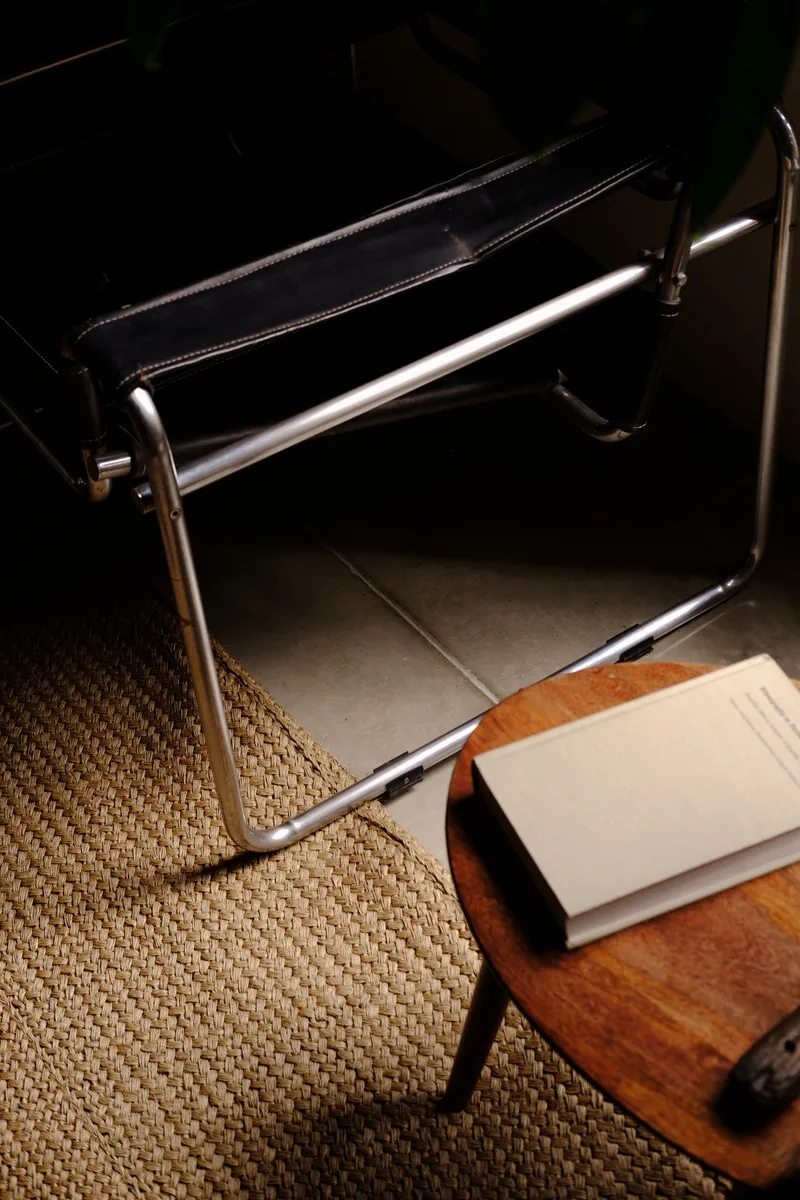
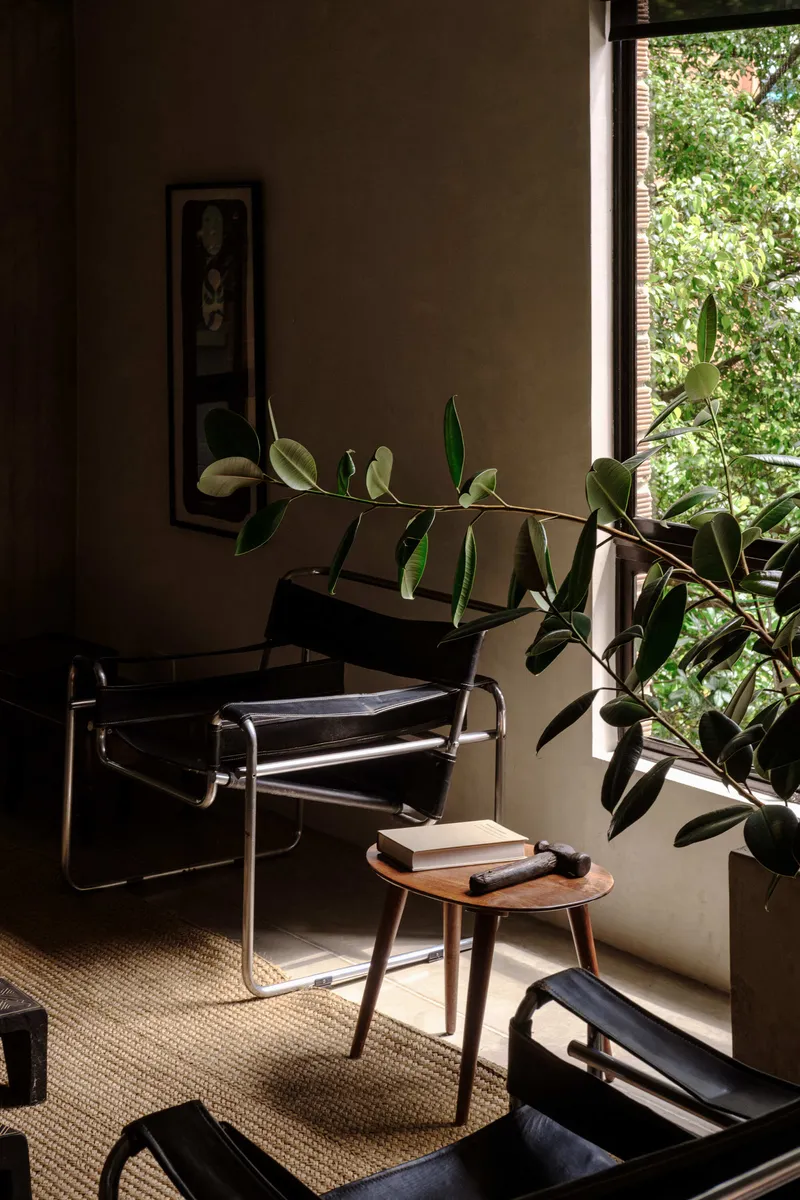
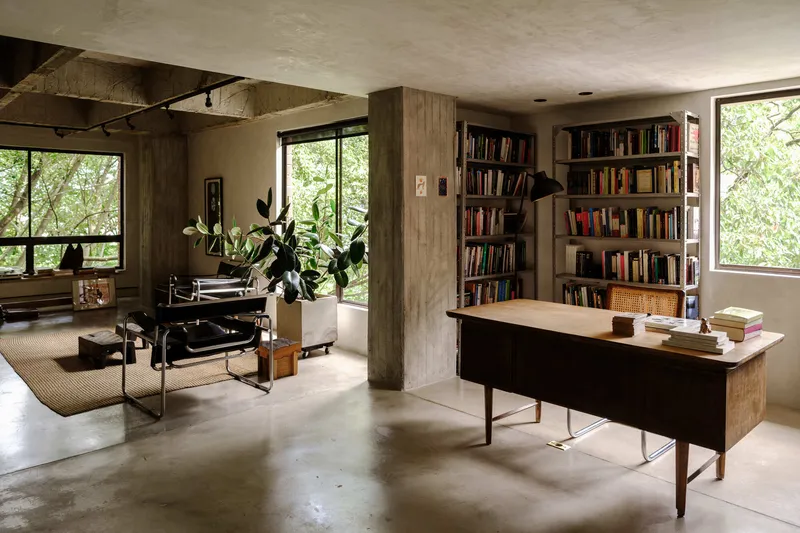
The chrome tubular chair on a sisal rug is not mere styling. It is a design-historical reference, a nod to Breuer or Stam, placed in a tropical apartment where its reflective frame catches equatorial light in ways its European inventors never imagined. Paired with a wood side table and an open book, it constructs a reading vignette that feels earned rather than curated. Near the window, the same chair type reappears, this time silhouetted against the afternoon vegetation, its industrial geometry playing off the organic riot outside.
Throughout the apartment, furniture takes on the role of architecture. The island defines the kitchen. The bookshelves define the study. The bed defines the retreat. Walls, in the conventional sense, barely participate.
Plans and Drawings
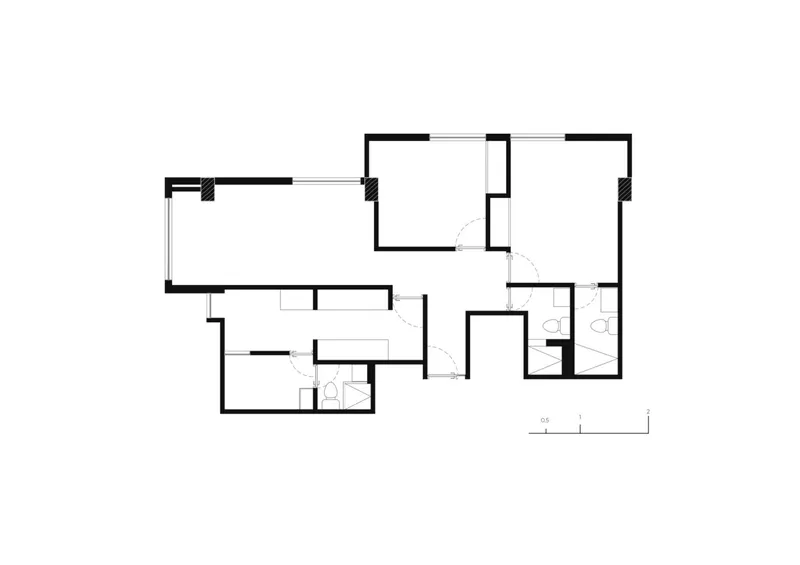
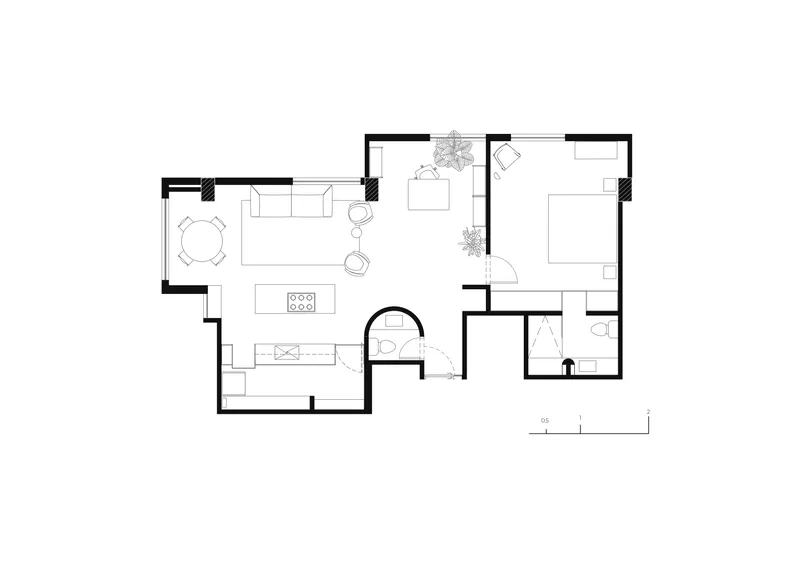
The floor plans confirm what the photographs suggest: the apartment is organized as a single open zone with the kitchen island and study shelving acting as soft dividers, while the bedroom and bathroom occupy a more enclosed wing to one side. Service zones are tucked efficiently against the party wall, freeing the entire window facade for living spaces. The furniture layout drawing reveals the deliberate asymmetry of the plan, where circulation paths are generous and no room is reduced to a corridor.
Why This Project Matters
Forest Apartment is a case study in what renovation can achieve when architects resist the urge to over-specify. By stripping the apartment to its structural skeleton and rebuilding with a tight palette of timber, stone, and plaster, Trópico Arquitectura created a home that breathes. It is a space shaped as much by what was removed as by what was added, and the surrounding forest fills the void with light, color, and constant motion.
For a young professional building a life around ideas and fieldwork, the apartment offers something rare: a domestic environment that does not compete with the mind for attention. It provides warmth without excess, structure without rigidity, and a connection to the natural world that feels uncontrived. In a city where high-rise apartments routinely turn their backs on one of the planet's most exuberant landscapes, this 80 m² unit opens every possible surface to the canopy and lets the forest do the rest.
Forest Apartment by Trópico Arquitectura. Medellín, Colombia. 80 m². Completed 2023. Photography by Teodoro Posada.
About the Studio
Share Your Own Work on uni.xyz
If projects like this are the kind of work you want to make, uni.xyz is a place to publish your own, find collaborators, and enter design competitions.



Popular Articles
Popular articles from the community


Hill & Cross Opera: Sculptural Opera House Architecture Shaped by Tallinn’s Landscape and Identity
Hill & Cross Opera reimagines opera house architecture in Tallinn through its sculptural hill, civic plaza, glass wave and a luminous cross.

The Musturak Paradise: Senior Living Architecture for a Connected Future in Temara, Morocco
The Musturak Paradise reimagines senior living architecture in Temara via private homes, social spaces, culture, community, and shared care.

Co-life: Sustainable Architecture for Age-Friendly Community Living
Co-life reimagines sustainable architecture for seniors through courtyards, rammed earth, shared gardens, and spaces designed for belonging.

Conexión: Biophilic Design Reimagines High-Rise Living in Hong Kong
Conexión reimagines high-rise living in Hong Kong through biophilic design, green facades, shared spaces, daylight, water and nature within.


Similar Reads
You might also enjoy these articles

Bao Huynh Watercolor Atelier: A Serene Art Retreat in Hội An
Bao Huynh Watercolor Atelier in Hội An blends multifunctional art spaces, sustainable design, local materials, and family-friendly living in a serene environment.

Atelier Macri Concept Store Interior Design by CASE-REAL
Atelier Macri store features a "ko" counter, walnut wood details, cork displays, blending retail, gallery, and seamless customer experiences.

Manuel Vargas Izquierdo Stadium and High-Performance Sports Center: Architectural Excellence in Jalpa de Méndez
The Manuel Vargas Izquierdo Stadium blends sustainable design, inclusive sports facilities, and cultural-inspired architecture, revitalizing Jalpa de Méndez’s public spaces.

KAKR Buluh Awar Hall: Revitalizing Community and Ecology Through Bamboo Architecture
Community built bamboo hall revitalizes Buluh Awar village, empowering youth, restoring ecology, celebrating vernacular craftsmanship through sustainable architecture and culture.

Explore Interior Design Competitions
Discover active competitions in this discipline


Challenge to design luxury tourism on rails


VR headsets Storefront design competition


Designing a staircase for a client
Comments (0)
Please login or sign up to add comments
No comments yet. Be the first to comment!