
Form Follows Sheep House by ToB.Studio: Redefining Minimal Living Through Landscape and Memory
Compact hillside home in Burgsinn blending timber and concrete, inspired by sheep paths, promoting sustainable living and landscape harmony.


Perched on a steep hillside in Burgsinn, Germany, the Form Follows Sheep House by ToB.Studio is both poetic and practical—a home that grows from the contours of land once defined by grazing paths. Built in 2025 for the Schneider family, the project celebrates modest living, craftsmanship, and a deeply personal connection to place.
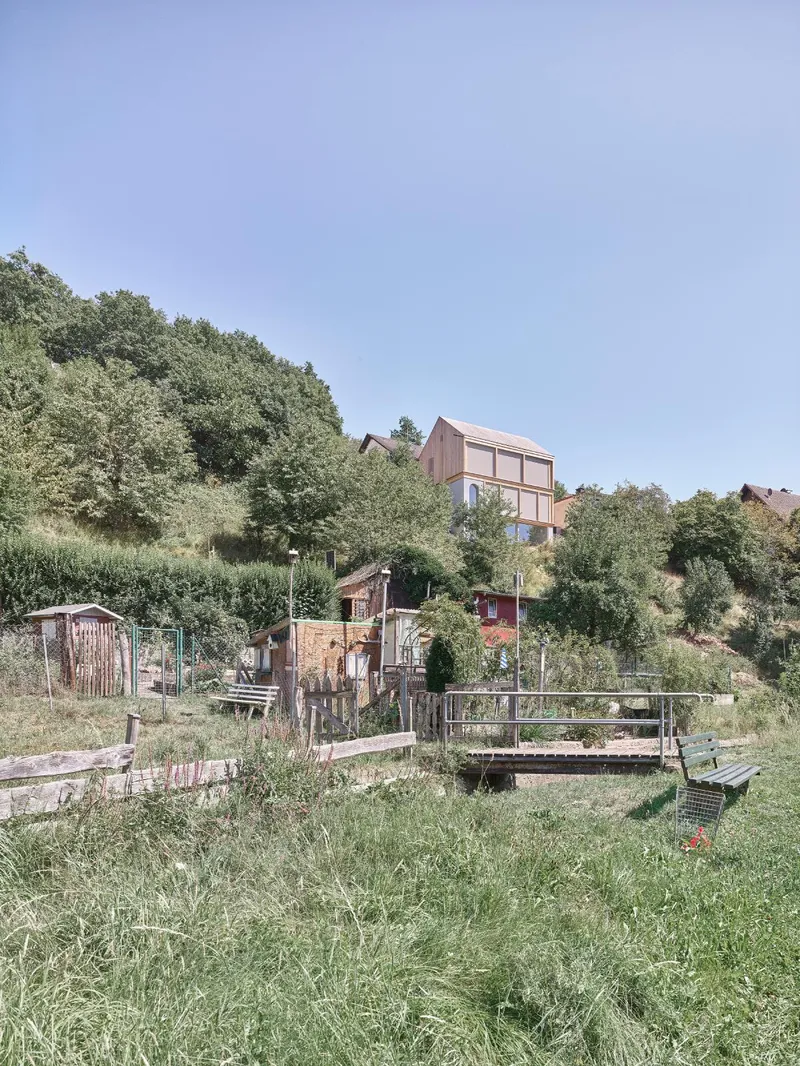
Where others saw an unbuildable slope, the clients saw a chance to live differently: closer to nature, to family, and to their values.
A Landscape Shaped by Sheep
The story of the house begins with the sheep trails that once meandered across the site. Over decades, grazing animals traced natural terraces into the hillside—organic lines that became both the inspiration and the blueprint for the home’s design.
The plot, long dismissed as unsuitable for construction, required persistence and ingenuity. The family worked to redraw village boundaries, engaging in years of planning negotiations. Through their determination, a narrow corridor of possibility opened up—proving that commitment and creativity could overcome topographical limits.
These traces of the hillside’s past life were preserved, not erased. They informed the geometry, orientation, and rhythm of the home’s form, letting architecture quietly follow nature’s logic.
Settling Into the Slope
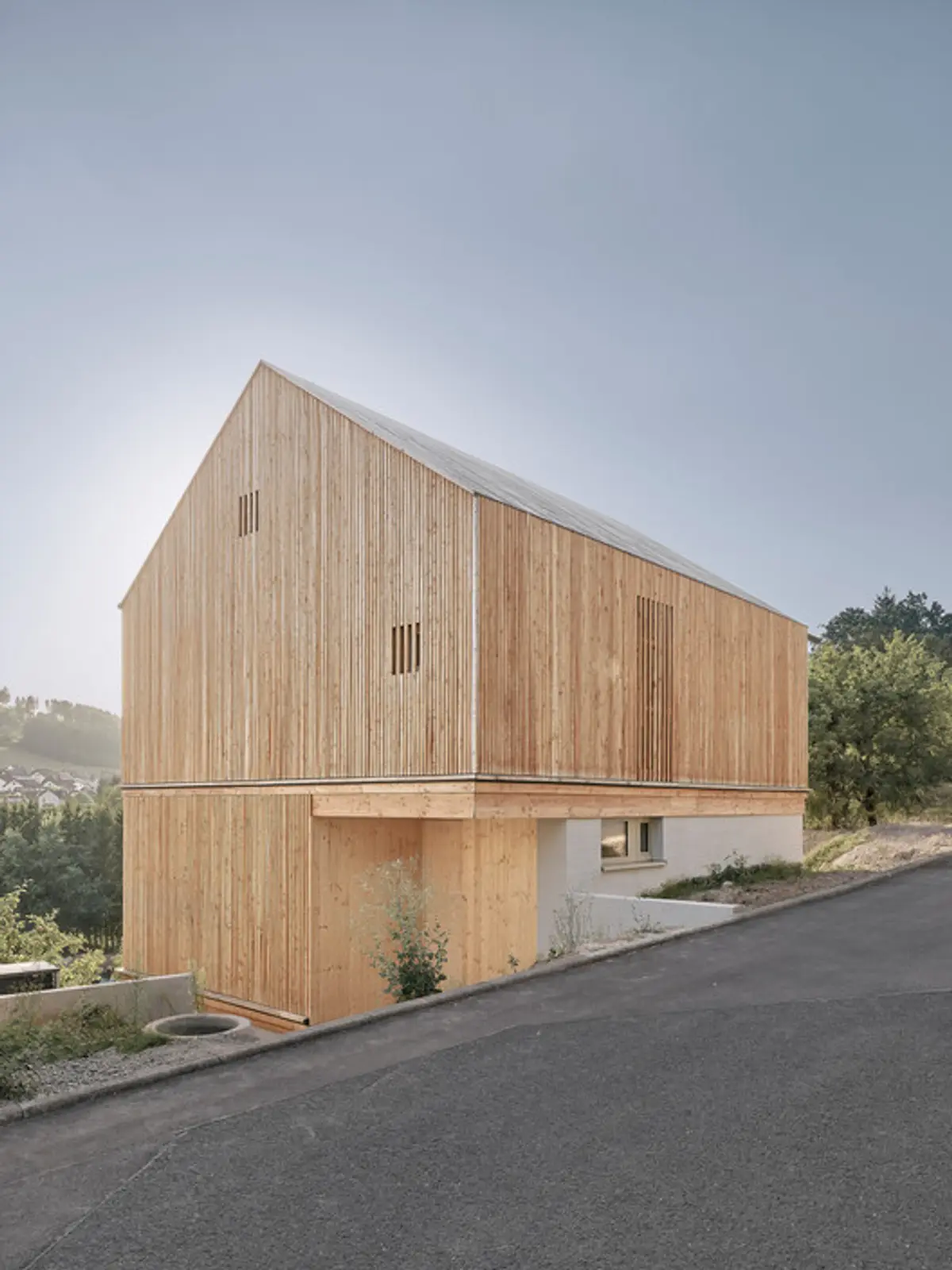
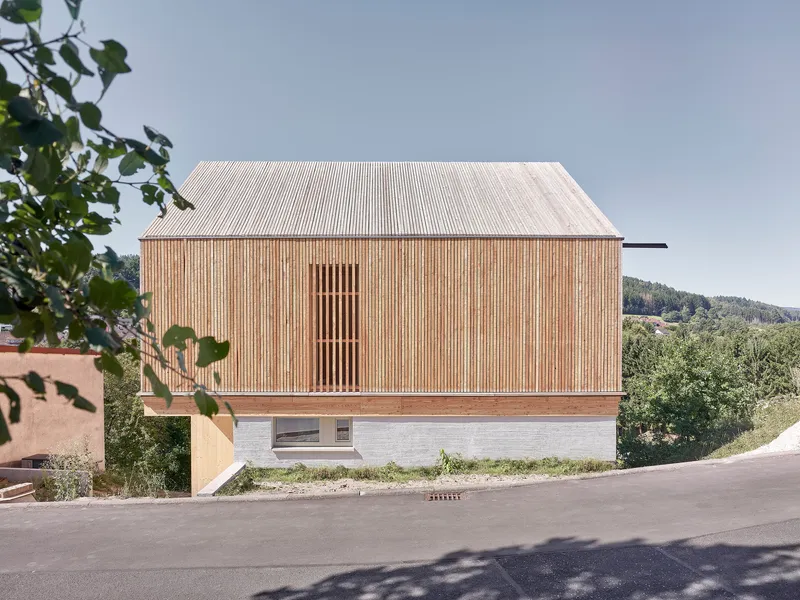
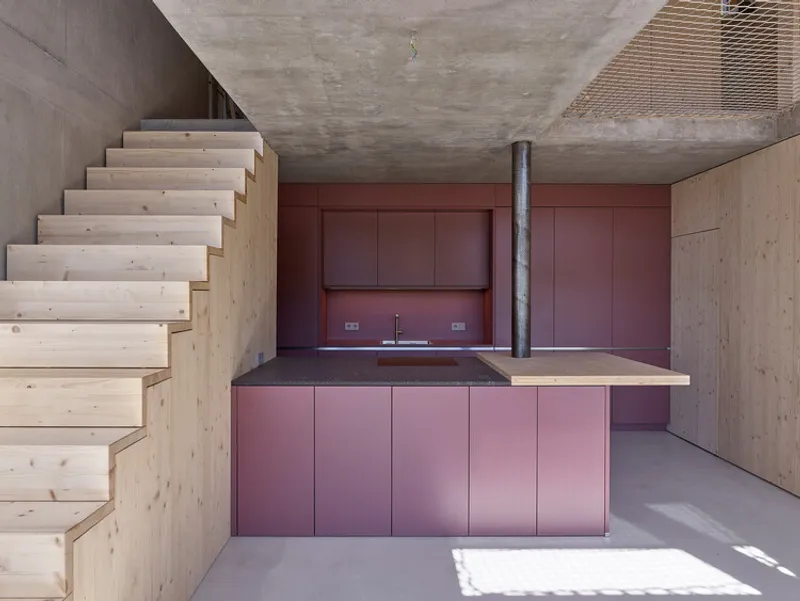
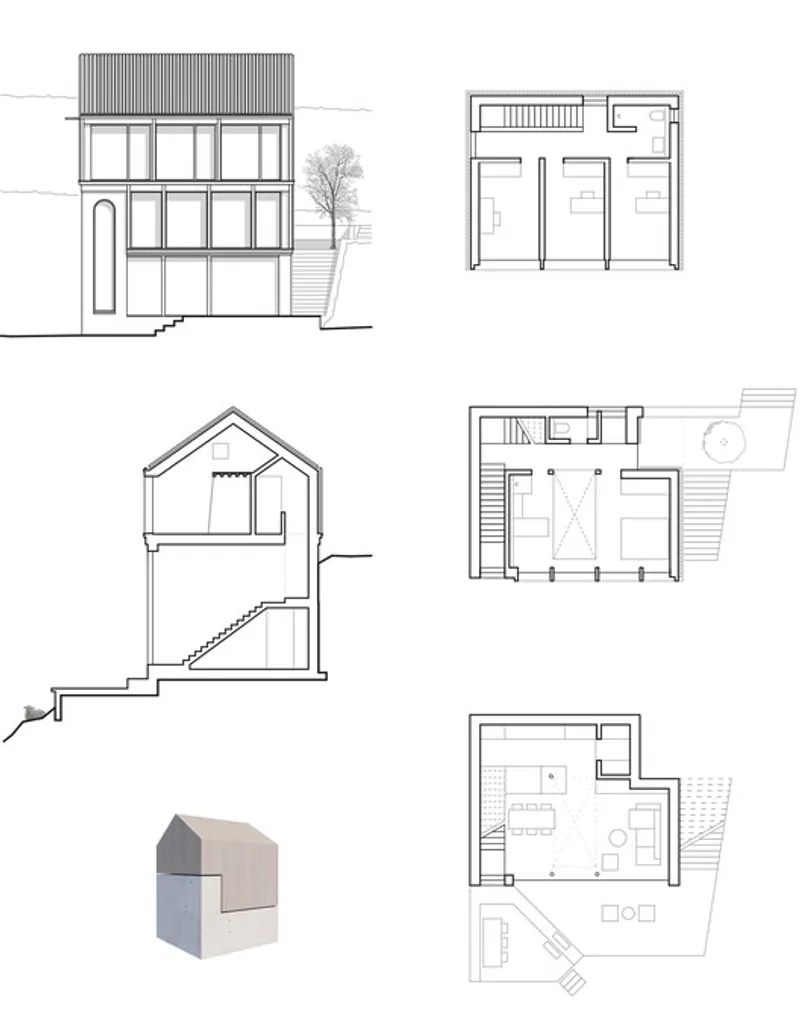
The house nestles into layers of red sandstone, anchored by a concrete plinth and topped with locally sourced timber from the family’s own forest. The design creates a subtle contrast between solidity and lightness—stone rooting the structure into the terrain, wood blending it with the hillside vegetation.
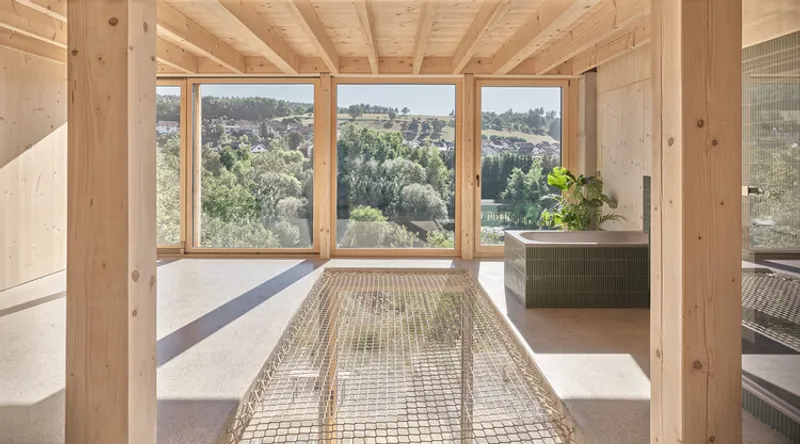
From the street, the building appears reserved, its vertical timber cladding almost monolithic. Turning toward the valley, the façade opens widely with glass and terraces, allowing uninterrupted views of the Spessart forest and a stream that lies 15 meters below.
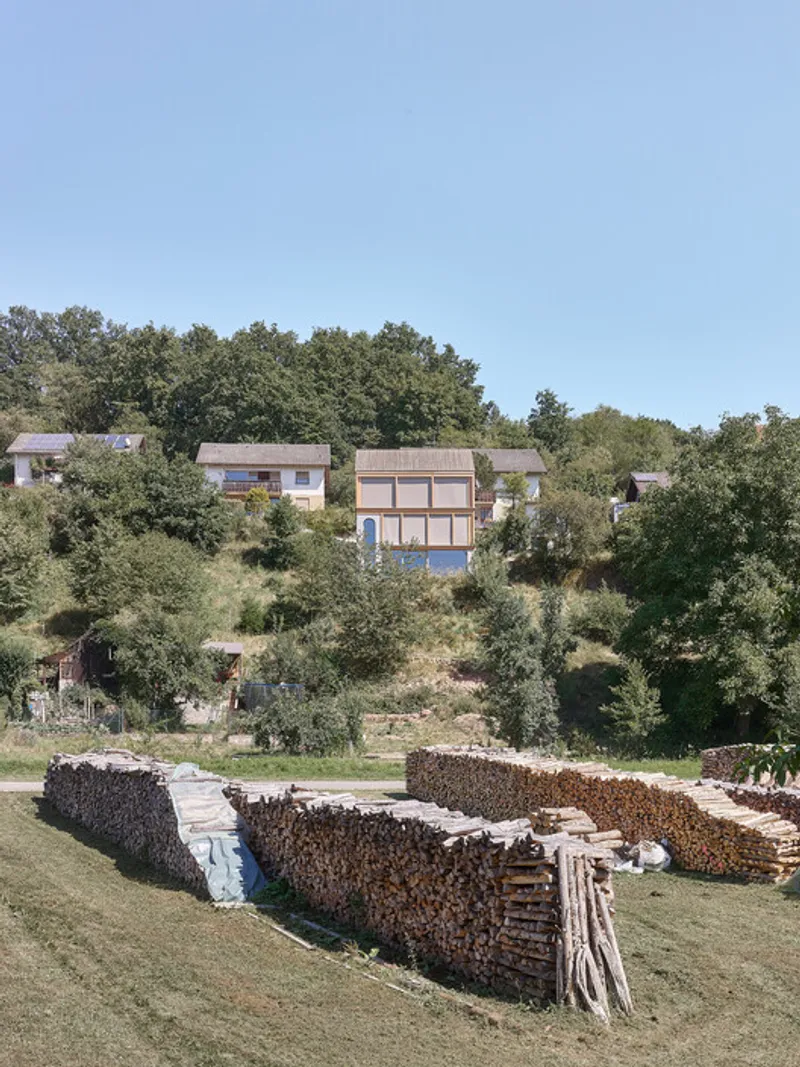
This duality—closed on one side, open on the other—defines the architectural character. It mirrors the family's desire for both refuge and exposure, intimacy and openness.
Designing for Less: The Minimal Home
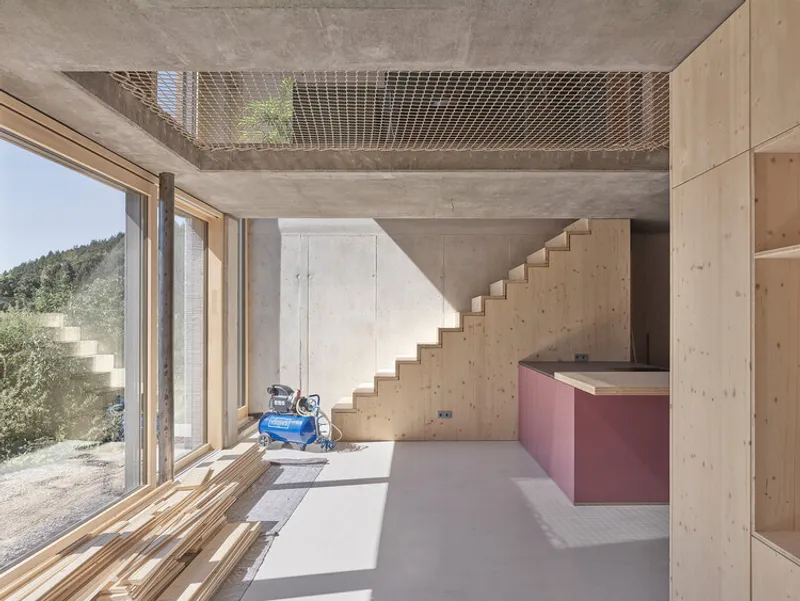
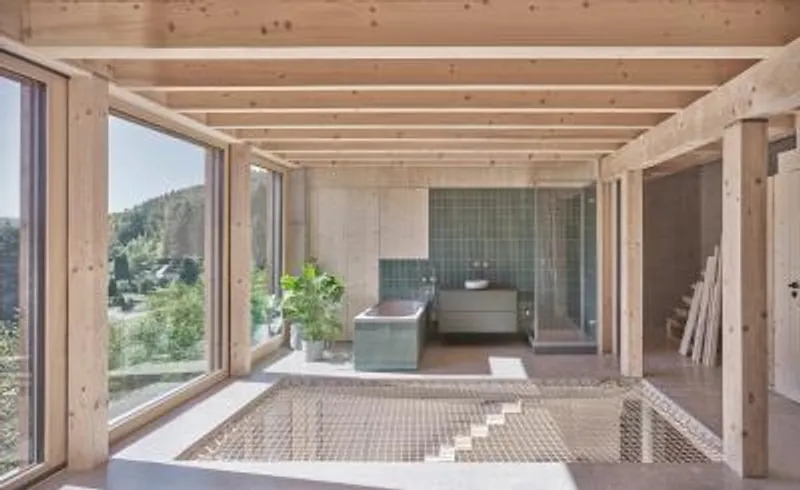
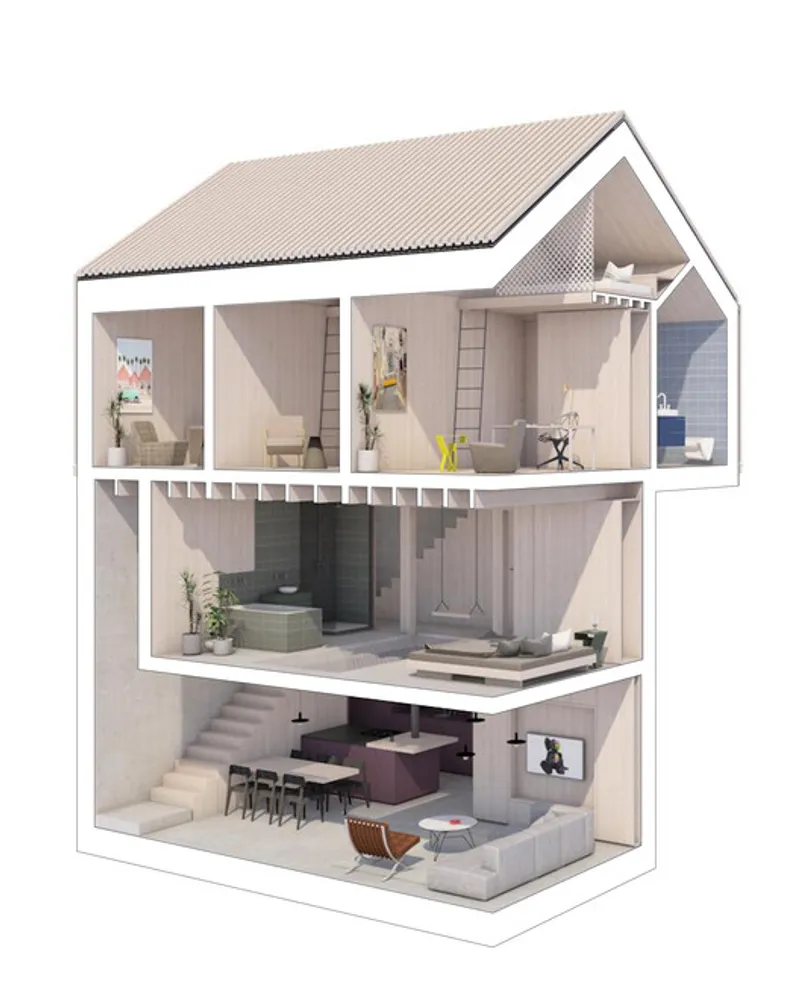
ToB.Studio and the clients shared a clearly defined vision from the outset: compact, sustainable, and regenerative architecture driven by resource-conscious simplicity. The house spans only 110 square meters yet embraces spatial generosity through its openness and light.
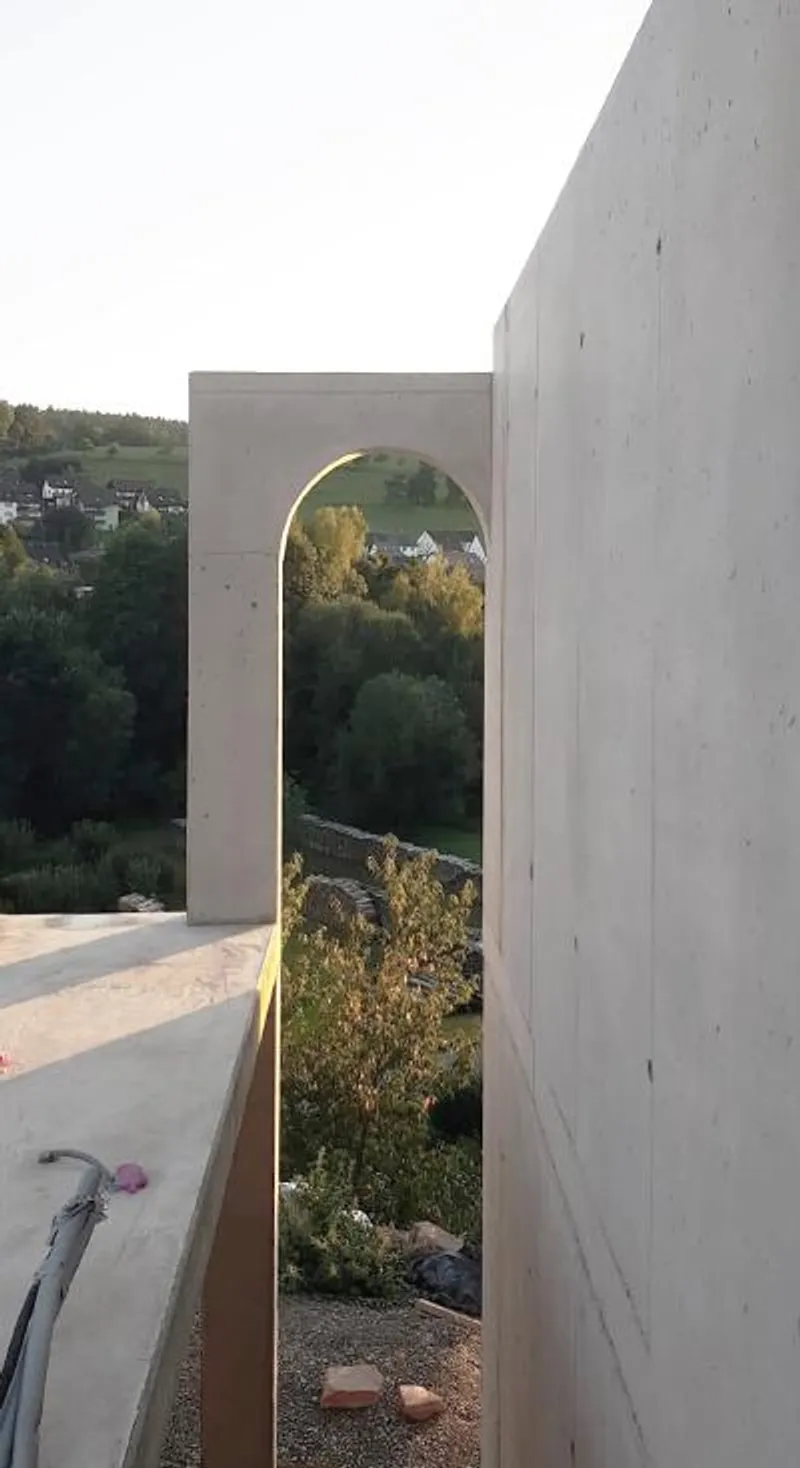
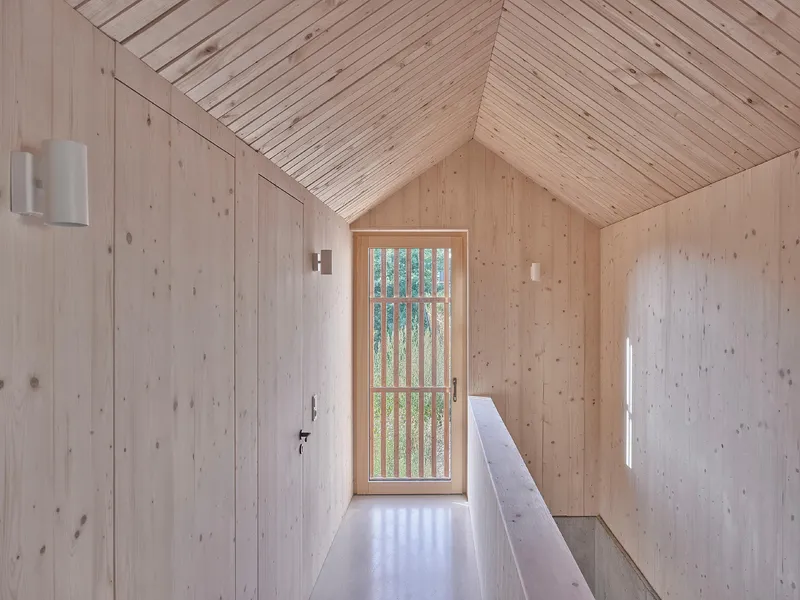
Every element was re-examined for necessity. The layout minimizes walls and eliminates most internal doors, creating uninterrupted sightlines across the entire home. Spaces are multifunctional and flow seamlessly, guided by natural light and materials.
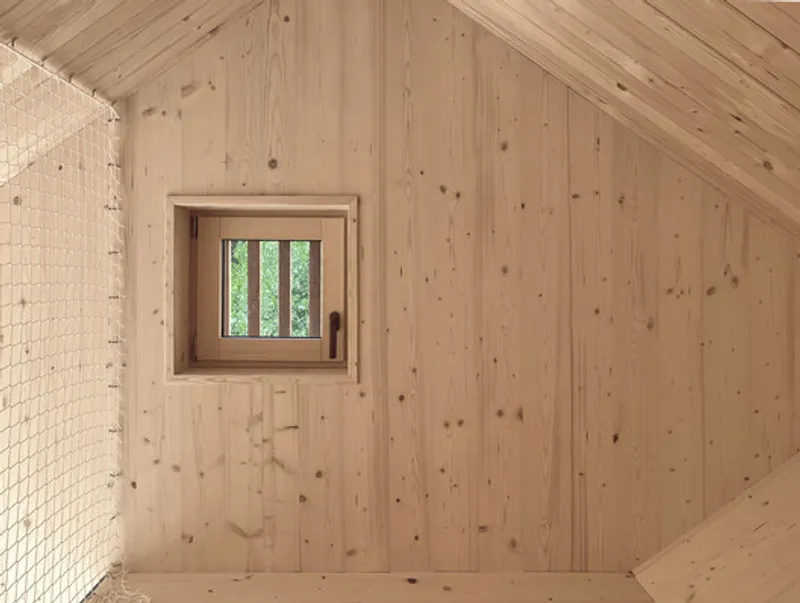
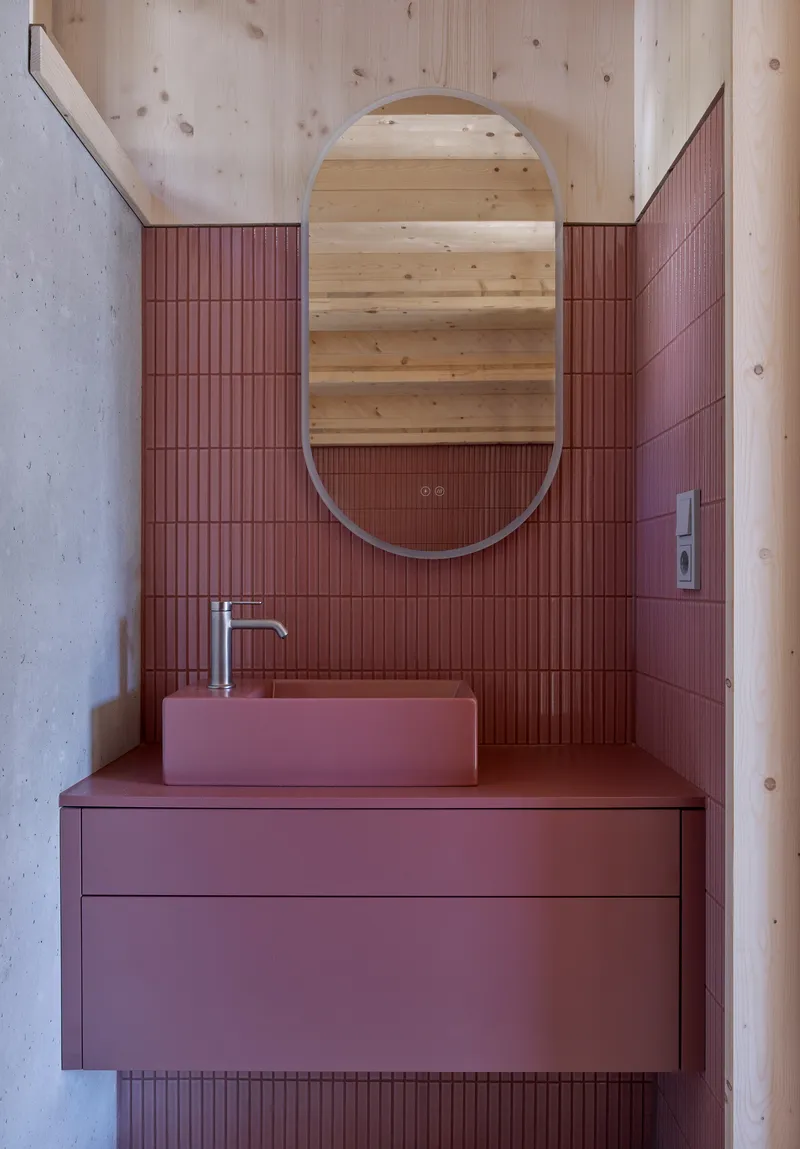
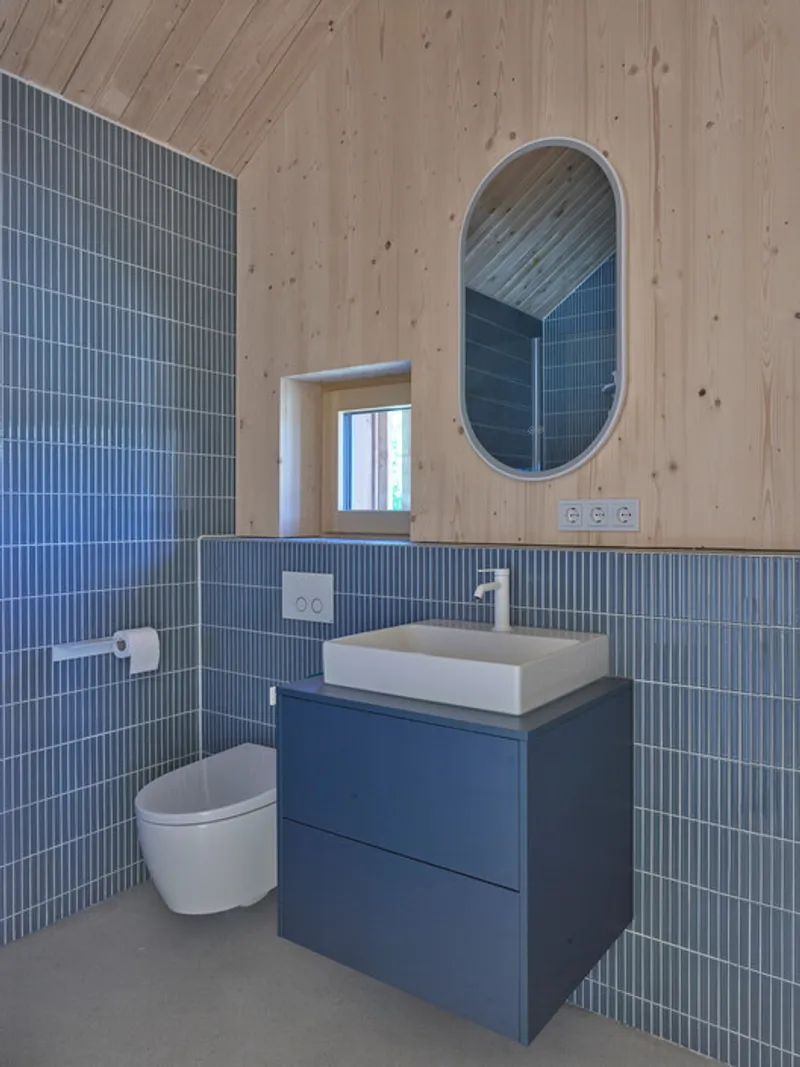
The home's interior reveals the beauty of reduction—emphasizing texture, structure, and craft over ornament. By prioritizing less space and fewer materials, the design translates environmental responsibility into aesthetic clarity.
The Staircase as a Symbol of Meaning
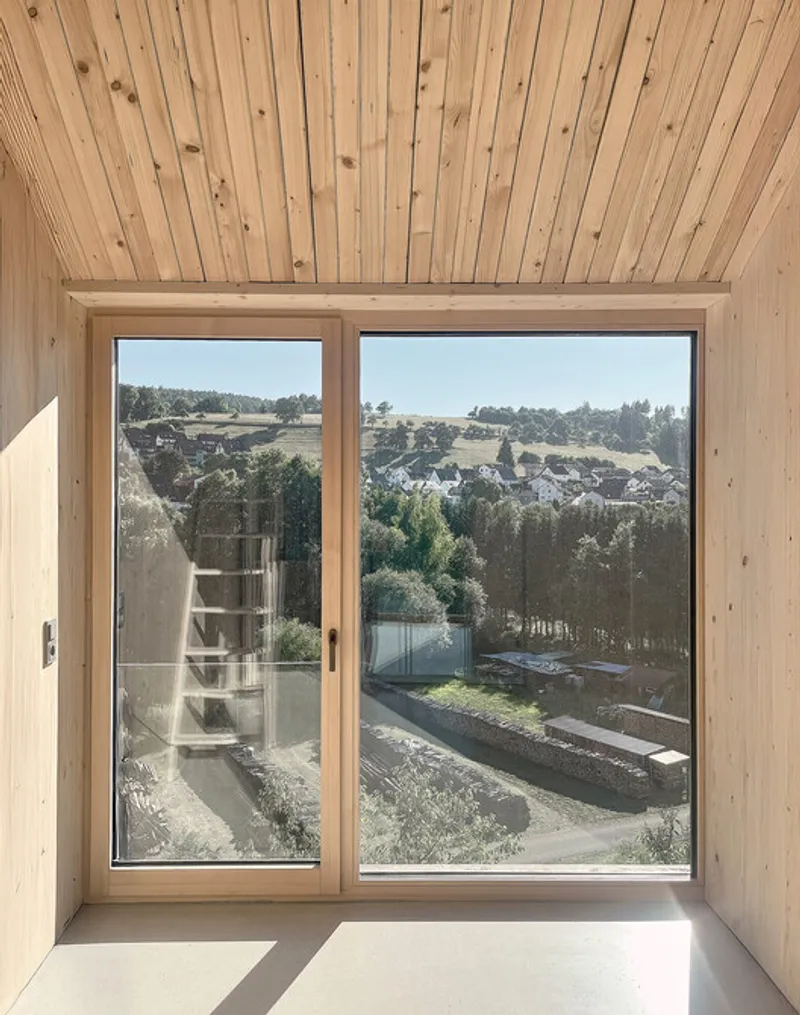
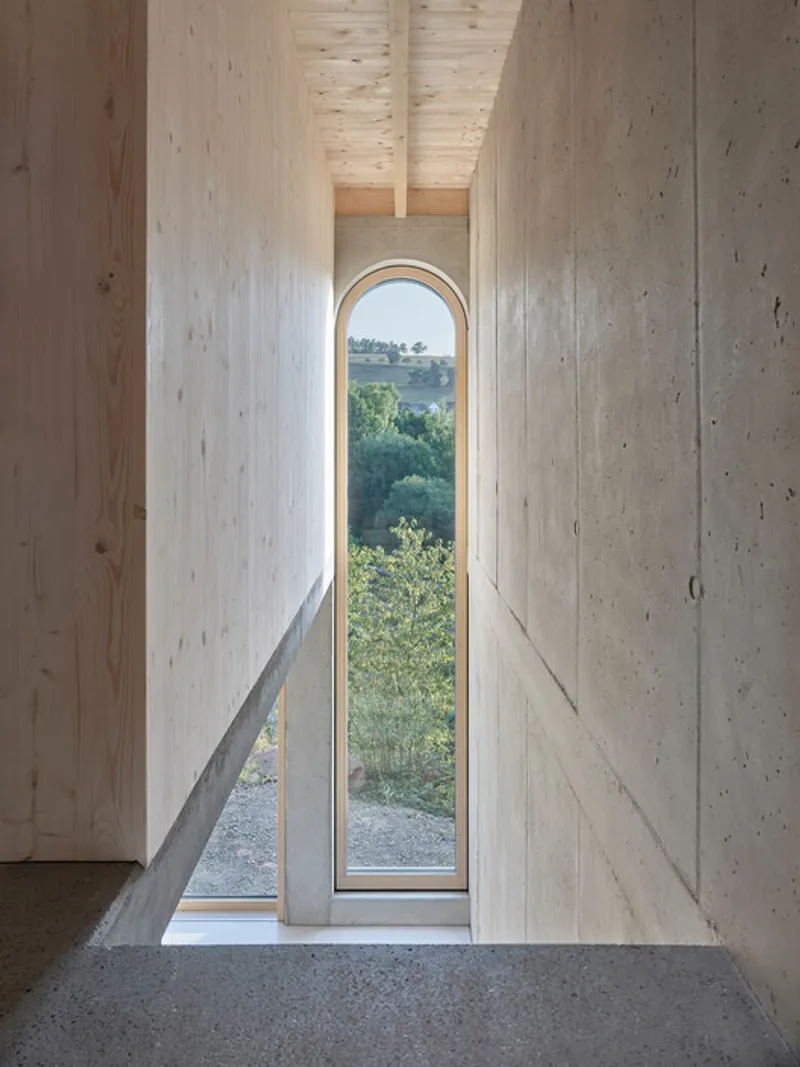
Among the house’s details, the central staircase emerged as a symbolic and emotional centerpiece. More than circulation, it became a space for pauses, conversation, and reflection—offering framed views of the surrounding valley through a tall, chapel-like window.
This moment of serenity captures the project’s spirit. As villagers jokingly whispered, “Is it a church?”—they recognized a sacred quality in its restraint and light. Architecture here becomes contemplative, rooted in everyday life yet elevated through atmosphere.
Architecture Shaped by Collaboration
The project’s success lay in deep collaboration between architect and client. Both shared a belief in slow design: each decision, material, and orientation emerged through dialogue and trust.
From foundation to finish, the home is an embodiment of authorship through partnership. It proves that architecture can be intensely personal—when it grows from lived experience, local memory, and the emotional intelligence of place.
Living Sustainably Among the Hills
Form Follows Sheep House is an example of ecological living through modesty. Locally sourced timber, energy-efficient systems, compact volume, and passive orientation minimize environmental impact. The house rejects the desire for expansion in favor of quality, longevity, and connection.
In return, it offers something richer than space: a different rhythm of life.
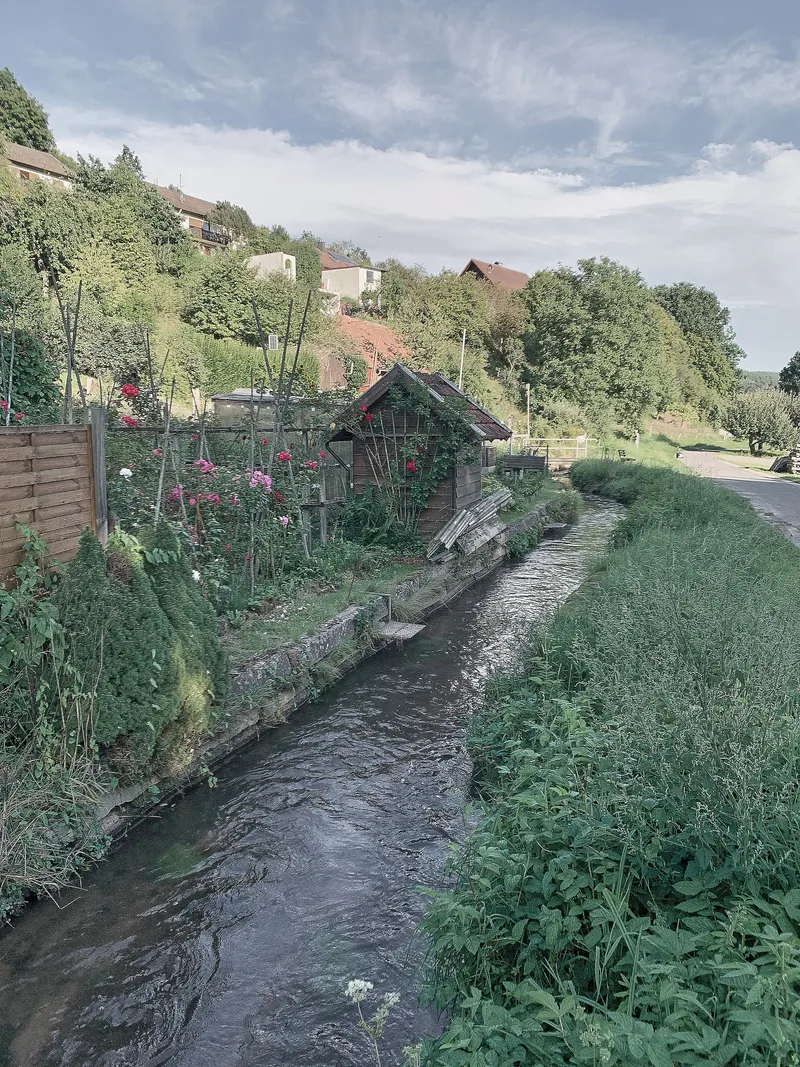
All the photographs are works of Benjamin Brückner


Popular Articles
Popular articles from the community


Faces of the Soviet Avant-Garde: Turning Moscow's Street Names into an Open-Air Museum
A network of sculptural installations across a Moscow residential district transforms forgotten architect names into spatial encounters with cultural memor

Extended Shell: Retrofitting Kolkata's Balconies as Living Urban Thresholds
A modular retrofit system recovers the social and environmental intelligence of Kolkata's historic verandas for contemporary Park Street residents.

Singing Woman: Contemporary Architecture Inspired by Estonia’s Voice and the Sea
Singing Woman turns Estonia’s song culture into flowing opera house architecture, blending public life, landscape, sea, and national memory.

Tsunami Convergenics: Turning Catastrophic Ocean Forces into Underwater Housing Infrastructure
A speculative underwater settlement off the coast of Onagawa, Japan, treats tsunamis and typhoons as energy sources rather than threats.

Similar Reads
You might also enjoy these articles


Hodi-Mandai Geram
Project Function: Preservation and revitalization of the Intangible heritage and socio-spatial identity of the Hodi by Housing, Cultural Memory Center, Sacred Grove, landscape, local tourism economy


Olio Towers: A Mid-Rise for Performers That Fuses Housing, Rehearsal, and Stage
Located blocks from Houston's Theater District, this modular tower stacks living units around a central performance atrium.

Oasis: Modular Green Housing Carved into Dhaka's Urban Fabric
A shortlisted Plugin Housing entry reclaims unauthorized settlements in Dhaka with stepped concrete volumes, green roofs, and ventilation-driven design.

Black Hole: A Floating Megastructure for the Post-Physical Era
Emiliano Mazzarotto envisions a spherical, self-scaling arena where e-sports, digital hotels, and holographic stadiums replace traditional public space.

Explore Architectural Form Competitions
Discover active competitions in this discipline

Challenge to reimagine the Iron Throne

Photograph architecture without architects

Illustrate the lost glory of Angkor Wat - Render Challenge

Design challenge to reuse E-waste
Comments (0)
Please login or sign up to add comments
No comments yet. Be the first to comment!