
Forssa Multipurpose Centre Akvarelli: A Village-Inspired Learning Environment in Finland
Village-inspired multipurpose education center in Forssa, combining school, daycare, and community spaces with brick architecture reflecting local industrial heritage.

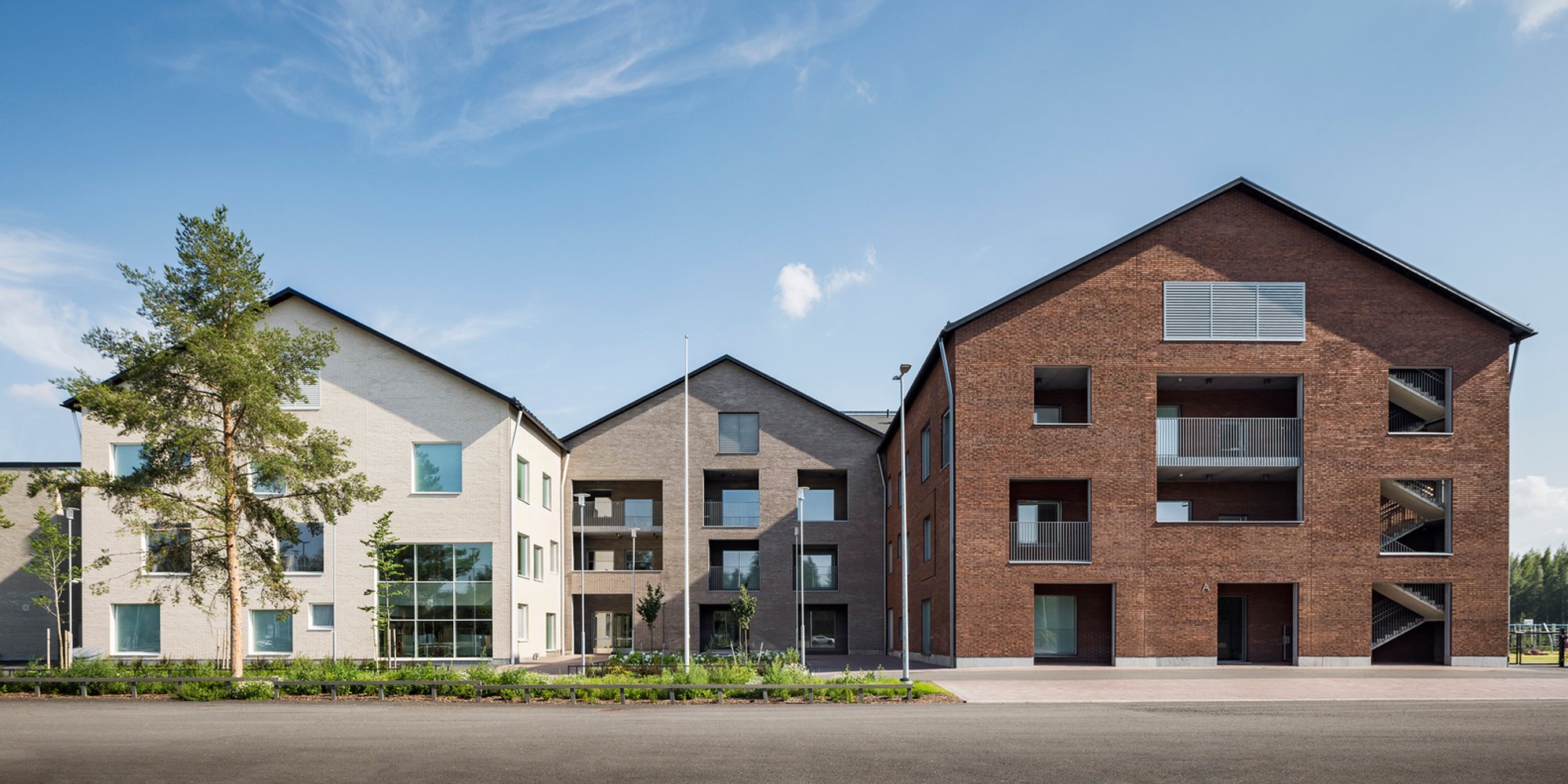
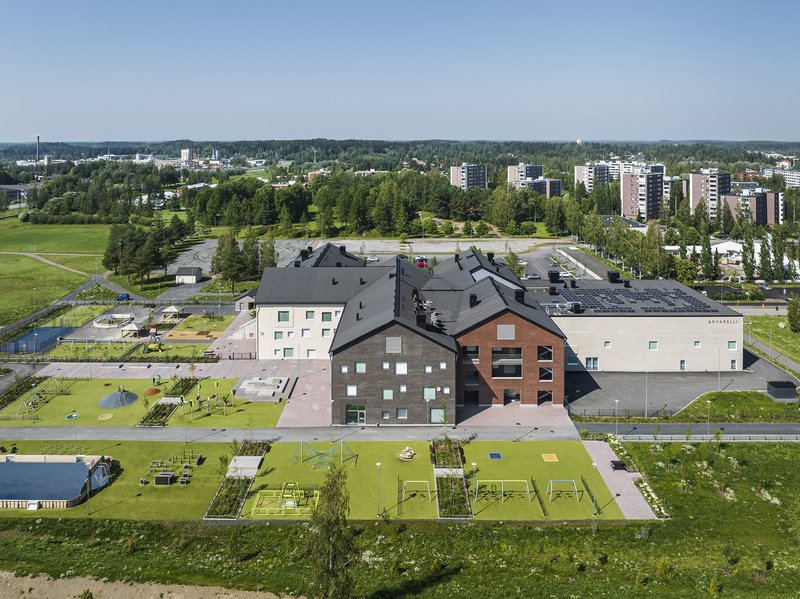
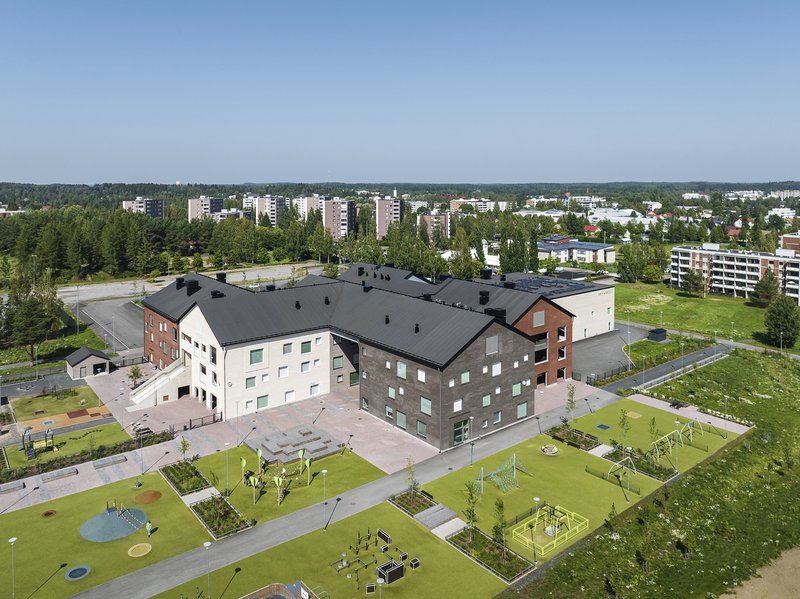
The Forssa Multipurpose Centre Akvarelli, designed by Olla Architecture, represents an innovative approach to educational architecture in Forssa, Finland. Completed in 2022, the 10,000-square-meter complex integrates elementary school facilities, daycare services, and special education programs into a cohesive learning environment designed for more than 800 daily users. Rather than functioning as a conventional institutional building, the center is conceived as a village-like educational community, where small-scale architecture encourages interaction, accessibility, and a sense of belonging among children and educators.
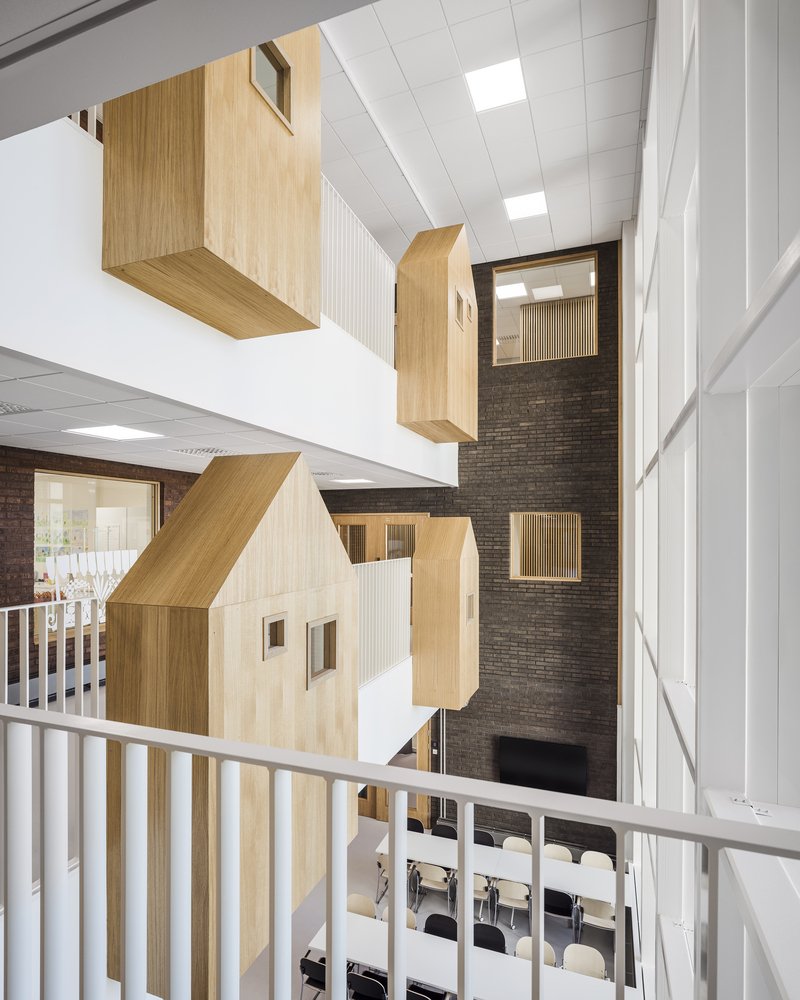
A Village Concept for Human-Scaled Education
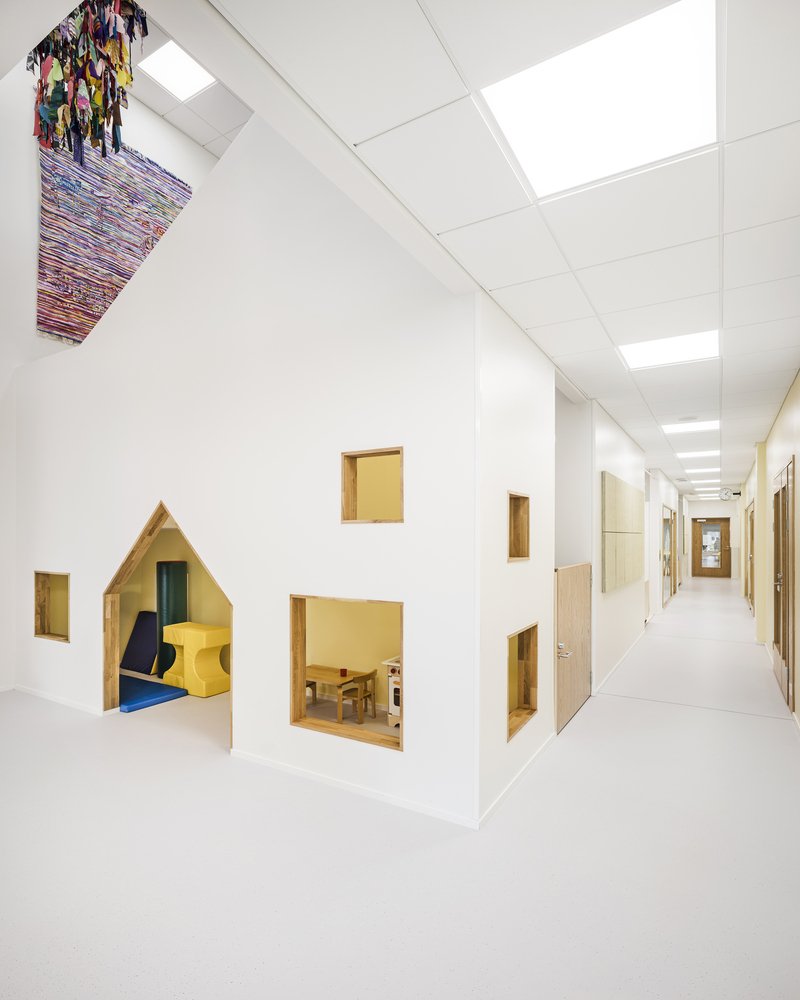
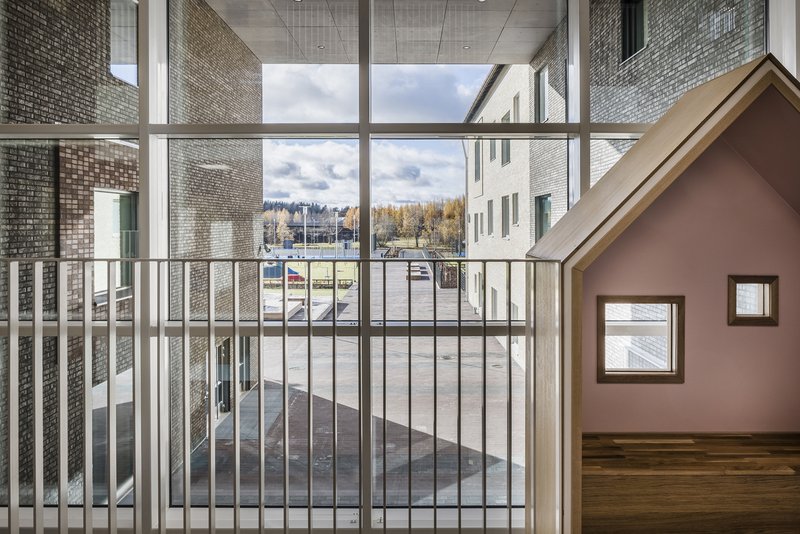
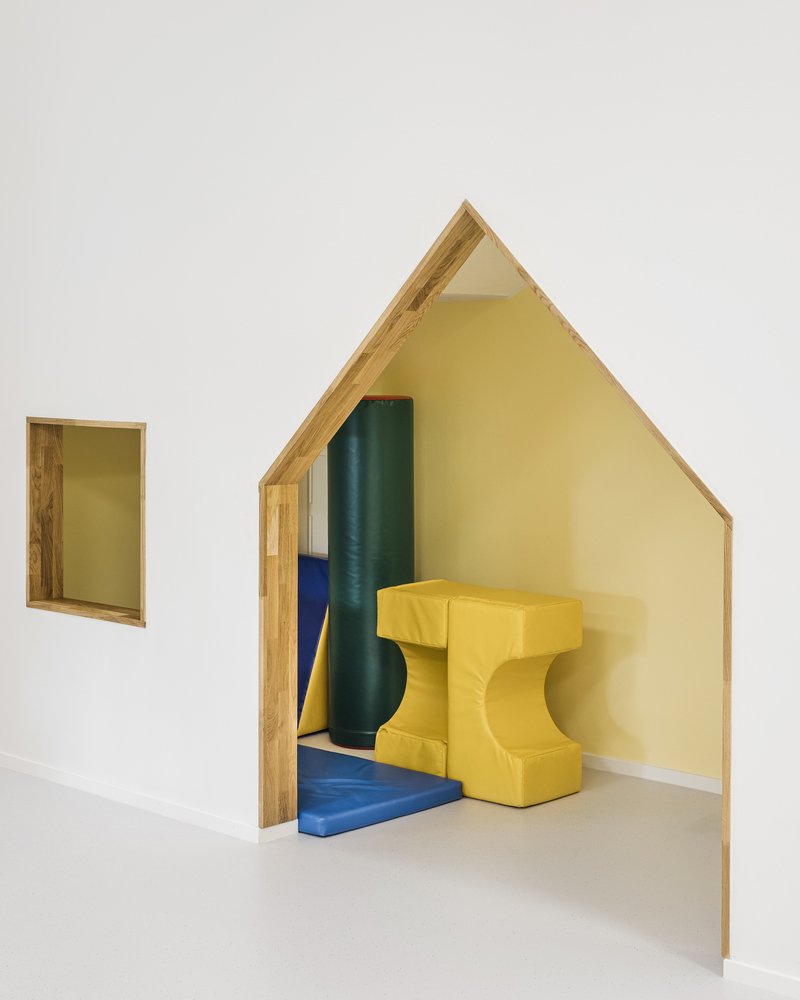
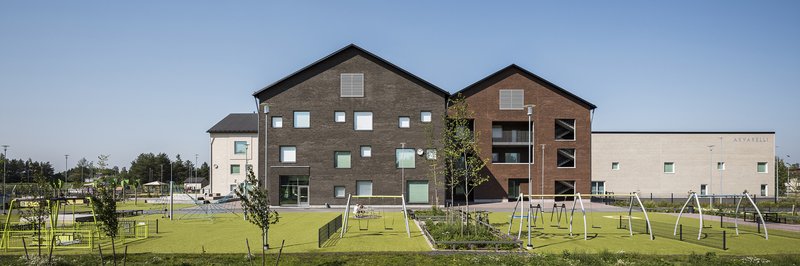
The architectural concept for the Forssa Multipurpose Centre Akvarelli emerged from the challenge of accommodating a large educational program while maintaining a comfortable scale for young users. To address this, the design team avoided creating a single massive structure. Instead, the learning environment is composed of multiple smaller volumes arranged like a village, allowing each function to maintain an approachable, child-friendly scale.
During the early design phase, the project was known as “Monikylä,” meaning “multiple villages.” This name reflects the center’s community-oriented philosophy and its urban composition of smaller building blocks. By organizing the program into distinct yet connected spaces, the architects created a campus that encourages exploration, social interaction, and intuitive navigation.
Central Lobby as the Community Square
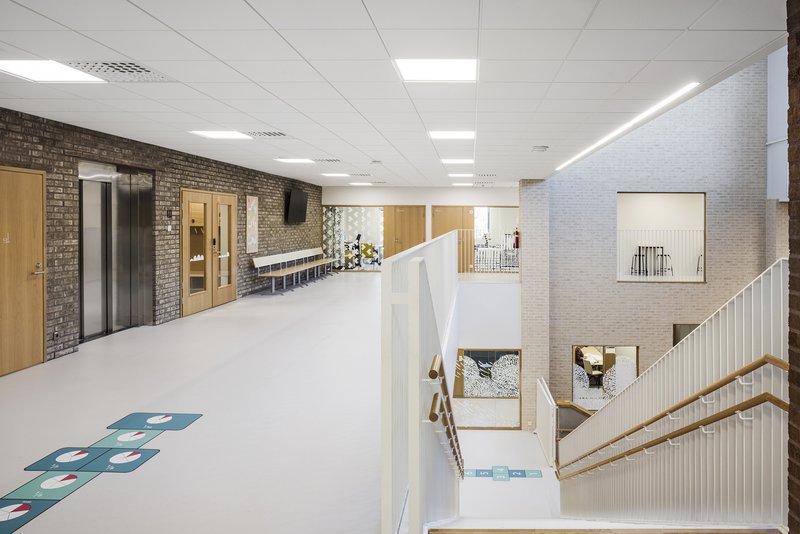
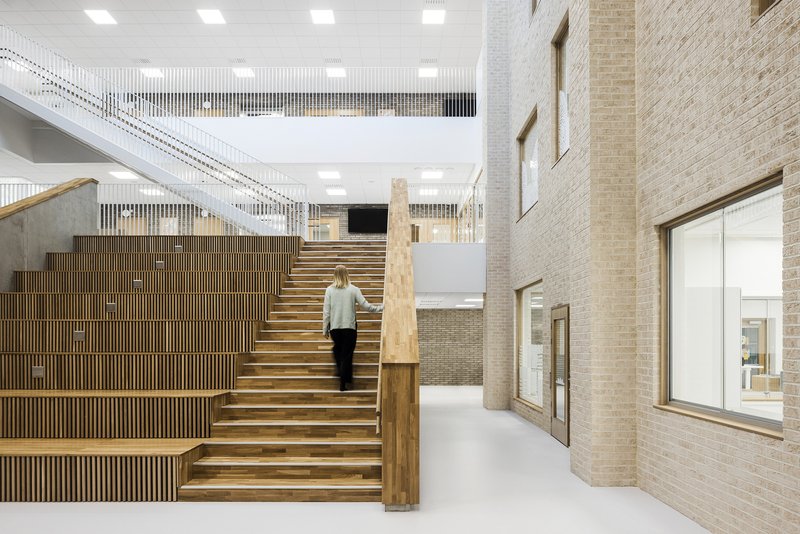
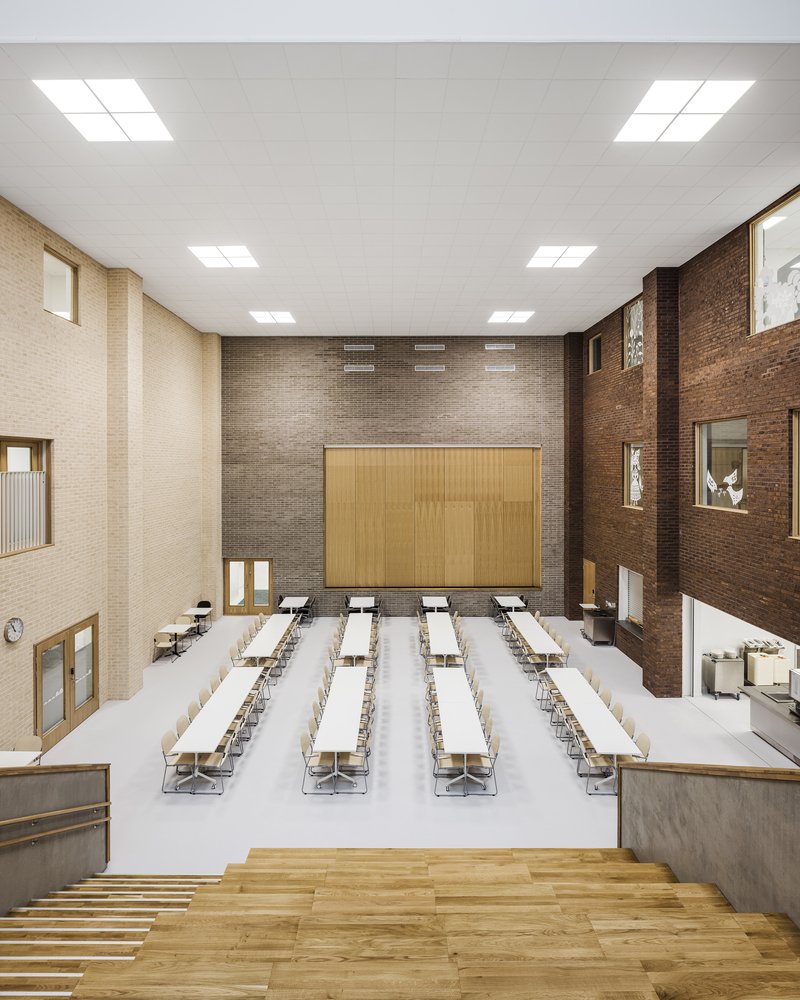
At the heart of the complex lies a central lobby, which functions as the communal gathering space of the educational “village.” Surrounded by brick walls in varying colors, the lobby resembles a town square where students, teachers, and visitors naturally meet and interact.
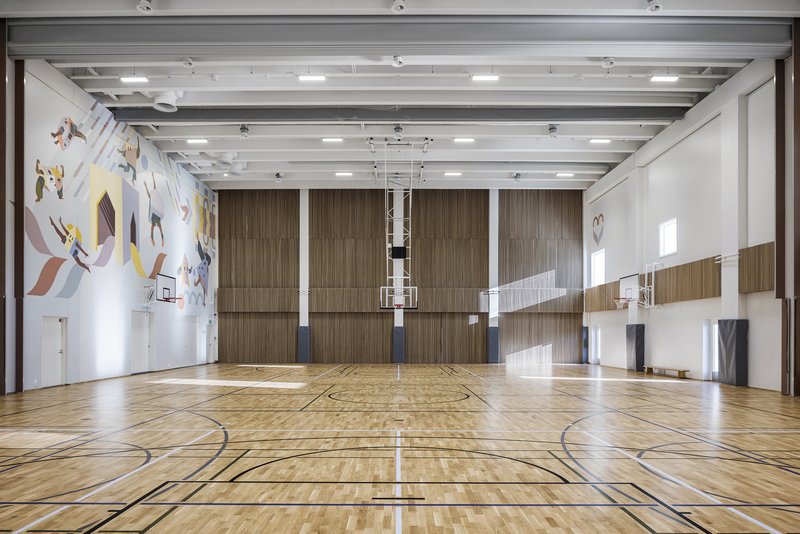
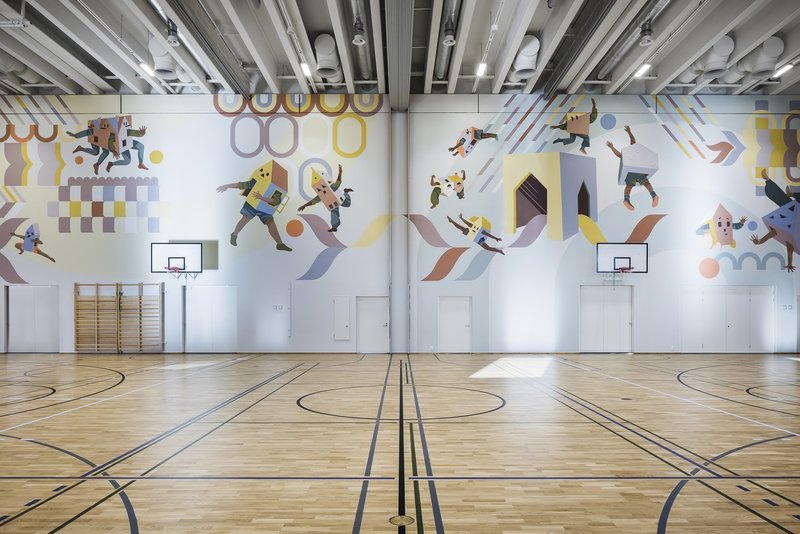
This central space also features a flexible stage that can open toward the lobby or the adjacent gymnasium, enabling multiple types of events such as school performances, assemblies, or community gatherings. The design ensures that the building remains active beyond school hours, strengthening the connection between the educational institution and the wider community.
Diverse Learning and Activity Spaces
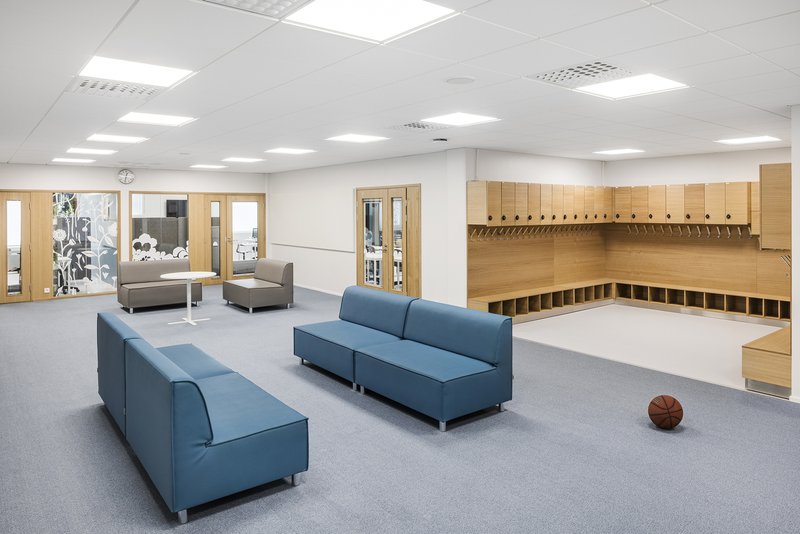
The first floor accommodates a wide range of specialized learning environments, reflecting contemporary educational methods that emphasize creativity, collaboration, and hands-on experiences. Facilities include dedicated spaces for cooking classes, crafts, media studies, music education, and sports activities.
These flexible spaces are designed not only for students but also for community use after school hours, transforming the center into a civic hub for the city of Forssa. This multifunctional approach enhances the building’s value as both an educational facility and a community-oriented public space.
Material Continuity and Architectural Identity
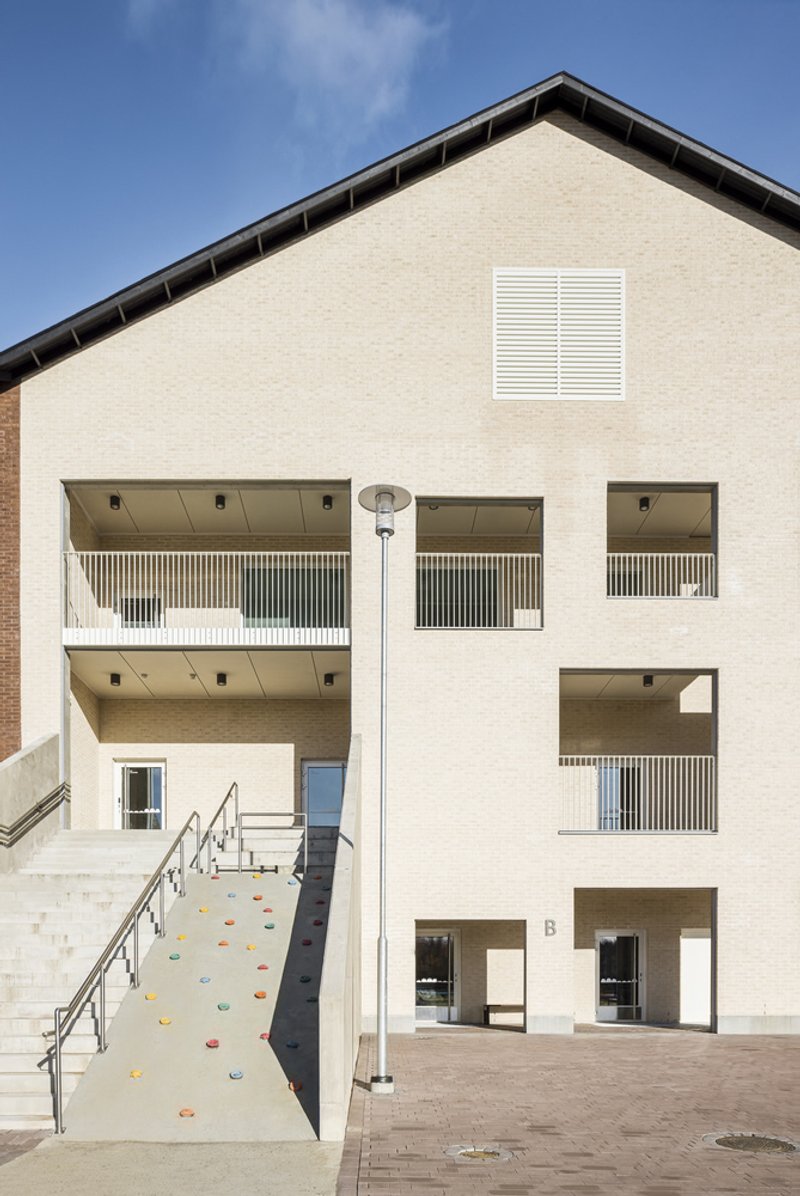
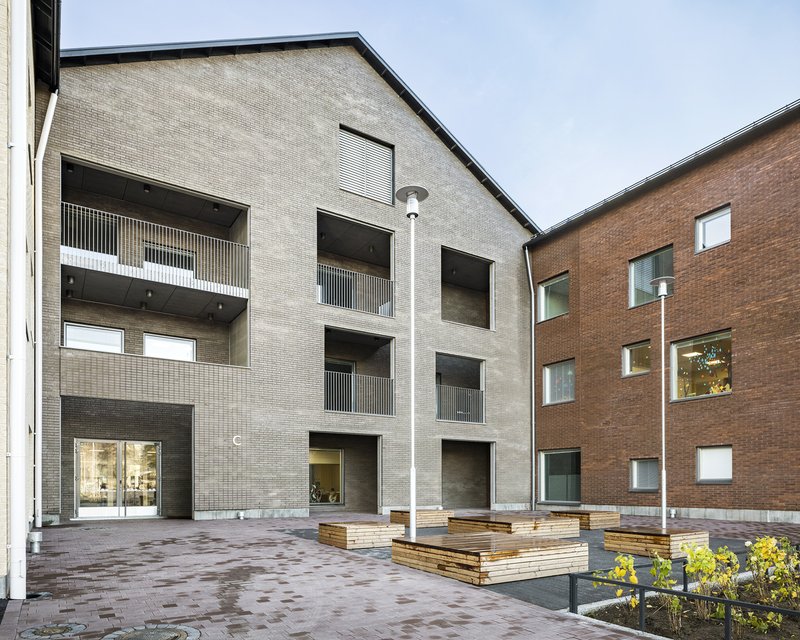
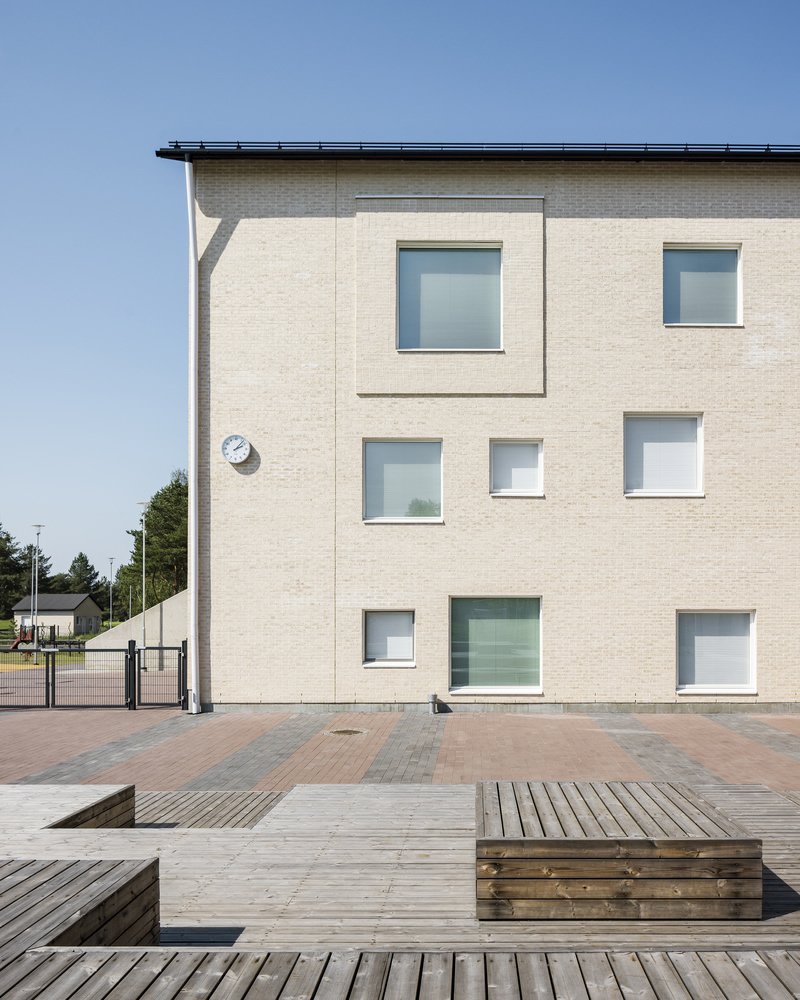
A consistent material palette ties together the interior and exterior architecture of the complex. Brick surfaces play a central role in shaping the building’s identity, creating a tactile and durable façade that echoes the historic industrial architecture of Forssa.
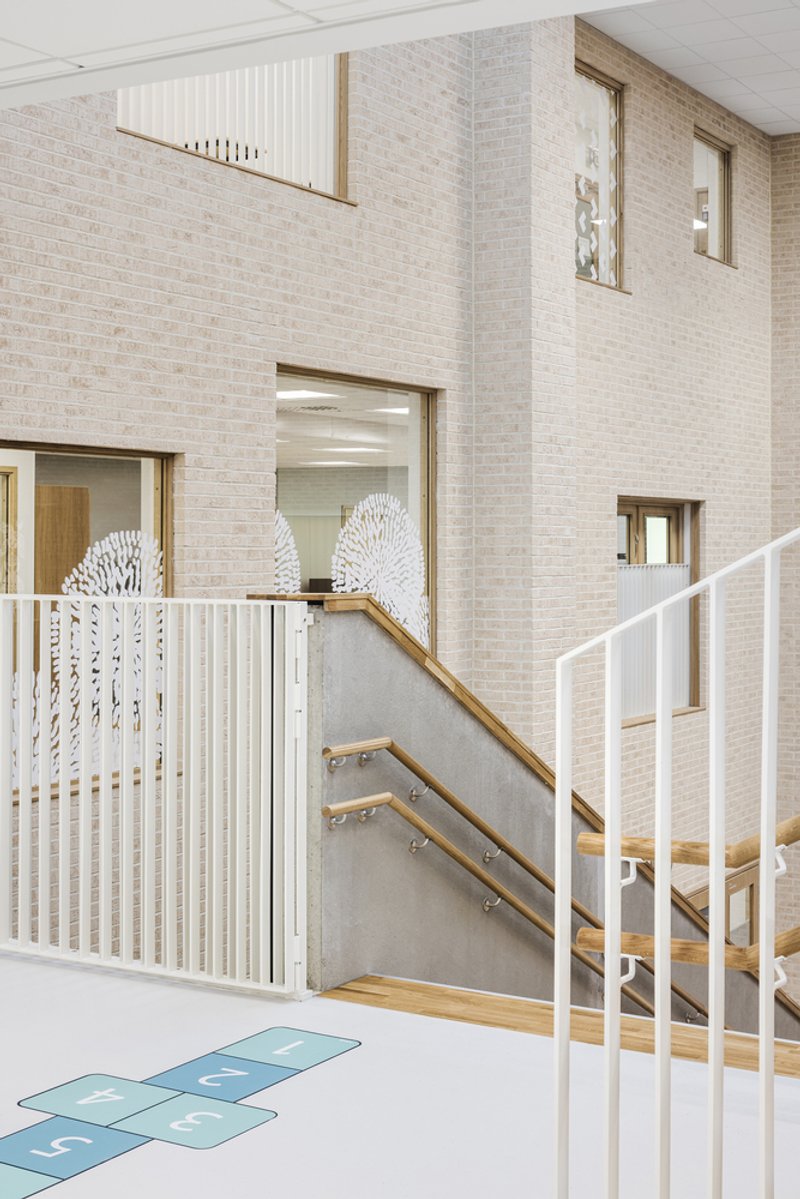
The same railing styles, openings, and architectural details appear both indoors and outdoors, reinforcing spatial continuity and visual harmony throughout the building. This design strategy blurs the boundary between interior and exterior environments, helping the center feel cohesive and legible.
Architectural Dialogue with Forssa’s Industrial Heritage
The architecture of the Akvarelli Multipurpose Centre deliberately references Forssa’s industrial history, particularly the city’s legacy of brick factories and textile production. The use of varied brick textures and colors reinterprets the materials found in the city’s historic industrial buildings, transforming them into a contemporary educational setting.
Through this approach, the project creates a dialogue between past and present, celebrating local identity while introducing modern architectural solutions for learning environments.
Cultural Patterns and Visual Storytelling
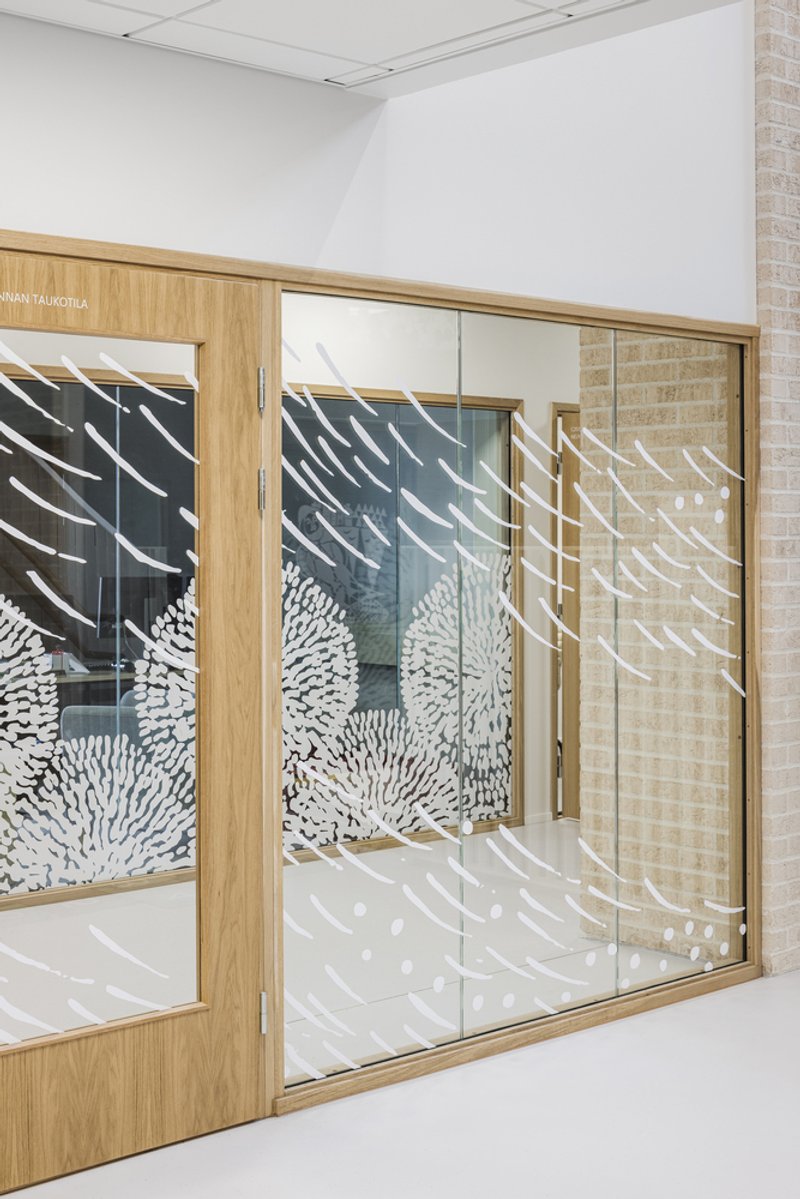
Another distinctive feature of the building is the use of decorative glass surfaces throughout the interior. These glass panels are adorned with patterns originally created in a local textile print studio during the 1950s, linking the architecture to Forssa’s long tradition of textile design.
Each pattern corresponds to the function or user group of the space. In the daycare areas, playful animal motifs animate the glass walls, creating a joyful environment for young children. In the elementary school spaces, the patterns depict human figures that reflect social interaction and community. Meanwhile, the high school areas feature more geometric patterns that convey maturity and intellectual focus.
This thoughtful integration of graphic design adds an additional narrative layer to the architecture, enriching the spatial experience while reinforcing the cultural identity of the region.
A Contemporary Model for Educational Architecture
The Forssa Multipurpose Centre Akvarelli demonstrates how educational buildings can move beyond traditional institutional models to become dynamic community environments. By adopting a village-like spatial organization, incorporating cultural references, and supporting flexible learning activities, the project establishes a forward-thinking model for modern school design.
Through its combination of child-scaled architecture, adaptable spaces, and strong ties to local history, the center creates an inspiring environment where education, culture, and community life intersect.
All photographs are works of
Martin Sommerschield



Popular Articles
Popular articles from the community

20 Most Popular Furniture Design Projects of 2025
Modular street systems, parametric benches, and insect hotels: the furniture design projects that captivated architects on uni.xyz in 2025.

H&P Architects Stack a Vertical River of Brick and Greenery in Hanoi
A perforated terracotta tower in Dong Anh channels water, light, and air through eight staggered levels of domestic life.
Paco Oria Estudio Rebuilds a 1949 Valencian Town House Around Timber, Terracotta, and a New Interior Patio
In Godella, Spain, a semi-detached house from the postwar era is stripped to its party walls and rebuilt with wood and ceramics.

Biophilic Architecture and Regenerative Stadium Design: Biophilia Lagos by Rachel George
A regenerative stadium in Lagos transforms landfill into a living ecosystem through biophilic architecture, waste reuse, and environmental healing.


Similar Reads
You might also enjoy these articles
Bamboo Housing Challenge 2026: Design Affordable, Sustainable Homes Using Bamboo
An international design competition by Bamboo U and IBUKU inviting architects and designers to reimagine affordable housing using bamboo — with the winning design built full-scale in Bali.
Computational Design & Education: Beegraphy Design Awards Introduces 7th Category (Featuring Jiyun's Innovative Approach)
Dive into Beegraphy’s 7th Design Awards category, where computational design meets education to create immersive, interactive learning tools, inspired by Jiyun’s work.
From Parametric Lighting to Urban Furniture: Join the 2nd Workshop in Beegraphy’s Computational Design Series
Dive into Cutting-Edge Design Techniques and Practical Applications with Industry Experts

Introducing Sphere by UNI: Pioneering a New Era in AEC Industry
Unlocking Global Potential with BIM and Agile Management

Explore Architecture Competitions
Discover active competitions in this discipline




The International Standard for Design Portfolios


The Global Benchmark for Architecture Dissertation Awards


The Global Benchmark for Graduation Excellence


Challenge to design public laboratory
Comments (0)
Please login or sign up to add comments
No comments yet. Be the first to comment!