

FRAME China Office by ARCHSTUDIO: A Spatial Manifesto of Media, Design, and Industrial Elegance in Shenzhen
FRAME China Office by ARCHSTUDIO blends industrial materials and spatial fluidity to create a multifunctional, editorial workspace in Shenzhen.


Located in the heart of Shenzhen’s bustling Futian CBD, the FRAME China Office—designed by Beijing-based firmARCHSTUDIO—is an architectural embodiment of editorial vision, cultural openness, and contemporary spatial innovation. The project serves as the Chinese editorial branch of FRAME Magazine, a globally renowned design publication headquartered in the Netherlands. This 327-square-meter workspace is not just a place of work but a platform for communication, creativity, and cross-cultural design exchange.
Situated within the Upperhills Loft complex—an urban hub that merges nature, commerce, and art—the office is directly linked to Lianhuashan and Bijiashan parks and surrounded by world-class facilities such as the Mandarin Oriental Hotel, Galeries Lafayette, and an art theater, fostering a cosmopolitan and design-forward atmosphere. The site’s open, multifunctional, and culturally immersive urban context seamlessly aligns with FRAME’s editorial ethos of inclusivity and innovation.
Concept: Reframing Space Through Structure, Form, and Material
ARCHSTUDIO’s design approach revolves around the conceptual theme of “FRAME”—translating the publication’s name into an architectural language that expresses transparency, connection, and transformation. The spatial layout reinterprets frame as both a physical structure and a philosophical idea, crafting a work environment that not only supports editorial productivity but also inspires dialogue, aesthetic appreciation, and design experimentation.
The interior is strategically organized across a north-south split-level configuration, maximizing the site’s generous 8.8-meter vertical clearance and daylight penetration. This approach enables a fluid, vertical circulation system while maintaining clear zoning for public engagement, collaborative work, and private discussion.
Spatial Layout: A Dynamic Three-Level Office Ecosystem
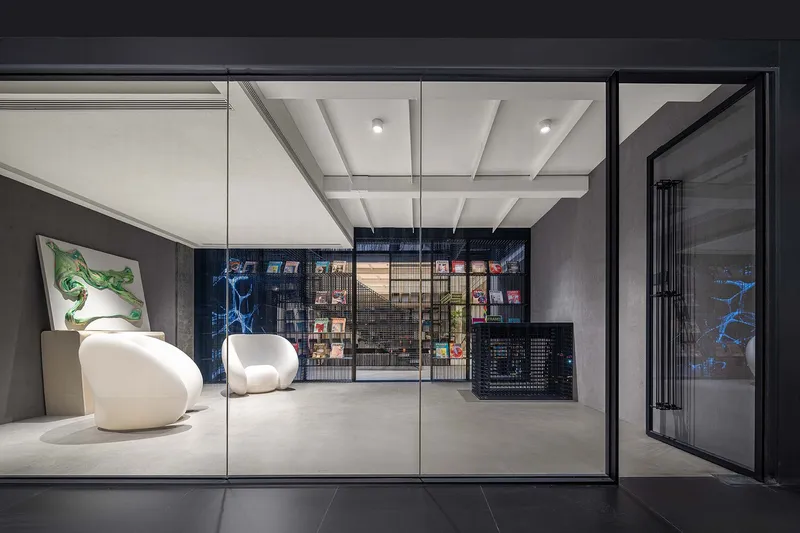
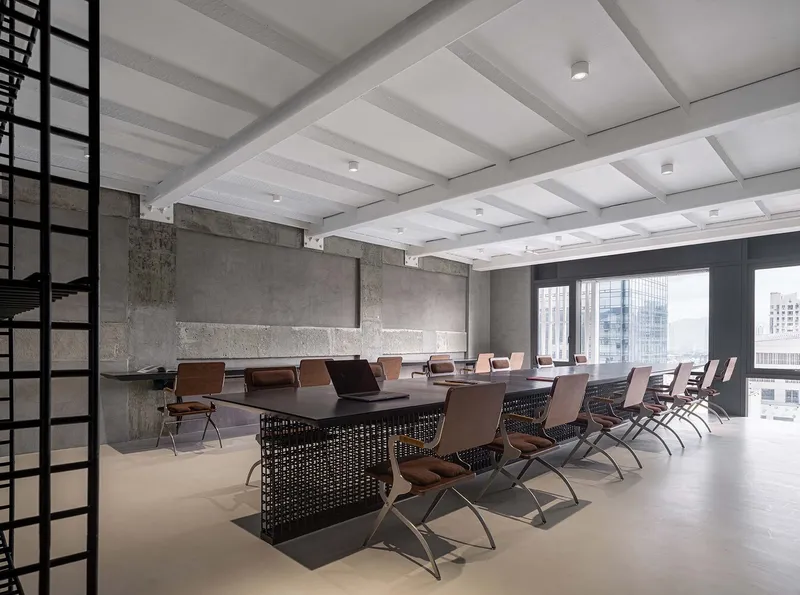
The ground floor serves as a multifunctional public venue, hosting regular media and cultural events that support FRAME’s outreach and community-building initiatives. The second level features open-plan office spaces that promote flexible working arrangements and spontaneous interaction. The third floor includes private office rooms and a large meeting room, supporting focused work and formal collaboration.
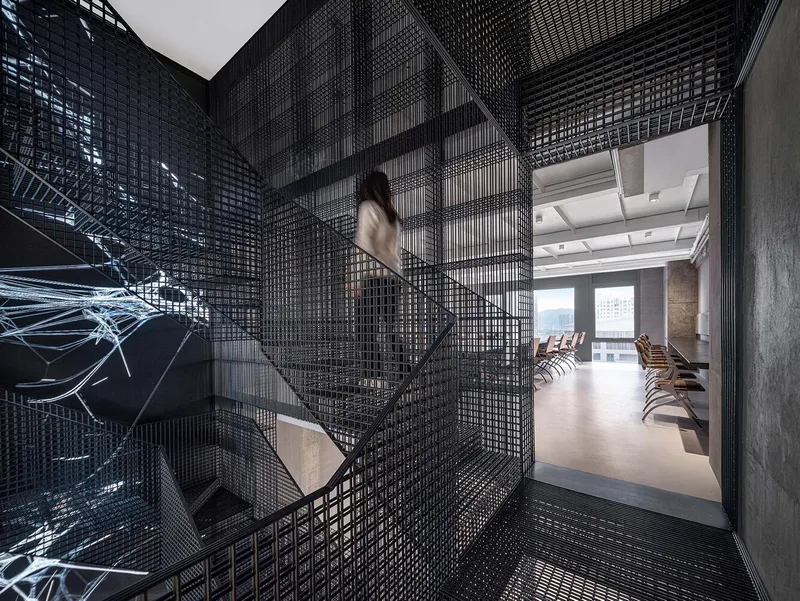
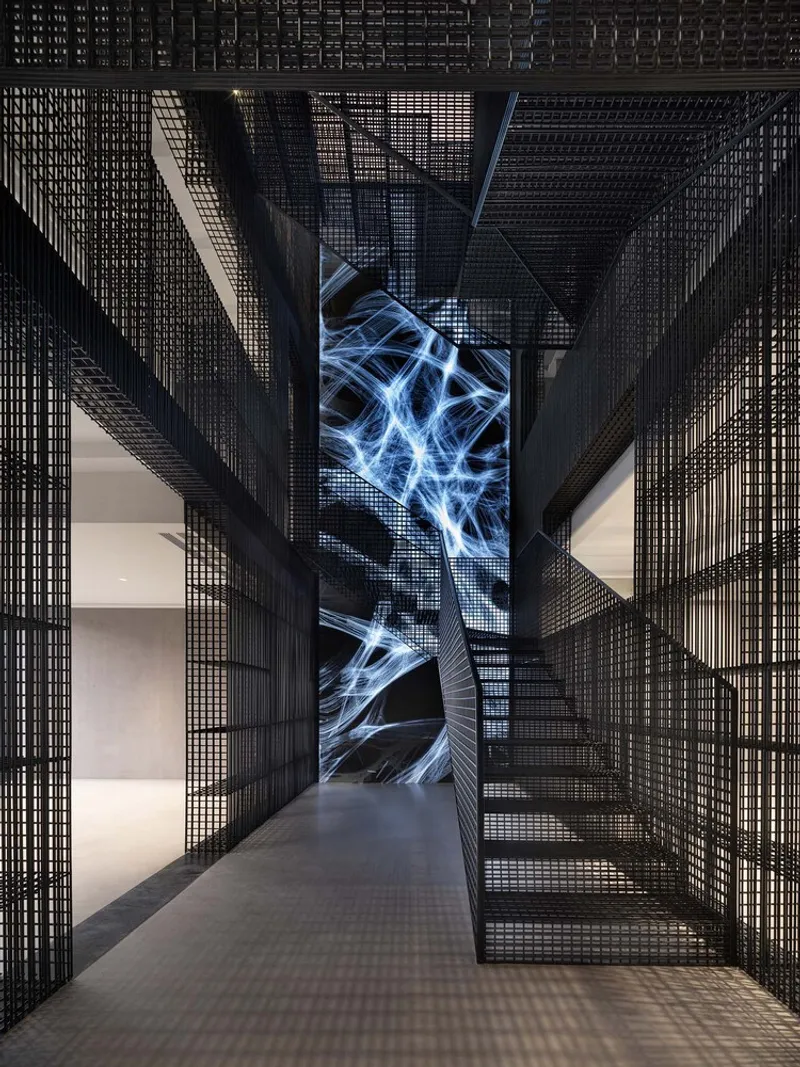
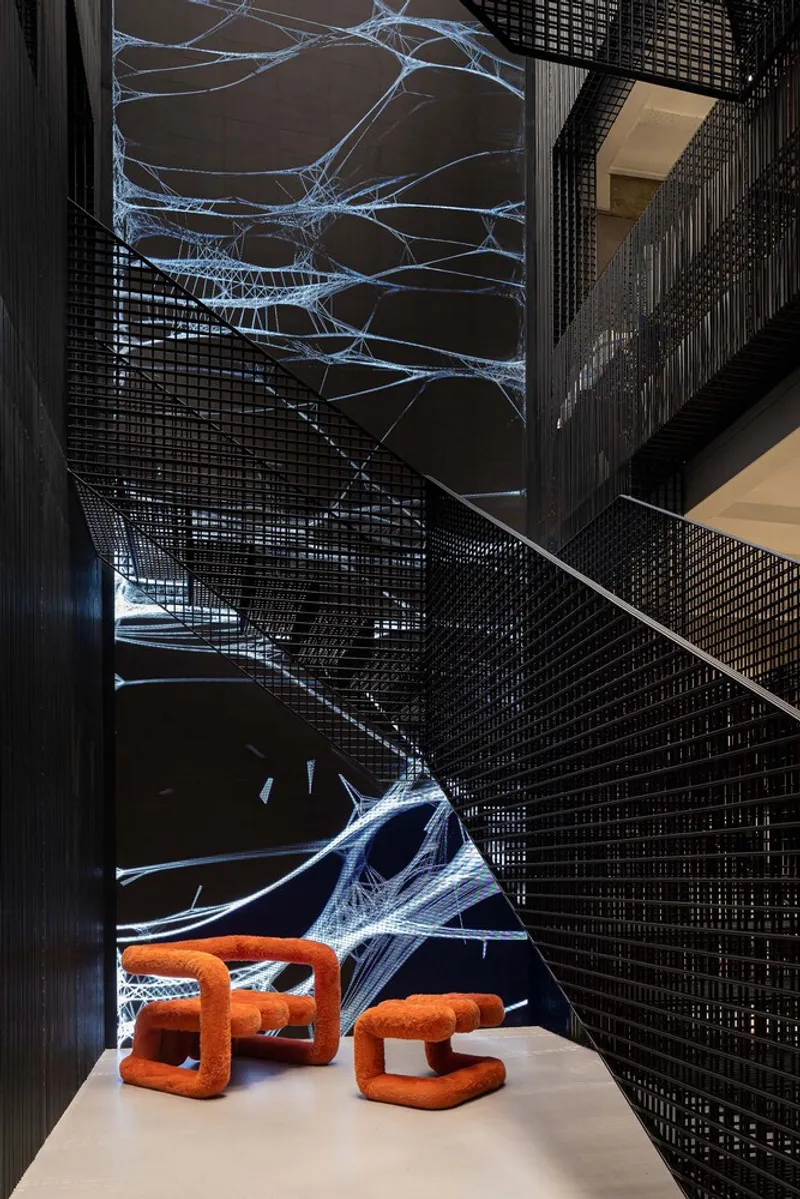
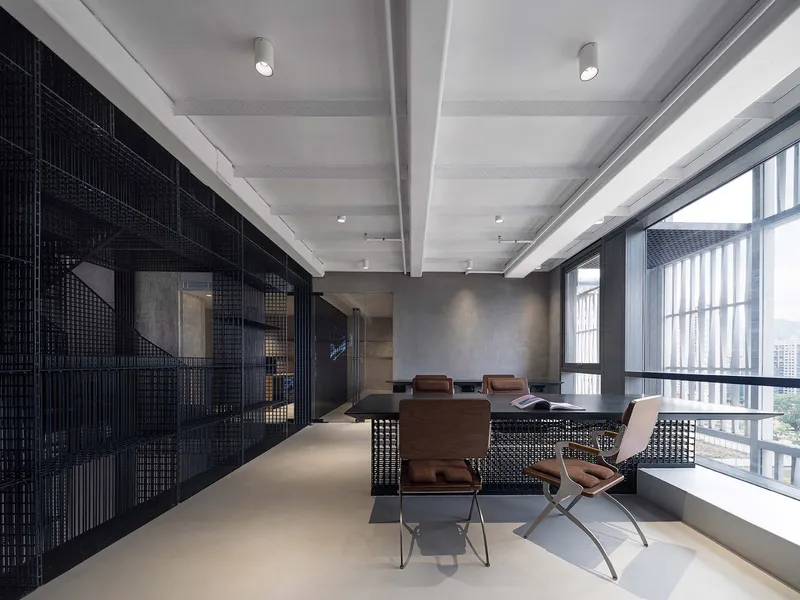
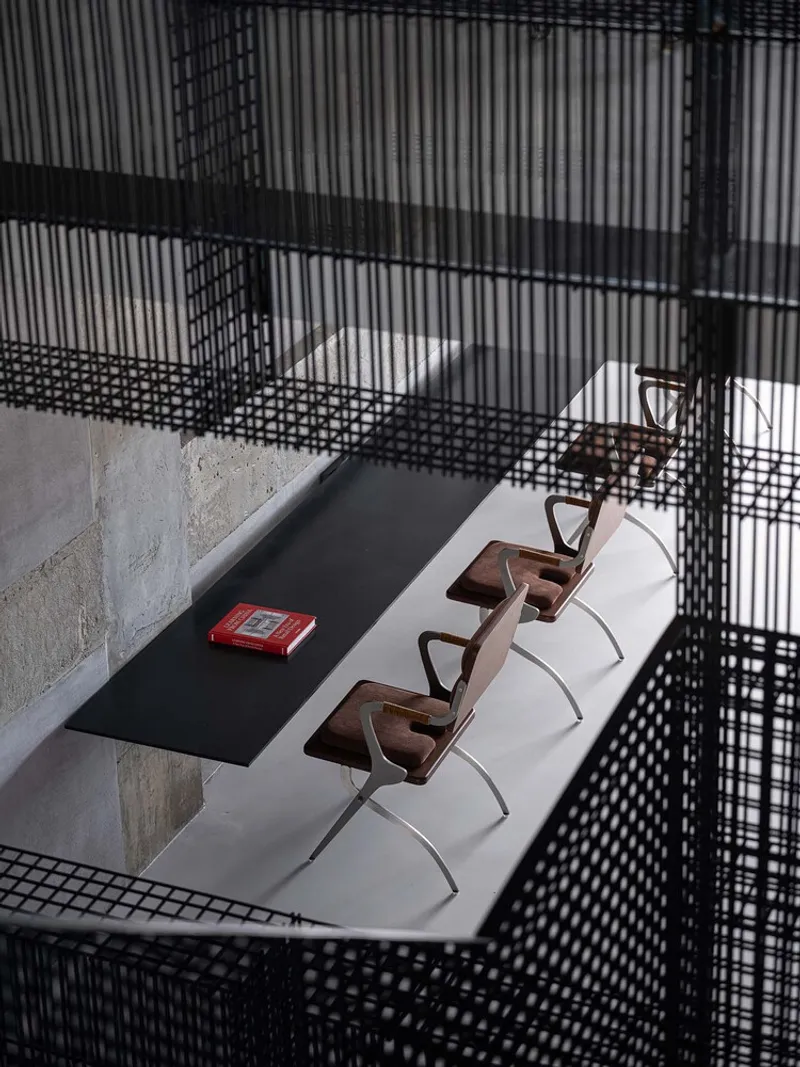
Anchoring the triple-height atrium is a sculptural staircase and bookshelf installation—a standout feature that embodies the architectural theme. Crafted from 8mm reinforcing steel bars, this striking vertical core blurs the line between object and infrastructure. The see-through grid not only serves as a visual anchor but also subtly dissolves the boundaries between floors, encouraging connectivity and spatial fluidity.
Materiality: Industrial Honesty and Visual Lightness
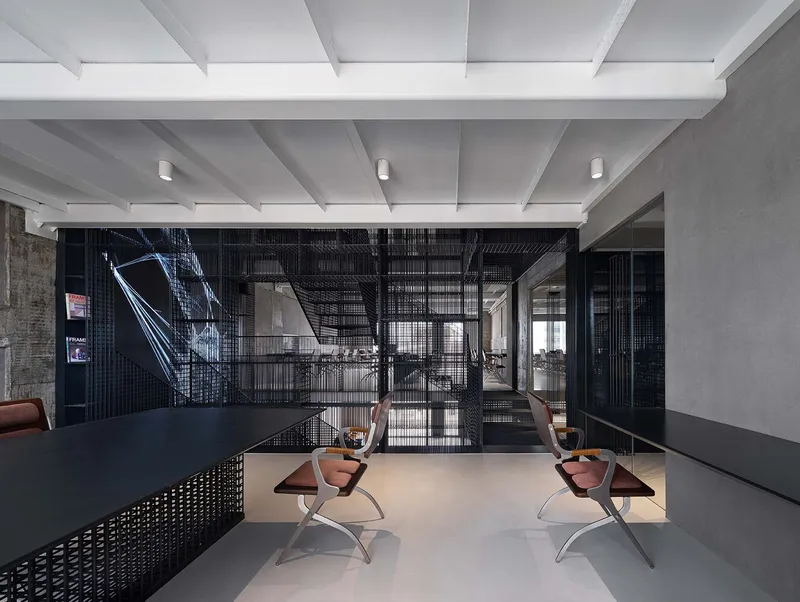
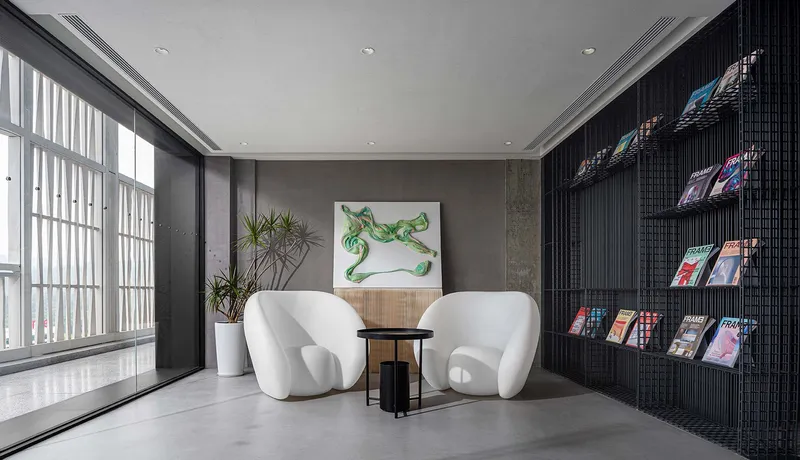
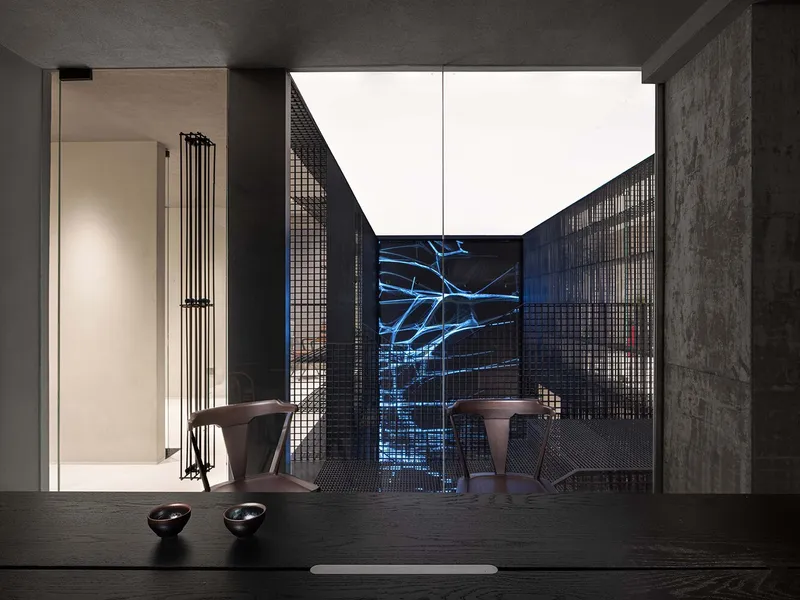
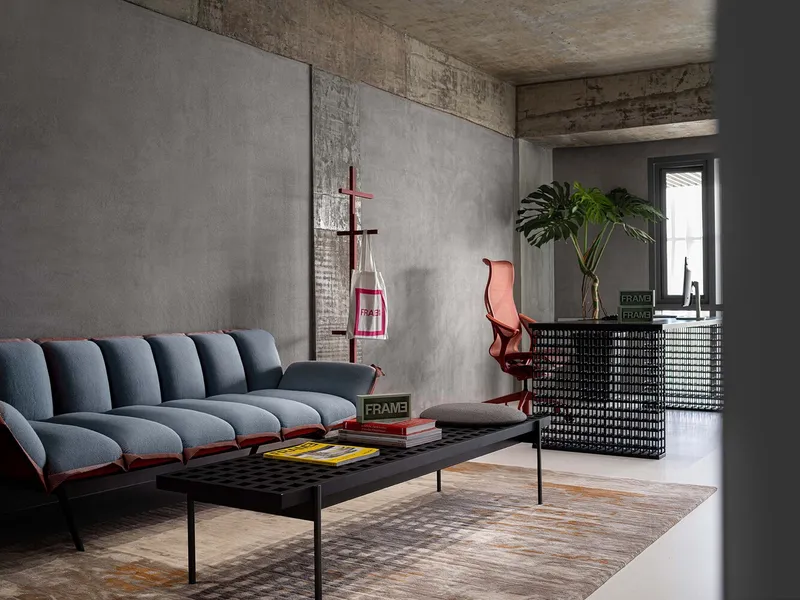
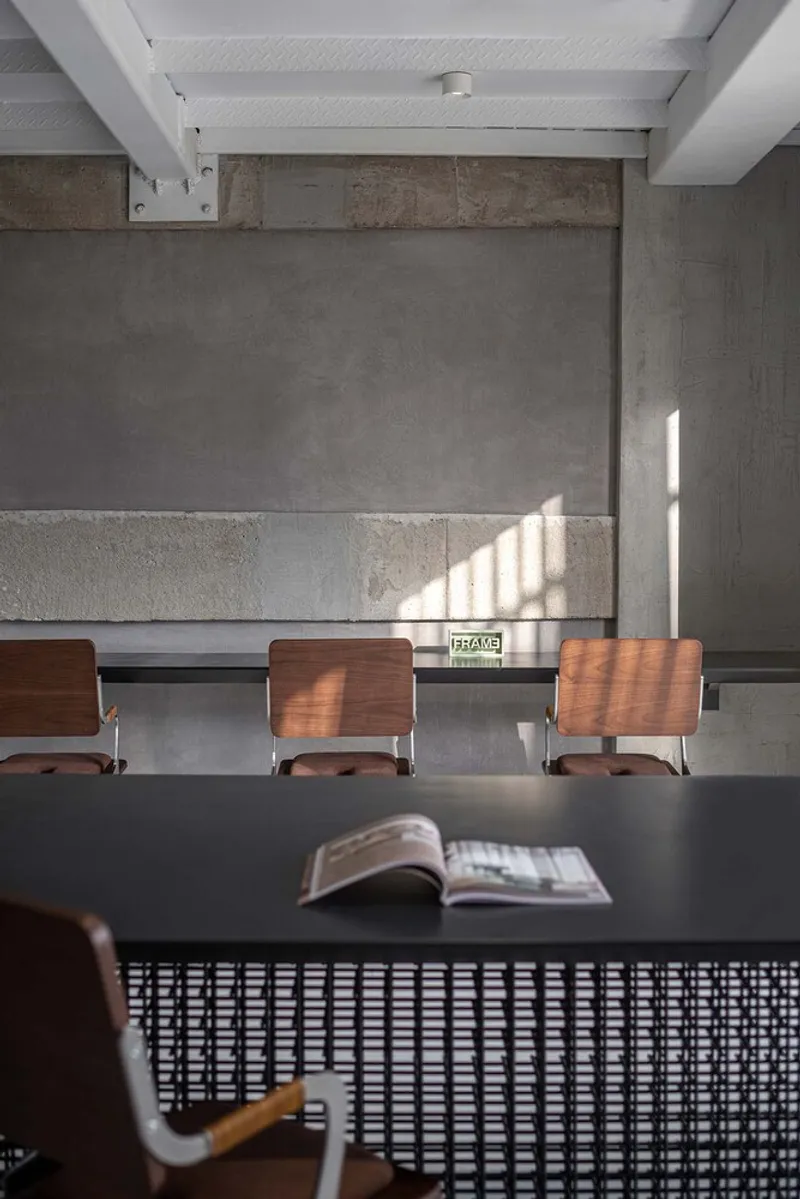
The office celebrates the raw materiality of industrial architecture, using steel, exposed concrete, glass, and self-leveling cement flooring to evoke an honest and tactile environment. Customized desks, bookshelves, and fixtures are all fabricated using steel mesh and plate, reinforcing the conceptual motif of the “frame” throughout the office.
Walls retain their unfinished concrete surfaces, enhancing the architectural integrity of the original loft space. Natural light constantly transforms the ambiance, while industrial textures serve as a neutral yet expressive canvas for creativity and collaboration.
Media Integration: From Physical Space to Digital Narrative
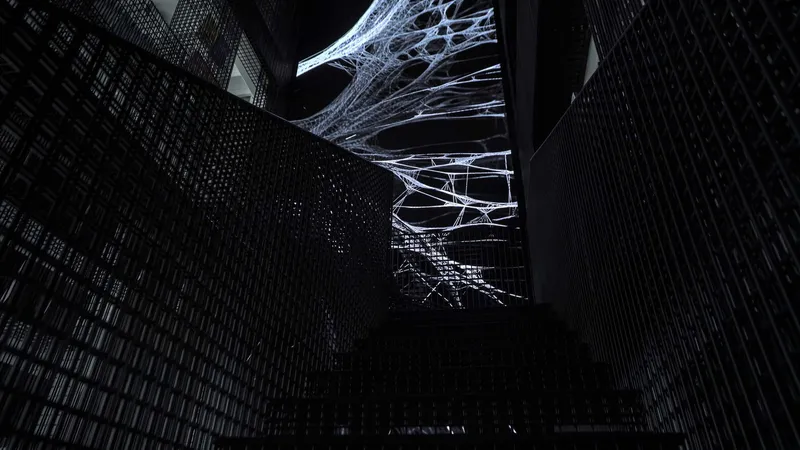
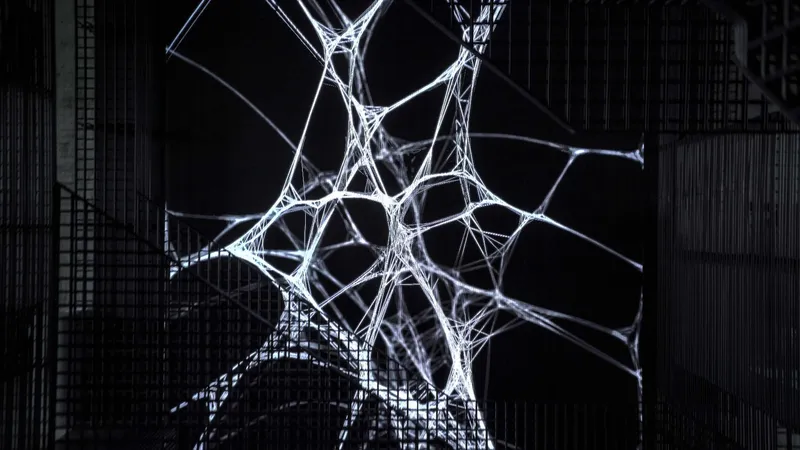
A full-height LED wall anchors one side of the atrium, continuously projecting “FRAMING,” a digital video art piece created by UFO Media Lab. The content reinterprets the steel bar motif into a virtual matrix that morphs and expands, immersing users in a futuristic environment where digital media and architectural space converge.
As employees move through the staggered staircases and layered levels, they experience a multi-sensory journey—an editorial office turned experiential installation, where the virtual and physical merge into a curated spatial narrative.
Impact: A Global Platform for Chinese Design
The FRAME China Office is more than a functional workspace—it is a symbolic and strategic hub that connects Chinese interior design to the global creative discourse. With its immersive spatial experience, rigorous material expression, and editorial alignment, the project contributes meaningfully to the evolution of contemporary workspace architecture and positions Shenzhen as a global design capital.
All Photographs are works of Upperhills


Popular Articles
Popular articles from the community


Cube Design Draws an Ecological Corridor Between Two Shenzhen Hills with the Nankai Building
Beside Shenzhen's container docks, the Nankai Building pairs stacked balconies with a climbing green screen to connect two hillsides across its height.

David Macias Steps a Doorless Stone and Plaster House Down a Tropical Colombian Hillside
In the humid hills of Colombia, Threshold House replaces the front door with an open void and terraces its 850 m² down the slope instead of fighting it.

GROUP A Strips a 1969 Rotterdam Harbor Headquarters to Its Frame and Wraps It in Timber Louvers
In Rotterdam's M4H harbor district, Ferro Offices reuses a 1969 frame, adds one timber storey and reaches BREEAM-NL Outstanding.

David Ortega Stacks a Two-Story Mexico City Penthouse Around a Steel Stair and a Pergola-Shaded Roof Terrace
In Colonia Roma, a 300 m² penthouse uses oak joinery, a planted steel stair and a slatted roof pergola to make a new-build apartment feel like a house.

Similar Reads
You might also enjoy these articles


Hodi-Mandai Geram
Project Function: Preservation and revitalization of the Intangible heritage and socio-spatial identity of the Hodi by Housing, Cultural Memory Center, Sacred Grove, landscape, local tourism economy


Olio Towers: A Mid-Rise for Performers That Fuses Housing, Rehearsal, and Stage
Located blocks from Houston's Theater District, this modular tower stacks living units around a central performance atrium.

Oasis: Modular Green Housing Carved into Dhaka's Urban Fabric
A shortlisted Plugin Housing entry reclaims unauthorized settlements in Dhaka with stepped concrete volumes, green roofs, and ventilation-driven design.

Black Hole: A Floating Megastructure for the Post-Physical Era
Emiliano Mazzarotto envisions a spherical, self-scaling arena where e-sports, digital hotels, and holographic stadiums replace traditional public space.

Explore Chinese Small Scale Architecture Competitions
Discover active competitions in this discipline

Challenge to reimagine the Iron Throne

Photograph architecture without architects

Illustrate the lost glory of Angkor Wat - Render Challenge

Design challenge to reuse E-waste
Comments (0)
Please login or sign up to add comments
No comments yet. Be the first to comment!