
Future of Esports
What Esport can become? What has it become? What are the dentaries?

Nowadays, cybersport becoming recognised as a sport, by most of people.
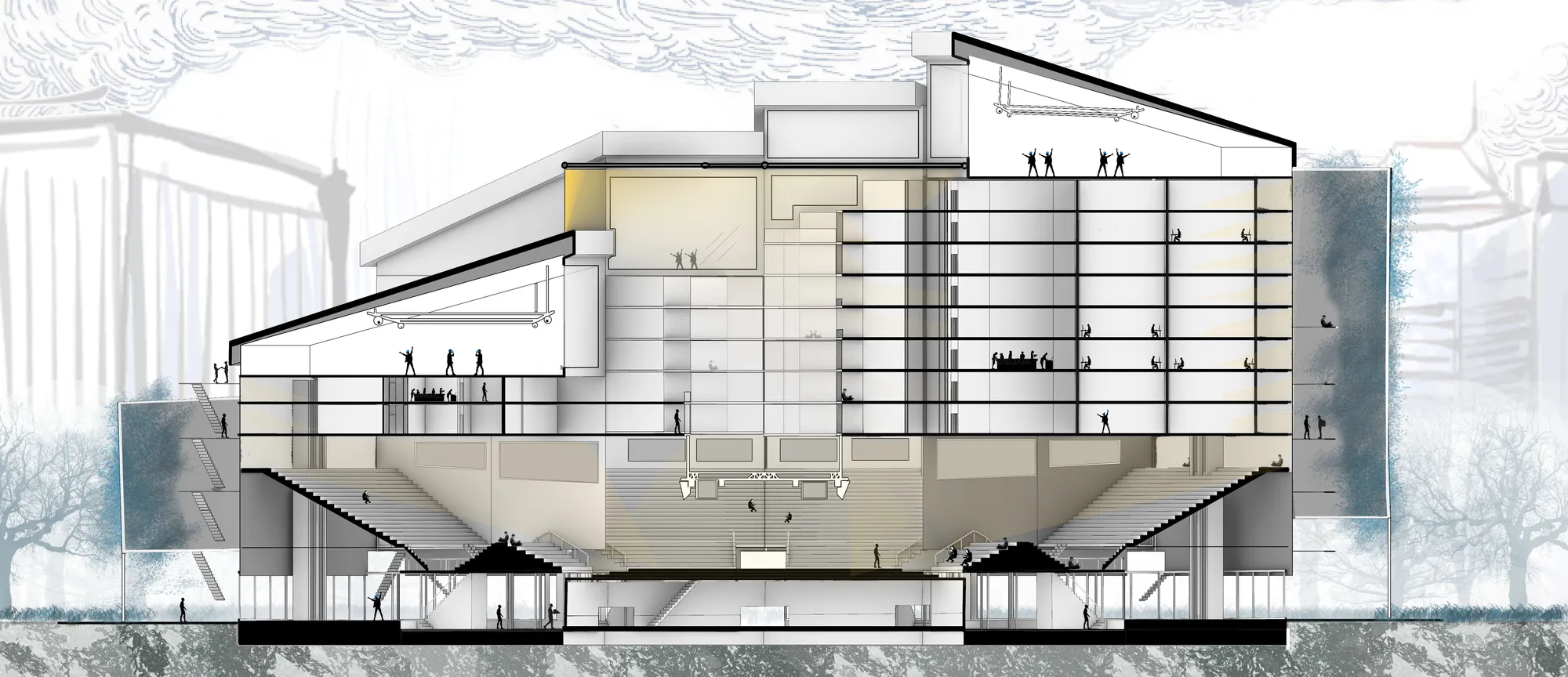
Games becoming part of South East Asia Olympic games. Adding games - simulators, as FIFA, NBA and UFC as a part of main Olympic games, is showing the actuality of the topic. However, person, who is still far from the world of games, has very abstract understanding, what it is in reality, or how competitions should be hosted. It rises up topics, involved with management and architecture. I would like to desscuss cybersport, as it is now, and observe the tendencies, which, can give us understanding of how it will evolve in farthest and nearest future.
To start with, I would like to separate all esports competitions into 2 types, team and individual competition. Where team competition rarely exceeds more than 10 players ( 5 per team), this tendency can be observed on the example of an ancient games, like Defence Of The Ancient, wich game birth to such games like DOTA2, Ligue of Ladgends and Smite, also known as MOBA janr and shooting games, as a Conter Strike, given birth to Apex and Valorant. Individual games usually involve more people. For example such janr as Battle Royal requires 100 players per round. While CCI ( card games) need just two people. In the same time, if we observe trends, according to games popularity, we will see that mobile gaming becoming more actual that computer gaming. Most of the mobile gamers are located in SEA region. Best mark of it. Is the fact that, in such countries as Malaysia, Indonesia, Philippines and Singapore amount of mobile store accounts is 20% more than countries’s population.
Esports has long grown from a small niche community to a massive multi-billion dollar industry. Over the past few years, the number of people involved in eSports, as well as viewers who watch tournaments online and offline, has increased significantly.
Esports tournaments will evolve over time into more complex and interactive formats that will take into account the reaction of the spectators and encourage their participation in the game. Esports will also have new unpredictable genres that will prove popular with viewers.
Artificial intelligence, biometrics and virtual reality will become more significant components of esports in the next 50 years. Deep learning and natural language processing technologies will help make commentary and match reviews even more interesting for viewers.
Esports is predicted to continue to grow as an industry, with the most popular games being multiplayer online games where teams will be made up of humans and artificial intelligence. Many games, such as shooters or sports simulators, will receive new realistic graphics and sound effects that will help create an even more immersive gaming environment.
In addition, esports will also become more interconnected with real-life sports, which will affect the interaction between gaming and sports companies, as well as brand placement on social media and tournaments.
These are just some of the predictions, and of course, the future of esports could be even more amazing.
Human and artificial intelligence can participate in a team computer game, being on the same team, using modern deep learning technologies.
For example, artificial intelligence can play the role of a virtual coach in a team game and help the team with data analysis and tactics. He can track the game and compare it to previous games to help the team develop the best strategy.
In addition, artificial intelligence can play the role of a player in a team and show high performance in certain genres of games, such as strategy or shooters. In this case, a person will play as a technical specialist who manages the game systems and communicates with other team members, while artificial intelligence will focus on the game and process information.
In general, using a combination of a human player and artificial intelligence in a team game can give the team a significant advantage, as this will highlight the strengths of each team member and address the weaknesses.
Deep learning is a machine learning technique based on artificial neural network algorithms that allows computers to learn by identifying patterns and patterns in huge amounts of data without requiring well-defined rules. Deep learning is being used to solve complex problems in the fields of computer vision, speech recognition, natural language processing, recommender systems, medicine, finance, and more.
Artificial neural networks in deep learning consist of many layers, each of which consists of many neurons. Each neuron processes the incoming information and passes it on to the next layer. Deep neural networks have the ability to process data in an abstract form at different levels, which allows you to extract features and patterns from the data.



Popular Articles
Popular articles from the community


The Earth Pod: 3D Printed Homes for Resilient Refugee Communities
The Earth Pod reimagines refugee housing through 3D printed homes made from clay, combining resilience, self-sufficiency, and rapid shelter.

Lunar Spiral: Space Architecture Shaped by the Mathematics of the Universe
Lunar Spiral reimagines space architecture through Fibonacci geometry, lunar regolith, levitating habitats, and self-sustaining Moon living.

The Musturak Paradise: Senior Living Architecture for a Connected Future in Temara, Morocco
The Musturak Paradise reimagines senior living architecture in Temara via private homes, social spaces, culture, community, and shared care.

The Ocean Hive: Sustainable Architecture for a Self-Sufficient Civilization at Sea
The Ocean Hive imagines sustainable architecture at sea, where modular habitats, algae, wave power and ocean waste sustain a growing colony.


Similar Reads
You might also enjoy these articles

Bao Huynh Watercolor Atelier: A Serene Art Retreat in Hội An
Bao Huynh Watercolor Atelier in Hội An blends multifunctional art spaces, sustainable design, local materials, and family-friendly living in a serene environment.

Atelier Macri Concept Store Interior Design by CASE-REAL
Atelier Macri store features a "ko" counter, walnut wood details, cork displays, blending retail, gallery, and seamless customer experiences.

Manuel Vargas Izquierdo Stadium and High-Performance Sports Center: Architectural Excellence in Jalpa de Méndez
The Manuel Vargas Izquierdo Stadium blends sustainable design, inclusive sports facilities, and cultural-inspired architecture, revitalizing Jalpa de Méndez’s public spaces.

KAKR Buluh Awar Hall: Revitalizing Community and Ecology Through Bamboo Architecture
Community built bamboo hall revitalizes Buluh Awar village, empowering youth, restoring ecology, celebrating vernacular craftsmanship through sustainable architecture and culture.


Explore e-Sport Competitions
Discover active competitions in this discipline




Challenge to reimagine the Iron Throne


Photograph architecture without architects


Illustrate the lost glory of Angkor Wat - Render Challenge


Design challenge to reuse E-waste
Comments (0)
Please login or sign up to add comments
No comments yet. Be the first to comment!