

Future University Hakodate: Innovative Educational Architecture by Riken Yamamoto
Future University Hakodate by Riken Yamamoto features open, collaborative studios and labs, fostering interaction, creativity, and innovative learning in information science.


Future University Hakodate, designed by renowned architect Riken Yamamoto, represents a pioneering approach to university architecture that seamlessly blends information science education with collaborative design principles. Housing two specialized departments: Complex Systems and Media Architecture: the university emphasizes the intersection of research, creativity, and interaction, making the campus itself a functional learning environment.

The architectural concept draws inspiration from professional architectural studios, reflecting the way students and researchers operate. Yamamoto observed that the collaborative workflow of researchers mirrors the design process of architects, where observation, iteration, and dialogue are critical. This insight shaped the university’s layout, fostering an ecosystem where students, faculty, and researchers work side by side.

A Studio for Learning and Innovation
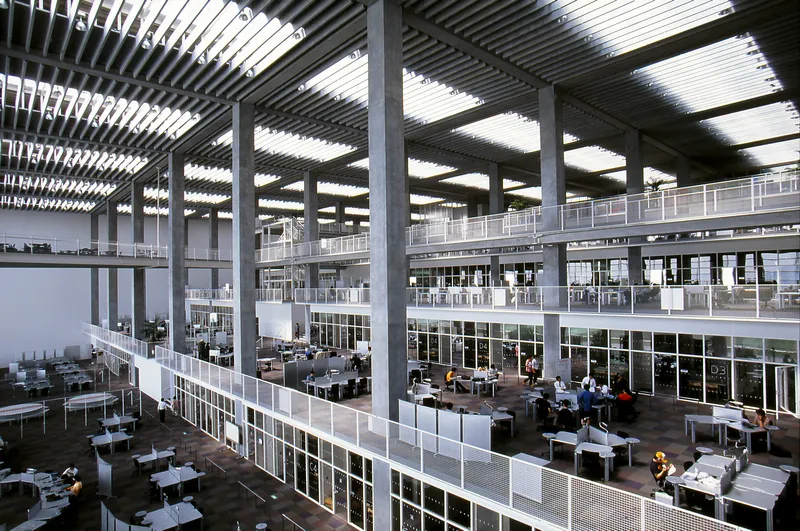
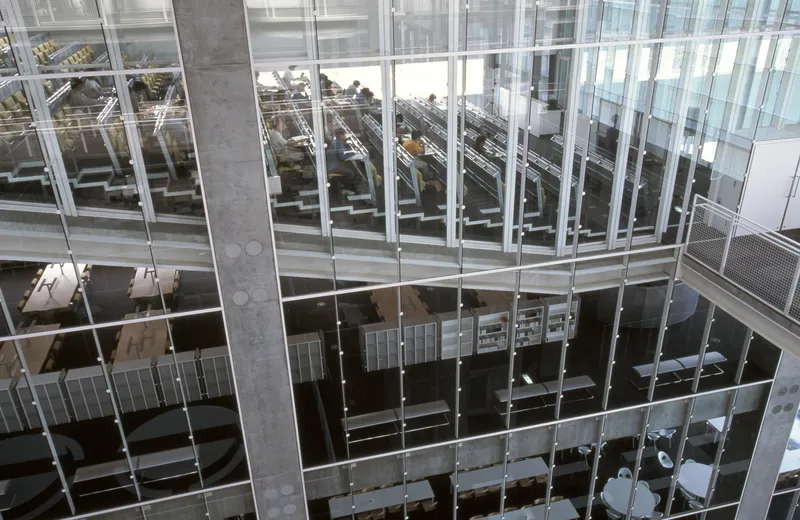
At the heart of the campus lies the Studio, a flexible and dynamic space designed to accommodate both individual deep work and team-based projects. This open environment encourages spontaneous interactions, critical thinking, and creative experimentation. Adjacent to the Studio are the faculty laboratories, separated only by glass partitions. This transparency allows students and teachers to observe and learn from each other’s work in real time, reinforcing the university’s philosophy that direct human interaction enhances scientific and technological innovation.
The guiding principle of Future University Hakodate is captured in its motto: “Open space = Open mind.” By integrating openness into both spatial and social design, the campus promotes cross-disciplinary collaboration, ensuring that students not only gain knowledge but also experience the process of innovation firsthand.
Architectural Features and Design Highlights
- Open-plan studios and laboratories: Encouraging interdisciplinary collaboration and flexible work arrangements.
- Transparent partitions: Maintaining visual connections between students and faculty while preserving functional separation.
- Use of steel, glass, and exposed beams: Highlighting structural clarity and modern aesthetics.
- Integration with landscape: Designed by Asia Consulting Engineers, providing a harmonious campus environment.
- Focus on computer science research: Spaces optimized for collaborative digital and technological work.
Future University Hakodate stands as a model for 21st-century university architecture, combining innovation, transparency, and adaptability. It demonstrates how thoughtful architectural design can enhance learning experiences, stimulate creativity, and foster a culture of collaboration across disciplines.
All photographs are works of
Isao Aihara, Mitsumasa Fujitsuka


Popular Articles
Popular articles from the community


The Amber Palace Opera: A Geological Fiction Surfaces on Tallinn's Baltic Waterfront
Pierre Brillard reimagines a Baltic legend as a public landscape, opera house, and waterfront promenade rooted in Tallinn's coastal identity.


FCC Arquitectura Expands a Portuguese Granite House with a Board-Marked Concrete Wing
In Portugal, JV House pairs a cleaned-up whitewashed and granite dwelling with a timber-shuttered concrete extension, courtyards and a garden pool.

Singing Woman: An Opera House That Performs Before the Curtain Rises
Ovidiu Cristian Pavel's conceptual opera house translates Estonia's choral identity into a sculpted waterfront landmark facing the Baltic Sea.

Aquadapt: An Underwater Habitat That Rewrites Its Rooms by the Hour
Curved modules ring the seabed while one shell shifts from breakfast room to cinema, farm and football pitch as residents' needs change.

Similar Reads
You might also enjoy these articles

Bamboo Housing Challenge 2026: Design Affordable, Sustainable Homes Using Bamboo
An international design competition by Bamboo U and IBUKU inviting architects and designers to reimagine affordable housing using bamboo — with the winning design built full-scale in Bali.
Computational Design & Education: Beegraphy Design Awards Introduces 7th Category (Featuring Jiyun's Innovative Approach)
Dive into Beegraphy’s 7th Design Awards category, where computational design meets education to create immersive, interactive learning tools, inspired by Jiyun’s work.
From Parametric Lighting to Urban Furniture: Join the 2nd Workshop in Beegraphy’s Computational Design Series
Dive into Cutting-Edge Design Techniques and Practical Applications with Industry Experts

Last Call: Unleash Your Architectural Genius in SHAK's Kindergarten Design Competition
Urgent call for architects to join SHAK's kindergarten design competition before the looming deadline

Explore Modern University Competitions
Discover active competitions in this discipline

Challenge to design public laboratory

Challenge to reimagine the Iron Throne

Photograph architecture without architects

Illustrate the lost glory of Angkor Wat - Render Challenge
Comments (0)
Please login or sign up to add comments
No comments yet. Be the first to comment!