
GBBN Converts an 1887 Pittsburgh Roundhouse into a LEED Gold Co-Working Campus
A ten-bay rail engine house on the Monongahela River gets a second floor, all-electric systems, and a rain garden for Hazelwood Green.


Railroad roundhouses are among the most charismatic industrial structures in American cities, but their curved footprints and colossal volumes make them notoriously difficult to reuse. At Hazelwood Green in Pittsburgh, GBBN took on a ten-bay roundhouse built in 1887 by the Monongahela Connecting Railroad and turned it into a 25,000-square-foot co-working hub for technology accelerator OneValley. The $13.7 million project, completed in 2020, is the first building delivered on the 178-acre former J&L Steel Mill site, a brownfield regeneration that aims to be entirely all-electric.
What makes the project genuinely instructive, rather than just another adaptive reuse narrative, is the restraint GBBN exercised in scaling down a cavernous engine works for human occupation. Rather than filling the volume with new construction, the architects inserted a partial second floor to gain usable area while keeping the original heavy timber trusses, pine roof deck, and even a solitary overhead crane visible from almost every desk. The result is a workspace that feels both monumental and intimate, a rare pairing in industrial conversions.
Siting a Curve on a River Bend
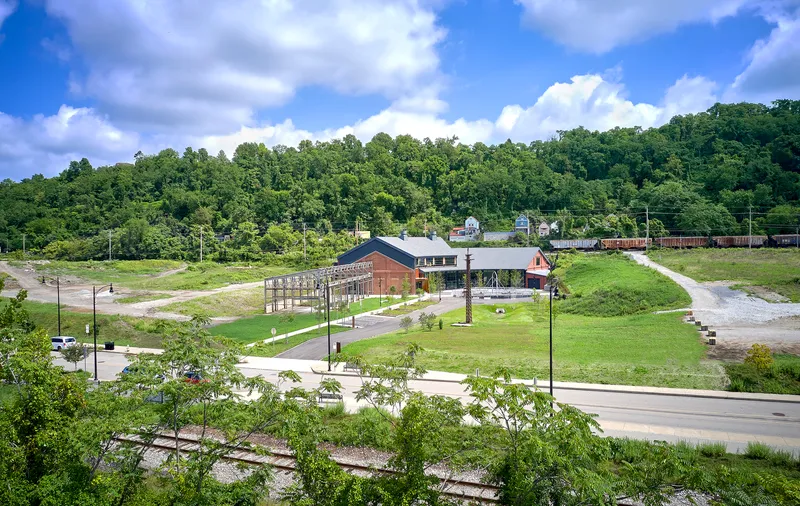
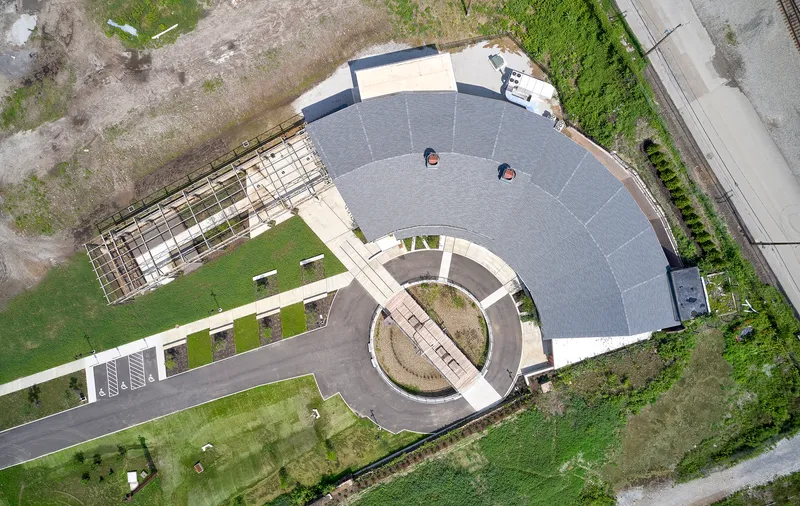
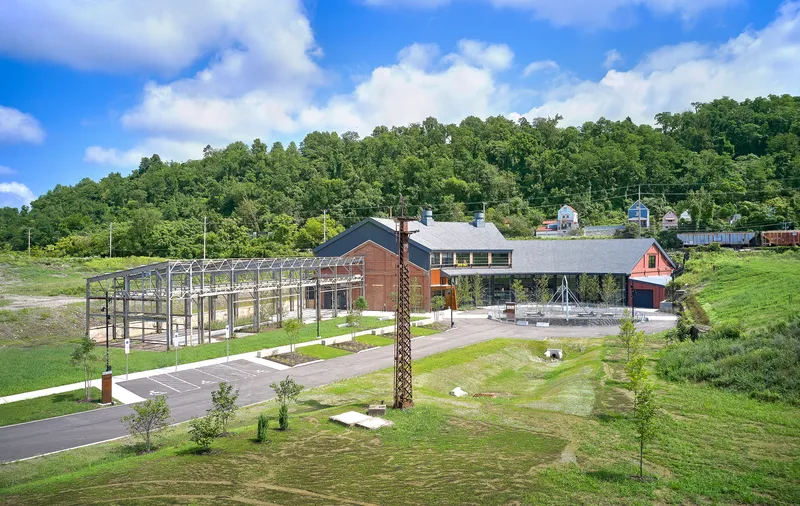
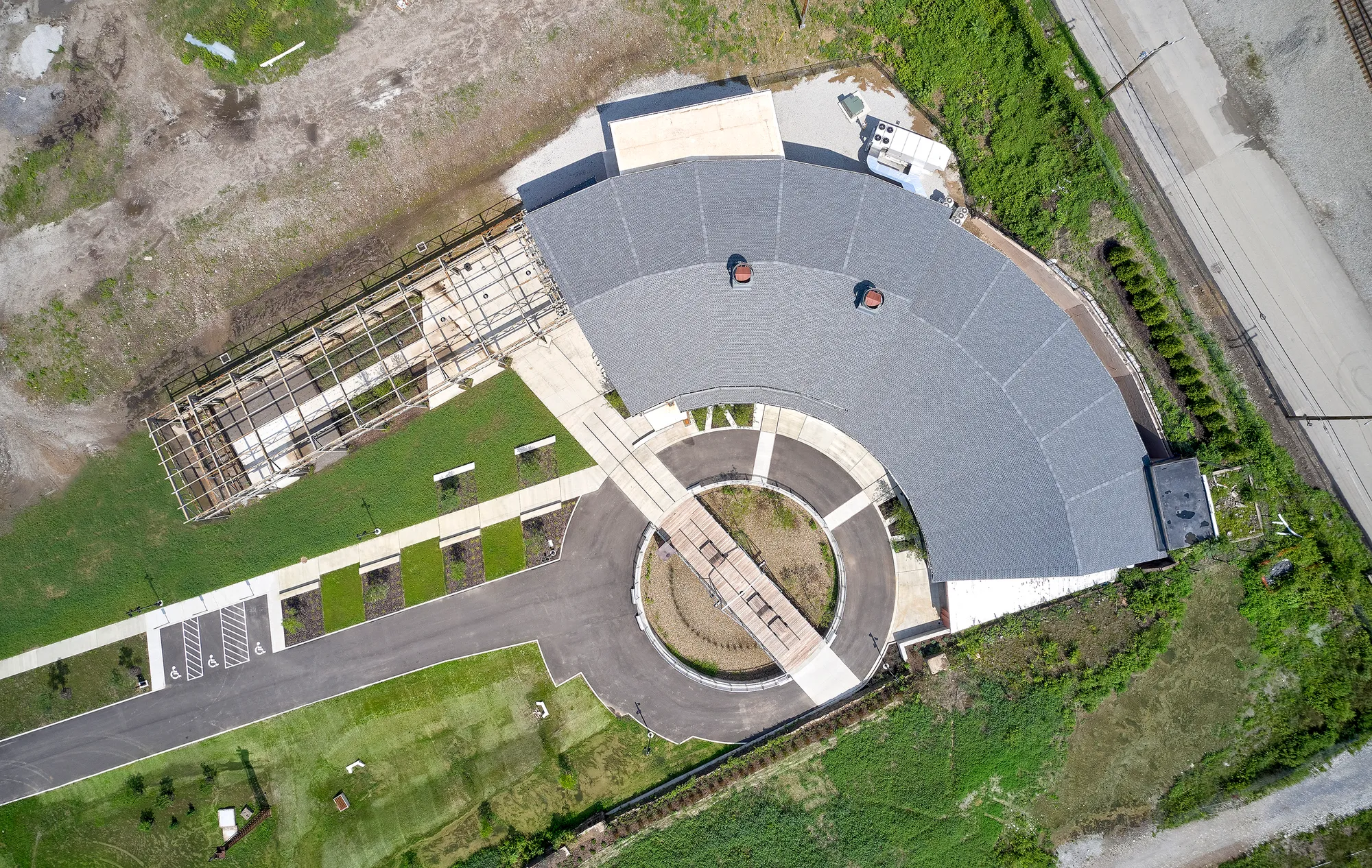
The roundhouse sits partially built into a hillside above the Monongahela River, its arc-shaped plan tracing the geometry of the turntable that once redirected locomotives between production stops. GBBN and landscape collaborator evolveEA used that curve as the organizing armature for the entire site: an access road follows the building's contour, a circular courtyard echoes the turntable pit, and rain gardens step down toward the river. Young trees line the approach, softening a site that was soot-blackened steel yard barely a generation ago.
From the air, the relationship between new and old is legible in a single glance. Solar panels cap the restored roof, the circular void reads as a public gathering point, and the surrounding landscape links the campus to trails that will eventually serve the broader Hazelwood neighborhood. It is a convincing demonstration that brownfield regeneration can create public amenity, not just private square footage.
A Light Touch on Heavy Brick
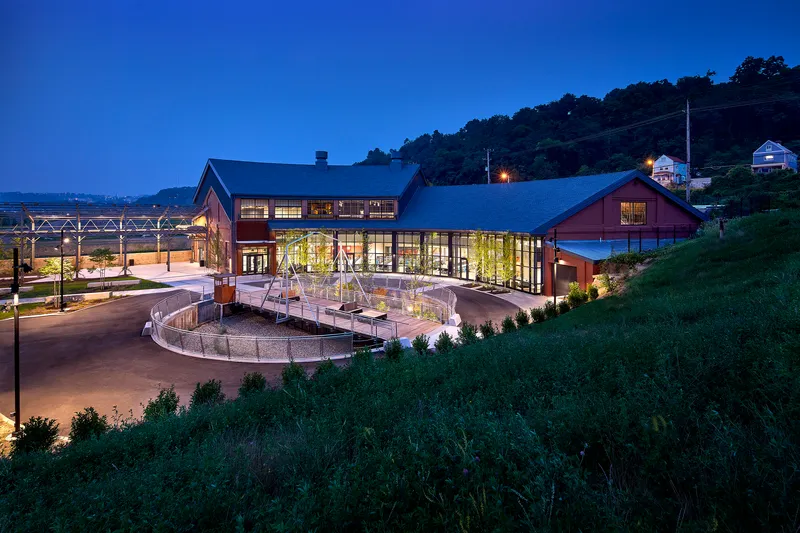
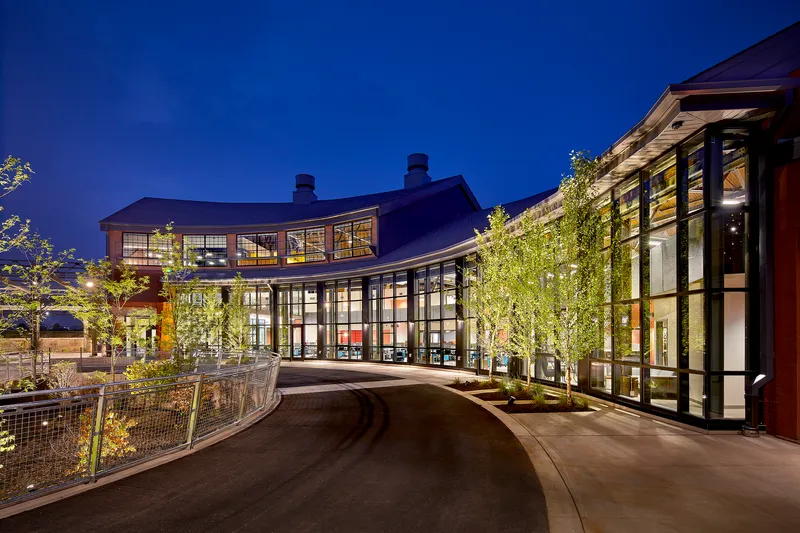
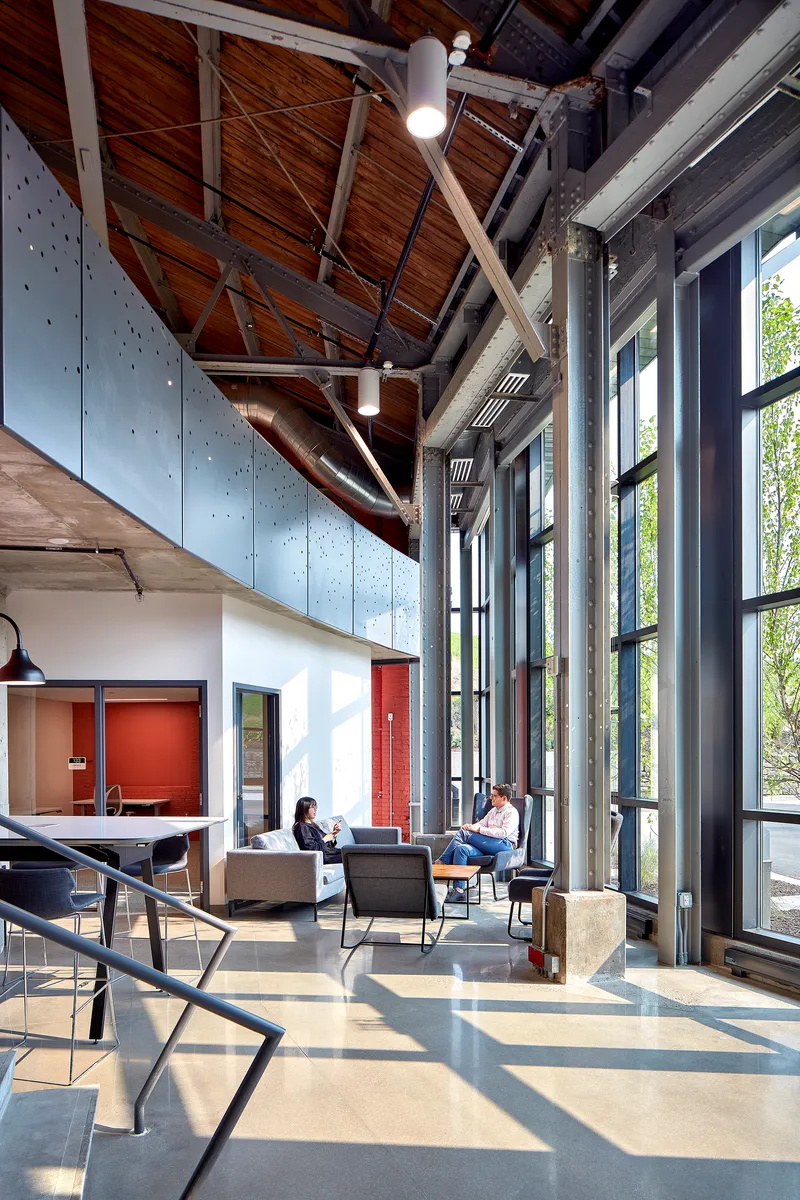
Where the original roundhouse had massive garage doors for locomotive access, GBBN installed floor-to-ceiling glass, flooding the interior with daylight and giving the building a transparency it never had. At dusk the effect is striking: the timber gabled bays glow from within, and the curved glass facade reads as a lantern set against the dark hillside. The new glazing is not cosmetic. Removing opaque walls was a deliberate passive design move, reducing dependence on artificial lighting and connecting occupants visually to the surrounding landscape.
The weathered steel panels on the small rear addition acknowledge the site's industrial palette without mimicking it. GBBN kept the exterior vocabulary honest: cleaned brick, new steel, generous glass. No false patina, no decorative rivets.
The Crane Stays
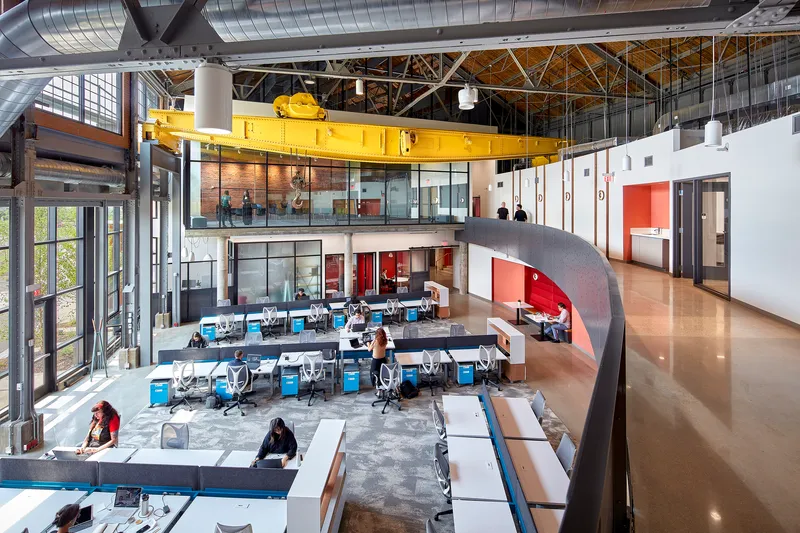
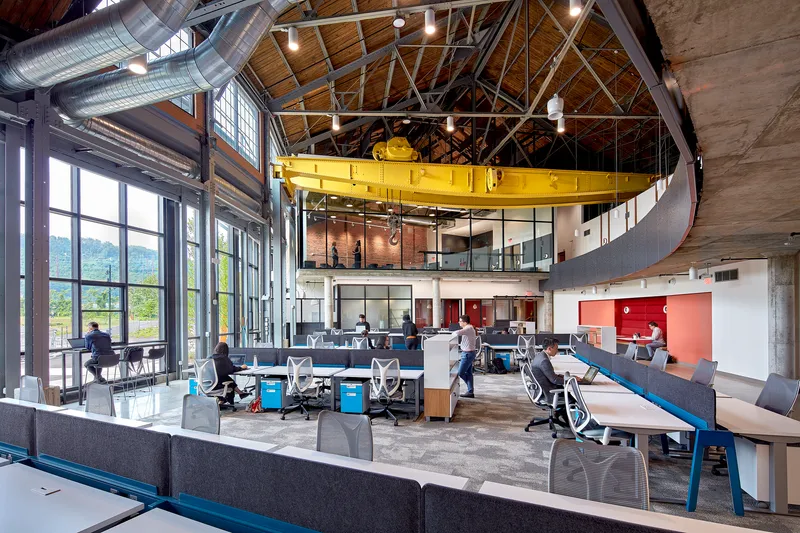
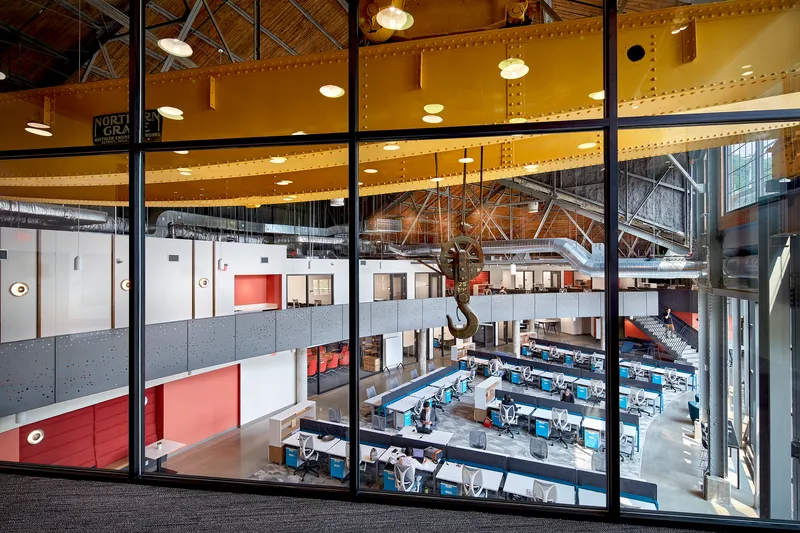
The most memorable interior move is what GBBN chose to keep. A yellow-painted overhead crane beam runs the length of the double-height workspace, its rust sandblasted away but its industrial heft entirely intact. It functions now as a visual datum line, marking the boundary between the original volume above and the inserted mezzanine below. From the upper-level balcony you look across the crane at the bowstring trusses; from the work floor you look up at it framing the conference rooms.
Keeping a single piece of heavy machinery as a memory device is a more honest approach than the common strategy of scattering decontextualized artifacts around a lobby. The crane is not a trophy. It is the building's spine, and every sightline in the space reminds you of the structure's original purpose.
Scaling Down the Volume
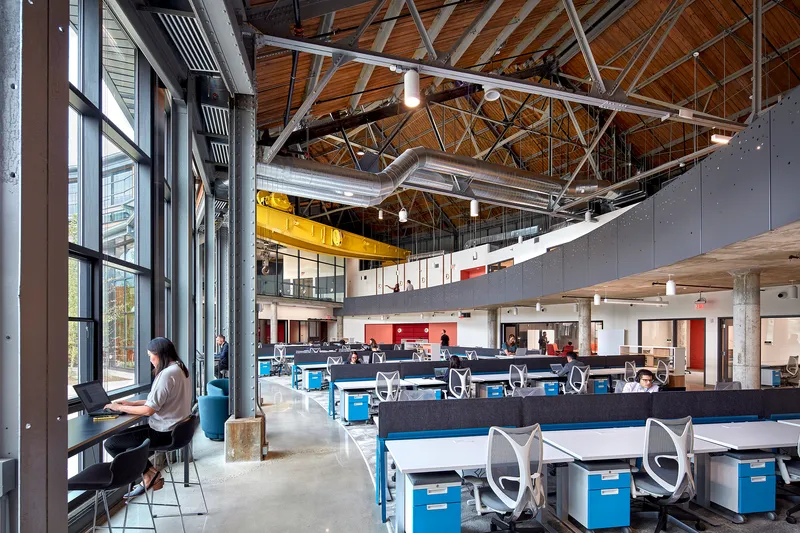
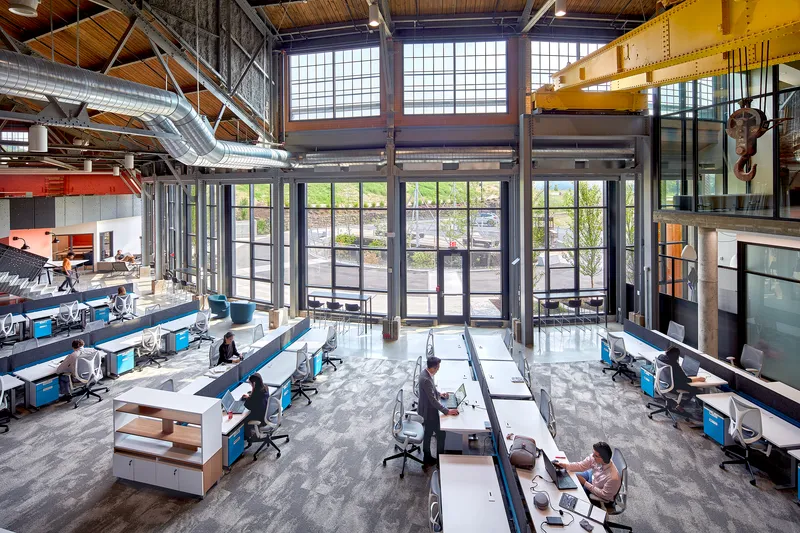
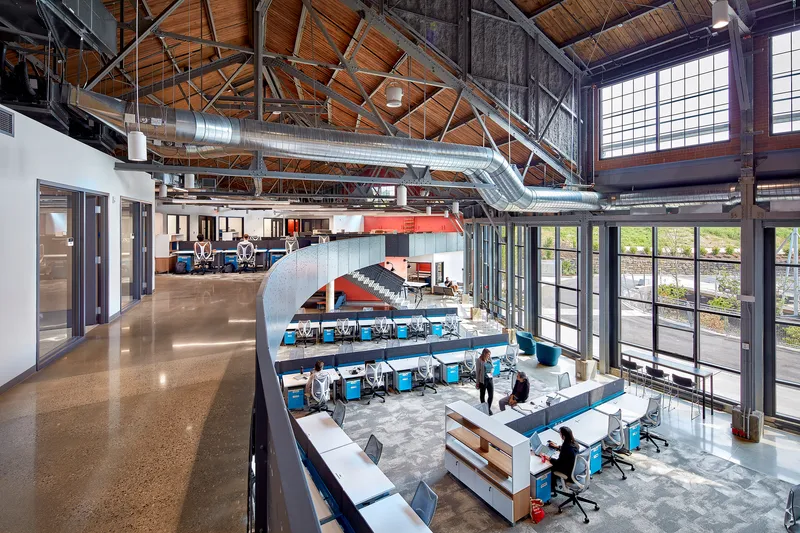
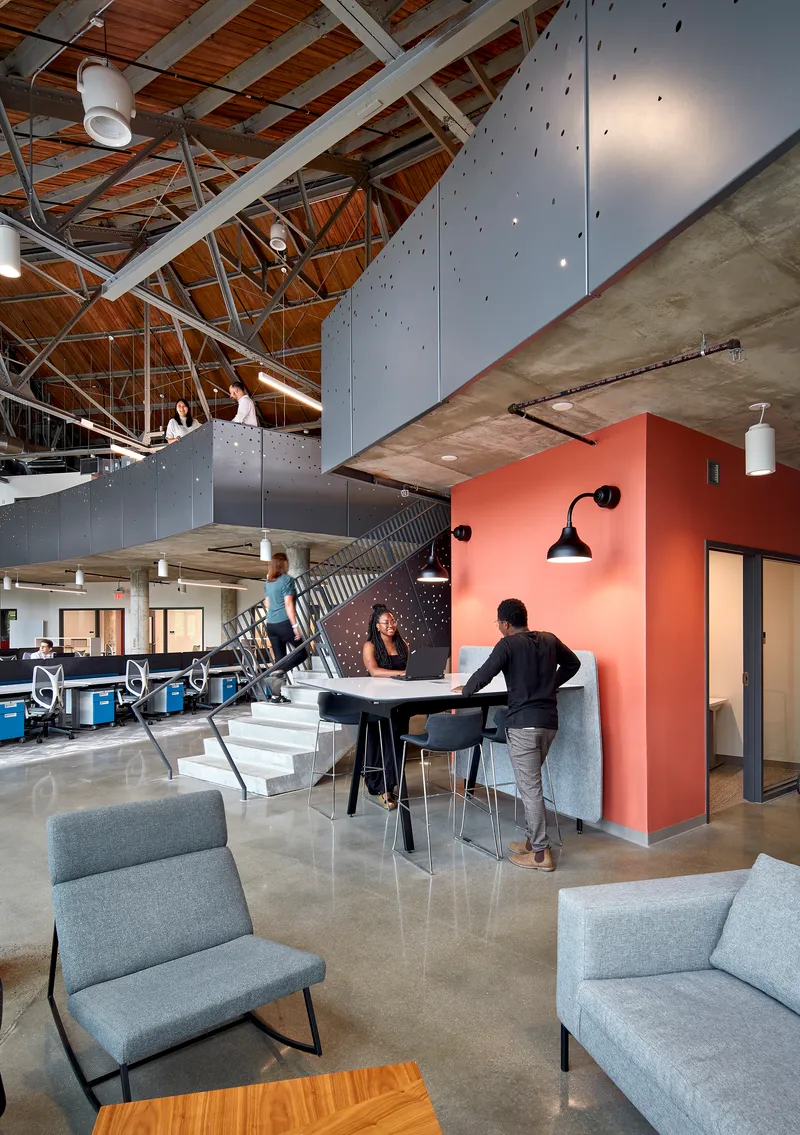
A roundhouse designed for steam locomotives is not naturally suited to office work. Ceilings are too high, the volume is too open, and acoustic control is nonexistent. GBBN's answer was a partial second floor that curves along the building's arc, creating intimate desk clusters and glass-walled meeting rooms on the upper level while preserving the full double-height volume in key zones. The mezzanine's polished concrete floor and simple steel railing avoid competing with the exposed pine roof deck and timber trusses overhead.
The spare interior aesthetic, coral-colored partitions, minimal furniture, open desk rows, aligns with the technology industry's preference for flexible, unfinished-feeling workspaces. But the quality here comes from the building itself, not from the fitout. The clerestory windows, the rhythm of concrete columns, the heavy timber ceiling: these are the finishes.
All-Electric, Zone by Zone
The building's LEED Gold certification rests on a fully electric mechanical strategy engineered by Buro Happold. Variable Refrigerant Flow systems with air-source heat pumps handle heating and cooling, zoned into sections that reflect actual occupancy patterns rather than treating the entire arc as a single thermal mass. Digital energy modeling informed decisions about roof insulation depth and zone boundaries, a level of analytical rigor that adaptive reuse projects often skip because the existing envelope seems too irregular to model.
Industrial-era bell-shaped exhaust fans, originally installed to clear engine fumes, were retained and repurposed for natural ventilation. It is a satisfying detail: the same hardware that once vented coal smoke now supports passive cooling. High-efficiency LED lighting and the generous new glazing further reduce energy demand. The project became the first building tracked against Pittsburgh's resiliency standards, making it a benchmark for future development across the Hazelwood Green site.
Gathering Spaces and Neighborhood Access
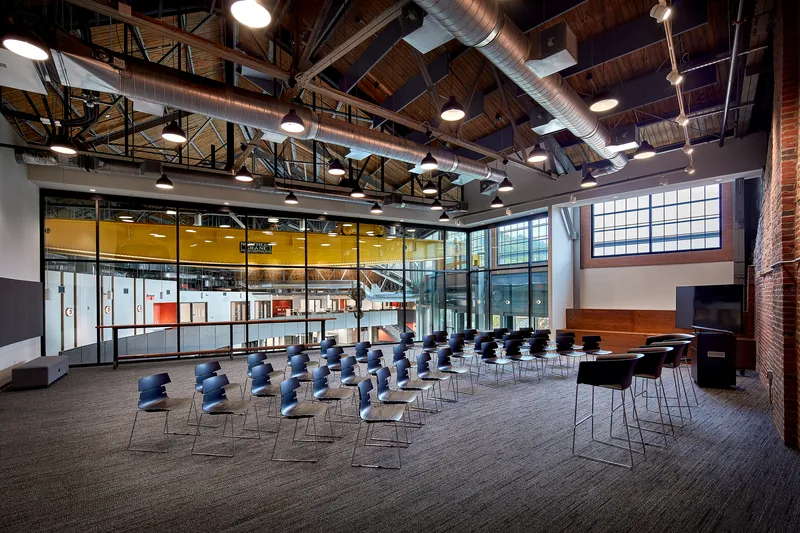
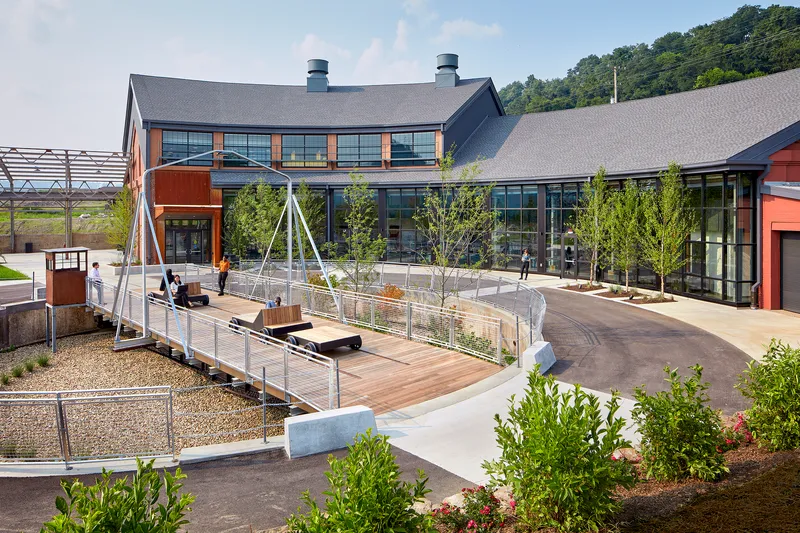
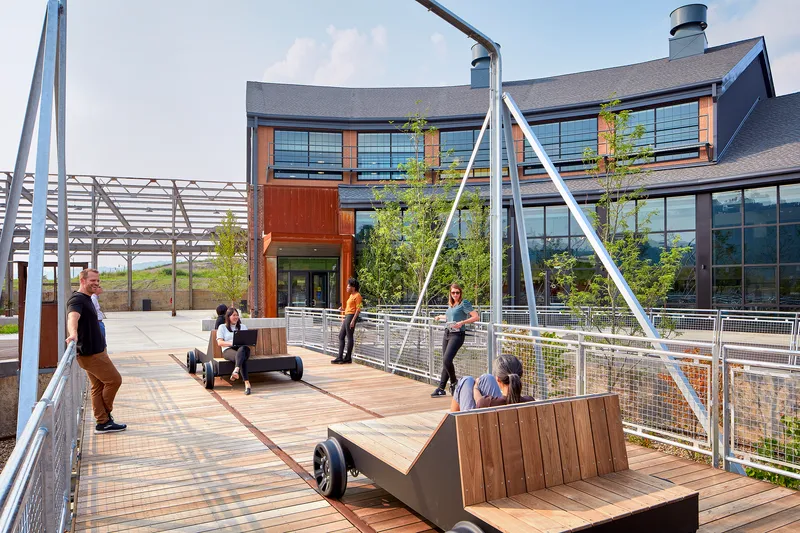
The roundhouse is not just an office. A double-height multipurpose hall with exposed trusses and rows of seating accommodates events and community use. Outside, an elevated timber deck terrace with cable railings, planted beds, swing sets, and bench seating creates a public amenity open to Hazelwood neighborhood residents. For a community that lived in the shadow of a steel mill for a century, accessible open space on the former mill site is symbolically and practically significant.
The landscape integration, rain gardens managing stormwater that the original building never handled, outdoor decking, and planting that will mature over time, signals that GBBN and evolveEA considered the roundhouse as a piece of infrastructure for the neighborhood, not just a container for desks.
Work and Light at the Edge
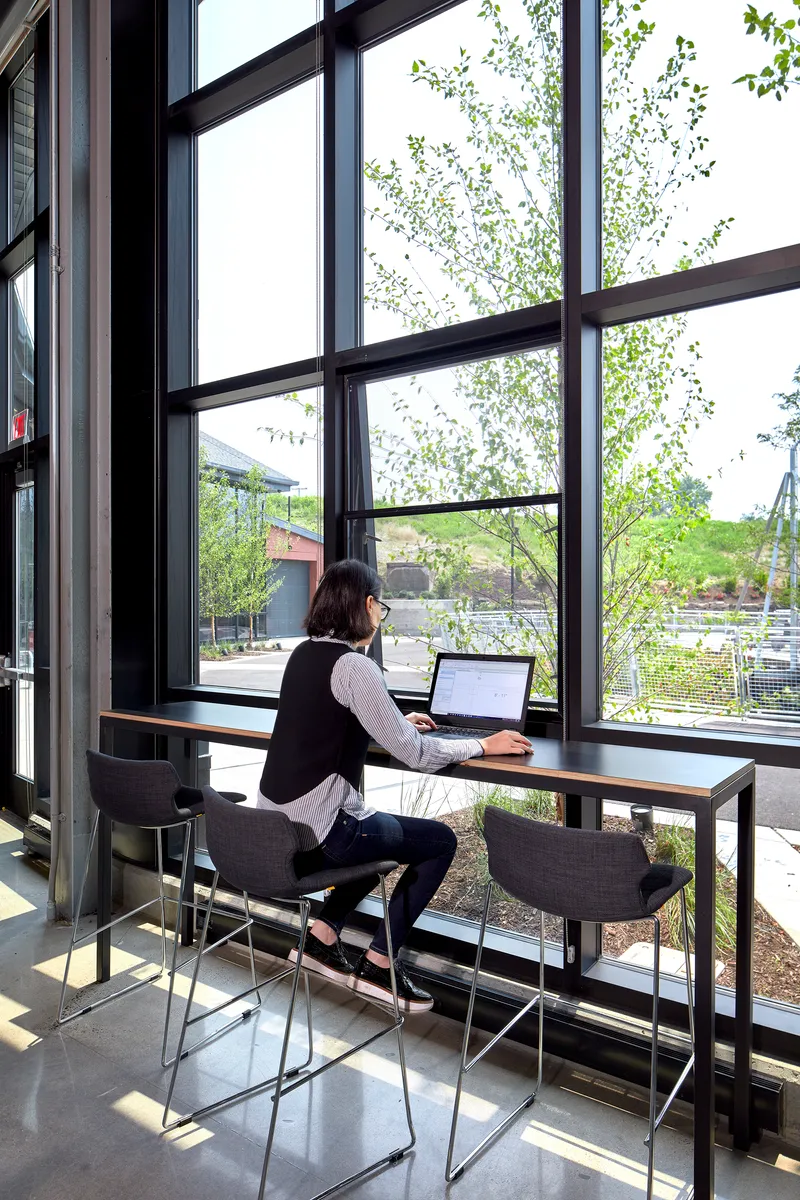
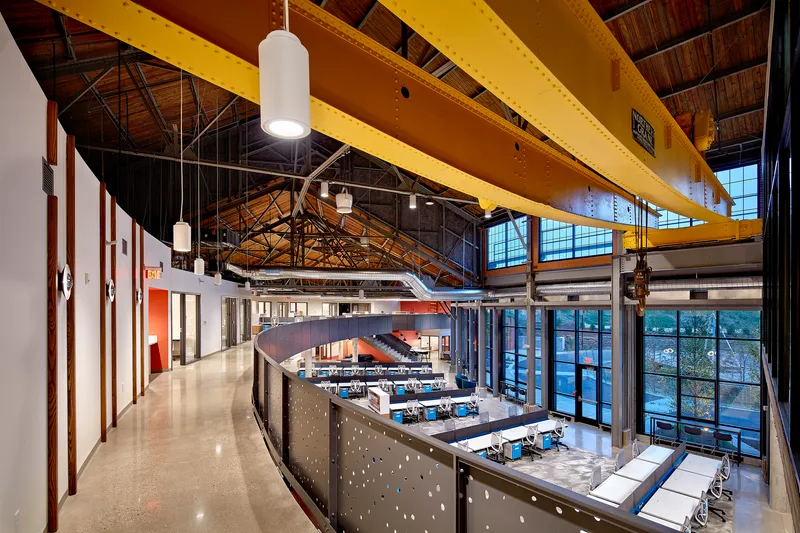
The perimeter workstations capture the best quality of the conversion: proximity to daylight and landscape. Standing-height tables along floor-to-ceiling windows let occupants work with views of trees and sky, a condition entirely impossible in the building's previous life. On the upper corridor, perforated metal balustrades and the yellow structural beams create a layered depth that reads especially well at dusk when interior and exterior light levels equalize.
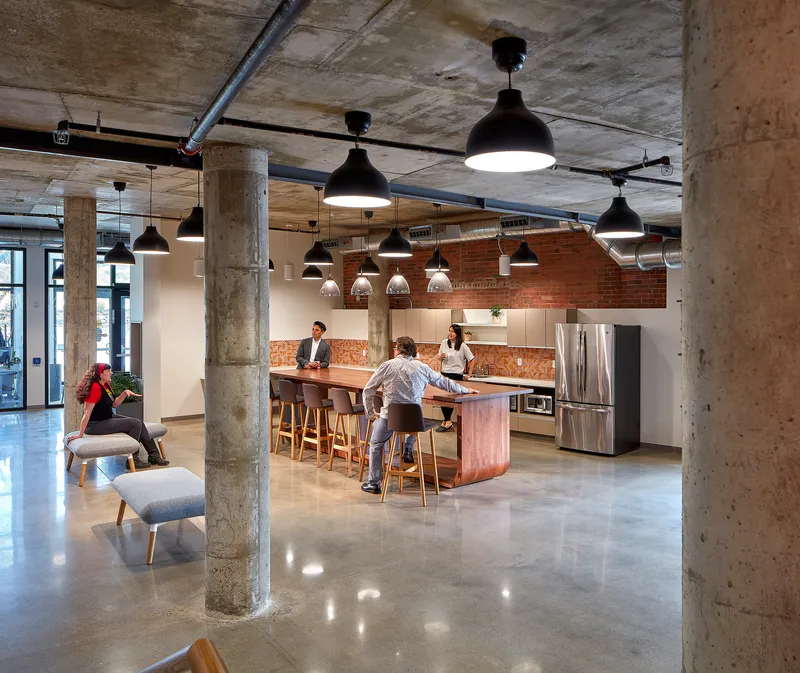
Locally fabricated custom elements, light fixtures, tiles, benches, a kitchen island, a reception desk, and bike racks, reinforce the project's commitment to specificity. Nothing here is off-the-shelf generic. The details are calibrated to the building's character and to Pittsburgh's maker economy.
Plans and Drawings
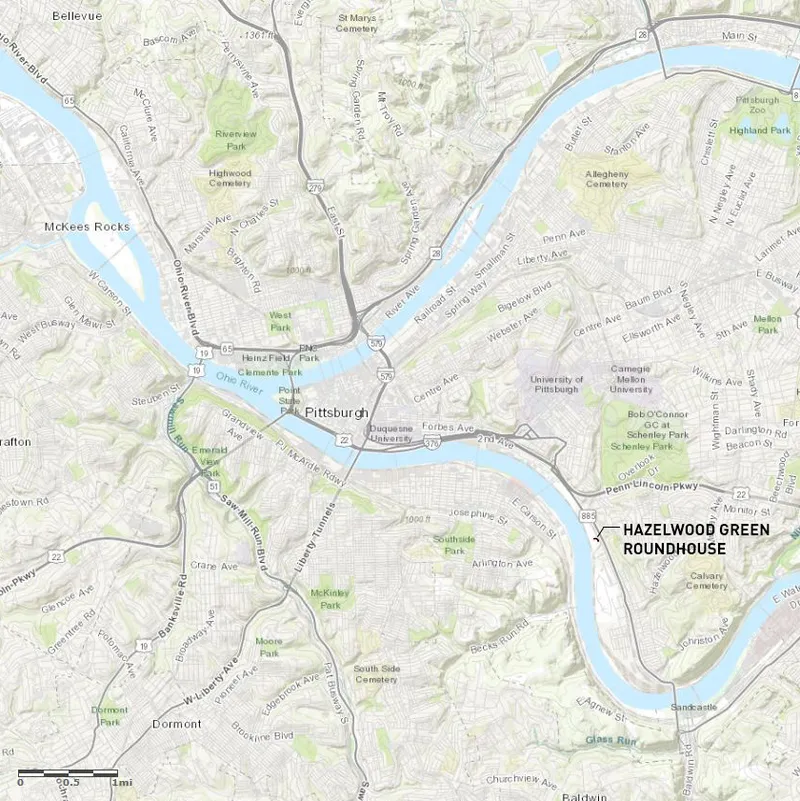
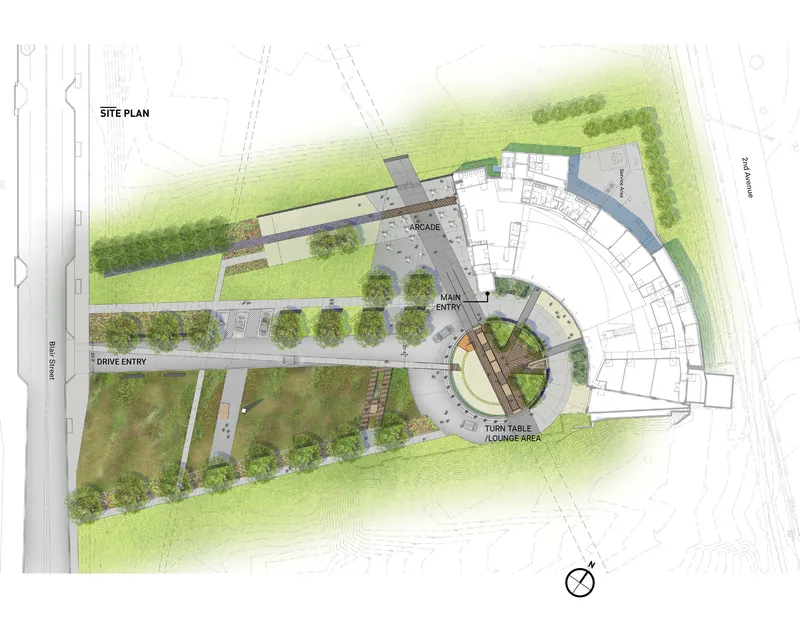
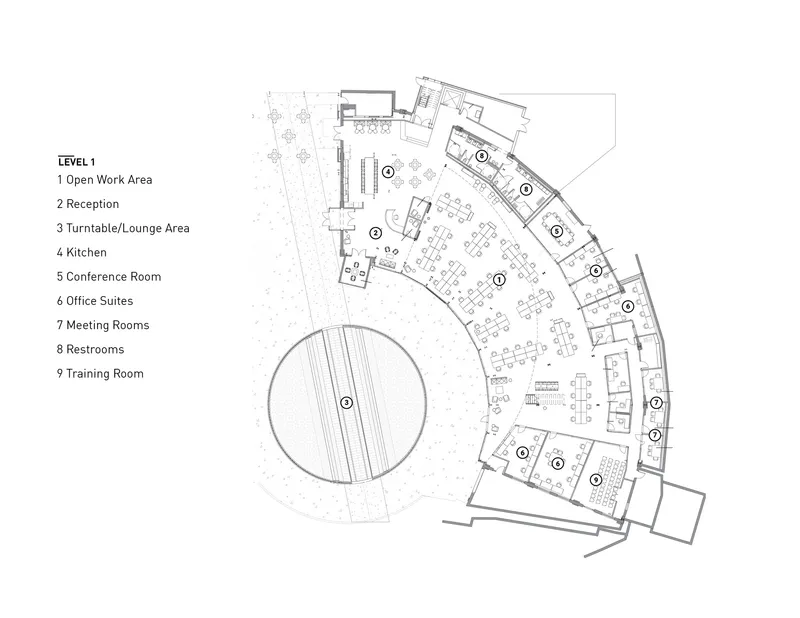
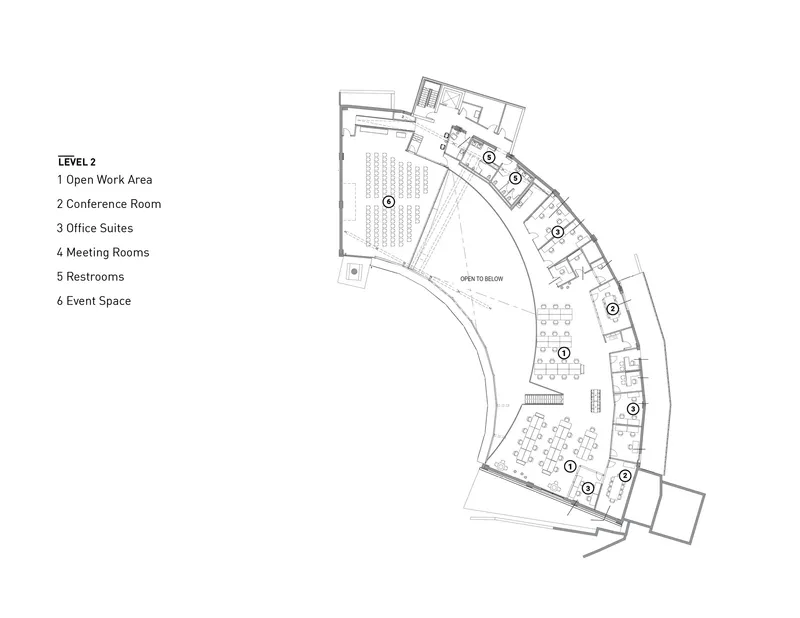
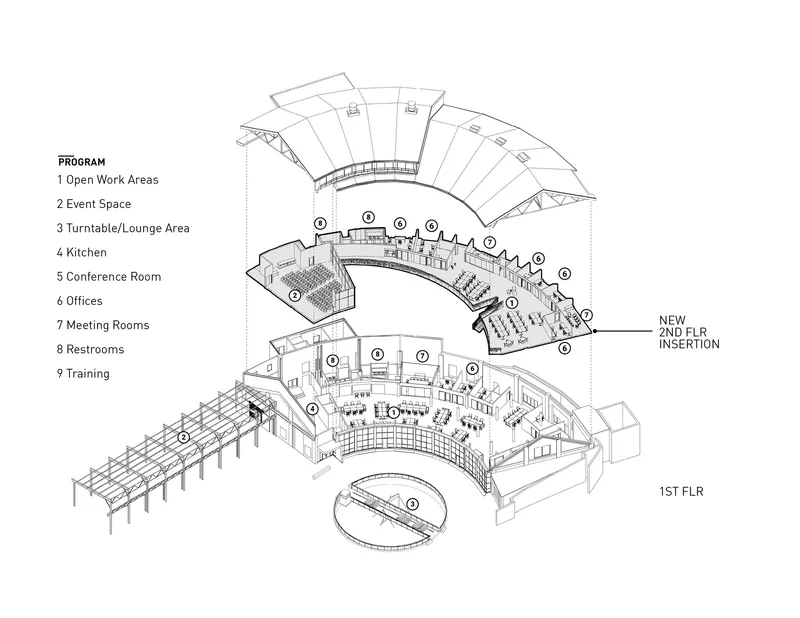
The site map and rendered site plan reveal how tightly the building's arc relates to the river bend and the surrounding park network. The first and second floor plans show the mezzanine insertion strategy clearly: the upper level wraps the perimeter with open work area and an event space that overlooks a central atrium aligned with the original turntable void. The axonometric drawing is the most instructive of the set, stacking both floors to show how programmed spaces wrap around the circular core without filling it, preserving the volumetric drama that makes the building worth saving.
Why This Project Matters
Adaptive reuse has become a near-default category in architecture media, and most projects follow a predictable formula: expose the brick, add some steel-framed glass, hang Edison bulbs, photograph at golden hour. The Roundhouse at Hazelwood Green resists that formula because GBBN's interventions are driven by measurable performance, not nostalgia. The all-electric mechanical system, the zoned VRF strategy, the energy modeling, the LEED Gold certification, and the stormwater management all demonstrate that heritage structures can meet contemporary sustainability standards without gutting what makes them compelling.
More importantly, the project is a proof of concept for the larger Hazelwood Green development. If a 133-year-old engine house can become a net-positive community asset on a contaminated brownfield, the argument for continuing to invest in the surrounding 178 acres becomes much harder to dismiss. The roundhouse is no longer turning locomotives. It is turning a neighborhood's trajectory.
The Roundhouse at Hazelwood Green by GBBN, Pittsburgh, United States. 25,000 sq ft. Completed 2020. Landscape by evolveEA. MEP and energy modeling by Buro Happold. Contractor: PJ Dick. Photography by Ed Massery.
About the Studio
Share Your Own Work on uni.xyz
If projects like this are the kind of work you want to make, uni.xyz is a place to publish your own, find collaborators, and enter design competitions.



Popular Articles
Popular articles from the community


Co-Life: Senior Housing Design That Reconnects Older Adults With the City
Co-Life reimagines senior housing design through healing gardens, shared streets, workshops, and a sustainable community across generations.

Hill & Cross Opera: Sculptural Opera House Architecture Shaped by Tallinn’s Landscape and Identity
Hill & Cross Opera reimagines opera house architecture in Tallinn through its sculptural hill, civic plaza, glass wave and a luminous cross.

Riyadh For All: Intergenerational Urban Design for Active Aging in Rabat
Riyadh For All reimagines urban design in Rabat with intergenerational co-living, adaptive courtyards, and Moroccan cultural exchange today.

Co-life: Sustainable Architecture for Age-Friendly Community Living
Co-life reimagines sustainable architecture for seniors through courtyards, rammed earth, shared gardens, and spaces designed for belonging.

Similar Reads
You might also enjoy these articles

Bao Huynh Watercolor Atelier: A Serene Art Retreat in Hội An
Bao Huynh Watercolor Atelier in Hội An blends multifunctional art spaces, sustainable design, local materials, and family-friendly living in a serene environment.

Atelier Macri Concept Store Interior Design by CASE-REAL
Atelier Macri store features a "ko" counter, walnut wood details, cork displays, blending retail, gallery, and seamless customer experiences.

Manuel Vargas Izquierdo Stadium and High-Performance Sports Center: Architectural Excellence in Jalpa de Méndez
The Manuel Vargas Izquierdo Stadium blends sustainable design, inclusive sports facilities, and cultural-inspired architecture, revitalizing Jalpa de Méndez’s public spaces.

KAKR Buluh Awar Hall: Revitalizing Community and Ecology Through Bamboo Architecture
Community built bamboo hall revitalizes Buluh Awar village, empowering youth, restoring ecology, celebrating vernacular craftsmanship through sustainable architecture and culture.
Explore Architecture Competitions
Discover active competitions in this discipline



Challenge to reimagine the Iron Throne


Photograph architecture without architects


Illustrate the lost glory of Angkor Wat - Render Challenge


Design challenge to reuse E-waste
Comments (0)
Please login or sign up to add comments
No comments yet. Be the first to comment!