

G/O Architecture Rewires a Seoul Student Union into a Layered Campus Living Room
A 690-square-meter renovation at Hanyang University turns a tired student building into a stack of social micro-climates along a major pedestrian axis.


Student unions tend to age badly. Built for one generation's idea of communal life, they often calcify into dim corridors and underused offices within a decade. The UNI-CENTER project by G/O Architecture, led by Juyoung Lee, takes exactly this problem as its starting point, renovating Hanyang University's existing Student Union in Seongdong-gu, Seoul. Sitting along the main pedestrian route between a subway station and the campus heart, the building had the footfall but lacked the spatial invitation to make anyone stop.
What makes the renovation worth attention is its refusal to treat the 690-square-meter interior as a single open-plan gesture. Instead, the design threads a central staircase through a series of distinct social zones, each calibrated to a different posture: standing at a high counter, lounging on tiered timber bleachers, sitting in a translucent conference room, or leaning against modular ottomans. The result is a building that reads less like a student center and more like a vertical public square, where the stair itself is the plaza.
A Facade That Signals Change
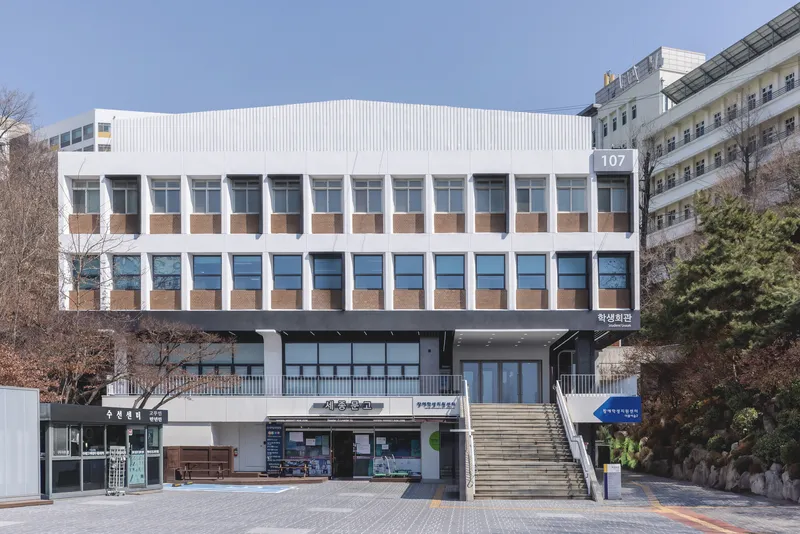
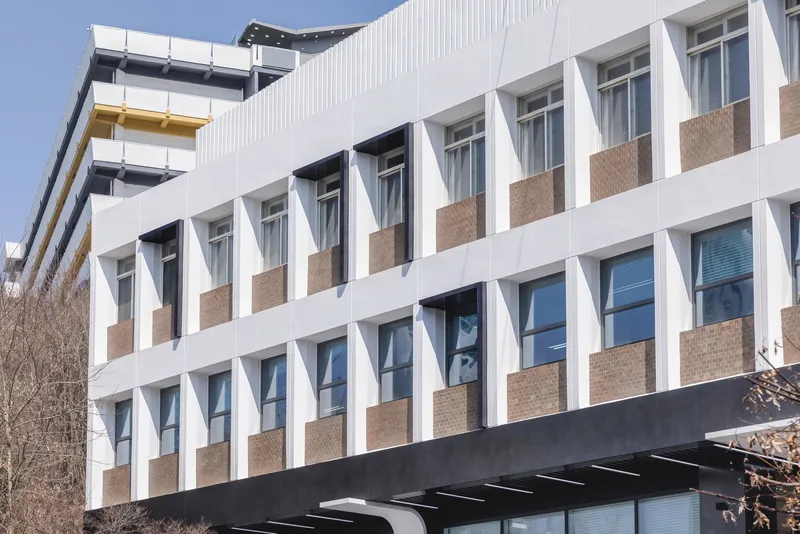
From the street, the intervention is legible but not loud. White corrugated metal cladding wraps over the existing tan brick, a layered composition that alternates opaque panels with zigzag sunshades on the upper floors. The effect is deliberate: the new skin acknowledges the original structure without pretending to be a new building. Bare trees and entry stairs anchor the base, while the corrugated panels catch light in a way that shifts the facade's appearance through the day.
The sunshade pattern is not merely decorative. The angled white fins filter direct afternoon light on the western exposure, controlling solar gain while creating a rhythm that differentiates the building from the flat institutional facades around it. It is a smart, budget-conscious move: one material, one gesture, significant visual impact.
The Stair as Social Spine
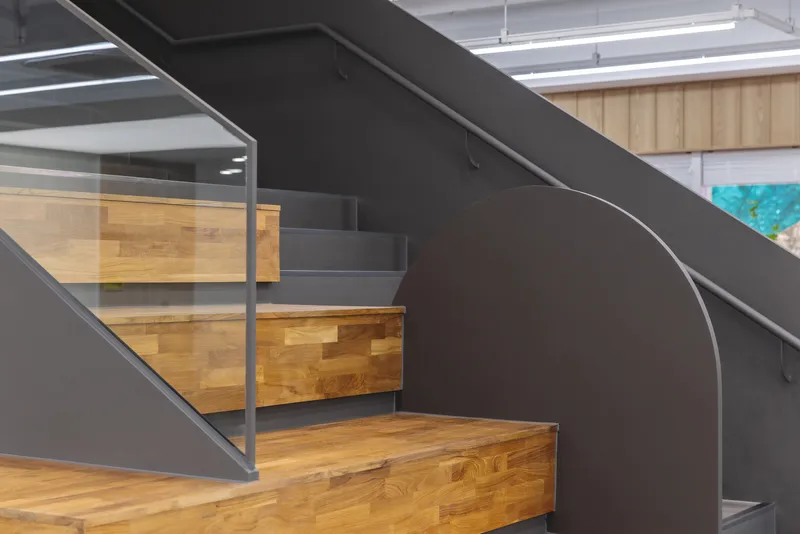
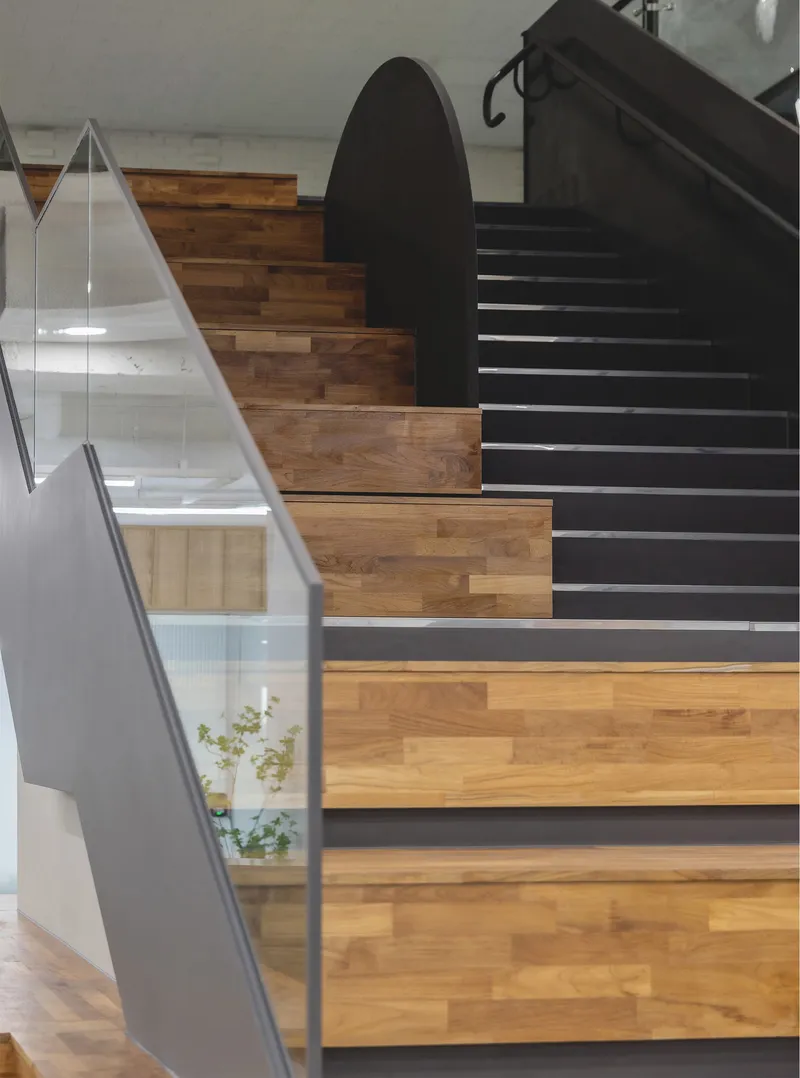
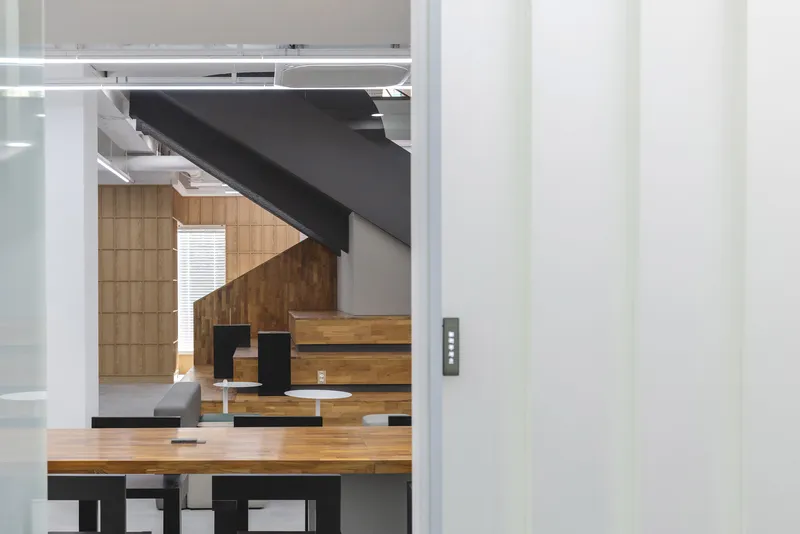
The black steel staircase at the center of the plan does far more work than circulation. With timber treads, glass balustrades, and a gentle curve, it operates as the building's organizational backbone, visible from nearly every interior zone. You see it framed through doorways, flanked by seating, terminating views. It is the one element that stitches the programmatic diversity of the floors into a coherent spatial narrative.
Alternating wood and painted steel on the treads gives the stair a visual texture that rewards close looking, a detail that suggests craft rather than pure efficiency. The glass railing keeps sightlines open, so the stair never becomes a wall. A potted plant at its base is a small, humanizing touch that keeps the steel and glass from feeling corporate.
Timber Bleachers and the Amphitheater Impulse
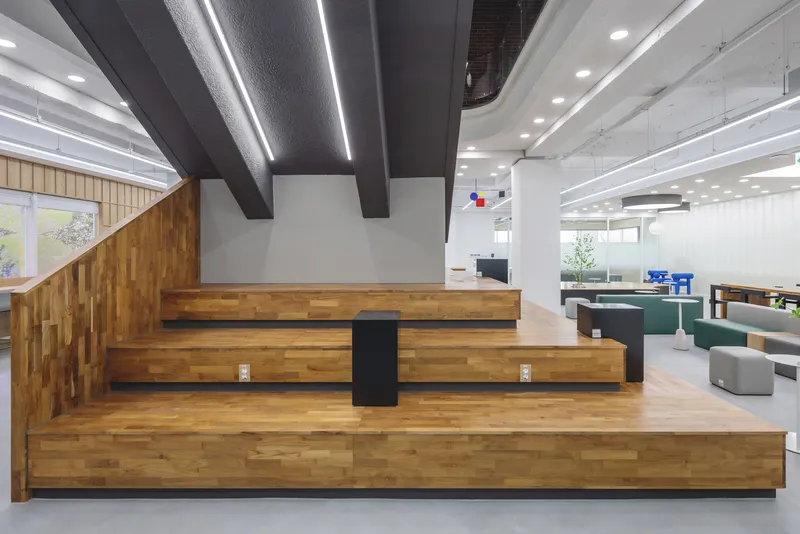
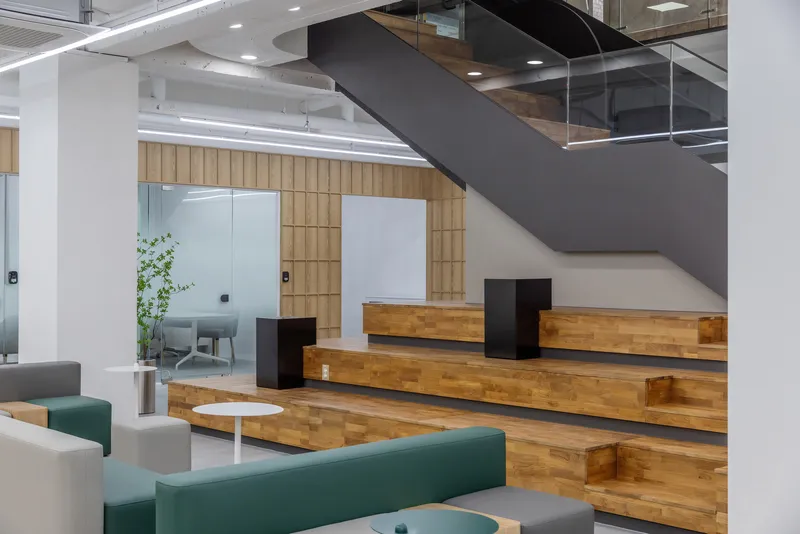
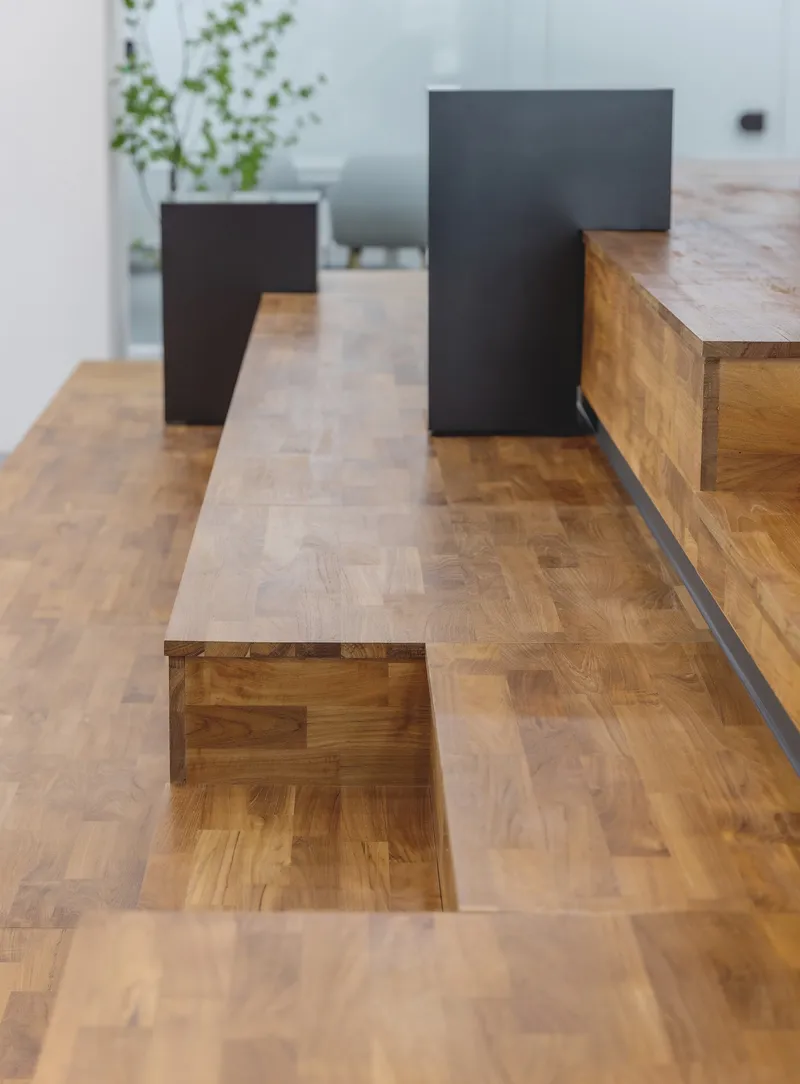
The most distinctive interior move is the tiered timber seating platform, a stepped amphitheater that doubles as informal workspace, event seating, and plain lounge. Steel beams and exposed ceiling ducts overhead keep the atmosphere raw and honest, a counterpoint to the warmth of the wood. Green upholstered benches and potted greenery at the edges soften the composition without domesticating it.
There is something generous about dedicating this much floor area to a structure that has no single function. It trusts students to figure out how to use it. That trust is the real design decision. The frosted glass partitions visible behind the bleachers provide just enough visual separation to create a sense of enclosure without cutting the space off from daylight or the staircase beyond.
Calibrated Micro-Environments
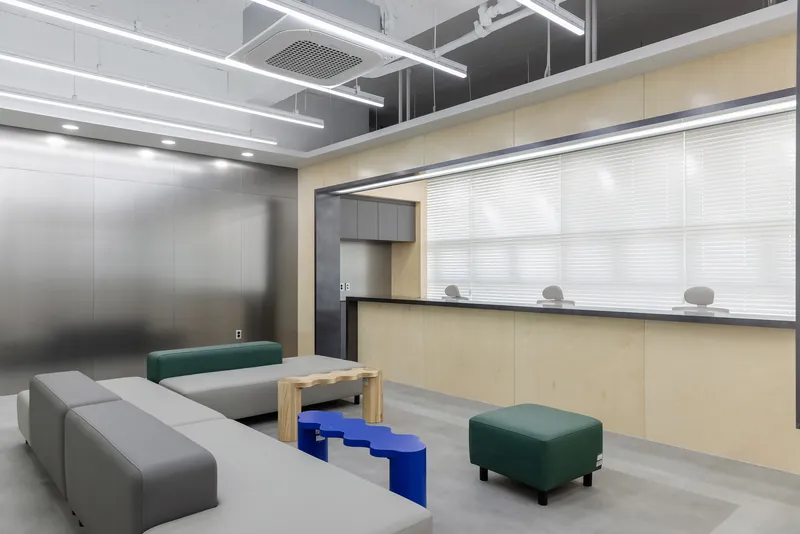
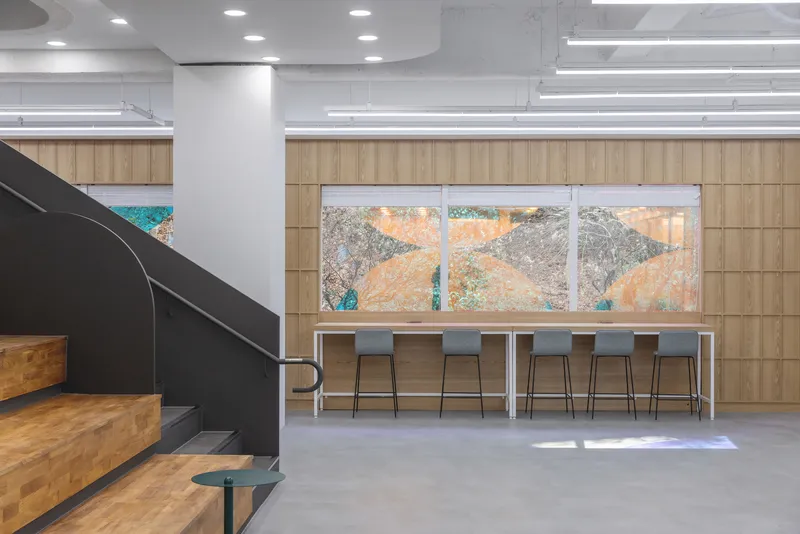
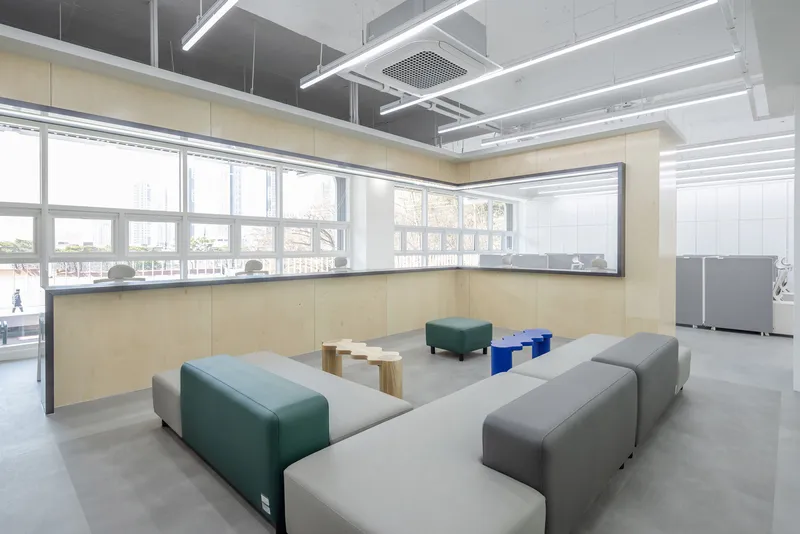
Beyond the amphitheater, the building layers a series of smaller zones, each tuned to a specific mode of use. A waiting area with a light wood service counter and translucent roller blinds creates a softer atmosphere, almost café-like. Nearby, a high counter with timber stools faces a vertical-grain wood wall and a large west-facing window, providing a focused perch for individual work bathed in afternoon light.
Elsewhere, an open lounge with modular seating and light wood paneling reads as a decompression chamber: low furniture, warm surfaces, linear ceiling fixtures casting even light. The material palette across all these zones stays consistent, timber, steel, polished concrete, translucent glass, so the variety in atmosphere comes from furniture height, light quality, and enclosure rather than competing finishes.
Meeting Rooms and the Threshold of Formality
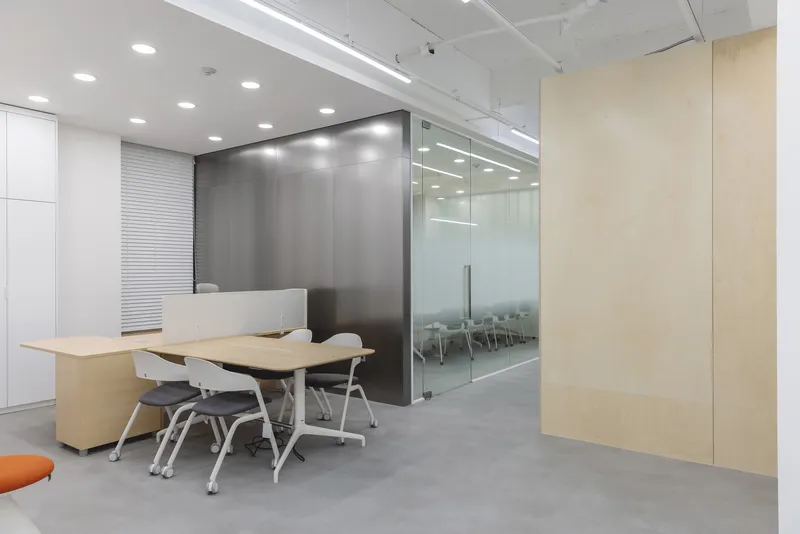
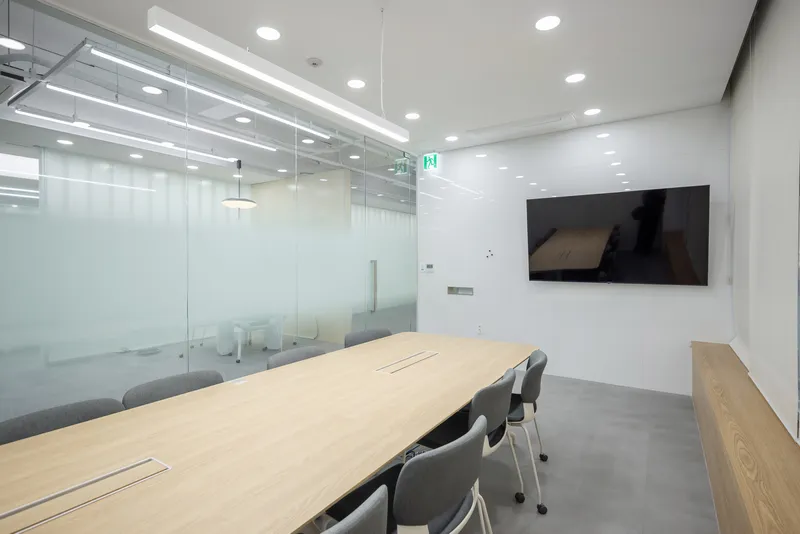
A glass-walled conference room visible behind the reception desk introduces the building's most formal space, but even here, the design resists opacity. Translucent glass partitions and a long timber table with suspended linear lighting give the room a clarity that makes it feel accessible rather than hierarchical. You can see into it, and it sees back into the common areas. This is a useful provocation in a student building, where meeting spaces are often locked and underused.
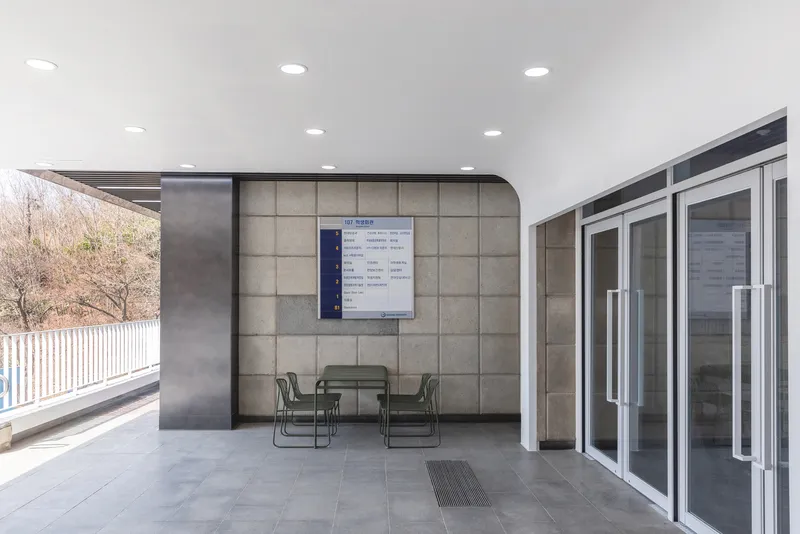
The covered outdoor terrace rounds out the program, offering metal seating, a tiled floor, and an information board on a textured wall. It is the building's most casual threshold, the place where indoor and outdoor campus life overlap. The fact that it exists at all signals that the architects thought carefully about the edges of the project, not just its showpiece interior.
The Open Office as Commons
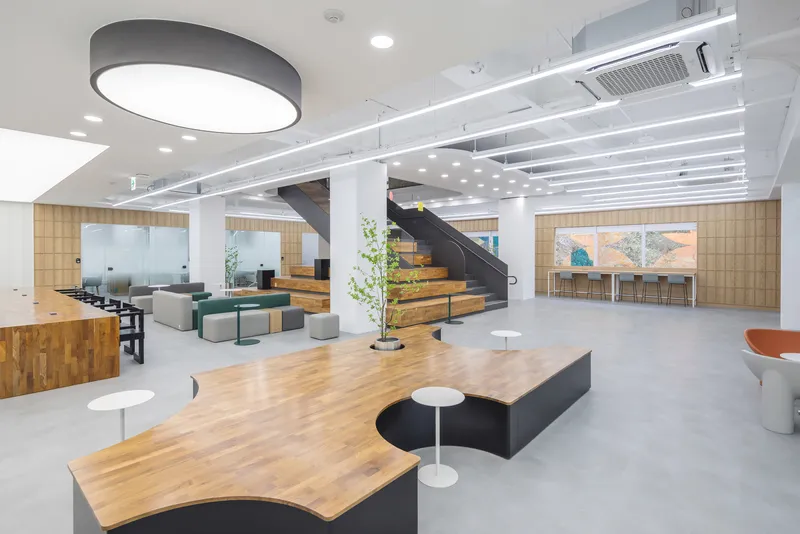
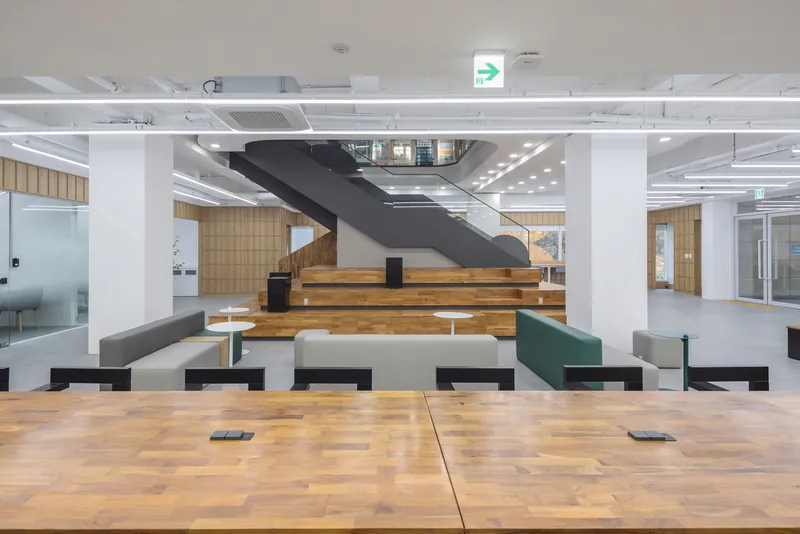
The open office interior, with its white columns, linear ceiling lights, and central staircase, functions as the building's connective tissue. Timber benches line the floor, and the black steel stair anchors the view. The palette is restrained: white structure, warm wood, black steel. It reads as a commons rather than a workspace, a space where movement and rest coexist. Modular seating clusters around the stair base allow the room to be reconfigured for events, study groups, or simple downtime.
Plans and Drawings
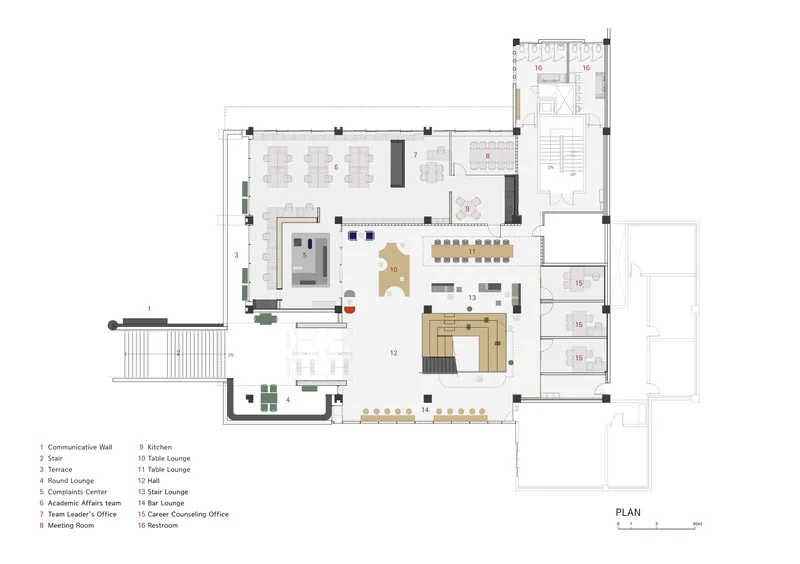
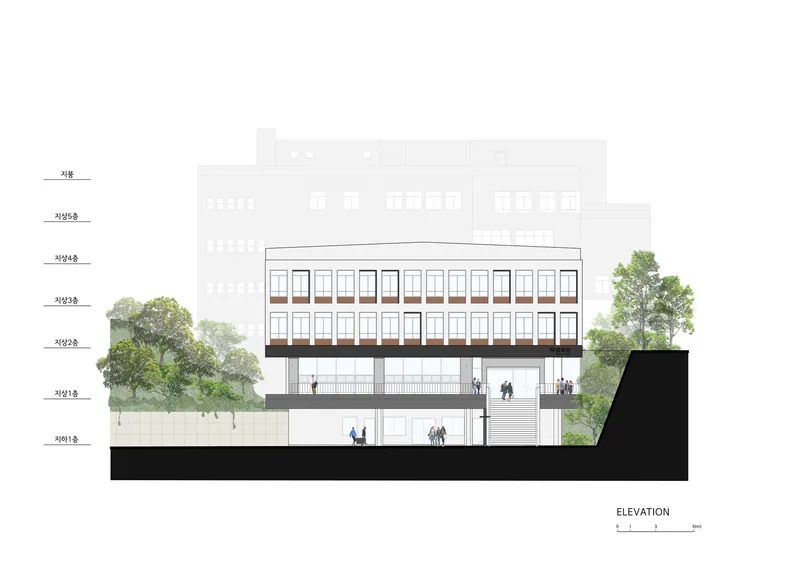
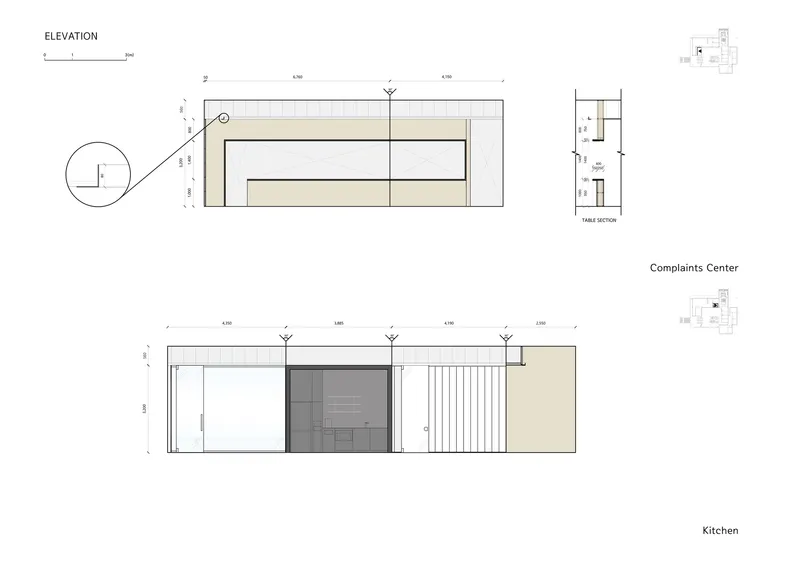
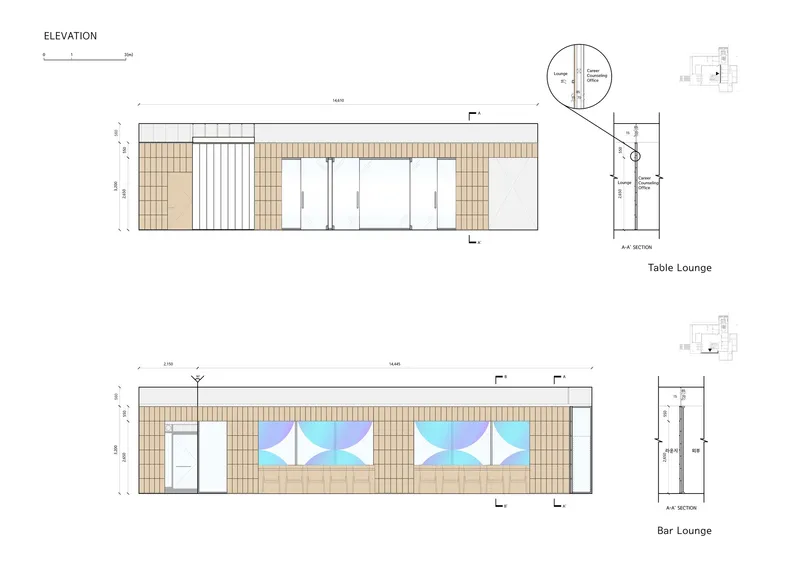
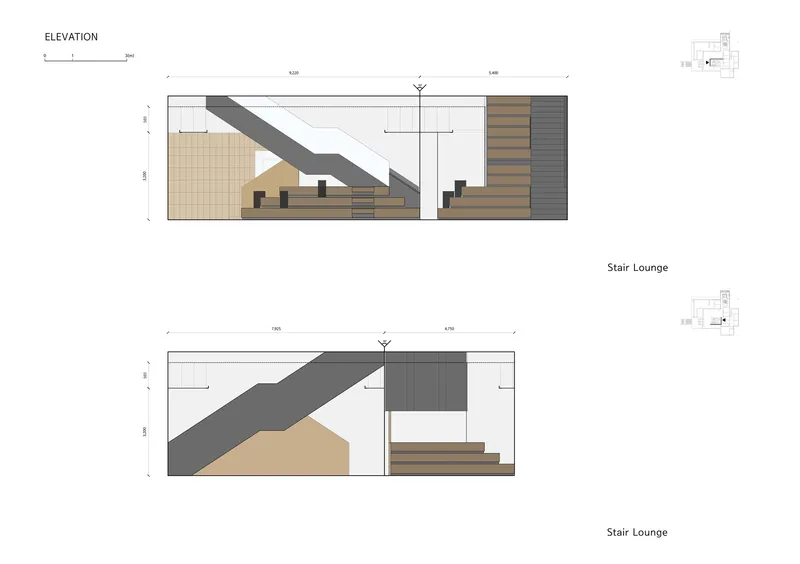
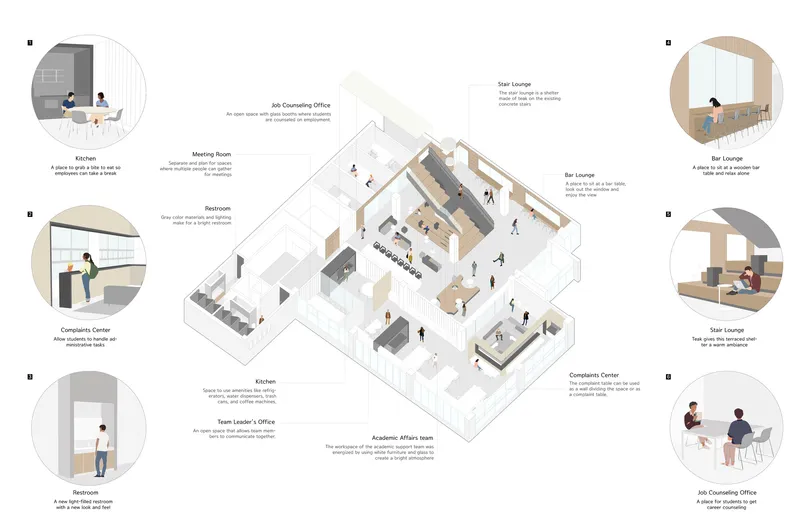
The floor plan reveals the logic behind the experience: numbered rooms cluster around central circulation and meeting areas, with the staircase serving as the fulcrum. Elevation drawings show the layered facade strategy clearly, corrugated cladding over brick, with fenestration sized to each interior program. Kitchen, bar lounge, and table lounge elevations demonstrate how wall treatments shift from tiled surfaces to horizontal paneling depending on function, a disciplined approach to material variation.
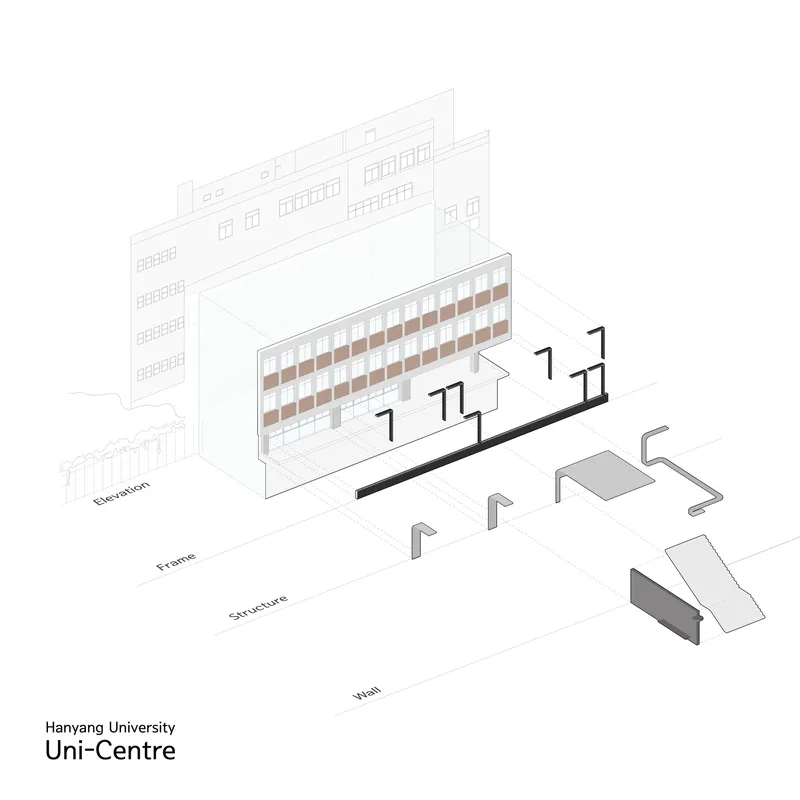
The exploded axonometric is particularly revealing, breaking the facade elevation, structural frame, and wall assembly into discrete components. It makes clear that the renovation was not a surface-level refresh but a deliberate restructuring of the building's layers. The isometric floor plan with programmatic vignettes communicates the intent better than any render could: each zone is occupied by figures in different postures, reinforcing that the design's real subject is social behavior, not form.
Why This Project Matters
Campus renovations rarely get the attention of new builds, and that imbalance matters. Universities worldwide sit on enormous stocks of mediocre postwar buildings that shape student life more than any signature library or concert hall. Uni Center demonstrates that a 690-square-meter renovation, handled with spatial intelligence and material restraint, can redefine how a community uses a building without the budget or disruption of starting from scratch.
G/O Architecture's key insight here is that a student union should not be one room or one mood. By fragmenting the interior into a gradient of social intensities, from the amphitheater to the private counter seat, and holding them together with a single staircase and a coherent material language, the project offers a template that is replicable without being generic. That combination of specificity and transferability is what makes it worth studying.
Uni Center, designed by G/O Architecture (lead architect: Juyoung Lee), Seongdong-gu, South Korea. 690 m², completed 2024. Photography by tqtq studio.
About the Studio
Share Your Own Work on uni.xyz
If projects like this are the kind of work you want to make, uni.xyz is a place to publish your own, find collaborators, and enter design competitions.


Popular Articles
Popular articles from the community


Singing Woman: An Opera House That Performs Before the Curtain Rises
Ovidiu Cristian Pavel's conceptual opera house translates Estonia's choral identity into a sculpted waterfront landmark facing the Baltic Sea.

Cloaked Colonization: A Mobile Underwater Habitat That Moves Like a Fish
Micah Abaya's shortlisted EHC Pacific entry reimagines ocean settlement as a dispersed network of self-sustaining architectural organisms.

Opera on the Sea: Driftwood Logic Shapes a Timber Opera House on Estonia's Coast
Trevor Orgill's opera house translates the entangled drift of floating timber into a civic building where wood, water, and music converge.

The Amber Palace Opera: A Geological Fiction Surfaces on Tallinn's Baltic Waterfront
Pierre Brillard reimagines a Baltic legend as a public landscape, opera house, and waterfront promenade rooted in Tallinn's coastal identity.

Similar Reads
You might also enjoy these articles

Pixel Gardens: One Repeated Module Stacked Into a Terraced Social Housing Tower for Famagusta
Salem Bader's shortlisted housing tower builds a vertical neighbourhood from one repeated module, offsetting units to carve terraces, light and air.

Bao Huynh Watercolor Atelier: A Serene Art Retreat in Hội An
Bao Huynh Watercolor Atelier in Hội An blends multifunctional art spaces, sustainable design, local materials, and family-friendly living in a serene environment.

Atelier Macri Concept Store Interior Design by CASE-REAL
Atelier Macri store features a "ko" counter, walnut wood details, cork displays, blending retail, gallery, and seamless customer experiences.

Manuel Vargas Izquierdo Stadium and High-Performance Sports Center: Architectural Excellence in Jalpa de Méndez
The Manuel Vargas Izquierdo Stadium blends sustainable design, inclusive sports facilities, and cultural-inspired architecture, revitalizing Jalpa de Méndez’s public spaces.

Explore Student Center Competitions
Discover active competitions in this discipline

Challenge to design public laboratory

Challenge to design luxury tourism on rails

VR headsets Storefront design competition

Designing a staircase for a client
Comments (0)
Please login or sign up to add comments
No comments yet. Be the first to comment!