

Golf House by dagli + atélier d’architecture: Where Sustainable Innovation Meets Refined Minimalism
Golf House blends sustainable design, minimalist luxury, and nature integration, housing an architecture studio and five refined micro-apartments.


Architects: dagli + atélier d’architecture
A Contemporary Architectural Statement Rooted in Nature
Golf House, designed by dagli + atélier d’architecture, is a bold architectural intervention located in Niederanven, Luxembourg. This 800 m² mixed-use building comprises an architectural studio and five bespoke apartments. With a design that reflects the studio’s refined architectural language, the building balances modern sophistication with an environmentally conscious ethos.

A Thoughtful Approach to Spatial Experience and Daylight
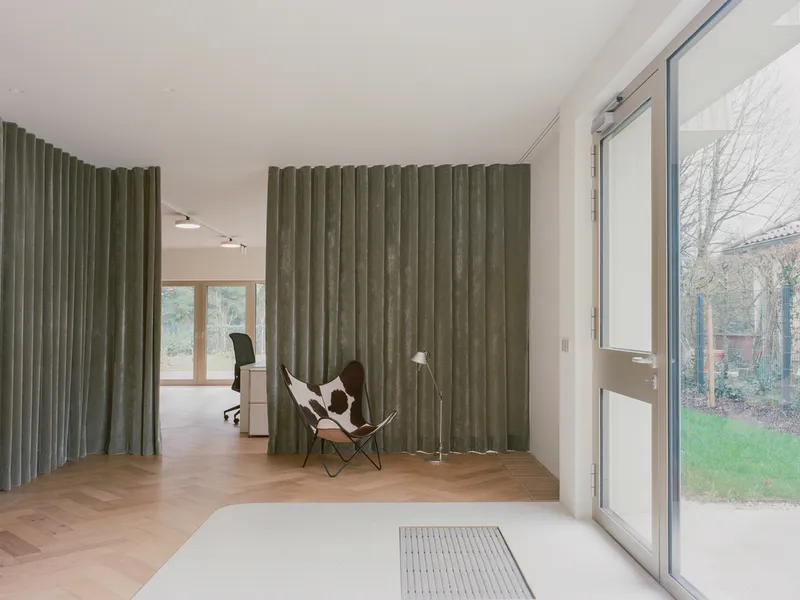
At ground level, the architectural studio features an open-plan configuration designed to harness maximum natural light. Expansive glazing, including floor-to-ceiling windows and glass doors, fosters a seamless indoor-outdoor connection. The visual relationship with the backyard enhances the calm, inspiring atmosphere of the workspace, positioning it as both a productive environment and a reflection of the studio’s design values.
This level also acts as a reception area, where visitors immediately engage with the studio’s philosophy through spatial openness and tactile materiality.

A Facade That Balances Bold Texture with Natural Integration
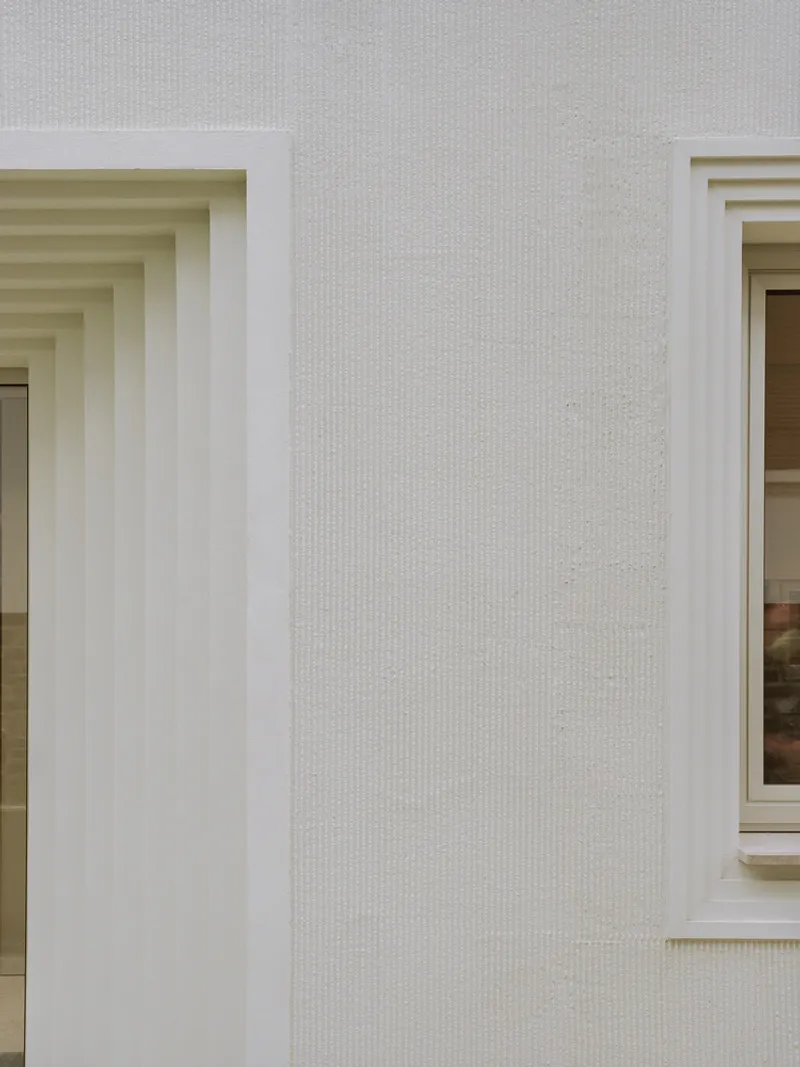
The building’s facade showcases a vertical rhythm through finely textured cladding, punctuated by signature dagli-designed frames around the openings. The material palette was carefully selected to create visual harmony with the landscape while also making a distinct architectural statement.
The interplay of shadow and depth across the facade results in a structure that is simultaneously modern and timeless—contemporary in language, yet gentle in its relationship with the surrounding context.

Minimalist Luxury in Micro-Apartment Living
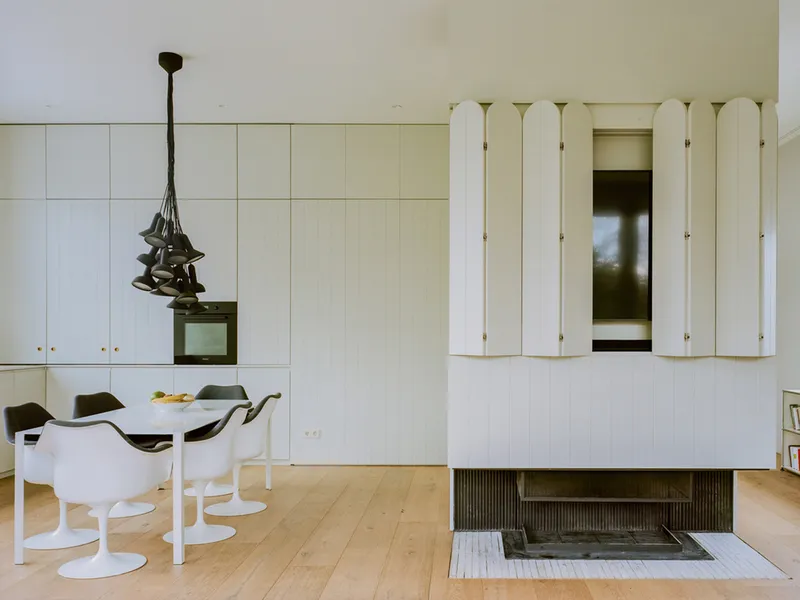
Each of the five apartments is meticulously crafted for single occupancy, embracing compact luxury. High-end materials—such as wood, stone, and gold-toned brass fixtures—infuse the interiors with warmth and elegance. Sliding doors were employed to optimize space efficiency, while full-height doorways maintain visual continuity throughout the interior.
The layout is fluid, with interconnected spaces designed to maximize spatial perception. Despite the modest footprint, the apartments offer a generous and comfortable living experience.
Sustainability and Material Honesty at the Core
Sustainability is not just an add-on—it’s deeply embedded in the design. The monolithic exterior treatment, with uniform coloring from facade to railings and windows, allows the building to blend respectfully with its natural surroundings. Recycled materials from the demolished pre-existing structure were reused as subsoil, minimizing waste and ecological disruption.
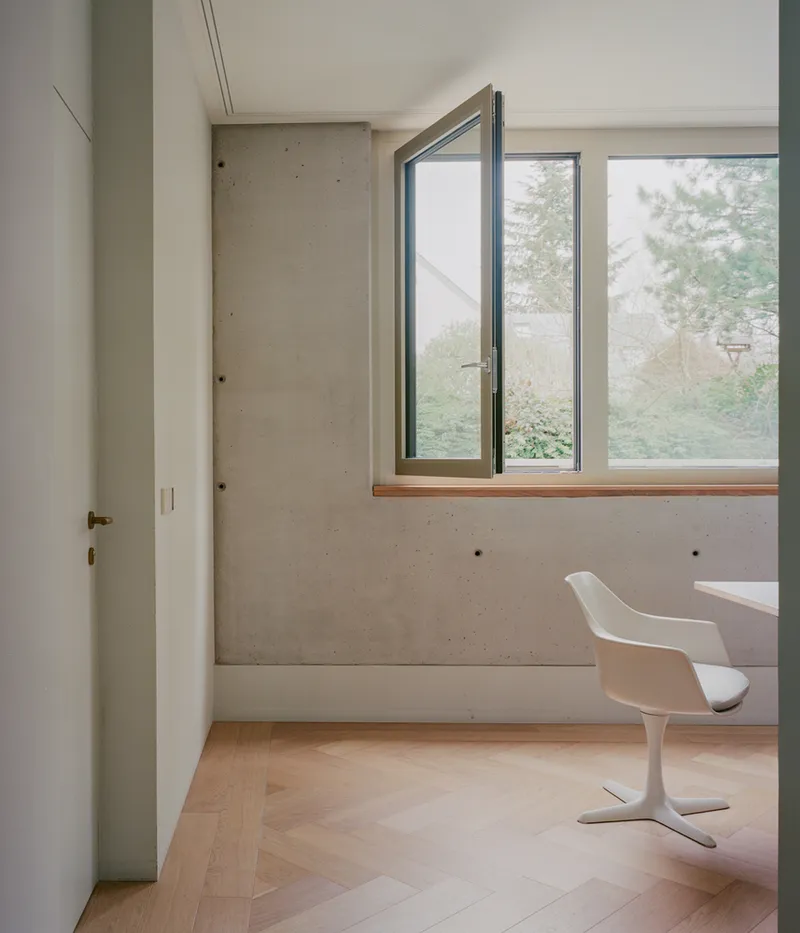
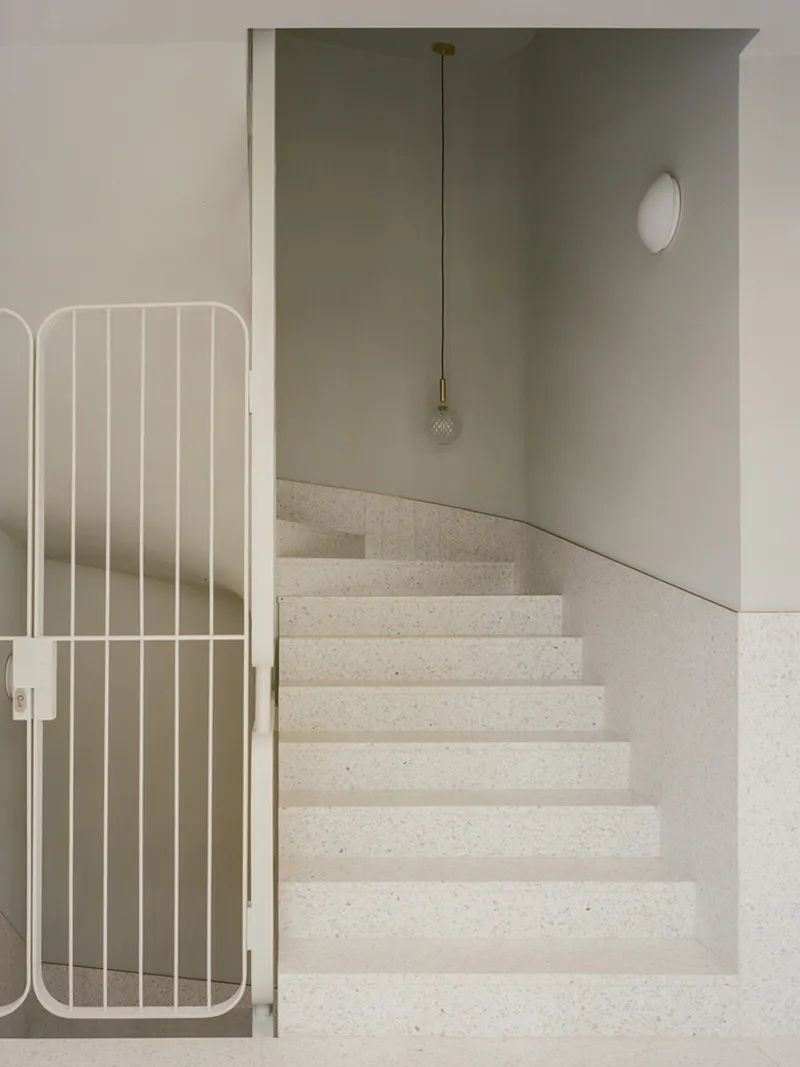
Interior finishes emphasize raw, expressive materials. Brut concrete, natural wood, and brass elements combine to evoke a warm, industrial aesthetic. Curved details soften the otherwise clean lines, infusing the space with a sense of movement and tactility.
Landscape Design as a Living Ecosystem
The 850 m² backyard is deliberately hidden from street view—conceived as a “secret forest” exclusively for residents. This micro-ecosystem includes a 60 m² edible garden and an array of native plantings, including corneli cherry, elder, sloe, hazelnut, medlar, apple, quince, fig, and birch trees.
Beyond aesthetic pleasure, the landscape is designed for biodiversity. The team’s regenerative philosophy promotes seasonal renewal and animal habitat creation. The garden actively attracts birds, pollinators, and especially diverse species of bees, transforming the site into a living laboratory of ecological coexistence.
Green Innovations and Urban Climate Contribution
Green strategies include:
- A green roof system that improves insulation and encourages biodiversity
- Permeable surfaces that reduce heat island effects and improve water infiltration
- A vegetated facade that contributes to microclimate regulation
These interventions collectively enhance the urban climate and align with Luxembourg’s broader sustainability goals.
A Human-Centered, Regenerative Architectural Manifesto
Golf House exemplifies how thoughtful architecture can merge workspace, residence, and ecology into a single, integrated concept. dagli + atélier d’architecture has delivered a building that embodies their studio’s values—elegant yet grounded, functional yet poetic, and always in dialogue with its environment.
From its material restraint to its biodiversity-first landscaping, Golf House sets a benchmark for sustainable and luxurious mixed-use architecture.
All photographs are works of
Lorenzo Zandri


Popular Articles
Popular articles from the community


Manzana Morphosis: Stretching Barcelona's Grid into a Living Landscape for 2050
A radical reworking of the Eixample manzana turns density into a tool for generous public space, vertical ecology, and environmental performance.

Singing Woman: An Opera House That Performs Before the Curtain Rises
Ovidiu Cristian Pavel's conceptual opera house translates Estonia's choral identity into a sculpted waterfront landmark facing the Baltic Sea.
Tsunami Convergenics: Turning Catastrophic Ocean Forces into Underwater Housing Infrastructure
A speculative underwater settlement off the coast of Onagawa, Japan, treats tsunamis and typhoons as energy sources rather than threats.

Temporary Home for Dogs: A Reversed Zoo Rethinks Animal Shelter Architecture
In Bucharest, a sinuous corridor and freed landscape flip the logic of containment, designing a shelter that works to make itself unnecessary.

Similar Reads
You might also enjoy these articles


Hodi-Mandai Geram
Project Function: Preservation and revitalization of the Intangible heritage and socio-spatial identity of the Hodi by Housing, Cultural Memory Center, Sacred Grove, landscape, local tourism economy


Olio Towers: A Mid-Rise for Performers That Fuses Housing, Rehearsal, and Stage
Located blocks from Houston's Theater District, this modular tower stacks living units around a central performance atrium.

Oasis: Modular Green Housing Carved into Dhaka's Urban Fabric
A shortlisted Plugin Housing entry reclaims unauthorized settlements in Dhaka with stepped concrete volumes, green roofs, and ventilation-driven design.

Black Hole: A Floating Megastructure for the Post-Physical Era
Emiliano Mazzarotto envisions a spherical, self-scaling arena where e-sports, digital hotels, and holographic stadiums replace traditional public space.

Explore Architecture Magazine Competitions
Discover active competitions in this discipline

Challenge to reimagine the Iron Throne

Photograph architecture without architects

Illustrate the lost glory of Angkor Wat - Render Challenge

Design challenge to reuse E-waste
Comments (0)
Please login or sign up to add comments
No comments yet. Be the first to comment!