

GRANHAND Seogyo Store: Adaptive Reuse of a 1970s Seoul Residence into a Handcrafted Retail and Café Space by STUDIO MOTIF
Adaptive reuse flagship store in Seoul transforming a 1970s house into a handcrafted retail and café space rooted in material honesty.


Adaptive Reuse Retail Architecture in Seoul
Located in Seoul’s Yongsan District, the GRANHAND Seogyo Store is the flagship retail space for Korean perfume brand GRANHAND. Designed by STUDIO MOTIF, the project reinterprets a modest residential house built in the 1970s, transforming it into a contemporary commercial environment while preserving the building’s original flat plan and domestic scale. Rather than imposing a new architectural identity, the design embraces the existing structure, allowing memory, materiality, and craftsmanship to define the spatial experience.
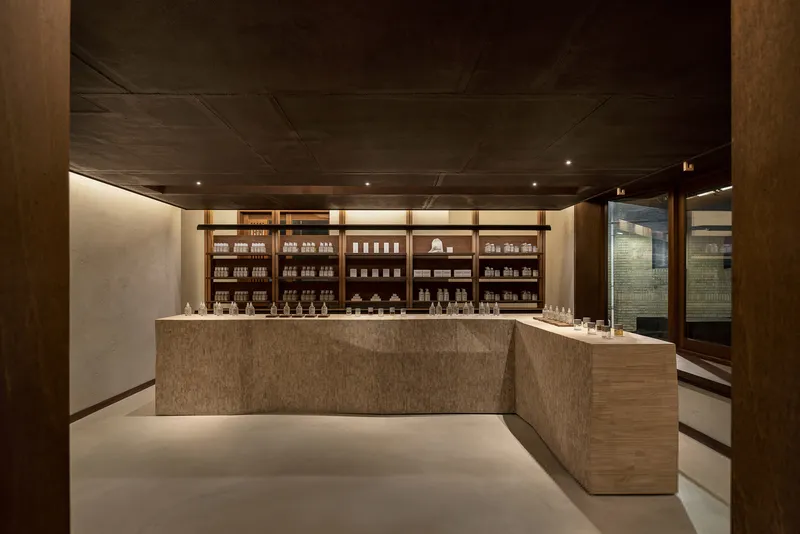
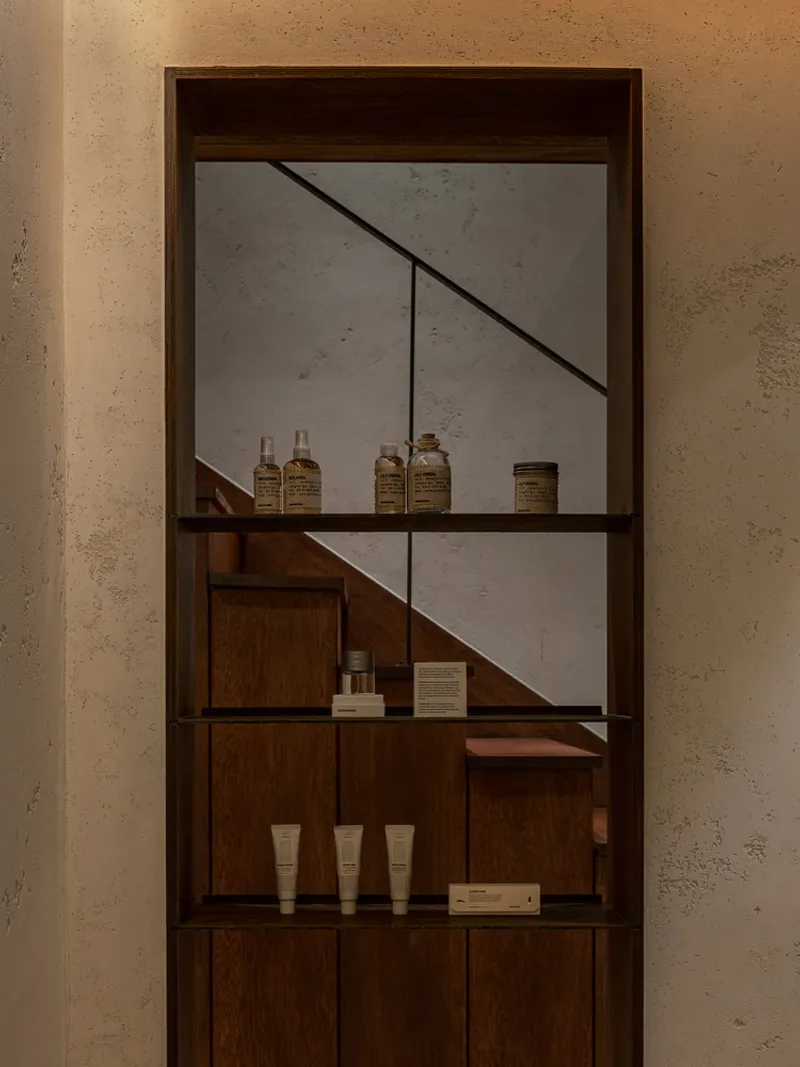
The project occupies a total area of 237 square meters and unfolds across two levels. The ground floor houses the GRANHAND perfume store, while the upper floor accommodates KOMFORTABEL COFFEE, a café also operated by the brand. This dual program strengthens GRANHAND’s identity as a lifestyle brand, blending retail, hospitality, and sensory experience within a single architectural narrative.

Preserving the Domestic Plan
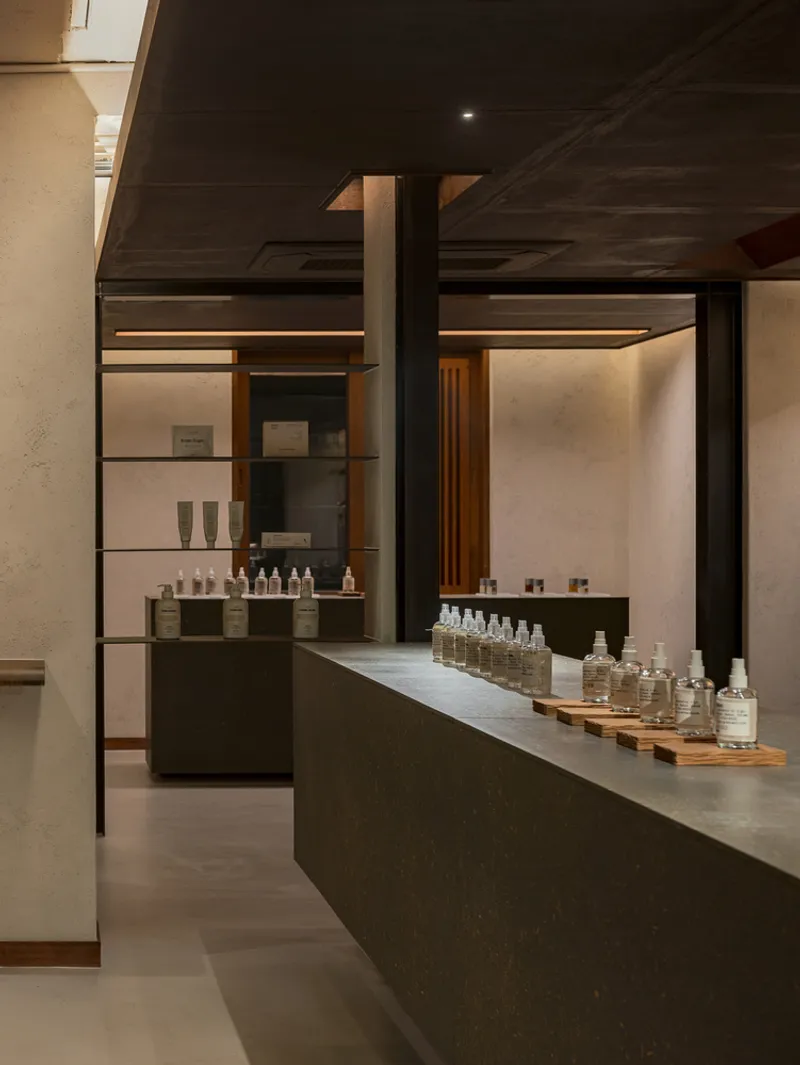
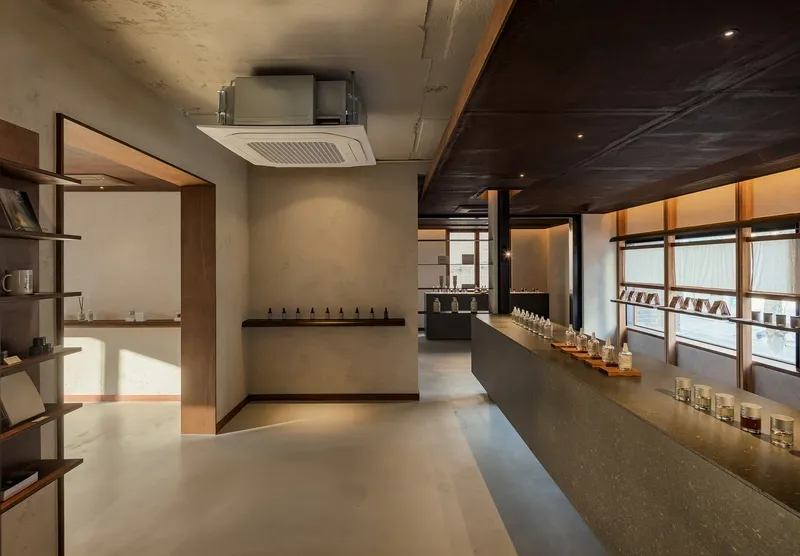
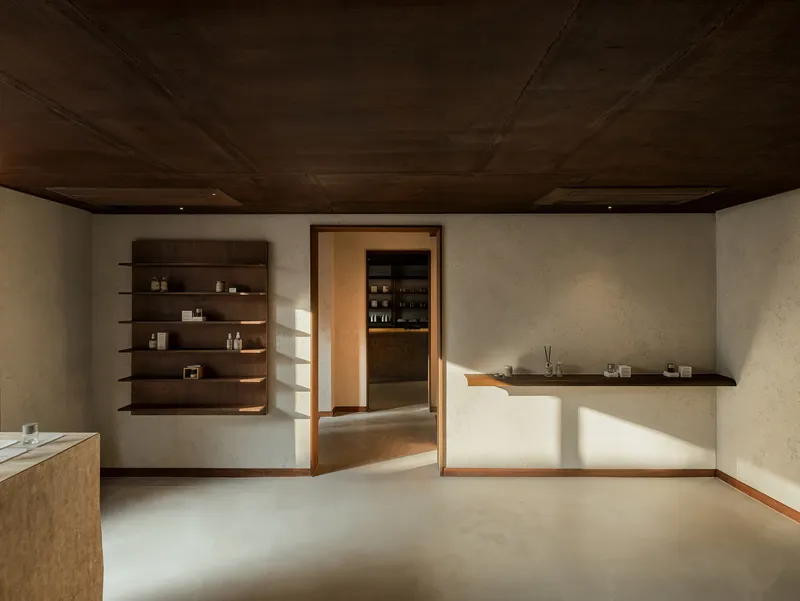
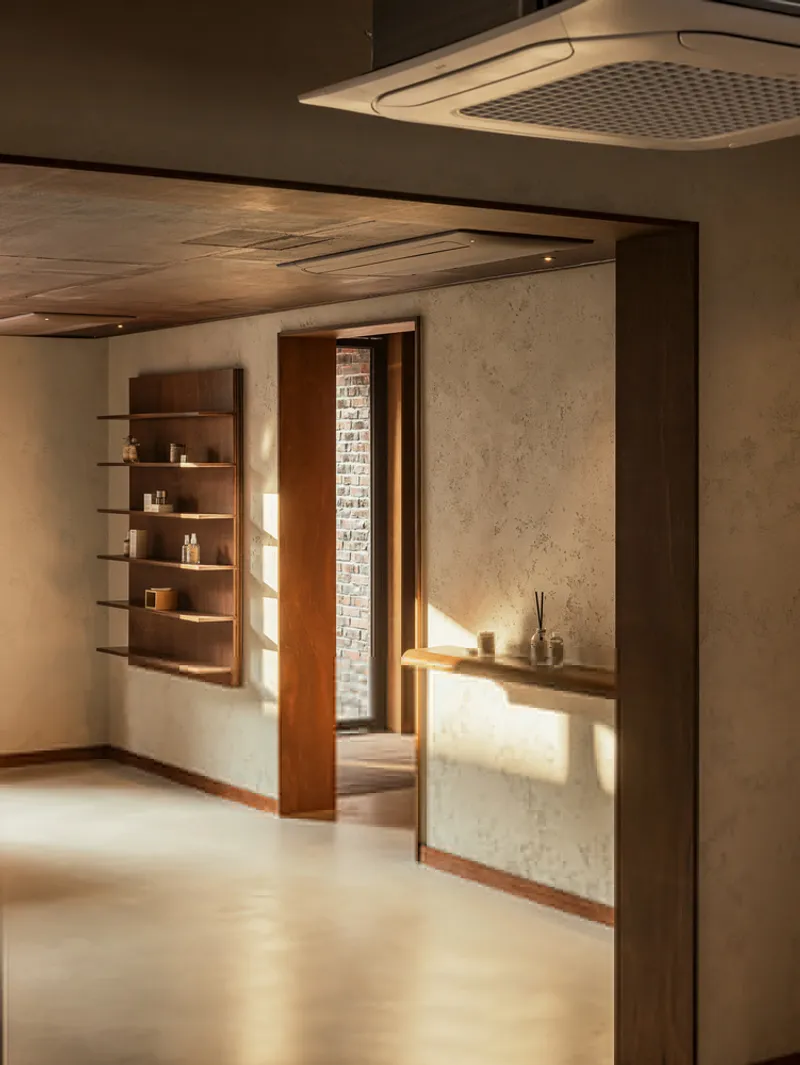
One of the defining strategies of the project is the decision to maintain the original household layout of the former residence. Instead of opening the interior into a single, large retail hall, STUDIO MOTIF retained the flat, room-based plan. These former domestic rooms now function as interconnected retail zones, encouraging varied customer movement and intimate engagement with the brand.
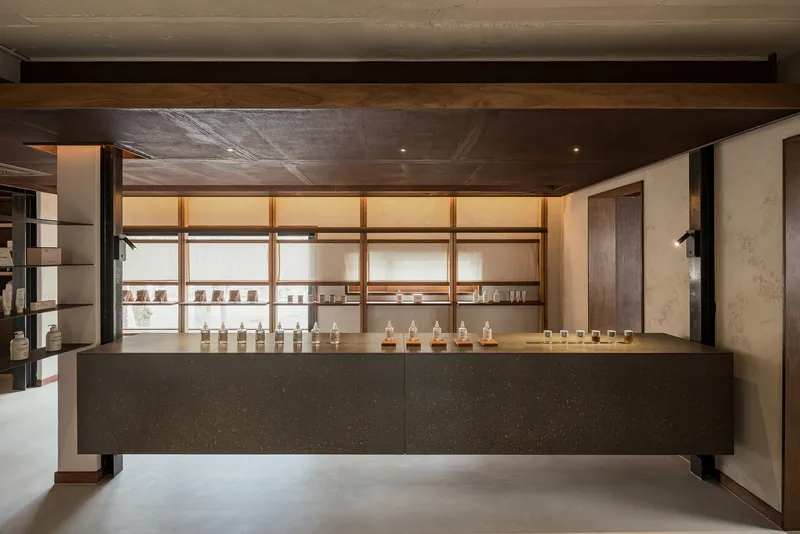
The commercial display system is subtly overlaid onto the residential plan. Display stands are arranged across the surface of the floor plan, allowing visitors to navigate the space freely rather than following a prescribed retail route. This approach creates multiple spatial sequences and offers customers diverse ways to encounter GRANHAND’s products, reinforcing the brand’s emphasis on personal, sensory discovery.
Craftsmanship as Design Language
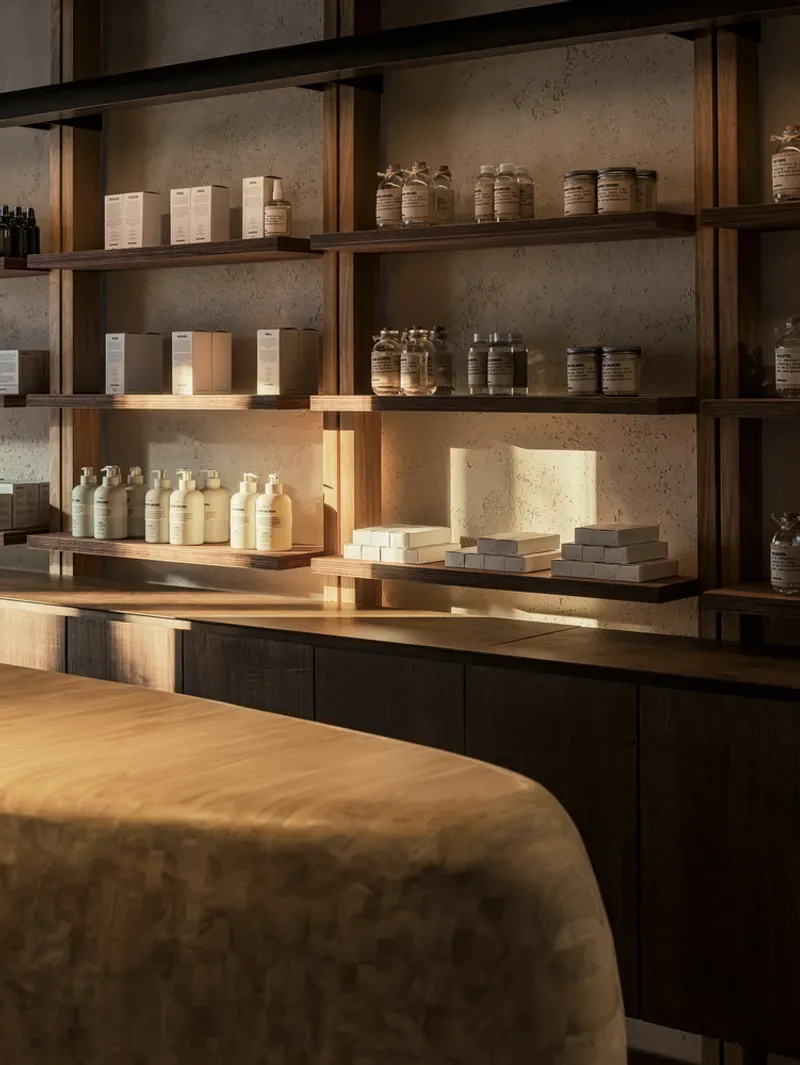
Material selection and construction methods play a central role in shaping the store’s identity. On the first floor, the primary materials are glued laminated timber and jute fabric. The display stands are formed by stacking laminated timber, which was then hand-sanded to create solid, sculptural masses. These wooden elements function simultaneously as furniture, display infrastructure, and architectural features.
The ceiling is finished with layered jute fabric, applied directly on site and treated with paste and dye. Rather than striving for a perfectly uniform surface, the design celebrates subtle variations and textures, reinforcing the handmade quality of the space. Warm lighting filters through the fibrous ceiling, enhancing the tactile atmosphere of the perfume store.
Material Honesty and Spatial Contrast
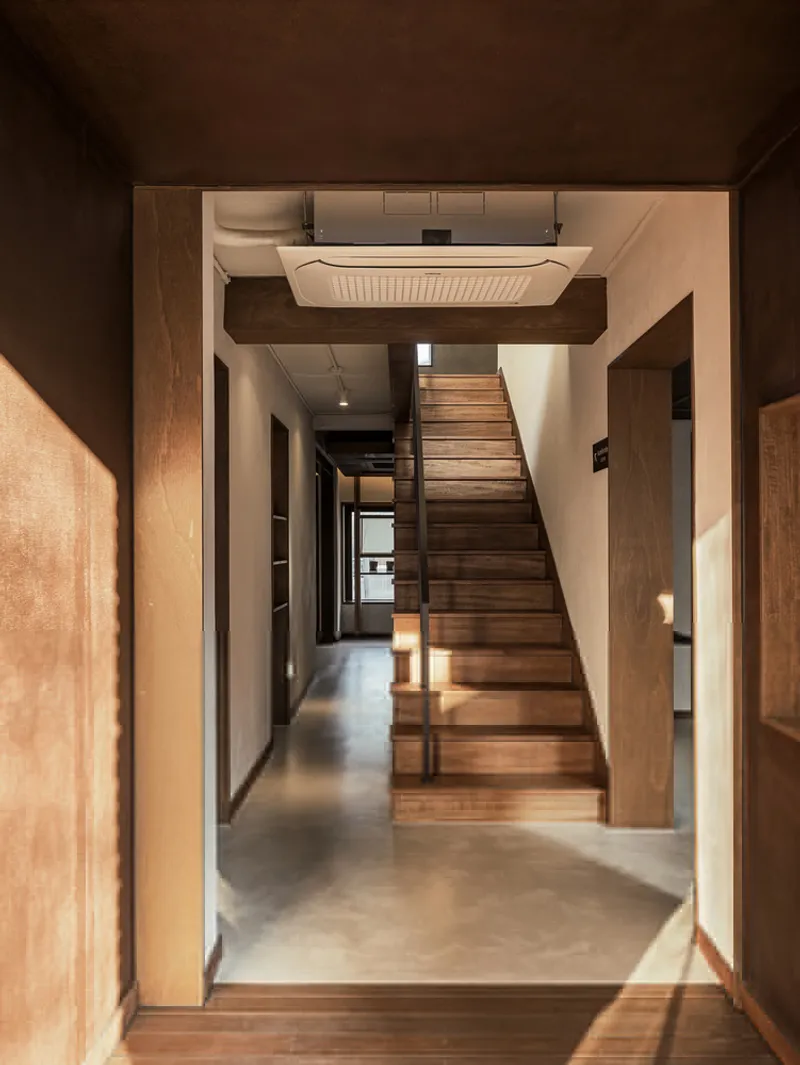
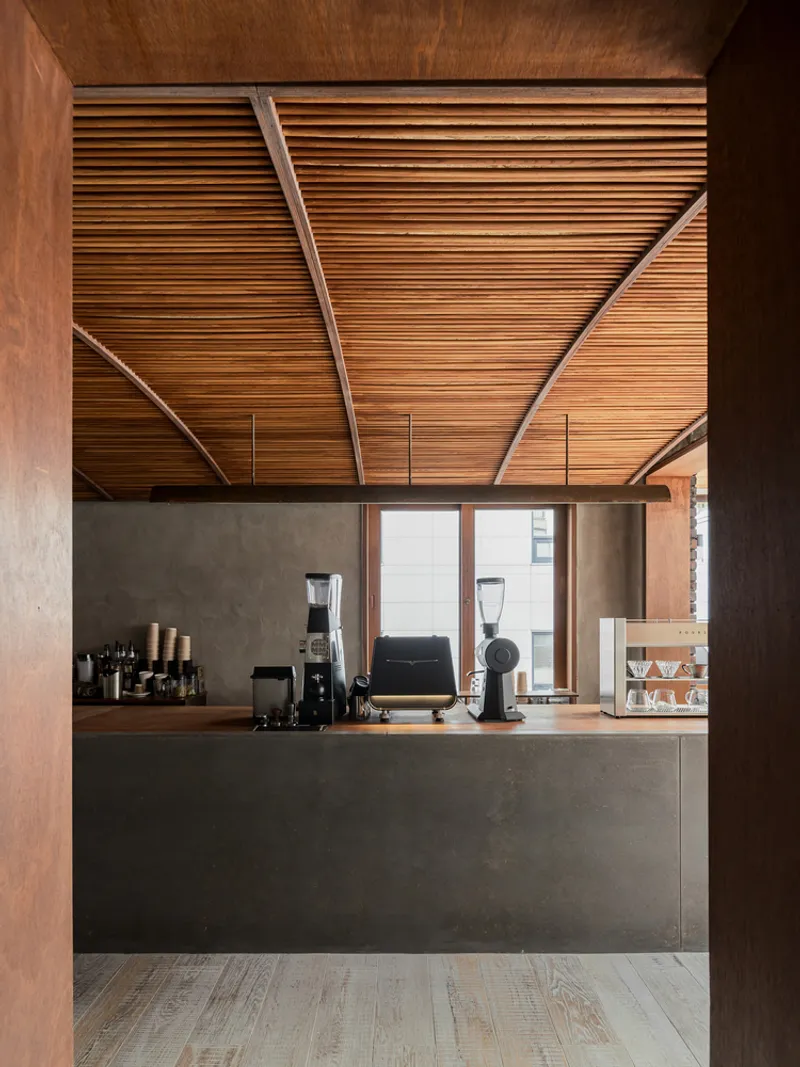
The second floor café introduces a contrasting yet complementary material palette. Here, wooden sticks and exposed, hand-sanded concrete define the space. Each wooden element was processed directly on site and connected using traditional joint methods, emphasizing craftsmanship and material authenticity.
The existing concrete walls were carefully sanded by hand, with irregularities intentionally left visible. Instead of concealing imperfections, the architects chose to highlight the traces of time and construction, allowing the building’s history to remain legible. This raw material expression contrasts with the warmth of the timber elements, creating a calm and grounded environment suited to the café program.

A Hand-Built Retail Experience
Across both floors, all finishing work was executed using what the architects describe as a “crafty method.” This hands-on construction approach involved direct labor on site, reinforcing a close relationship between design intent, material behavior, and human touch. The result is a retail interior that feels tactile, intimate, and deeply connected to its making.
All photographs are works of Choi Yongjoon


Popular Articles
Popular articles from the community


FCC Arquitectura Expands a Portuguese Granite House with a Board-Marked Concrete Wing
In Portugal, JV House pairs a cleaned-up whitewashed and granite dwelling with a timber-shuttered concrete extension, courtyards and a garden pool.


Aquadapt: An Underwater Habitat That Rewrites Its Rooms by the Hour
Curved modules ring the seabed while one shell shifts from breakfast room to cinema, farm and football pitch as residents' needs change.

Manzana Morphosis: Stretching Barcelona's Grid into a Living Landscape for 2050
A radical reworking of the Eixample manzana turns density into a tool for generous public space, vertical ecology, and environmental performance.

The Amber Palace Opera: A Geological Fiction Surfaces on Tallinn's Baltic Waterfront
Pierre Brillard reimagines a Baltic legend as a public landscape, opera house, and waterfront promenade rooted in Tallinn's coastal identity.

Similar Reads
You might also enjoy these articles


Hodi-Mandai Geram
Project Function: Preservation and revitalization of the Intangible heritage and socio-spatial identity of the Hodi by Housing, Cultural Memory Center, Sacred Grove, landscape, local tourism economy


Olio Towers: A Mid-Rise for Performers That Fuses Housing, Rehearsal, and Stage
Located blocks from Houston's Theater District, this modular tower stacks living units around a central performance atrium.

Oasis: Modular Green Housing Carved into Dhaka's Urban Fabric
A shortlisted Plugin Housing entry reclaims unauthorized settlements in Dhaka with stepped concrete volumes, green roofs, and ventilation-driven design.

Black Hole: A Floating Megastructure for the Post-Physical Era
Emiliano Mazzarotto envisions a spherical, self-scaling arena where e-sports, digital hotels, and holographic stadiums replace traditional public space.
Explore Interior Design Competitions
Discover active competitions in this discipline

Challenge to design luxury tourism on rails

Challenge to reimagine the Iron Throne

Photograph architecture without architects

VR headsets Storefront design competition
Comments (0)
Please login or sign up to add comments
No comments yet. Be the first to comment!