
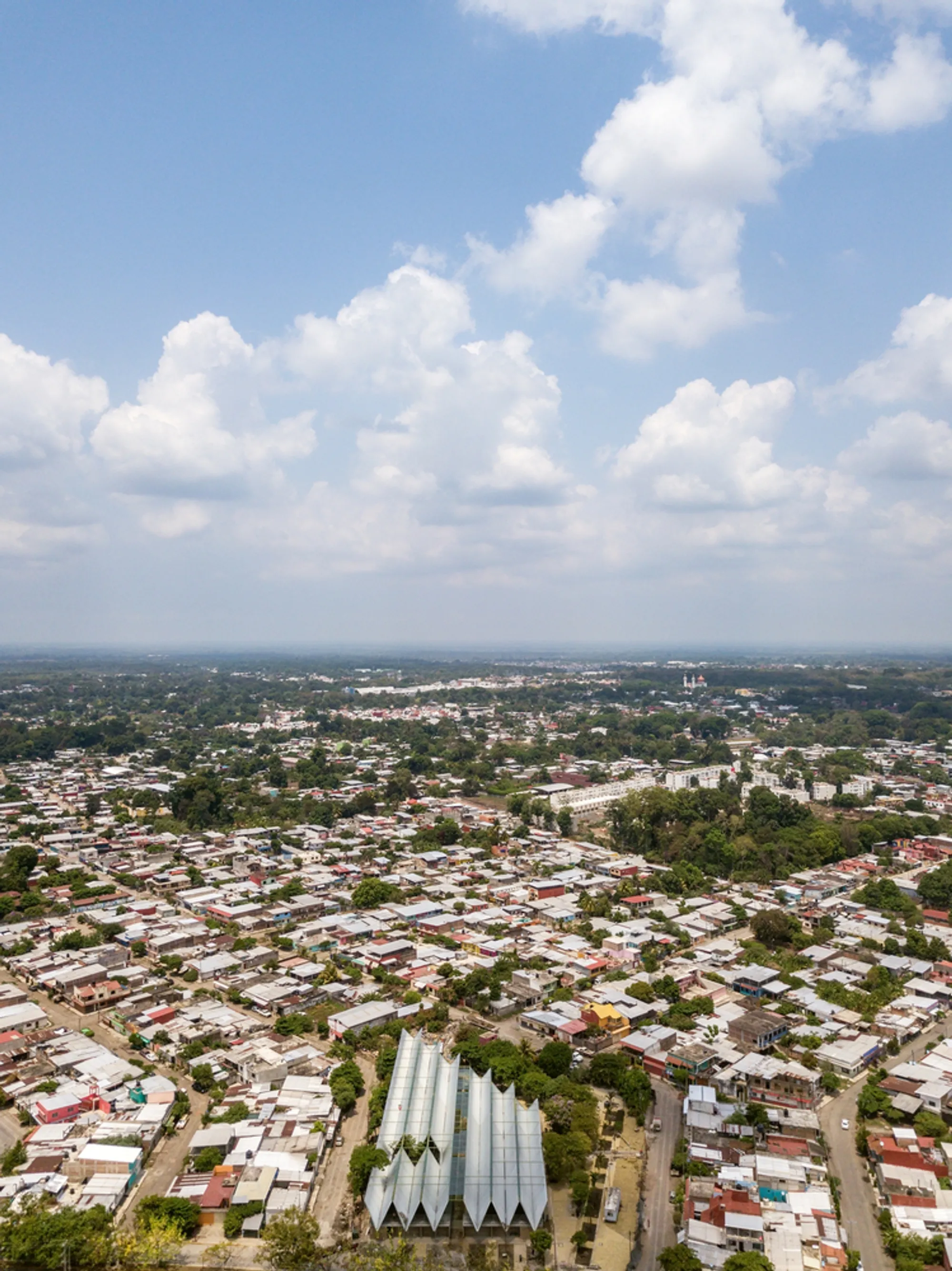
Guadalupe Market by Colectivo C733: Revitalizing Tapachula’s Urban Heart
Guadalupe Market revitalizes Tapachula with sustainable design, bamboo and metal structures, vibrant commerce, open plazas, gardens, and community spaces.


Located in Tapachula de Córdova y Ordoñez, Mexico, the Guadalupe Market, designed by Colectivo C733, is a vibrant public marketplace that reflects the cultural richness and social vitality of southern Mexico. Originally founded in 1990, the market had suffered from decades of neglect, including leaking roofs, poor ventilation, exposed pipes causing unpleasant odors, and unsafe conditions for vendors and visitors. Its strategic location in the southeast of Tapachula makes it a vital hub, allowing residents from approximately ten surrounding neighborhoods to access daily necessities without traveling to the city center.
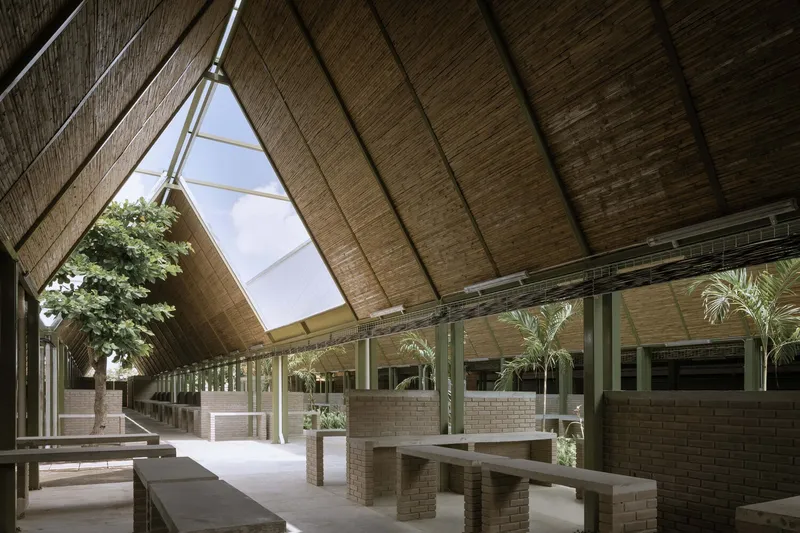
Urban Renewal and Community Engagement
The revitalization of Mercado Guadalupe was part of the Urban Improvement Program by SEDATU (Secretary of Agrarian, Territorial, and Urban Development), incorporating active community participation. The project positions the market as a critical driver for local economic reactivation while creating a safe, accessible, and culturally resonant space. By integrating the market into the urban context, the design enhances the surrounding area, encouraging social interaction, commerce, and cultural exchange.
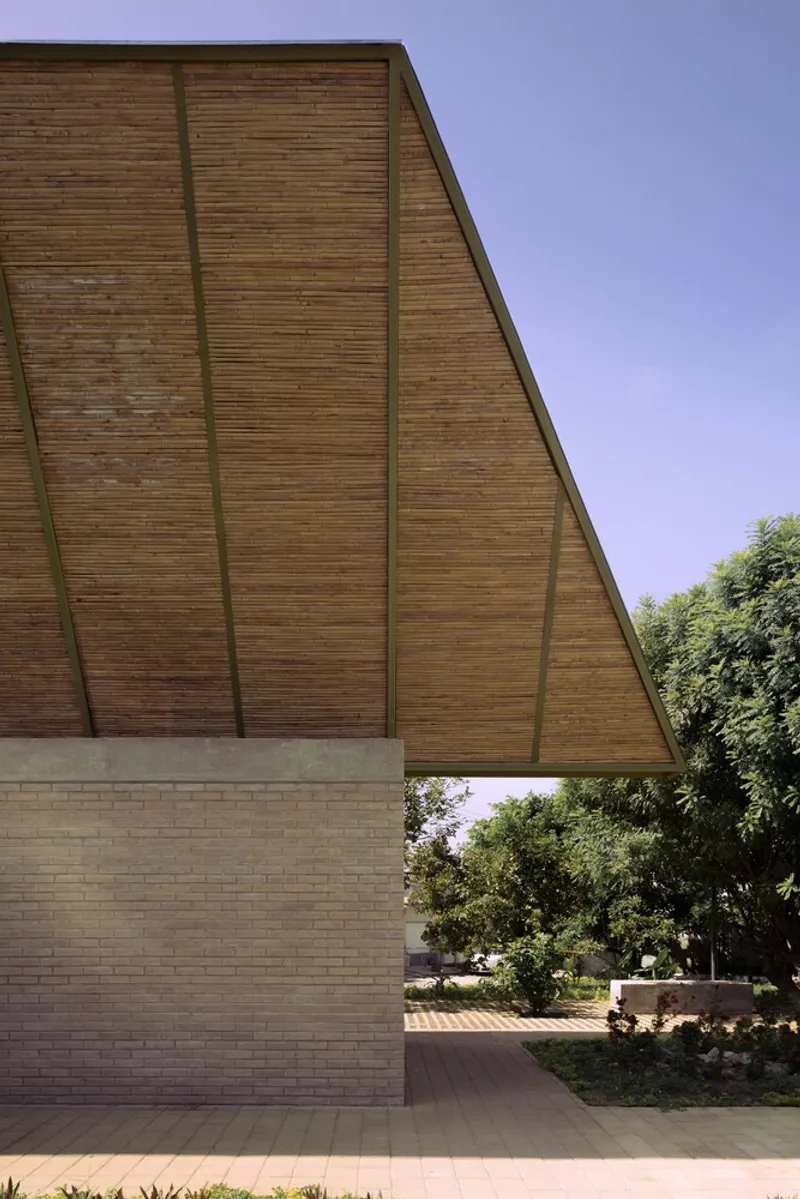
Design Strategies and Materiality
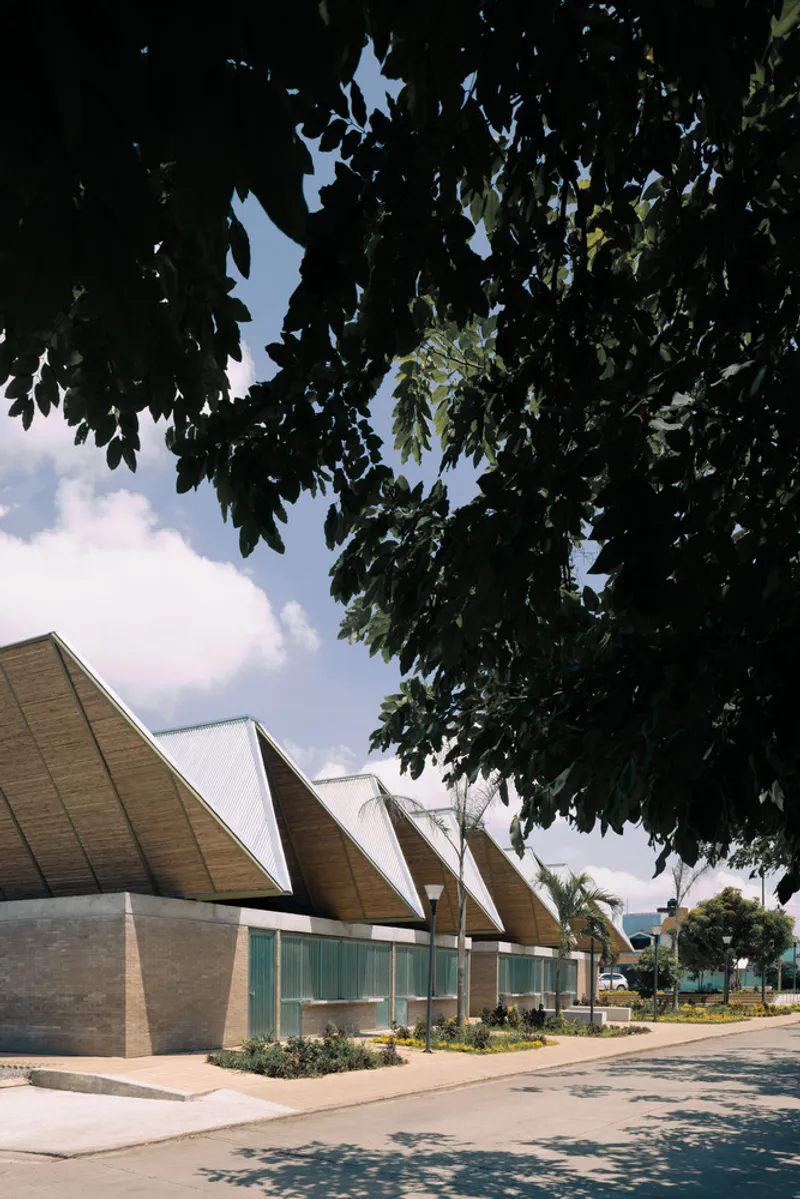
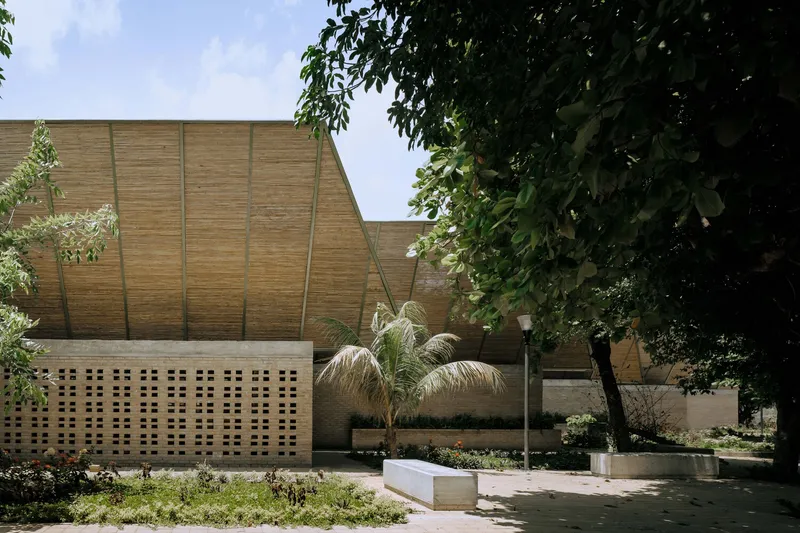
The design emphasizes functional spatial organization, combining efficient structural systems with economic construction strategies. Local materials, including brick, reinforced concrete, bamboo panels, and prefabricated metallic structures, were carefully chosen to respect regional context and environmental considerations. The architectural approach maintains a continuous dialogue with the surrounding landscape, vegetation, and open plazas, blending seamlessly with the urban fabric.
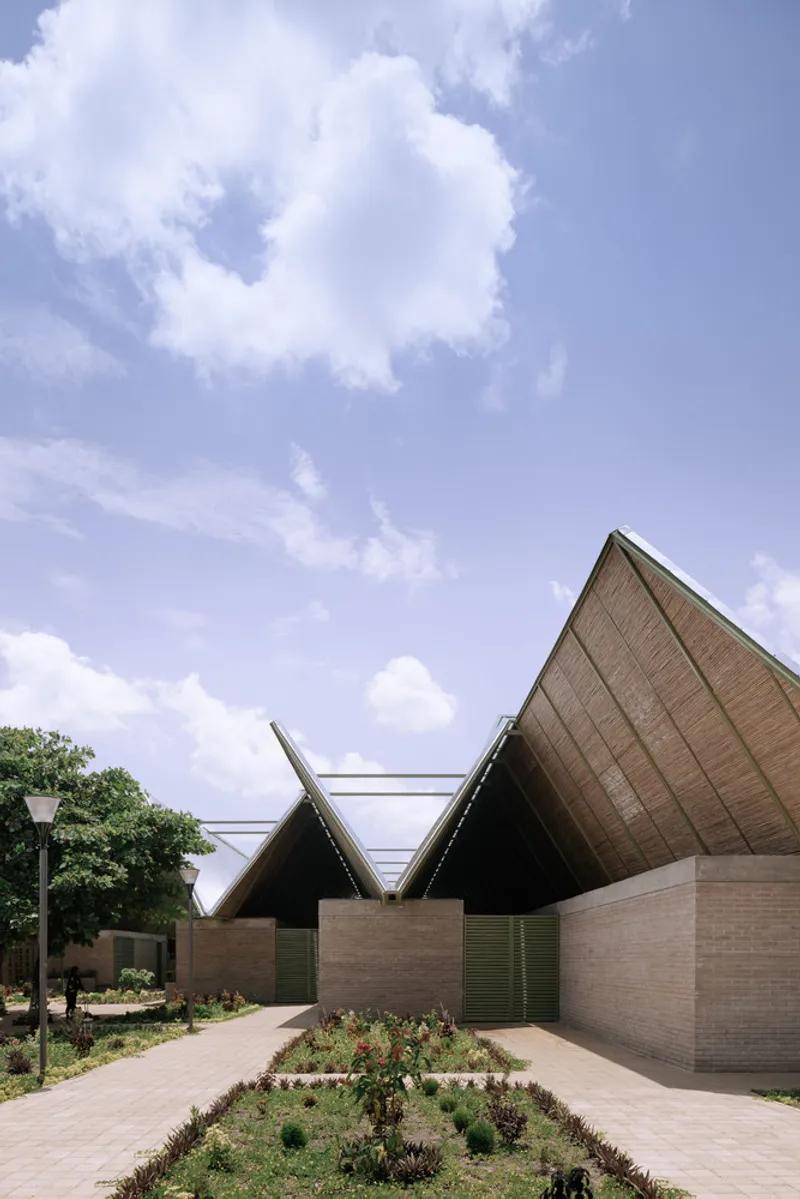
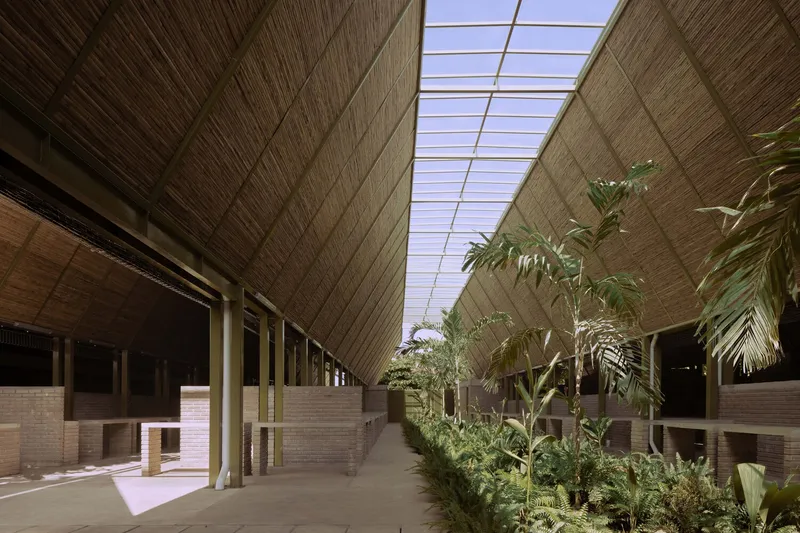
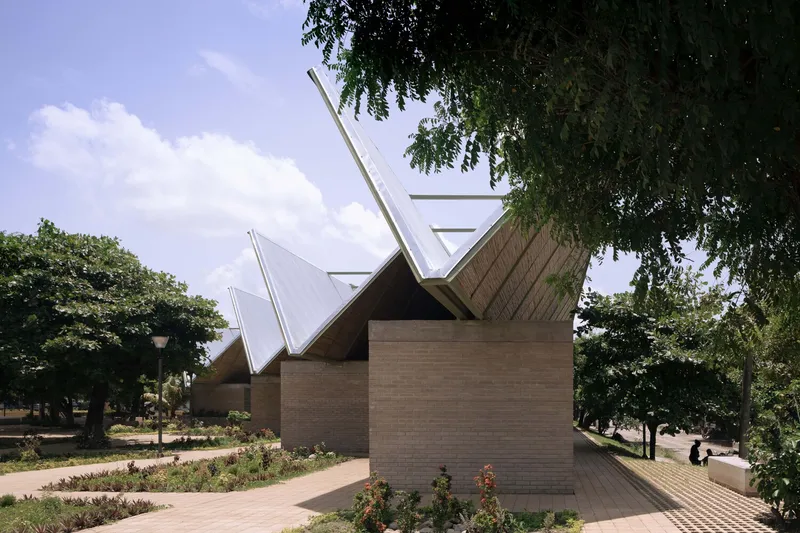
Linear corridors with lateral access points generate permeable circulation paths, linking interior plazas with exterior gardens, allowing approximately 200 active tenants to operate comfortably within a constructed area of 7,600 m². The market’s zig-zag sloped roofs, made of metal sheets and bamboo, provide optimal thermal and acoustic comfort, naturally channel rainwater for reuse in irrigation and bathrooms, and allow sunlight to penetrate circulation areas, enhancing both safety and energy efficiency.
Modular Construction and Efficiency
The use of modular construction techniques, combining traditional civil works with prefabricated metallic and bamboo systems, significantly reduces construction time and cost while ensuring durability and adaptability. This approach exemplifies a scalable model for public infrastructure projects in Mexico, marrying speed, affordability, and architectural quality.
Social and Environmental Impact
Mercado Guadalupe not only facilitates commerce but also promotes public health and social wellbeing. Open, ventilated spaces create a safer environment for visitors, providing enhanced protection against airborne diseases such as SARS-CoV-2. The market fosters community appropriation through its material authenticity and landscape integration, enhancing both commercial activity and civic engagement. Visitors connect with traditional materials and local greenery, making the market a social and cultural landmark that encourages coexistence throughout the day.
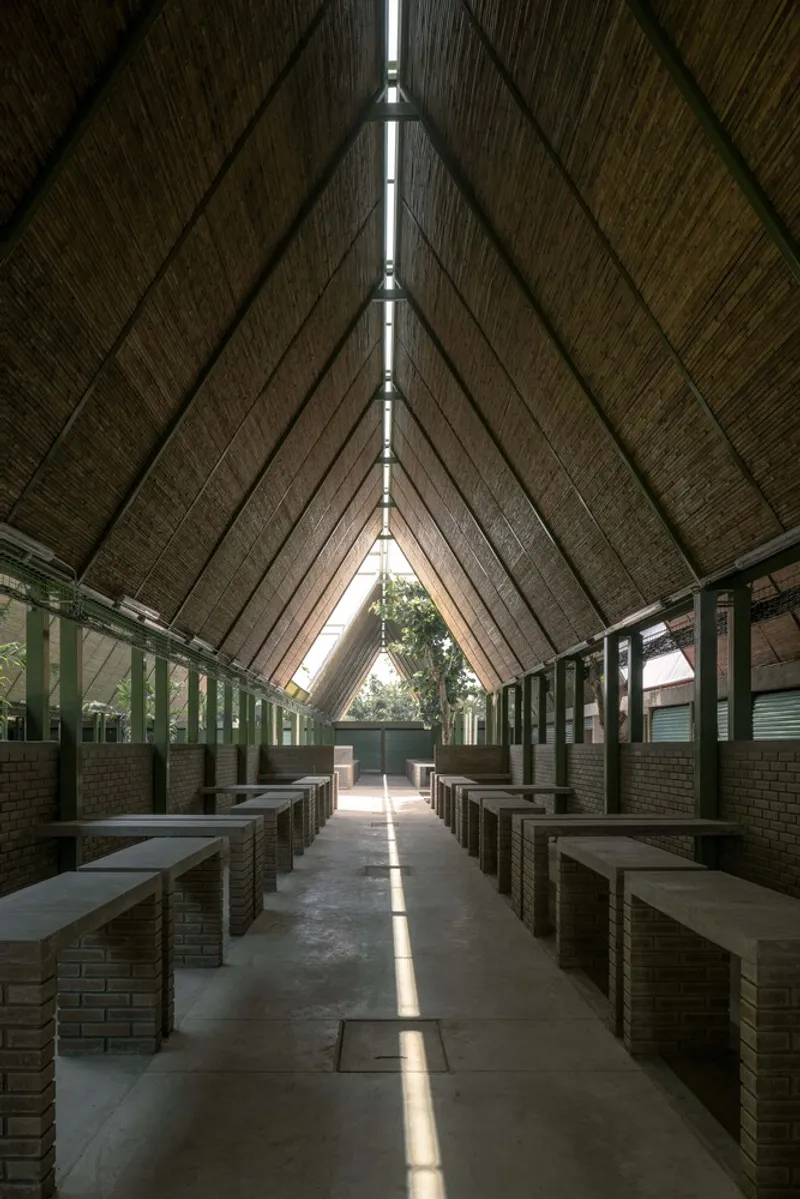
In essence, Guadalupe Market serves as a living hub where architecture, commerce, and culture intersect, revitalizing Tapachula’s urban identity while supporting sustainable, inclusive, and resilient community life.
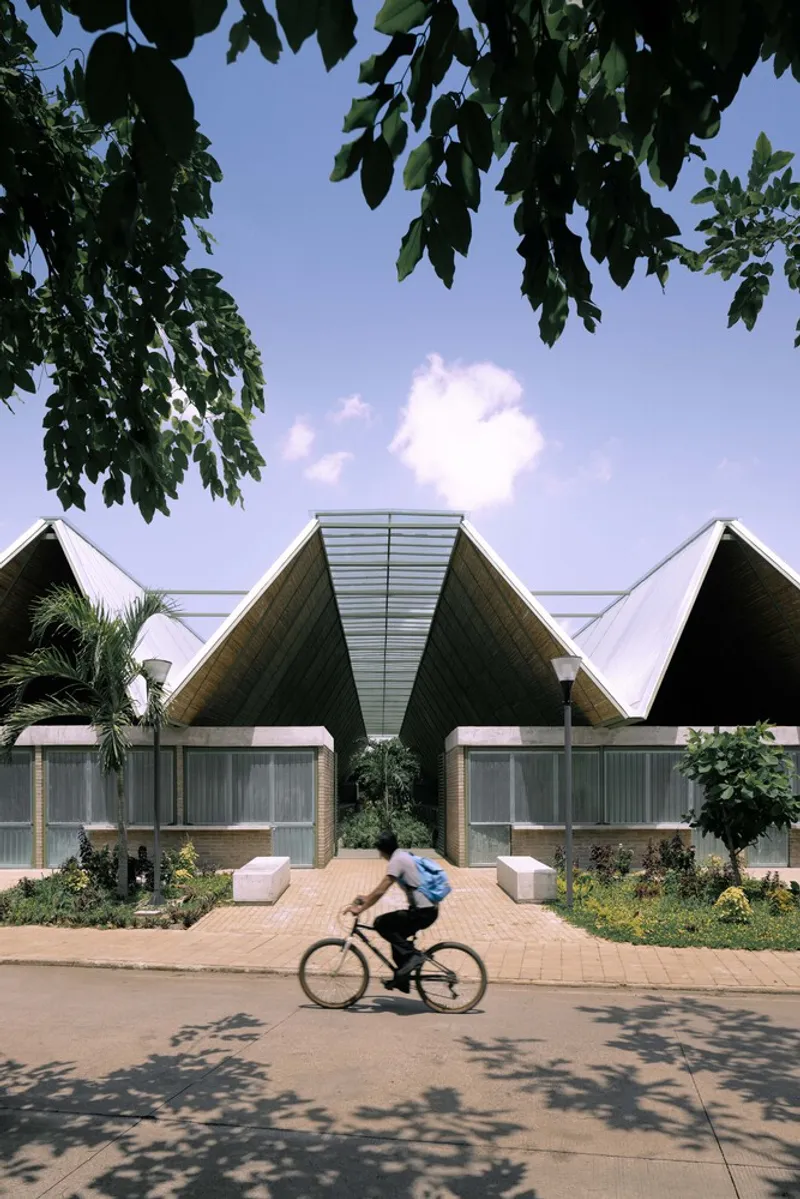
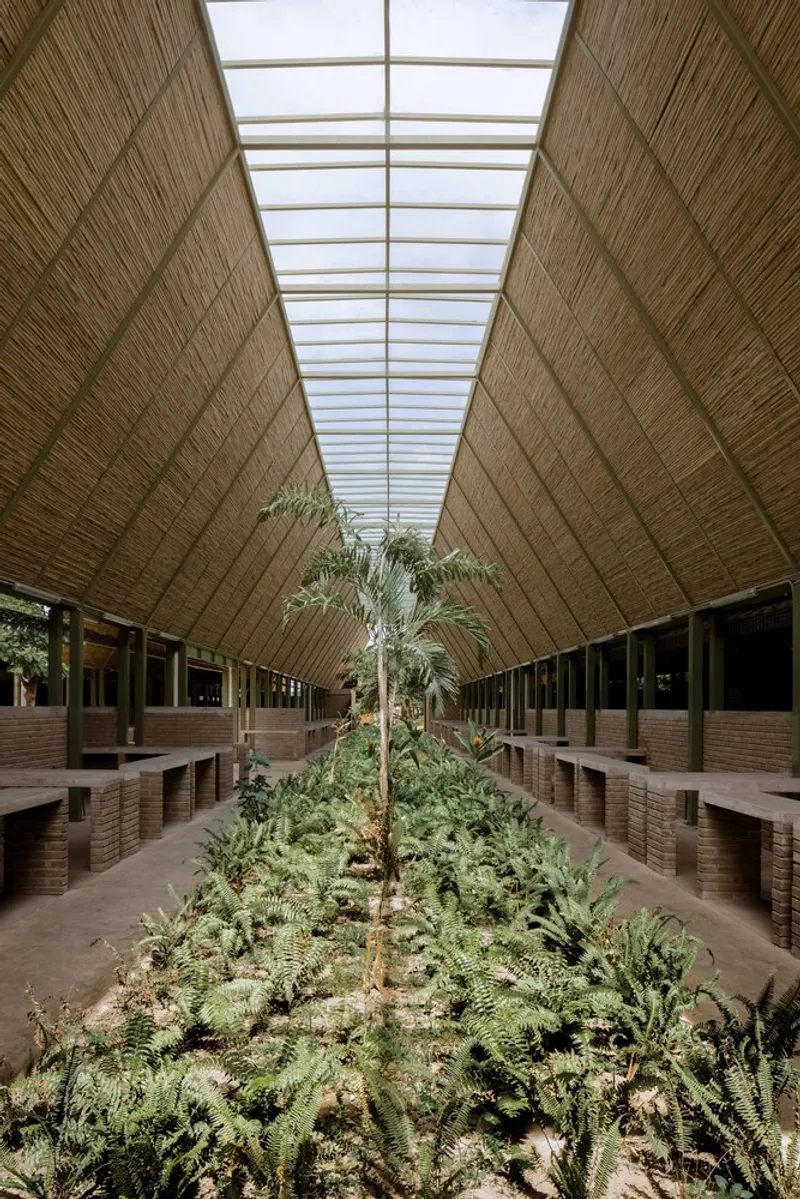
All photographs are works of
Zaickz Moz, Rafael Gamo



Popular Articles
Popular articles from the community


Conexión: Biophilic Design Reimagines High-Rise Living in Hong Kong
Conexión reimagines high-rise living in Hong Kong through biophilic design, green facades, shared spaces, daylight, water and nature within.

Riyadh For All: Intergenerational Urban Design for Active Aging in Rabat
Riyadh For All reimagines urban design in Rabat with intergenerational co-living, adaptive courtyards, and Moroccan cultural exchange today.

Hill & Cross Opera: Sculptural Opera House Architecture Shaped by Tallinn’s Landscape and Identity
Hill & Cross Opera reimagines opera house architecture in Tallinn through its sculptural hill, civic plaza, glass wave and a luminous cross.

Co-Life: Senior Housing Design That Reconnects Older Adults With the City
Co-Life reimagines senior housing design through healing gardens, shared streets, workshops, and a sustainable community across generations.

Similar Reads
You might also enjoy these articles

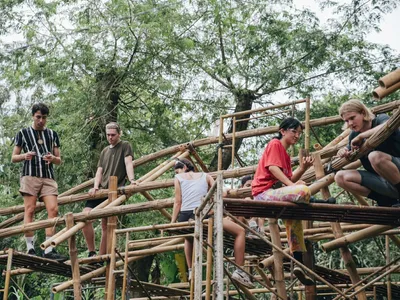
Bamboo Housing Challenge 2026: Design Affordable, Sustainable Homes Using Bamboo
An international design competition by Bamboo U and IBUKU inviting architects and designers to reimagine affordable housing using bamboo — with the winning design built full-scale in Bali.
Computational Design & Education: Beegraphy Design Awards Introduces 7th Category (Featuring Jiyun's Innovative Approach)
Dive into Beegraphy’s 7th Design Awards category, where computational design meets education to create immersive, interactive learning tools, inspired by Jiyun’s work.
From Parametric Lighting to Urban Furniture: Join the 2nd Workshop in Beegraphy’s Computational Design Series
Dive into Cutting-Edge Design Techniques and Practical Applications with Industry Experts

Last Call: Unleash Your Architectural Genius in SHAK's Kindergarten Design Competition
Urgent call for architects to join SHAK's kindergarten design competition before the looming deadline


Explore Architecture Competitions
Discover active competitions in this discipline



Challenge to reimagine the Iron Throne


Photograph architecture without architects


Illustrate the lost glory of Angkor Wat - Render Challenge


Design challenge to reuse E-waste
Comments (0)
Please login or sign up to add comments
No comments yet. Be the first to comment!