

Ha Architecture Builds a Bricklayer's Son a Brick House That Outgrows Its Edwardian Shell
In Fitzroy North, Melbourne, a double-storey brick addition reorients a south-facing backyard toward winter sun and city skyline views.


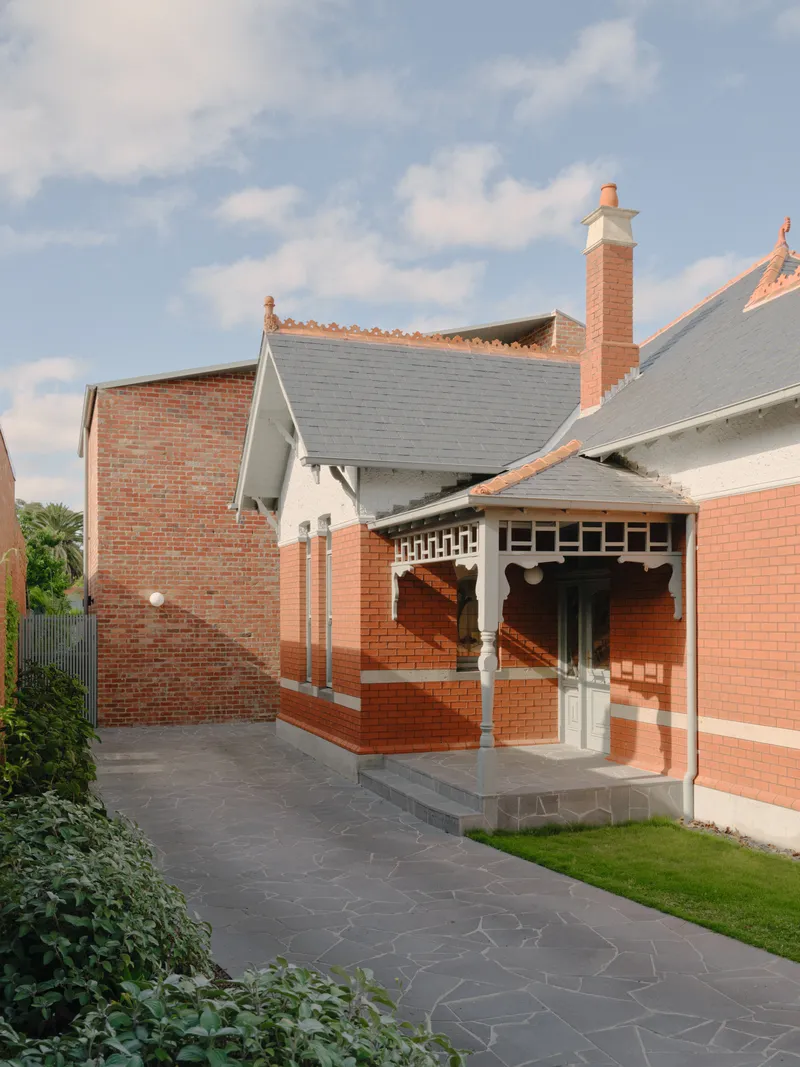
The brief behind Barkly House carries a quiet poetry: a home made of brick, designed for the son of a bricklayer, in a Melbourne neighborhood where masonry once defined the industrial grain of the streets. Ha Architecture took that personal history and made it structural, extending a double-fronted Edwardian house in Fitzroy North with a new two-storey brick volume that absorbs the material language of the original building and pushes it into something decisively contemporary.
Conceived during the pandemic through a series of discreet meetings, the project solves a classic Melbourne problem: a south-facing backyard starved of direct sunlight. By building up and over, the addition gains a northerly aspect across the existing roofline, pulling winter sun deep into the living spaces through a glazed stair atrium. The result is a house that reads as modest from the street but opens up behind the original facade into a sequence of courtyards, sunken spaces, and framed views that feel generous without being showy.
Street and Courtyard: Two Faces of the Same Brick


From the street, Barkly House barely announces itself. The original Edwardian front, with its red brick base and grey-painted timber gable, sits beneath a canopy of mature trees, looking much as it has for a century. A corrugated metal fence screens the side boundary. Only when you step past the threshold and into the courtyard between old and new buildings does the project reveal its ambitions. The new brick volume rises behind, its upper level punctuated by metal shutters that mediate between privacy and openness.
The entry sequence is deliberately indirect. Rather than a formal front door, the house favors a sheltered walkway between the two structures, funneling you past a central courtyard before depositing you inside. It is an approach that prioritizes arrival as experience over arrival as threshold.
The Courtyard as Engine Room

The courtyard between old and new buildings is the organizational pivot of the entire plan. One side is a full-height glazed wall that floods the interior corridor with daylight. The opposite side is a brick wall trained with climbing plants and lined at ground level with potted ferns and banana plants. Grey stone pavers unify the ground plane, and narrow proportions concentrate the light overhead in a way that makes the space feel like a vertical garden room rather than a leftover gap.
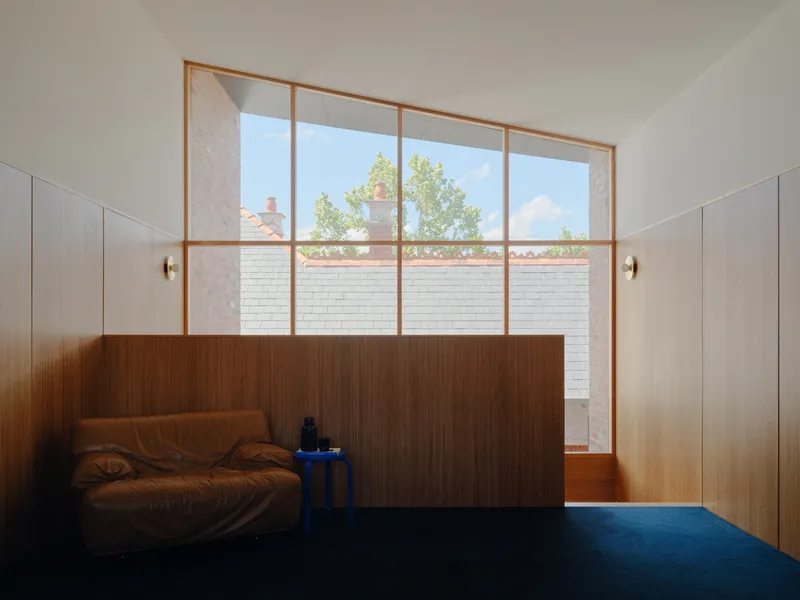
What makes the courtyard effective is its role as mediator. It separates the Edwardian house from the extension without severing the connection, allowing light and air to flow between them. The old brick chimney and slate rooftops remain visible through glazed upper panels, keeping the heritage character in the frame even as you move through entirely new spaces.
Living Spaces: Sunken, Open, Framed

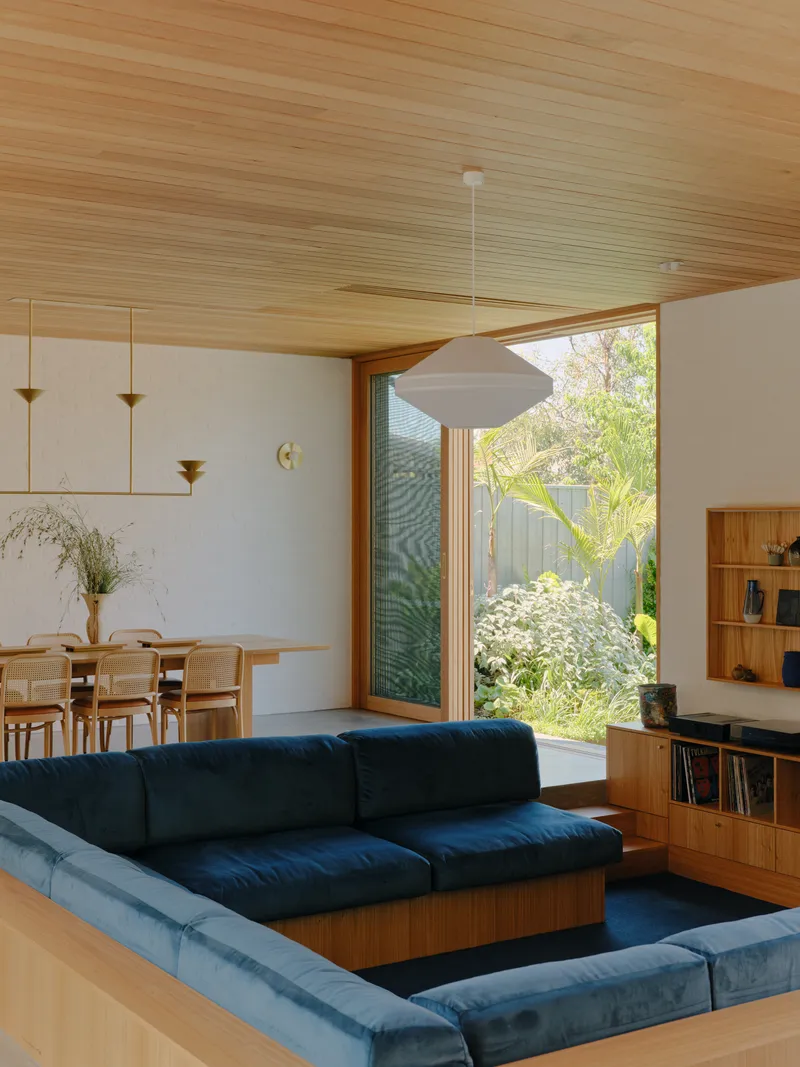
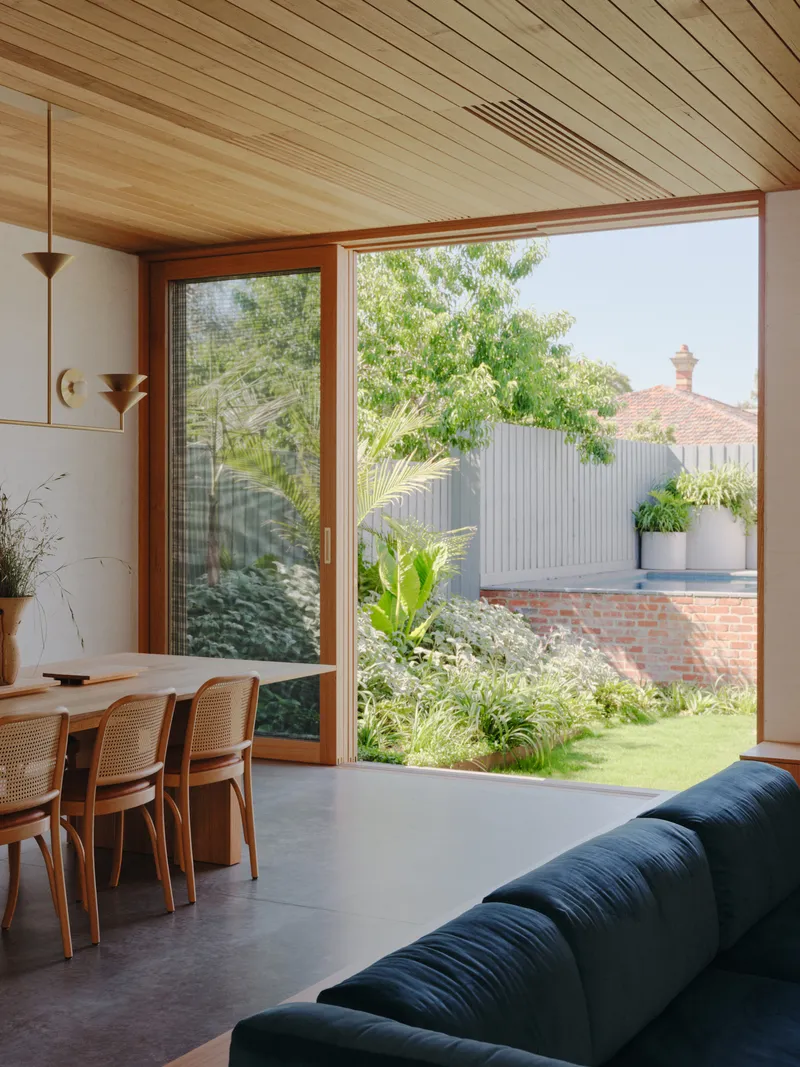
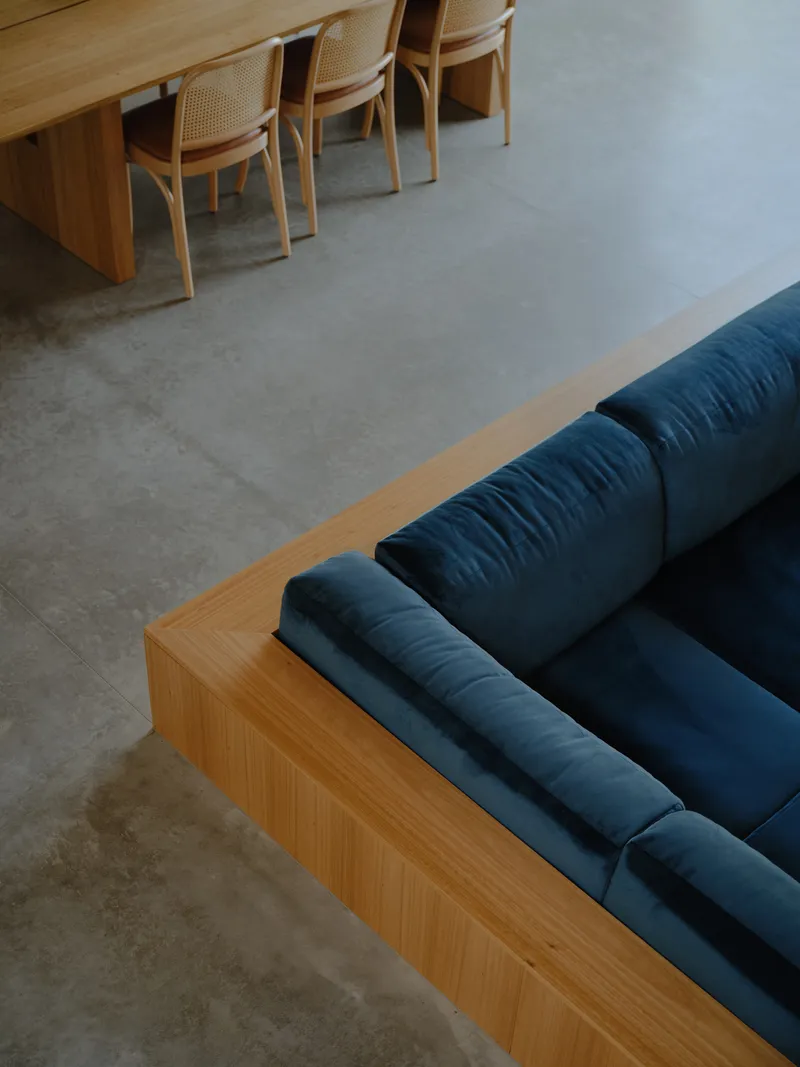
The ground floor of the new building is organized around a relaxed family living area with a sunken lounge at its center. A Tasmanian oak ceiling lining runs overhead, its warm grain unifying the open plan from kitchen to dining to living. Large symmetrical sliding doors on either side of the room collapse the boundary between interior and garden, framing views that extend to the city skyline on one side and a planted courtyard on the other.
Ha Architecture resists the temptation to make the open plan feel monolithic. Corner glazing at the dining area brings in a different quality of light, filtered through garden trees and corrugated fencing, while the sunken lounge creates a sense of containment within the larger volume. There is a discipline to the openness here: every view is composed, every seating area has a relationship to a planted edge.
Material Palette: Stone, Timber, Brass
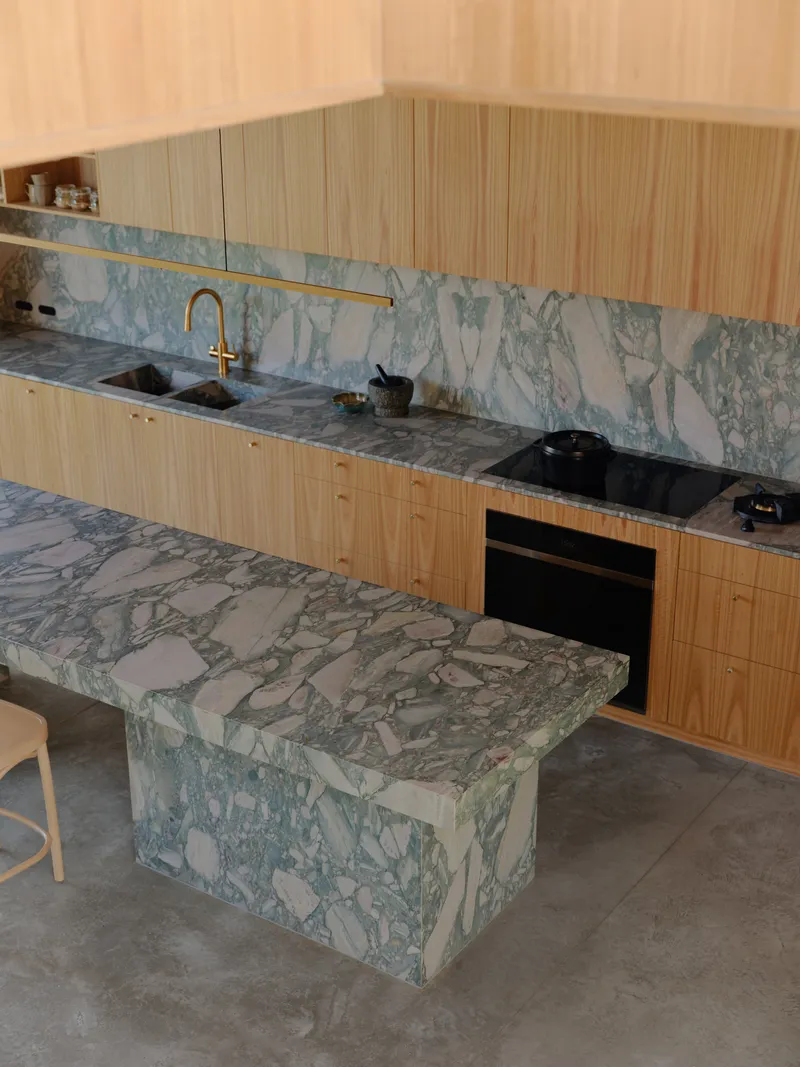


The kitchen anchors the material story. A generous island clad in Cicala stone, grey and white with a patchy, almost geological patterning, doubles as the visual centerpiece of the open plan. The same stone climbs the splashback, paired with vertical Tasmanian oak cabinetry that echoes the ceiling above. It is a combination that avoids the trap of monochromatic minimalism without tipping into excessive richness.
Throughout the house, materials are chosen for their tactile honesty. Polished concrete floors anchor the ground level. Brass detailing appears in wet areas as a warm counterpoint to cooler stone surfaces. The slatted ceiling over the kitchen island introduces rhythm and shadow, breaking up what could be an oppressive expanse of timber. Nothing is applied as veneer in the decorative sense; each surface reads as load-bearing or functional, even when it is primarily atmospheric.
The Black Steel Stair and Northern Light
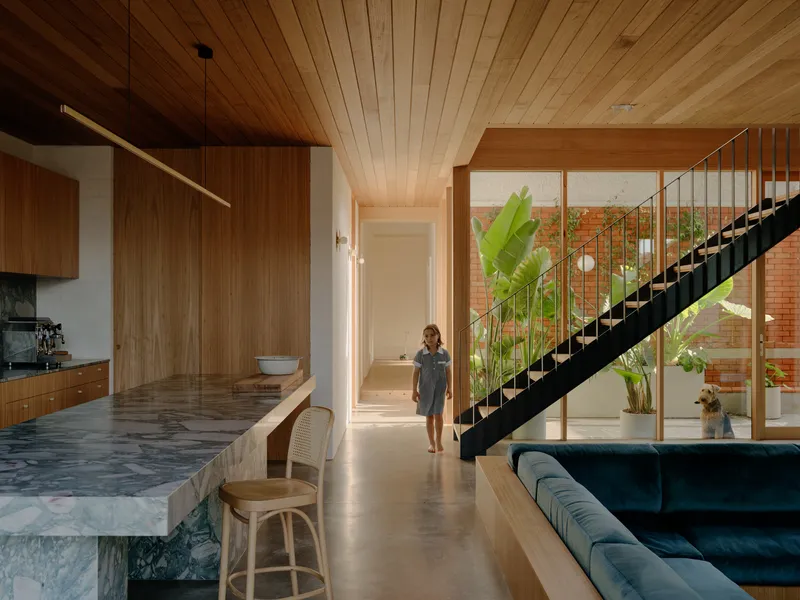

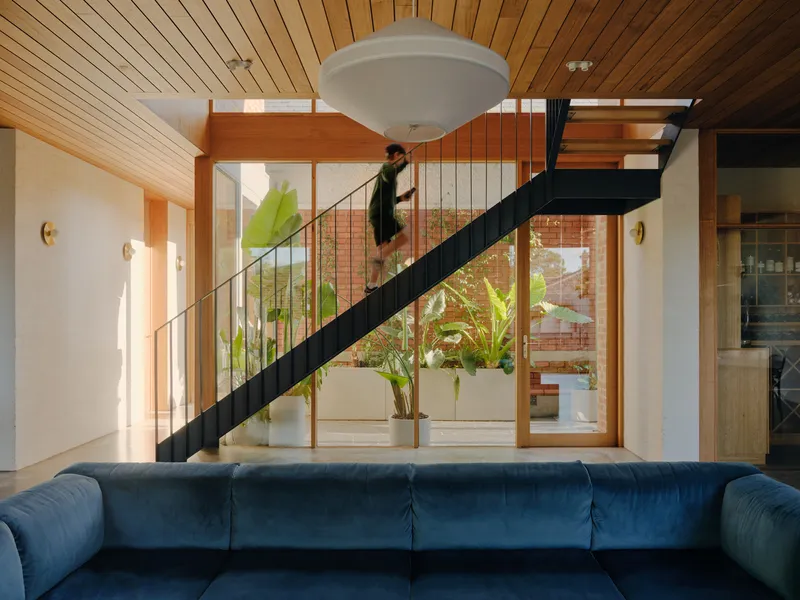
The staircase is the project's most legible architectural gesture. Built from black steel with slender vertical balusters and timber treads, it rises through a full-height glazed atrium oriented due north. In winter, direct sunlight slides down the stair and into the living area below, making the circulation spine double as a passive solar collector. In summer, the vertical proportions and operable openings allow hot air to vent upward.
Visually, the stair acts as a screen between the courtyard and the interior. Its balusters frame views of tropical planting outside, and the transparency of the steel structure keeps the connection between inside and out unbroken even as you ascend. A figure on the stair becomes silhouetted against the courtyard greenery, a detail that suggests Ha Architecture thought carefully about how bodies move through this house, not just how light does.
Private Rooms: Texture Over Spectacle


Upstairs, the bedrooms and dressing areas trade the openness of the ground floor for a more enveloping atmosphere. Timber-lined walls and ceilings wrap around sleeping quarters, with blue carpet underfoot in the dressing room adding an unexpected note of warmth. The bedroom glimpsed through a timber doorframe, with its dark upholstered headboard and paper pendant light, registers as deliberately un-designed: comfortable, quiet, restrained.
The approach to the private rooms suggests a house that knows the difference between performative spaces and inhabited ones. The ground floor is built to host and gather. The upper level is built to retreat. The material palette shifts accordingly, from polished concrete and stone to softer textures that absorb sound and light.
Bathrooms: Venetian Plaster and Dark Terrazzo
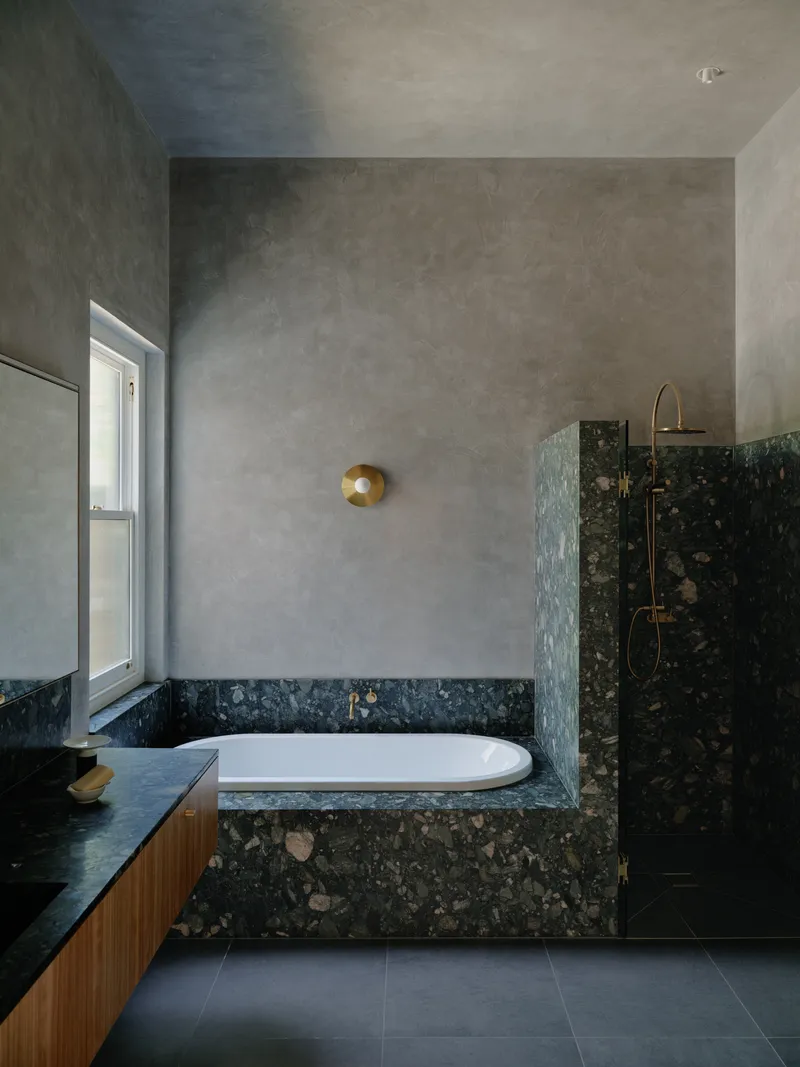


The bathrooms are among the most resolved spaces in the house. Venetian plaster in a dappled grey finish lines the walls of the main bathroom, its mottled surface catching light in a way that changes through the day. The bathtub and shower enclosure are clad in dark terrazzo, a material that reads as both contemporary and ancient, its speckled surface a miniature echo of the Cicala stone downstairs.
Brass fittings and timber vanity cabinets complete a palette that is rich without being decorative. A polished concrete ceiling overhead keeps the rooms grounded and industrial, a reminder that this is a house in Fitzroy North, not a hotel.
Rear Elevation and Pool

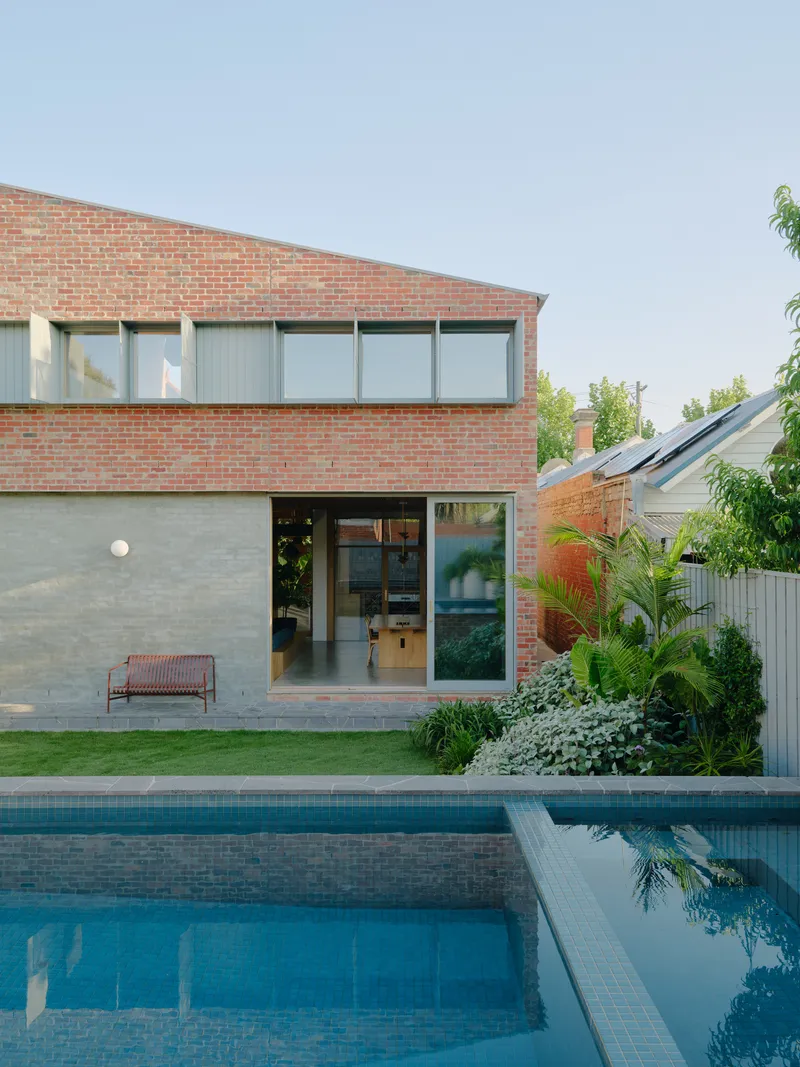

The rear facade reveals the full extent of the addition. A continuous glazed opening at ground level folds the living room out toward a lawn and swimming pool. Above, the brick volume presents a more closed face, with ribbon windows that offer controlled views while maintaining privacy from neighbors. At dusk, the lit interior glows through the glass like a lantern set into the brickwork, and the two-storey scale of the addition becomes legible against the roofline of the original Edwardian house.
The pool and garden, with landscape design by Pop Plant, complete the circuit of outdoor spaces that wraps around the house. From courtyard to rear garden, the planting strategy alternates between tropical lushness and restraint, ensuring that every room has a green edge to look at.
Plans and Drawings

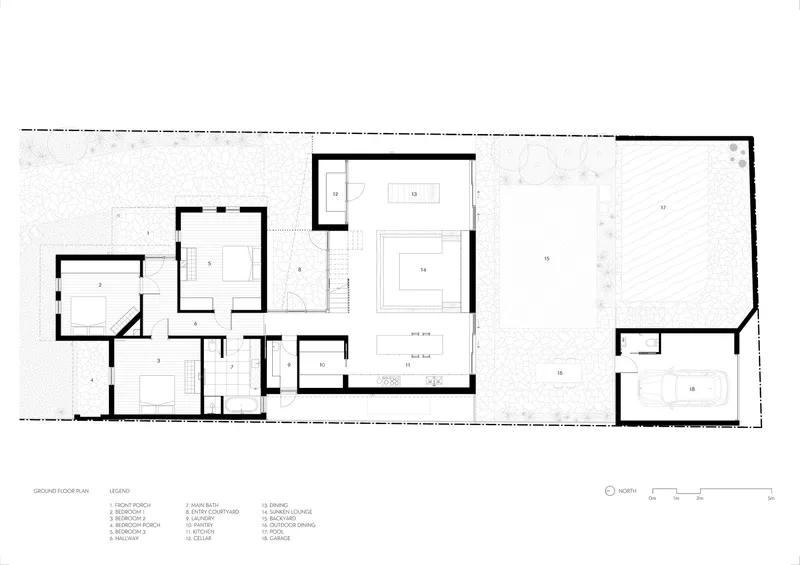


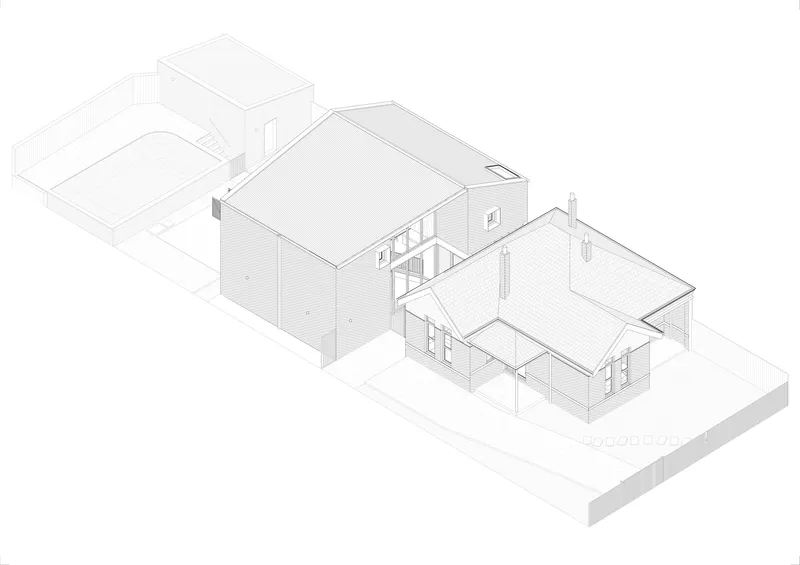
The drawings reveal the organizational logic that is not immediately apparent in photographs. The site plan shows the rectangular footprint with the pool positioned centrally between the two built volumes, while the ground floor plan confirms how the courtyard divides old from new. The first floor plan introduces a covered outdoor terrace with an angled roof that mediates between the gabled forms. The section drawing is the most telling: it shows how the split levels and pitched roofs create a variety of interior volumes within what reads from outside as a simple pair of connected pavilions.
The axonometric drawing pulls the composition apart to reveal its underlying strategy of clustered gabled volumes connected by glazed passages. What looks from the street like a modest Edwardian house is, in plan, a complex aggregation of old and new structures organized around light, air, and the client's relationship to brick as both material and inheritance.
Why This Project Matters
Barkly House succeeds because it takes a genuinely personal brief, a bricklayer's son wanting a brick home, and turns it into an architectural argument rather than a sentimental gesture. The masonry is not nostalgic. It is structural, thermal, and contextual, tying the new extension to both the Edwardian original and the broader industrial heritage of Fitzroy North. Ha Architecture demonstrates that working within a material tradition does not require conservatism; it requires intelligence about how that material performs in plan, in section, and in light.
The project also offers a persuasive solution to one of Melbourne's most common residential conditions: the south-facing backyard that resists habitation for half the year. By building a two-storey volume that captures northern light over the existing roofline and channels it through a glazed stair atrium, the architects transform a liability into an asset. It is the kind of pragmatic ingenuity that separates a good renovation from a merely expensive one.
Barkly House by Ha Architecture. Located in Fitzroy North, Melbourne, Australia. Completed in 2023. Photography by Tom Ross. Built by Frame Works. Engineering by RI Brown. Landscape by Pop Plant.
About the Studio
Share Your Own Work on uni.xyz
If projects like this are the kind of work you want to make, uni.xyz is a place to publish your own, find collaborators, and enter design competitions.


Popular Articles
Popular articles from the community


Opera on the Sea: Driftwood Logic Shapes a Timber Opera House on Estonia's Coast
Trevor Orgill's opera house translates the entangled drift of floating timber into a civic building where wood, water, and music converge.
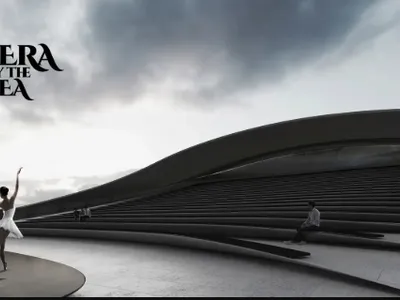
Opera by the Sea Estonia: Three Shells Dissolving Architecture into Tallinn's Coastline
A winning opera house proposal replaces monumental form with interconnected shells that blur the boundary between building, park and Baltic Sea.
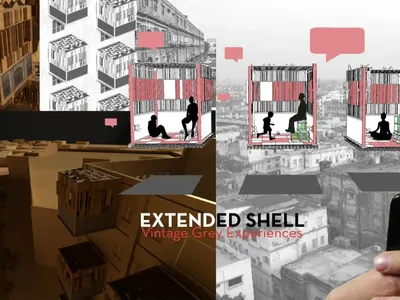
Extended Shell: Retrofitting Kolkata's Balconies as Living Urban Thresholds
A modular retrofit system recovers the social and environmental intelligence of Kolkata's historic verandas for contemporary Park Street residents.
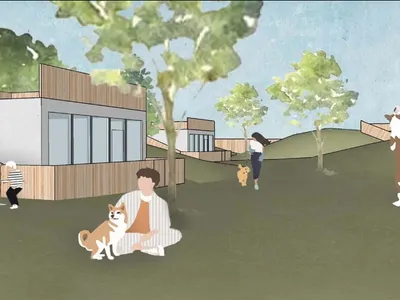
Temporary Home for Dogs: A Reversed Zoo Rethinks Animal Shelter Architecture
In Bucharest, a sinuous corridor and freed landscape flip the logic of containment, designing a shelter that works to make itself unnecessary.

Similar Reads
You might also enjoy these articles

Bao Huynh Watercolor Atelier: A Serene Art Retreat in Hội An
Bao Huynh Watercolor Atelier in Hội An blends multifunctional art spaces, sustainable design, local materials, and family-friendly living in a serene environment.

Atelier Macri Concept Store Interior Design by CASE-REAL
Atelier Macri store features a "ko" counter, walnut wood details, cork displays, blending retail, gallery, and seamless customer experiences.

Manuel Vargas Izquierdo Stadium and High-Performance Sports Center: Architectural Excellence in Jalpa de Méndez
The Manuel Vargas Izquierdo Stadium blends sustainable design, inclusive sports facilities, and cultural-inspired architecture, revitalizing Jalpa de Méndez’s public spaces.

KAKR Buluh Awar Hall: Revitalizing Community and Ecology Through Bamboo Architecture
Community built bamboo hall revitalizes Buluh Awar village, empowering youth, restoring ecology, celebrating vernacular craftsmanship through sustainable architecture and culture.


Comments (0)
Please login or sign up to add comments
No comments yet. Be the first to comment!