
Heim Balp Architekten and Pablo Pita Arquitectos Revive a Porto Workers' Village as 40 Hospitality Units
A labyrinthine 19th-century working-class 'ilha' in central Porto finds new clarity through subtraction, oak, and a muted grey palette.


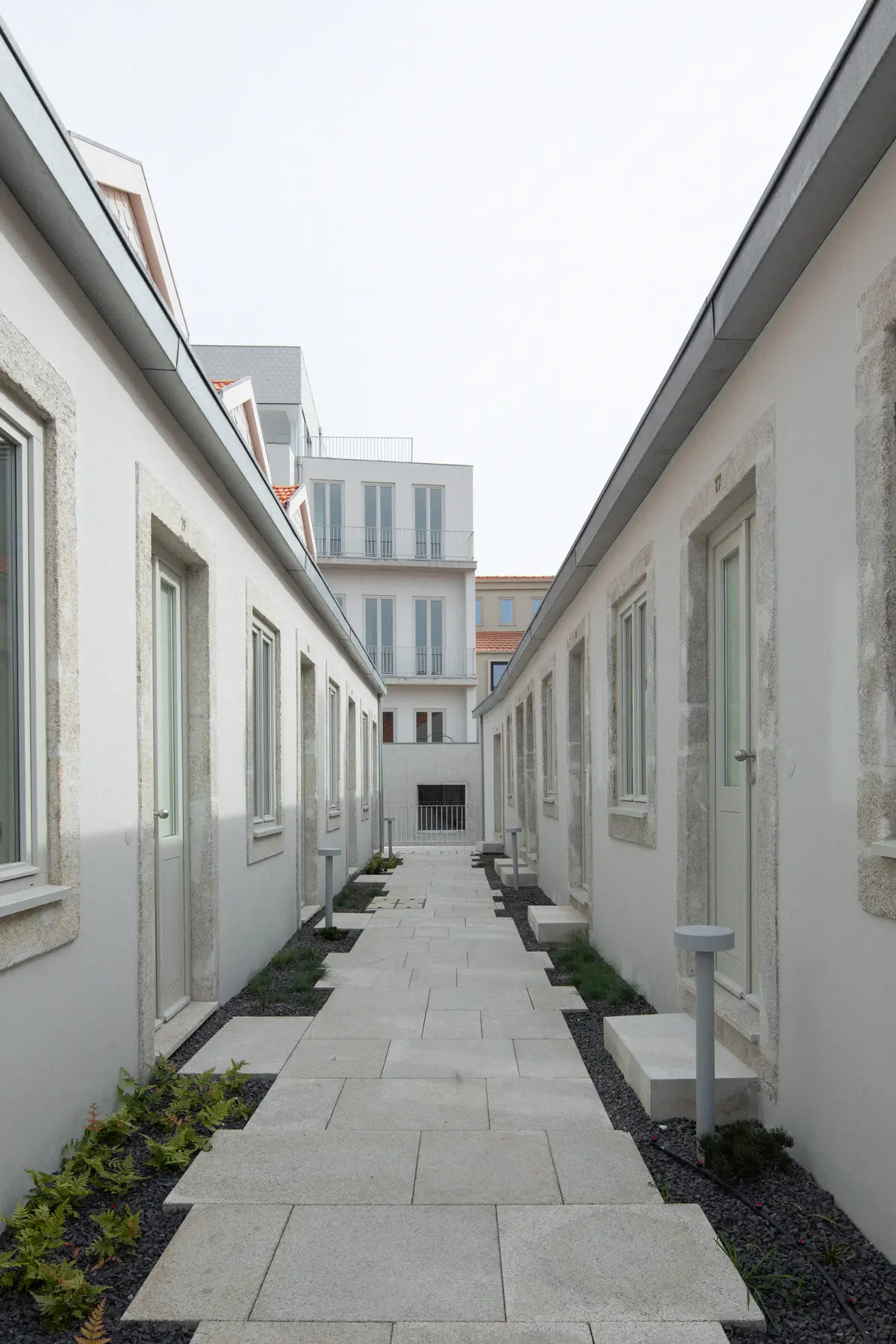
Porto's working-class ilhas, the narrow rows of dwellings tucked inside city blocks, are among the city's most distinctive and fragile housing typologies. Built in the early 19th century, Bairro do Silva was one such settlement on Rua do Bonjardim: a dense, labyrinthine cluster of alleys, gabled volumes, and modest rooms that had been abandoned for decades. The project by Heim Balp Architekten and Pablo Pita Arquitectos does not erase that complexity. Instead, it edits it. Across five buildings and 2,750 square meters, the architects turned a tortuous spatial system into 40 hospitality units and commercial spaces, preserving the basic morphology while introducing a new legibility.
What makes this project compelling is its refusal of spectacle. In a UNESCO-listed city where heritage rehabilitation can easily veer into theme-park territory, Bairro do Silva operates through subtraction rather than addition. The architects removed modest complementary structures that cluttered the site, revealing the powerful silhouettes of existing gable roofs and opening up courtyard space. The result is an interior world of transitional alleys, communal green areas, and a deliberately restricted material palette that unifies the whole complex without flattening its history.
Reading the Block from Outside In
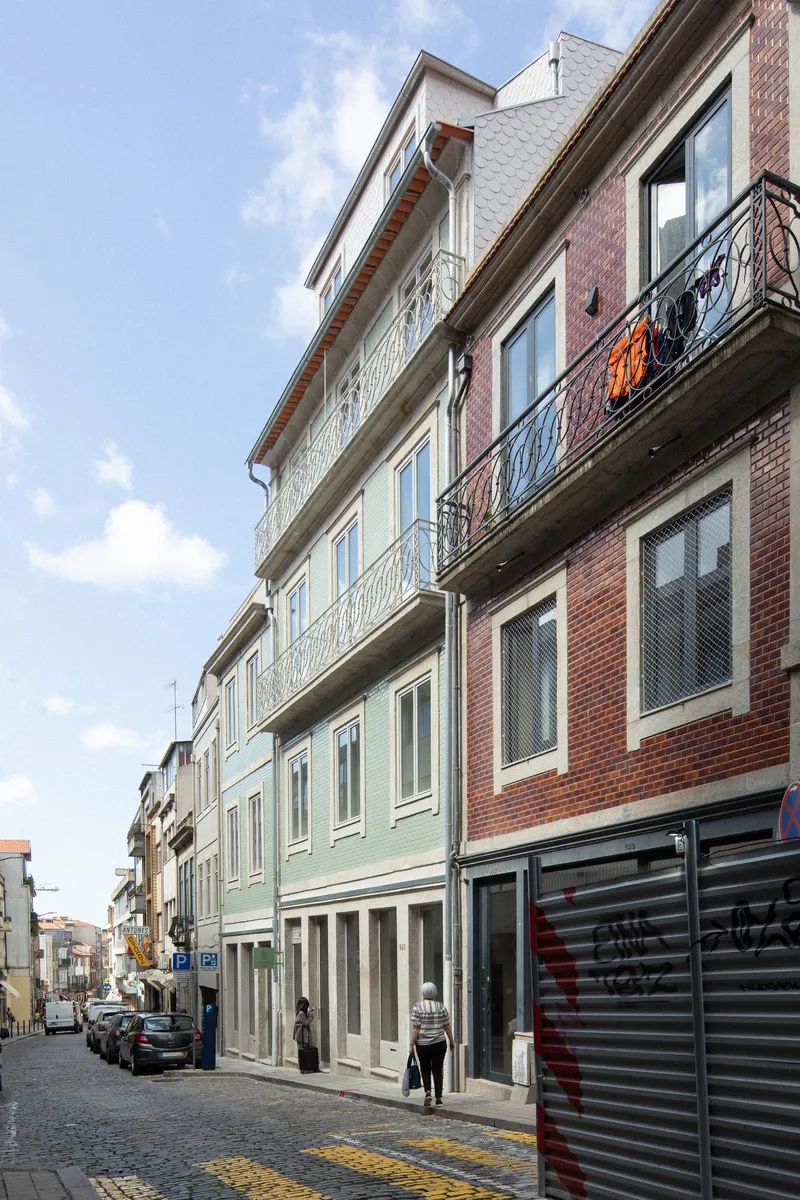


From the street, Bairro do Silva announces itself modestly. The pale green and brick elevations, the scalloped tile cladding, and the terra-cotta rooflines all belong to Porto's vernacular vocabulary. Nothing shouts renovation. The street-facing block sits among its neighbors with the quiet confidence of a building that has always been there, which, of course, it has. The architects preserved the existing facade language and introduced only subtle contemporary touches, such as the terrazzo window surrounds and the recalibrated proportions of glazing.
The white scalloped shingles are a particularly satisfying detail. They connect the project to Porto's tradition of decorative tile work without resorting to pastiche. Up close, the granular base and the steel posts at street level signal that something new is happening behind the familiar face.
Courtyards as Connective Tissue


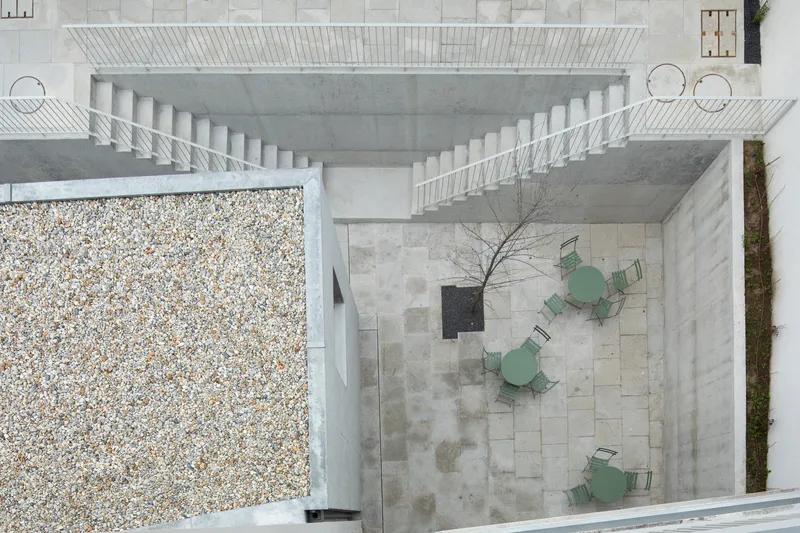
The heart of the project is not any single building but the spaces between them. The architects replaced the original undefined passages with a clear sequence of arrival: courtyards paved in pale stone, planted beds with grasses and young birches, stone benches that mark thresholds. At dusk, uplighting transforms these narrow outdoor rooms into something almost processional. The mint green metal chairs scattered on gravel beds are a cheerful, unpretentious touch that keeps the complex from feeling overly solemn.
Landscape architect Hugo Carneiro of Mudita Studio deserves credit for balancing the deliberately grey palette of plaster, granite, and concrete with the colors of surrounding vegetation. The gables themselves have been prepared for planting, so the architecture will soften further over time. It is a long game, and the right one.
Gables, Alleys, and the Memory of Form


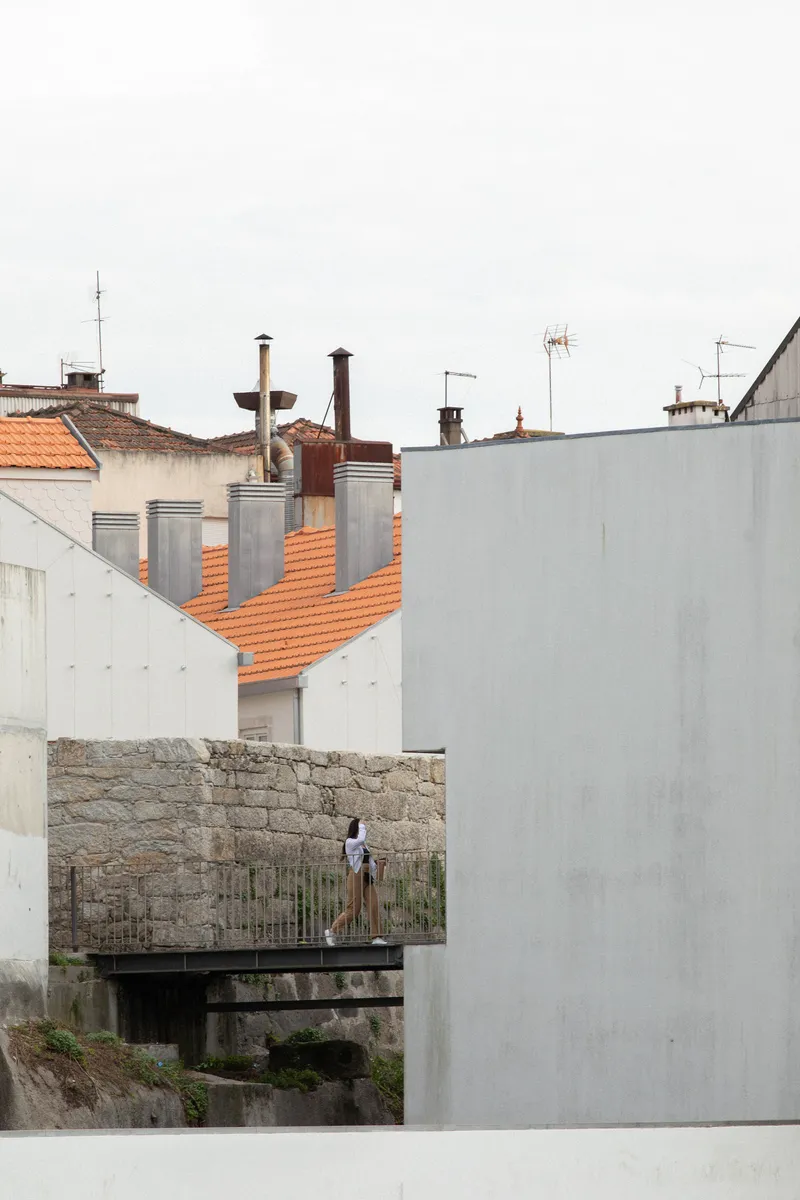
The silhouettes of the existing gable roofs are the project's most powerful formal element. Seen from inside the block, the twin gabled volumes rising above a dry-stacked stone wall look almost rural, a fragment of village fabric embedded in a dense urban core. The mansard roofs that punctuate the alleys reinforce the sense of a self-contained settlement, one that operates at a different scale and rhythm than the city around it.
A timber footbridge spanning between white concrete walls and terracotta rooftops is one of the few overtly new interventions in the exterior. It reads as infrastructure rather than decoration, connecting the upper levels of the complex with a lightness that the original labyrinth never had. The grey rendered walls, the square windows, the bare winter trees: everything is calibrated to let the existing geometry speak.
A Material Discipline That Holds


The material palette is tight: plaster, oak, marble, concrete. Ash-colored hues run through the plaster, granite, windows, and concrete, creating a unified atmosphere without monotony. A new concrete volume and mirrored concrete stairs at the entrance patio are among the most assertive insertions, but they serve a functional purpose, reorienting visitors and establishing the new spatial hierarchy.
Details like the metal handrail casting diagonal shadows across the courtyard wall, or the steel posts punctuating the paved ground plane, demonstrate a project where every element has been considered but not overthought. The restraint is structural, not decorative. It holds because the architects understood that the site's existing textures, the stone, the old plaster, the weathered tile, were already doing most of the aesthetic work.
Interiors Shaped by Beams and Light
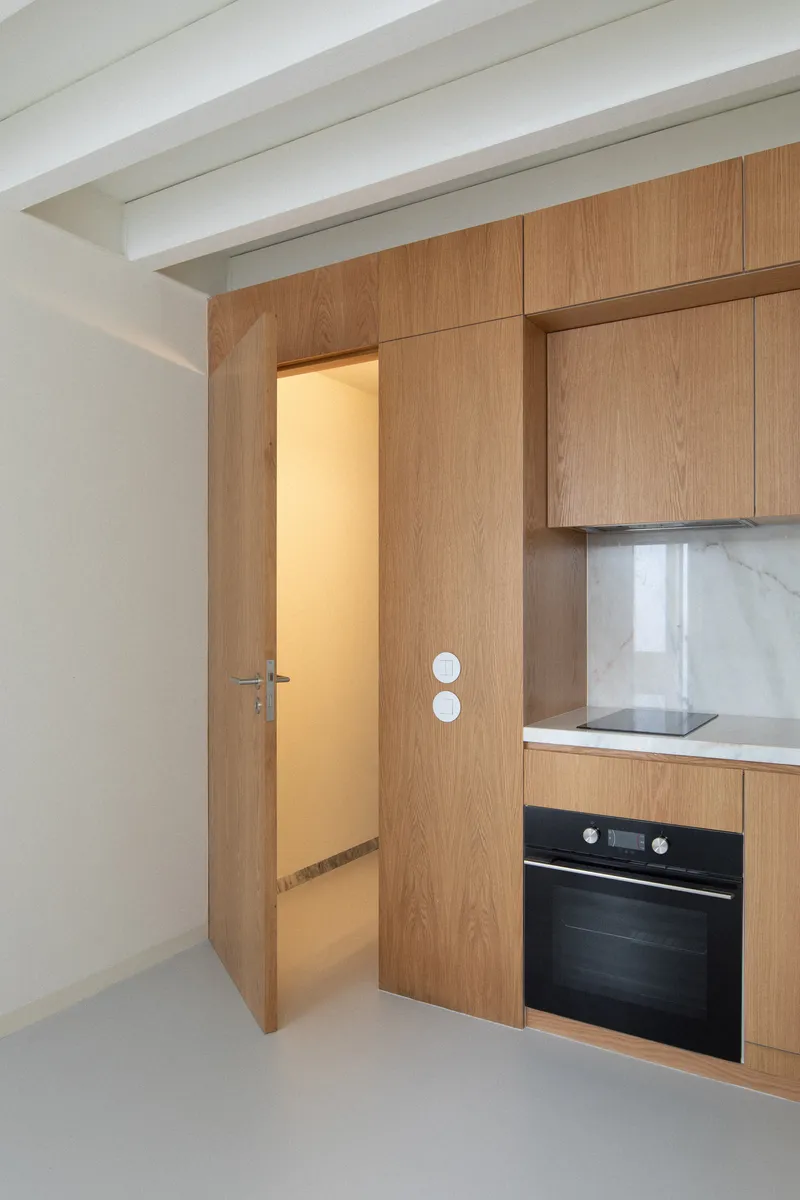
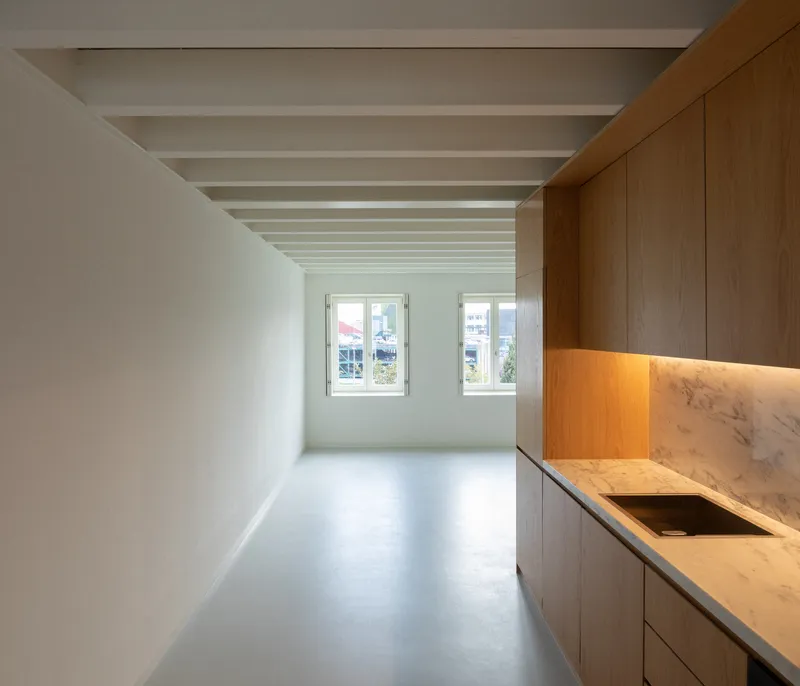

Inside the units, the exposed white-painted ceiling joists are the defining spatial element. The architects preserved existing wood and maintained the painted beams, letting them set the rhythm and proportion of each room. Oak veneer cabinetry, marble backsplashes, and grey resin floors occupy the spaces below with a contemporary simplicity that never competes with the ceilings above. The kitchens, narrow and efficient, feel crafted rather than fitted.

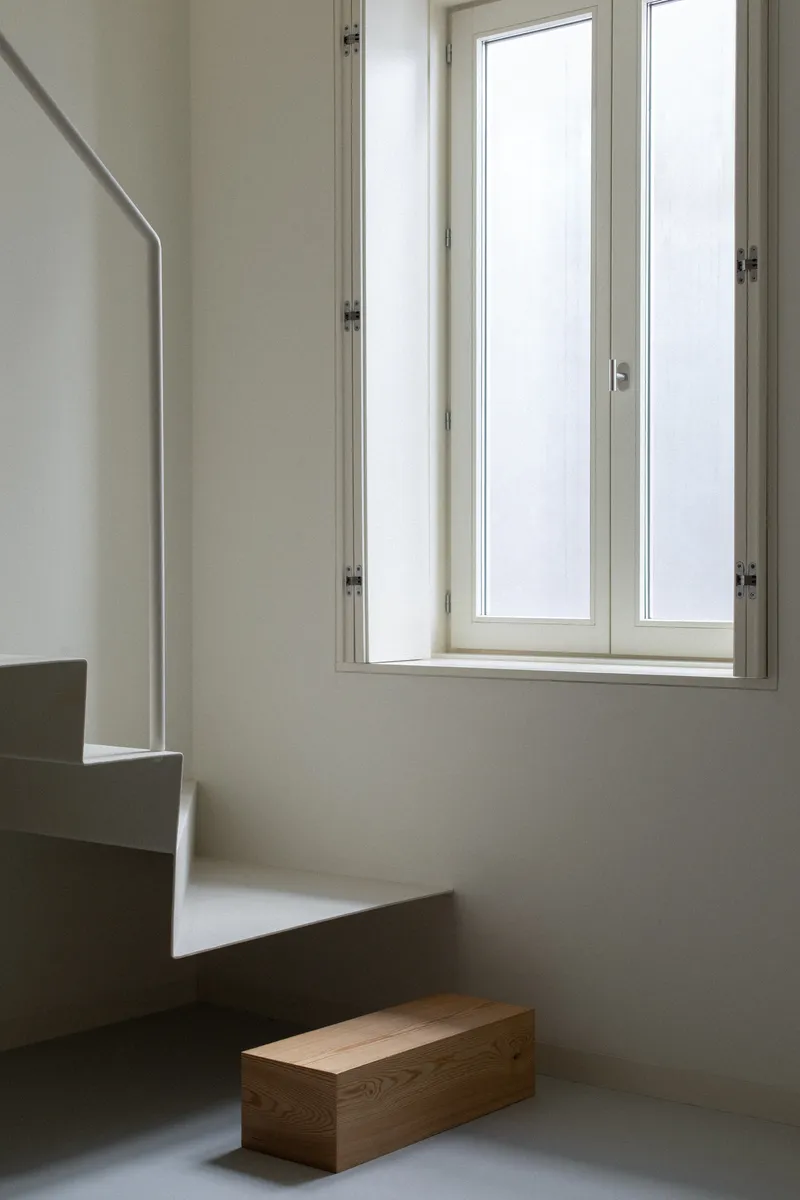

The staircases are where the project's two time periods meet most directly. A curving staircase with brass railings casts elegant shadows on white walls under timber ceiling slats. Elsewhere, a white concrete staircase with an integrated handrail sits beside a tall casement window with monastic calm. The expressive staircase that unfolds under a circular skylight in the center of the street-facing block is the project's most theatrical moment, and it earns it through spatial logic rather than formal excess.
Living Small, Living Well
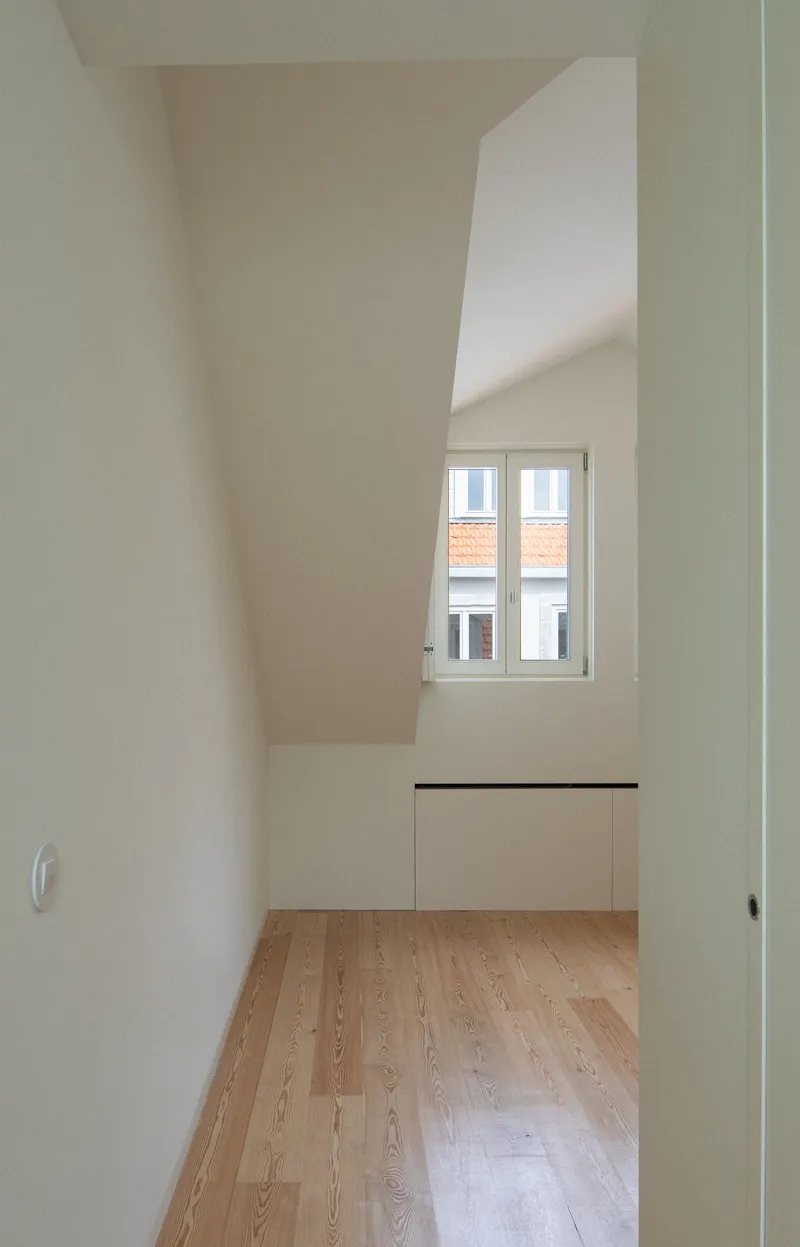


The accommodation units themselves are compact. Small bedrooms with oak flooring and low built-in cabinets below windows that frame rooftop views feel intimate without feeling cramped. Oak built-in seating nooks with storage panels use every centimeter. The 120-square-meter penthouse atop the Village building is the exception, but even there the language remains consistent: exposed beams, restrained materials, natural light.
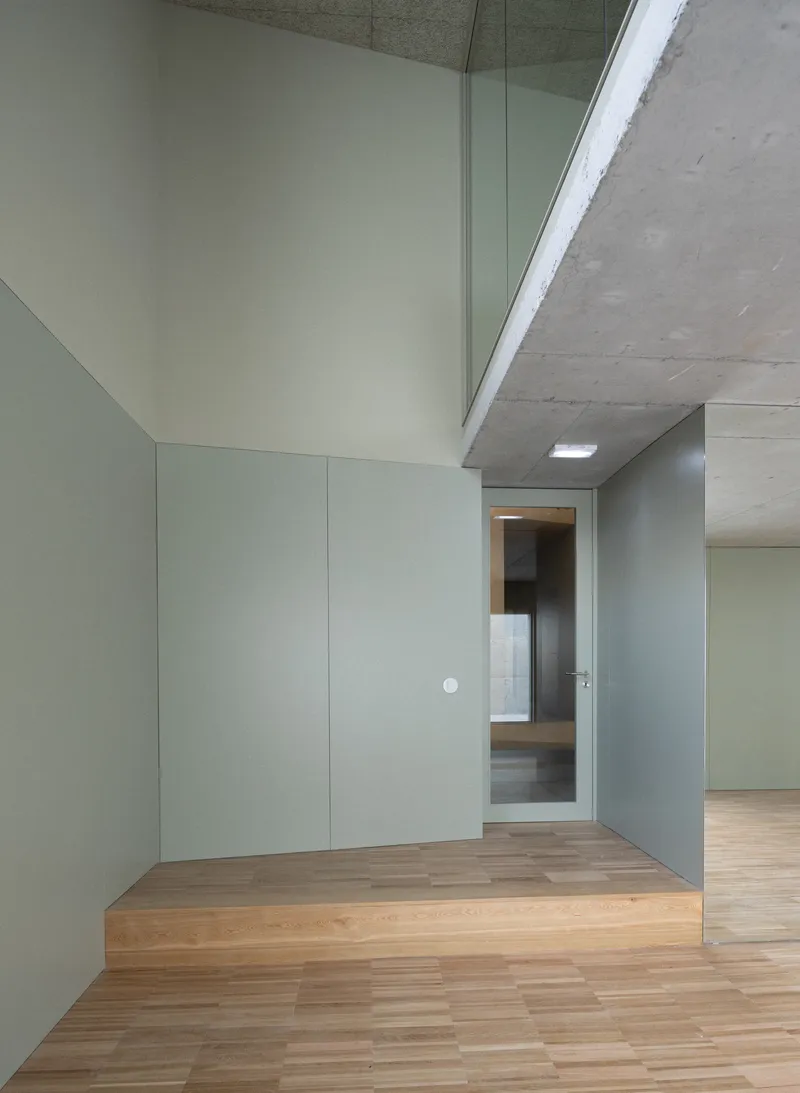

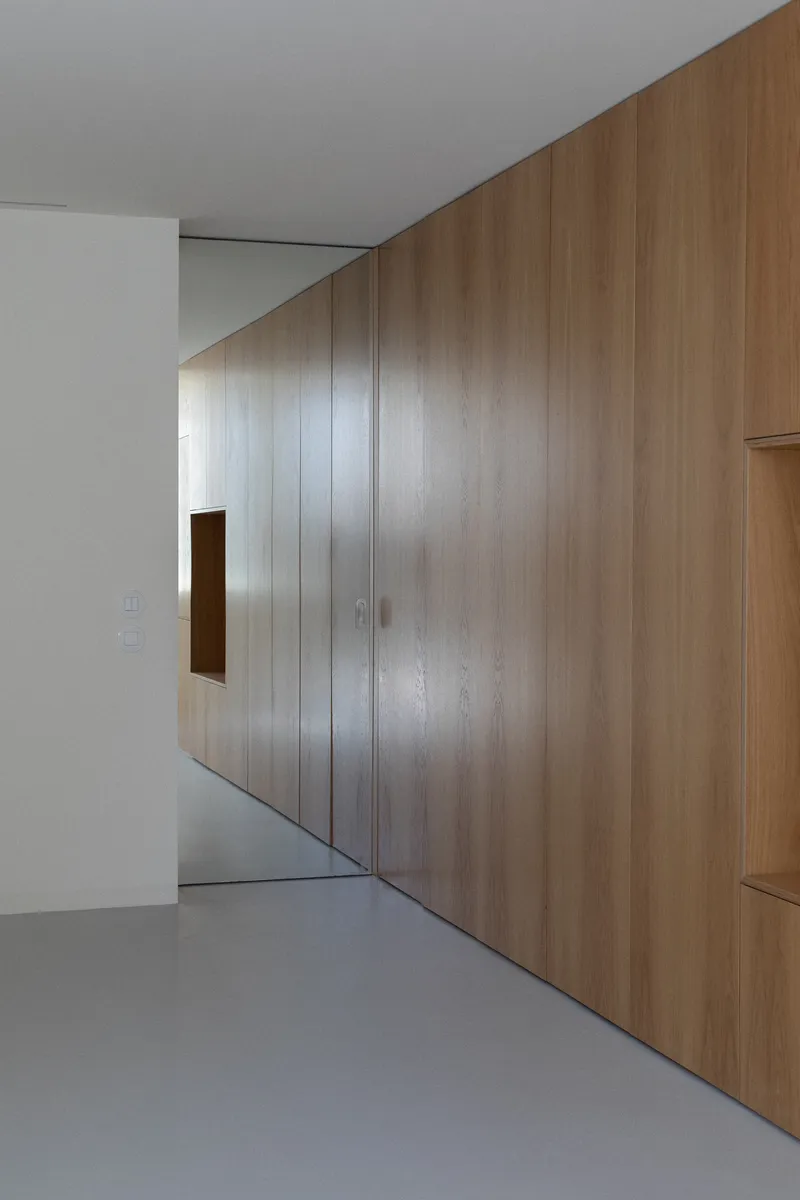
What these interiors share is a quality of light. Full-height glazing opens rooms to courtyard views, skylit concrete soffits wash walls with diffused illumination, and angled oak veneer partitions with small square openings create moments of visual surprise. The architects found clarity in the existing structural solutions and used a contemporary language to amplify it. The wood, the concrete, the soft grey: everything serves the light.
Facade Details and Thresholds
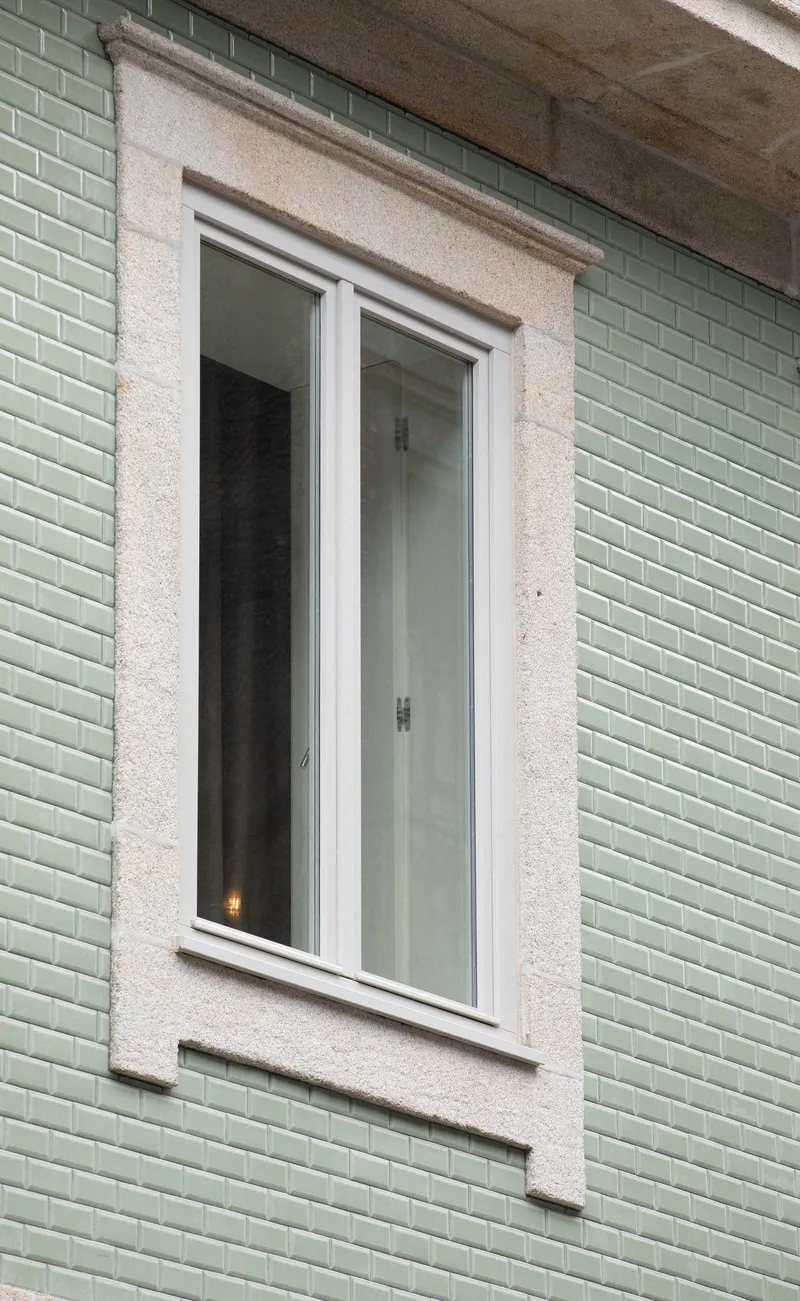

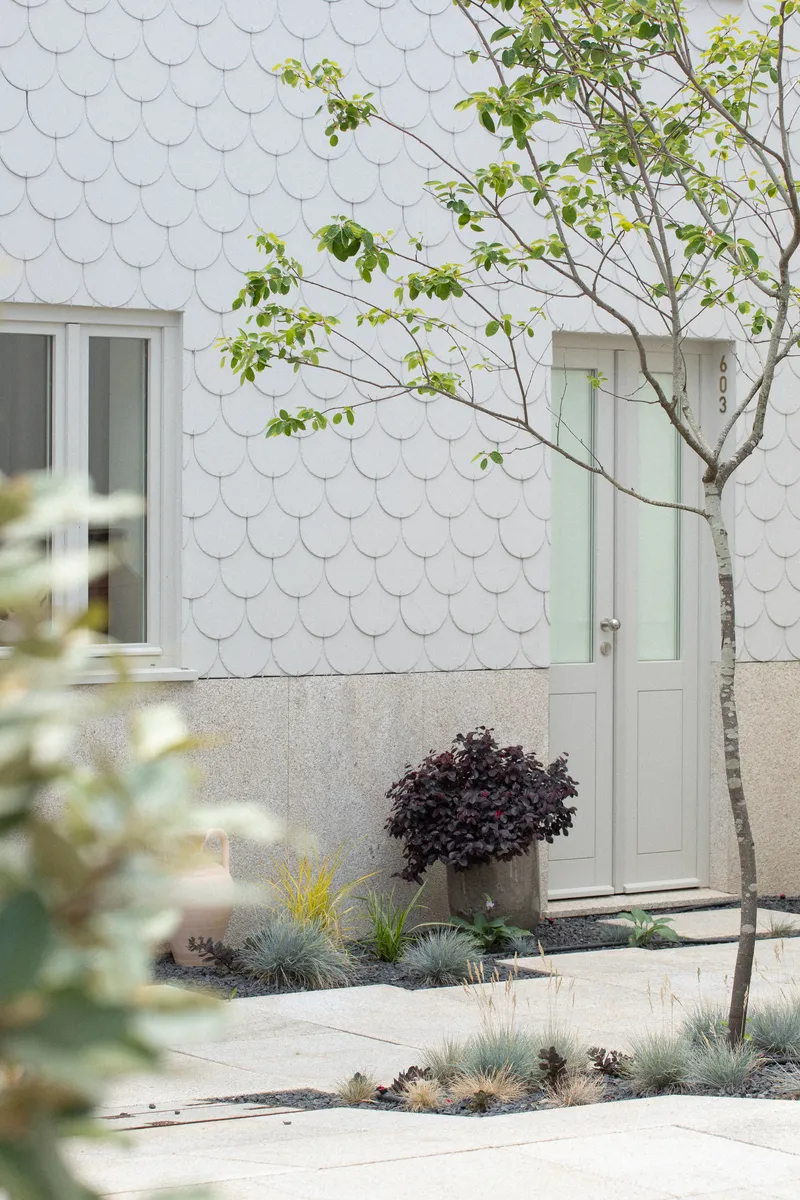
The exterior surfaces carry a quiet density of information. A white casement window framed in a terrazzo surround against pale green glazed tile cladding tells you everything about how the project negotiates old and new. Stone window surrounds on white rendered facades sit beside low granite walls with the composure of elements that have always coexisted. The scalloped shingle facades with planted beds of grasses reinforce the project's intention to let the architecture dissolve into its surroundings over time.

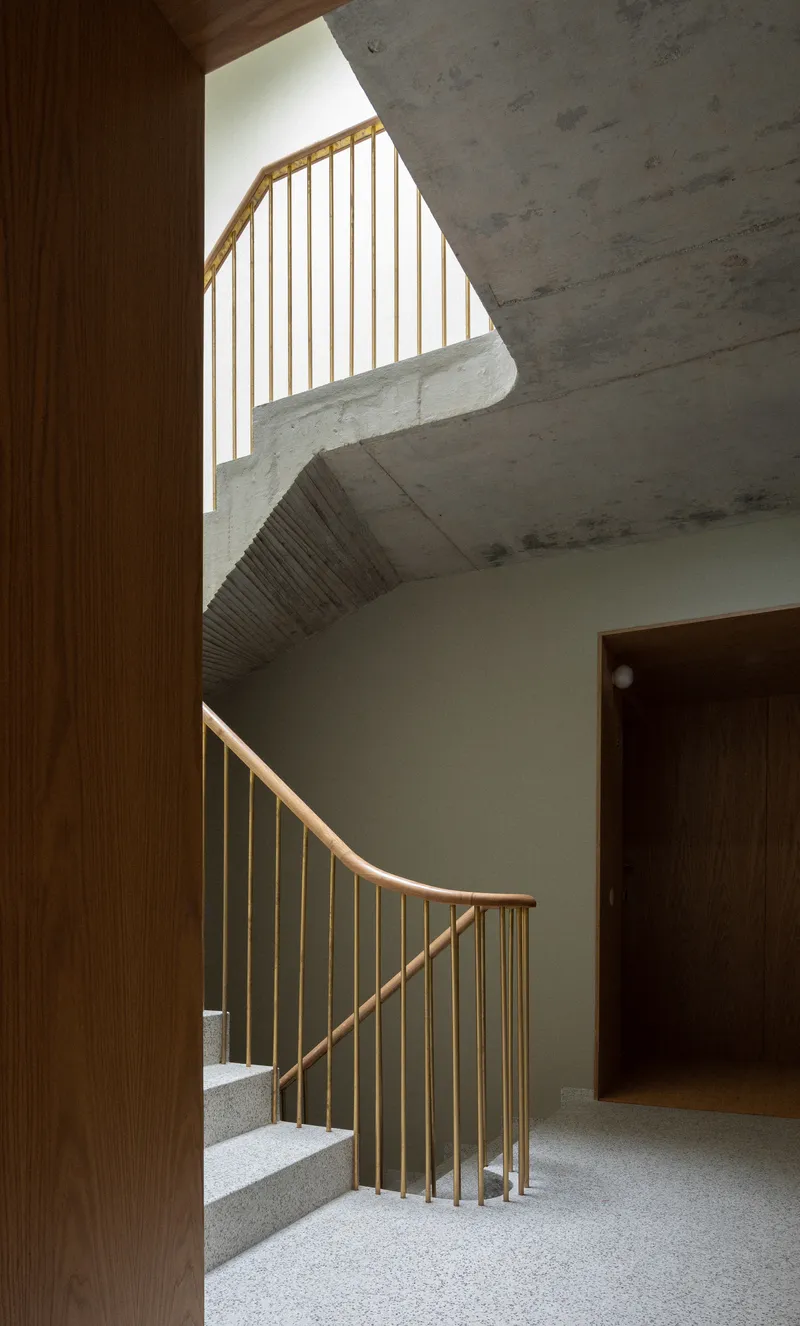
The threshold details are equally considered. Narrow glazed windows with stone surrounds sit beside terracotta pots and flowering plants in a composition that feels found rather than designed. Timber-railed staircases with terrazzo treads move between exposed concrete ceilings and wood-paneled walls, marking the transition from communal to private with material shifts rather than closed doors.
Plans and Drawings

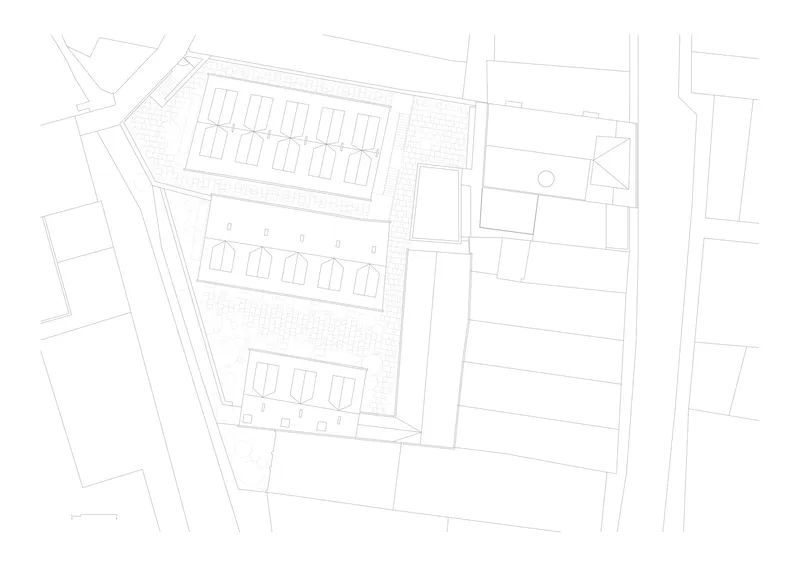


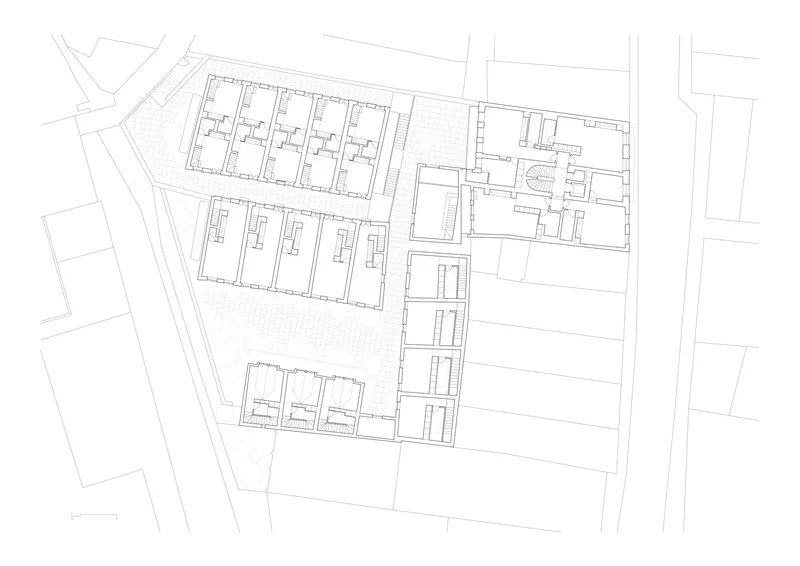


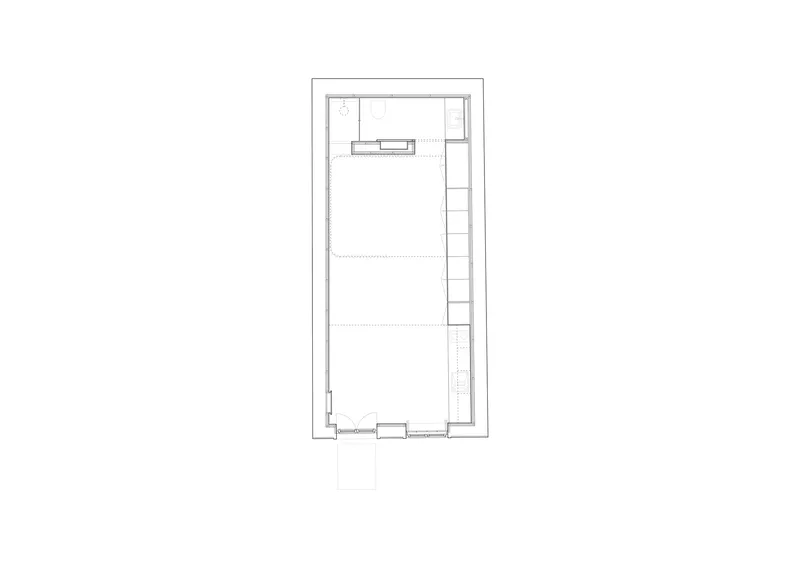

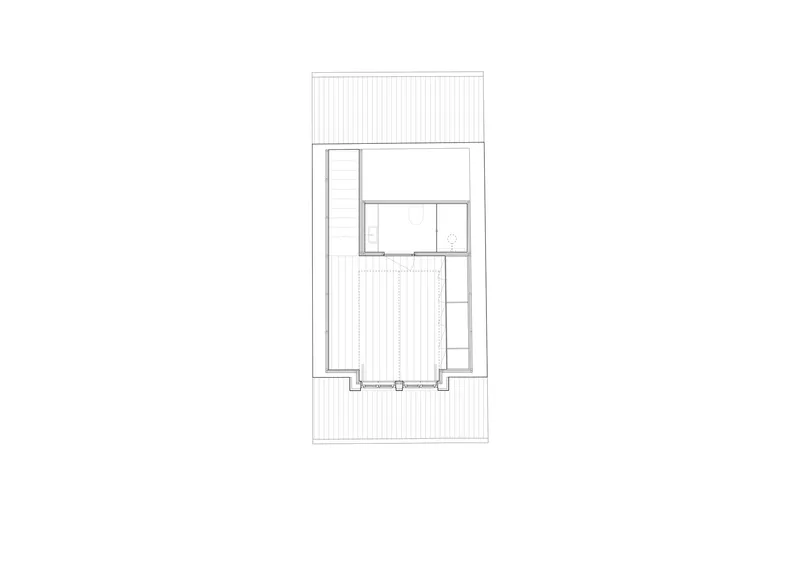
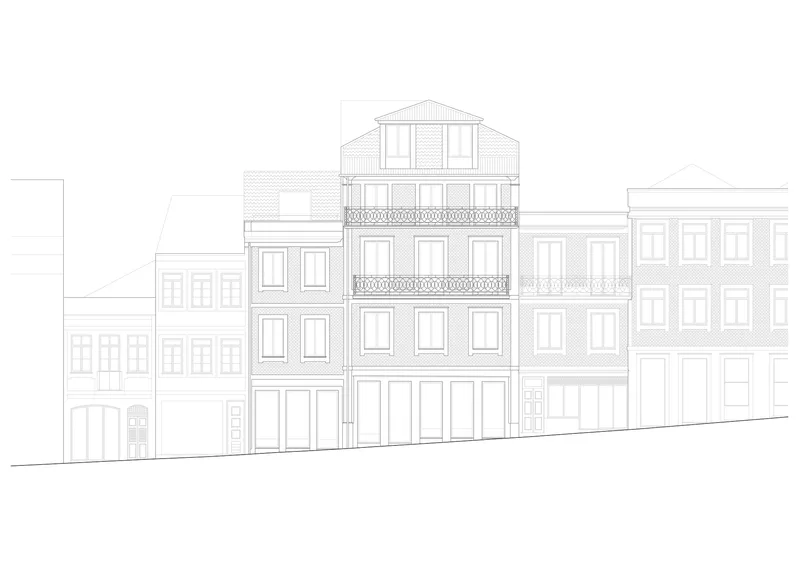
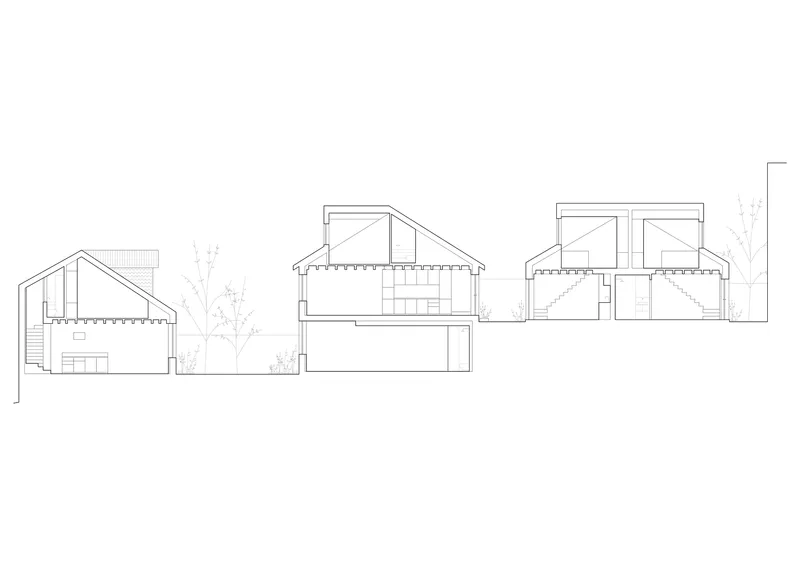
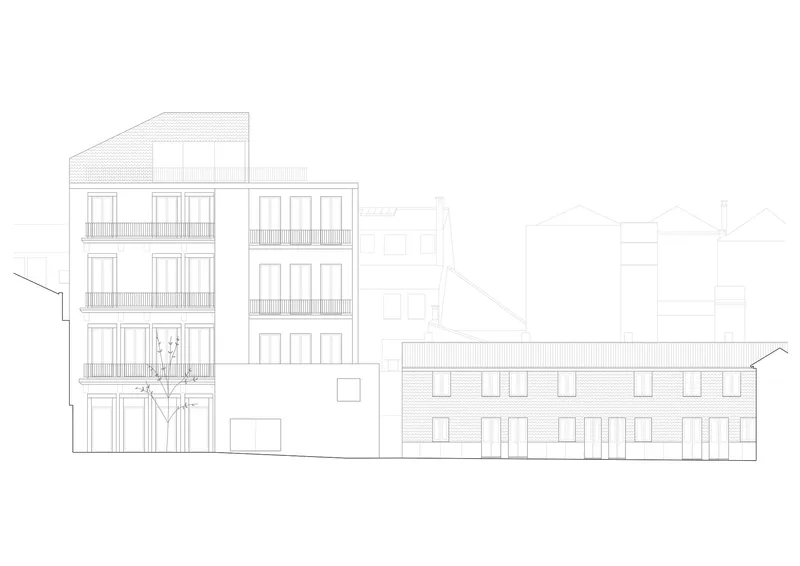

The axonometric drawing makes the project's spatial logic immediately legible. The sawtooth roofline of the housing blocks sits within its urban block context, revealing how much of the site is actually interior courtyard. The ground floor plans show the residential units arranged along two parallel bars with planted courtyards between them, and the upper floor plans demonstrate how the pitched roof outlines create varied ceiling heights within compact units. The sections are particularly instructive: three gabled townhouses cut open to reveal how the interior levels step and shift, with courtyard trees mediating between them. The elevations, both street-facing and rear, show the project's dual personality: civic composure on the Rua do Bonjardim side, intimate domesticity behind.
Why This Project Matters
Bairro do Silva is a test case for how European cities can engage with their most vulnerable heritage typologies. Porto's ilhas were not designed for posterity. They were pragmatic, dense, and often substandard housing for workers. Abandonment was the default outcome for many. Heim Balp Architekten and Pablo Pita Arquitectos demonstrate that rehabilitation does not require nostalgia. By seeking new hierarchies and making careful subtractions, they produced a complex that is legible, habitable, and respectful of its origin without being imprisoned by it.
The project's conversion to hospitality rather than permanent housing is worth noting. It preserves the spatial character of the ilha while acknowledging that its original social function has shifted irreversibly. Whether this is a gain or a loss depends on your politics. What is undeniable is the quality of the architecture: a restricted palette, disciplined insertions, and an understanding that the most important moves are often the things you choose not to build. In a city under intense development pressure, that restraint is both a design strategy and an ethical position.
Bairro do Silva Housing by Heim Balp Architekten and Pablo Pita Arquitectos, Porto, Portugal. 2,750 m², completed 2022. Photography by José Campos.
About the Studio
Share Your Own Work on uni.xyz
If projects like this are the kind of work you want to make, uni.xyz is a place to publish your own, find collaborators, and enter design competitions.


Popular Articles
Popular articles from the community


The Ocean Hive: Sustainable Architecture for a Self-Sufficient Civilization at Sea
The Ocean Hive imagines sustainable architecture at sea, where modular habitats, algae, wave power and ocean waste sustain a growing colony.

Co-life: Sustainable Architecture for Age-Friendly Community Living
Co-life reimagines sustainable architecture for seniors through courtyards, rammed earth, shared gardens, and spaces designed for belonging.

Play: Fragments of Their World
Familiar architecture becomes modular playground design, creating safe spaces where displaced children can learn, connect, imagine and play.

The Musturak Paradise: Senior Living Architecture for a Connected Future in Temara, Morocco
The Musturak Paradise reimagines senior living architecture in Temara via private homes, social spaces, culture, community, and shared care.

Similar Reads
You might also enjoy these articles

Bao Huynh Watercolor Atelier: A Serene Art Retreat in Hội An
Bao Huynh Watercolor Atelier in Hội An blends multifunctional art spaces, sustainable design, local materials, and family-friendly living in a serene environment.

Atelier Macri Concept Store Interior Design by CASE-REAL
Atelier Macri store features a "ko" counter, walnut wood details, cork displays, blending retail, gallery, and seamless customer experiences.

Manuel Vargas Izquierdo Stadium and High-Performance Sports Center: Architectural Excellence in Jalpa de Méndez
The Manuel Vargas Izquierdo Stadium blends sustainable design, inclusive sports facilities, and cultural-inspired architecture, revitalizing Jalpa de Méndez’s public spaces.

KAKR Buluh Awar Hall: Revitalizing Community and Ecology Through Bamboo Architecture
Community built bamboo hall revitalizes Buluh Awar village, empowering youth, restoring ecology, celebrating vernacular craftsmanship through sustainable architecture and culture.

Explore Social Housing Competitions
Discover active competitions in this discipline

Challenge to reimagine the Iron Throne

Photograph architecture without architects

Illustrate the lost glory of Angkor Wat - Render Challenge

Design challenge to reuse E-waste
Comments (0)
Please login or sign up to add comments
No comments yet. Be the first to comment!