
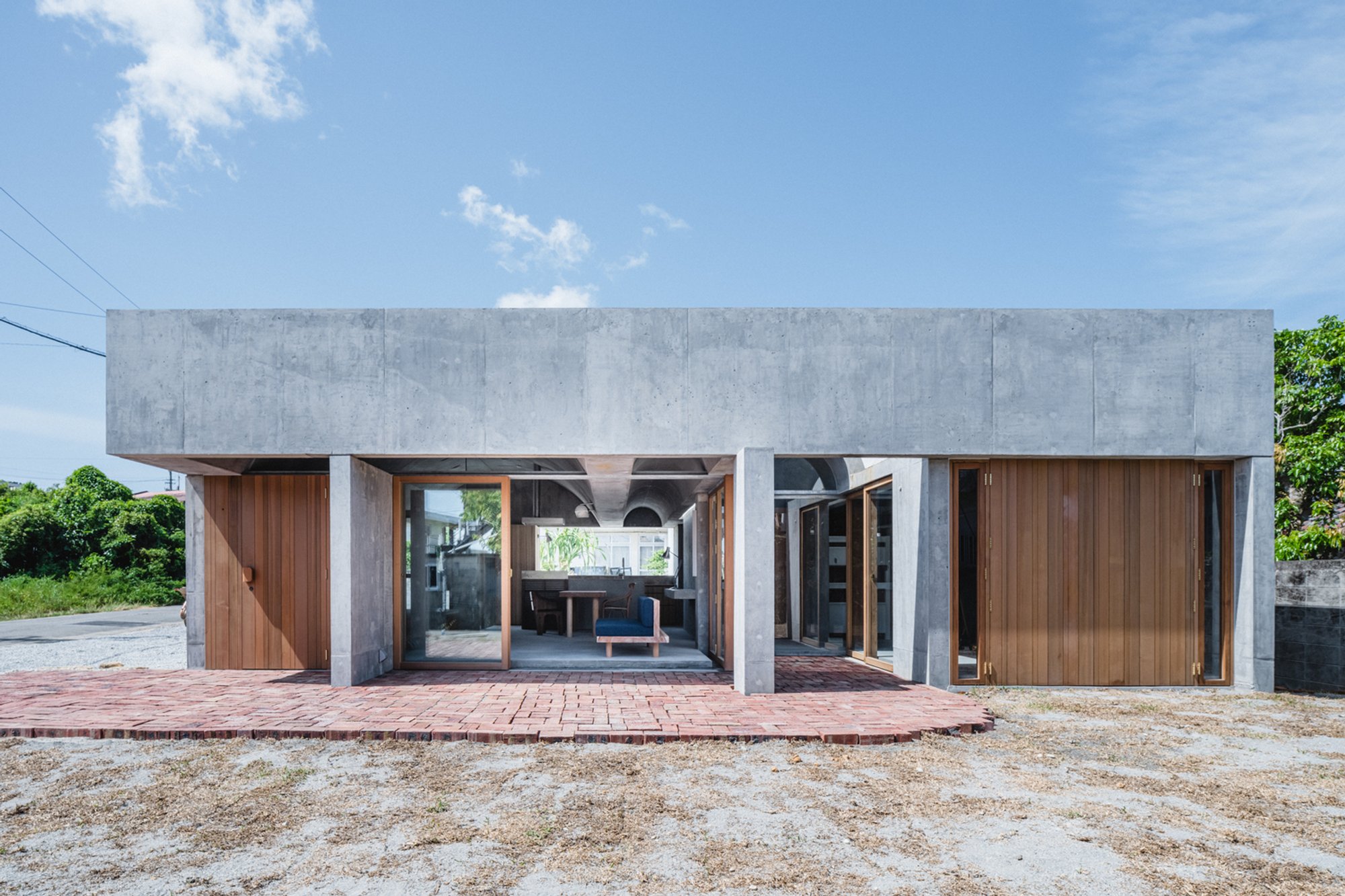
House in Shikenbaru by Studio Cochi Architects – A Sustainable Farmhouse Integrating Okinawan Traditions
A single-story Okinawan farmhouse blending living and farming spaces, with vaulted ceilings, earthen floors, and a productive green roof.

Architects: Studio Cochi Architects
A Home Rooted in the Land and Climate of Okinawa
The House in Shikenbaru, designed by Studio Cochi Architects, is more than a family home—it is a living, breathing part of the agricultural lifestyle of its owners. Situated in a quiet village near the sea in southern Okinawa, the residence is designed for a couple and their four children, harmonizing with both the rural landscape and the rhythms of farm life.
Okinawa’s warm climate, free from frost and snow, allows vegetables typically grown in spring or summer on Japan’s main island of Honshu to be harvested year-round. This unique agricultural context directly shaped the architectural concept.
Living in Sync with Farming Rhythms
The homeowner runs a local farm, cultivating okra, green beans, papaya, and other crops. His workday starts before sunrise, with harvesting and fieldwork lasting until mid-morning. During the hottest hours, he sorts produce in shaded areas, returning to the fields in the cooler evenings. The home needed to accommodate this schedule, serving both as a family residence and as a functional workspace for agricultural tasks.
Open Layout and Seamless Indoor-Outdoor Connection
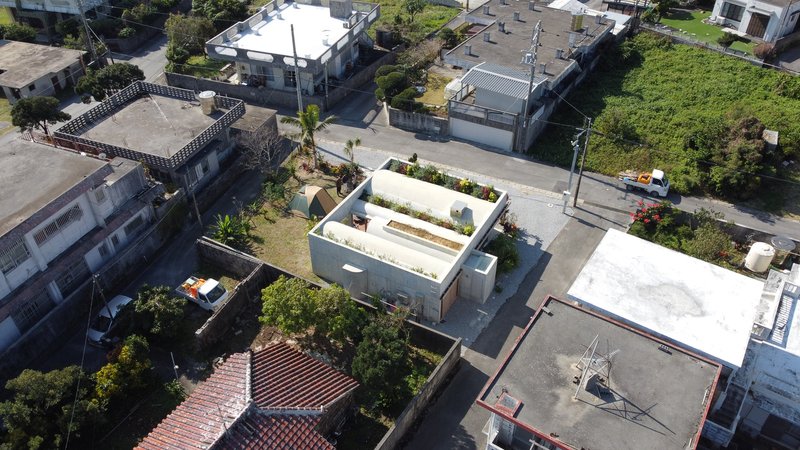
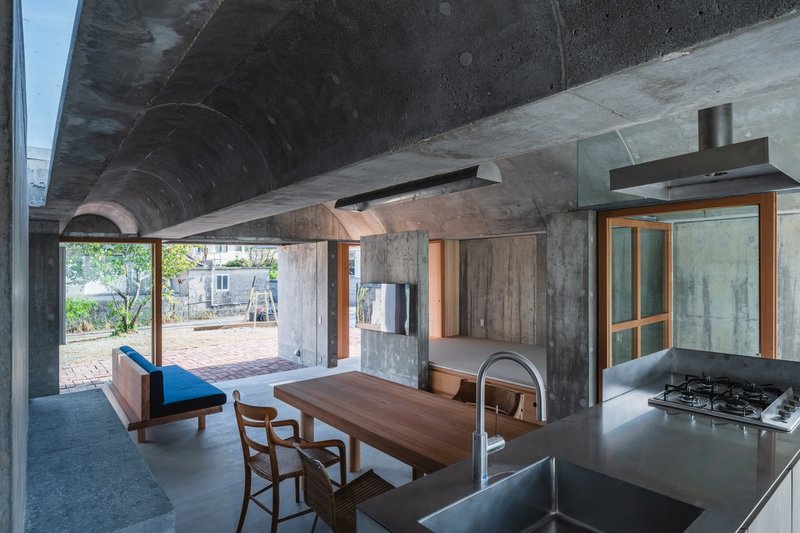
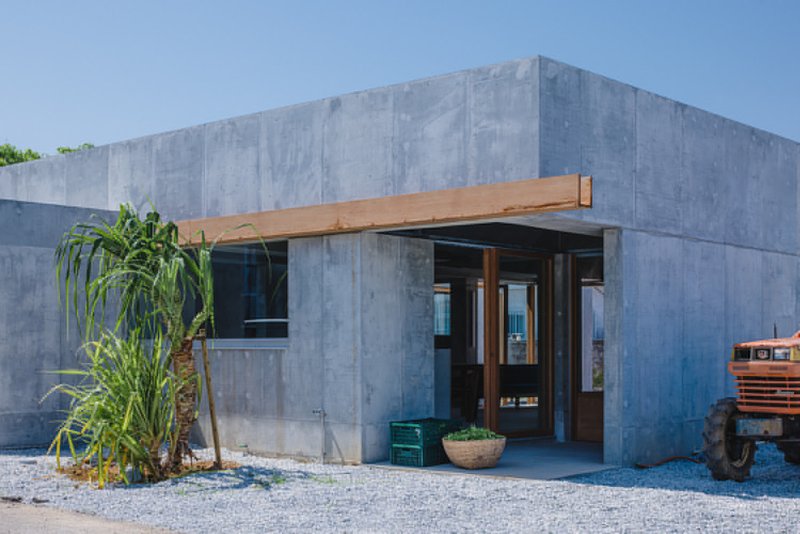
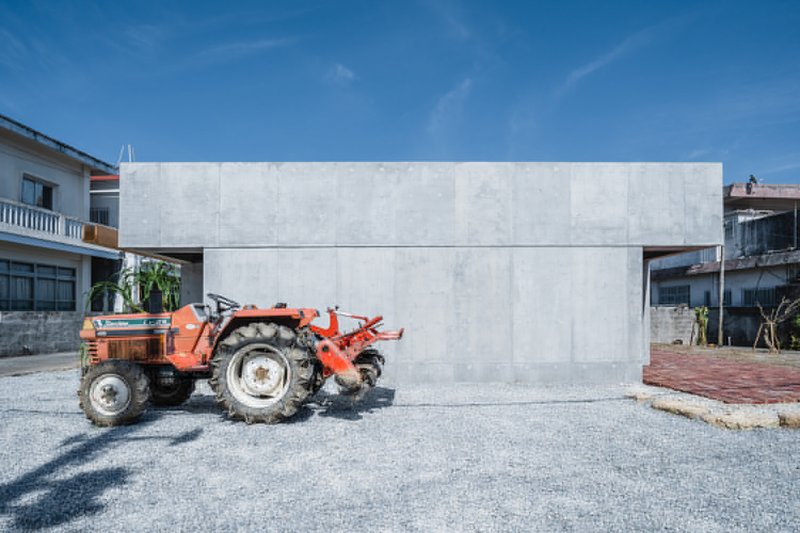
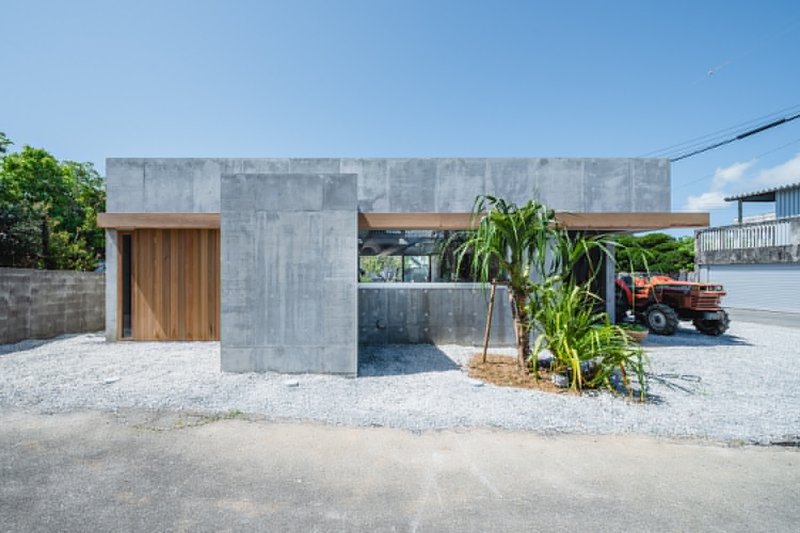
With a generous plot of land available, the architects opted for a single-story design, maximizing accessibility and flow. The site’s original block wall was removed, allowing tractors and cultivators to enter freely from any direction. This also created an open perimeter space for storing farming tools and extending work activities outdoors.
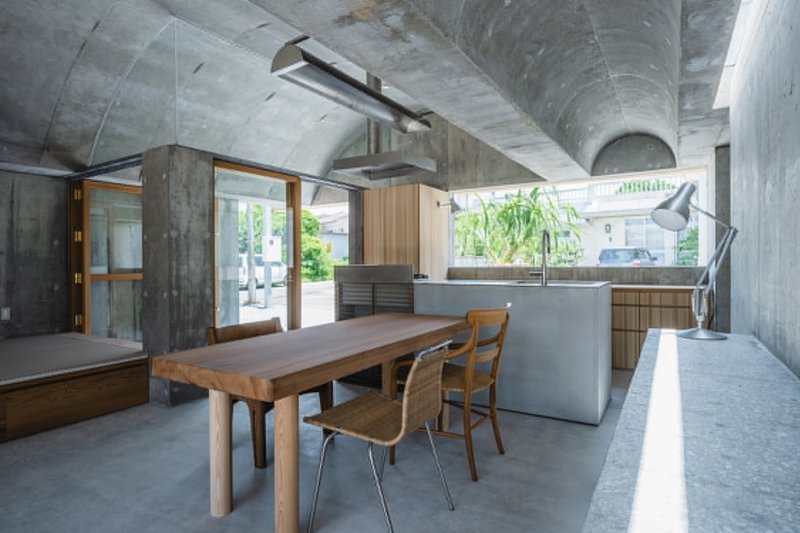
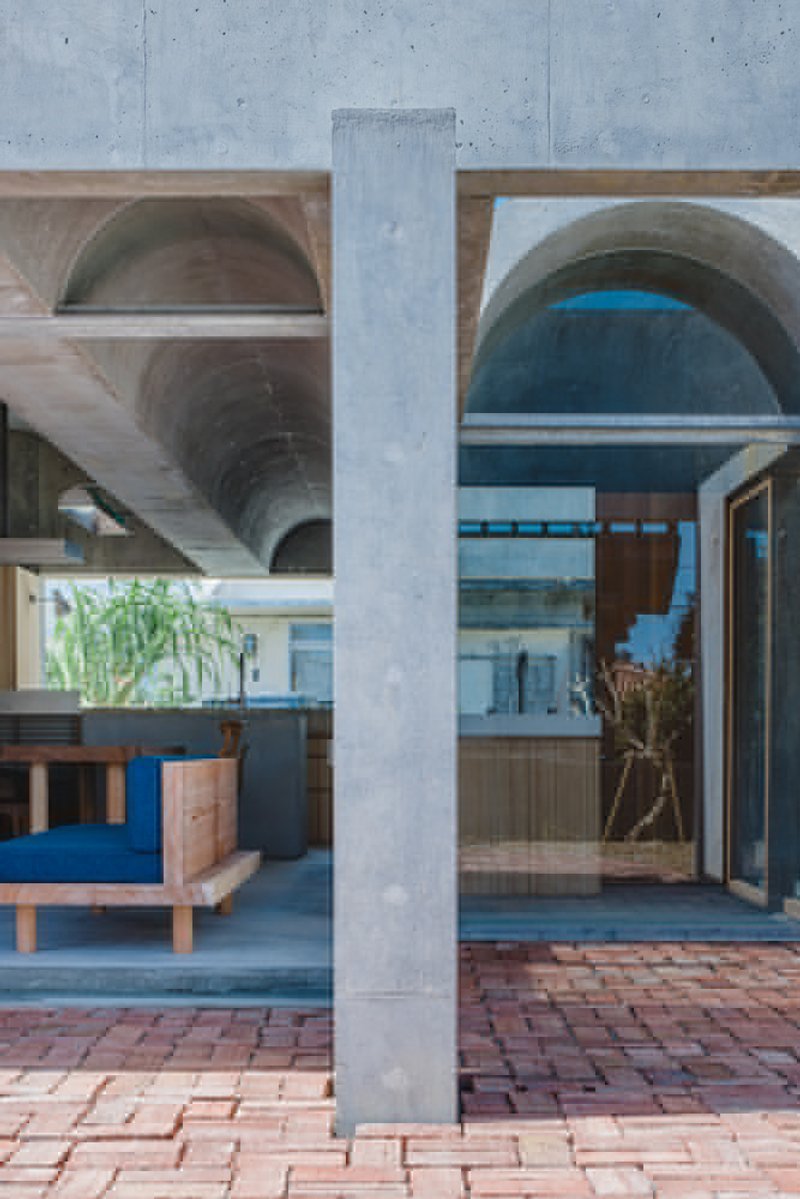
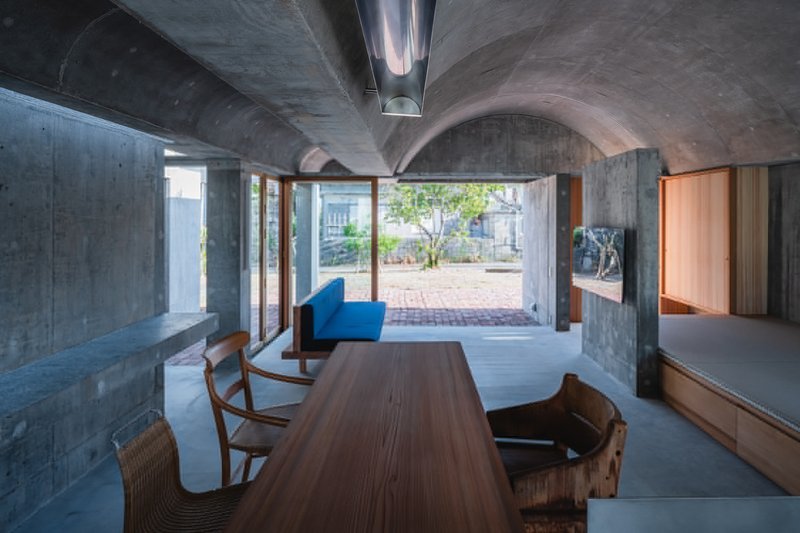
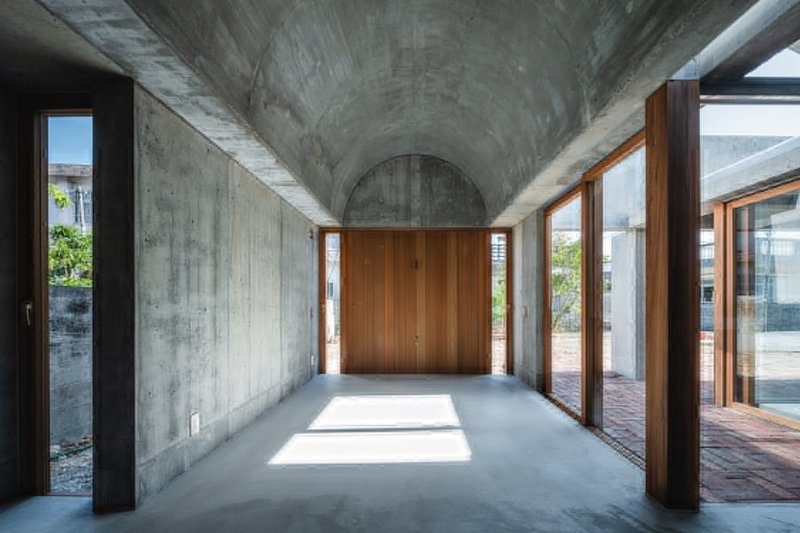
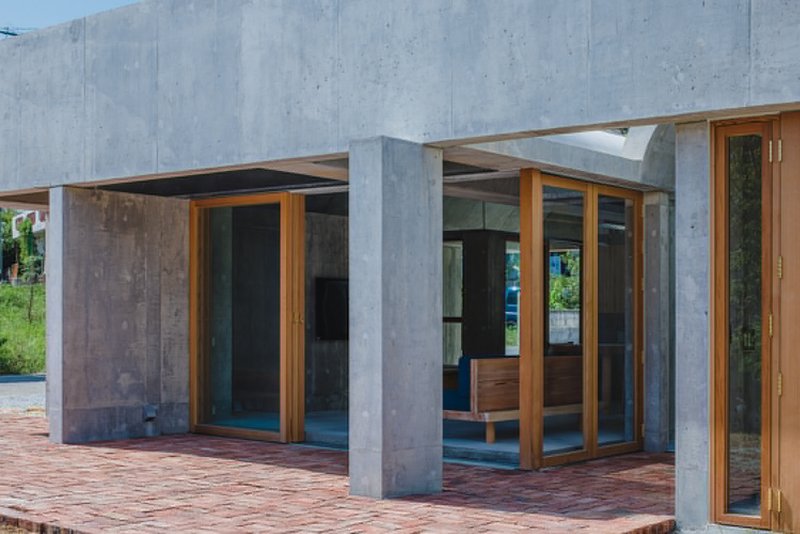
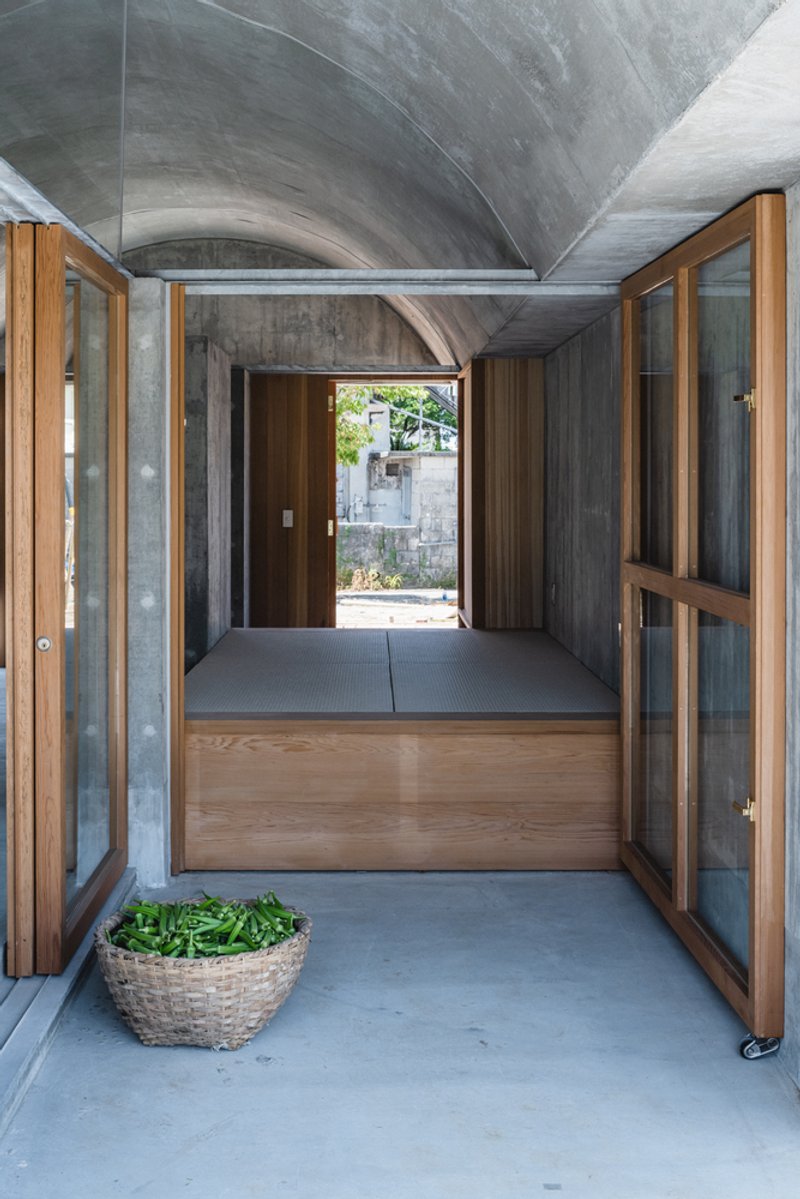
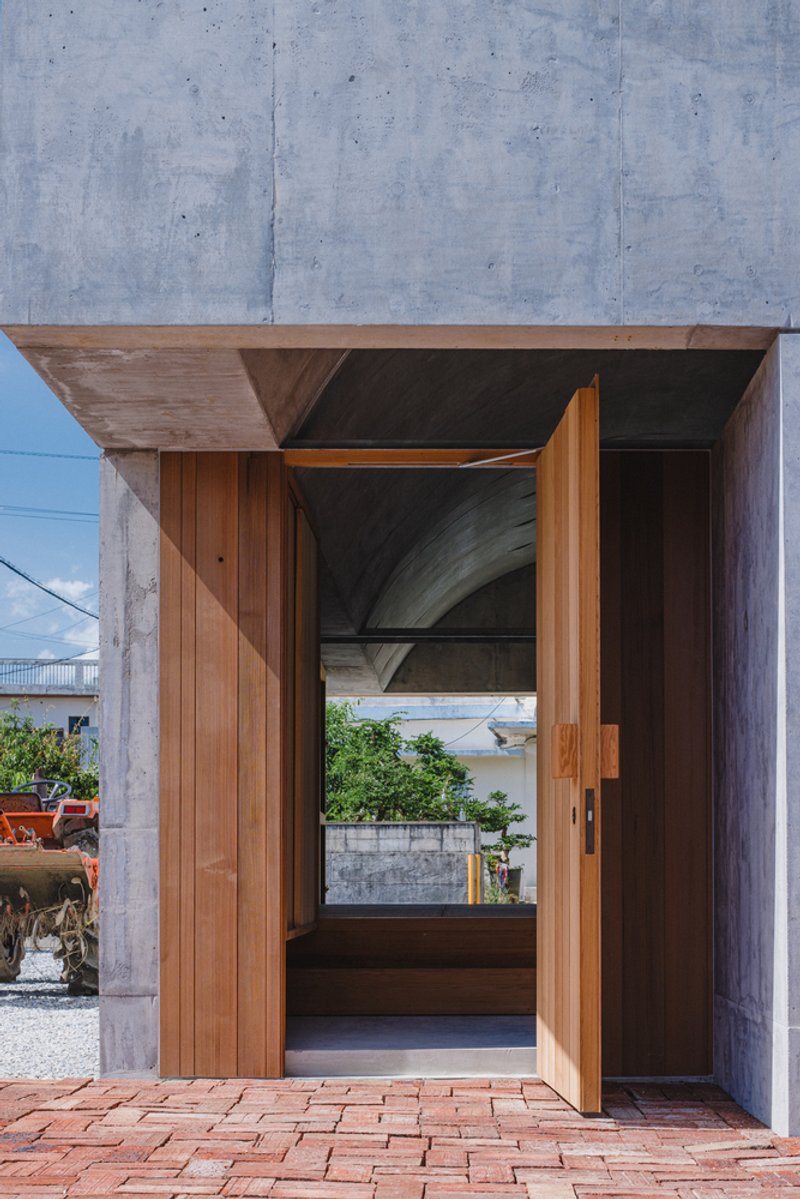
The house features a continuous earthen floor that blurs the line between interior and exterior. A vaulted ceiling, running north to south, shelters both indoor living areas and semi-outdoor spaces beneath deep eaves. These eaves act as transitional zones, functioning as shaded work areas during the day and social spaces in the evening.
Climate-Responsive and Sustainable Roof Design
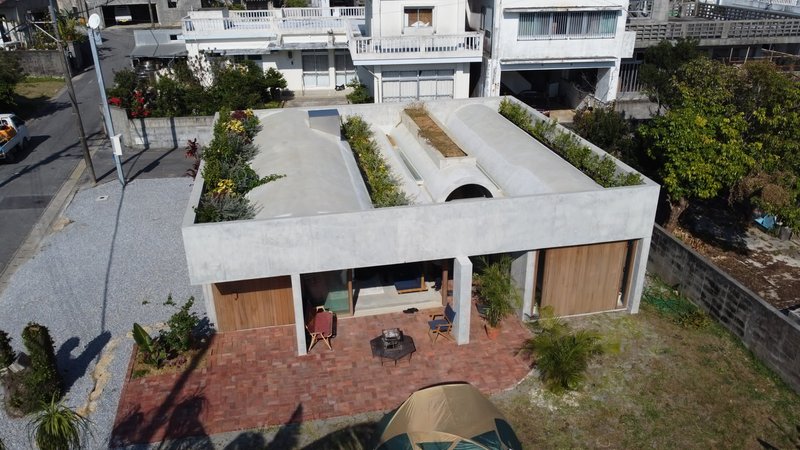
One of the home’s most distinctive features is its living vaulted roof. The top of the vault is filled with soil, providing natural insulation against Okinawa’s intense sun. Over time, passion fruit vines, bougainvillea, and other climbing plants have spread across the roof, offering shade and cooling benefits while blending the house into its natural surroundings.
The roof also doubles as a productive garden, with different soil depths allowing for the cultivation of varied crops. The owner now grows fruits and vegetables on the roof, expanding the home’s self-sufficiency. This green roof not only supports biodiversity but also helps regulate the home’s microclimate.
A Rhythmic, Light-Filled Interior
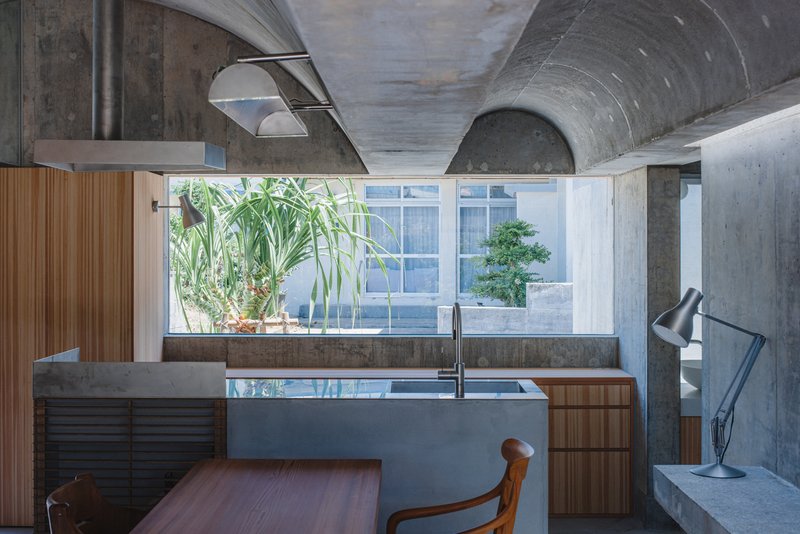
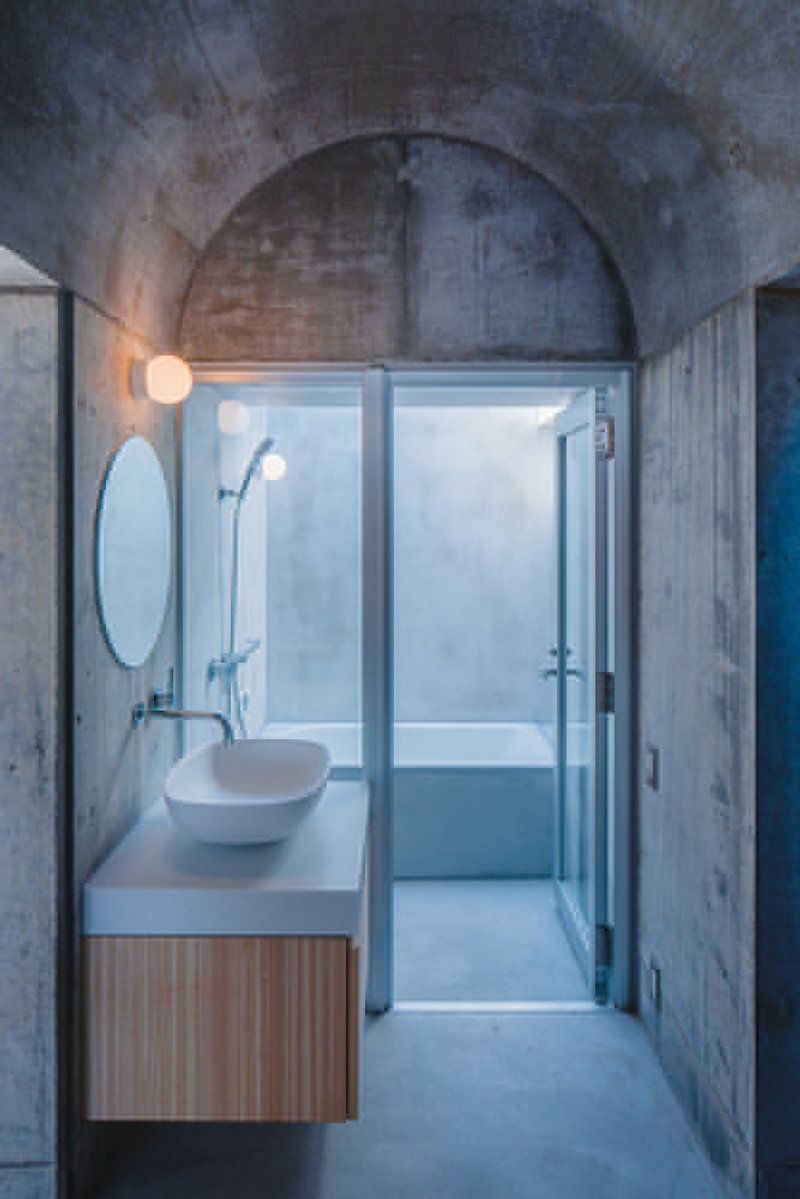
Inside, the vaulted ceiling varies in height, introducing a subtle rhythm to the simple floor plan. Gaps between the roof and walls allow soft daylight to filter in, creating a gradation of light and shadow throughout the day. The open interior is functional, uncluttered, and well-suited to a lifestyle that flows constantly between indoor comfort and outdoor labor.
The House in Shikenbaru stands as a model of context-driven design, merging architecture with farming culture, climate-responsive strategies, and sustainable living. Studio Cochi Architects has created a home that is not only tailored to its inhabitants’ daily rhythms but also deeply rooted in the agricultural heritage of Okinawa.
All photographs are works of Ooki Jingu




Popular Articles
Popular articles from the community


Solar Steam: A Climate-Responsive Architecture That Redefines the Monument
A climate-responsive memorial architecture that transforms heat, decay, and time into a living system reflecting humanity’s ecological impact.
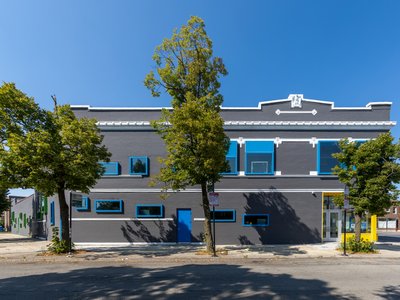
Gads Hill Early Learning Center by JGMA: Adaptive Reuse Shaping Community-Focused Educational Architecture
Adaptive reuse transforms fragmented structure into vibrant early learning center with playful façade, natural light, and community-focused sustainable design.
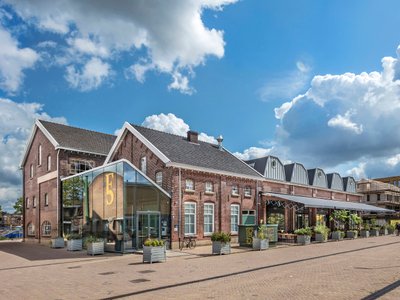
Fifth NRE Jazz Club – De Bever Architecten: Eindhoven’s Revitalized Cultural Hub
Historic gas factory transformed into Fifth NRE Jazz Club blending modern sustainability, jazz culture, dining, and heritage architecture seamlessly.
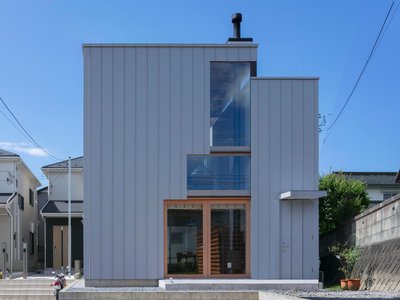
Split House: A Compact Urban Home Blending Privacy, Light, and Flexible Living in Japan
Compact Japanese home featuring DOMA space, flexible café potential, passive lighting, privacy zoning, and sustainable urban living design.


Similar Reads
You might also enjoy these articles


The Ken Roberts Memorial Delineation Competition (Krob)
As the most senior architectural drawing competition currently in operation anywhere in the world, it draws hundreds of entries each year, awarding the very best submissions in a series of medium-based categories.


Waterfront Redevelopment and Urban Revitalization in Mumbai: Forging a New Dawn for Darukhana
A transformative waterfront redevelopment project reimagining Darukhana’s shipbreaking heritage into an inclusive urban future.

OUT-OF-MAP: A Call for Postcards on Feminist Narratives of Public Space
Rhizoma Design and Research Lab invites artists, designers, architects, researchers, and students to reflect on how feminist perspectives can reshape public space. Selected works will be exhibited in Barcelona, October 2026. Submissions open until 15 April 2026.


Documentation Work on Buddhist Wooden Temple
Architectural syncretism and cultural hybridity: A comparative study of the Buddhist temples in Chattogram Hill tracks


Explore Architecture Competitions
Discover active competitions in this discipline




The International Standard for Design Portfolios


The Global Benchmark for Architecture Dissertation Awards


The Global Benchmark for Graduation Excellence


Challenge to reimagine the Iron Throne
Comments (0)
Please login or sign up to add comments
No comments yet. Be the first to comment!