
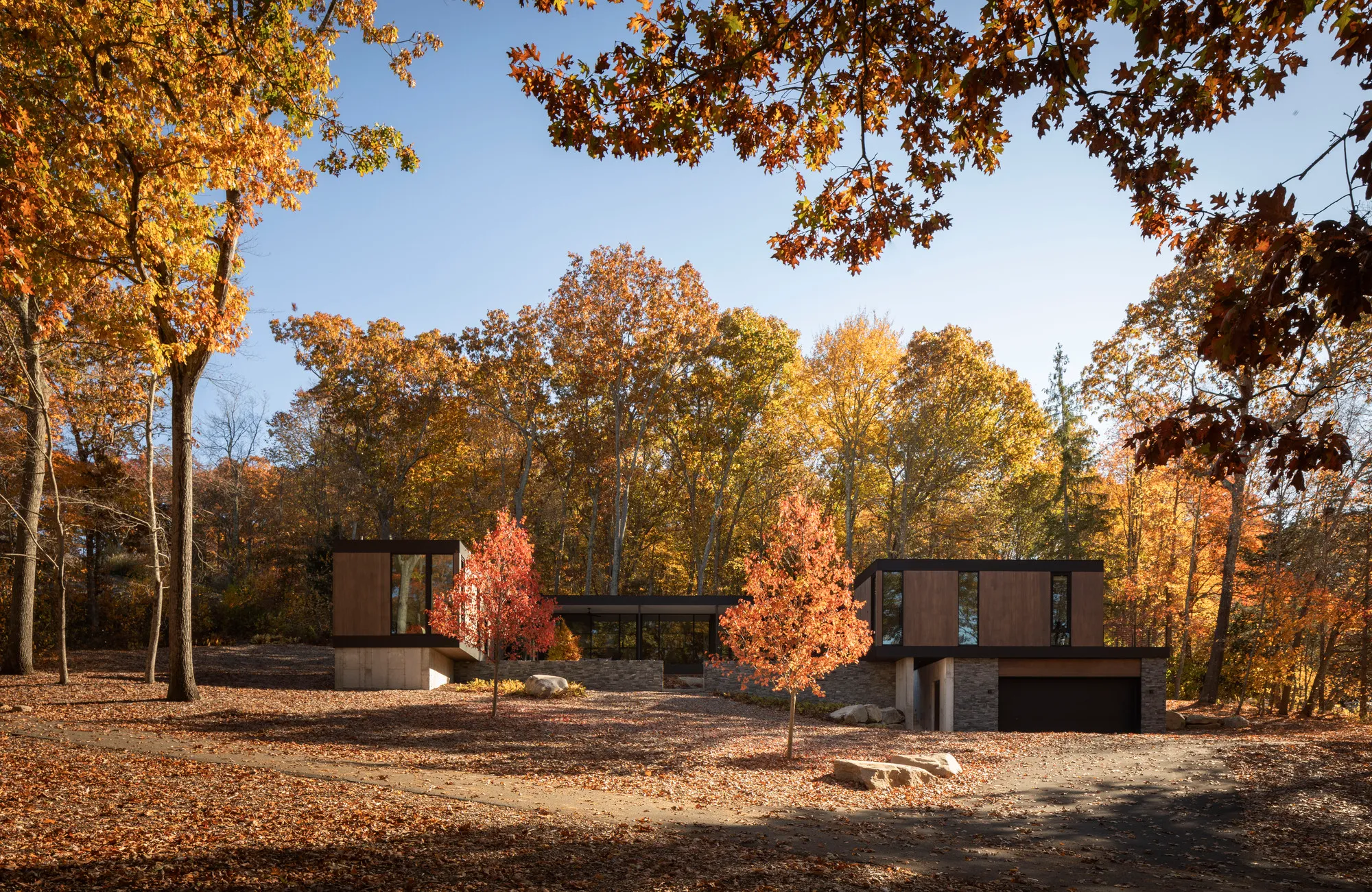
House in the Woods by Tom Lontine Architect
A sculptural Barcelona penthouse merging brick, concrete, and warm light, transforming a 1970s attic into an open, modern home with expansive terraces.


House in the Woods by Tom Lontine Architect is a 4,400-square-foot contemporary residence quietly embedded in a sloped, wooded site overlooking the Connecticut River in Deep River, United States. Designed for two professionals seeking a peaceful, long-term home, the architecture emphasizes aging-in-place comfort, natural immersion, and a refined connection to the forest.
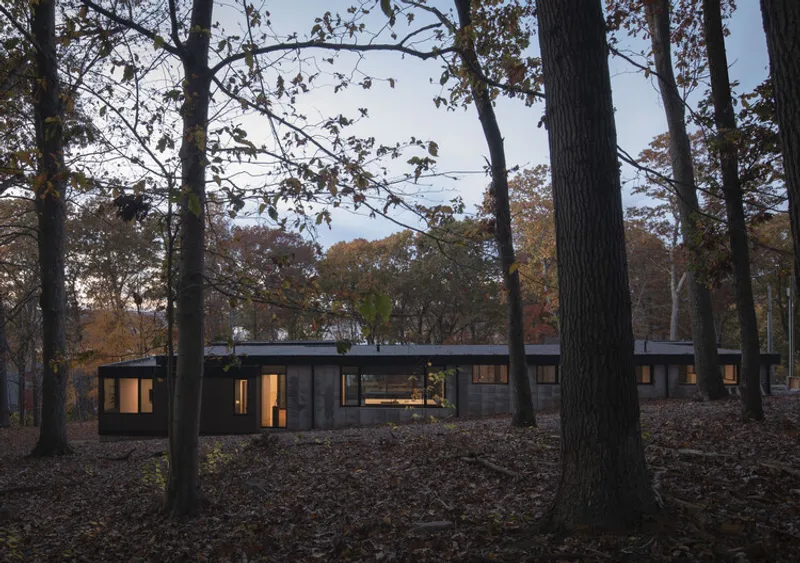
A Low-Slung Home Merging with the Landscape
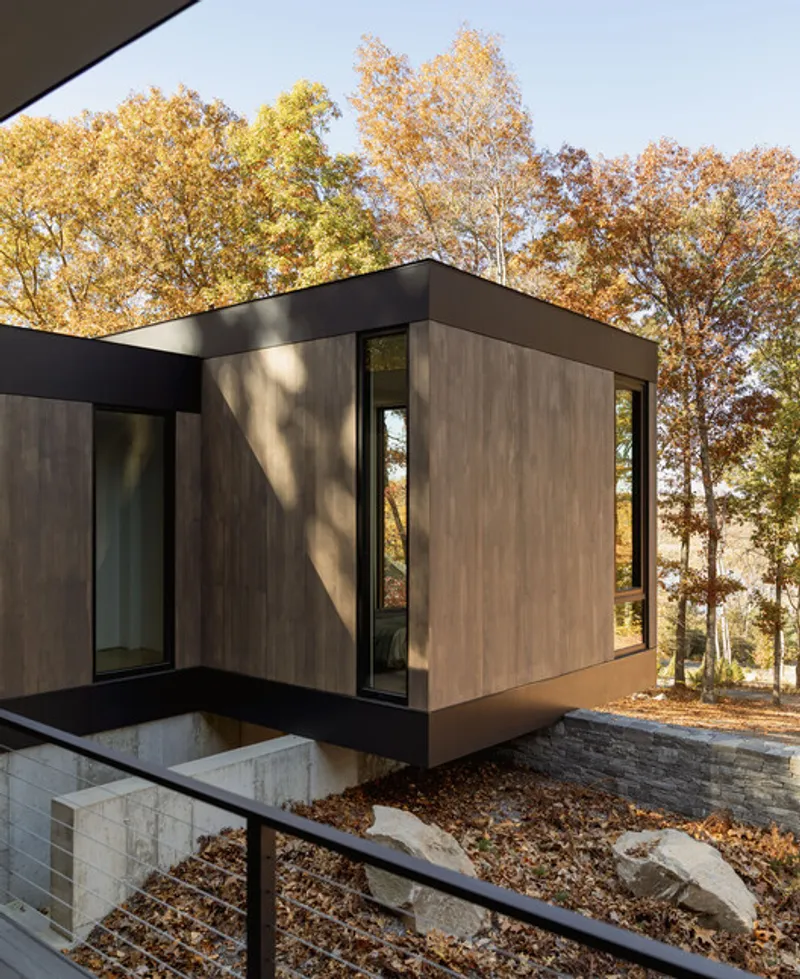
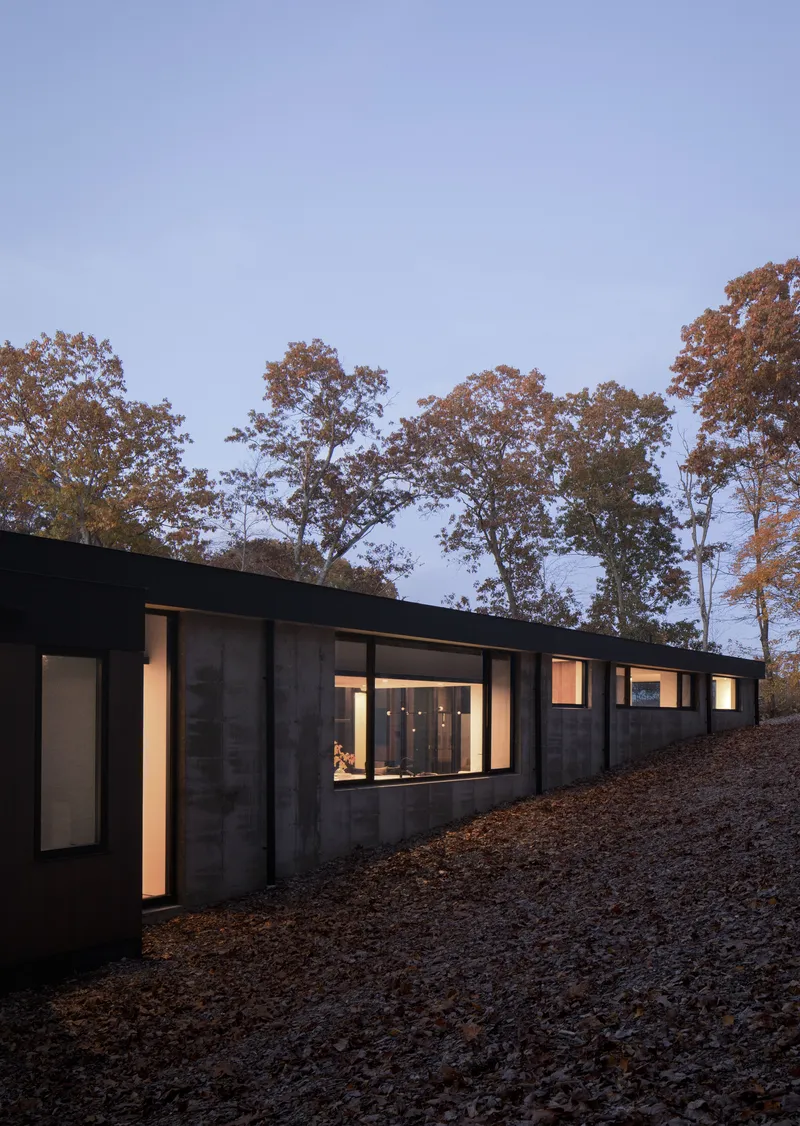
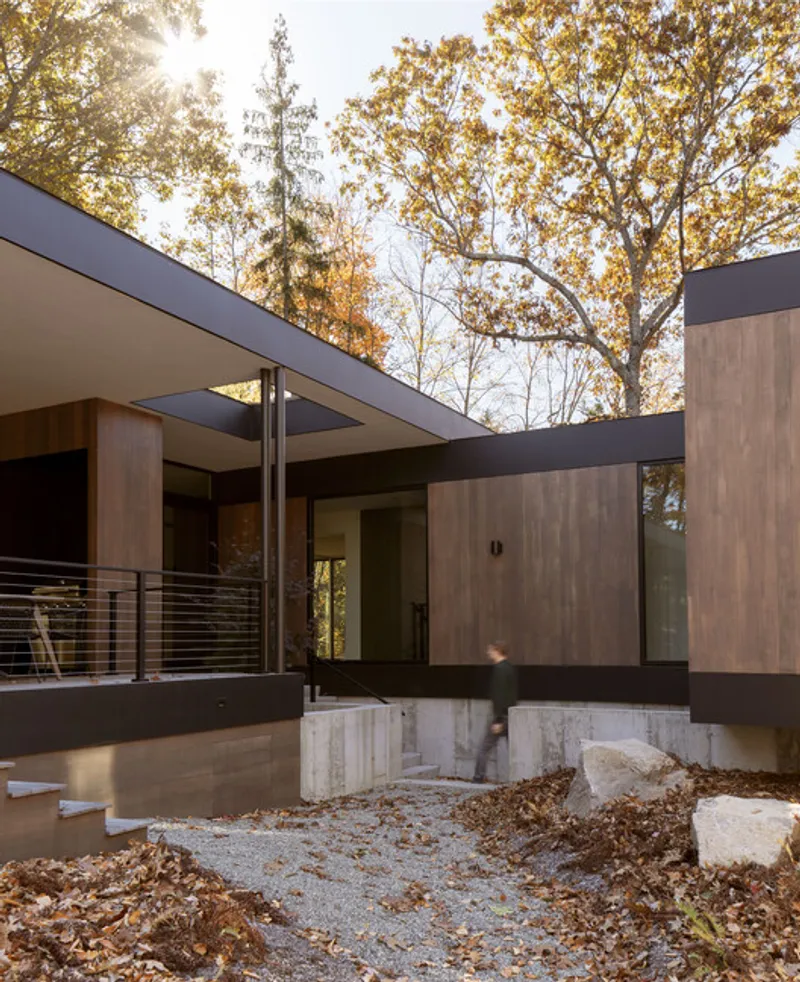
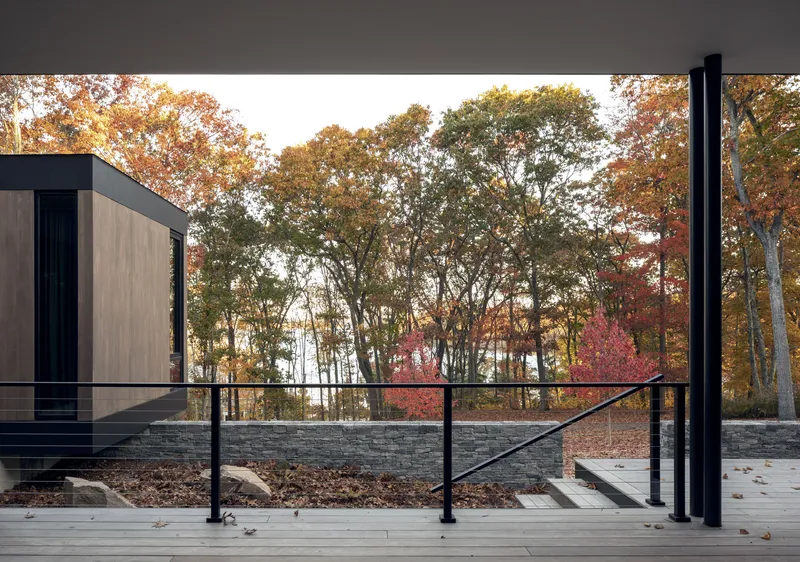
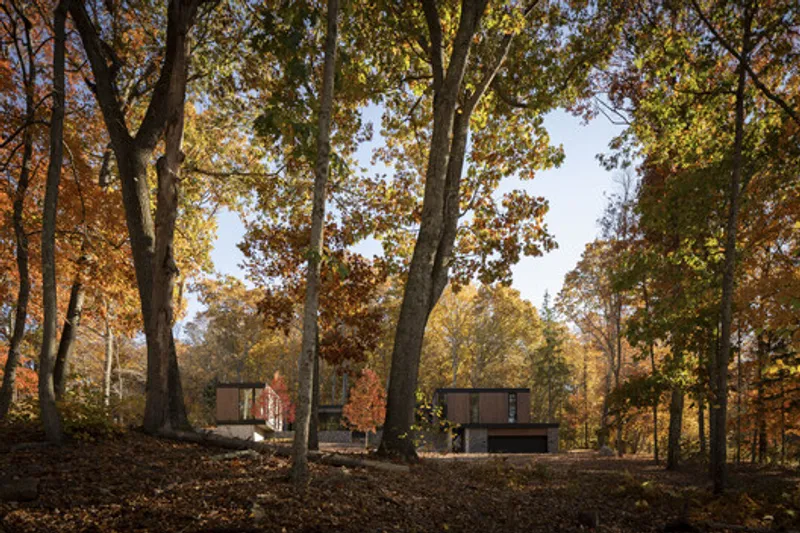
The project’s design philosophy centers on minimizing visual impact while maximizing environmental presence. Clad in dark-stained cedar and set into the hillside, the home adopts a low profile that blends seamlessly with its woodland surroundings. This subtle horizontality, paired with a muted material palette, allows the architecture to dissolve into the forest, reinforcing a sense of calm and retreat.
Thoughtful Spatial Layout for Privacy and Connection
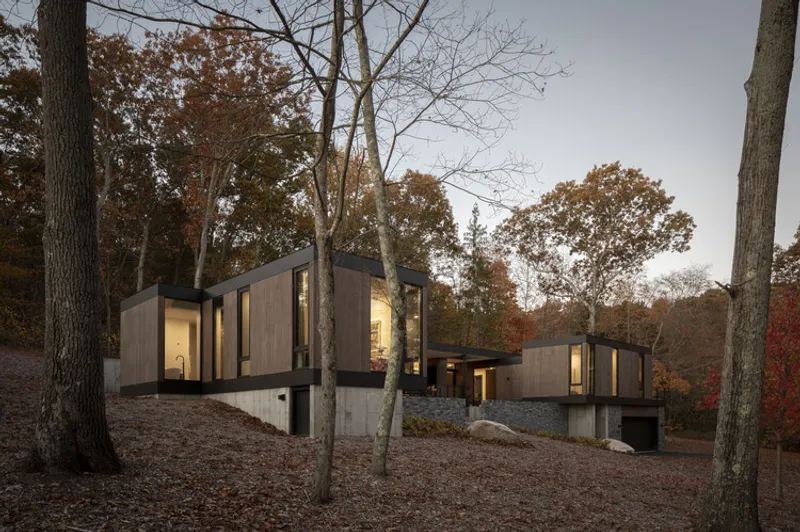
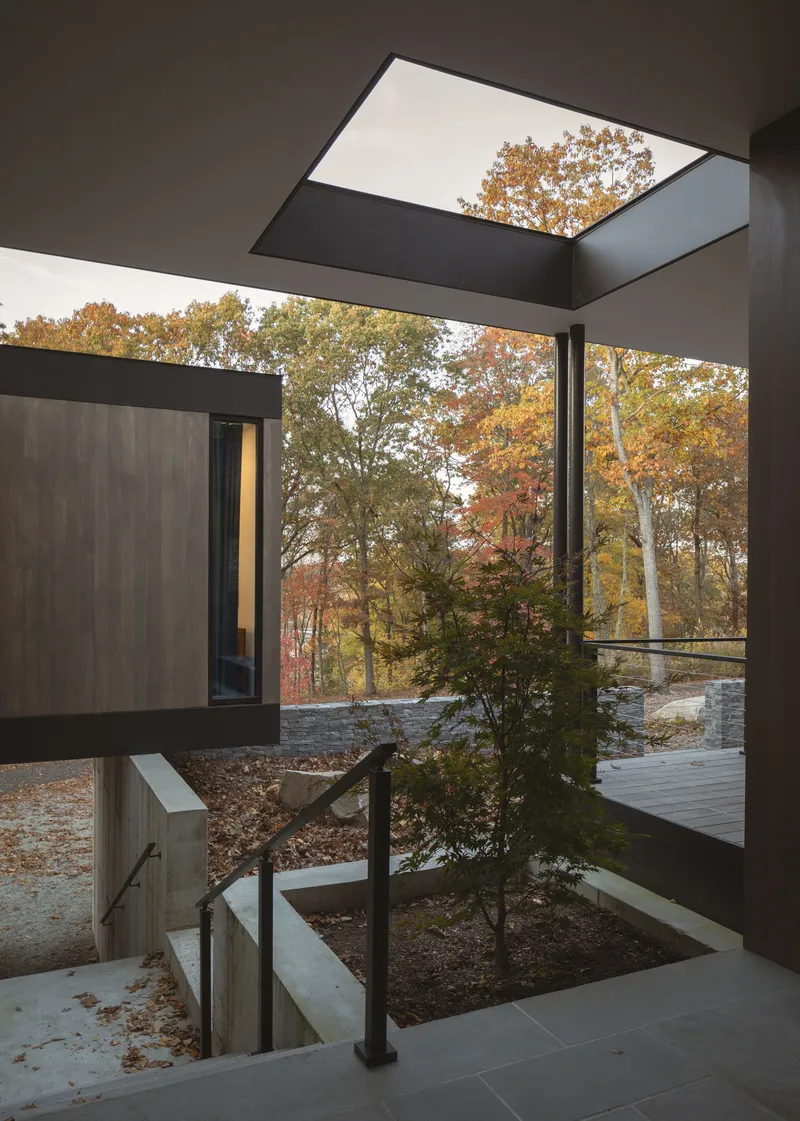
The composition of the house is defined by four intentional volumes arranged around a planted entry courtyard:
- Central Living Pavilion: The heart of the home, featuring an open-plan layout for cooking, dining, and gathering.
- West Wing: Guest suite and service areas, ensuring privacy and comfort for visitors.
- East Wing: A serene primary suite oriented toward the forest.
- Rear Volume: A dedicated home office and gym for work and wellness.
This spatial organization creates natural “blinders” that screen neighboring homes while directing sightlines toward the river, the hillside, and the state park beyond. The architecture achieves both intimacy and openness, balancing accessibility with uninterrupted landscape views.
Warm Interiors with Expansive Glazing
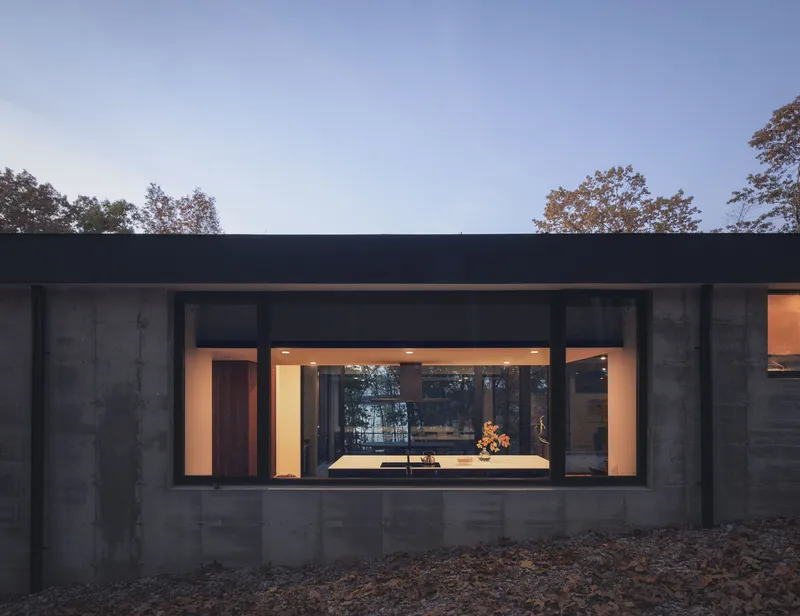
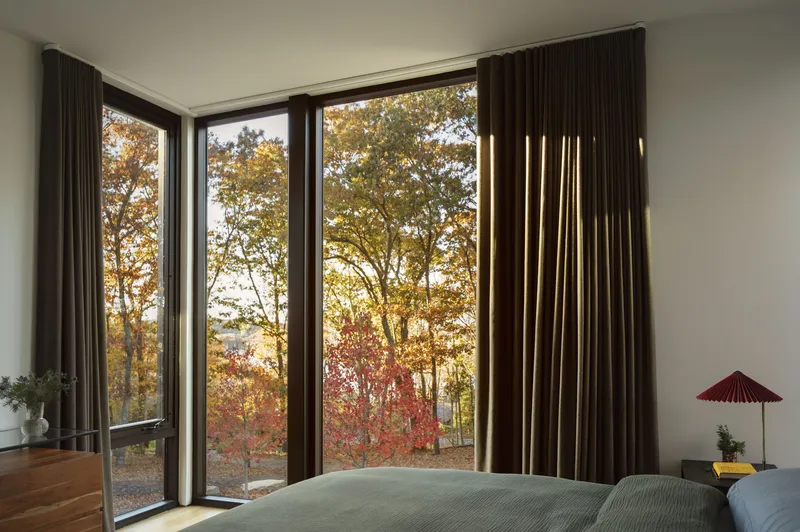
Inside, the residence maintains a delicate balance between modern restraint and natural warmth. Wood surfaces, slender black columns, and floor-to-ceiling glazing frame the forest like evolving artwork. A welded-steel partition with a double-sided fireplace subtly defines zones within the main living area, creating spaces for entertaining, quiet reading, and daily life without sacrificing visual flow.
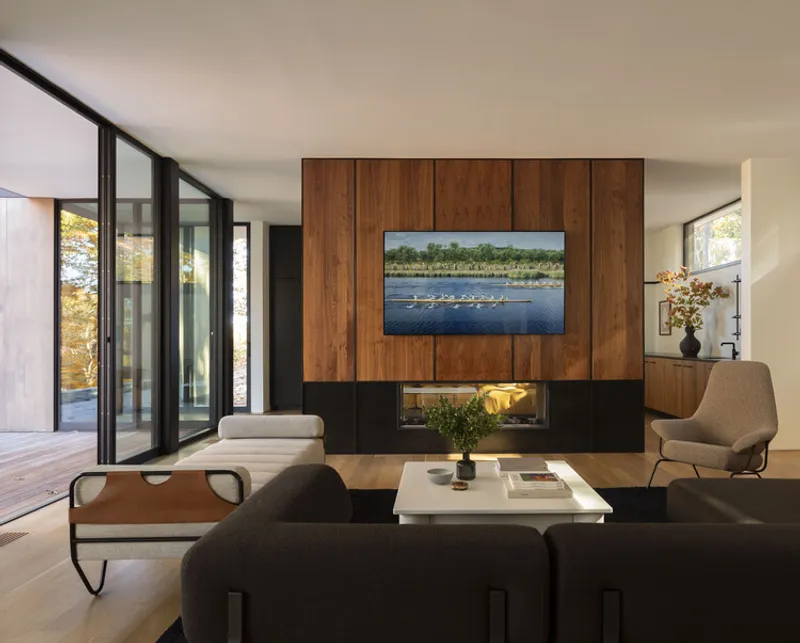
Arrival as a Choreographed Experience
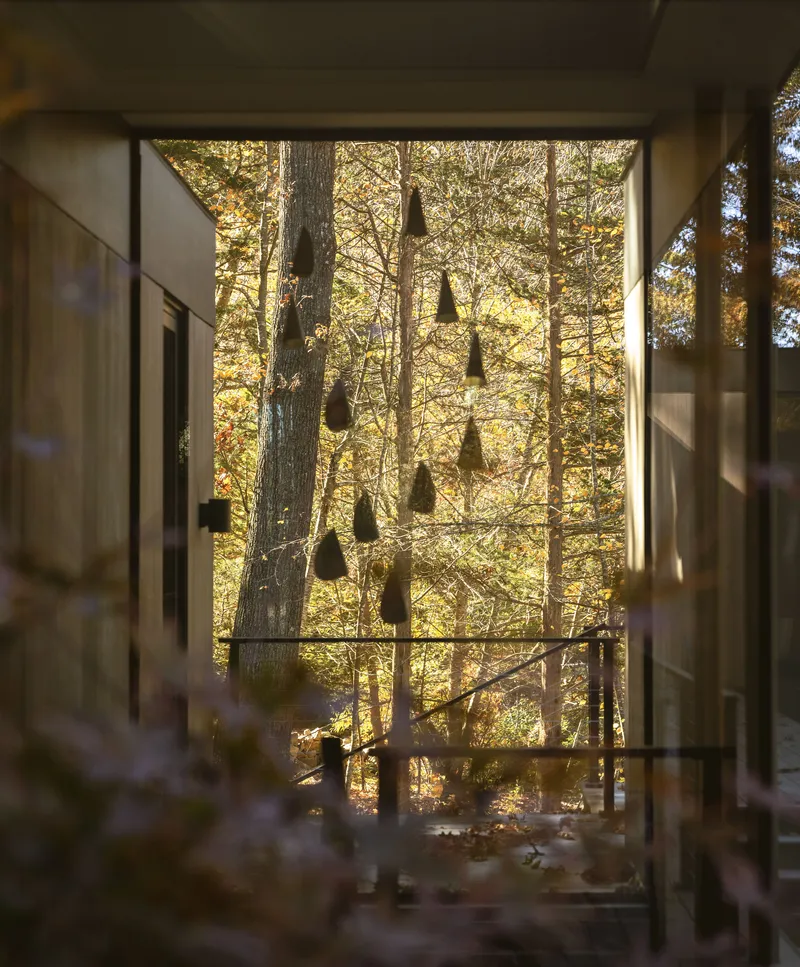
The home's entry sequence is a defining architectural gesture. A long exterior stair slips beneath the guest wing, guiding visitors toward the courtyard and main entrance. From the front door, a direct visual axis extends through the home to the forest beyond, immediately connecting inhabitants with nature.
Windows throughout the house are deliberately calibrated:
- Stepped windows follow the slope of the rear hillside.
- North-facing glazing opens wide frames of the river.
- Bedroom windows highlight specific trees, like the maple outside the primary suite.
- Stair landing windows filter soft, atmospheric light.
Every aperture is designed to capture a distinct moment in the landscape, reinforcing the home’s deep relationship with nature.
Architecture of Restraint
Though built using conventional construction methods, the home achieves elegance through precision and restraint. Dark cedar cladding, grounded concrete retaining walls, and soft interior textures work together to create a sense of effortless harmony with the environment. "House in the Woods" stands as a refined example of contemporary residential architecture rooted in terrain, tranquility, and timeless materiality.
All the photographs are works of Studio Nicholas Venezia




Popular Articles
Popular articles from the community


Play: Fragments of Their World
Familiar architecture becomes modular playground design, creating safe spaces where displaced children can learn, connect, imagine and play.

The Ocean Hive: Sustainable Architecture for a Self-Sufficient Civilization at Sea
The Ocean Hive imagines sustainable architecture at sea, where modular habitats, algae, wave power and ocean waste sustain a growing colony.

Conexión: Biophilic Design Reimagines High-Rise Living in Hong Kong
Conexión reimagines high-rise living in Hong Kong through biophilic design, green facades, shared spaces, daylight, water and nature within.

Riyadh For All: Intergenerational Urban Design for Active Aging in Rabat
Riyadh For All reimagines urban design in Rabat with intergenerational co-living, adaptive courtyards, and Moroccan cultural exchange today.
Similar Reads
You might also enjoy these articles


Hodi-Mandai Geram
Project Function: Preservation and revitalization of the Intangible heritage and socio-spatial identity of the Hodi by Housing, Cultural Memory Center, Sacred Grove, landscape, local tourism economy


Olio Towers: A Mid-Rise for Performers That Fuses Housing, Rehearsal, and Stage
Located blocks from Houston's Theater District, this modular tower stacks living units around a central performance atrium.

Oasis: Modular Green Housing Carved into Dhaka's Urban Fabric
A shortlisted Plugin Housing entry reclaims unauthorized settlements in Dhaka with stepped concrete volumes, green roofs, and ventilation-driven design.

Black Hole: A Floating Megastructure for the Post-Physical Era
Emiliano Mazzarotto envisions a spherical, self-scaling arena where e-sports, digital hotels, and holographic stadiums replace traditional public space.

Explore Tree House Competitions
Discover active competitions in this discipline



Challenge to reimagine the Iron Throne


Photograph architecture without architects


Illustrate the lost glory of Angkor Wat - Render Challenge


Design challenge to reuse E-waste
Comments (0)
Please login or sign up to add comments
No comments yet. Be the first to comment!