
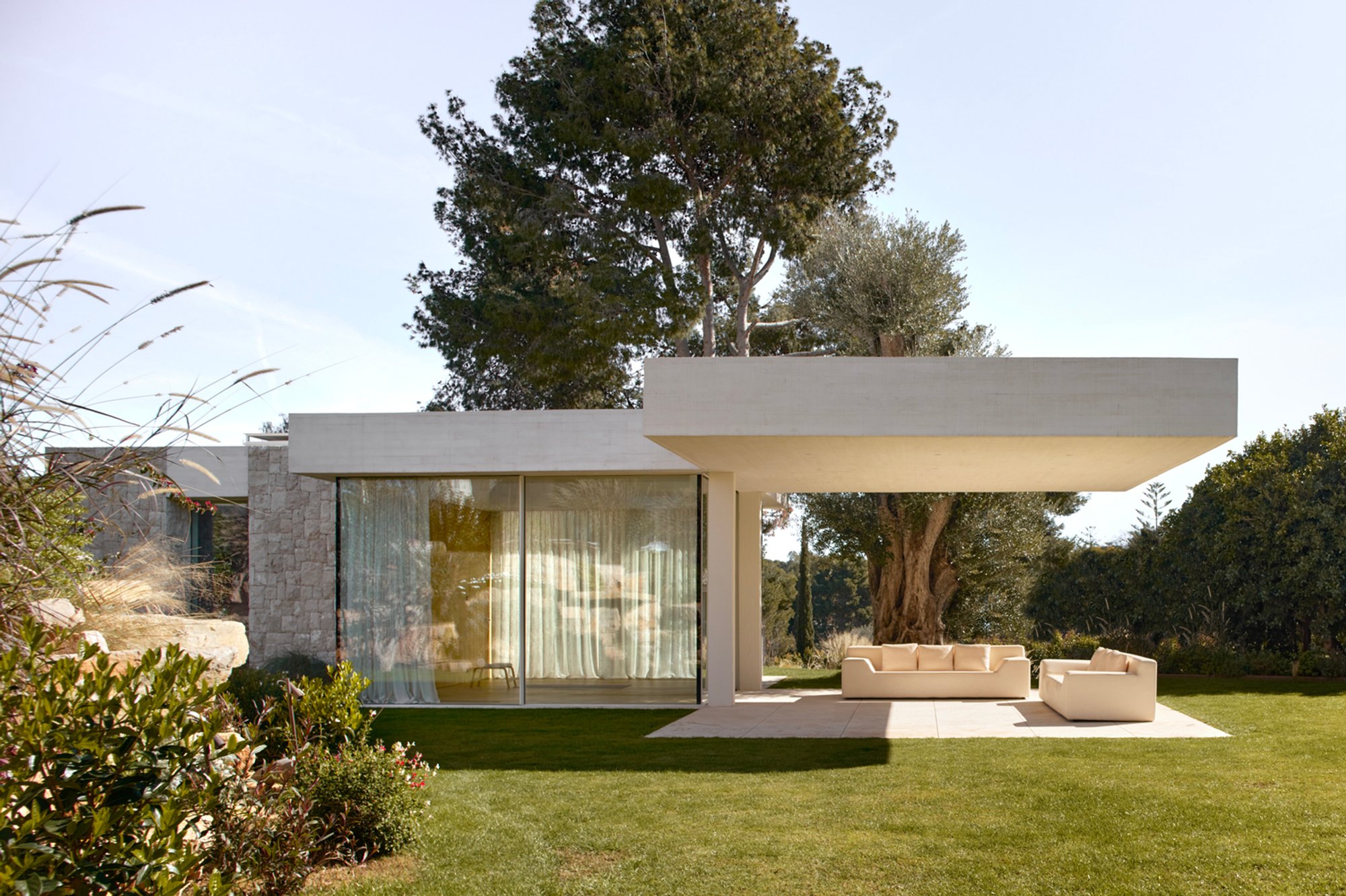
House Jacaranda by Ramón Esteve: A Masterpiece of Contemporary Residential Architecture in Valencia
House Jacaranda by Ramón Esteve in Valencia blends robust stone volumes, luminous interiors, gardens, and pools, creating a sophisticated, contemporary villa.

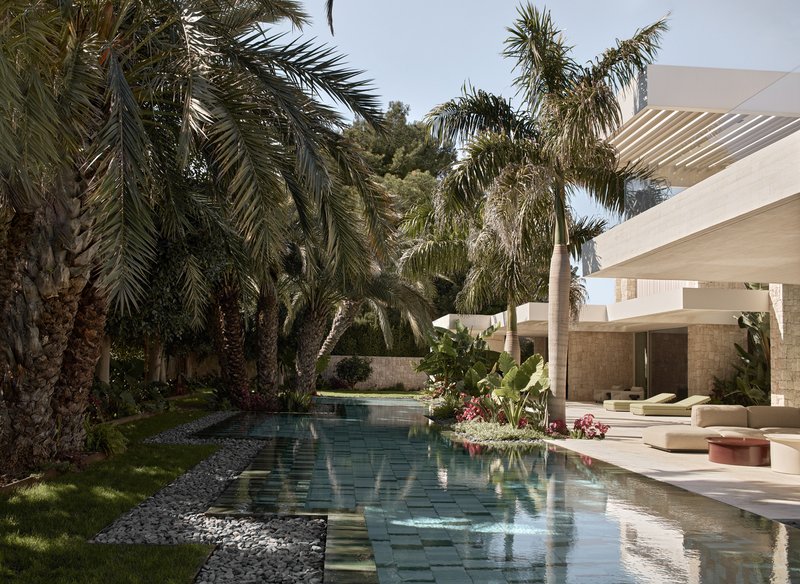
House Jacaranda stands as a striking example of modern residential architecture on the outskirts of Valencia. Designed by renowned architect Ramón Esteve, the villa occupies a plot with excellent geometry and favorable topographical conditions, providing the perfect foundation for a bold architectural statement.
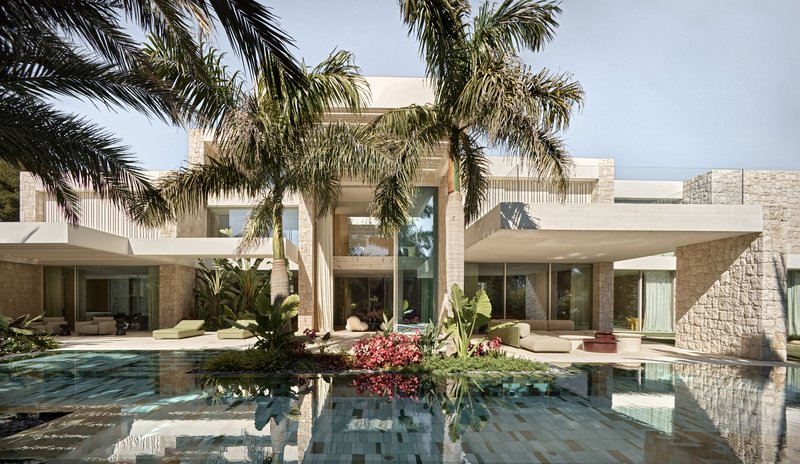
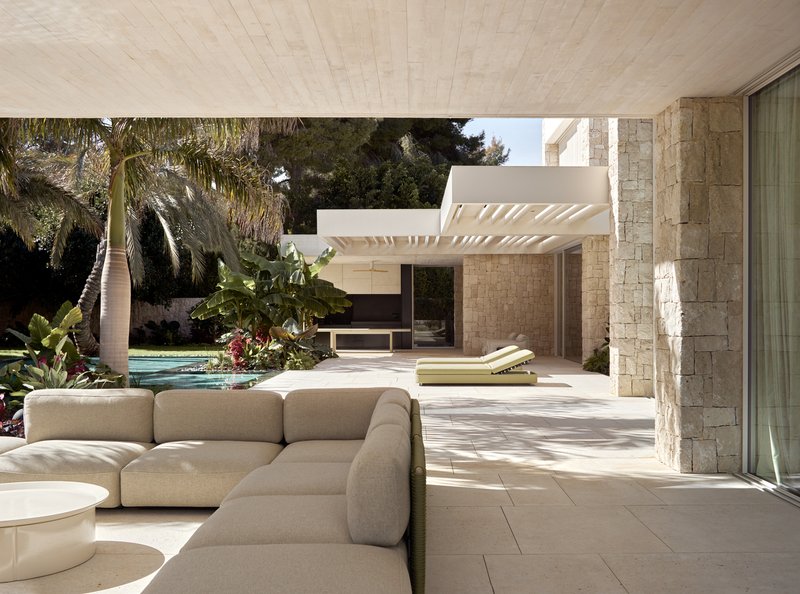
A Fortress of Light and Fluidity
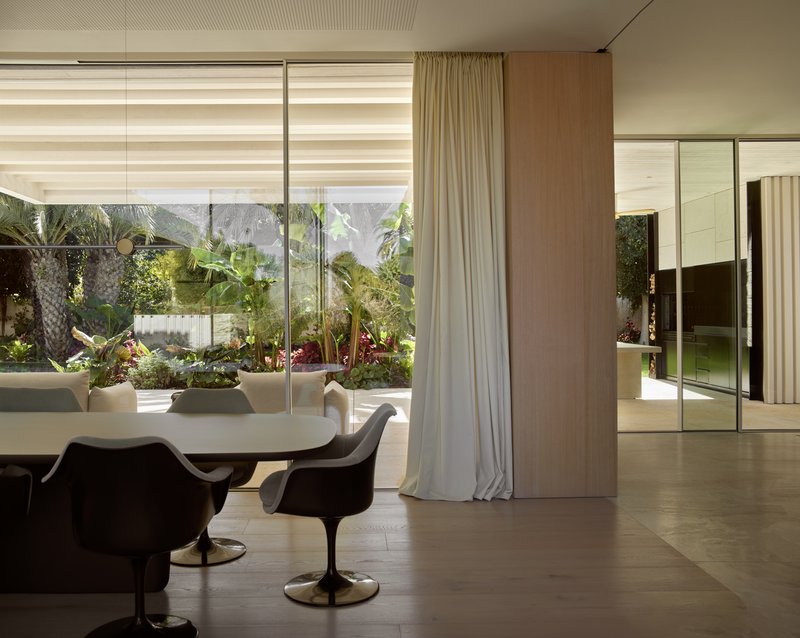
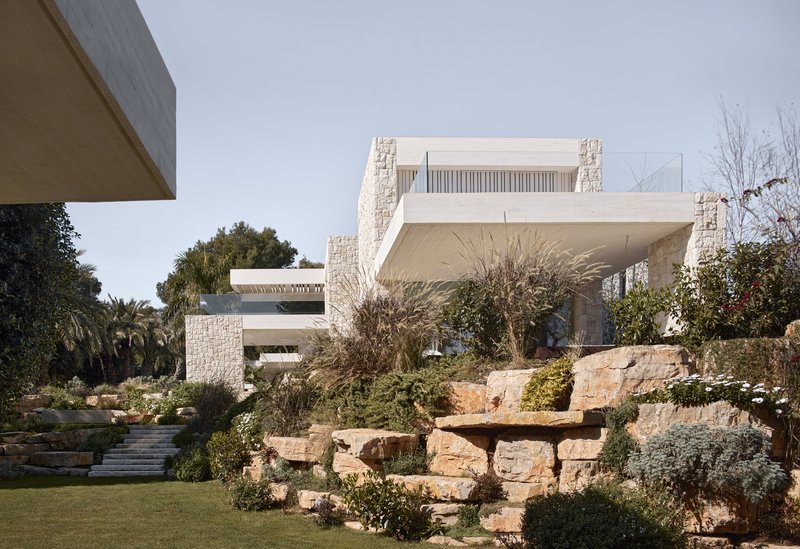
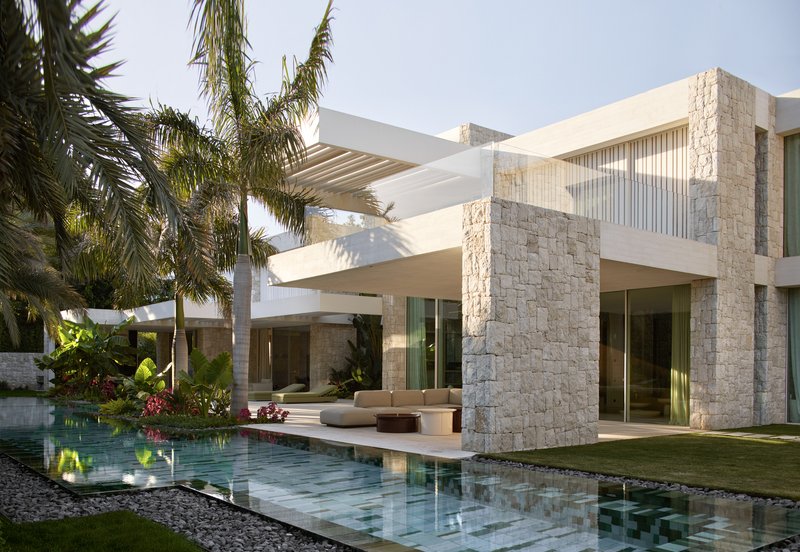
The design of House Jacaranda plays with the contrast between robust exterior forms and luminous interior spaces. The house is conceived as a solid, massive container that envelops a fluid, bright, and airy interior, creating a harmonious interplay of complementary opposites. Its stone volumes extend through large overhangs, stylizing the structure while responding to the varying heights of the villa. This volumetric language gives the home a fortress-like presence while simultaneously offering a refuge of light and tranquility.
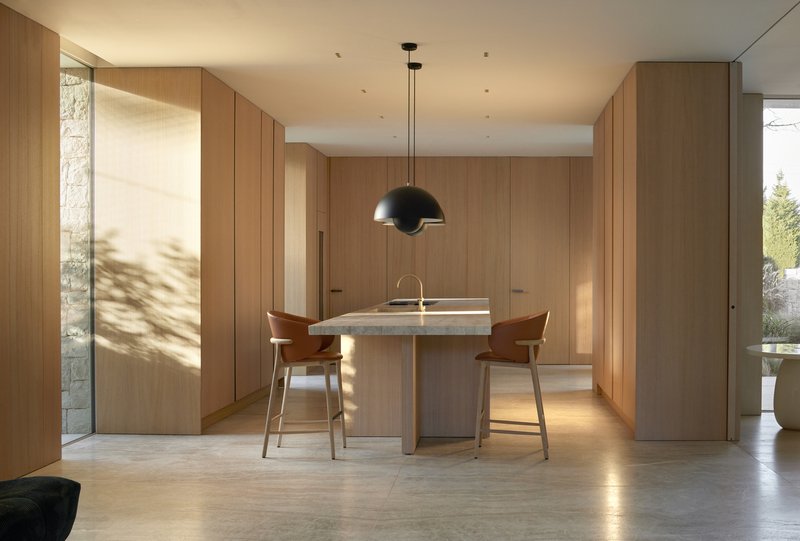
Architectural Composition: Volumes, Courtyards, and Gardens
The villa’s composition is based on interlocking volumes that slide horizontally and vertically, reminiscent of natural stony landscapes. The spatial layout includes a central courtyard that acts as a visual and functional nucleus, connecting different interior spaces while maintaining privacy. Surrounding gardens complement the architecture, providing serene outdoor vistas that integrate seamlessly with the home’s living areas.
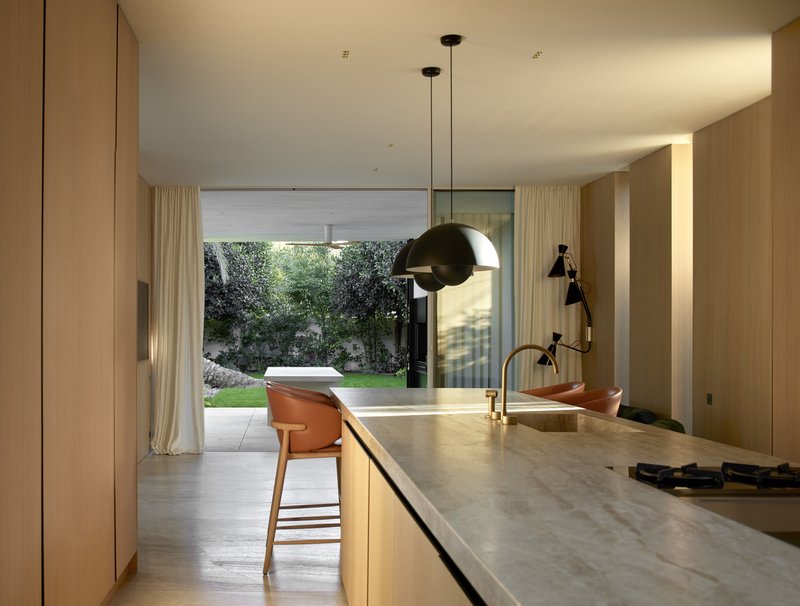
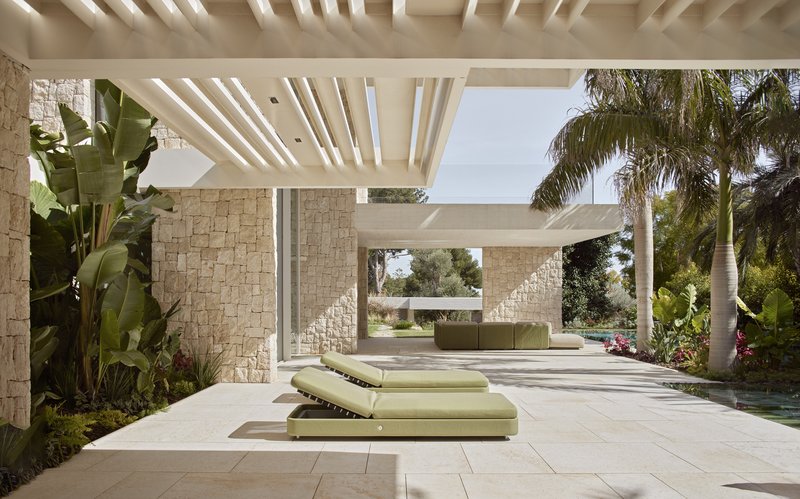
The vertical structural elements are realized in stone masonry walls, providing durability and a sense of permanence. In contrast, the horizontal elements use white concrete and lacquered steel, adding lightness and modernity. Inside, the interiors combine bright wood tones with darker accents, creating a sophisticated and elegant atmosphere.
Interior Layout: Flow, Connectivity, and Luxury
Access to the house is centrally located under a large overhang, leading to a sculptural staircase and elevator core that becomes a focal point visible from multiple spaces. Daytime rooms—living room, dining, and kitchen—are arranged consecutively to maximize visual and spatial continuity, while an indoor pool enhances the sense of fluidity and relaxation.
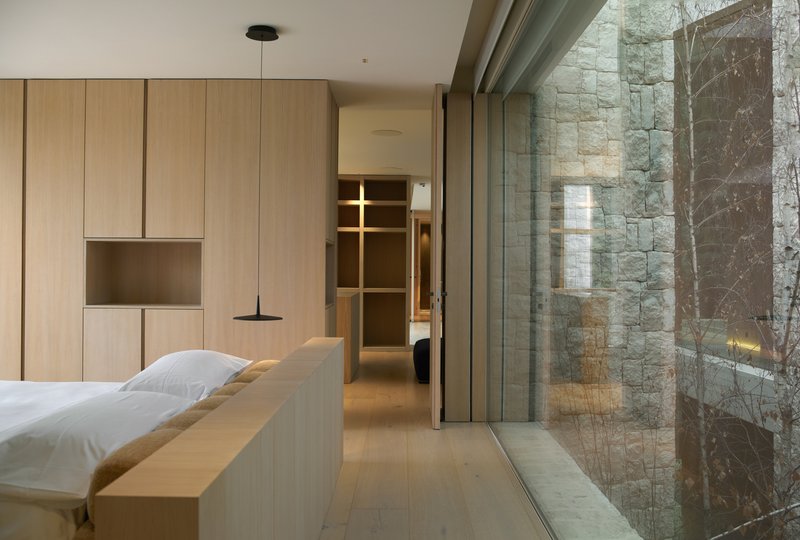
The first-floor bedrooms offer privacy and comfort, while the crowning Miramar floor houses a small study, providing a contemplative space with panoramic views. Outside, a large swimming pool mirrors the garden, visually expanding the property and enhancing the tranquil ambiance.
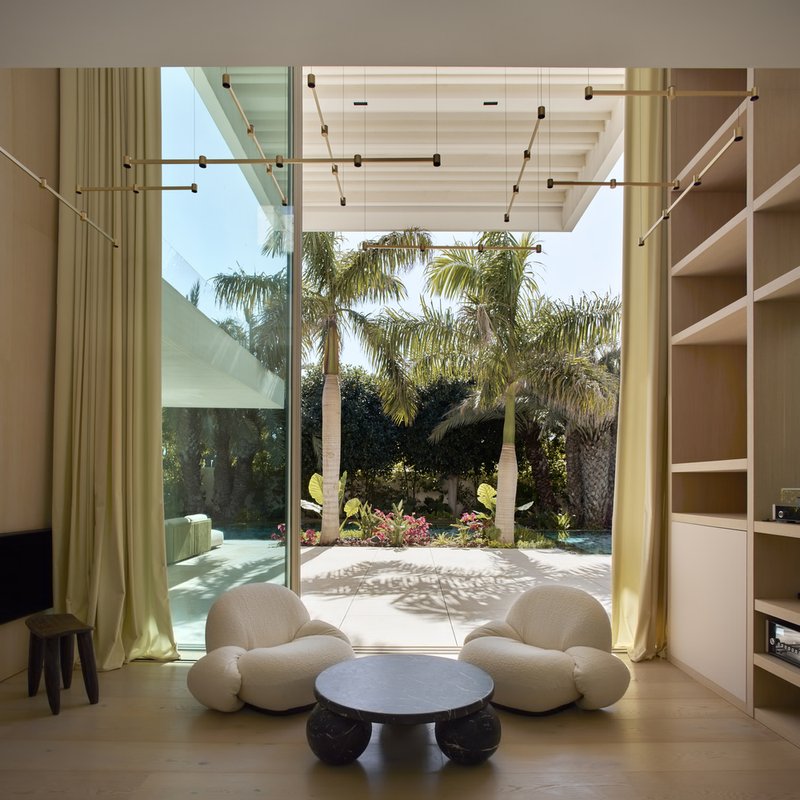
Materials and Design Details
- Exterior: Stone masonry, white concrete, white lacquered steel
- Interior: Bright wood tones, dark accents, natural lighting
- Special Features: Indoor pool, sculptural staircase, central courtyard, Miramar study
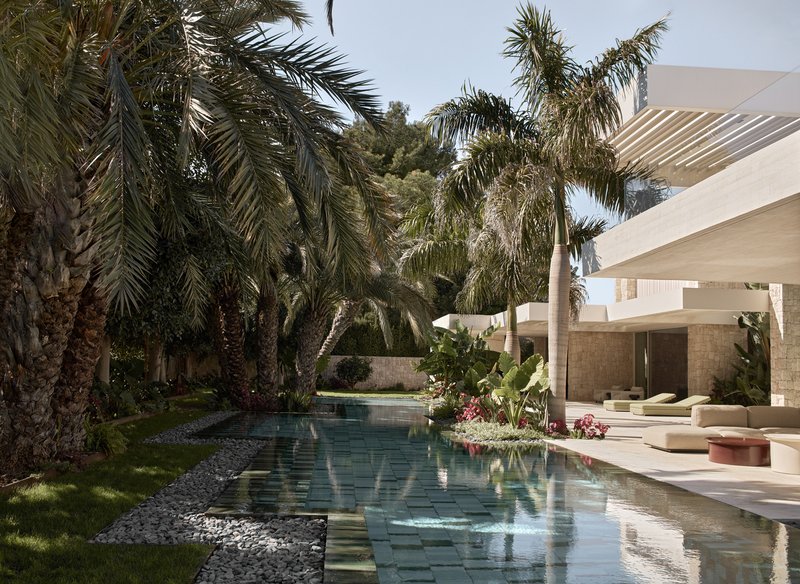
All photographs are works of Mariela Apollonio




Popular Articles
Popular articles from the community

Gads Hill Early Learning Center by JGMA: Adaptive Reuse Shaping Community-Focused Educational Architecture
Adaptive reuse transforms fragmented structure into vibrant early learning center with playful façade, natural light, and community-focused sustainable design.

Solar Steam: A Climate-Responsive Architecture That Redefines the Monument
A climate-responsive memorial architecture that transforms heat, decay, and time into a living system reflecting humanity’s ecological impact.
Fifth NRE Jazz Club – De Bever Architecten: Eindhoven’s Revitalized Cultural Hub
Historic gas factory transformed into Fifth NRE Jazz Club blending modern sustainability, jazz culture, dining, and heritage architecture seamlessly.


The Ken Roberts Memorial Delineation Competition (Krob)
As the most senior architectural drawing competition currently in operation anywhere in the world, it draws hundreds of entries each year, awarding the very best submissions in a series of medium-based categories.


Similar Reads
You might also enjoy these articles
The Ken Roberts Memorial Delineation Competition (Krob)
As the most senior architectural drawing competition currently in operation anywhere in the world, it draws hundreds of entries each year, awarding the very best submissions in a series of medium-based categories.


Waterfront Redevelopment and Urban Revitalization in Mumbai: Forging a New Dawn for Darukhana
A transformative waterfront redevelopment project reimagining Darukhana’s shipbreaking heritage into an inclusive urban future.

OUT-OF-MAP: A Call for Postcards on Feminist Narratives of Public Space
Rhizoma Design and Research Lab invites artists, designers, architects, researchers, and students to reflect on how feminist perspectives can reshape public space. Selected works will be exhibited in Barcelona, October 2026. Submissions open until 15 April 2026.


Documentation Work on Buddhist Wooden Temple
Architectural syncretism and cultural hybridity: A comparative study of the Buddhist temples in Chattogram Hill tracks


Explore Architecture Competitions
Discover active competitions in this discipline




The International Standard for Design Portfolios


The Global Benchmark for Architecture Dissertation Awards


The Global Benchmark for Graduation Excellence


Challenge to reimagine the Iron Throne
Comments (0)
Please login or sign up to add comments
No comments yet. Be the first to comment!