
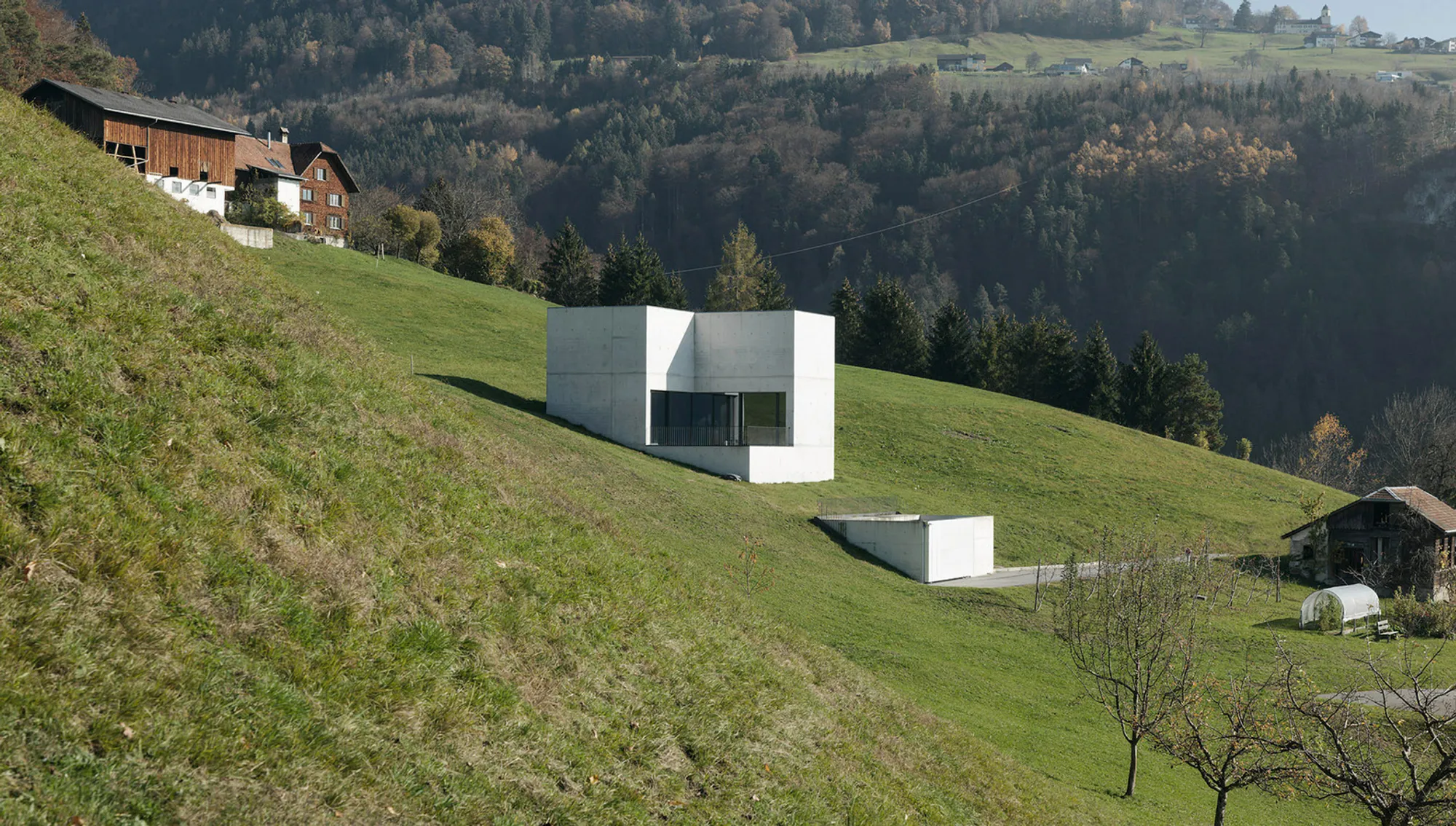
House of Chambers by Marte.Marte Architects – A Minimalist Concrete Sculpture in the Austrian Alps
House of Chambers by Marte.Marte Architects blends concrete minimalism and geometric precision, embedding a sculptural hillside residence into Austria’s alpine landscape.


Perched dramatically on a steep hillside in Weiler, Austria, the House of Chambers by Marte.Marte Architects is more than a residence—it is a monolithic spatial sculpture that fuses raw geometry with poetic philosophy. Completed in 2020 with a total built area of 185 m², the project reveals how a bold architectural gesture can engage with topography while challenging conventional ideas of hillside living.
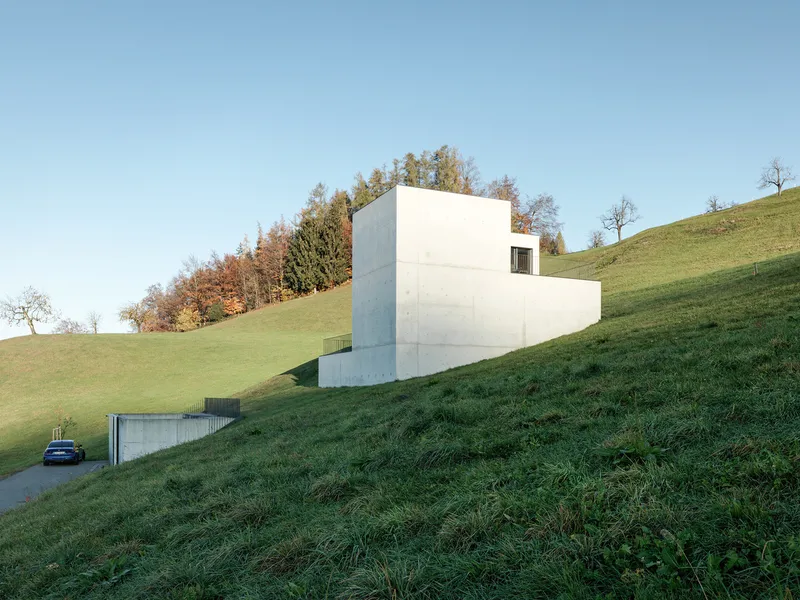
A House Embedded in the Landscape
Positioned along the northeast edge of the settlement, the House of Chambers overlooks the Rhine Valley, offering breathtaking panoramic views. Instead of following the typical hillside strategies of terraced gardens, retaining walls, or sculpted landscaping, the architects adopt a radical minimalism: a cube and a courtyard. Together, these two primary forms carve their way into the slope, creating a harmonious dialogue between built structure and alpine meadow.
From the outside, the building appears austere, almost fortress-like. Yet, a diagonal incision across the facade opens the house to natural light and expansive views, establishing a carefully choreographed connection between interior life and the surrounding valley.
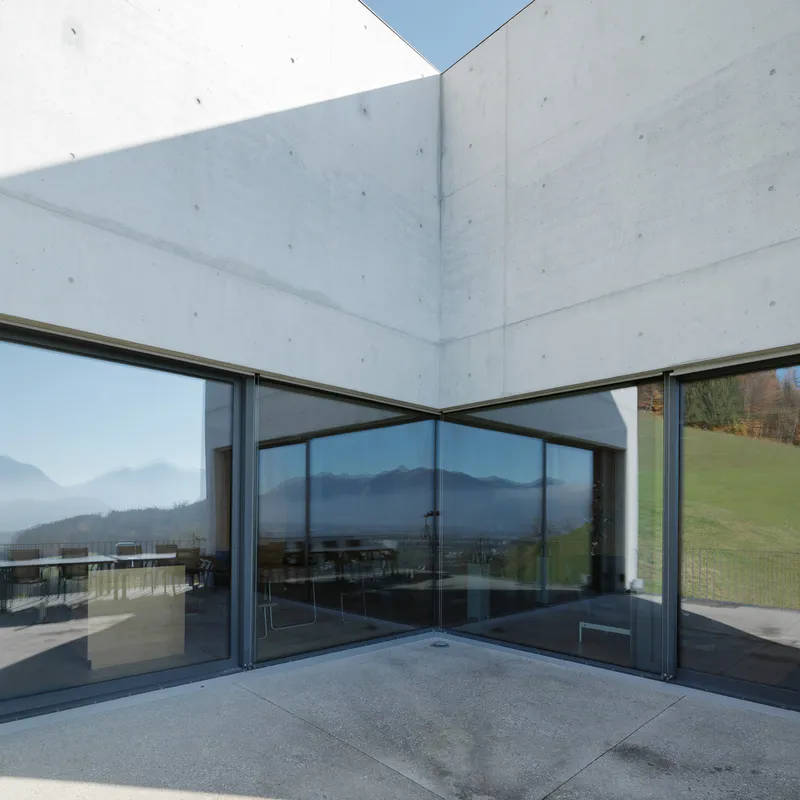
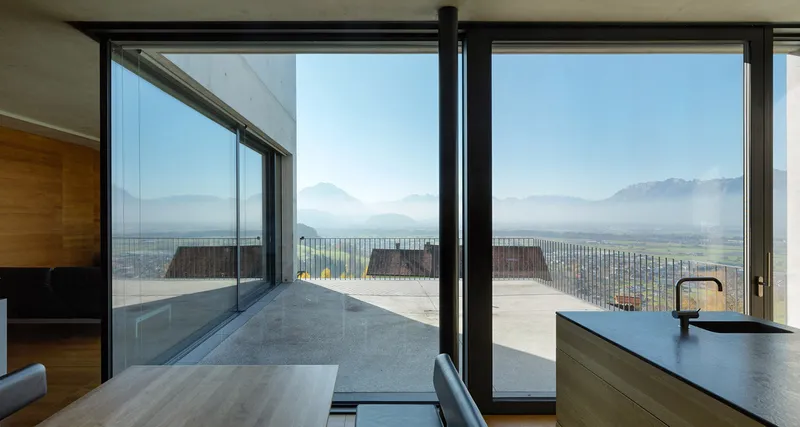
Concrete Minimalism with Spatial Precision
Constructed entirely in exposed concrete, the house maintains a striking purity of form. The plan is derived from a square divided into four quadrants: three enclosed volumes and one southwest-facing terrace. This composition maximizes sunlight and views, while simultaneously preserving a sense of enclosure and intimacy.
- Living Spaces: Positioned on the first above-ground level, the open-plan living area captures afternoon and evening light.
- Private Chambers: The upper level houses the bedrooms, oriented northeast around a second terrace. Here, geometry defines relationships—two chambers meet at the “zero” line of the z-axis, linked not structurally but visually through full-height windows and doors.
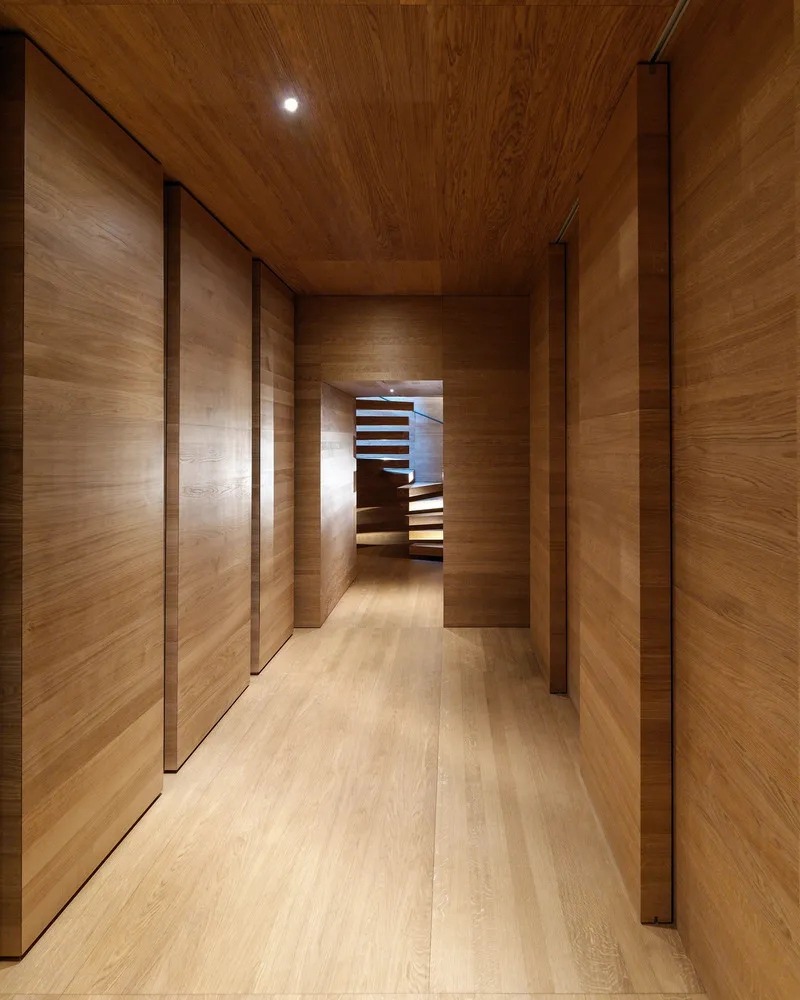
- Wellness & Entry: At street level, a sauna and wellness zone are tucked discreetly behind a wood-paneled courtyard. A reflecting pool welcomes visitors into the elevated entrance court, where cars and guests descend underground, concealed by the hillside itself.
Architecture as Poetic Geometry
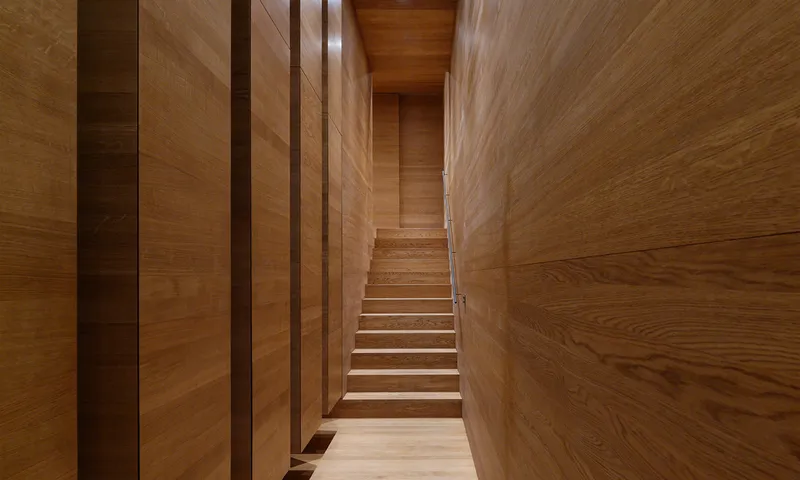
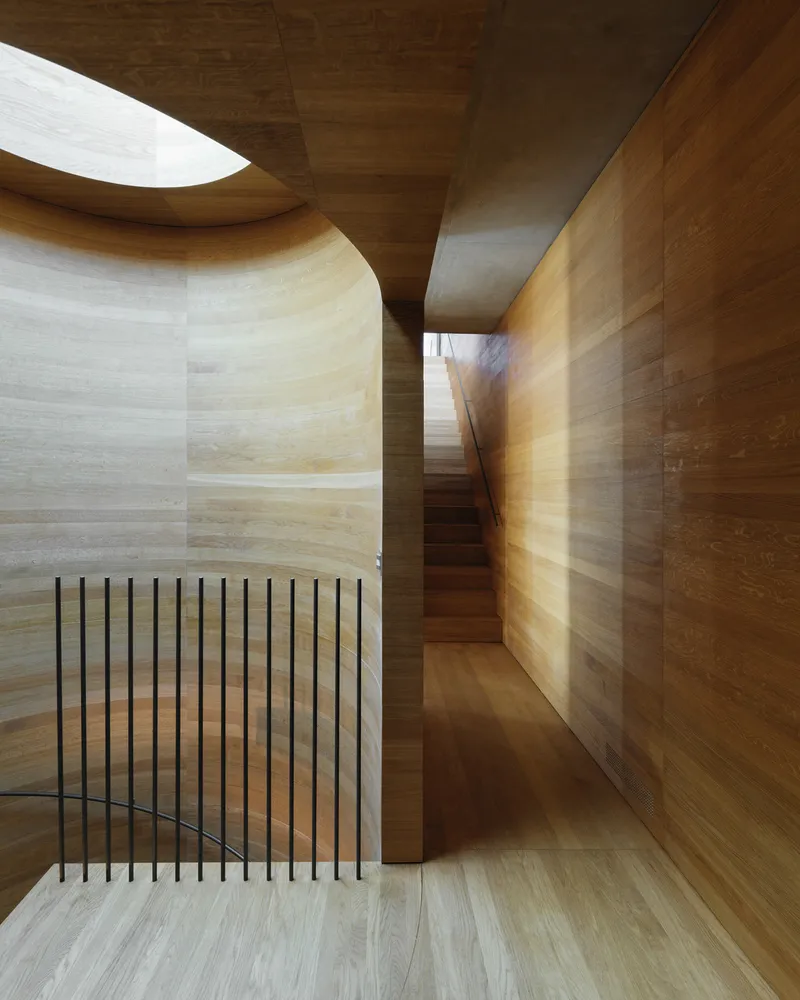
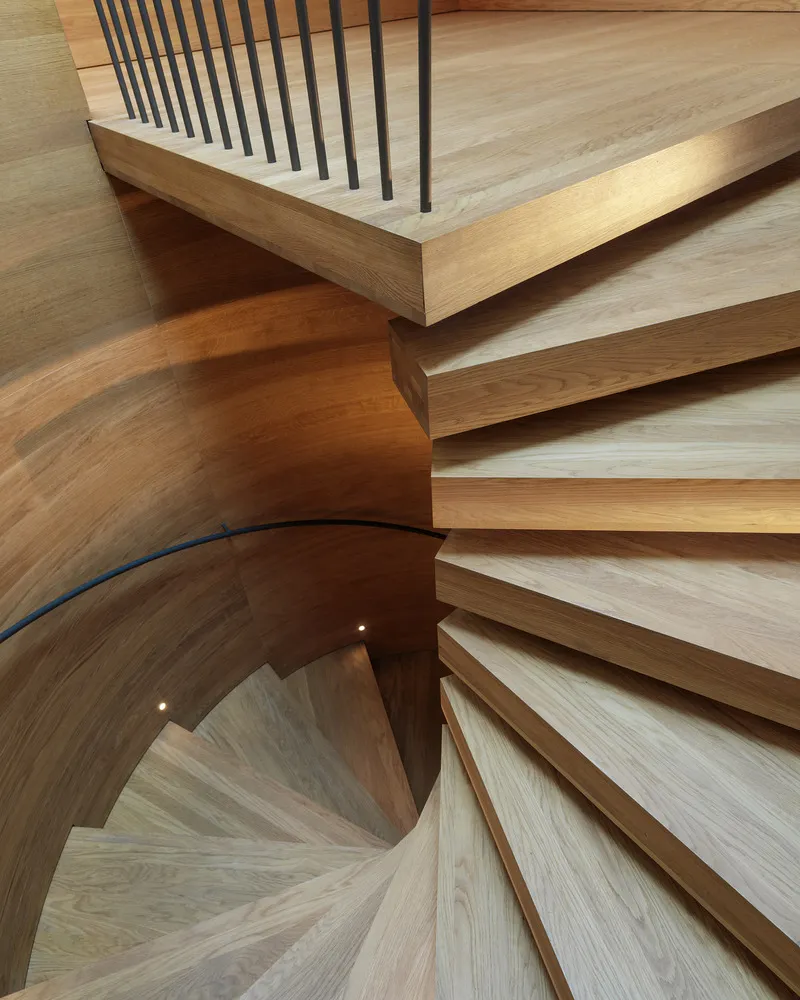
Circulation through the house unfolds as a spatial journey. A combination of spiral and single-flight staircases guides residents diagonally across the building, highlighting the symmetry and sculptural nature of the concrete forms. Skylights and small light wells punctuate these routes, flooding stairwells with natural light and reinforcing the play of geometry, purism, and lightness.
The House of Chambers achieves a dialectical balance between raw materiality and refined spatial thinking. By reducing the project to elemental forms—a cube and a courtyard—Marte.Marte Architects deliver a powerful counter-argument to conventional hillside architecture. The result is a house that is both fortress-like and poetic, minimalist and monumental.
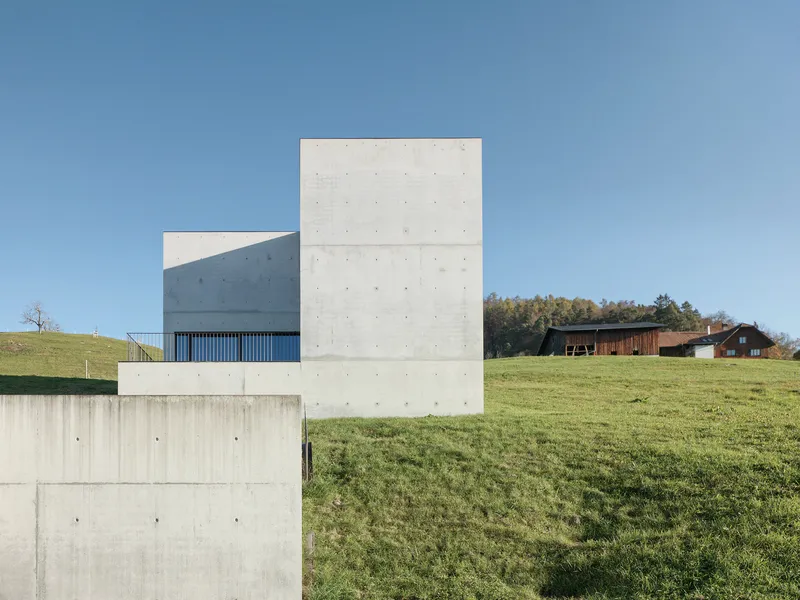
All Photographs are works of Paul Ott



Popular Articles
Popular articles from the community


The Earth Pod: 3D Printed Homes for Resilient Refugee Communities
The Earth Pod reimagines refugee housing through 3D printed homes made from clay, combining resilience, self-sufficiency, and rapid shelter.

Conexión: Biophilic Design Reimagines High-Rise Living in Hong Kong
Conexión reimagines high-rise living in Hong Kong through biophilic design, green facades, shared spaces, daylight, water and nature within.

Hill & Cross Opera: Sculptural Opera House Architecture Shaped by Tallinn’s Landscape and Identity
Hill & Cross Opera reimagines opera house architecture in Tallinn through its sculptural hill, civic plaza, glass wave and a luminous cross.

The Musturak Paradise: Senior Living Architecture for a Connected Future in Temara, Morocco
The Musturak Paradise reimagines senior living architecture in Temara via private homes, social spaces, culture, community, and shared care.


Similar Reads
You might also enjoy these articles


Hodi-Mandai Geram
Project Function: Preservation and revitalization of the Intangible heritage and socio-spatial identity of the Hodi by Housing, Cultural Memory Center, Sacred Grove, landscape, local tourism economy


Olio Towers: A Mid-Rise for Performers That Fuses Housing, Rehearsal, and Stage
Located blocks from Houston's Theater District, this modular tower stacks living units around a central performance atrium.

Oasis: Modular Green Housing Carved into Dhaka's Urban Fabric
A shortlisted Plugin Housing entry reclaims unauthorized settlements in Dhaka with stepped concrete volumes, green roofs, and ventilation-driven design.

Black Hole: A Floating Megastructure for the Post-Physical Era
Emiliano Mazzarotto envisions a spherical, self-scaling arena where e-sports, digital hotels, and holographic stadiums replace traditional public space.


Explore Architecture Competitions
Discover active competitions in this discipline



Challenge to reimagine the Iron Throne


Photograph architecture without architects


Illustrate the lost glory of Angkor Wat - Render Challenge


Design challenge to reuse E-waste
Comments (0)
Please login or sign up to add comments
No comments yet. Be the first to comment!