
House on the Sand: A Coastal Modern House Design Rooted in the Landscape of Guincho
A bold, nature-integrated home in Guincho by ARX Portugal Arquitectos, redefining coastal modern house design through topographic fusion.


A Fusion of Coastal Identity and Contemporary Form
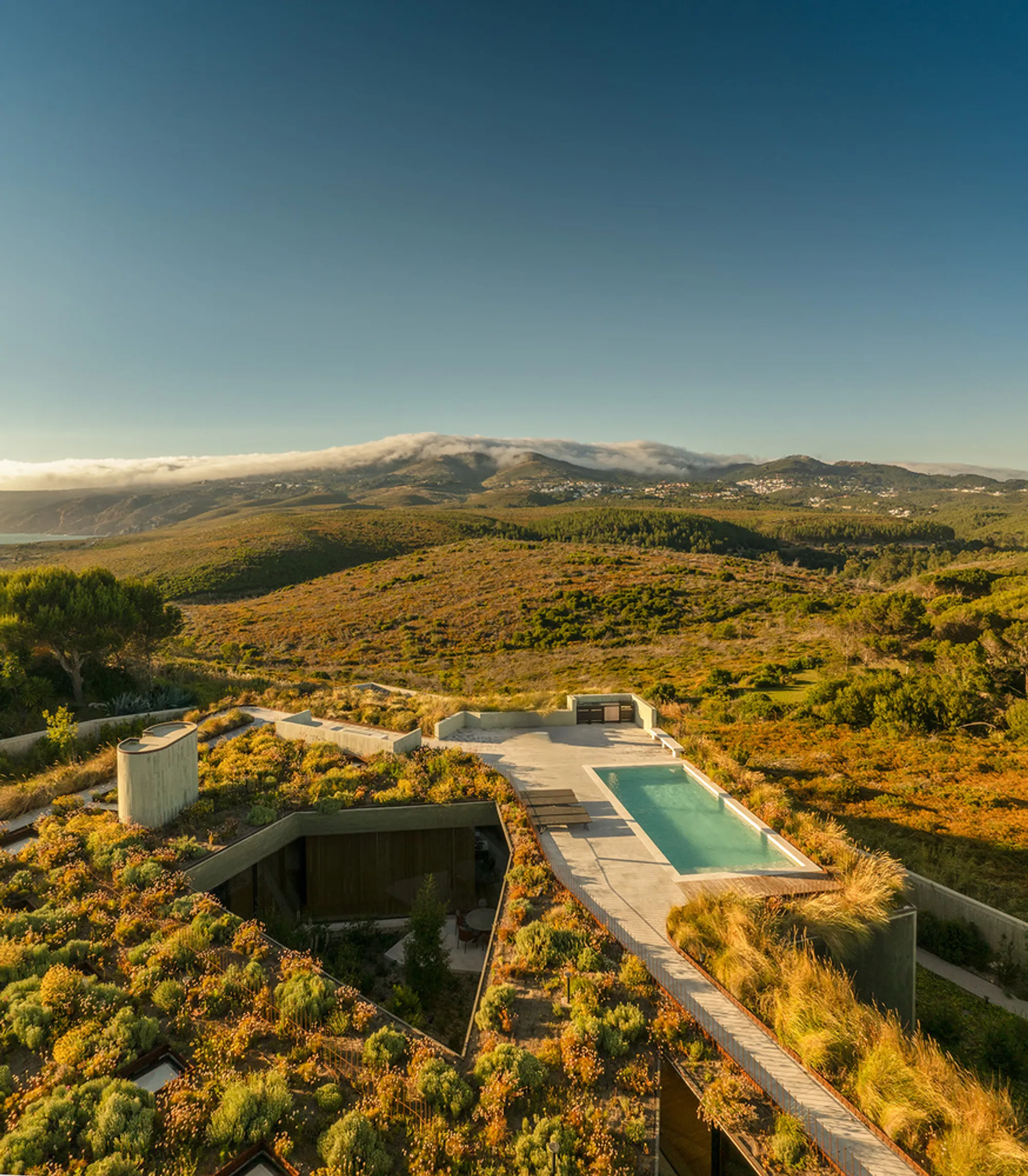
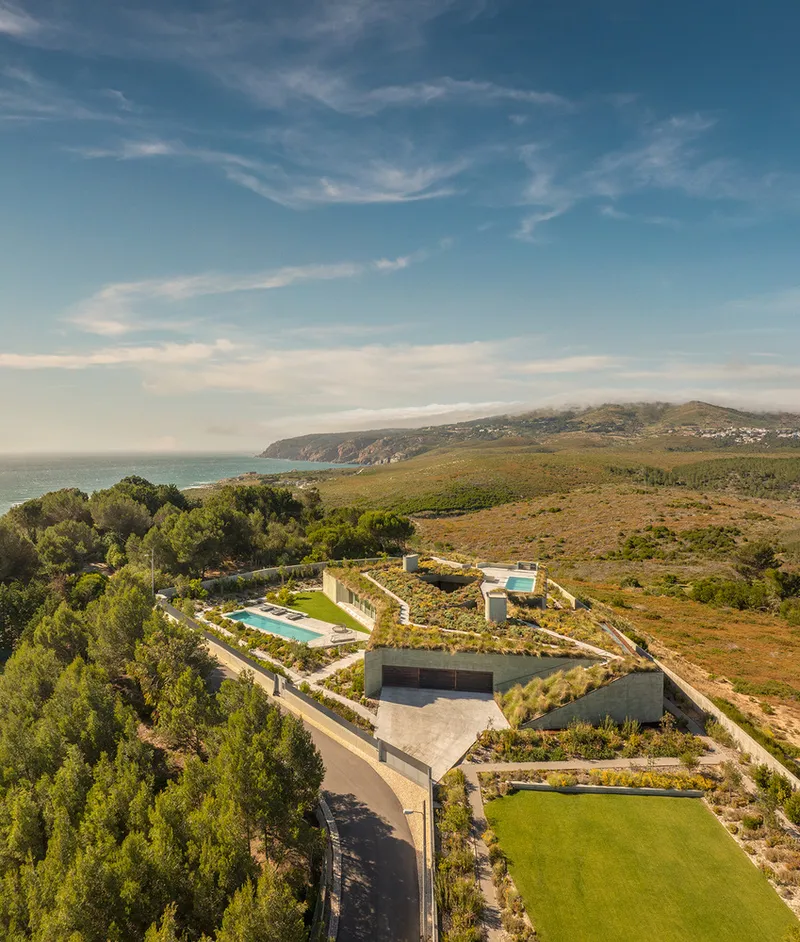
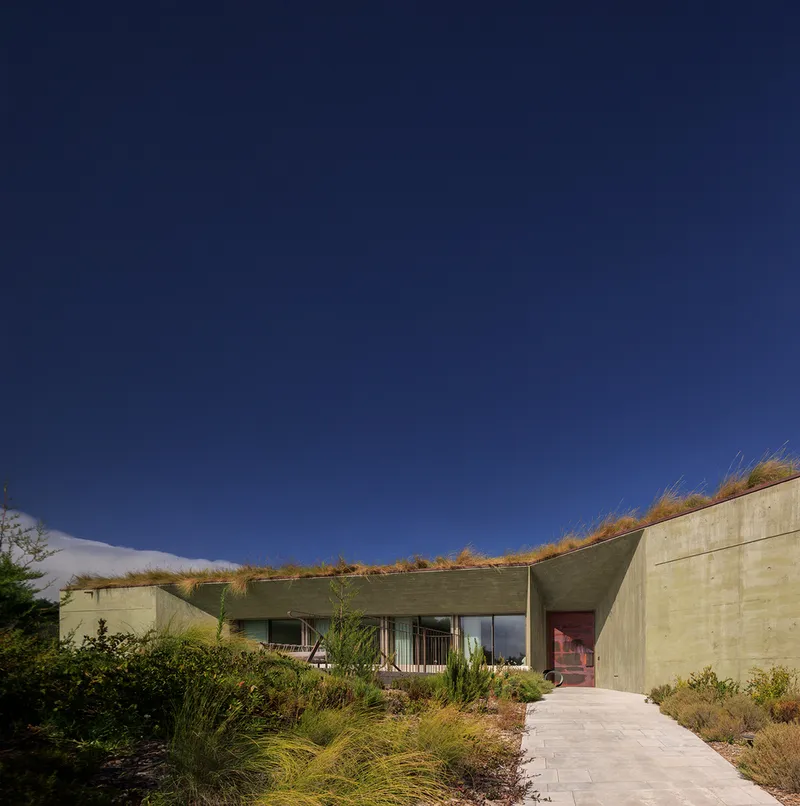
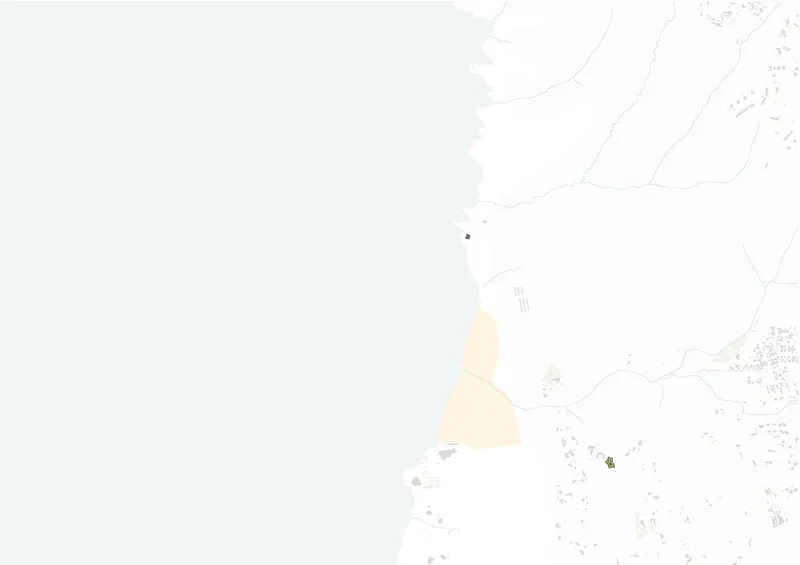
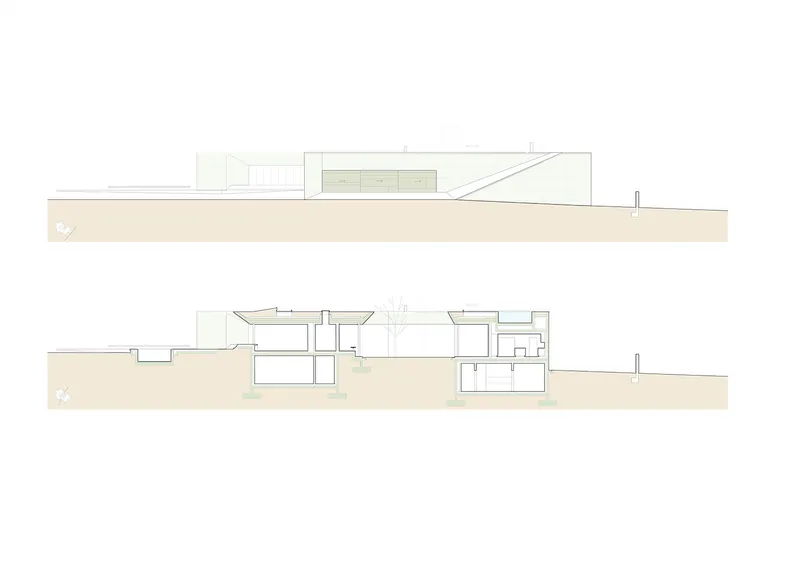
Situated on the windswept coast of Guincho in Cascais, Portugal, the House on the Sand by ARX Portugal Arquitectos exemplifies a bold expression of coastal modern house design. Perched halfway up a hillside and deeply embedded within its terrain, the residence is a sculptural volume that reflects both the physical topography and historical symbolism of the region.

The 1200-square-meter home, designed by lead architect Nuno Mateus, draws conceptual and visual references from the coastal defense structures scattered throughout the Portuguese coastline—forts, bastions, and ancient watchtowers that once defined a close relationship between land and sea. In this modern reinterpretation, the house acts as a contemporary sentinel, maintaining a strong visual dominance over the surrounding landscape while remaining grounded in its site.
Architecture as Topography: Symbiosis, Not Invasion
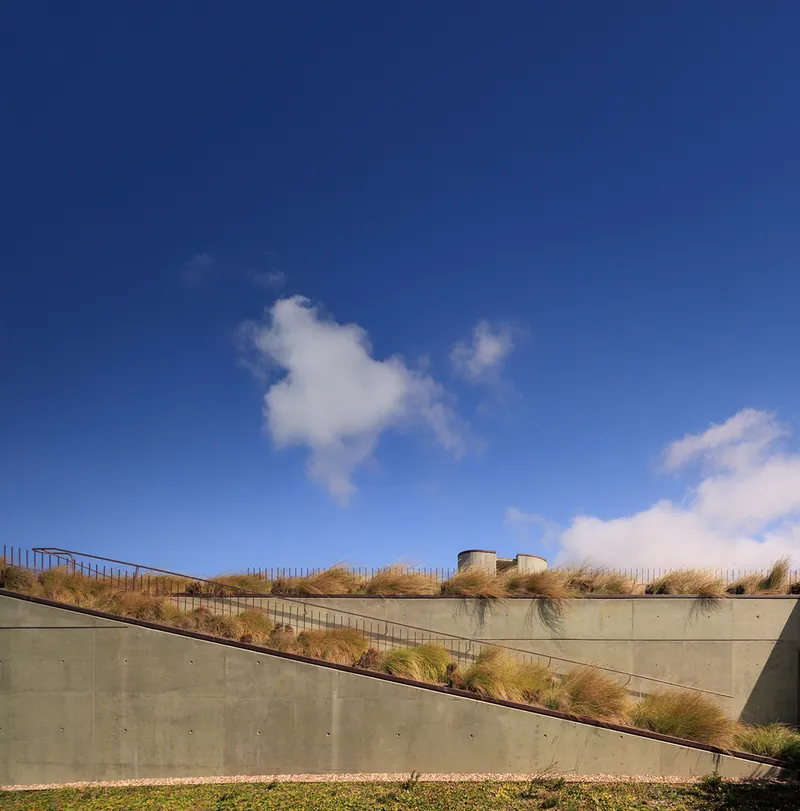
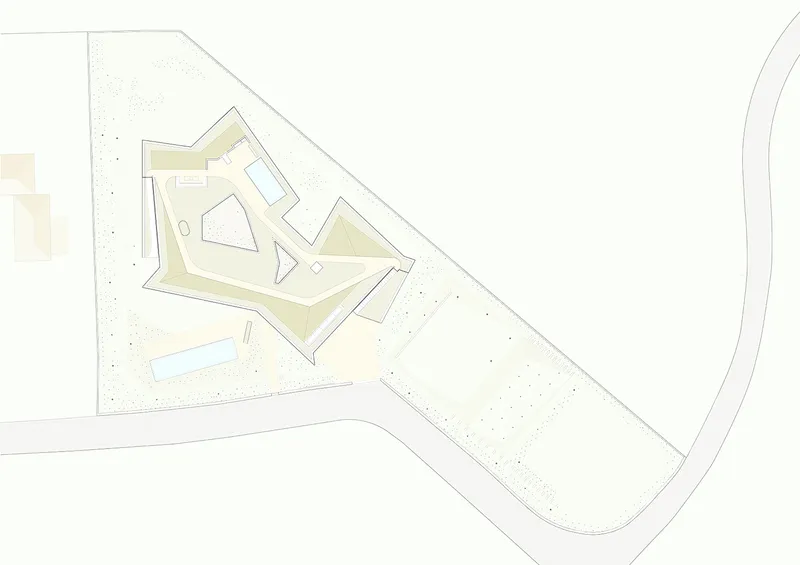
Breaking away from traditional notions of residential architecture, the House on the Sand is not an object placed upon the land but one formed by it. Its polyfaceted, star-like geometry emerges from the terrain in a sculptural composition of exposed concrete pigmented green, echoing the earthy palette of the natural surroundings. This architectural strategy ensures the house blends with the land rather than disrupts it, forming a symbiotic relationship that anchors the structure in place both visually and physically.
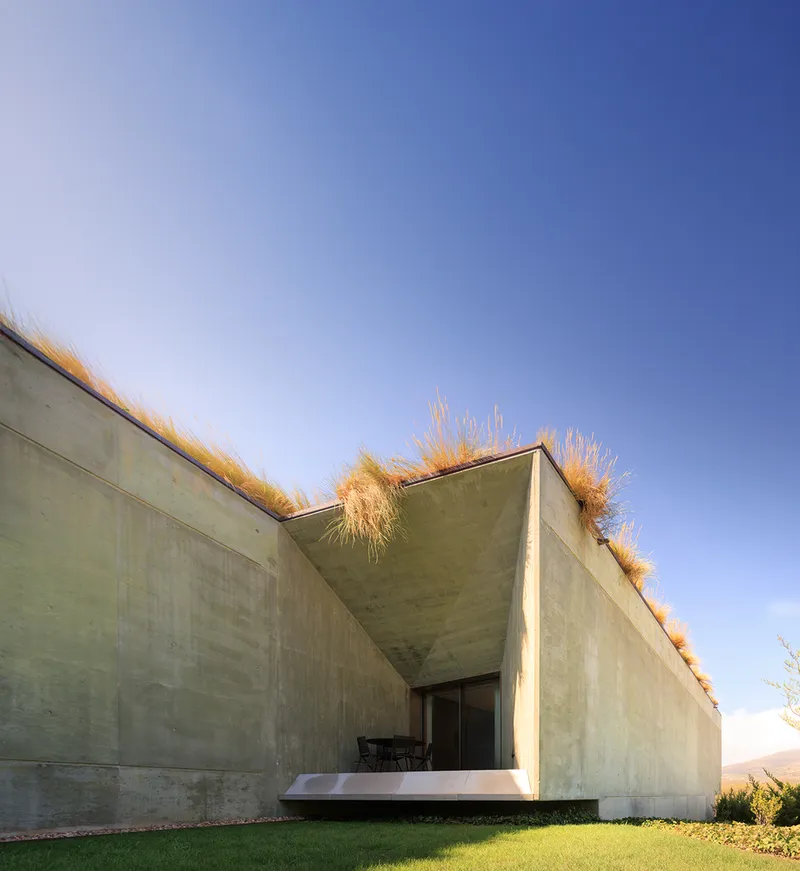
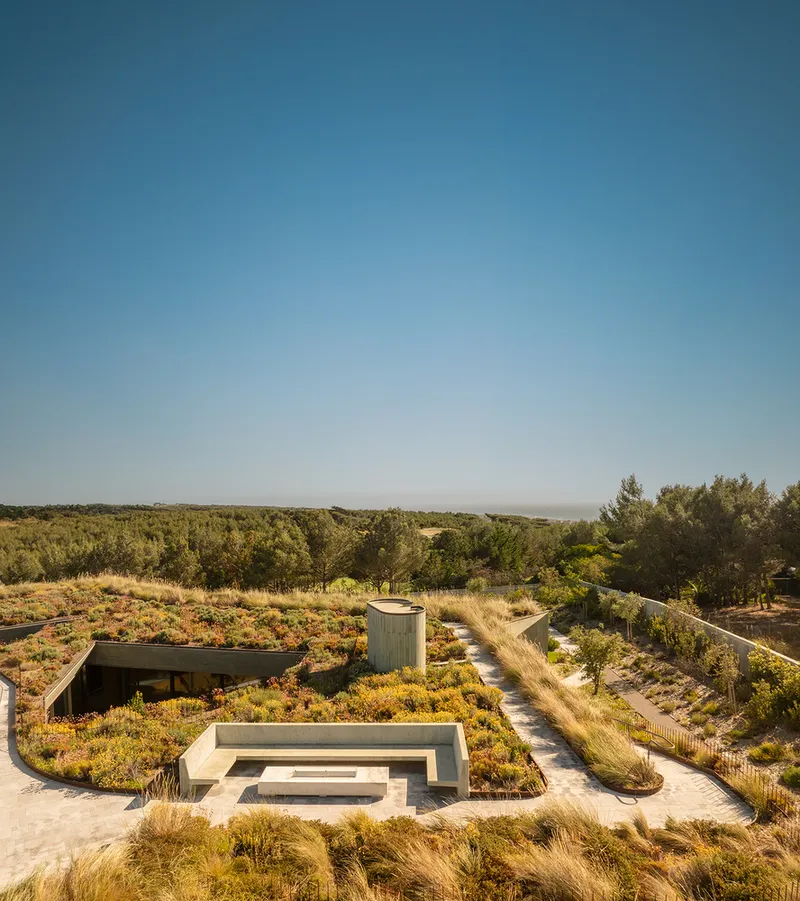

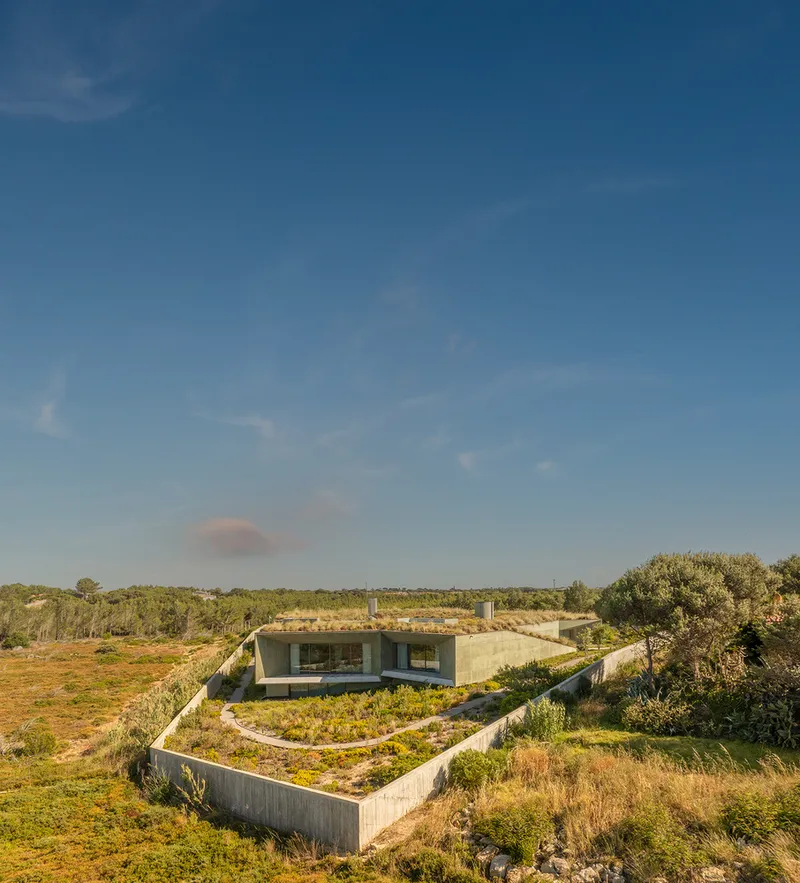
This grounded expression is reinforced by a landscaped roof that functions as an extension of the terrain. From an aerial perspective, the home appears as a natural landform, nearly imperceptible within the wider ecological context. It not only amplifies the home's discreet integration but also offers a usable outdoor space with expansive views over the dramatic coastline.
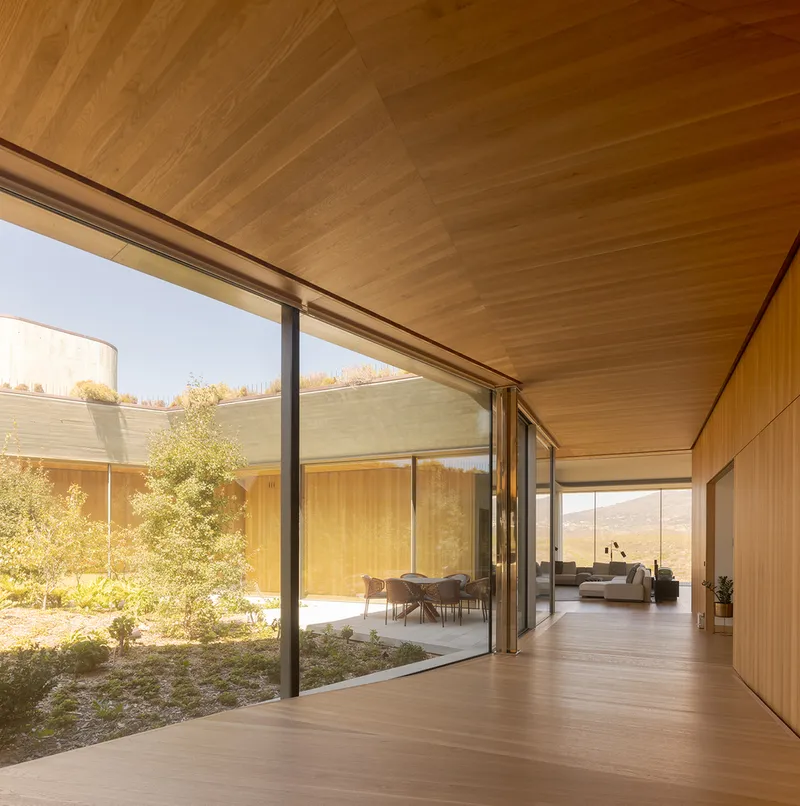
Courtyard Living in Coastal Modern House Design
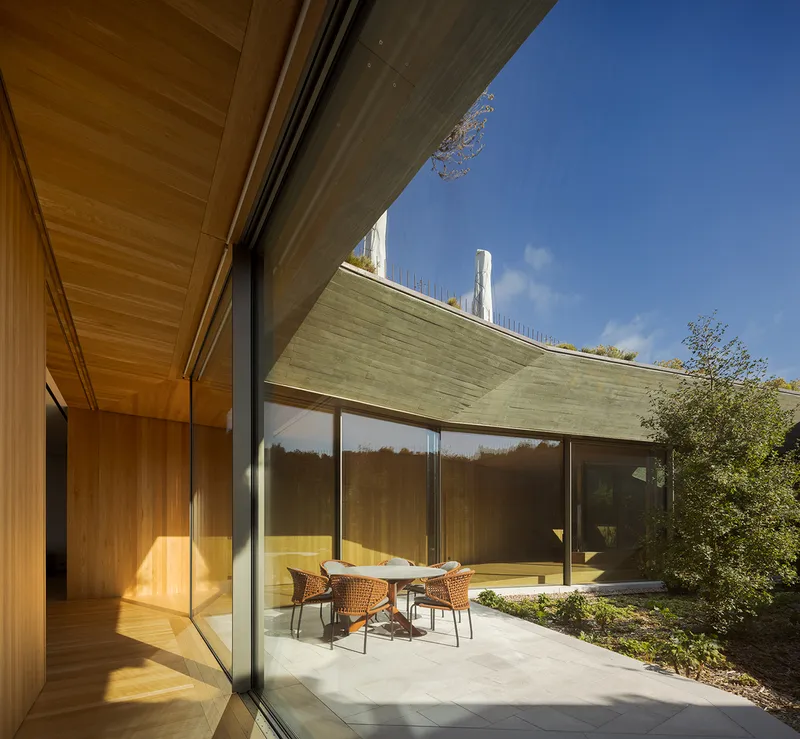
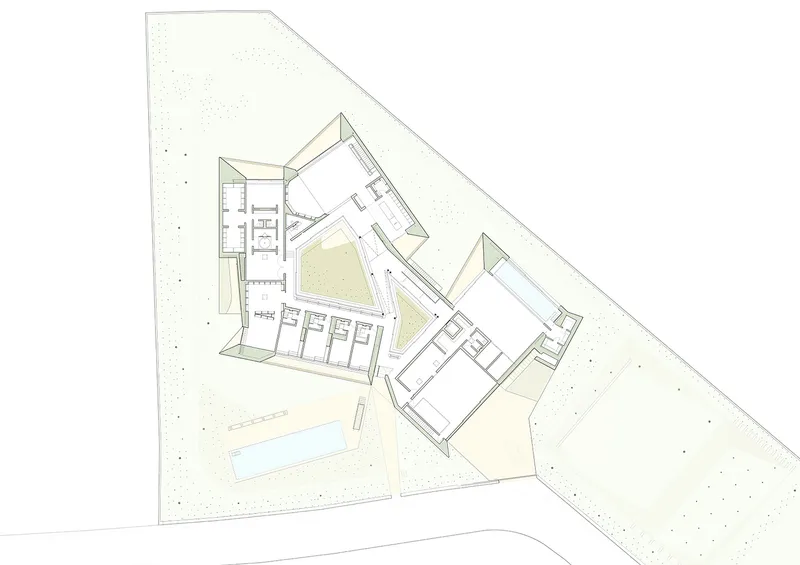
One of the defining features of the House on the Sand is its introspective approach to spatial organization. In response to Guincho's extreme weather conditions, the building’s mass is excavated from within, forming two large internal courtyards that serve as the spatial and emotional heart of the house. These protected voids allow nature to infiltrate the home, providing natural light, ventilation, and moments of calm in an otherwise rugged environment.
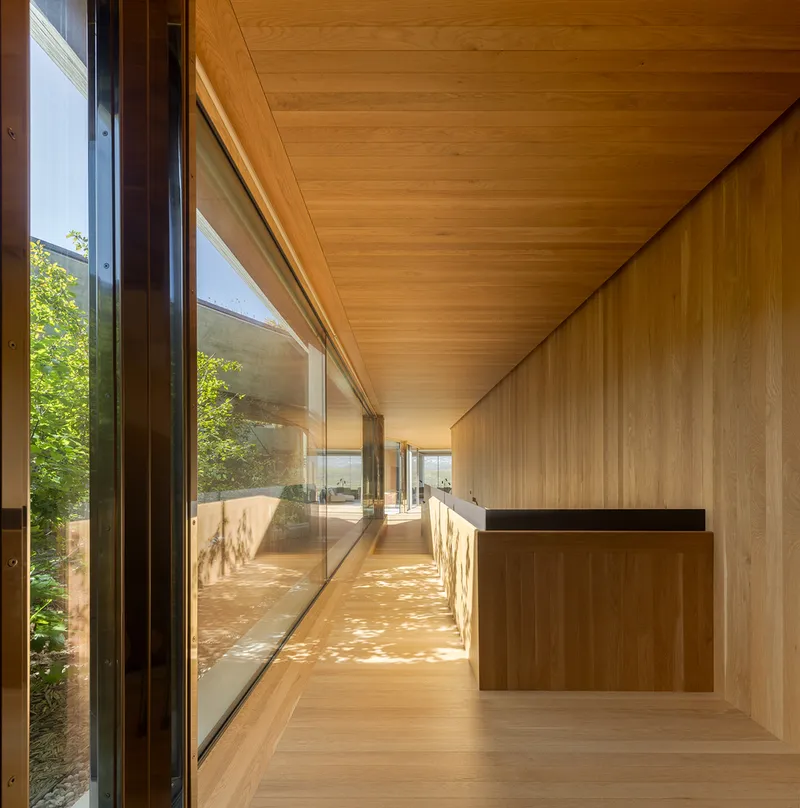
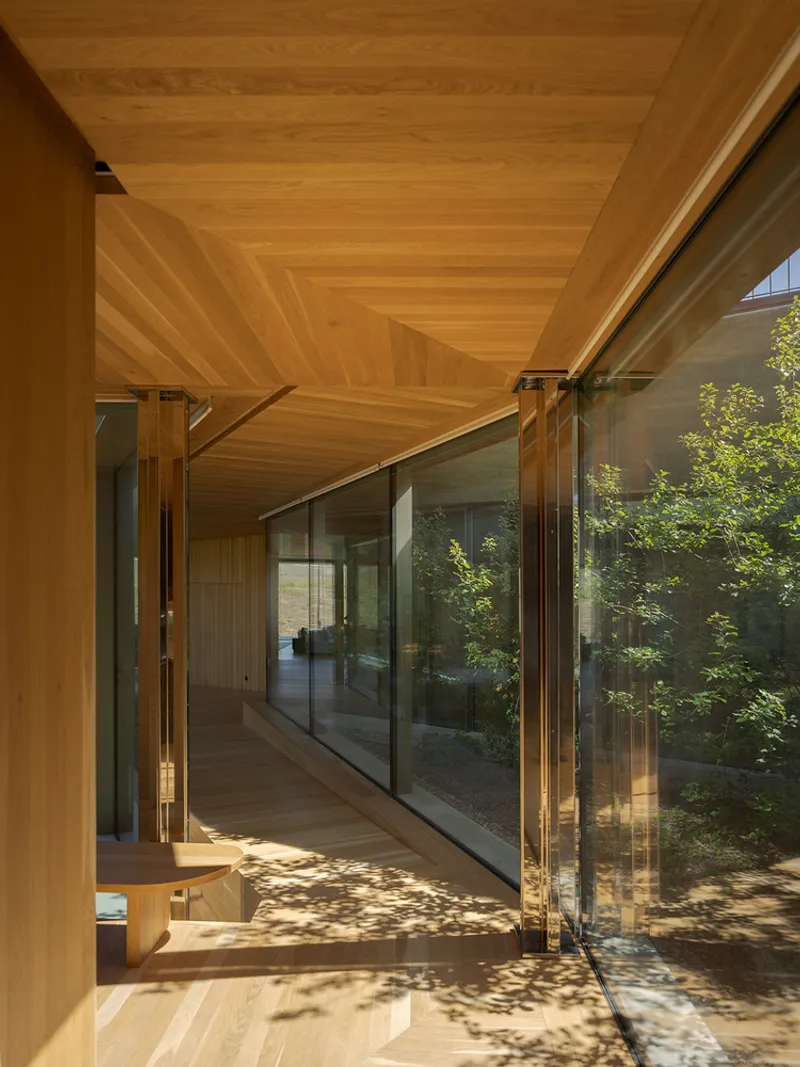
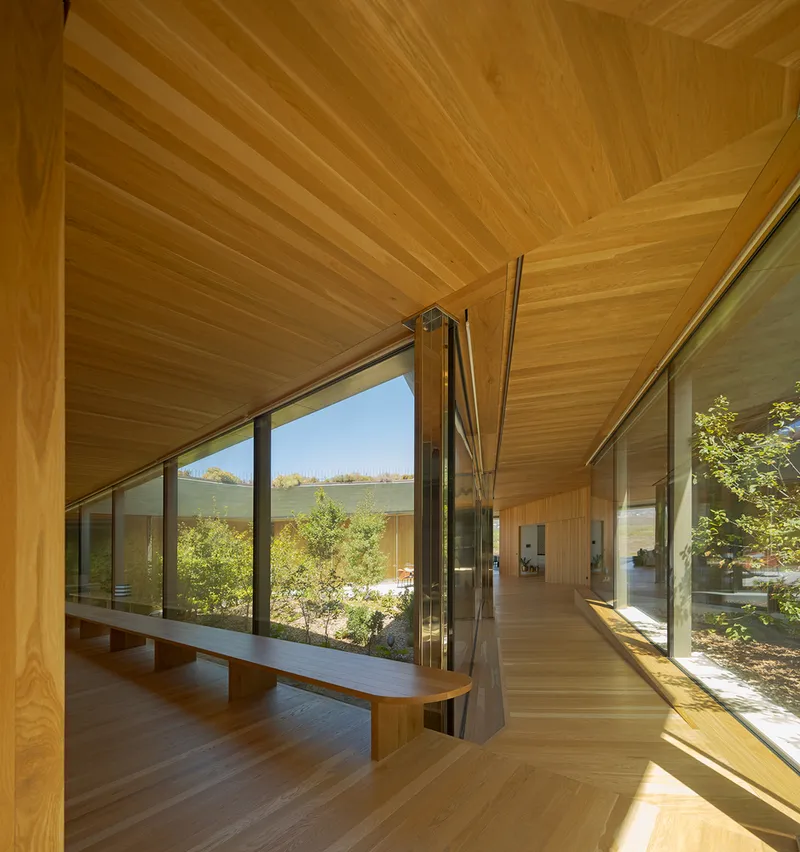
The inner courtyard strategy offers protection from the harsh northwest winds while embracing the southern sun, fostering a microclimate that enhances livability. Floor-to-ceiling glazed walls open up the interiors to these green sanctuaries, ensuring uninterrupted visual and physical connections between inside and out.
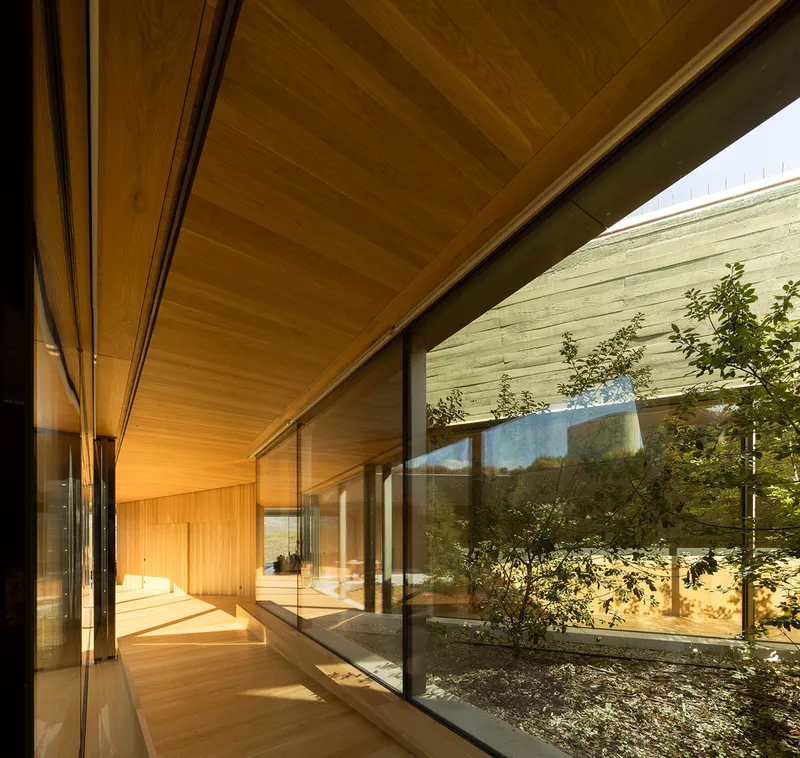
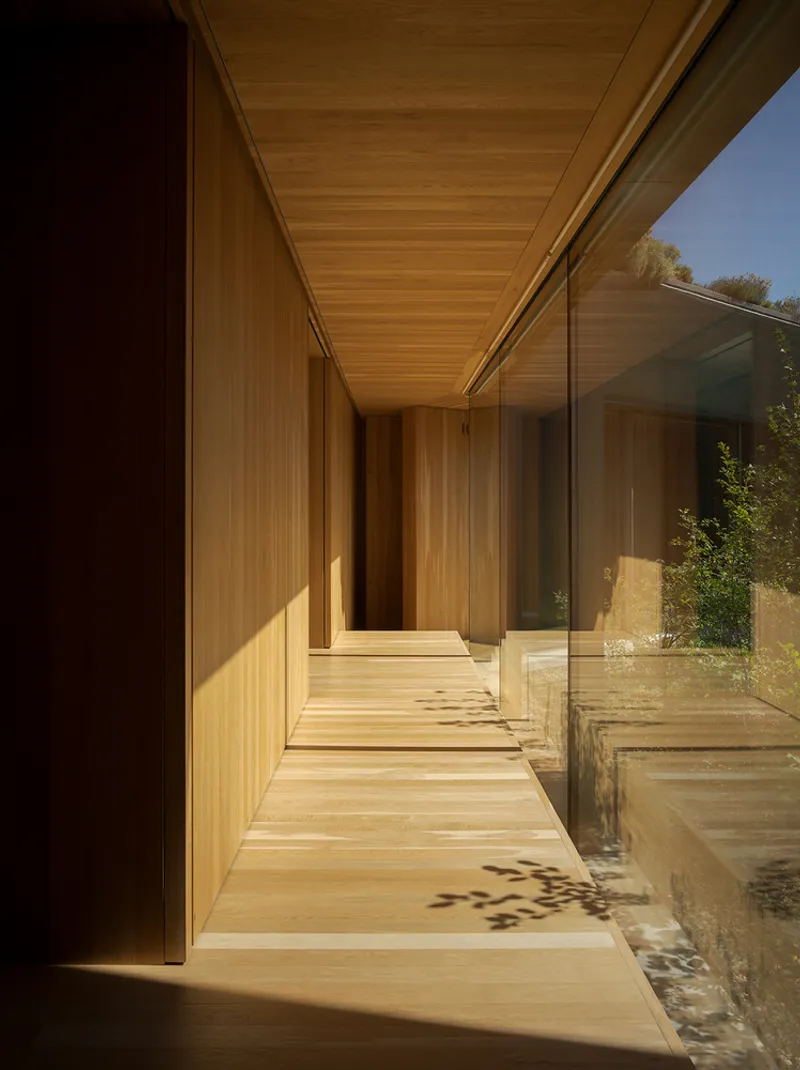
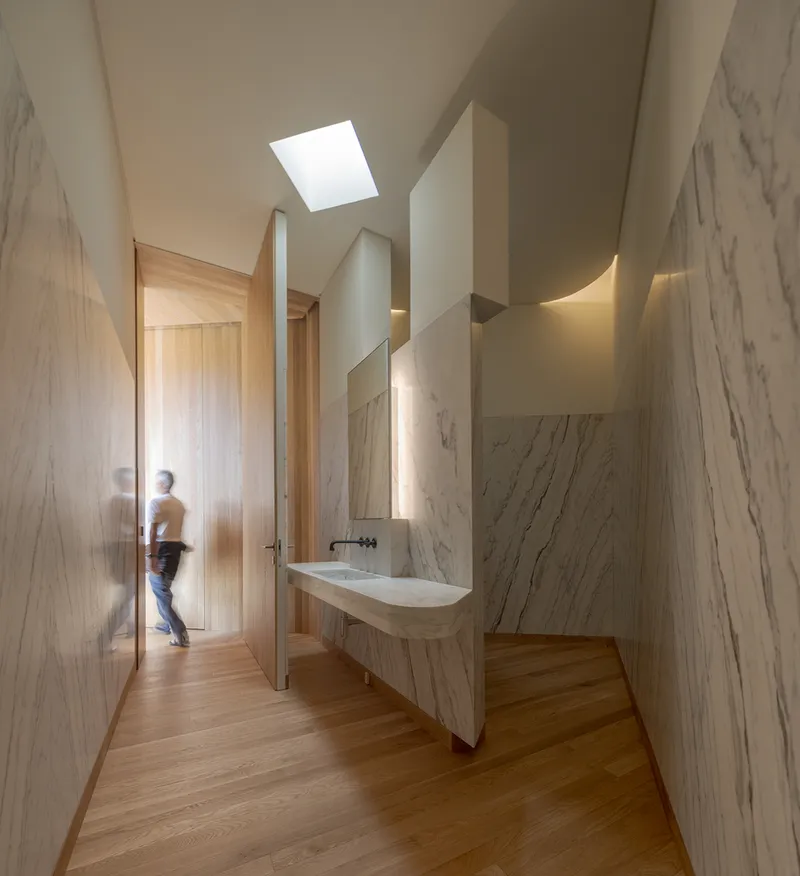
Natural rocky outcrops are preserved and integrated into the courtyard design, while the landscape palette draws entirely from native vegetation, further blurring the boundary between architecture and land. The use of exposed wood on interior walls and floors adds a warm counterbalance to the concrete structure, rooting the interior experience in tactile, natural materials.
A Monument to Place and Memory
While the home embraces a distinctly modern language, it resonates with echoes of history through its form, materials, and defensive posture. The angular geometry, solid massing, and strategic fenestration speak to a lineage of architectural forms shaped by necessity, environment, and protection. Yet, unlike the defensive structures it references, this house opens inward—toward refuge, introspection, and a profound relationship with nature.
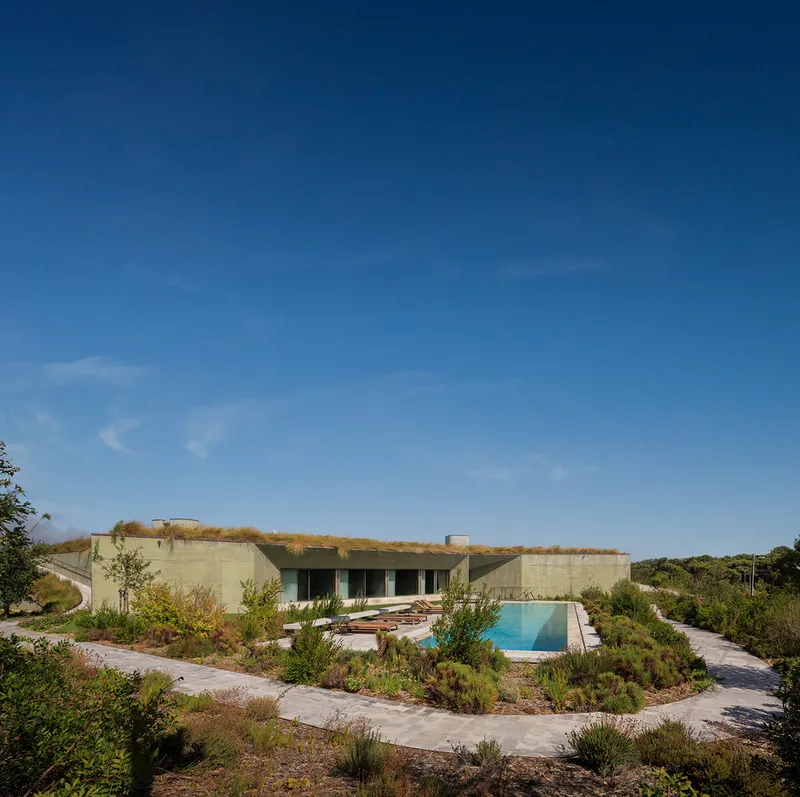
This coastal modern house design is not about dominance, but about coexistence. It exemplifies how contemporary architecture can draw from context—both cultural and geographical—to create structures that are both innovative and respectful, bold yet hidden, expressive yet quiet.
A House That Belongs to the Sand
The House on the Sand is a remarkable example of how architecture can inhabit a site rather than occupy it. Through its faceted concrete form, landscaped roof, introspective courtyards, and use of natural materials, ARX Portugal Arquitectos has crafted a residential experience that is as much about environmental sensitivity as it is about architectural clarity.
In a time where homes often seek to stand out, this house chooses to belong. It becomes part of the coastal terrain—physically, visually, and spiritually—a true embodiment of thoughtful coastal modern house design that connects with history, land, and the rhythms of nature.




Popular Articles
Popular articles from the community


Co-Life: Senior Housing Design That Reconnects Older Adults With the City
Co-Life reimagines senior housing design through healing gardens, shared streets, workshops, and a sustainable community across generations.

Co-life: Sustainable Architecture for Age-Friendly Community Living
Co-life reimagines sustainable architecture for seniors through courtyards, rammed earth, shared gardens, and spaces designed for belonging.

Conexión: Biophilic Design Reimagines High-Rise Living in Hong Kong
Conexión reimagines high-rise living in Hong Kong through biophilic design, green facades, shared spaces, daylight, water and nature within.
EW PARK: Sustainable Architecture Reimagines the Future of Urban Parking
EW PARK reimagines city parking as a modular wooden tower combining automation, solar energy, electric mobility, and adaptable urban design.


Similar Reads
You might also enjoy these articles

Bamboo Housing Challenge 2026: Design Affordable, Sustainable Homes Using Bamboo
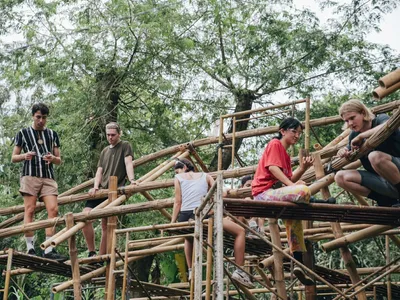
An international design competition by Bamboo U and IBUKU inviting architects and designers to reimagine affordable housing using bamboo — with the winning design built full-scale in Bali.

Computational Design & Education: Beegraphy Design Awards Introduces 7th Category (Featuring Jiyun's Innovative Approach)
Dive into Beegraphy’s 7th Design Awards category, where computational design meets education to create immersive, interactive learning tools, inspired by Jiyun’s work.
From Parametric Lighting to Urban Furniture: Join the 2nd Workshop in Beegraphy’s Computational Design Series
Dive into Cutting-Edge Design Techniques and Practical Applications with Industry Experts

Last Call: Unleash Your Architectural Genius in SHAK's Kindergarten Design Competition
Urgent call for architects to join SHAK's kindergarten design competition before the looming deadline
Explore Architecture Competitions
Discover active competitions in this discipline



Challenge to reimagine the Iron Throne


Photograph architecture without architects


Illustrate the lost glory of Angkor Wat - Render Challenge


Design challenge to reuse E-waste
Comments (0)
Please login or sign up to add comments
No comments yet. Be the first to comment!