

House with Pavilion: A Mediterranean Country House in the Istrian Hills
A modern Mediterranean country house in Istria that blends traditional village typologies with open pavilion living and local stonework.


A Contemporary Interpretation of Istrian Village Architecture
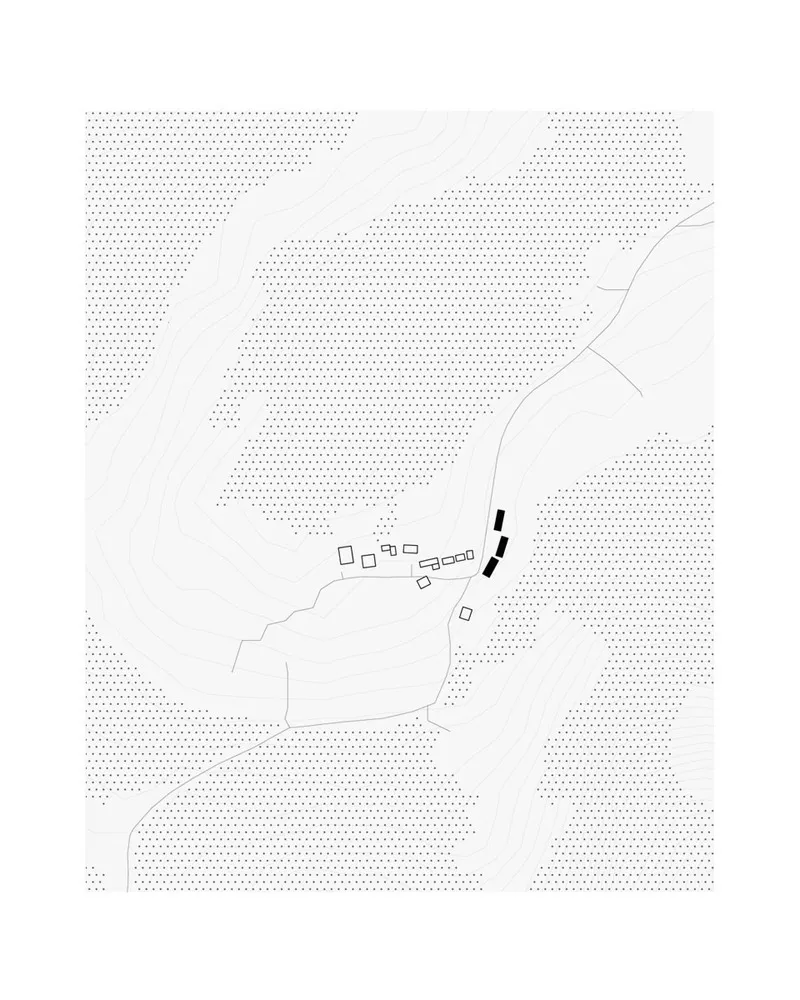
Nestled at the end of a ridge in a traditional Istrian village, House with Pavilion by Arhitekti Počivašek Petranovič blends modern comfort with the spirit of Mediterranean country house architecture. Located in Croatia’s hilly Istrian peninsula, the site’s historic settlement pattern and dramatic topography shaped the architectural response, emphasizing a balance between contemporary spatial experience and vernacular inspiration.


Embracing the Istrian Landscape and Typology
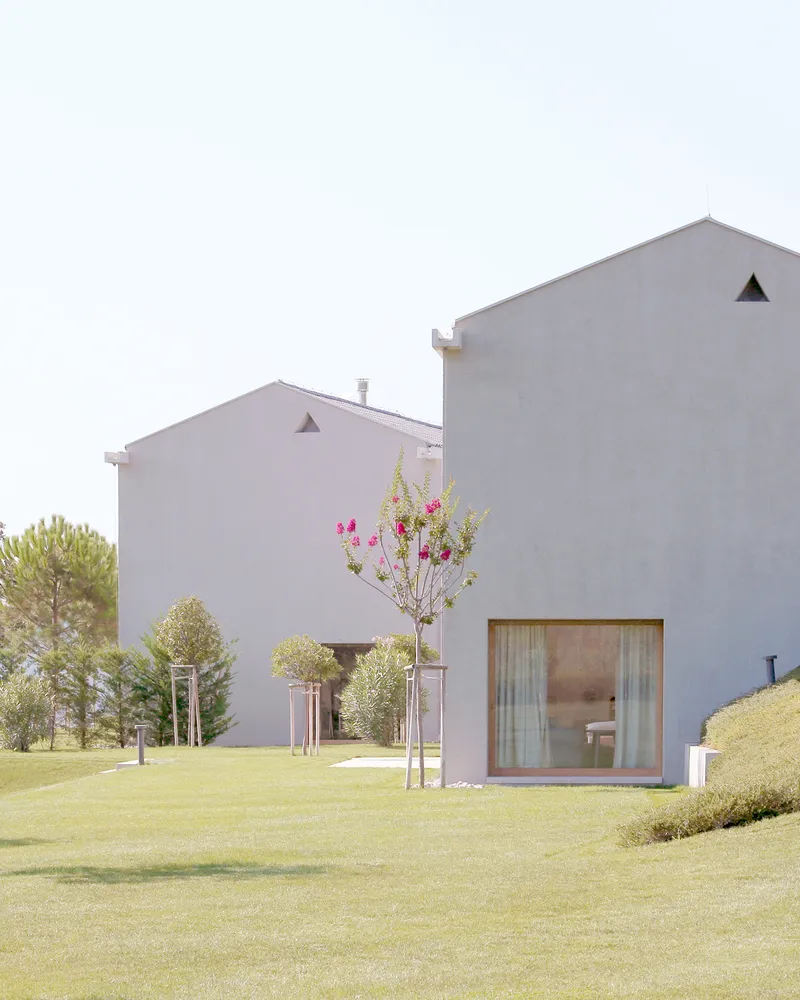
The architectural design responds to the regional character of Istria—known for its hilltop “refugal” towns—by organizing the house into three distinct volumes. Rather than a monolithic structure, the residence unfolds as a spatial sequence of smaller interconnected buildings. This layout mimics the traditional fabric of Istrian villages where structures gently follow the contours of the land, creating diverse courtyards, gardens, and sightlines.
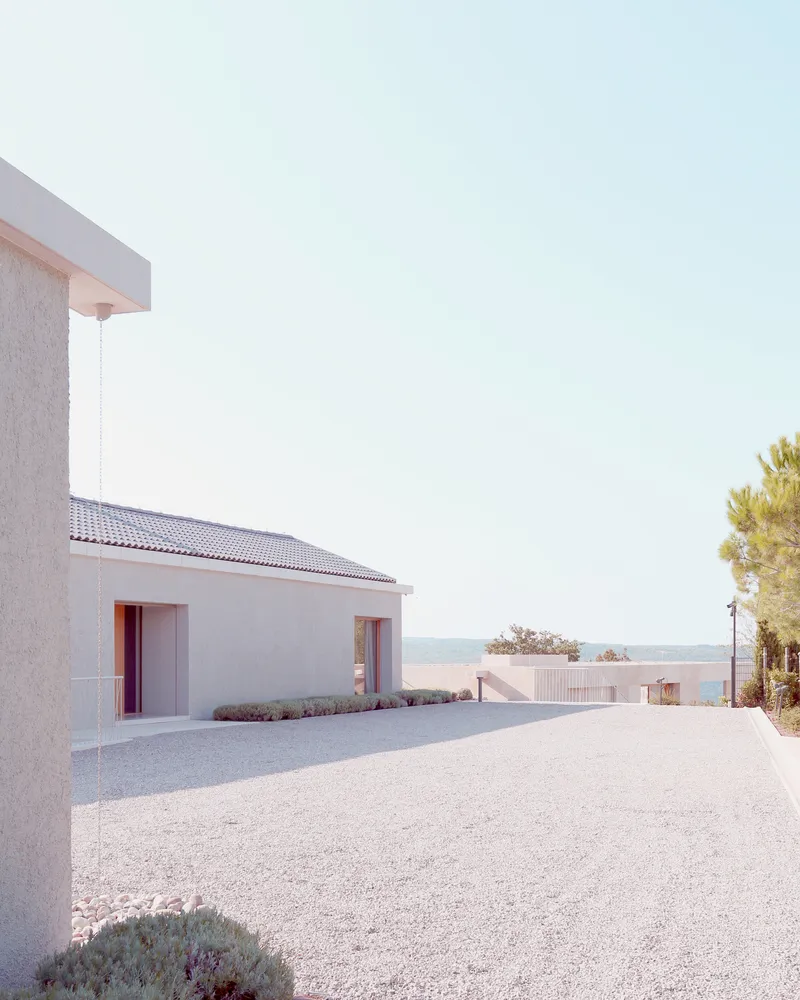
The three volumes are placed consecutively from south to north, adapting to the slope of the ridge. Each building is connected on the ground level, forming an architectural narrative that draws from the village typology while offering a modern country house for year-round living.
Pavilion as a Central Living Experience
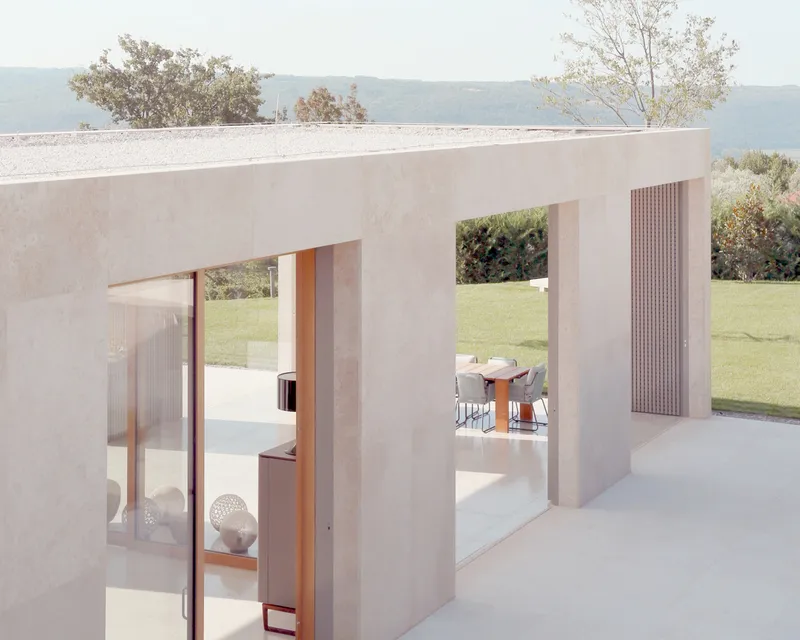
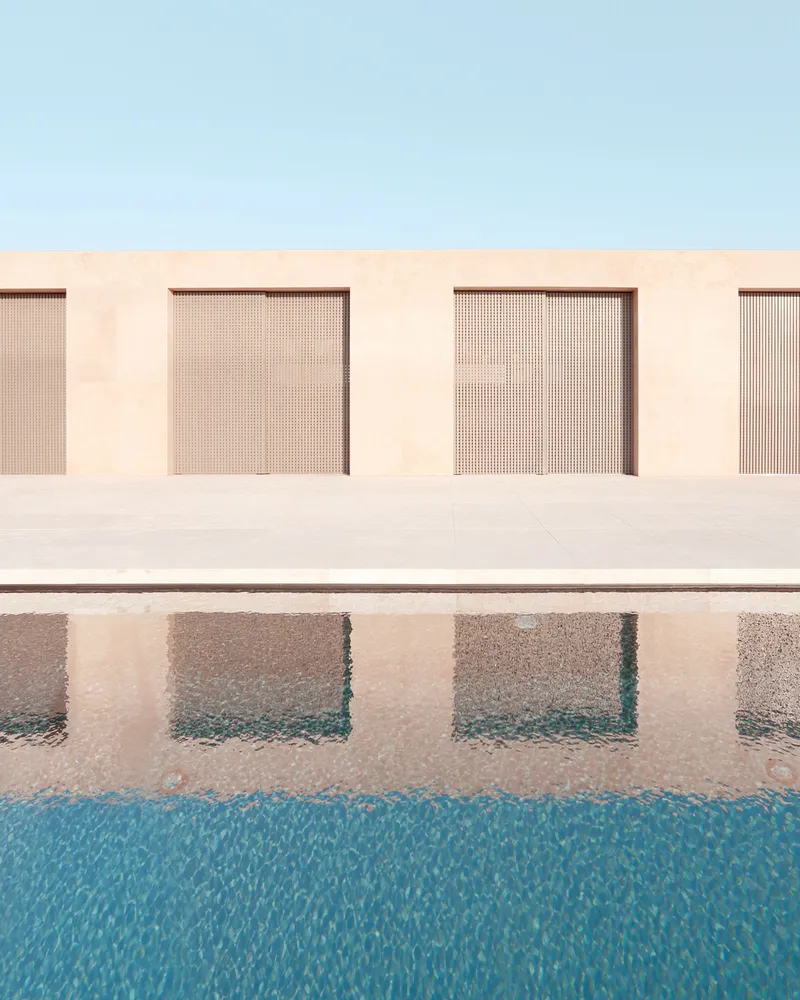
The southernmost volume, designed as a pavilion, is the heart of the home and celebrates the essence of Mediterranean country house architecture. This open, light-filled structure houses the kitchen, dining area, and main living space, all connected to an expansive loggia and sundeck that lead directly to the swimming pool. Its flat roof and façade of locally sourced stone give it a bold and refined identity, distinguishing it from the other two volumes with pitched roofs and plaster facades.

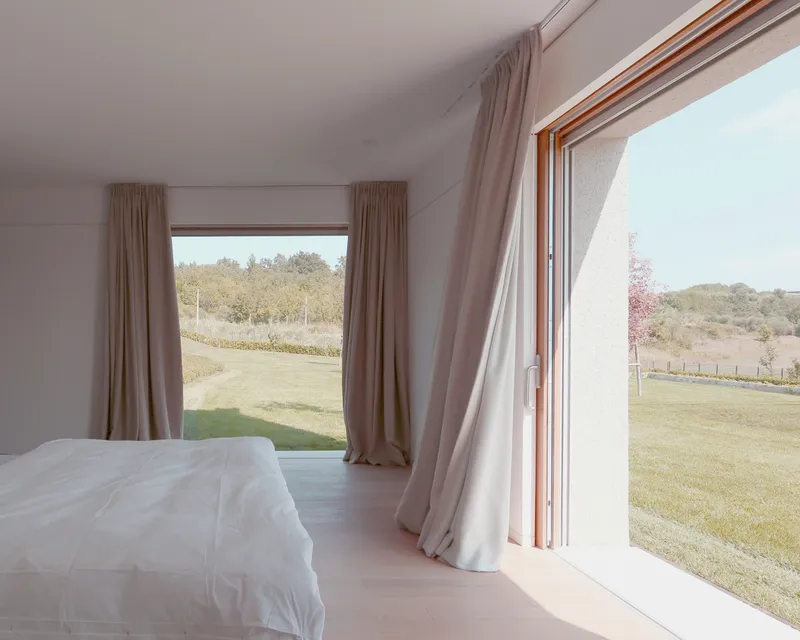
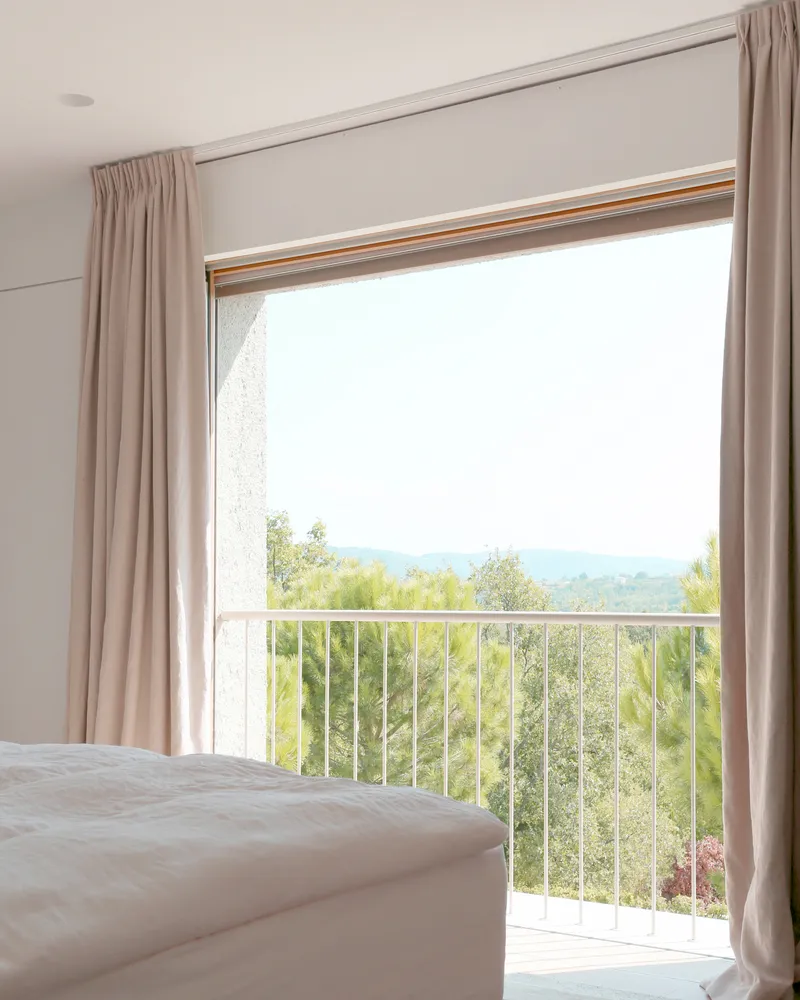
Large sliding wooden screens protect the openings from the intense summer sun, a contemporary nod to the region’s traditional wooden blinds. The space opens up to three sides, promoting natural ventilation and fluid indoor-outdoor living, echoing the Mediterranean way of life.


A Spatial Dialogue Through Design
The central building, which serves as the main entrance, is strategically positioned to provide access to both upper and lower levels due to the sloped terrain. The entry level contains a study and the master bedroom, while a double-height atrium and round staircase lead to the living area below. The northern building hosts a guest suite on the ground floor and a garage with service areas on the upper level.
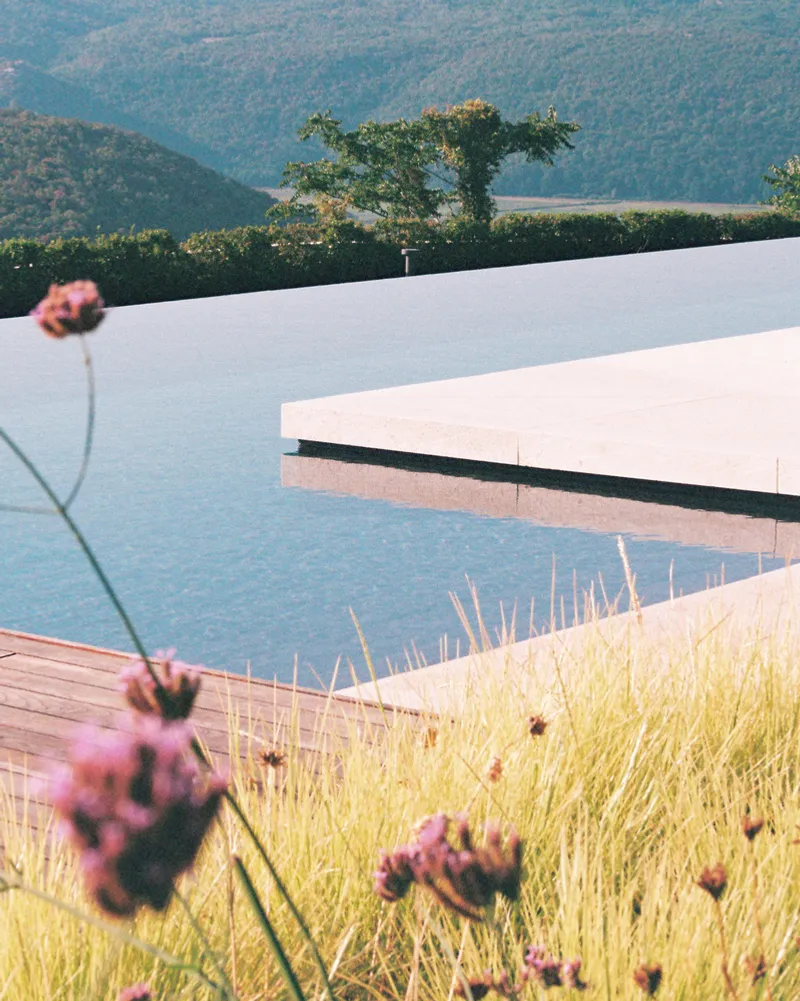

The irregular composition of the volumes creates a dynamic relationship between built form and landscape. These spatial shifts reflect the patchwork rhythm of old Istrian settlements, offering varied experiences as one moves through the house.

Mediterranean Landscape as Architectural Extension
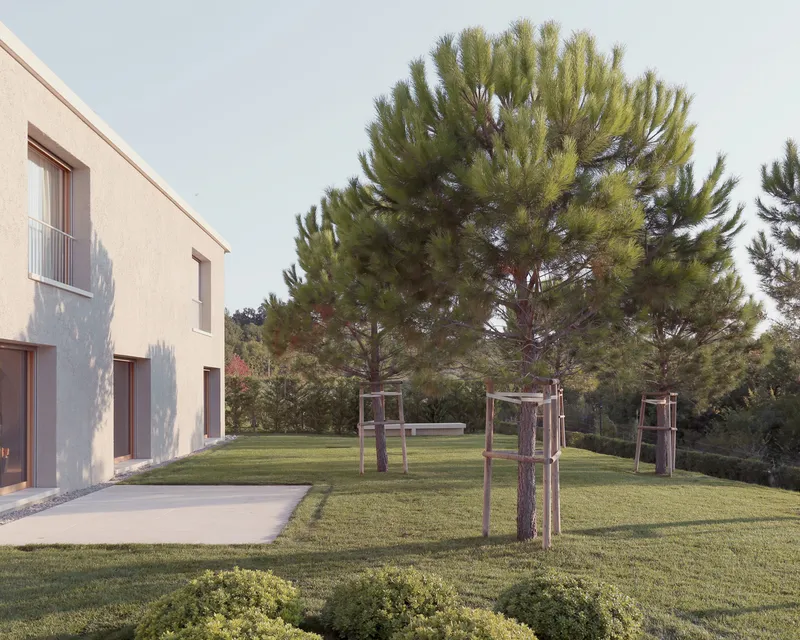
Landscape design plays a key role in enhancing the atmosphere and extending the architecture into nature. A gravel courtyard with Stone pine trees forms the entrance square, creating a formal yet relaxed arrival experience. The area around the pavilion is designed as a sunny platform with a pool, while smaller parks and gardens articulate the zones around the other volumes.

The use of fragrant Mediterranean vegetation—including pine, lavender, rosemary, and Lebanese cedar—adds a sensorial quality to the outdoor spaces. These landscaped areas complement the abstraction of the architectural forms, grounding them in local tradition while enhancing the living experience.

A Fusion of Tradition and Modern Comfort
With over 700 square meters of living space, House with Pavilion redefines what a Mediterranean country house can be. Through a careful study of context, materiality, and spatial rhythm, Arhitekti Počivašek Petranovič have created a residence that honors the cultural landscape of Istria while providing a modern and immersive lifestyle.

By separating the program into three buildings, integrating local materials, and framing the experience around nature, the architects have achieved a timeless retreat that resonates with its surroundings and elevates everyday living.

All Photographs are works of Urban Petranovič




Popular Articles
Popular articles from the community


Riyadh For All: Intergenerational Urban Design for Active Aging in Rabat
Riyadh For All reimagines urban design in Rabat with intergenerational co-living, adaptive courtyards, and Moroccan cultural exchange today.

Conexión: Biophilic Design Reimagines High-Rise Living in Hong Kong
Conexión reimagines high-rise living in Hong Kong through biophilic design, green facades, shared spaces, daylight, water and nature within.

The Earth Pod: 3D Printed Homes for Resilient Refugee Communities
The Earth Pod reimagines refugee housing through 3D printed homes made from clay, combining resilience, self-sufficiency, and rapid shelter.

The Ocean Hive: Sustainable Architecture for a Self-Sufficient Civilization at Sea
The Ocean Hive imagines sustainable architecture at sea, where modular habitats, algae, wave power and ocean waste sustain a growing colony.


Similar Reads
You might also enjoy these articles

FAMM Arquitectura Organizes Ten Villas Around Courtyards and Jungle in Nosara, Costa Rica
El Molino pairs two elongated volumes with deep overhangs and timber louvers to build a compact coastal community five minutes from the beach.
Oscar Niemeyer's Ibirapuera Park Pavilions Define São Paulo's Cultural Identity in Concrete and Curve
A constellation of modernist volumes set within São Paulo's most important urban park, conceived for the city's 400th anniversary in 1954.
How Henri Picq's 1889 Paris Pavilion Traveled 11,000 Kilometers to Become Santiago's Artequín Museum
A prefabricated iron and glass pavilion built for the Paris Universal Exposition found a second life as a children's art museum in Chile.
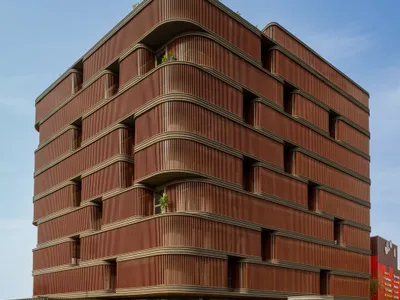
Sanjay Puri Architects Wraps a Jaipur Office Tower in Capsule-Shaped Green Buffers
A nine-level climate-responsive workplace near Jaipur Airport uses stacked planter terraces and aluminium screens to fight 40°C heat.

Explore Architecture Competitions
Discover active competitions in this discipline



Challenge to reimagine the Iron Throne


Photograph architecture without architects


Illustrate the lost glory of Angkor Wat - Render Challenge


Design challenge to reuse E-waste
Comments (0)
Please login or sign up to add comments
No comments yet. Be the first to comment!