
Huebergass and District Park Bern Housing: A Model of Sustainable, Inclusive Urban Living by GWJ Architektur
Huebergass and District Park Bern Housing by GWJ Architektur is a sustainable, community-oriented housing development that integrates social inclusivity, affordability, and eco-friendly design.


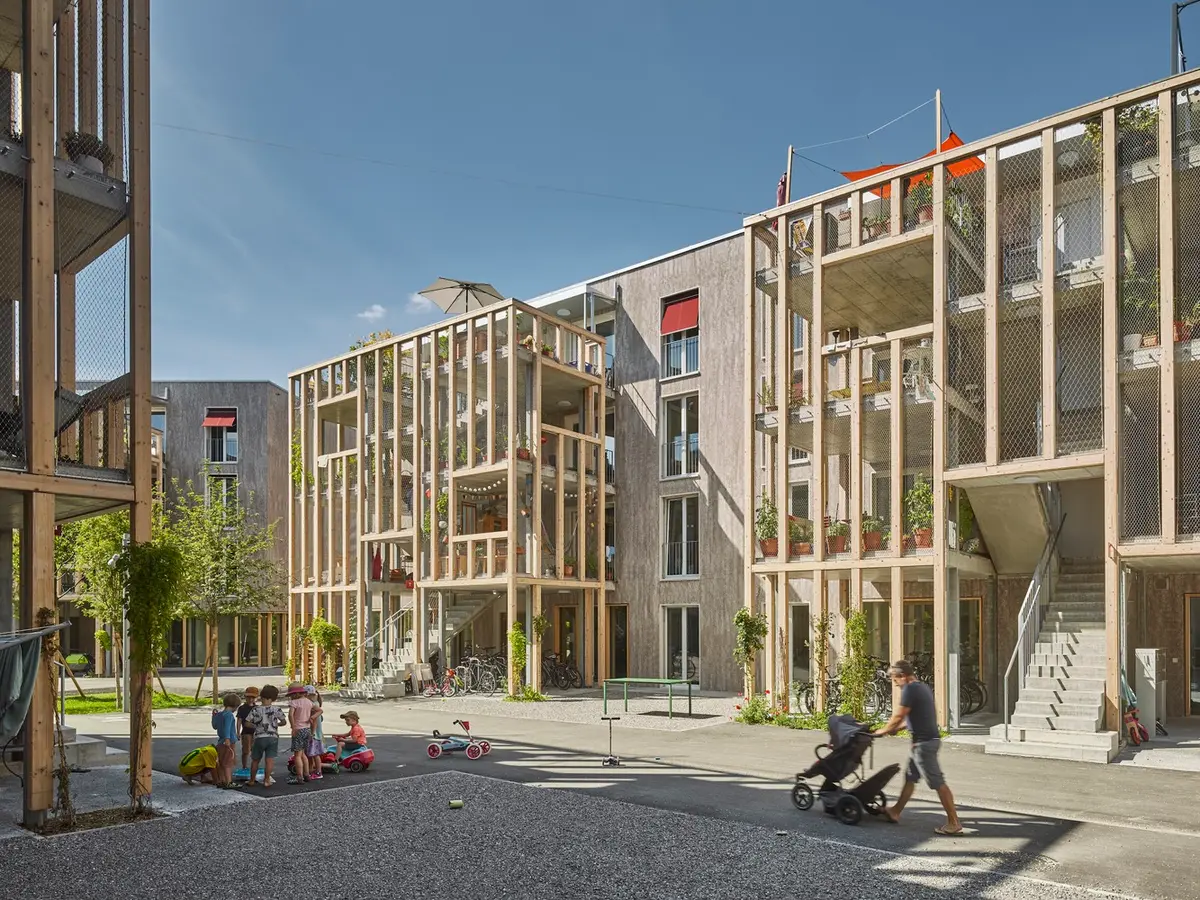
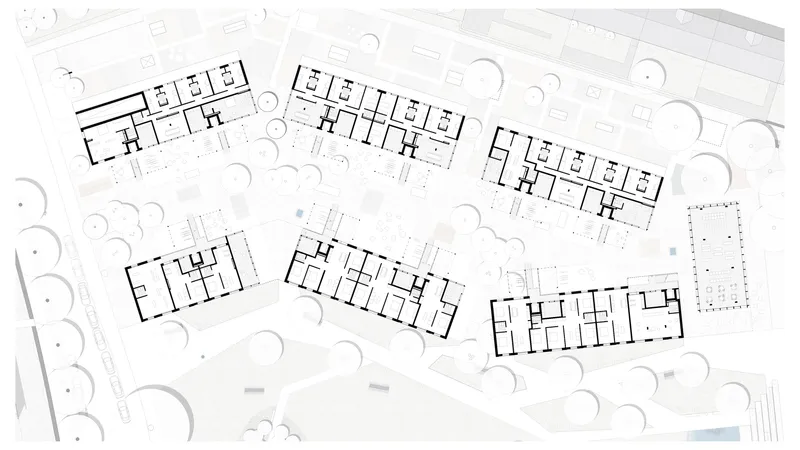
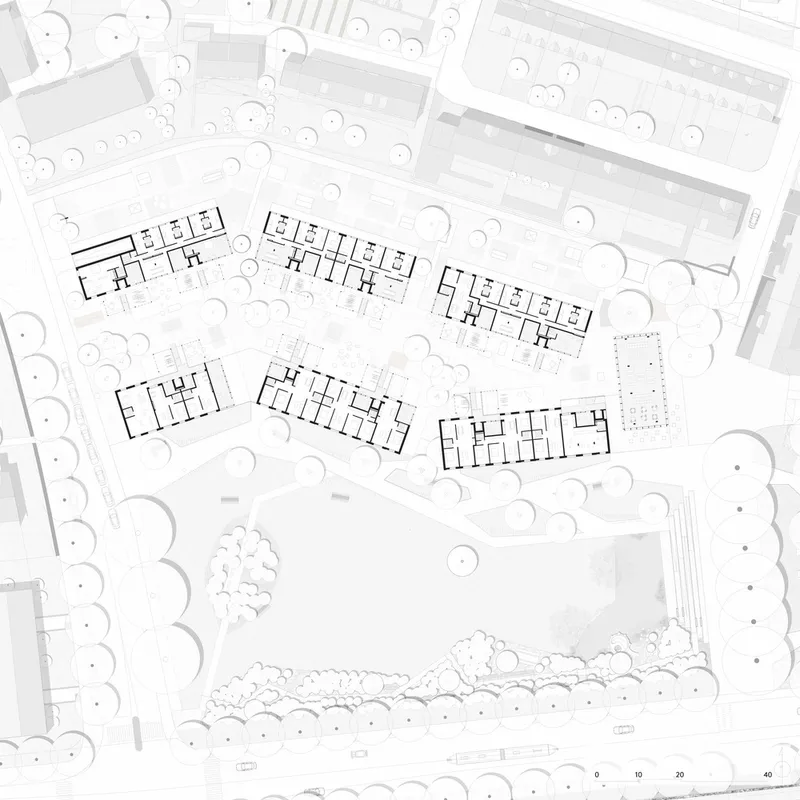
The Huebergass and District Park housing project, designed by GWJ Architektur, is a standout development in Bern, Switzerland, offering a holistic approach to urban housing that combines sustainability, social inclusivity, and affordability. Completed in 2024, the project consists of six residential buildings and a district park, serving as a model for environmentally responsible and community-oriented urban living.
A Collaborative Design Process
The concept for Huebergass was developed by GWJ Architektur, in collaboration with ORT Landscape Architecture and Martin Beutler (Soziale Plastik), as part of a comprehensive participatory design process. The team aimed to create a neighborhood that would meet social, ecological, and economic sustainability targets set by international guidelines, such as the UIA 2030 goals. The project integrates a mix of housing types and public spaces, reflecting diverse lifestyles and fostering a strong sense of community.
Urban Planning and Architecture
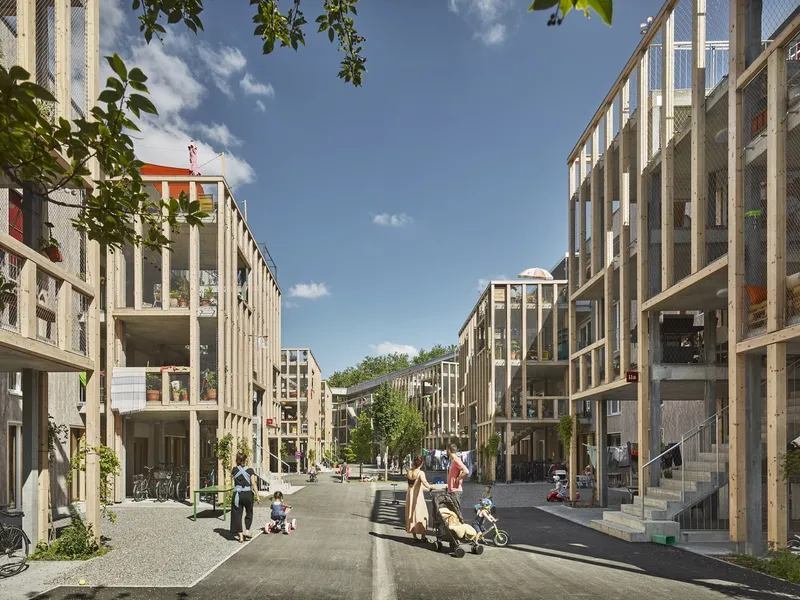
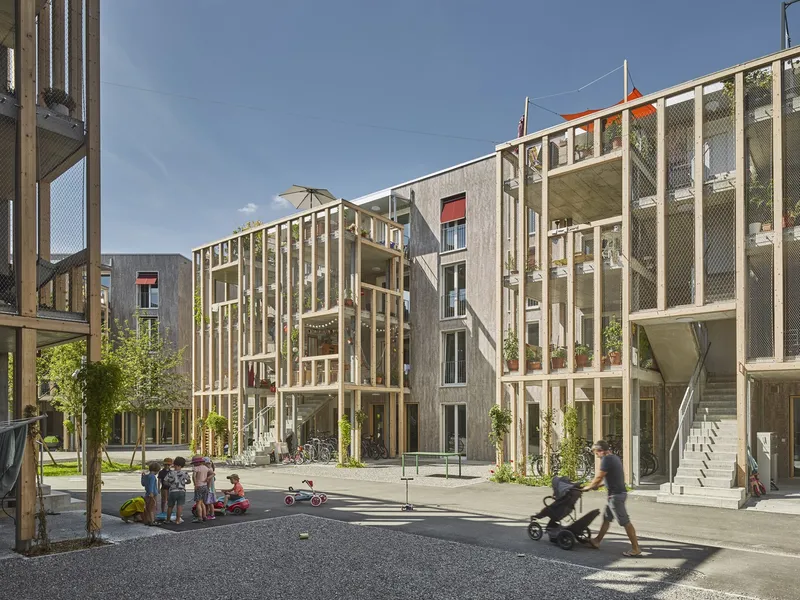
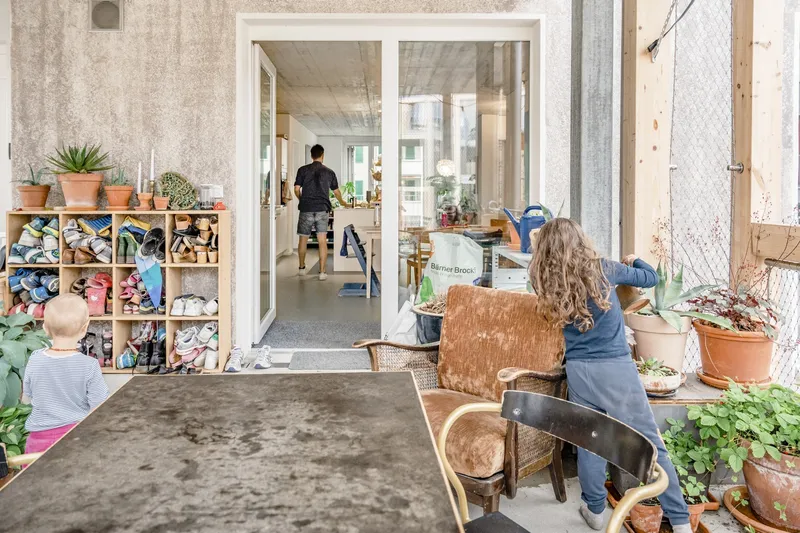
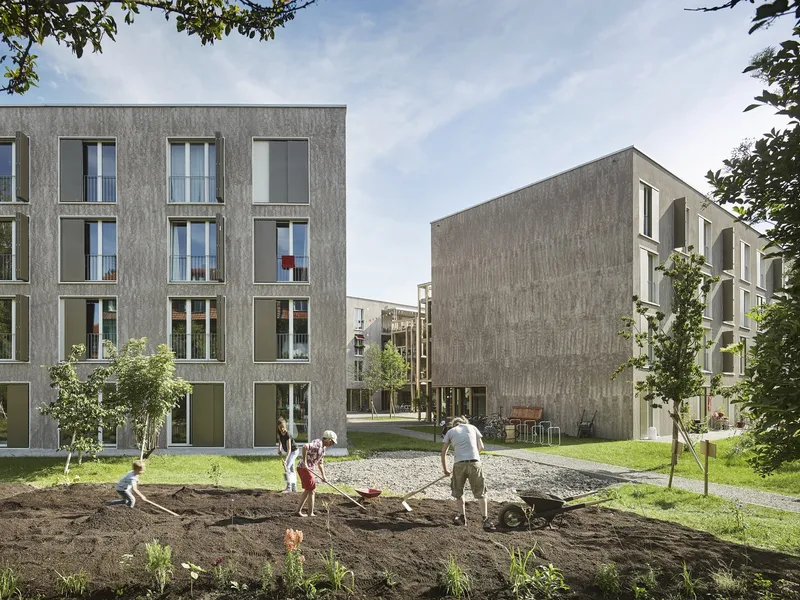
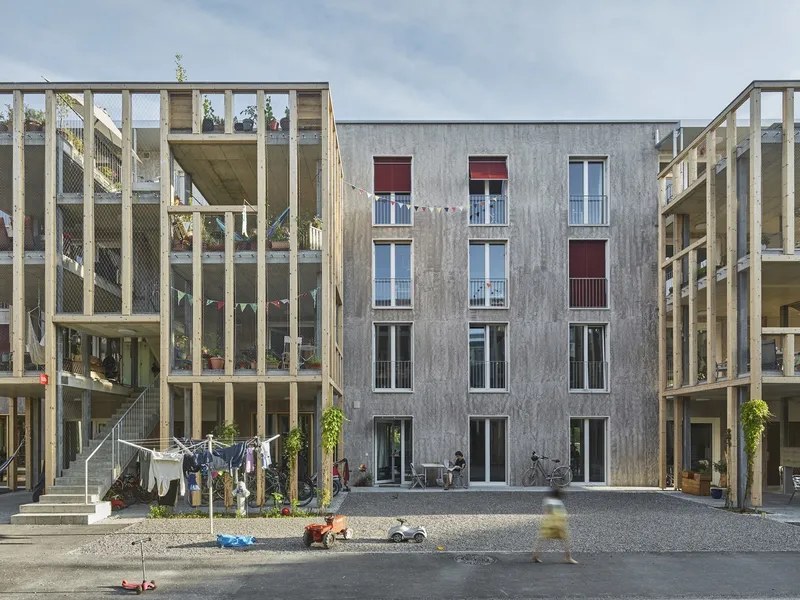
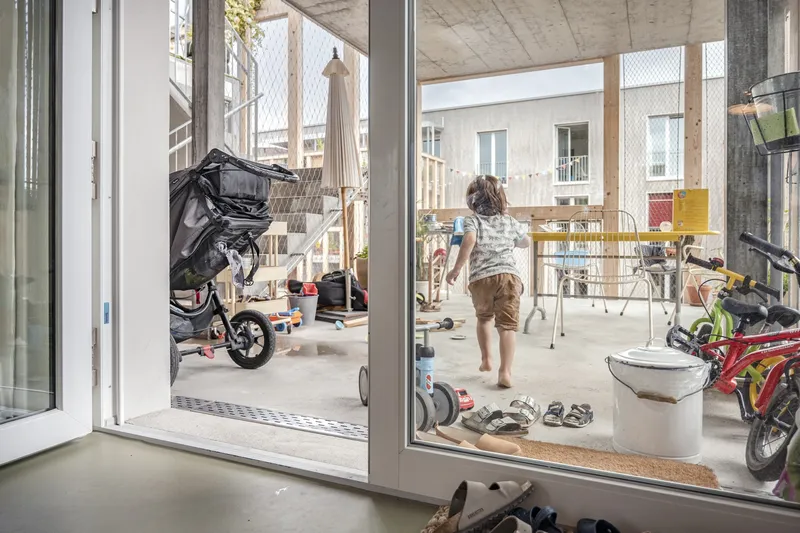
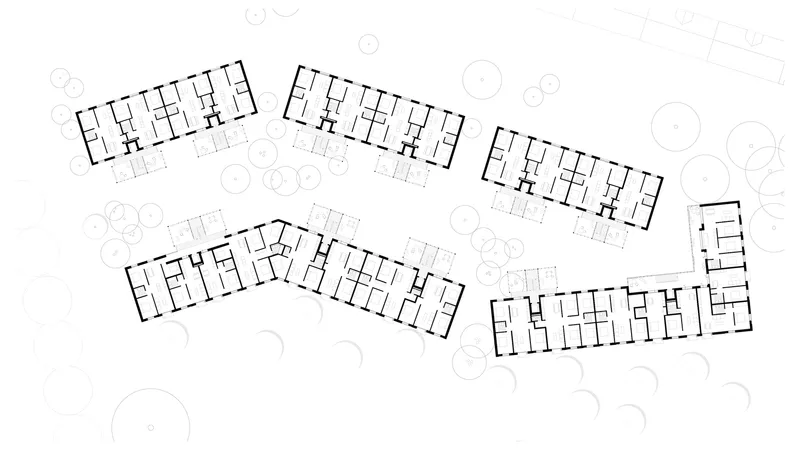
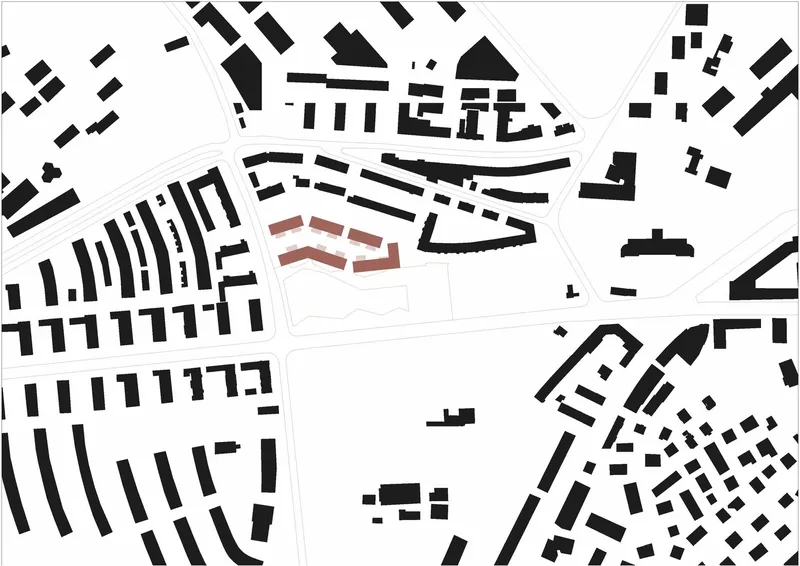
The development is organized into three linear blocks to the north, which reinforce the existing urban fabric, and three blocks to the south, which open toward the newly created district park. The central feature of the development is a laneway that runs between the buildings. This laneway serves as a communal spine, linking private and shared spaces, including a neighborhood café, function room, laundromat, and studios. The laneway is designed to encourage interaction and connection between residents, with timber porches providing access to apartments and creating a social threshold between private and communal spaces.
Sustainable Design and Efficient Use of Space
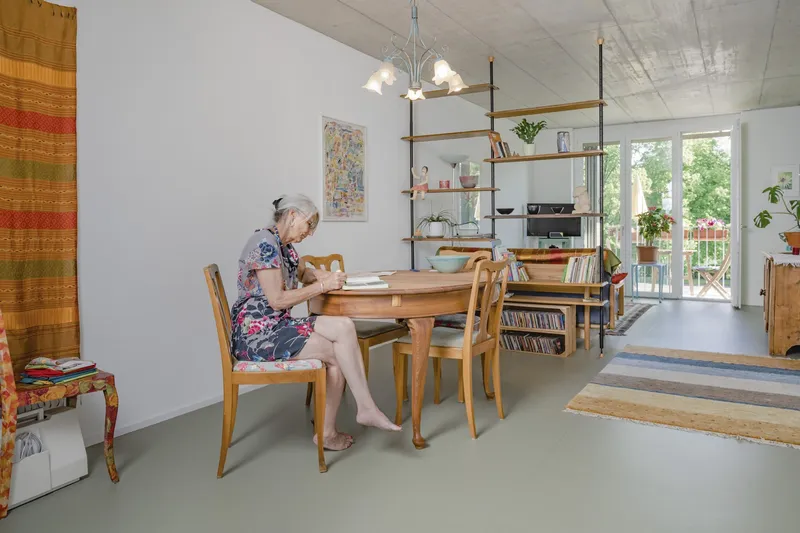
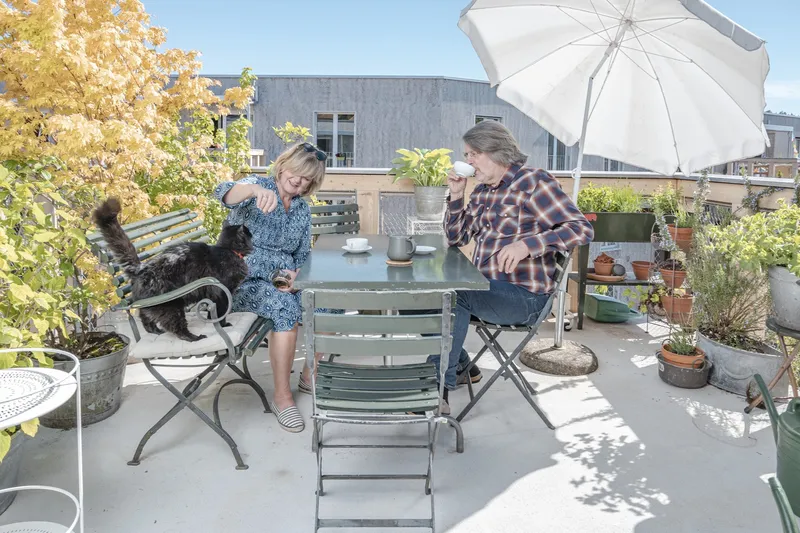
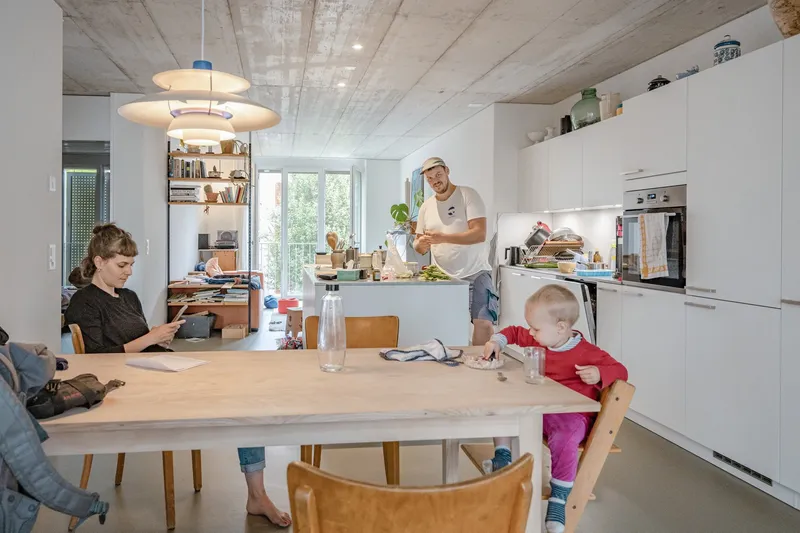
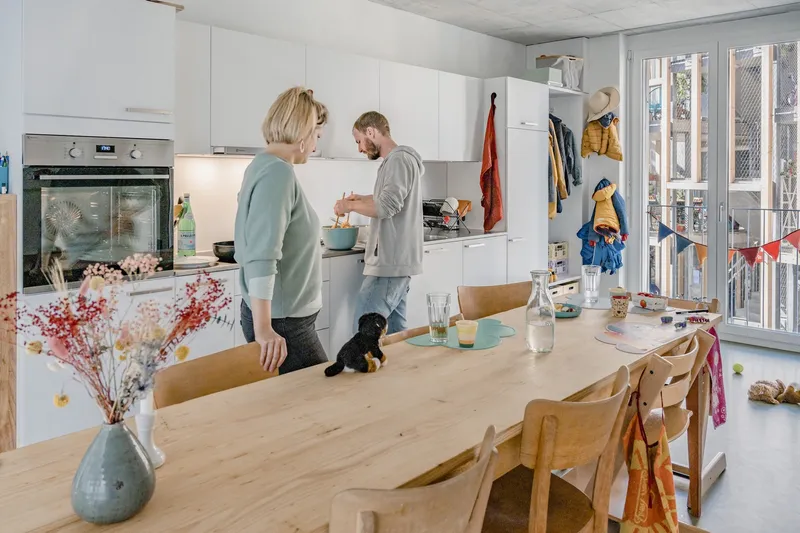
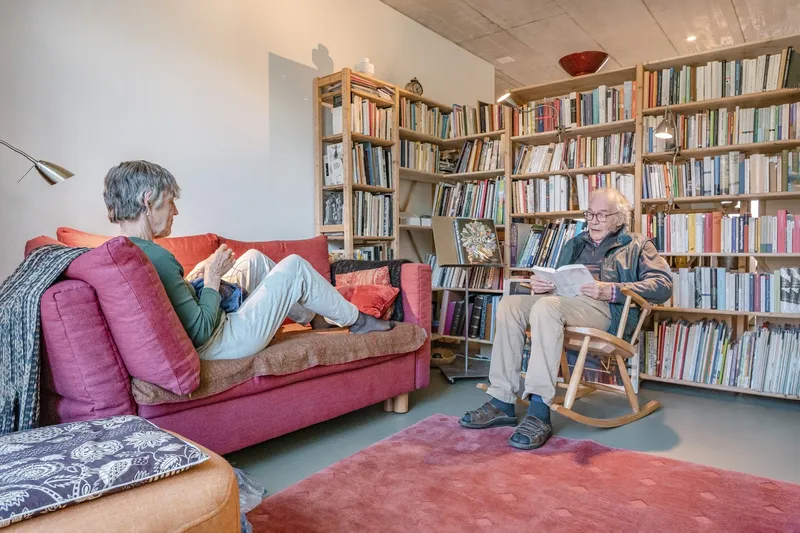
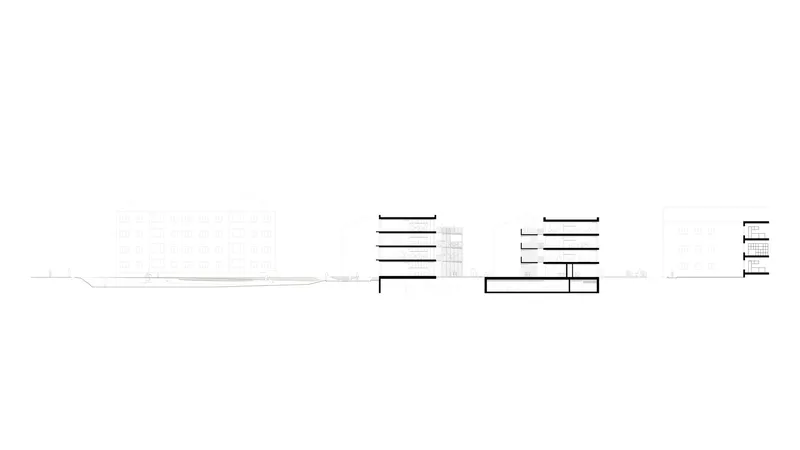
The energy efficiency of the project is central to its sustainability goals. The design reduces energy consumption while optimizing the use of space. Dual-aspect apartments provide natural light and cross-ventilation, improving comfort and indoor climate. The buildings are designed with compact volumes, minimizing their footprint and basements to maximize usable space. With efficient design, the project maintains affordable rents, offering a variety of unit sizes—from smaller apartments to larger cluster homes with up to six bedrooms.
The apartments are calculated at 25 m² per person, significantly reducing space compared to typical housing standards, but still providing comfortable living spaces for residents. The use of simple materials, repetitive structural elements, and clear architectural forms further contribute to the project's cost-effectiveness and sustainability.
Community Engagement and Biodiversity
The district park, a key component of the project, is designed as a public, accessible space that meets a wide range of needs. It integrates areas for uncontrolled vegetation, generous retention spaces, and minimal sealed ground, promoting biodiversity. Residents were actively involved in the park's design through a participatory process, with urban gardening initiatives and feedback sessions that shaped the final layout. This involvement turned the park into a learning park, fostering ongoing community engagement.
Car-Free, Sustainable Mobility
One of the standout features of the Huebergass development is its car-free design. The project promotes sustainable mobility by providing residents with access to a mobility service through bernmobil, a carsharing program, and mobility funds. These measures encourage residents to rely on public transport and shared vehicles, reducing the overall environmental impact of the development.
A Model for the Future
The Huebergass and District Park Bern Housing project is a pioneering example of how urban housing can be designed to meet the challenges of the modern world. By integrating affordable housing, sustainable practices, and a strong sense of community, the project creates a vibrant and livable space for its residents while contributing to the broader goals of environmental responsibility and social inclusion.
All Photographs are work of Damian Poffet, Susanne Goldschmid


Popular Articles
Popular articles from the community


Architekt Andreas Gruber Scatters 23 Dark Timber Chalets Across a South Tyrolean Forest Edge
In Molini di Tures, Amonti Chalets breaks a resort into a hamlet of gabled timber houses, with parking, storage and services pushed into the slope.

Jaramillo Van Sluys Arquitectura and Urbanismo Turn a Demolished Registry Lot in Quito into an Orchard Plaza
In Quito's Centro Histórico, a 2,800 m² plaza exposes the San Agustín convent wall and redraws its lost Augustinian orchard in volcanic stone.

David Macias Steps a Doorless Stone and Plaster House Down a Tropical Colombian Hillside
In the humid hills of Colombia, Threshold House replaces the front door with an open void and terraces its 850 m² down the slope instead of fighting it.

Cube Design Draws an Ecological Corridor Between Two Shenzhen Hills with the Nankai Building
Beside Shenzhen's container docks, the Nankai Building pairs stacked balconies with a climbing green screen to connect two hillsides across its height.

Similar Reads
You might also enjoy these articles

Gil Mello Arquitetura Tilts a Single Roof Toward the Waterfalls on a Plateau Above Aiuruoca, Brazil
In Aiuruoca, Minas Gerais, a 200 m² house of local labor and reclaimed poles pairs a low valley veranda with a tall mountain one.

U.GA Architects Wraps an Oval Rooftop Pool in Curved Board-Formed Concrete on Busan's Jeollidan-gil
In Busan's Jeonpo-dong, a 454 m² mixed-use block stacks a neighborhood facility, guest rooms and an oval rooftop pool inside spiraling concrete walls.

Felipe Hess Arquitetos Turns a Blind Stone Wall to the Street and Opens a Brazilian House onto a Courtyard and Canal
A canal-front house in Brazil hides behind painted stone and planting, then opens to an olive-tree courtyard, a reed-ceilinged porch and a curving pool.
David Macias Steps a Doorless Stone and Plaster House Down a Tropical Colombian Hillside
In the humid hills of Colombia, Threshold House replaces the front door with an open void and terraces its 850 m² down the slope instead of fighting it.

Explore Architecture Competitions
Discover active competitions in this discipline

Challenge to reimagine the Iron Throne

Photograph architecture without architects

Illustrate the lost glory of Angkor Wat - Render Challenge

Design challenge to reuse E-waste
Comments (0)
Please login or sign up to add comments
No comments yet. Be the first to comment!