

i Ocean Museum by B+P Architects: Adaptive Reuse and Sustainable Marine Architecture in Taiwan
Adaptive reuse transforms a former marine research center into a sustainable ocean museum connecting architecture, landscape, aquariums, mountains, and sea.


The i Ocean Museum, designed by B+P Architects, is a contemporary example of adaptive reuse architecture that reimagines a former marine research facility as a public cultural destination. Located in Chaojing Park, Keelung, Taiwan, the project transforms the former Chaojing Marine Research Center into an immersive ocean museum and aquarium, reconnecting architecture, landscape, and marine ecology.
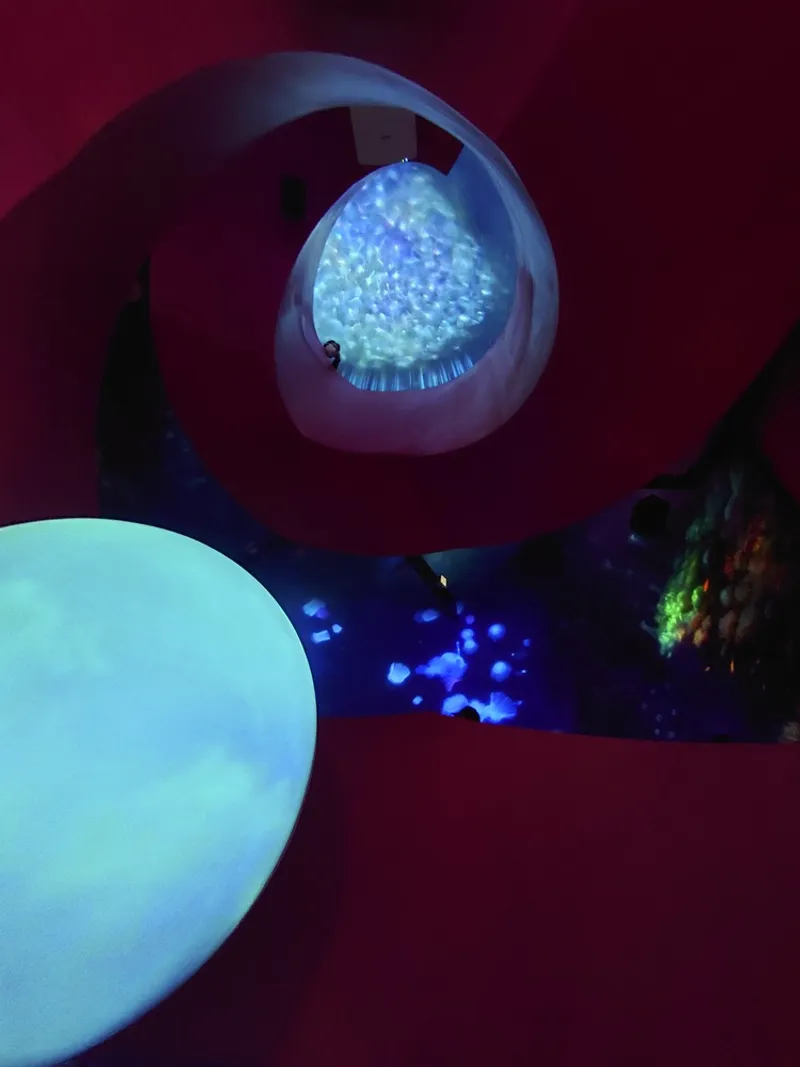
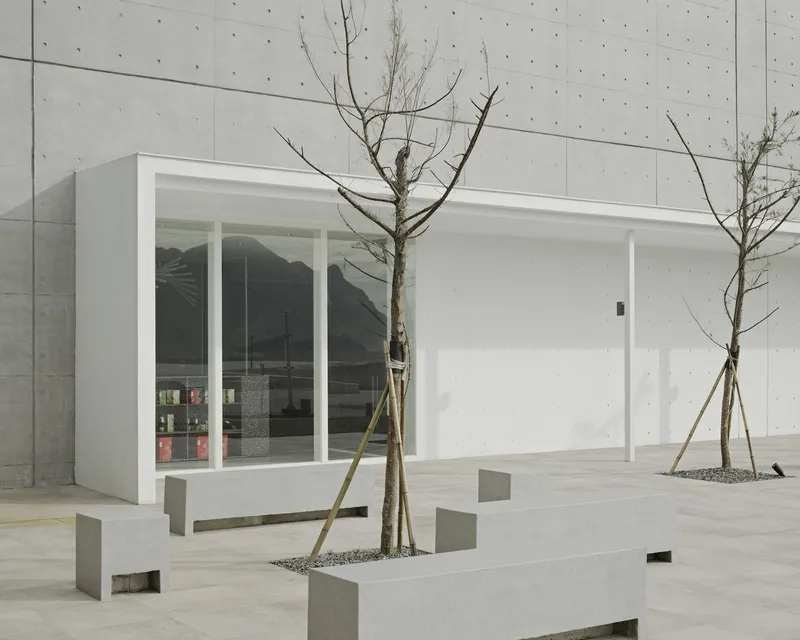
Completed in 2022 with a total floor area of 5,819 square meters, the museum integrates cultural architecture, sustainability, and environmental education, positioning itself as a vital interface between the mountains, the sea, and human activity.
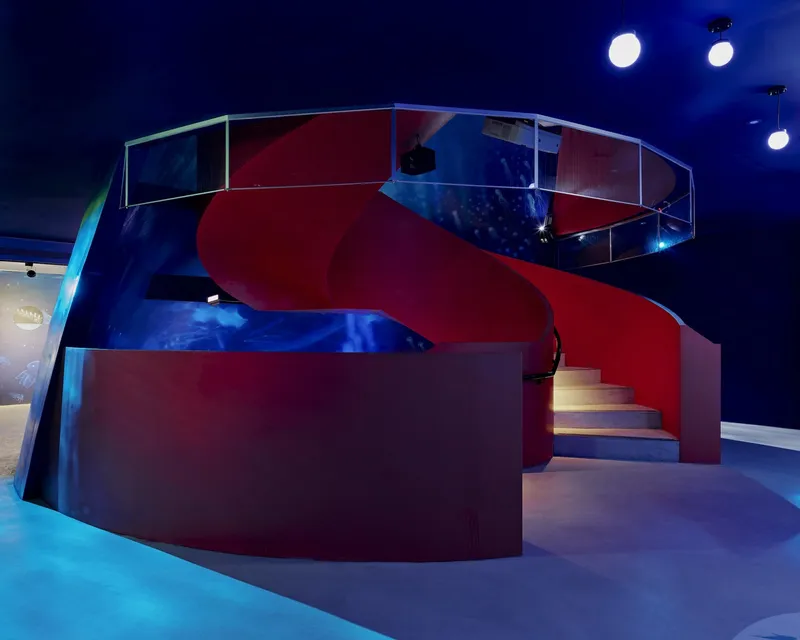
Contextual Integration Through Architectural Transformation
The renovation strategy adopted by B+P Architects treats building transformation as a process of diagnosis and regeneration, rather than replacement. Much like a careful surgical intervention, the project begins by understanding the existing spatial logic, structural conditions, and environmental context of the site. The goal is not only to preserve architectural memory but also to reintegrate the building into its surrounding landscape while accommodating future public use.
Situated within Chaojing Park, an area rehabilitated from a former landfill, the site already embodies a narrative of environmental recovery and reuse. The design builds upon this history by reconnecting the existing buildings to their ecological setting, allowing architecture to function as a mediator between land and sea.
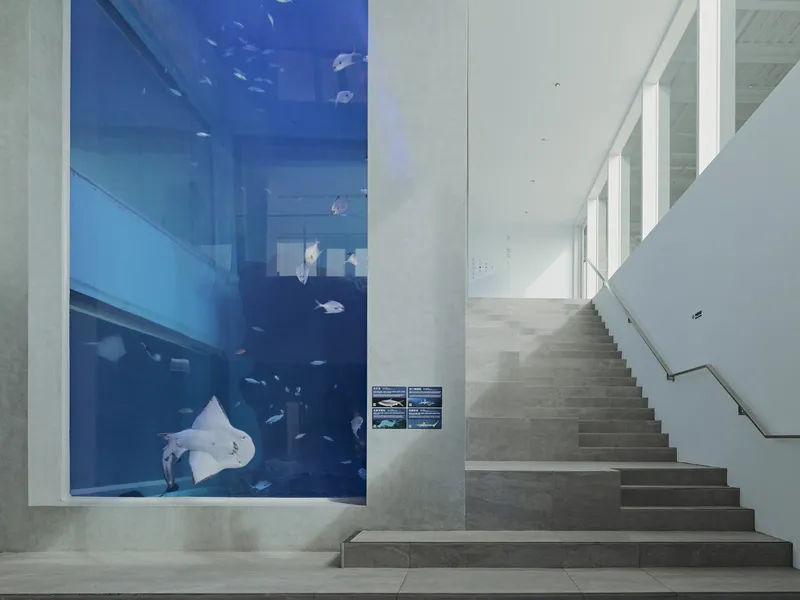
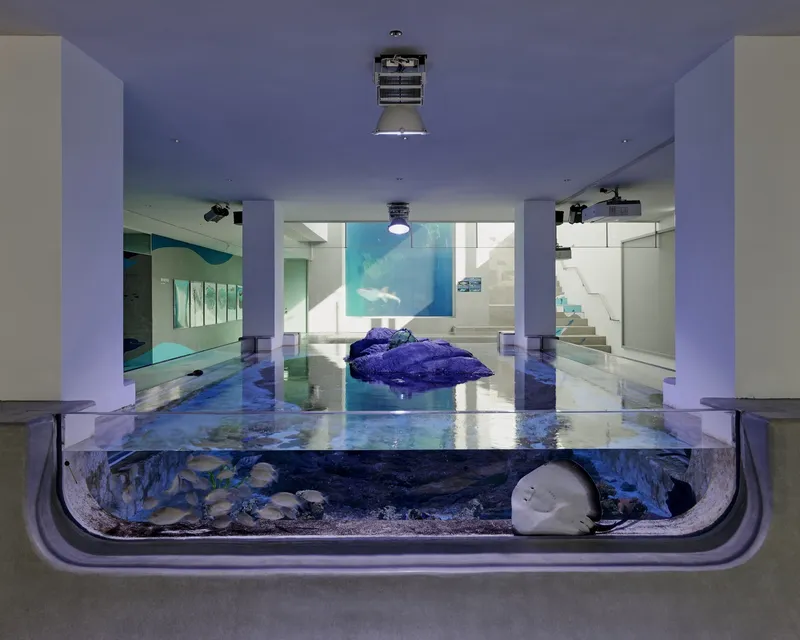
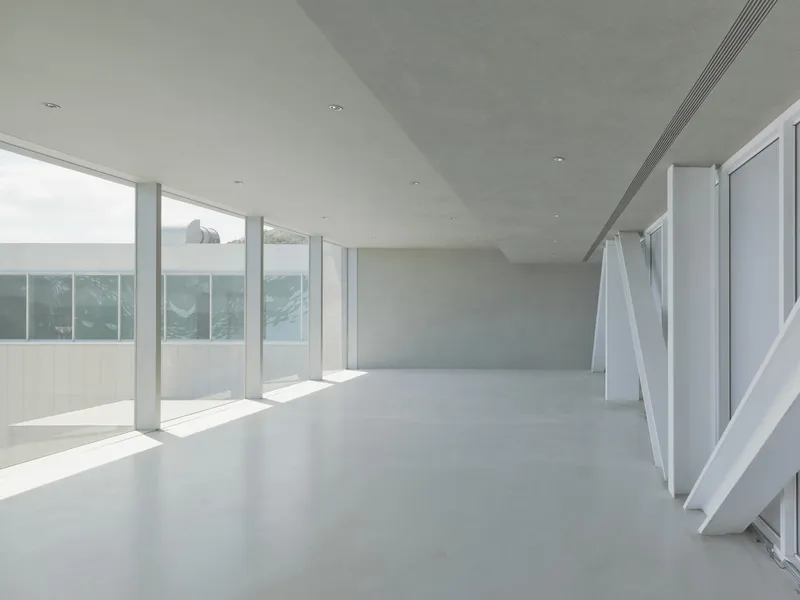
From Research Facility to Public Ocean Museum
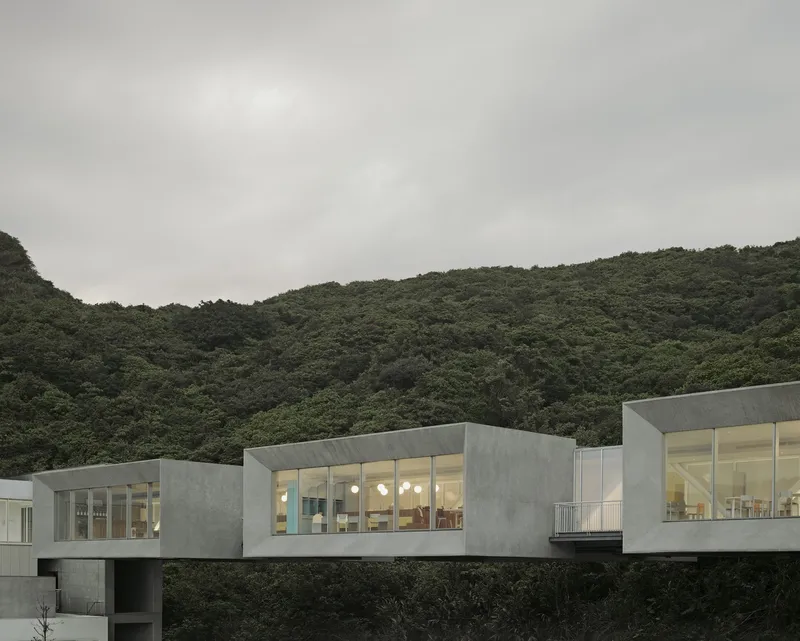
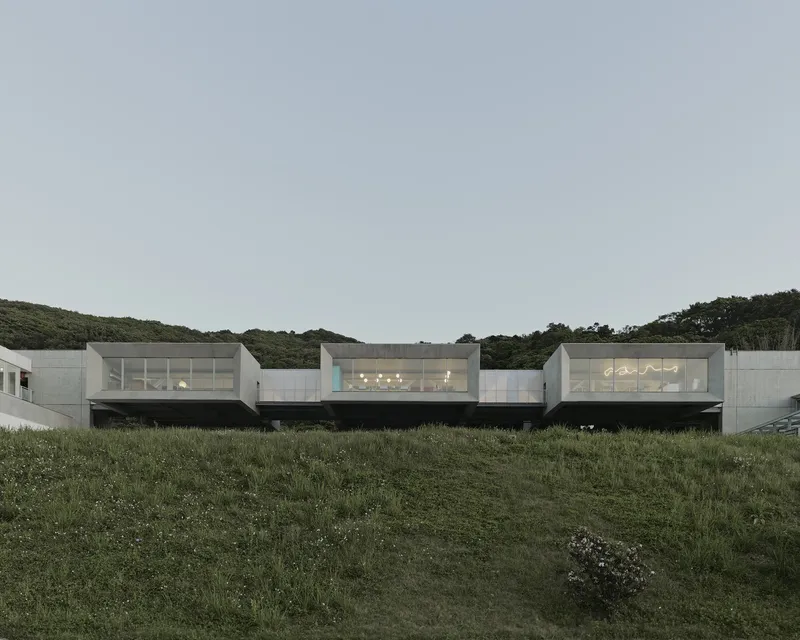
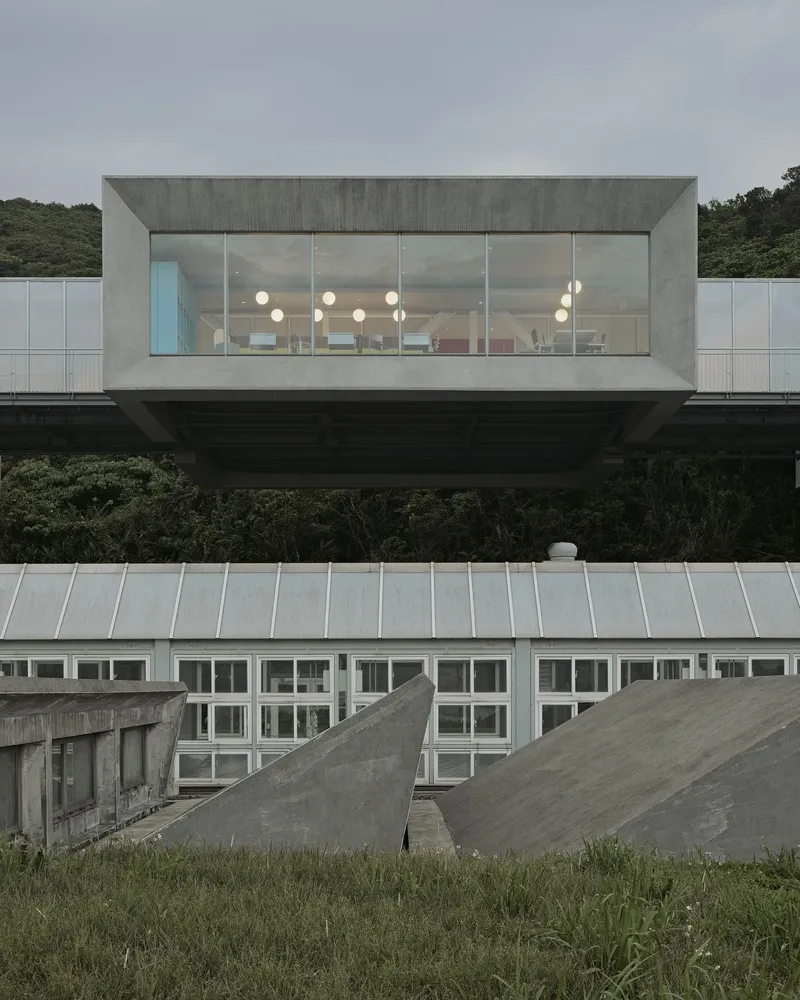
Originally affiliated with Taiwan’s National Museum of Marine Science and Technology, the complex consisted of multiple phases of construction. These included an underground aquaculture workstation, concrete research buildings to the north and south, and a dramatic 40-meter-span steel sky bridge connecting the structures.
The current renovation preserves elements of the original research and office functions, while transforming the complex into a public museum featuring aquarium displays, digital multimedia exhibitions, and commercial spaces. This shift expands the site’s role from a closed scientific facility to an open civic and educational environment, accessible to a broad public audience.
Architecture as a Living Container
Central to the design concept is the idea of architecture as a living container, comparable to a water tank that sustains marine life. The museum is conceived as an inhabitable ecosystem, where people, water, vegetation, and marine species coexist within a continuous spatial experience.
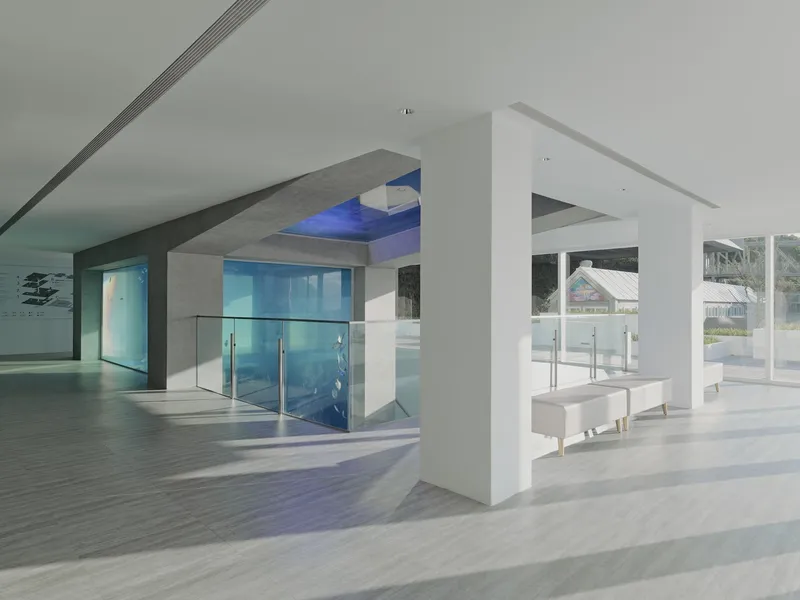
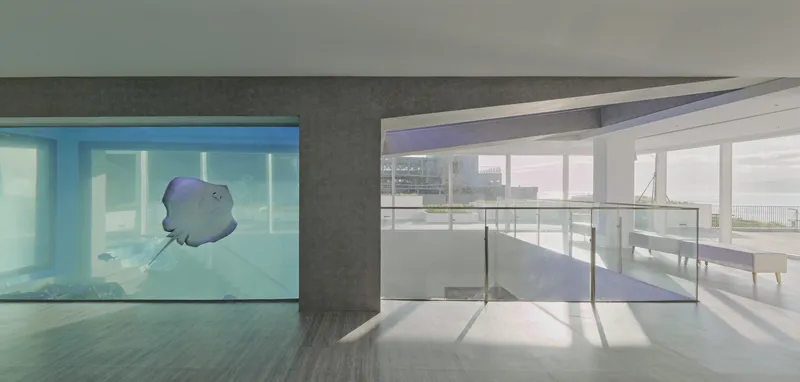
Large aquariums are strategically inserted into newly added concrete volumes placed between existing buildings. These independent structures not only house water tanks but also act as spatial connectors, linking interior circulation with visual access to the surrounding mountains and ocean. As visitors move through the building, they become part of the exhibition, simultaneously observers and observed.
Spatial Continuity Between Interior and Landscape
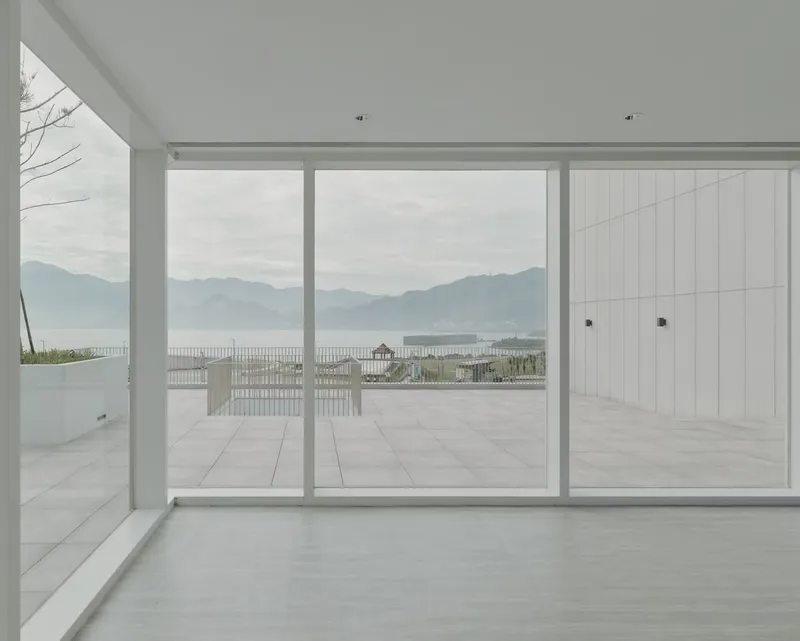
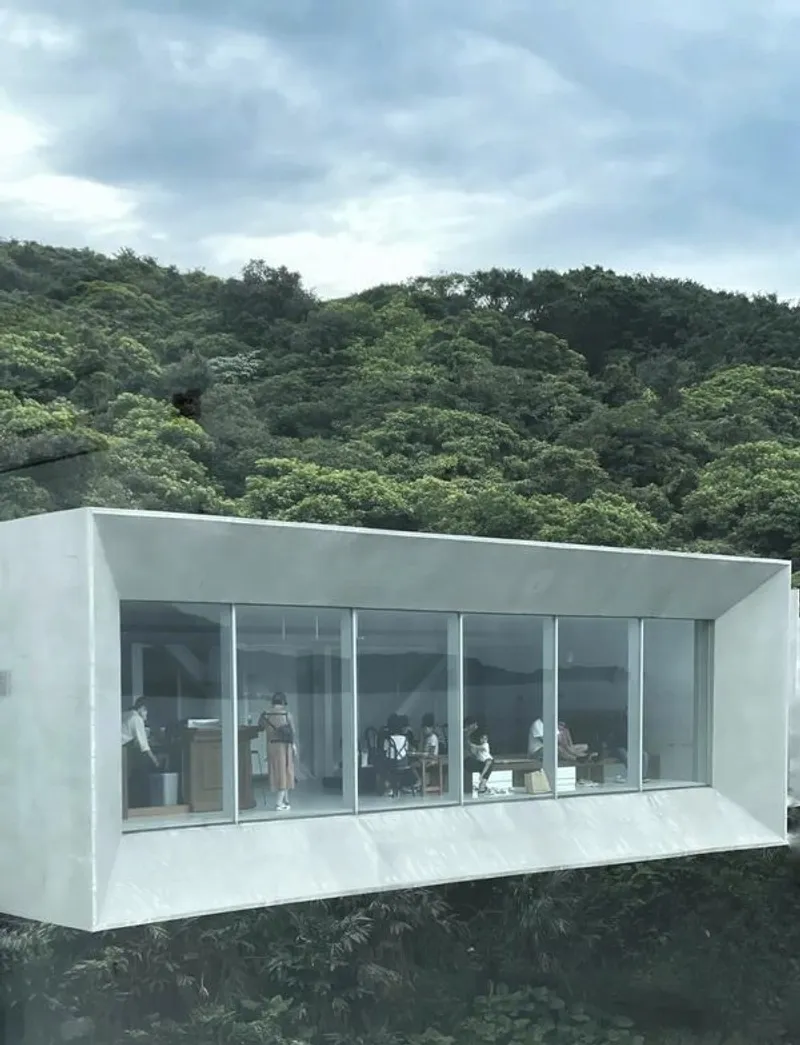
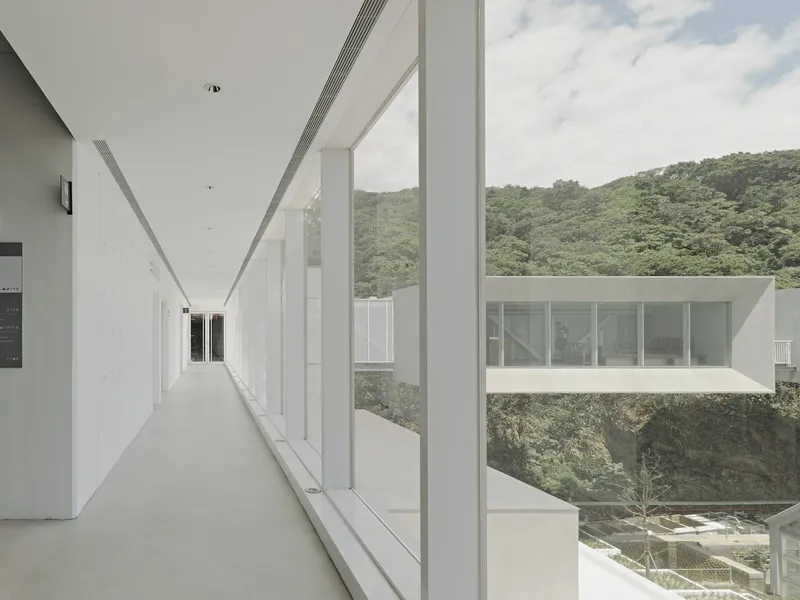
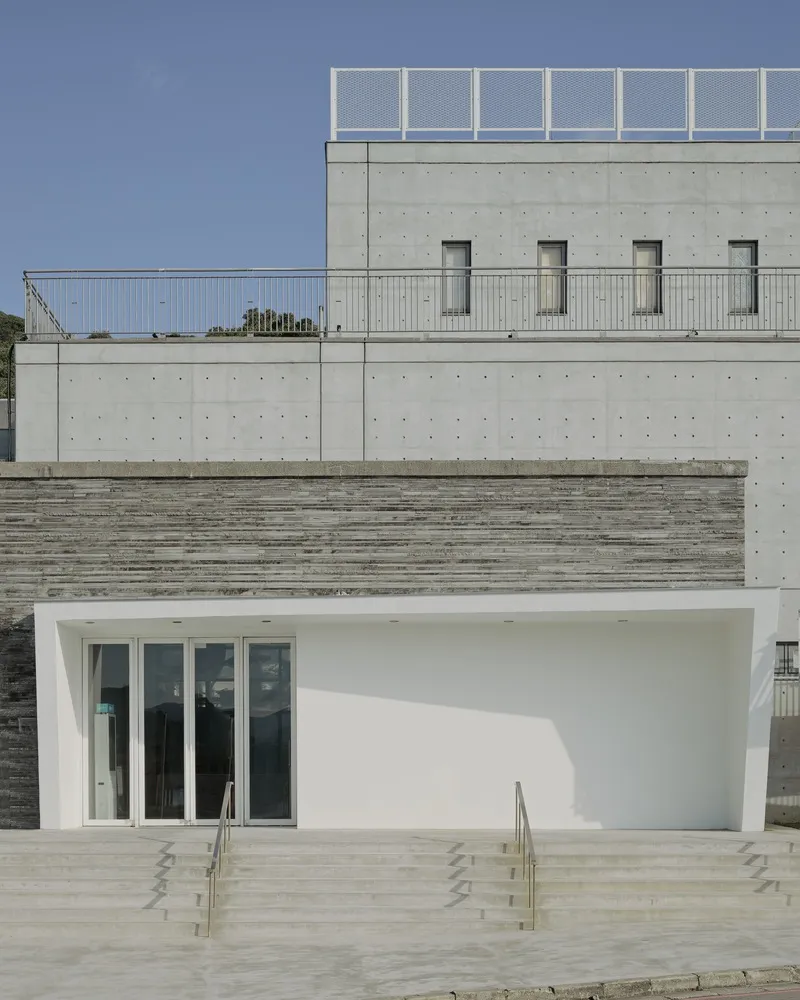
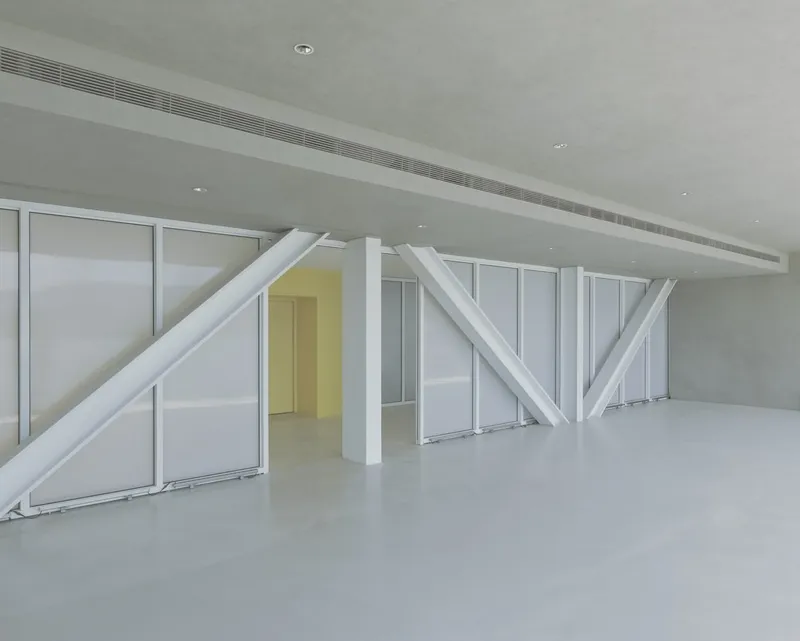
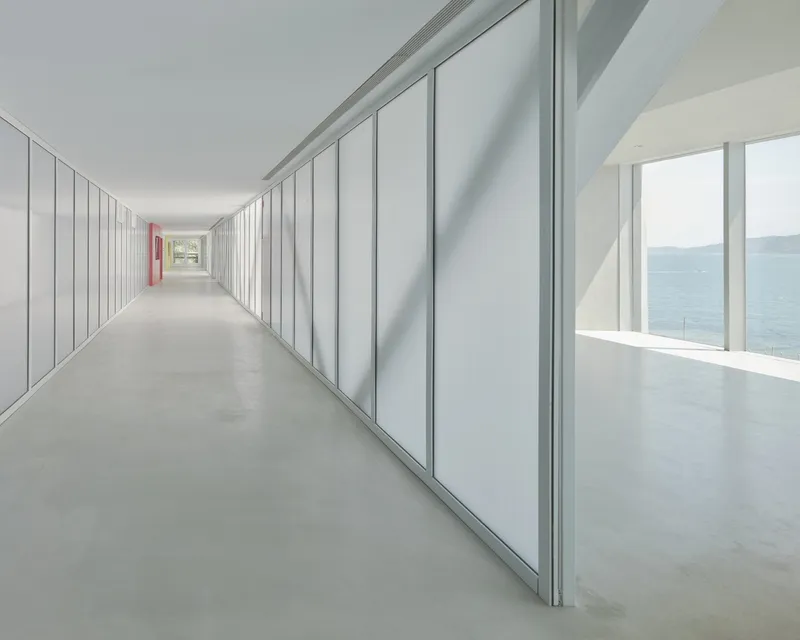
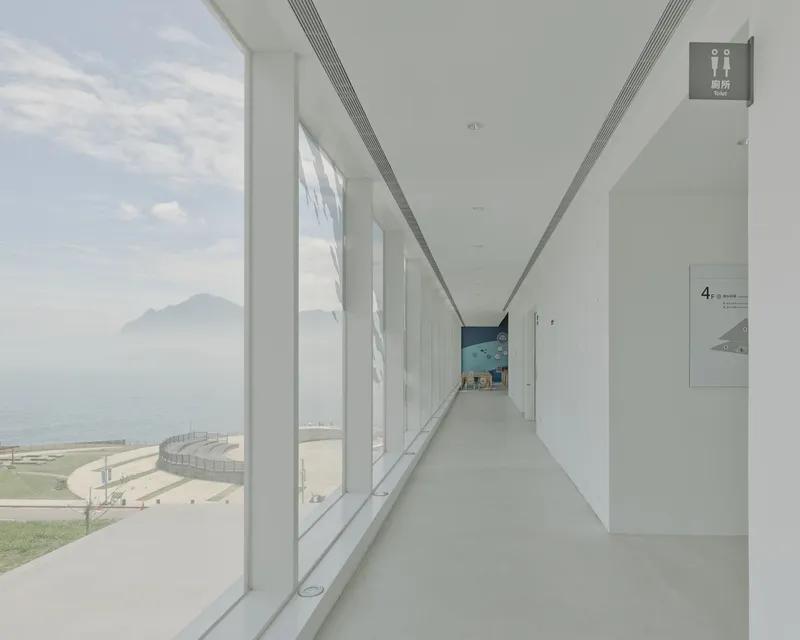
The renovation enhances visual and physical continuity between indoor and outdoor spaces. Original balconies are reinterpreted using hollow cement panels and glass curtain walls, forming exhibition “black boxes” and transparent corridors oriented toward the landscape. These interventions frame panoramic views of the sea, sky, and forested hills, transforming the natural environment into an ever-changing exhibition backdrop.
On the ground floor, an open entrance lawn invites visitors into the museum, while elevated outdoor terraces and green pots on the upper levels introduce trees and vegetation into the architecture. This integration blurs the boundary between concrete structure and natural terrain, reinforcing the museum’s ecological narrative.
Sustainable Strategies and Structural Adaptation
Sustainability plays a key role in the project’s architectural logic. Rather than demolishing and rebuilding, the design prioritizes reuse of existing structures, significantly reducing material waste and embodied carbon. The sky bridge, a defining element of the complex, is upgraded with lightweight thermal panels and high-performance coatings, improving energy efficiency while maintaining structural integrity.
Glass curtain walls are carefully calibrated to address load-bearing, thermal performance, and user comfort, ensuring that transparency does not compromise environmental control. Together, these strategies support the museum’s role as a sustainable cultural landmark rooted in environmental awareness.
A Floating Cultural Landmark Between Mountains and Sea
The completed i Ocean Museum appears to float between mountains and sea, with its sky bridge acting as a suspended viewing platform and symbolic connector. By transforming an aging research complex into a dynamic public institution, B+P Architects demonstrate how adaptive reuse, ecological sensitivity, and contemporary museum design can coexist within a single architectural framework.
The project stands as a compelling model for marine architecture and sustainable cultural renovation, offering visitors an immersive spatial experience that reflects the fragile balance between human intervention and natural systems.
All photographs are works of Studio Millspace


Popular Articles
Popular articles from the community


The Amber Palace Opera: A Geological Fiction Surfaces on Tallinn's Baltic Waterfront
Pierre Brillard reimagines a Baltic legend as a public landscape, opera house, and waterfront promenade rooted in Tallinn's coastal identity.


ETEH Reworks the Shared Spaces of São Domingos School in Brazil Around Timber, Color and Hanging Plants
At São Domingos School in Brazil, 436 m² of hall, refectory and library are recast with timber joinery, a yellow and blue code and trailing greenery.

Aquadapt: An Underwater Habitat That Rewrites Its Rooms by the Hour
Curved modules ring the seabed while one shell shifts from breakfast room to cinema, farm and football pitch as residents' needs change.

FCC Arquitectura Expands a Portuguese Granite House with a Board-Marked Concrete Wing
In Portugal, JV House pairs a cleaned-up whitewashed and granite dwelling with a timber-shuttered concrete extension, courtyards and a garden pool.

Similar Reads
You might also enjoy these articles


Hodi-Mandai Geram
Project Function: Preservation and revitalization of the Intangible heritage and socio-spatial identity of the Hodi by Housing, Cultural Memory Center, Sacred Grove, landscape, local tourism economy


Olio Towers: A Mid-Rise for Performers That Fuses Housing, Rehearsal, and Stage
Located blocks from Houston's Theater District, this modular tower stacks living units around a central performance atrium.

Oasis: Modular Green Housing Carved into Dhaka's Urban Fabric
A shortlisted Plugin Housing entry reclaims unauthorized settlements in Dhaka with stepped concrete volumes, green roofs, and ventilation-driven design.

Black Hole: A Floating Megastructure for the Post-Physical Era
Emiliano Mazzarotto envisions a spherical, self-scaling arena where e-sports, digital hotels, and holographic stadiums replace traditional public space.

Explore Ocean Architecture Competitions
Discover active competitions in this discipline

Challenge to reimagine the Iron Throne

Photograph architecture without architects

Illustrate the lost glory of Angkor Wat - Render Challenge

Bring back Drive In's
Comments (0)
Please login or sign up to add comments
No comments yet. Be the first to comment!