
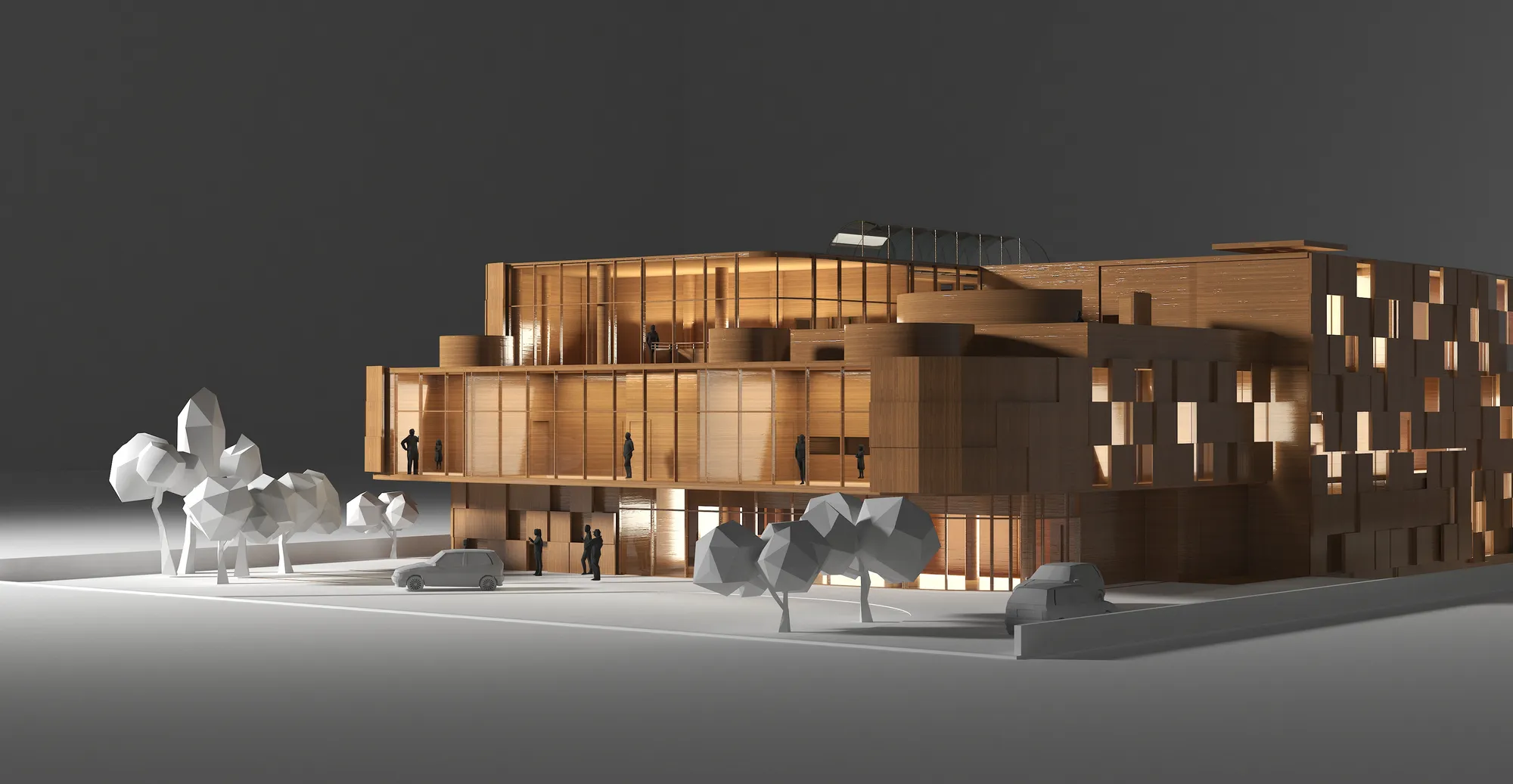
IKIGAI
Death is not the opposite of life, but a part of it. – Haruki Murakami.

- The Retrospection:
This project is titled as IKIGAI, which is a traditional Japanese philosophical expression representing the “meaning of life”. IKIGAI, also translated as "life and worth" refers to an amalgamation of little things in life with happy memories we create, thereby resulting in a frame of mind that is positively oriented.
From an Architectural viewpoint, the focus of this proposal is to instill the hope of life in the residents of hospice; rather than invoking the wait for death. The concept of life and death can be defined in several ways. However, the generic meaning of "death" is to interrupt life abruptly. It is understood that "life" as a theory is safe and defined; however death is relatively complex in nature. Similarly, one’s perspective towards life depends on the order in which the concept of life and death are understood by them. The relationship between life and death can be represented conceptually by; a) Life and Death (as a path/ road that one must follow), and even b) Death and Life (as a contrast, the joy of the mundane and daily). Furthermore, abstracting these conceptual terms into related concepts, we find two large groups of antonym ideas such as: Complex and Simple. The “Complex” definition (stimulated from “Life and Death”) involves indefinite interventions and the “Simple” one (motivated from “Death and Life”) is associated with the immediate interventions. For this proposal, the design approach is to create “Simple” design intervention which invokes quick, regular, immediate, and goal-based impact on the users’ notion. Thus, instead of focusing on the painful narrative of “Life and Death”, the focus of this proposal is on the positive narrative of “Death and Life”.
- The Intervention:
The primary user group for this proposal is kids of the age groupb) 1-3 years (Toddler), c) 3-5 years (Pre-School), and d) 5-12 (Grade School/ Pre-Teen). The primary users are intended to spend approximately 06 months in this hospice, which is unfortunately the last period of their life. The proposal is meant for 50 such kids. Thus the proposal conveys a distinctive “pattern language” that challenges kids to increase their activeness (often mental rather than mere physical), be happy, and even challenge themselves; thus creating a sense of normalcy all around. Basically, the intent is to create the last 06 months as less painful as possible to the users while giving them their basic individual needs such as study, interaction, and food.
Based on the principles of IKIGAI, a matrix-table (Table 1) of concept translations (from design aspects to the program and users) was developed for the implementation of the same onto the physical aspect of the design.
Table 1: Translation of Concept
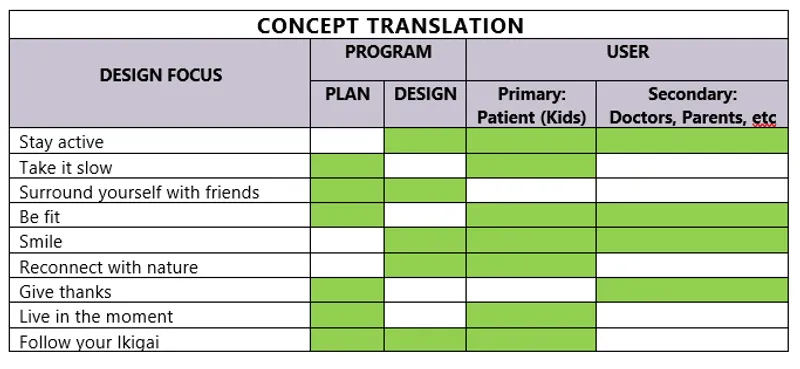
Based on the aforementioned table, the proposal was initiated. Apart from this, the three projects were referred to:
a) Panzi Hospital, Congo,
b) Kandalama Hotel, Sri Lanka,
c) Enabling Village, Singapore.
Based on the literature study and case studies, the zoning was developed involving 03 primary areas:
a) Public Spaces,
b) Medical Spaces,
c) Service Spaces (Figure 01).
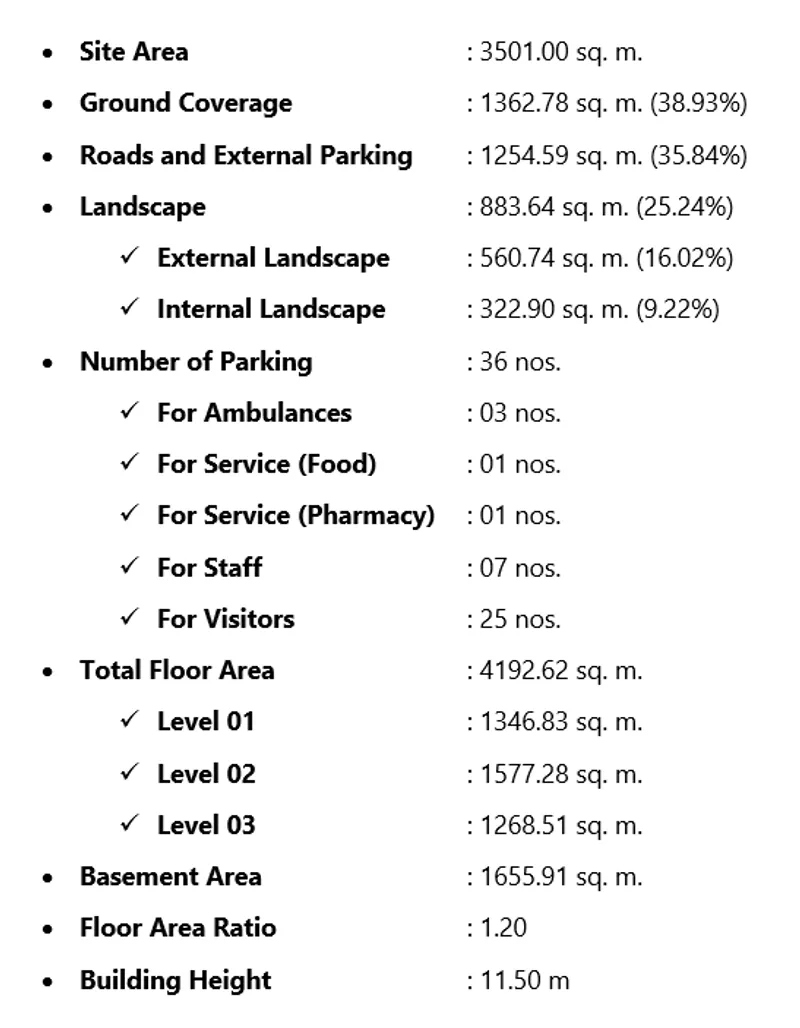
The key features of the proposal are:
- The Introspection:
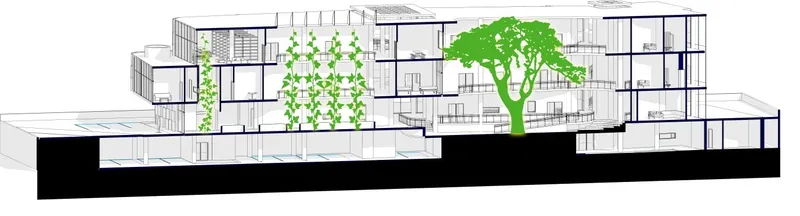
Throughout the design program, the challenge was to comprehend how most (or all) of the hurdles that the dying children are going to experience, can be solved through Architecture. Furthermore, the focus was on “healing architecture”, which invokes the feeling of mental well-being besides physical well-being. For implementation of the design philosophy, “paths” were created to get to a specific “place” which has an associated “feeling” we want to make (Figure 2). In addition to this, the movement between different parts of the project offers interesting views. Incidentally, this proposal has used the ever-changing entity of nature/ similar elements in the form of cut outs; which causes a distraction of real life; eventually imparting the feeling of “being relaxed” (Figure 3).
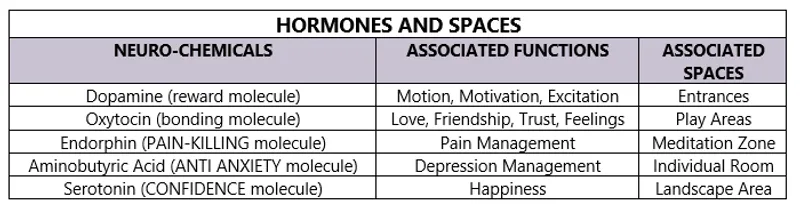
Additionally, every space has an intricate relationship between design factors and healthcare outcomes by means of initiating chemicals (hormones) that act upon the brain to produce happiness (Table 2).
Table 2: Relation between Spaces and Hormones
The key feature of the proposal is the central green area (healing garden) which has an overlooking visual connection from all the rooms of the hospice. This creates a sense of distraction through nature.
- The Cognizance:
Finally the design attempts to create a simple linkage between the built/ unbuilt with the users rather than creating a complex pattern language theory. The pain and agony of the users and their parents might go through a healing journey through the usage of spaces designed in this proposal.
Figure 1: Zoning
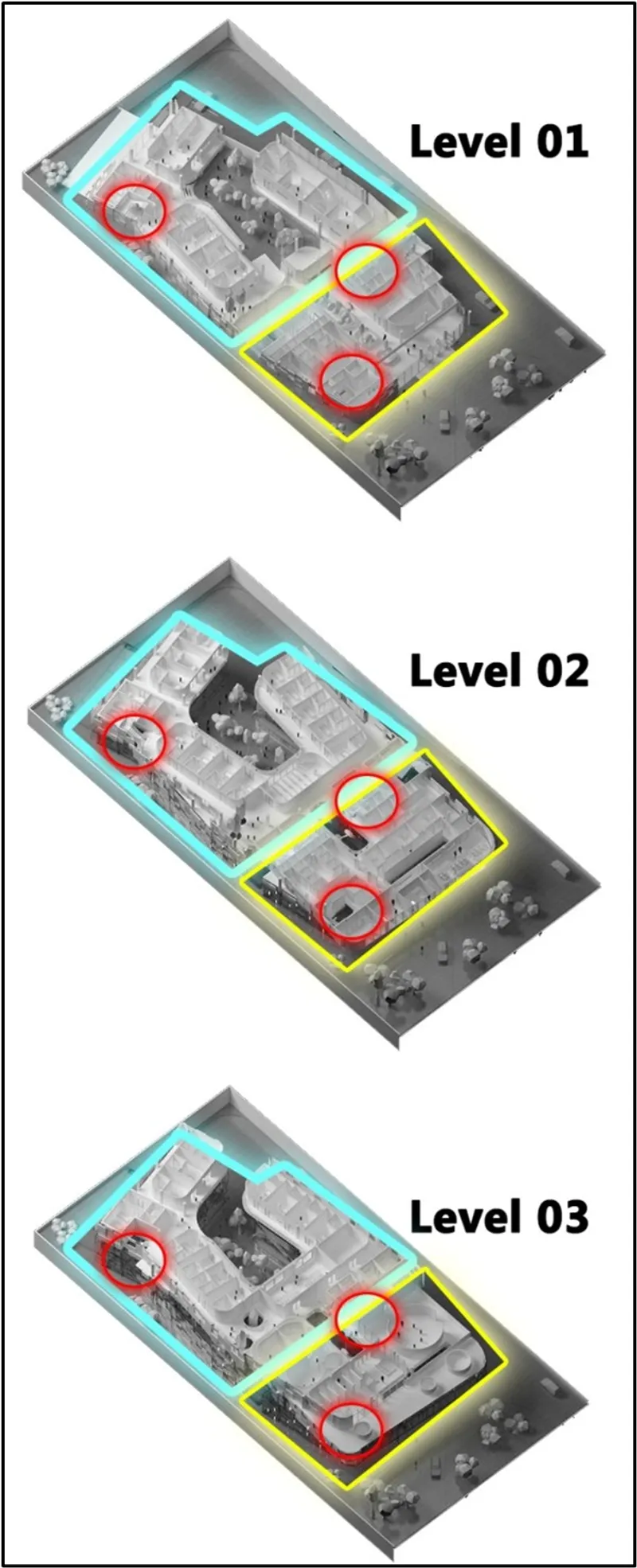
Figure 2: Paths
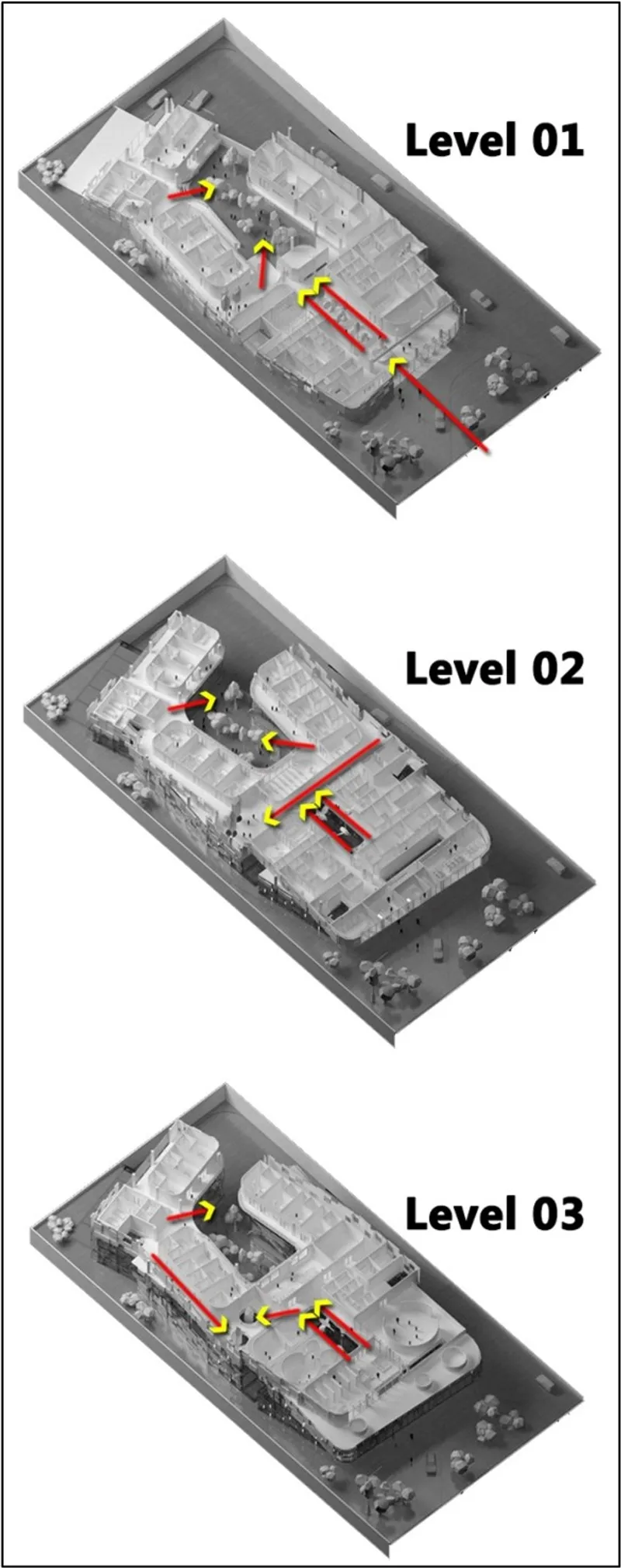
Figure 3: Cut Outs



Popular Articles
Popular articles from the community


Conexión: Biophilic Design Reimagines High-Rise Living in Hong Kong
Conexión reimagines high-rise living in Hong Kong through biophilic design, green facades, shared spaces, daylight, water and nature within.

Riyadh For All: Intergenerational Urban Design for Active Aging in Rabat
Riyadh For All reimagines urban design in Rabat with intergenerational co-living, adaptive courtyards, and Moroccan cultural exchange today.

The Ocean Hive: Sustainable Architecture for a Self-Sufficient Civilization at Sea
The Ocean Hive imagines sustainable architecture at sea, where modular habitats, algae, wave power and ocean waste sustain a growing colony.

Play: Fragments of Their World
Familiar architecture becomes modular playground design, creating safe spaces where displaced children can learn, connect, imagine and play.


Similar Reads
You might also enjoy these articles

The Rhythm of Seasons
A Farmers' Market Connecting Nature and the City


More Than a Building-Designing a Living System
More Than a Building-Designing a Living System
Base Beyond
DESERT COMPOUND ARID: TOURISM OF ABSENCE AND ABUNDANCE

Comments (0)
Please login or sign up to add comments
No comments yet. Be the first to comment!