

Impluvium Installation by Banco!: A Contemporary Rainwater Harvesting Pavilion Reflecting on Ecology and Water Cycles
The Impluvium is a rainwater harvesting pavilion offering quiet reflection on ecology, water cycles, and rural sustainability.


Reimagining Rural Architecture through Rainwater Harvesting
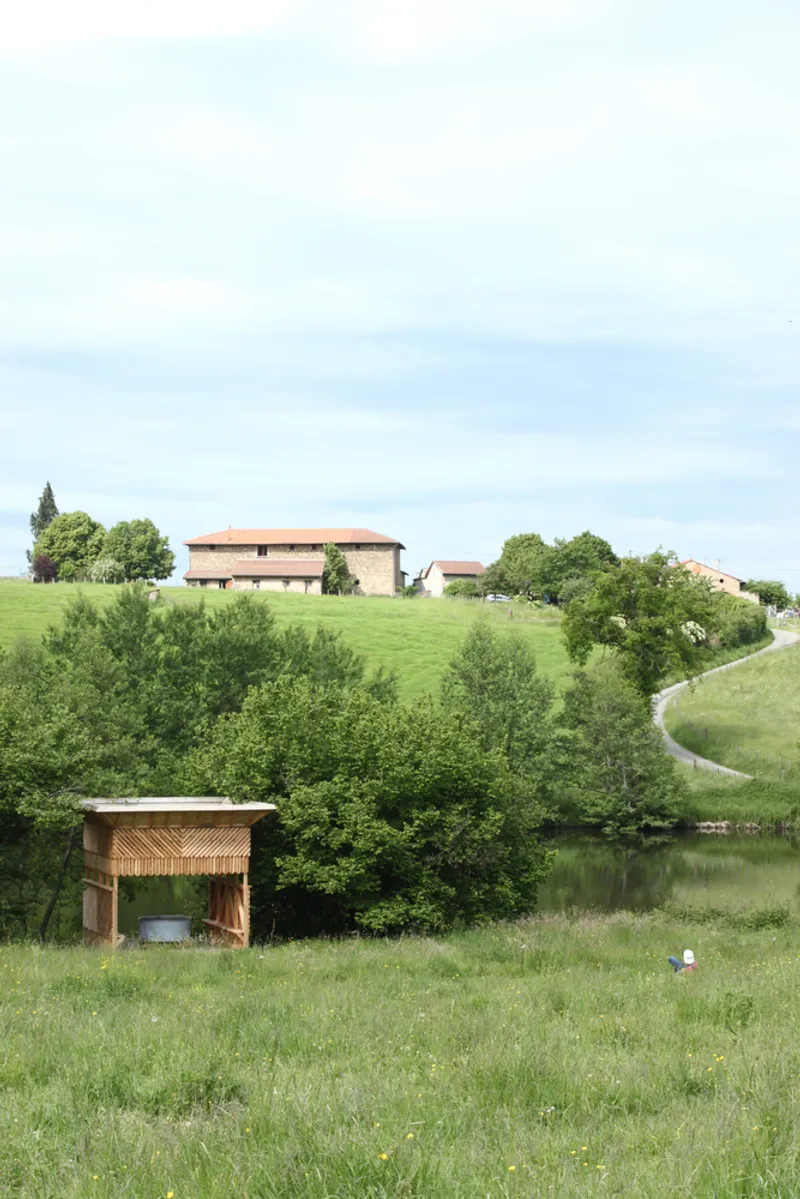
Set within the evolving agricultural and cultural landscape of Fourneaux, France, the Impluvium Installation by Banco! stands as a minimal yet profound architectural intervention. Created as part of a public call for experimental rural design by Ferme de Vernand and the Polyculture Association, the structure is a celebration of ecological engagement, traditional wisdom, and landscape dialogue. It takes the form of a rainwater harvesting pavilion that reconnects people to the natural water cycle while highlighting freshwater as a vital, endangered resource.
A Site Rooted in Ecology and Agricultural Heritage
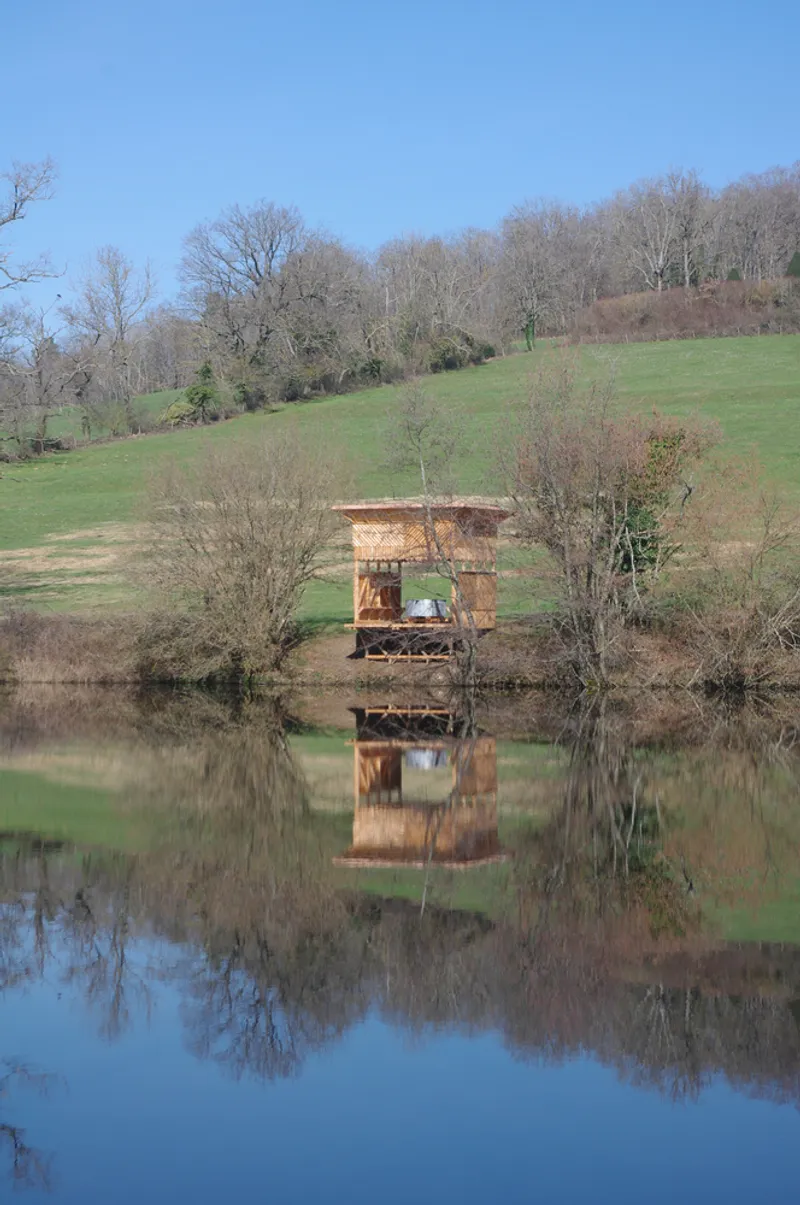
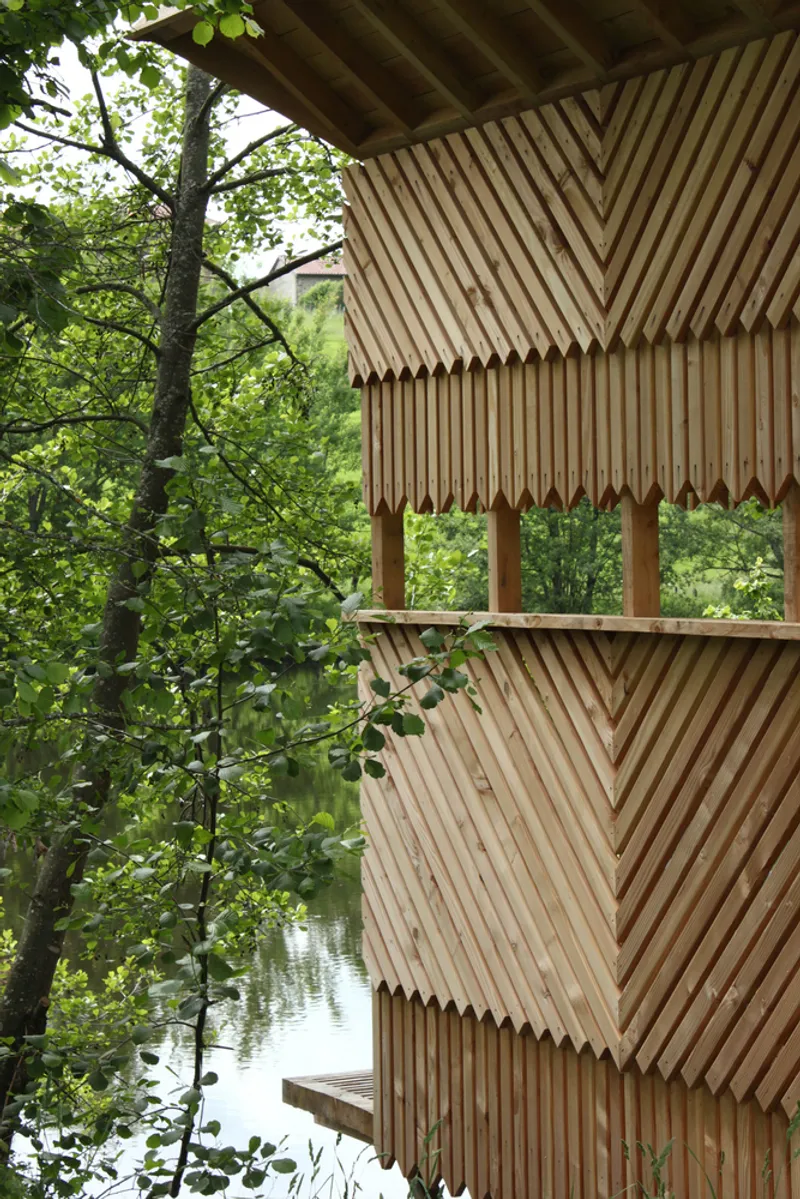
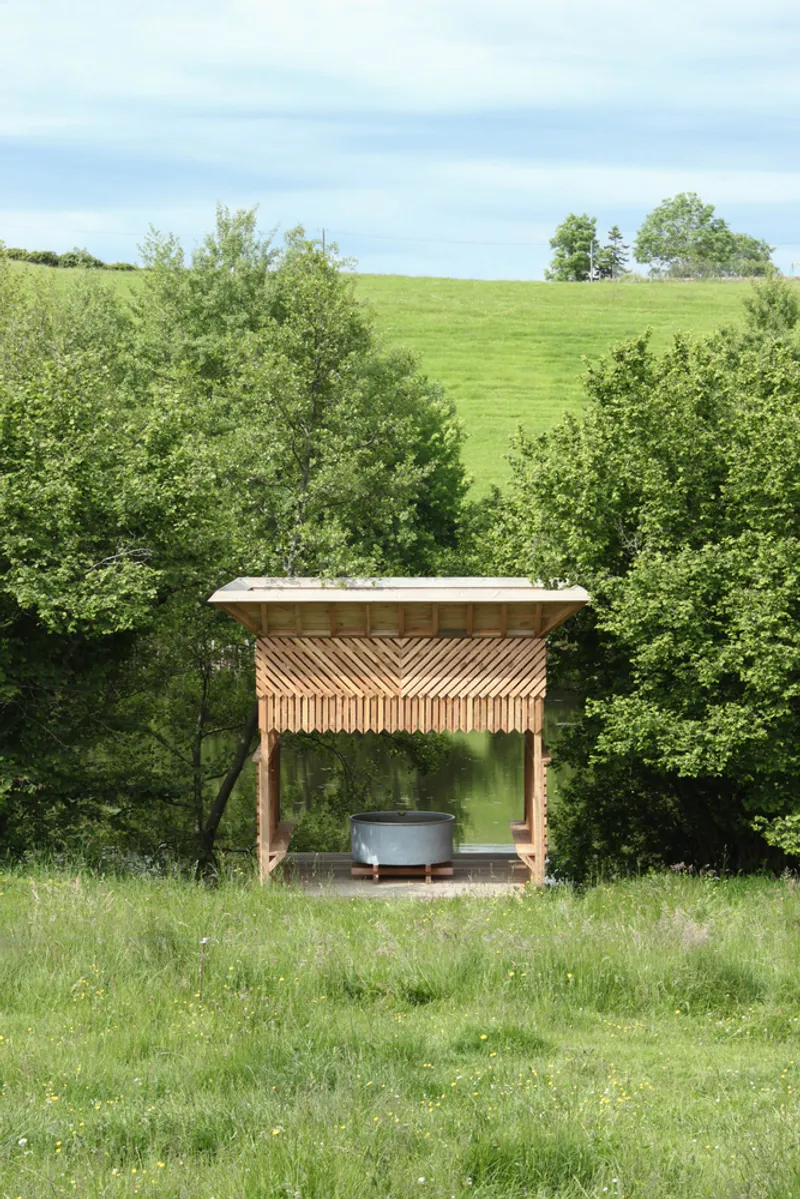
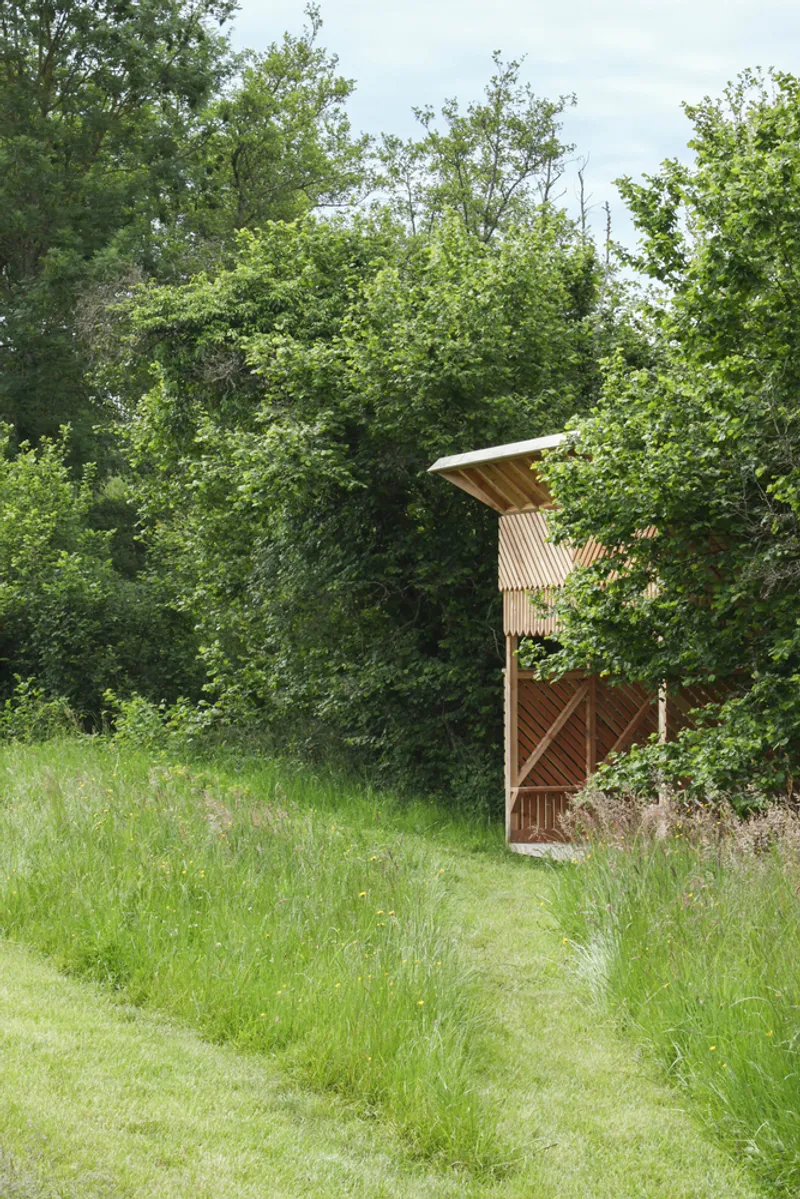
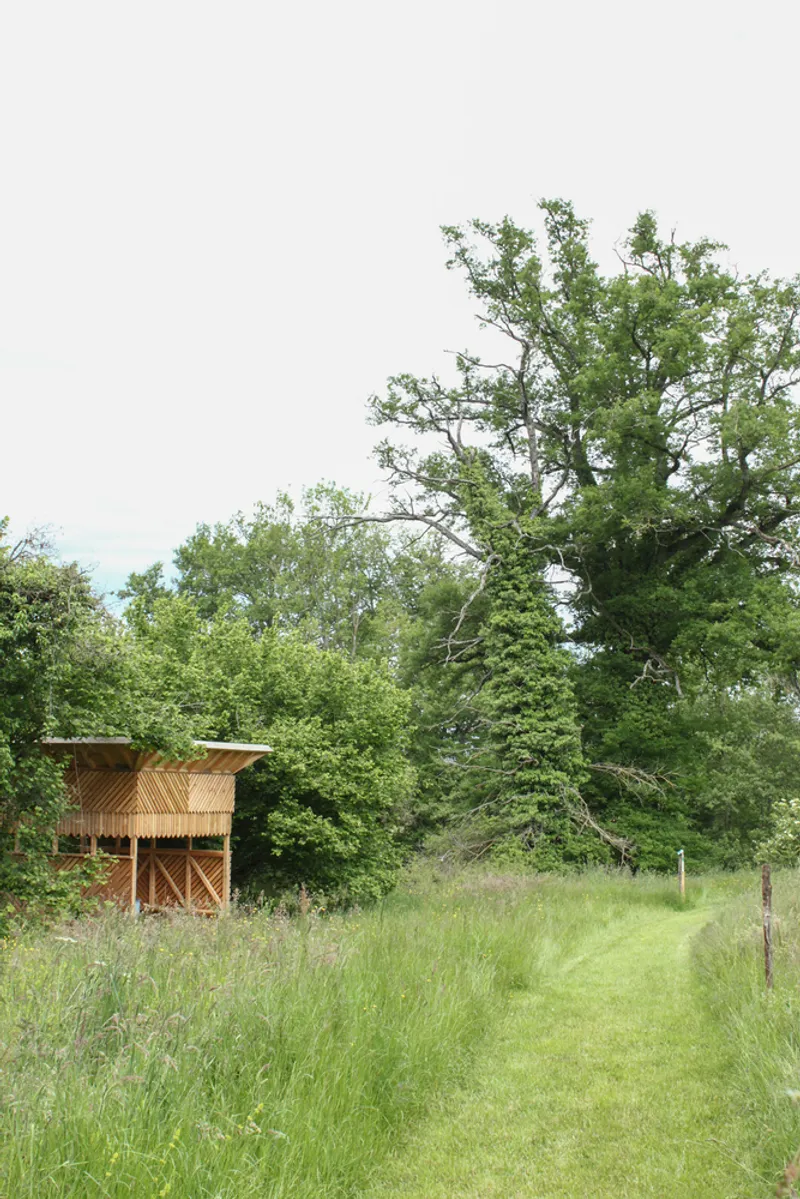
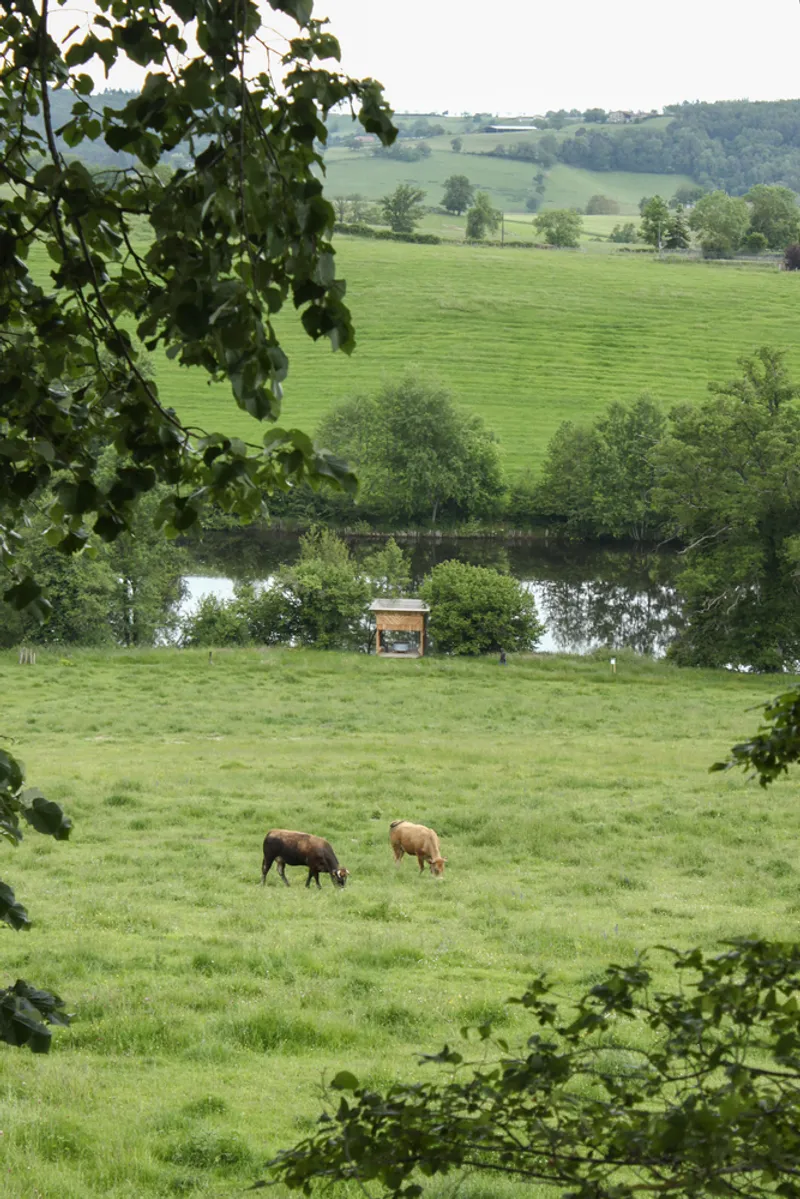
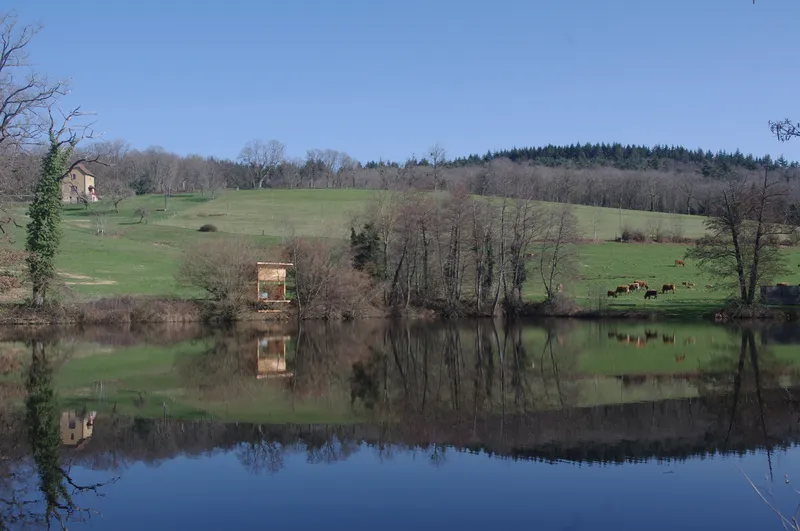
Located at the edge of a man-made pond of uncertain origins, the site already serves multiple ecological roles. It functions as a biodiversity habitat, an agricultural water reserve, and a local social amenity. Rather than imposing on this environment, the Impluvium acts as an interpretive lens, inviting visitors to reflect on how such modest infrastructures support the rhythms of both natural systems and human needs.
Architectural Form Echoing Ancient Practices
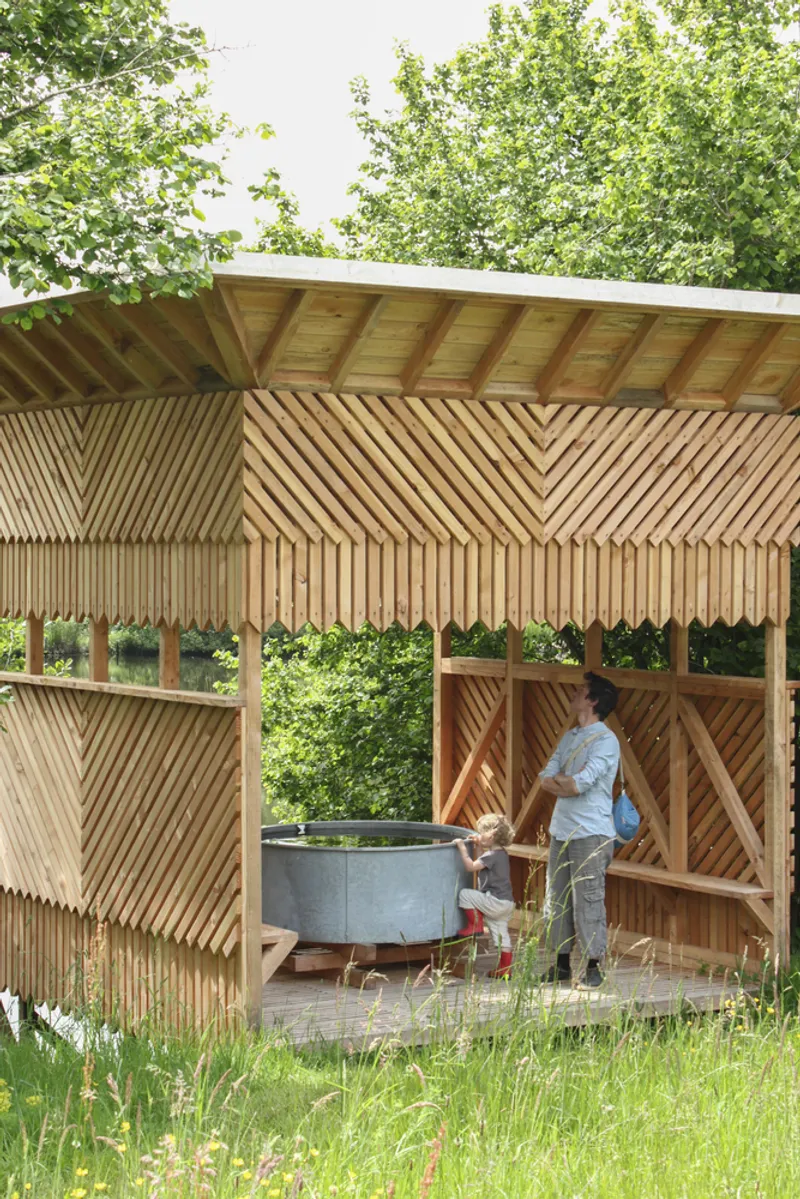
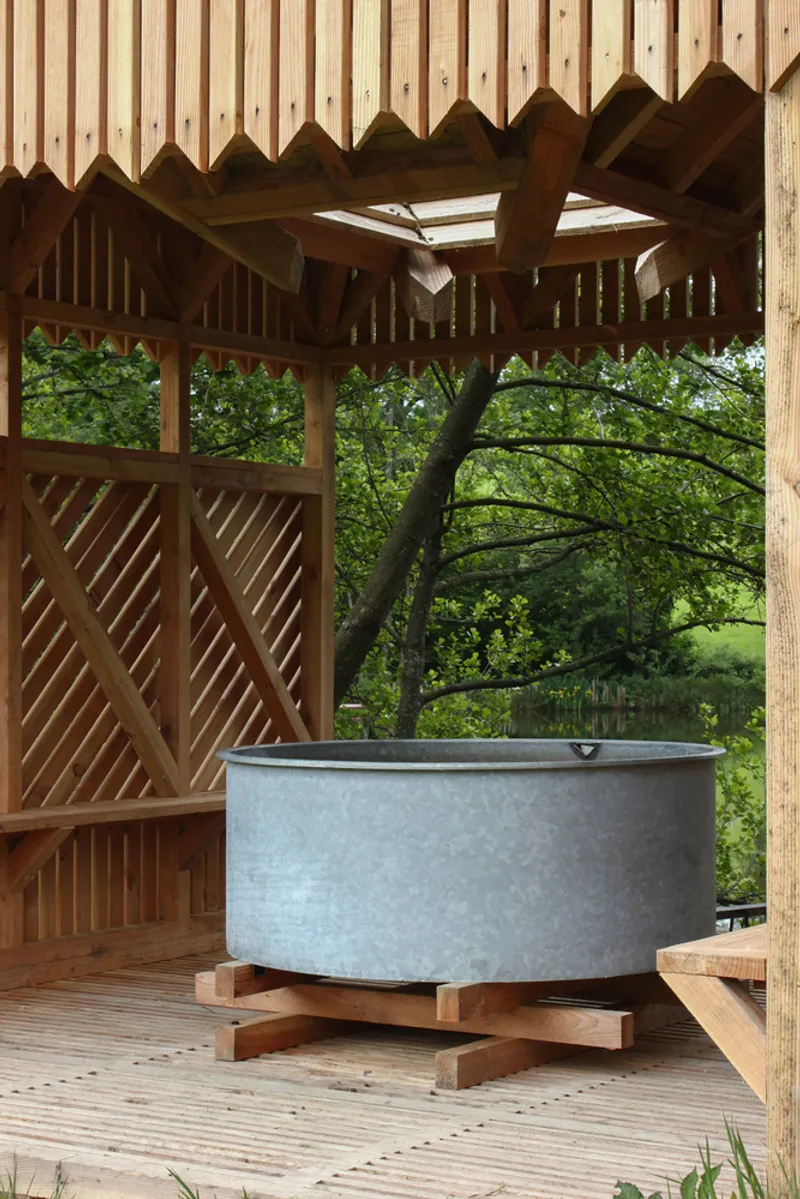
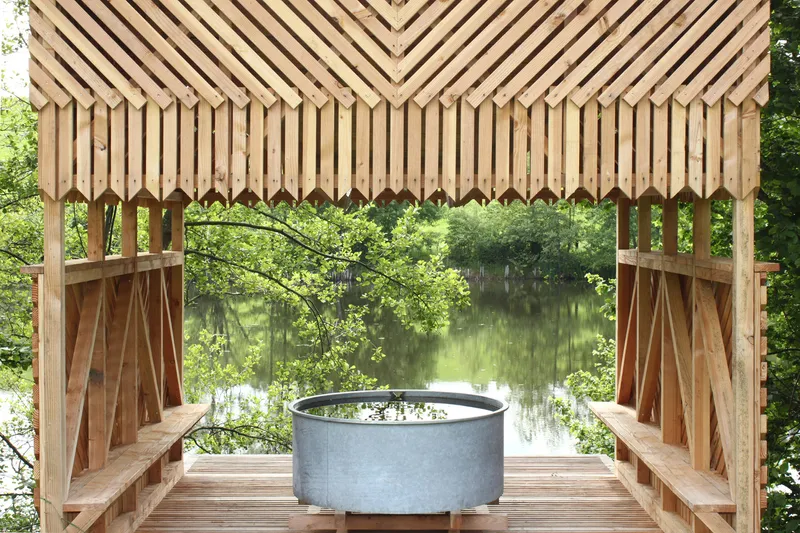
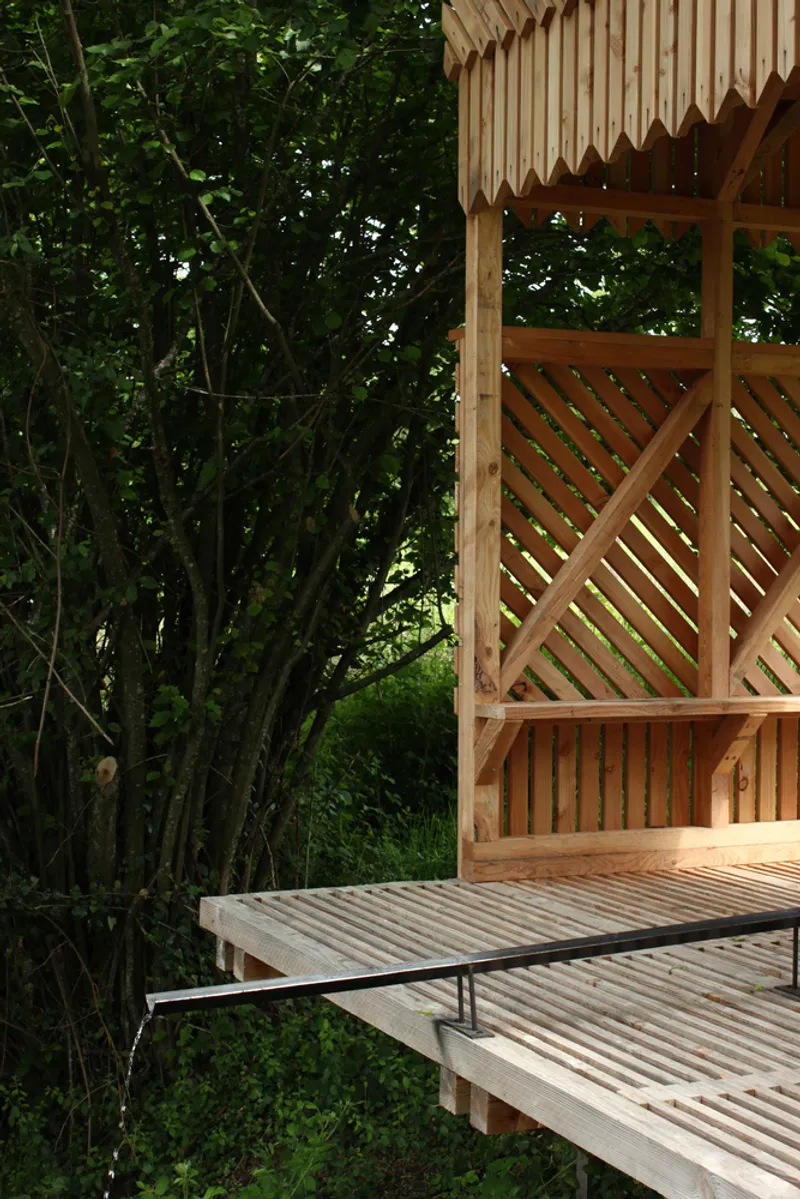
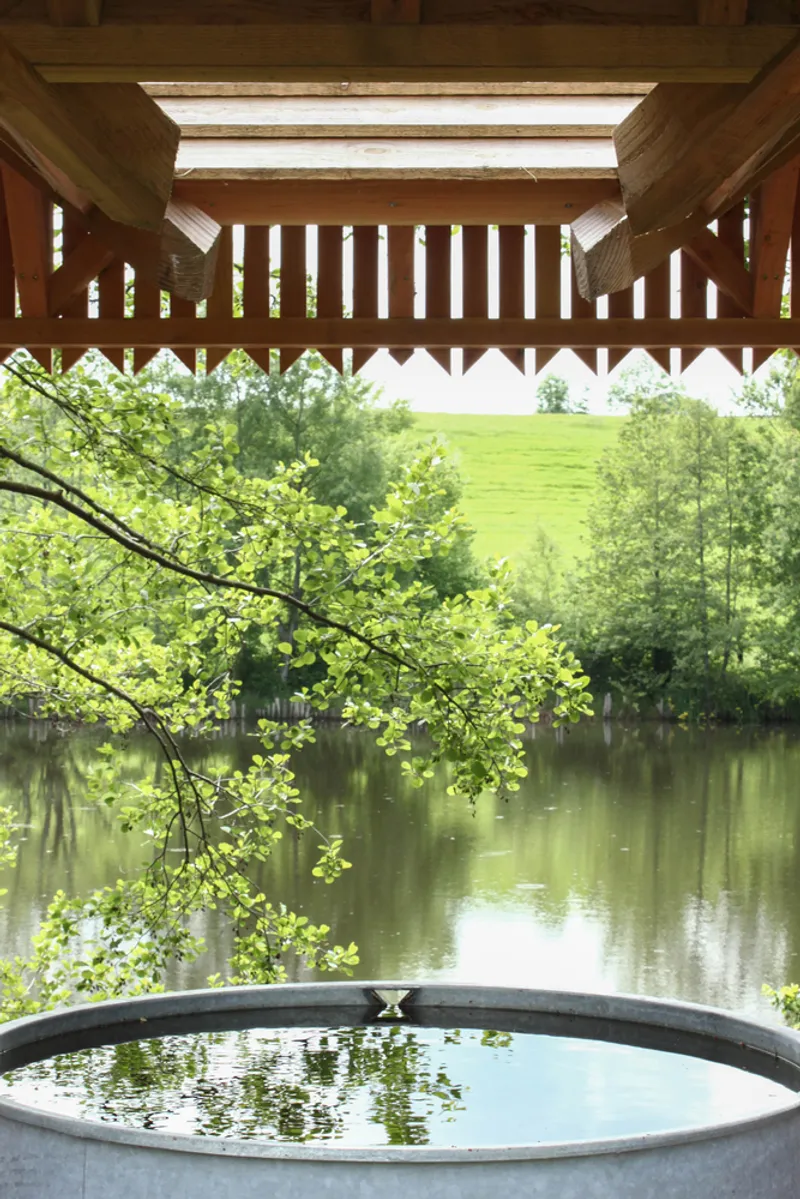
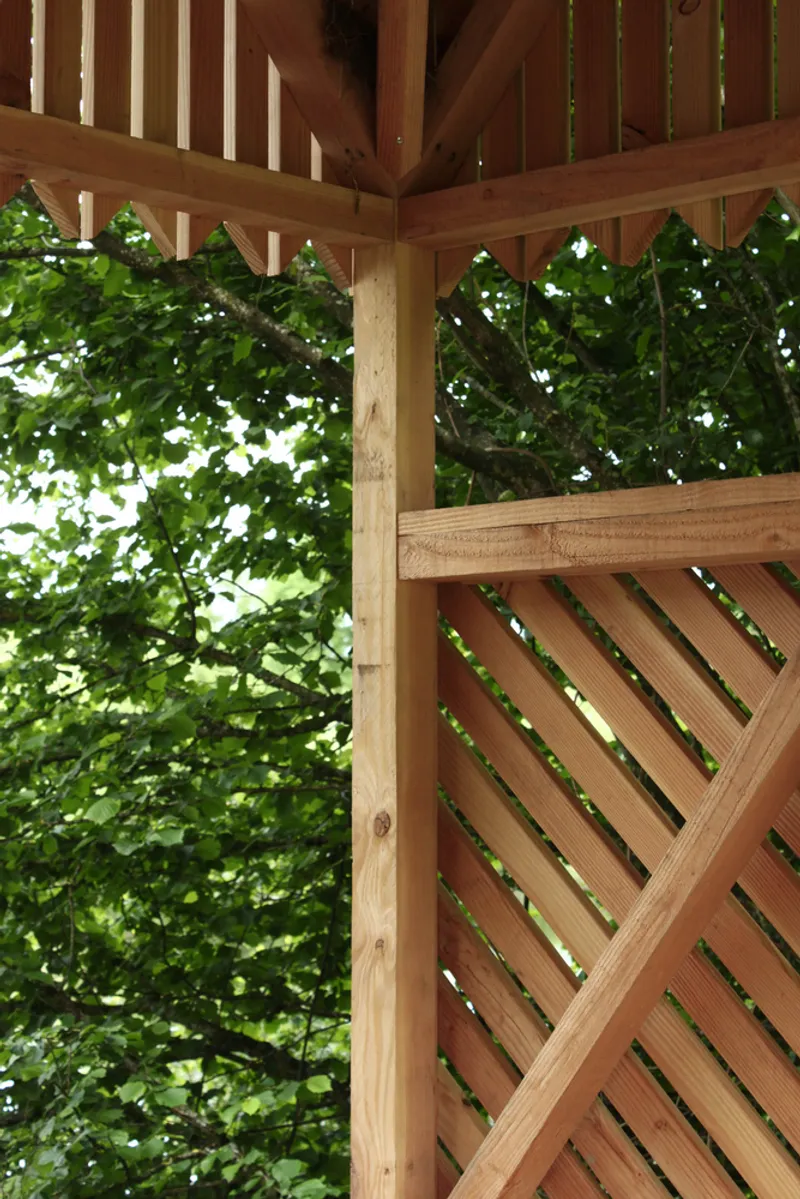
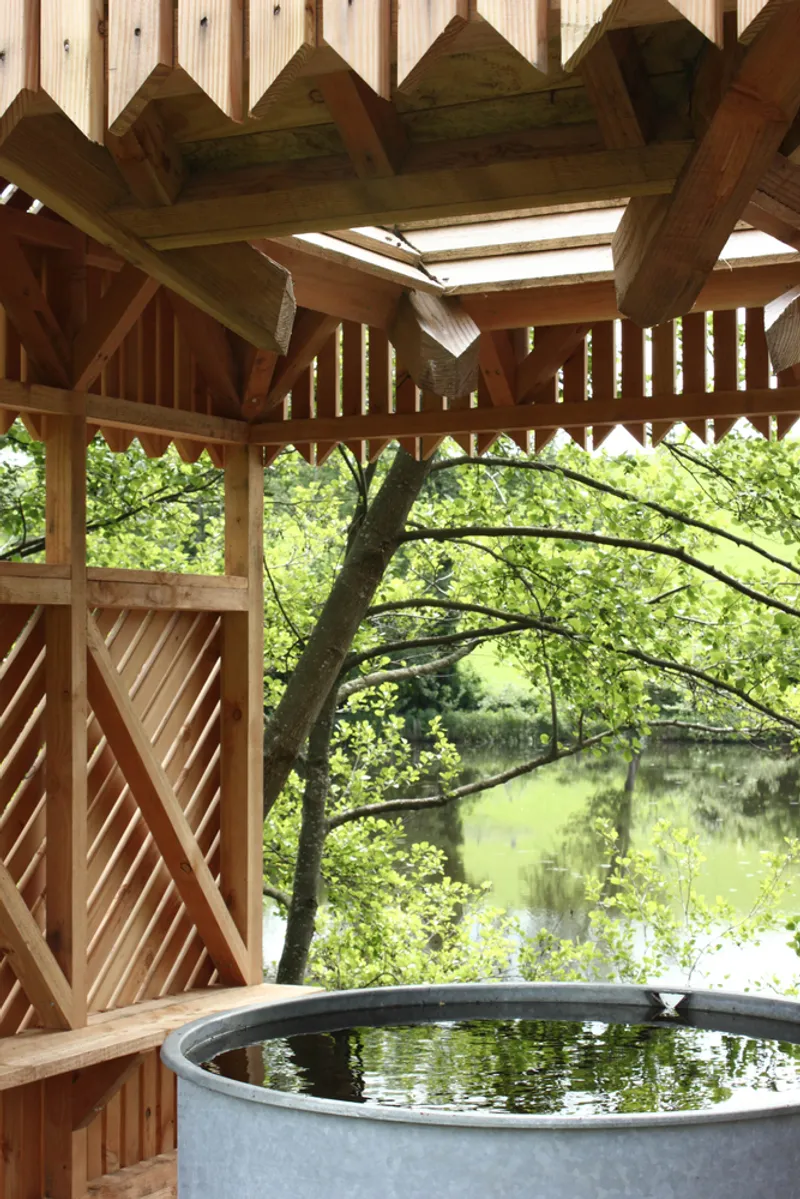
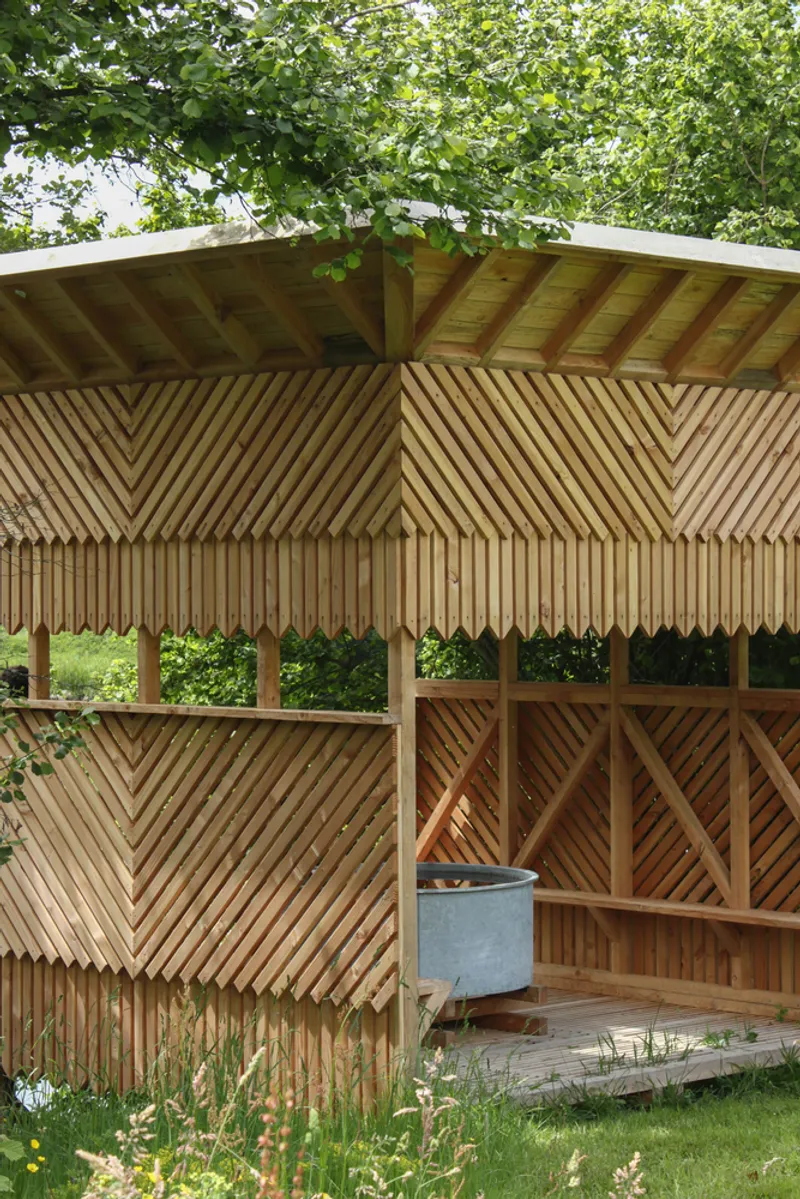
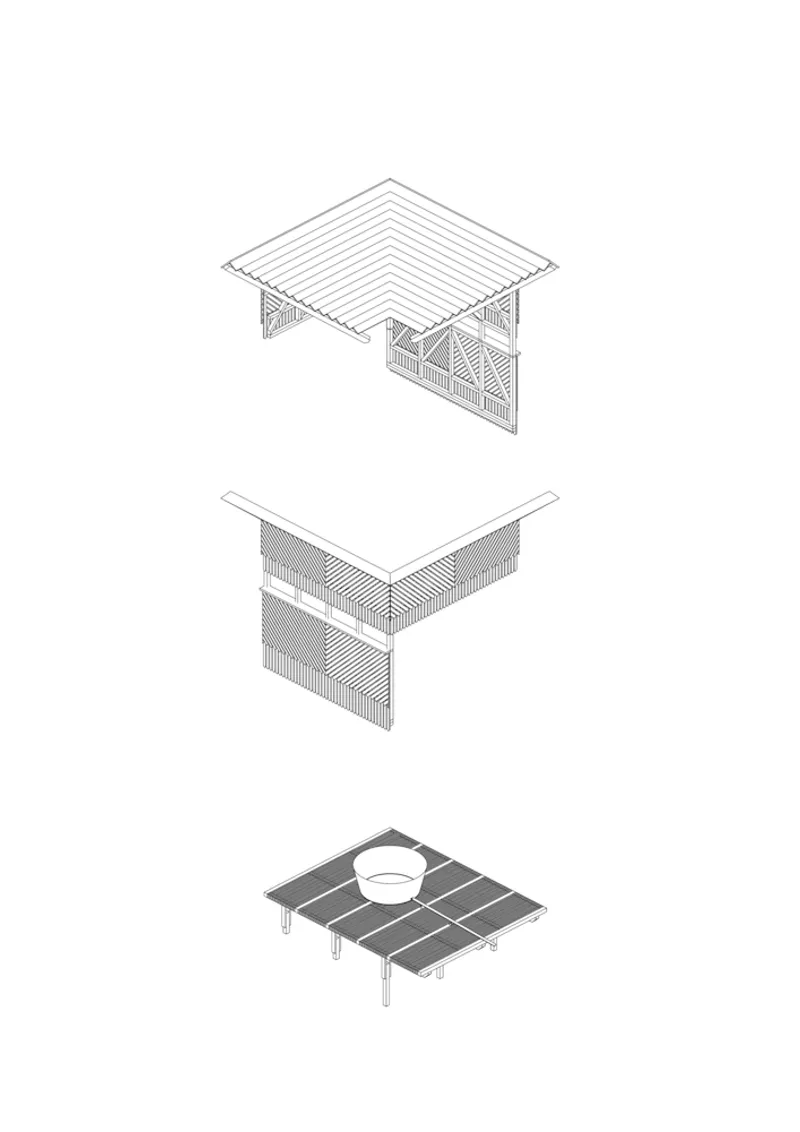
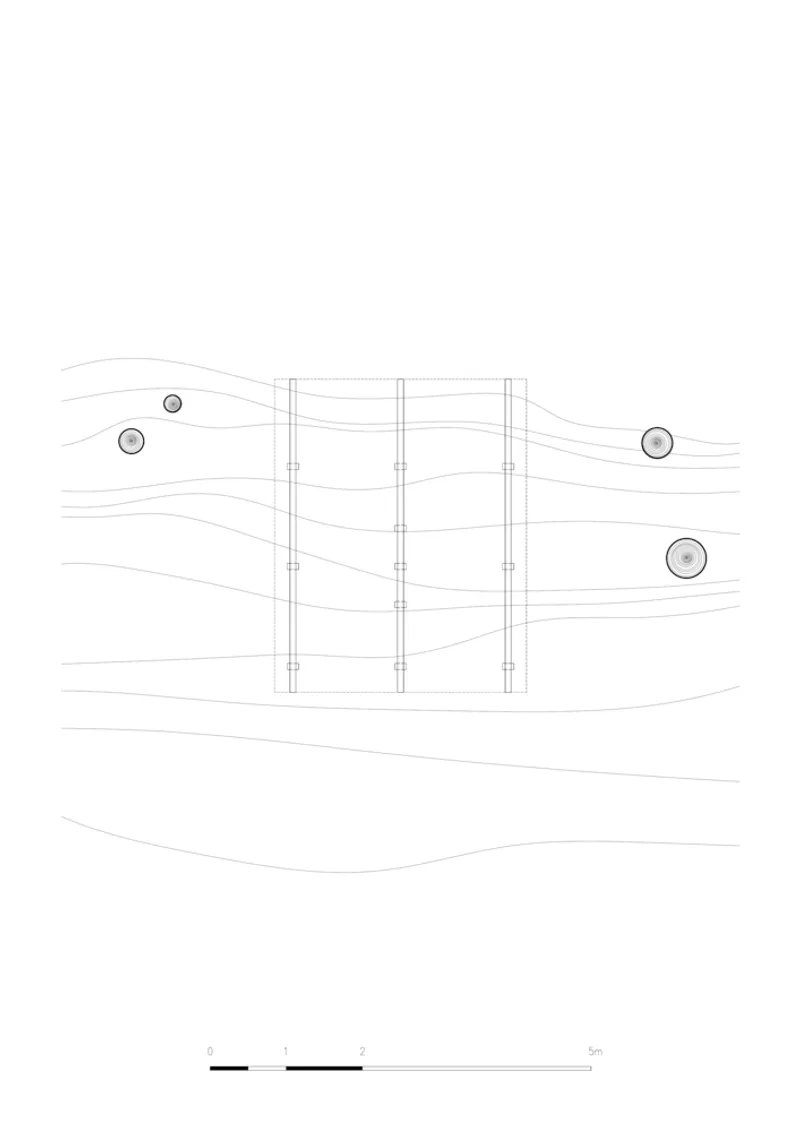
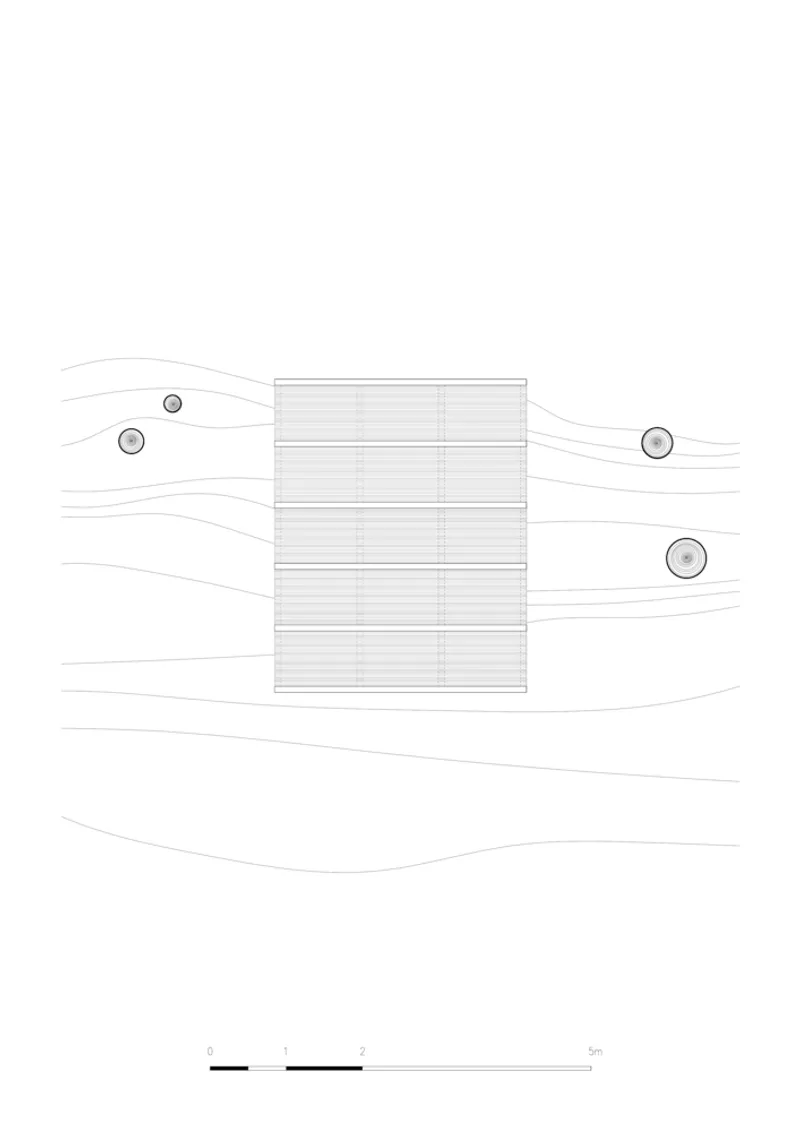
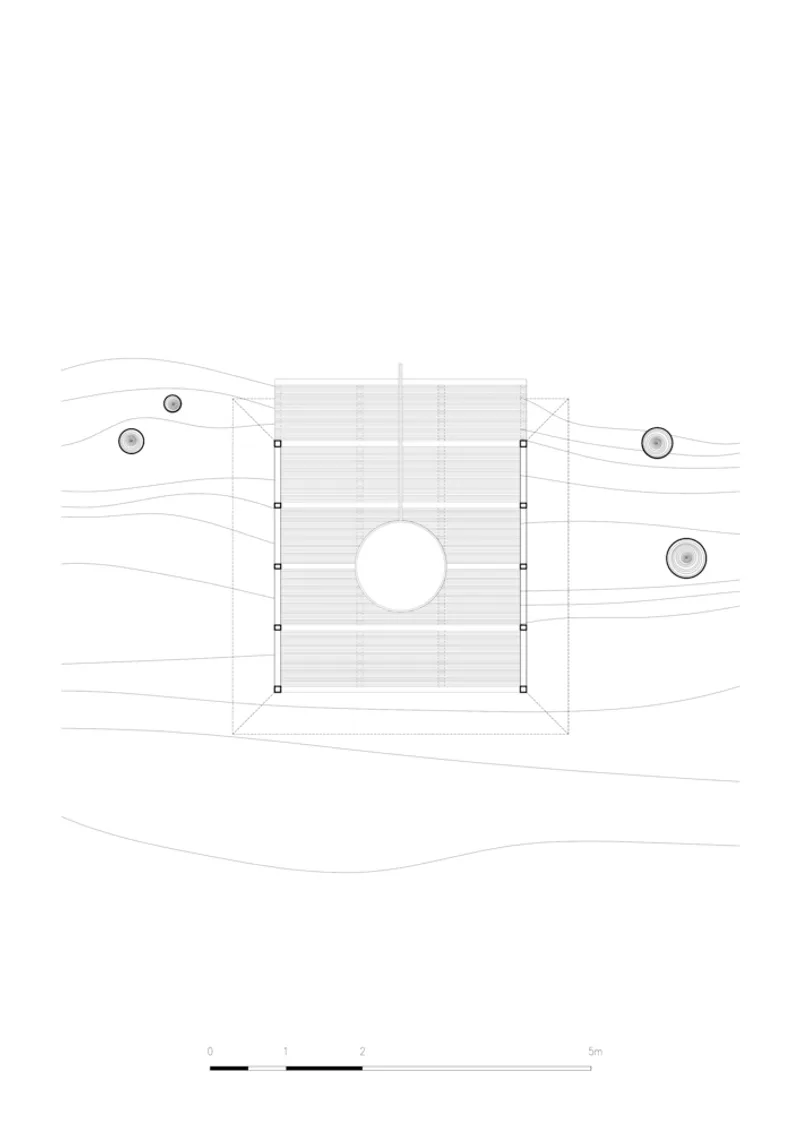
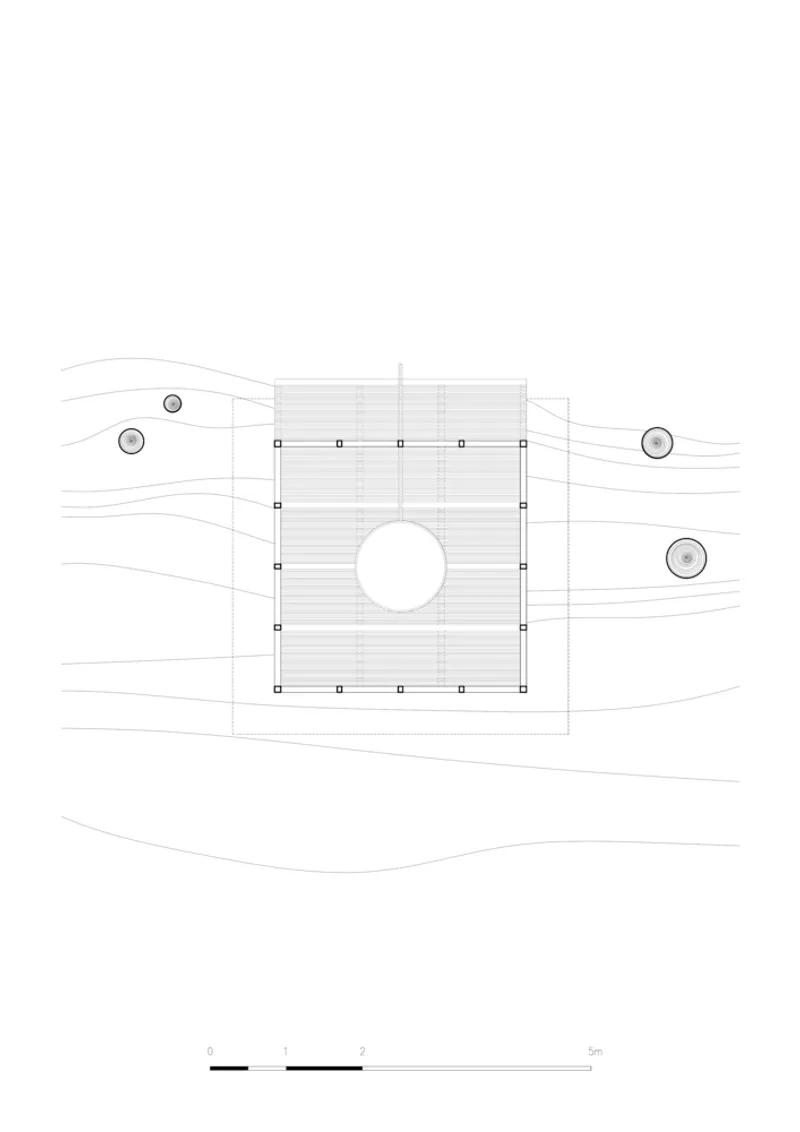
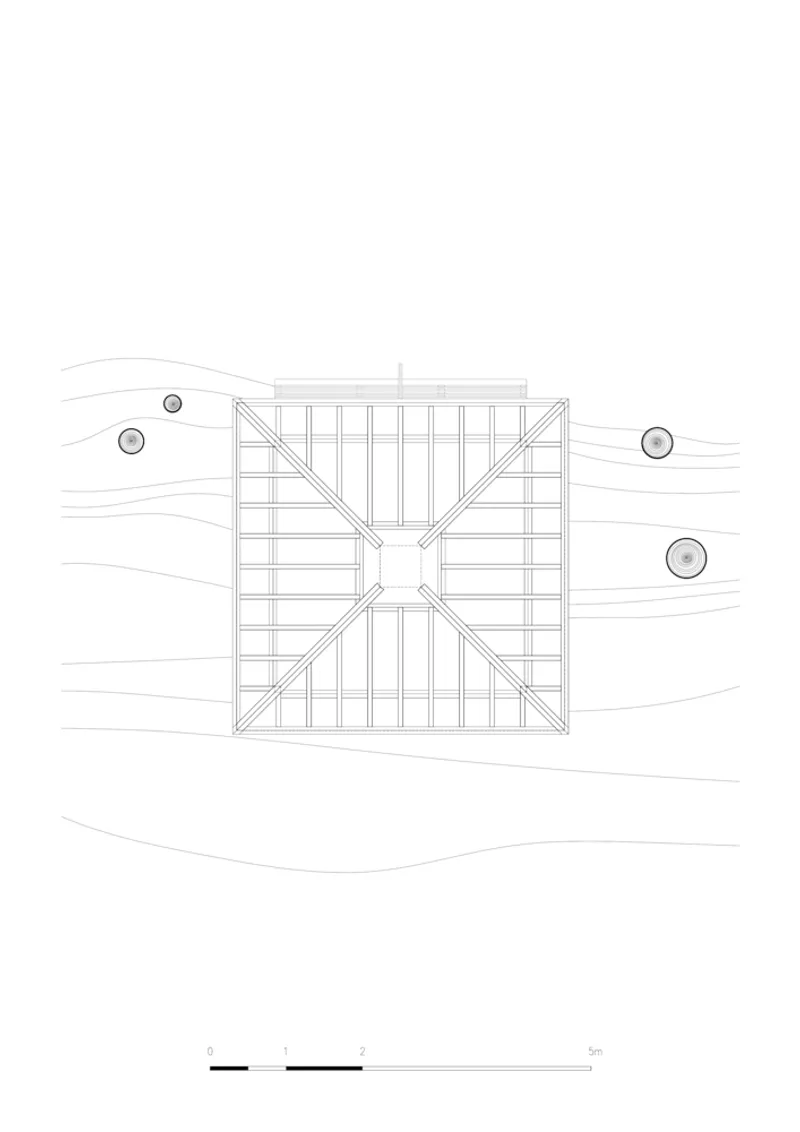
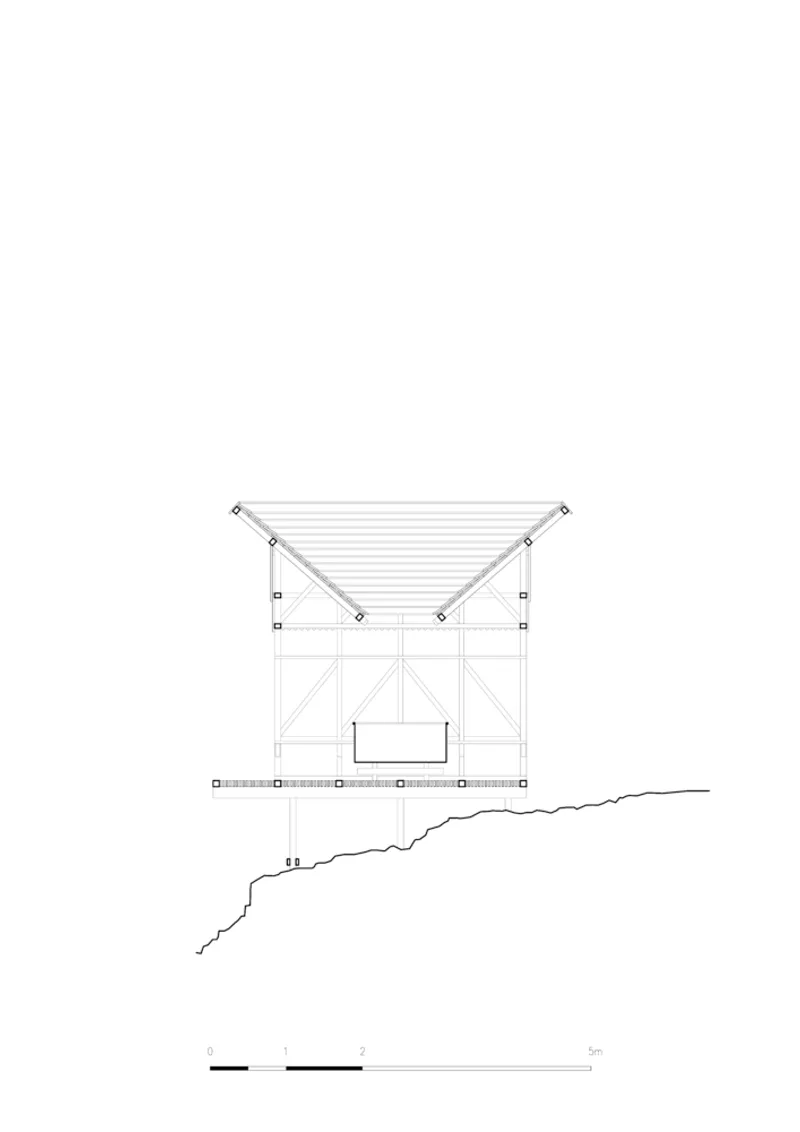
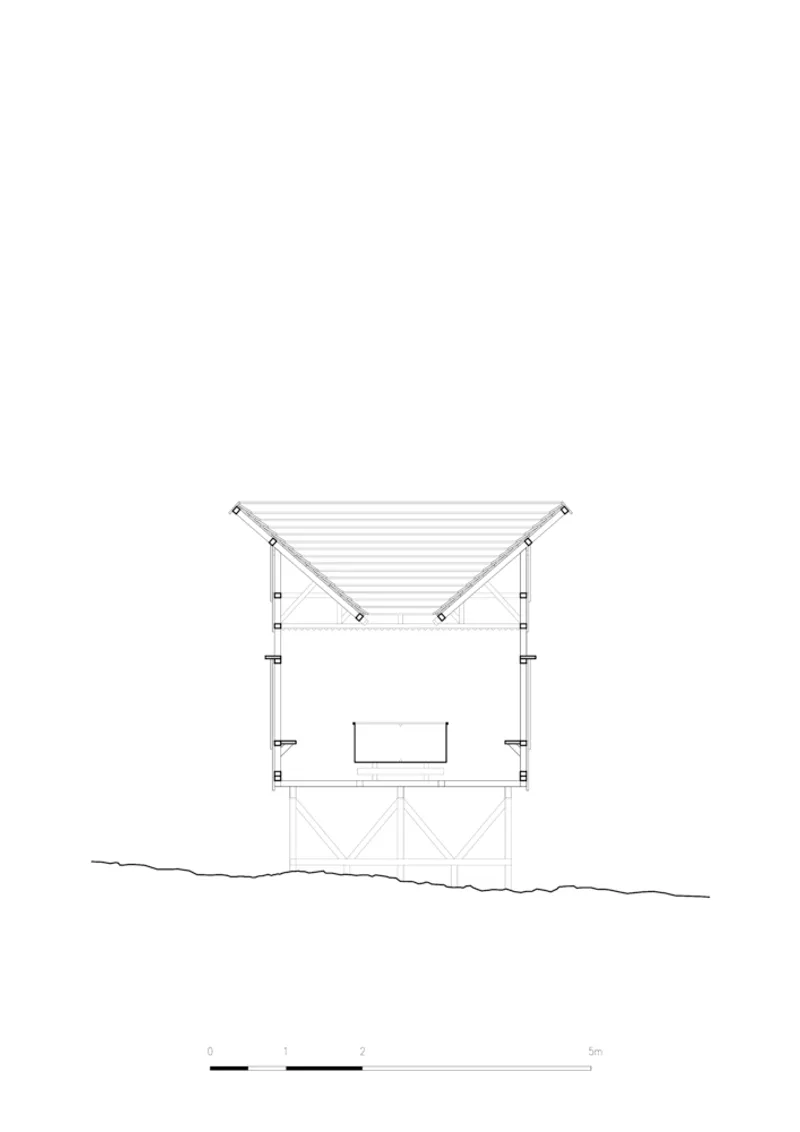
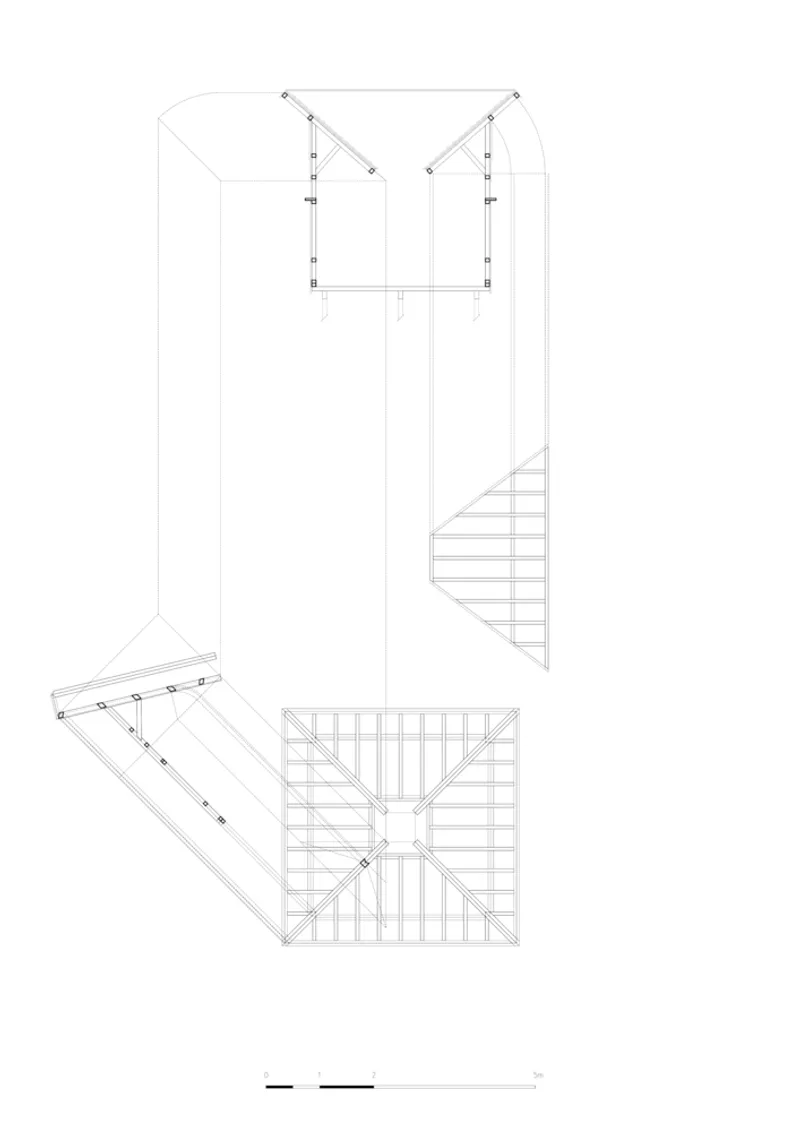
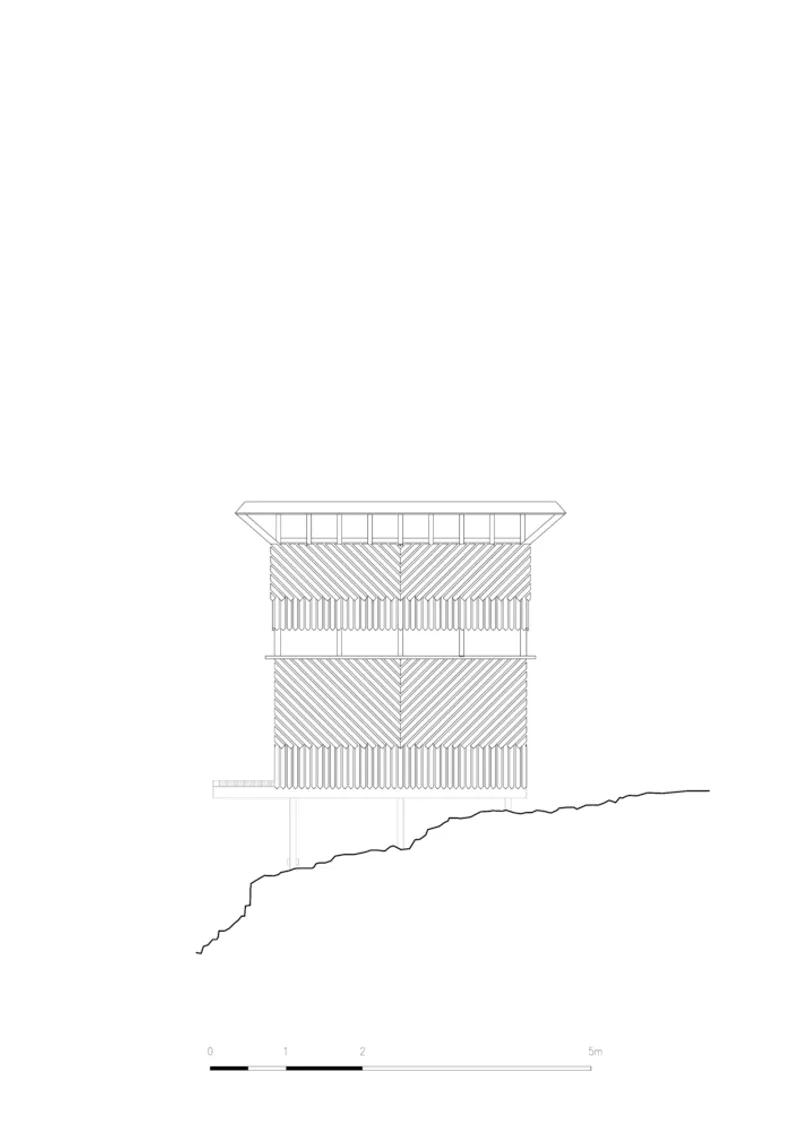
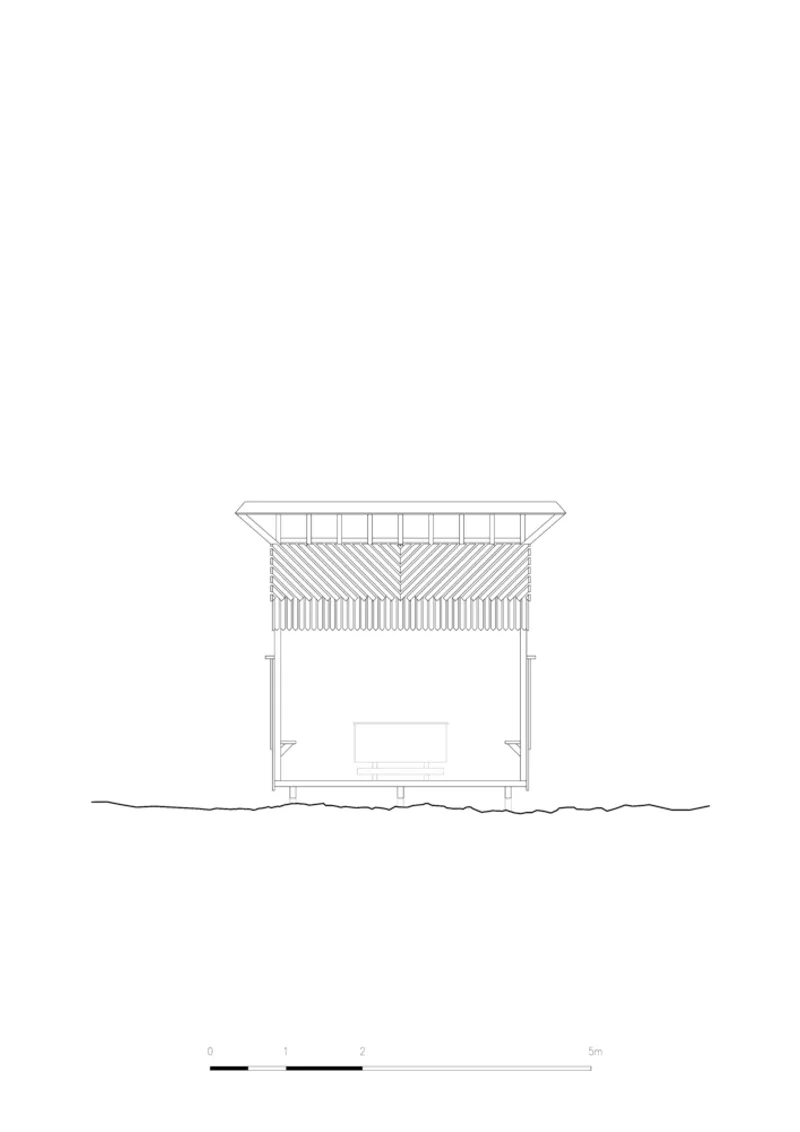
The Impluvium draws on the ancient Roman archetype of a roof that funnels rainwater into a central basin. This typology, reinterpreted through contemporary detailing and natural materials, enables temporary water collection, emphasizing the volume and rhythm of rainfall. The roof captures rainwater, slows its cycle, and channels it gently back to the adjacent pond. In doing so, the pavilion connects climate, landscape, and architecture in a seamless ecological gesture.
Micro-Architecture as Reflection Space
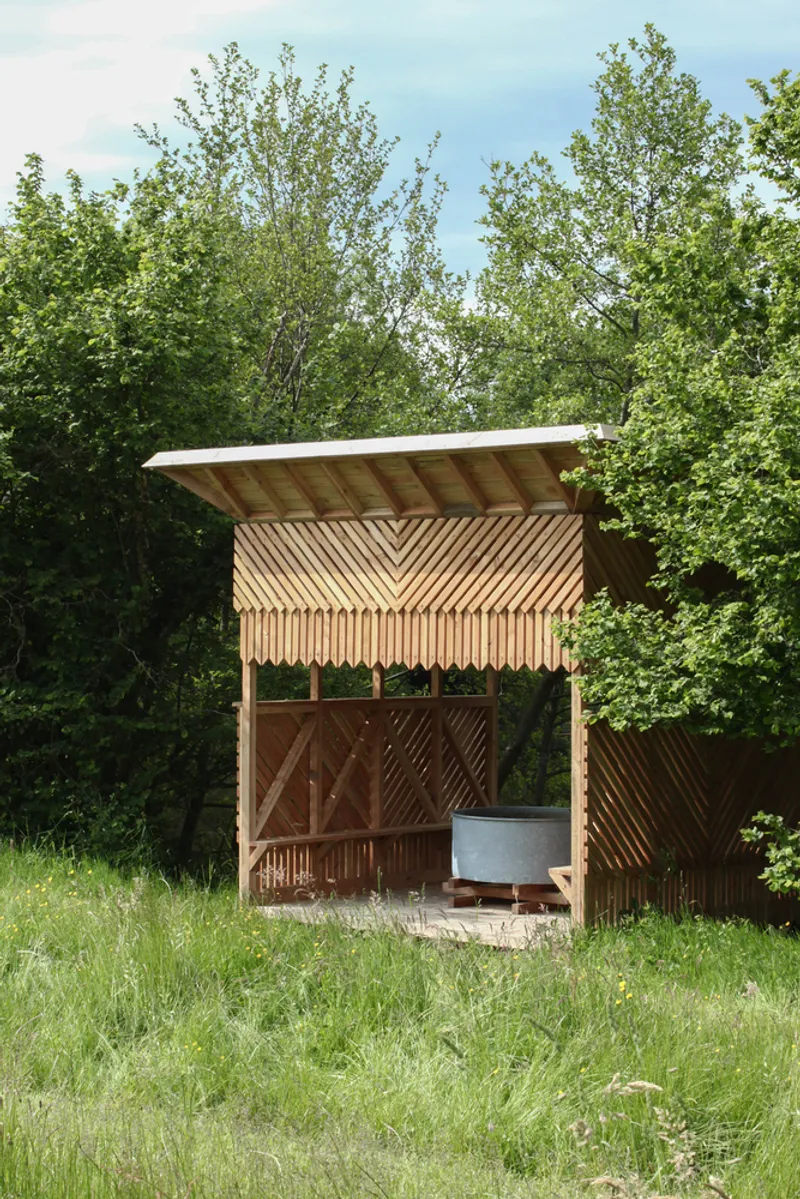
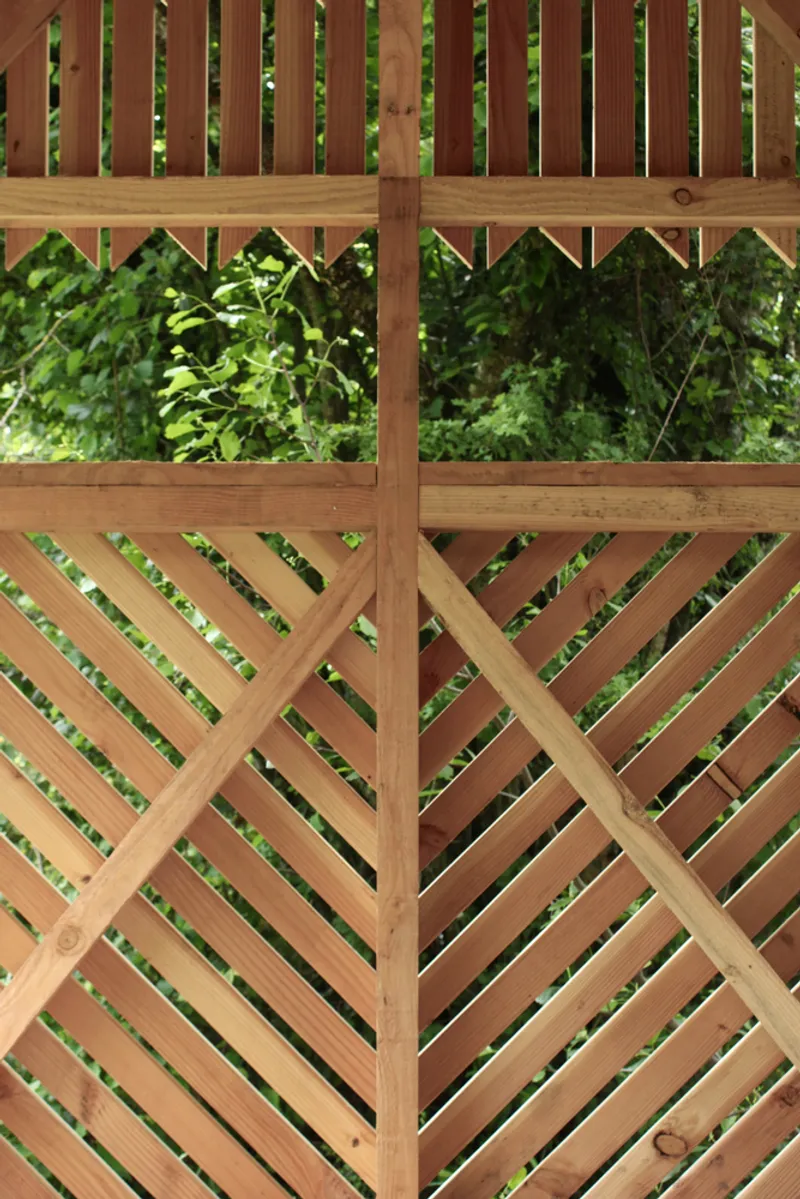
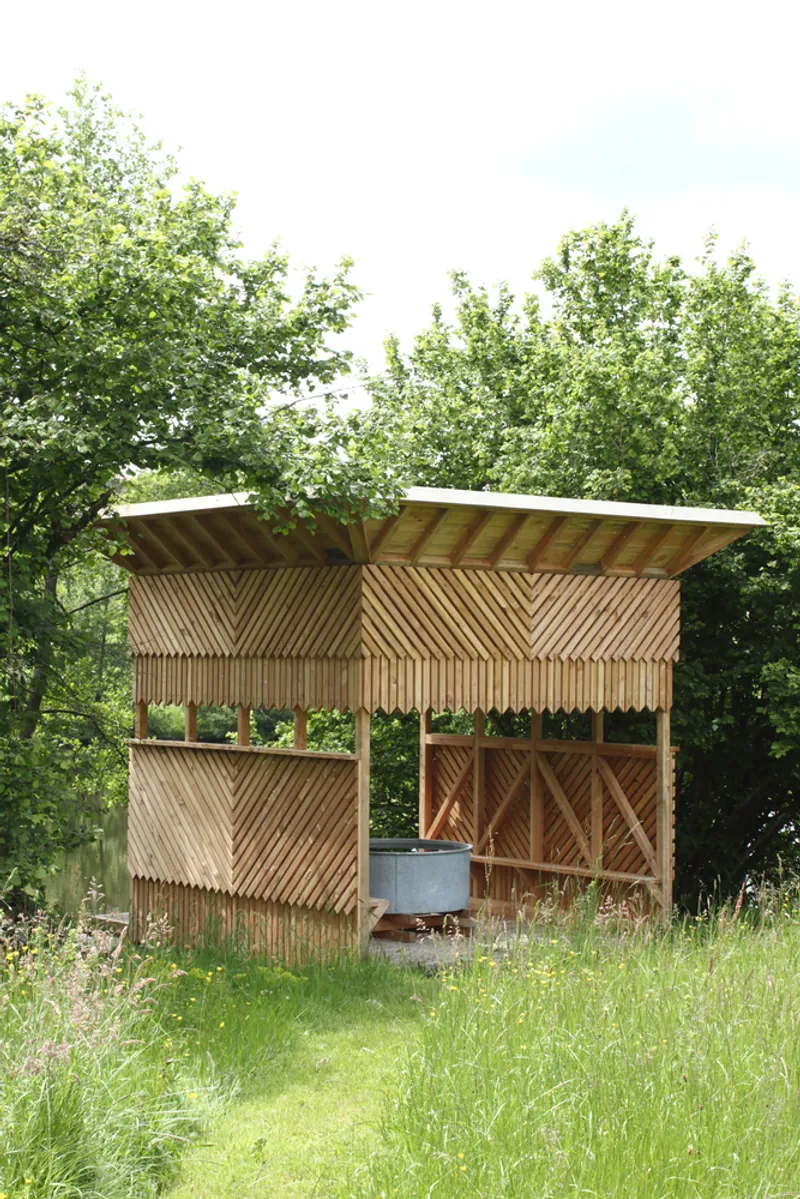
Spanning just 14 square meters, the structure’s scale encourages intimacy with the surrounding elements. Built from wood and finely crafted joinery, it shelters users while framing views of the pond and surrounding agricultural land. The modest form offers a place to sit, to pause, and to consider the temporality of water—its abundance, its absence, and its place in global environmental systems.
Water as the Architectural Narrative
At its heart, this rainwater harvesting pavilion is not only a functional object but a narrative device. It visually and experientially illustrates how water moves, collects, disappears, and returns. Through seasonal changes, the structure becomes a living barometer—each visit presenting a different quantity of captured water, reinforcing awareness of climate patterns and water scarcity.
Bridging Utility and Cultural Expression
The Impluvium is more than a technical solution for water collection. It is also an invitation to rethink how rural spaces are activated through micro-architectures that blend utility, symbolism, and education. It creates a new visual and experiential vocabulary for water stewardship—one that is grounded in local materiality and landscape rhythms, but universally resonant.
A Pavilion in Service of Agroecology and Shared Stewardship
Aligned with the park’s commitment to agroecology—practices like food autonomy, rotational grazing, and diverse cultivation—the pavilion serves as an emblem of sustainability. It complements the broader landscape strategies by introducing architecture that’s low-impact, pedagogical, and accessible to all. It represents a model of how public design can serve ecology without dominating it.
A Small Architecture with Large Implications
The Impluvium reminds us that even small, meditative structures can deliver profound ecological insights. Through its poetic form and sustainable function, Banco! has created a pavilion that serves not only as a shelter but as a subtle call to action—a space where one contemplates the value of water in every form.
All photographs are works of Banco!


Popular Articles
Popular articles from the community

EW PARK: Sustainable Architecture Reimagines the Future of Urban Parking
EW PARK reimagines city parking as a modular wooden tower combining automation, solar energy, electric mobility, and adaptable urban design.

Hill & Cross Opera: Sculptural Opera House Architecture Shaped by Tallinn’s Landscape and Identity
Hill & Cross Opera reimagines opera house architecture in Tallinn through its sculptural hill, civic plaza, glass wave and a luminous cross.

Riyadh For All: Intergenerational Urban Design for Active Aging in Rabat
Riyadh For All reimagines urban design in Rabat with intergenerational co-living, adaptive courtyards, and Moroccan cultural exchange today.

The Ocean Hive: Sustainable Architecture for a Self-Sufficient Civilization at Sea
The Ocean Hive imagines sustainable architecture at sea, where modular habitats, algae, wave power and ocean waste sustain a growing colony.

Similar Reads
You might also enjoy these articles

FAMM Arquitectura Organizes Ten Villas Around Courtyards and Jungle in Nosara, Costa Rica
El Molino pairs two elongated volumes with deep overhangs and timber louvers to build a compact coastal community five minutes from the beach.
Oscar Niemeyer's Ibirapuera Park Pavilions Define São Paulo's Cultural Identity in Concrete and Curve
A constellation of modernist volumes set within São Paulo's most important urban park, conceived for the city's 400th anniversary in 1954.
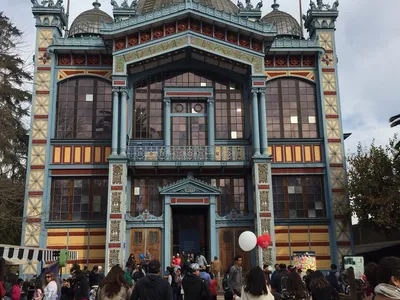
How Henri Picq's 1889 Paris Pavilion Traveled 11,000 Kilometers to Become Santiago's Artequín Museum
A prefabricated iron and glass pavilion built for the Paris Universal Exposition found a second life as a children's art museum in Chile.
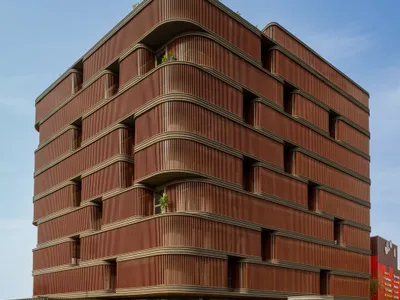
Sanjay Puri Architects Wraps a Jaipur Office Tower in Capsule-Shaped Green Buffers
A nine-level climate-responsive workplace near Jaipur Airport uses stacked planter terraces and aluminium screens to fight 40°C heat.


Explore Waterscape Competitions
Discover active competitions in this discipline



Challenge to reimagine the Iron Throne


Photograph architecture without architects


Illustrate the lost glory of Angkor Wat - Render Challenge


Design challenge to reuse E-waste
Comments (0)
Please login or sign up to add comments
No comments yet. Be the first to comment!