
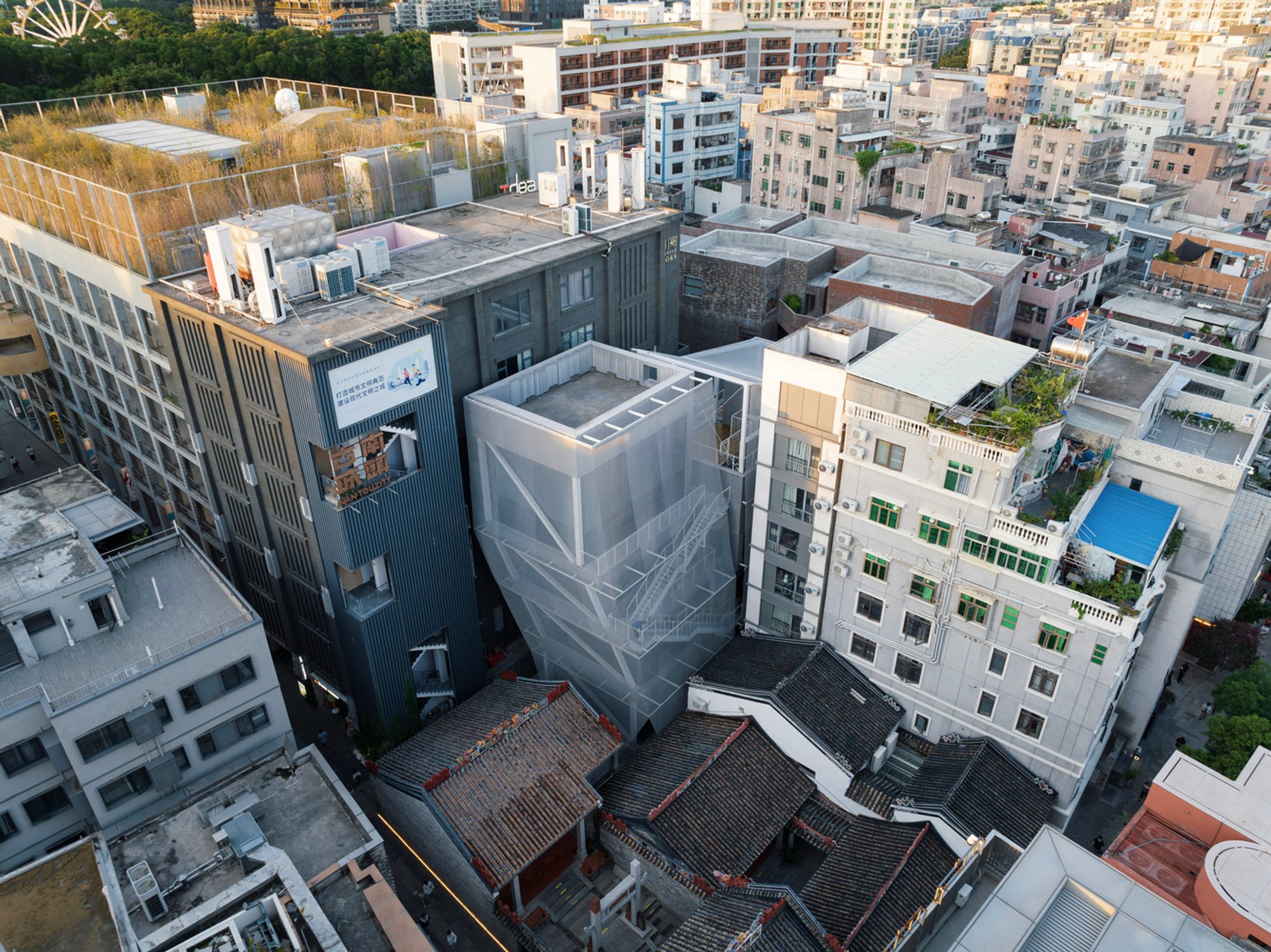
In-between Pavilion: A Modern Architectural Gem in Nantou Ancient Town, Shenzhen
The In-between Pavilion by TAO blends modern design with historical context in Shenzhen’s Nantou Ancient Town, revitalizing public spaces.

In-between Pavilion
The In-between Pavilion, designed by TAO (Trace Architecture Office), is part of Shenzhen's urban renewal efforts, situated in the heart of Nantou Ancient Town. The project represents a seamless integration of modern design with the historical and dynamic context of the area, aimed at revitalizing public spaces while maintaining the site's unique architectural identity.
Design Concept: Lightness, Flexibility, and Transience
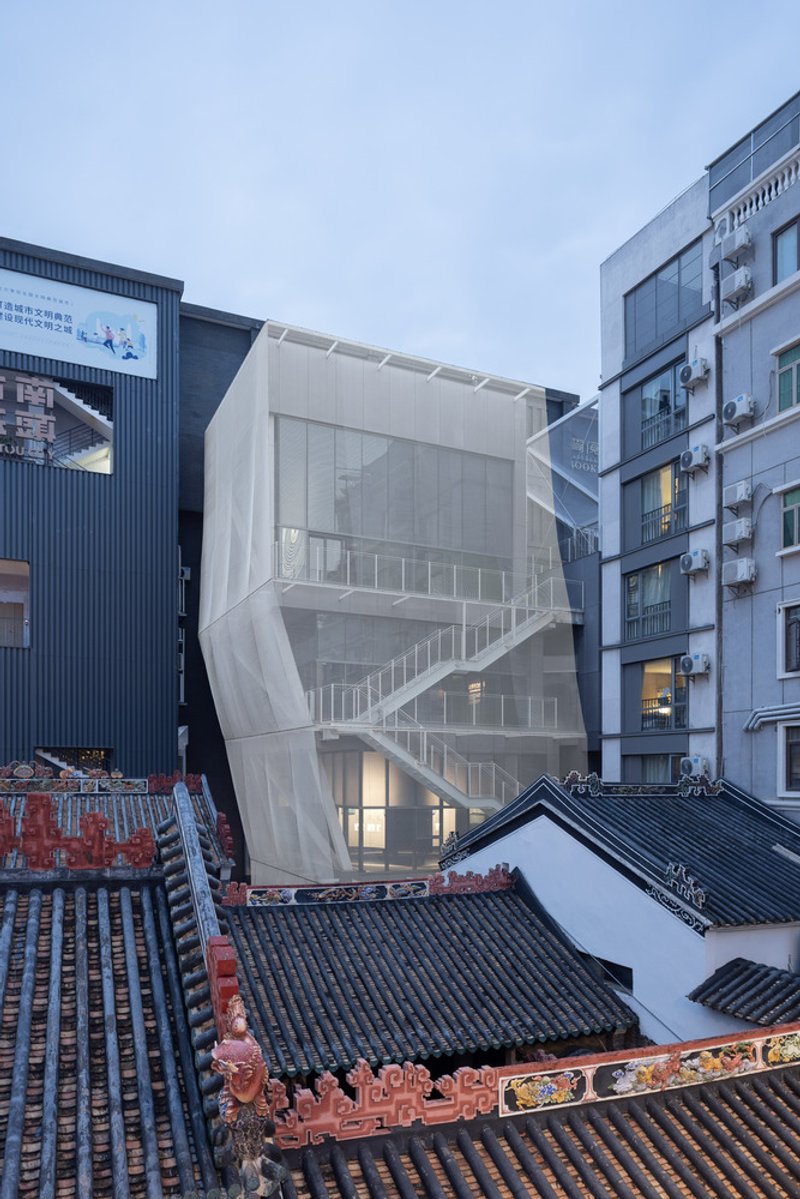
Located on the north side of Nantou Ancient Town, the pavilion sits within a rapidly changing urban environment marked by organic, spontaneous construction. The design is informed by the town's constant state of flux, with transience and adaptability at the core. The building's architecture deliberately avoids a stable, enclosed state, instead embracing lightness and flexibility to harmonize with the ever-evolving context.
Architectural Features
Semi-Translucent Metal Mesh Façade
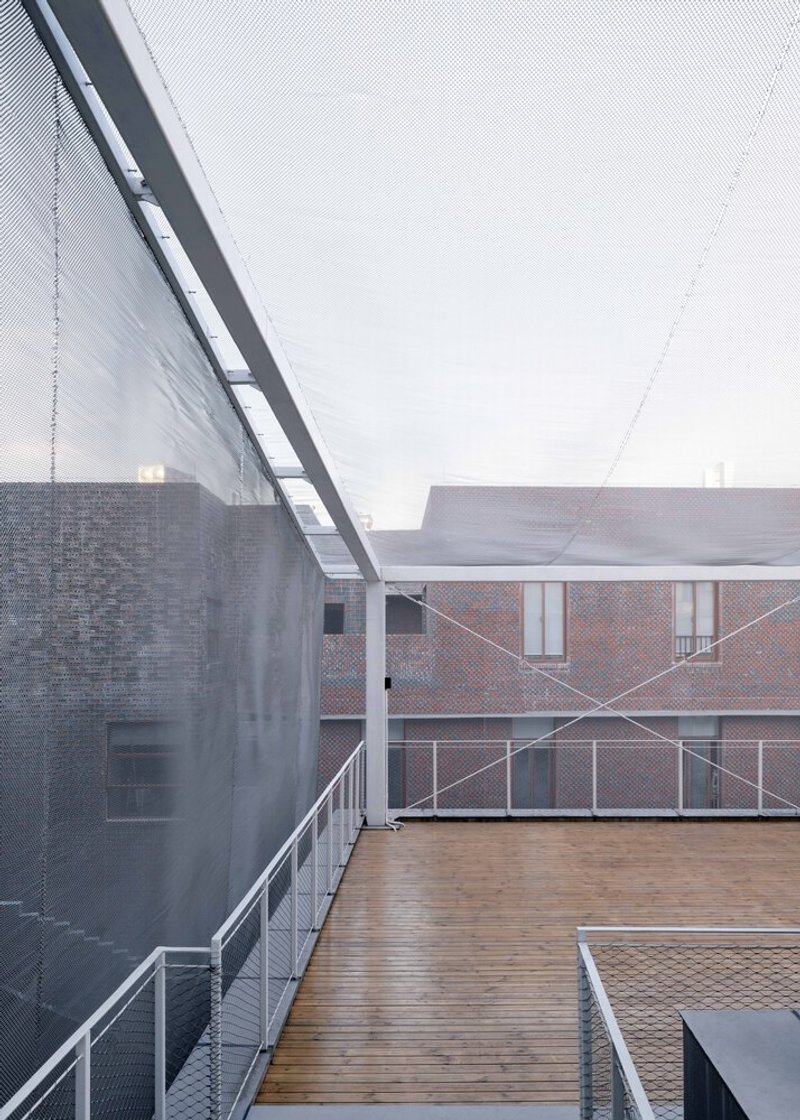
One of the most striking features of the In-between Pavilion is its light metal mesh façade, which acts like a veil, providing a semi-translucent cover that blurs the boundary between indoor and outdoor. This ambiguity between openness and closure enhances the dynamic quality of the space, reflecting the constantly changing nature of the urban village. The façade’s appearance transforms throughout the day, allowing the building to adapt to its environment and capture the essence of the surrounding area.
Spatial Flow and Integration with the City
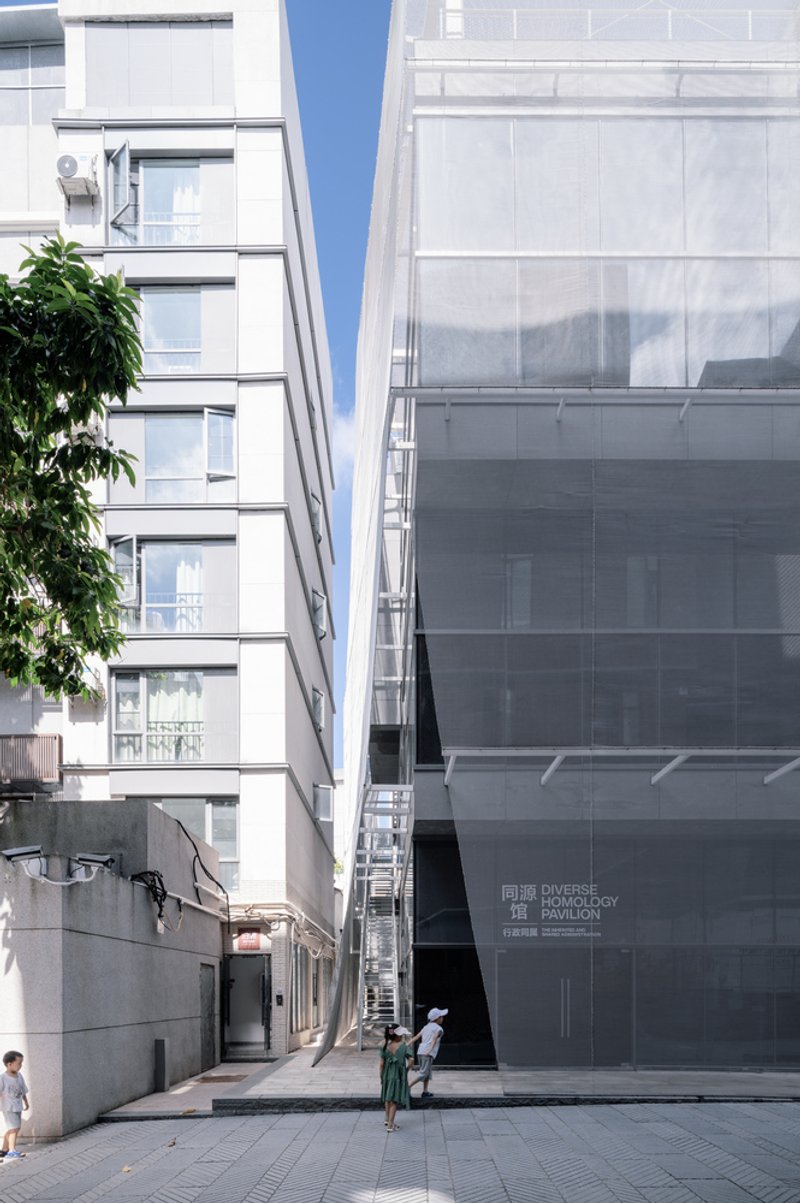
The pavilion’s design incorporates a gap between the building’s volume and its delicate skin, allowing the space to flow between the building and street. This space fosters a visual and physical connection between the east and west sides of the site, symbolizing the diverse and vibrant nature of the surrounding community. The building also features overhanging volumes on higher floors, creating a unique rhythm that engages with the urban gap.
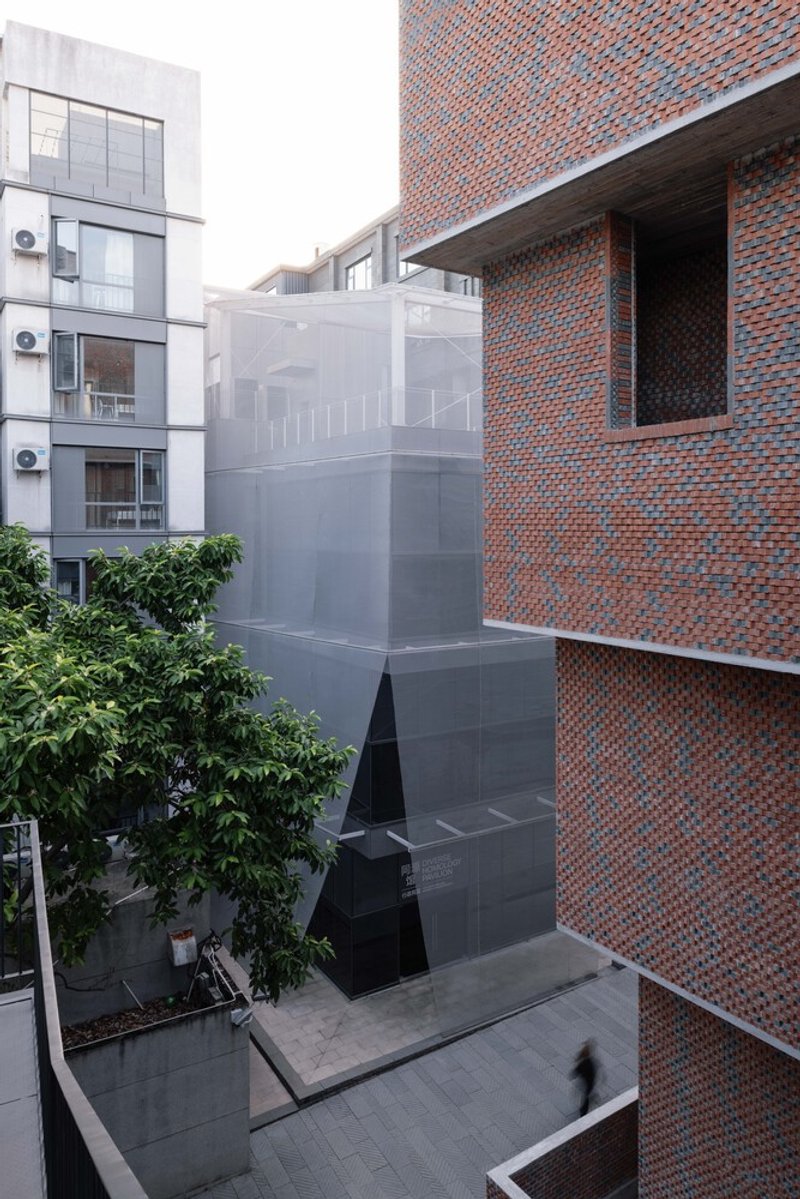
The Vertical Promenade: A Journey Through the Pavilion
The vertical promenade is a defining element of the pavilion, offering visitors a meandering stair passage that connects multiple levels of the building. This passage gives access to galleries and roof terraces, offering panoramic views of Nantou Ancient Town from various perspectives. The moving figures behind the façade add an active, dynamic quality to the structure, further enhancing the pavilion’s connection with the public realm.
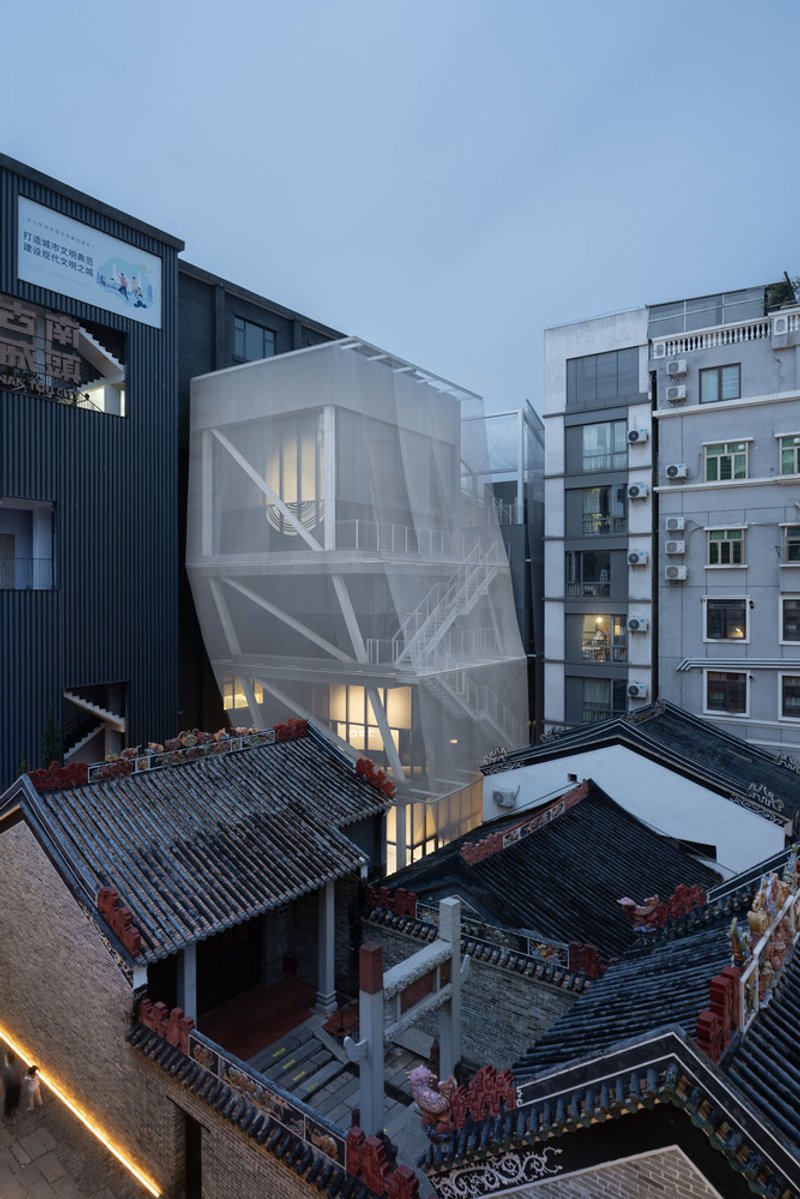
Bridging the Past and the Present
The In-between Pavilion is not just an architectural structure but a cultural landmark that bridges the past and present of Nantou Ancient Town. By integrating modern design principles with the historical context, the pavilion helps revitalize the area and promotes a more diverse and vibrant spatial experience. As an exhibition gallery within the Diverse Homology Museum complex, it narrates the influence of political power and geography on the development of the Pearl River Delta region.
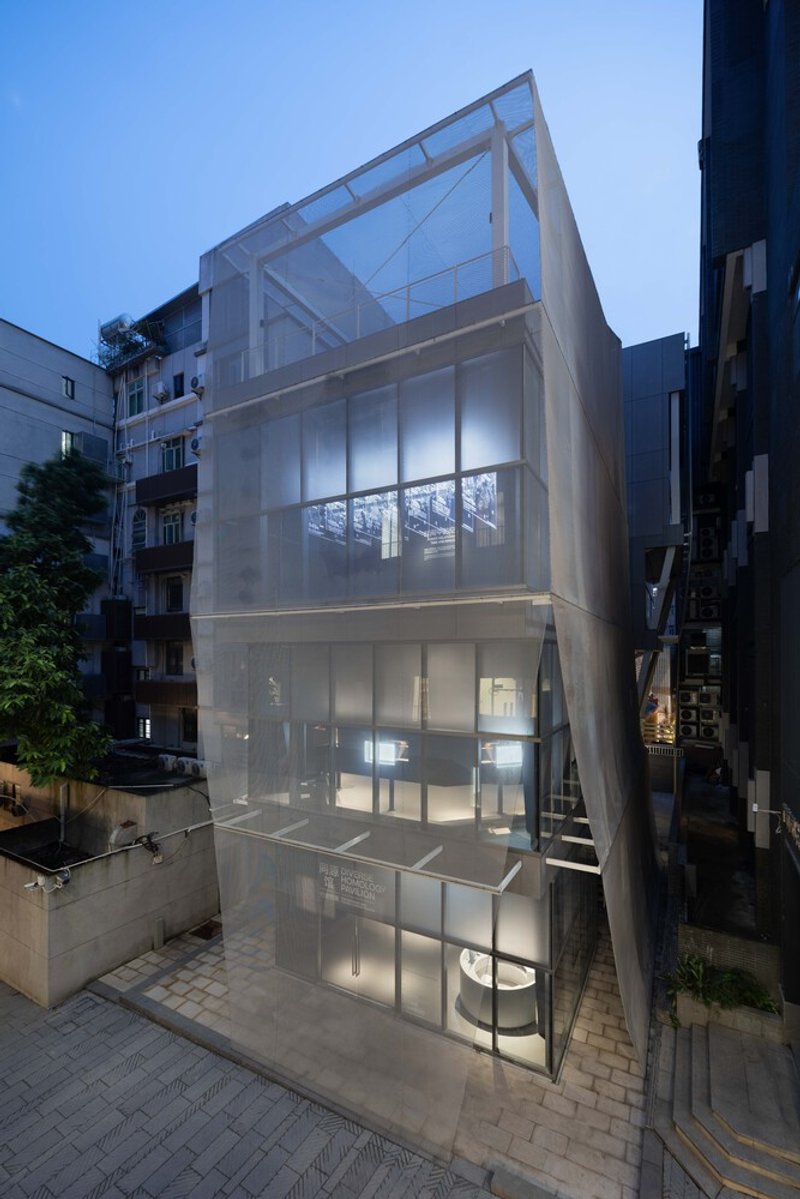
The In-between Pavilion stands as a testament to the innovative and adaptive approach of TAO in urban renewal projects. With its unique design, thoughtful integration with the surrounding environment, and dynamic spatial qualities, the pavilion offers a refreshing experience for visitors and a meaningful contribution to the transformation of Nantou Ancient Town.
All photographs are work of Hao Chen, TAL, Kejia Mei, and Li Hua.



Popular Articles
Popular articles from the community

Art 1 Office Strips Athens Back to Its Bones
Neiheiser Argyros transforms a 40-year-old Athens office building into a vivid, materially rich workplace anchored by red steel, exposed concrete, and roof
MAKER architecten Rewire a 1972 Brutalist Dormitory on the VUB Campus as a Living Lab
A modular renovation strategy in Belgium breathes new life into Willy Van Der Meeren's modernist student housing without erasing its concrete bones.

De la Riva Sherry Homes By Juan Vega Arquitectos
De la Riva Sherry Homes transform a historic winery into unique residences, blending industrial heritage, modern comfort, and community-focused courtyard living.

CTA | Creative Architects Designs Triangular Floating Shelters for Vietnam's Flood-Ravaged Communities
A timber-louvered triangular shelter rises on concrete pontoons to keep Vietnamese families safe and together when floodwaters come.


Similar Reads
You might also enjoy these articles

Filtering Space: A Gradual Spatial Experience
From urban intensity to spatial calm.


The Ken Roberts Memorial Delineation Competition (Krob)
As the most senior architectural drawing competition currently in operation anywhere in the world, it draws hundreds of entries each year, awarding the very best submissions in a series of medium-based categories.

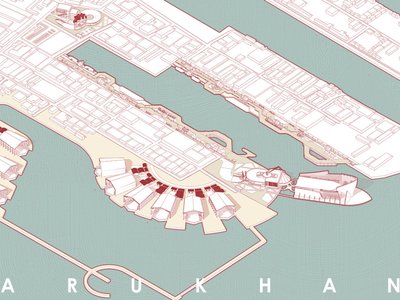
Waterfront Redevelopment and Urban Revitalization in Mumbai: Forging a New Dawn for Darukhana
A transformative waterfront redevelopment project reimagining Darukhana’s shipbreaking heritage into an inclusive urban future.

OUT-OF-MAP: A Call for Postcards on Feminist Narratives of Public Space
Rhizoma Design and Research Lab invites artists, designers, architects, researchers, and students to reflect on how feminist perspectives can reshape public space. Selected works will be exhibited in Barcelona, October 2026. Submissions open until 15 April 2026.


Explore Architecture Competitions
Discover active competitions in this discipline




The International Standard for Design Portfolios


The Global Benchmark for Architecture Dissertation Awards


The Global Benchmark for Graduation Excellence


Challenge to reimagine the Iron Throne
Comments (0)
Please login or sign up to add comments
No comments yet. Be the first to comment!