

INFONAVIT Iztacalco Public Space: Community-Centered Rehabilitation by AMASA Estudio
AMASA Estudio revives INFONAVIT Iztacalco’s neglected commons with colorful structural cover, active recreation zones, and replicable community-led renewal for Mexico.


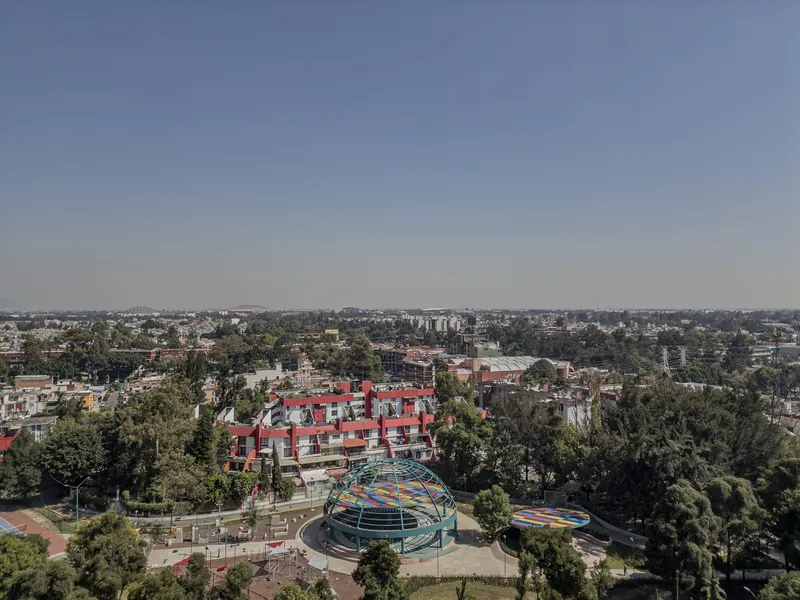
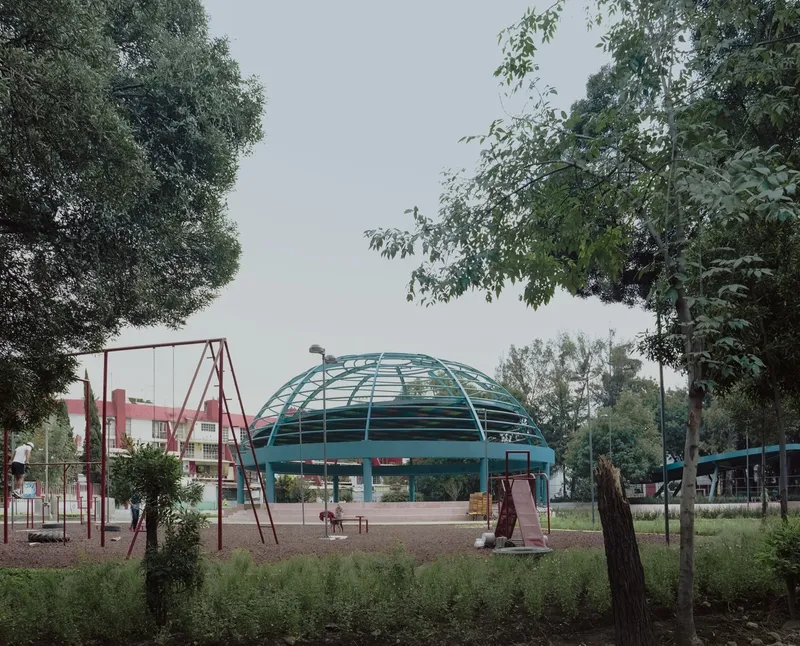
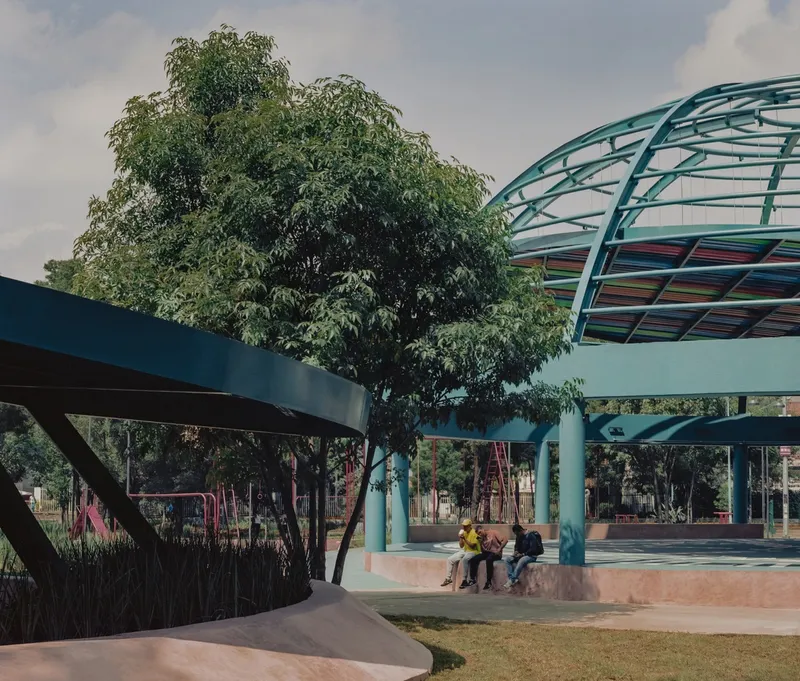
The INFONAVIT Iztacalco public space project by AMASA Estudio demonstrates how targeted design, careful management, and modest investment can revive neglected common areas within aging social housing complexes in Mexico City. What began as an abandoned semi-spherical steel structure above a former artificial lake has been transformed into an active, shaded, multi-program community forum that reconnects neighbors to shared public life.
Collective Housing Legacy in Mexico City
Collective housing has shaped Mexico City since the mid-twentieth century, when large-scale multi-family developments introduced new ways of living around shared land, services, and common infrastructure. Today nearly half the city’s population lives within condominium-style regimes, and roughly ten thousand housing units define the broader metropolitan fabric. A significant portion—nearly one-third—was developed through INFONAVIT, the National Workers' Housing Fund Institute, embedding state-led social housing in the urban DNA of the capital.
Deferred Maintenance and the Need for Renewal
More than seventy-five years after the earliest multi-family models, many housing units face severe deterioration driven by underinvestment, unclear maintenance responsibilities, and complex governance structures. Despite national programs that have delivered services across the Mexican republic, the dense concentration of housing units in Mexico City and its metro area had long been sidelined. That neglect set the stage for new, corrective interventions focused on restoring livability through public space upgrades.


Multi-Site Improvement Strategy
AMASA Estudio, led by Andrea López and Agustín Pereyra, developed an integrated improvement strategy across four emblematic INFONAVIT housing units in Mexico City: Iztacalco, Santa Fe, Culhuacán, and Ignacio Chávez. Working under strict time and budget limits, the studio produced four preliminary designs in under two months following a competitive bid process that evaluated design quality, cost control, and implementation management. The Iztacalco intervention became a flagship example of how design intelligence can leverage limited resources for broad social value.

Site History: From Artificial Lake to Abandoned Structure
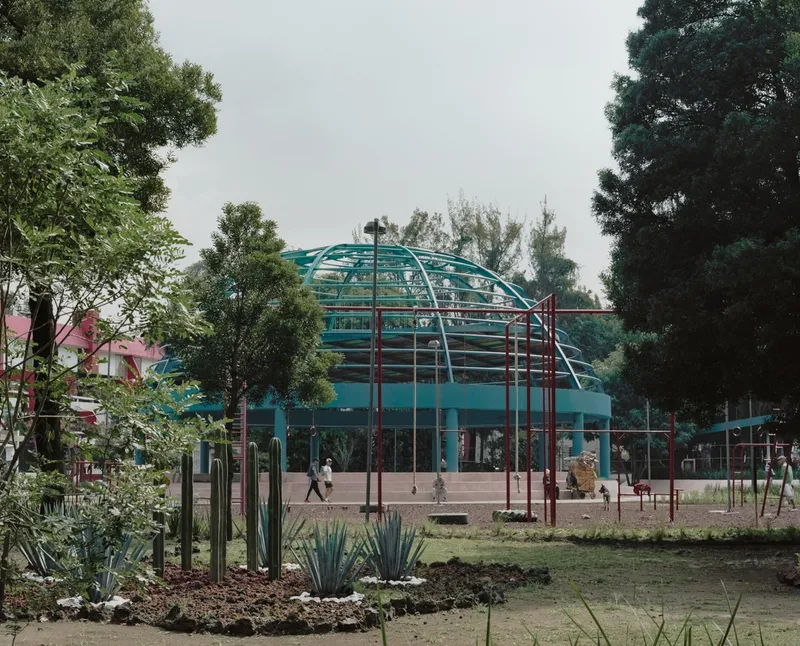
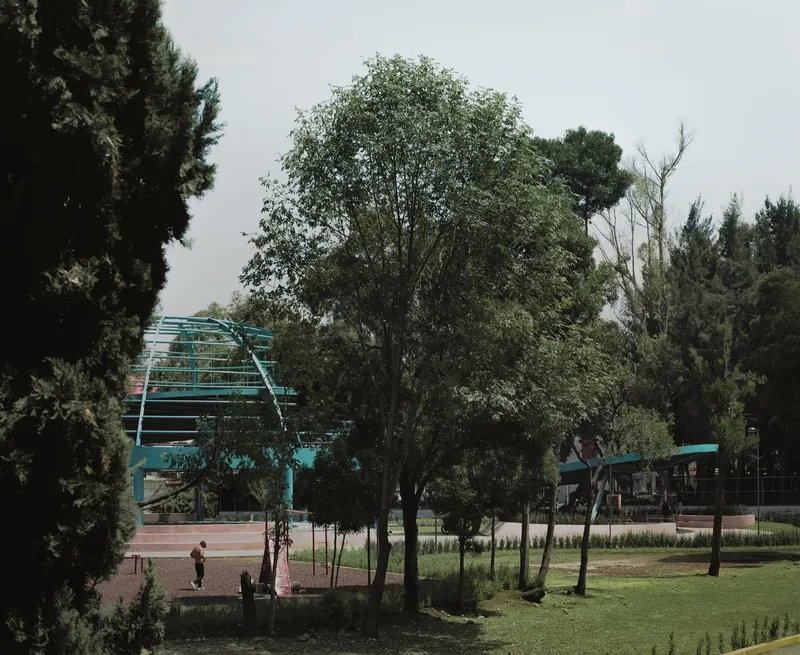
The U.H. INFONAVIT Iztacalco was the institute’s first housing unit, completed in 1972 in the Iztacalco borough on the eastern side of Mexico City. The original master plan organized housing around an artificial lake later drained after fissures associated with the 1979 earthquake. About twenty-five years afterward, the city created Lake Park on the drained site and introduced a concrete platform supporting a semi-spherical steel-framed structure of roughly 500 square meters. Poor construction execution produced irregular geometries and structural vulnerabilities, leaving the dome unfinished and exposed for two decades.


The 2024 Competition and Project Brief
In 2024 INFONAVIT launched an open competition seeking a design, management roadmap, and construction strategy to rehabilitate the central common area at Iztacalco. The most challenging requirement was to provide a protective cover beneath and across the compromised semi-sphere to shield gathering space from sun and rain while conserving as much of the existing structure as feasible. AMASA Estudio’s winning proposal balanced preservation, reinforcement, and new intervention, aligning design ambition with fiscal realism.
Management, Agencies, and Community Participation
Delivering improvements on common-area land inside large housing units required complex coordination. Although widely used by the public, these lands sit within a quasi-private legal condition that can function like “no man’s land” when maintenance responsibility is unclear. AMASA Estudio convened a collaborative management process that aligned INFONAVIT, the Social Prosecutor’s Office, local municipal governments, contractors, and—critically—homeowners’ associations from each housing unit. Neighborhood socialization sessions helped define priorities, build trust, and ensure that residents would occupy and care for the renewed spaces.


Construction Scope, Budget Discipline, and Timeline
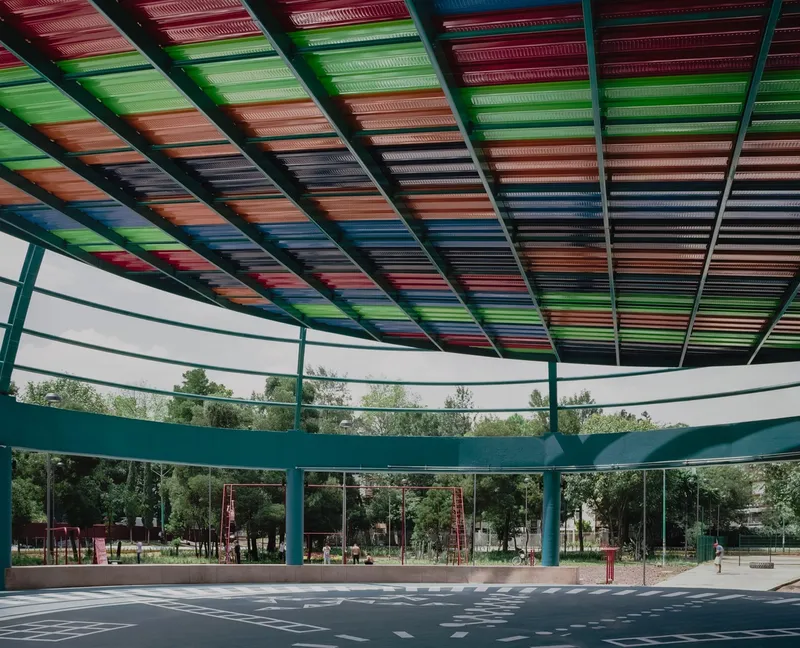
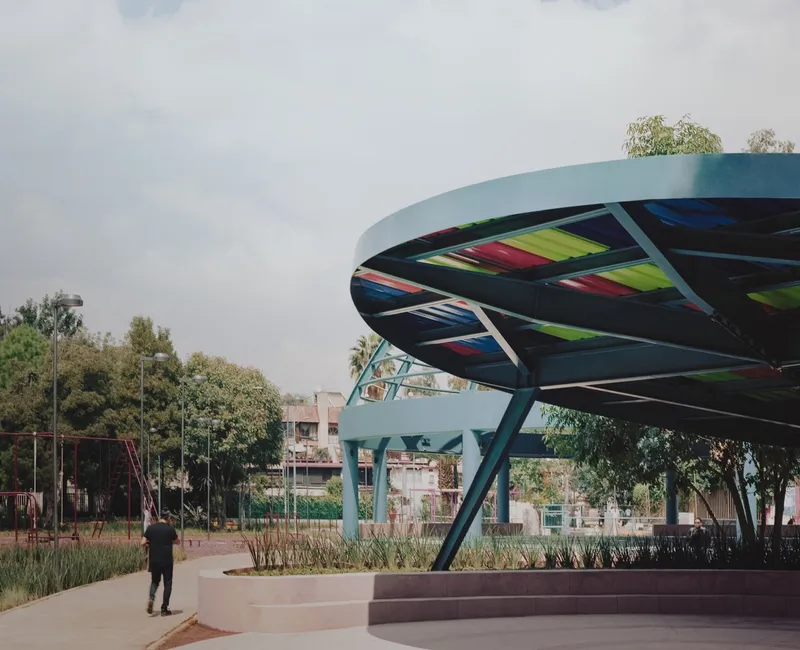
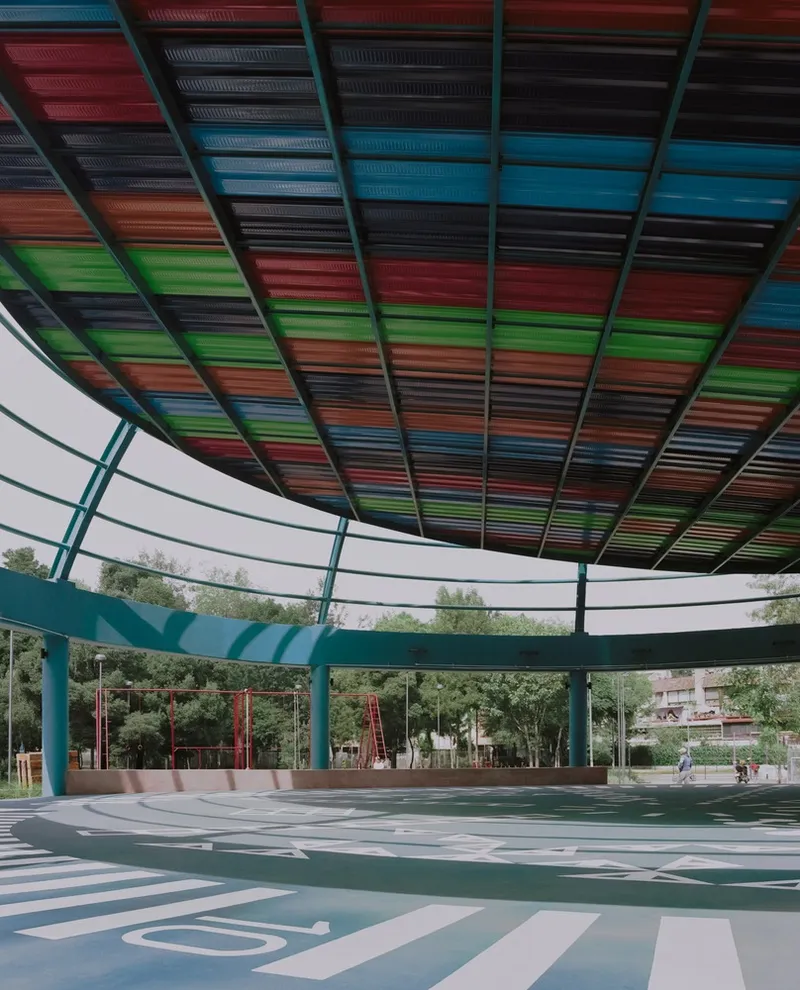
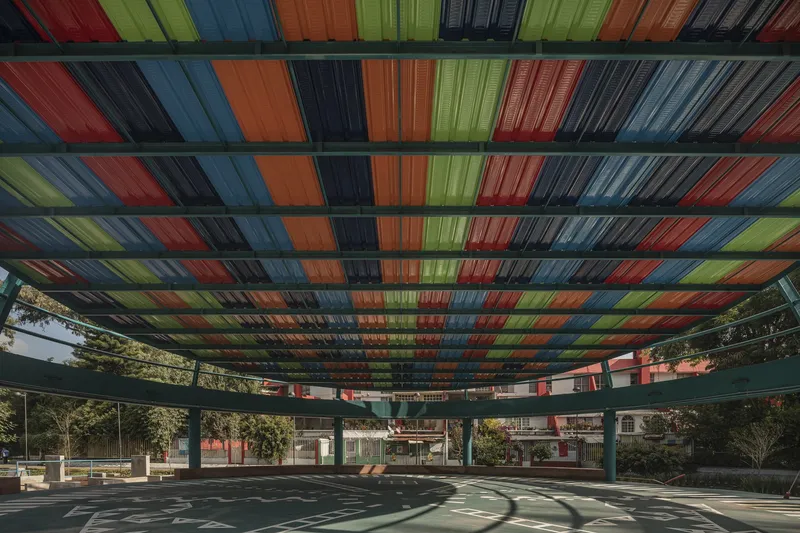
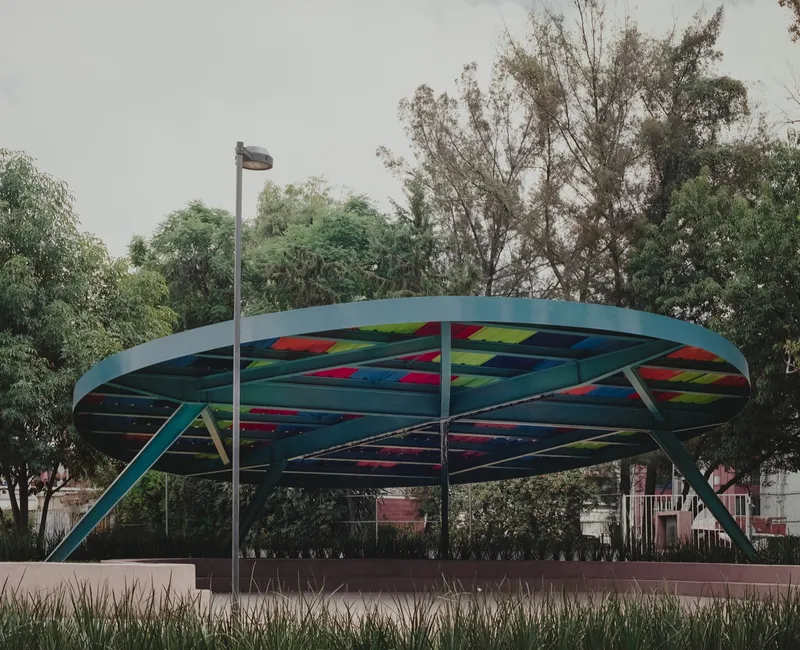
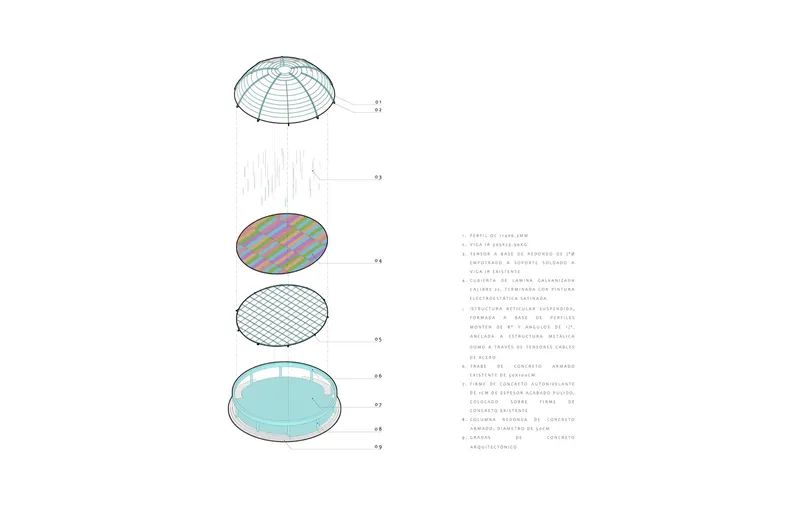
Following the award, the team moved quickly from planning to execution. With an investment of about eight million Mexican pesos and a construction period of roughly four months, the intervention reinforced the steel bases and joints of the semi-sphere, added a new inclined overhead plane hung by steel cables, and installed painted corrugated metal sheeting to extend shade and rain protection. The result conserved key structural elements while channeling resources to where coverage and usability mattered most, demonstrating that high-impact transformation does not require massive budgets.
Program Activation Under the Semi-Sphere
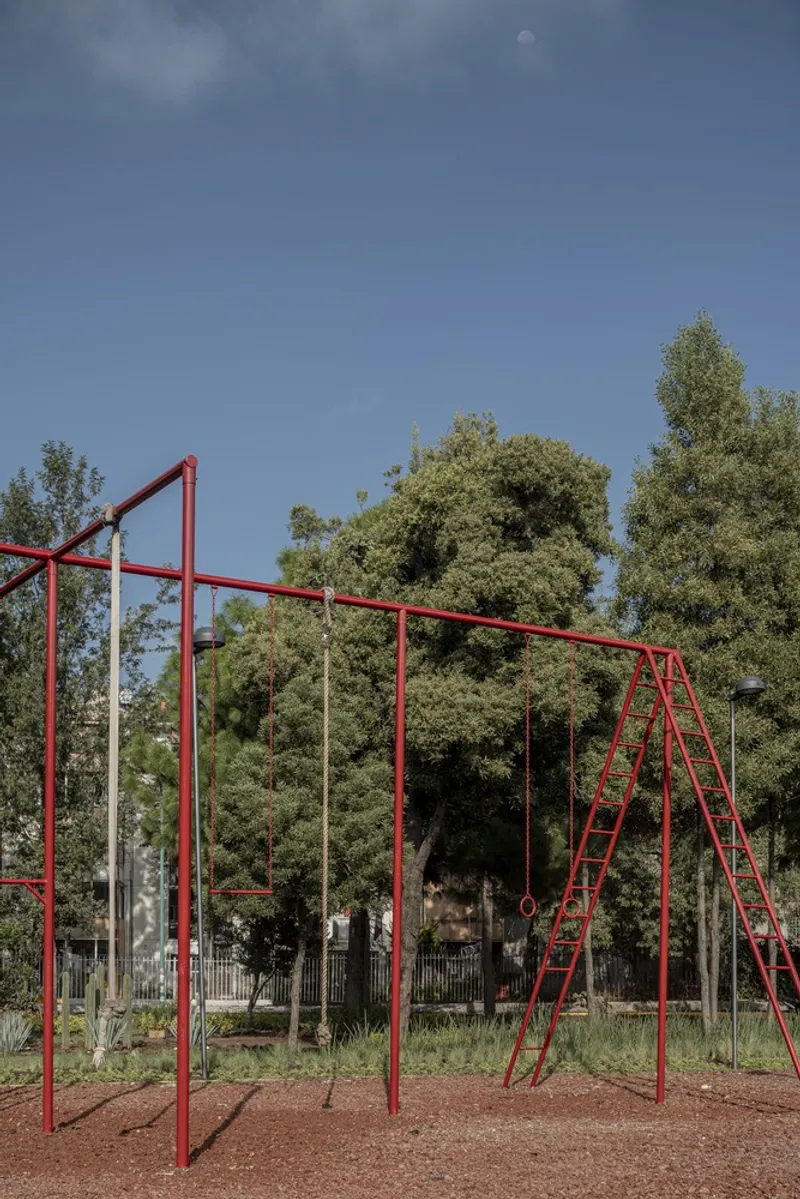
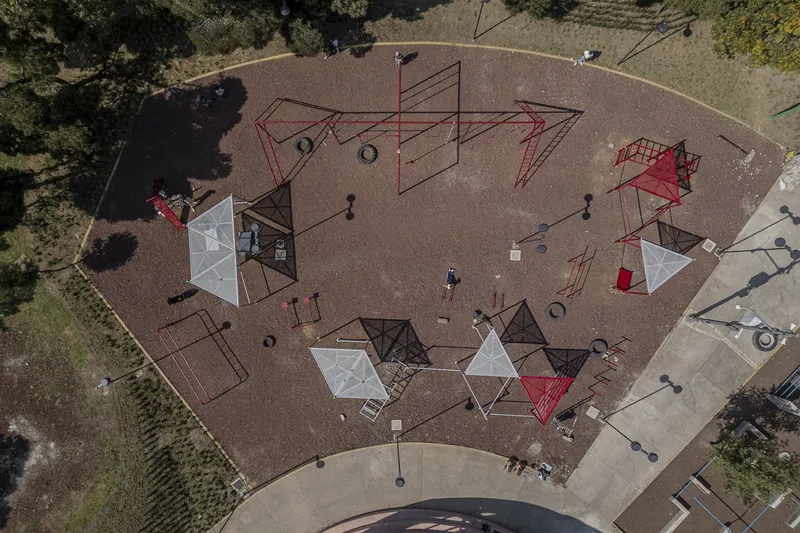
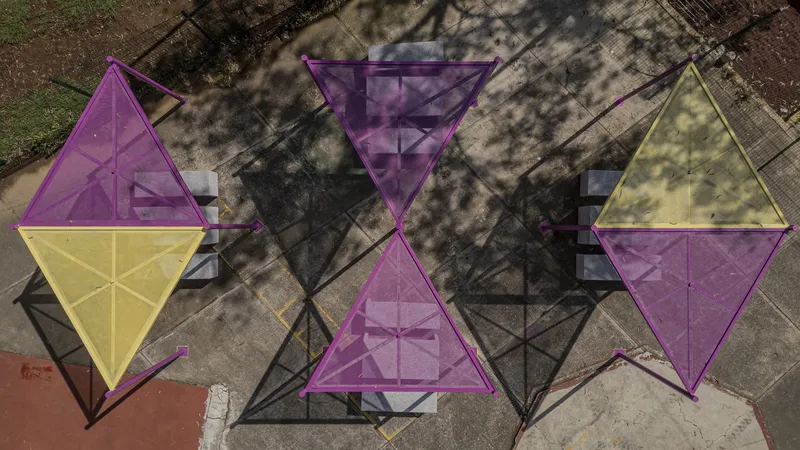
The renewed heart of INFONAVIT Iztacalco now supports layered community programming. A covered 260-square-meter forum creates a flexible platform for events, assemblies, informal gatherings, and cultural performances. Tables encourage rest and everyday socializing. Dedicated areas support parkour practice and an ever-popular zone fitted with bars for calisthenics and bodyweight exercise. By concentrating diverse, low-barrier activities within walking distance of residents, the project repositions the common space as a daily destination rather than a leftover void.

Material Language, Color, and Tectonic Renewal
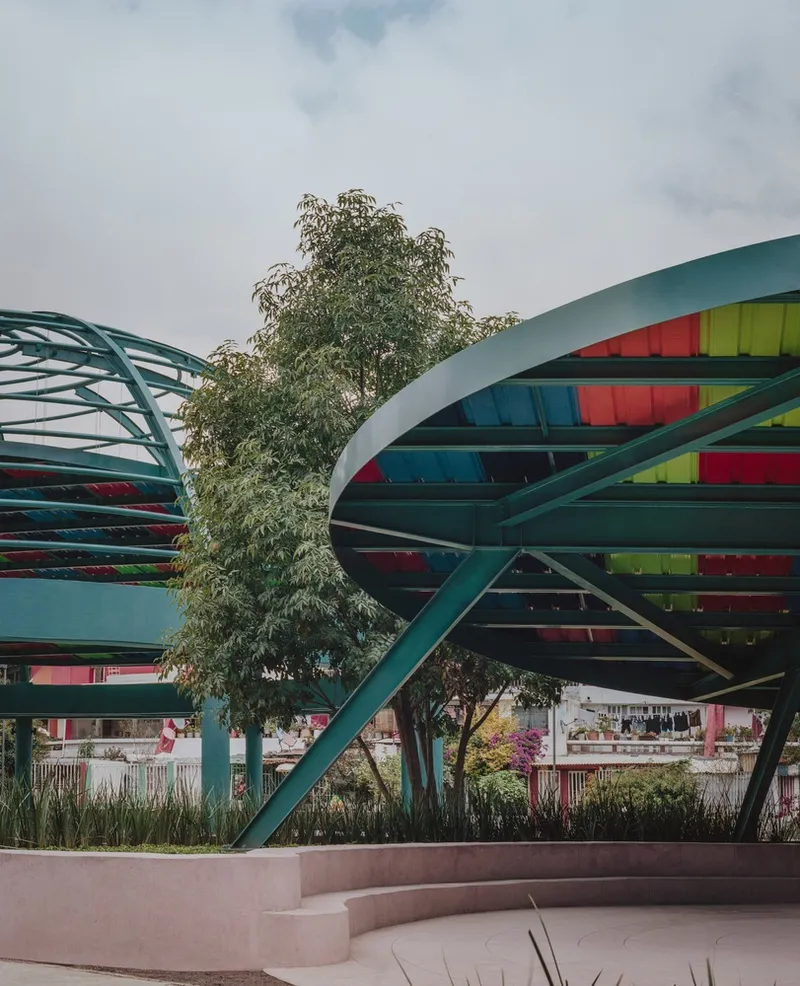
Color plays a central role in reactivating identity and reclaiming dignity from weathered concrete. Pigmented warm-tone concrete defines new structural and seating interventions, contrasting with the grays of the preexisting slab while anchoring upgrades in durable material logic. Turquoise-green steel supports lift corrugated metal sheets finished in vibrant polychromy, creating a festive canopy visible across the complex. The interplay between inherited roughness and intentional chromatic insertion signals renewal without erasing history.
Structural Strategy: Intercepting the Sphere
Rather than attempt a full reconstruction of the irregular semi-sphere, AMASA Estudio proposed an intersecting inclined roof plane suspended from the reinforced steel frame. This move reduced required surface area while achieving critical shade performance, freeing budget for site amenities and finishes. The hybrid approach—part preservation, part insertion—solved structural risk, delivered weather protection, and visually recalibrated the previously incomplete dome as a functioning landmark.


Popular Articles
Popular articles from the community


Jaramillo Van Sluys Arquitectura and Urbanismo Turn a Demolished Registry Lot in Quito into an Orchard Plaza
In Quito's Centro Histórico, a 2,800 m² plaza exposes the San Agustín convent wall and redraws its lost Augustinian orchard in volcanic stone.

Cube Design Draws an Ecological Corridor Between Two Shenzhen Hills with the Nankai Building
Beside Shenzhen's container docks, the Nankai Building pairs stacked balconies with a climbing green screen to connect two hillsides across its height.

Juan García Correa, John González and Claudia Rueda Sink a Circular Amphitheater into a Manizales Engineering Building
On the La Nubia campus in Manizales, Colombia, the S1 Building folds labs and offices into a hillside of ramped lawns that double as a campus route.

GROUP A Strips a 1969 Rotterdam Harbor Headquarters to Its Frame and Wraps It in Timber Louvers
In Rotterdam's M4H harbor district, Ferro Offices reuses a 1969 frame, adds one timber storey and reaches BREEAM-NL Outstanding.

Similar Reads
You might also enjoy these articles

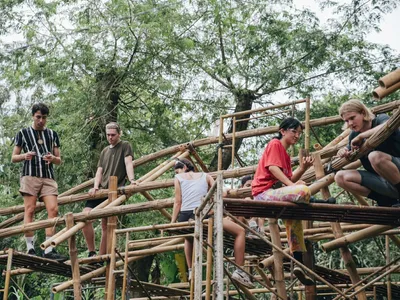
Bamboo Housing Challenge 2026: Design Affordable, Sustainable Homes Using Bamboo
An international design competition by Bamboo U and IBUKU inviting architects and designers to reimagine affordable housing using bamboo — with the winning design built full-scale in Bali.

Computational Design & Education: Beegraphy Design Awards Introduces 7th Category (Featuring Jiyun's Innovative Approach)
Dive into Beegraphy’s 7th Design Awards category, where computational design meets education to create immersive, interactive learning tools, inspired by Jiyun’s work.

From Parametric Lighting to Urban Furniture: Join the 2nd Workshop in Beegraphy’s Computational Design Series
Dive into Cutting-Edge Design Techniques and Practical Applications with Industry Experts

Last Call: Unleash Your Architectural Genius in SHAK's Kindergarten Design Competition
Urgent call for architects to join SHAK's kindergarten design competition before the looming deadline

Explore Architecture Competitions
Discover active competitions in this discipline

Challenge to reimagine the Iron Throne

Photograph architecture without architects

Illustrate the lost glory of Angkor Wat - Render Challenge

Design challenge to reuse E-waste
Comments (0)
Please login or sign up to add comments
No comments yet. Be the first to comment!