
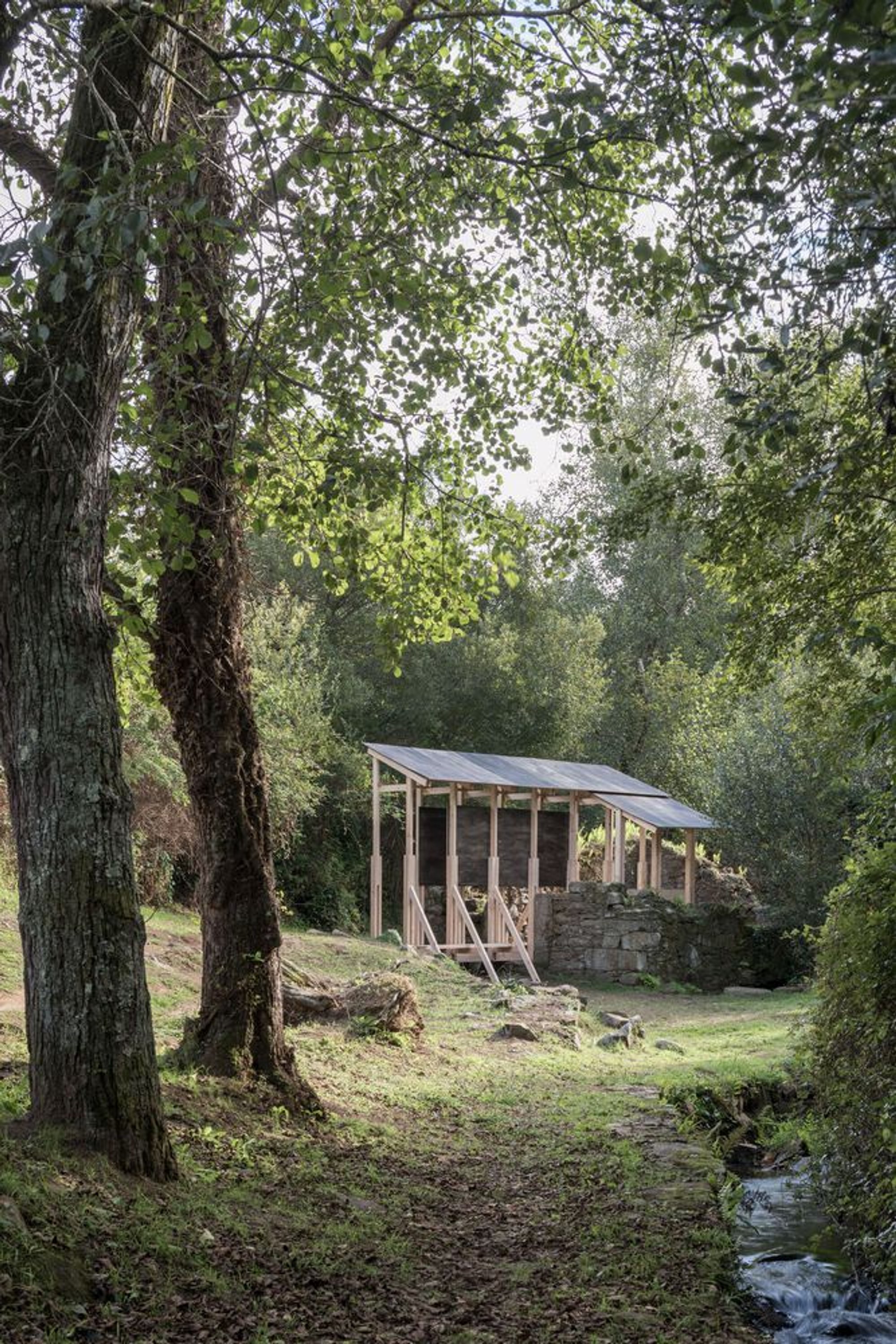
Intervention on a Stone Ruin: A Harmonious Fusion of Tradition and Innovation
A sustainable timber intervention revitalizes a historic stone ruin, preserving heritage while creating a contemplative space along Galicia’s Sisalde River Trail

The CESUGA School of Architecture, in collaboration with Erazo Pugliese, has executed an extraordinary architectural intervention on a historical stone ruin in Arteixo, Spain. This project was part of the III International Conference on Timber 2023 and sought to emphasize the use of wood as a sustainable building material in Galicia’s forestry-rich landscape. The site—a partially collapsed water mill along the Sisalde River Trail—offered a unique opportunity to merge contemporary design with historical preservation, reinforcing a dialogue between past and present architecture.
Reimagining a Historical Ruin with Timber Architecture
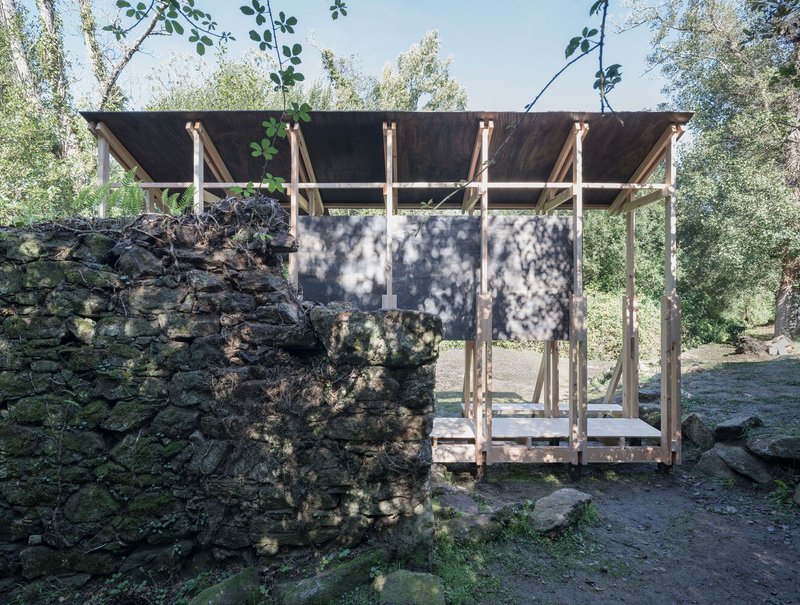
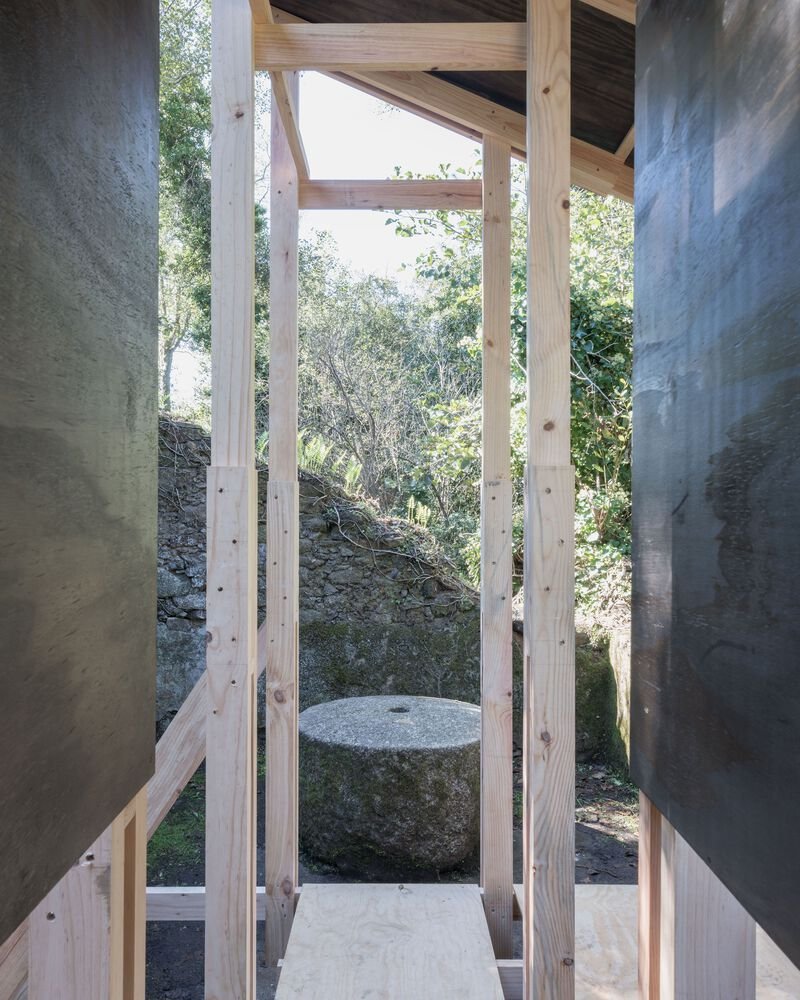
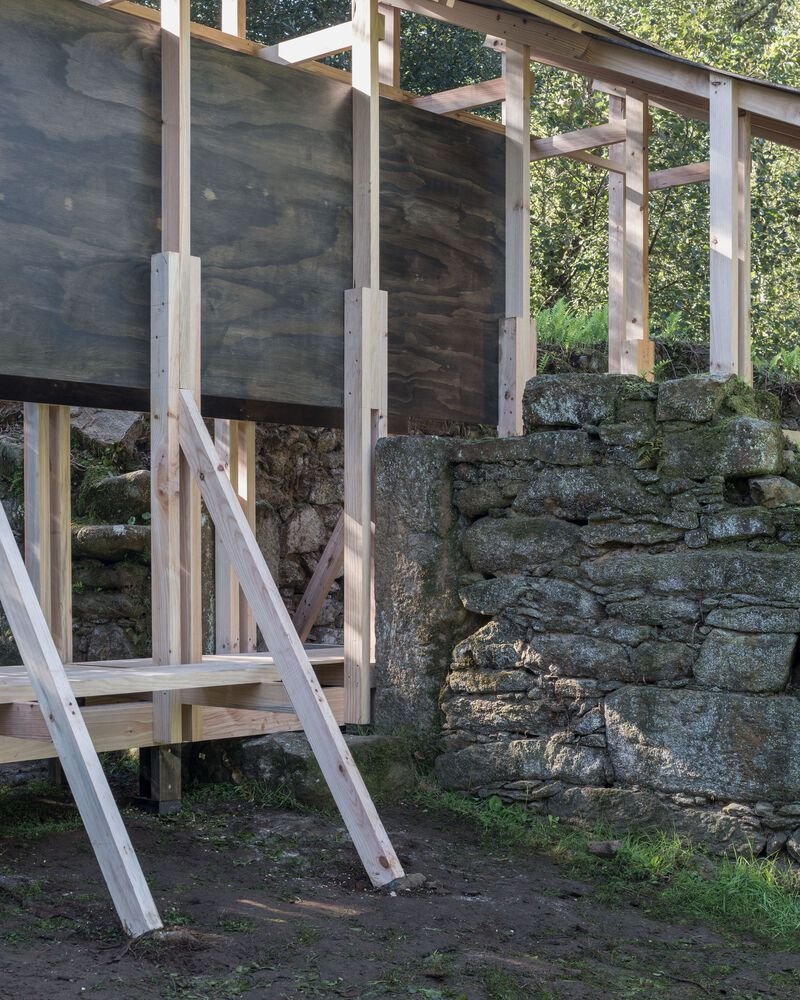
The selected ruin, an abandoned water mill devoid of a roof, bore the marks of time through erosion, weathering, and encroaching vegetation. Recognizing the fragility of its stone walls and millstone slab (or pé, as it is known in Galician), the architects established a crucial design constraint: the intervention would not physically alter the existing stone structure. Instead, the new architectural elements would be positioned within the unoccupied earth-covered sections of the ruin, ensuring minimal impact on the historical footprint of the site.
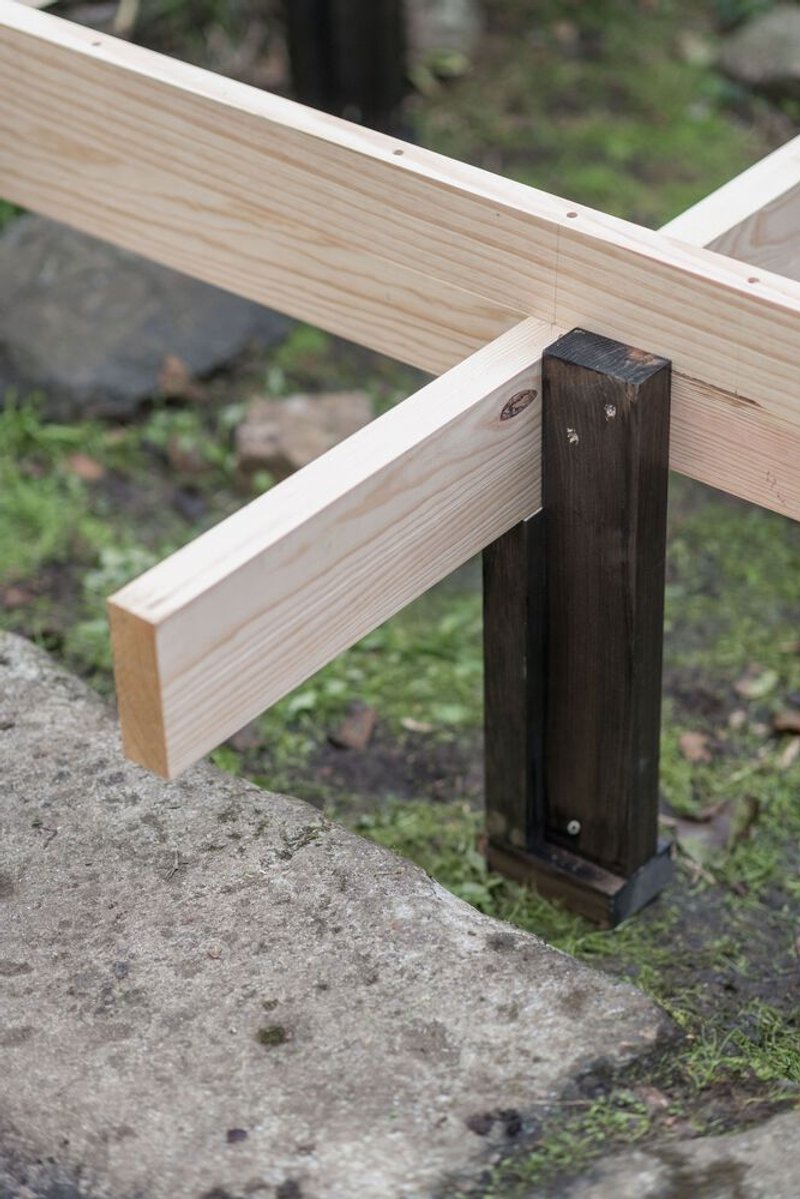
A meticulous site analysis led to the refinement of nine initial design proposals into a single, cohesive vision. The final design was conceived to maximize prefabrication, reducing on-site assembly and ensuring a seamless integration with the existing landscape. This method not only minimized disruption to the natural surroundings but also highlighted the efficiency and adaptability of timber as a primary building material.
Structural Design: A Dialogue Between Old and New
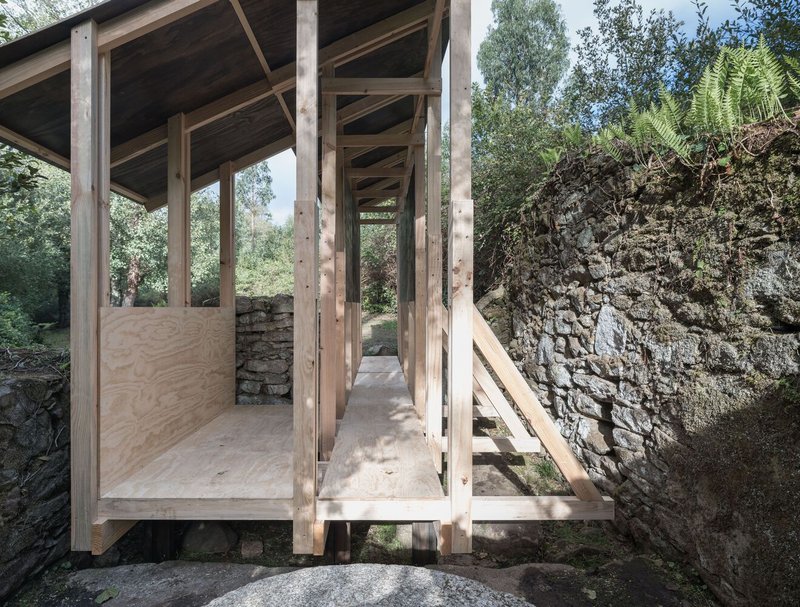
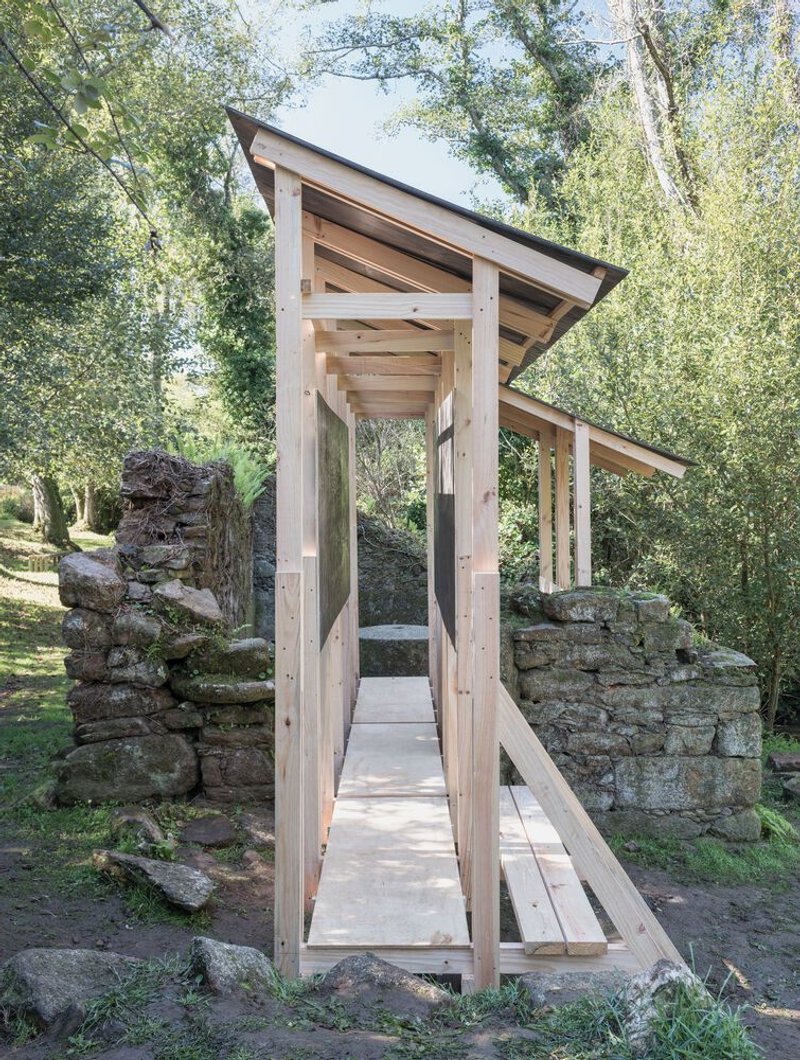
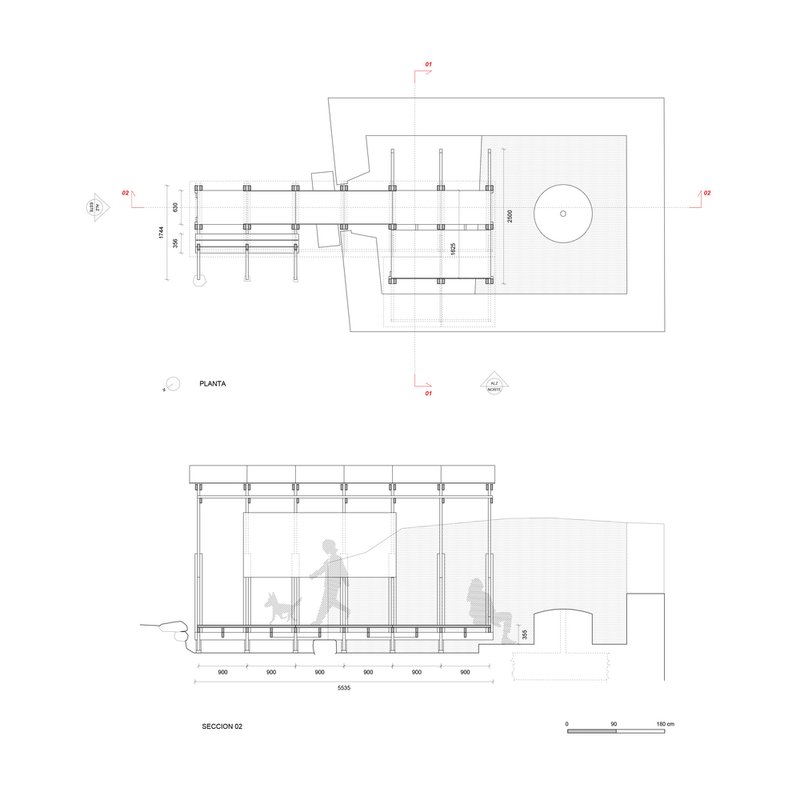
The intervention features a narrow, timber-framed corridor that extends through the ruin, leading visitors toward the millstone—a focal point of historical significance. This design element enhances the visual and spatial experience of the site, guiding visitors through an orchestrated sequence of movement and perspective.
To preserve the integrity of the ruin, the structure was designed to rest primarily on natural soil, with only one point of contact—a stone step that remains independent of the mill’s original foundation. The raised wooden platform extends toward the stream, carefully maintaining a respectful distance from the ruin’s southernmost wall, which is both the tallest and the most fragile. This approach not only protects the historic stone elements but also allows for an uninterrupted appreciation of their timeworn beauty.
A Platform for Contemplation
One of the project’s most striking features is the subtle yet effective level differentiation between the wooden platform and the ruin’s existing stone slab. By cantilevering the platform 20 to 30 cm above the ancient stone, the intervention creates additional floor space without physically resting on the ruin. This architectural decision transforms the platform into an inviting resting point, where visitors can pause to reflect on the site’s history while appreciating its natural surroundings.
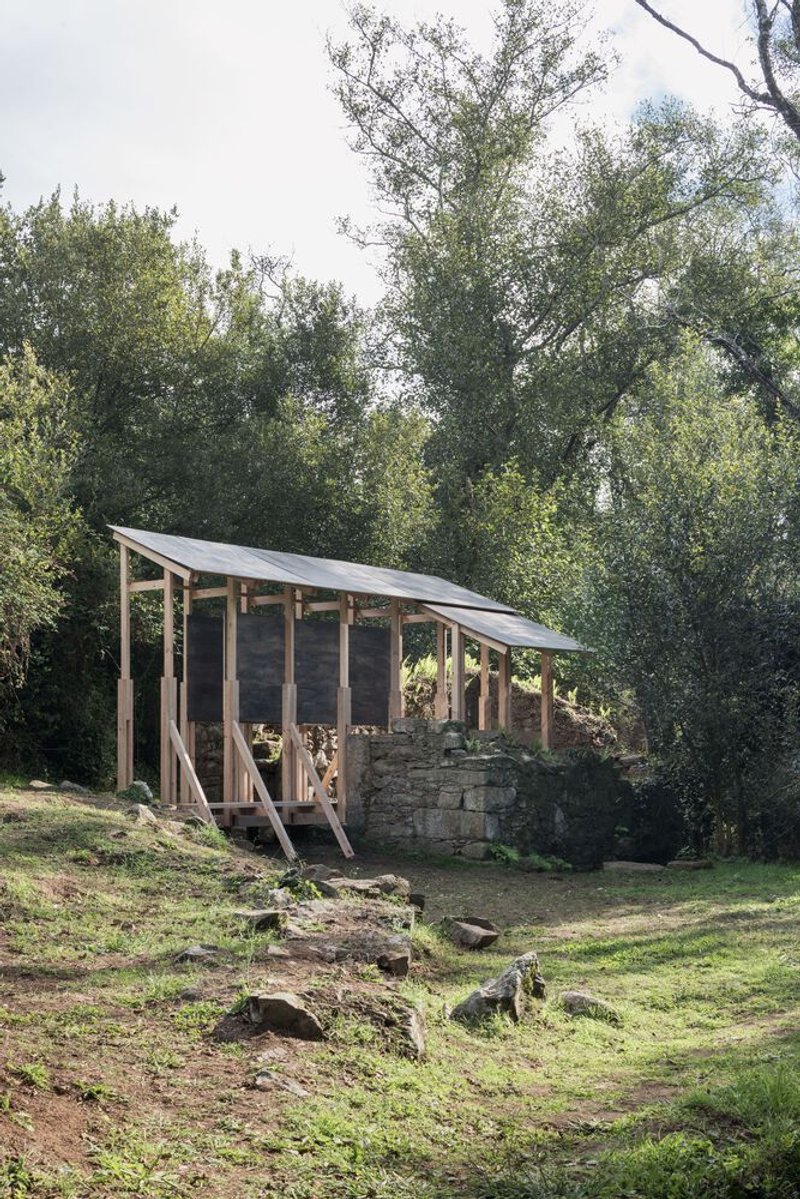
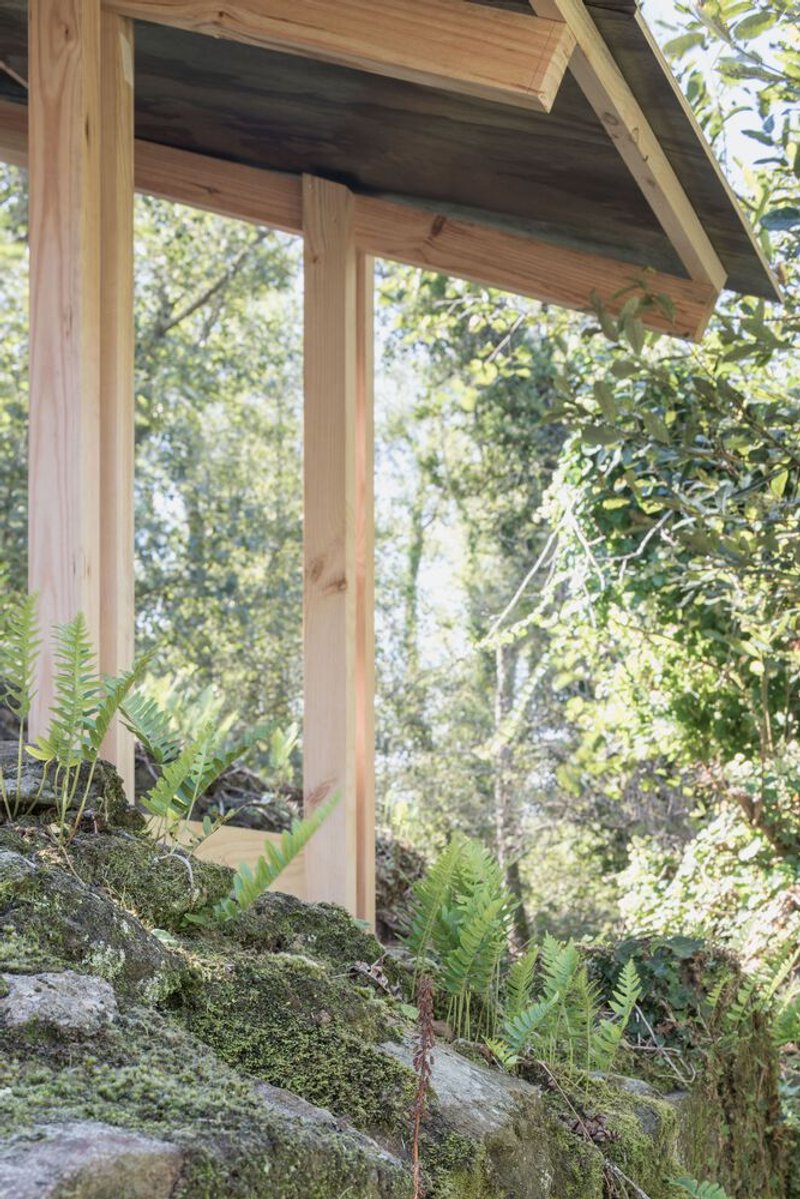
Sheltered by a single-pitched roof that mirrors the angle of the ruin’s lost covering, the intervention provides refuge for hikers and visitors traversing the Sisalde River Trail. The combination of warm timber tones against the aged stone textures enhances the sensory experience, creating a space that honors the past while embracing the future of sustainable architecture.
Preserving Heritage Through Contemporary Design
This project is a testament to the power of sensitive architectural intervention—where modern design principles respect and enhance historical legacies. By utilizing timber in a strategic and sustainable manner, the CESUGA School of Architecture and Erazo Pugliese have demonstrated how architecture can breathe new life into forgotten spaces while maintaining a commitment to cultural and environmental preservation.




Popular Articles
Popular articles from the community


Solar Steam: A Climate-Responsive Architecture That Redefines the Monument
A climate-responsive memorial architecture that transforms heat, decay, and time into a living system reflecting humanity’s ecological impact.
Inverted Architecture Installation by Studio Link-Arc: Exploring the Intersection of Architecture and Living Organisms
Inverted Architecture Installation by Studio Link-Arc blends mycelium, sustainability, inverted design, ecological cycles, and urban adaptive architecture in Shenzhen.


The Ken Roberts Memorial Delineation Competition (Krob)
As the most senior architectural drawing competition currently in operation anywhere in the world, it draws hundreds of entries each year, awarding the very best submissions in a series of medium-based categories.
On the Brooks House by Monsoon Collective – A Contemporary Kerala Home Rooted in Tradition
Kerala home blending tradition and modernity with water-inspired design, brick architecture, courtyard planning, and sustainable rainwater harvesting strategies.


Similar Reads
You might also enjoy these articles
The Ken Roberts Memorial Delineation Competition (Krob)
As the most senior architectural drawing competition currently in operation anywhere in the world, it draws hundreds of entries each year, awarding the very best submissions in a series of medium-based categories.


Waterfront Redevelopment and Urban Revitalization in Mumbai: Forging a New Dawn for Darukhana
A transformative waterfront redevelopment project reimagining Darukhana’s shipbreaking heritage into an inclusive urban future.

OUT-OF-MAP: A Call for Postcards on Feminist Narratives of Public Space
Rhizoma Design and Research Lab invites artists, designers, architects, researchers, and students to reflect on how feminist perspectives can reshape public space. Selected works will be exhibited in Barcelona, October 2026. Submissions open until 15 April 2026.


Documentation Work on Buddhist Wooden Temple
Architectural syncretism and cultural hybridity: A comparative study of the Buddhist temples in Chattogram Hill tracks


Explore Architecture Competitions
Discover active competitions in this discipline




The International Standard for Design Portfolios


The Global Benchmark for Architecture Dissertation Awards


The Global Benchmark for Graduation Excellence


Challenge to reimagine the Iron Throne
Comments (0)
Please login or sign up to add comments
No comments yet. Be the first to comment!