
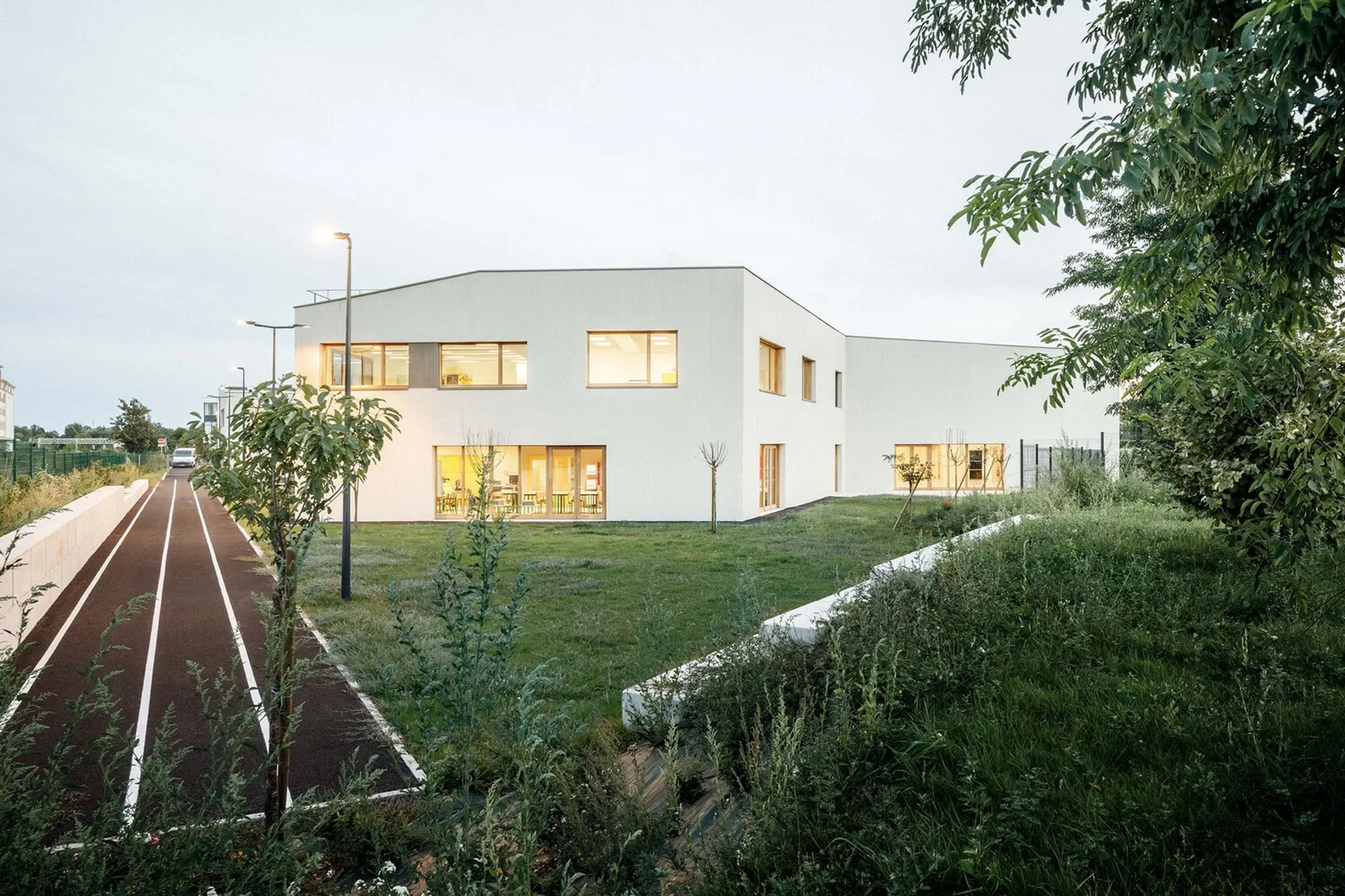
Introduction to Sustainable Educational Architecture
This article explores the sustainable design of Saint Dominic Savio High School and Gymnasium by Atelier Téqui Architects in France.


Sustainable educational architecture represents a commitment to designing school buildings that are environmentally responsible, energy-efficient, and conducive to fostering a positive learning environment. The new Saint Dominic Savio high-school college and gymnasium in Saint-Julien-les-Villas, France, exemplifies these principles through innovative design by Atelier Téqui Architects.


Overview of the Saint Dominic Savio Project
The Saint Dominic Savio complex, which includes both a high-school college and a gymnasium, spans an area of 3035 m². The project is designed to integrate educational facilities with the local community and environment, promoting sustainability at every level of construction and operation.

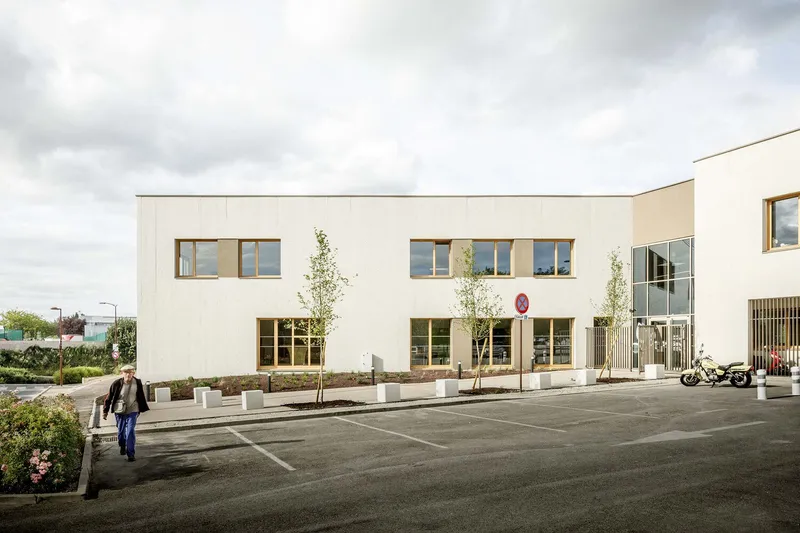
Design Philosophy and Implementation
Building Layout and Material Use
The Saint Dominic Savio project is organized around a central corridor that distributes spaces and folds with the building, creating a dynamic form that adapts to its site. The use of durable materials like concrete, oak, and glass characterizes the structure, ensuring longevity and minimal maintenance.
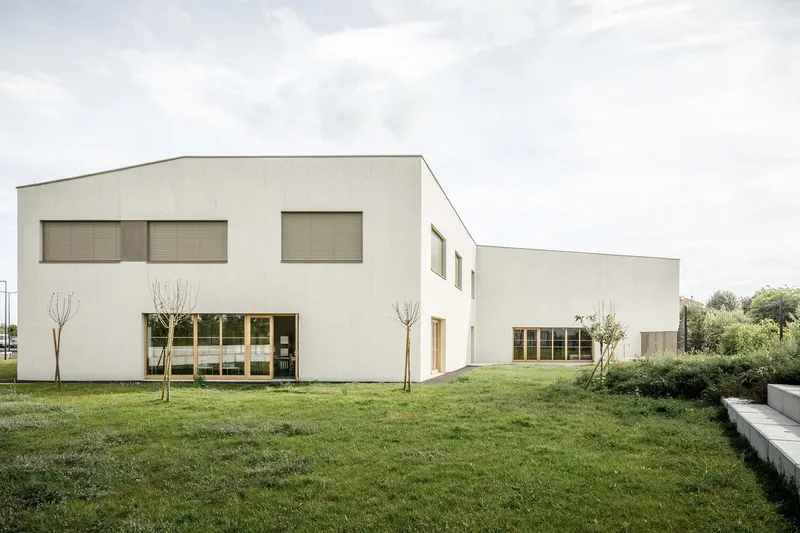

Sustainable Materials and Features
- Concrete and Oak: Chosen for their durability and aesthetic qualities.
- Glass: Enhances natural lighting, reducing the need for artificial lighting.
- Photovoltaic Panels: Support self-consumption of electricity.
- Rainwater Collection: Utilized for watering outdoor spaces.


Energy Efficiency and Natural Lighting
Bioclimatic Design
The bioclimatic design of the Saint Dominic Savio buildings allows natural light to penetrate deep into the educational spaces, reducing the dependency on artificial lighting and creating a more pleasant learning environment.


Thermal and Light Management
- Wood Fiber Slab Ceilings: Help in sound insulation and thermal management.
- Brise Soleil: Regulates solar heat gain and light penetration, customized to the building’s solar orientation.


Integration with the Environment
Outdoor and Recreational Spaces
The Saint Dominic Savio project includes various outdoor spaces that serve both educational and recreational purposes, seamlessly blending with the surrounding landscape.


Features of Outdoor Spaces
- Contemplative Gardens: Offer students a tranquil space for relaxation amidst native flora.
- Sports Facilities: Include a gymnasium with large spans supported by wooden beams, eliminating the need for intermediate posts and enhancing the open space.


Community Interaction and Accessibility
Designed for the Community
The Saint Dominic Savio complex is not just a place for education but also serves as a community hub. It includes features like a green theater and communal courtyards that encourage gatherings and community events.


Accessibility and Circulation
- Central Corridor: Ensures easy and rational circulation throughout the building.
- Exterior Walkways: Connect different parts of the campus, making it accessible to everyone.


The construction of the Saint Dominic Savio high-school college and gymnasium by Atelier Téqui Architects is a landmark in sustainable educational architecture. This project demonstrates how innovative design can be used to meet the demands of 21st-century education while being mindful of environmental impact and community needs. The integration of sustainable practices and materials makes it a model for future educational architecture projects worldwide.


All photographs are work of 11h45 - Florent Michel




Popular Articles
Popular articles from the community


The Ocean Hive: Sustainable Architecture for a Self-Sufficient Civilization at Sea
The Ocean Hive imagines sustainable architecture at sea, where modular habitats, algae, wave power and ocean waste sustain a growing colony.

Riyadh For All: Intergenerational Urban Design for Active Aging in Rabat
Riyadh For All reimagines urban design in Rabat with intergenerational co-living, adaptive courtyards, and Moroccan cultural exchange today.

Lunar Spiral: Space Architecture Shaped by the Mathematics of the Universe
Lunar Spiral reimagines space architecture through Fibonacci geometry, lunar regolith, levitating habitats, and self-sustaining Moon living.

The Earth Pod: 3D Printed Homes for Resilient Refugee Communities
The Earth Pod reimagines refugee housing through 3D printed homes made from clay, combining resilience, self-sufficiency, and rapid shelter.

Similar Reads
You might also enjoy these articles

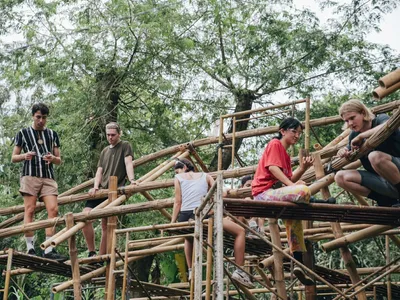
Bamboo Housing Challenge 2026: Design Affordable, Sustainable Homes Using Bamboo
An international design competition by Bamboo U and IBUKU inviting architects and designers to reimagine affordable housing using bamboo — with the winning design built full-scale in Bali.

Computational Design & Education: Beegraphy Design Awards Introduces 7th Category (Featuring Jiyun's Innovative Approach)
Dive into Beegraphy’s 7th Design Awards category, where computational design meets education to create immersive, interactive learning tools, inspired by Jiyun’s work.
From Parametric Lighting to Urban Furniture: Join the 2nd Workshop in Beegraphy’s Computational Design Series
Dive into Cutting-Edge Design Techniques and Practical Applications with Industry Experts

Last Call: Unleash Your Architectural Genius in SHAK's Kindergarten Design Competition
Urgent call for architects to join SHAK's kindergarten design competition before the looming deadline

Explore Architecture Competitions
Discover active competitions in this discipline



Challenge to reimagine the Iron Throne


Photograph architecture without architects


Illustrate the lost glory of Angkor Wat - Render Challenge


Design challenge to reuse E-waste
Comments (0)
Please login or sign up to add comments
No comments yet. Be the first to comment!