

Jakuets Tokyo Matsubara Office by Jo Nagasaka and Schemata Architects
Diagonal office renovation connects Jakuets’ nationwide branches through immersive digital communication, adaptive reuse, and spatial strategies redefining Japanese workplace culture.


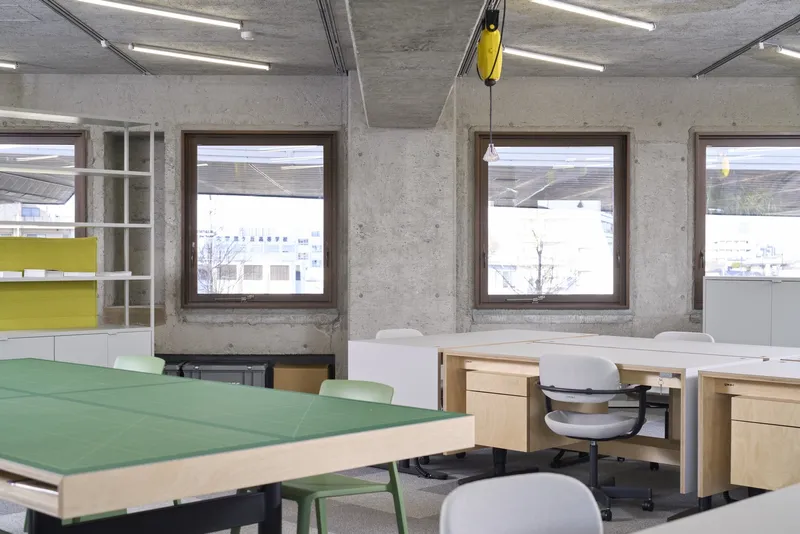
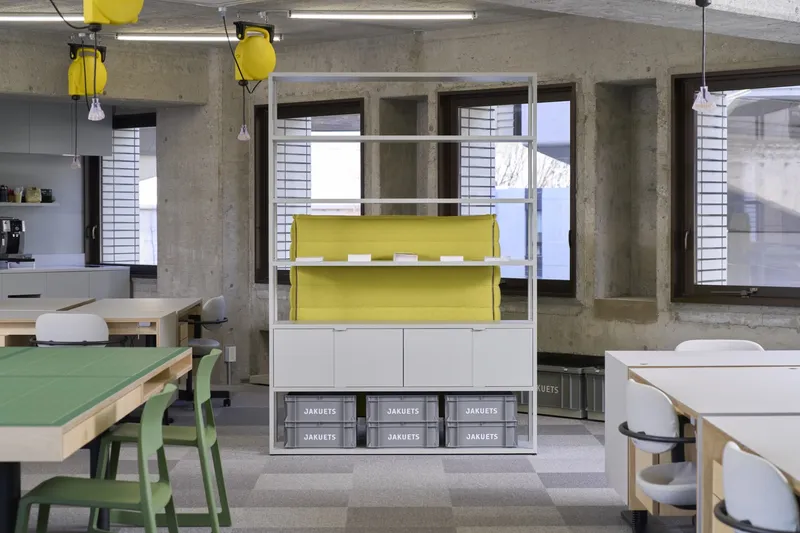
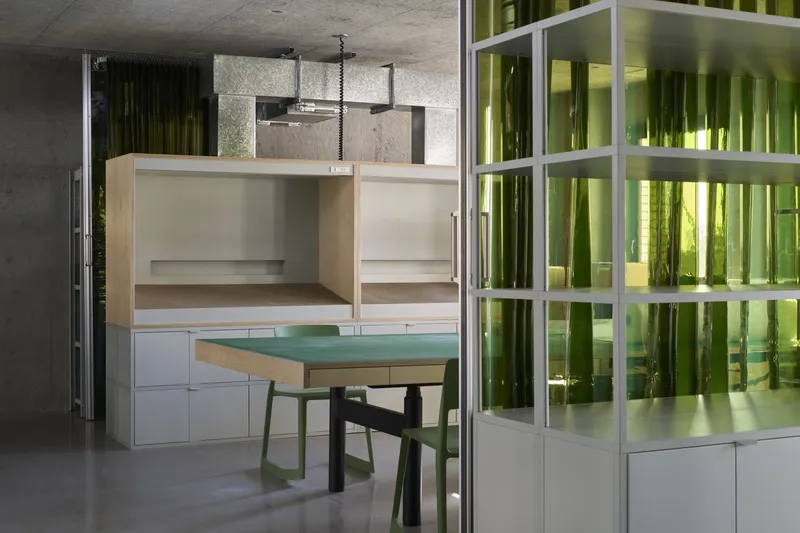
The Jakuets Tokyo Matsubara Office in Setagaya City redefines the contemporary Japanese workplace through spatial strategy, digital integration, and organizational transformation. Designed by Jo Nagasaka and Schemata Architects, the 1,623 m² office renovation (completed in 2023) goes beyond interior redesign, it proposes a new operational model for JAKUETS’ nationwide network of 67 branches.
Reimagining an Educational Enterprise Headquarters
Headquartered in Tsuruga City, Fukui Prefecture, JAKUETS operates across Japan in the planning, manufacturing, and maintenance of educational and playground equipment, as well as kindergarten, nursery, park, and community development design.
Historically, each branch functioned as a localized hub, maintaining its own inventory and nurturing strong one-on-one relationships with schools and communities. This community-based sales approach built trust and regional identity.
However, in an era defined by digital communication, advanced logistics, and diversified client needs, this decentralized structure began revealing inefficiencies:
- Underused warehouses
- Vacant company housing
- Limited inter-branch communication
- Minimal cross-department knowledge sharing
The Tokyo Matsubara renovation addresses these challenges by transforming the office into a networked communication hub, both physically and digitally.
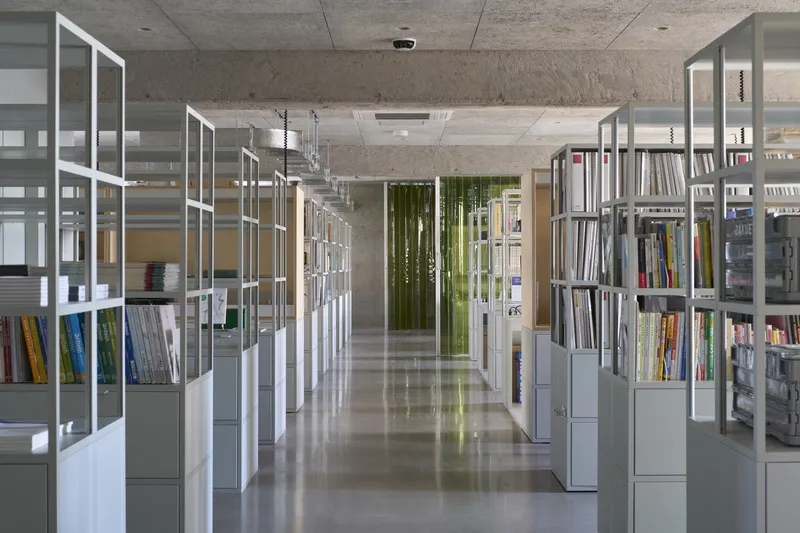
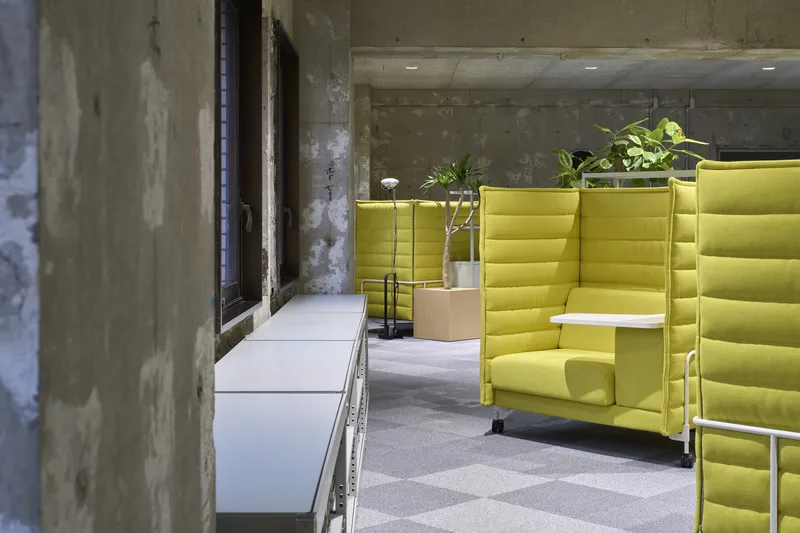
Architecture as a Communication Device
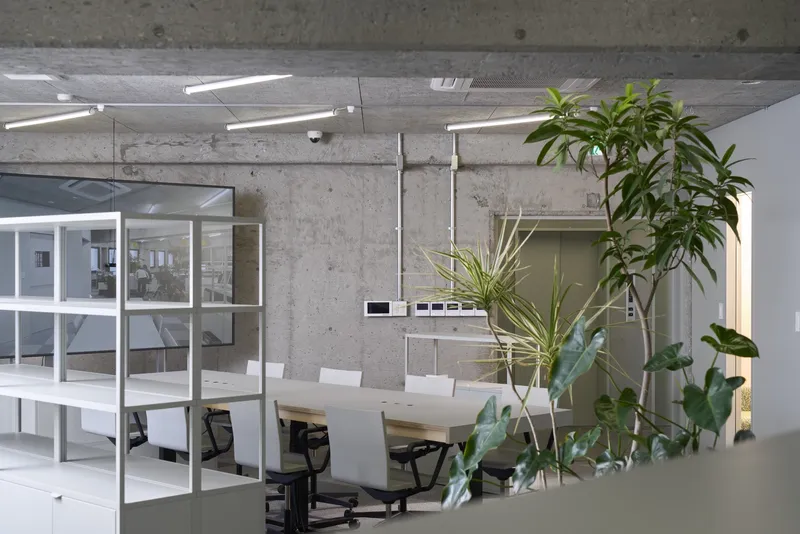
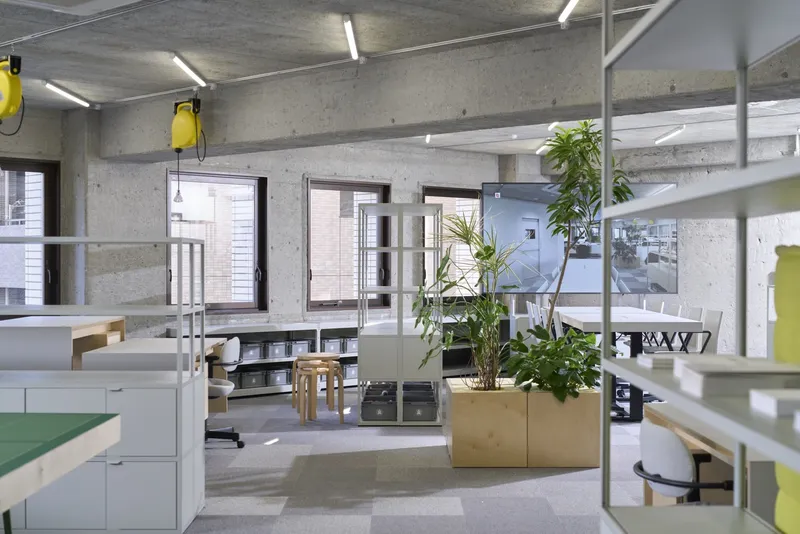
At the heart of the design is a radical yet simple intervention: a 100-inch monitor installed within the office and synchronized with identical monitors in other branches nationwide.
This large-scale digital portal enables:
- Real-time, full-body communication
- Direct eye contact between offices
- Seamless collaboration across regions
- Enhanced knowledge exchange
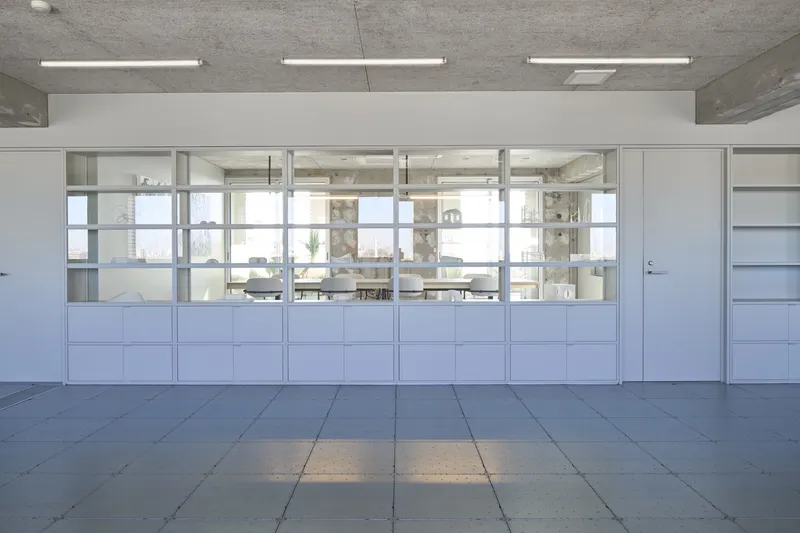
Unlike conventional video conferencing rooms, the screen is not confined to a meeting space. Instead, it becomes a spatial anchor that shapes the entire office layout.
The 45-Degree Strategy
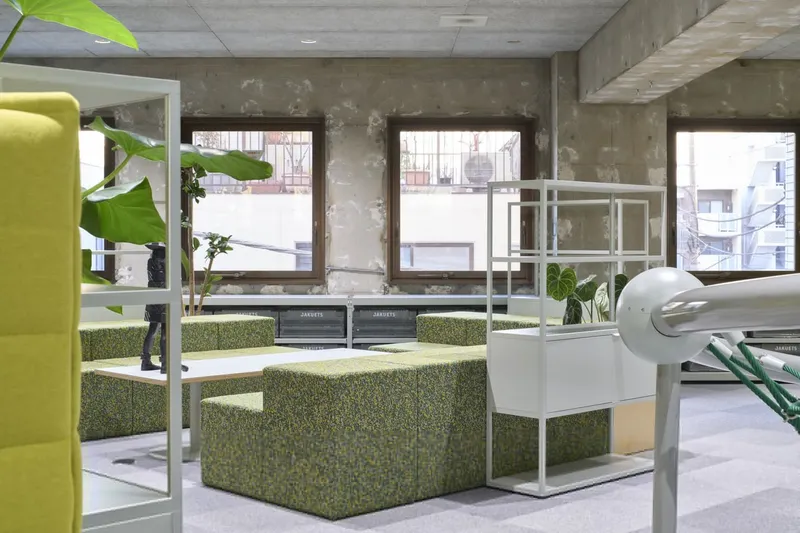
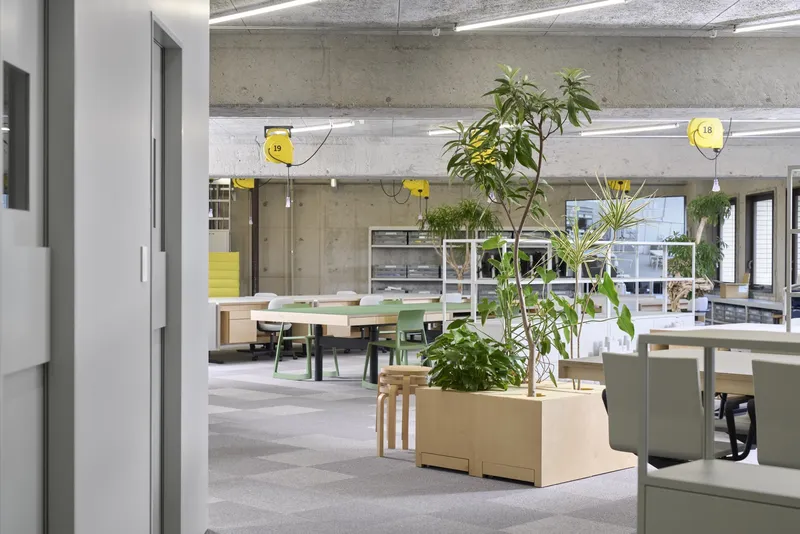
To eliminate camera blind spots and ensure visibility across the rectangular floor plate, the monitor is placed diagonally at a 45-degree angle from the corner.
This technical necessity evolved into a defining architectural gesture:
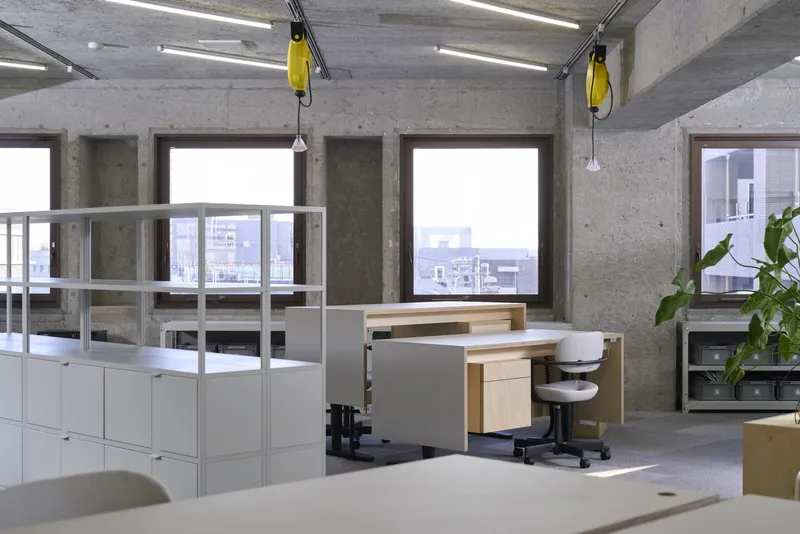
- Furniture is oriented at 45 degrees relative to the building framework
- Circulation paths follow the diagonal logic
- Workstations subtly shift away from rigid orthogonality
- Spatial flow feels dynamic and interconnected
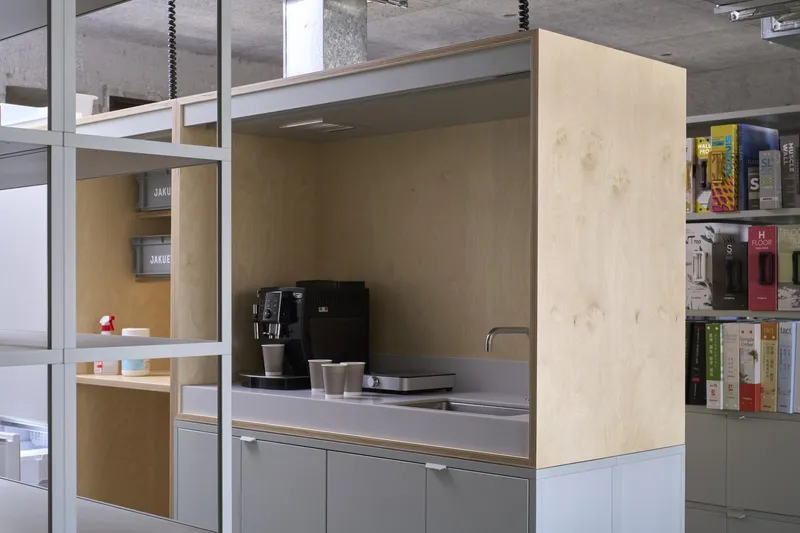
The result is a workplace that visually and physically reinforces the concept of cross-branch connectivity. The office becomes an active interface rather than a static workspace.
Strengthening Organizational Networks
While JAKUETS has long maintained strong ties between its headquarters and 67 branches, communication previously operated in silos.
This renovation promotes:
- Bidirectional information exchange
- Departmental transparency
- Collaborative problem-solving
- Nationwide team cohesion
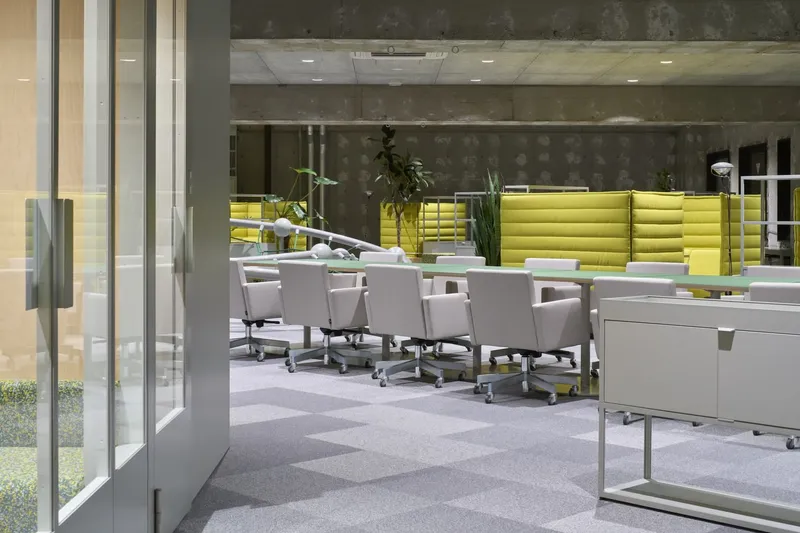
By embedding communication infrastructure directly into architectural form, the project merges interior design, corporate strategy, and digital workplace innovation.
Adaptive Reuse: From Company Housing to Employee Hotel
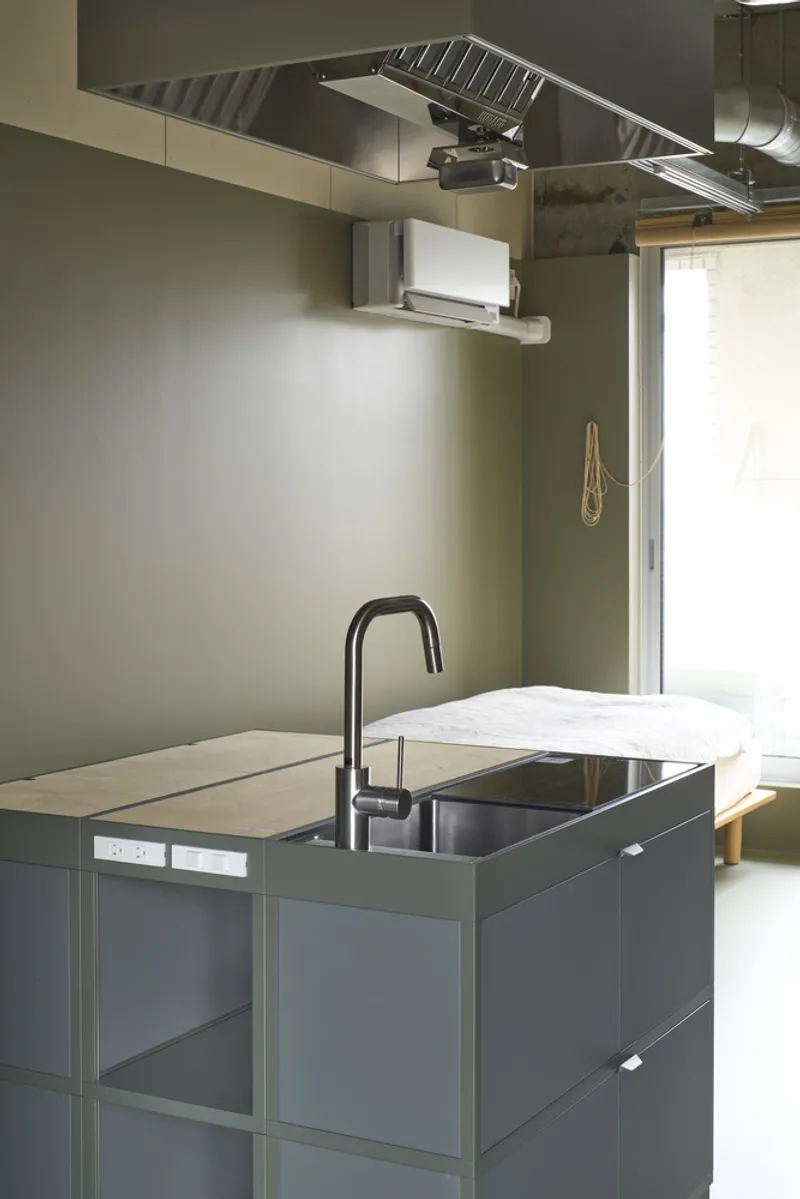
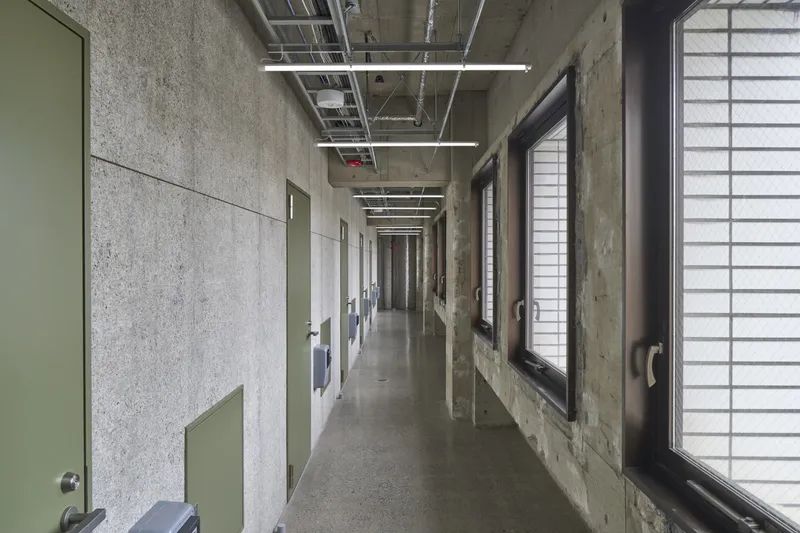
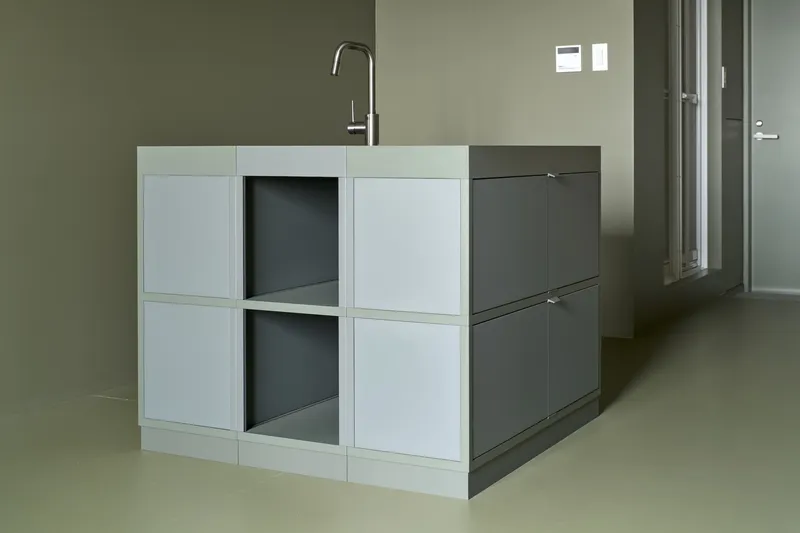
Another key transformation occurs on the sixth floor, where former company housing has been converted into a hotel for employees. Six residential units were redesigned into short-term accommodations, allowing staff traveling to Tokyo to stay overnight at no additional cost.
This adaptive reuse strategy delivers multiple benefits:
- Reduces underutilized real estate
- Supports employee mobility
- Encourages work-life balance
- Strengthens inter-branch exchange
- Activates dormant assets
Looking ahead, this model may extend to branches nationwide, forming a distributed hospitality network that complements the digital communication system. The vision is clear: build communities that exist both online and in physical space.
A Prototype for the Future Workplace
The Jakuets Tokyo Matsubara Office exemplifies how contemporary office renovation can move beyond aesthetics. It demonstrates how architecture can:
- Facilitate digital transformation
- Reinforce organizational networks
- Encourage knowledge sharing
- Activate unused assets
- Redefine corporate spatial identity
Through precise spatial logic and minimal yet impactful interventions, Jo Nagasaka and Schemata Architects create a workplace that embodies connectivity: diagonally, digitally, and socially.
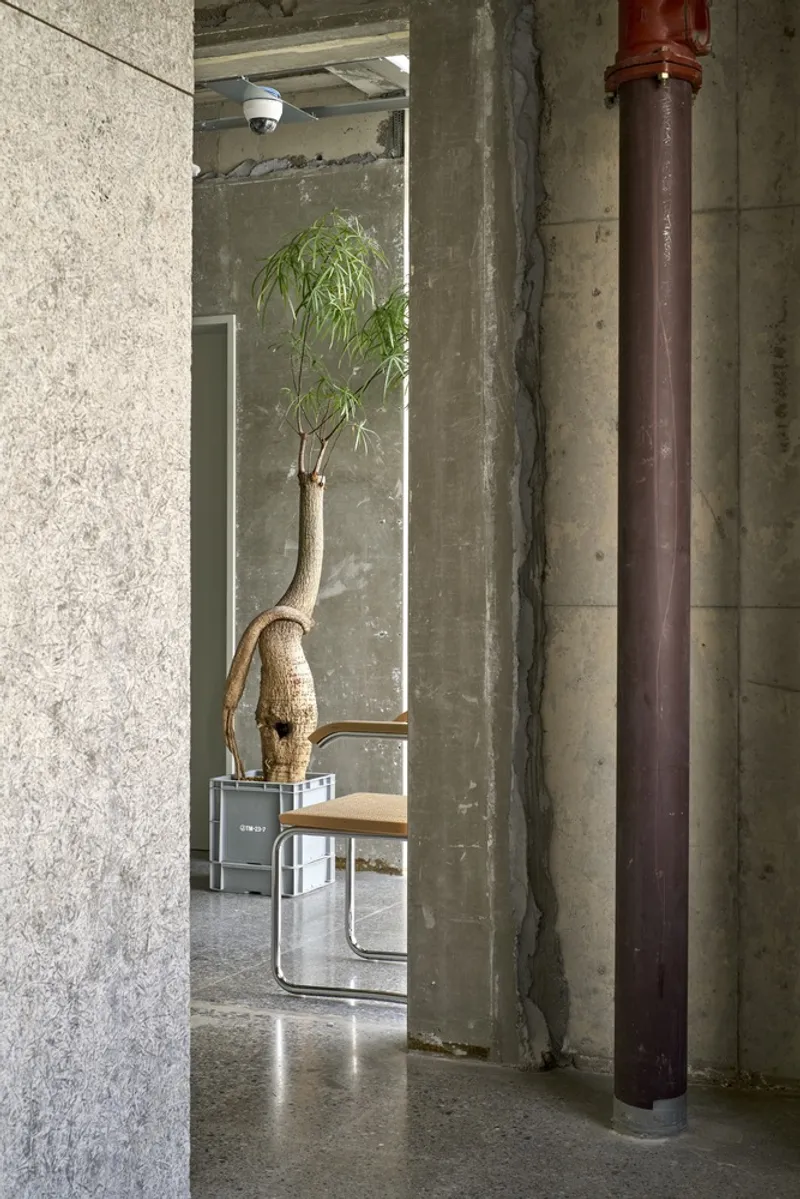
All photographs are works of
Gottingham


Popular Articles
Popular articles from the community


Temporary Home for Dogs: A Reversed Zoo Rethinks Animal Shelter Architecture
In Bucharest, a sinuous corridor and freed landscape flip the logic of containment, designing a shelter that works to make itself unnecessary.
Tsunami Convergenics: Turning Catastrophic Ocean Forces into Underwater Housing Infrastructure
A speculative underwater settlement off the coast of Onagawa, Japan, treats tsunamis and typhoons as energy sources rather than threats.
Extended Shell: Retrofitting Kolkata's Balconies as Living Urban Thresholds
A modular retrofit system recovers the social and environmental intelligence of Kolkata's historic verandas for contemporary Park Street residents.
Faces of the Soviet Avant-Garde: Turning Moscow's Street Names into an Open-Air Museum
A network of sculptural installations across a Moscow residential district transforms forgotten architect names into spatial encounters with cultural memor

Similar Reads
You might also enjoy these articles

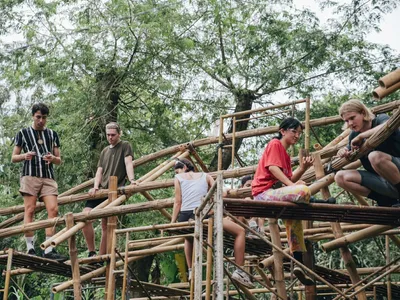
Bamboo Housing Challenge 2026: Design Affordable, Sustainable Homes Using Bamboo
An international design competition by Bamboo U and IBUKU inviting architects and designers to reimagine affordable housing using bamboo — with the winning design built full-scale in Bali.
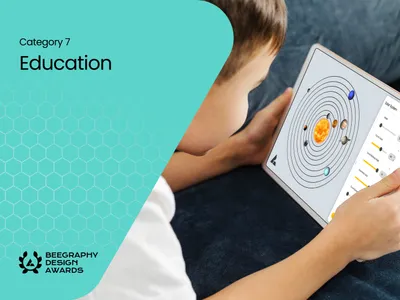
Computational Design & Education: Beegraphy Design Awards Introduces 7th Category (Featuring Jiyun's Innovative Approach)
Dive into Beegraphy’s 7th Design Awards category, where computational design meets education to create immersive, interactive learning tools, inspired by Jiyun’s work.
From Parametric Lighting to Urban Furniture: Join the 2nd Workshop in Beegraphy’s Computational Design Series
Dive into Cutting-Edge Design Techniques and Practical Applications with Industry Experts

Last Call: Unleash Your Architectural Genius in SHAK's Kindergarten Design Competition
Urgent call for architects to join SHAK's kindergarten design competition before the looming deadline

Explore Interior Design Competitions
Discover active competitions in this discipline

Challenge to design luxury tourism on rails

Challenge to reimagine the Iron Throne

Photograph architecture without architects

VR headsets Storefront design competition
Comments (0)
Please login or sign up to add comments
No comments yet. Be the first to comment!