
Jiuguo Courtyard Inn by Modum Atelier: A Contemporary Courtyard Renovation Architecture in Tianjin
A youth hotel that fuses colonial-era courtyard architecture with modern design, preserving history through thoughtful renovation and spatial layering.


Merging Heritage with Modern Functionality
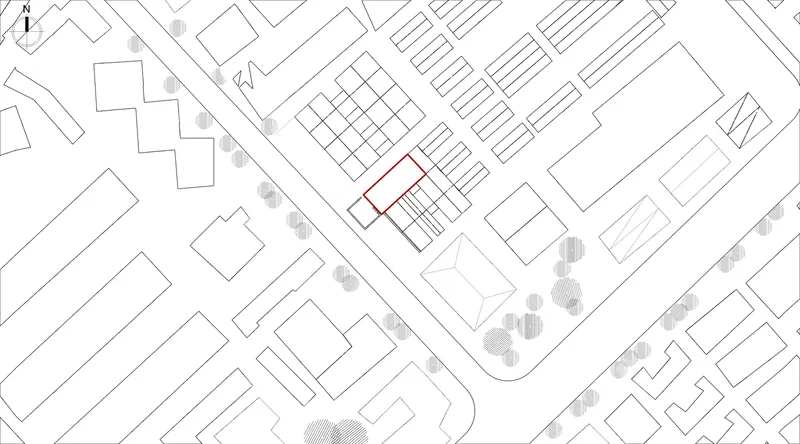
Located in the scenic Concession area of Tianjin, China, the Jiuguo Courtyard Inn designed by Modum Atelier stands as a compelling example of courtyard renovation architecture that balances historical preservation with the demands of a modern youth hotel. Completed in 2024, this 300-square-meter project is Modum Atelier's first venture integrating architectural design with operational functionality, reflecting a sensitive and practical approach to adaptive reuse in an urban heritage context.
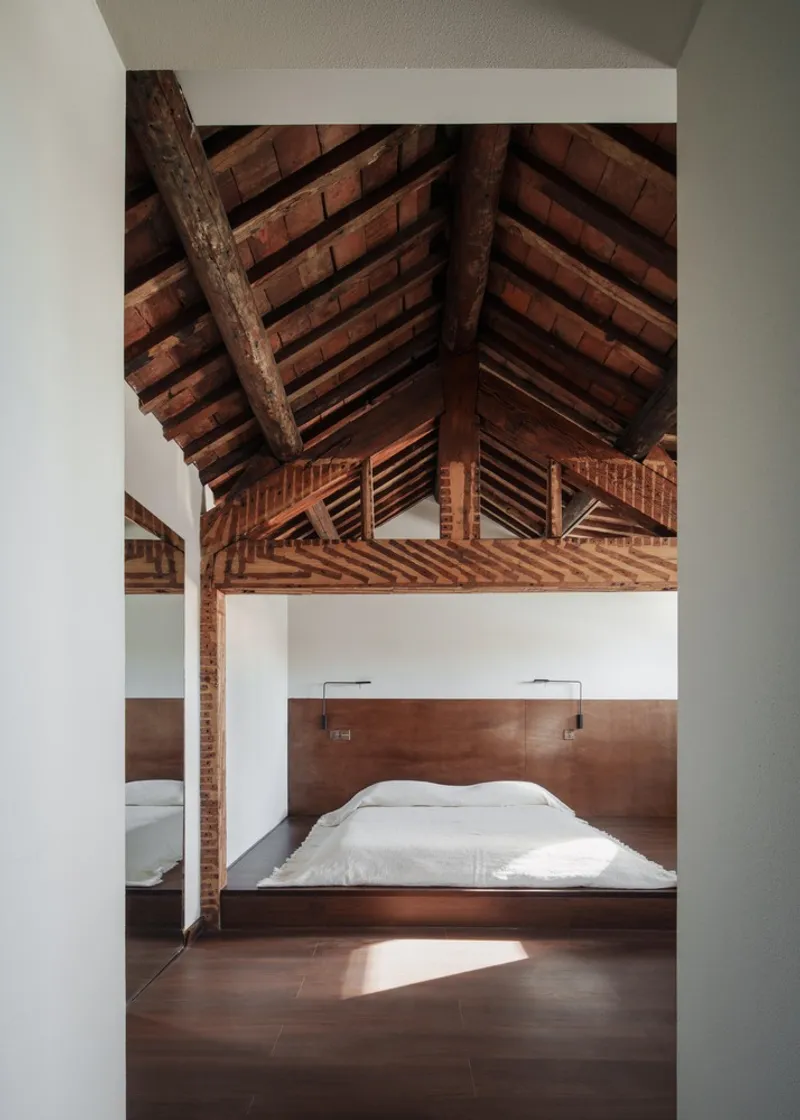
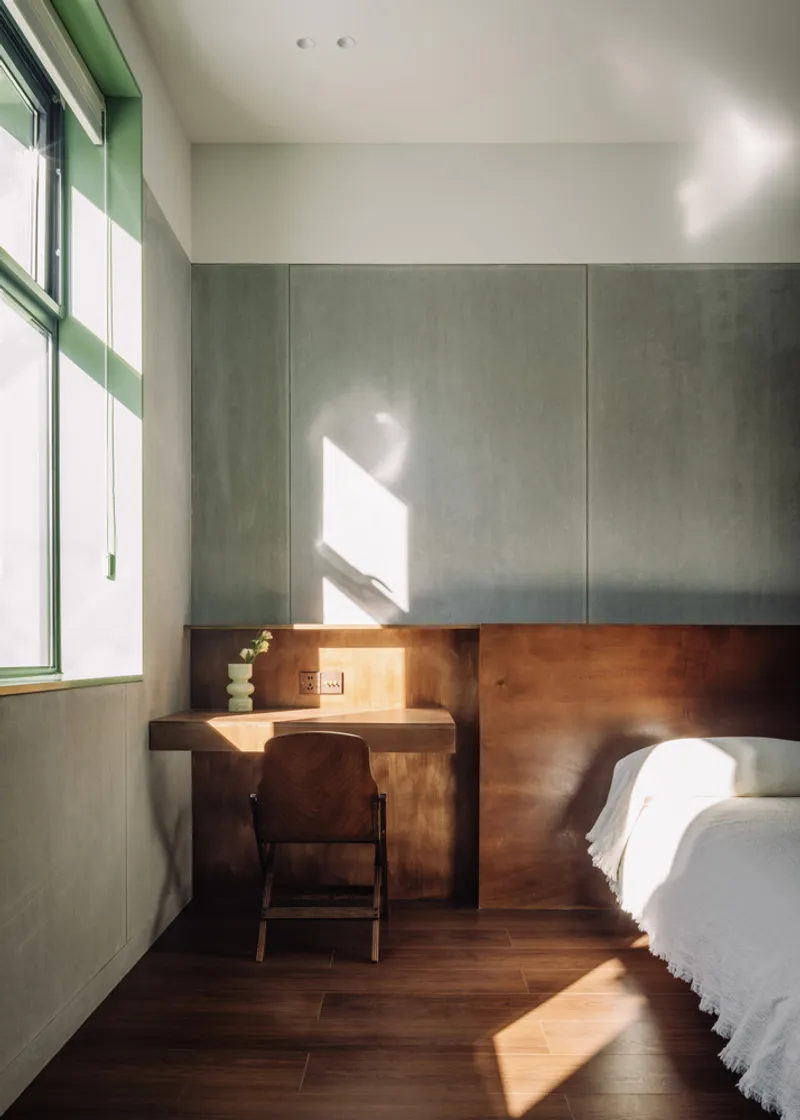
Architectural Context: Reviving Colonial-Era Masonry
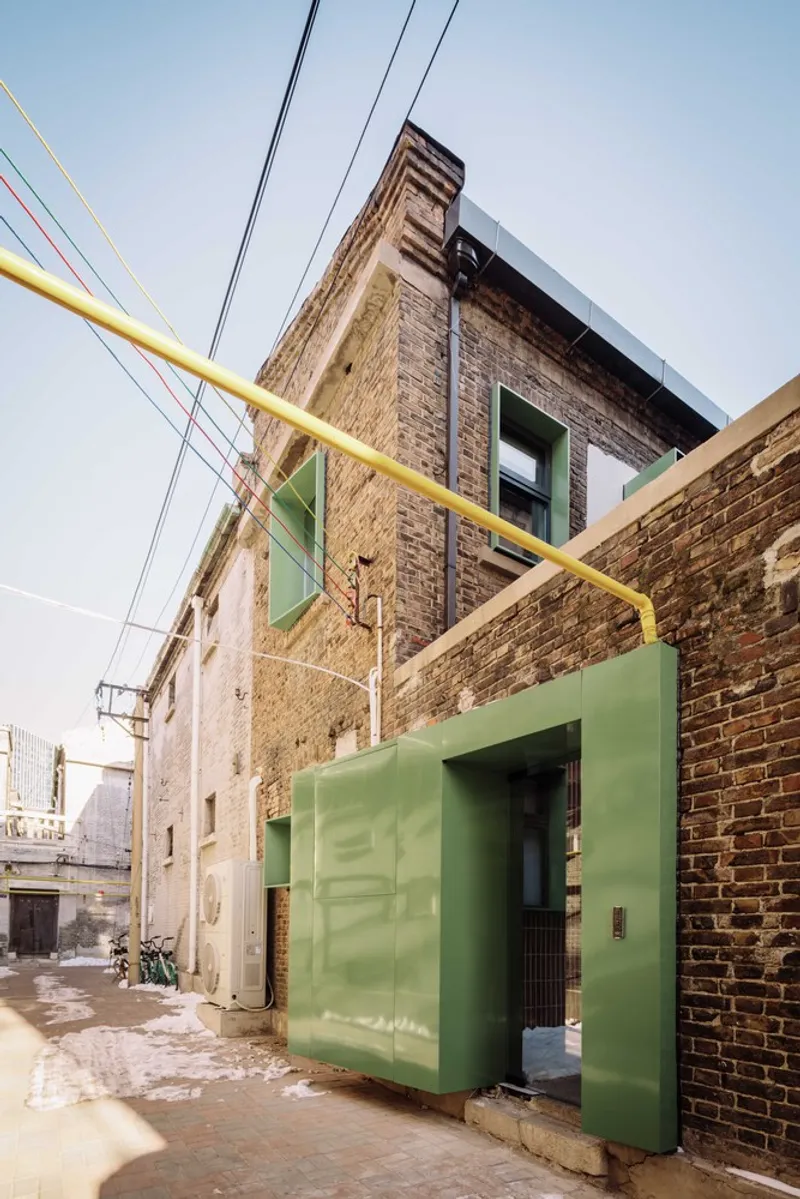
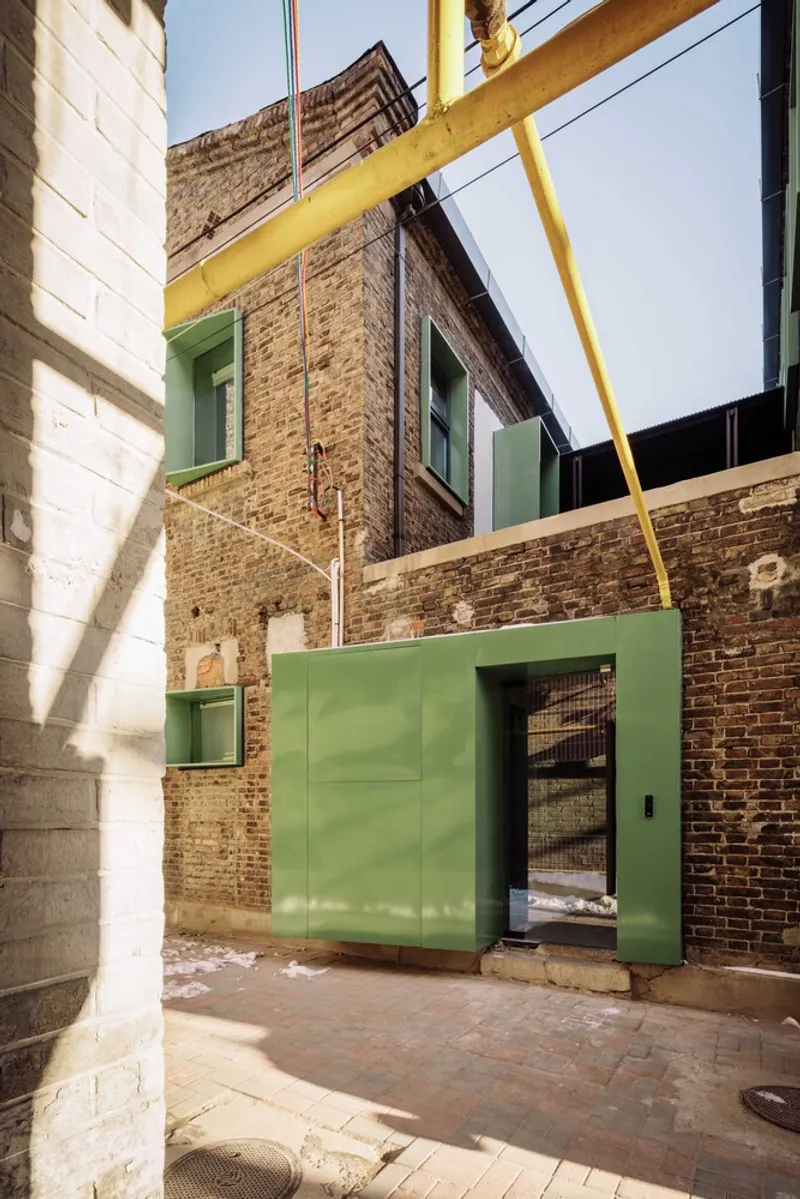
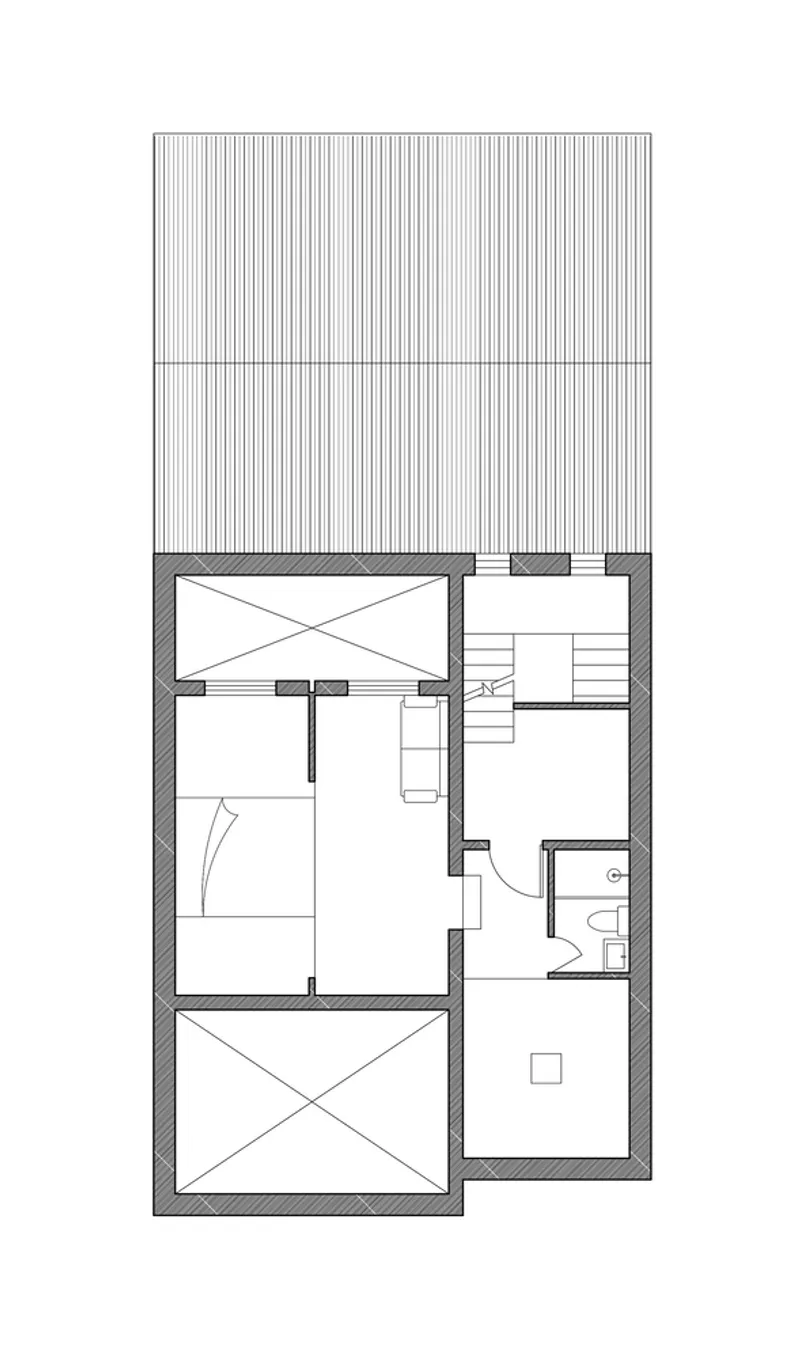
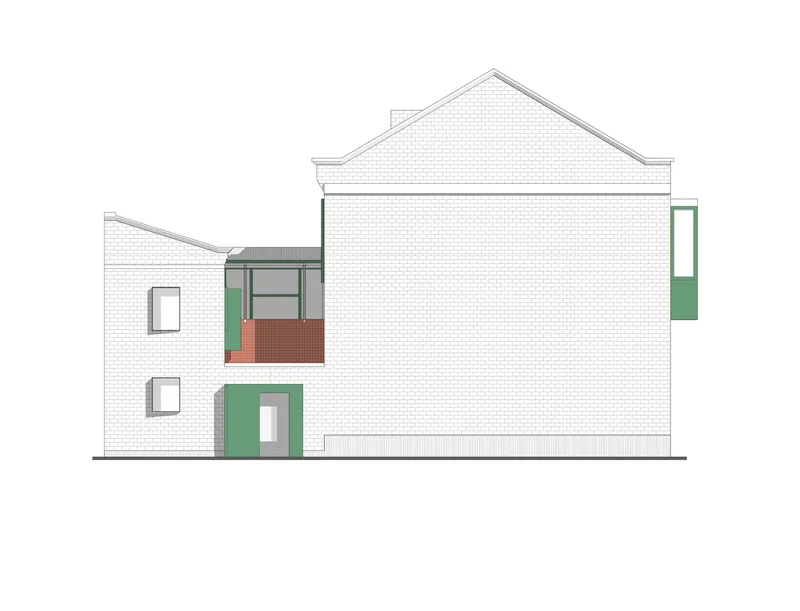
The original structure features traditional masonry walls with a timber roof—typical of early colonial influences integrated with local building techniques. Its placement on the inner side of the street posed a challenge for commercial visibility. To address this, the architects reimagined the entry sequence by introducing a contrasting volume at the entrance, breaking the monotony of the narrow lane and simultaneously enhancing wayfinding and visual identity. This volume also serves a practical purpose, discreetly housing mechanical equipment while spatially linking the courtyard to the building.
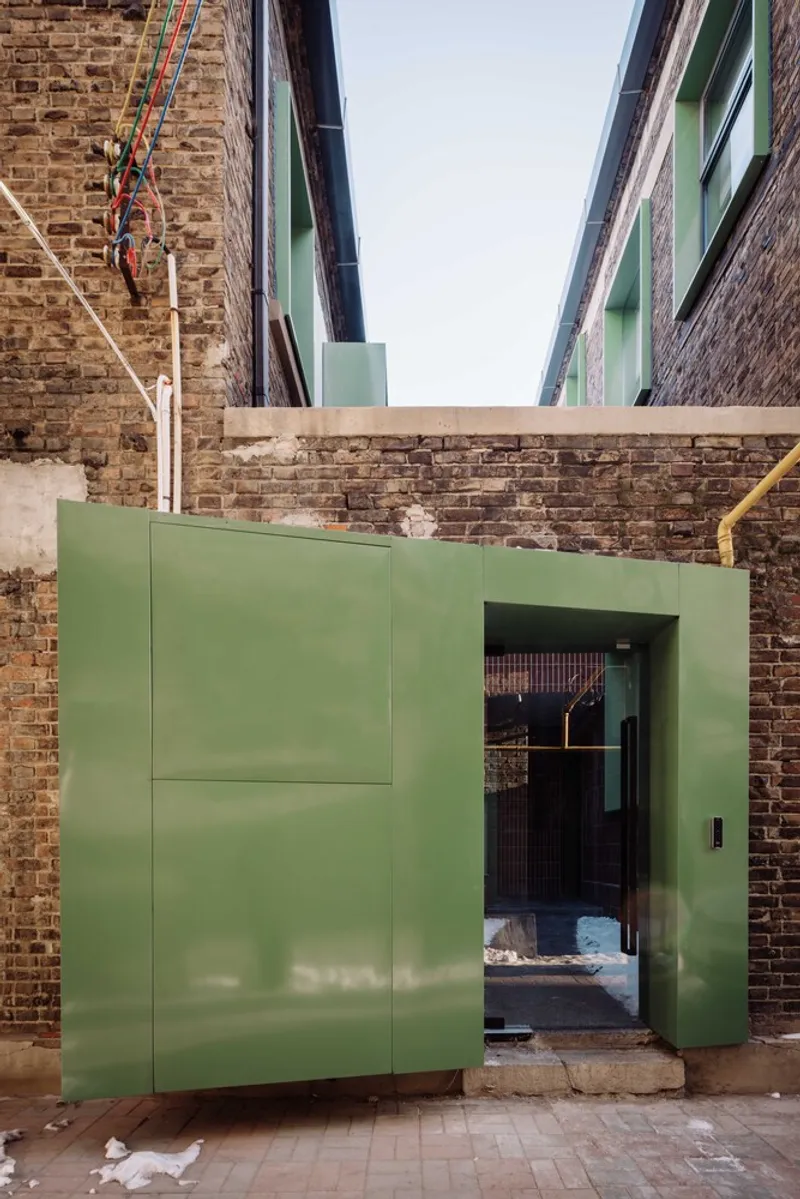
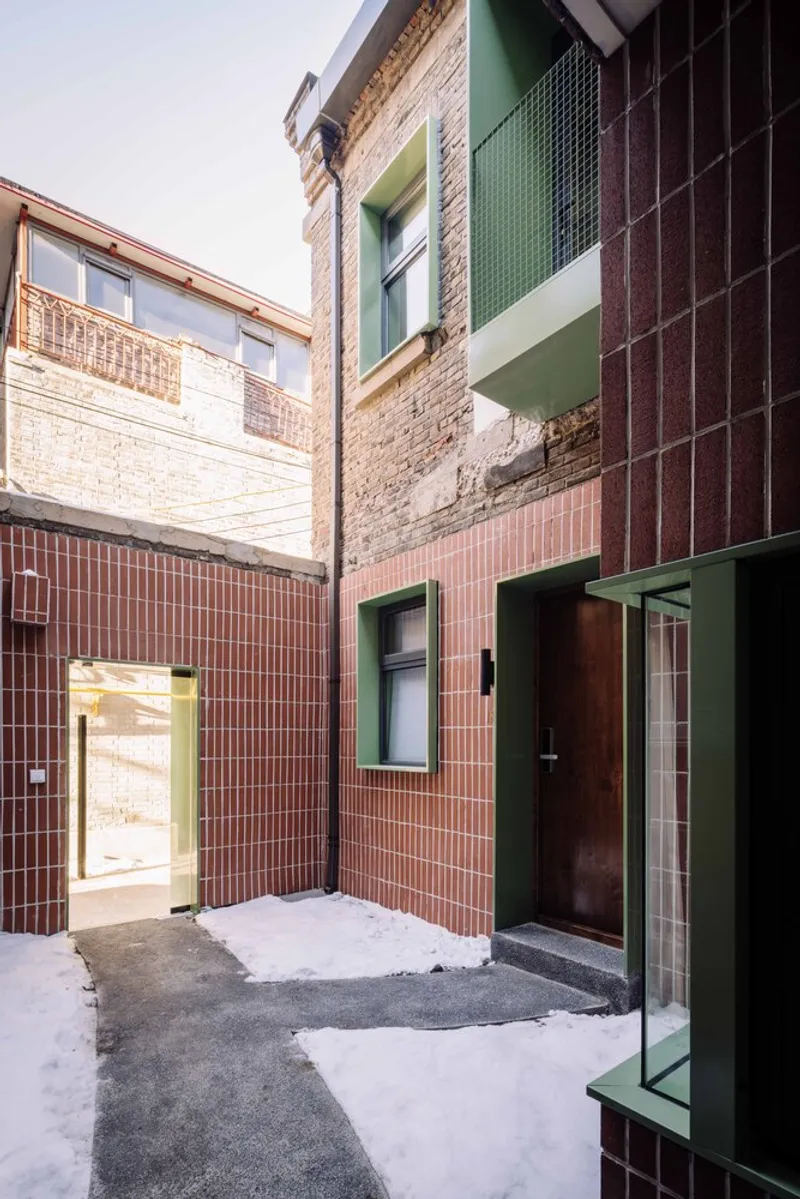
Design Strategy: Patchwork Renovation with Material Integrity
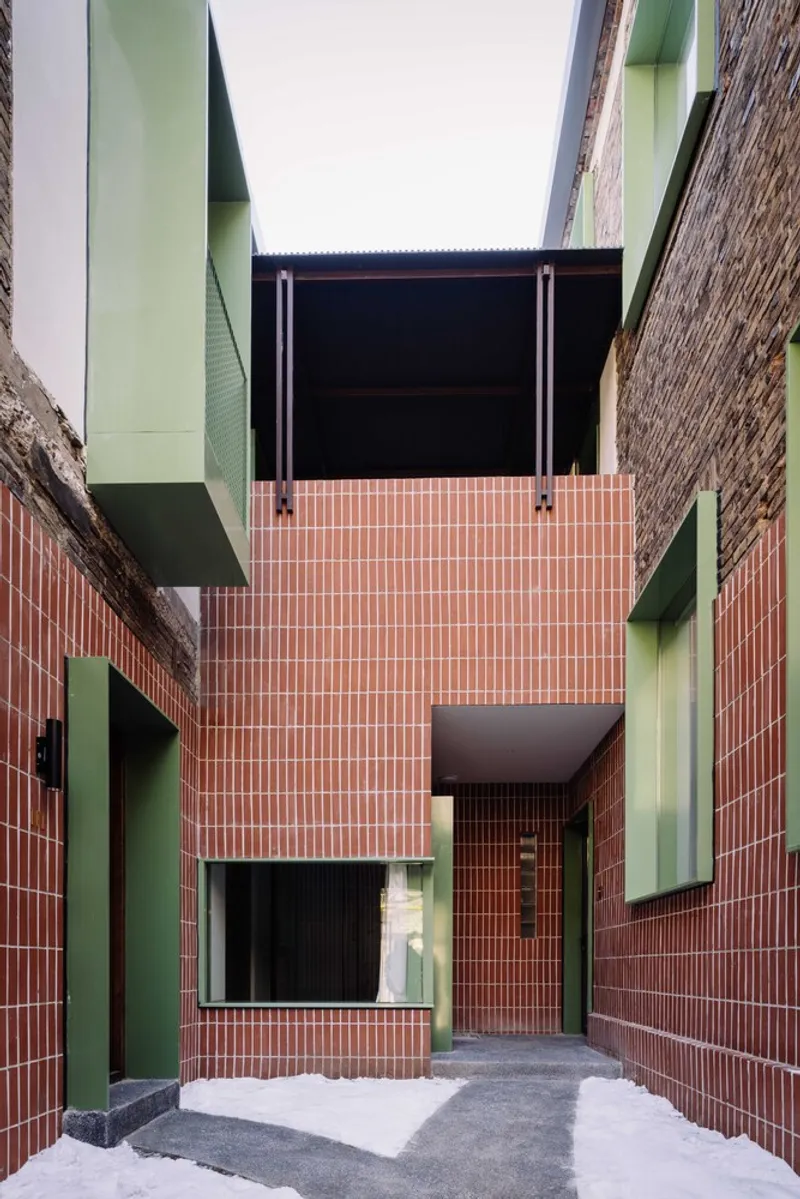
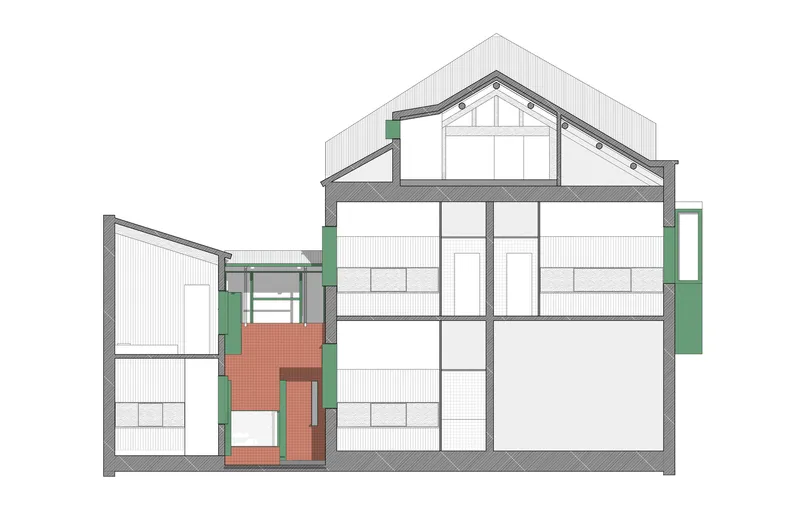
The renovation follows a "patchwork" strategy, intentionally minimizing interventions to preserve the building’s aged character. Rather than imposing a unified aesthetic, the design embraces fragmentation—juxtaposing new elements like aluminium panels and concrete surfaces with the existing brick and timber. This contrast highlights the building’s temporal layers and deepens the spatial narrative.
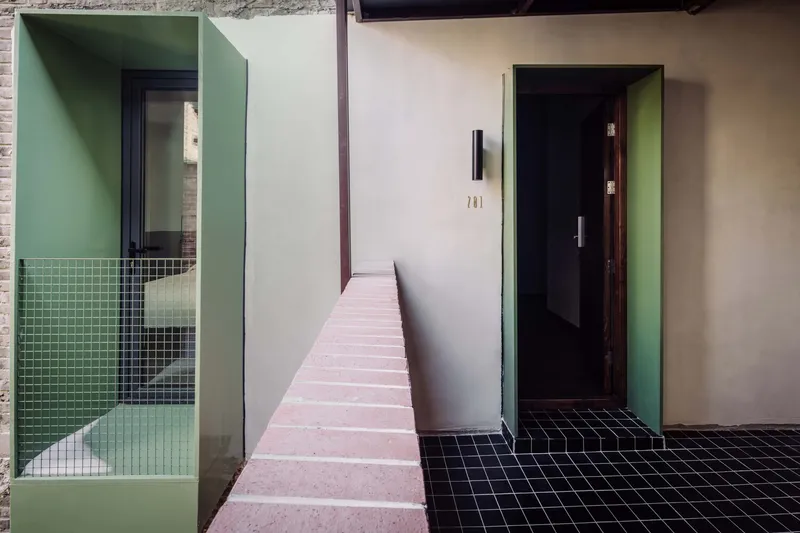
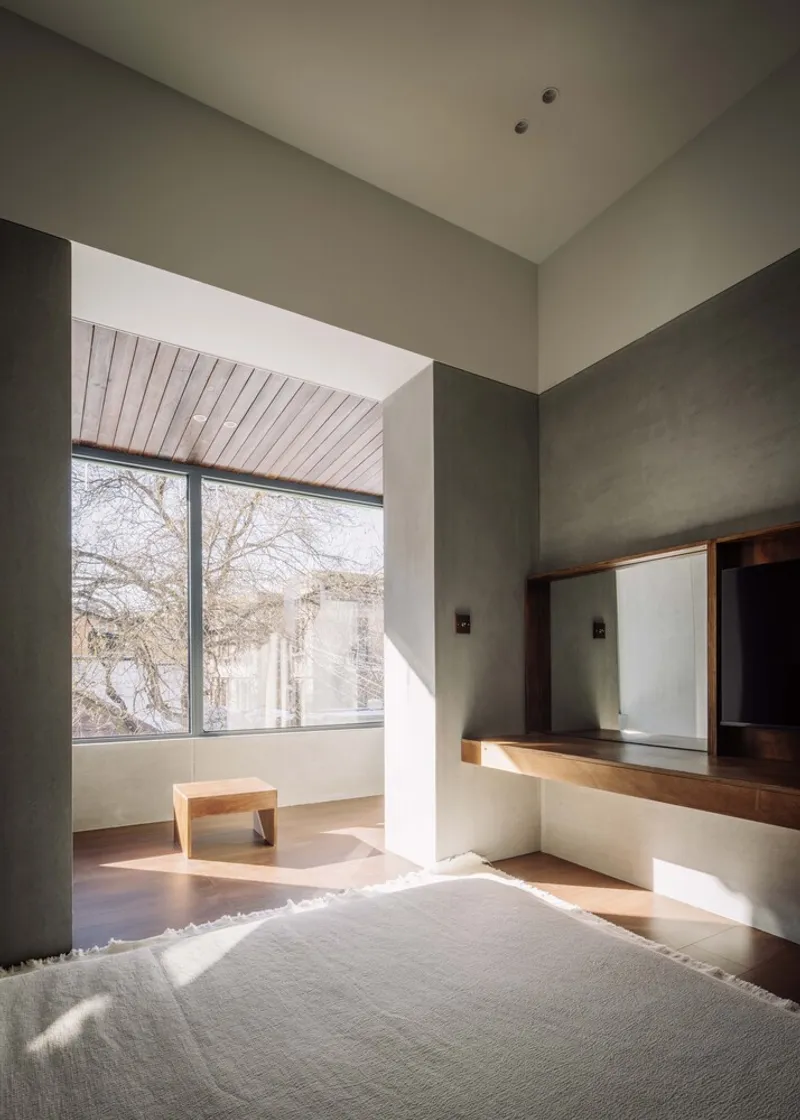
The deliberate use of dark green aluminium cladding in the courtyard frames the interface between interior and exterior, introducing a bold yet refined modern texture. Simultaneously, the retention of the timber structure on the first-floor terrace reinforces the memory of the original roof while creating a shaded zone that maintains visual continuity with the courtyard.
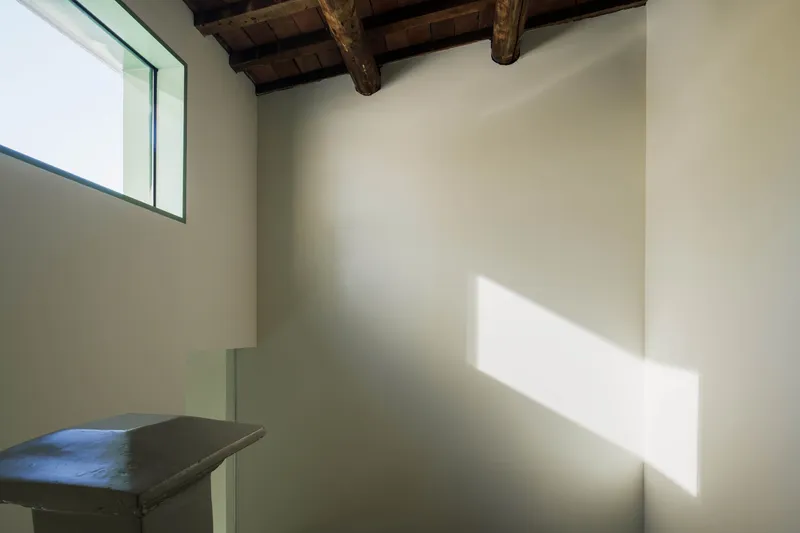
Interior Expression: Everyday Simplicity with Historical Clarity
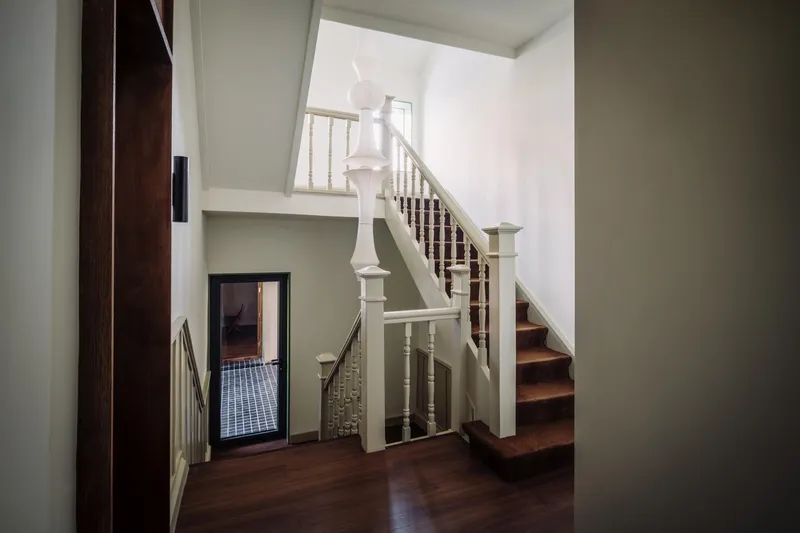
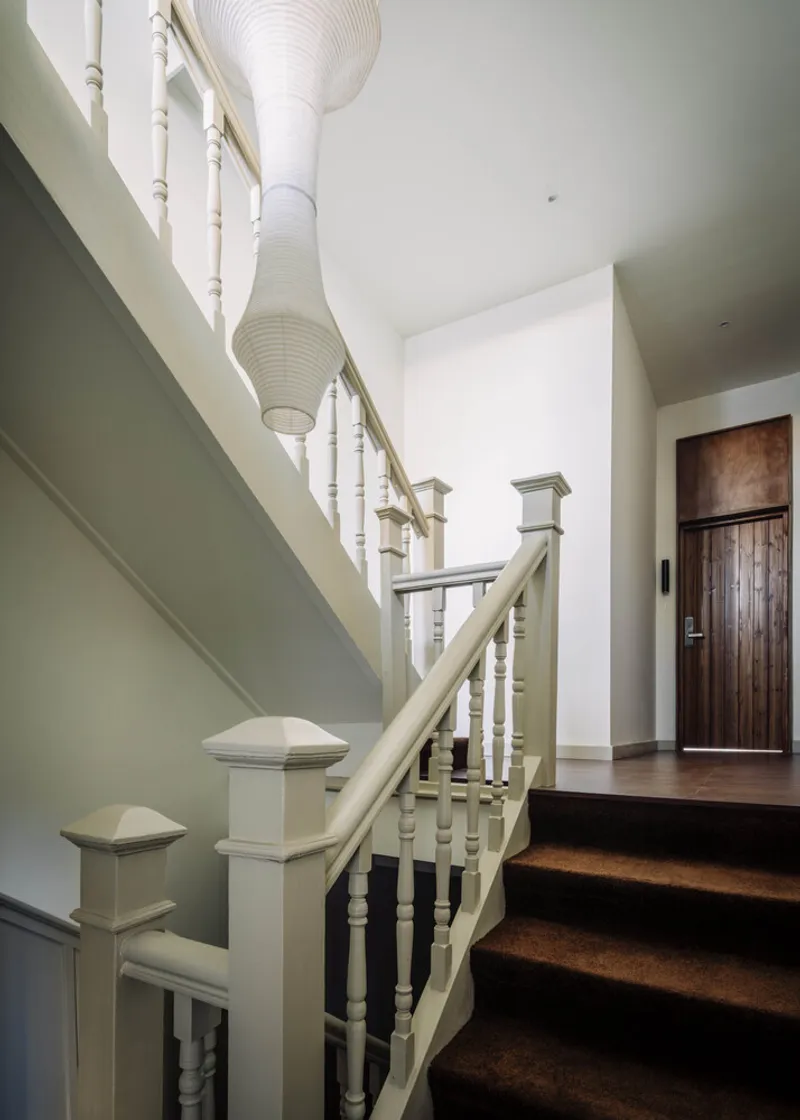
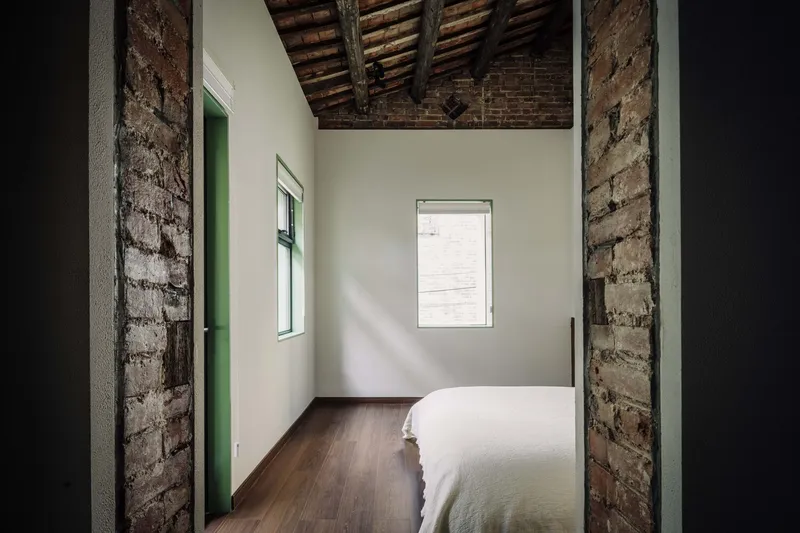
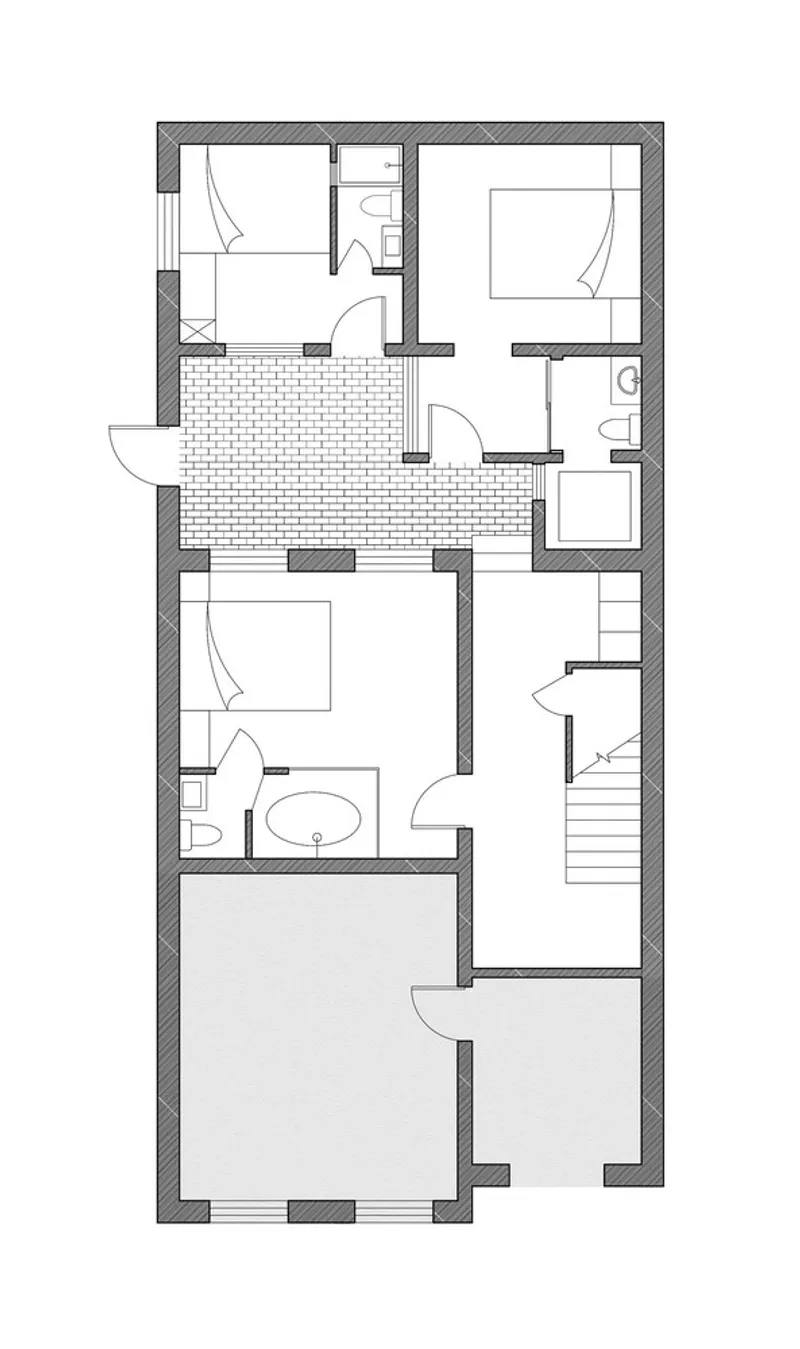
Inside, the design emphasizes simplicity and clarity, catering to the practical needs of transient youth guests. Communal areas are formed with minimal partitions to encourage social interaction, and much of the original structural system—walls, roof framing, and staircase—is left exposed. The visible timber joints and masonry walls preserve the storytelling capacity of the historic structure.
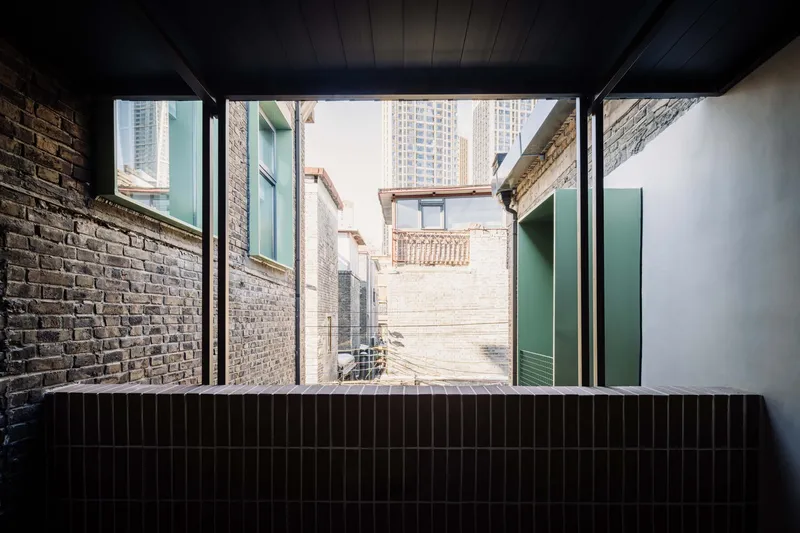
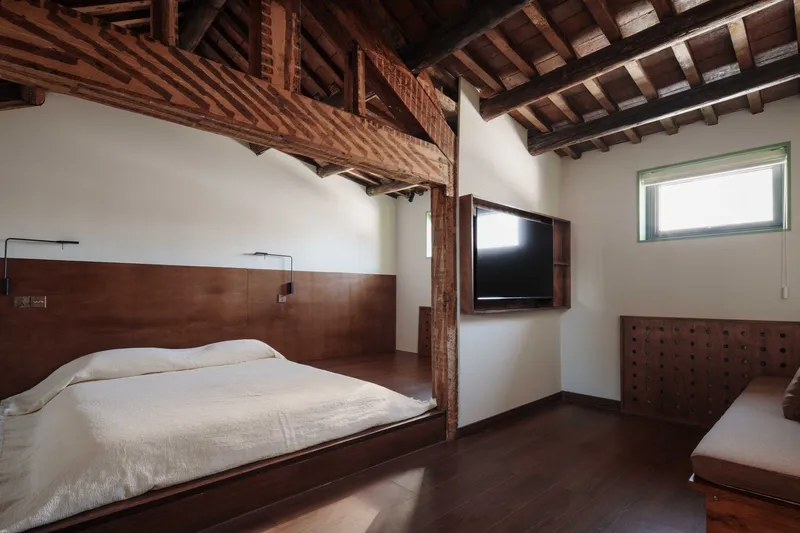
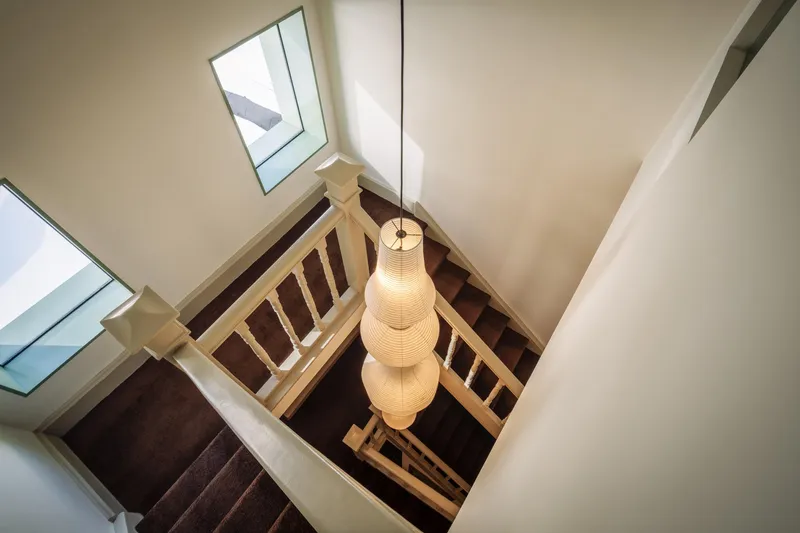
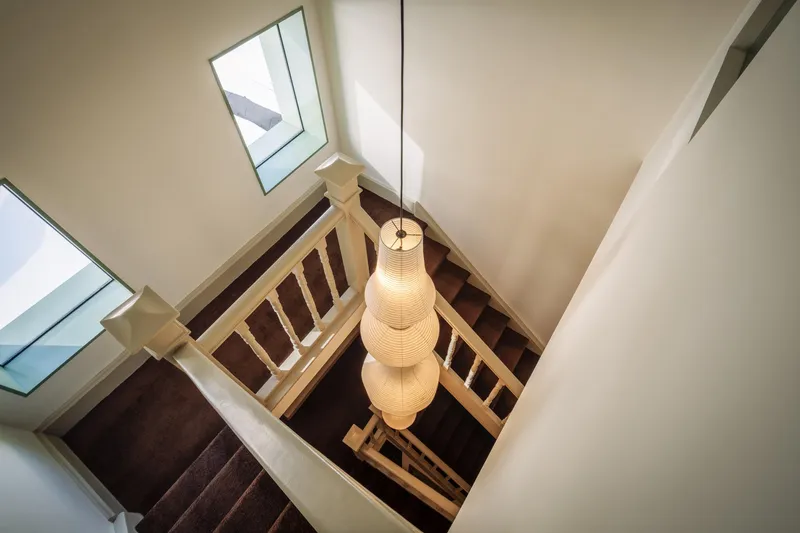
The preserved staircase becomes a central visual and spatial feature, reoriented to draw attention and act as a mediator between levels. Its climb is punctuated by carefully framed windows that allow users to experience the interplay between the old building and its evolving urban surroundings.
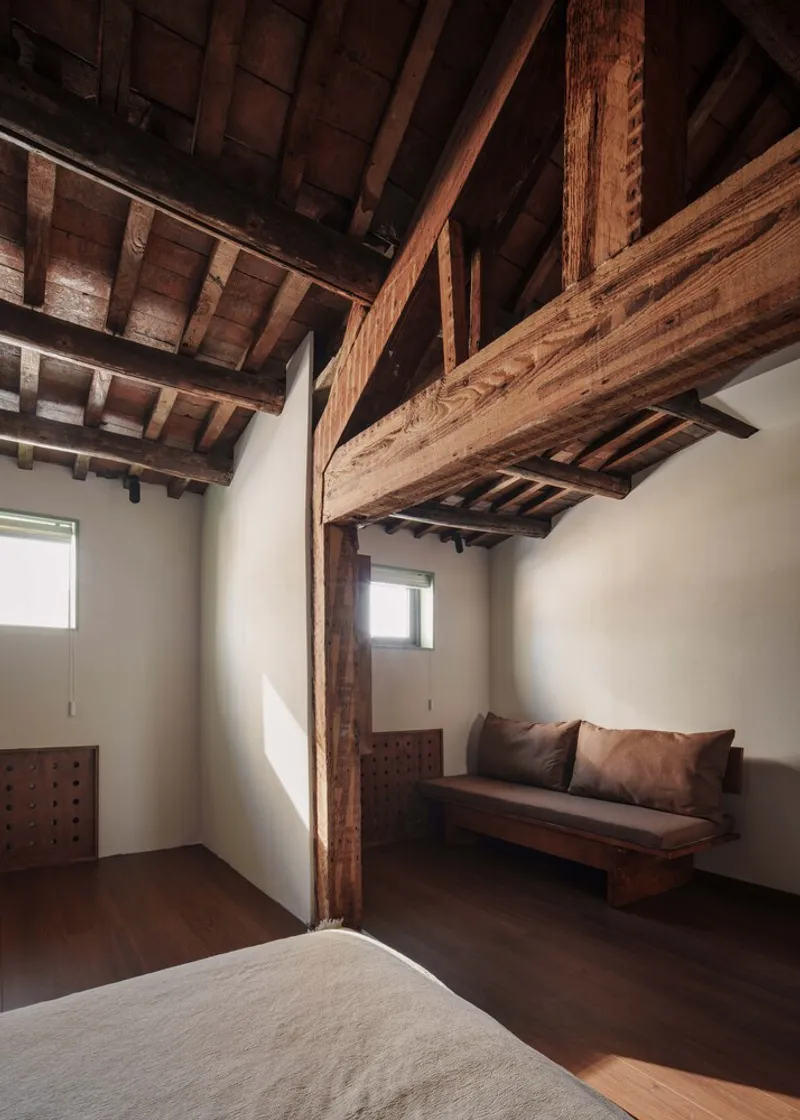
Guest Room Design: Adaptive Comfort with Raw Materiality
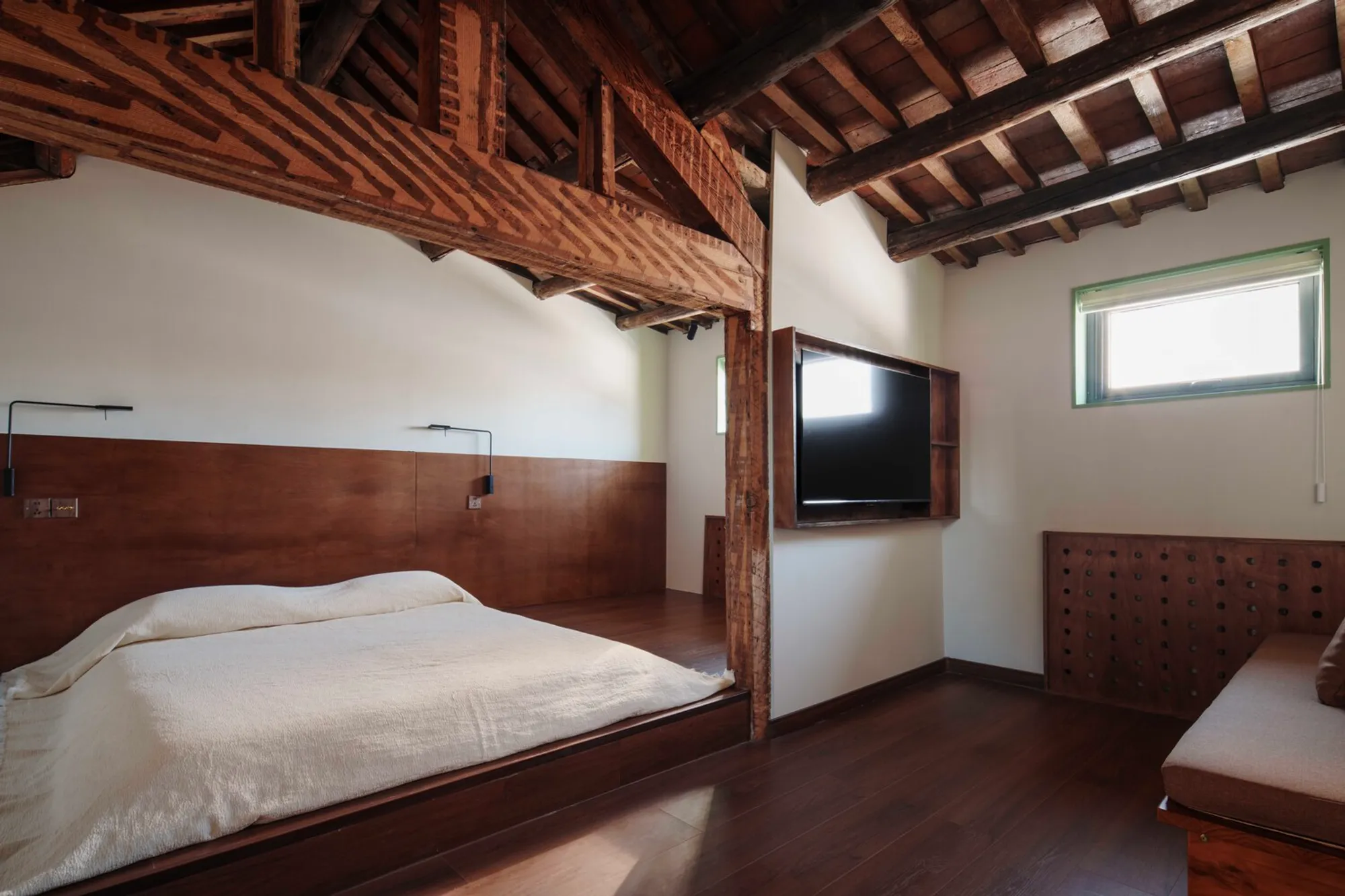
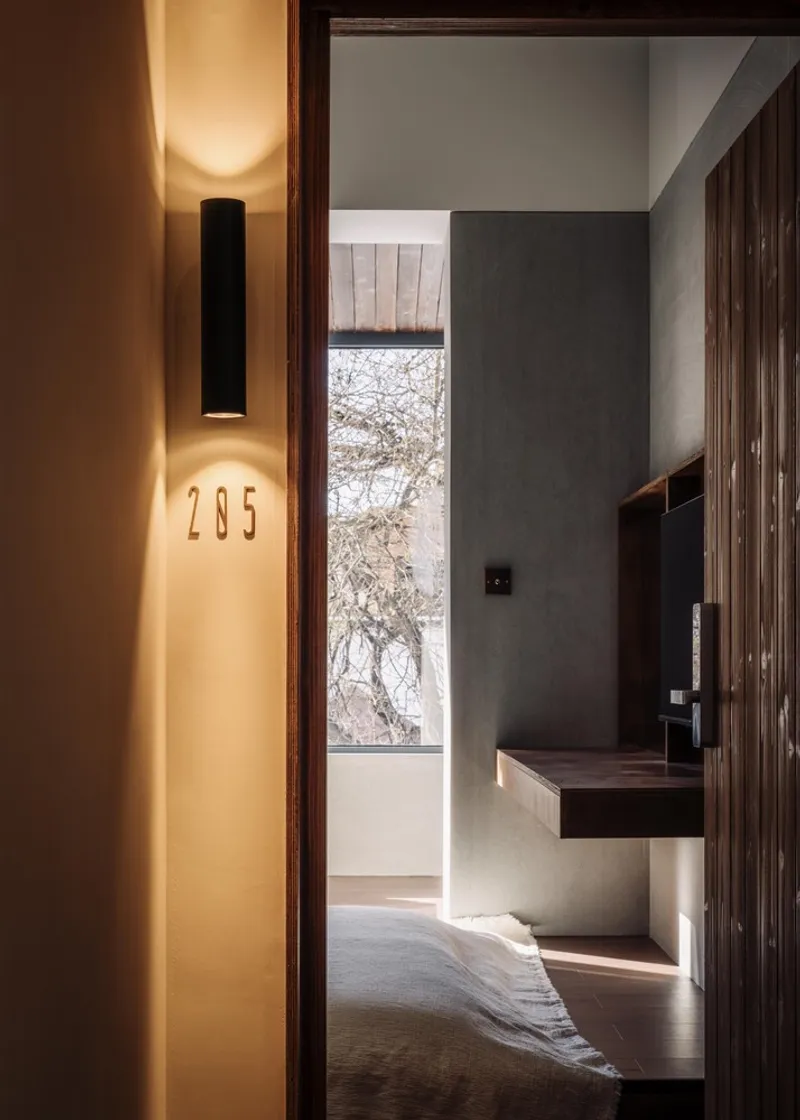
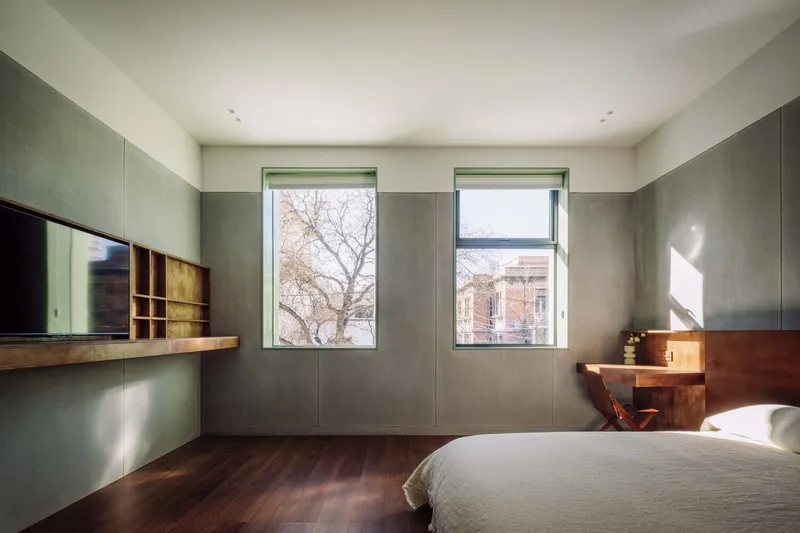
Guest rooms across the three floors maintain the honest material language of the building. The first and second floors use exposed concrete panels, accentuating the raw texture of the existing structure while ensuring durability and low maintenance. Original roof beams are integrated into the rooms to evoke a sense of place.
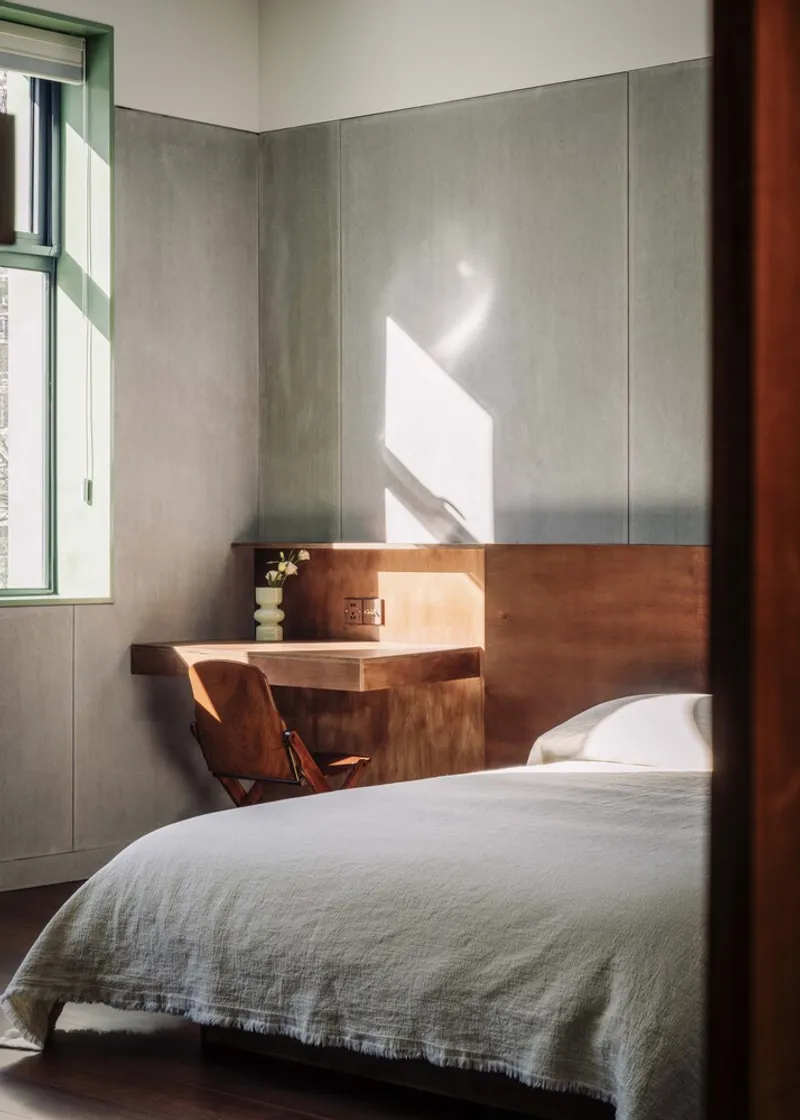
On the third floor, where the structure was previously cluttered, the design wraps and conceals disorderly elements, achieving a cleaner spatial rhythm. Beds and public lounges are reorganized to enhance fluidity and comfort. Furniture is minimalistic and modular, designed with paneling that reflects the architectural restraint and echoes the project’s ethos of essential functionality.
A Model for Courtyard Renovation in Historic Urban Areas
The Jiuguo Courtyard Inn demonstrates how courtyard renovation architecture can thoughtfully combine preservation with practical reinvention. Modum Atelier's design respects the temporal essence of the building, subtly adding layers that elevate its functionality without compromising its historical value. The project successfully turns a quiet inner-lane structure into a lively, atmospheric youth inn—setting a precedent for how traditional courtyards can be reactivated through architectural intelligence and material sensitivity.
All Photographs are works of AYong



Popular Articles
Popular articles from the community


Play: Fragments of Their World
Familiar architecture becomes modular playground design, creating safe spaces where displaced children can learn, connect, imagine and play.

Co-life: Sustainable Architecture for Age-Friendly Community Living
Co-life reimagines sustainable architecture for seniors through courtyards, rammed earth, shared gardens, and spaces designed for belonging.

The Ocean Hive: Sustainable Architecture for a Self-Sufficient Civilization at Sea
The Ocean Hive imagines sustainable architecture at sea, where modular habitats, algae, wave power and ocean waste sustain a growing colony.

Hill & Cross Opera: Sculptural Opera House Architecture Shaped by Tallinn’s Landscape and Identity
Hill & Cross Opera reimagines opera house architecture in Tallinn through its sculptural hill, civic plaza, glass wave and a luminous cross.


Similar Reads
You might also enjoy these articles

Bamboo Housing Challenge 2026: Design Affordable, Sustainable Homes Using Bamboo
An international design competition by Bamboo U and IBUKU inviting architects and designers to reimagine affordable housing using bamboo — with the winning design built full-scale in Bali.

Computational Design & Education: Beegraphy Design Awards Introduces 7th Category (Featuring Jiyun's Innovative Approach)
Dive into Beegraphy’s 7th Design Awards category, where computational design meets education to create immersive, interactive learning tools, inspired by Jiyun’s work.

From Parametric Lighting to Urban Furniture: Join the 2nd Workshop in Beegraphy’s Computational Design Series
Dive into Cutting-Edge Design Techniques and Practical Applications with Industry Experts

Last Call: Unleash Your Architectural Genius in SHAK's Kindergarten Design Competition
Urgent call for architects to join SHAK's kindergarten design competition before the looming deadline


Explore Courtyard Competitions
Discover active competitions in this discipline



Challenge to reimagine the Iron Throne


Photograph architecture without architects


Illustrate the lost glory of Angkor Wat - Render Challenge


Design challenge to reuse E-waste
Comments (0)
Please login or sign up to add comments
No comments yet. Be the first to comment!