
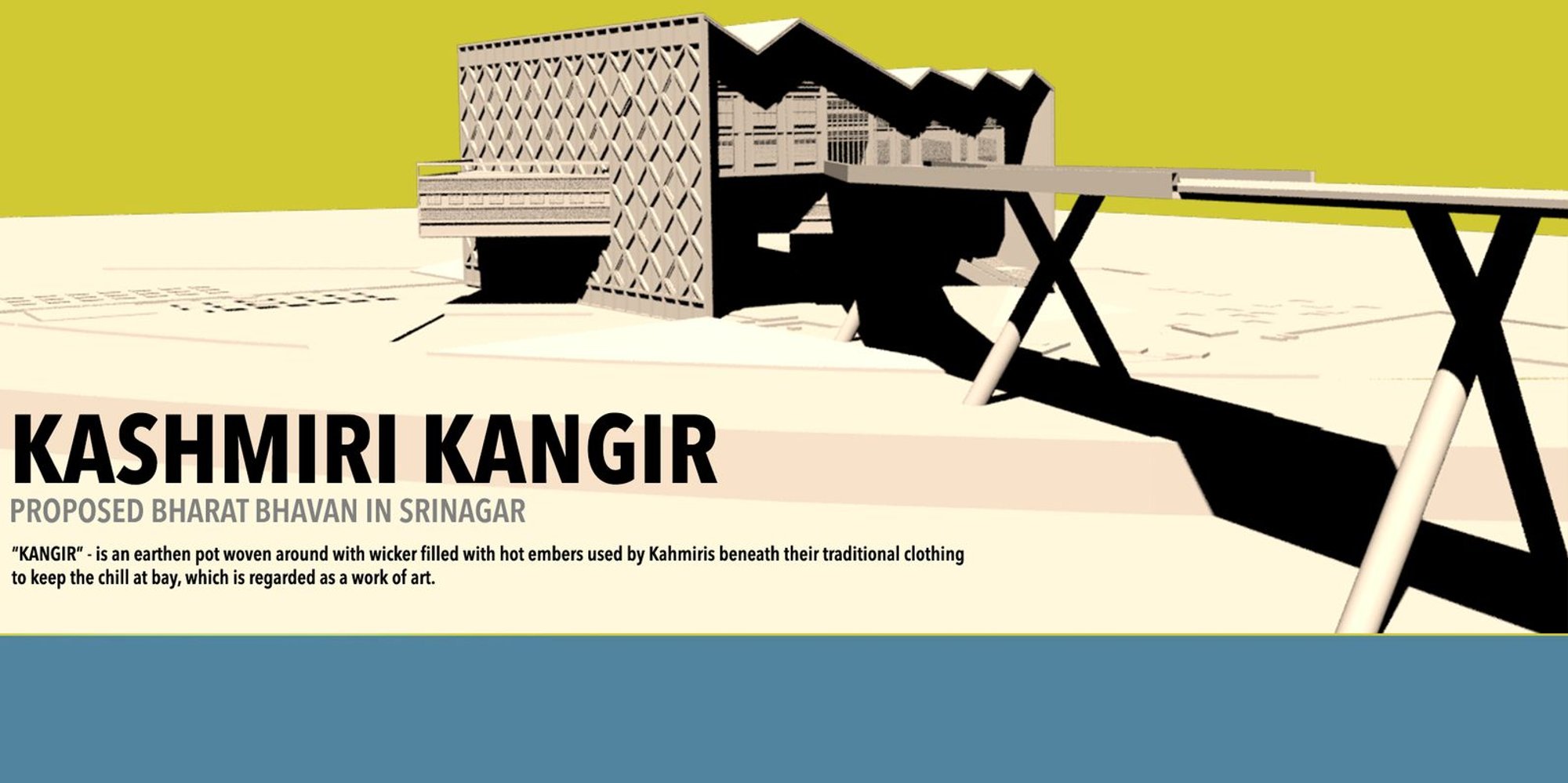
KASHMIRI KANGIR: CULTURAL HEARTH OF SRINAGAR
Celebrating Kashmir’s living heritage through vernacular architecture that preserves artisan traditions, cultural identity, and sustainable design along the Jhelum.

Project by Yashasvi Guleria
The Kashmiri Kangir—an earthen pot woven with wicker and filled with glowing embers—is far more than a winter utility. It is a symbol of intimacy, craft, and identity in Kashmiri culture. This project draws inspiration from the Kangir’s role as a cultural artifact and reimagines it architecturally as a vibrant cultural hearth for Srinagar. Situated along the ancient Jhelum River, the proposal embodies vernacular architecture, social sustainability, and community-led craftsmanship. The region’s architectural lineage spans over 2500 years, shaped by generations of artisans who built with earth, timber, brick, and stone using techniques specially adapted for Kashmir’s topography and climate.
The project seeks to revive this architectural wisdom—its material language, construction patterns, performative spaces, and community ethos—while addressing the evolving socio-cultural needs of the city. Through adaptive planning, ecological sensitivity, and revival of local craftsmanship, the proposal reframes the Kangir as both metaphor and method: a vessel of warmth, resilience, and cultural continuity.
Shortlisted entry of Bharat Bhavan 2020
Context: Srinagar as a Living Museum of Heritage
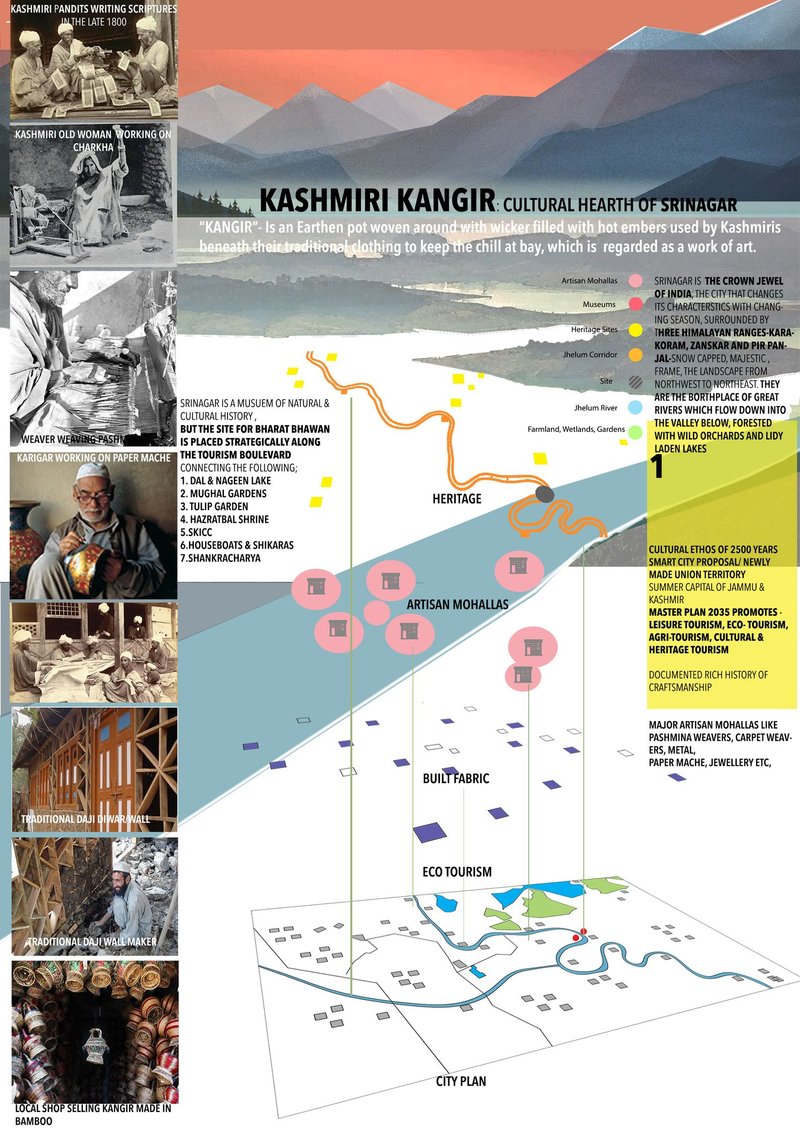
Srinagar is widely celebrated as the crown jewel of India, where shifting seasons recast the city’s visual poetry. The city sits embraced by three Himalayan ranges—Karakoram, Zanskar, and Pir Panjal—whose snow-capped silhouettes frame its orchards, lakes, wetlands, and historic neighborhoods. The Jhelum River, flowing through the heart of Srinagar, has for centuries shaped its settlements, markets, houseboats, and bridges.
The site for the Kashmiri Kangir Cultural Centre is strategically positioned along the Tourism Boulevard, linking several of the city’s cultural anchors:
- Dal & Nageen Lakes
- Mughal Gardens
- Tulip Garden
- Hazratbal Shrine
- SKICC
- Houseboats & Shikaras
- Shankaracharya
Its placement aligns with the Master Plan 2035, which emphasizes cultural tourism, eco-tourism, artisan revival, and sustainable development. Decades of documented craftsmanship—from pashmina weaving to paper maché, metalwork, bamboo craft, and dhochi construction—form the backbone of the city’s intangible heritage. The design celebrates these traditions by structuring the built environment around artisan mohallas, ecological zones, and heritage edges.
Heritage, Built Fabric, and Ecological Integration
The proposal overlays the site with three interconnected layers:
1. Heritage Belt
The riverfront zone along the Jhelum that houses historical ghats, old markets, shrines, and bridges. This area acts as a conduit of memory, shaping how tourists and residents experience Srinagar’s timeless cultural rhythm.
2. Artisan Mohallas
Clusters of craft-based neighborhoods form the social and economic fabric of the region. The project strengthens their presence by designing movement corridors, public courtyards, and interactive platforms where artisans can work, display, and teach.
3. Ecotourism & City Integration
Green corridors, wetlands, orchards, and walkable networks characterize the larger city plan. The design aligns itself with these ecological elements to achieve environmental balance and social well-being.
Design Intent: Reviving Vernacular Architecture
The architectural intent is rooted in the principles of vernacular architecture, focusing on:
- Revival of Jhelum’s heritage edge
- Ecological, heritage, and leisure tourism
- Interconnected public spaces
- Integration of artisan mohallas
- Local materials and construction methods
- Promotion of water-based mobility through shikara routes
Movement Strategy
Pedestrian movement along the riverfront becomes a defining experience. New bridge access allows tourists to enter the building from the Jhelum and seamlessly cross into the heritage quarter. Bus stops and primary roads support this network, while parking is pushed outward to maintain pedestrian priority.
Jhelum Corridor: The Cultural Spine of Srinagar
For over seven centuries, the Jhelum has been the central axis of Srinagar’s economy and cultural life. Its ghats, markets, and social spaces create a rich palimpsest of urban memory. The project reactivates this corridor by:
- Proposing heritage promenades
- Enhancing shikara connectivity between neighborhoods
- Reviving traditional architecture along its edges
- Creating continuous cultural trails
Tourist projections for 2035 show significant increases, positioning the corridor as a future powerhouse of sustainable tourism.
Challenges of Building in Kashmir
Kashmir’s geographic and climatic conditions demand resilient design:
- Sub-zero winter temperatures
- High seismic vulnerability (collision zone of Indian & Eurasian plates)
- Jhelum’s fluctuating water levels and flooding
- Dense heritage zones requiring sensitive traffic management
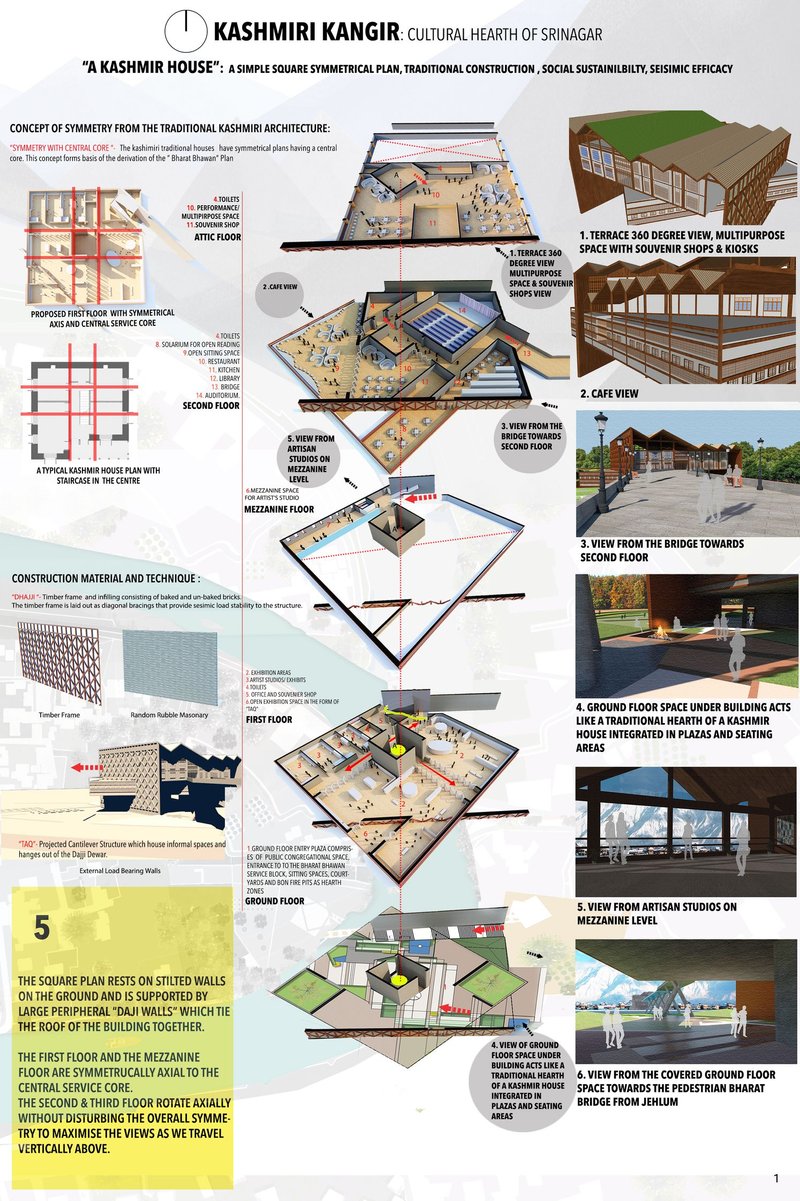
Vernacular Solutions: Lessons from Kashmiri Houses
Generations of artisans have developed architectural responses ideally suited to Kashmir’s context. The project applies these insights through:
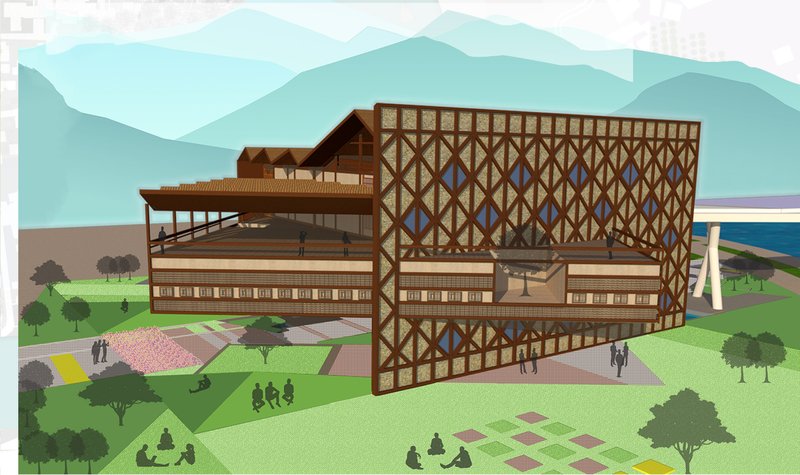
1. Monolithic, Single-Envelope Building Block
Strategic perforations allow controlled ventilation, daylight, and thermal moderation.
2. Square Symmetrical Plan
Inspired by the traditional Kashmiri house, which organizes movement around a central staircase.
3. Dhajji Dewari Construction
A seismic-resistant timber framework infilled with masonry, forming a resilient and flexible envelope.
4. Building on Stilts
Raising the structure protects it from fluctuating river levels and enhances panoramic views.
5. Controlled Skin Perforations
Inspired by wooden jali patterns of Srinagar homes, balancing aesthetics with climate performance.
6. Landscape-Based Ground Floor
Fruit orchards, wetlands, playgrounds, and floating gardens reflect local ecology.
7. Integration of Bridge Access
A modern reinterpretation of historic bridge traditions over the Jhelum.
Ground Floor: A Public Cultural Hearth
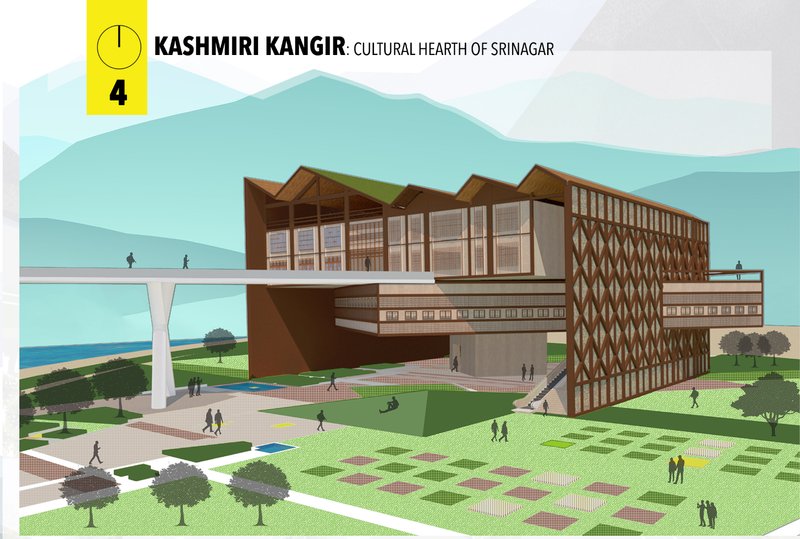
The ground floor is envisioned as a large public plaza—an architectural hearth reminiscent of a Kashmiri home, where warmth, hospitality, and community gathering converge. Inspired by the function of the Kangir, this level becomes a place for:
- Performances
- Artisan workshops
- Public gatherings
- Children’s recreation spaces
- Water-edge activities
It acts as both threshold and transition, binding the city to its river.
Upper Floors: A Symmetrical Cultural Matrix
Mezzanine Level
Artisan studios overlook the plazas, creating visual and functional connectivity.
First Floor
Houses exhibition spaces, artisan shops, informal gathering zones, and a central open-to-sky void that maintains the architectural symmetry.
Second Floor
Includes performance halls, solarium, reading spaces, and multipurpose activity areas.
Attic Floor
A public dining and cultural interaction zone inspired by traditional Kashmiri attics.
Tao and Dhajji: Vernacular Concepts Reinvented
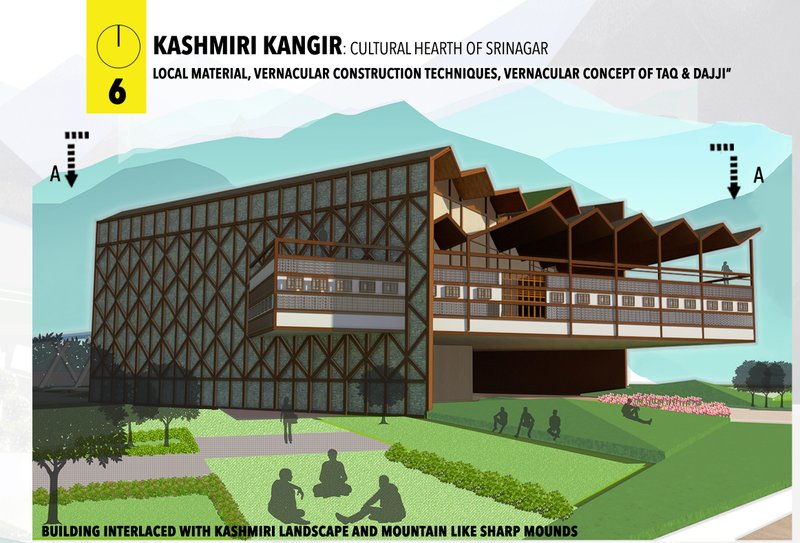
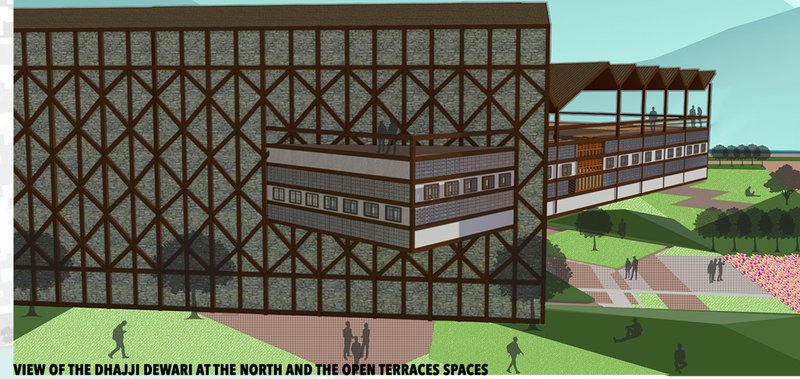
The concept of Tao—projected informal spaces that extend from traditional houses—inspires the cantilevered volumes. These house exhibition spaces and terraces on upper floors, providing shaded areas below while offering panoramic views above.
The Dhajji Dewari skin wraps the structure with a rhythmic timber geometry that reflects the craftsmanship of Srinagar’s wooden facades.
Landscape Integration
The building is embedded within a mosaic of mountain-like mounds, community greens, and fruit plantation beds. These subtle landforms frame the architecture while echoing Kashmir’s undulating geography.
The Kashmiri Kangir Cultural Hearth stands as an architectural metaphor for warmth, resilience, and continuity. Through vernacular architecture, sustainable materials, handcrafted techniques, and ecological urbanism, the project reimagines the Kangir as a spatial, social, and cultural framework for Srinagar’s future.
By honoring artisan communities, revitalizing the Jhelum corridor, and anchoring architecture in cultural memory, the project not only preserves Kashmir’s identity—but also celebrates it as a living, evolving narrative shaped by its people, landscapes, and traditions.




Popular Articles
Popular articles from the community

Inverted Architecture Installation by Studio Link-Arc: Exploring the Intersection of Architecture and Living Organisms
Inverted Architecture Installation by Studio Link-Arc blends mycelium, sustainability, inverted design, ecological cycles, and urban adaptive architecture in Shenzhen.


Atelier Macri Concept Store Interior Design by CASE-REAL
Atelier Macri store features a "ko" counter, walnut wood details, cork displays, blending retail, gallery, and seamless customer experiences.


The Ken Roberts Memorial Delineation Competition (Krob)
As the most senior architectural drawing competition currently in operation anywhere in the world, it draws hundreds of entries each year, awarding the very best submissions in a series of medium-based categories.

Similar Reads
You might also enjoy these articles

Digital Façade Design for our cities’ urban fronts
Prima Facie - Result Story
Protecting avian biodiversity: Bird observatories to help spread awareness & save rare bird species.
Results for ‘Fly’ - Landscape design competition out now
Connecting with nature: Forest interpretation center in Australia's Wollemi National Park
‘Asatti’ - Landscape design competition - Result story


Explore Sustainable Design Competitions
Discover active competitions in this discipline





Comments (0)
Please login or sign up to add comments
No comments yet. Be the first to comment!