
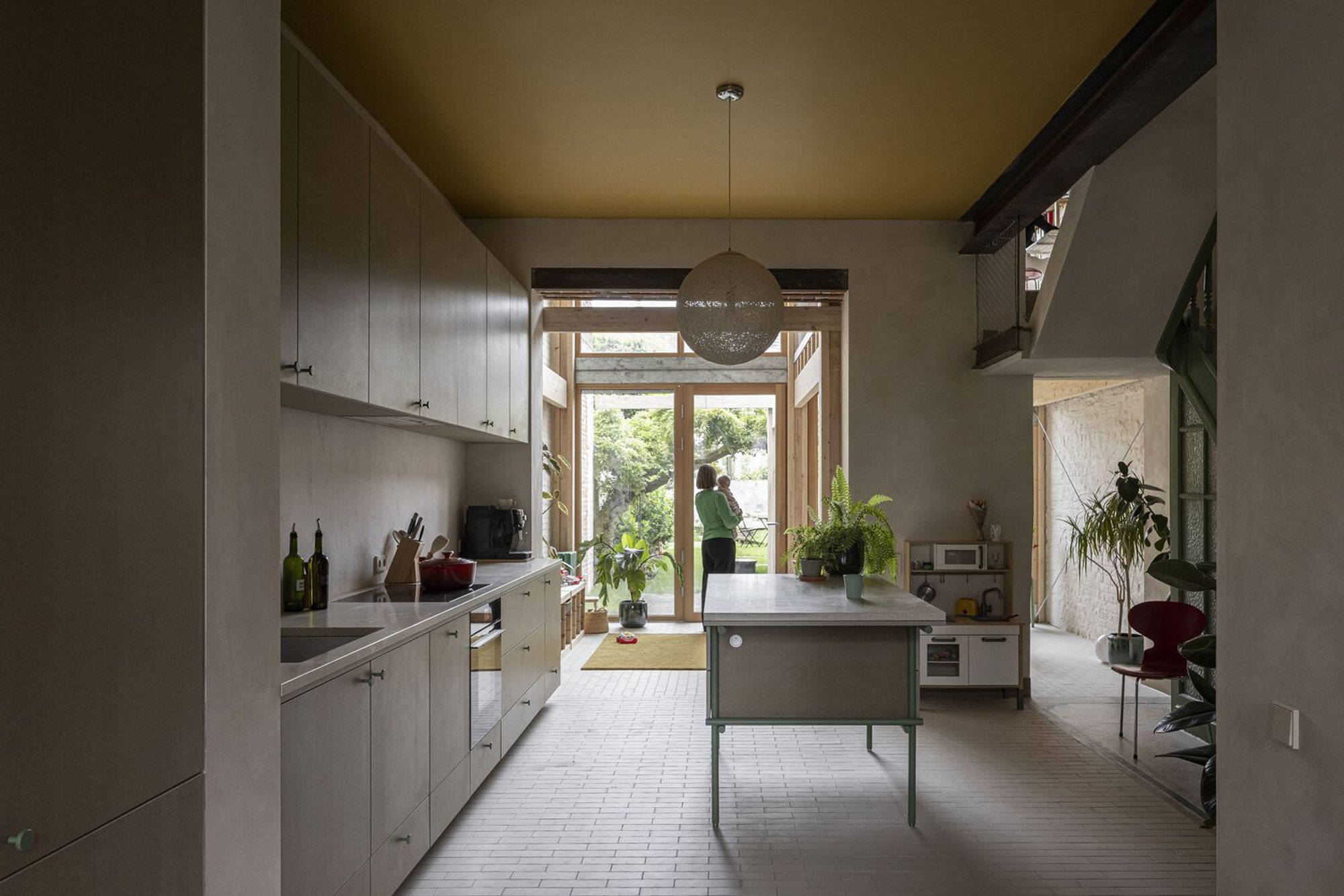
Kasteel Home in Belgium: A Model of Flexible House Design by hé! architectuur
Kasteel Home showcases flexible house design, blending family needs, sustainable materials, and spatial adaptability in urban Belgium.

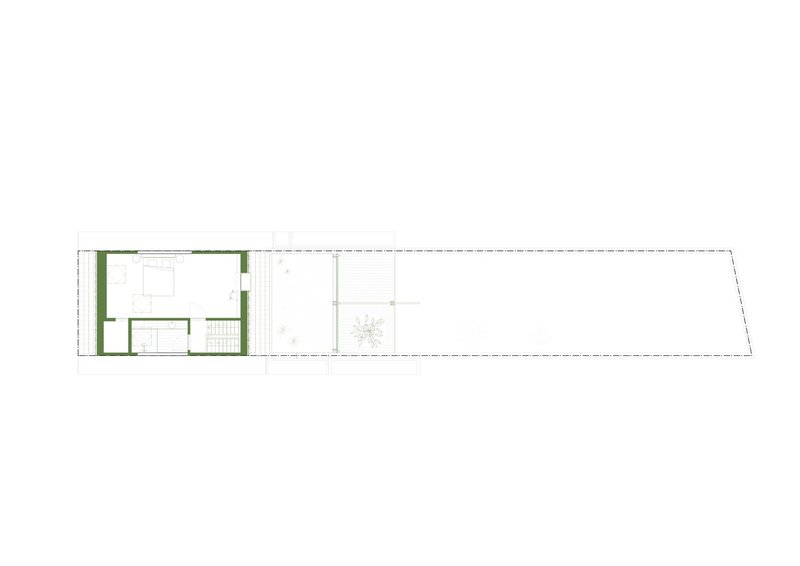
In the heart of Ganshoren, Belgium, the Kasteel Home, designed by hé! architectuur, stands as a compelling example of flexible house design—a residential project that seamlessly adapts to the evolving needs of its inhabitants. This 256 m² family residence offers an innovative blueprint for contemporary living by merging architectural foresight with material sensibility, spatial dynamism, and environmental consideration.
A Home That Evolves with Its Inhabitants
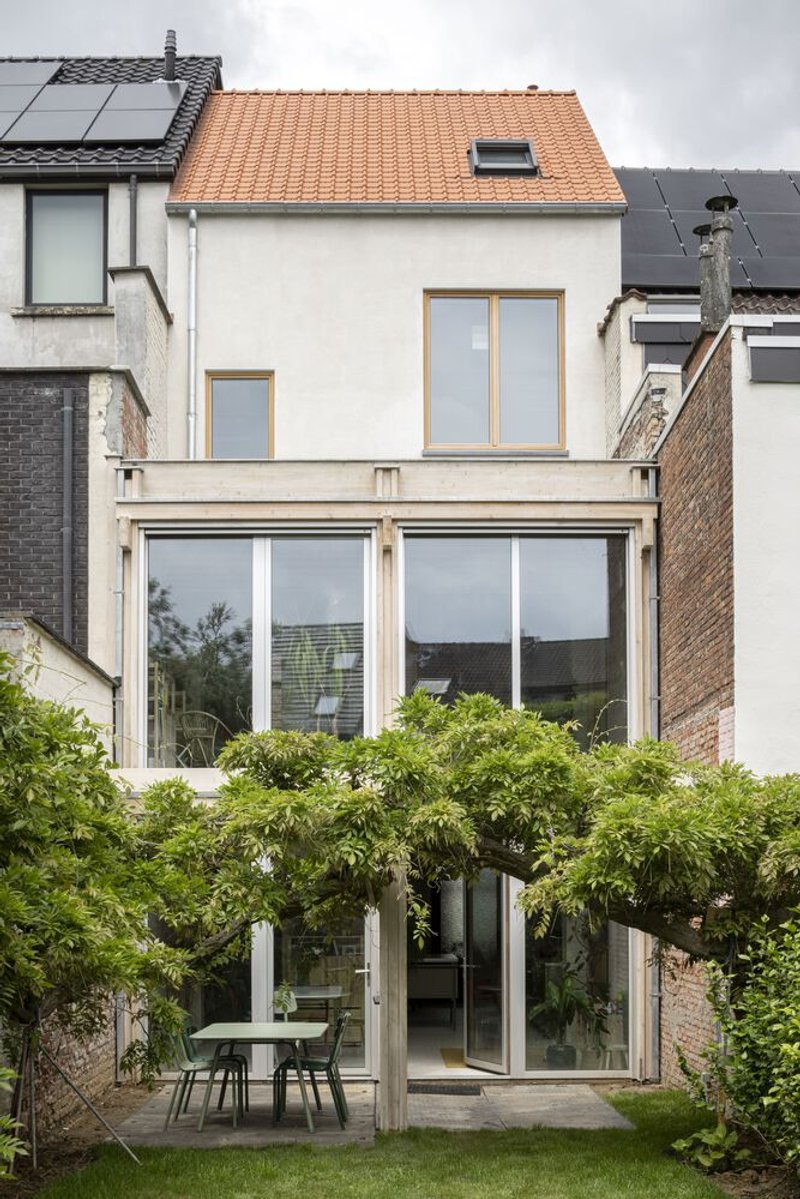
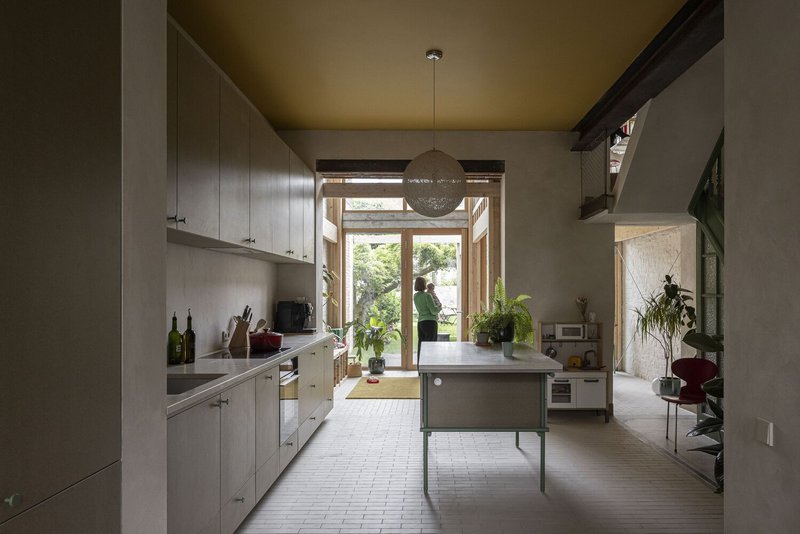
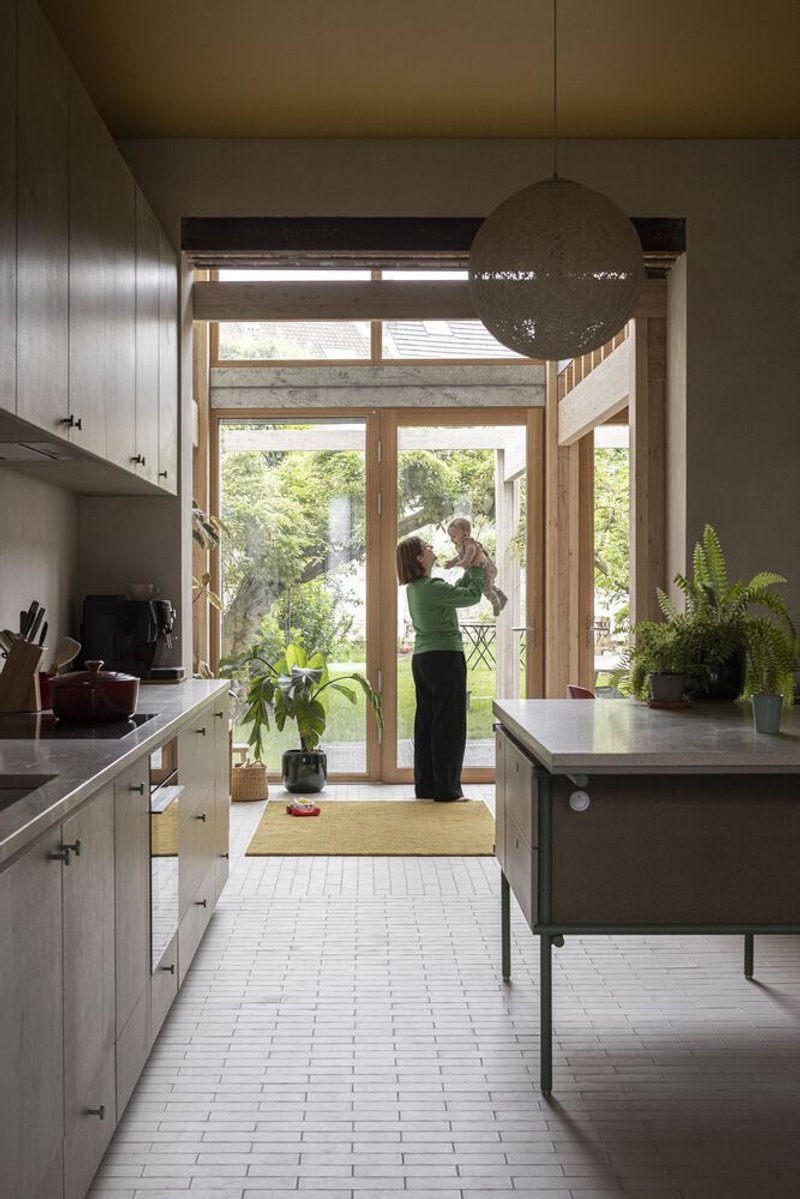
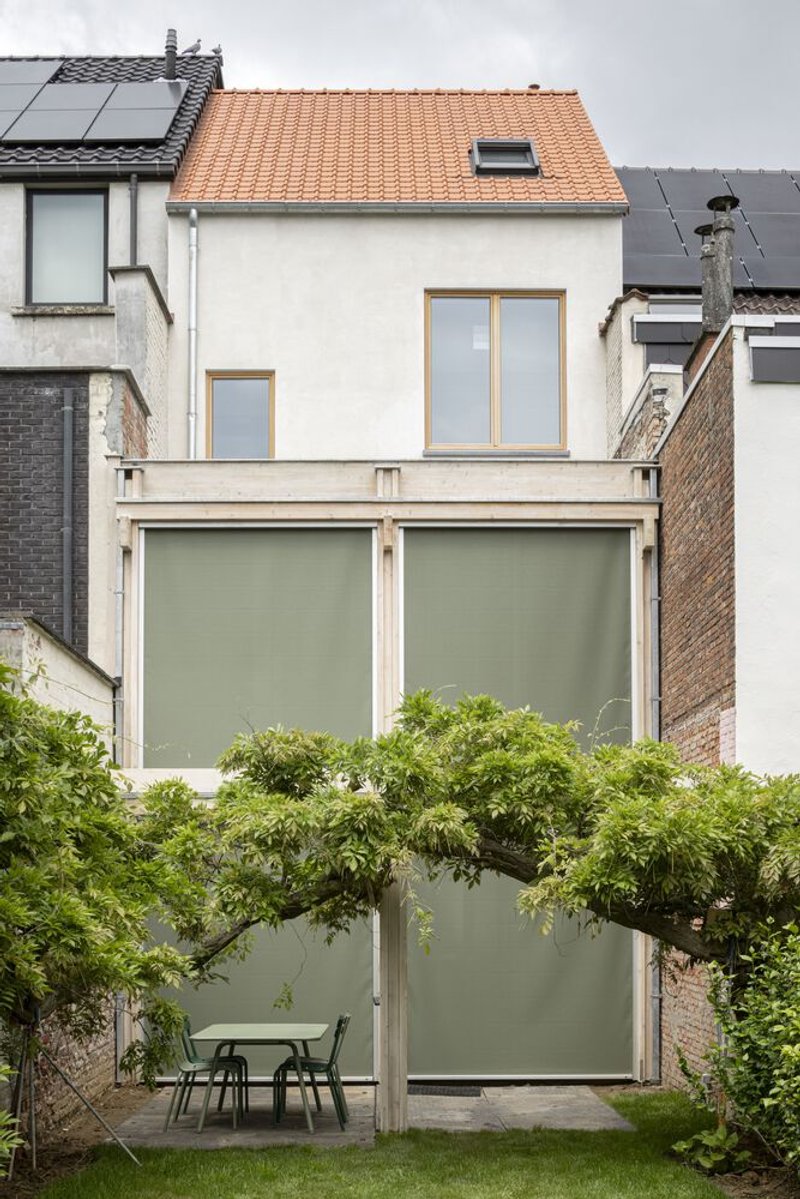
The design centers around a core philosophy: a house should change and grow alongside the family that inhabits it. The clients—Frederik, Els, and their two daughters—sought more than a renovation; they wanted a responsive home. Hé! architectuur answered with a flexible architectural solution that replaced the outdated rear annex with a tall, open timber-frame extension. This move introduced an abundance of natural light and reconnected the home with its garden.
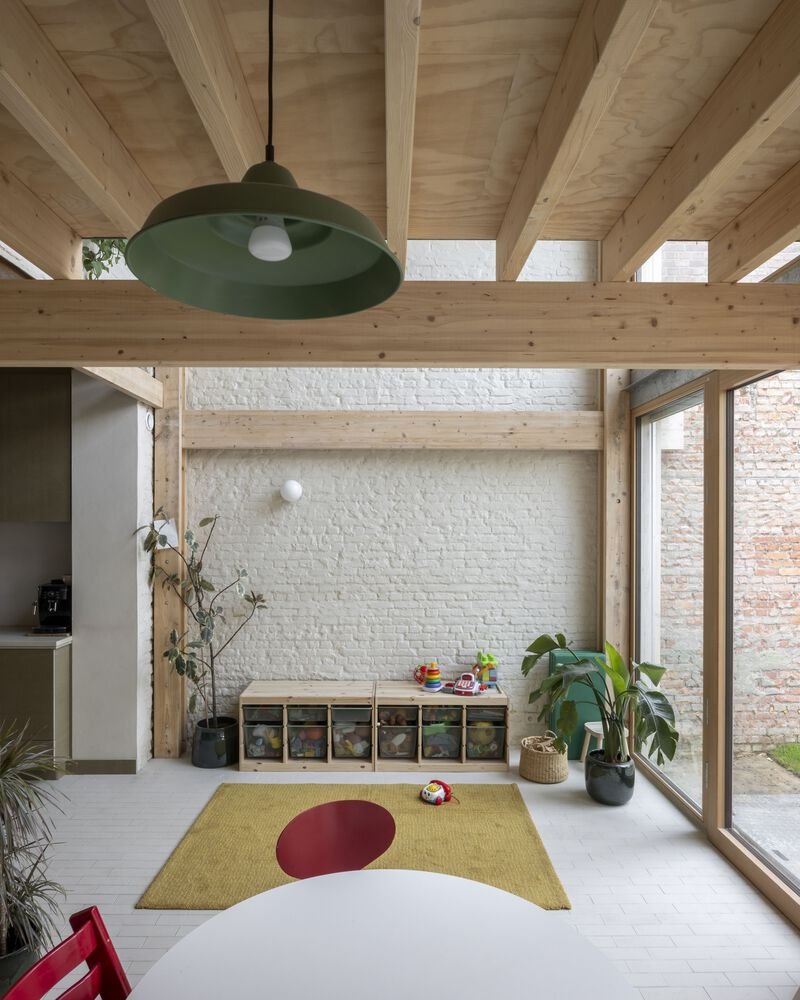
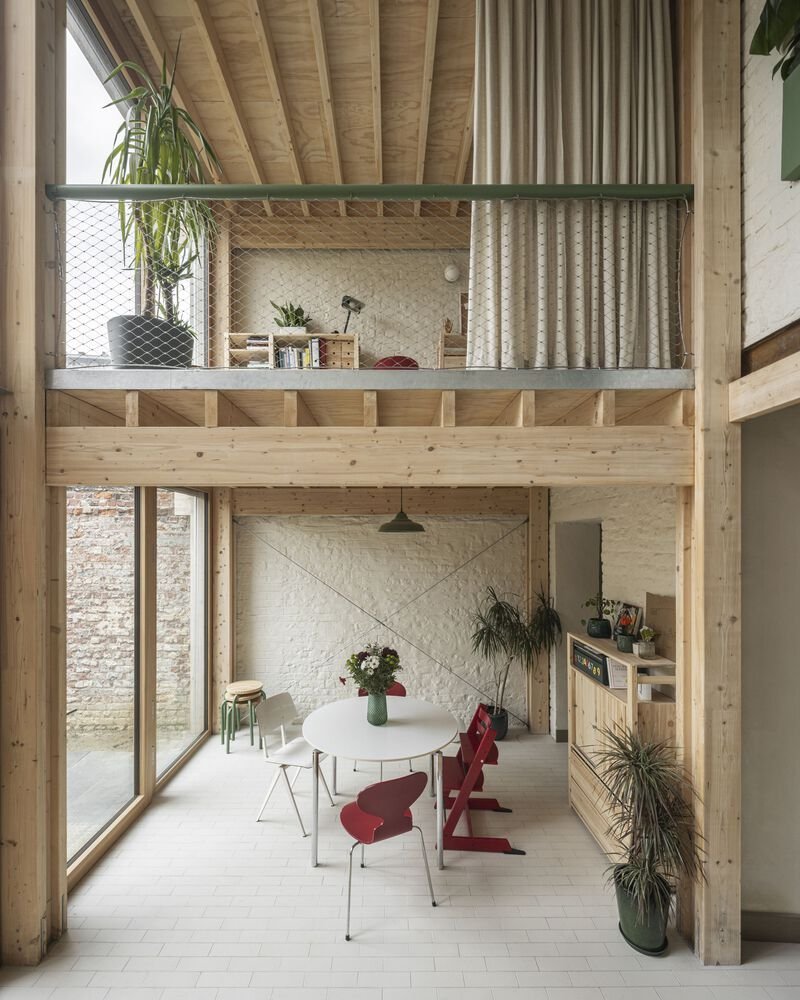
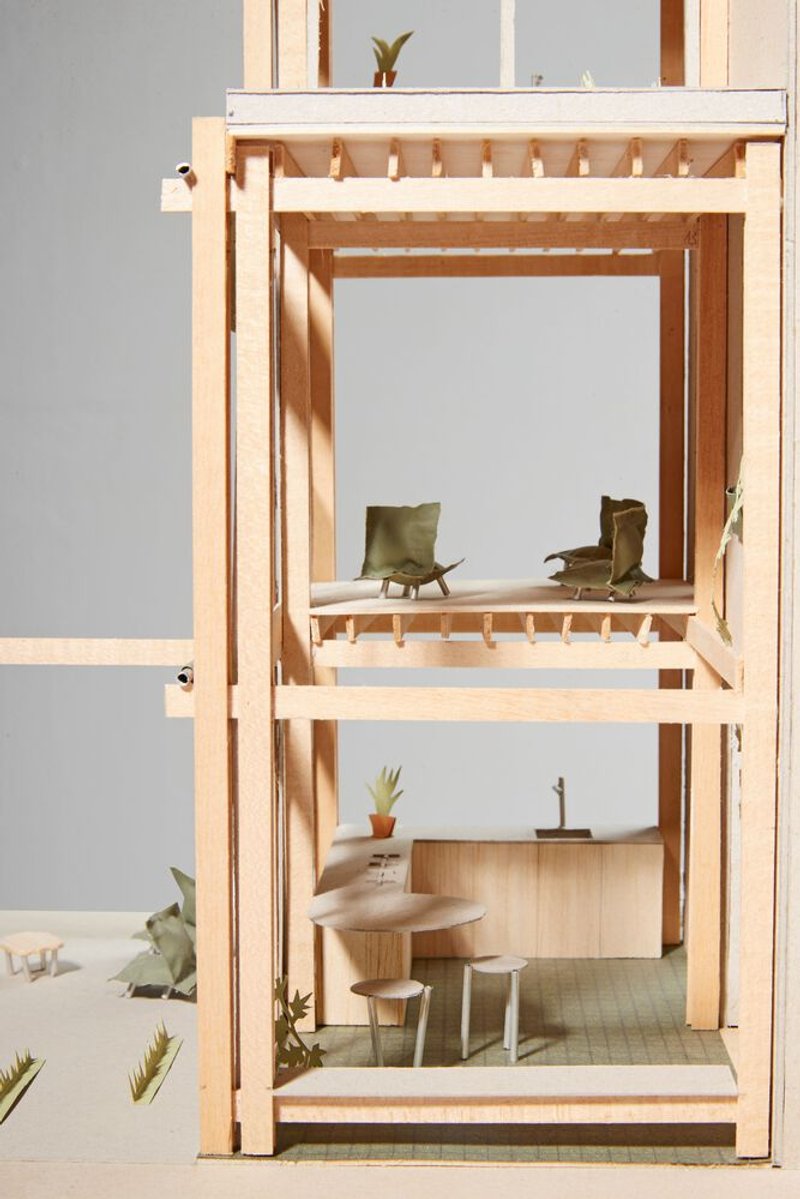
The structure was designed not just for function but for flexibility. Featuring demountable bolted joints, the timber frame can be adjusted or expanded over time. This future-ready mindset ensures the home can adapt to changes in family structure, lifestyle, or even use.
A Seamless Blend of Interior and Exterior
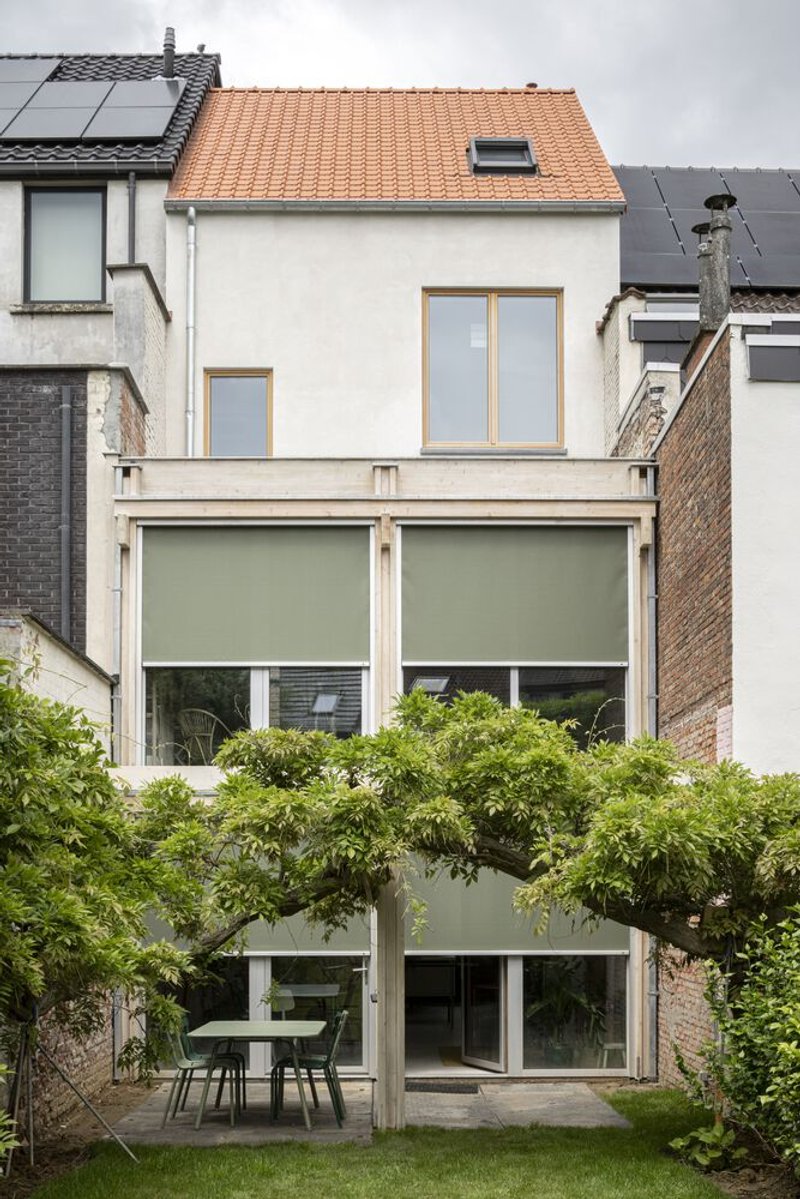
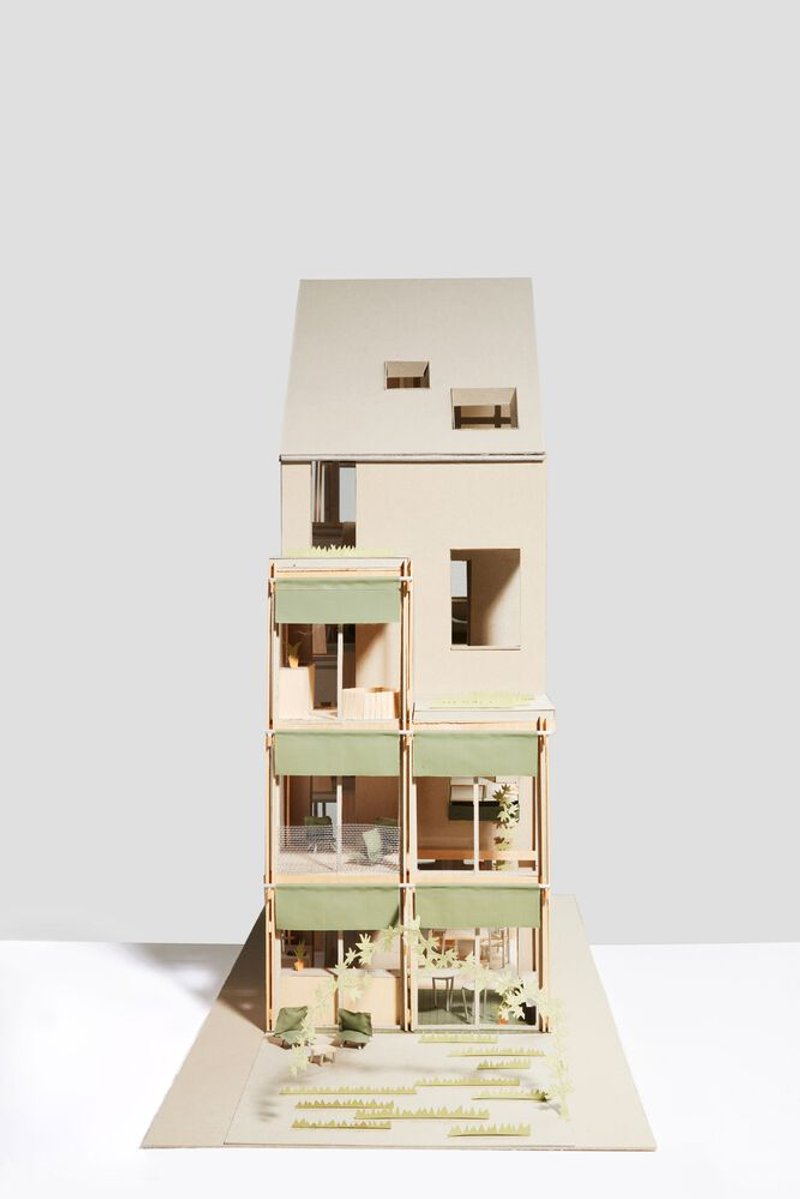
A key moment in the design is the preservation of the original wisteria plant that once climbed the old annex. Rather than removing this natural element, hé! architectuur chose to incorporate it into the new façade, allowing it to define a cozy, semi-enclosed outdoor room. This gesture emphasizes the project’s core principle: integrating old and new, manmade and natural, without erasure or rupture.
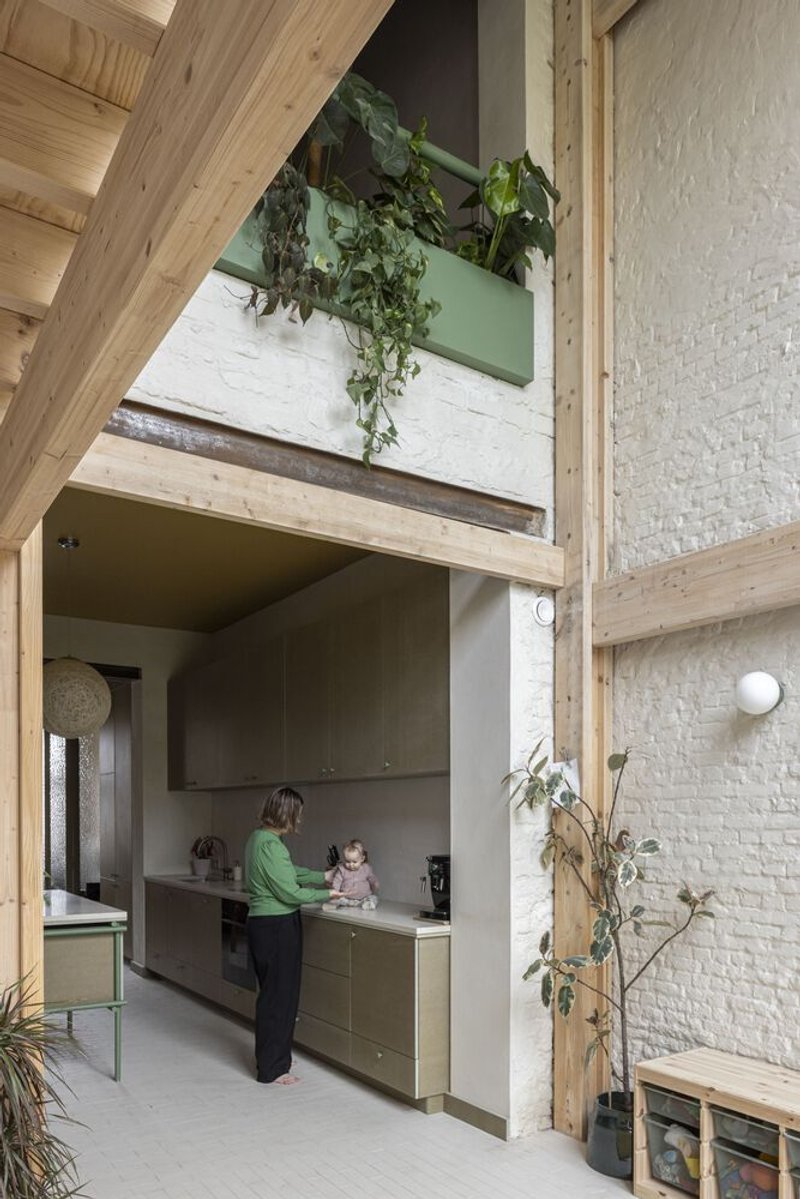
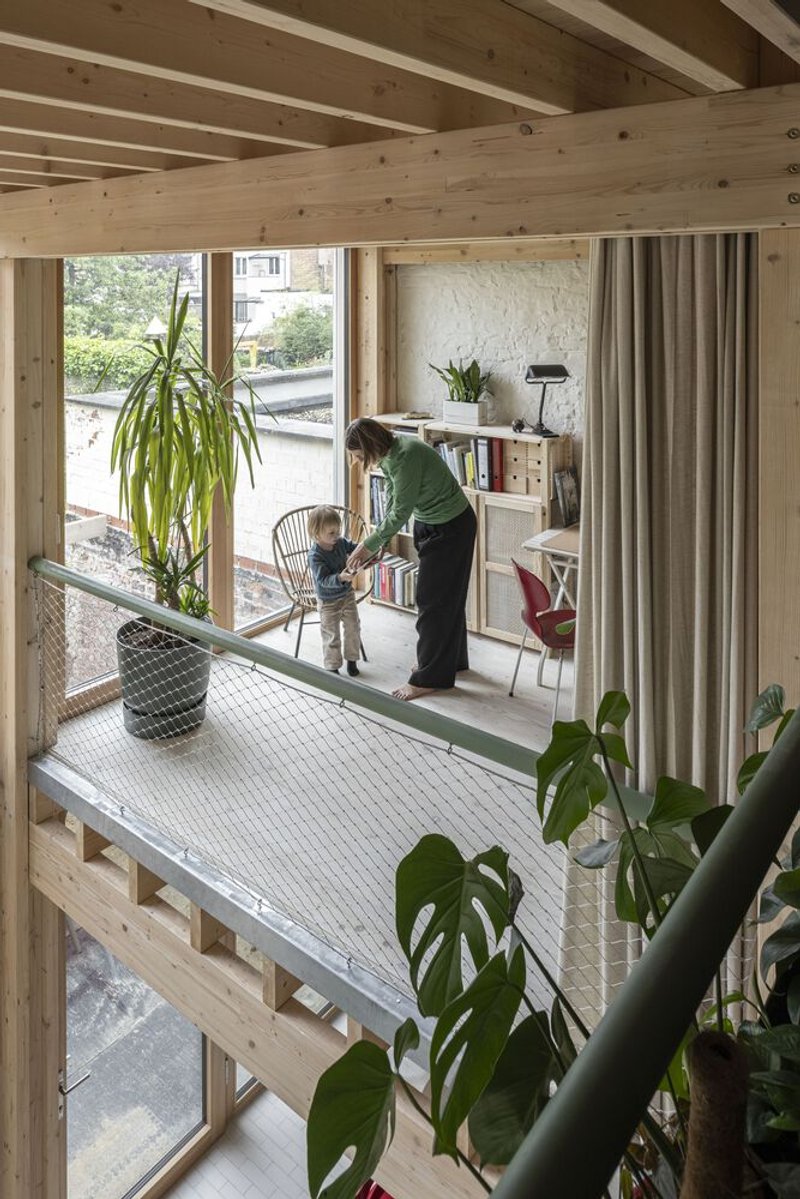
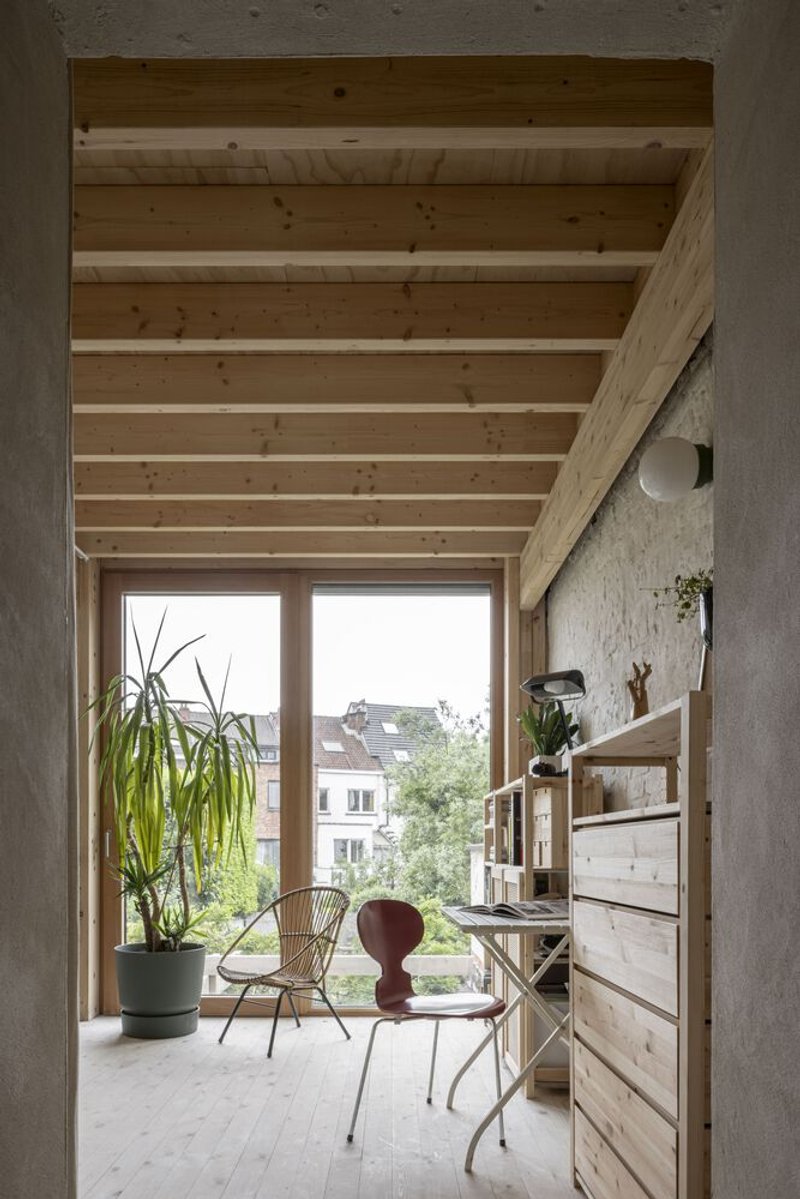
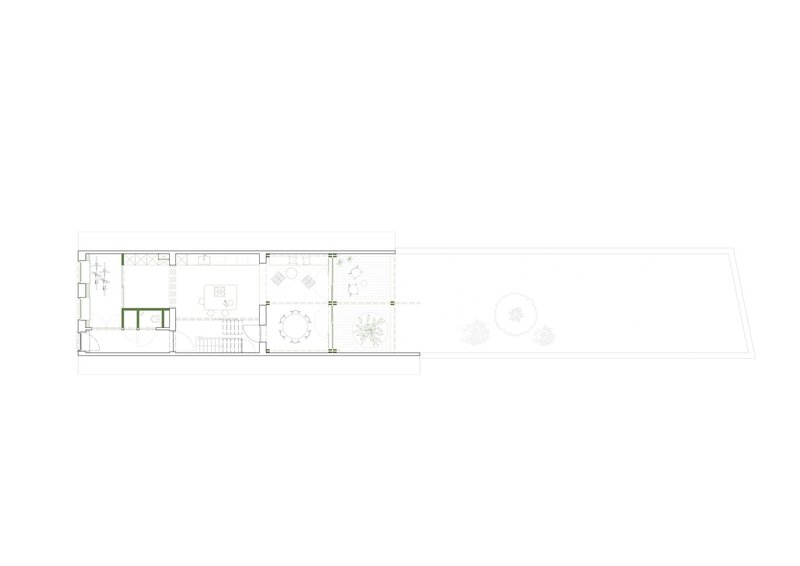
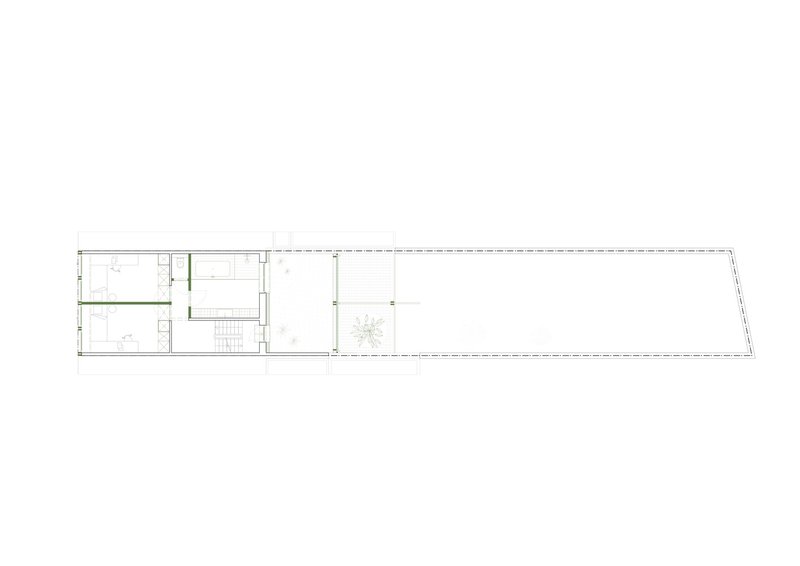
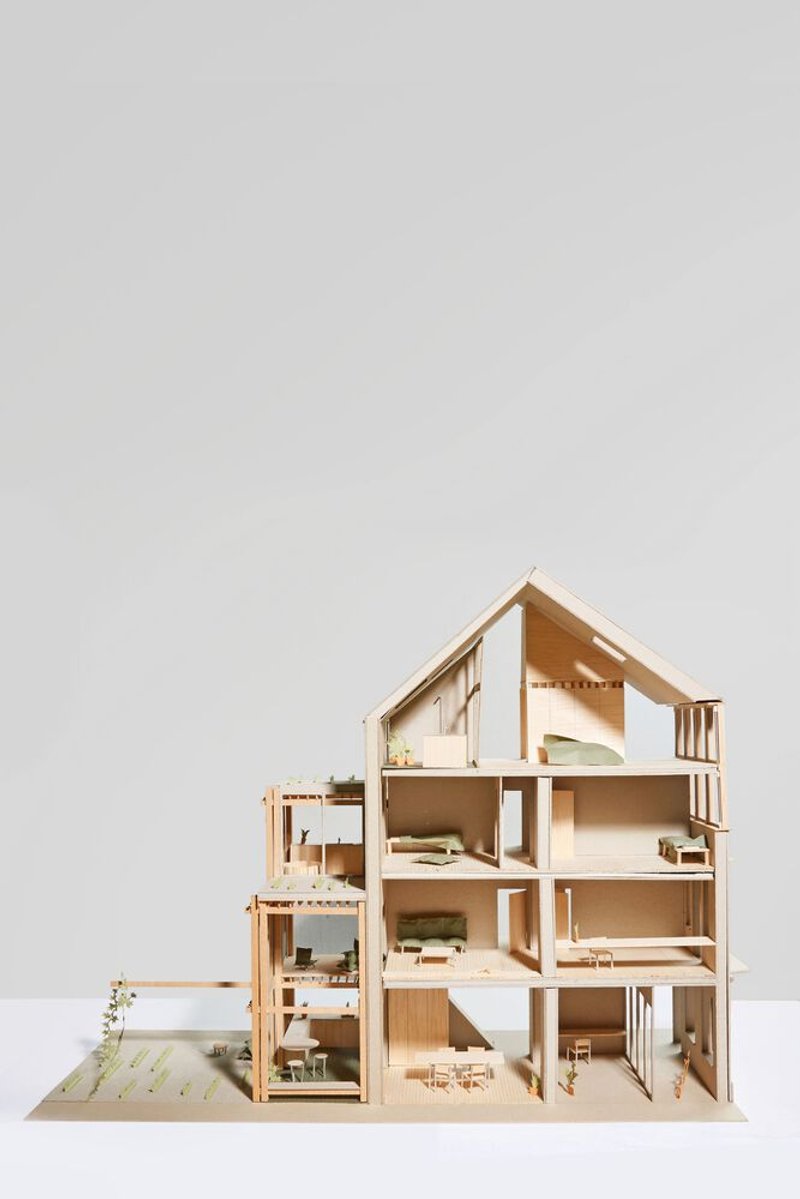
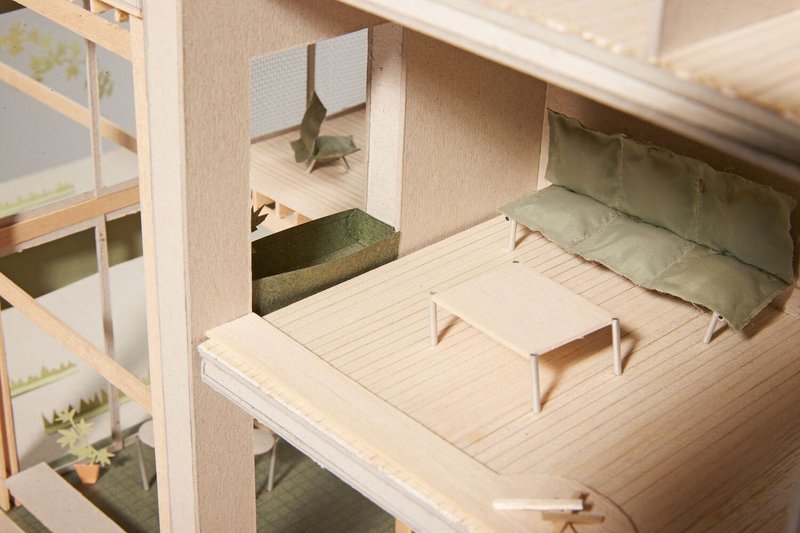
The extension’s verticality is complemented by large glazing elements, creating a double-height void that allows light to cascade through the interior spaces. This vertical circulation space connects three main levels: the kitchen, the living room, and the newly elevated children's quarters, forming a spatial continuum that is both dramatic and practical.
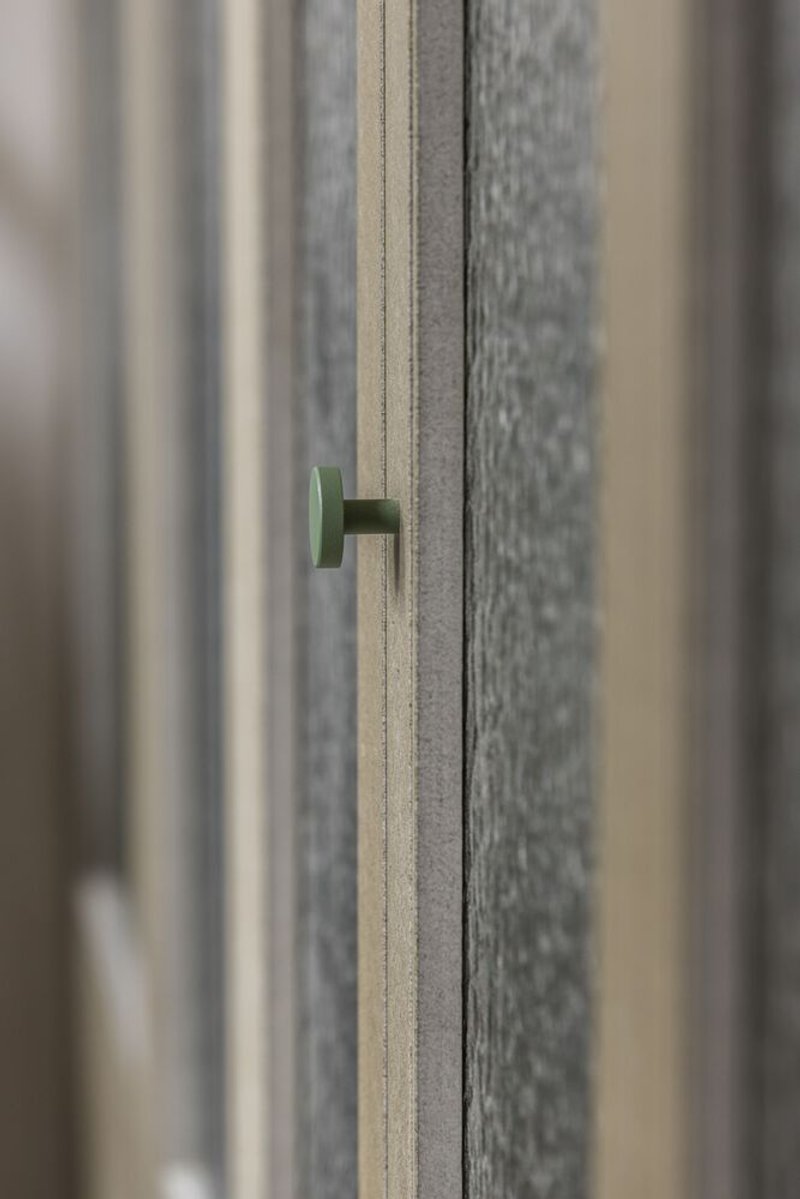
Split-Level Innovation and Vertical Connection
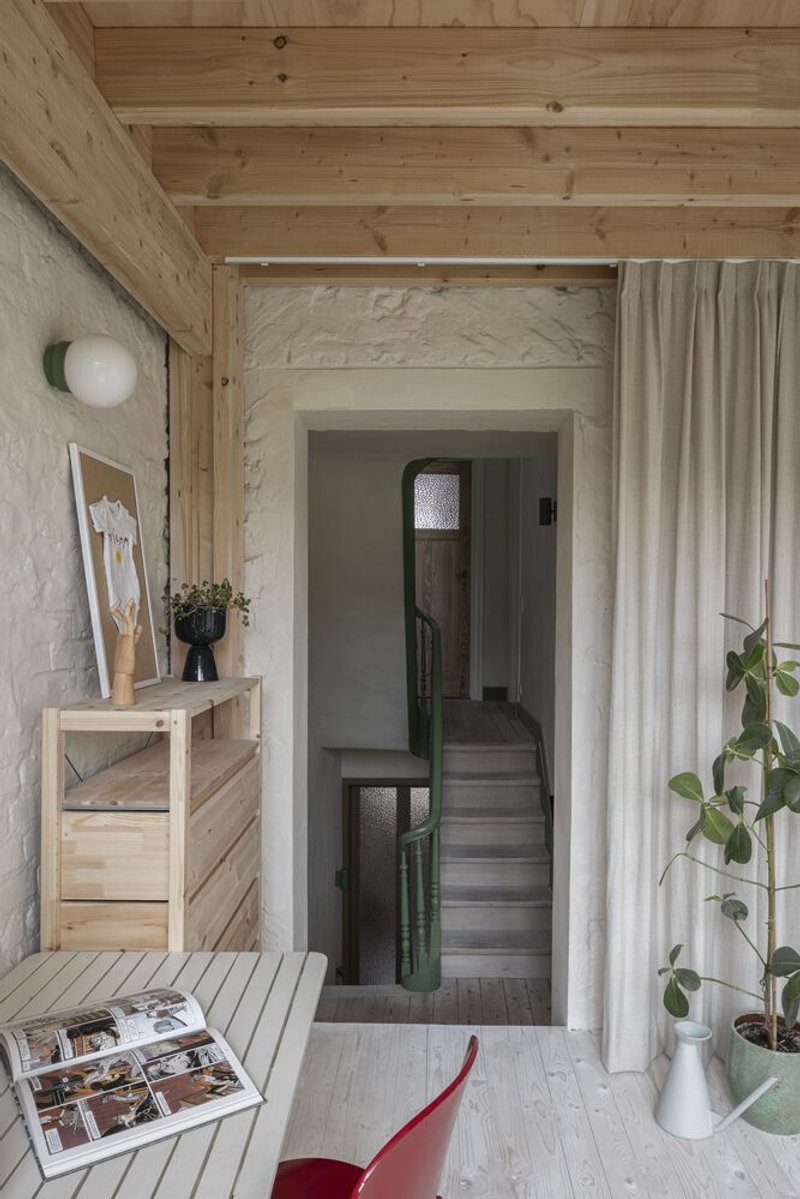
The architects cleverly responded to the home’s existing structure by aligning the extension’s rhythm with the original staircase. This strategy led to a split-level configuration where the first floor of the extension floats between the kitchen below and the living room above. An open stairwell enhances connectivity, while a glass wall at the rear opens views into the garden, reinforcing the house’s dialog between interior and exterior spaces.
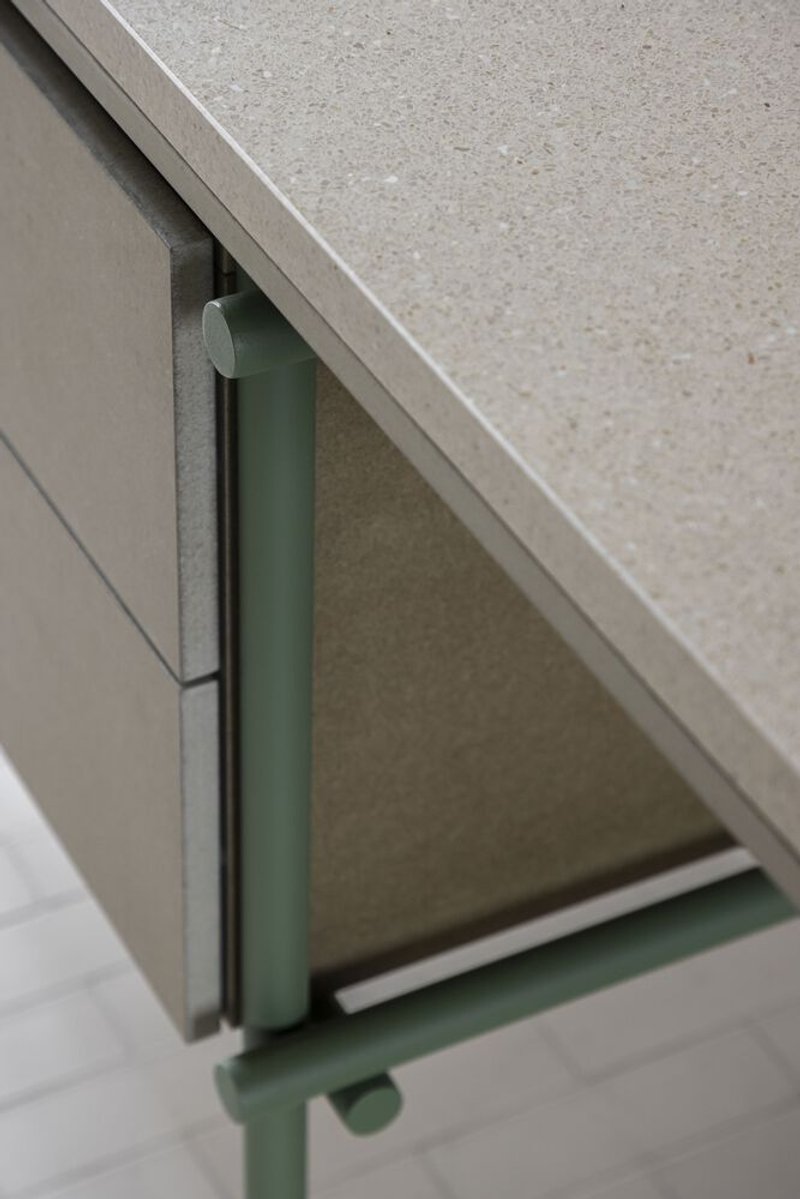
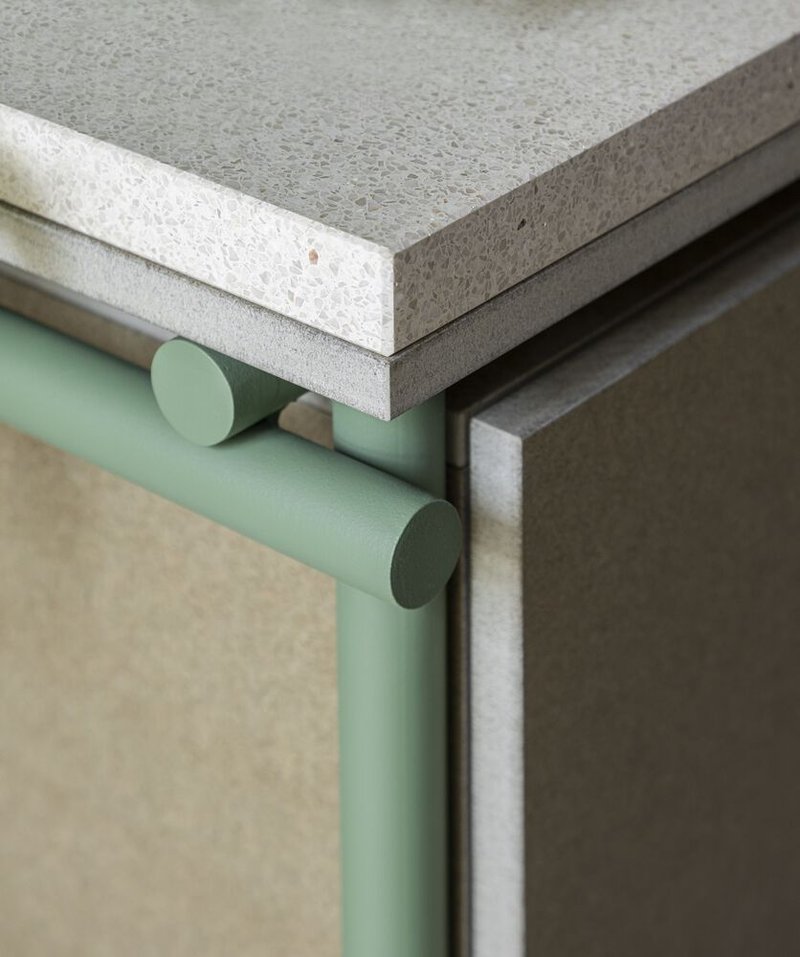
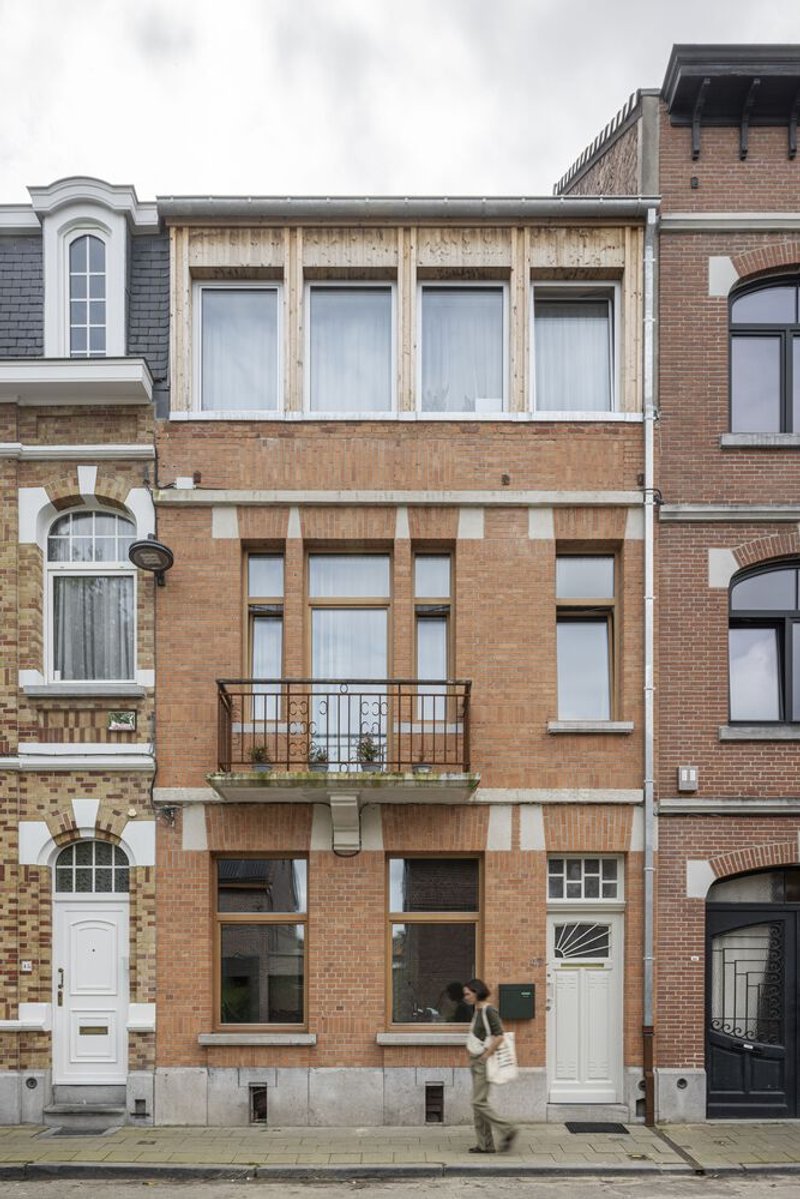
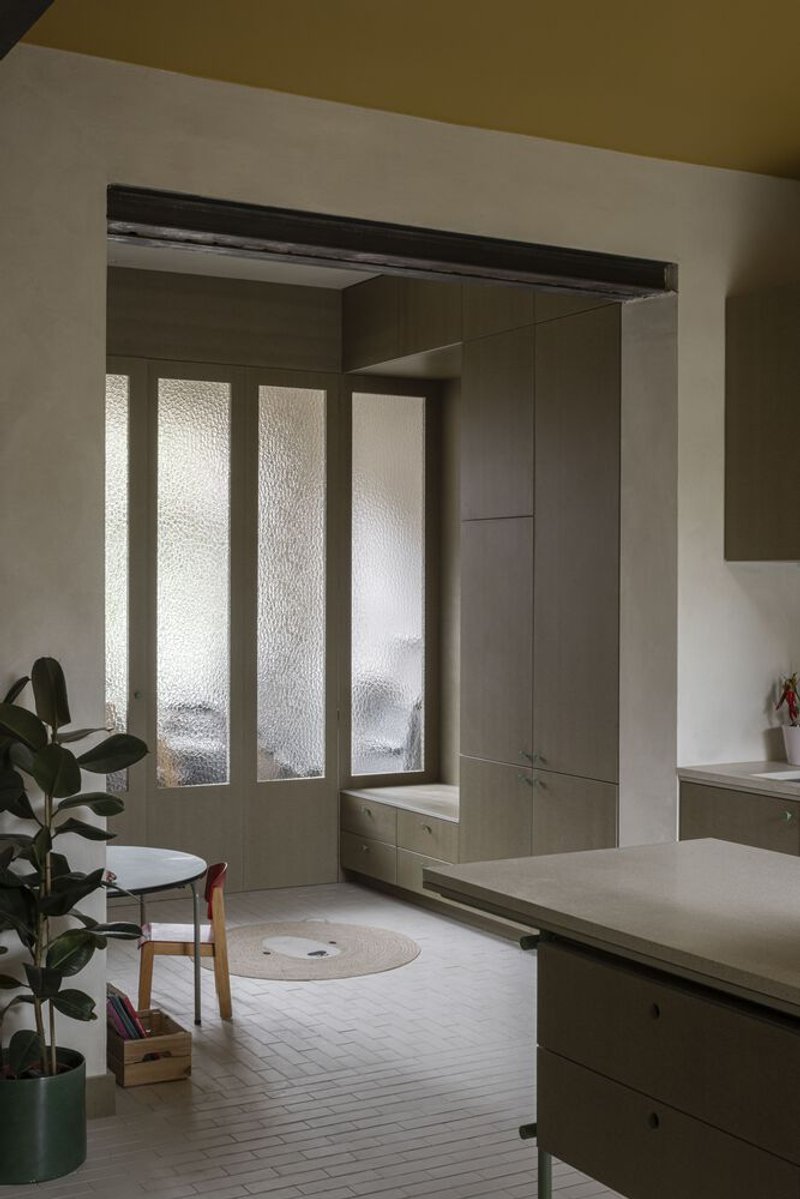
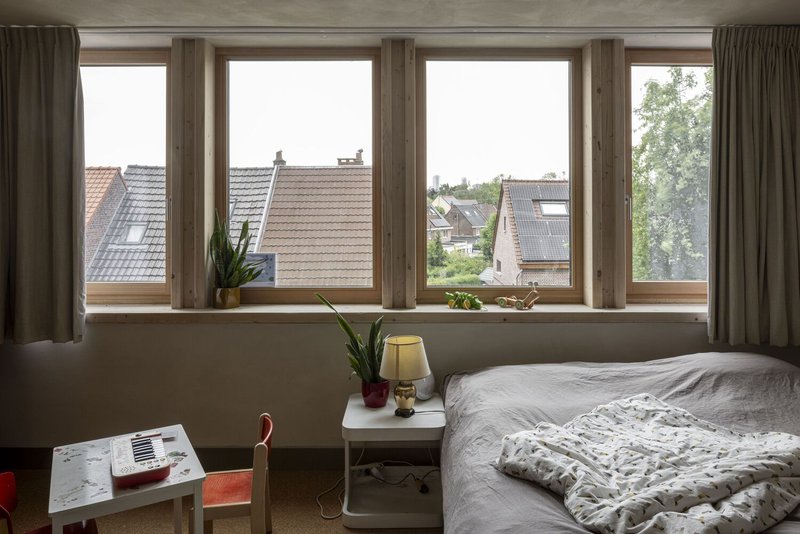
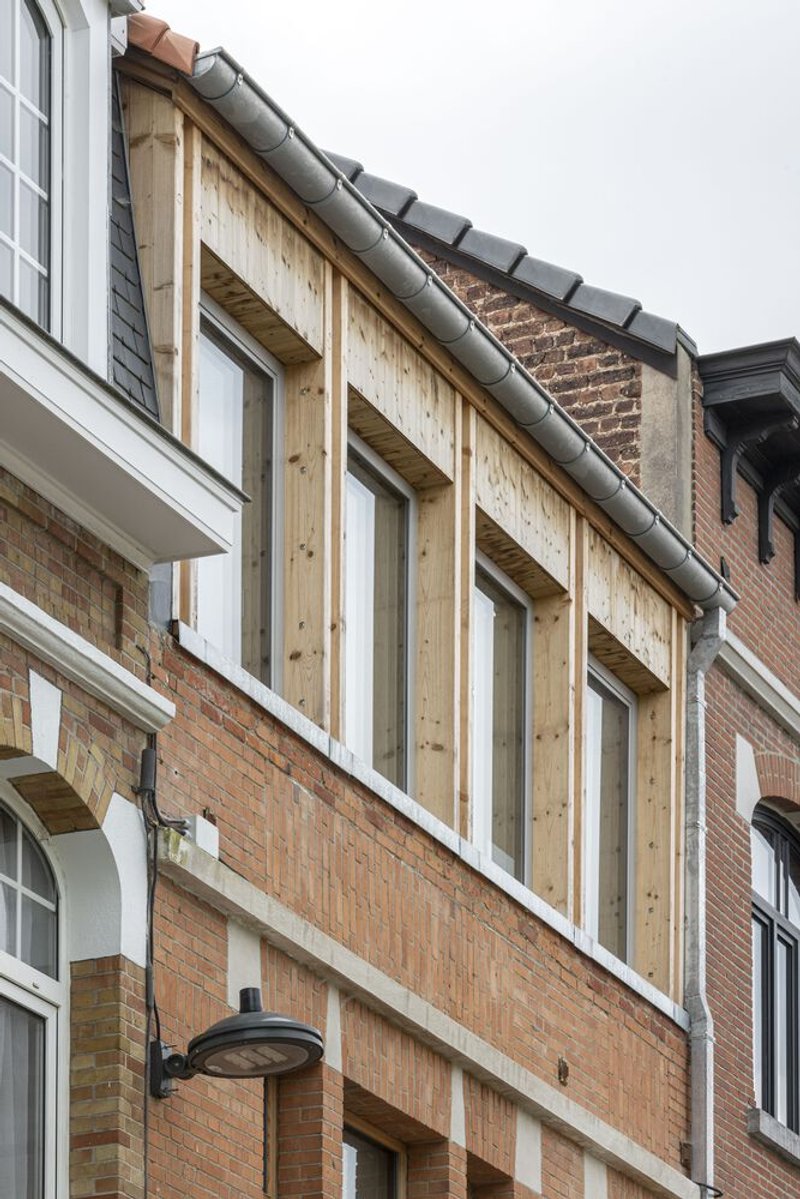
Toward the front of the home, a subtle elevation in the existing façade hints at the spatial transformation within. It discreetly creates room for two new bedrooms—claimed immediately by the children—which enjoy a panoramic view of Brussels’ Atomium. Between the front door and the main living area, a practical intermediate zone accommodates bikes, coats, and strollers, adding an important layer of functionality without sacrificing elegance.
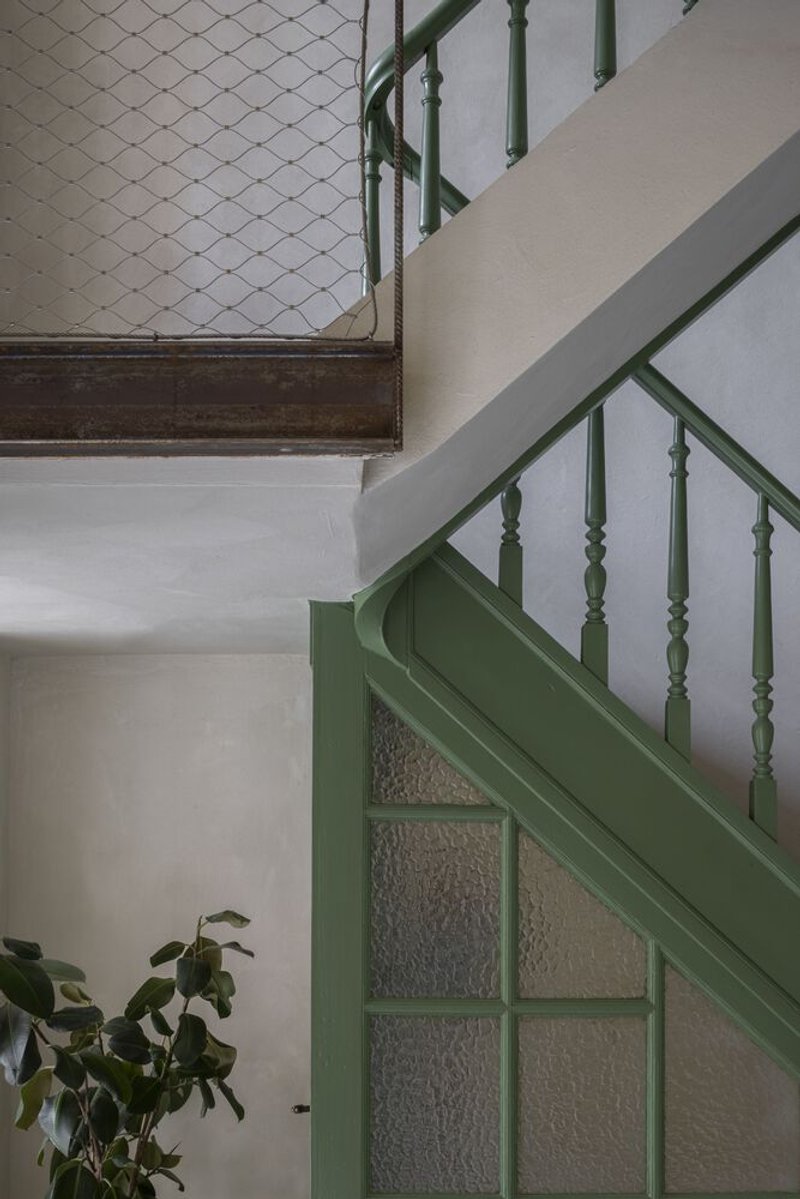
Materials, Craft, and Domestic Warmth
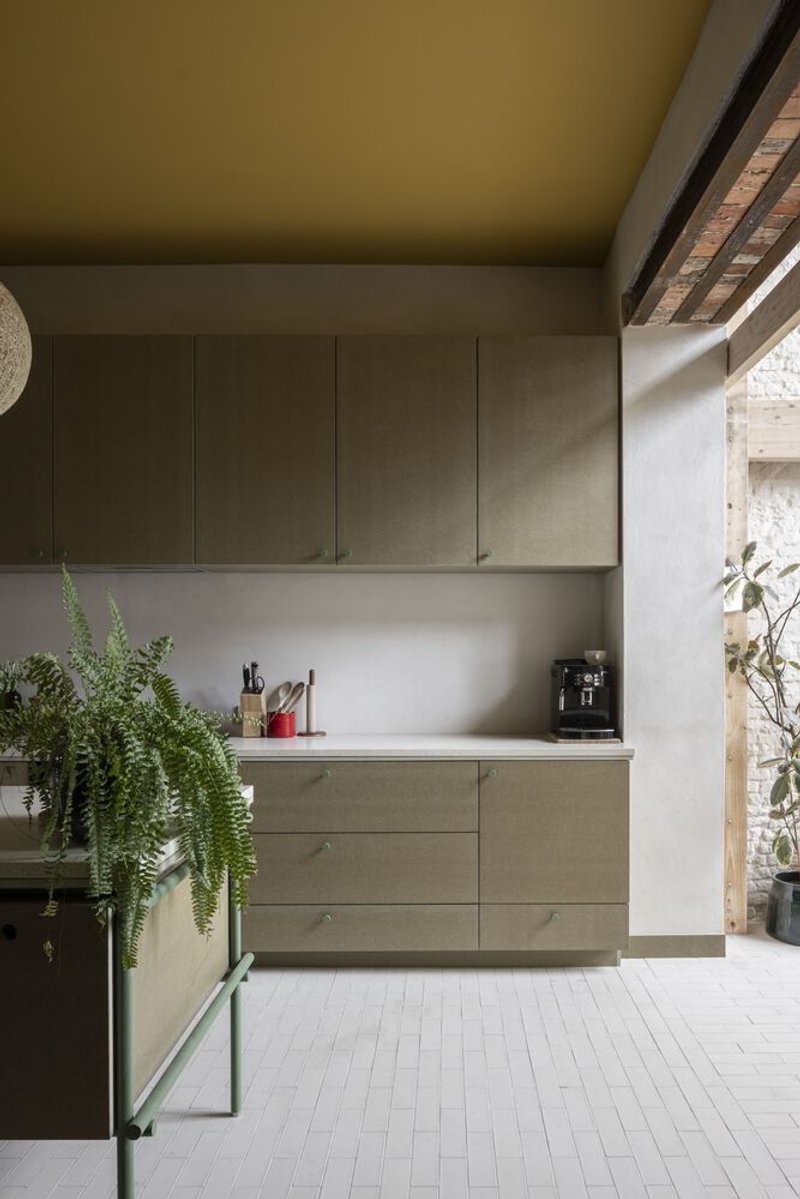
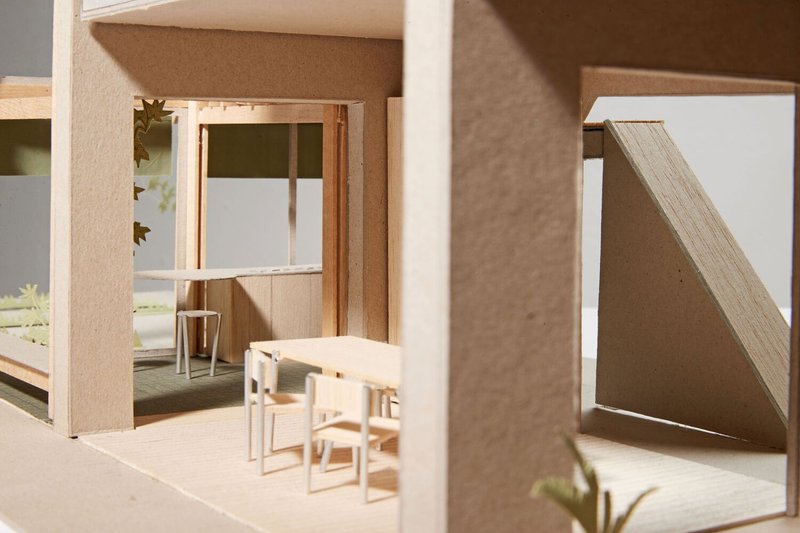
Material choices in Kasteel Home convey warmth, adaptability, and craft. Eurabo timber and Léém finishes provide tactile richness, while the carpentry by atelier Hanssens ensures seamless integration. The new structure’s frame is both expressive and minimal, creating a calm but defined architectural language that ties the past and present together.
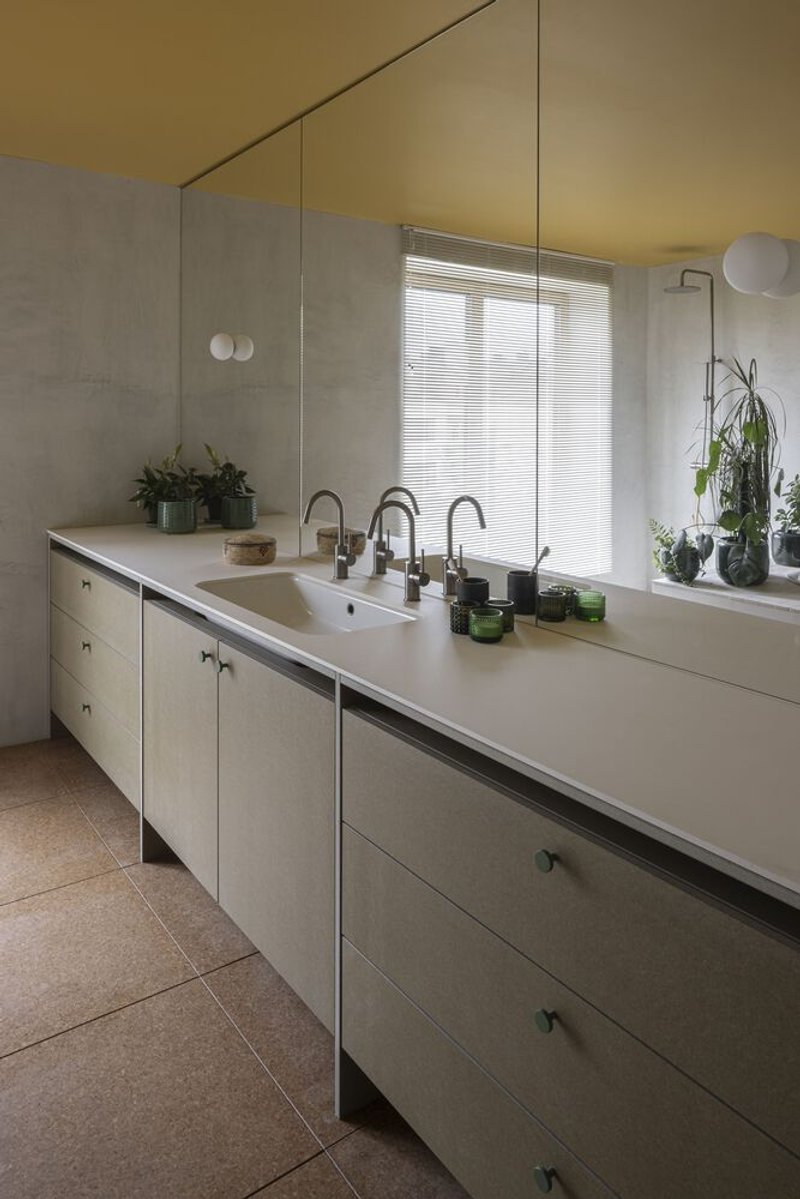
From polished concrete floors to wooden chairs and counters, every element of the home echoes the calm rhythm of daily life. The spaces are neither ostentatious nor sterile—they are lived-in, functional, and effortlessly beautiful.
A Family House Reimagined Through Flexible House Design
Kasteel Home is more than a residence—it is a living, breathing system designed to accommodate life’s shifts. Hé! architectuur’s response to a growing family’s needs reflects a larger architectural trend: designing homes that adapt, not dictate. Flexibility is no longer a luxury; it is a necessity. And in Kasteel Home, it is also an aesthetic.
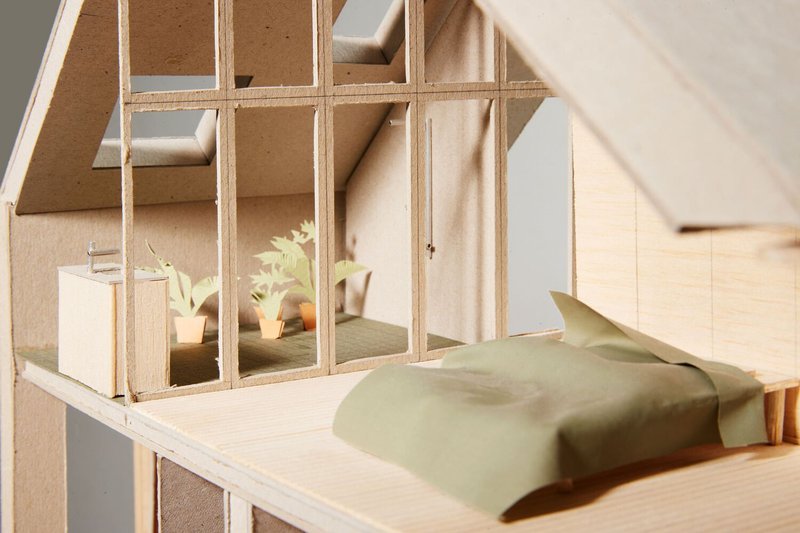
This home exemplifies how architecture can meet daily needs while offering poetic and personal spatial experiences. Through its flexible house design, Kasteel Home becomes a new typology for sustainable, sensitive, and family-oriented urban living.



Popular Articles
Popular articles from the community

BICA Arquitectos Buries a Coastal Home in a Man-Made Dune on Portugal's Tróia Peninsula
A 300-square-meter house of timber, sand mortar, and travertine dissolves into the dune landscape it helped regenerate on the Alentejo coast.
H&P Architects Stack a Vertical River of Brick and Greenery in Hanoi
A perforated terracotta tower in Dong Anh channels water, light, and air through eight staggered levels of domestic life.

20 Most Popular Furniture Design Projects of 2025
Modular street systems, parametric benches, and insect hotels: the furniture design projects that captivated architects on uni.xyz in 2025.
Paco Oria Estudio Rebuilds a 1949 Valencian Town House Around Timber, Terracotta, and a New Interior Patio
In Godella, Spain, a semi-detached house from the postwar era is stripped to its party walls and rebuilt with wood and ceramics.


Similar Reads
You might also enjoy these articles
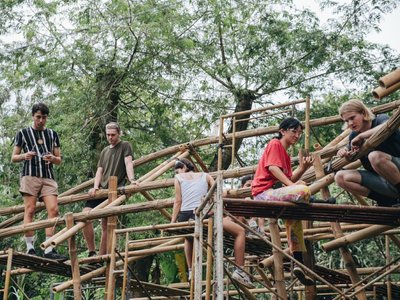
Bamboo Housing Challenge 2026: Design Affordable, Sustainable Homes Using Bamboo
An international design competition by Bamboo U and IBUKU inviting architects and designers to reimagine affordable housing using bamboo — with the winning design built full-scale in Bali.
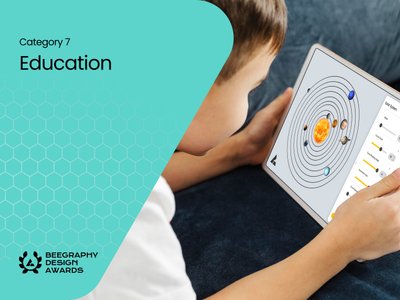
Computational Design & Education: Beegraphy Design Awards Introduces 7th Category (Featuring Jiyun's Innovative Approach)
Dive into Beegraphy’s 7th Design Awards category, where computational design meets education to create immersive, interactive learning tools, inspired by Jiyun’s work.
From Parametric Lighting to Urban Furniture: Join the 2nd Workshop in Beegraphy’s Computational Design Series
Dive into Cutting-Edge Design Techniques and Practical Applications with Industry Experts
Introducing Sphere by UNI: Pioneering a New Era in AEC Industry
Unlocking Global Potential with BIM and Agile Management


Explore Architecture Competitions
Discover active competitions in this discipline




The International Standard for Design Portfolios


The Global Benchmark for Architecture Dissertation Awards


The Global Benchmark for Graduation Excellence


Challenge to reimagine the Iron Throne
Comments (0)
Please login or sign up to add comments
No comments yet. Be the first to comment!