
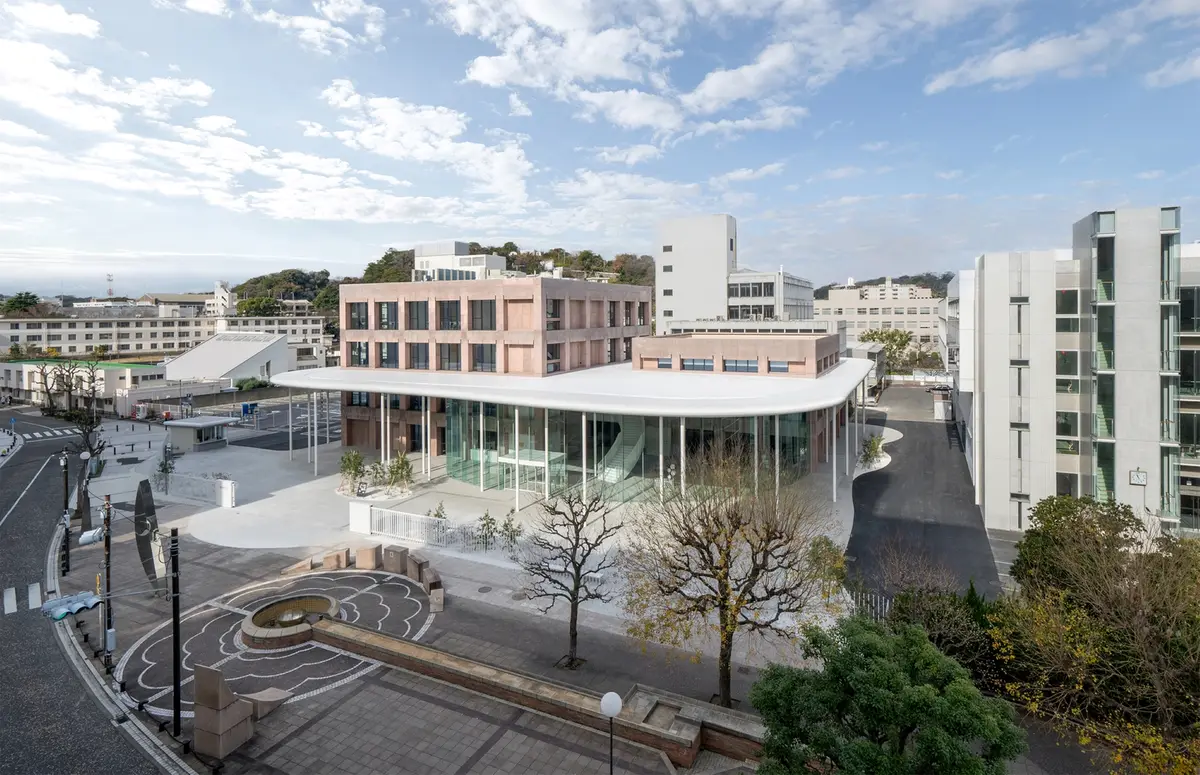
KDU Campus Center by Atelier MEME – A Cloud-Like Academic Hub Reimagining University Life in Yokosuka
A cloud-like roof, open study spaces, and community-connected design transform KDU Campus Center into a modern, 24-hour academic and social hub.


The KDU Campus Center in Yokosuka, Japan, designed by Atelier MEME, represents a transformative step in the evolution of Kanagawa Dental University’s academic environment. Conceived as a multifunctional hub, the project addresses the aging administrative buildings and introduces a new architectural identity that blends office spaces, student facilities, and communal areas into one cohesive, future-oriented campus landmark.
A New Centerpiece for an Evolving University Campus
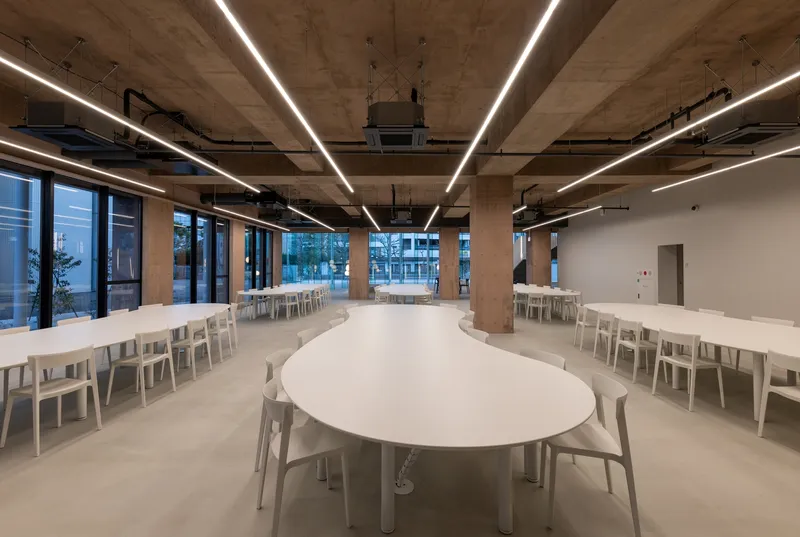
The university recognized the need for a modern campus center that could accommodate administrative functions while enhancing student life. The new building consolidates offices and learning spaces into a single 4,656 m² structure, creating a vibrant plaza-like environment that had long been missing on campus. More than just a building, the project serves as a social heart—encouraging interaction, movement, and community engagement.
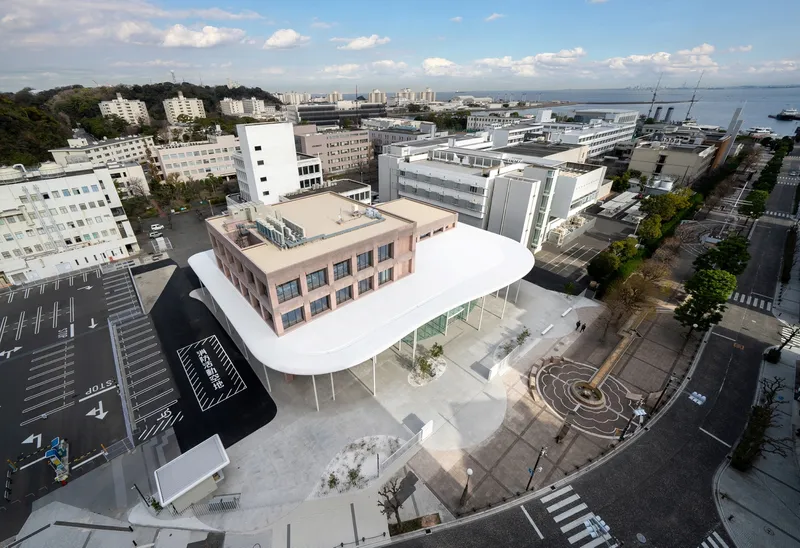
A Floating, Cloud-Like Roof: The Core Architectural Concept
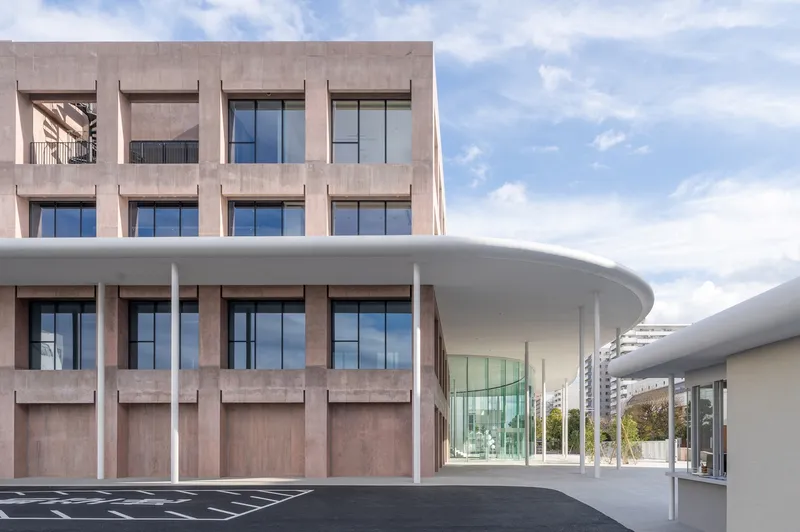
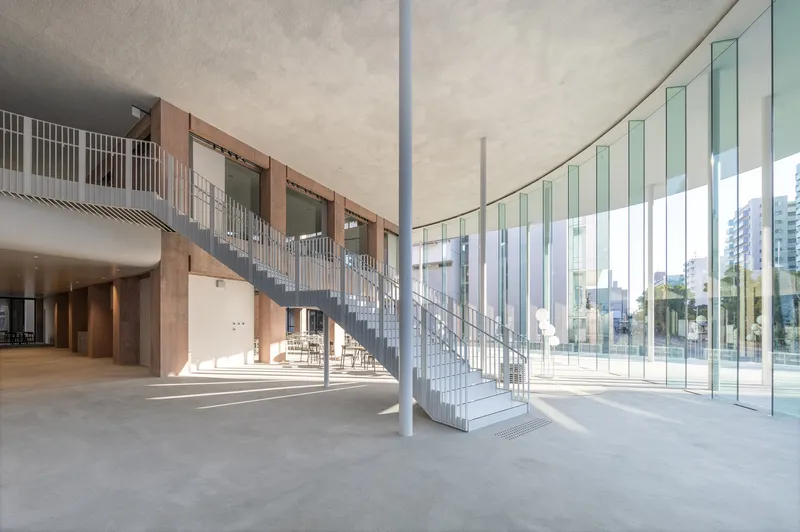
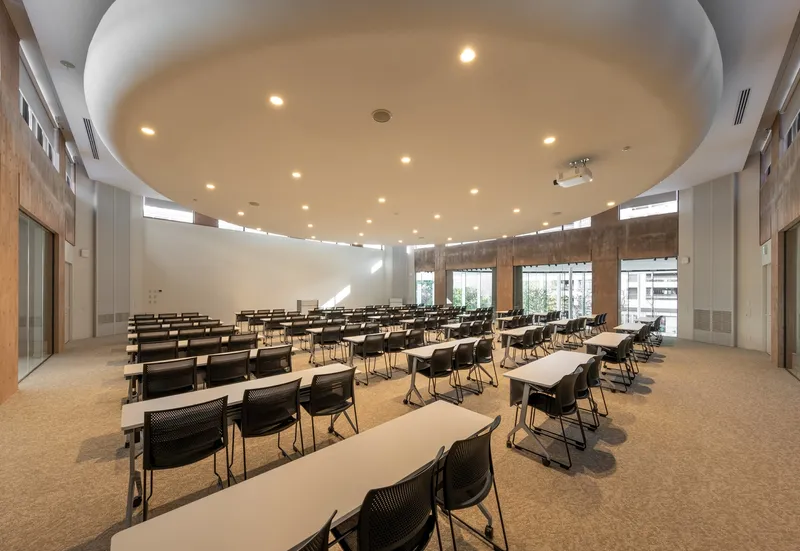
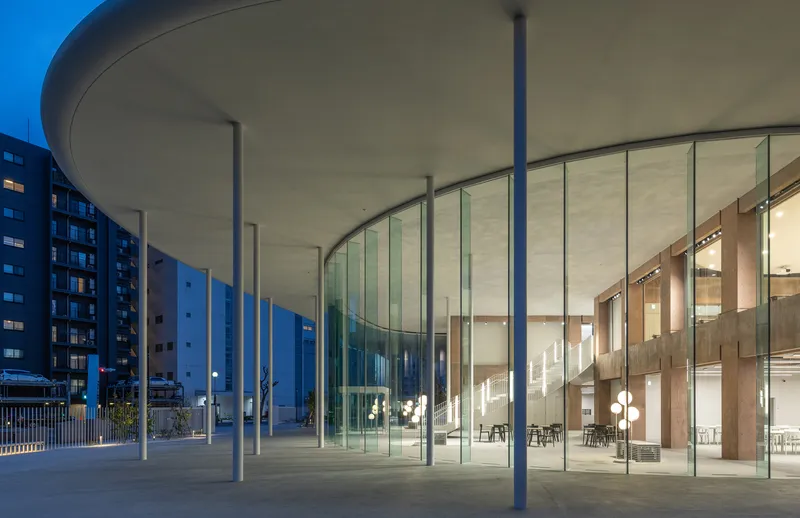
Atelier MEME’s design centers around an extraordinary architectural gesture: a massive, floating roof that appears to hover above the campus like a soft, weightless cloud. This iconic roof structure is achieved using advanced voided slab technology, reducing its weight to nearly half that of conventional concrete. Supported exclusively by slender, unobtrusive columns and eliminating the need for beams, the roof creates an open, fluid spatial experience.
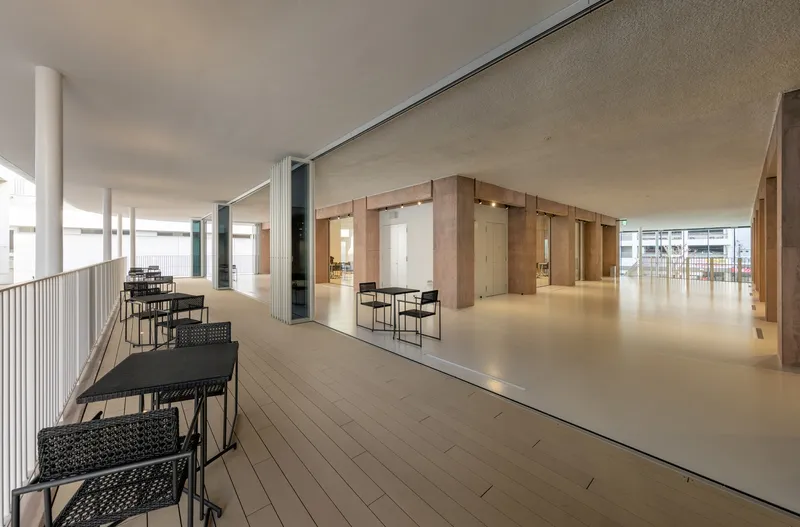
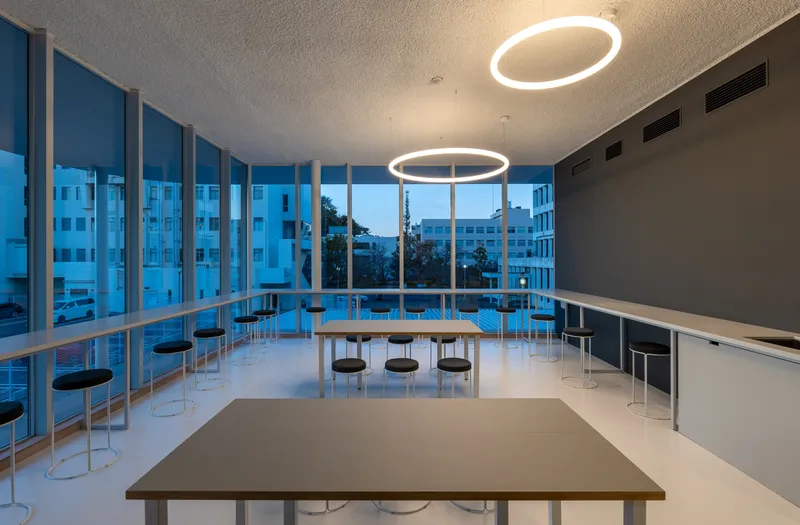
Beneath this expansive canopy lies a collection of dynamic student-focused spaces, including an inviting entrance hall, a panoramic terrace overlooking the university’s signature trees, lounges for informal learning, and areas designed for relaxation and collaboration. These interconnected zones bring energy and openness to the campus.
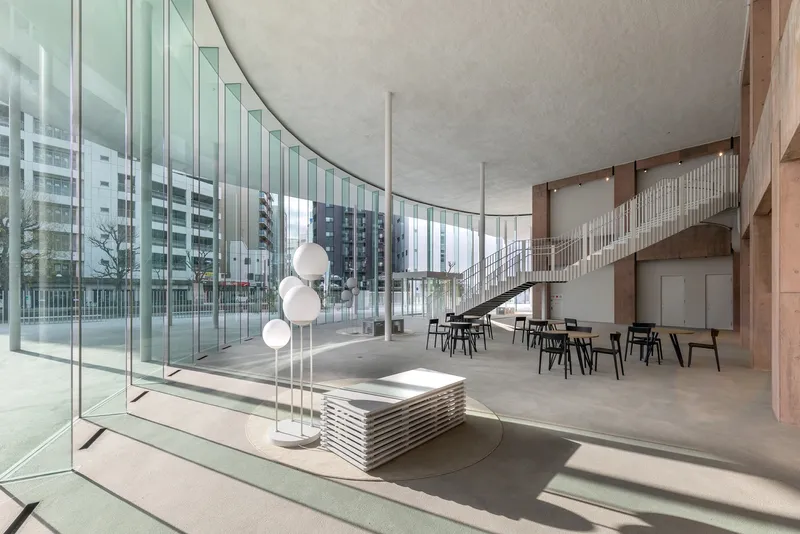
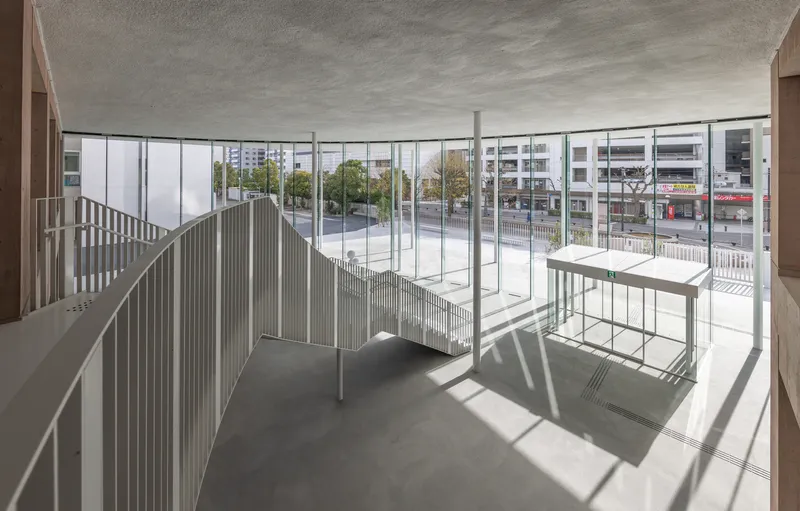
Contrasting Structural Systems for Visual and Material Harmony
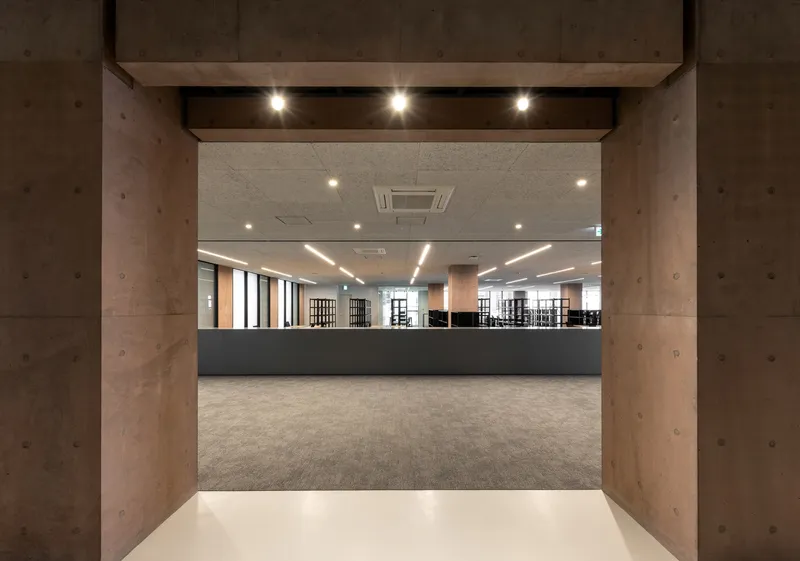
While the floating roof introduces curvature and softness, the building’s central office and study blocks rely on a traditional concrete frame system. This contrast—between structural rigidity and organic fluidity—defines the project’s architectural character.
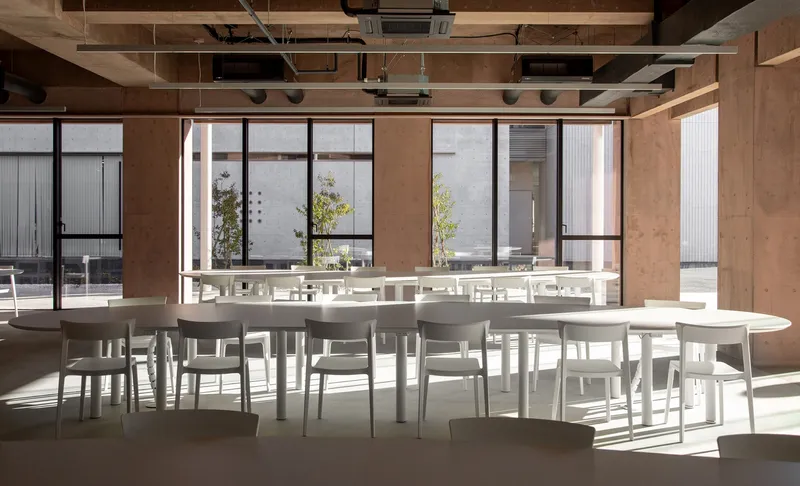
Specially pigmented concrete was used to soften the material presence of the structure. Its surface subtly changes expression with natural light, harmonizing with the predominantly white palette of the campus while adding nuance and visual depth.
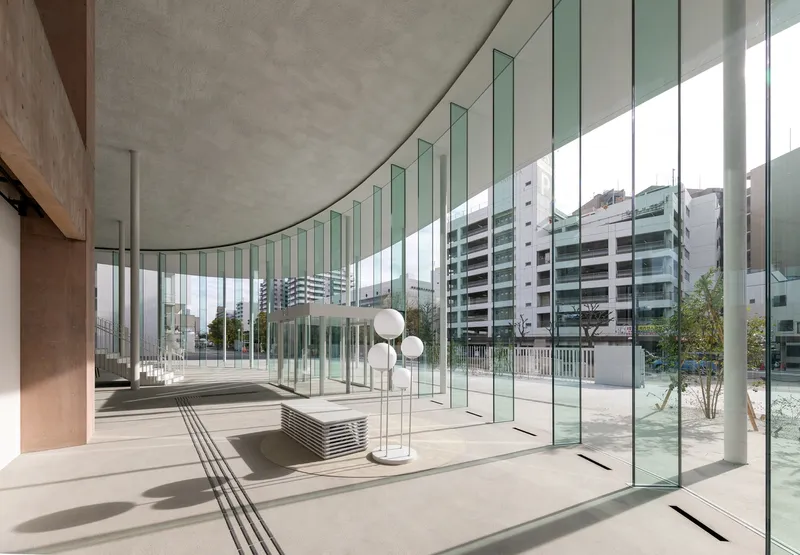
A 24-Hour Learning Environment: A New Model for Japanese Campuses
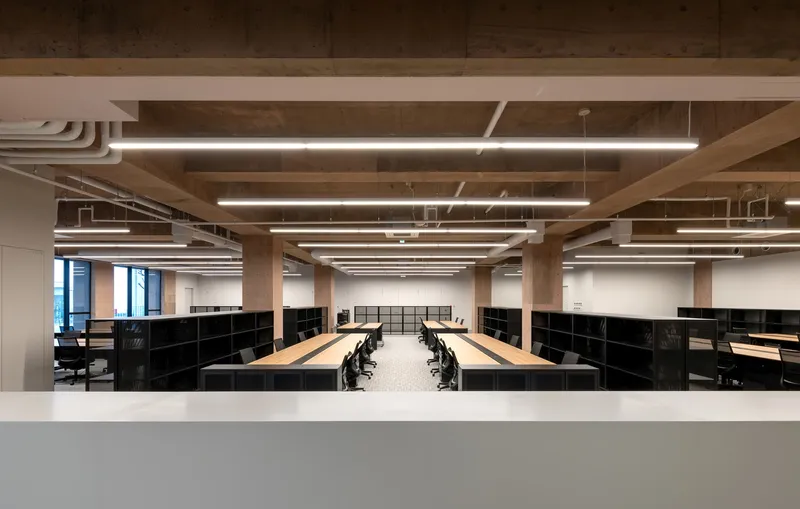
One of the project’s most innovative features is its commitment to all-day access. Both the study block and the open spaces beneath the roof remain accessible 24 hours a day—a rarity in Japanese university environments. This continuous availability encourages students to use the campus more flexibly, supporting group study sessions, independent learning, and social activities at any time of day.
The KDU Campus Center is not merely a building—it is a platform fostering new ways of learning and interacting.
Blurring Boundaries Between Campus and Community
Atelier MEME’s design extends beyond architectural form to redefine the relationship between the campus and its surrounding neighborhood. Instead of establishing a closed institutional boundary, the architects intentionally softened the edges of the site. Transparent pole fences, wide and inviting gates, and exposed aggregate surfaces that seamlessly flow from exterior to interior all contribute to a sense of openness.
Planting strips and landscape elements integrate the structure with the adjacent public park trail, creating a natural continuum between student spaces and community pathways. The expansive roof further reinforces these connections, acting as a unifying horizontal element that merges architecture with the landscape, making the campus center feel welcoming not only to students but also to Yokosuka residents.
A Forward-Looking Vision for Educational Architecture in Japan
The KDU Campus Center stands as a contemporary benchmark for educational design—melding structural innovation, human-centric planning, and community integration. Its cloud-like roof, open-access study environments, and landscape-driven approach position it as a pioneering example of next-generation campus architecture in Japan.
All photographs are works of Hiroyuki Oki


Popular Articles
Popular articles from the community


David Macias Steps a Doorless Stone and Plaster House Down a Tropical Colombian Hillside
In the humid hills of Colombia, Threshold House replaces the front door with an open void and terraces its 850 m² down the slope instead of fighting it.

Architekt Andreas Gruber Scatters 23 Dark Timber Chalets Across a South Tyrolean Forest Edge
In Molini di Tures, Amonti Chalets breaks a resort into a hamlet of gabled timber houses, with parking, storage and services pushed into the slope.

LT2A and OPEN Architectes Thread a Brick and Glass High School Through a Wooded Belgian Campus
In Braine-l'Alleud, a 3,000 m² wing for Collège Cardinal Mercier pairs pale brick with a glazed colonnade, deferring to a small chapel and a dense wood.

Cube Design Draws an Ecological Corridor Between Two Shenzhen Hills with the Nankai Building
Beside Shenzhen's container docks, the Nankai Building pairs stacked balconies with a climbing green screen to connect two hillsides across its height.

Similar Reads
You might also enjoy these articles


Hodi-Mandai Geram
Project Function: Preservation and revitalization of the Intangible heritage and socio-spatial identity of the Hodi by Housing, Cultural Memory Center, Sacred Grove, landscape, local tourism economy


Olio Towers: A Mid-Rise for Performers That Fuses Housing, Rehearsal, and Stage
Located blocks from Houston's Theater District, this modular tower stacks living units around a central performance atrium.

Oasis: Modular Green Housing Carved into Dhaka's Urban Fabric
A shortlisted Plugin Housing entry reclaims unauthorized settlements in Dhaka with stepped concrete volumes, green roofs, and ventilation-driven design.

Black Hole: A Floating Megastructure for the Post-Physical Era
Emiliano Mazzarotto envisions a spherical, self-scaling arena where e-sports, digital hotels, and holographic stadiums replace traditional public space.

Explore Educational Building Competitions
Discover active competitions in this discipline

Challenge to design public laboratory

Challenge to reimagine the Iron Throne

Photograph architecture without architects

Illustrate the lost glory of Angkor Wat - Render Challenge
Comments (0)
Please login or sign up to add comments
No comments yet. Be the first to comment!