

Komorebi Family Home: Light Through the Layers
ConForm transforms a terraced house in Dulwich into a carefully layered sequence of courtyards, double-height voids, and dappled light.


The Japanese word komorebi describes sunlight filtering through leaves. It is a poetic, specific phenomenon, and a bold name for a South London terraced house. But ConForm's renovation of this Dulwich home earns it. The practice has gutted a standard Victorian terrace and reassembled it as a series of interlocking volumes where light never arrives directly but always through something: a perforated ceiling panel, a slatted timber screen, a planted courtyard, a linear skylight cut into the roofline. The result is a 215 m² house that feels considerably larger than its footprint suggests, not through tricks of scale but through careful sectional choreography.
What makes this project genuinely interesting is the way it refuses the common London extension playbook. There is no single dramatic glass box bolted onto the rear. Instead, ConForm has worked inward, carving voids and inserting courtyards to bring light into the deep plan that every terrace suffers from. The house operates less like a series of rooms and more like a vertical landscape, with views up, down, and across that reveal the full spatial ambition of what is, at street level, a modest white brick facade.
A Restrained Street Face
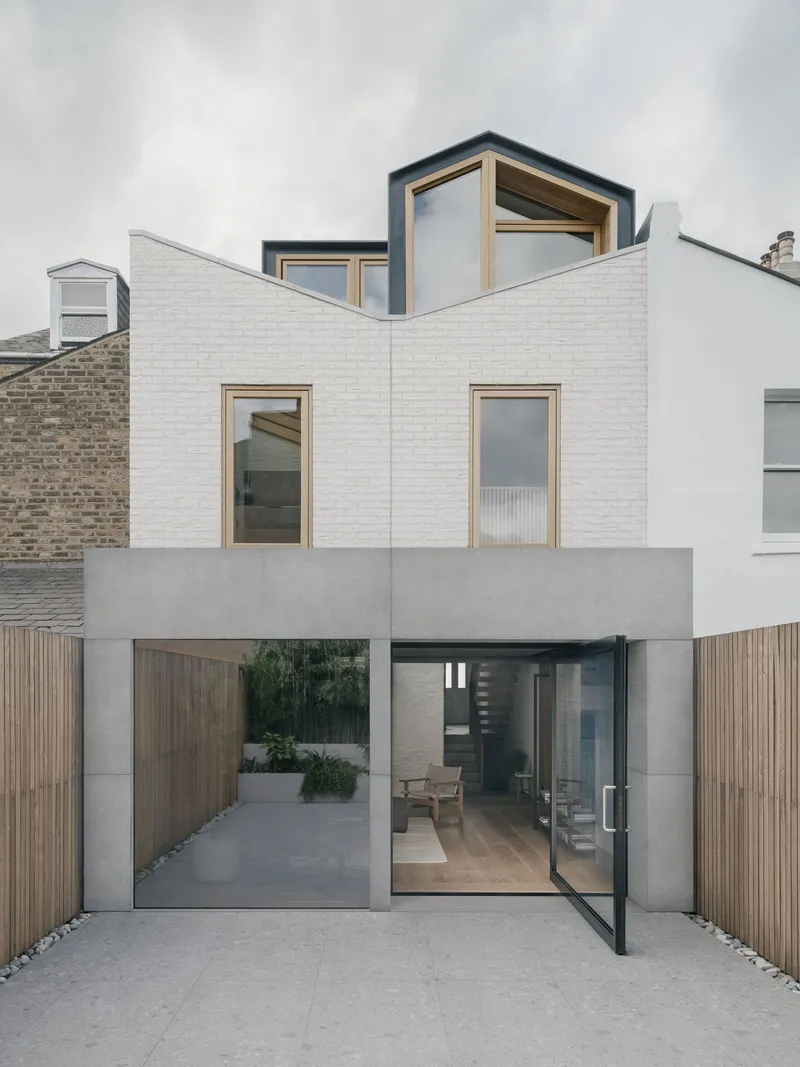
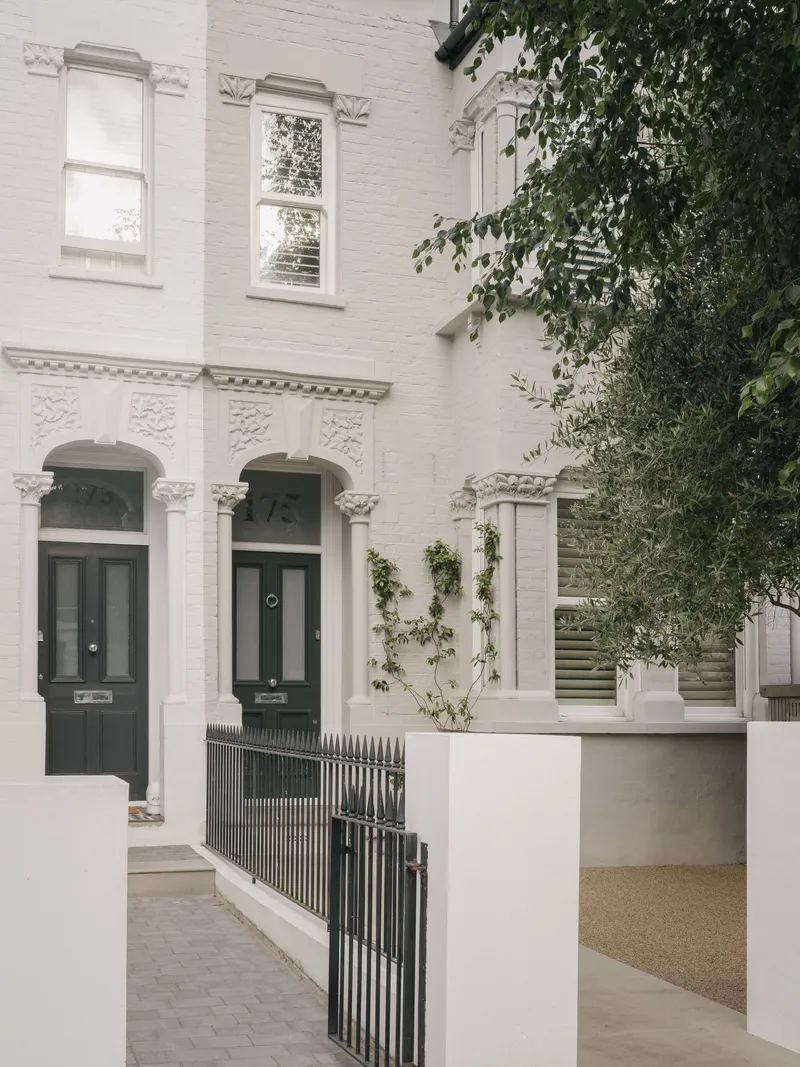
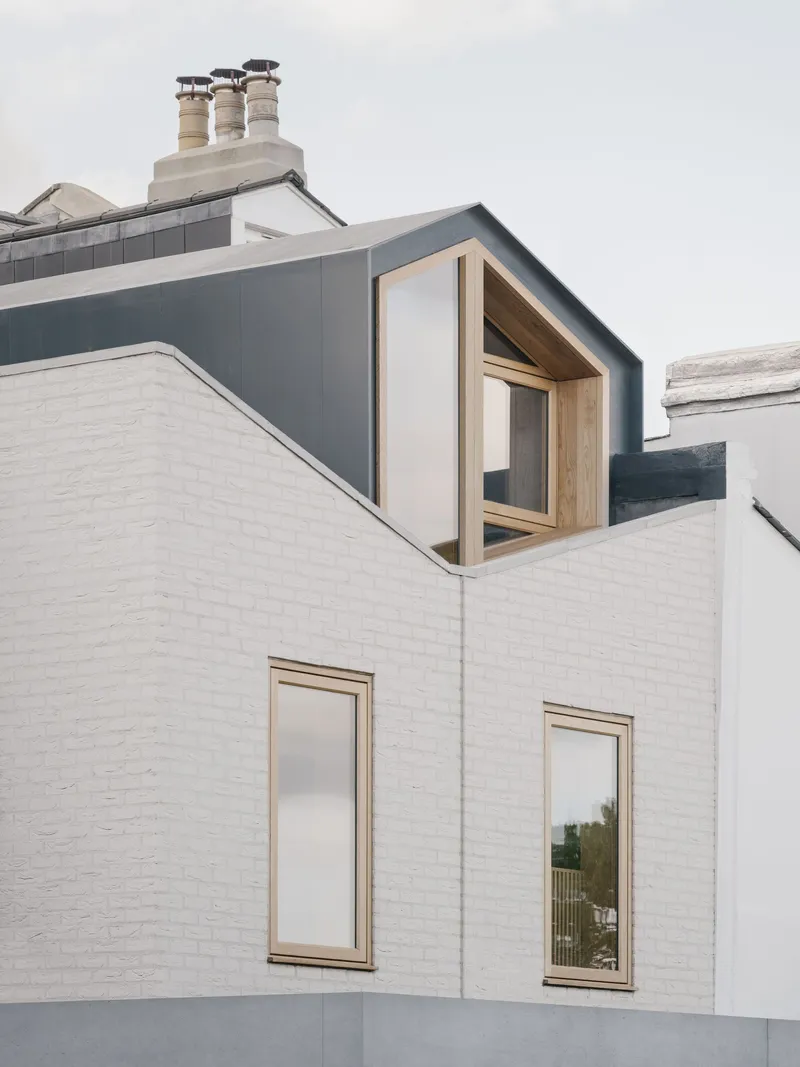
From the front, the Komorebi house is deliberately understated. The original facade is painted white, its arched doorways and climbing vines preserved in a gesture that keeps the terrace rhythm intact. Around the back, zinc dormers project from the roofline with a quiet confidence, signaling that something more complex is happening inside. The decision to express the extension primarily in the rear elevation is both pragmatic and respectful: Dulwich's Conservation Area guidelines demand it, and ConForm has responded with a rear composition of white brick, grey render, and timber-framed glazing that reads as new without shouting about it.
The dormer detail is worth noting. Rather than a flat rooflight or a flush Velux, the zinc-clad projection becomes a small gabled room in itself, framing views of neighbouring chimney pots and rooftops. It is a move that acknowledges the terrace's context while creating a distinctive identity for the house within the roofscape.
The Courtyard as Engine

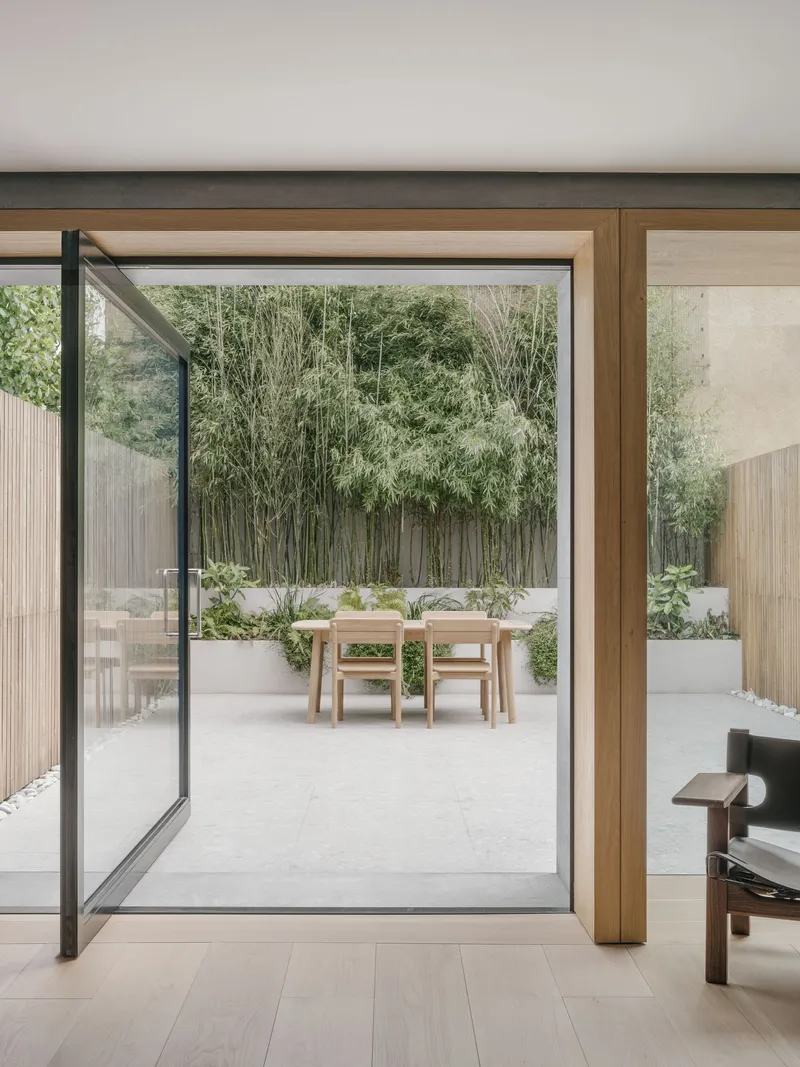
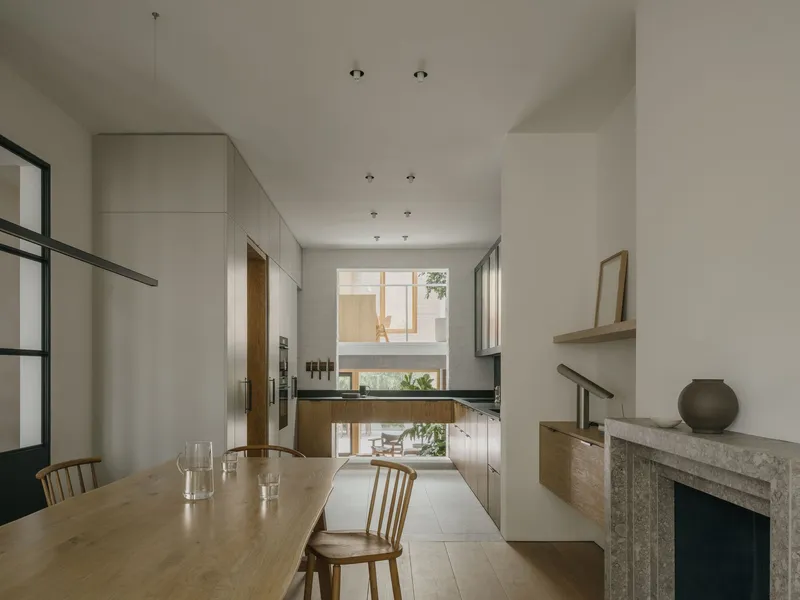
The planted courtyard at the centre of the plan is the project's primary organizing device. Rather than treating outdoor space as leftover territory at the rear, ConForm has positioned it between the kitchen and living zones so that nearly every ground-floor room borrows light and greenery from it. Bamboo, timber fencing, and paved surfaces give the courtyard a restrained palette that echoes the interior, blurring the boundary between in and out.
Steel-framed sliding doors and pivoting glass panels allow the courtyard to be opened fully in summer or sealed in winter without losing visual connection. The dining room sits directly beside a steel-framed glass screen that looks onto this green pocket, so even on the greyest London afternoon, there is depth and life at the heart of the plan. It is a compact move that delivers outsized spatial dividends.
Sectional Drama in the Double Height
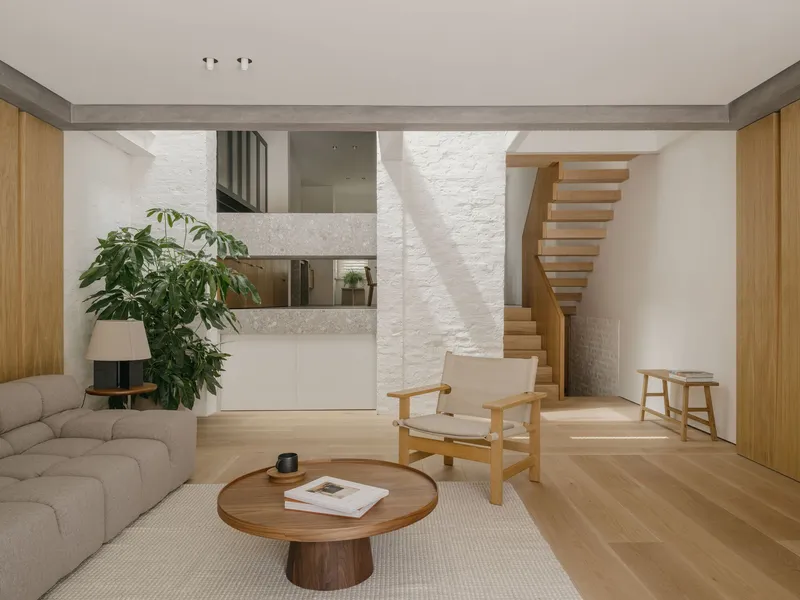
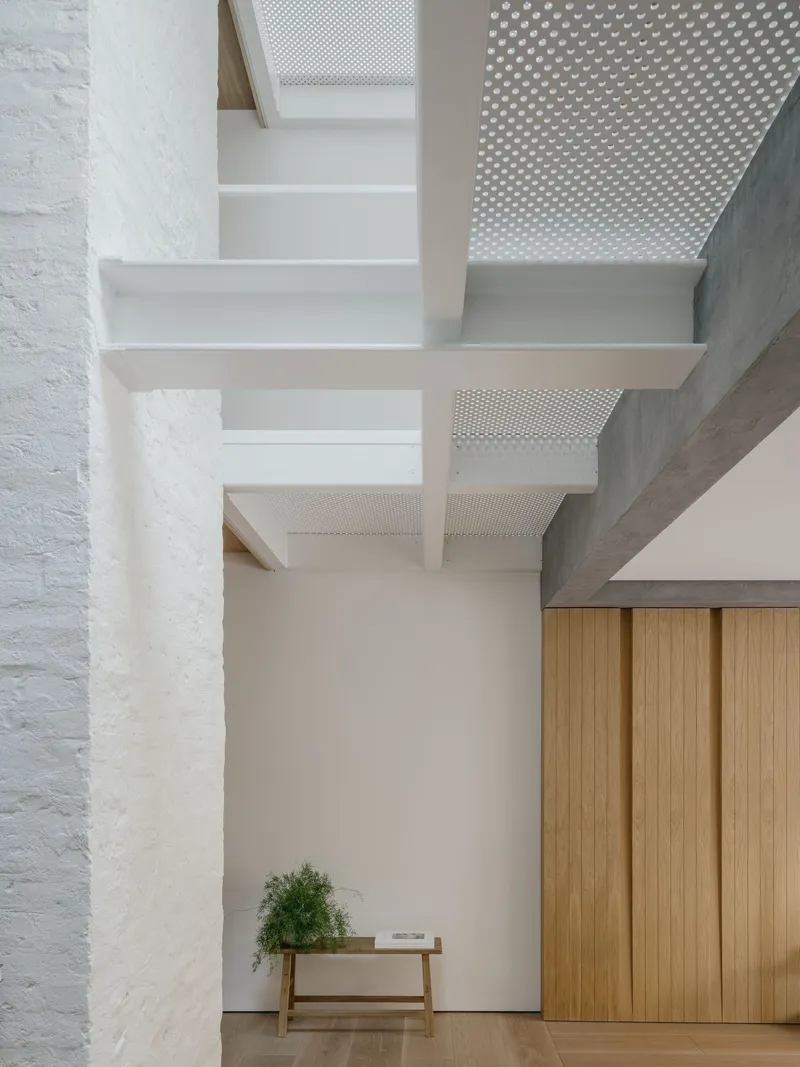

The double-height living space is the project's most generous gesture. A painted white brick chimney wall rises the full height, anchoring the room and giving it a domestic scale that prevents the void from feeling gratuitously tall. Perforated ceiling panels introduce a second layer of filtered light, casting soft, shifting patterns onto the plaster walls below. This is where the house's name becomes legible: the interplay of solid and void, screen and opening, produces exactly the kind of dappled illumination that komorebi describes.
Looking down from the upper level through a perforated metal floor panel, the spatial continuity becomes clear. You are never fully separated from the rooms above or below. Sound, light, and sightlines travel vertically, knitting the house together in a way that a conventional stacked plan never achieves.
The Staircase as Sculptural Thread
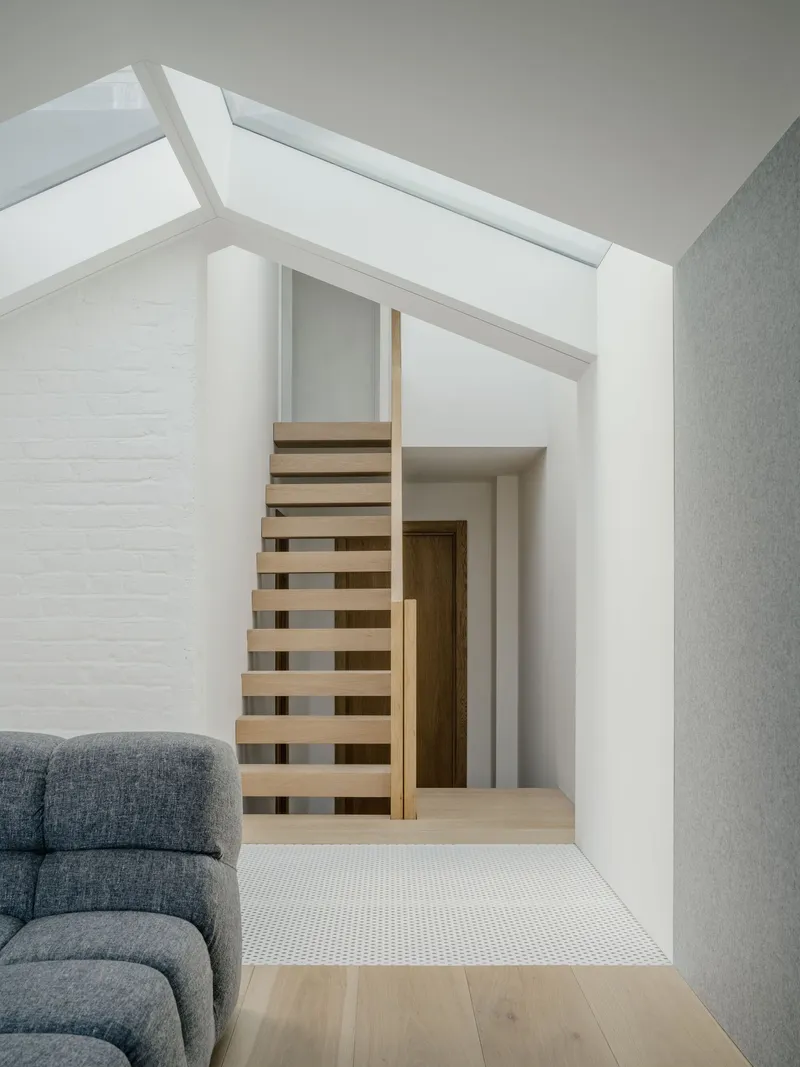
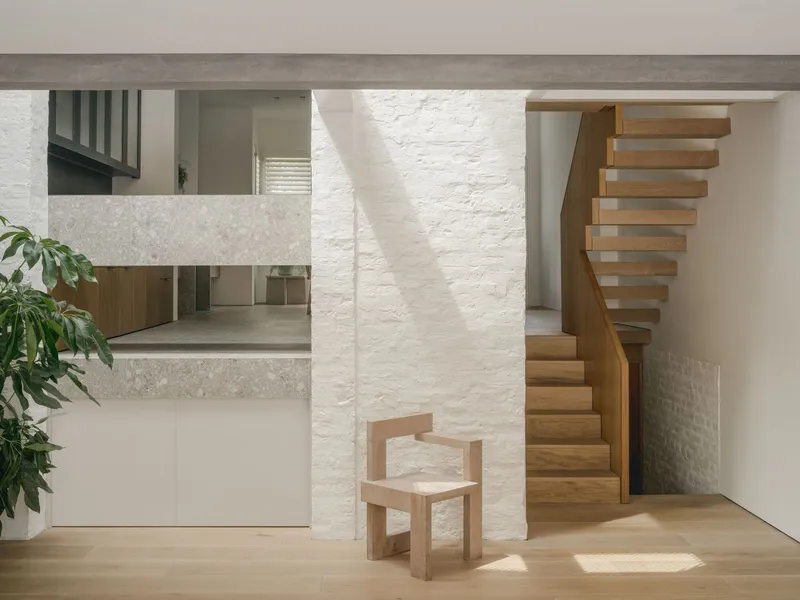
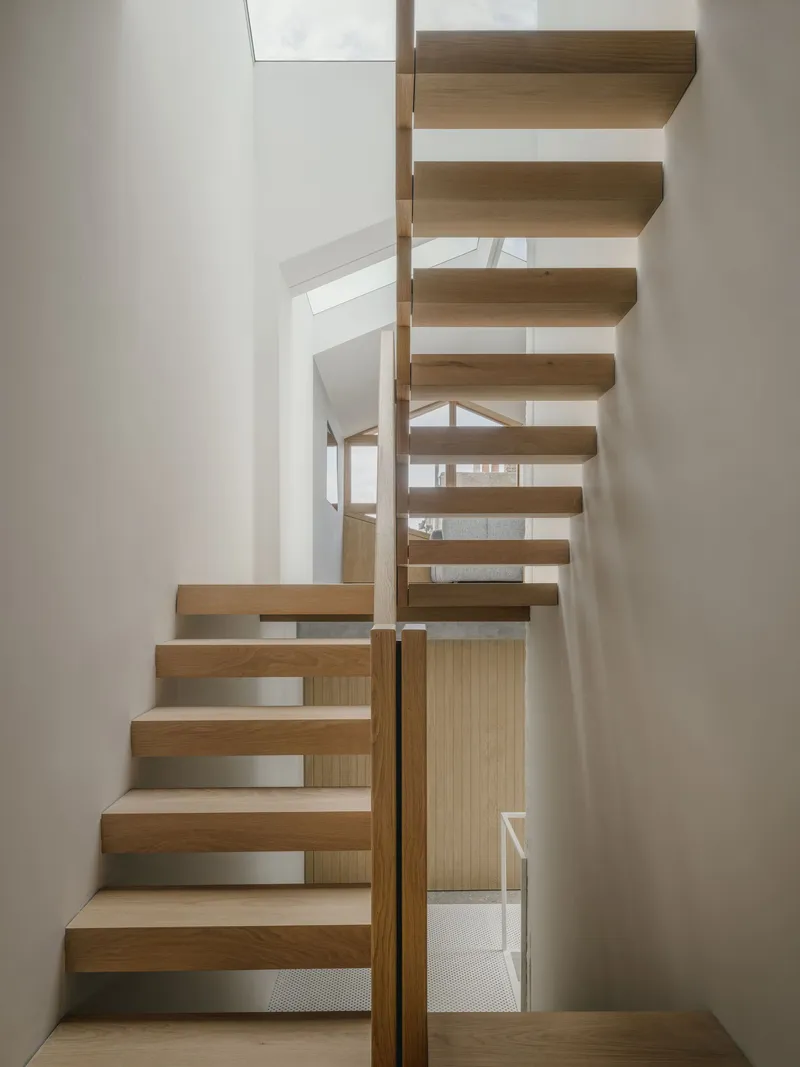
ConForm treats the staircase not as circulation infrastructure but as the house's sculptural spine. Cantilevered oak treads with open risers spiral upward beside the painted brick wall, and a linear skylight runs directly above, washing each landing in a column of daylight. The effect is somewhere between a lightwell and a piece of furniture. Vertical slat balustrades filter the light further, producing the layered shadows that recur throughout the project.

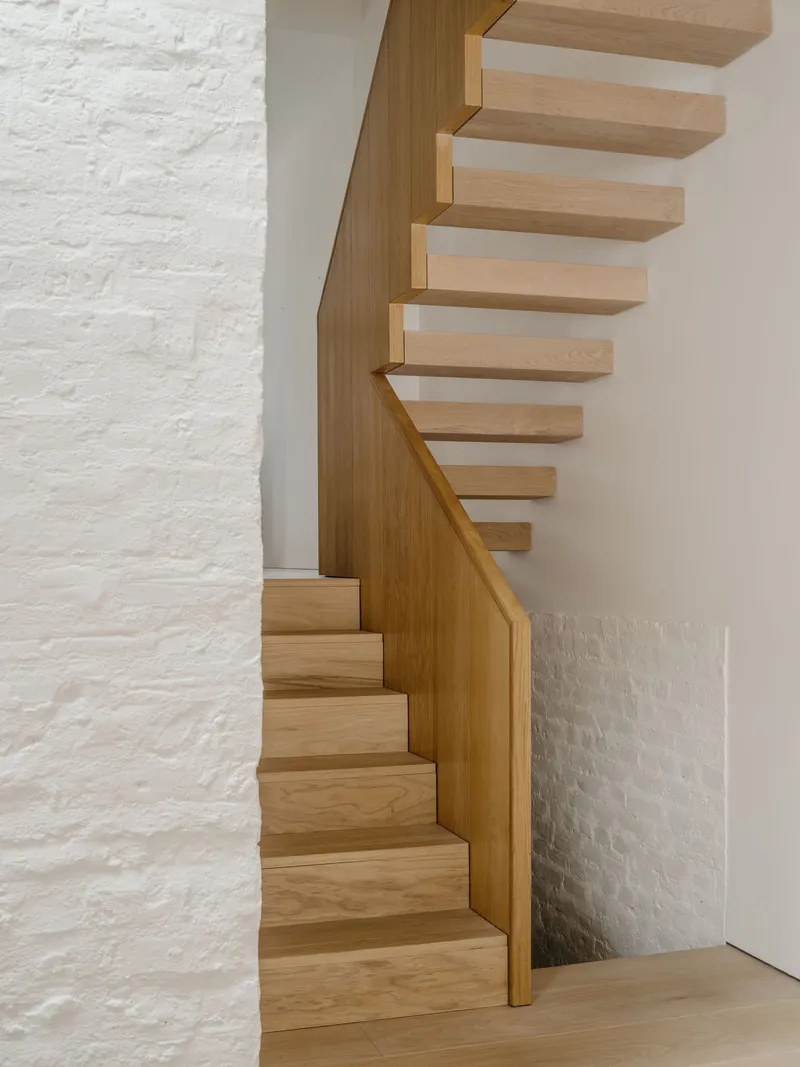
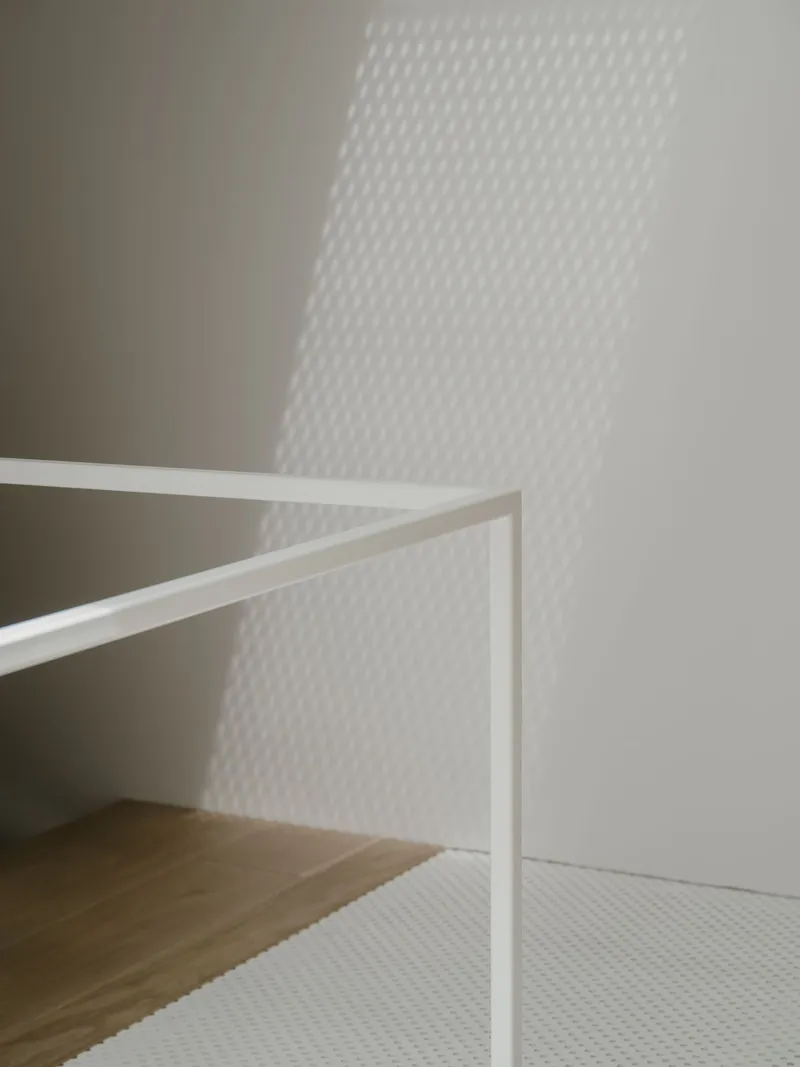
The detailing rewards close attention. Where the timber treads meet the white brick, there is a deliberate gap that lets you read each material as independent. The mesh railing casts textured shadows onto adjacent walls in the afternoon, a secondary pattern that changes with the time of day. These are not incidental effects; they are designed.
Kitchen and Living: Calibrated Warmth

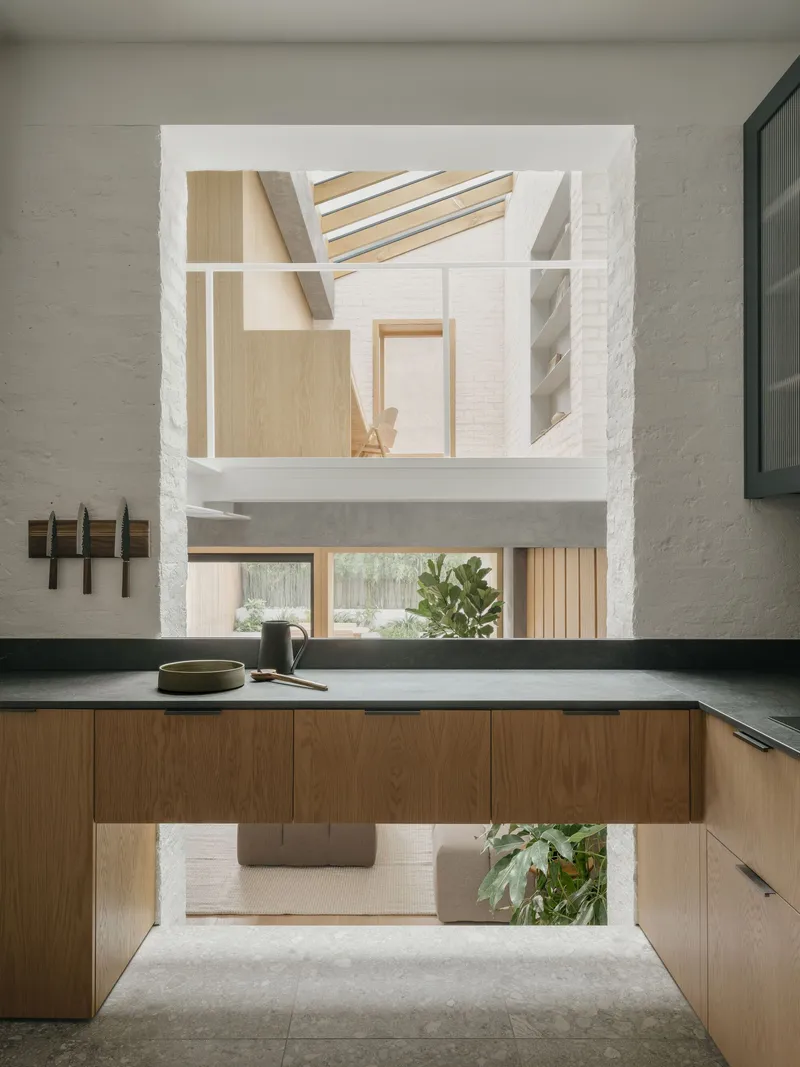

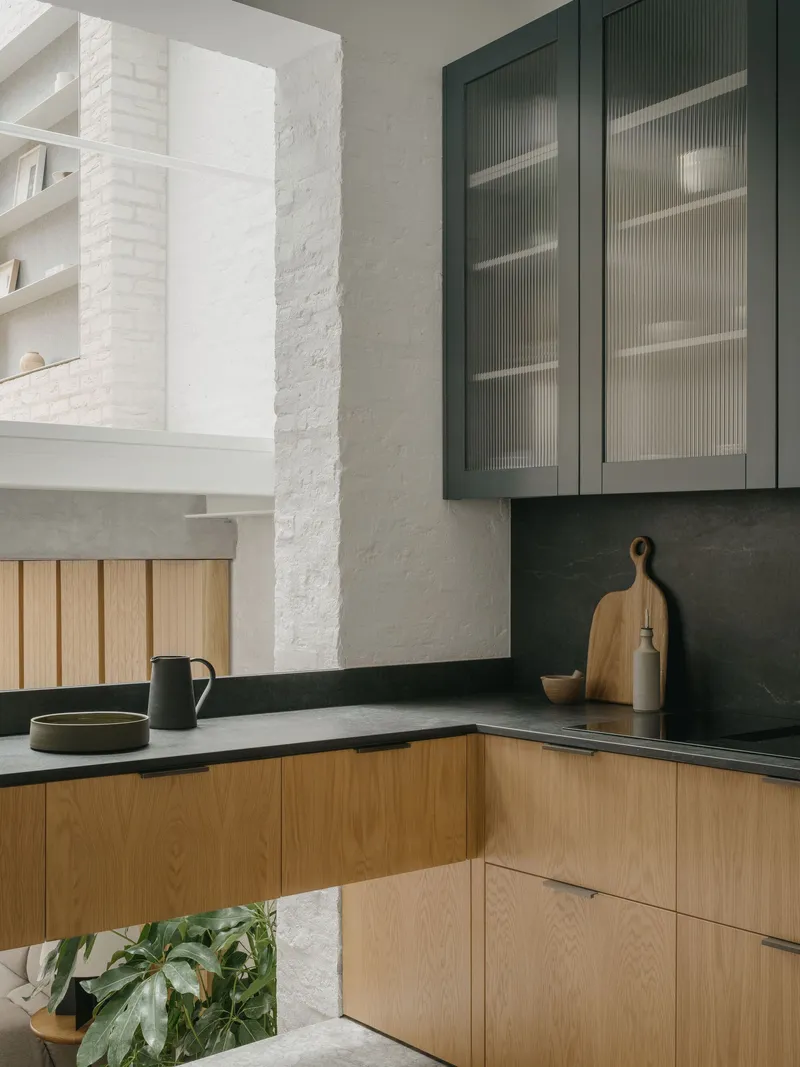
The kitchen occupies the junction between the courtyard and the double-height void, giving it two entirely different characters depending on which way you face. Toward the courtyard, light oak lower cabinets and a dark stone countertop frame views of bamboo and timber fencing. Toward the void, a vertical slot opening reveals the upper level, connecting the cooking zone to the broader spatial narrative of the house.

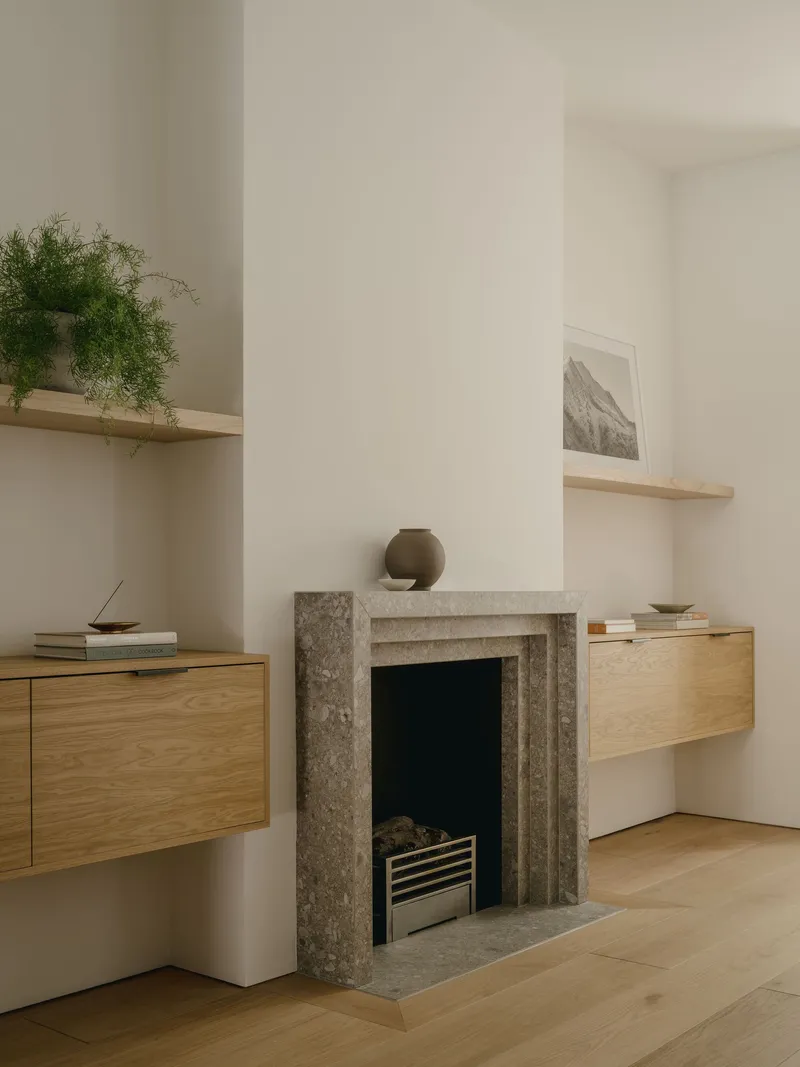

The material palette throughout the living spaces is disciplined: limestone fireplace surrounds, floating oak shelves, grey upholstery, ceramic vessels. Nothing competes. The warmth comes from the timber and the quality of light, not from decorative excess. Louvered shutters on the dining-side glazing add yet another layer of light control, reinforcing the house's central preoccupation with how illumination arrives.
Upper Rooms and Private Retreats

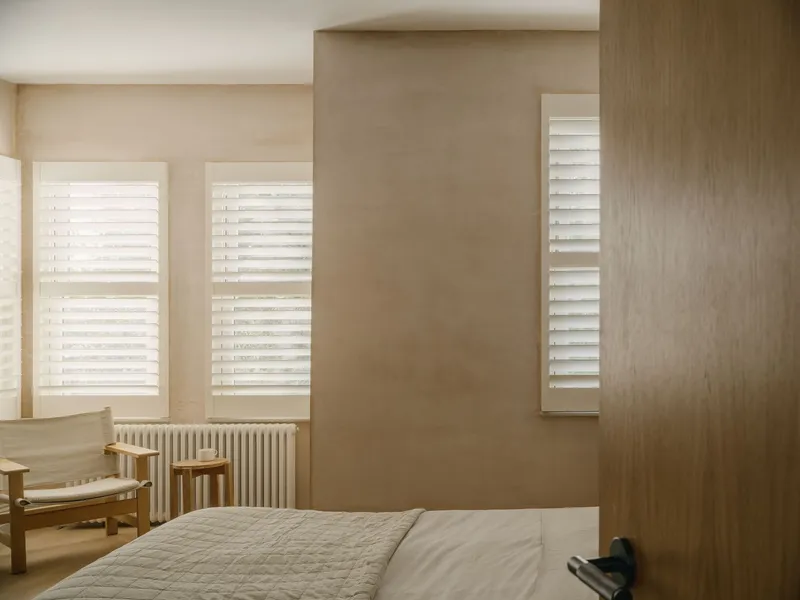
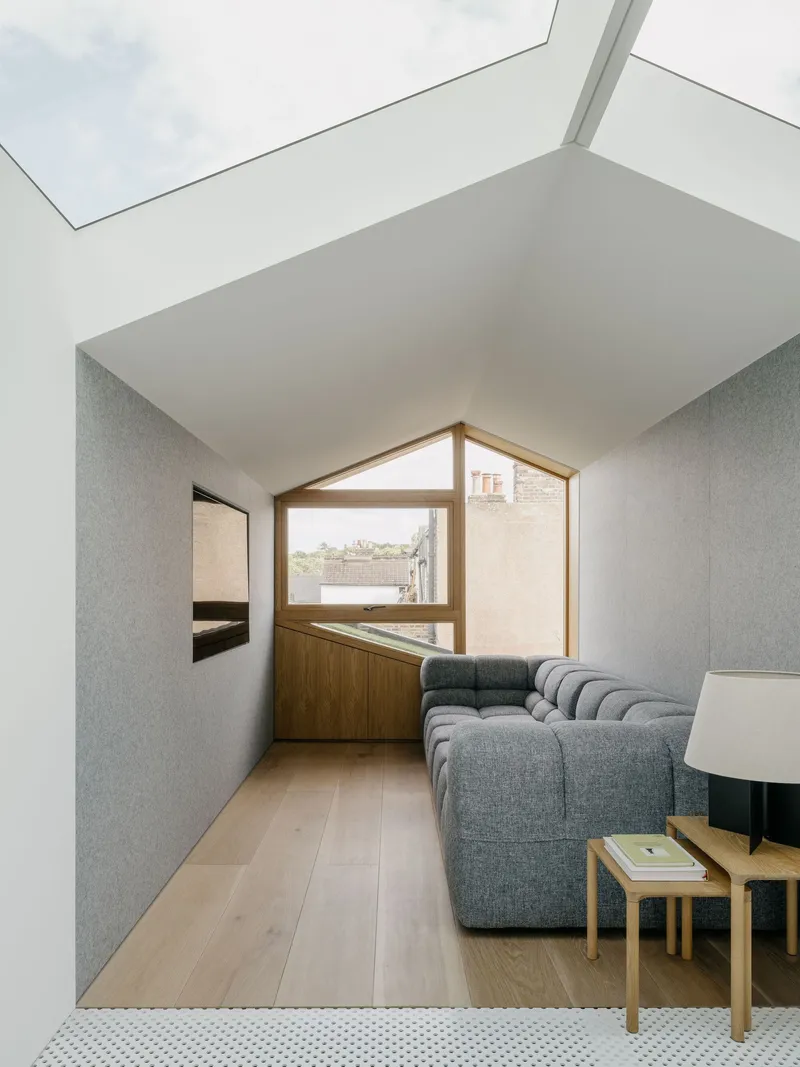
The bedrooms upstairs are quieter compositions. Oak cabinetry runs below large timber-framed windows that look out over rooftops and trees, placing each room firmly in the Dulwich streetscape. Plywood wall panels and horizontal louvre blinds give the rooms a calm, almost Scandinavian restraint. The gabled window in the upper living room frames the neighbourhood like a picture, a deliberate reminder that this house belongs to a terrace, not an isolated plot.
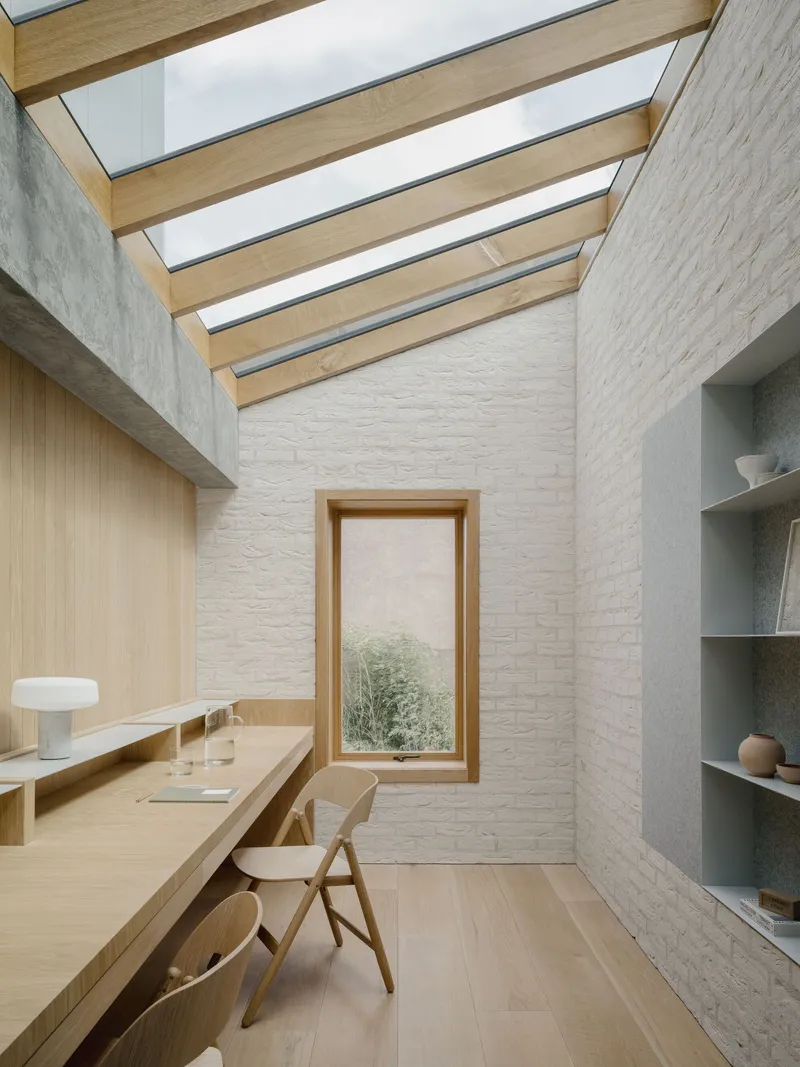
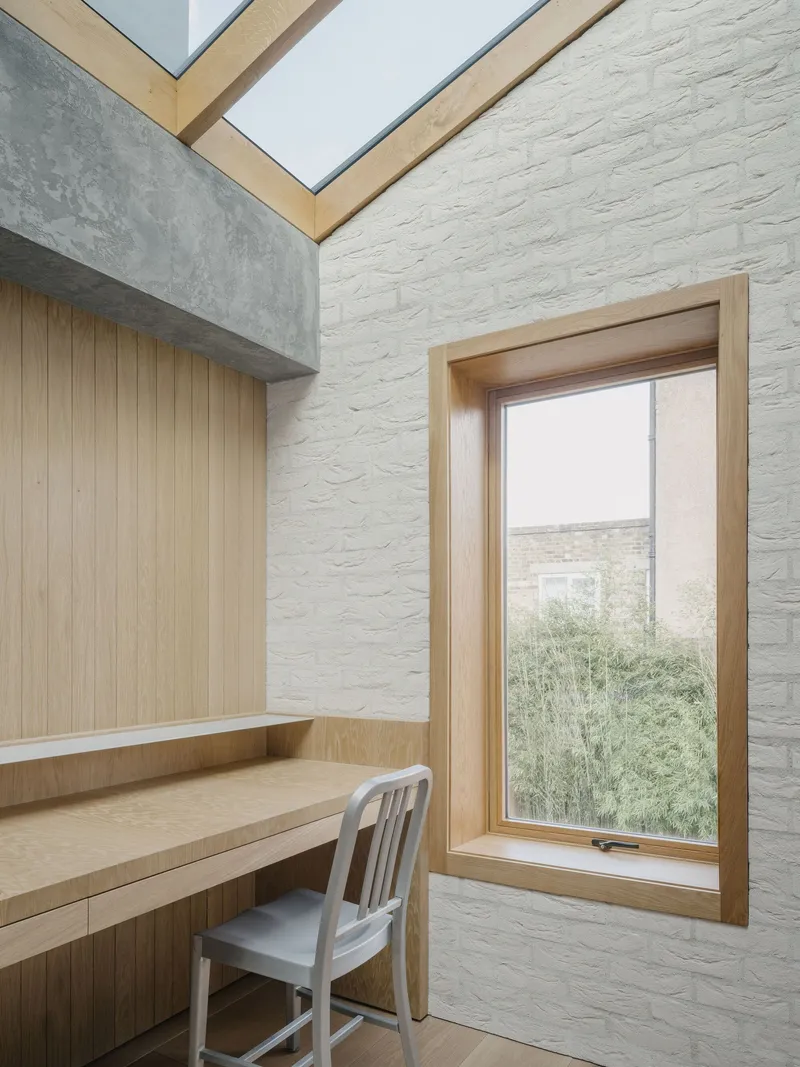

Study nooks and built-in desks are tucked into leftover geometries: a painted brick wall beneath an angled skylight, a timber beam with strips of glass overhead. These moments suggest that ConForm designed the house around how the family actually works and studies, not around an idealized open-plan fantasy. Every corner has purpose.
Material and Detail
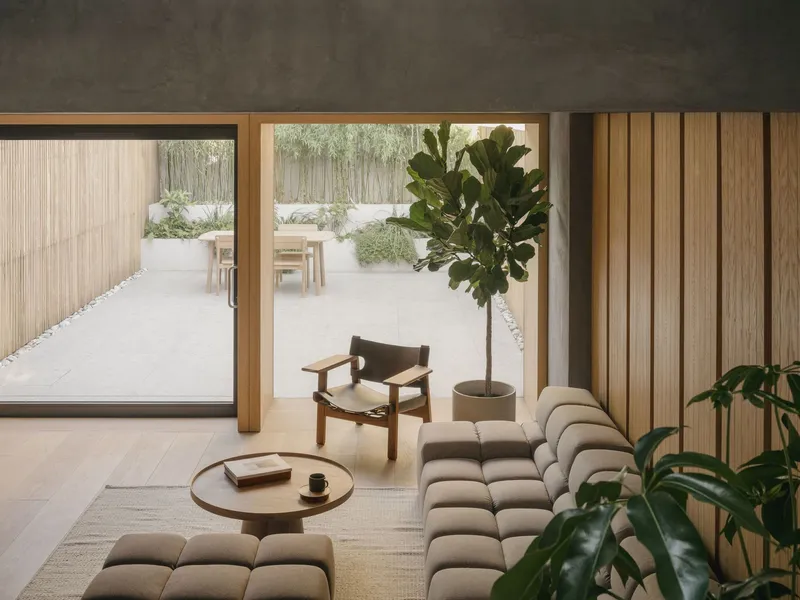
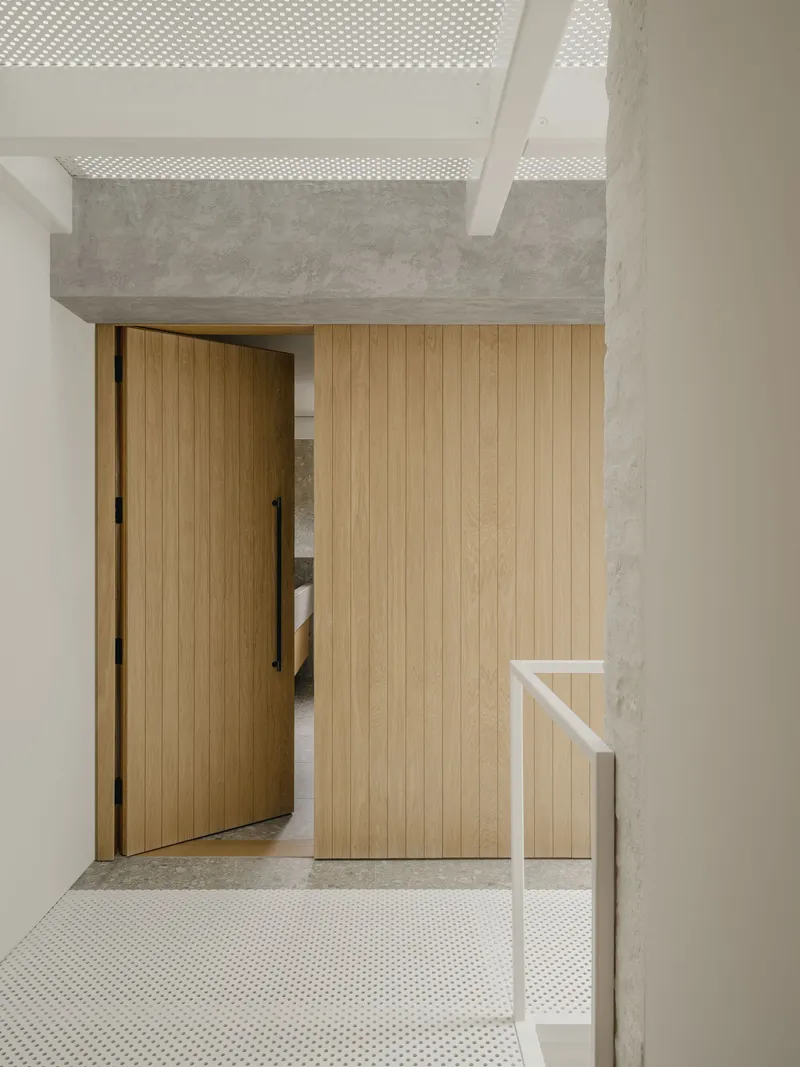
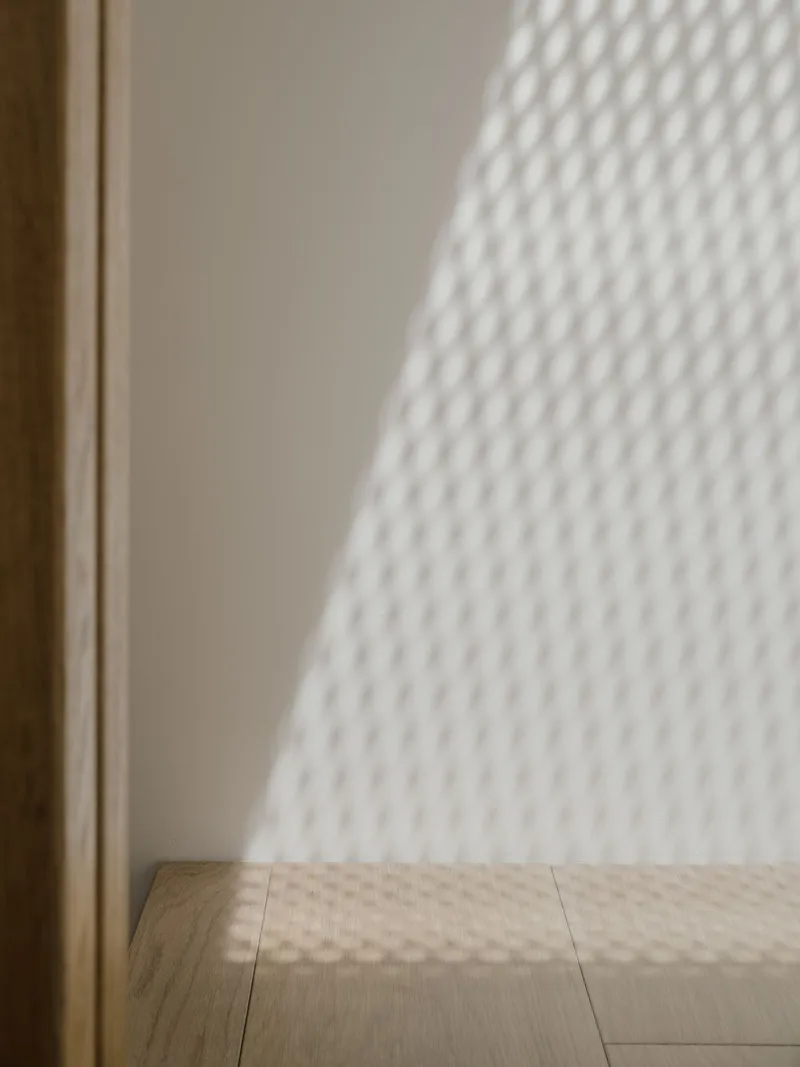
Fluted timber wall panels, slatted screens, and perforated concrete beams recur throughout the house, creating a consistent language of partial transparency. Each element does the same thing at a different scale: it lets light through while maintaining enclosure. The effect is cumulative. By the time you have moved through three or four rooms, the house's character is unmistakable.

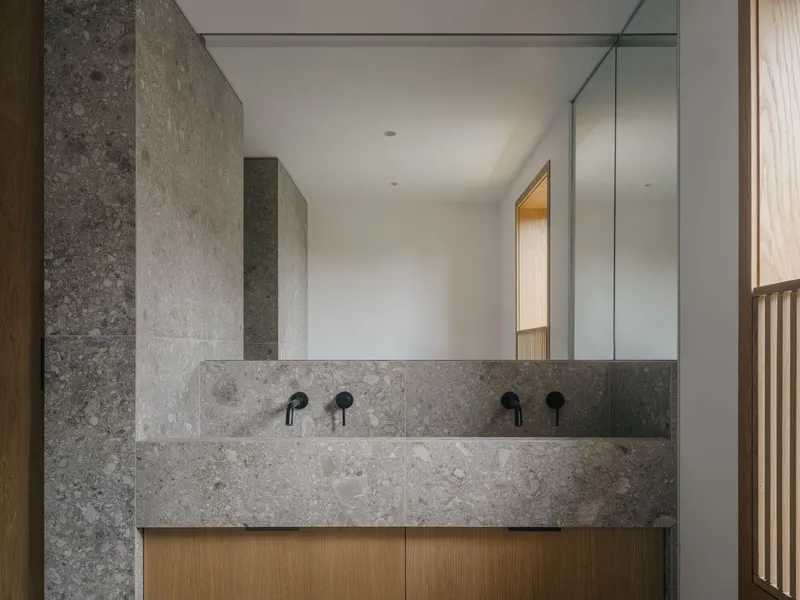

The bathrooms continue this discipline. Dark and light stone tiles frame timber screens, grey limestone vanities sit beneath full-width mirrors, and daylight arrives through carefully positioned windows. There is no sudden shift in quality between the public and private rooms. The same attention to materiality and light extends into every corner, which is rarer than it should be.
Plans and Drawings


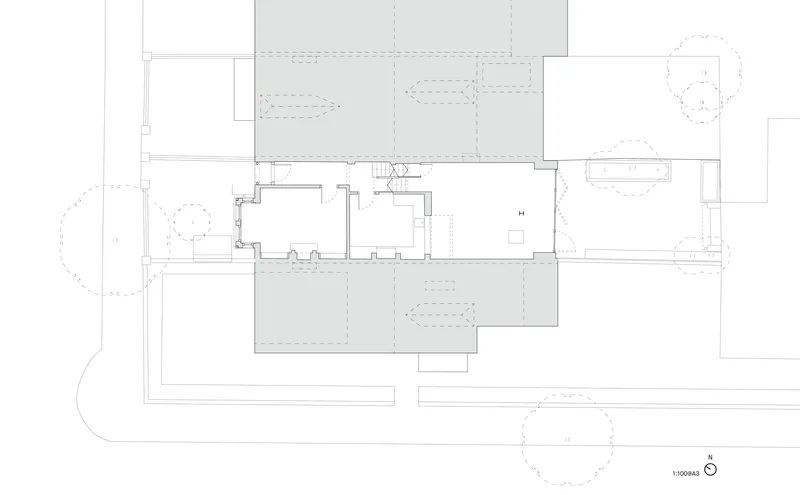


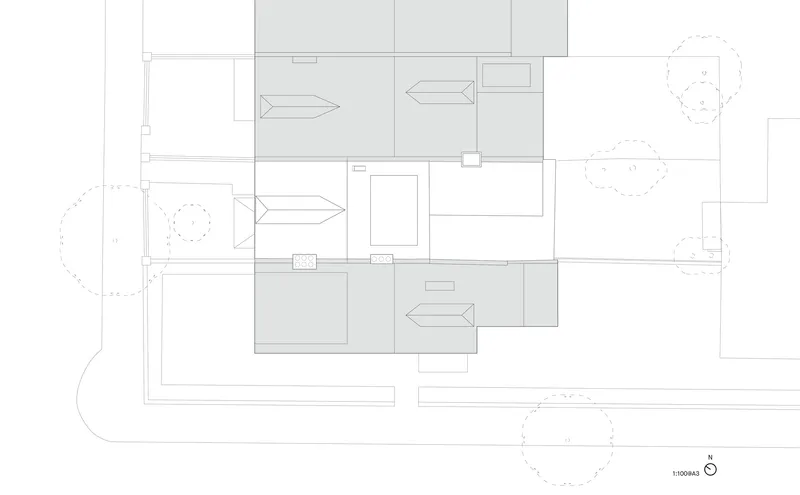

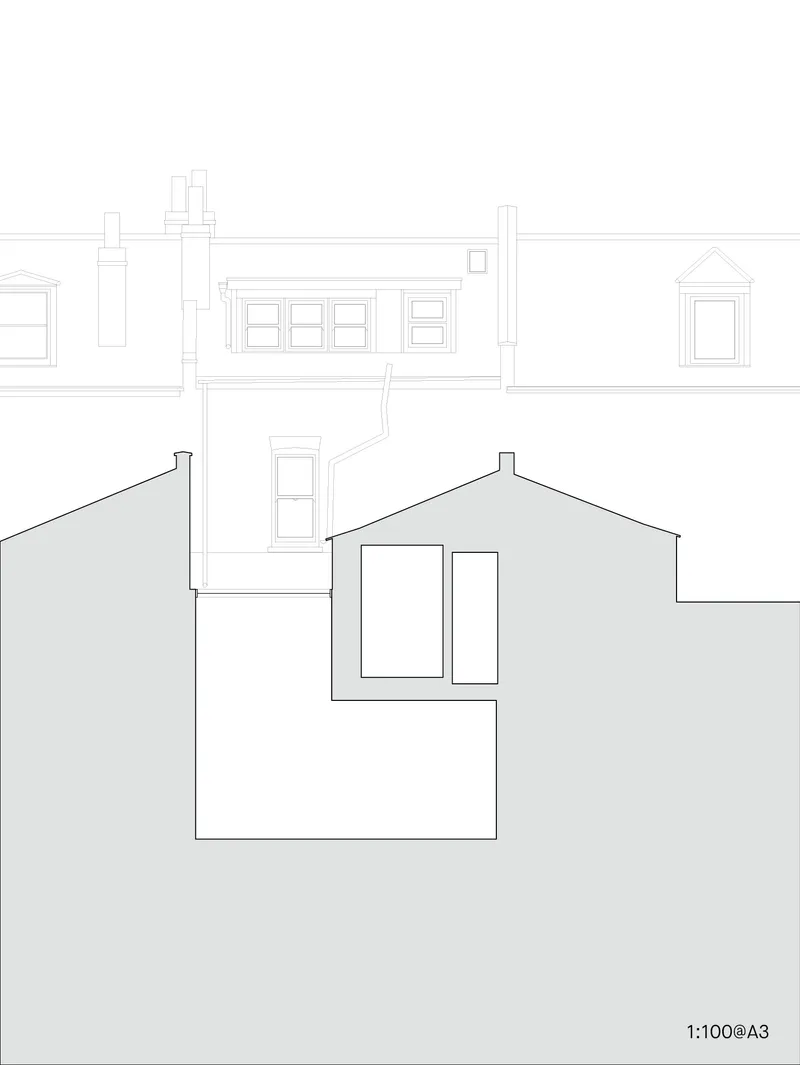
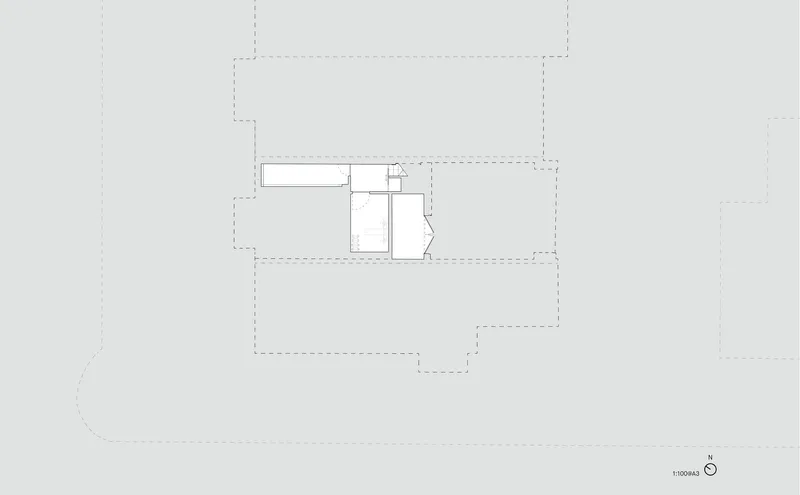

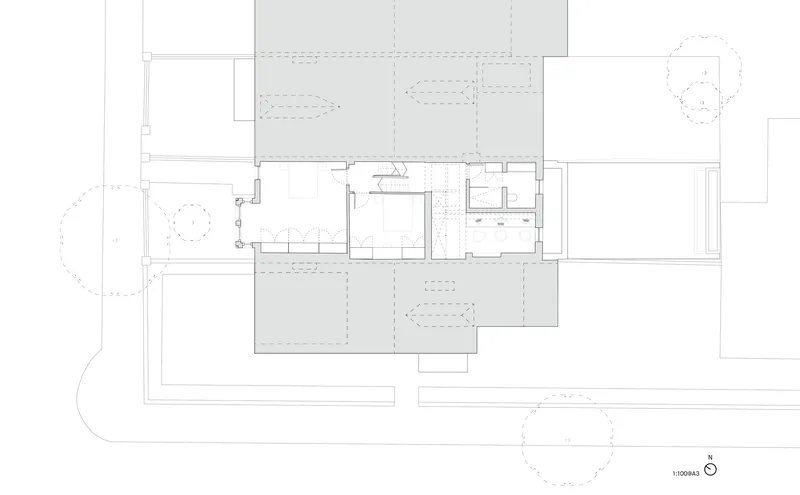
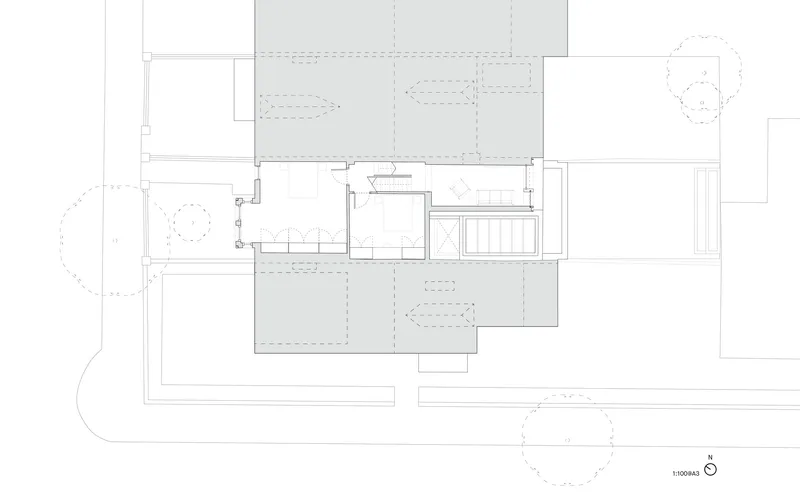
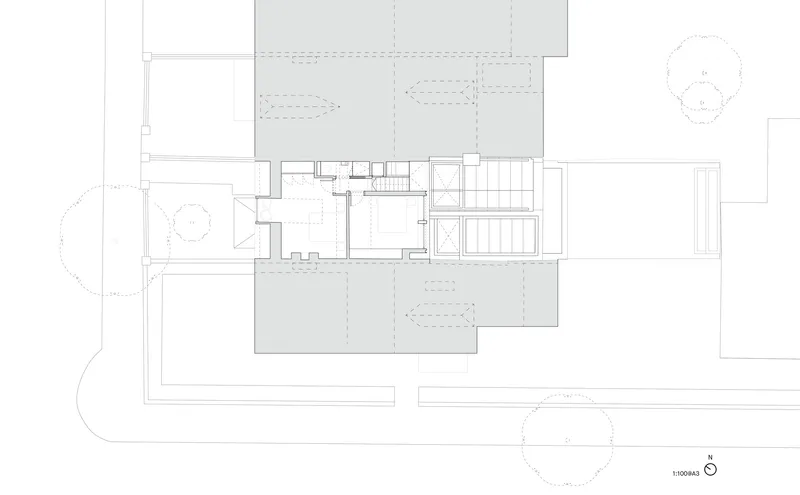
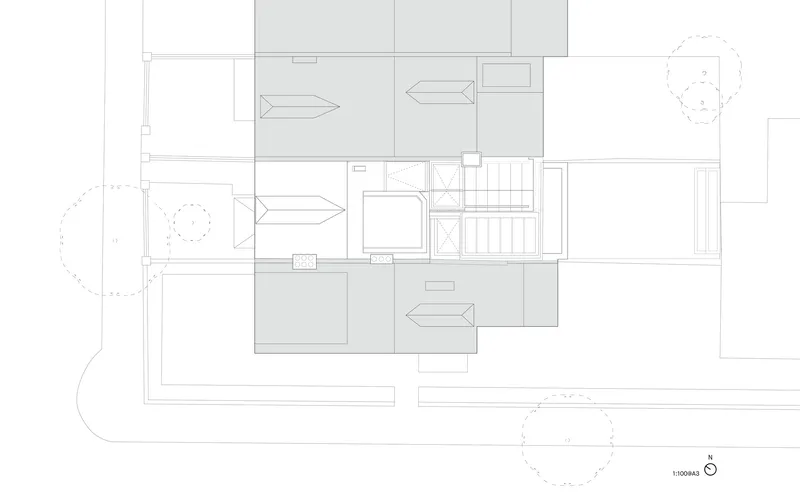
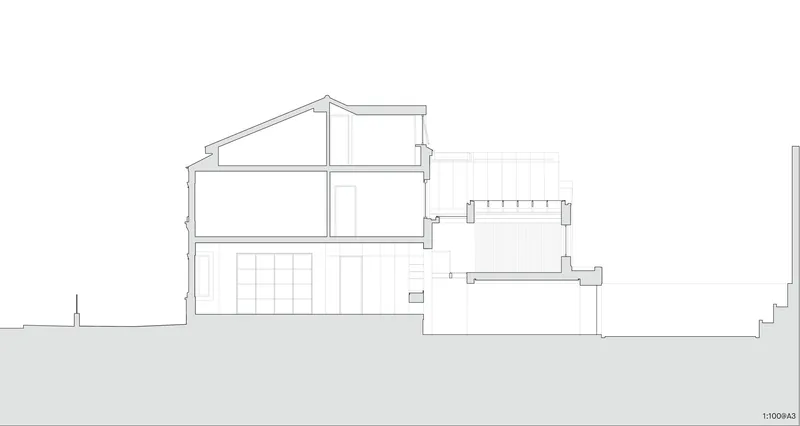
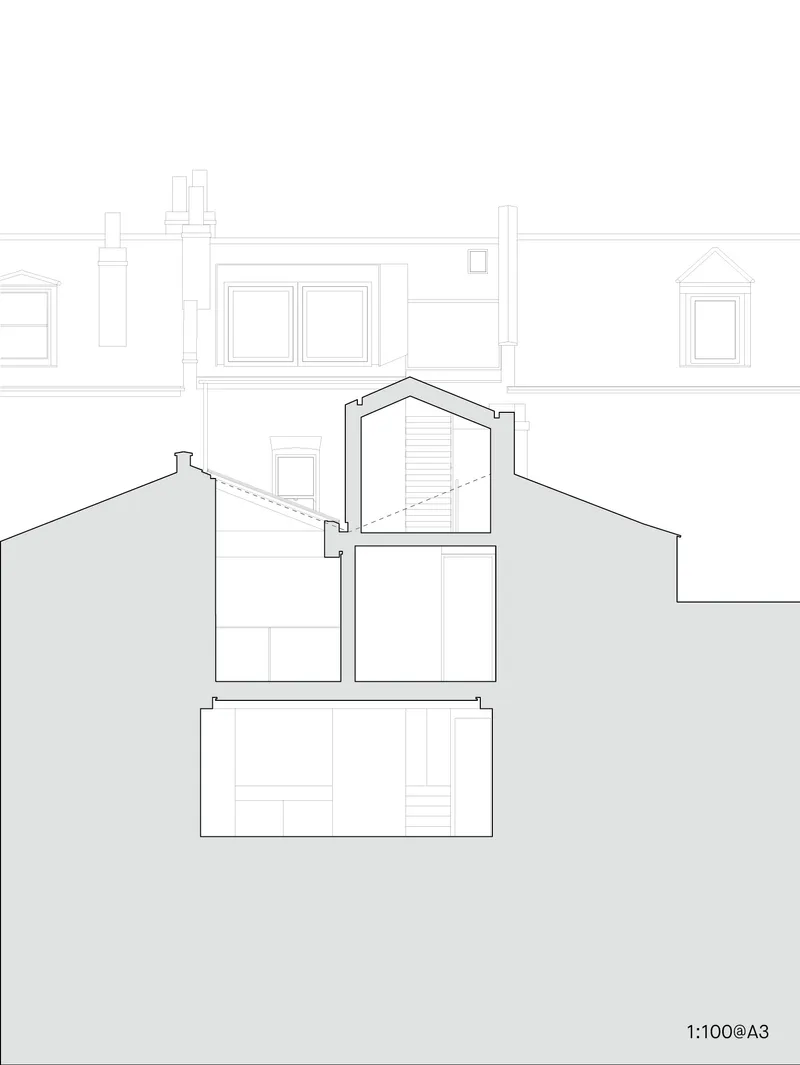
The drawings reveal the project's complexity beneath its composed surfaces. The site plan shows the house locked into a tight terrace row, with the courtyard insertion clearly legible as a subtraction from the deep plan. Floor plans at each level demonstrate how the staircase core and double-height void organize circulation, while the sections are the most telling documents: they show three stories of interconnected volumes, a pitched roof gable rising between party walls, and the single-story rear extension that houses the courtyard-facing kitchen. The skylight placements visible in the roof plan confirm that every major space receives zenithal light, not as an afterthought but as a founding principle.
Why This Project Matters
London's terraced housing stock is being renovated at an extraordinary rate, and too often the approach defaults to the same formula: strip the rear wall, bolt on a glass extension, install an island kitchen, and call it contemporary living. The Komorebi house demonstrates that there is a more nuanced path. By working with the existing section, introducing light through subtraction rather than addition, and treating every threshold as an opportunity for spatial richness, ConForm has produced a house that feels inventive without being exhibitionist.
The project's real lesson is about atmosphere. Filtered light, layered views, and the constant presence of the courtyard give the house a quality that transcends its modest footprint. It suggests that the most valuable renovation strategy for the British terrace is not to make it bigger but to make it deeper, in the sectional, experiential sense. That is a proposition worth taking seriously.
Komorebi Family Home by ConForm, located in Dulwich, United Kingdom. Completed in 2025 with a total area of 215 m². Photography by James Retief.
About the Studio
Share Your Own Work on uni.xyz
If projects like this are the kind of work you want to make, uni.xyz is a place to publish your own, find collaborators, and enter design competitions.


Popular Articles
Popular articles from the community


Little Red Riding Hood: Architectural Design as a Journey Through Fear, Light, and Storytelling
Little Red Riding Hood reimagines the fairy tale through architectural design shaped by fear, light, scale, memory, uncertainty, and choice.

Conexión: Biophilic Design Reimagines High-Rise Living in Hong Kong
Conexión reimagines high-rise living in Hong Kong through biophilic design, green facades, shared spaces, daylight, water and nature within.

Co-life: Sustainable Architecture for Age-Friendly Community Living
Co-life reimagines sustainable architecture for seniors through courtyards, rammed earth, shared gardens, and spaces designed for belonging.

Play: Fragments of Their World
Familiar architecture becomes modular playground design, creating safe spaces where displaced children can learn, connect, imagine and play.

Similar Reads
You might also enjoy these articles

Bao Huynh Watercolor Atelier: A Serene Art Retreat in Hội An
Bao Huynh Watercolor Atelier in Hội An blends multifunctional art spaces, sustainable design, local materials, and family-friendly living in a serene environment.

Atelier Macri Concept Store Interior Design by CASE-REAL
Atelier Macri store features a "ko" counter, walnut wood details, cork displays, blending retail, gallery, and seamless customer experiences.

Manuel Vargas Izquierdo Stadium and High-Performance Sports Center: Architectural Excellence in Jalpa de Méndez
The Manuel Vargas Izquierdo Stadium blends sustainable design, inclusive sports facilities, and cultural-inspired architecture, revitalizing Jalpa de Méndez’s public spaces.

KAKR Buluh Awar Hall: Revitalizing Community and Ecology Through Bamboo Architecture
Community built bamboo hall revitalizes Buluh Awar village, empowering youth, restoring ecology, celebrating vernacular craftsmanship through sustainable architecture and culture.

Explore Kinetic Façade Competitions
Discover active competitions in this discipline

Challenge to design mud housing for contemporary communities

Challenge to design luxury tourism on rails

VR headsets Storefront design competition

Designing a staircase for a client
Comments (0)
Please login or sign up to add comments
No comments yet. Be the first to comment!