

Kresge College Expansion: A Pioneering Model of Mass Timber University Architecture by Studio Gang
Studio Gang’s Kresge College expansion redefines mass timber university architecture through sustainable design, participatory planning, and ecological integration.


Redefining Academic Living Through Sustainable Innovation
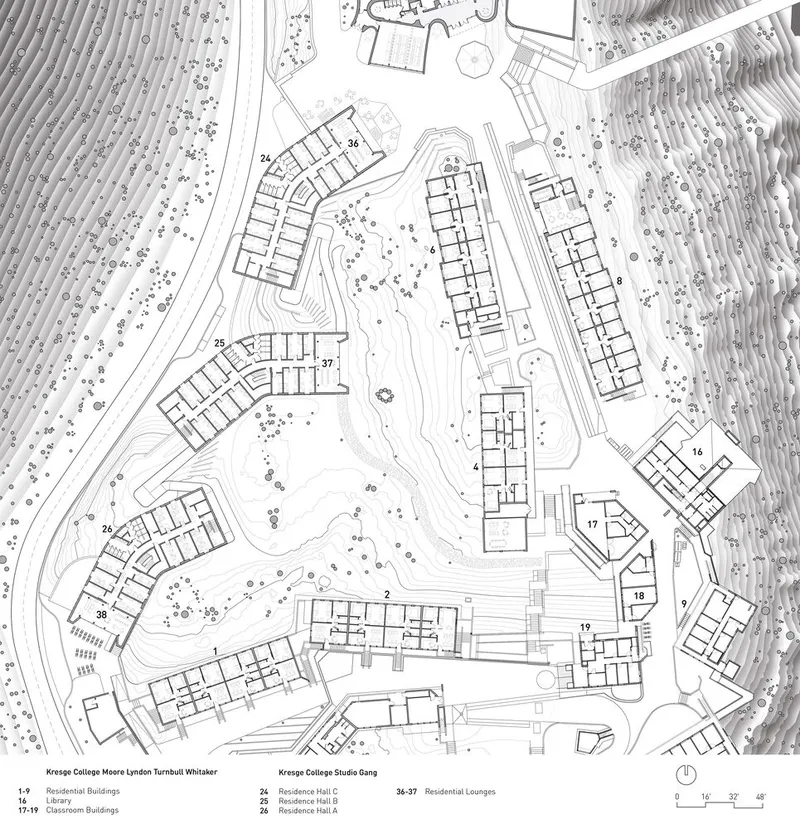
Studio Gang’s transformative expansion of Kresge College at the University of California, Santa Cruz, marks a defining moment in mass timber university architecture. Completed in 2023, the project introduces four new buildings that include three cross-laminated timber (CLT) residential halls and a 37,000-square-foot Academic Center. Nestled within the lush redwood landscape of UCSC, the expansion not only responds to a growing demand for student housing but also upholds the College's founding ethos of participatory democracy and ecological stewardship.


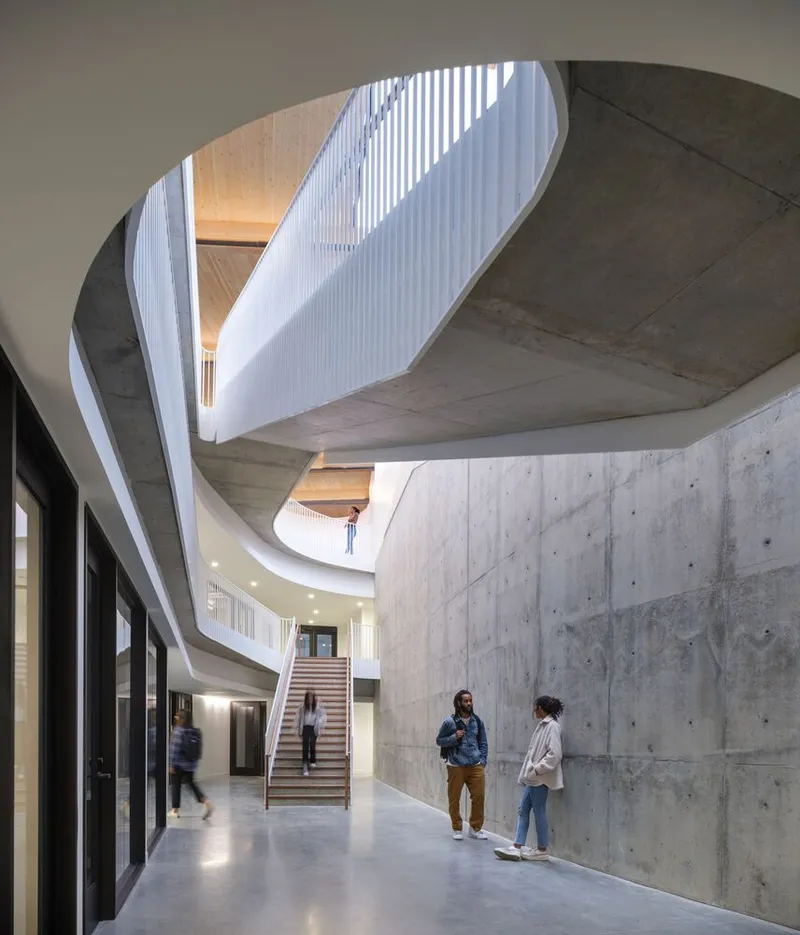
Continuity and Evolution of Campus Identity
First envisioned in 1973 by Moore, Lyndon, Turnbull, and Whitaker, Kresge College’s original architecture was grounded in angular, communal forms embedded within nature. Studio Gang’s contemporary intervention does not replicate the past but rather builds upon it through organic design strategies, such as curvilinear forms, porous spaces, and natural materials. These gestures foster a sense of place that is both familiar and novel, respecting legacy while inviting new modes of interaction and accessibility.
Innovative Use of Mass Timber in Academic Architecture
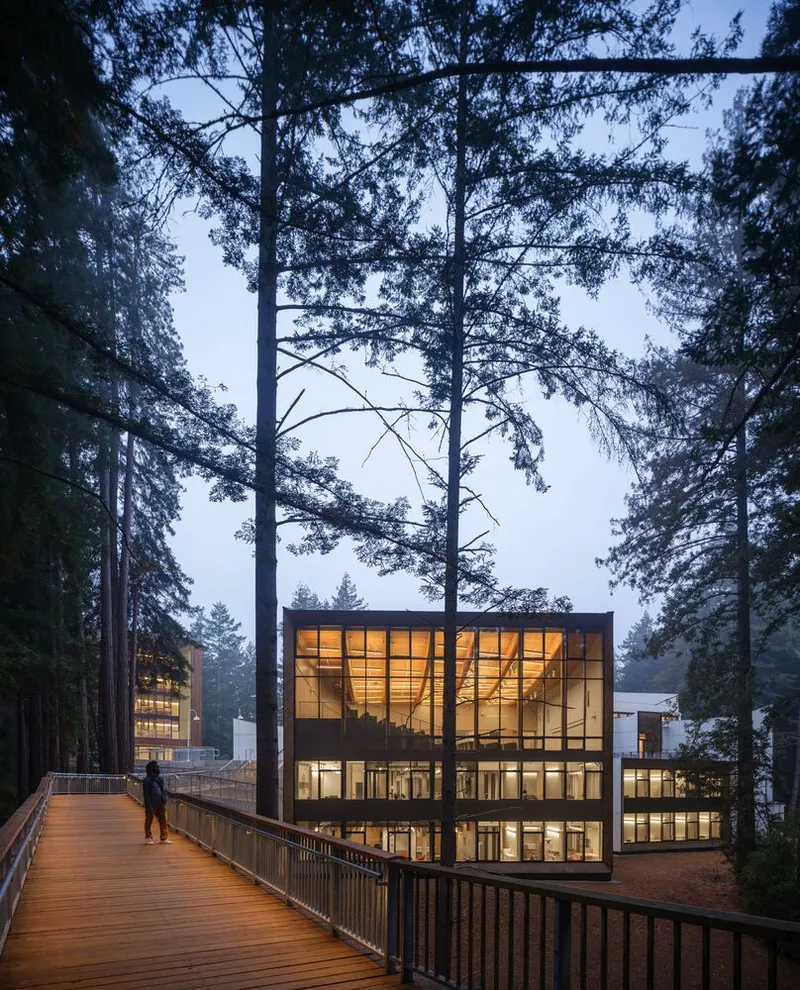
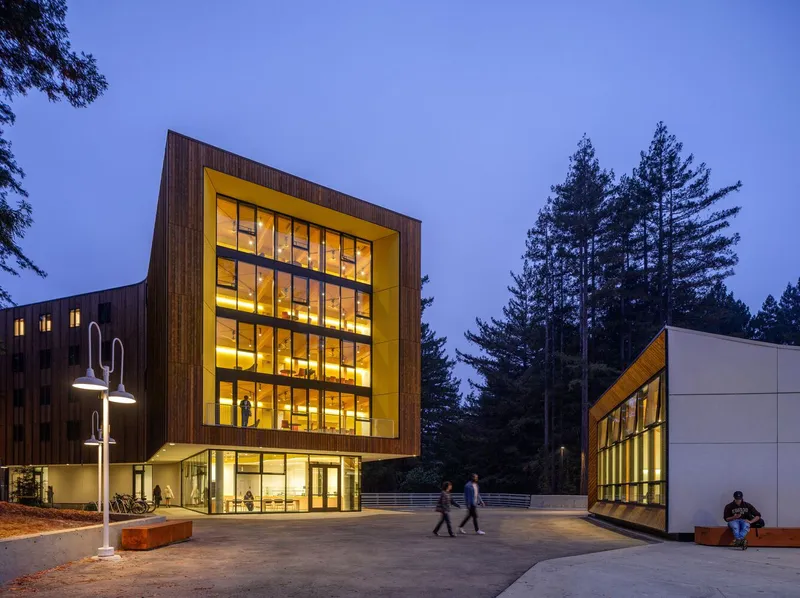
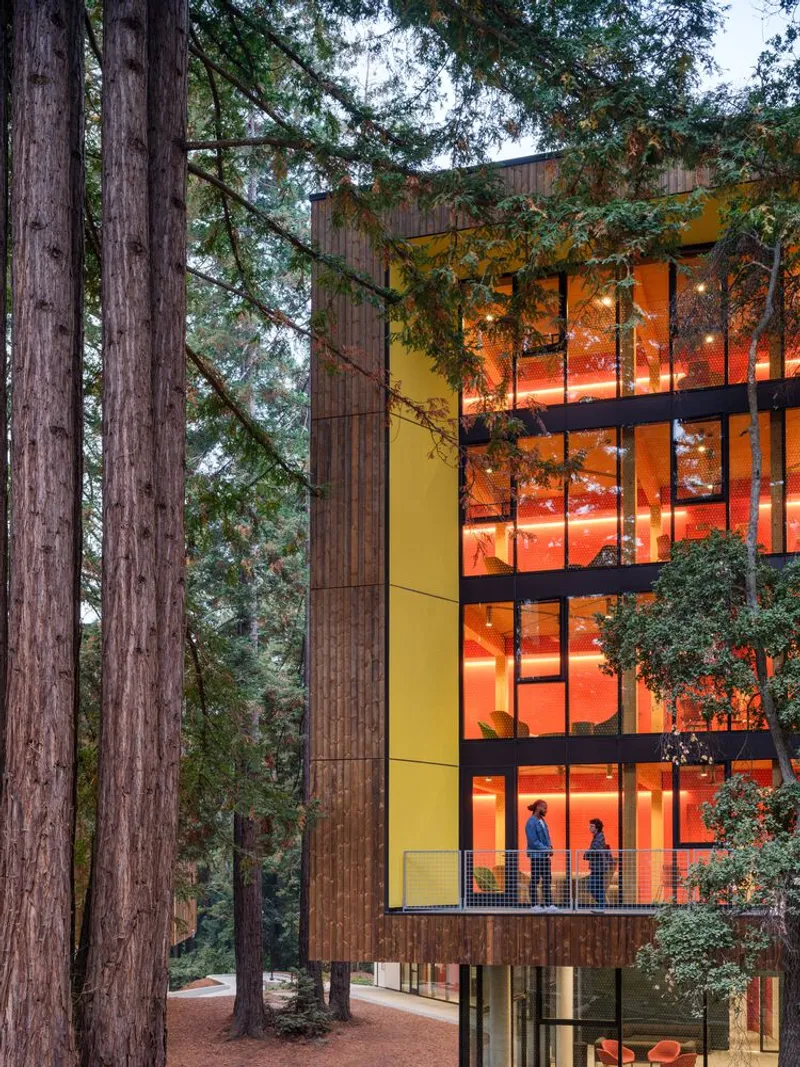
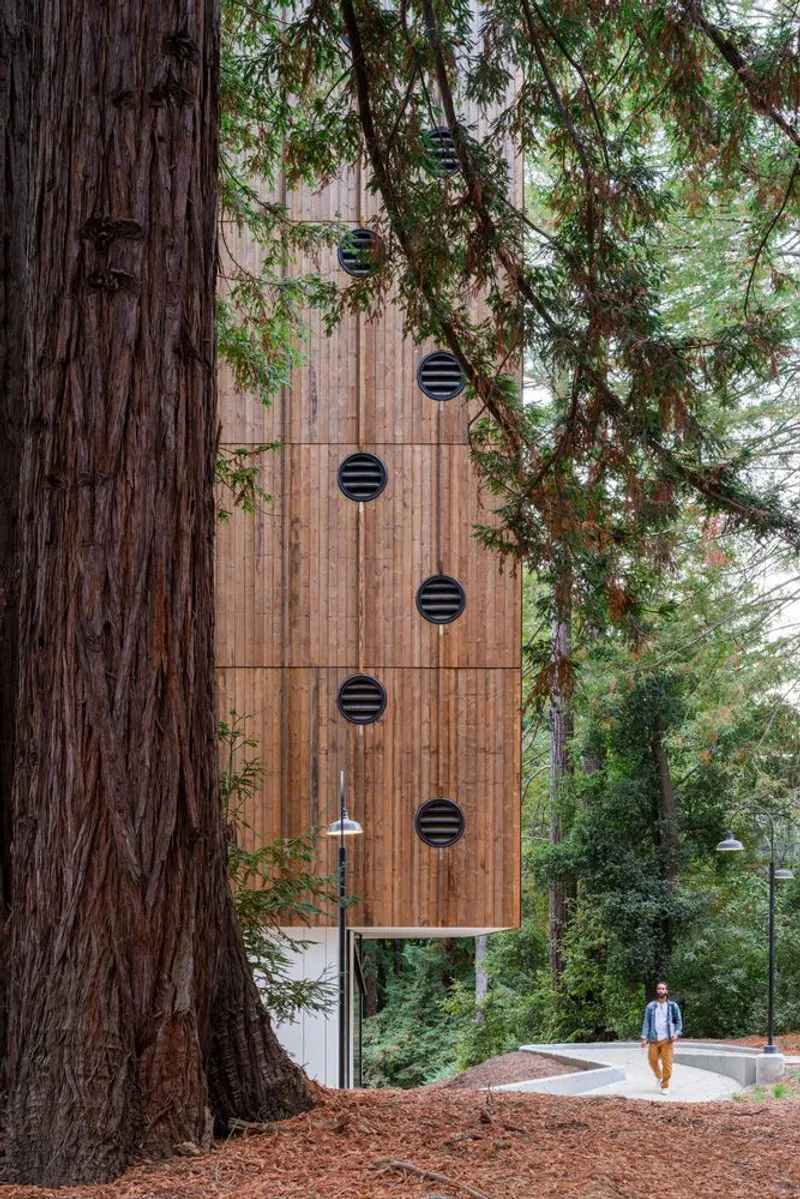
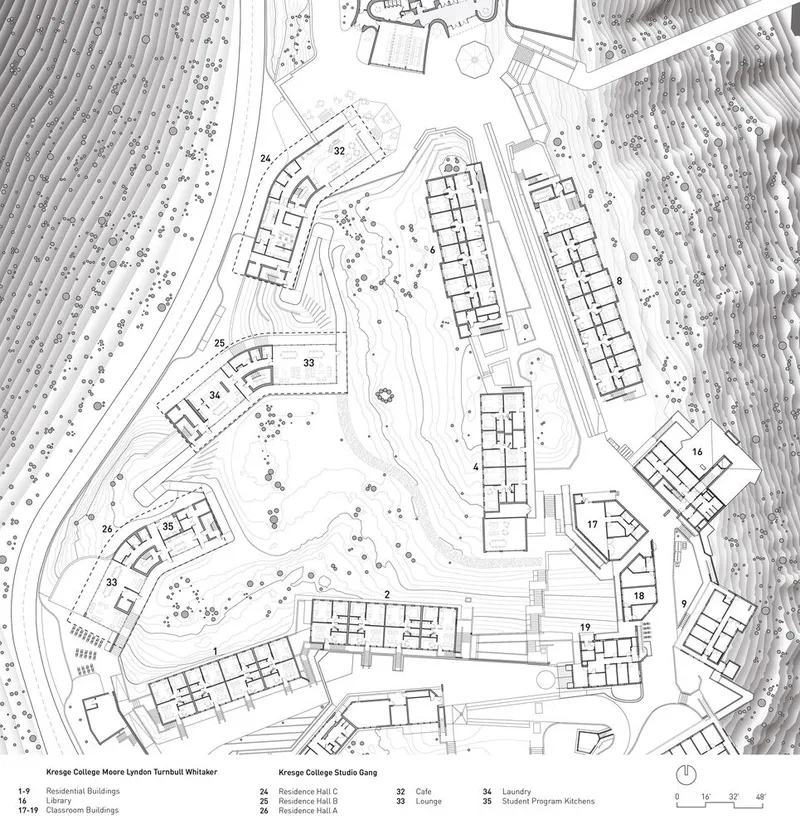
At the core of the project is the use of mass timber, making Kresge one of the first examples of CLT buildings in California’s higher education system. The residential halls, designed to house over 400 students, bend around old-growth trees and embed themselves in the sloping topography to minimize ecological disruption. Bird-safe glass with custom fritting depicts local species, including the iconic banana slug, blending biodiversity with thoughtful materiality.
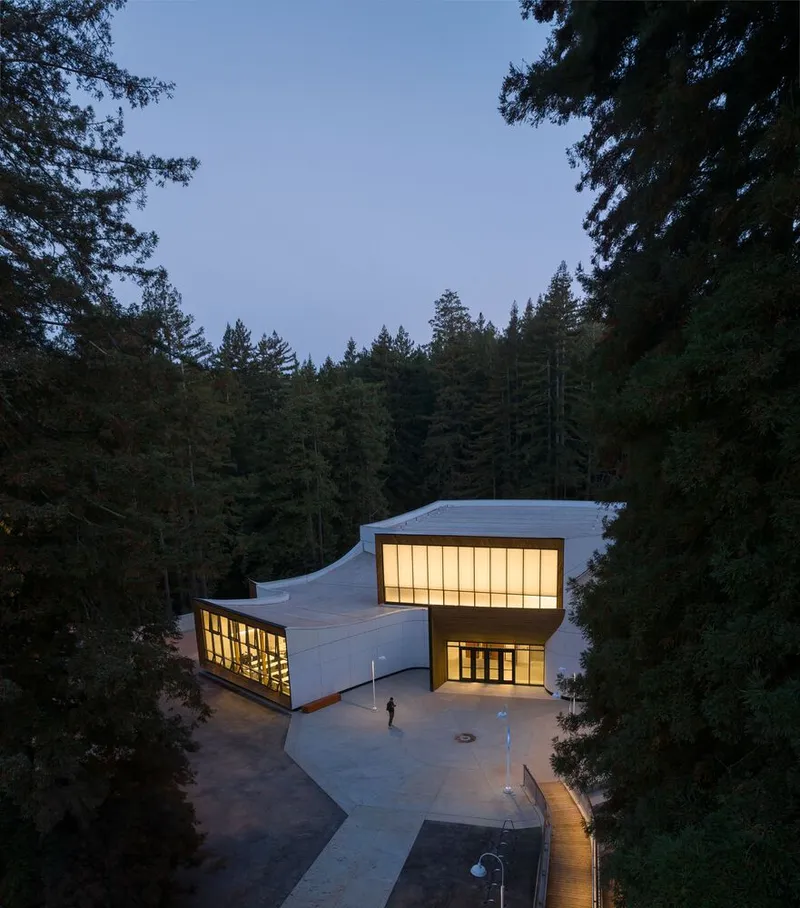
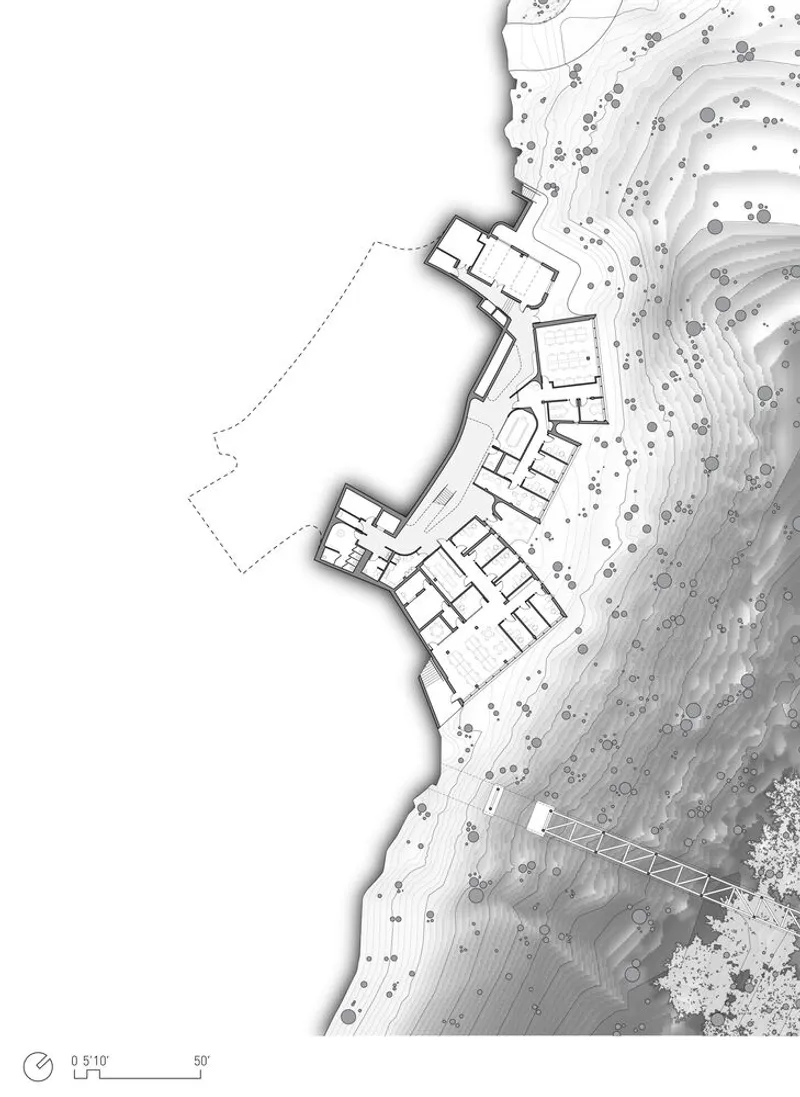
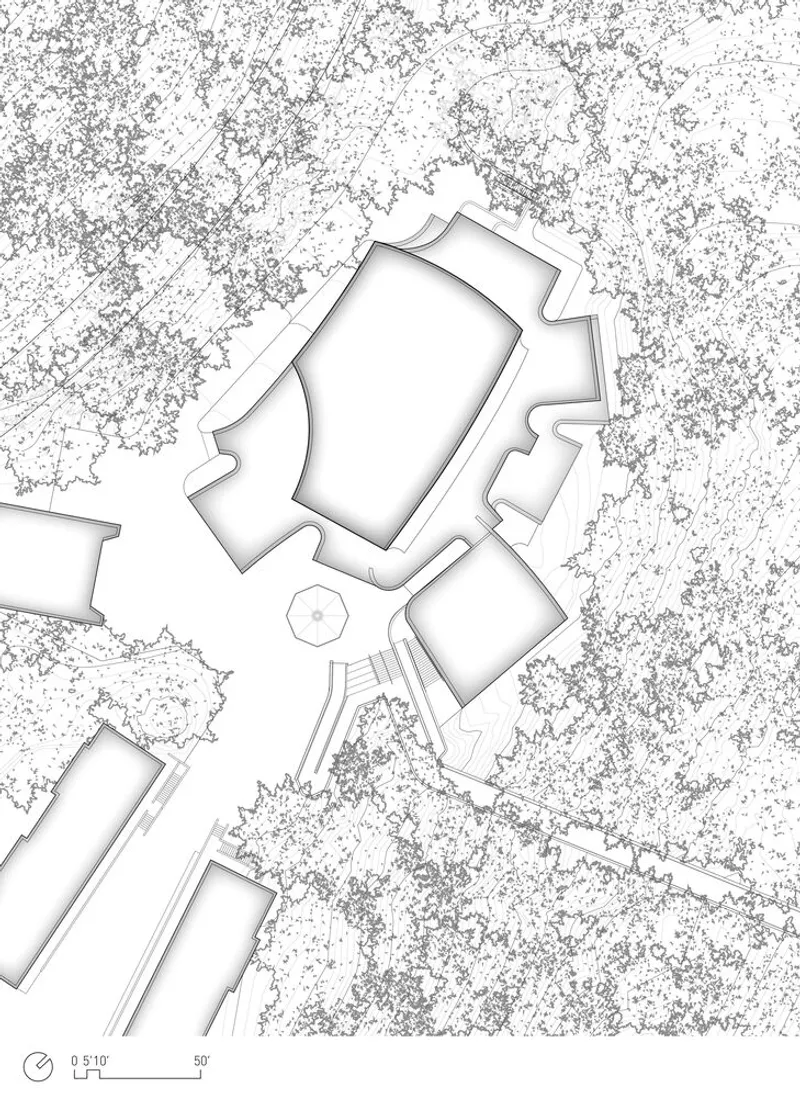
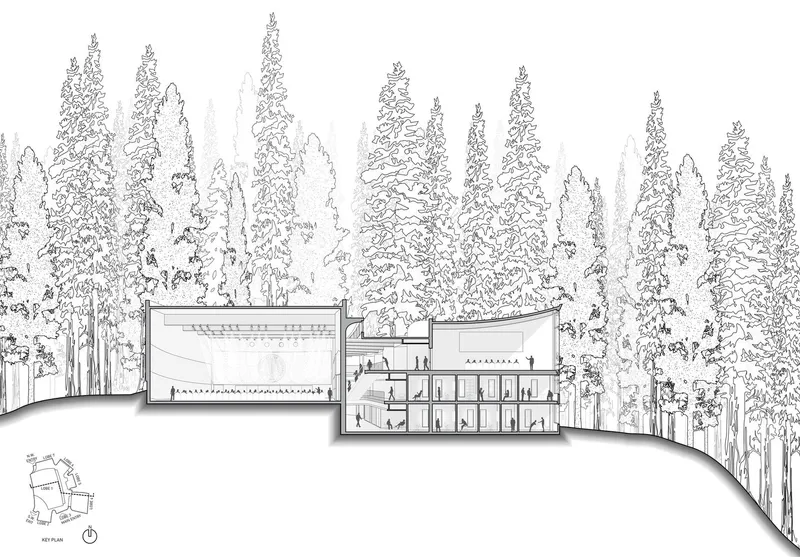
The academic center, which steps and flares like polypore fungi across a ridgeline, introduces UCSC’s largest lecture hall — a 600-seat amphitheater designed to embrace both slope and sunlight. With integrated academic offices, faculty meeting rooms, and study lounges, the center acts as a connective and intellectual anchor for the campus.


Accessibility, Ecology, and Community Integration
Studio Gang’s intervention goes beyond architectural form — it actively restores ecological flows and increases social accessibility. The expansion revitalizes Kresge’s historic runnel system to filter and reuse stormwater, reestablishes wheelchair accessibility across previously inaccessible ravines, and rebuilds bridges to reconnect the college to UCSC’s broader pedestrian network.
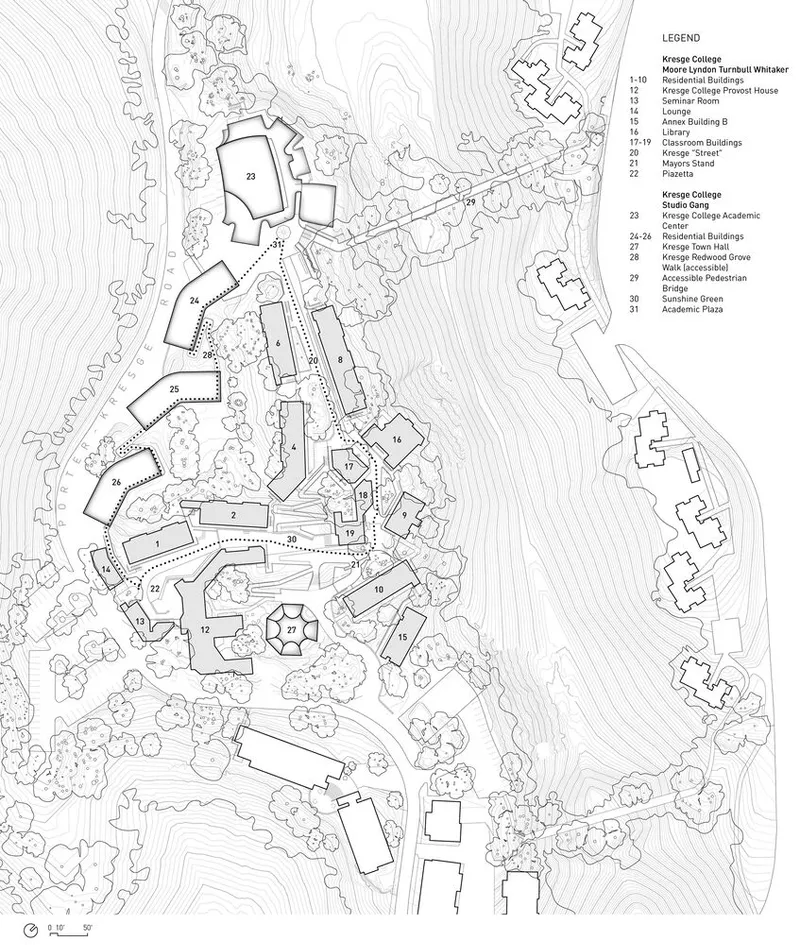
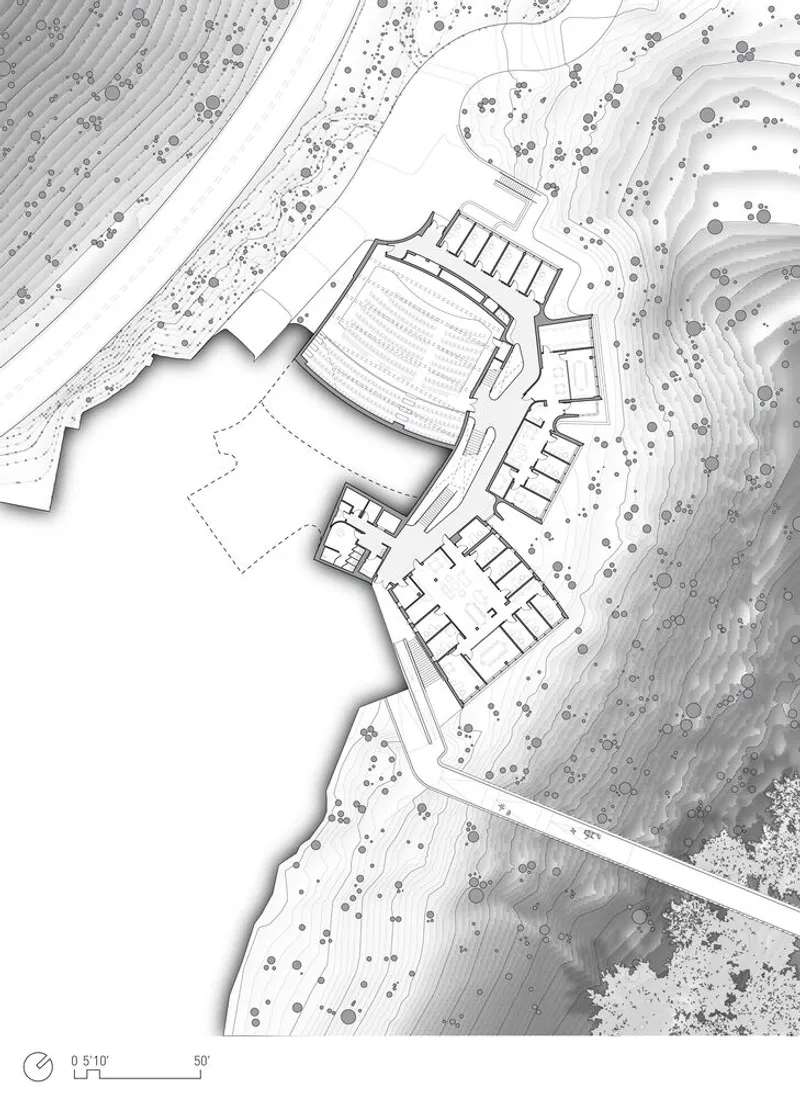
The participatory planning process engaged a wide spectrum of stakeholders, including students, faculty, staff, and local residents, through town halls and workshops over an 18-month planning period. This co-creation methodology reflects Kresge’s democratic ideals, ensuring the built outcome resonates with the lived experiences of its community.


A Sustainable Blueprint for the Future
The Kresge College expansion is not a standalone achievement — it is part of a longer-term vision initiated by Studio Gang's 2019 campus plan. While the first phase delivers key infrastructure for academic and residential life, a second phase led by EHDD and Truebeck Construction is underway, slated for completion in 2025.
Together, these efforts articulate a bold, climate-conscious future for higher education — one where mass timber university architecture is not only a structural choice but a catalyst for environmental, social, and academic resilience.


All Photographs are works of Jason O'Rear


Popular Articles
Popular articles from the community


Cube Design Draws an Ecological Corridor Between Two Shenzhen Hills with the Nankai Building
Beside Shenzhen's container docks, the Nankai Building pairs stacked balconies with a climbing green screen to connect two hillsides across its height.

FCC Arquitectura Expands a Portuguese Granite House with a Board-Marked Concrete Wing
In Portugal, JV House pairs a cleaned-up whitewashed and granite dwelling with a timber-shuttered concrete extension, courtyards and a garden pool.

ETEH Reworks the Shared Spaces of São Domingos School in Brazil Around Timber, Color and Hanging Plants
At São Domingos School in Brazil, 436 m² of hall, refectory and library are recast with timber joinery, a yellow and blue code and trailing greenery.


Opera on the Sea: Driftwood Logic Shapes a Timber Opera House on Estonia's Coast
Trevor Orgill's opera house translates the entangled drift of floating timber into a civic building where wood, water, and music converge.

Similar Reads
You might also enjoy these articles
Cube Design Draws an Ecological Corridor Between Two Shenzhen Hills with the Nankai Building
Beside Shenzhen's container docks, the Nankai Building pairs stacked balconies with a climbing green screen to connect two hillsides across its height.

Praksis A and Studio Sted Bend a Red Timber Cabin Across the Granite of Norway's Southern Coast
On the southern Norwegian coast, a 105 m² cabin follows the rock on slender posts, pairing red cladding outside with pine, brick and plywood within.

David Ortega Stacks a Two-Story Mexico City Penthouse Around a Steel Stair and a Pergola-Shaded Roof Terrace
In Colonia Roma, a 300 m² penthouse uses oak joinery, a planted steel stair and a slatted roof pergola to make a new-build apartment feel like a house.

PARALELA and LB2 Thread a Public Walkway Through the Base of a Las Condes Residential Tower
In Las Condes, Santiago, the Hamlet Building gives its fenceless ground floor to a 70-metre wooded passage linking two streets and the metro.

Explore Cross Laminated Timber Competitions
Discover active competitions in this discipline

Challenge to reimagine the Iron Throne

Photograph architecture without architects

Illustrate the lost glory of Angkor Wat - Render Challenge

Design challenge to reuse E-waste
Comments (0)
Please login or sign up to add comments
No comments yet. Be the first to comment!